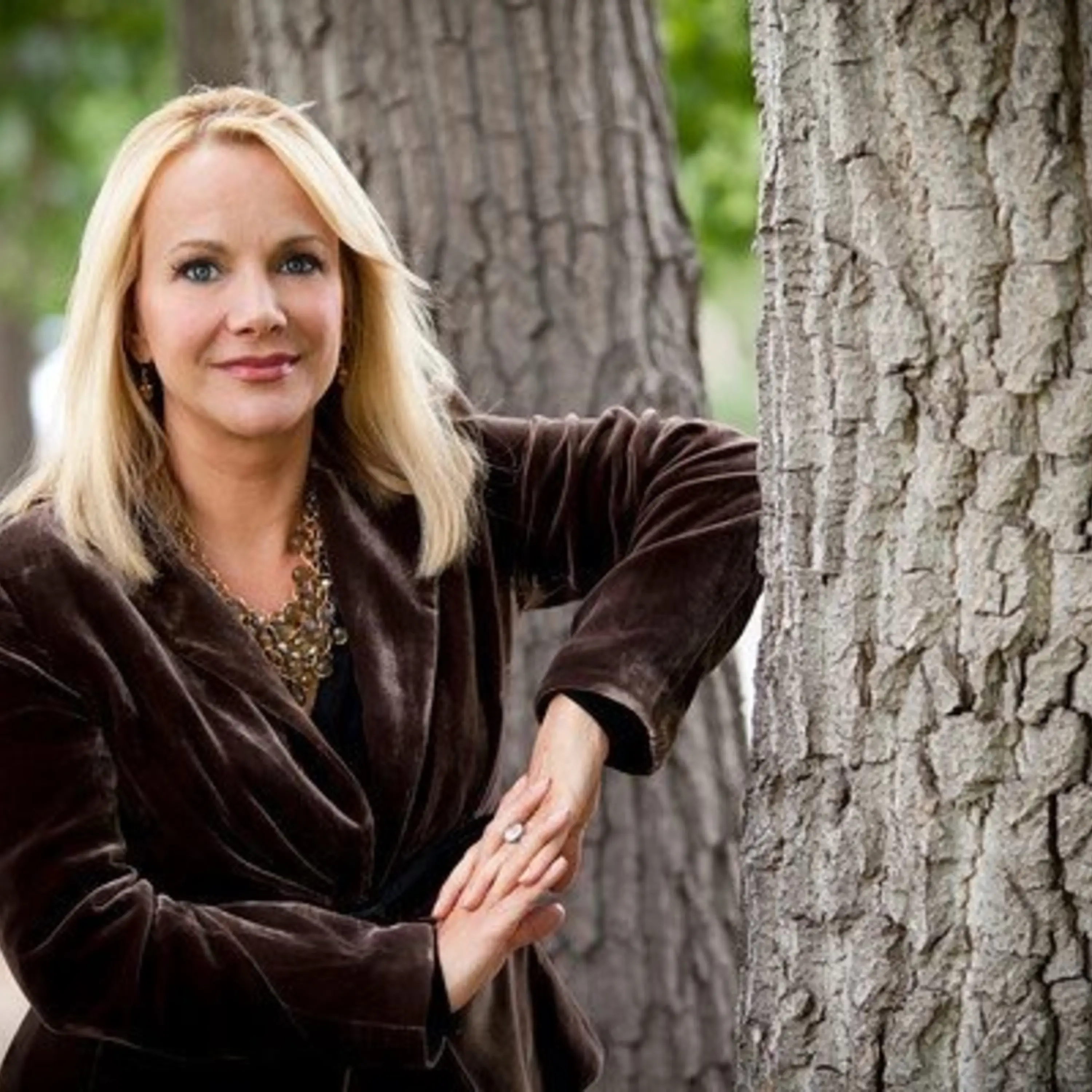
In this heartfelt episode, Angie Austin is joined by LaFawn Jantz as they explore the transformative power of forgiveness based on the teachings of Dr. Gregory L. Jantz, LaFawn’s late husband. Through personal anecdotes and valuable insights, they highlight the detrimental effects of holding onto the past and the health benefits of embracing forgiveness. With stories of personal triumph over adversity, Angie shares her own journey of forgiving family members for past hurts and finding peace and happiness. This discussion delves deep into understanding forgiveness, the barriers to achieving it, and the life-changing benefits it brings.
SPEAKER 02 :
Welcome to The Good News with Angie Austin. Now, with The Good News, here’s Angie.
SPEAKER 05 :
Hello there, Angie Austin here and LaFawn Jantz, and we are talking about the book Make Peace With Your Past, Living a Life With No Regrets, written by Dr. Gregory L. Jantz, Ph.D., and that is LaFawn’s husband of 40-plus years who passed away over the summer, and she’s continuing his mission to help others in the mental health world. Welcome to you, LaFawn Jantz.
SPEAKER 03 :
Hello, Angie, and thanks for having me on again.
SPEAKER 05 :
You are so welcome. Okay, so you’ve been involved in this work with your husband for many decades, and you’re continuing his work. And we picked this book because I think in my, oh gosh, 30-plus years in TV and radio news, but also in doing this Christian radio program for the last 14 years, I’ve run across so many people that allow their past to so overshadow their present and their future that it’s life-ruining for them.
SPEAKER 03 :
It is. In fact, my husband wrote, living in the past is hazardous to your health. I love that title. It is. It is so damaging. People don’t even understand what’s happening to them anymore. when their past keeps creeping into their present, leaking, if you will, and kind of taking control. And so he, in 40 years of helping so many people get relief from depression, anxiety, and all kinds of relationship issues, this little book has really boiled it down to one of the keys that most people never figure out or really struggle figuring out.
SPEAKER 05 :
Okay, well, that’s right there. Everybody wants to know the key.
SPEAKER 03 :
Yes, and the key is how do we move from hurting to healing? And, you know, it’s that challenging word, forgiveness. How in the world do we ever forgive ourselves and other people for all the hurts and pains and setbacks? But as long as we continue to beat ourselves up or, you know, struggle over those issues, that’s part of what’s creeping into our past. And so that’s the journey we’re on today is discovering a learned behavior. Forgiveness does not come naturally. It’s not a natural thing that we can just do. And so how do we do it and how do we learn to do it and do it well so that our health is no longer being affected by forgiveness? All the areas of unforgiveness.
SPEAKER 05 :
Well, if I recall correctly, you know, a lot of people who speak on forgiveness, you know, or they’ve written the book, etc. They they’re like, oh, forgiveness comes naturally to me. But you told me that you, with the help of your husband, had to work on a specific forgiveness issue for quite some time.
SPEAKER 03 :
I did. It took me a good two solid years once I was able to acknowledge what was going on and talk about it and talk about it in a real way that I understood it and that my loved ones understood and had support to walk through it. I was so, so debilitated in so many ways by this unforgiveness and it was making me physically sick. And there is research by the Mayo Clinic that those who are able to forgive improve their heart rate, their blood pressure, their immune response. They deal with depression and heart disease and diabetes. You know, it’s a physical, tangible reality if we do not learn how to lay down these things.
SPEAKER 05 :
You know, it’s interesting because I really do feel like the Lord has given me the gift of forgiveness. I had a very bad childhood, which I think I’ve mentioned to you. And one of my – in fact, it’s interesting. My kids, just this week, one of them – two of them actually were complaining about their nose and then – And I have a really great nose, and the reason is because I had three surgeries, but not voluntarily. One of my brothers had been in the Marines, and he was a paranoid schizophrenic who had drug issues. He ended up being murdered, but he had an issue with violence when he drank. So he, when I was 16, kicked me in the face with his Marine combat boots on. So I had a really – bad nose issue you know the police came my mom’s like oh we don’t want to file charges and they’re like we’re sorry ma’am we don’t allow marines to kick 16 year old girls in the face no that boots so we we press charges like that’s that there’s no choice and so um it took me i no one took me to the hospital but then and i was running down the street covered in blood like people were stopping their cars thinking i’d been hit by a car or something because i was just i had a yellow shirt on and it was all covered in blood oh my goodness okay so with that said With that said, in a nutshell, I well, first of all, I forgave him. But second of all, after the three surgeries, I finally was able to breathe properly, not have pain like when I worked out like burning in my in my nose. So anyway, I had just gotten out pictures. My kids had never seen me prior to when I didn’t get it fixed till I was in college. And then finally fixed until after college. So I pulled out pictures yesterday and they finally saw like what I looked like before that happened. Yeah, it was just a weird, wild thing because they were complaining about their nose. And they’re like, well, remember, your mom doesn’t have a real nose anymore. I’m like, oh, thanks for throwing it out there on the family text thread. But…
SPEAKER 03 :
Right. And, you know, Angie, that happened. I mean, you were sweet 16. I mean, that happened at the prime of your youth. You know, it’s like just when you’re shaping your relationships, you’re dating, you’re and and this happens.
SPEAKER 05 :
I mean, that’s just amazing, you know, and self-conscious, you know. Yeah. All right.
SPEAKER 03 :
So now you can look back and have a balanced perspective. But yeah. You know, for some, a situation like that would be absolutely devastating. They would carry that through their entire life and into their future.
SPEAKER 05 :
You know, I had sympathy for him, I have to say, because I felt sorry for him and his mental illness. And my other brother, who is also, in fact, I haven’t heard from him for two years. So I was in contact with his son and his ex last night saying, like, I don’t know if he’s alive. You know, it’s been two years. I haven’t heard from him. So with that said, with these weird people in my family, I felt like I was given a better hand in life. And once a therapist said to me, no, you weren’t given a better hand. You just made better choices. But I do feel their mental illness was exacerbated by like drug use. So with that said, that helped me with my forgiveness because I did have sympathy for them and my father, who also had substance abuse problems. So those three and my dad was a Ph.D. like he was brilliant. But he just, we had, he was an alcoholic. And so these things, I just felt, I guess God gave me compassion for them or empathy or just a sense of sadness in my heart that they didn’t get to have the kind of life that I’ve had. And mine has been so blessed. And so I, when my father called me after 35 years and I heard his voice, I knew I’d forgiven him because I had no anger, no nothing. I do think that’s a gift from God. I think God gave me… And I think God gave me that gift so that I could have a normal life and be a great parent. I’ve been married over 20 years. I’ve got the three kids, you know, everything. There’s no alcohol in the house. There’s no drugs in the house. It’s a different world. So I feel like God gave me that gift of forgiveness because it allowed me to have a really great life. And my faith was the foundation. So for other people to move from hurting to healing, because you said that that forgiveness didn’t necessarily come naturally for you. How do we forgive those who hurt us?
SPEAKER 03 :
Well, that is a very good question. I think, number one, I want to break down what I hear you saying when you share your story is perspective. And so the first step in the journey of moving beyond your past and living a life without regrets is to look at what is your perspective on the situation. And sometimes we have to shift our perspective to being more compassionate and caring for those that we are holding, you know, some hurt or harm against, including yourself. And so, you know, for as you move from hurting to healing, it’s just important to keep this balanced perspective in mind. And I did not have that balanced perspective. I had to work to get a balanced perspective in it. And I actually didn’t get that until after I forgave this person. And then guess what? My perspective shifted completely. on every other relationship of any situation and any future relationship and it’s been you know at least 15 years since that huge major forgiveness piece was accomplished and that shifted my perspective and i think a lot of people find that that happens for them Once they get over that one thing that they can’t get over, you know, that keeps leaking into your life. And most people know what that is. Like if you say, who is the one person in your life, you know, you need to forgive and you pause that person will start nodding their head and say, yes, I know who that is. So how do we start that when we don’t have perspective? My husband wrote this book and, and shares exactly what to do first. He says, well, Make a decision, a determined decision that you are no longer going to hold this offense towards yourself or towards that other person. And back that decision up with writing a contract with yourself. Create a contract, write it in your journal, write it down on a piece of paper. Say, I, you know, Angie pledged to forgive my brother for kicking me in the face at 16 and breaking my face. for the following reason. He didn’t know what he was doing at the time. He was not well. He, you know, whatever it is that you put in there, I know that it wasn’t meant to cause that level of harm or he wasn’t aware. And then you sign it and you date it and you make that determination that I am going to do this no matter what. Because why? Because it’s for my good. It might not change his life. Right. It might not turn his life around, but it’s going to change my life. And look at what God has been able to do with your life.
SPEAKER 05 :
Yes.
SPEAKER 03 :
You wrote that contract in your heart. You might not have physically wrote it, but in your heart you did.
SPEAKER 05 :
And to be able to share like all of these things with others the way that, you know, you and I do when we do our segments and, you know, that I do every day with other authors and experts. So I want to read something that your husband wrote in the book. Again, we’re talking about make peace with your past, living a life with no regrets. So Dr. Gregory Jantz wrote, yet experience has proven that hanging on to offenses and emotional wounds is an effective and unfortunate way to punish yourself for As the old adage goes, before you embark on a journey of revenge, dig two graves. Chronic anger from unforgiveness, as you mentioned, can adversely affect your health and lead to not only health issues, but mental health issues like depression as well. So, you know, it’s like, what do they say? You know, it’s like giving poison to, you know, the other person with your needs for revenge, but it poisons you as well. You, exactly.
SPEAKER 03 :
Exactly. And why? Because it creates toxic emotions. And nobody wants to have toxic emotions. You become someone that you didn’t think that you ever would ever be. And other people don’t want to be around that. It’s not pleasant when someone is constantly toxic and negative and talking about the same thing over and over again. It just permeates every area of a person’s being. And so this is part of how we clean, you know, cleanse our hearts, cleanse our minds, cleanse our souls, our mind, our will and emotions. If you’re, you know, if you’re feeling like you have a lot of hangups and a lot of issues, this may be the key, the area that needs to be dealt with.
SPEAKER 05 :
After that, he writes about embracing the blessing of forgiveness, which I definitely think it is a blessing. And then Dr. Jan says, understand what forgiveness isn’t. And a lot of people see it as a sign of being wrong or a sign of weakness. I do know people that are not even capable of forgiveness. Like, I don’t think they’ve ever said, I apologize or I’m sorry, like in their lives. And it’s a weird thing. thing that I feel it’s in some old school people. But, you know, I still see it in, you know, the current generations where they just don’t know how to do it. Now, I have to say my kids are pretty good at saying it because it’s so common in our house to say to apologize, you know, even me to lose my temper too easily. Oh, yeah, that’s that’s good. And so let’s talk about that a little bit in that chapter when your husband’s talking about forgiveness in Chapter 2, knowing the dangers of forgiveness, embracing it. Oh, we have to take a break. All right. So we’ll come back. All right. And we’ll finish our discussion on make peace with your past, living a life with no regrets. We’ll be right back with the good news.
SPEAKER 01 :
With Easter right around the corner, Art Thrift is the perfect place to find great deals on Easter grass, baskets, bonnets, and those cute little dresses for Sunday school. You can decorate for the whole family gathering on a budget, from deviled egg dishes to Easter baskets, and still find those special items that make the day memorable. And coming soon is Art Thrift’s famous secret jean sale. Watch the Arc Thrift social channels for the secret Friday date because every pair of jeans in the store is just $2. That’s right. Rows and rows of jeans including great brands like Levi’s and 7 for All Mankind from 9 a.m. to 9 p.m. with new stock going out all day long. Spring also means gardening tools, sports equipment, and seasonal treasures hitting the floor. And remember, Arc Thrift stores are size-inclusive and even have fitting rooms open so you can find the perfect fit. Find a store near you at arcthrift.com and follow Arc Thrift on their socials so you don’t miss a secret jean sale. Arc Thrift, there’s a surprise on every aisle.
SPEAKER 04 :
Elizabeth is dialed in to the mighty 670.
SPEAKER 05 :
Welcome back to The Good News with Angie Austin and LaFawn Jantz. We’re talking about her husband’s book, Make Peace With Your Past, Living a Life With No Regrets by Dr. Gregory Jantz. LaFawn Jantz has been involved in this work at the center, A Place of Hope, along with her husband for many decades. Her husband passed away over the summer and she’s continuing his work. So we are in the midst of discussing his work. Almost 40 books that have come out. And so we’re kind of working our way through the books and make peace with your past. Living a life with no regrets was one of my favorites that I wanted to break down. And we’re right now, LaFawn, kind of on chapter two, just how you said write a contract. Forgiveness of who you’re going to forgive and why and, you know, why you can maybe explain their behavior or, you know, at least explain it to a degree that will allow you to forgive them so that you won’t suffer the consequences of unforgiveness, which are, in my opinion, deadly.
SPEAKER 03 :
right, you’re making a firm pledge to forgive that person, no matter what they did, no matter how bad it was, you are going to forgive them, not just for their sake, but mostly even for your sake, so that you can no longer be tied and bonded to that situation, that memory, that person, you will find that you and including for yourself, if you’ve done things, you know, we all have done things that we regret, like you That’s part of being part of the human race. We all make mistakes and some seem worse than others or they seem worse to ourselves than others. And so put yourself included in there and you want to write a contract because that’s making a pledge that you’re actually going to do it. Because guess what? Just saying I forgive the person doesn’t mean you said it in your heart and it doesn’t mean that you you feel it and mean it and that it’s permeated your soul. And that’s what we’ve got to get to true heart forgiveness. And so that that decision sometimes takes time. You know, a year or two to walk out. For me, it took two years to walk out my very firm, solid forgiveness to the point where I was actually totally free. And then as we spoke, the perspective shifts. Sometimes perspective comes at the beginning. Sometimes it comes at the end.
SPEAKER 05 :
And I like what, you know, what is said about what forgiveness isn’t. It doesn’t excuse the action because that’s one of the hold hangups people have it. I’m not going to excuse it. Right. It’s not a sign of weakness. And I think that’s important. So many people think that they apologize that they’re saying I was wrong and you were right. And it’s different from reconciliation. Like you might not reconcile with the person.
SPEAKER 03 :
True. That’s true. And, you know, I’m a believer. I believe in a mighty, awesome God. And he requires that we forgive others, that we can be forgiven. And how awesome is that, that we have been forgiven for everything we’ve ever done once we, you know, once we come under, you know, the faith in Christ and salvation through him. We have that covering, and we want to extend that to others as well so that it continues to be extended to ourselves. And so what helped me was I read in one of Greg’s books, he said, forgiveness is actually delivering God’s justice to that situation. And so I felt vindicated, like, okay, God saw everything. He knows everything. He knows my heart. He knows that person’s heart, what their intentions were. He’s ultimately going to be the judge. And I can deliver that justice to this situation and that person by forgiveness, and God will take care of it. And he did, and he has. And he is so kind, and he has just totally set that situation free. And in my situation, I was able to be reunified with that person and absolutely love and see that person in a whole different light today. There’s that perspective shift. And as a result, it has helped me to have, I think a much more full person hood for, you know, personality where I’m not so judgmental anymore. I’m looking, you know, to, to what, who, how, who is this person really? What has made them up to be the kind of personality that they are, that I may or may not like, but you know, now there’s hardly a soul that I can’t figure out to how to find a connection with. It’s, It’s amazing how it opens doors and windows.
SPEAKER 05 :
Wow. I’m so, okay. All right. So number three, and this is really one of the big, besides giving people hope with the good news and sharing, you know, the good news of scripture. I also wanted like one of my big messages is forgiveness because it was life changing for me. And in chapter three of make peace with your past, it says travel the path of acceptance. So what is this about?
SPEAKER 03 :
Well, it’s about accepting the fact that it did happen, um, that you’re not pushing it aside. You’re not denying it anymore. You’re not ignoring it. You’re not sticking it in that closet with all the rest of your skeletons. Like you’re going to be brave. You’re going to open that closet. I remember doing that mentally one day going, Oh Lord, I realized, you know, everything in that closet anyway. So I’m going to go ahead and open it. And, uh, And so when we deny what’s happened or we pretend that it didn’t happen, that’s where it begins to, again, leak in relationships. We might be more irritable, which is a sign that there’s unresolved anger, bitterness, unforgiveness. There’s just all these toxic emotions that bubble up. And it typically, mostly, usually has to do with What we’re denying, what we’re not acknowledging, what we don’t want to believe to be true. And so in that sense, to me, I think denial is the hardest thing to get over because we’re so defended and we get defensive. So if you meet a person that is very defensive, you will find that you’re kind of touching on some areas that they don’t they don’t want to go there.
SPEAKER 05 :
Interesting. All right. And make peace with your past, living a life with no regrets. In Chapter 4, make the most of the present. And I think I told you that my mom being abused as a kid and then as a wife and then as a twin, her sister was very abusive. I lived with her, too, for years. when I was 12 to 13. And that was a horrible experience for me. So I know my mom, you know, living with her was physically and emotionally abused by her. So anyway, with that, with that said, I think that the, the present for my mom in many ways, and I think, I think it’s better now she’s turning 84 this month, making the most of the present and, I really think I don’t know that she’s gotten to forgiveness because once she told me she forgave my dad when he was in his grave. And I keep reminding her like he is in his grave, like it’s time. But I sense a softening in her. She’s gotten older and a lot like she would tell. So she still does. She tells so many horrible stories like my kids know, like every horrible story from her life. But they don’t know the good ones. And she’s not saying like, hey, you know, how was school today or where do you want to go to college or hey, how are you and your friends? What are you doing this weekend? No, it’s like, you know, when I was 12, I’m going to tell you what happened to me. And I’m like, mom, they don’t really want to hear all these horrible stories. So she doesn’t do it quite as much as she did when they were growing up because she’s pretty much lived with us. And so it’s been sad to me that she hasn’t made the most of her present because she’s been divorced since her late 30s. And here she is in her 80s. And I feel like so much of this has affected her life when over half of her life hasn’t been in an abusive situation.
SPEAKER 03 :
Right. And to be fair, she really did endure a horrific situation. And also, to be fair, her generation didn’t really allow these things to be talked about. There was such a stigma. And so now maybe she felt, you know. As an older person, she has to go through that same process at some age. And, you know, one of the pieces of advice is to refrain from rehashing all of these things to pay attention to your self-talk. However, there is also the advice that my husband gives in this book is to talk it out, find a person, safe person. Not everybody, you know, not spray it around, but find people that you can trust to really talk these things through because that also helps gain perspective. That helps lower, you know, the amount of power that this situation has. If she can’t talk about it, it’s in her head and she’s re-experiencing it. But unfortunately, you know, she probably wasn’t raised necessarily in that environment where that was was safe to do, or maybe she didn’t have that many people surrounding her. And so we want to make sure that we’re finding good people to have in our life where we can talk these things through with, or that’s where professional counseling and sometimes intensive counseling can, can really help.
SPEAKER 05 :
Yes, and I think that that’s why these support groups are so popular, because you get like-minded people or people who have experienced something similar to you, so they do really relate to your issue of abuse or whatever it may be. And so I love those support groups and counseling, obviously. You know, if you can afford it, some people can’t, but a lot of churches offer counseling as well. You know, that can help you with this forgiveness piece, because I think if you have unforgiveness in your heart and right now you’re thinking about it and you’re like, oh, boy, that’s me. Do something because you’re wasting years burning daylight, as Dr. Phil always says. You’re just burning. You’re wasting your time. So in chapter five, in making peace with your past, look forward to an exciting future. I think that’s so true.
SPEAKER 03 :
So true, because you are no longer paying the cost of looking back. And don’t we know, you know, even Olympic runners, they’ve learned not to look back to see, you know, how close their opponents are because you lose seconds when you look back. And so we’re running this race as Christ followers. We’re running the race to win the prize. And so part of that race is not constantly looking back at and being haunted by the past. And so my beloved stepmother was another person in my life that I was able to really resolve some past issues. It was not her fault or my fault. It was just a situational thing. And we became best friends at the age where she turned 82. And she cried so hard saying, please forgive me. And I just said, you know what? The blood of Jesus has covered that. All of that’s gone. You don’t ever need to talk about it again unless you want to. But we’re going to have happy, positive thoughts and we’re moving forward. And she took that to heart. And it has been that way ever since the last 10 years have been great. She’s 92. Wow.
SPEAKER 05 :
Wow.
SPEAKER 03 :
Yeah.
SPEAKER 05 :
My dad and I had eight years. He died in his mid 80s and we had eight years where, you know, he wasn’t drinking anymore. And he really wanted to prove it to me. I think that he kept the promise that he called the kids every week. And my husband said, you know, why are you forgiving him? He wasn’t there for our wedding. He didn’t even know the names of your kids. You know, we’ve been married for all these years. He doesn’t even know my name. And he was so horrible to you. You’ve been estranged for all these years. And I said, I just want to teach my kids forgiveness and show them my faith in action. And years later, he said to me, you know, I have to say your dad really rose to the occasion. He kept his promise. He calls those kids every week. And in the summer, we took family vacations and he really adored them. He cried once when he told me the happiest moments of my life are spending time with those grandkids.
SPEAKER 03 :
That’s fantastic. Yeah. And he you probably saw he was had a lot more energy. He was maybe more creative in his relationships than he had been in the past when it was all rage and anger. You know, I mean, that’s part of recovery is is when you let go of all this garbage, you’ll find your emotional energy being rejuvenated more. you will find that you’ll be more creative and interested in doing fun things again and having fun in your relationships. And you might even find that you’re able to revive your purpose in life. And one of the things that he suggests is to sit down and write a list of things that you used to love to do and you know why did you stop doing those things or did they make you happy and if you know what would you want to be doing now if you know time and money weren’t a problem for you so making a list of those things that you know already to be true about yourself is a very tangible way that you can begin to to recover and fill in the gaps that used to be totally consumed by anger fear guilt worry shame all that stuff
SPEAKER 05 :
I love it. I love it. All right, so looking forward to an exciting future is something that I do truly believe that, I mean, I broke the cycle of all that abuse, the alcoholism, the drug use, you know, and so I have a whole new life, and I really credit it to my faith and to forgiveness. All right, make peace with your past, living a life with no regrets. LaFawn Jantz, give us your website.
SPEAKER 03 :
Our website is aplaceofhope.com, and we’d love you to come by and take a visit, aplaceofhope.com. We have a lot of free resources, inventories, tests you can take at no cost. Just a great resource site.
SPEAKER 05 :
Wonderful. Appreciate you. God bless you, LaFontaine.
SPEAKER 03 :
Thank you, Angie.
SPEAKER 02 :
Thank you for listening to The Good News with Angie Austin on AM670 KLTT.