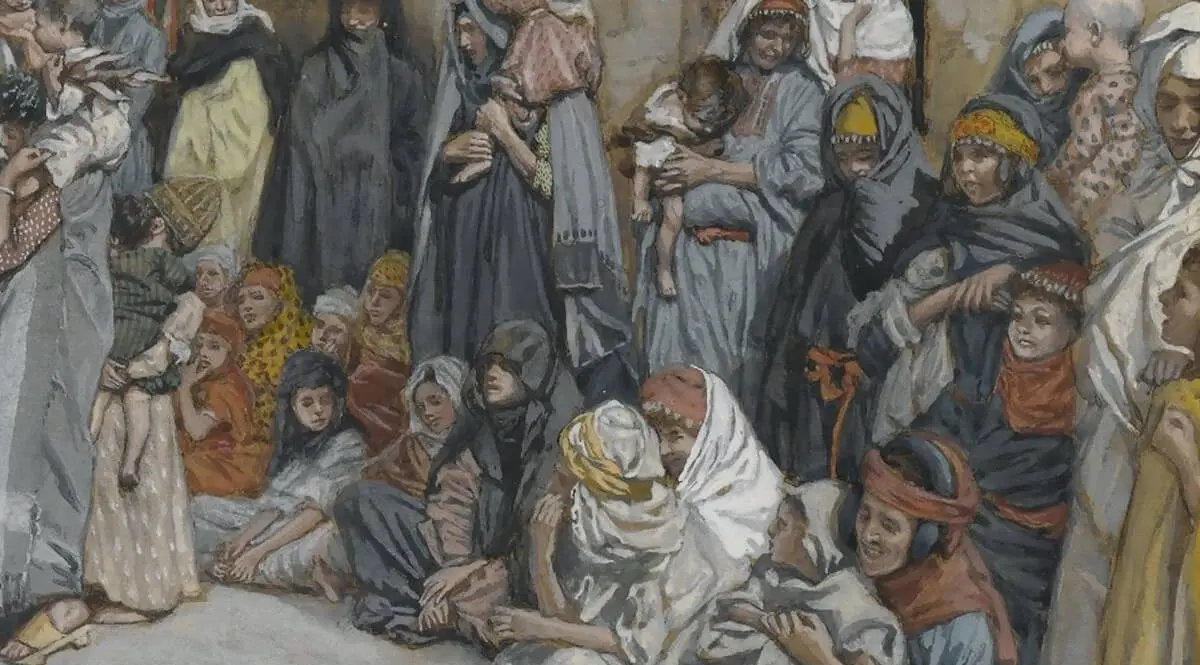
In this thought-provoking episode, Ronald L. Dart dives into the often-overlooked value of children in our society and the societal attitudes that treat them as non-persons. He explores how neglect and the dismissive outlook toward children contribute to a larger societal issue of recognizing and valuing human life. Dart provides poignant examples of family dynamics and societal neglect that highlight the need for greater attention to the well-being and active inclusion of children.
SPEAKER 02 :
The CEM Network is pleased to present Ronald L. Dart and Born to Win.
SPEAKER 03 :
What is it about children? Why is it that people are so ready to dismiss children as though they were of no consequence? And don’t tell me people don’t do that because I see it all the time. You know, I have finally become convinced that one of the reasons children behave badly is because no one pays any attention to them when they behave well. I mean, after all, a good kid who’s behaving himself all the time is like wallpaper or like background music or, you know, a piece of furniture. They’re there. They’re appreciated. We pat them on the head, feed them, be sure that they got clothes to wear and a bed to sleep in, and there’s just no worry apart from that. I think, on the other hand, though, when children are bad, well, then we look at them. We pay attention. And I’ve actually seen kids, I’m quite certain, misbehave, willing to risk a spanking, willing to risk the wrath of mom or dad just to get some kind of recognition out of mom or dad. For the most part, children are treated like non-persons. Oftentimes, people don’t pay a bit of attention to what children hear. In my family, years ago, there was a saying, and I’d hear it every once in a while, and I knew what it meant. The saying was, little owls have big ears. In my family, that meant change the subject because there are kids around who will hear what you’re talking about. And I either just heard or was just about to hear something that, in their opinion, children ought not to hear. But I’ve been really struck by the fact that it seems an awful lot of parents become absolutely unaware that their children are even in the room if the children are behaving properly. They’re just non-persons. It’s sort of like waiters around a table whom we treat as non-persons. People will talk about anything within the hearing of a waiter because waiters aren’t supposed to hear those things and they don’t pay any attention. They come and they go. There’s a whole category of people in the world that are treated as non-persons. And when it comes to children, well, if they’re inconvenient, we can just get rid of them. Well, I don’t necessarily mean kill them off, although regrettably in extreme cases that happens too. But I’m talking about the fact that, well, I’m talking about parents who leave their children at home alone and go off on a vacation. I mean little kids. Doesn’t happen? Well, sure it happens. Parents have been indicted for child neglect for doing precisely that. And it makes me wonder, how often is that happening and they don’t get caught? A couple of parents went off to Mexico on a vacation, left the kids at home with peanut butter and jelly sandwiches to make their own, of course, and a little milk in the refrigerator as long as it lasted, and that was about it, maybe some bologna for making their own sandwiches. And the kids were there, and no one to check on them, and I don’t know how, they got into trouble, and they were found out, and the parents, I think, wound up doing time. But how often does it happen? And nobody even knows. And then, of course, children are foisted off nowadays on grandparents. Now, I don’t just mean foisted off for a week while they go on vacation. I think a lot of grandparents would look forward to that. No, I’m talking about children who are given to grandparents to raise permanently. When the kids either move in with mom and dad and the kids, so that you’ve got three generations living in the household, or Or the children are turned over to grandparents while mom takes off with a new guy to a new place, a new life, a new job. All I can say is thank God for grandparents. But I worry, I wonder, what are we going to do when the last generation of grandparents who really care about children are gone? The generation that wouldn’t take care of their own kids are not very likely to be trusted to take better care of their grandchildren. And who’s going to take care of them then? Babies, you know, used to be left on the doorstep of someone who could take care of the child. Now they’ll give birth in a toilet in the ladies’ room and leave the baby in the toilet to drown. Or they’ll do it in a motel room and put the baby in a dumpster where its skull gets fractured when somebody throws a bottle in on top of it. I suppose that’s what happened. You know, I know you’re going to say, well, these people aren’t representative of society as a whole. No, I suppose they’re not. But, you know, a society that has aborted 30 million babies in the past several years doesn’t have an awful lot of room to hide out from being accused in this type of thing. We’ve got a situation that has grown up, and how it got started, we can talk about it, the philosophers can talk about it until the cows come home, but the truth is, human life has become very cheap. Children have become relatively unimportant. Our society, I’m afraid, has said that if a baby is going to be inconvenient, why don’t you just abort it? The new miracle of human life that a woman is carrying around inside of her, well, it’s not important. Her life is important. Her job is important. Well, if that’s all important, why did they get this baby on the way in the first place? And since the poor cannot afford abortion, our government wants to provide money from tax dollars to fund abortion for the poor. First of all, understand this. I am not a Republican. I’m not a Democrat. I’m not a politician. I’m just a teacher from the Bible. That’s all I am. And I’m an observer of all the things that are going on out there. Now, what is strange about this from where I sit is that those who claim to speak for the poor consider this a marvelous government benefit, the funding of abortions for the poor. And there’s a lot of talk about, if you stand up and you say, well, I don’t think the government ought to be doing that, then immediately someone’s going to point the finger at you and say, well, you don’t have any compassion for these people. And they believe in compassionate government. Well, I want to tell you what I think about when I hear people talk of compassionate government. Government is not capable of compassion. Compassion is a human emotion. Compassion is what you feel. When you’re walking along the street on a cold day and you’ve got your parka and your mittens and your cap on, and you see this poor guy with a bunch of newspapers on him lying on a grating on the sidewalk trying to keep warm on a miserably cold day, and inside of you, you feel a regret. You feel a grasping almost of your innards, as it were, and you look at this guy and you think, I wish I could change that man’s life, and you really realize there’s not much you can do. That’s compassion. But that’s something that people feel. A government is not human. A government is a system. There’s a difference between the two. Governments don’t feel things. But then it’s not the job of the government to feel. The government exists to see to it that our economic system works. It exists to see to it that our military is strong and that we can be protected from invaders from outside and to carry out our national interests in that way. A government exists to kind of protect us from one another, from the predatory among us who might take advantage of a weaker person. So these are the things that government does and that government can do well. That’s why we have a government. That’s why we want a government. But when people start talking this blather about a government with compassion, they’re starting to lie to you because the fact is compassion at a governmental level doesn’t exist. A government is concerned about economics. What I’m wondering is why no one tumbles to the fact that when they start talking about government-funded abortion, that it’s a form of genetic engineering. Sometimes I wonder about the conversations that go on in the cloakrooms in Congress that you and I never hear. Because what congressmen have to consider, they’re government. They’re not necessarily there to feel for us. They’re there to manage the economy of the country. And what they’re going to stand there and talk to each other about is this. They’re going to say, look, it’s going to cost us less money to pay for this abortion than it will cost us to support the child for one month of its life in aid for dependent children. An abortion is not expensive if it’s done early. It’s very cheap. And then if we let the child be born, well, then we’re going to have to pay for dependent children month after month, year after year. We’ll have all the medical expenses. We have the possibility of enormous medical expenses at the birth of the child. It’s much cheaper as a government for us to fund abortions for these poor people than than it is to let that baby be born and have to support that baby for all these years to come. So the government is making a decision very much like that that the mother makes. The baby is going to be a terrible inconvenience. Let’s get rid of it before it’s born. So don’t talk to me about compassion when we’re talking about this. We’re not talking compassion. We’re talking economics. The government will give lip service to concern and compassion for children, while at the same time they implement programs that treat children like a commodity, a commodity to be exploited or disposed of depending upon what the government needs in order to keep the economy chugging along like they think it ought to chug. But remember, it’s only okay to blame the government as long as you remember that the government is us. But when it came to children, Jesus was an entirely different kind of man. I want to talk about that when we come back after these words.
SPEAKER 02 :
Can you imagine the combined population of North Carolina, South Carolina, Georgia, and Florida wiped out since the Supreme Court decision allowing abortion? More than 35 million lives have been destroyed. Can we engage in such destruction and not pay for it? For a free copy of The Class That Never Was, write to Born to Win, Post Office Box 560, White House, Texas 75791 or call toll free 1-888-BIBLE44.
SPEAKER 03 :
Now when it comes to the question of Jesus and his attitude toward children, we come to an entirely different kind of man. Here we are considering real compassion. Here we’re considering someone who really does care about children. They brought to him one day little children that he should put his hands on them and pray. This is in Matthew 19, verse 13. The people wanted Jesus to bless their children, to put his hands on them, touch them, pray for them. And that’s kind of a sweet thing to think about. But the disciples of Jesus rebuked them. Now, what in the world is going on in the disciples’ minds today that they rebuke people for bringing children to Jesus. Well, I don’t think it’s all that different from the attitude many people have nowadays in the sense that children are to be seen and not heard. Keep them out of the way. Just keep them quiet. Maybe even if you put a nursery in church or a Sunday school in church or what have you, you keep the children out of the way so the parents can study the Bible and the people who are mature and knowledgeable can be very serious about their studies. And the children, well, we have to have somebody to keep the little beggars busy. Well, they brought these children to Jesus, and the disciples said, Oh no, he doesn’t have time for these children. I’m afraid a lot of parents don’t have time for their children. But Jesus said, No, no. Permit the little children. Don’t forbid them to come to me, for of such is the kingdom of heaven. What a profound statement. Jesus said, Don’t you do that. Don’t forbid these children. Permit them to come to me. There’s a lot in that statement. I think he, of course, meant let them walk over to me. And one of the gospel accounts indicates he took them up in his arms. I gather he must have let them crawl up in his lap. And he put his hands on them and blessed them. The impression I get of Jesus is that he thought the world of children. And, of course, here he says, Don’t forbid children to come to me. So here in the modern world, we might talk about people coming to Jesus in a sense of an adult being converted. Well, what about your children? Can they come to Jesus? Can they, spiritually speaking, crawl up into his lap and have him touch them, maybe help them in their life? Frankly, I don’t understand why not. Jesus said, permit them to come, for of such is the kingdom of heaven. You’re going to have to look around a bit and think about this. And, of course, other places in his account he talks about the humility of children and the simplicity, I think more than humility, the simple faith of children. That’s the kind of simple faith, he said. That’s of the kingdom of heaven. Anyway, he went ahead and laid his hands on these children and then departed. He actually touched them. I’ve watched children from time to time and been fascinated as they try to get their parents’ attention. a parent will be involved in a conversation. And since I have at times been a minister and visited people’s homes, I’ve had many occasions to observe this. And we’ll be talking about some serious thing from the Bible, and the child says, Mama. And Mama does not even hear the child. And I’ve sat there astonished from time to time at how long a mother can ignore this child while the child is making it hard for me to concentrate on what I’m telling her, and she doesn’t seem to even hear the child. I guess mothers just get to where they tune them out. They hear the child so much all the time, they get to where they don’t hear them at all. And then the child, since obviously mama’s not hearing, comes over and crawls up into her lap because it’s got to touch mama, got to be there, has to be considered. And the only way I can get this, I’m just going to have to get up in her lap. And mama keeps right on talking as though the child were not even there. The child’s squirming, the child’s kicking a little bit, and she’ll put its little legs down or try to move it around a position and never even break a sentence and not even look at the child. And finally, I’ve observed this after a while, to where a child will reach up and put its hand on the side of his mother’s face and pull her face around to get eye contact with mama. And I’ve been so moved by that, the realization of how important it is to be touched, to be looked at, to get eye contact, and to be able to communicate with mom or with dad where these children are concerned. They’re important. And I have difficulty sometimes in understanding it. I guess there is this thing, though, of familiarity. They’re there all the time. You put up with them all the time. You have the noise all the time. And you get to where you just tune it out. My question, I guess, is should you? Should you really allow that to happen where you and your children are concerned? Now, I realize you have to teach them not to interrupt adults when they’re talking. There are some good habits that you can build into your children that make them more civilized. But you do that as a part of the training of the child. You don’t ignore them when they really need to speak to you, even if a guest is in the house, do you? Well, it’s odd to me that the disciples wanted to keep the children away from Jesus, but in another way, it isn’t. It’s the way people are. I think, you know, the disciples thought that Jesus was too busy for kids. We’re doing important things here. Get these children out of our hair. In other words, children are, relatively speaking, unimportant. Jesus said, oh no, children are very important. Listen to what he said one more time. Quote, suffer little children, that is, permit little children and forbid them not to come to me. For of such is the kingdom of heaven. Can a child come to Jesus? Certainly. Can a child serve God? Well, I have a story to tell you about that. Long ago, there was a boy named Samuel. His story is told in the Bible in the first book of Samuel. His mother’s name was Hannah. Hannah was getting rather along in years, and she had had no children, and it was really important to her. She was agonizing over it. She went up to the temple of God, and she prayed and prayed, and she made a promise to God that if God would give her a child, that she would give that child to God for the rest of his life. God heard her prayer. He gave her a son. She brought the boy forth and called his name Samuel. And when Samuel was weaned, now you think about this, they nursed babies a little longer in those days than mothers do today. So I don’t know exactly how old he was, but he was not a babe in arms at this time. So when the child was weaned, she took him up to the tabernacle and gave him to the high priest who was at the tabernacle at that time. His name was Eli. And they took the boy and they brought him up. All of his teaching, all of his training was done at the hands of the priests. Now, there came a point in time where, and we’re still dealing with a boy here. He has not grown up. He’s just a little fellow. And he sleeps in his own little room in the tabernacle area where the priests slept. In the process of time, the old priest Eli had become somewhat corrupt, and his sons, who ordinarily would have followed him in the priesthood, had become extremely corrupt. And the time came when God needed to speak to Eli about this matter because he had allowed things to go entirely too far. But one night, Samuel, the boy, is lying in his room, and he hears a voice from somewhere saying, Samuel. He got up. He padded down the hallway to Eli’s room, and he said, You call me, Lord. And he said, I didn’t call you. Go back to sleep. So Samuel went back to his room and lay down again. One more time, the voice comes, Samuel. Samuel. And Samuel got up and went down the hallway to Eli and said, You did call me. He said, No, I didn’t. And by this time, Eli is beginning to understand that something’s going on here. And so he said, Samuel, the next time this voice speaks to you, you say, Speak, Lord, for your servant hears. So Samuel went back to bed. This time the voice spoke again, Samuel. And Samuel said, Speak, Lord, for your servant hears. And then God spoke to Samuel, and he gave him a message to give to Eli. Now, mind you, Eli the high priest, an old man, is lying in his own bed down the hall. And Samuel is the one, a boy, receives a message from God. And God told Samuel about his displeasure with Eli’s corruption and the corruption of Eli’s son and why Eli had done the things that he had done with his sons and what God was going to do about it. And he said he’s going to bring such destruction that the ears of everyone when they heard about it would tingle. And he said, you tell him. Well, Samuel didn’t say anything. And the next morning, Eli came to him and asked him about it. And he says, you tell me. Don’t hold anything back or God will do the same thing to you. So Samuel gave to Eli from a mouth of a mere boy. He got the message of God about God’s disapproval, about God’s chastisement, about what God was going to do to Eli, to his sons, and to Israel. So can a child come to Jesus? Yes. Can a child serve God? Most assuredly. For in some ways, the children are better equipped to serve God than a lot of us are because they have a simple faith. They just believe what God tells them.
SPEAKER 02 :
I’ll be back after these words. For a free copy of this radio program that you can share with friends and others, write or call this week only. And request the program titled Matthew number 31. Write to Born to Win, Post Office Box 560, White House, Texas 75791. Or call toll free 1-888-BIBLE44. And tell us the call letters of this radio station.
SPEAKER 03 :
A young man came to Jesus. This is not a child. This is a young, grown man. And he said, Good Master, what good thing shall I do that I may have eternal life? The story is in Matthew 19, verse 16. Now, right here we’re going to run into a major theological problem. Because if you ask 100 preachers, 100 Christian preachers, What was required that you could have eternal life? I think relatively few of them are going to give you the same answer that Jesus gave this man. Just ask the same question. And in most cases, you’re not going to get the same answer. Well, what did Jesus say? Well, first of all, he said, why do you call me good? He said, there is none good but one, that is God. But if you will enter into life, here’s the answer we’re looking for. We want to know what it is that Jesus would say in answer to the question, what good thing must I do that I may have eternal life? Jesus said, if you would enter into life, keep the commandments. Now, all of us know about salvation by grace, don’t we? By grace are you saved through faith and that not of yourselves. It’s the gift of God, not of works. lest any man should boast. We know there is nothing we can do to save ourselves. We know it is the shed blood of Jesus Christ, who is the Lamb of God that taketh away the sin of the world, that only him and only his sacrifice can take away our sins. Well, why then do we have this problem with what Jesus says here? The man himself was uncertain about what Jesus meant when he said that keep the commandments, and he said, well, which? And Jesus said, well, he said, thou shalt do no murder. You shall not commit adultery. You shall not steal. You shall not bear false witness. Honor your father and your mother and summarize it all up. You shall love your neighbor as yourself. You know where these commandments come from? They come out of the Ten Commandments. I know he didn’t mention all ten of them, but he shouldn’t have to. The point is he’s establishing the fact is what law are you talking about? Well, I’m talking about the Ten Commandments. And when you look at that and you see here’s what Jesus said, why is it in the face of what Jesus said that some people believe that the Ten Commandments are of no account or not to be taken account of? Or at least, let’s put it this way, that the Ten Commandments don’t have anything to do with salvation. I think that’s a good question. Basically, the reason why most people think that way is because they misunderstand the Apostle Paul. Now think about this just for a moment if you would. If Paul disagrees with Jesus as to the method of salvation or the way of salvation or what is to come about, what are we going to do? Take Paul’s word for it and reject Jesus? I mean, if he really disagrees with Jesus, then we kind of, if we’re going to call ourselves Christians, we have to discount Paul, not Jesus. We’d have to take our little razor blade and cut Paul’s epistles out of our Bible, if that’s what we really believe. It’s not what I believe. I don’t believe that Paul did disagree with Jesus. He is dealing, Paul is, with only one side of the question of law and grace and how they relate to the Christian’s life. He is dealing with, you know, Paul is addressing conflicts that exist. He is addressing false ideas that people are bringing forth. And therefore, to his readers, he makes perfect sense because he is addressing one side of the question. Now, we are saved from sin by grace. But what defines sin? What tells us what is sin and what is not sin? Well, that’s not really hard to figure. It’s the law. John said sin is the transgression of the law. That’s not hard to understand. Now, we are saved when we repent. And surely we all understand that repentance is required for salvation. On the day of Pentecost, as described in the second chapter of Acts, when Peter had preached this powerful sermon that convicted the whole crowd of all their sins, they said to him, men and brethren, what shall we do? And Peter said, repent and be baptized for the remission of sins, and you shall receive the gift of the Holy Spirit. Well, what do you mean repent? My question, I guess, is this. How can we claim to have repented when we are still breaking the law and expect to break the law again tomorrow and the day after and the days beyond that? I mean, how far can this thing go? So when you think about it, you realize the Ten Commandments do come into play along with grace. I mean, grace and the blood of Jesus Christ forgives us of our transgressions of the law, but we’re supposed to live by the law. We’re supposed to live free of sin for the rest of our days. At best we can. It’s not an easy thing to do, but that’s what we’re supposed to try to do. So they come into play. Maybe we need to read Paul again, and this time with the teachings of Jesus a little clearer before us. Now, the young man heard what Jesus said, and he said, well, I’ve done all that from my youth. What am I lacking now? And Jesus said, well, if you’ll be perfect, go and sell everything you have and give it to the poor. You’ll have treasure in heaven, and you come and follow me. But when the young man heard that saying, he went away sorrowful because he had great possessions. Jesus watched him walk away, and he said to his disciples, you know, a rich man is hardly going to enter into the kingdom of heaven. In fact, it’s easier for a camel to go through the eye of a needle than for a rich man to enter the kingdom of God. And when his disciples heard it, they said, I don’t get it. Who can be saved? Now, you know, that’s an odd question, because you would probably say, what do you mean? If the rich can’t be saved, there are a whole lot of people left to be saved besides the rich. But from their perspective, wealth was a blessing from God, and poverty was kind of a curse from God. There was a cause-effect relationship, and they presumed that a man who was rich had really been blessed by God. And so they said, well, look, if the guys who are really blessed by God aren’t going to be saved, well, who is there that’s left? And Jesus said, with men, it’s impossible. But with God, all things are possible. What he’s saying, I think, is that salvation is of God. It takes a miracle for anybody to be saved, rich, poor, or what have you. Salvation in the end is by grace.
SPEAKER 02 :
Until next time, this is Ronald Dart. The Born to Win radio program with Ronald L. Dart is sponsored by Christian Educational Ministries and made possible by donations from listeners like you. If you can help, please send your donation to Born to Win, Post Office Box 560, White House, Texas 75791. You may call us at 1-888-BIBLE44 and visit us online at borntowin.net.
SPEAKER 01 :
Stay in touch with the new Born to Win with Ronald L. Dart app. This app has all of your favorite Ronald L. Dart radio messages, sermons, articles, and it even has a digital Bible. Simply search on the iOS or Android App Store to download it for free today.