



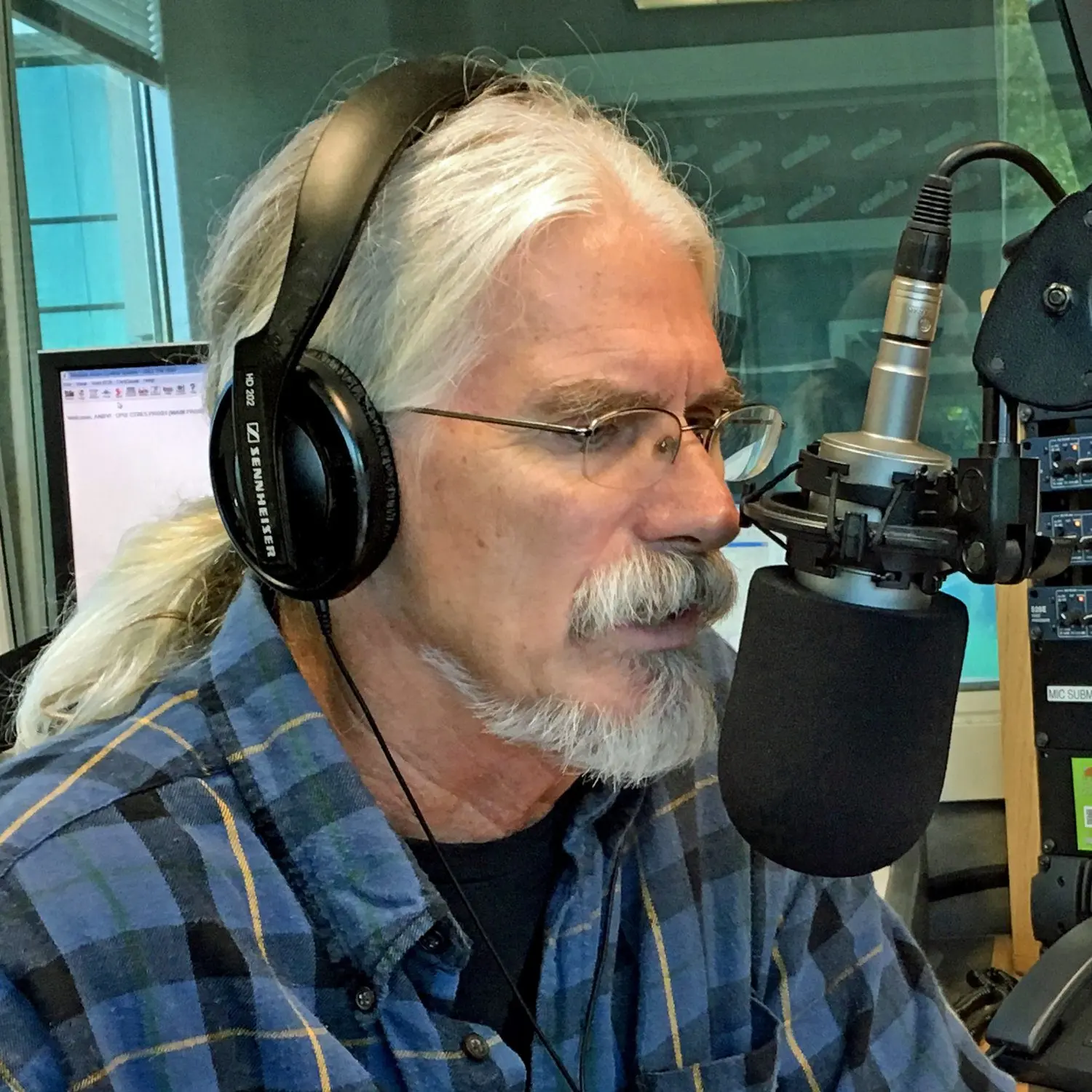
Join Steve Gregg as he navigates the complexities of biblical terms, the essence of atonement, and reconciliation in both Old and New Testaments. This episode sees lively discussions, with callers exploring the significance of following Christ and the interplay between faith and security in salvation. Dive into interpretations that challenge traditional viewpoints and consider how transformation through the renewal of the mind aligns with God’s will.
SPEAKER 1 :
Thank you.
SPEAKER 08 :
Good afternoon and welcome to the Narrow Path radio broadcast. My name is Steve Gregg and we’re live for an hour each weekday afternoon taking your calls. If you have questions about the Bible or the Christian faith and would like to bring them up for conversation, that’s what we’re here for. If you see things differently than the host or want to bring up an alternative viewpoint, we welcome that as well. Feel free to give me a call. However, right now our lines are full. So take this number down and call in a few minutes, and lines do open up all through the hour. The number is 844-484-5737. That’s 844-484-5737. A couple of announcements. I want to greet our new listeners in Waco, Texas. I think today are going on for the first time in KBBW 1010 AM. This also reaches Round Rock and some other areas around there. And I know I have a very good friend living around Rock. I hope he may be listening on here, though I think he listens on the app. Anyway, Waco, we welcome you to our network. And then this Wednesday night, we have something that happens once a month. It’s a Zoom meeting that everybody’s invited to participate in. the first Wednesday of each month at 7 p.m. Pacific time. I’m in California, so we do things by Pacific time here. But 7 p.m. Pacific time this Wednesday night, the first Wednesday of the month. And we do that for a couple hours. It’s a Q&A, just like the radio show. So if you like the radio show, you might like the Zoom meeting. You’re welcome to join us for that. That’s a little different than the radio, partly because we’re not confined to an hour. We don’t have to buy the time at such a dear price on the Internet as we do on the radio, and also because we can see each other on Zoom, so that’s kind of fun. Anyway, that’s Wednesday night, 7 p.m. Pacific time. Anyone’s welcome to join. If you want to know how to do that, just go to our website, thenarrowpath.com. That is thenarrowpath.com. And there’s a tab there that says Announcements. Scroll on down to Wednesday’s date, which is going to be April 1st. And I’m not fooling. And check it out. You can get on to the Zoom meeting and be part of that with us. All right. Let’s go to the phones, and we’ll talk first of all to Todd in Cressona, Pennsylvania. Hi, Todd. Welcome.
SPEAKER 07 :
Hi, Steve. Thanks for your radio program. My question regards two biblical terms, atonement and reconciliation. Atonement is a term that’s used most often in the Old Testament, if not exclusively, and reconciliation is used almost exclusively in the New Testament. So my question basically is, would it be wrong, because we often talk about the atoning work of Christ at the cross, In terms of the sacrificial system, would it be more appropriate just to keep the word atonement in an Old Testament temple sacrifice system and then use the word reconciliation only in regards to what Christ has done at the cross in addition to ransom and redemption, all those terms? Or is there some sort of foreshadowing, I guess, in the temple sacrifice where you could say the atoning works? is both in the Old Testament and can also apply to Christ at the cross, and so can reconciliation in some form be applied to things that are done in the temple sacrifice. So if that makes sense to you, I’ll take my answer off there, and thank you very much.
SPEAKER 08 :
Okay, Todd, thanks for your call. Well, I think you’re right that we think of atonement often in terms of the temple sacrifices, and we do find the word atonement in our English translations. in the Old Testament a great deal when associated with the sacrificial system. The word atonement in the Old Testament comes from a Hebrew word that means to cover. And, you know, to make atonement is to cover over sin. But in the Greek Old Testament, the Greek word that’s used to translate that, I believe it’s the same as in the New Testament, and it does mean to reconcile atonement. So, I mean, in other words, the same Greek word can kind of work both ways. Now, most of us are not reading our Bibles in Greek, but in English, and so the translators have their favorite conventions for translating these words. I would not object to your suggestion. I wouldn’t say that, you know, this is a better way to do things than is commonly done, but, you know, if you use the word reconciliation in the place of atonement in the New Testament, that would not be inaccurate. That wouldn’t be wrong. The idea is that God is reconciling himself to man and man to God through the death of Christ. And so, reconciliation is a good word, and it’s also a legitimate translation of the Greek word. So, I’m not against that. I don’t have any problem using the word atonement, the alternative English word, with reference to Christ or the Old Testament. In fact, I I think the one thing positive about using it both places would be that it underscores the connection between the sacrificial system and Christ’s own sacrifice of himself. That the animals were offered to make atonement for sins, especially on Yom Kippur, the Day of Atonement. And Christ, his ministry is likened to the Day of Atonement in Hebrews chapter 9. And so… the idea that there’s a connection in meaning and significance between atonement through animal sacrifices in the Old Testament and what Christ accomplished through the sacrifice of himself in the New Testament, that might be lost if we simply stopped using the word atonement with reference to what Christ did. Because I think there’s something to be said for continuing to use that term. Though, I mean, if somebody were aware that both The Greek word can mean both things. Then it wouldn’t be an issue. If we’re talking about translating things for the average shallow Bible reader so that they don’t have to think very deeply about things, if we use different words in the Old and the New Testament, they might not see the connection. Though, of course, people who are a little more serious in their Bible study might learn that quickly enough. I don’t know. So I’m not going to put my stamp of approval or disapproval on changing the way we use the words in the New Testament, but I can see it clarifying things in some ways, but maybe it could obscure something, too, by not using the word atonement for the New Testament word. So I can go both ways on that. To me, it wouldn’t be a hill to die on if one went one way or the other. I’m Michael in Santa Cruz, California. Welcome to The Narrow Path. Thanks for calling.
SPEAKER 11 :
Hi, Steve. Long time no talk. It’s been a long time.
SPEAKER 08 :
Are you in Santa Cruz, actually? Or are you in New York?
SPEAKER 11 :
No, no. I’m hoping to move back to my home state of Connecticut. I’m still in Santa Cruz.
SPEAKER 08 :
All right. Well, I was just in Santa Cruz, and I didn’t see you.
SPEAKER 11 :
Yeah, I don’t catch or show that often anymore. Did you have a home meeting?
SPEAKER 08 :
No, we had a meeting in Pasatiempo. But go ahead, tell us what you’re calling about today.
SPEAKER 11 :
All right. So, Billy Graham, in one of his sermons, he defined a Christian as one who has accepted the Holy Spirit. I think by that definition, I experience what I think of as, I could call it that, this benevolent presence in church or at a Bible study meeting. But I know probably from your point of view and the point of view of the Protestant faith in general, that would not be sufficient, right?
SPEAKER 08 :
Well, you’ve often mentioned that when you go to Christian meetings, you’ve sensed you feel the spirit of Christ or the Holy Spirit there, even though your own religion is Buddhism. And you’ve said you kind of connect with Christians in that way. But I guess there’s a couple of things I would say. Billy Graham probably did say that a person who’s a real Christian has received the Holy Spirit. That is true. But that’s not the total definition of a Christian. The total definition of a Christian is one who is a follower of Jesus Christ. And by a follower, we mean somebody who follows his teachings. That is, recognizes his authority and believes what he says. Because Jesus said, whoever continues in my word is my disciple indeed. In John 8, verse 31. but also someone who follows him in their life. Their life patterns are redirected into following his example, for example, in his teachings. So obviously, as a Buddhist yourself, you have probably some ethics that are similar to those of Christ, and you definitely feel some kind of a spirit or good vibes or something when you’re in a Christian meeting. which you might interpret as the Holy Spirit. And I don’t know, maybe what you feel is the Holy Spirit. I can’t say. But I don’t think a person is a Christian until they have received Christ for who he is. Now, I realize that you think very highly of Jesus. And frankly, people in most religions do. Jesus is one of those few people that any religion wants to say anything bad about. Buddhists like him. Hindus like him. uh well jews don’t like him much often but you know christians and muslims really think highly of jesus too but they’re not all not everyone who thinks highly of jesus is a christian because they’re not really following his teachings if you follow jesus teachings then first of all you’re going to believe in god and as a buddhist you’ve always shied away from uh believing in a personal god we’ve had many conversations you and i and uh and you’ve never been willing to embrace the idea of a personal God. And so in that sense, you certainly don’t believe what Jesus said about God because he described him as his father, as one who’s very attentive, one who knows the number of hairs on your head, one without whose will not a sparrow falls to the ground, a very involved God who’s like a father and who cares for us like a father. your own Buddhist beliefs don’t, don’t allow for there to be that kind of a God. In fact, you find it very difficult to even imagine such a God as that, but Jesus didn’t imagine it. He, he came from God. He came to reveal the father to us. And, uh, So, I mean, insofar as you hold on to the Buddhist belief that, you know, there is no personal God, you’re not actually a follower of Jesus. You might like Jesus, but so do the Buddhists. I mean, you are a Buddhist, but so do the Muslims. And so do most secular people think highly of Jesus, too. They don’t like the church, maybe, or something like that, or Christianity. But there’s very few people who want to say anything bad about Jesus. So you’re not really… You’re not really doing a special honor to Christ by thinking well of Him and feeling good around people who follow Him. You see, I believe you could be having a spiritual experience in the midst of these Christian assemblies where you feel like you feel the Spirit of Christ. But the Bible says that we have to test the spirits to see whether they’re of God because many false prophets and also, therefore, false spirits have gone out into the world. And the Bible says… that we tell the difference between the spirit of God and any other spirit by what that spirit conveys to us about Jesus, what that spirit witnesses or testifies about Jesus. And, um, You know, I mean, you’ll be a Christian when you surrender to Jesus Christ. But surrendering to Jesus Christ means you’re not reserving the right to hold theology different than his. You’re not reserving the right to pick and choose what he says and to decide whether you’ll follow it or not. I mean, a person could do that. Any human being could do that, but they’re not a Christian if they’re doing that. That’s the point. You’re not really a Christian if you’re not a devoted follower of Jesus Christ because the word Christian never meant anything except that in the Bible. And yes, if you’re a real Christian, you’ll receive the Holy Spirit. If you’re not a Christian and you feel some kind of a spiritual thing going on, it may be that the Holy Spirit is reaching out to you, trying to testify to you about Christ. Or it may be, if it isn’t the Holy Spirit, it could be some kind of other spirit that’s trying to make you feel good without Jesus. I mean, demonic spirits would love it if you felt good without Jesus. We sometimes think, well, why would the devil… You’ll want me to have a blissful, peaceful, happy experience spiritually. Well, he doesn’t care if you’re happy or not. The devil, he just wants you to be deceived. And therefore, if you had a false spirit, you could be deceived. That would serve the devil’s purpose as well. So, you know, you won’t really have the Holy Spirit that the Bible talks about until you believe in God, because God is the Holy Spirit. And also until you believe Jesus, because, I mean, that’s still something that you’ve been calling me for 20 years or something. You still don’t seem to be willing to take that step, even though you enjoy going to churches and being around Christians. And I don’t blame you. I do, too. But not that all Christian fellowship is equally enjoyable, but that it’s true when you find people who really follow Jesus. They’re generally speaking Christian. Good people, because that’s what Jesus makes us be. And I’m not saying you’re not a good person. You might be a very good person. I think many Buddhists and Hindus and Muslims and even atheists can be decent folks and have good intentions. But that’s, you know, having good intentions and being a decent person isn’t what, that’s not the definition of a Christian. The definition of a Christian is is one who’s devoted to Christ. And, again, that kind of devotion doesn’t mean I like Jesus. I like a lot of things about Jesus. You know, I really don’t believe what he believed about God. I don’t really believe what he believed about himself, but I like him. No, that’s not Christianity. That’s just a Muslim would say as much. A lot of atheists would say the same thing. So it’s a very different thing. So I’m going to say that what you say, you’ve received the Holy Spirit. You may have received a spirit, but the Bible indicates there’s a lot of spirits besides the Holy Spirit. And I wouldn’t be, just because of what you’ve told me about what you do and don’t believe. I wouldn’t identify that as the Holy Spirit, though I’d love it. I’d love it if that did happen with you. And, of course, we’ve been praying for you for many years about that. Thanks for your call. Okay, Jimmy from Staten Island, New York. Hi, Jimmy. Welcome.
SPEAKER 06 :
Hi, Steve. Can you hear me?
SPEAKER 08 :
Mm-hmm.
SPEAKER 06 :
Okay, this has to do with security. I feel bad. You’re such a knowledgeable guy, and I learned so much through you and the people I called in. But I just want to ask you about 2 Corinthians 5.17. Okay. It talks, And I know that I asked you about being born again, that you say you could lose it and you can become unborn or whatever. But what do you say about being made a new creature? If we’re made a new creature, God’s given us a new heart. He’s adopted us. He put his spirit within us. Are you saying that we can undo all that? Because when I look at all these verses, like repent and be baptized, and you shall receive the remission of sins. Repent and you shall receive the remission of sins. Whosoever shall call upon the name of the Lord shall be saved. I see all these verses as assurance verses.
SPEAKER 08 :
Well, you know, they do give assurance. They do give assurance to people who are believing in Christ.
SPEAKER 06 :
Yeah, I mean… One more verse? Okay. 1 John 5.1 Whosoever believeth that Jesus is the Christ is born of God. Is born of God is the perfect tense. That’s the previous action. Yeah, obviously. Whosoever believeth is the present tense. And it makes a world of difference. But I’ll take your explanation over here.
SPEAKER 08 :
Yeah, well, I mean, you made a very good point. Whoever believes, that’s present tense, is born of God or has been born of God in the past. I believe that. If somebody has been born of God, well, if somebody is a believer, they have been born of God. I say the same thing. But you seem to be saying that if they’re born of God, that they can’t ever lose that life that they received at birth because they’re a new creation and they’ve got this new heart. Well, you know, whenever a baby is born, and this is the illustration the Bible is using, is that of the birth of a child. When a baby is born, it does have a certain inclination. It wants to eat. It wants to breathe. It wants to live. It has a will to live and so forth. And that’s part of the nature of being a living being. But sadly, tragically, there are people who were born like that. And when they get older, they don’t want to live anymore. They don’t want the responsibilities of life. They don’t want the pains and the sorrows of life. And, tragically, some of them take their own life. In other words, being born and receiving a new life is not a guarantee that you’ll never die. Now, the Bible says if you’re believing in Christ, you won’t die. But that’s because believing in Christ is what confers to us life, Christ’s life itself. is conferred to us through believing. And that’s stated everywhere in Scripture. There’s always the connection between believing and being saved, believing and having life, eternal life. So as long as a person is a believer, a believer is a follower. I mean, believing, I’m not sure how you understand believing, and I know how some people do. Some people think believing means somebody just convinced you that Jesus is the real deal, and so they said, okay, I believe it. Well, and they may believe that the rest of their life. But that’s not what – the devil believes it too, and he’s not a Christian. Believing that Jesus is the real deal isn’t what makes you a Christian. It’s your surrender to Christ. It’s your repenting of your rebellion against him. I mean, if Jesus is the real deal, he’s the real what? He’s the king. He’s the Lord. He’s the master. That’s what the real deal is. If you believe Jesus is those things – Well, then, as long as that’s just something that’s in your brain, but it doesn’t have any impact on your will, you’re about the same as the devil in that particular belief, because he believes Jesus is all those things, too. But what the devil doesn’t do is surrender. He knows Jesus is the king, but he wants to live in rebellion against Christ as king. And that’s what many people do. There’s… Probably a very large percentage of people in the United States profess to believe that Jesus is the Son of God and that he died and rose again and all that stuff. And they may really believe it in their heads. But that doesn’t make a person a Christian. What makes a person a Christian is that they surrender to that truth. They lay down their arms. They stop being rebels against the crown. And they become loyal followers of Jesus. That’s why a person becomes a Christian. At least in the Bible, no one became a Christian any other way than that we know of. And it is certainly, I mean, Jesus, if anyone comes after me, let him deny himself and take up his cross and follow me. Now, lots of people believe that Jesus is what he said he is, but they don’t want to deny themselves or take up a cross or follow him. And therefore, they’re not Christians. Jesus said, if you’re going to come to me, this is how you do it. Jesus said if a person won’t forsake all that he has, he cannot be my disciple. If a person comes to me and doesn’t hate his father and mother and wife and children and his own life also, he can’t be my disciple. In other words, there’s a lot of people who believe in Jesus in some academic sense. They believe propositions about Jesus. But Jesus said, yeah, but, well, if you believe me, then that means you’ve got to surrender. You’ve got to deny yourself. You’ve got to take up a cross. You need to follow me. And, you know, not everyone does that. So, now, when someone is born again, that’s what they are inclined to do. They want to follow Jesus. If they don’t want to, they’re not born again. You made a good point. You know, you’re a new creation. If you’re born again, you have a new heart. And that new heart wants to follow Jesus. And that’s wonderful. But the problem is there have been many people in history, some of them were actually followers of Jesus in his lifetime, who at one point wanted to follow Jesus. Wanted him to be their Lord. Wanted to be on his team loyally. And then later, they ran off. They decided, I’m tired of this. I don’t want to do this anymore. And not only did that happen among some of the people who followed Jesus, because we read about that happening. I’m not just thinking of Judas. I’m thinking of John 6 and verse 66 where it says, From that time forth, many of Jesus’ disciples didn’t follow him anymore because they didn’t like what he was saying. But they were his disciples before that. So a person can be a disciple wanting to follow Jesus at some point, but they can change their mind. And I have known in my own lifetime people who were very zealous followers of Christ for years. and then changed their mind, went the other way. And the fact that the Bible warns against that, so many places, Jesus warned against it, Paul warned against it, Peter warned against it, the writer of Hebrews continually warns against it. It looks to me like the letters to the seven churches in Revelation warn against it. It seems like everyone who wrote the Bible, at least everyone who wrote the New Testament, warned against the danger of falling away. So if we say, well, I don’t see how a person who’s really born again could ever fall away, well… You may not be able to see how it is, but all the writers of the scriptures believed it was a danger and a possibility. So I do too. That’s kind of where I’m at. I’m not trying to figure it out from my own logical way of thinking. How could somebody fall away? I’m kind of looking at what the Bible says. Jesus describes people who fall away when persecution comes, who received the gospel previously and so forth. So, you know, I’m not just, I’m not making stuff up. In fact, I was raised in a church that taught that once you’re saved, you can never lose your salvation. The problem was finding anything in the Bible that literally said that and finding a way to deal with all the passages that warned Christians not to fall away and lose their salvation with that view. It clearly is not the view that the Bible teaches, but I was taught it growing up, and apparently you were too, but I don’t see it anymore. I appreciate your call very much. It’s good talking to you, brother. Yeah. Let’s see. Rich in Everett, Washington. Welcome, Rich. Good talking to you.
SPEAKER 04 :
Hi, Steve. Can you hear me okay?
SPEAKER 08 :
Yes. I just noticed how late it is. We’re going to have a break coming up, and so go ahead and give me your question if I have to. I’ll hold you over the break.
SPEAKER 04 :
Oh, thanks, Steve. I have a specific question about a specific verse. It’s Romans 12.2, and I’d like to go ahead and read it for those who might not have it memorized. Is that okay? Sure.
SPEAKER 08 :
Sure.
SPEAKER 04 :
Yeah, out of the NAS, it says, Do not be conformed to this world, but be transformed by the renewing of your mind, so that you may prove what the will of God is, that which is good, acceptable, and perfect. And I had a couple questions on this verse. I went to your website and listened to your verse-by-verse teaching, and that’s a great resource, by the way. Thank you so much for having that up there. I really appreciate it. And my specific question is about the word prove. I looked it up. in the concordance i can’t read greek but you know i can kind of look up a word and see where it’s used in other contexts or maybe translated differently and that word sometimes translated test approve examine or cry i guess i have a kind of a three-part question i’ll be quick because i know the break’s coming up i mean to try to test right i mean we read in matthew and luke where jesus responds to the devil do not put your lord your god to the test but here we’re told to test It has something to do with the will of God, which seems kind of important, and consequences seem really important here. So I’m wondering, what is the difference? What is the difference between testing God and testing what the will of God is?
SPEAKER 08 :
Well, I think testing in this sense probably has the sense of assaying, like when you assay gold or silver to get the real value of the gold and silver at the expense of the dross that you get rid of. Uh, testing and proving is used that way in the scripture too. And I think possibly that’s what Paul’s saying. Paul’s saying, you know, we’ve been told what the will of God is, what’s good and perfect and so forth. And if you become transformed by the renown of your mind, your life will prove that that’s what’s good. And that’s what’s perfect. I mean, it will, it’ll show the value of the will of God and it’ll prove that God’s will was, was right and good. Uh, I will allow that the word can have other meanings than that, but this is how I’ve always understood it. I don’t know how to, I wouldn’t know how to explain it another way necessarily. I don’t know if that’s helpful or not, but anyway, I hope it may be. We’ve got to take a break. You’re listening to The Narrow Path. Our website is thenarrowpath.com. We have another half hour coming immediately. Don’t go away. I’ll be back in 30 seconds.
SPEAKER 02 :
Small is the gate and narrow is the path that leads to life. We’re proud to welcome you to The Narrow Path with Steve Gregg. Steve has nothing to sell you today but everything to give you. When today’s radio show is over, we invite you to visit thenarrowpath.com where you’ll find topical audio teachings, blog articles, verse-by-verse teachings, and the archives of all the radio shows. Study, learn, and enjoy. We thank you for supporting the listener-supported Narrow Path with Steve Gregg.
SPEAKER 08 :
Welcome back to the Narrow Path radio broadcast. My name is Steve Gregg, and we’re live for another half hour, taking your calls. Once more, if you have questions about the Bible or the Christian faith you’d like to raise for conversation on the air, maybe you see things differently from the host and would like to discuss that on the air, feel free to do so. We do have a couple of lines open now, and if you want to join us, you can call 844-484-5737. That’s 844-484-5737. All right, our next caller today is, let’s see, it’s Gil from Long Island, New York. Gil, welcome to The Narrow Path.
SPEAKER 01 :
Oh, praise the Lord. I’m glad that Christ is our righteousness. Amen. Thank you. I love you, Steve. In the Catholic Bible, it reads, The Advocate, the Holy Spirit, whom the Father will send in my name, will teach you everything and will remind you of everything that I have told you. And I first started reading the Bible in 91. I started reading the NIV. I like the translation. It says, But the Counselor, the Holy Spirit, whom the Father will send in my name, will teach you all things and will remind you of everything that I have said to you. Would you say that the Holy Spirit could also be called counselor as well? Because I find that comforting as well as the comforter.
SPEAKER 08 :
Yeah. Well, the word in the Greek is parakletos. And it means… It’s from para, a particle that means alongside. And kaleo or kaleitos… Parakletos is one who’s called alongside. And specifically… it referred to a legal counselor, that is, a defense attorney. Actually, Jesus is called a parakletos in 1 John 2, where it says, if anyone sins, we have an advocate with the Father. He gets the word advocate, just parakletos. But Jesus, in the passage you’re talking about in John 14, says, or maybe 16, he talks about the paraclete several times in 14 through 16 of John. But he’s talking about the Holy Spirit as a paracletos. In fact, he said, I’m going to send you another paracletos because Jesus is a paracletos. He’s alongside us, defending us, as it were. And now another one’s coming, the Holy Spirit. Now, I think the, if I’m not mistaken, I think the King James uses the word comforter. And then I think you also read what the New American Standard, I think, or you read one that says advocate. And now you’ve read one that says counselor. Advocate and counselor, both of them work well for the idea of one who stands at your side in court, for example. Someone who’s got your back. Somebody who’s, you know, helping you in a in a hard situation, really. And that’s what the Holy Spirit is. And Jesus was that, too. Both are called the parakletos in separate passages, different contexts. So you like the word comforter, I think you said. Well, it is comforting. It’s comforting when you’re in a crisis to have somebody who’s very adequate to to stand alongside and help you maybe take your case on themselves and be your defender. That’s kind of what it is. So, you know, some translators would agree with the idea of a comforter. But the word does have a range of meanings. But, yeah, in different translations, you find translators have different ideas about what their preference would be in translating that word. I think the idea of a legal advocate, a defense attorney, is a very common understanding of what that word means. All right. Let’s talk to Bob in Portland, Oregon. Bob, welcome to The Neuropath. Thanks for calling. Thank you.
SPEAKER 09 :
Thanks for taking my call, Steve. I have a question. You can only call, I guess, the rapture captured by this dispensation. This is 1 Thessalonians 7, 13 through 18. Chapter 4. Chapter, yes, sorry, 4, 13, 18. Yeah, 1 Thessalonians 4. My question is, on John 5, 28, 29, wouldn’t it have to be the same event? Yeah, it would. Absolutely, yeah, it would be the same event. Go ahead. How do you get around that? I believe that the dispensations think that there’s two different events, don’t they?
SPEAKER 08 :
Well, what they believe, dispensations believe there’s two different resurrections. One of them, they believe, will occur before the tribulations. Now, they believe there’s a seven-year tribulation coming and that the rapture will occur before the seven-year tribulation. So the church, in their opinion, will be removed. This will only involve the righteous, the righteous dead and the righteous living. And they think that that’s what Paul’s… referring to in 1 Thessalonians chapter 4. But then they believe there’s, after the rapture and the resurrection of the saints, they believe there’s a seven-year tribulation, then the second coming of Christ to earth, then a thousand-year millennium. And then after the thousand-year millennium, they believe there’s the resurrection of those who are not Christians. So they believe that we will be resurrected a thousand and seven years prior to the resurrection of the unsaved. And I don’t believe the Bible teaches that anywhere. I understand the theology because I was part of it myself. I taught it myself at one time. But I think you brought up John 5, 28 and 29, where Jesus said, do not marvel at this. The hour is coming. Okay, a particular point in time is coming in which all who are in the graves will hear his voice. Well, are we talking about the righteous or the unrighteous here? He says, all who are in the graves will hear his voice and shall come forth. Those who have done good to the resurrection of life. So, okay, so he’s talking about the resurrection of the righteous ones. But then he says, and those who do evil to the resurrection of condemnation. Oh, no, he’s talking about the resurrection of the bad ones. Well, he’s talking about both. And he says both will happen in the same hour. There’s actually nothing in the Bible that says that the wicked will be raised at a different time than the righteous. Paul said when he’s on trial in Acts chapter 24, verse 15, he said, I believe as the Jews do about this. He said that there will be a resurrection of the dead, both of the righteous and the unrighteous. So he believed in one resurrection of the dead. And it would include the righteous and the unrighteous. No wonder Paul thought that. That’s what Jesus said in John 5, 28 and 29. Jesus also said in Matthew 25, verse 31, he says, When the Son of Man shall come in his glory and all his holy angels with him. Then he’ll sit on the throne of his glory. He’ll call all the nations before him, and then he’ll separate them into sheep and the goats. He’ll send the sheep into eternal life, and the goats into everlasting punishment. So the good and the bad come at the same time. And when is that? He said, when the Son of Man should come in his glory and all his holy angels with him. Then he’s going to call all the nations, everyone, to him, and then he’s going to separate them. Some are saved, some are not. So this is the very same thing that Jesus taught in John, the very same thing Paul taught, the very same thing that, frankly, the Bible teaches everywhere. There’s actually no place in the Bible that suggests that the righteous will have a physical resurrection at one point in time. And then some time years later, maybe centuries later, the unrighteous will. Jesus said all that will happen in one hour, in the same hour. So I disagree with those who would place those events at different times.
SPEAKER 09 :
So they would think that Lazarus would be raised in the rapture, right?
SPEAKER 08 :
Yeah, Lazarus will be raised on the last day. You mean Jesus’ friend Lazarus?
SPEAKER 09 :
Yeah, but then it says when Mary talks about Lazarus being raised on the last day, doesn’t that kind of do away with the rapture chapter?
SPEAKER 08 :
No, no, that is the last day, when the dead rise. When the dead rise, that’s the last day.
SPEAKER 09 :
That would make the rapture of Thessalonians, or for this patience, that doesn’t make sense then, would it?
SPEAKER 08 :
I’m not sure what you’re getting wrong here, right? No, no, the rapture and the resurrection happened on the last day. That’s what Jesus said. That’s what Mark said.
SPEAKER 09 :
So wouldn’t that be the Dispensationalist belief that there’s two? Two Resurrections? Two final days?
SPEAKER 08 :
Oh, yeah, that definitely refutes the Dispensationalist view. Absolutely, yeah.
SPEAKER 09 :
Right, okay. That’s what I want to run across. I was raised in Dispensationalist church, but not anymore. When I ran across that chapter 529, And then Lazarus being raised on the last day, it kind of can’t put them together.
SPEAKER 08 :
Yeah, that rattled me when I was a dispensationalist, too. In fact, that’s one reason I’m not one now. But, yeah, you’re right. I mean, read the Bible, and it’s interesting how someone said it’s interesting how much light the Bible sheds on the commentaries. The commentators aren’t inspired the Bible is. So that’s why you can be a dispensationalist as long as you’re listening to the commentators. Read the Bible for yourself and with an open mind, and you’ll obviously have to see their system is flawed. Okay. Well, thank you. Okay, Bob. Good talking to you. Bye. Bye now. All right. We’re going to talk next to Neil in Portland, Oregon. We do have a couple lines open if you want to try to get through before the hour is over. The number is 844- 484-5737. That’s 844-484-5737. And Neil from Portland, welcome to The Narrow Path. Thanks for calling.
SPEAKER 03 :
Hi, Steve. There’s been a lot of chatter about the Ethiopian Bible, which includes, I think, 81 books instead of 66. But a couple of points that I was wondering what you thought about is… The first thing is it talks more about church within yourself and your own spirit feels rather than so-called church or organized religion. That’s one point that is interestingly different. And the second point is about the end times where it matches more with your kind of stand of one – second coming, not the dispensational right, the other view, a millennialism or partial preterist. And it also says that there isn’t really any kind of tribulation other than it’s all spiritualizing the sort of demonizing of the human spirit and mind as we see all around us. Morality decline and all that stuff. What do you make of it? And again, they say that the European Bible is a the one that is influenced by the Roman, you know, Nicene Council and all that stuff. They were preserved from 480, I think. Am I correct? Or something like that. Definitely in the 400s, yeah. Yeah, so what do you think about this? Is there any credence to this? Which is more comforting? I know either of these views are like, okay, amortizationism, partial prayer is also saying, okay, we’re going to go to hell. Same does the Ethiopian Bible, only dispensationalists are saying, ah, kumbaya, we’ll be out of here. Right?
SPEAKER 08 :
Well, yeah, so you seem to be saying that the Ethiopian Bible with it has additional books. that our Protestant Bibles does not have, and it’s in those books that it teaches a different eschatology? Is that what you’re telling me? Because I haven’t read those books. I don’t have an Ethiopian Bible.
SPEAKER 03 :
Yeah, so I haven’t read it. I did just a quick look-see around some literature, and also, if you believe it or not, AI gives you a better take on it than anybody else who hasn’t read it. So it’s hard to read all this. First of all, English translations are not easily available, right? What I’m saying is, let me just say this. But what I found from the research was these two points.
SPEAKER 08 :
Okay. I wanted to know, do you have an Ethiopian Bible? Do you use one?
SPEAKER 03 :
No, I don’t. Okay.
SPEAKER 08 :
Because I don’t either. And I don’t even know what books they have. I know they have the Book of Enoch. And neither the Protestant nor the Catholic Bible have the Book of Enoch. The Catholic Bible has about seven books more than the Protestant Bible has, but they’re all from what we call the intertestamental period. The last book written by a prophet in the Old Testament was Malachi. And then there were 400 years from Malachi until the Gospels came. So in that 400-year period we call the intertestinal period, a lot of books were written that were not written by prophets, and therefore they were not inspired. They were religious books written by Jews, and seven of them are included in the Catholic Bible, but Protestants don’t receive them because they’re not written by inspired writers. But then the Ethiopian Bible has even more, obviously. It has like eight more books. And I don’t know what books they have. Again, I know they have Enoch, which neither of the other two Bibles have. But I would assume, though you could correct me because I don’t know this, I would assume that the extra books the Ethiopian Bible has are also from the intertestamental period. I doubt that they have any more prophets than the Hebrew Bible had.
SPEAKER 03 :
That’s my take, but they say Enoch, Jubilees, Maccabiah, and then there is a book of Covenant, which is Decalia, a book of Clement, and a letter of Jeremiah and Baruch. Now, yeah.
SPEAKER 08 :
Some of those are in the Catholic Bible. Some of those are in the Catholic Bible, too. All I can say, I mean, all I can tell you is I do not know much of anything at all about the Ethiopian Bible and which books they include. My guess is that they, like the apocryphal books in the Catholic Bible, I assume they’re probably mostly intertestamental books. But the main thing you’re saying is that the Ethiopian Bible is, whether it’s in those extra books or not, does not teach that there will be a literal seven-year tribulation or a rapture before the tribulation, I think is what you’re pointing out. But, you see, you don’t need the Ethiopian Bible to discover that because the Protestant Bible and the Catholic Bible also don’t mention a seven-year tribulation and certainly don’t mention a pre-trib rapture. So, you know, I suppose someone reading the Ethiopian Bible knows could get the same doctrines about that that we’d get from a Protestant or Catholic Bible. And unless some of the books that are included in the Ethiopian Bible have some eschatology in them, I don’t know that they do or would, but I wouldn’t be overly concerned about it since I doubt that they have any books that are written by prophets. The prophets, I think the Hebrew Bible contains all the books that were written by prophets. And then the New Testament is, you know, as it came to be understood in New Testament times, is written by apostles, not prophets. So I don’t think we have any apostolic writings except for the ones, I don’t think they exist, except for the ones that are in our New Testament. So anyway, yeah, I mean… I can’t really address the Ethiopian Bible. But if you’re saying that when you read the Ethiopian Bible, you don’t get the pre-tribulation rapture, well, I would agree you don’t get that reading any Bible that I know of. So I appreciate you sharing that. I don’t have any special knowledge about that version of the Bible. All right. Let’s talk to Chris from Minneapolis, Minnesota. Chris, welcome.
SPEAKER 05 :
Hey, Pastor. I’ve been listening to you for a long time. I missed you when you were in Minneapolis a few months ago in that metro area. Anyway, I have two questions. One’s been irking me, and we’ll get to the second one if you feel you have time. But the first one is I called out my – My men’s group Bible study teacher, we’re in the book of John, and also our associate youth pastor who fills in preaching now and then. They both just pray to Jesus, not our Father. They’re just like, Dear Jesus, thank you for dying. We love you, et cetera, et cetera. So when we’re in the book of John on our Wednesday night studies, I’m like… And call them out and go, why do you, you know, show me in the Bible where it says to pray to Jesus. And we’re just ending John 16, verse 26, where it talks about you talk to me, but then you won’t talk to me any longer. And I will not ask my father, our father, excuse me, whatever, on your behalf. And I don’t have my Bible open in front of me.
SPEAKER 08 :
I know the passage is very significant with reference to what you’re talking about. So what would your question be?
SPEAKER 05 :
My question is, no one can answer, they’re just like, well, you know, the Father and Son and Spirit are one. I said, yeah, but they have different roles. It seems to be all about praying to the Father, and when the disciples asked him how to pray, he said, you know.
SPEAKER 08 :
I get your point. So you’re just asking for my affirmation, and I get it. It is true. The Bible nowhere says that we should pray to Jesus. It is kind of a tradition of evangelicals to pray to Jesus, and maybe not just evangelicals. I think probably Catholics in medieval times, some of the monks and stuff prayed to Jesus. Like if you read, you know, some of the devotional writers of the medieval times, some of them prayed to Jesus. But you’re right, the Bible does not tell us to pray to Jesus, and Jesus himself told us to pray to the Father. And, you know, he said, when you pray, say our Father, which art in heaven. He didn’t say, when you pray, say Jesus, but say our Father, which art in heaven. Now, Jesus also said in John 14, 6, that no one comes to the Father except through me. In other words, he gave us access to the Father so we can talk to the Father ourselves. And then you mentioned John 16, where Jesus actually says in verse 23, In that day, meaning after he’s gone and sends the Holy Spirit, In that day you will ask me nothing. Most assuredly, I say, what if you ask the Father in my name? He will give it to you. So Jesus is saying, When I’m gone, you won’t be praying to me. You’ll be praying to my Father. And, you know, as you pointed out, verse 26, he says, In that day, this is John 16, 26, In that day you will ask in my name. He’s just said a few verses earlier, you’ll ask my Father in my name. So you’re not asking Jesus. You’re asking the Father in his name. And I do not say to you that I will pray to the Father for you, for the Father himself loves you, because you have loved me, and you have believed that I came forth from God. So, You know, everything Jesus taught about prayer was to pray to the Father. Now, when we see the apostles praying, there’s a few examples of their prayers recorded. Acts chapter 4, we have the apostles praying in verse 24. And following it says, the apostles got together to pray. It says, so when they heard that, they raised their voice to God with one accord and said, Lord… You are God who made heaven and earth and the sea and all that is in them. Now, they speak to Lord. Now, of course, Jesus is Lord. So one could say, well, maybe they’re talking to Jesus. But as you read what they say to the Lord they’re speaking to in verse 27, For truly against your holy servant Jesus, whom you anointed, both Herod and Pontius Pilate, with the Gentiles and the Gentiles, who were gathered together to do whatever your hand and your purpose determined before to be done. So, They’re speaking to the Lord, and they refer to the Lord’s holy servant, Jesus. So they’re obviously talking to the Father. They’re not talking to Jesus. Paul, likewise, when he prayed, he tells us how he prays in Ephesians chapter 3. Let me find it here. I actually use a real Bible here, so I have to turn the pages here. Ephesians 3.14, Paul said, For this reason I bow my knees to the Father. of our Lord Jesus Christ, from whom the whole family of heaven and earth is named. So Paul prayed to the Father. Well, no surprise, Jesus told us to pray to the Father. The apostles prayed to the Father. There’s only two examples after the ascension of Jesus where we read of any Christian speaking to Jesus or praying to Jesus. One is when Stephen was dying. He said, Lord Jesus, receive my spirit. So he addressed Jesus there. And the last verse in the Bible, John on Patmos says, even so come quickly, Lord Jesus. So those are prayers offered to Jesus. They are unusual because Jesus told us to pray to the Father, and also the apostles did pray to the Father. But these two occasions, Stephen and John, spoke to Jesus. But there’s one thing those two occasions had in common. They were both seeing visions of Jesus at the moment. They were looking at Jesus, and they spoke to him. Apparently it’s not forbidden to speak to Jesus, but, you know, they were looking at Jesus. They were seeing visions of Christ and spoke to him. That’s fine. But those were not normal prayers. I mean, when Jesus said, when you pray, say, our Father, I mean, some would say, well, can’t I pray to Jesus? I just want to say, why do you prefer to do it that way than the way he told you to do it? I mean, I have to say, many people would say, I don’t have much success in my prayers. You know, I never get any answers. Well, are you praying the way the Bible tells you to pray? I’m not saying you’ll always get answers, even if you do. But if you want answers, and you’re not getting them, and you’re not praying the way Jesus said to pray, that might be part of the reason. You know, I’m not sure why you’d want to pray a way that Jesus said not to pray. Yeah. It seems to me you want to have as much advantage to your prayers being answered as possible. I would follow what Jesus said, even if there was no advantage in it, simply because I’m a follower of Jesus. I’m a disciple of Jesus, so I do what he says. So I always pray to the Father. Now, you’re right. I’m in many Christian groups where people pray to Jesus, and I don’t take them to task about it. I don’t think God’s offended by it, but I think that they’re simply, I want to know why. Why does somebody want to pray to Jesus when he said to pray to the Father, when the apostles did? And I think many people would say they’re intimidated by the Father. I’ve known actually Christian people who said they do not like to think about God’s Father because their father was abusive. Their father was awful. Father is a negative to them. So they think of Jesus as the one who’s sympathetic toward them. He’s the one who’s on their side. And the Father, they think, is not. And they feel like the Father is the angry one. And Jesus was the nice one who kind of intervened to accommodate God’s anger against us so that we could receive grace. Now, the Bible doesn’t say that Jesus was the one who loved us. It’s the Father who loves us. God so loved the world that he sent his Son. Jesus was sent by God the Father because God loved us. So, I mean, if you’ve got an image of God as someone who’s angry and hateful, you’re thinking of God the wrong way. Certainly think of him differently than Jesus did. And, you know, it’s a terrible thing that many people have had bad fathers. And so when they think of God as a father, they think of something negative. But no doubt that’s the devil trying to ruin your relationship with God by making you associate him with a bad father. There are good fathers. And Jesus said that the father is one of them. And so if you say, well, I don’t feel comfortable praying to God as father, but Jesus seems friendly. Jesus is kind of a mommy level. And then there’s others who feel even uncomfortable talking to Jesus. They want to go to his mom. You know, I don’t feel like Jesus is, you’re going to listen, maybe his mom is more sympathetic, you know. I mean, how far can you get from what Jesus came to do? And still call yourself a Christian. Jesus came to bring us to the Father. No one comes to the Father but by me. He wants us to come to the Father. The Father sent the Son so that he would restore our relationship as prodigals with our Father. That’s God’s intention. That’s what Jesus came for. And yet some people say, well, I don’t know. I don’t trust the Father. I think I’ll talk to Jesus instead. Well, Jesus will send you the Father. Well, I’m not sure I trust Jesus. I’m going to talk to his mom instead. Why? Why? Why not just talk to the Father? That’s the privilege you have because of Jesus. You can talk to the Father, and that’s what it’s supposed to be. So, I mean, I would say if your pastor and associate pastor prayed to Jesus, I think they were just, I don’t know. Honestly, I don’t mean to say they’re not correctly instructed, but I think a lot of people were not correctly instructed when they became Christians. They just learned to pray to Jesus, and it just became a habit instead of praying to God the Father. Now, if they say, but Jesus and the Father and the Holy Spirit are one, well, in some sense they are, but apparently not in the sense that we’re instructed to pray. Jesus specifically said, you ask the Father in my name. Okay, so Jesus authorizes us to come to the Father, and the Father accepts us as if we were Christ because we’re coming in his name. But it’s still the Father we’re talking to. And you’re right. Father, Son, and Holy Spirit, even if they’re all God, they don’t all have the same function. And when it comes to prayer, it’s very clearly laid out what the function is. You pray to the Father in the name of Jesus. That means with his authorization, and the Father receives you as he receives Christ. I’m sorry we’re out of time. We have callers waiting. I wish I could get two, but that’s how the clock works. Call tomorrow. We’re on Monday through Friday at the same time. I’d love to talk to all of you. You’ve been listening to The Narrow Path. We are listener-supported. You can find out how to help us out if you go to our website, thenarrowpath.com. Thanks for joining us.
