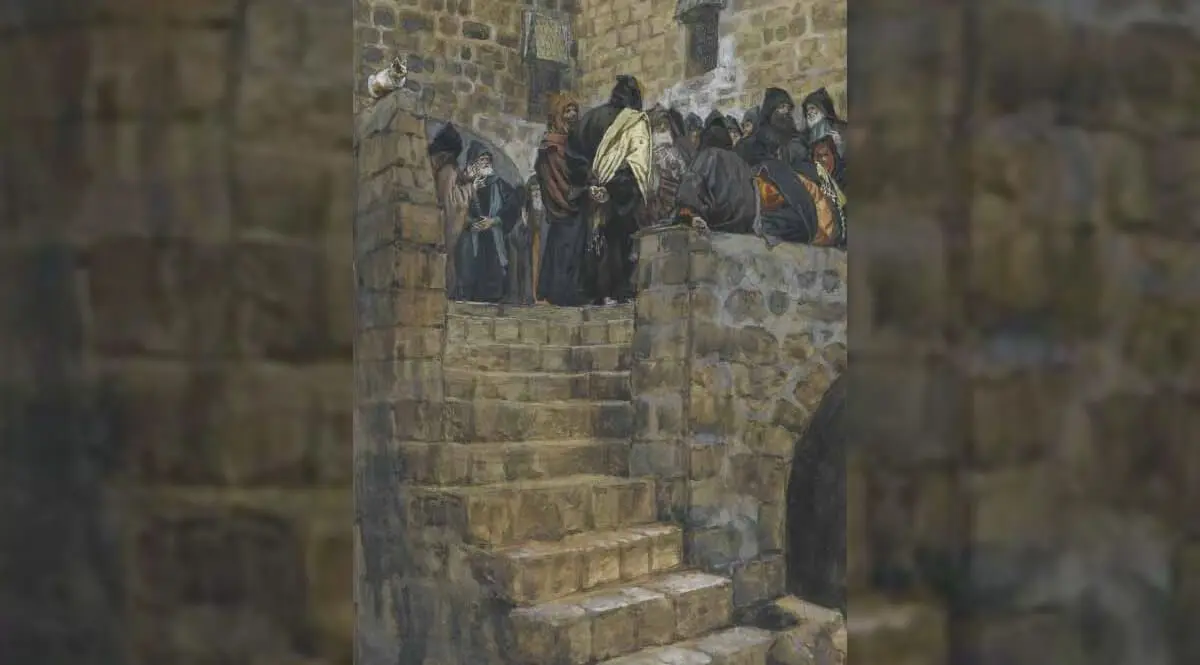

In this thought-provoking episode, delve deep into the historical and theological controversies surrounding the death of Jesus. Ronald L. Dart dissects the arguments presented in Mel Gibson’s ‘The Passion of the Christ’ and challenges the perspectives that have fueled debates for centuries. By examining the Gospel accounts, Dart presents a compelling argument about the true motivations behind Jesus’ crucifixion, shedding light on who really bore responsibility for this pivotal event. Using historical references and specific Gospel texts, Dart dissects the involvement of various parties, including the Jewish temple elite and the Roman authorities. His unique analysis not only serves
SPEAKER 02 :
The CEM Network is pleased to present Ronald L. Dart and Born to Win.
SPEAKER 03 :
When the Pope viewed Mel Gibson’s movie, The Passion of Jesus the Christ, he is said to have remarked, It is as it was. The Vatican has since tried to spin that remark to bring it back in bounds, but I have little doubt the Pope said exactly that, because that’s the avowed object of the movie, to tell the story of the suffering of Jesus as it was. But that seems to be a real problem. And if the Pope is right, then it is not Mel Gibson’s movie that is the problem. It’s the Bible. Few things I have read underline this like an article in the February 15th Newsweek. John Meacham, in his article titled, Who Killed Jesus?, he asked this, Does the death, the execution of Jesus, lie at the feet of the Jewish people? No, it does not. But making that simple denial does not tell the whole story. According to Meacham, the Bible can be a problematic source. Quoting him, he says, and that underlines the problem with Mel Gibson’s movie. It is based not on historical accounts, but on the Bible itself. Meacham continues, Scripture is not always a faithful record of historical events. The Bible is the product of human authors who are writing in particular times and places with particular points to make and visions to advance. When the gospel authors implicated the Jews in Jesus’ passion, they did not mean all Jewish people then alive, much less those yet unborn. The writers had a very specific group in mind, the temple elite who believed that Jesus might provoke Pilate. Now, I really don’t disagree with the latter part of what he has to say here. It is true that the people who wrote the Gospels were not attempting to indict the Jewish race. I would not go so far as he goes to say that they are not historical. The truth is they are as historical as any archaeological monument you can find out in the desert. For some strange reason, people want to believe things engraved in stone more than things written on parchment or papyrus. But the fact of the matter is we have four important historical artifacts about the events surrounding Jesus’ death. They are Matthew, Mark, Luke, and John. Later, Meacham will say, The film Gibson has made, however, is reviving an ancient and divisive argument. Who really killed Jesus? As a matter of history, the Roman Empire did. End of quotation. Now, is that the truth, the whole truth, and nothing but the truth? Was it merely that the Roman Empire killed Jesus? We’ll talk about that in just a moment. Continuing to quote… To take the film’s account of the Passion literally will give most audiences a misleading picture of what probably happened in those epical hours so long ago. The Jewish priests and their followers are the villains demanding the death of Jesus again and again. Pilate is a malleable governor forced into handing down the death sentence. Well… Now, I haven’t seen the movie yet, and we’ll have to make our own minds up about whether Pilate is pictured as a malleable governor handing down the death sentence. But in fact, there were villains in the biblical account. And you have to consider this biblical account a historical artifact, even if you want to argue with it. Continuing to quote, In fact, in the age of Roman domination, only Rome crucified. The crime was sedition, not blasphemy, a civil crime, not a religious one. The two men who were killed along with Jesus are identified in some translations as thieves, but the word can also mean insurgents, supporting the idea that crucifixion was a political weapon used to send a message to those still living, beware of revolution or riot or Rome will do this to you too. The two earliest and most reliable extra-biblical references to Jesus, those of the historians Josephus and Tacitus, say that Jesus was executed by Pilate. Well, so does the Bible. The Roman prefect was Caiaphas’ political superior and even controlled when the Jewish priests could wear their vestments and thus conduct Jewish rites in the temple. Well, political superior is one way of putting it. He was an occupying military power is another. Pilate, in continuing to quote, Pilate was not the humane figure Gibson depicts. According to Philo of Alexandria, the prefect was of, quote, inflexible, stubborn, and cruel disposition, end quote, and known to execute troublemakers without trial. Now, none of this need conflict with the biblical account. Even tyrants have some sense of right and wrong. It is clear from the account that Pilate did not see Jesus as a problem apart from the priests. It was not the Romans who arrested Jesus and accused him. Maybe we should take a look at the record. I consider the four gospel accounts to be valid historical artifacts. They are as important as any inscription in stone would be. They have to be dealt with. Now, personally, I consider them the inspired Word of God. The fellow writing this article hasn’t come to that point yet. How do you present the Gospels to someone who hasn’t seen them as inspired Scripture? Well, they are four separate documents. They are testimony, they are affidavits, they are depositions, and they are independent of one another. Scholars are now about as close to agreement as scholars ever become that these are all first century documents. You see, some of the problem arises because some people think that the documents we call Matthew, Mark, Luke, and John were actually developed by the church and not written by those gentlemen at all. Scholarship has pretty well put that to bed. Now, you’re the jury. You have to read the testimony and decide what to believe. When you look at a crime and you try to judge guilt or innocence, there are three major themes you’re going to follow. They are motive, means, and opportunity. Who had a motive for the killing of Jesus? Let’s bring John into the witness box and ask him. His testimony is found in John 5, verse 13. Jesus has healed a poor man. The man who healed didn’t even know who Jesus was. Jesus comes along and says, take up your bed and walk. He picks up his bed and walks, and so excited he doesn’t realize Jesus left. It says, and he that was healed did not know who healed him, for Jesus had conveyed himself away. There was a crowd there. Afterward, Jesus found him in the temple and said to him, look, you are made whole. Sin no more, lest a worse thing come unto you. Well, then the man departed and told the Jews that it was Jesus who had made him whole. All right. Why is this a problem? Well, it’s a problem because what Jesus did, he did on the Sabbath day. The account continues. Therefore did the Jews persecute Jesus and sought to slay him because he had done these things on the Sabbath day. Hmm. The reason given was religious. But plainly, these men wanted Jesus dead. But the fact of the matter is, their reasons for wanting him dead weren’t because he healed a man. And it wasn’t even because he healed a man on the Sabbath day, as we are going to see. Now, how many times have you seen courtroom dramas that present as evidence statements made by the defendant that he wanted the victim dead? It’s admissible. In other words, if you’ve brought three witnesses up here, all of whom heard this fellow say, I’ll kill you. I want to get rid of you. I want to see you dead. If they say this, this goes to motive. Who were these people who wanted Jesus dead? Were they Romans? Well, hardly. Were they the Jewish people? Of course not. But they were Jews. Meacham acknowledges in his article that the temple elite wanted Jesus dead. I call them the Jewish religious establishment. You can take your choice, but there’s one truth that you’ll have to agree with me on. They weren’t Romans. Was their plot known? I mean, were people aware of this so they could testify to it? John’s testimony continues, John 7, verse 25. Then said some of them of Jerusalem about Jesus, Isn’t this he whom they seek to kill? But lo, he speaks boldly, and they say nothing to him. Do the rulers know indeed that this is the very Christ? Look at this testimony. They understood what they were dealing with here. They knew these people wanted Jesus dead. Then John continues with his testimony. Chapter 11, verse 47. Then gathered the chief priests and the Pharisees a council and said, What are we going to do about Jesus? He is doing many miracles. Okay, who is this? Who are these people who are worried about Jesus? It’s the chief priests. It is the Pharisees. And what is it that they are really concerned about? Stay with me. When I come back after this short message, I’ll tell you. 1-888-BIBLE-44 Continuing in John 11, verse 47, Then gathered the chief priests and the Pharisees a council and said, What are we going to do? This man is doing many miracles. If we let him alone, all men will believe on him, and the Romans shall come and take away both our place and nation. All right? You want a motive. Now we have one. And the motive is political. Their concern over Jesus healing some poor guy on the Sabbath day was nothing more than a cover-up for their own concern about their power and their position. We’re not talking about the Jewish people. We’re talking only about the religious establishment of the time. One of them, named Caiaphas, who was the high priest that same year, said to them, You know nothing at all, nor consider that it’s expedient for us that one man should die for the people and the whole nation perish not. He spoke this, not of himself, but being high priest that year. He prophesied that Jesus should die for that nation, and not for that nation only, but they should gather together in one the children of God that were scattered abroad. Then from that day forth they took counsel together for to put him to death. Who had a motive for the death of Jesus? Well, Meacham said it, the high priest and the temple elite. And I ask, are there any Romans in this picture? Answer, no. So we establish motive. What about opportunity? Well, let’s call Matthew to the stand. Matthew 26, verse 3. He says, So now we’re not talking about whether we’re going to kill him or not. Now they are looking for the opportunity. They don’t want to do it on the feast day. They have to find a better time to do it. So we have a conspiracy of the religious establishment to find an opportunity to kill Jesus. Now this is the separate testimony of Mark and Matthew. Are there any Romans involved in this conspiracy? No, we have no testimony to that effect. Now, further on the subject of opportunity, Matthew 26, verse 14 says, Then one of the twelve called Judas Iscariot went to the chief priests, and he said, What will you give me that I will deliver him to you? And they covenanted with him for thirty pieces of silver, and from that time forward he sought opportunity to betray him. So who cut the deal? The priests. Who did they cut the deal with? One of Jesus’ disciples. Was there any Roman involved in this at all? Not one. Matthew picks up the story a little later in verse 47 with Jesus and his disciples in the Garden of Gethsemane. Jesus is speaking to his disciples. And while he spoke, Judas, one of the twelve, came with a great multitude with swords and staves from the chief priests and elders of the people. Now he that betrayed him gave him a sign saying, Whoever I kiss, that’s him. Arrest him. Hold him fast. And he came to Jesus and said, Hail, Master, and kissed him. And Jesus said, Friend, why have you come? So they came and laid hands on Jesus and took him. Okay, let’s not be misunderstood here. This is not an indictment of the Jewish people, but it is an indictment of the temple elite, the religious establishment. So far, neither Pilate nor any Roman was involved in this conspiracy to kill Jesus. Matthew then turns to the question of Jesus’ trial. And you’ll find this, Matthew 26 again, verse 57. They that laid hold on Jesus led him away to Caiaphas the high priest, where the scribes and the elders were assembled. Peter followed a long way off. The chief priests and elders, all the council, sought false witness against Jesus to put him to death, but they couldn’t find one. They got several witnesses that came, but they couldn’t find anybody that would give them any kind of a reliable witness. At the last came two false witnesses and said, this fellow said, I am able to destroy the temple of God and build it in three days. Boy, that’s not much, is it? And in fact, Jesus did say something not very far different from that. Their problem is with everybody they brought in here, they have simply not been able to establish any kind of guilt. And the high priest arose and said to Jesus, are you not going to say anything? What is it that these people are saying against you? Jesus sat there and said, absolutely nothing. And the high priest answered and said to him, I adjure you by the living God that you tell us whether you be the Christ, the Son of God. Now what the high priest here was doing was invoking the law of God, which required that once someone was adjured to tell the truth, they had to do so. If they didn’t, it was a penalty of perjury that was attached to it. And he asked, Tell us, are you the Christ, the Son of the God? And Jesus said, You said. Nevertheless, hereafter you shall see the Son of Man sitting on the right hand of power and coming in the clouds of heaven. And the high priest rent his clothes and said, He has spoken blasphemy. What further need have we of witnesses? Behold, now you have heard his blasphemy. So what do you think? They answered, He is guilty of death. So they spit in his face and buffeted him, and others smote him with the palm of their hand, saying, Prophesied Christ, who smote you? Question. Where was Jesus tried and convicted on the charge of blasphemy, whether it was true or not? Before Pilate or before the high priest? Before the Romans or before the temple elite? Well, that’s clear, isn’t it? So we have established who had the motive. We have established who created the opportunity. The problem now is the means. For some reason, the leaders did not want to stone Jesus, which was the usual penalty for blasphemy. I’m not sure they knew why they didn’t want to do it. But when the morning was come, all the chief priests and elders of the people took counsel against Jesus to put him to death, And when they had bound him, they led him away and delivered him to Pontius Pilate the governor. Why? Why did they take this step? Why didn’t they stone him? Sure, it’s not lawful for them under Roman law to put people to death, but nevertheless, that didn’t stop them from killing Stephen with stoning when they said he blasphemed. So what’s going on here? We’ll talk about that when I come back after this important message.
SPEAKER 02 :
For a free copy of this radio program that you can share with friends and others, write or call this week on and request the program titled, Who Killed Christ? Write to Born to Win, Post Office Box 560, White House, Texas 75791. Or call toll-free 1-888-BIBLE-44. And tell us the call letters of this radio station.
SPEAKER 03 :
Why did the Jews involve Pontius Pilate in this question? They took him to Pilate. And Pilate listened to all this stuff that they were saying. And they asked him, Pilate asked Jesus, Are you the king of the Jews? And he said, Yes, it’s as you say. But he got all these accusations, and Jesus had no answer. And Pilate was absolutely astounded. He couldn’t imagine why Jesus wouldn’t reply. When the crowd had gathered, Matthew tells us, Pilate asked them, Which one do you want me to release to you, Barabbas or Jesus who is called Christ? For he knew that out of envy they had handed Jesus over to him. Now this is fascinating. And not in the least bit surprising, Pilate may have been a cruel tyrant, but he wasn’t stupid. And he knew precisely what was going on when the chief priest and the temple elite brought Jesus before him. It didn’t take rocket scientists to figure this out. He knew it was pure envy. And I think he thought that maybe if he went out to the crowd, that the crowd would overrule the leaders and give him an excuse to let Jesus go. Because Pilate, cruel man though he was, wouldn’t have minded in the least throwing this in the face of the Jewish leaders. And about that time, his wife came in and said, Don’t have anything to do with that innocent man. I’ve suffered a great deal today in a dream because of him. But the chief priests and the elders persuaded the crowd to ask for Barabbas and to have Jesus executed. Pilate, when he saw he was getting nowhere, and that an uproar was ensuing, he took water and washed his hands in front of the crowd and said, I’m innocent of this man’s blood. It’s your responsibility. All the people answered, Let his blood be on us and on our children. So he had Barabbas released and had Jesus flogged and handed over to be crucified. And, of course, this line, let his blood be on us and on our children, is one that Mel Gibson removed from the movie because it is so inflammatory. But it is in the record, even though Matthew is the only one who recorded it. John Meacham wrote, Pilate was not the humane figure Gibson depicts. He said he was known to execute troublemakers even without a trial. Frankly, I see nothing in the historical record that conflicts in any material way with the story of Pilate found in the Gospels. He knew that the Jews had delivered up Jesus for envy. He tried to let him go, but politically he could not. Turning to John and what he had to say about this. The Jews answered Pilate, We have a law, and by our law he ought to die, because he made himself the Son of God. Now when Pilate heard that saying, he was more afraid, and he went into the judgment hall, and he said to Jesus, Whence are you? And Jesus gave him no answer. And Pilate says, Are you not going to talk to me? Don’t you know I have the power to crucify you and the power to release you? And Jesus answered, You could have no power at all against me, except it were given to you from above. Therefore he that delivered me unto you has the greater sin. And from that time forward, Pilate tried to release him. But the Jews cried out, saying, If you let this man go, you are not Caesar’s friend. Whoever makes himself a king speaks against Caesar. Wow, what a thing to say. Pilate brought Jesus out, and he said to the Jews, Behold your king! But they cried out, Away with him! Away with him! Crucify him! And Pilate said, Shall I crucify your king? The chief priests answered, We have no king but Caesar. What a devastating thing for them to say. They said, We have no king but Caesar. And I guess they had forgotten the pivotal point in their history when they demanded a king from God. And he said, They have not rejected you, Samuel. They have rejected me, that I should not rule over them. The rejection of God as their king is a steady thing in the history of Israel as they keep turning to other rulers. So, Pilate delivered him to be crucified. They took Jesus and led him away. Now, when you see the movie, if you see it, you can judge for yourself. By all accounts, the problem is not with the movie. It’s with the Bible. But the Bible does not place the blame on any group of people, any race of people. John says in chapter 12, verse 31, Now is the judgment of this world. Now shall the prince of this world be cast out. And I, if I be lifted up from the earth, will draw all men unto me. This he said, signifying what death he should die. The Jews were not allowed to stone Jesus for at least two reasons. One, it was not the death God intended. Two, the guilt was not to be laid on the Jews alone. Who, then, is responsible? When John Meacham in his article about the movie asked the question, who really killed Jesus? And answered, as a matter of history, the Roman Empire did. He was only half right. It is true that Pilate gave the judgment and the Roman soldiers drove the nails in Jesus’ hands and his feet and erected this cross before between heaven and earth and a Roman soldier stuck a sword into Jesus’ side. Okay, we know all that. But who delivered him? Who accused him? Who condemned him to death in the story? The truth is, the question of who’s to blame for the death of Jesus was answered a long time ago in the Hebrew Scriptures. In Isaiah 53, verse 3, He is despised and rejected of men, a man of sorrows and acquainted with grief. We hid, as it were, our faces from him. He was despised. and we esteemed him not. Surely he has borne our pain and carried our sickness. Yet we did esteem him stricken, smitten of God, and afflicted. I guess we thought that God did all this to him completely apart from us. But the prophet replies, he was wounded for our transgressions. He was bruised for our iniquities. The chastisement of our peace was upon him, and with his stripes we are healed. All we, like sheep, have gone astray. We have turned every one to his own way. and the Lord has laid on him the iniquity of us all. The question is as clear as crystal. It wasn’t the Jewish people. It wasn’t the Roman Empire. It was God who laid upon Jesus the sins of all mankind and then required him to die. As John the Baptist said, Behold,
SPEAKER 02 :
the Lamb of God that taketh away the sin of the world. The Born to Win radio program with Ronald L. Dart is sponsored by Christian Educational Ministries and made possible by donations from listeners like you. If you can help, please send your donation to Born to Win, Post Office Box 560, White House, Texas 75791. You may call us at 1-877-7000. 888-BIBLE-44 and visit us online at borntowin.net.
SPEAKER 01 :
Christian Educational Ministries is happy to announce a new full color Born to Win monthly newsletter with articles and free offers from Ronald L. Dart. Call us today at 1-888-BIBLE-44 to sign up or visit us at borntowin.net.