
Dive into the profound questions about why some mysteries in the Bible remain unanswered, and explore how understanding comes through piecing together different testimonies. Ronald L. Dart unravels the symbolism and lessons in biblical narratives, offering insights into biblical parables and commandments. Through his discussion, learn why some truths are apparent and why others require a deeper, introspective journey of faith.
SPEAKER 02 :
The CEM Network is pleased to present Ronald L. Dart and Born to Win.
SPEAKER 03 :
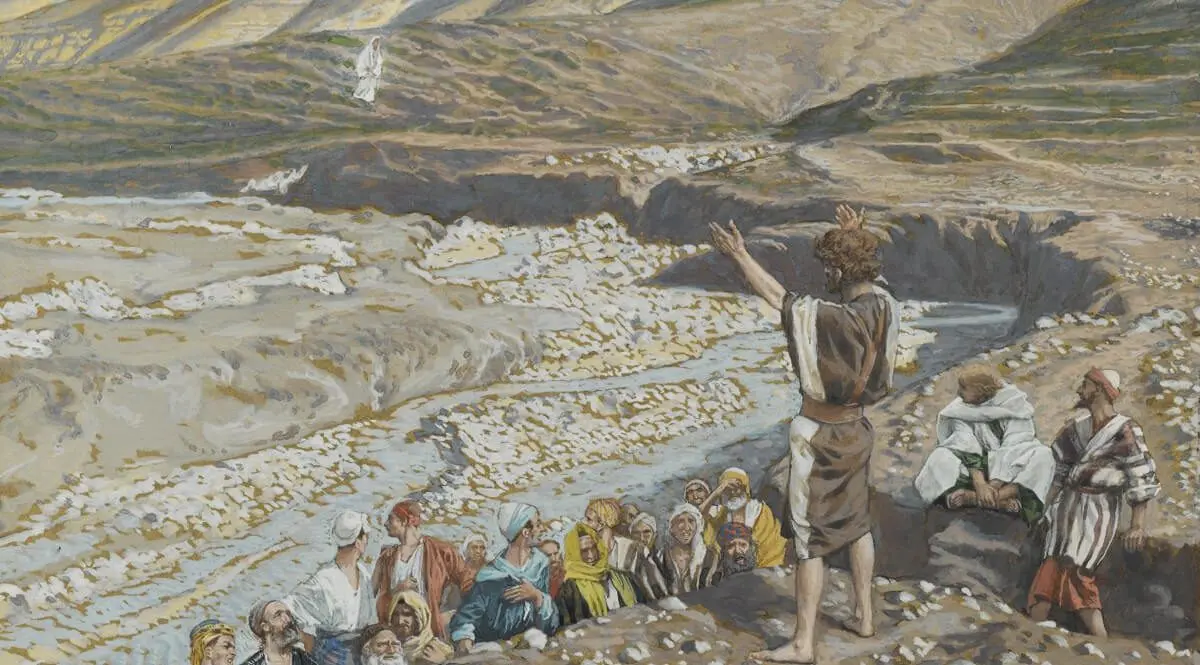
Why do you suppose God leaves us with so many unanswered questions? And why are some of the truths of the Bible so, well, obscure? If God wants us to know something, why didn’t he come right out and say so? I talked about this in a recent program because a woman asked me about it, I think in a little bit of frustration. The fact is that on the really important things, God did come right out and say so. But there’s a whole lot more to be known, and God has placed in the heart of the man the desire to know everything. We’re just not content with a little bit of knowledge. We want to know whys and wherefores, and when we get those answers, we still have more questions. Everything, of course, is a little more than our small brains can hold, but there is rather a lot more that we can know. As Paul said, now we know in part. We call the Bible the Word of God, and indeed it is. But that word comes to us in the form of the testimony of a cloud of witnesses. And just as a good investigator can take the testimony of one witness, combine it with the testimony of another witness, he can then come to know something that actually isn’t in the testimony of either one of them. And it’s only by knowing what both of them said that you can discern what really happened. So we can sometimes find insights into things that are not actually said by any of the witnesses in the Bible. We do it by taking a little bit here and a little bit there, and we say, wait a minute, why did he say that? It’s like a great puzzle of life where we struggle to put together all the pieces and discover pictures previously unknown and unseen. Sometimes. We have to be led to these things by God himself, opening our mind to see these things. After one particularly opaque parable of Jesus, his disciples came to him privately, probably feeling a little dumb, and asked him, Lord, what did that parable mean? And Jesus answered them. You’ll find this in Mark chapter 4. He said, Unto you it is given to know the mystery of the kingdom of God. But to them that are without, all these things are done in parables, that seeing they may see and not perceive, hearing they may hear and not understand, lest at any time they should be converted, and their sins should be forgiven them. Now that is a troubling statement. That people, it is not given to them to understand, lest they should repent, be converted, and their sins be forgiven them. But you know, it’s better to be troubled by some of these questions than simply to dismiss them out of hand. Some people are allowed to understand some things, and others are not. What do you suppose makes the difference between these two categories of people? It may have something to do with how we treat the things that are plainly stated. Think about that. There’s a whole bunch of stuff in the Bible that is as clear as crystal. I mean, what is there about thou shalt not steal that you and I don’t understand? I mean, it’s clear. If it belongs to you, it belongs to you, and I have no right to take it away from you. So that we understand. Now, here’s the next question. Why should God reveal the hidden things to a thief or to an adulterer, to a liar, to a covetous person? What good is there in opening a mind to see things that he wouldn’t do if he did see them? Well, not only is there no good in it, there may be positive harm in it. Now, this may not be the whole answer to this, but it is a start. For the person who cares to look, there is an incredible wealth of knowledge in the Bible. I’ve over the years learned whenever I see an anomaly in the Bible, it’s a red flag stuck in the ground. It says, dig here. And I’ve found if I go get my shovel and go to the trouble to dig around that red flag, I find stuff there. Take, for example, an incident recorded only by the Apostle John. No one else mentions this at all. John the Baptist was baptizing in the Jordan River by a little place called Bethabara, which is a Hebrew word that means the fairy house. John looked up and saw Jesus walking toward him, and he said something that, whenever I read this, I thought, I wonder what on earth the people he was baptizing and his disciples who were there, what did they think he meant? He saw Jesus walking along the bank of the Jordan River, and he said, Look, the Lamb of God, which takes away the sin of the world… Now, for the 20th century Christian, that has been so bandied about in sermon and song. We know exactly what he was talking about, but I don’t think it was that clear at all to the disciples of John at the time. John, in a sense, was baptizing unto repentance. And the idea of washing away one’s sins in baptism was well enough known. He was not the only person who baptized. Baptism or immersion in waters was common in Judaism at the time. The people also knew well enough what a sacrificial lamb was. The ceremonial rites at the temple made provision for offering a lamb, even a kid of the goats, for a sin offering. So they got that. They were completely aware of the Passover lamb, which served for a family and memorialized the Passover night in Egypt, where all of the firstborn not protected by the blood of the lamb died. We all know that because we learned it in Sunday school or Sabbath school, or we’ve heard it in sermons, or we’ve sung it in songs. But there was nothing in the understanding of the Jews or their culture of the Jews standing about John of a man serving as a lamb for a sin offering. Nor was there anything in their purview about saving the world. As strange as it may sound to us, salvation to them was of and for and by the Jews. It was purely a matter of their faith, their religion, their God, and my God is not your God. It was the way their culture had brought them up to believe. So I can’t help wondering what the people thought when John said this. John’s testimony is right here, but it’s incomplete. There’s information that John may have had, his disciples didn’t have, but by the time Paul wrote some of his letters, a lot had cleared up to clear up this mystery. For example, there came a day when Paul had to write to the church at Corinth. He’s gotten information about things that were going on there. and about the questions, some of the questions they were answering. We can all be grateful for the failures of the Corinthian church, because it was the failures of this rather obstreperous bunch of people that caused Paul, forced him to write this first letter, in which a great deal of valuable information is found to connect just even for one example to what John said that day while he was baptizing. There was a man in the Corinthian church who was committing a particularly egregious sin, commonly known not even hiding the things that he was doing, and the church had not even lifted a finger to do anything about it. The days of unleavened bread were approaching. They had all gotten leavening out of their homes. They had all very dutifully following through with the ceremonial parts of the law, and they were taking care of it. So their homes were free of leaven, but their church was not. So Paul wrote them. He told them, you better deal with this situation. I’ve judged it already. You all get together. My spirit will be present with you and my authority with you. And you deliver this guy to Satan for the destruction of the flesh so he can save his soul in the day of the Lord Jesus. Now, I don’t know what delivering a person to Satan for the destruction of the flesh means. I know I don’t want it to happen to me. But he went on to say, drawing his analogy out a little further, purge out, therefore, the old leaven, that you may be a new lump as you are unleavened. Now, he had already compared this chap to leaven in bread, as to a corrupting influence, as it were. You’ll find all this, by the way, in 1 Corinthians 5. So Paul says, let’s get this man out of the church so you can be a new lump, a really unleavened lump, even as you are unleavened in your homes. For even Christ our Passover is sacrificed for us. Therefore let us keep the feast, not with old leaven, neither with the leaven of malice and wickedness, but with the unleavened bread of sincerity and truth. Now, John didn’t say this on the bank of the Jordan River that day. He said, Behold the Lamb of God which takes away the sin of the world. Paul takes us a step further and identifies Jesus Christ as our Passover Lamb who is sacrificed for us. So there is a thread that runs from John the Baptist’s remark to Paul’s statement. And now we realize that John the Baptist knew what Jesus was to do and why he was to do it. And there is rather more significance now in John’s remark. Behold the Lamb of God which takes away the sin of the world. I take from this combination… that the Passover lamb is for everyone, not just for the Jews. But I noticed something else about this thread. It continues on from these statements, and it may be worth following it to see where it leads. Stay with me. When I come back, we’ll follow that thread back into the past.
SPEAKER 02 :
Is it possible that an infinite God could find himself wanting anything? The Bible says it is not good for man to be alone. If it’s not good for man to be alone, then perhaps it wasn’t good for God to be alone either. Ronald Dart’s book, The Lonely God, is now available from Amazon.com or directly from BornToWin.net. For information, write to Born to Win, Post Office Box 560, White House, Texas 75791. Or call toll free 1-888-BIBLE-44. That’s 1-888-242-5344.
SPEAKER 03 :
If we follow that thread forward from the statement of John the Baptist, behold the Lamb of God that takes away the sin of the world. We get to the third chapter of John, and we encounter, if you’re a churchgoer, very often at all, you have heard about this man. He was a Pharisee. He was one of the rulers of the Jews, presumably a member of the Sanhedrin. His name was Nicodemus. He came to Jesus for some reason by night, and he said, Rabbi, we know that you are a teacher come from God because no man can do these miracles that you do except God be with him. It’s an incredible admission coming from a member of the Sanhedrin who included others, I’m sure, in his comment because he said, we know. What he was hoping was that that’s all Jesus was, or at least fearing that he might be more. The fact is, this man seems to, later on, have come around completely. But Jesus hit him with this statement, familiar, I guess, to most Christians. He said, Verily, verily, I say unto you, except a man be born again, he cannot see the kingdom of God. And Nicodemus didn’t get it. He said, How is it possible for a man to be born when he’s my age? Can he enter the second time into his mother’s womb and be born again? Well, Jesus came along with some other things to explain this stuff to him. And Nicodemus really still didn’t get it. And finally, Jesus said, are you a master in Israel and you don’t know these things? I tell you the truth, we speak what we know. We testify what we have seen, and you don’t seem to receive the witness. I’ve told you earthly things, and you don’t believe. How are you going to believe if I tell you heavenly things? Isn’t that an interesting remark all by itself? He said, I’ve told you the basics. I’ve given you the plain, straight statements, and you don’t believe. then how on earth are you going to believe if I take you on to the heavenly things? Which is, in a way, the question we’re asking. How is it that so many of the things in the Bible are obscure, that we just don’t seem to get, whereas some things are quite clear? Well, basically, if we can’t believe the things that are clear, why take us beyond that? And so, he said, no man has ascended up into heaven but he that came down from heaven, even the Son of Man which is in heaven. And then he proceeds to make a truly remarkable statement. As Moses lifted up the serpent in the wilderness, even so must the Son of Man be lifted up, that whoever believes in him should not perish but have eternal life. For God so loved the world… that He gave His only begotten Son, that whoever believes in Him should not perish, but have everlasting life. That last verse, John 3.16, I think is the first scripture a lot of us ever memorize. For God so loved the world, that He gave His only begotten Son, that whoever believes on Him should not perish, but have everlasting life. For God sent not his Son into the world to condemn the world. That’s not the point. But that the world, through him, might be saved. Well, what did John the Baptist say? Behold the Lamb of God that taketh away the sin of the world. And then later John says, actually, quote, Jesus is saying, For God so loved the world that he gave his only begotten Son that whoever, whoever believes in him should not perish but have everlasting life. It’s the gospel in a nutshell. But there’s still the thread we are following. And it doesn’t just run from John the Baptist to Paul through this scripture. If we go back and follow it back into history… We find something else, because this expression, he gave his only begotten son, touches a chord of memory. There was a man once who was called on to do this very thing. His name was Abraham. He was a friend of God. God had called him from Ur of the Chaldees and brought him all the way to the Promised Land and promised he would give him everything from the Nile River to the Euphrates, to his seed, to his descendants, who would be like the sand of the seashore. Now, this man was called a friend of God. God loved him. And yet there came a day when he decided he needed to try Abraham again. And he said to him, Abraham, take now your son, your only son Isaac, whom you love, and get to the land of Moriah and offer him there for a burnt offering upon one of the mountains I will tell you of. You’ll find this in the 22nd chapter of Genesis. Now, the story that lies behind this is fascinating because Abraham and Sarah were very old. And even though God had made promises like this to him, Abraham and Sarah had no child. And finally, Sarah decides to take matters into her own hands, so to speak. And she tells Abraham, look, here’s my maid Hagar. You take Hagar and let’s beget a child by her and the child will be mine and so forth. It was surrogate motherhood. They did it in those days the natural way instead of the way they do it today in a test tube. Well, it turned out to be a very bad idea. The boy that was born of Hagar, name was Ishmael, turned out to be a really big problem, and Abraham had to send him away. But this wasn’t part of what God’s promise was. His promise was that the two of you will have a seed, that Sarah will have a son. Oh. Well, they had a son and named him Isaac, and he was the son of Abraham’s old age, and I know he loved him like his own life. And now he’s supposed to take him to a mountain and offer him for a burnt offering? Well, Abraham rose up early in the morning and saddled his animal, took two of his young men with him, Isaac, his son, he split the wood for the burnt offering and loaded it up on the animal, and they all rose up and went to the place that God had told him of. It was a three-day journey. When they got there, Abraham put the wood over his shoulder, took the fire, that is what he’d start the fire with in his hand, and a knife along with him, and he told the young men to wait while he took Isaac up the hillside. And Isaac said to Abraham, his father, my father, here am I, my son. He said, behold the fire and the wood, where’s the lamb for a burnt offering? And Abraham said, my son, God will provide himself a lamb for a burnt offering. And they went on, both of them together, and they came to the place that God had told him of. He built an altar and He laid the wood in all order. He bound Isaac, his son, and laid him on the altar upon the wood. He took his hand, picked up the knife to slay his son. My word. Christians write songs about this. God will provide himself a lamb. They see all the way back down this thread we’ve been following to Abraham and Isaac as a type of God loving the world so much that he gave his only begotten son. And now in Abraham we’re able to see the pain that a father must feel The loss that a father is facing when he makes the decision to give his own son in death. It’s a shocking thing to even think about. Sobering beyond belief. But we have come across in this a truth. We’ve followed a thread that winds its way through history. And at every place along that thread where we pick it up, We find it’s about Jesus Christ, all the way back to Abraham, and probably, if we had the wit to see it, it even goes back further than that. So, we learn, because we have looked, because we saw that anomaly, and we said, where is this story going to lead? Well, as Abraham was ready, the angel called him out of the heaven and said, Abraham. He said, I’m here. He said, don’t lay your hand upon the lad. Don’t do anything to him. For now I know that you fear God, seeing you have not withheld your son, your only son from me. Abraham did not actually have to do the deed. God would never approve of human sacrifice. And so, and Abraham looked, and there was a ram caught in a thicket by his horns. He took him and offered that ram for a burnt offering in the place of his son. On our way back to this point, there was another place on this same thread that we passed over and didn’t look at. Stay with me, and I’ll tell you what that is. But first, grab a pencil and a piece of paper. I want to give you an address and a phone number.
SPEAKER 02 :
If you would like to share this program with friends and others, write or call this week only and request your free copy of Behold the Lamb of God. Write to Born to Win, P.O. Box 560, White House, Texas 75791. Or call toll free 1-888-BIBLE44. And please tell us the call letters of this radio station.
SPEAKER 03 :
In following this thread back to Abraham, We passed one of the most important events in the history of the world, for that matter, but certainly in the history of Israel. It was the Passover in Egypt. When God sent Moses and Aaron down to Pharaoh and put all of Egypt through that terrible line of plagues that they went through, and finally came to the last one, with Pharaoh’s heart having been hardened and with him refusing to let them go, it finally comes to the place to where God speaks to Moses and Aaron and says, Okay, this month shall be to you the beginning of months. Speak to the congregation of Israel and say, On the tenth day of this month. And one wonders if it was the tenth day of the moon when Abraham was sent to the mountain with Isaac. They shall take to them every man a lamb according to the house of their fathers, a lamb for a house. So you take this lamb without blemish, a male of the first year, you take it out of the sheep or the goats, you keep it up until the fourteenth day of the same month, and the whole assembly of the congregation of Israel shall kill it in the evening. And apparently, this 14th day of the first month was the very time when Jesus Christ was slain. And so they took this lamb, they killed it, and they took some of its blood and they struck it on the two side posts and the lintel of their houses where they were going to eat it. And God said, when I see the blood on your houses… I will pass over you. What an astonishing thing to consider. Here was a lamb… a Lamb of God that they were going to use to protect and to save the firstborn of an entire nation and to deliver that entire nation out of the bondage in which they had been held all of their lives, the lives of their fathers, the lives of their grandfathers, down through generations of time. This thread that makes its way from the beginning all the way down to the end is all about Christ. There is a theme that runs all along this thread that we almost have to take note of if we care enough to dig. For example, we start with Paul in his statement, Christ our Passover is sacrificed for us. And we pick up this little thread and we follow it back to John 3.16. For God so loved the world that he gave his only begotten Son that whoever believed in him. And I take that quite literally. He means everybody in the whole wide world. We follow the thread a little further and we come to John the Baptist standing on the banks of Jordan and looking up and seeing Jesus walking toward him and saying, Behold. the Lamb of God that takes away the sins of the world. It reaches out to everyone. We follow the thread further back, and we find Moses in Egypt. And once again, when we pick up the thread, there is Christ, our Passover, sacrificed for us. And Christians have seen that down through the generations when they sing a song like, When I see the blood, I will pass, I will pass over you. And we follow the thread all the way back to Abraham and Isaac on the top of a mountain with Abraham having a knife in his hand, ready to kill his own son as a type of Christ. And I’m still left with a mystery. Why doesn’t everyone see this? Could it be because they aren’t willing to do the simple things?
SPEAKER 02 :
The Born to Win radio program with Ronald L. Dart is sponsored by Christian Educational Ministries and made possible by donations from listeners like you. If you can help, please send your donation to Born to Win, Post Office Box 560, White House, Texas 75791. You may call us at 1-888-BIBLE44 and visit us online at borntowin.net.
SPEAKER 01 :
Christian Educational Ministries is happy to announce a new full-color Born to Win monthly newsletter with articles and free offers from Ronald L. Dart. Call us today at 1-888-BIBLE44 to sign up or visit us at borntowin.net.