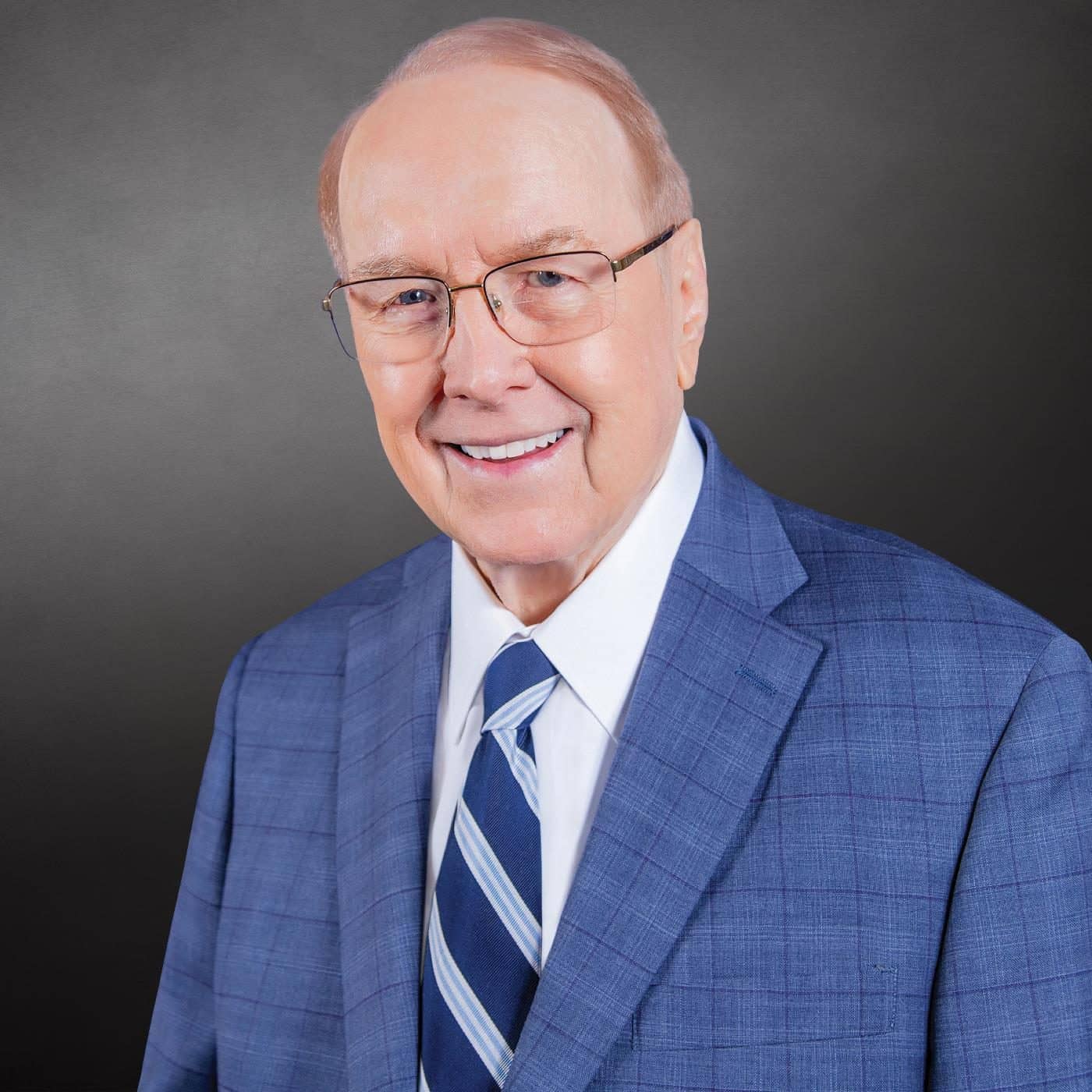

In this thought-provoking episode of Family Talk, Dr. James Dobson delves into the profound last words of Jesus Christ from the cross. Joined by author and founder of the Truth Network, Stuart Epperson Jr., they explore the theological implications of Jesus’ seven final sayings. Ryan Dobson also joins the conversation, adding his unique insights into the discussion. This Good Friday special offers a deep dive into how these last statements offer a richer understanding of Christ’s sacrifice and mission.
SPEAKER 02 :
Hello, everyone. You’re listening to Family Talk, a radio broadcasting ministry of the James Dobson Family Institute. I’m Dr. James Dobson, and thank you for joining us for this program.
SPEAKER 01 :
Well, welcome to Family Talk. I’m Roger Marsh. You know, the last words of a person often carry the most weight, and that’s never been more true than the seven final statements Jesus made from the cross. Each one reveals something profound about who he is and what he came to do. On today’s edition of Family Talk, Dr. James Dobson sits down with author Stuart Epperson, Jr., founder of the Truth Network and author of the book, The Last Words of Jesus, First Steps to a Richer Life. Stu has spent years studying those final seven sayings of Jesus, unpacking the depth of meaning to each one. Joining them for this discussion is Ryan Dobson, adding his own perspective to this rich conversation. This is a conversation you will not want to miss, so glad you’ve tuned in. Let’s get right to it on this special Good Friday edition of Dr. James Dobson’s Family Talk.
SPEAKER 02 :
Stu, you have written a very provocative book here, one that will be a blessing. I said this yesterday, and after talking to you about the book, I’m absolutely convinced of it, that this book has all kinds of theological implications that all of us need to hear. Because those last seven things he said on the cross have such import for us. And we were talking last time about the fact that you don’t waste words when you’re dying. If you’ve got any strength left, you will make your best statement at that time. And we can’t afford to ignore any of the things that Jesus said on the cross. But before we get to the other six, we talked about one of them, and I was blessed by hearing what you had to say. When we ran out of time last time. we were talking about Jesus on the cross in his moment of great, great agony. And I think that it’s not even debatable. Greater pain and agony, emotional and physical, than has ever been experienced by any human being on the face of the earth because we never carried one another’s burdens and sins. We only carry our own. But as Jesus was experiencing that, he looked down at his mother and said to John, one of the disciples, behold your mother. In other words, don’t forget her. She’s going to have needs that you’re going to have to meet. Take care of her. He showed compassion at a moment when he had nothing left to give. And I want to share an illustration with you, and then I’d like you to react to it. My father and I were very, very close, and at that point in my life, he was a mentor to me, and he read everything I wrote, and he critiqued it, and he had such an understanding of Scripture, and he helped me with much of what I did. My father suddenly died. He was only 66 years of age. He fell into my mother’s arms. And then off onto the floor, and he never breathed again. The Lord just reached down and took him. And it was so painful to me. I went to the funeral home, and I stood in front of his body. And I wept like I have never wept in my life. I could not stop crying because the loss of this friend and this mentor and my father is so much so that I had something I called a crying dream for 15 years after that when I would awaken myself and I was crying like that. And since then… I have asked the unanswered question, Lord, why did you take my dad at a time when I was just starting this ministry and I needed his guidance and his leadership? Why would you take him at that moment? And, of course, the Lord doesn’t usually answer those kind of questions, but I continued to think about it. And then a minister once said something that may have explained it. I don’t know. Only God knows. But at that moment when Jesus looked down on his mother, his father was not there. He didn’t say anything about his dad because his dad had died. See, Jesus was only 33 years of age. That means his father died young too. And Jesus was about to experience these three years of ministry, which would be the most stressful and the most significant of anything anybody has ever done. And you would have thought. That God Almighty would have given his father to him to guide him during that time. But he didn’t. And maybe he didn’t allow him to keep his father because Jesus’ relationship would transfer to this heavenly father. In other words, his dependence moved from his father to God, who was going to walk him through this experience. And maybe the Lord took my dad for the same reason, that my dependence would be on the Lord instead of on my dad. You know, I’m no theologian, and that may not make sense at all, but it does to me.
SPEAKER 03 :
You know, Dr. Dobson, I have never thought about that, but that special connection Jesus had with his father. And now at the cross, you know, it’s interesting. The only one left in that little bedraggled huddle of people was his mother Mary. That’s right. We’re the guys. We’re the dudes. You know, they’re wheels up, right? And so what an interesting thought. And how many moms have ever lost and gained a son in the same day? Just like that.
SPEAKER 02 :
There’s always a reason. But don’t think you’re going to figure it out. You know, I’m guessing at what happened with my dad’s sudden passing. I really don’t know, but it’s going to be one of the first things I’m going to ask on the other side. Not in an accusatory way, but of saying, Lord, I was getting ready to carry something pretty heavy there. And this is the man that I depend on. Was there a reason why you took him?
SPEAKER 03 :
Dr. Stott, I quoted him in his book, The Cross of Christ. I quoted him in my book about the why questions. And he says the why questions aren’t answered by the cross. But I’m paraphrasing his quote. But he said, but the cross is the only place we can go to get the right perspective. From which to go and to seek God. And really the answer is in the relationship with him and with your heavenly father. Because only God has the answers to anything. And God didn’t send us a program. He didn’t send us a bunch of principles. He sent us a person. And, you know, we always say this kind of little, you know, curtly. We say Jesus is the answer. Well, do we really believe it?
SPEAKER 02 :
The portion of that that we must remember is that the Lord has not told us to try to figure things out. He has not told us to try to answer the why question, but he said don’t lean on it. Don’t lean on your own understanding. When you start leaning on it, you begin demanding things of God. And you’re going to tell me this or I won’t follow you. There is that mistake that people often make. Some people give up their faith in a moment like that. And some never come back to it.
SPEAKER 04 :
I like it, though, that it’s okay to ask.
SPEAKER 02 :
Yes, I do too.
SPEAKER 04 :
Because some people take what you’re saying now to say, don’t ask why. It’s inappropriate. It hurts your faith. It says you have a weak faith if you ask why. Christ asked why. It’s okay. God’s bigger than my question. He can take it. You read the Psalms. Most of the Psalms is lament. It’s, hey. Where are you? I’m weary with my moaning. I’ve drenched my bed with my tears. My enemies are laughing at me. They’re laughing at you. God’s bigger than that. He’s okay. He can take it. He’s got a thick skin, and it’s okay to be confused. It’s okay to be sad. It’s okay to be angry. It’s okay to ask why. It’s okay.
SPEAKER 02 :
Okay to ask, and it’s okay to be confused. Just don’t demand an answer. Demanding means you better tell me, God, or I’m not going to follow you.
SPEAKER 04 :
See, I hear people do that. That’s why I asked you really when you said you’re going to ask God that because I hear people say, when I get to heaven, I’ve got some questions for God. And I think, really? Because if I get to heaven, I’m going to say, no way I made it. I can’t believe it. I don’t think the first thing I’m going to do is say, you’ve got some explaining to do to me. That’s the last thing that I’ll be doing.
SPEAKER 03 :
But doesn’t it take the pressure off us to know that people aren’t going to find the answer to their why questions on a radio program, on a Christian radio station. And if they hang around me long enough, they know they’re going to find the answers to their why questions for me. But I can point them. to the one who bore the pain and who bore that, who experienced, who himself, Jesus Christ himself, asked a why question from the cross. And so if we can get people to Christ, if we can get people to Jesus, that’s where things change.
SPEAKER 02 :
We’re talking about the seven last things, the last words of Jesus, and we’re ready for number five.
SPEAKER 03 :
Okay. Number five is the briefest word that Christ said from the cross. And it’s the only thing he said about this tremendous discomfort he had. I thirst. I call that a word of passion. And essentially it’s a blow-by-blow account. of the execution of Christ from his betrayal to his final breath, just to show what Jesus Christ suffered for us. And it’s quite intense. It was quite difficult to write. It’s quite traumatizing, really, to really think through what the Savior experienced physically for us as he died for our sins.
SPEAKER 02 :
These questions that we’re talking about today have been asked for 2,000 years. Right. And so we’re doing the best we can. I think you’ve done a great job of pulling this together. Okay, number six.
SPEAKER 03 :
Number six is the greatest closing statement of all time. It is finished. And I just talk about how so much of my life and our life as humans is unfinished. and how we’re on this, I got to do it, I got to accomplish more, I got to get to that next step, the next rung in the ladder, career-wise. We’re in a performance as a human race. We’re always trying to get that elusive Super Bowl ring, that degree, that credential. And here, Jesus Christ, accomplishes what no one could accomplish, the most difficult task in history, purchasing salvation for lost sinners on that cross.
SPEAKER 02 :
The first program we did together, you asked me to indicate which of the last seven words of Christ was most meaningful. And I wanted to talk about the why question, my God, my God, why? But before that, I said, well, obviously, the most significant is that it is finished. He has provided a remedy. You know, I was talking to somebody about their faith some time ago. And I turned to him and I said, I would like you to tell me the difference between Stephen’s death, who was stoned to death there in the book of Acts, and Christ’s death on the cross. They both died together. And they both died praising the Lord. What is the difference? They’re not the same. And obviously the difference is Stephen’s death did not provide a remedy. It did not provide the solution to the sin question. And this man couldn’t answer it. And I said, when you worship Christ on the cross, do you see him as just a very good man who was a martyr? who died because of the enmity against him. No, he came to provide something for us that Stephen didn’t provide. He came to provide a solution, an answer for the sin question. And there is no other way to redemption.
SPEAKER 03 :
You’re exactly right. And it’s fascinating. The seventh word, I get into Stephen. So I’ll hold my powder on that because it’s coming up and it touches what you just said, which is there’s a fascinating corollary. I do a whole comparison of Stephen’s death and Jesus’ death. But in this sixth word, it is finished, tetelestai in the Greek. What’s fascinating is I rearrange those words just a little bit. One of my subheadings is, is it finished? And that’s what the world’s asking. Is it finished? How can I get to heaven? What do I have to do? And so really there’s two applications of the statement of Christ that I make. Of course, like you said in our first recording, that this is the summary of everything, the law and the prophets. It all comes together in the greatest closing statement of all time. It is finished. It is done. It is complete. He has purchased our salvation. He’s won. See, he’s done what no one could ever do. See, perfectly. So the application for someone that doesn’t know Christ is, If you are trusting in anything, anything, your effort, your goodness, your religion, whatever it is, to earn God’s favor, you are bankrupt. You’re lost. So Jesus said, I have done it. I have won it. I have earned it. Quit trying to pay me back with your religion. So for those that don’t know Christ, unbelievers, they can trust in the perfect, complete work of Jesus to fully save them. For believers… we get on this performance treadmill. Even though we know Christ paid it all, Jesus paid it all, it’s as though we’re still trying to earn a spot on the roster. We’re trying to earn God’s favor. We think, if I do, do, do, do, do, and I get real active… that He’s going to like me more. And it’s almost like the book of Hebrews, which I just finished studying. Amazing study of Hebrews. I love it. Just so much Christology and so much, you know, Christ is better all over Hebrews. The book of Hebrews puts this amazing emphasis not on what we do for God. See, we’re prone as Christians to say, this is about what I do for Him. What are you doing for God? What are you doing for the Lord? What are you doing for the kingdom? Hebrews puts the emphasis on what He has done for us in Christ. See? Enter the rest of His work, as opposed to all of my effort and all of my abilities and all of my achievements and all of my accolades and all of my behavior.
SPEAKER 02 :
There is a hymn, a song, that says, in essence, I should have been the one on that cross. I should have been put there. It was my sin. I should have been. And my answer is, what in the world would that have accomplished for anybody You don’t have the righteousness to die for anyone’s sin, not even your own. Stephen’s death, even though he was a martyr, and he gave this wonderful review of the Jewish people and what God had done for them. That was a fantastic moment. And, Stu, I wonder if you’ve noticed this. When Stephen died, he ascended to heaven. What happened next? Where he saw Christ. What?
SPEAKER 03 :
Standing.
SPEAKER 02 :
Standing.
SPEAKER 03 :
Isn’t that something? He stood. The picture. Yes, sir.
SPEAKER 02 :
Oh, that blesses me. Jesus was at the right hand of the Father. And when Stephen came, he stood. What an honor that was. Yeah, but Stephen couldn’t save us. He couldn’t save me.
SPEAKER 03 :
And he walked with Christ so closely that he said some of the very – he was the only one in the Bible. to use the same words of Jesus. As he was martyred, he used the same words Jesus used.
SPEAKER 02 :
And they are?
SPEAKER 03 :
They are two of the cross sayings from Christ. He spoke two of the three words of Christ that were the prayers. Okay. He prayed Christ’s last words of life first into thy hands. I commend my spirit. Yes, sir. In Acts 7.59, he prayed Christ’s first words last. which is basically, Father, forgive them, except he said, Lord, do not lay this to their account. Isn’t that something? He cried with a loud voice at his death, just like his Savior. He witnessed Christ standing at the right hand of God, so he experienced a visual of Christ as he died. He was the only person to speak these words in the whole Bible. He was wrongly accused of blasphemy. He died a brutal, barbaric death of stoning. He was accosted by a mob who was stirred by the religious leaders, and he was falsely accused by contrived witnesses. Stephen walked so closely that the first martyr is saying the words of Christ in his death.
SPEAKER 02 :
And who was in the crowd that day? Saul, who became Paul, the evangelist that carried the gospel to the known world. Isn’t that amazing? He was standing there watching. And he was even one that was complicit in Stephen’s death and took the blame for it later on. But it was because of Stephen’s faithfulness. I’m told also, I read this from somebody’s analysis, that it was because of Stephen’s martyrdom. that the gospel was taken to the known world because the people ran to avoid being stoned themselves. And they packed up and left and took the gospel with them.
SPEAKER 04 :
Isn’t that interesting? They were avoiding dying and they still couldn’t stop talking about it. That’s right. They were being threatened with death. They had seen Stephen stoned to death. They still couldn’t stop talking about it. It’s pretty powerful.
SPEAKER 02 :
I wonder where Stephen was the day Christ was crucified. I wonder if he was anywhere in the crowd.
SPEAKER 03 :
Well, these guys were well aware of the crucifixion. They were well aware. They loved Jesus. And, you know, Paul said, I boast in nothing but the cross of Christ. And so no doubt Stephen just lived filled with the Holy Spirit. in his walk with Jesus, and it just kind of came out. You know, and some of these, you know, some of the greatest saints of old, even kind of bordering modernity, used the final word of Christ, which Stephen used, into the hands of the Spirit, in their death. It’s fascinating. Great martyrs have died with those words on their lips. Thomas Beckett, John Huss, Polycarp, John Knox. Martin Luther said in his last nine moments, Blessed are they who die, not only for the Lord as martyrs, not only in the Lord as believers, but likewise with the Lord, as breathing forth their lives in the words, Father, into thy hands. I commend my spirit.
SPEAKER 02 :
Stu, are you prepared to give your life for him if that is required?
SPEAKER 03 :
Well, that’s what I signed up for. So yes, sir, is the short answer. You know, and I just trust for grace, you know, for dying grace in the event that, you know, that that would be, you know, more.
SPEAKER 02 :
We see persecution coming like a tidal wave. Yes, sir. I mean, you can see it. It’s Ryan used to do a lot of surfing. We lived in Southern California and you could see those big waves coming.
SPEAKER 04 :
Oh, yeah, that’s right.
SPEAKER 02 :
And you knew it was inevitable and nothing was going to stop it once it started.
SPEAKER 04 :
You know, it’s interesting when you’re on the water and a big wave is coming. Everyone yells wave. It’s that signal of, hey, if you’re not looking, pay attention. A big one’s coming. And when we go to Hawaii and you’ll hear a bunch of guys in the water going, wave, wave, wave. And everybody turns and starts paddling for the horizon because even if they haven’t seen it, they know what’s coming.
SPEAKER 02 :
Well, we see persecution coming that way. I have no doubt that it’s coming. And it’s changed dramatically. America has changed. And I think it’s only the beginning of what we’re seeing. So what are we going to do about it? We’re going to put ourselves in his hands.
SPEAKER 03 :
In the strong hands of God. And there’s references throughout the Bible. I reference a bunch of them from Psalms about the mighty hands of God. And, you know, it’s fascinating. You asked me, am I willing to die for Christ, which every Christian obviously should be. I mean, we love him. We live for him. We die for him. He should be our all in all. That prayer is a Hebrew prayer. bedtime prayer that Hebrew moms and dads would pray with their little ones as they went to bed. Because as you go to sleep, you never know if you’ll wake up in glory. So Jesus was quoting? Yes, sir. Right out of Psalm 31, and he was quoting a bedtime prayer that was very common in the Hebrew culture, almost like, now I lay thee down to sleep. As I researched, some great Bible scholars had so much to say about that. But Dr. Dobson, we never know when our last day is going to be, our last breath is going to be, you’re playing basketball, and all of a sudden you’ve got some serious chest pain. We talked about that on the air. Tell me about it. But so that idea of the ultimate, I talk about, I call the seventh saying the ultimate R.I.P., and we use R.I.P. so tritely, but rest in peace, but am I truly resting in Christ? Am I truly in the hands of the Father that I am in His hands? So whether, like Paul said, whether I live or whether I die, I’m the Lord’s, and I’m in His mighty hands.
SPEAKER 02 :
Just do it again. The clock is our enemy here. Thank you for coming all the way from North Carolina to Colorado Springs to be with us. We’ve done three programs together. Ryan, I hope that people who are searching for the Christ, the personhood of Christ, will get a copy of this book. and study it and get a copy of these three broadcasts because I think we’ve perhaps opened the eyes of some people who have never really considered the importance of those words. The name of the book is The Last Words of Jesus, First Steps to a Richer Life by Stu Epperson, Jr., forward written by Dr. David Jeremiah. Blessings to you, Stu. I hope this has a great success. Appreciate you coming, Stu.
SPEAKER 03 :
Well, thanks for being on. Thanks for being such an awesome model and just mentor and hero to so many, including the Epperson’s, Dr. Dobson. And what a privilege to be out here. And just God bless you and God bless the ministry and family talk.
SPEAKER 02 :
Well, you give your folks my regards. I sure will.
SPEAKER 03 :
And your wife, Julie. Yes, sir, I sure will. Thank you.
SPEAKER 01 :
The last words anyone speaks will tell you what they truly care about the most. And the seven final sayings of Jesus from the cross reveal a Savior who, even in his darkest hour, was thinking of us. You’re listening to Family Talk and Dr. James Dobson’s meaningful conversation with Stu Epperson, Jr. about his book, The Last Words of Jesus. Now, if you’d like to hear this program again or go back and listen to parts one and two, you’ll find all three of them collected at jdfi.net. And while you’re online with us, be sure you also look for Stu Epperson Jr.’ ‘s book, The Last Words of Jesus, First Steps to a Richer Life. You’ll find them and more at jdfi.net. And speaking of the cross, of course, today is Good Friday, which means Easter is this Sunday. And we have resources on our website to help you and your family mark this most sacred weekend in the Christian calendar. There is no better time to reflect on the empty tomb and the hope it brings to every one of us. Visit JDFI.net and look for our Easter resources. Again, JDFI.net. Well, I’m Roger Marsh. Thank you so much for spending this Good Friday with us. And may you and your family have a blessed Easter weekend. And be sure to join us again right here next time for another edition of Dr. James Dobson’s Family Talk, the voice you trust for the family you love. This has been a presentation of the Dr. James Dobson Family Institute.