
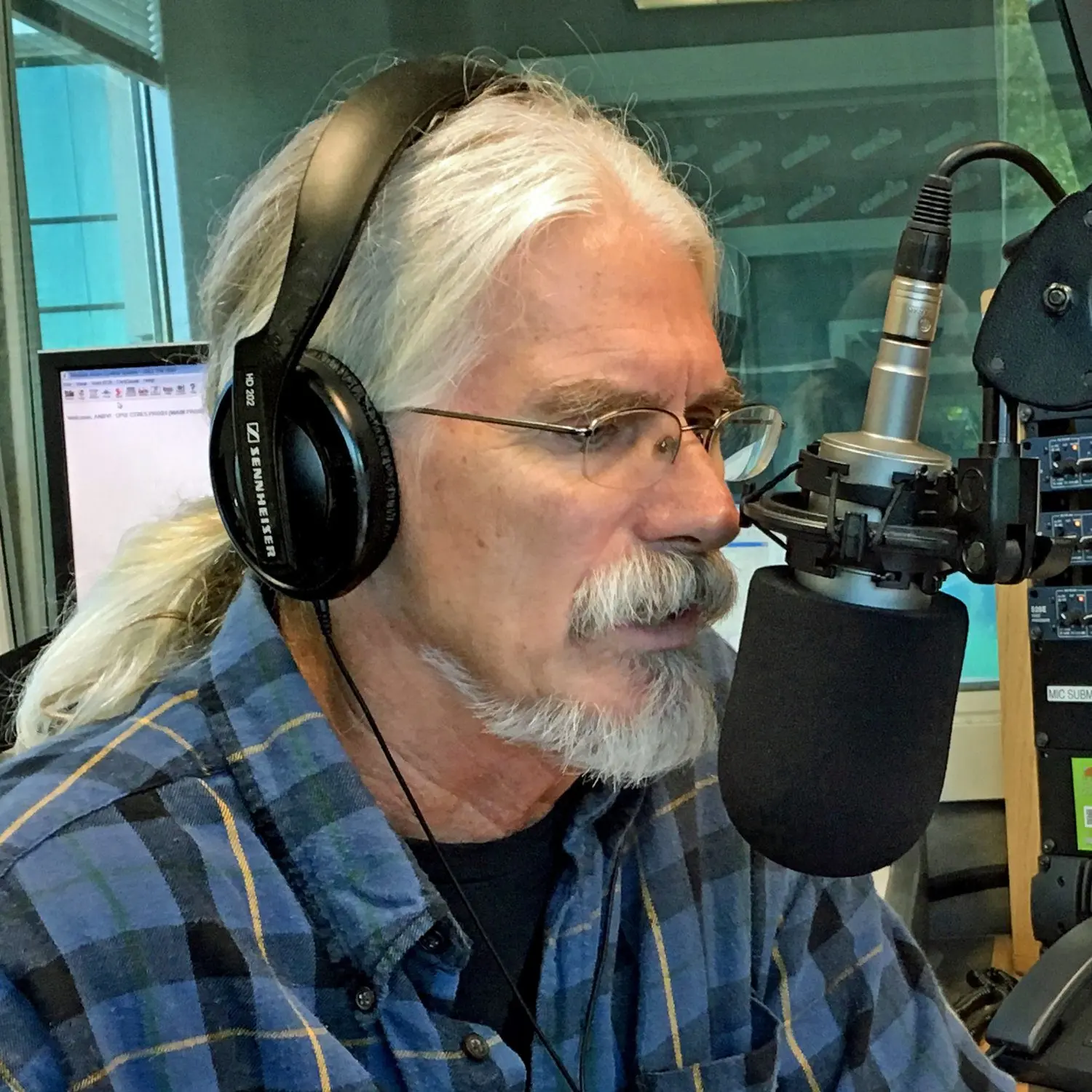
In this engaging episode of The Narrow Path, Steve Gregg dives into complex and often misunderstood aspects of biblical prophecy and theology. Engaging with callers, Steve addresses questions about the significance of land promises in biblical prophecy, as well as the interpretation and fulfillment of passages from Ezekiel and Joel. He provides a historical context to understand how prophecy is fulfilled, highlighting the importance of timing and the spiritual applications in the New Testament era.
SPEAKER 01 :
Good afternoon and welcome to The Narrow Path. My name is Steve Gregg and yes, we are live this Good Friday, 2026. Obviously, I think a lot of our potential callers were wondering about that because only one person has called so far. We’ve got a lot of lines open. Probably a lot of you were waiting to see, is it going to be live? Can we call in? Yes, you can. We’re live as usual. And I guess I wish you a good Friday. And you’re welcome to call in with your questions, as is the case every day, Monday through Friday, and has been for the past 29 years that we’ve been on the air. If you have questions about the Bible or the Christian faith, I welcome you to join us. Call in. Raise your questions. We’ll discuss them on the air. If you have a difference of opinion from the host and want to discuss that on the air, that’s all so entirely welcome. The number to call is 844-484-5737. I’ll give it again to you slowly, 844-484-5737. And, yeah, I don’t think I have any announcements to make today, so I’m going to go down. directly to the phones and talk to Michael calling from Fort Washington, Maryland. Hi, Michael. Welcome to The Narrow Path. Thanks for calling.
SPEAKER 06 :
Hey, yes. How you doing, Steve? Good. Thanks for that. I had joined you on a call on the Zoom the other Wednesday, if you remember that. I know we see a lot of folks.
SPEAKER 01 :
There were several Michaels there, yeah.
SPEAKER 06 :
Yeah, yeah, that’s right. So, yeah, I was, you know, asking about the – It slips my mind now. That’s all right.
SPEAKER 01 :
What are you asking about today?
SPEAKER 06 :
So today, I was speaking with my aunt earlier, and she’s really into the whole land promises and all these different things. I know you talk about this 100 million times probably, but she’s talking about the second exodus. I was like, I don’t know if there’s future land promises. I don’t know if I quite see it that way, but she was bringing up Ezekiel 37, 21. you know, to 23 and whatnot, and then she brought up Joel 3 as, you know, her proof text of, you know, another, you know, regathering, and so I was kind of, you know, kind of just stuck there just how to, you know, I know that, you know, Ezekiel was written while they were, you know, towards the latter part of the Babylonian exile, and, you know, and Ezra, they did go back into the land, and But, you know, Ezekiel speaks about being under their king and all this type of stuff. So, I don’t know. I just wanted to see your take on that.
SPEAKER 01 :
Sure. Well, first of all, good for your aunt that she’s actually so biblically literate. You know, not many people… could make reference to prophetic passages like that to make their point. I disagree with her interpretation, but I have to say that a very small minority of Christians could pull passages out of the Minor Prophets to establish their point. So she’s more than usually biblically literate. Good for her. Well, you’re right. All of the promises about the return of the exiles to the promised land were promises that were made before the exiles actually did come back to the Promised Land from the Babylonian exile. This began in 539 B.C. with the decree of Cyrus when the Persians conquered the Babylonians. They gave permission for the Jews who had been taken earlier by Nebuchadnezzar as slaves into Babylon, or at least captives. And they were allowed now to go back, and they did. The faithful remnant came. Of Israel did go back. They rebuilt the temple. They reestablished the nation of Israel. All the things that God said they would do. Now, you mentioned Ezekiel 37. In Ezekiel 37, it does talk about them coming back to their land. It’s in that image of the dry bones. Ezekiel sees the dry bones scattered out in the waste and they’re dead and don’t seem to have any hope of ever coming alive again. And God says to Ezekiel, can these bones live? And Ezekiel said, well, yeah, you tell me. You know, kind of, I don’t know. It doesn’t look like it. But the fact that you’re asking raises questions. So then the bones begin to assemble themselves into bodies and so forth. And they stand there like complete bodies, like a great army. But they’re not alive. They’re just kind of back on their feet, reassembled. And then he says, now prophesy. God says to Ezekiel, prophesy to the spirit or the wind. Spirit is what’s implied here. Prophesy to the spirit. And the spirit came and then they came alive. Just like when God made Adam from the dust of the earth, then he breathed into his nostrils the spirit of life. That’s kind of what happened to bodies. Now, what is the interpretation of this? Well, actually, God tells us in verse 11. He said to them, to me, son of man, these bones are the whole house of Israel. They indeed say our bones are dry, our hope is lost, we ourselves are cut off. Therefore, prophesy and say to them, thus says the Lord, God, behold, O my people, I will open your graves and cause you to come up from your graves. Now, this is figuratively. I mean, there is a resurrection at times, but that’s not what this is talking about. This is from the imagery that the nations, It’s like scattered carcasses that have even been pulled apart into bones, but God’s going to restore them from that condition of a national death into being nationally alive again and gather them back to their land, he’s saying. He says, behold, I’ll open your graves and cause you to come up from your graves and bring you into the land of Israel. Now, the graves here is an allusion to their captivity at Babylon. Their nation had been taken into Babylon first. and was totally destroyed. The temple was destroyed. Jerusalem was destroyed. The place was depopulated. Two or three generations were born in Babylon. There just didn’t seem to be any hope of the nation of Israel ever coming back together, except for the promise of God. And here he’s reiterating a promise he made back in Deuteronomy 30, that if they were ever scattered, Deuteronomy 30, verses 1 through 10, if they were ever scattered to all the nations… If they turned back to God, he’d bring them back and establish them again. That was promised by Moses. And Ezekiel, the prophecy God’s given him, is reestablishing that promise. Okay, now you are scattered in Babylon. You are like bones scattered throughout the desert. There’s no obvious hope of a restoration of the nation of Israel from that totally decimated condition. And yet, God said, there is hope. I’m going to bring you out of Babylon. I’m going to bring you back to the land of Israel. And the assembling of these bones into physical bodies, but without life in them, is an emblem of reassembling the Jews from Babylon into their nation and reforming them as a nation again. But there has to be a secondary thing. When Ezekiel prophesies to the Spirit to come upon them, that’s when they… come alive. And God says, like two verses later, in verse 14, I will put my spirit in you, and you shall live. And I’ll place you in your own land, etc. So, he basically says, I’m going to assemble the Jews from their captivity of Babylon, bring them back to their land. That’s like the assembling of the bones into the physical structures of humans, although they’re not alive yet. And then when the spirit comes into them, That’s figurative, too, of him pouring out his spirit on the faithful remnant of the Jews who have come back and are now back in their land. Now, that happened, of course, on the day of Pentecost. He poured out his spirit on the faithful remnant in Jerusalem, just like he said he would in the Old Testament. Isaiah said he would do that. Ezekiel said he’d do that. Joel said he’d do that. Zechariah said he would do that. I mean, there’s quite a few prophets that predicted that when Messiah comes, then God will also pour out his spirit on his people. And this is predicting that too. Now, the Messiah isn’t mentioned by name here, but before the end of the chapter he is. You know, it mentions you’ll have one king, David, my servant, shall be a king over them. In verse 24 it says, which is, of course, the Messiah. So this is a prophecy about how God would do two things for Israel. First, and sometime after this prophecy was given, God would take them back to their land, which he did. because this prophecy was given while Ezekiel himself was still one of the captives in Babylon. God had not taken them out of Babylon yet, and he predicted he would. But that would simply be a physical thing. He’d physically removed them from Babylon to the new land, and they’d build the physical city again and so forth. But there’s a spiritual regeneration that would be expected too, and that would be when the Messiah comes. When the Messiah comes, he will come, and as many of the prophets suggest, will pour out his spirit, on Israel and so Jesus came after they had come back to their land Jesus came and then on Pentecost he poured out his spirit on them so this prophecy was fulfilled you know fulfilled hundreds of years ago so you know after God brought them back and poured his spirit out on them he never made such promises again as if this has to happen again now you said your aunt mentioned a second exodus there’s no exact terminology second exodus in the Bible but there is the idea in Isaiah 11 in Isaiah 11 it says that God will bring his people back to their land and it’ll be like when he brought them out of the land of Egypt that is it’ll be like a second exodus now that’s as the New Testament says that’s been spiritually fulfilled Christ our Passover has been sacrificed for us that’s how the Israelites got out of Egypt in the first exodus was through the Passover And Paul gives examples in 1 Corinthians chapter 10, verses 1 through 11. He talks about how Israel came through the Red Sea and how they were fed by manna and how they drank from the rock and so forth and how God disciplined them in the wilderness. And he says all these things were a type of us. He says that in verse 6 and he says that in verse 11. of 1 Corinthians 10. So, the Exodus and the warning of the Jews in the wilderness was a type of a second Exodus, which is what we’re participating in. Now, what Exodus is that? We’ve been delivered from sin. Christ, our Passover, has been sacrificed for us. We are now free. We are now God’s kingdom in covenant with him, as Israel became after they came out of Egypt. And so, this is the second. It’s a spiritual Exodus. And, you know, when Moses… who led the children of Israel in the first exodus, when Moses and Elijah and Jesus were on the… Transfiguration. On the Mount of Transfiguration, right. I just halted because someone handed me a note here. Okay. They spoke to Jesus, according to Luke chapter 9, they spoke to Jesus about the exodus that Jesus was going to accomplish in Jerusalem, meaning through his death and resurrection, the spiritual exodus. that which the old Exodus was a picture of and a type. So the first Exodus is the literal Exodus from Egypt. And the second Exodus is the spiritual Exodus, of which the first one was a mere type and shadow. So that’s what the New Testament teaches.
SPEAKER 06 :
Yeah. And she mentioned Joel 3, and I know that then some people say that Joel 3 was written, you know, post-exilic or…
SPEAKER 01 :
I don’t know anyone who says that. I don’t know anyone who thinks that Joel was written post-exilic. I mean, the book of Joel, there is, in fact, no date on the book of Joel. Unlike most of the prophets, Joel doesn’t say what king was reigning at the time he wrote and so forth. So there’s no suggestion of when it was written. But I’m not aware of any Old Testament scholar that suggests it was post-exilic. I don’t think it was.
SPEAKER 06 :
If that would change the whole world, then people would be more likely to think of this.
SPEAKER 01 :
Well, they wouldn’t have to. They wouldn’t have to think of that as a future thing, because Joel chapter 3 is extremely symbolic, and it follows Joel chapter 2, obviously. Now, Joel didn’t divide his book into chapters. We do that. That’s been done artificially. But Joel chapter 2 closes… with the prediction of the day of Pentecost. You know, that’s how it closes. It says, you know, in the last days I will pour out my spirit on all flesh. Your sons and daughters will prophesy. And he says in verse 32, the last verse of chapter 2 of Joel, it shall come to pass that whoever calls on the name of the Lord shall be saved. Well, Paul quotes that in the New Testament as being now. And it says, for in Mount Zion, in Mount Zion and in Jerusalem, there shall be deliverance or salvation. which, of course, it must be referring to the church as the spiritual Zion, as the New Testament refers to it. And as the Lord has said, among the remnant whom the Lord calls. So this salvation, he predicts, is going to be for the remnant whom the Lord shall call. And he’s going to pour out his spirit. Peter said that was fulfilled on the day of Pentecost. So then it says, and for behold, in those days and at that time, chapter 3 says, I’ll bring back the captives of Judah and Jerusalem. Now, at what time? Well, at the time of the day of Pentecost. You know, he’s just, I mean, there’s no chapter division in Joel’s mind. He’s just predicted that God’s going to pour out his spirit, as Peter said was fulfilled on the day of Pentecost, that whoever calls on the name of the Lord should be saved, which we assume to be true now and should be because Paul says it too, quotes it favorably. And it says it’s, you know, the remnant. God’s calling his remnant. And in those days, I’ll bring back the captives, by which he’s, of course, referring to the remnant of Judah and Jerusalem. I will also gather all nations. So, what he’s saying is, at the day of Pentecost, that began the church. And God began to gather the faithful remnant of the Jews, as he did at Pentecost. 3,000 of them got saved, and then many, many more. Then he says, and I’m going to also gather the nations. And… So he does that too. But he also judges the nations at what’s called the Valley of Jehoshaphat. Now, there is actually no valley called the Valley of Jehoshaphat, so this is symbolic. Jehoshaphat means, the name Jehoshaphat means God has judged. So God is judging between the believers and the unbelievers. And then a little later in the chapter, it says multitudes are in the Valley of Decision. Okay, so that’s kind of a, there’s no actual valley called the Valley of Decision. That’s in Joel 3, verses 14 and 15. Yeah, the sun and the moon will grow dark. The stars will diminish their brightness. Peter said that was fulfilled, too, you know, at Pentecost. Or at least it was being fulfilled. Because I think the sun becoming darkened and so forth is fulfilled at the destruction of Jerusalem in 70 A.D. But in the meantime, between those two mountaintop events, you know, and the destruction of Jerusalem, there’s a valley, as it were. In those years, between Pentecost and the destruction of Jerusalem, there was a time of decision. The Jews had to make a decision if they would come to Christ or not. And some did and some didn’t. So, I mean, I don’t think he’s talking here about the end times. Why would he? The only time referent is where he says in chapter 3, verse 1, For behold, in those days and at that time. Okay, so he’s referring to something he’s already mentioned, a time. He’s mentioned it’s at the same time this is going to happen. And the time he’s just mentioned is the day of Pentecost. So there’s really nothing there to suggest the end of the world or end times like we usually think of that term.
SPEAKER 06 :
Yeah, yeah, no, definitely, definitely. Yeah, that first, just that first verse in chapter 3, see, you got to, you got to, You know, really read it carefully because I was just like, you know, people say in those days they’re talking about, you know, always talking about something in the future and whatnot, I mean, of end times, I should say. So that helps out a lot.
SPEAKER 01 :
Well, you know, that underscores a prejudice sometimes. that people bring to their reading of the scriptures, which is totally unnecessary and quite misleading. And that is that when God tells the Israelites at some time in ancient history, what’s now ancient history for us, you know, a time is coming where I will do such and such. You know, we tend to think he’s talking to us in our day and saying, hey, you people living in the 21st century, there’s a time coming when I’m going to do such and such. And so we say, oh, that must be the end times. No, he’s talking about things that happened a long time ago. They were future. They were hundreds of years in the future from the time of the prophets. But now they’re hundreds of years in the past from our point of view. So, I mean, almost all the prophecies in the Old Testament, if not all of them, were fulfilled in the past. And as far as New Testament prophecies, there are some unfulfilled because Christ has not yet come. But very few of the prophecies really give any kind of details about end times. Most of them are about God’s dealing with Israel because that’s the Old Testament’s concern. The Old Testament concern is, for the most part, what’s God doing with Israel? And many of the prophets say, well, when the Messiah comes, he’s going to take the remnant, pour out his spirit on them, and he’s going to judge the rest of them. And those judgment passages happened in AD 70.
SPEAKER 06 :
Now, what was the transfiguration? Oh, he said Luke 9 when he said, I’m working on my exodus.
SPEAKER 01 :
Yeah, it’s actually in the English translations, it usually says the departure. I’ll give you the verse. Let me grab it here. It’s Luke 9, 31. In the New King James, it says, Jesus, Moses and Elijah appeared in glory and spoke of his, oh, his decease is what it says in the New King James, which he was about to accomplish in Jerusalem. The word decease in the Greek is the word exodus. So they were talking to Jesus about the exodus he was going to accomplish. All right, bro. Hey, we’ve been talking a long time. I do appreciate it.
SPEAKER 06 :
All right.
SPEAKER 01 :
God bless you. Bye now. Vicki in Lakeside, California, welcome to The Narrow Path.
SPEAKER 05 :
Hi, Steve. Nice to talk to you. I appreciate it. Listen, I was wondering if you are hearing or seeing anything that, like the Christians, like a revival among the Christians going back to the ancient biblical holy days.
SPEAKER 01 :
I’m not sure what you’re saying. Am I saying a revival today?
SPEAKER 05 :
Yeah, Christians doing Passover, unleavened bread, Pentecost, trumpets, atonement, tabernacles.
SPEAKER 01 :
Well, I would say that I wouldn’t call that a revival, but there are lots of Christians who are embracing Torah observance, which I believe is a mistake. I think Paul wrote a whole book against it called Galatians, and there were other portions of Romans and Colossians and other books he wrote that were pretty much discouraging. Galatians said, in Galatians 4.10 and 11, Paul said the Galatians were beginning to observe these holy days. He said, I’m afraid for your souls. I’m afraid that my work done among you was in vain. He’s talking about how he had converted them, and now they’re going to the Jewish laws. Paul believed, and I do too, and so did Jesus, that Jesus brought in a new covenant that that the old covenant, which is found in the Torah, was made 1,400 years before Christ through Moses to a group of people who had been slaves in Egypt and who came out and he formed them into a nation called the nation of Israel. And they were defined by their obedience to these laws and this covenant. And there were 613 laws. They included the festivals you’re talking about, the dietary restrictions the Jews lived under, circumcision, animal sacrifices, Sabbath-keeping things. These are the things that distinguish the Jews under the law, under what’s called the Old Covenant. But under the Old Covenant, there was a prophet named Jeremiah who said there’s going to be a new covenant. God will make a new covenant. In fact, in Ezekiel, He said God’s going to make an everlasting covenant with the people in the Messiah. So there’s a different covenant which came that rendered the first one old. That’s what Hebrews says in Hebrews 8.13. It says when he speaks of a new covenant, he’s made the first one obsolete. That’s what it says. So there’s a covenant made at Sinai to the nation of Israel. That was a temporary covenant. It was not the everlasting covenant. It was a temporary covenant. But it would be updated or upgraded in the time of the Messiah. And he would make a new covenant. And the new covenant makes the old covenant obsolete. These are all statements made directly in Scripture. I’m not interpreting anything here. I’m just stating the phrases that the Bible uses. So Jesus came and he made the new covenant. And that made the Old Covenant obsolete. Now, Jesus, of course, is a king. He’s a lord. That’s what the word Messiah refers to, is an anointed king. And as a king, he has rules that he sets for his followers, too. Not the same ones Moses gave, but the ones that Jesus gave. Remember, Jesus said, go and make disciples of all the nations and teach them to observe everything I have commanded you. So the Christians are to observe everything Jesus commanded, not everything Moses commanded. And so anyway, Jesus didn’t command us to keep the festivals. And for that reason, the apostles didn’t always keep them. Paul, for example, though he liked to be among the Jews and he would go on festival days sometimes to Jerusalem in order to connect with the Jewish believers there. When he was in Gentile lands, he didn’t observe the festivals. That was not obligated. Paul said in 1 Corinthians 9 that when he was among the Jews, he acted like a Jew, which means he would keep the festivals if he was in Jerusalem at the time. He’d keep the kosher diet if he’s at a Jewish table. He would observe the law in order to reach them, not because he felt there was any obligation for him to do it, but he says that I might reach those. I might win those who are under the law. That’s, by the way, 1 Corinthians 9.20. But he says in the next verse, to those who are not under the law, meaning the Gentiles, I live as one who’s not under the law. Now, in other words, if Paul thought he was under Torah, he would not be able to relax his Torah observance just because he happened to be around Gentiles. You know, Jews were not allowed to stop being Jews when they’re in a Gentile environment. But Paul… made it very clear, he’s under no obligation to keep Torah. You’ll find him keeping it sometimes in a Jewish context because he’s trying to reach the Jews, not trying to offend them. But with Gentiles, he lives like they do. He doesn’t bother. And Peter did the same thing, by the way. When Peter was in Antioch, according to Galatians chapter 2, Paul had to rebuke him because Peter started showing some Jewish scruples to please some Jews who were coming to visit the church. But it was at the expense of the Gentiles. And Paul rebuked Peter and said, if you, being a Jew, live as do the Gentiles, why do you require the Gentiles to live as Jews? Now, it’s interesting. Paul’s taking it as a given. Normally, Peter lived like a Gentile. That is, as a Christian, he didn’t have to keep the law. He didn’t have to be kosher. He didn’t have to avoid Gentiles at table fellowship and so forth. He lived like a Gentile, unless there was pressure from the Jews, and that’s what it was. So both Peter and Paul make it very clear that they didn’t have to live under the law. That’s not part of the Christian life. It’s part of Jewish life, and if they wanted to be around Jews and not offend them, they would be sensitive to Jewish sensitivities. But they made it very clear. When they weren’t trying to avoid offending Jews, they just lived like a Gentile would. And that means they wouldn’t keep the festivals. They wouldn’t keep a diet that the Jews had to because they don’t have to. That’s the old covenant. The old covenant has been upgraded by the new covenant, the Bible says. That’s why there are Christians who are now going back to Torah observance. I think it’s a backward step. Paul said that those who did so had become alienated from Christ. and had fallen from grace. You’ll read that in Galatians. I need to take a break. Our website’s thenarrowpath.com. We have another half hour coming up, so don’t go away. I’ll be back in 30 seconds.
SPEAKER 02 :
Do you find that reading the Bible leaves you scratching your head with more new questions than you had before you read it, but don’t know where to go for answers? You may be interested then in Steve Gregg’s many online lectures, downloadable without charge from our website, thenarrowpath.com. There’s no charge for anything at thenarrowpath.com. Visit us there and be amazed at all you have been missing.
SPEAKER 01 :
Welcome back to the Narrow Path radio broadcast. My name is Steve Gregg, and we’re live for another half hour, taking your calls. If you have questions about the Bible or the Christian faith, I hope you’ll get a chance to call in, and we can talk about those here. If you disagree with the host, I hope you may call in, and we can talk about that as well. At the moment, however, if you’re not on our switchboard, you won’t get through immediately. Our lines are full. But in a few minutes, lines will open up, and if you want to try to get through then, I’d welcome you to do so. The number to call is 844-484-5737. Our next caller is Tom from Lewiston, Maine. Tom, welcome to The Narrow Path. Thanks for calling.
SPEAKER 08 :
Hi, Steve. I appreciate you. Okay, my question is on the tithe, and I know you’ve talked a lot about this, but if the Old Covenant tithe is a picture, or there’s things in the Old Covenant that are pictured like a pattern of the New Covenant, where is the blessing promised in Malachi realized in the New, for instance? The promise of rebuking the devourer for my sake, is it unrealistic for me to look for supernatural protection from God if I’m a New Testament, you know, not a tither, but a person who gives?
SPEAKER 01 :
Well, the character of God is such, it says in the New Testament, that if you’re generous, God will be generous to you. Give and it will be given unto you and so forth. There’s no teaching about tithing in the New Testament. Tithing refers, of course, to specifically taking 10% of your produce and giving it to the temple in Jerusalem to support the Levites who are helping with the sacrificial system. We don’t have any of that system left. And the tithe never had any other function except that the surplus of it was given to the poor. Now, giving to the poor is still a good thing. But if we say, well, we’re under the tithe, we’d have to say, well, that means 10% of what we earn has got to go to Jerusalem, to the temple, and to support Levites, because that’s the only tithe the Bible ever made a law about. But in the New Testament, of course, we are encouraged to be generous to the poor. And I personally think, although there’s many people probably too poor to even give away 10% to people more poor than themselves, And among my listeners, I’m guessing most of us probably could give more than 10% to the poor. And also to the support of the gospel. Now, this is not the tithe. it is simply the same principle, though, that we’re supposed to help the poor and we’re supposed to support the work of the ministry. That’s what the tithe was used for. It’s just that Israel only had to give 10%, and the other 90% was pretty much at their discretion. Whereas in the New Testament, Jesus said, unless you forsake all that you have, you cannot be my disciple. I think that’s Luke 14.33. We know in the book of Acts, It says all the believers had things in common. There were no poor among them because it says that no man said that the things he possessed were his own. But as anyone had need, they were selling their stuff and distributing it to the poor. In other words, the early Christians took Jesus seriously, something that Christians forever since have often been slack about. And I don’t think it’s safe to be slack about taking Jesus seriously. I mean, I’m a Christian, so I don’t think people who take Jesus not seriously are in a very secure place. But if you take Jesus seriously, he said that everything you have belongs to God.
SPEAKER 08 :
It’s everything now.
SPEAKER 01 :
Yeah, exactly. It’s not 10%. It’s 100%. Now, of course, that doesn’t mean you take 100% and give it to the temple to support the Levites. Obviously, we’re not supporting the Levites, and we don’t have a temple like that. But it means that we recognize everything we have, including ourselves, belong to God. Every minute of every day, every penny we have, every… opportunity, every talent we have. It belongs to God. We’re his servants. We’ve been bought with a price. We’re not our own. It says in 1 Corinthians 6. So, at the end there. So, you know, to become a Christian, we don’t tithe. We surrender everything to Jesus. And now we are stewarding or managing his stuff. And someday, as several of the parables tell us, he’s going to come back. He’s going to have us say, okay, what did you do with my stuff? And some people are going to be ashamed. Some people will be ashamed and embarrassed. And some will be glad they did what they did. And so that’s really where things stand now. It’s not 10%. It’s just, it’s all God’s. Yeah, you should support your family. Yeah, you should, you know, you need to feed yourself and your kin and anyone you’re responsible for. And it doesn’t, and you don’t have to live on the bare minimum necessarily either, but you do have to realize that whatever you spend of what God puts in your hands is something that he has an interest in and which you’ll, you know, on the day of judgment be asked to justify that expense. Now, You know, some people, because of that, they want to live very Spartan lives. Other people realize that God is not against us having, you know, some things besides just food and clothing. Paul did say to Timothy that having food and clothing, we will with these things be content. In other words, if we don’t have anything more than that for ourselves, that’s fine with us. But it also is not the case that there’s some sin in having some things that aren’t mere food and clothing. But the thing is, we really should, when we make any expense, be realizing that this better be something that God thinks is a good idea because it’s his money. You know, we’re servants handling his money. And someday he’s going to say, what did you do with my money? And, of course, we’re going to want to be able to say, well, I put the most I possibly could into your interests, namely spreading your kingdom and helping the poor, which are the two things the Bible says our money should be used for. So, you know, I don’t put any percentage of how much people are allowed to use for themselves or their family, but they have to realize even what they use for themselves or their family, it’s still God’s. But he doesn’t object to you supporting your family. That’s part of his interest, too. Anyway, as far as the promise that goes with tithing, tithing is a special thing. It belongs to the old covenant. God said, listen, folks, you may think you can’t afford to support the ministry with your 10%, but just go ahead and test and see. See if I don’t open the windows of heaven and pour out a blessing you can’t receive. But we have to remember, too, that the promises to Israel in the Old Testament were all related to physical promises. prosperity, physical longevity, physical security. I mean, those are the promises God made in Deuteronomy. If you keep my covenant, I’ll do all these good things for you. None of them had anything to do with spiritual benefits or eternal life. So the promises in the Old Testament, including Malachi’s promise about the tithe, they’re not really They don’t focus on spiritual things. But Jesus does. And so we have to realize that God has spiritual things that he wants us to be devoted to. And if we’re devoted to them, then our time and our money are going to be going there because you can always tell what you’re devoted to by where your money and your time is going. You know, where your treasure is, your heart will be also. So anyway… Yeah, as far as the prompts go, you know, I give more than a tithe to the things of God, of course, and I think almost every American could afford to do that. But I don’t do it with the mind of, you know, how wealthy am I going to be as a result. But I do believe that when God sees that you’re a good steward, unless he has other plans for you, he will probably trust you with more. You know, I mean, if you run a business, you own a business, and you hire people to manage things, aspects of the business, and you see that some of them are lazy and unreliable, but others are very diligent and reliable, well, you’re going to elevate the ones who are diligent, and you’re going to give them more responsibility. And that’s what happens. If God opens the windows of heaven and pours out a financial blessing on you, well, then now you’re responsible for more, because it’s still his stuff. With great opportunity comes great responsibility. But Amen. So, anyway, that’s how I see it.
SPEAKER 08 :
Thank you, Steve. I appreciate you.
SPEAKER 01 :
Okay, Tom. God bless you. Good talking to you. Lorraine from Orange County, California. Welcome to The Narrow Path.
SPEAKER 03 :
Hi, Steve. Thank you for your informative program. And I would like you to explain what dispensation is. I think you were talking about it the other day on the radio, and I tuned in late.
SPEAKER 01 :
That word comes up a lot, and a lot of people are not that familiar with it. Even people who hold to the view that’s technically called dispensationalism, many of them don’t hold to it. In fact, the view itself was created by a man named John Nelson Darby back in the 1830s, and he didn’t even know that word. He didn’t call it that. The name dispensationalism was coined in the early 20th century by Philip Morrow, who was no longer a dispensationalist. had been a dispensationalist, it wasn’t called that then. And he came to a view much more agree with Scripture and with church history, and then he gave a name to the view he had abandoned, and he called it dispensationalism. Before that, it was called Darbyism. Darby was the one who invented it back in 1830, and then for the next 70 or more years. It was called Darbyism, but only since the beginning of the 20th century has it been known as dispensationalism. But even dispensationalists agree with that term, even though it was coined by someone who was against that viewpoint. So what is it? It’s a view that is distinguished from the views that were held by the Christian church through the first 1,800 years by several things. It’s called dispensationalism. or at least it can rightly be called that, because it divides up all history from the creation of Adam to the end of the present world into seven what they call dispensations. By that, of course, the term dispensation is hardly used anymore except in the connection with this theology. But dispensation to Darby referred to an order of things defined by a covenant that God made, which began a dispensation. He said that God made a covenant with Adam and Eve and that first dispensation went until the fall when they broke that covenant. Then he made a covenant after that with Adam and Eve that lasted until Noah’s time. And people violated that covenant. Then he made a covenant with Noah and that went until Abraham’s time and so forth. And they break up all of history in the Bible into seven dispensations. Now, That’s not the worst part of it. In fact, there’s no reason why a person couldn’t view biblical history that way, although it’s somewhat artificial. It’s not like that’s objectionable. But Darby’s view, and this is what dispensationalism is about, is that God has a special dispensation for Israel, the nation, the ethnic Israel, that is different than his dispensation for the church. They would say we are currently living in the dispensation of grace or of the church age. But that there’s a different dispensation, which he said is the kingdom age, which is intended for Israel. Now, Darby believed that that kingdom age would begin at the end of the church age. So the church dispensation will end, he thought, with a pre-tribulation rapture, which is something that he came up with. The church didn’t teach part of that. But the pre-trib rapture was part of his dispensational system. And then when the church is taken up, then God begins to work with Israel more exclusively or more directly. And that’s during the tribulation and the millennium. And then after that, that’s the end of the last millennium. There’s a new creation and there’s no more dispensations after that. But because of this view, he placed Israel as, you know, obviously Israel was the center of attention in most of the Old Testament time from Moses on. But when Jesus came, obviously Israel became eclipsed by Jesus and his movement. And most of the people of Israel rejected Jesus and were not saved. And so that being so, Darby said, well, now during this dispensation, God’s working with the church, which is primarily Gentile. But he still has a plan for Israel. So this is what Darby introduced. The idea that God still has a plan for Israel. that will fulfill promises he made to them which never have been fulfilled in the past. Now, that’s why you’ll hear dispensations always focusing on what’s going on in the Middle East, what’s going on since 1948 when the modern nation of Israel was founded. And they have all kinds of speculations about the importance of things that are going to happen in the Middle East and why that needs to be our focus, because they think the temple is going to be rebuilt, there’s going to be an Antichrist, there’s going to be, You know, two-thirds of the Jews will be wiped out by the Antichrist, and they’ll have to flee from Jerusalem and all this stuff. This is all part of the dispensational system. In other words, dispensationalism places a huge focus on the ethnic and national state of Israel and its future. Now, what did Christians think before Darby came along? Before Darby came along, Christianity taught, and the apostles taught this, Paul did, Peter did, you know, it’s the biblical teaching, that Jesus was the fulfillment of the hopes of Israel. God gave Israel reason to hope for salvation through the prophets and through the Old Testament. And God brought the Savior in Jesus, and Jesus brought salvation to Israel. It’s just that many in Israel rejected it. But the ones who didn’t received it. So Jesus is the hope of Israel to this day. Any Israelite who wants to come to Jesus can do so. Any Jew can be a Christian, a follower of Christ. The ones who did, the many tens of thousands of Jews who did in the first generation, they are the Israel that received the benefit of that promise. And Jesus is the fulfillment, not some geographical, geopolitical, end times, Middle Eastern scenario. That’s not the hope of Israel. The hope of Israel is Christ. The church always taught that. Darby’s the one who came along and said, no, no, no, no, that’s not right. Jesus isn’t the fulfillment of the hope. He didn’t fulfill those hopes. That’s going to happen in the end times when God brings them all back to their land and so forth. So when you hear people emphasizing that, how important Israel is in the end times, they are dispensationalists. Now, some of them say they’re not. Some of them say they’re historic premillennialists, and they would say they’re not dispensationalists, but they don’t realize their views of Israel are 100% dispensationalists. Their views were not held by historic premillennialists. They were not held by any Christians until the 1830s. So that’s what’s the main distinctive of dispensationalism is whether people say, well, I don’t believe in the pre-Turbo Rapture or some other issues in dispensationalism. If they believe that the hope of Israel is seen in some future national development in the Middle East, that’s dispensationalism. If you want to get back to historic Christianity, you can say Jesus Christ is the hope of Israel, period. And so that’s a summary of dispensationalism for you. All right. Thank you for your call. God bless you. All right, let’s talk to Michael in San Diego, California. Michael, welcome.
SPEAKER 07 :
Hi, Steve. God bless your ministry. Thank you so much for it. Speaking of dispensationalism, there is a video on Facebook where this teacher was talking about the tribulation. And someone commented saying the tribulation already occurred in 70 A.D., just like Jesus said it would. And then someone replied to that comment by saying, prophecy is cyclical, not linear.
SPEAKER 01 :
That’s Hinduism. Hinduism teaches that history is cyclical. The biblical philosophy of history is it’s linear. That God starts at creation, there’s a fall, then God begins to work for redemption through Israel, then Christ, and so forth. No, prophecy is not cyclical. That’s a Hindu idea. History doesn’t repeat itself. But I will say this. There are some prophecies in the Bible which have a fulfillment in the short term after the prophet speaks and which also have a more full fulfillment in Christ later on. So some people say there’s a double fulfillment. You could call it a double fulfillment. Some could say it’s a typological fulfillment. It’s fulfilled early on. before Jesus comes in Israel, and then it’s fulfilled in a spiritual sense in Christ, the antitype. But it’s true, there are some prophecies that have this double application. But the problem is we can’t just decide at will which ones do. This is the problem with dispensations, when they find out, that the Olivet Discourse in Matthew 24 was fulfilled in 70 AD, and they’ve always been told, no, that’s a future tribulation. Instead of saying, oh, now I see, it was fulfilled. They say, oh, but there’s a secondary fulfillment in the end times. Okay, where do you find that talk? You can’t just say that. When the Bible said Jesus would ride into Jerusalem on a donkey in Zechariah 9, and he did, No one can legitimately say that prophecy has a second fulfillment if you go right into Jerusalem on a donkey again someday. Or when it says in Micah, he’d be born in Bethlehem, and he was, you know, it doesn’t make so much sense. And he’s going to be born in Bethlehem again someday because there’s a double fulfillment. No, there isn’t. You know, you can’t make up double fulfillments at will. The only way we will ever know if there’s a secondary fulfillment of a prophecy is, first of all, we can identify when the first fulfillment was. And then after that, some inspired writer tells us there’s an additional fulfillment after that. And we do have that kind of phenomenon from time to time. It’s not very common, but there are some where, you know, there’s an Old Testament fulfillment of a prophecy that’s given in the Old Testament. And then a New Testament writer tells us, and there’s this other fulfillment now in Christ, which is of a spiritual nature. Now, so, but there’s no prophecies that we know of that are given in the New Testament and fulfilled in the New Testament times, and then there’s some other fulfillment later on of the same prophecy. If we acknowledge that there is such a thing as double fulfillment of prophecy, we have to say it’s fairly rare, and we never would know of it unless the New Testament tells us about it. We can’t just make up double fulfillment because we’d like them to exist. A responsible way to study the Bible is to say, okay, here’s where it’s predicted. Here’s where it was fulfilled. It’s now fulfilled. And unless an apostle or an inspired writer comes along and says, oh, and there’s also a secondary fulfillment to be expected, unless we have something like that, we’ve got no business talking about any further fulfillment of something that’s already happened. And that’s the problem your friend’s making.
SPEAKER 07 :
Yeah, yeah. Thank you so much. You answered my question perfectly. I had never heard that statement before, and I wasn’t 100% sure what they meant. Thank you so much. God bless.
SPEAKER 01 :
Bye-bye. Okay, we’re going to talk next to Janice in Abbotsford, British Columbia. Hi, Janice, welcome.
SPEAKER 04 :
Hi, Steve. Thank you for taking my call. I don’t know if this is a biblical question or a belief. Can you tell me, is there any scripture with reference to burial versus cremation? Am I wrong to be okay with cremation, or should, when the time comes…
SPEAKER 01 :
Right.
SPEAKER 04 :
Go with burial.
SPEAKER 01 :
I hear you. Well, many people, many Christians think cremation is wrong, morally or ethically wrong. The Bible doesn’t say so anywhere. What they’re saying is it’s very clear in biblical times that people wanted to be buried. if somebody was left unburied, and this was sometimes a curse that came on some people, so they wouldn’t be buried in the tomb with their fathers, their bodies would be left for the vultures and for the dogs to eat them. In other words, people wanted to be honorably buried. In biblical times, there’s a couple things to realize. God said almost nothing in the Old Testament about an afterlife. And The Middle East had an honor and shame-based culture. We don’t. We have a shameless culture, and honor is hardly even considered or thought about. But in the Eastern world, in the Middle Eastern world, too, honor and shame are very strong motivators, and the idea that when you’re dead, your body will be treated shamefully and just left out for the dogs to eat would be a strong incentive to avoid that fate. Now, I don’t care when I’m dead if dogs eat my body because I’m not that worried about, I mean, I won’t be there. So it doesn’t bother me. But to be buried honorably, to be remembered by your descendants and your tomb to be visited and respected and so forth, very important in a shame-based culture. So in the Old Testament, you don’t really have much promise regarding an afterlife and the internment of the dead. was simply desired because it’s an honorable thing, they felt, in their culture to be buried. Now, whether God thinks it’s honorable to be buried or not, we don’t know. I mean, you know, once the body is dead, it’s just dust, and it goes back to dust. And it does so if you cremate it, and it does so if you don’t cremate it. It just does it. That’s what God said to Adam. Dust you are, and to dust you will return. So, you know, if you cremate a body, you kind of reduce it to dust and ashes forever. rather quickly. If you don’t cremate a body, it goes back to dust and ashes more slowly. But that’s the way it goes. The Bible does not say that there’s any sin in cremating the body. Now, some people are worried because both Jews and Christians have been concerned about the resurrection. And some say, well, if I’m burned to ashes, my ashes are spread all over the place, how can I be resurrected? Well, we need to think that through before we make that objection because You know, we all go to ashes. If God can’t raise our ashes into bodies on the last day, then we’re all in trouble. It’s very clear that God doesn’t have a problem with that. He made Adam from dust, and then he breathed into his nostrils the breath of life. So there’s not a problem for God to put dust together into bodies. He’s done that before. I would say this, though. If somehow the burning of a body to ashes… would render that body incapable of being resurrected on the last day, then what are you going to do with martyrs who are burned at the stake or Christians who die in fiery accidents, plane crashes or fiery accidents on the freeway and they get burned up? Obviously, circumstances like that cannot separate us from the love of God in Christ and certainly cannot prevent us from being resurrected. resurrected when when that time comes so that would be uh there’s no there’s no actual statement in scripture that forbids cremation or that commands burial although burial everywhere in scripture burial is spoken of as if it’s like a more honorable thing and but that would be a concern more for the person who is concerned about being honored after death then it would be a concern that God has. When a Christian is dead, they’re absent from the body. And if they’re a Christian, they’re present with the Lord, and it really doesn’t matter whether their body is burned up instantly or just goes back to the dust because the worms take a few hundred years to digest it. That’s pretty much what the Bible says and doesn’t say about that subject. I’m sorry, I wanted to take more calls. We have a couple calls still waiting. But I’m looking at the clock, and we don’t really have enough time to do that. So we’ll be on the air again, Lord willing, Monday. And those of you who can’t get on today, let me encourage you to call early then. I’d love to get to your calls. The Narrow Path is a listener-supported ministry. If you weren’t paying attention, you might not have noticed we’ve had no commercial breaks. Now, I’ve been a guest on other Christian and secular talk shows. And it’s frustrating how often they break. I mean, you get like five minutes to talk, and then there’s a break for three minutes or five for a commercial, and you get another five or six minutes to talk. When I set this up, I decided we would never do that. We’d never have sponsors. If God doesn’t want to support us, we don’t want to be on the air. We’re not going to hire other people or have other people pay us to be on the air. So we trust God and his people. If he wants us to stay on the air, we pay the bills. How much do we pay? We’re on 80-some-odd stations around the country, and our bills this last month was like $160,000. I’ve been saying for years it’s $140,000 per month, but it’s more like $160,000 this last month, I believe. So it’s a lot of money. And, you know, if we get the money, we stay on these stations because we pay for the time. If we don’t, then we leave some stations. If you’d like to write to us, you can at The Narrow Path, P.O. Box 1730, Temecula, California, 92593. Or go to our website, thenarrowpath.com. Thanks for joining us.


