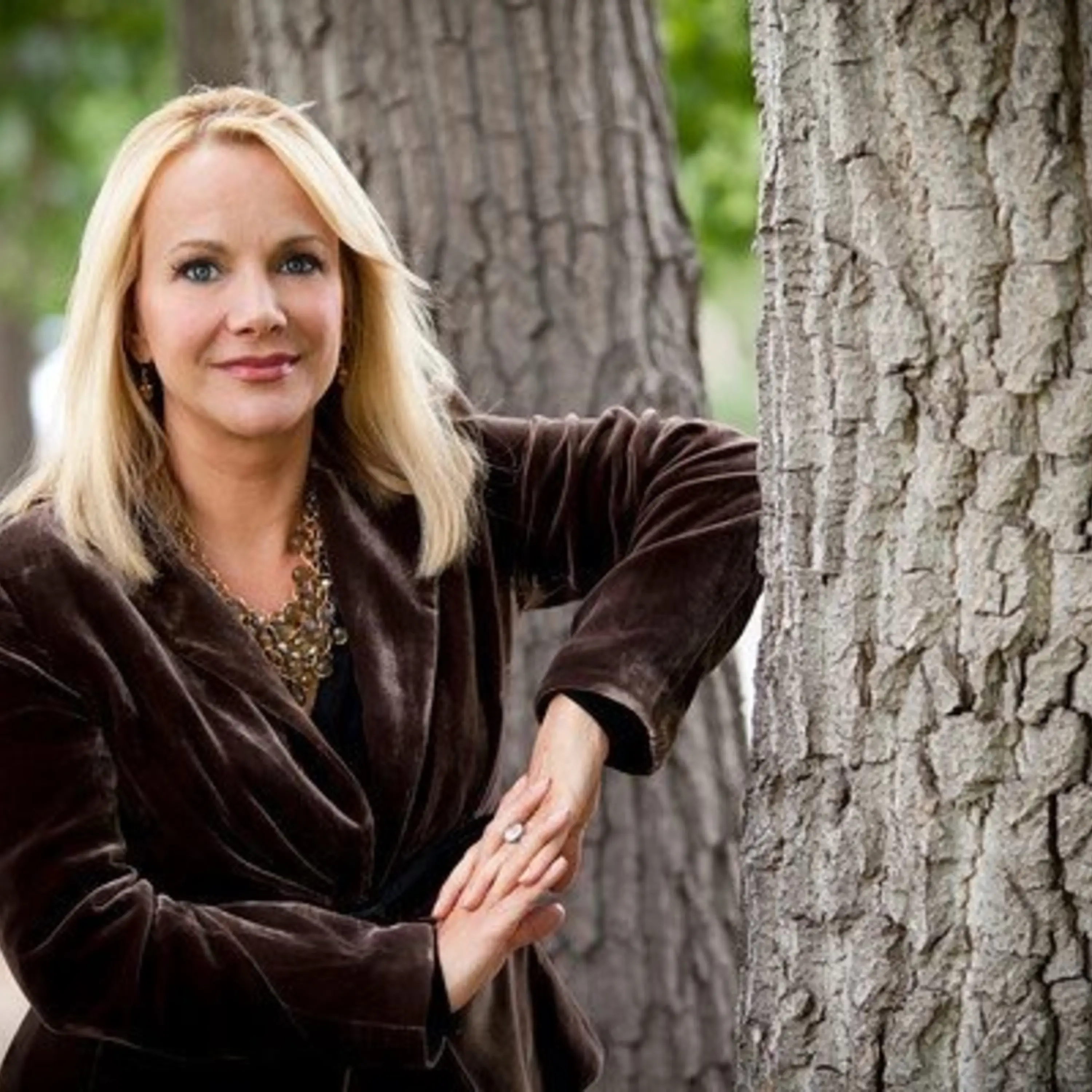
Join Angie Austin as she sits down with the remarkable Ed Novak, a seasoned restaurateur with ownership in 17 different establishments. In this episode, discover Ed’s insights into the restaurant business, his triumphs, and a few of the hurdles he’s faced along the way. Ed shares the strategic approaches that have allowed him to thrive in a challenging industry and offers key advice on real estate management for restauranteurs.
SPEAKER 01 :
Welcome to The Good News with Angie Austin. Now with The Good News.
SPEAKER 05 :
Hello, Angie Austin here with the good news, joined by my friend, great storyteller and restaurateur, Ed Novak. And I have a couple of questions for you today before we start. I just love your stories, so that’s why I started booking you as my friend. How many restaurants have you owned yourself or been a part owner in? Because today we’re going to talk about when you opened The Broker, which is a very famous restaurant.
SPEAKER 04 :
How many?
SPEAKER 1 :
17.
SPEAKER 05 :
17 restaurants that you’ve owned or been a part owner in. Amazing.
SPEAKER 03 :
And a lot of failures in there along with the success, right? Actually, I’ve had ownership in 17. I’ve worked in you know, initially I had worked at the hungry farmer. My first job was a hungry farmer and in Denver as a waiter at, you know, when I left the JC penny company, I love pennies, by the way, I, I worked, I went with them when I got out of college and I worked with them for three years. I started at Omaha and they transferred me to, um, uh, Lakewood, you know, to the bill Italia when it opened. And I was, I was thrilled. I’m, The best managers I’ve ever met were in the penny company.
SPEAKER 05 :
Wow. Okay, so with those 17 restaurants that you owned or were part owner of, there were also a lot of failures in there too, right? It wasn’t all just the big successes.
SPEAKER 03 :
Yeah, that’s exactly right. I mean, you’re going to have some certain down times or something like that. It’s sort of a… You know, the restaurant business is not the, not the easiest business. No, no.
SPEAKER 05 :
And the hours. Oh my gosh.
SPEAKER 03 :
Yeah. Yeah. But they were all of those, all of the restaurants that all of those 17 were all profitable, but the changes, they were, they were all profitable. The difference was that there’s changes in your life where you want. And also there’s things with landlords, landlords, I mean, for example, at Buckingham Broker in 1976, I mean, we were paying $5,000 a month, and the landlord and I were really good friends. His name was Bob Hayaton, and he owned that shopping center that Buckingham was in. And so he came to me one day, and he says, Ed, you know, I’ve got to tell you, I’m going to have to double your rent starting in January. You’ll be paying $10,000 a month. In 1976? Yes, I went from $5,000 to $10,000. And I said, you know what? I’m not going to be doing that, so I’m giving you my notice right now. I can’t afford it. And I said, so I will be out. I’ll be out on New Year’s Eve, and I’ll be out of there. And so some restaurants, that’s how you – and Buckingham was profitable. I mean, we were making money, you know. But at the same time, I sort of felt betrayed, to be honest with you. in the sense that somebody would try to double the rent. Okay, after I left, the restaurant sat there for two years without a tenant. Nobody would pay the rent. And then Bojo’s came along, and Bojo’s went in there two years after I left, and they paid $5,000 a month, the same thing I was paying.
SPEAKER 04 :
Wow.
SPEAKER 03 :
Some of these landlords, they get so greedy, and that’s why my advice to restaurant people, if possible, you’ve got to buy your own real estate. You have to own that building and land. And that’s the only way you can really come out at the end of the day, because there’s no telling what these landlords will do to you, you know.
SPEAKER 05 :
You know what would be so cool, Ed? You should set up, and you could have one of your grandkids do this for you, just set up an Instagram account, and then you could offer advice to restaurant people. You could have a little Instagram.
SPEAKER 03 :
I would love to have anybody call me that would like to, and I would go to lunch, and we would visit. I love visiting with present young people, especially coming up in the business. Oh, you know what?
SPEAKER 05 :
My son’s in business – well, you know Riley. He’s in business school at CU Boulder in the Lee School of Business, and he’s been running his business since he was 12. And now he’s getting into the real estate business, and he’s 20. So he’s been running his business for eight years, and he’s purchasing a little help from his parents, but some rental properties in Boulder. And I want to set up a lunch with you, me, and Riley. Okay. And not Mark because Mark will talk too much because I want – I would absolutely love it.
SPEAKER 03 :
I would love it.
SPEAKER 05 :
Riley would love that. You’ll have a lot of great connections for him too of other business people to talk to. And he already thinks you’re great because you always donate to ARC for his – he works for ARC in the summers. Well, he actually works for ARC year-round, but in the summer he worked for them full-time, does an internship in finance, and you’ve donated to auctions that he does. And so he’s already a big fan of yours for your generosity. Wait. Okay, so before we talk about opening your first broker, so this might run a little long today. I was in church looking for you yesterday, and I thought about you because I thought about how much Gail, my friend who was in my wedding, she was in my wedding party, and your wife who passed away a few years back very young. She was about my age when she passed away, and I thought about you, and I thought, You’ve really navigated grief well, and I know how hard it was to lose her because Gail was a lot younger than you are, you know.
SPEAKER 03 :
Yeah, she was 17 years younger.
SPEAKER 05 :
Yes, so we didn’t expect, you know, Gail to pass away before you. I mean, like, you know, most people thought, oh, well, Gail will take care of Ed. Okay, so… How how is it when you’re like in church like that yesterday? Like, I know you probably were thinking of her because she would have loved the music and she loved what you guys went to church together. And she became a Christian when she was 13, which she told me in her testimony just a few days before she passed away. She was on my show and she I didn’t know her testimony. And she told me she was saved when she was about the same age I was when I was like 12, 13 years. And so how have you navigated that? I know this is a tough question. I didn’t tell you I was going to ask you this, but it’s been a few years.
SPEAKER 03 :
It’s been very, very difficult. You know, she passed away in 2019. And I still think about her every day. Every day. And there’s certain things that remind me of her. For example, all of her papers on the wall, all her calendars about her Miss Senior America stuff, everything that she had on the kitchen wall all over, I’ve not taken it down. Wow. In seven years. And I just… So I have bad days.
SPEAKER 05 :
You have really, you know, gone through it. And I know because I, you know, was there early on and how hard it was for you to you’d be up really late at night. You couldn’t sleep and you’d be watching shows and doing things late at night because you couldn’t sleep. And I you have such purpose in your children and your grandchildren, which you have a lot of.
SPEAKER 03 :
That’s my life now.
SPEAKER 05 :
Yeah, that’s what I see because that’s when I see you. I see you with your family generally because your daughter goes to the church I go to and your grandkids go to the high school that my kids have gone to and still go to. And so that’s where I see you at football games, at church. I know you go to dinner at Julie’s a lot. So your family’s really become your life, but you found purpose in that difference. than your purpose was before being a restaurateur and being a husband. So I just really respect you, and I know faith. Don’t you think faith is something that makes it possible or faith helps you through those horrible times?
SPEAKER 03 :
I tell you, it was the same way when Gail was living, though. She was very family-oriented, and we spent – A lot of time, we did a lot of family things with Gail, you know, and that was our life. And it continues to be my life, even though she’s gone, you know?
SPEAKER 05 :
Yeah, yeah, no, I agree. I’ve heard so many things over the years about her daughter, her son, your kids. Exactly. She introduced me to your daughter, Julie, because she thought we were so much alike, which we are. But we were so much alike that we didn’t even have time to get together because she was a workaholic or still is. And I was. I’m not anymore. But yeah, so we finally, you know, like 20 years after Gail introduced us, she and I finally I think I’m doing some Bible study at Julie’s house at the end of the month. And it cracks me up because I sent Julie a text this morning. I’m like, finally coming to the Bible study, you know, 20 years after Gail introduced you, I’ll be over there. Yeah.
SPEAKER 03 :
It’s funny. I love it. I love it. I love your relationship with my daughter.
SPEAKER 05 :
It’s so funny. We’re so much alike. It’s ridiculous. I just have long blonde hair and she has short blonde hair. Other than that, we’re the same person. Oh, my goodness. Okay, so you wanted to talk about your 17 restaurants that you’ve owned or partially owned. The Broker was the one that most of us know as the big success you had. It was so famous in and around Denver, Boulder area. So you wanted to talk a little bit about that today. So let’s get into it.
SPEAKER 03 :
Okay, very good. Well, you know, I bought the restaurant from Tom Wilsham. Oh, was it the Broker then?
SPEAKER 04 :
Wait, was it his Broker or was it something else?
SPEAKER 03 :
It was the Broker. Oh, I didn’t know that. And Tom Wilson owned it. Now, you know, Tom Wilson owned three Hungry Farmers, Colorado Springs, Denver, Boulder. And he also owned the Hungry Dutchman. And the broker was his last one. And so what I was… Basically, Tom was a superstar in football. He went to CU, and he was an absolute superstar. Wow. I mean, he was one of the best players ever to play at CU. And so when he graduated there, then he ended up, you know, going ultimately into the restaurant business. But he was so loved by CU and so known and respected that what happened was that we had a – on the CU games, there was a section there where CU had – Very high VIP type of people, you know, that donated to the university. Yes. There was about 70 or 80 of them. Okay. So out of respect for Tom, Tom had a restaurant in Boulder called Hungry Farmer. And so they hired him to take care of those 80 VIP people.
SPEAKER 04 :
Oh, okay.
SPEAKER 03 :
And so I was the manager of the Hungry Farmer in Boulder after I worked at – my first job was at Hungry Farmer in Denver, and then he made me the manager of the Hungry Farmer in Boulder about a year later. And so what we did is we had a staff of servers, and we went to those 80 people, and I tell you, we just – We dolled over them. We brought food from the hungry farmer that we served to them. If they wanted a cocktail or anything, one of our servers would go to the bar at the stadium and get the drink for them. We took care of them hand-in-hand. hand over hand. I mean, we couldn’t do enough for them. You know what I mean? That was our, that was our job to make them feel really good. And that was what, that’s why they hired Tom to, to perform it, if you will. And, um, one of the people that was at that, one of those 80 people was named was, uh, Saul Davidson. And Saul Davidson, uh, was, uh, huge in the real estate business in Denver. He built the Mr. Steak restaurants and then leased them. He had the Colorado Mine Company. He had the Jefferson 440. He owned all four corners on 80th and Sheridan and 80th and Wadsworth. He had about a dozen people that work for him in his real estate office. And he built, you know, he was, he owned apartment buildings, he owned office buildings. I mean, he was, he was phenomenal. Okay. And very, very successful. And, um, so anyway, um, I, you know, I talked to Saul a couple of times at the, you know, each weekend at the, uh, at the, you know, the CU stadium. And, um, Anyway, I’m not saying we became friends, but we just had respect for each other is what I felt at the time. Now, I told you he owned the Jefferson 440. There was an owner of the operator of the 440, and that was on 440 Wadsworth. The operator was Doug Hughes, and Saul owned the real estate. And Doug and I became friends. somehow I loved his restaurant first of all and so we ended up becoming friends and what I found out later was that that basically Doug told anyway what happened was Tom closed the broker it was losing a lot of money and it had he only had he only had German and French waiters, and they were all in tuxedos.
SPEAKER 05 :
Oh, my goodness, Ed. Ed, we have to take a break. I can’t believe it. We have to take a break. All right? It’s so funny. We talk, and I run out of time. All right, you’re listening to Good News, and we will be right back.
SPEAKER 02 :
With Easter right around the corner, Art Thrift is the perfect place to find great deals on Easter grass, baskets, bonnets, and those cute little dresses for Sunday school. You can decorate for the whole family gathering on a budget, from deviled egg dishes to Easter baskets, and still find those special items that make the day memorable. And coming soon is Arc Thrift’s famous secret jean sale. Watch the Arc Thrift social channels for the secret Friday date because every pair of jeans in the store is just $2. That’s right. Rows and rows of jeans including great brands like Levi’s and 7 for All Mankind from 9 a.m. to 9 p.m. with new stock going out all day long. Spring also means gardening tools, sports equipment, and seasonal treasures hitting the floor. And remember, Arc Thrift stores are size-inclusive and even have fitting rooms open so you can find the perfect fit. Find a store near you at arcthrift.com and follow Arc Thrift on their socials so you don’t miss a secret jean sale. Arc Thrift, there’s a surprise on every aisle.
SPEAKER 04 :
Florence, thanks for tuning in to KLTT, the Mighty 670.
SPEAKER 05 :
Welcome back to The Good News with Angie Austin and Ed Novak. We are talking about his first broker restaurant. He’s owned or been part owner of 17 restaurants. The broker being the most famous in and around the Denver metro area. The big bowl of shrimp and the delicious steaks and the sweet potatoes. Oh, I love that sweet potato. And he’s also the owner of a restaurant called The Good News. And we are talking about the first one. But I want to go back a little bit. So Hungry Farmer, your friend, he was taking care of all the CU like, you know, big donors. And there were quite a few of them. And you were there and you were talking about someone you met. So let’s go back to that.
SPEAKER 03 :
Right. So one of the people at the at the stadium was Saul Davidson. As I told you about, he’s a huge real estate owner, developer, probably the top guy in Denver area. And anyway, and then I was. And he owned the Jefferson 440 where Doug Hughes was. But anyway, one day – anyway, Tom closed the broker. It was losing a lot of money. It was – you know, Denver just wasn’t ready for that kind of – uppity kind of program if you will and um so he shut the thing down and then i heard um i heard through the from i talked to tom and everything he said he was gonna try to find a buyer for it was for 125 000 he was hoping to find a buyer when he and i talked when we were he would come up to the hungry farmer in boulder And so anyway, I mentioned that to Doug Hughes and that Tom, that restaurant, the broker was available for $125,000. And I thought that it was such a beautiful place. I was in love with it from day one. So anyway, I mentioned it to him, and then about a few days later, I got a call from Saul Davidson, you know, who I was taking care of up at CU, you know?
SPEAKER 04 :
Yeah, yeah, yeah.
SPEAKER 03 :
And Saul called, and he said, I would like you to… He says, I’m going to buy a bank in Cherry Creek. And he said… I am so impressed with you. I would like you to be my… And he said, Doug told me about the broker being available for sale. And he says, I would like you to be my first loan customer when I buy the bank. And I said, wow. I said, oh, okay. You know, wait, wait.
SPEAKER 05 :
May I just stop right there? Hold on. I got to stop you. Just yesterday, my husband and I were talking about why you were so successful in the restaurant business. And our number one reason, besides your hard work, besides the way you treat your employees, besides the fact that they stayed with you for decades, your personality is amazing for the restaurant business. God could not have made someone better for the restaurant business. You stop by the table. You remember, if not the person’s name, you know, you remember their face. You ask how they’re doing. You’re so glad they came back. You send over a drink. Maybe you get them an appetizer, like your generosity, your personality, your stories, how good you make people feel that helped make you successful. And that’s why Saul wanted to work with you because he met you at CU and he thought the same thing that we thought that you’re just great to be around.
SPEAKER 03 :
I love it. I love it. I love it, too. You are so nice to me.
SPEAKER 05 :
Well, Mark and I were just having that conversation after church yesterday because we were looking for you. And I said, that’s why Ed did so well in the restaurant business. But besides all the other things, his personality. OK, so Saul said, I want you to be my first loan customer.
SPEAKER 03 :
Right. And so what happened, Saul said, I want you to go by the bank. And it was Cherry Creek Bank. And he said, I want you to go by there, pick up a financial statement and fill it out. And he says, I’ll meet you there on Thursday at 930. And he said, bring your financial statement. And I said, OK, I’ll do that. So I got to I went and picked it up. I filled it out. And, you know, I had, you know, I still owed money on my car. I had three kids. Oh, my goodness. And so my net and we, you know, I, you know, and I had I had some debts and I had credit cards anyway. When I filled it out as accurately as I could, and it showed that I had a net worth of just over $2,000, okay, was my value of my net worth on that statement that he gave me. And so anyway, I met Saul there at 930 on Thursday, and he said – And then Saul and I and the president of the bank sat in the president’s office. And then the president said to me, and he was the son of the previous owner that Saul was buying the bank from his dad, okay? And he said, I understand that you’re interested in getting a loan to buy a restaurant. I said, I am. He said, how much is the loan going to be? I said, $125,000. And he said, I see you have a financial statement. And I handed it to him, and he looked at it, and then he looked at it, and then he looked at it.
SPEAKER 04 :
This is your financial statement?
SPEAKER 03 :
Yes. Okay, okay. And then I could see he actually had a little – little water running in his forehead. Oh, my.
SPEAKER 05 :
So this wasn’t the financial statement he was expecting. It wasn’t quite as good as he was expecting?
SPEAKER 03 :
Well, you know… I don’t know what he was expecting, but my net worth is $2,000, okay? He said to me, Mr. Novak, he says, what do you propose using as collateral for this loan? And I said, my personal guarantee, my personal signature.
SPEAKER 05 :
I was going to say your personality.
SPEAKER 03 :
Okay, your personality by signature. He looked back at that document, and he thought you could just tell that he had no idea if this was a setup, what was going on here. This made no sense at all. To make a $125,000 loan to a guy that’s worth $2,000? Are you kidding me? Oh, my gosh. And so he looked at it, and he looked at it, and he looked at it some more. Then he said, Mr. Davidson, he says, I know you’re buying the bank this afternoon. And he said, will you be attending your first loan meeting tomorrow? Oh, my gosh. And Saul said, yeah, oh, yeah, I’ll definitely be there tomorrow at the loan meeting. And he said, OK, thank you. And he says, Mr. Newark, thank you for coming in. I’ll keep you posted on the decision of the board. And so I went. We walked out. Saul and I walked out. As we’re going out the door, he puts his arm on my shoulder, you know, and he said, Ed, by the way, your loan was approved tomorrow. Oh, you must have just wanted to cry. Oh, I did. I did. And so the next day around 11 o’clock, I got a call from the president of the bank. And he said, Mr. Nowak, I have very good news for you. Your $125,000 loan was approved. You’re welcome to come and pick it up this afternoon or anytime you wish.
SPEAKER 05 :
Oh, I can’t believe it. I mean, he really liked you. He really believed in you.
SPEAKER 03 :
I mean, it was just amazing. And so then I called Tom, and, of course, Tom couldn’t believe it. I mean, he knew what I made. I’m making a couple thousand dollars a month. How in the world is it worth it? I told him I just got my loan approved to buy the broker, and I just wanted to set up the date that we should do that. And he said, where did you get that kind of money? And I said, well, I got a loan at the Church Creek Bank. And I said, by the way, here’s the name of the president and here’s his phone number, you know, in case you would like to call him. And so Tom, of course, called him and the president said, yes, the loan has been approved. And so about two weeks later, I bought the restaurant and opened it in March of 1972.
SPEAKER 04 :
So was that the bank one? Or a different one?
SPEAKER 03 :
No, the one downtown.
SPEAKER 04 :
And then you bought that building back then?
SPEAKER 03 :
No, no, no. I was a tenant. In other words, Tom was renting it. But Tom and his partners, they lost a lot of money. They probably had a million bucks in that. And that deal, because they converted the basement of a bank. Are you kidding me? To a restaurant.
SPEAKER 05 :
It was amazing, wasn’t it? Because the vault was down there.
SPEAKER 03 :
Beautiful, beautiful, beautiful place. And so I went to get the lease transferred over. And the owners, there were seven owners of that building. And they said, we need it. I said, we’re just not comfortable. With you as a tenant, he says, we need to talk about this. And they said, because you’re 27 years old, and we just don’t know. This is a big operation. Anyway, so they met. And then based on the fact that I’m giving Tom all cash, they didn’t have much choice but to approve me as a tenant. But they weren’t very happy about it. Wow.
SPEAKER 05 :
And wait, how old were you again?
SPEAKER 1 :
27.
SPEAKER 03 :
Wow.
SPEAKER 05 :
And that’s when you got, oh my goodness, that’s a lot. Okay. All right. Well, this is a good story. I knew this would be a good story. All right. Well, what else do you want us to learn from this?
SPEAKER 03 :
Well, this, you know, maybe I’ll come back on some of the operations of it, you know, at a later date or something like that. But it was, it was, The restaurant was so busy at lunch because downtown was a busy place for lunch. But for dinner, we would do at night about either 9 or 11, 9 or 10 dinners is all we would do every night. Nobody wanted to come downtown in the night.
SPEAKER 05 :
When I started going there later, you were very busy at dinner time. So that changed as time went on. But back in the day, early on, it was a lunch place, not a fancy dinner place. And then it became a place that kids went for prom night or you went for an anniversary or a birthday. And it became a celebratory place.
SPEAKER 03 :
That all changed over time. And one of the things that actually helped me it’s crazy how some weird things help you, you know, survive, basically. Because, you know, it was a real tough go, I mean, in the fact that, you know, Tom, of course, was losing his shirt down there. But, you know, we did lunch and dinner just like he did. But the thing was that what I think changed it, I know this sounds really weird, but somebody, I heard that somebody in Greeley, said, you’ve got to go. They were spreading the word in Greeley, you have to go to this restaurant in downtown Denver that has this free shrimp bowl. And they said, you won’t believe it. You can have all the shrimp you want to eat. And they said, but they’re not doing any business, and we think that they’re going to go broke. And so what you should do is try to get there before they go under. And so all of a sudden our dinner business took off, Wow. That is so wild. I know it. And I really think that, you know, the rumor was it all started in Greeley with this idea that this restaurant, we were going to close up in a few weeks, you know. But it was just amazing. It’s amazing how those kind of things happen. I tell you that. Well, I just, I sure appreciate, I sure appreciate talking to you about this stuff. I just want to thank you so much.
SPEAKER 05 :
I, I, I just think it was such a, I mean, you know, I mean, I’ve talked to so many authors and pastors and leaders and, you know, I thought, Oh, edge just has the best stories and the best lessons in such a successful business career. Um, and you know, my friend and for people who don’t know, I actually had my, uh, his wife was in my wedding party, uh, one of my bridesmaids and we actually had, um, And we had our dinner there at the broker after the wedding. And so that was quite a wonderful experience. So, yeah, I really appreciate you, Ed. Ed Novak. And Ed said if you ever want to have lunch with him or ask him questions about the restaurant business, he’d be up for it. You can always go to my website, AngieAustin.org. We changed it, AngieAustin.org. And I’ll get you in touch with him. Thank you, Ed.
SPEAKER 03 :
You’re welcome. Thank you for everything. I’ll talk to you soon. Bye. Talk to you soon. Bye, Ed.
SPEAKER 01 :
Thank you for listening to The Good News with Angie Austin on AM670 KLTT.