
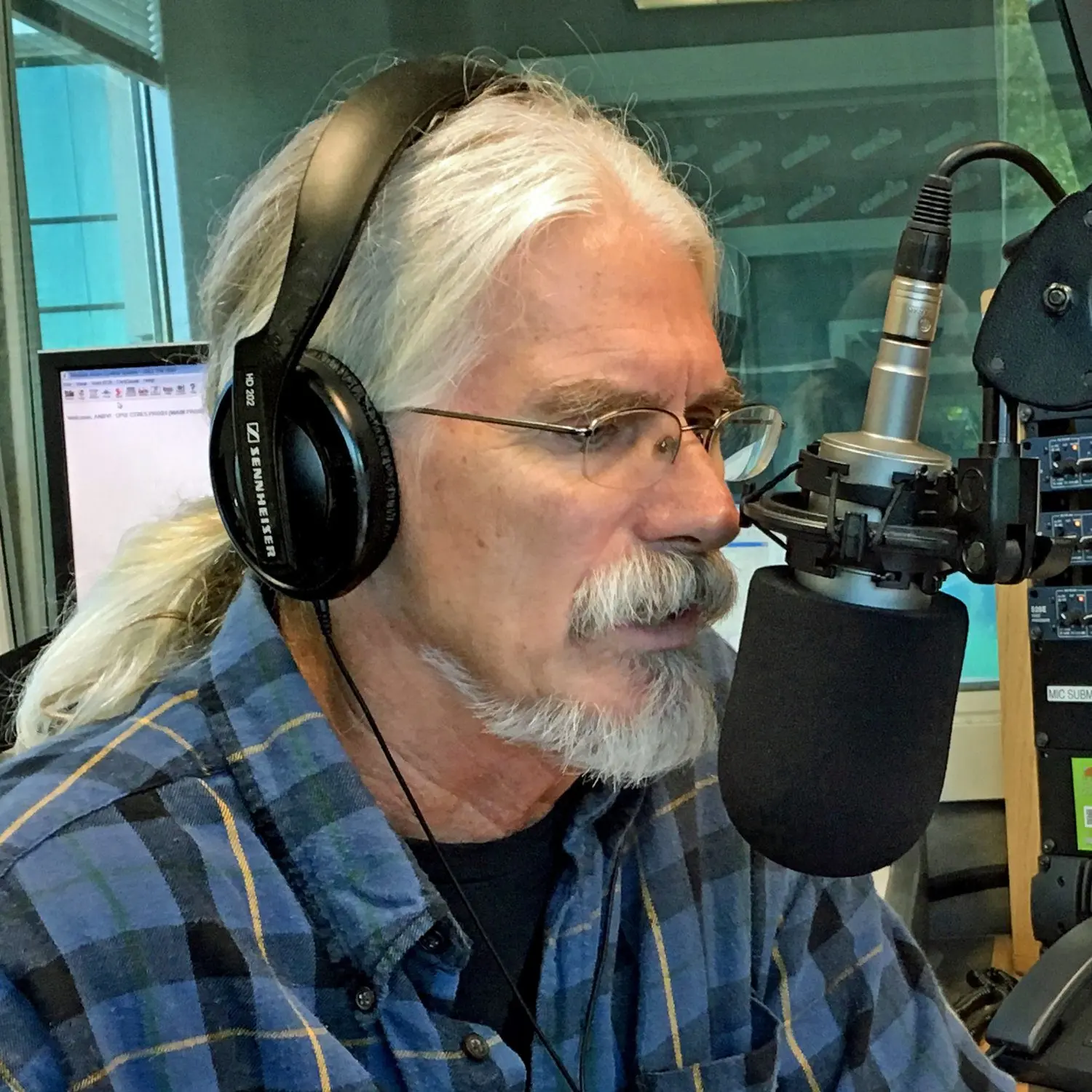
::Daily Radio Program
SPEAKER 05 :
Good afternoon and welcome to the Narrow Path radio broadcast. My name is Steve Gregg and we’re live for an hour, taking your phone calls. If you have questions you would like to raise for conversation on the air about the Bible, about the Christian faith, anything like that, feel free to give me a call. We’ll talk to you about those things. Maybe you’ve heard the show before. Maybe you know you already disagree with the host about something. That’s fine. People are certainly allowed to disagree. But if you’d like to call and disagree on the air, we’d love to talk to you about it. Feel free to call and balance comments. I think that would be probably helpful for all listeners to hear more than one side of the story. Usually I try to give more than one side of the story, but sometimes I may be restrained by time. And if you feel like that’s something that, you know, some answer given to someone else previously, miss the mark, feel free to call and hit the mark more directly for us. The number to call is 844-484-5737. We have a lot of lines open right now, not all of them, but most of them are open. So you could get through right now if you call 844-484-5737. And we’ll be glad to take your calls in this hour. Our first caller today is Michael in Englewood, California. Michael, welcome to The Narrow Path. Thanks for calling.
SPEAKER 04 :
Oh, yes. Thanks, Steve. I’m calling because someone was speaking on Isaiah 714 yesterday and double prophecy fulfillment. And my question is, well, I was confused because it seems like Isaiah was telling Ahaz there would be a virgin birth. So I’m wondering who would have the virgin birth and also Was he talking about Ahaz’s son being Immanuel or Masher Halal Hasbaz being from the virgin birth? And lastly, was the prophetess 100% Isaiah’s wife?
SPEAKER 05 :
Well, I don’t think he could be 50% a wife or 75% a wife. I’d say she was either his wife or she wasn’t his wife. We’re not told. The fact that he went into the prophetess there at the beginning of chapter 8 of Isaiah, has led most Christians to believe that he married her. Of course, in those days, it was not unusual for Jewish men to have more than one wife or even concubines. So we’re not told really what this prophetess, what her relationship was in terms of marriage or concubinage or whatever. But she did bear a child for Isaiah, and that’s what we do know. Now, What are we looking at here? We’re looking at a prophecy that is usually taken to be simply about the birth of Christ to a virgin. That is, of course, in chapter 7 of Isaiah, in verse 14, it says, Therefore the Lord himself will give you a sign. Behold, the virgin, not a virgin, but the virgin, shall conceive and bear a son, and shall call his name Emmanuel. Now, this is something that’s quoted in its entirety by Paul. of course, Matthew, in Matthew chapter 1. And he says it’s about Jesus being born of a virgin. And of course, the language fits very well, the idea of Jesus being born of a virgin. But there are things in the passage that makes one have the impression that there is going to be a birth sooner than the time of Christ. This was written like 700 years before Christ. And Ahab or Ahaz, excuse me, the king of Judah, was to be given a sign. His kingdom of Judah was being threatened by a confederacy of the northern kingdom of Israel, on the one hand, and Syria that were joining together to try to conquer Judah. They wanted to remove Ahaz from power and put in a man of their own choice, who was called the son of Tabeel. Now, Ahaz was worried about that, And so Isaiah was sent to him to say, don’t worry about that. These people are not going to succeed against you. Now, Ahaz was doubtful. And so Isaiah said, ask the Lord for a sign about this. And Ahaz said, I’m not going to ask the Lord for a sign. I guess he thought it would be irreverent to do that or something. So Isaiah said, well, then the Lord himself will give you a sign. And this is the sign that the virgin shall conceive and bring forth a child and so forth. His name shall be called Emmanuel. And it goes on to say about that child in verse 15, curds and honey he shall eat that he may know to refuse the evil and choose the good. For before the child shall know to refuse the evil and choose the good, the land that you dread will be forsaken by both of her kings. Meaning the king of Israel and the king of Syria that we’re currently threatening. Now, so he’s saying that a child is going to be born, and before that child is old enough to know right from wrong, to choose the good and refuse the evil, these kings will no longer be a threat to you. As it turned out, both of the kings that were threatening Ahaz were removed from power by the Assyrians within three and a half years of this time. So obviously if a child was born at that time, and that would take nine months for that baby to be conceived and born. And then, you know, before the child could know right from wrong, when they’re still quite young, the prediction is these kings will be gone. So it sounds like a short-range prediction. More than that, when you get to the end of that chapter, into chapter 8, we find God says, Moreover, the Lord said to me, Isaiah says, Take a scroll, write on it with a man’s pen, considering Mahershala al-Hashbaz, And he says, I’ll take for myself faithful witnesses to record, Uriah the priest, etc. And it says in verse 3, And I went to the prophetess, and she conceived and bore a son. And it says about that son, whose name was Meher Shalal Hashbaz, verse 4, For before the child shall have knowledge to cry, My father or my mother, the riches of Damascus and the spoil of Samaria will be taken away before the king of Assyria. So it’s the same prediction. Here’s a child that’s being born. And before he reaches much of an age at all, before he even knows how to say mama and daddy, which is similar to before he knows to choose the good or refuse the evil in the previous chapter, it says that the king of Damascus, which is Syria, and the king of Samaria, which is Israel, will be defeated by the Assyrians. So, in other words, you have a prediction in chapter 7 about a child will be born, and before that child reaches much of an age of any kind, these kings will no longer be a threat. So Isaiah then is told to go and father a child with this prophetess, and he’s told the same thing. Before this child reaches any kind of advanced age, these kings will be gone. The very same prediction. Furthermore, there’s a prophecy in chapter 8 that he gives addressing the child. And he says… for example, that the Assyrians will come. In verse 8 it says, And with the stretching out of his wings, he will fill the breadth of your land, O Emmanuel. That is, the child is referred to as Emmanuel. Of course, in the previous chapter, the child born of a virgin was to be called Emmanuel. Now, Matthew tells us the name Emmanuel means God with us, though Hebrew scholars will say it could also mean God is with us. The point is, the name of the child is connected with Emmanuel just as the one in chapter 7. Now, the normal way to read through Isaiah, you’d find in chapter 7 a prediction about a specific event and a specific child and the name of the child and the fact that that child at a very early age would signal the end of the two threatening powers. And then you’d read chapter 8 and find the fulfillment of it. That child is born. And he’s called Emmanuel. So, that would suggest… that chapter 8 is a fulfillment of chapter 7. However, Matthew quotes 700 years later that this applies to Jesus being born. Now, of course, the main reason for Matthew quoting this verse is because of the word virgin. The virgin shall conceive and bring forth a son. And, of course, Jesus’ mother was an actual virgin. She said when the angel told her she was going to tell her, she said, I’ve never known a man. That is, I’ve never had sex. So she was a true virgin. And so it allowed Matthew to see in this passage a second fulfillment. Certainly the first one was in Isaiah’s child, but Jesus was a secondary fulfillment. So this is where we get the idea that sometimes a prophecy has dual fulfillments. Or we might even say typological. Isaiah’s child could have been seen as a type and a shadow, and Christ the fulfillment of that. In any case, the prophecy has fulfillment at two levels at two different times. That’s the main idea. Now, how could it apply to Isaiah’s child when the prophecy says the virgin will conceive and bring forth a son? Now, that’s your question. And the truth is, the word that’s translated virgin in the Hebrew text is Alma. It’s Alma in the Hebrew. Now, Alma is… as almost all Hebrew scholars admit, means a young woman. Now, generally speaking, a young woman, not a married woman, would normally be a virgin, so the idea that this would be a virgin is maybe implied, but the word itself in the Hebrew just means a young woman. Now, there are Christian Hebrew scholars who put out a challenge for anyone to find a reference to an Alma in the Old Testament that is not referring to a woman who’s a virgin. And in other words, the idea is, although the word Alma might not in itself mean a woman who’s never had sex, is there ever a case where the word is used of a woman who has had sex? And I believe that that challenge has gone unanswered. I mean, Alma itself means a young woman. But in almost all usages, it refers to a young woman who is still a virgin. Now, interestingly, there is a different word for in Hebrew for virgin, betula, which is not used here. And that’s kind of interesting because you’d expect if he wanted to emphasize the virginity of the girl, he would have used the word that specifically means a virgin rather than one that might simply, might refer to a virgin or not. Anyway, when the Old Testament was translated into Greek by the Jews long before Jesus was born, almost 300 years before Christ, the Jews of Alexandria translated their Hebrew Bible into Greek. It became what’s called the Septuagint. And when they came to this verse, they picked a word for virgin, which is parthenos. That’s a Greek word, and it means a virgin. It doesn’t mean a young girl. It means a virgin, parthenos. And therefore, the Jews, long before Jesus was born, and long before there were any rumors of Jesus being born of a virgin, the Jews already had chosen the Greek word virgin as their understanding of what this passage was talking about. So there you go. So it would seem that at least on the Jewish opinion, three centuries before Christ, was that Isaiah is speaking about a virginal girl. And the virgin shall conceive. Now, we could say, well, Isaiah’s virgin. The mother of Isaiah’s child was not a virgin because he specifically said, I went into her, which means I went in and had sex with her, and she conceived, you know, and bore a son. So this is Isaiah’s partner here. Let’s just say his wife. She was not a virgin when she conceived. However, she might have been a virgin prior to Isaiah going into her. He may have taken her as a wife or concubine at this point and gone into her as a man normally would with his wife. But the woman that is being spoken of may well have been a virgin at the time that the prophecy was made. That is, a virgin, that is a woman who is currently a virgin, will conceive, not necessarily assuming she’ll be a virgin at the time that she conceives, but she, I mean, that’s left unaddressed. But at the time of speaking, it’s possible she was a virgin. So that he’s just saying, out here in our Jewish population, there’s a virgin. She’s going to have a baby. Not while she’s a virgin, of course, but this virgin is going to get married and have a baby. And it’s going to be my baby. I’m going to father the baby. So that could be the way it is meant. Now, there’s another way it could be meant. And that is because the word the virgin, it doesn’t say a virgin will conceive, which is interesting. It’s as though it’s some entity or person that is called the virgin shall conceive. Well, in Isaiah, and that’s, of course, the book we’re finding this in, in chapter 37, there is a story told. of how Isaiah encouraged Hezekiah, a later king of Judah, not to surrender to the Assyrians that were menacing him at the gate of Jerusalem. And a menacing letter was sent into the city from the oppressor, and Isaiah told King Hezekiah to write back a defiant letter saying, To to to the Assyrians. And in that letter, Isaiah 37, 22 says, this is the word which the Lord has spoken concerning him. The virgin, the daughter of Zion, has despised you, laughed you to scorn. The daughter of Jerusalem has shaken her head behind your back. Now, the virgin, the daughter of Zion, is simply a phrase that refers to Jerusalem and its inhabitants. Jerusalem and its inhabitants are spoken of as the virgin, the daughter of Zion. Now, we might speculate why they would speak that way of it, but there’s no question that that’s what he’s referring to. So that if the virgin means Jerusalem and its population, then it’s not impossible to That when Isaiah said, the virgin will conceive and bring forth a son, that he’s just saying that in Jerusalem, from within the population of Jerusalem, a child is going to be born. And in other words, the virgin is not the woman bearing the child, but the fact that it’s Jerusalem producing this child. He’s a son of Jerusalem. He’s a son of the city Jerusalem. He’s a citizen of the city born there. And if that’s what it means, it’s simply predicting that someone in Jerusalem, some woman, would have a child. And because she’s in Jerusalem, she is part of the city that’s called the virgin. So the virgin conceives and brings forth a child. That is a possible way of looking at it, too. Now, both of these things make it possible to preserve the meaning of the word as virgin rather than just a young woman. The woman who had the child in chapter 8 could well have been a virgin at the time of the prediction in chapter 7. Or it could be a reference to the city itself of Jerusalem as the virgin bringing forth the child. In either case, to say this is talking about a literal virginal woman getting pregnant while a virgin would be hard to prove. But the interesting thing is that Jesus was born of a woman who actually was a virgin. And we know that not because of the quotation of this verse, but because when the angel said to Mary, you’re going to have a child, she goes, how can that happen? I’ve not been with a man. So we know she was actually a virgin, a literal virgin. And Matthew saw in this, you know, a second fulfillment, as it were, or maybe the ultimate fulfillment of a prediction that had an initial fulfillment. partial or typological fulfillment in Isaiah’s son. So this is the kind of thing that we sometimes find when people talk about double fulfillments of prophecy. It is often the case that what is going on is that something is predicted in the Old Testament which becomes a type and a shadow of something in the New Testament, and the New Testament writers apply it. Now, we might say, well, are they kind of stretching things there perhaps when they do that? Well, obviously, an unbeliever might say that because an unbeliever can say whatever they want to, but the New Testament tells us that when Jesus came out of the grave, he met with his disciples in the upper room, and it says he opened their understanding so that they might understand the scriptures, meaning the Old Testament scriptures. That means there were things in the Old Testament that the average person would not recognize, would not see, deeper things. And, of course, I believe Matthew wrote the Gospel of Matthew, and he’s the one who’s making the connection with Isaiah. I believe Matthew was among the apostles who received… the gift from Christ of being able to see those meanings in the scripture that are there, but which others would not naturally see. And so as a Christian, of course, I accept Matthew’s authority to do that. And I think that he’s seen in a passage that already had a fulfillment 700 years earlier, the ultimate fulfillment that was intended in the passage. That’s how I would understand that whole group of passages. All right. Let’s talk to Glenn in Elk Grove, California. Hi, Glenn. Welcome to The Narrow Path. Thanks for coming.
SPEAKER 09 :
How are you doing, Steve? Yeah, I’ve been a Christian for 40 years. I started off in Ray Stedman’s church in Palo Alto.
SPEAKER 05 :
Oh, yeah.
SPEAKER 09 :
So I’ve been raised a dispensationalist. I’m kind of leaning towards you now because, like you said, I want to know what the truth is. And I’ve listened to – I’ve even asked how – Hal Lindsey questions, and I’ve been to all this stuff, so I just kind of want to know what the truth is. Now, you believe there’s going to be one rapture, and it’s going to be at the end of the millennium, correct?
SPEAKER 05 :
Well, I don’t believe there will be a future millennium. I’m what we call amillennial. I believe there will be a rapture at the end of the world. That is, at the end of the present world, when Jesus returns. So, the millennial view… holds, the premillennial view holds that when Jesus comes, it will not actually be the end of the world. When Jesus comes, it’ll just inaugurate a new era in this world of peace and righteousness called the millennium, and it’ll last for a thousand years. Then, at the end of that, there’ll be the end of the world. And then there’ll be a new heavens and new earth. So that’s how the premillennial view, which is also dispensationalism, holds. things to be. So the amillennialist believes that the thousand years is merely a symbol. It’s a symbolic description of the age of the church. So the end of the millennium is really what we’d call the end of the world at the end of the present age. And yes, when Jesus comes back at the end of this present age, which could be today, or tomorrow, or it could be 10,000 years from now. We have no indicator of the timing in Scripture. Whenever he comes back, he will raise the dead, he’ll rapture the church, and he’ll create the new heavens and the new earth. That’s the belief that has pretty much been the predominant view of the church throughout history, believe it or not.
SPEAKER 09 :
So my question is, how do you explain Matthew 27, 52-55? Isn’t that a form of a rapture in a sense?
SPEAKER 05 :
No, it’s a resurrection. When Jesus came out of the tomb, the Bible says that there were many saints who had been buried there, apparently in the region of Jerusalem, and they came to life, and they came out of their tombs, and they were seen in the city of Jerusalem. This is not a rapture. The rapture is when living people are caught up to meet the Lord in the air. The resurrection is when dead people come to life. So there’s a distinction. But in Paul’s theology, in Christ’s, the rapture and the resurrection happen really on the same day. Paul said the dead in Christ will rise first, then we who are alive and remain will be caught up to meet them in the air, which means that’s the rapture. So the people we read about in Matthew chapter 27, verses 52 and following, we don’t read that they go up in the sky at all. They’re not caught up. They come out of their graves and walk around on the earth. So their situation would be more analogous to, say, Lazarus, who was dead for four days, and Jesus raised him up, and he came out and walked around and was in the world of the living again. Or like Jairus’ daughter. Or like any other cases, Jesus may have raised from the dead during his lifetime, and there were some. We don’t know if there were a lot, but there were a few. Three of them were mentioned, actually. So during his lifetime, Jesus raised people from the dead. But that wasn’t the rapture, and it wasn’t even the final resurrection. They probably were not raised immortal. On the day of resurrection, at the end of the world, righteous followers of Christ will be raised immortal in glorified bodies, very much like Jesus’ body when he came out of the grave. So that’s not what happened to these people. These people are simply people who had probably been dead a short time. I say dead a short time because… They were recognized by, you know, they were contemporaries of those who saw them.
SPEAKER 09 :
They were called saints.
SPEAKER 05 :
Yeah. Saints means holy ones. That’s right. We’re called saints. I got you. I got you. All right.
SPEAKER 09 :
I have a lot of questions for you, but I’ll call another time. Thank you, Steve. I appreciate it.
SPEAKER 05 :
All right. I appreciate your call. God bless you. All right. Let’s see. Victoria in Oakland, California. Three calls in California in a row. Hi, Victoria. Welcome.
SPEAKER 01 :
Hi, I’m trying to make this short. A subject that is rarely preached on the pulpit. Please share your thoughts with me about Christian marriage and divorcing and remarrying others into adultery. Thank you.
SPEAKER 05 :
Yes, I’ll be glad to talk about that. By the way, given the fact that I won’t be able to talk at length here because it deserves a long talk, I would also direct you to my website, thenarrowpath.com. There’s a tab that says Topical Articles. These are articles I’ve written that were in magazines before, and now they’re on our website. And under Topical Articles, there’s one called Divorce and Remarriage, and this will go into it far more thoroughly than I can at this moment. But the Bible makes it very clear that people are not really allowed to get divorced. When they get married, they promise they will not get divorced. No one who takes wedding vows has failed to make that promise. You know, when you marry somebody, you don’t say, I won’t get divorced, but you say, I’ll be faithful to you and you alone and be clear to you until one of us is dead, which means that precludes the whole idea of divorce. Now, when we promise people that we’ll do something, we have to do what we say or else we’re liars. And God has no pleasure in liars. In fact, he’s very angry when people cheat each other by deception and so forth. Lots of people will say, yes, I’ll be faithful for life, but they don’t really mean it. They just mean until I’m tired of you, then I’ll go find someone else I’m not tired of. That’s lying. That’s using somebody. That’s deceptive. God hates that. The Bible says God hates divorce. Now, having said that, it’s not always the case that divorce is illegitimate. Because there are things that a person can do in violation of their vows that give their partner the right to be free of the marriage. In other words, the only way a marriage can really end in divorce is that somebody does a heinous violation of God’s ways. Either somebody, let’s just say, commits adultery, which gives their partner the right to divorce, or… or somebody gets divorced without that grounds, which means the person getting the divorce is committing a heinous sin. There’s no divorce without heinous sin. Now, after there is a divorce, the question arises, well, can the person remarry righteously? And my understanding is that if people are really divorced upon biblical grounds, they are not married anymore in God’s sight, and they can remarry innocently. But if they are not divorced on biblical grounds, that is, if they got divorced on something less than biblical grounds, they’re still married as far as God’s concerned. They have not been released from the vows they made at their first altar when they got married. And therefore, they can’t remarry without committing adultery. This is what Jesus says in Matthew 5, 32. He says it again in Matthew 19, 9. So he says it twice in one book. It’s an important thing. Again, if you want more detail, I have this long article called Divorce and Remarriage at our website, thenarrowpath.com. Under the tab that says Topical Articles, I’d advise you to go there for a much more in-depth discussion of that subject. Thenarrowpath.com is our website. We are listener supported. If you’d like to help us, you can donate from there too, but everything’s free at the website. I’ll be back in 30 seconds. Don’t go away. We have another half hour.
SPEAKER 03 :
If truth did exist, would it matter to you? Whom would you consult as an authority on the subject? In a 16-lecture series entitled The Authority of Scriptures, Steve Gregg not only thoroughly presents the case for the Bible’s authority, but also explains how this truth is to be applied to a believer’s daily walk and outlook. The authority of scriptures can be downloaded in MP3 format without charge from our website, thenarrowpath.com.
SPEAKER 1 :
Thank you.
SPEAKER 05 :
Good afternoon and welcome back to the Narrow Path radio broadcast. We have another half hour ahead of us to take your calls and we have lines open to receive your calls right now. So if you’re interested in asking on the air and discussing your questions you have about the Bible or the Christian faith or expressing a difference of opinion you might have, With the host, these things are entirely welcome here. In fact, we hope you will do so because we have some lines open. We always like to, you know, have people avail themselves of this opportunity. We have a half hour left. The number to call is 844-484-5737. Once again, that number, 844-484. 5737. And we’ll get to your call as soon as we can. We’re going to talk first of all to Tim, calling from La Mesa, California. Tim, welcome to The Narrow Path. Thanks for calling.
SPEAKER 07 :
Yes, thanks for taking my call. About a month ago, I saw an article on Catholic.com that was critical of the documentary hypothesis. I was just wondering, what are your thoughts on the documentary hypothesis?
SPEAKER 05 :
Well, I’m also critical of the documentary hypothesis because it has no actual basis in evidence and because it is contrary to what the Bible teaches about the Pentateuch or the Torah. For those who don’t know what the documentary hypothesis is, It’s a view that kind of developed in the latter part of the 19th century and is largely accepted in all liberal biblical scholarship today. And even people who wouldn’t describe themselves as liberal, some conservative scholars also would, you know, they kind of just bow to it. They kind of speak as if it’s true. But very conservative Christians do not accept it because it basically makes a lie out of the Bible. But see, back in the 19th century, Bible scholars weren’t necessarily committed to the truth of the Bible. They wanted to critique the Bible. And so a lot of people were in the seminaries and in the universities, especially in Germany originally and then in England and America, who they were in the field of biblical studies, but they were not believers. They weren’t believers in the Bible and they weren’t believers sometimes in Christianity at all. But it became intriguing for them to try to come up with theories of where certain parts of the Bible came from, contrary to the traditional views. Now, traditionally, the Jews and Christians always believed that the first five books of the Bible, which we call the Pentateuch, and which the Jews call the Torah, that those were written by Moses. In fact, the Law of Moses is what it’s called. And so there are… Not every one of those books has Moses named in it. For example, Genesis records events that happened all before Moses was alive, before he was born. So the fact that he wrote that is simply part of the tradition that he wrote all five books. But Exodus and Leviticus and Numbers and Deuteronomy all mention Moses as one who wrote them, or at least portions of them. Now, the Jews held that Moses was the substantial author of the whole work, the five books. And, by the way, Christians have believed that, too. One of the reasons Christians do is because Jesus believed it and taught it. And the apostles believed it and taught it. And the Jews believed it because they knew it was true. Now, in the 19th century, the critical schools, especially in Germany, began to come up with ways of discounting the idea that Moses wrote these books. Even though Jesus said he did, and Paul said he did, and the apostles believed that Moses did, and the Jews all believed it. In fact, everybody believed it until the 19th century, pretty much. There were a few, perhaps, in the 18th century who had begun to have these questions about it. But the idea was that it began with the idea that Moses couldn’t have written these books because in Moses’ day, they believed, writing had not been invented yet. So nothing could have been written by Moses if he even existed. I’m sure that some of them were not sure that he was not a fictional character. But at the time that Moses is said to have lived, they said writing was not yet invented. So there’s no possibility that Moses wrote those books. Well, of course, when people say the Bible can’t be true based on some kind of historical claim, archaeology has a way of making them look ridiculous. And it certainly has in this case, too, because. Since the time that this hypothesis came out, writing has been discovered from Moses’ time and before. The Rosh Hamra texts that have been found in, I think, in the 1940s, if I’m not mistaken, are from Moses’ time. And they prove that there was writing in Moses’ day in Palestine. But not only that, you can go back to the ancient laws of Hammurabi or the ancient cuneiform tablets that have been found in the last century or so And there’s whole libraries of writing that date not from Moses’ time, from Abraham’s time. Abraham was at least 500 years before Moses. So, obviously, writing existed and was much in use in the time of Abraham. 500 years later, it would not be a problem for Moses to know how to write. In fact, he’d be the guy to do it because he had been, the Bible describes him as having been adopted into the Egyptian royal house out of the Hebrew community. And he was trained in all the wisdom of the Egyptians, which would include literacy and history and that kind of thing. And, of course, whoever wrote the Pentateuch knew how to write history. They knew how to write poetry. They knew how to write music. They wrote songs. There’s a Song of Moses in there. They wrote census records. And all those things are found in there. Whoever wrote the Pentateuch. was quite versatile in literature. And Moses, as far as we know, is the very best candidate. There’s nothing that we know about Moses that would not make him the best candidate to be the writer. And that’s who it says it’s written by. And that’s who Jesus said it’s written by. So, I mean, I believe what the Bible says. I believe there’s no evidence against it. Now, here’s what the documentary hypothesis is. Back before they discovered that writing existed in time Moses, back when they thought they had a good case that Moses couldn’t have written these books. They felt, well, we need some alternative authorship for this book, since Moses couldn’t have done it. Of course, that undergirding foundation for their doubts has now been overthrown by evidence, but not before they had come up with an elaborate theory. And their theory is that there are four separate traditions of ancient Jewish origins that which floated around verbally, not in writing. And some of them used the name Yahweh for God. And some of them used the word Elohim for God. And some of them focused on priestly rituals like those in Leviticus. And some of them seemed to be repetitions of earlier stuff like you find in Deuteronomy. Now, basically, they decided there were four different traditions that independently circulated. And the parts of the of the Pentateuch that used the word Yahweh, they called that the Yahwist tradition, or the Yahwist sections. The portions of the Pentateuch that used the word Elohim, they attribute to the Elohist tradition. And they considered that these were like independent, separate traditions that just kind of developed. And late, late in Jewish history, somebody took these traditions and wrote them down. But not in Moses’ time, certainly. In fact, not till thousands of years after Moses’ time. It is thought that some of the latest of these traditions were written down 550 years before Christ, which would be about a thousand years after Moses. But even the earliest of them is thought to have been written like 850 years before Christ. So that would be 600 years after Moses, too. So, in other words, the documentary hypothesis is that Moses didn’t write anything in the Pentateuch and couldn’t have. Instead, that it came about gradually by the evolution of certain traditions that separated independently and were merged somehow by priests in the intertestamental period or thereabouts, or perhaps during the Babylonian exile. So, in other words, this theory has become so popular that very few theologians are willing to come out and say they don’t believe it. And yet, there’s no real good reason to believe it. The whole purpose of forming the theses is was to find an alternative of authorship, alternative to Moses, because it was assumed he couldn’t have written it. Now we know he could have, which means the entire foundation for a documentary hypothesis, the rug has been pulled out from under it. And everything about it is speculative. And unfortunately, it’s the speculations of man that contradict the authoritative words of Jesus and the apostles. So that’s why I don’t believe in the documentary hypothesis. And most very conservative Christians don’t. However, those who are looking for what we might say intellectual or academic respectability are pretty much driven to hold the documentary hypothesis, just like they’re driven to hold that there were two or three Isaiahs who wrote the book of Isaiah. These are popular ideas that came up in the late 19th century to try to undermine the authority and the authorship of these books. However, frankly, the evidence of Mosaic authorship of the Pentateuch and of Isaiah’s singular authorship of his book is overwhelming within the material itself. And so, you know, unless somebody’s intimidated by, you know, those wanting to withhold academic honors to them, a person can easily see that Moses did write the Pentateuch, and Isaiah did write the whole of Isaiah. And Daniel is often brought up for questions, and I won’t get into that now. But I’ll tell you this. If you go to thenarrowpath.com, and I have my verse-by-verse lectures there through each of these books, I always begin, before I go into the book, talking about these very things of authorship. So I have more extensive investigation into the documentary hypothesis on my lectures, also into the unity of Isaiah and the time of Daniel’s writing and so forth. So if you hear people questioning these things and you wonder what might be said to refute them, you’ll find it in my lectures on the subject.
SPEAKER 08 :
Thank you.
SPEAKER 05 :
All right. Thank you, Tim. Bye now. Okay, let’s talk next to Tristan from Gainesville, Florida. Hi, Tristan. Welcome to The Narrow Path. Thanks for calling.
SPEAKER 02 :
Hello, sir. How are you doing?
SPEAKER 05 :
Well, thanks.
SPEAKER 02 :
I’m sorry. Can you hear me? Yes, please proceed. Oh, all right. So my church has beliefs that are like the Pentecostal church. We’re not Pentecostal. We’re not denominational. But these beliefs are speaking in tongues, being evidence that you have the Holy Spirit. So, well, first of all, do you agree with that? And if you don’t, is that something worth leaving our church over?
SPEAKER 05 :
Well, it is a distinctive of Pentecostal groups, and this is why they are called Pentecostal. There are charismatic groups that also believe in speaking in tongues, but they’re not Pentecostal because the Pentecostals are the ones who believe that speaking in tongues is the initial evidence of being baptized in the Holy Spirit. Charismatics also sometimes usually believe in speaking in tongues, but they don’t believe it’s necessarily the initial evidence of being baptized in the Spirit. So, In charismatic circles, you may find people speaking in tongues, but they don’t judge you if you don’t speak in tongues, and they don’t assume that you aren’t filled with the Spirit. Now, in Pentecostal circles, their theology requires them to assume that if you have not spoken in tongues, you have not been filled with the Spirit. And I don’t believe the Bible teaches that. Now, I believe in speaking in tongues. I myself speak in tongues and have done so for 55 years. So I’m not against speaking in tongues. I’m certainly against crazy stuff that goes on in some churches where people are screaming out in tongues all at once and there’s no interpretation, things like that. Obviously, there are some churches that do that. People like myself, you probably will never hear them speak in tongues because they’re It’s just not a priority in the public service. It’s part of private prayer more than anything. But the thing is, I believe in the gift of tongues, but I do not believe in the initial evidence doctrine. Now, one reason I don’t, there’s two reasons I don’t. One is you can’t find it taught in Scripture. And secondly, because there’s too many people I know who evidently are filled with the Spirit, given the abundance of fruit of the Spirit in their lives. but who have never spoken in tongues. So, you know, one would have to say, if I took the Pentecostal view on that, I would have to say that the people I know, who I have no question about them being filled with the Spirit because their lives exhibit it completely, but they don’t speak in tongues, I have to assume that they’re not filled with the Spirit because they haven’t met the criteria that I’m artificially imposing on that designation. Now, The Bible does describe people being filled with the Spirit and speaking in tongues, but it describes more people being filled with the Spirit than it describes speaking in tongues. That is, some people who are filled with the Spirit, we read that they spoke in tongues. Other people who were filled with the Spirit, we do not read whether they did or not. Now, it’s entirely possible that in every case the people did speak in tongues, but we’re not told that. And because we’re not told that, we can’t assume it. And there’s certainly nothing in the Bible that would say that that is like a necessary connection, that you have to speak in tongues when you’re baptized as a spirit. The Pentecostal church has, you know, every denomination has its own distinctives that set it apart from other denominations, or else it wouldn’t be a separate denomination. It would just join with all the other Christians. But almost like the excuse for existing as a separate denomination is that a group has its own distinctive thing that other groups don’t have. And for Pentecostals, that distinctive is the initial evidence doctrine. And I do not think there’s a biblical case that can be made for it. Now, yes, is that something you should leave the church over? Not by itself, no. I mean, if I met somebody who believes you have to speak in tongues to be saved… If I didn’t speak in tongues, and therefore I figured they didn’t believe I was saved, that might cause a bit of a difficulty in fellowship. Now, most Pentecostal churches, I would say the larger Pentecostal denominations, like the Assemblies of God and the Foursquare and such, they do believe that speaking in tongues is the initial evidence of the baptism of the Spirit, but they don’t believe it’s the evidence of salvation. In other words, they would believe that if you don’t speak in tongues, you may very well be saved. because you’d be saved without speaking in tongues. But they would think that you have not yet come into the baptism of the Holy Spirit. Now, there are some Pentecostal groups, United Pentecostals and such, that believe that you’re not even saved if you don’t speak in tongues. You have to be saved and baptized in the Spirit with the evidence of speaking in tongues to be saved. So some Pentecostals, if you don’t speak in tongues, they’ll think you’re not saved. Other Pentecostals, depending on what group they’re in, may believe that you are a saved person, but they’ll just fear you’re not baptized in the Spirit. There’s a third category, there’d be Charismatics, who would say, you may not speak in tongues, but you may nonetheless be saved and filled with the Spirit, because tongues is not the only gift, and certainly not the most important way of knowing that somebody’s filled with the Spirit. If your church overemphasizes this and maybe cuts people off from fellowship over this issue, then I’d say that’s a church you probably want to leave because that’s a rather cultic behavior. But on the other hand, if I was going to a church and there were some people there who thought that you must speak in tongues to be baptized in the Spirit, I wouldn’t cut them off. I would disagree with them. I disagree with everybody about something, and everybody disagrees with me about something. I can’t cut everybody off, and I don’t have any desire to. But that’s not something I would have to cut them off for. It is something that would be uncomfortable, though, to be in a church where everyone thought that, and especially if I didn’t speak in tongues myself. Just to know that everybody there thinks I’m a lesser… a lesser spiritual person than themselves because I haven’t been filled with the Spirit, they think. So I don’t know what your church is like. But I will say that I don’t think that people holding that doctrine requires that you break off fellowship with them. But if they place undue emphasis on it, it may very well be that it’s not a very healthy church and you might look for a better place.
SPEAKER 02 :
All right. Yeah, thank you. Also, I’ll just add one more. What is speaking in tongues? Is it blabbering or is it just, is it another language?
SPEAKER 05 :
Yes, it’s a language. I mean, tongues, the word tongues means language or languages. And yeah, it’s speaking in a language, but it’s a language that is not known to the person speaking it. And it may very well be not known to anybody in the room. That’s why Paul said in 1 Corinthians 14 that he who speaks in tongues does not speak to men but to God because no one understands him. Now, obviously, if you’re speaking in tongues in a meeting and no one understands you, it is a language, but it may be a language that no one there knows. There’s certainly a lot of languages that could be spoken that no one in the room would know. And therefore, Paul says, there’s no use doing it unless you also have a gift of interpretation, which would mean you’d access the meaning of the tongues supernaturally because you yourself don’t know what it means either. Paul says in 1 Corinthians 14, 13, therefore let him who speaks in tongues pray that he might interpret. Now, if you have to pray that you would interpret, it means that you don’t know naturally how to interpret. You’re going to have to ask God to help you do that. But… There’s also people, Paul says, who speak in tongues and other people who interpret. So we don’t have an extensive discussion of this outside of 1 Corinthians 14. It’s the main chapter that Paul expounds on this, and no other author does. But, yeah, I would say that it’s a language, but it might not be a language known to anybody present. Now, if you say, well, I hear people speak in tongues, and it just sounds like nonsense and chatter and blather and so forth. Well… You never know, because there are languages that would sound that way to us if we heard them. The truth is, if I hear someone speaking an Asian language, I mean, some European languages, though I don’t understand them, they sound like languages to me. But some Asian languages, and certainly some tribal languages, perhaps of the Bushmen who click and whistle as part of their speech, that might sound nonsensical to me. But if it is speaking in tongues, by definition, it is a language. And the important thing is that God understands it because you’re not speaking to men, but to God, Paul said, when you speak in tongues. All right. I appreciate your call, brother. Stephen from Milford, New Hampshire. Welcome to The Narrow Path. Thanks for calling.
SPEAKER 06 :
Yes, I have a question. It’s about the fruit. It says you can Judge, you know, a tree, a bad tree can’t produce good fruit. A good tree can’t produce bad fruit. And then in the garden there with Eve, she ate the fruit because it was pleasing to her eye. At least one of the Bibles, you know, referred to it that way.
SPEAKER 05 :
Yes, yes.
SPEAKER 06 :
Can you explain to me the difference? Is that just like saying that a person is free? And, you know, a bad person can’t produce good things. Can you explain that to me?
SPEAKER 05 :
Yeah, I mean, I’m not sure where the problem is here. But if you’re saying that the tree in the garden was good for food and yet we think of it as a bad tree, there’s nothing wrong with the tree. What was wrong is that Eve ate from it. The tree was good. The Bible says everything God made was good. I mean, God made the whole heavens and the earth and finally the Garden of Eden and the Tree of Life and the Tree of Knowledge of Good and Evil. And he said it’s all good. Everything’s good. Now, the tree was good. But, you know, my neighbor’s wife may be good too, but she’s not good for me. That is, I’m not allowed to touch her. In other words, there are things that are good, but I’m not allowed to have them. It doesn’t mean they’re bad things. What would be bad is for me to take them when they’re not mine. And that’s what was going on with the tree. The tree in the garden was not a bad tree. It was a good tree. Every tree was good. But that tree was the one that Eve was not allowed to eat from. And therefore, what was bad was that she ate from it. And that had bad consequences now when Jesus said you know a tree by its fruit a good tree doesn’t produce bad fruit Now he said that in the Sermon on the Mount in Matthew 7 He said it again in another context in Matthew 12 both places He was actually talking about what comes out of the mouth He was talking about prophets and false prophets And he says you know either make the tree good and the fruit good or make the tree evil a tree of the fruit evil and and he’s basically saying that you can’t produce a good prophecy from anything that’s a bad prophet and vice versa. He’s saying this is how you know a false prophet. This is the context of where he’s talking about judging prophets. Or in the second case in Matthew 12, he’s talking about the Pharisees. How can you, being evil, speak good things? For an evil tree can’t produce good fruit, the fruit of what’s coming out of them. See, in another place in Matthew 15, Jesus said what goes into a man’s mouth doesn’t defile him. What comes out of his mouth defiles him because that comes out of his heart. And it defiles a man if it’s bad stuff. So Jesus is saying you can tell if a person is good or bad. by what typically comes out of the mouth. And when he said it the second time, which was Matthew 12, he clarified. He says, for out of the abundance of the heart, the mouth speaks. So the fruit that comes out of your mouth, the fruit of your lips, is going to tell whether you’re a good tree or a bad tree. That’s what he’s saying. Now, in another context, Paul was talking about the fruit of the Spirit. In Galatians 5, verses 22 and 23, Paul was saying that, you know, The Spirit produces good fruit in us. And in that case, he’s not talking about our words so much as our character. You know, the fruit of the Spirit is love, joy, peace, goodness, self-control, faithfulness, those kinds of things. In other words, good behavior, good character. This is the fruit of the Spirit’s rule in your life. And that’s why I said that a better… evidence that you’re filled with the Spirit is not that you speak in tongues. Since Paul said, if I speak in the tongues of men and angels and don’t have love, I’m just like a clanging gong. But having the fruit of the Spirit is, you know, a good tree bears good fruit. And if you’re filled with the Spirit, then the fruit of the Spirit in your life, love, joy, peace, and those things will be the things that make that clear that you indeed are filled with the Spirit. John in Seattle, Washington. Welcome. Hi, Steve.
SPEAKER 08 :
I’m I have a question about a book that I got at Christmas, and it’s a wonderful book, I think. I wondered if you’d heard of it. God, the Science, the Evidence, the Dawn of a Revolution.
SPEAKER 05 :
I have been reading that book this past week.
SPEAKER 08 :
Praise the Lord. What do you think?
SPEAKER 05 :
I actually got it on audiobook, and I decided I’m going to buy it in hard copy because it’s got so much good information in it.
SPEAKER 08 :
And it dropped the price down to about $8 on Amazon.
SPEAKER 05 :
That’s fantastic. It’s God, the Science and the Evidence, it’s called? Yeah. Hey, I’m out of time. But, yeah, that’s a very good book. I haven’t read the whole thing. It’s a very big book, isn’t it? I mean, I haven’t seen it because I have an audio book. It’s very long. But it’s very comprehensive. Yeah. I would say everything I’ve heard from it is excellent. I haven’t finished it, though. I appreciate your call. Yeah, the book is God, Science, and the Evidence, something like that. Check it out. You’ve been listening to the Narrow Path radio broadcast. My name is Steve Gregg. We have a website. We’re listener-supported. You can donate from there if you want. It’s thenarrowpath.com.


