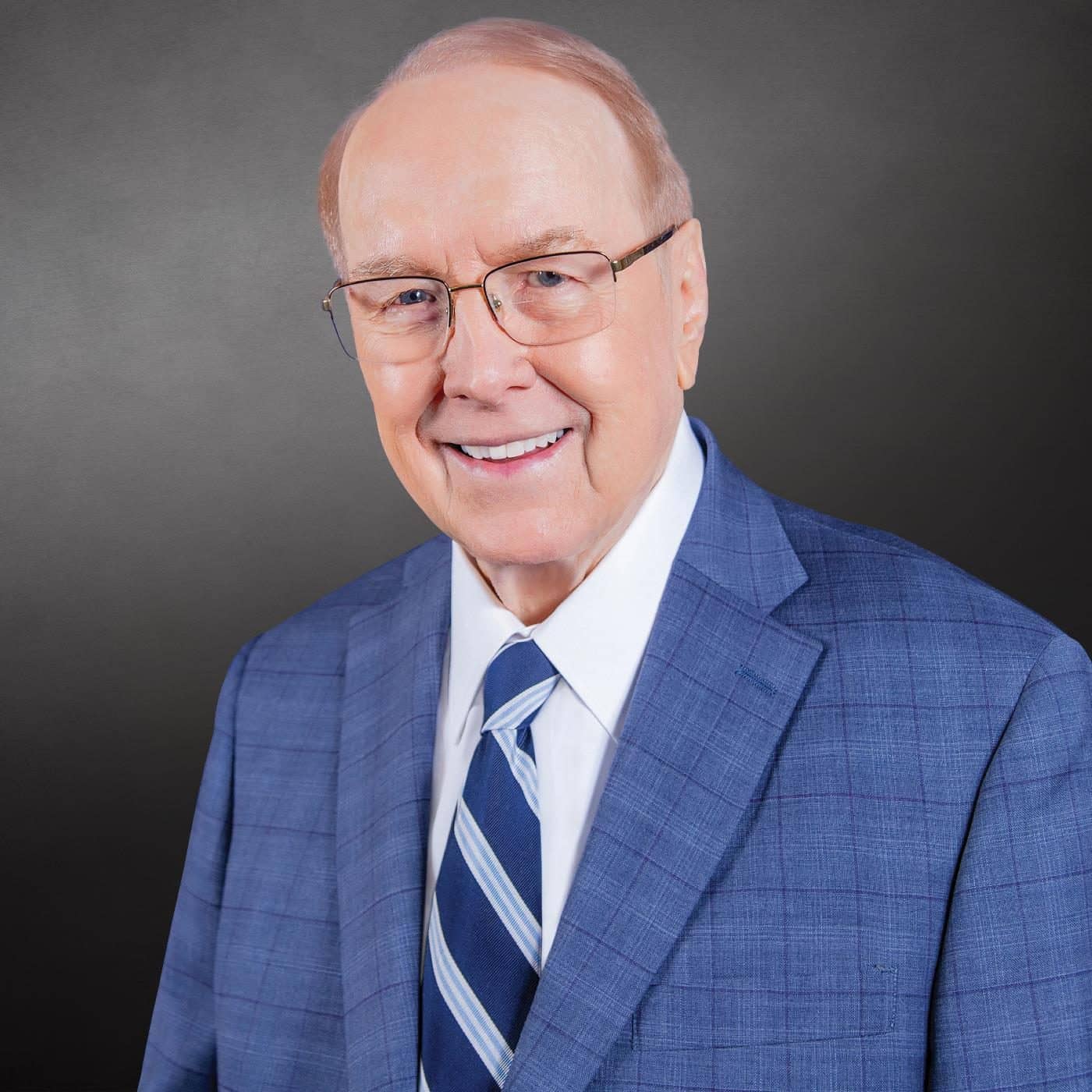
Big Tech is blocking Christian content while allowing violent and satanic ads to reach millions of children. On today’s edition of Family Talk, Gary Bauer continues his conversation with Brent Dusing, CEO of TruPlay, a faith-based gaming platform. Brent reveals how Google and TikTok have censored his family-friendly ads, and why he’s fighting back through legislation to protect religious freedom in the age of AI. To support this ministry financially, visit: https://www.oneplace.com/donate/707/29?v=20251111
SPEAKER 02 :
Welcome everyone to Family Talk. It’s a ministry of the James Dobson Family Institute supported by listeners just like you. I’m Dr. James Dobson and I’m thrilled that you’ve joined us. Well, welcome once again to Dr. James Dobson’s Family Talk. I’m Roger Marsh. Question for you. What happens when the biggest tech platforms in the world decide that the word God is somehow dangerous? But at the same time, satanic imagery and sexual content aimed at children gets a free pass online. While that’s not a hypothetical question, it’s exactly what is happening right now in the digital marketplace. On the last edition of Dr. James Dobson’s Family Talk, Gary Bauer sat down with Brent Duesing, the CEO and founder of TruePlay, a subscription gaming platform delivering fun, biblically authentic entertainment for kids and families. Brent shared his faith journey and how it led him to build a Christ-centered alternative to the toxic content flooding children’s screens. On today’s edition of Dr. James Dobson’s Family Talk, the conversation turns to the battle Brent is facing as platforms like Google and TikTok actively block his ads simply for promoting Christian content. So let’s pick up this discussion right now on today’s edition of Dr. James Dobson’s Family Talk. Here’s your host, Gary Bauer.
SPEAKER 01 :
Well, welcome back to Family Talk, folks. So glad you’ve joined us here for our second day. I don’t want to waste a second. Let’s get right into it, Brent. All right. Sounds good, Gary. Why don’t you describe for us what happened when you first, as I recall, you actually mentioned in your advertising that this is Christian-themed or something that would have set off alarm bells in very dark places of the ether. Yeah.
SPEAKER 03 :
So essentially, just to give listeners some context, and some may be familiar with online or mobile-related marketing and some may not. In 2020 – really for this whole decade. It’s 2026 now. But for this entire decade, if you want to promote – A consumer technology product, unfortunately, you have to buy ads on social networks. People don’t watch TV anymore. Billboards are completely irrelevant for this kind of a product. Radio doesn’t really work for this kind of a product. You know, if it’s a product on your phone, on your tablet, you’ve got to hit people where they are with ads, and that is social media. That’s just the realities of this business, and that’s just true for any business. So… The big three platforms that actually have big reaches for our, I guess there’s four, Google, TikTok, Meta, which of course is Facebook plus Instagram. And then there’s these ad networks where you can buy ads inside games. And I won’t belabor that, but just, you know, you play a video game, you see an ad for a different game. By the way, we don’t have ads in Trueplay, if you’re listening, if you want to buy this for your kids or grandkids. But we do buy ads in other people’s games so they can use Trueplay, all right? TikTok and Google won’t let us advertise, straight up. Why? Well, TikTok’s words specifically were, you are promoting dangerous and harmful content to our users. Google blocked our ad saying you cannot promote your religious beliefs to our users. Now, if as a listener, let me remove a thought, a concern out of your mind. We’re not out saying we hate such and so, somebody’s going to hell. We’re not. We’re saying things like fun, safe place to play for your kids, turn game time into God time, faith, family-filled adventures, teach your kid more about God’s word. You know, things that you would expect us to say in a very, as Eric Metaxas said, in a very anodyne way, all right?
SPEAKER 01 :
Yeah.
SPEAKER 03 :
They won’t let us run those at all. Some ads they blocked, some they dialed down. Meanwhile, and as they say, okay, because you can’t promote your religious belief in an ad. However, we have receipts. We can show you guys this. They allowed satanic content to advertise. So literally Roblox, which don’t let your kids use Roblox, a platform 80 million kids use every day. They ran an ad with a pentagram drawn in blood. Blood all over the floor. They ran that ad that millions of people saw. Google and TechCock let them run that ad. There’s a game called Diablo. Guess who the main character is? Satan. They ran those ads for Diablo, all different types of ads, talking about heaven and hell and demons and necromancy. I don’t even want to get into what that is. They ran all those ads, no problem. Roblox ran ads, LGBT content for children. We’re talking about kids as young as eight and nine years old. They ran those ads with no problem. Lastly, Google allows Buddhist products to advertise with no restraint. So it’s actually not that Google has a policy around religion. It’s that they have a problem with… with Christianity. It’s that they hate the things of Jesus Christ. And it, you know, Jesus said this, it’s not like we didn’t get a warning. He said, you know, the world’s going to hate you because it hates me. And as we talked about, there really are people who serve the darkness and positions of power, whether they’re making content or they’re the gatekeepers, the platforms like TikTok and Google. So they’re really actively, you know, trying to constrain us. Now, what are we doing about it is probably your next question. Yes. Well, we’re fighting back, right? We’re working with the ACLJ, We’re working with some other organizations to actively push hard against this darkness. We’ve written letters to senators, to congressmen. We have had meetings now with senators and congressmen. We’ve written letters to the general counsel. We’re considering deeper action. We’re publicizing it as we are here, and we’ve been covered with other great programs too, Eric Metaxas, Fox News, The Blaze. the Federalist, some other great publications, to one, expose what’s going on, and two, push for change. Because the root of the problem, Gary, is this. Google and TikTok’s algorithms view what Christianity is as negative and dangerous, right? So it’s not like there’s a guy behind a desk, oh, it’s Trueplay, ban their ad. Oh, oh, there’s Trueplay again, ban their, that’s not happening. You know, everybody understands how AI works. It’s just that the algorithm sees us doing ads and says, dangerous, harmful, shut it down. And that’s what it does.
SPEAKER 01 :
Brent, this is so important. And some of our listeners may not understand all your logarithms. What are you talking about? There’s a lot of angst about AI and there are stories where somebody asked AI something and the answer that came back was horrible and dangerous and so forth. What people need to understand is these are not mindless robotic things that are happening. All this stuff has to be programmed. There has to be inputs. And the people that are making the inputs that result in how – your games are treated or what AI answers to a question, if those people have a quite different Marxist or leftist or anti-American or anti-Christian worldview, what they input is going to cause AI and all the other places people go to get the information, it’s going to cause all those things to be twisted and wrong and full of distortions and lies.
SPEAKER 03 :
That’s exactly right, Gary. The way to think about algorithms, if you’re listening, is it’s just a process that the machine gets taught to do. So an example of a simple algorithm would be, hey – You know, if this person posts something on social media, it needs to be blocked or banned. And sometimes, you know, if somebody’s literally a domestic terrorist that’s going to try to go blow up a building, then obviously they shouldn’t be posting content on social media. OK, you know, the issue is. that every AI system is based on a set of values. So it’s true that AI reads things on the internet and draws conclusions, which is part of the problem because most of the content on the internet is written from a center to far left perspective. But the other problem is that each of these AI algorithms or these models, they’re called, are built with values already built into them. For example, if someone writes into the program, should I commit suicide, then the program can’t just say, yeah, it’s fine. They have to program it so that it says, no, that’s not a good idea. Here, call this mental health person and make a phone call. So that there are certain guardrails that have to be put in. The problem is that the guardrails they’re putting in are done by people who hate Christianity. And I have the receipts to show that. I’m not saying that because I have an opinion or I’m just upset. We have the data to show you here. They’re blocking us from saying very benign things like turn game time into God time. By the way, this is 60 times. So just if you’re listening, it’s not like, well, one of our ads got banned. No, no, no. They won’t let us advertise. In fact, TikTok won’t even let us post on social media anymore because we went public with the problem. Yeah. Yeah, yeah, it’s wonderful. And again, they’re letting – and we got the images to show you. Millions of people see the satanic, the sexual content, the hyper-violent content, the Buddhist content. All that gets to be displayed. So we know that there actually is a dark agenda that – We as Christians and as Americans have to stand up for it because here’s the warning if you’re listening. AI, as everybody knows, is taking more and more – it’s getting more and more power. It’s getting more powerful. So it’s being able to do more things, and it’s being spread to a lot of different places. And there’s a lot of talk about, okay, jobs being lost and people are going to be out of work permanently and all those things are kind of up in the air that’s in the – in the social media sphere, in the dialogue, in the public square right now. The thing that nobody’s, not enough people are paying attention to, people are starting to as this issue has become a bigger deal that we’ve experienced. I’m not asking you, if you’re listening, I’m not asking you to get involved because you care that a Christian video game company can’t advertise on Google. I’m asking you to get involved in this issue because we are getting to a point where AI will start to block Christian organizations from getting funded. Like, Family talk, like your favorite church. It will start to decide you can’t post on social media because what you have to say is hate speech. Because to the left, and we’ve seen it already, right? The left views all the things that we believe as Christians, most of it anyway, as hate speech. Third, to block who it identifies as a domestic terrorist. You know, it’s, yeah, if you’re gonna go blow up a building, that’s an issue. If you go and say, hey, I believe in the biblical definition of marriage, that’s the same opinion that everybody’s – 95 percent of humanity has had, probably 99 percent of humanity has had since the beginning of time. But then that gets viewed by the left as this is hate speech. This is dangerous. This is harmful. Speech is violence, all this kind of garbage. Except the problem is that’s going to start to be rolled in as AI makes decisions and humans step away from – they concede authority to this machine that’s built with essentially a demonic backbone.
SPEAKER 01 :
In a broader context, there’s a lot of debate about hate speech. Who wants to be in favor of hate speech, right? So people go, oh, well, that was banned because it’s hate speech. Gary, you’re not for that, are you? No, I’m not. But then – Who got to decide that that was hate speech? Because most reasonable people would say if you said something vicious about Catholics or Jews or Muslims or that crossed the line, you know, you don’t want that to be widely circulating. But if saying that marriage is between a man and a woman or marriage. there are only two sexes. God created us male and female. Or even something like, well, if you’re going to be a nation, you have to have control of your borders to decide who can come in. Otherwise, you’re not a nation. All of that, and I can come up with all kinds of examples where those normal views, you can agree or disagree with those views, but they’re normal views held by millions of people. Those are being labeled hate speech. So we’ve got to be very, very careful as a society. And we keep saying at the James Thompson Family Institute that we want Christians involved, but you’ve got to have discernment. You’ve got to take a moment, you know, and study up a little bit in order to navigate some of these things that you’re describing right now.
SPEAKER 03 :
Yeah, you’re exactly right. I mean, pretty much any opinion on, you know, that you would find in the Bible, that you would find in the original founding of this nation, that you would find if you surveyed the hundred, of course you can’t, but the hundred billion people who’ve lived on the planet Earth, what somewhere in the high 90s, percent of them would have ever said on most things around family, marriage, and just general civility, you’re going to find classified as hate speech. You where so much of what is considered normal has now been taken to be viewed as hostile. And it’s a very simple reason why. It’s something that, you know, Dobson worked against his whole career, which I was respected about the man, which is that we’ve turned away from the things of God. The reason why, and I alluded to this earlier, things have never been worse for children in this country than they are right now. How do I know that? Well, here’s some stats. Anxiety, suicide, and depression rates are all-time highs. Secondly, the average male is exposed to porn when he’s 12. Third, drug legalization, marijuana specifically, has led to a massive increase in incidents of brain damage in children. Fourth, only 31% of children surveyed in America believe in God without a doubt compared to 68% of adults. And lastly, only 2% of children have a biblical worldview. The reasons for that, it’s very simple. The kids are on the screen 50 hours a week and they’re either chewing bubble gum or they’re eating poison, right? They’re either seeing things that are neutral or they’re actually, they’re consuming content a lot of the time that is very much against all the teachings of Jesus Christ, all the foundational principles of the Bible, frankly, most of the foundational principles of this country. So the question you have to ask yourself if you’re listening is, do you want to live in a world in five years or less where most of the decisions made about what’s right and wrong, what you get to see, who gets to speak, who gets funded, maybe who goes to jail, is done by an algorithm, is done by a machine? whose values are based essentially on hating the things of God? I don’t think you do. Whether you’re a Christian and you’re listening to this, or you don’t, or you’re not, I don’t think any of you want to live in a world that looks like Soviet Russia in the 20s, where they’re jailing Christians, destroying churches, killing Christians. You know, there was a massive, talk about the Holocaust, there was a massive Holocaust that happened in Russia. It doesn’t get talked about a lot, but Alexander Solzhenitsyn talked about the Gulag Archipelago. Soviet Russia or Communist China, what they’ve done to Christians, what they’re doing even now with surveillance, that’s not a world anybody wants to live in.
SPEAKER 01 :
In Communist China, you can’t expose a child to the Christian worldview or the Bible or baptize them, etc., until quite late in life. I think it’s in the teens because it’s too risky. to expose an impressionable child to these things. Well, we’re not at the point where government is doing that yet here, but we do have a situation where the culture and cultural elites the very platforms that you’re talking about are doing it in their own way without any law requiring it. And in fact, we may very well need a law to correct it. So what is the remedy here? Is it a Supreme Court decision? You and I have talked about the fact that the James Dobson Family Institute is respected by our friends in the Trump administration. And We have an opportunity to talk to people at the White House quite frequently. And I have pledged to you that I will bring this up. But I want to be sure we’ve got a remedy and what can be done to make this better.
SPEAKER 03 :
I really, Gary, I think the remedy is legislation. You know, the thing with an executive order is it’s helpful, but then, you know, let’s just be honest. One day there won’t be somebody in the White House who’s empathetic or sympathetic or allied with the Christian worldview. That won’t be this way for the next 50 years, right? There will be somebody in there. So an executive order can be undone. So it’s a helpful step. But the ultimate thing is legislation. You know, we have to have legislation. It’s very simple. Just to say that if you’re going to run an AI system with any level of scale or commercial viability, you can’t discriminate against the Christian worldview, and it has to be based on foundational principles that this nation was founded on. And that’s something that everyone can agree on. If you’re an American, if you’re a Christian or if you even have another faith, you don’t want to live in a world where you’re controlled by a machine – that thinks that humans are worthless, that thinks that business laws shouldn’t be respected, that thinks that there shouldn’t be any freedom to practice religion or to speak publicly about your faith. Those are very basic things we can all agree on that have to be constrained or written in now before AI takes so much power. And if you’re listening and you think that I’m being an alarmist, the guys who run AI companies, I mean people like Elon Musk, Sam Altman, Dario, who runs, I can’t pronounce his last name, but who runs Anthropic. Right. They’ve all publicly said, we are worried about these machines creating a destructive effect or maybe even killing people. There’s a 25% chance, Dario said this, 25% chance that these machines destroy us. And we’re making these machines more powerful and more ubiquitous every day. The idea that we have to put constraints on them is about as revolutionary as the idea that you need a seatbelt for a car. It’s pretty basic stuff, guys.
SPEAKER 01 :
This is the stuff of science fiction novels that go back a couple hundred years, you know, these visionaries that wrote that down the road, the machines we make would eventually get out of control and we would end up working for them or being slaves to them. I always felt that, you know, if a creative mind can imagine something, then it is possible that that thing can be done. And it’s almost playing out right in front of our eyes.
SPEAKER 03 :
You’re exactly right. I mean, you know, Frank Herbert wrote about this in Dune. Isaac Asimov wrote about this. Even more recently, you had James Cameron’s work that he did in The Terminator, The Matrix movies. All of these are about these types of scenarios. And again, if you’re listening, you may laugh and you may say, oh, these guys, you know, they’re being extremist. No, no, no, we’re not because the guys running these multi-billion or in some cases multi-trillion dollar companies that are running the biggest AI models in the world are making public statements to say that these machines may wind up destroying and or replacing humanity. Replacing means they kill all the humans. And I’m just talking about, hey, let’s at least let us have freedom of speech, the ability to talk about and practice your religion, the ability to have basic business laws and practices, all the things our country was founded on. Let’s just make sure we put seatbelts in the cars. Pretty reasonable expectation.
SPEAKER 01 :
It sounds very reasonable. And I think I mentioned this to you once before, Dr. Dobson and I wrote a book, I think it was back in the 1830s, no, it was a few years ago, called Children at Risk, The Battle for the Hearts and Minds of Our Kids. At the time, he and I both went back in recent years and reread it. It sounds pappy. It sounds like so simplistic because we were talking about things that they’re serious things, but it was nowhere near what we’re actually experiencing now. And we actually talked about doing a new edition of it before the Lord called him home. But I think it would have been too depressing to write because there’s so many dangerous things out there that we have to confront. Brent, this has been a wonderful conversation. And I know that you’ve really told parents a lot here that they’re going to want to follow up on. Where do they go to find out more about your product so they can consider whether this is something they want their children to do?
SPEAKER 03 :
Yeah, if you want to learn more about TruePlay, please go to trueplaygames.com, T-R-U-P-L-A-Y. You can also find us on the App Store and the Google Play Store. We are, by the way, still on the Meta platform, so I have no issues with the way Facebook or Meta has treated Facebook, Instagram, Meta. You can find us on those platforms. You can find us on TwitterX. They’ve been fair to us. I can’t complain about that. So please check out TruePlay. Look, We’ve built something to partner with parents. I’m a parent. You know, Gary, I know you’re a parent. You’ve got grandkids. I will one day, God willing, I’m a ways away from that right now. But, you know, we’re doing this for the kids and for the grandkids, for the future generations. We’re partnering with you as a parent to say, look, your kid’s going to love it. You’re not going to have to force them to do it. You can trust it. And they’ll walk away with something that’ll be foundational for their mental health, for their souls, and hopefully for their eternity. So We’d love for you to try Trueplay. By the way, help us advocate for this. Post on social media. Make people aware. If you’ve got a congressman or senator, they have to know that we’ve got to build constraints to AI. We’ve got to build rules just like seatbelts and cars. This isn’t hard to say AI has to respect our foundational principles of America. And right now as Christians, we’ve always been behind the ball. You talked about Dobson’s work. He was identifying things that people were realizing and acting on way too late. Not his fault, but everybody’s just too slow. Now AI is accelerating so fast, we got to get ahead of this one.
SPEAKER 01 :
Brent, Godspeed. This is a great battle you’re in. I’m sorry that you’re in the battle, but it’s what a lot of people are facing. And the fact that you’re going to the mat so that parents can find entertainment for their children that’s suitable and Christ-friendly and reflects the right values, that’s a wonderful thing you’re doing. And we’ll stand alongside you in every way that we can.
SPEAKER 03 :
I appreciate that, Gary. It’s good to be your friend and appreciate being part of this. I did have the chance to meet Dobson once, and it was fantastic. And his work I bought a lot of books and handed them out to a lot of my leftist friends in Silicon Valley when I used to live there. So that’s a story maybe we can tell another time.
SPEAKER 01 :
Oh, man, if he would have heard that, he would have told that every day he could. That’s a great story, Brad. God bless you. Good to talk with you. Thank you, Gary. God bless you.
SPEAKER 02 :
Well, if there is one takeaway from today’s conversation here on Dr. James Dobson’s Family Talk, it’s this. The battle for our children’s hearts and minds isn’t just being fought in classrooms and living rooms anymore. It’s being coded into the very algorithms that shape what they see, hear, and believe. You’re listening to Dr. James Dobson’s family talk and a compelling discussion featuring our own Gary Bauer, Senior Vice President of Public Policy here at the Dobson Policy and Culture Center, and Gary’s guest, Brent Duesing of Trueplay. They’ve been discussing the fight for faith-friendly content in the digital age. Now, in case you missed any part of today’s broadcast, or if you’d like to hear part one and two together, you can visit jdfi.net and hear both programs and share them with a friend. You’ll also learn more about Trueplay when you go to our website at as well. Now, for over 15 years, the Dr. James Dobson Family Institute has been on the front lines, fighting for families, defending religious freedom, promoting the sanctity of human life, and sharing the gospel of Jesus Christ. But the cultural landscape is even darker now than when our ministry began back in 2010. But the good news is there is hope in Jesus Christ because God is still at work, and so are we. We invite you to partner with us in reaching families who need biblical truth and encouragement now more than ever. And before we leave the air for today, if there is a student in your life, maybe a son, a daughter, a grandchild, or possibly even a young person from your church, the Dr. James Dobson Family Institute is sponsoring a national essay contest for middle school and high school students. We’re just a couple months away from America celebrating her 250th anniversary. And to commemorate this special event, we are inviting young people all across the country to explore how Christian faith helped shape our founding and how God is calling them to live with purpose and conviction going forward for the next 250 years. Students can win cash prizes of up to $2,500. There are two different categories, one for middle school students and one for high school students. But the deadline to submit your essay is April the 30th. You’ll find more information about the Great American Essay Contest when you go to jdfi.net. Or if you’d like to log directly in for more information, go to drjamesdobson.org forward slash USA 250. Well, I’m Roger Marsh, and from all of us here at Family Talk and the JDFI, thanks so much for listening today. Be sure to join us again next time right here for another edition of Dr. James Dobson’s Family Talk, the voice you trust for the family you love. This has been a presentation of the Dr. James Dobson Family Institute.