
Dive into a thought-provoking discussion as we explore the Apostle John’s extraordinary theological insights. From a strictly monotheistic Jewish culture to the challenges of teaching Gentiles, John’s Gospel offers a unique perspective on the Trinity and the divinity of Jesus. We unpack how early Christians reconciled their beliefs with the cultural norms of Roman polytheism, leading to the formulation of the Christian dogma of the Trinity. The narrative also delves into the conundrum of Christology and how John’s unique contributions shaped early theological discourse.
SPEAKER 02 :
The CEM Network is pleased to present Ronald L. Dart and Born to Win.
SPEAKER 03 :
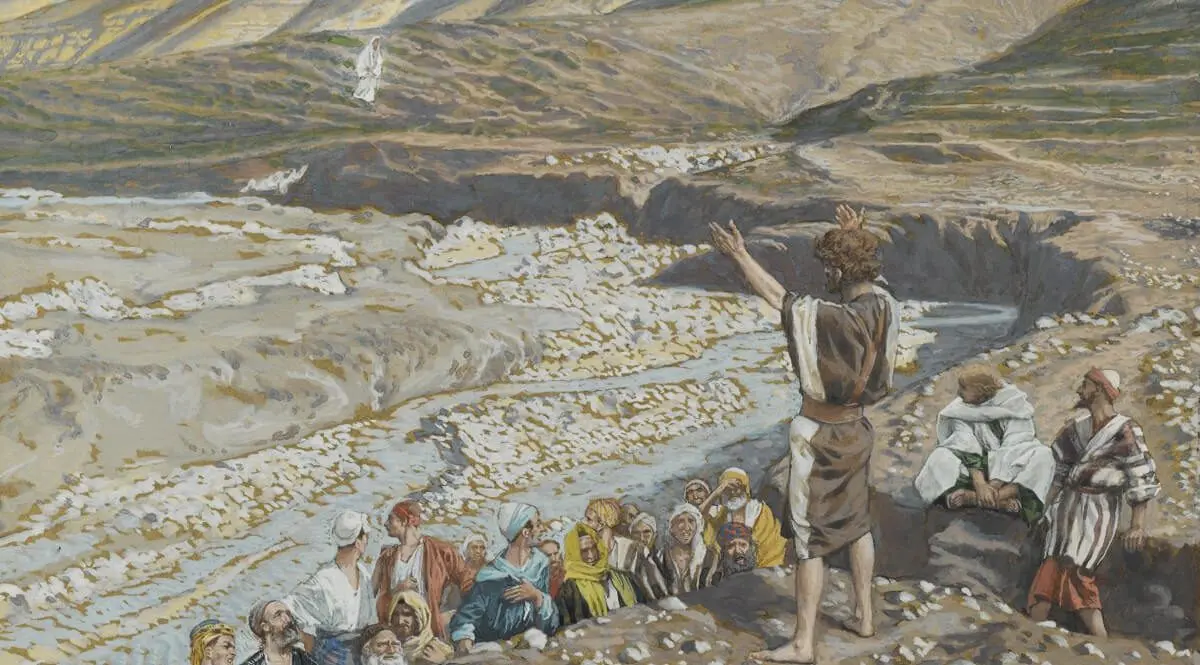
The Apostle John presents us with the most astonishing theology. And he does it right off the bat, without preamble. And he posed the early theologians of the church with a dilemma. The church from the get-go was composed entirely of Jews who were as strictly monotheistic as any Muslim would ever be. And John presents us with a Messiah who is both Son of Man and Son of God. And the Jews who heard Jesus knew precisely what Jesus meant when he said he was the Son of God. To them, it meant that he was claiming divinity. And they thought it was blasphemy and were ready to kill him for it. But the theologians of the second and third centuries were moving into a Greek and Roman world where polytheism was normal. How did they avoid the stigma of polytheism while recognizing that Jesus was indeed God in the flesh and that he spoke at the same time to his Father who was God in heaven? The result was the Trinity in one or more of its versions. It’s defined as the unity of Father, Son, and Holy Spirit as three persons in one Godhead. That is according to normal Christian dogma. Thus, they could have three persons who are God. And not only that, but they are one God, and thereby they have squared the circle. They have managed to take three and make them one, and therefore they were not polytheistic as the pagans all over the place around them were. Now, the idea of the Trinity is found nowhere in either the Old Testament nor in the earliest manuscripts of the New Testament. It’s just simply not there. It was the theologian’s solution to a naughty problem presented by Jesus himself and by the evangelist who told the world about him. And now that solution has become the litmus test for Christian dogma. If you do not subscribe to the Trinity, you are not considered to be Christian by most of mainstream Christianity. One theologian I used to know opined that if one was able to see into the throne of God in heaven, one would see there not two persons, but one being. Now, he said this in spite of Peter, who said that Jesus was raised from the dead and, quote, is gone into heaven and is on the right hand of God, angels and authorities and powers being made subject unto him. Now, I dare say most people think of, most Christian people think of God the Father sitting on a throne and Jesus sitting at his right hand, and therefore they would in their minds, I imagine, two persons on two thrones. And they have Paul who said, and I quote, Now Paul is persistent in this description. He uses it over and over again. So I’m sure that Christian people can be forgiven for thinking of father and son sitting side by side at the helm of the universe. United? Oh, of course. Of one spirit? Certainly. but indistinguishable from one another? Oh, absolutely not. The Son is not the Father. The Father is not the Son. The Son makes intercession with the Father. They are two, excuse me, individuals. Now, there may be some convoluted theological explanation of all this, but I figure that most readers of the Bible really don’t have a problem with it. They see God the Father and God the Son as two distinct persons united in purpose and in spirit, and that’s just the way they think about it when they read their Bibles and when they pray and when they think about God in general. Now, if they engage in a theological argument on the subject, well, who knows where we’re going to end up. I’m just talking about the way people naturally will tend to think about the God they read about in the Bible. They would imagine a family portrait that would show the Father on a throne and Jesus sitting on another throne at the Father’s right. The Holy Spirit? Well, the Holy Spirit is a ghost and you don’t see ghosts. It really doesn’t make a lot of difference how we explain it. Jews and Muslims see us Christians as polytheistic. They think we believe in more than one God. Now, when we open the Bible… We find four witnesses to the life and ministry of Jesus Christ. They are Matthew, Mark, Luke, and John. The first three are called synoptic, that is, seeing with one eye gospels. They tell the same story from almost the same point of view, but they differ in very small ways. But John is different. For one thing, John is writing to Gentiles. His audience is exclusively Gentile. They have a completely different platform from which to view the story. And if you don’t think that affects the way a story has to be told, you’re not paying attention. The fact of the matter is, if you’re writing to an audience that’s all Jewish, top to bottom and side to side, you will explain the gospel in one way. If you’re writing this gospel for Gentiles, you’re going to have to address it differently because they just don’t see things the same way. They won’t use the same idioms of speech. They won’t have the same culture that surrounds the gospel. And so you have to tell them things in a little different terms. So John’s audience is completely different and has a different platform from which to view this story. And that affects John in the way he tells it. On another front, John has encountered a set of heresies that the other evangelists, Matthew, Mark, and Luke, have apparently not had to deal with. You get clues to this in John’s letters, his 30 letters, 1 John, 2 John, 3 John. New questions have been raised, and John has to deal with them. Whatever the reason for it, it’s mainly John who presents us with the Christology that posed the problem for 2nd and 3rd century theologians. Christology is the study of Christ, and John is unique in this regard. Now let me illustrate the problem for you. John begins his testimony with a conundrum. He says, “…in the beginning was the Word, and the Word was with God, and the Word was God. The same was in the beginning with God.” Now how can one be God and be with God at the same time? If we define God as the supreme being, then this equation seems impossible. If the Word was with God… then the word is other than God. How can one be other than God and be God at the same time? It’s a conundrum. The problem arises out of a simple problem in semantics. What do you mean by God? If you assume that God refers to a kind of being of which one is supreme, then the problem dissolves. In the beginning was the Word, and the Word was with the supreme God, and the Word was also God. It’s no problem when you get at it from this angle. The difficulty arises, though, when you deal with the question, are we talking about two gods? Are we monotheistic or are we not? And that, my friends, is where the problem arises. Most of the time when we speak of God, we are referring to God the Father. But in the Bible, that is not always the case. So with that in mind, what in the world is John saying? In the beginning was the Word, and the Word was with God, and the Word was God. The same was in the beginning with God. All things were made by Him, and without Him was not anything made that was made. The Word is not a part of the creation. The Word is the Creator, which leads many to call Him the uncreated Word of God. So who or what is this word? And in what way is the word distinct from the Father? When I come back after this important message, we’ll talk further about this issue.
SPEAKER 02 :
Join us online at borntowin.net. That’s borntowin.net. Read essays by Ronald Dart. Listen to Born to Win radio programs every day, past weekend Bible studies, plus recent sermons, as well as sermons from the CEM Vault. Drop us an email and visit our online store for CDs, DVDs, literature, and books. That’s borntowin.net.
SPEAKER 03 :
These lessons are free of charge. They’re paid for just like this program by contributions from our listening audience. No obligation any time. In the beginning was the Word, and the Word was with God, and the Word was God. The same was in the beginning with God. All things were made by Him. And if that’s not enough, he says, without him was not anything made that was made. The word that we’re talking about here then is the creator. It is behind everything that we see and know and experience. And John goes on to say, in him was life. And the life was the light of men, and the light shines in darkness, and the darkness comprehended it not. The darkness just didn’t get it. There was a man sent from God whose name was John. Now the John who is writing for us here is not the same John. This one he’s talking about is John the Baptist. The same came for a witness, to bear witness of the light, that all men through him might believe. He, that is John the Baptist, was not that light. He was sent to bear witness of that light that was the true light that shines and lights every man that comes into the world. Now this is, you know, John is a poet. It’s very easy to see, especially so in his epistles that you read later. Even when he’s writing a letter, he writes with a certain rhythm. He has a style all of his own. If you’re a Greek student translating your way through it, you immediately know, oops, this is John. And he’s telling us that Jesus was the life of men, and that he was the light of the world, and that John the Baptist was only sent to bear witness, to testimony to it. He, that is Jesus, that is the word, the light, was in the world, and the world was made by him, and the world didn’t know him. And it is true. He was here. He was the creator. He was in the flesh, and nobody knew him. Now we have the creator of the world in the world. But we have more than that. It says, He came unto his own, and his own received him not. But as many as received him, to them gave he power to become the sons of God, even to them that believe on his name, who were born, not of blood, not of the will of the flesh, nor the will of man, but of God. Now hold on a minute here. If Jesus, talking to the Pharisees, claiming to be the Son of God was called blasphemous because that was tantamount to claiming to be God, what does it mean when it says that those who receive him receive the power to become sons of God? Now, I realize you’re playing around here with theologies that are going to be very disturbing to people. But when you are a son of God… You’re the same kind of being that God is, aren’t you? I’m my father’s son. My father’s a human being. I’m a human being. Now, if we’re the sons of God in heaven, he is a God being. Would we not then be something like God beings? Now, this probably comes as a shock to some people. I know there are some people who even think it’s blasphemous. But C.S. Lewis, in the third to the last chapter in Mirror Christianity, called Counting the Cost, made it very clear that he believes that man is to become God. Lesser to God, lesser to the Father, but nevertheless the same kind of being. And this is a fundamental doctrine of the Greek Orthodox Church as well. It’s surprising in a way that so many Christians don’t seem to understand this or grasp what it means because it sits here and stares at us right off the page. To all that believe on him, they are going to receive the power to become sons of God. And then he goes on to say this, And the word which was with God and was God was made flesh and dwelt among us, and we beheld his glory, the glory as of the only begotten of the Father, full of grace and truth. And now we come to the inescapable truth of what John is talking about in this whole section. The Word became flesh in the person of Jesus Christ, who was also the Messiah, the Christ, but at the same time was God in the flesh. John has, in his marvelous poetic style, told us that Jesus is the Creator. He is God. He was with God from the beginning as the Word, that God became flesh and dwelt among us, that he came to the Jews who were his own, and the Jews did not receive him. Is there any question in your mind at this point who he’s talking about in the Word of God? that it is Jesus who came in the flesh to his own and was not received, and that at the same time he tells us that it was Jesus who was the creator. Oh, sure, the Father was involved in it as well, and there’s no question about that. What’s the difference between architect and general contractor? The fact is that the two of them created everything that you and I see. Jesus himself was not created. He always was. John, bear witness of him. And he cried, saying, This was he of whom I spoke. He that comes after me is preferred before me, for he was before me. Now, this is the testimony of John the Baptist we’re talking about here. John the Baptist says Jesus, who was born after him, was before him. John the Baptist’s testimony is that Jesus preexisted his human birth. He preexisted, John. He was. The word was means he existed before me. And of his fullness have we all received in grace for grace, for the law was given by Moses. But grace and truth came by Jesus Christ. As I said, Jesus was actually born after John. And yet John says, he was before me. Of course he was. He was with God and was God in the beginning, according to John. And it was not only grace, but truth that came by Jesus Christ. By this time, the law and the scriptures had been so corrupted and misinterpreted by the Jews that in that form, it could no longer be called the truth. Jesus came to correct that, and you see it so clearly in the Sermon on the Mount in Matthew, beginning in chapter 5. John goes on to say something else that’s surprising. He says, No man has seen God at any time. The only begotten Son, which is in the bosom of the Father, he has declared him. And right here, John drops a real problem in our laps, because in the Old Testament, a few people, not many, but a few, actually did see God. Moses saw him. Saw his back part, yes. But he saw him. What you may not realize is that the 70 elders who were the leaders of Israel at that time also sat down and ate in God’s presence and saw him. All right? So what’s John talking about when he says no man has seen God at any time? The only way I can understand this is to accept the simple fact that no man had seen God the Father at any time. What they saw in the Old Testament was the uncreated Word of God, who was God, who became Jesus Christ in the flesh, the Son of God, who is at the right hand of God, and who declared God to man. so that we would know him and know about him and understand what he’s doing. It is only in Jesus Christ that we even understand that the Father is there and what he is really like. Now, John the Baptist was a very significant player when he came on the scene. He was so much so that many people wondered if John the Baptist was the Messiah himself. He clarified that. He goes on to say, this is the record of John. Our John that we’re reading about now is quoting John the Baptist’s record. This is his record. When the Jews sent priests and Levites from Jerusalem to ask him, who are you? He confessed and denied not, but confessed, I am not the Christ. Now, that’s really an interesting statement because by this time, Messianic fever was really running in Jerusalem and throughout the Jewish world. They were expecting something about this time. And so when John the Baptist comes on the scene, everybody wants to know, who are you? He says, no, no, it’s not me. I am not the Christ. Well, what then? Are you Elijah? He said, no. Are you that prophet? He answered, no. Now, there’s a reason for these questions. In Malachi chapter 4, there’s an interesting prophecy about looking down toward the end times. And it says in chapter 4, verse 5, Malachi, Behold, I will send you Elijah the prophet before the coming of the great and dreadful day of the Lord. He will turn the hearts of the fathers to the children, the heart of the children to the fathers, lest I come and smite the earth with a curse. Or, as the Hebrew has it, with utter destruction. So, the Jews, realizing that this prophecy had not yet been fulfilled, and expecting Elijah to come before the very end of the ages… thought maybe John the Baptist would be Elijah, and they asked him. He said, no, not me. Now, Jesus will later kind of correct that a little bit, because he will say that John came in the spirit and the power of Elijah, not that he necessarily was in the flesh, Elijah. The other side of this thing, they said, well, now, are you that prophet? He said, no. This is a reference to Deuteronomy 18, verse 15, where Moses said, The Lord your God will raise up unto you a prophet from the midst of you of your brethren like unto me. Unto him you shall listen. And so the Jews always, in addition to expecting Elijah, expected that prophet, that special prophet who would come in the future, who would be as important to them, as important in their history, as Moses was in his generation. Are you him they wanted to know? And he said, no, I am not. And he said, well, who are you then that we may give an answer to those that sent you down? What do you say about yourself? He said, I am the voice of one crying in the wilderness, make straight the way of the Lord, as said the prophet Isaiah. John saw himself as a fulfillment of a passage out of Isaiah. And the Pharisees who came to John would have understood this reference quite clearly, made all kinds of sense to them. And when I come back after this short break, I’ll tell you why it made sense.
SPEAKER 02 :
If you would like to share this program with friends and others, write or call this week only and request your free copy of The Gospel of John, number one. Write to Born to Win, P.O. Box 560, White House, Texas 75791. Or call toll free at 1-888-BIBLE-44 And please tell us the call letters of this radio station.
SPEAKER 03 :
So they asked John, Who are you? And he said, I am the voice of one crying in the wilderness, Make straight the way of the Lord, as said Isaiah. So what’s he talking about? Well, the prophecy comes out of the 40th chapter of Isaiah, a beautiful passage that has been adapted into Handel’s Messiah and probably other places as well. Comfort ye, comfort ye my people, saith your God. Speak comfortably to Jerusalem and cry unto her that her warfare is accomplished, it’s finished. Her iniquity is pardoned. She’s received at the Lord’s hand double for her sins. The voice of him that cries in the wilderness, prepare the way of the Lord, make straight in the desert a highway for our God. So John the Baptist saw himself as this voice. And it’s pretty plain as you read through this. We’re talking messianic prophecies. Every valley shall be exalted, said Isaiah. Every mountain and hill shall be made low, and the crooked shall be made straight, and the rough places plain, and the glory of the Lord shall be revealed, and all flesh shall see it together, for the mouth of the Lord has spoken it. You know, this is about as messianic as anything John could have said, and he didn’t have to cite the whole scripture. Those people listening to him knew what it said. Well, those that were sent were Pharisees. And they said to John, the Baptist, Well, then, if you’re not Christ and you’re not Elijah or the prophet, why are you baptizing then? And John answered, Well, I baptize with water. But there stands one among you. This must have been a shock to them. There stands one among you whom you don’t know. He it is who coming after me is preferred before me, whose shoes latch it, I am not worthy to unloose. John had a profoundly high view of this one who is to come. He’s here. I’m baptizing you with water, but he’s going to do more than that. Now it says these things were done in Bethabara beyond Jordan where John was baptizing. very next day John sees Jesus coming down the bank of the river toward him and he said to anyone who was standing close could hear him look the Lamb of God which takes away the sin of the world you know in Handel’s Messiah the chorus that sings this just absolutely melts my soul it is unbelievably strong we know what it means we look back down through the centuries and we look at the whole New Testament and this sings to us But to those who heard it, behold, look, the Lamb of God. Now, Jesus was a man, and the Lamb was a sacrifice in the sense that John was using the term. Obviously, any lamb that took away sins was a sacrificial lamb. It was going to die. Everyone then seemed to expect the Messiah to come and throw out the Romans and be a physical leader and take over and lead the country on to a brave new world. Christian readers take this statement for granted that John made, but it must have been terribly astonishing. I can’t think of anything John could have said that would have been more astonishing to the people who heard it the first time when it came out of John’s lips. Because he designated Jesus Christ walking on the bank of the Jordan River that day as a dying Messiah. It assumed the sacrifice of the person of whom he was speaking. John, right away, and perhaps because it was revealed to him, because somebody talked to John and sent him out there to do that and baptize, and told him to do it, and told him how they recognized the Messiah. So he also knew that the Messiah who was to come would be a suffering and dying Messiah. No one seems to have grasped the significance of what John was saying until much later. John said, This is he of whom I said… After me there comes a man preferred before me, for he was before me. Then John says, I didn’t know him. I just knew that he should be made manifest to Israel, and therefore I came baptizing with water. And John bore record. Now this is an important statement. John was sent to bear testimony, so he did testify, saying, I saw the Spirit descend from heaven like a dove, and it abode upon him. And I didn’t know him. But he that sent me to baptize with water, the same said to me, Upon whom you shall see the Spirit descending and remaining on him, the same is he that baptizes with the Holy Spirit. So we have here a transition. And there’s something curious about all this in that God seems to feel it’s very important that there be witnesses and testimony on all of these things. In fact, the four Gospels are four independent testimonies of the life, the ministry, the death, and the resurrection of Jesus Christ. And it shouldn’t be too surprising because the Bible says, in the mouth of two or three witnesses, every word must be established. And I saw, said John, I bear record that this is the Son of God. And the next day, after John stood and two of his disciples were there, and looking upon Jesus as he walked, he said, Behold the Lamb of God. And the two disciples who heard him speak, they listened, and they turned, and they followed after Jesus. And Jesus turned back and saw them walking along behind and said, What are you looking for? And they said to him, Rabbi, where are you dwelling? He said, Come along and see. So they came and saw where he dwelt, and they stayed with him that day, for it was late. And one of the two that heard John speak and followed him was a man named Andrew. He doesn’t seem to be a significant name, but his brother was. His name was Simon Peter. So he went and found his brother Simon and said, We have found the Messiah, which is interpreted, the Christ.
SPEAKER 02 :
More next time. I’m Ronald Dart. The Born to Win radio program with Ronald L. Dart is sponsored by Christian Educational Ministries and made possible by donations from listeners like you. If you can help, please send your donation to borntowin.org. Post Office Box 560, White House, Texas 75791. You may call us at 1-888-BIBLE44 and visit us online at borntowin.net.
SPEAKER 01 :
Stay in touch with the new Born to Win with Ronald L. Dart app. This app has all of your favorite Ronald L. Dart radio messages, sermons, articles, and it even has a digital Bible. Simply search on the iOS or Android app store to download it for free today.