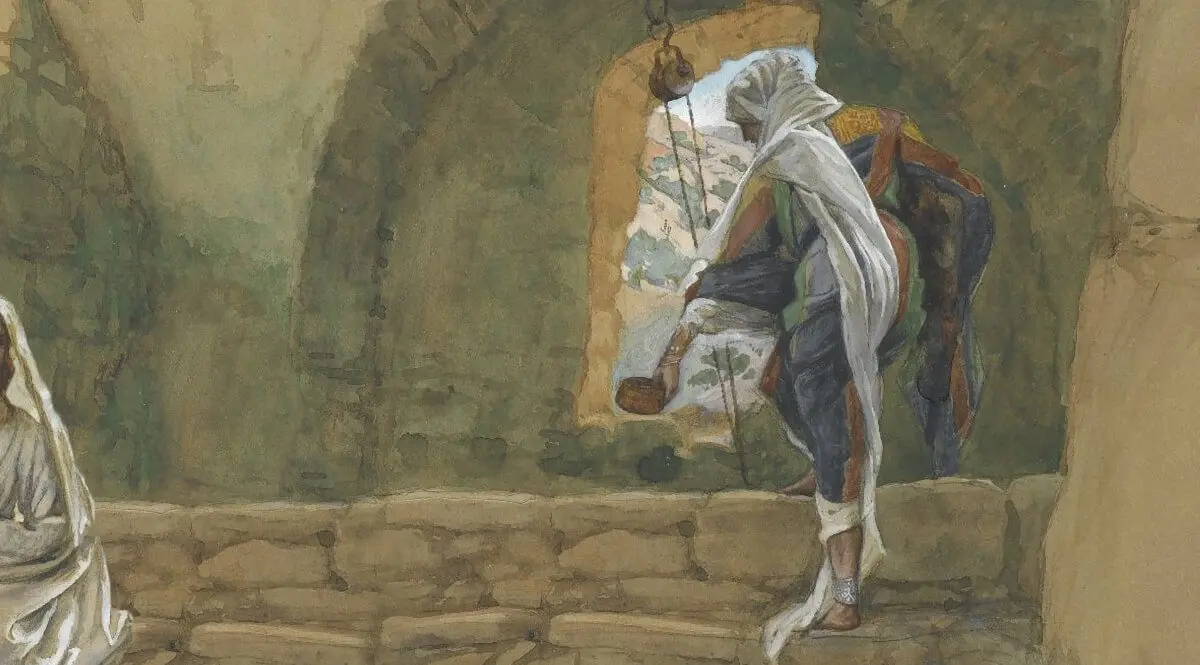

Join us in this episode as we delve into one of the pivotal journeys of Jesus through Samaria. Discover why this path was significant and what it reveals about the cultural tensions of the time. This dialogue explores the reasons behind the strained relationship between Jews and Samaritans and recounts the fascinating encounter between Jesus and the woman at the well. Through this conversation, we uncover profound insights into Jesus’ teachings and how he redefined the understanding of worship beyond physical locations.
SPEAKER 02 :
The CEM Network is pleased to present Ronald L. Dart and Born to Win.
SPEAKER 03 :
Jesus was full of surprises. His disciples often had trouble figuring him out, but Jesus had an agenda. Everything he did was for a reason. Take an incident early on in Samaria. Jesus thought it was a good idea to get out of Judea because things were getting a little hot for him down there. And the shortest road north led through Samaria. It was not a road that most Jews took when they went north to Galilee. They normally crossed the Jordan, went a longer and more difficult route because they just couldn’t stand the Samaritans. Most Christian readers are aware that the Samaritans were despised by the Jews, but not so many Christians really know why that is true. And there may be something in this in the reason why Jesus, on this occasion, did what he did. Now, you may know that Israel, after the death of Solomon, was divided into two kingdoms. a summary of what happened to the house of Israel, that’s the northern kingdom, composed of what we now call the lost ten tribes of Israel. You can find it in 2 Kings 17, beginning along about verse 20. It says the Lord rejected all the seed of Israel and afflicted them and delivered them into the hand of the spoilers until he had cast them out of his sight. He just kept delivering Israel over, and finally he just got rid of them all. They were gone. They were out of the land. They were carried away captive into Assyria. Now, when he says Israel here, he’s not including Judah and Judea and Benjamin, who was with them, or the Levites. He’s basically dealing only with the ten northern tribes of Israel. It says he tore Israel from the house of David, and those people made Jeroboam the son of Nebat king, and Jeroboam drove Israel from following the Lord and made them sin a great sin. The story of all this is earlier in 1 Kings and 2 Kings, really. where Jeroboam did all this. And he actually turned the people deliberately and made it difficult for them even to go to Jerusalem to keep the feasts. He said the children of Israel walked in all the sins of Jeroboam. They didn’t leave them ever in all their history. And finally, he just removed them out of his sight as he had told them again and again by his servants, the prophets. So, was Israel carried away out of their own land to Assyria unto this day, the author of Kings tells us. Now, the king of Assyria brought men from Babylon and from Kuthah, Avah, Hamath, Sepharvaim, And he placed them in the cities of Samaria instead of the children of Israel. You can’t afford to let land just go like this, and there’s no reason to do so. What he did, he just picked up all the Israelites and carted them off to God knows where. Literally, God does know where. And he brought in and colonized it with people from Babylon and from other colonies that they had. So they settled in. Now, at the beginning of their dwelling there, they feared not the Lord, which basically means they didn’t worship Jehovah or Yahweh in any way at all. They didn’t know anything about him. So they moved into the land, and the Lord sent lions among them that killed a lot of them. They were having trouble, I guess, with mountain lions. So they spoke to the king of Assyria and said, The nations which you removed and placed in the cities of Samaria, Don’t know the manner of the God of the land. Now, I think that’s kind of funny in a way. The whole idea, they did recognize that the land they were squatting on had a different God from theirs, and they didn’t know how to placate that God. They knew how to handle the God of their own land at home, but they couldn’t handle this God in the new land. He sent lions among them, and look what’s happening. We’re getting killed because we don’t know the manner of the God of the land. So the king of Assyria commanded and saying, carry there one of the priests you got out of there. Let’s send somebody back who knows something about the religion, the proper religion, the proper way of placating the God of the land. Let them go live there and let them teach them the manner of the God of the land. Funny how they repeatedly refer to this as the God of the land. Well, I guess in a way it’s true. It’s his. He owned it. He’d given it to Israel. And there they were squatting on it. Well, one of the priests they carried away from Samaria came and dwelt in Bethel, and he taught them how they should fear the Lord. Gave them, I guess, a set of things that they were supposed to do on this occasion. So, they made gods of their own and put them in the houses of the high places, and they had their god, and this group had their god and the other ones, and they also made an effort at worshiping the true god. They actually, however, burned their own children in the fire to Adrammelech and Anamelech, the gods of the Sepharbaim. So, They feared the Lord – you could almost put that in quotes – and made to themselves the lowest of them priests of the high places. So we’ve got a mixture, a strange admixture of religions in this place. You have the law of God on the one hand, and then you have all these pagan ideas on the other hand, and they have kind of somehow, in order to placate the God of the land, mingled all this stuff together. And the author of Kings says, unto this day they do after their former manners. They fear not the Lord – Neither do they do after their statutes or after their ordinances or after the law, the commandment of the Lord. He says, basically, they don’t do anything. They don’t do their own God’s right. They don’t do the Lord’s right. They don’t do anybody’s right. These people are up there just like they always have been. Now, by the time Jesus showed up at the well in Samaria on this day, the Samaritans claimed to serve the same God, having only the first five books of the Old Testament. And in fact, they are still there. Much to my surprise, several years ago, I was rummaging through some old National Geographics, and I came across an article, I think it was back in the 40s is where it was, about the Samaritan Passover. And it had a complete article, pictures, the whole works, whereas back in the 1940s, the Samaritans up on Mount Gerizim in the northern part of Israel were still observing the Passover. Now, these people aren’t Jews. They were never Jews, have no Jewish blood. They never have been. They came from other nations in Babylonia. They were Babylonians for the most part to start with. And yet they had the Pentateuch. They had Genesis, Exodus, Leviticus, Numbers, and Deuteronomy in their own versions. And actually the texts are very close to the ones that the Jews claim to this day. And they still, even right up until 2003, they have a website up in which they described and had pictures of their most recent Passover. They observed on Mount Gerizim. Now, as I said, they are not Jews, and they never have been. They were despised by the Jews who made every effort to bypass Samaria when they were traveling. It’s a curious thing. These people, the Samaritans, who tried to keep the law in a way, were more despised than other neighbors of Judah who made no effort at all. Go figure. So here is Jesus at a well in Samaria, and a woman comes out to draw water. And Jesus said to her, Would you give me a drink? His disciples had gone away into the city to buy meat, and he was there by himself. And the woman of Samaria said to him, How is it that you, being a Jew, asks drink of me, who am a woman of Samaria? The Jews have no dealings with the Samaritans. Now, Candy, that’s a predictable reaction. You know, you people won’t have any dealings with us normally, but now because you want a drink of water, you’ll talk to me? Because normally a Jew would not have talked to her being a woman, and he sure wouldn’t have talked to her being a Samaritan. She’s a pretty sassy girl. And Jesus answered and said, Well, now, if you knew the gift of God and who it was that said to you, Give me a drink, you would have asked of him, and he would have given you living water. And the woman said, Sir, you don’t have anything to draw with, and it’s a deep well. Where are you going to get that living water? Are you greater than our father Jacob, who gave us this well and drank thereof himself and his children and his cattle? Now, I don’t know where the Samaritans got the idea that Jacob was their father, because they were not Israelite born. And Jesus said to her, Whoever drinks of this water shall thirst again. But whoever drinks of the water that I shall give him will never thirst. The water that I shall give him shall be in him a well of water springing up to everlasting life. Now here’s Jesus at a well in Samaria doing something no other Jew would have done, talking to a woman, talking to a Samaritan, and telling her important things about himself. And the woman said to him, Sir, give me this water that I don’t thirst. Neither have to come here to draw water anymore. Now, she’s still being sassy, by the way. So Jesus tries to put an end to that. He decides to get her attention. And he says, Go call your husband and come back. And the woman said, I have no husband. Jesus said, Ah, you told the truth that you have no husband, for you have had five husbands, and the man you now have is not your husband. In that, you finally have told the truth. Now that must have really dropped her jaw. And she said, Sir, I perceive that you’re a prophet. Our fathers worshipped in this mountain. But you say that in Jerusalem is the place where men ought to worship. And it’s a whole question of, you know, our fathers have always said, we’ve had this tradition year after year after year. We followed Moses. And we worship in this mountain here where it’s mentioned all the way back in the book of Moses what we have done here. They have a long continuity. And yet you people are now trying to tell us that we have to come down to Jerusalem to worship the Father. And Jesus said, Woman, believe me, the hour is coming when neither in this mountain nor yet in Jerusalem shall you worship the Father. And I think what Jesus is saying is it’s not going to be a question of being required that you worship here or you worship there. He says, You worship. You don’t know what you worship. We know what we worship, for salvation comes from the Jews. But the hour comes and now is. When the true worshipers shall worship the God in spirit and in truth, for the Father seeks such to worship him. Not people who are bound to a mountain, not people who are bound to a place, but people who are bound to God himself. God, Jesus said, is a spirit, and they that worship him must worship him in spirit and in truth. And just after this, Jesus is going to tell this woman one of the most astonishing things she ever heard in her life. I’ll tell you what that is after this message.
SPEAKER 02 :
Or call toll-free 1-888-BIBLE44.
SPEAKER 03 :
That newsletter and those tape offers, as well as this program, are all paid for by contributions from our listening audience, so they’re free and there is no obligation. Now, the woman at the well with Jesus by this time has kind of gotten jerked around, and she realizes something’s going on here. And the woman said to him, I know that Messiah comes who is called Christ. And when he’s come, he’s going to tell us all things. He will sort this out. She’s really troubled by the difference between the Jews and the Samaritans. And now she’s kind of gotten a little bit of a hickey from Jesus who said, no, no, no, that’s not your husband. That’s somebody else. And Jesus, when she says this, I know that the Messiah comes who is called Christ. Jesus said to her, I that speak to you am he. Now, this is the earliest and probably the most stark admission from Jesus that he is the Messiah. His disciples knew that he was. John the Baptist knew that he was. But as far as I can recall, I think this is the first time Jesus just came right out and said, you got it. I am the Messiah. And oddly, it was to a woman. And not only to a woman, it was not to a virtuous woman, and it was not to a man, and it was to a Samaritan. It’s really striking when you think about it. Jesus didn’t march up to the high priest in the temple and to the leaders and say, I’m here, I’m the Messiah, I’m ready to take over now. He started at the bottom end of society and worked his way right along. It may well be that the Samaritans got this break because they did at least accept Moses. They actually had a Pentateuch. They did keep the Passover, and Jesus was here as our Passover lamb. And maybe that’s the reason why he went there. Maybe that was Jesus’ agenda on this occasion. About this time, his disciples showed up, and they said, Look, he’s talking to a woman, and a Samaritan woman. But nobody would ask him, Why are you doing this? And the woman then left her water pot, and she went into town and said to the men, I want you to come see a man who told me all things I ever did. Isn’t this the Christ? And they went out of the city and came to Jesus to see what the story was. In the meanwhile, his disciples prayed him, saying, Master, eat. But he said to them, I have food to eat that you don’t know anything about. His disciples were really puzzled by this. They are still not caught up with him at all and don’t for a long time. And he said, somebody bring him something to eat? And Jesus said, no, my food is to do the will of him that sent me and to finish his work. You know, the very food of Jesus, his very meat that he ate was the work that God gave him to do. Food was not his thing. It was the work. And Jesus said, my food is to do the will of him that sent me and to finish his work. Don’t you say, there are four months and here comes the harvest? Now, this gives us a little bit of an idea of the time of year it was because there was some time to go before there was actually a harvest in the fields. And yet Jesus said, can’t you open your eyes and look on the fields? They are white already to harvest. He that reaps receives wages and gathers fruit to life eternal. And he that sows and he that reaps may rejoice together. And herein is a saying true. One sows and another reaps. I sent you to reap that whereon you bestowed no labor. Other men labored and you’re entered into their labors. Now what on earth is he talking about here? Well, he’s going into the agricultural metaphor here. He’s trying to help them understand what’s going on. It was four months until the normal harvest would come. But he says, look, people all over the place, Samaritans, Jews, whoever it is, these are the harvest. And what he means when he says you’re entering in on other people’s labors, he means that years, generations gone by. Men have labored to have the word in these people’s hands. We go back to Moses. We go back to Abraham. We go through all the prophets and things that they have done. He says, I’m sending you now to reap something upon which you have bestowed no labor. Other men have labored. Other men have suffered. Other men have died. And now you’re going to enter into their labors. We’re going to change people’s lives based upon the work that’s been done ahead of us. About that time, many of the Samaritans of that city were beginning to come out, and they believed on him because of the saying of the woman who testified, saying, He told me everything I ever did. So when the Samaritans were come to him, they besought him that he would tarry with them, and he stayed there for two days. This is truly from the… The understanding of the context of the times, an astonishing thing for Jesus to do because Jews had no dealings with these people. They wouldn’t eat with them. They wouldn’t stay with them. They wouldn’t have anything to do with them. Jesus not only talked to them, he stayed with them. And many more believed because of his own word. And they said to the woman, Now we believe, not because of what you said, for we have heard him ourselves, and we know that this is indeed the Christ, the Savior of the world. And here are people in a despised part of the countryside who believe Jesus, having heard what he said. It’s almost as though they had a need to distance themselves from the woman’s testimony. but they need not have. Being a sinner herself, she had plenty of reason to appreciate a Savior. After two days, he left there and went on up into Galilee, for he had said, a prophet has no honor in his own country. It’s almost as though he has to go up there and prove that. And when he came to Galilee, the Galileans received him. They saw everything he’d done at Jerusalem. A lot of them had. They’d been up at the feast and had seen what he’d done there. And so when he came up, they received him. And he came into Cana of Galilee, where he had made the water wine. And there was a nobleman there whose son was sick at Capernaum. There’s some distance here between these towns. When he heard that Jesus was coming out of Judea into Galilee, he went to him and said, Please come down and heal my son. He is at the point of death. And Jesus said, You know, except you see signs and wonders, you just won’t believe, will you? And the man said, Sir, come down ere my child die, please. The man was far more concerned about his child than anything else, and I guess I understand that. And Jesus must have too. Because he says, Go on home, your son lives. And the man believed what Jesus spoke to him. And he went on home. And this is interesting because, you know, he’s consumed with his son. He’s heard about Jesus. And he comes to him, and Jesus said, Go home, and your child is going to live. And the man believed what Jesus said on this occasion. And as he was going down, his servants met him and told him, saying, Your boy’s okay. He’s alive. And he inquired of them at what hour the boy began to amend. And they said to him, Yesterday at the seventh hour the fever left him. And the father knew that it was at that same hour when Jesus said to him, Your son lives. You know, it’s amazing the things that happened and the way they happened in people’s lives. It didn’t happen to everybody. But it happened often enough in different places to really begin to impress upon people’s minds that when Jesus came to town, they had something totally different from anything they had ever seen before. This man believed, and his whole house believed. And why not? And this is the second miracle that Jesus did when he was coming out of Judea into Galilee. Not long after that, there was a feast of the Jews, and Jesus decided it was time to go back to Jerusalem again. There is at Jerusalem, by the sheep market, a pool. It’s called Bethesda. It’s interesting that we have a big hospital in this country named the Bethesda Hospital. It had five porches. And in these there lay a great multitude of impotent folk, of blind and halt and withered, waiting for the moving of the water. For an angel went down at a certain season into the pool and troubled the water. And whoever was first in after the troubling of the water was made whole of whatever disease he had. Now, you know, the first time I ever read that, I looked at that and I thought, what a strange thing for God to do. What a strange way of healing people. The section, by the way, is not in all of the old Greek manuscripts. And it’s an odd thing, though, I would think, for a copyist to insert. Where would he get this? Out of the blue and stick it in there. It is not so odd, I think, that someone might delete it from the text because they might have a problem with the theology. But what is the theology of such a thing? Why would God do this? And why would he do it this way? It’s comparable to the simple fact that Jesus himself did not always heal. There were times when he healed this person and did not heal another. It may be that God did this to keep hope alive, to remind everyone that he was there, but he had no intention to this people who were really not in the best of relationship with God. He was not prepared to heal everybody, but he did want them to know that he was there, that he could forgive sins, and that he could and would forgive. Another way, it may have been to prefigure what Jesus would do there on that day, because with dozens of sick people around him, Jesus healed only one. Think about that, and we’ll come back and talk about the aftermath of this important event.
SPEAKER 02 :
If you would like to share this program with friends and others, write or call this week only and request your free copy of The Gospel of John, No.
SPEAKER 1 :
3.
SPEAKER 02 :
Write to Born to Win, P.O. Box 560, White House, Texas 75791. Or call toll free 1-888-BIBLE44. And please tell us the call letters of this radio station.
SPEAKER 03 :
There was a man lying there who had been crippled for 38 years. When Jesus saw him lying there, he knew he’d been there for a long time. In that case, he said, would you be made whole? It’s hard to imagine this poor fellow. 38 years is a long time. Where were you 38 years ago today? But the poor man, he said, sir, I have no man when the water is troubled to put me into the pool. But while I’m coming, I try. Somebody gets down before me, so it hasn’t worked for me yet. It’s a painful thing to consider this poor fellow. And you wonder, why in the world was he there? Why did he keep coming back year after year after year? It’s a testimony, I guess, to the power of hope. Now, his statement would be totally incomprehensible without the explanation of the moving of the waters. In other words, it was there. It was a real thing, and he was there before the real thing. And people were healed, I guess, one a year or one every so often, in order for them to know that God cared and that he did know. And Jesus said to him, Get up, take up your bed, and walk. And immediately, one moment the man was crippled, the next minute he was whole. And he picked up his bed and he walked. And on the same day, it was the Sabbath day. Now, Jesus could easily have omitted the take up your bed part of this. He could have just said, go ahead, get up and walk. And it would have been one thing. The simple fact of the fact he said this is vital. Jesus was opening a serious controversy with the Jews. He was being deliberately provocative on this occasion. And the Jews therefore said to him that was cured, this is the Sabbath day. It’s not lawful for you to carry your bed. Now, all this bed of his was was a pallet. It wasn’t much more than a blanket, folks, that he carried along under his arm and laid down there by the pool or that somebody had brought for him and laid down for him. Now he could just roll it up and stick it under his arm and go walking off. Anyway, they said, it’s not lawful for you to do. You’re not supposed to be doing that. And he answered them. And for him, this was enough. He said, he that made me whole. The same said, take up your bed and walk. I’m going to carry my bed. For him, that was enough. He didn’t give it a second thought. And they asked him, what man is it that says to you, take up your bed and walk? And the poor man that was healed didn’t know who it was. Jesus said, would you like to be healed? And the guy said, well, I can’t be because I can’t get to the water before somebody else gets there and beats me to it. And Jesus says, get up. Take up your bed. Walk. And while the man was rolling up his bed and sticking it in his arm and getting ready to walk off, Jesus disappeared, and he didn’t even know who he was. That’s remarkable all by itself. Later on, Jesus found him in the temple, and he said to him, Look, you’re made whole. Sin no more, lest a worse thing come to you. You know, straighten up your life. Let’s don’t have any more of this. Let’s live a clean one. Sin no more? Is there a connection between sin and disease? It’s awfully hard to imagine why on earth Jesus would have said this to a poor guy if he hadn’t had a connection of some kind. Well, the man departed, and he told the Jews, Ah, it was Jesus who made me whole. And therefore did the Jews persecute Jesus and tried to kill him because he had done these things on the Sabbath day. And I have to tell you, I’m at a dead loss to understand that. Here’s a man crippled for 38 years lying around in hope, painful hope, desperate hope of someday being healed with the moving of the waters, never being able to quite make it. And now he can get up and he can walk. And the people want to kill the man who made him whole. Jesus answered them and says, my father worked here too and I work. Therefore the Jews sought them more to kill him, not only because he had broken the Sabbath, but also said that God was his Father, making himself equal with God. Now let’s get something straight. There is not a word in the law of Moses to prohibit anything that Jesus or this man did. There’s no law that says you can’t roll up your bed and pick it up from your arm and take it off on the Sabbath day. According to Moses and all the law of Moses, Jesus did not break the Sabbath. He didn’t do anything. In fact, tell the man to take up your bed and walk. But that was work by Jewish standards of the time. Now consider what’s going on here. Jesus answered and said to them, Verily I say unto you, The Son of Man can do nothing of himself but what he sees the Father do. For whatsoever he does, so does the Son likewise. For the Father loves the Son and shows him all things that he himself does. And he’ll show him greater works than these that you may marvel. For as the Father raises up the dead and quickens him, even so the Son quickens whom he will. I don’t know if they understood what Jesus said on this occasion or not. I think that may have slipped right by these people. But what he had just told them is, you’re going to see bigger things than these. For just like the Father can raise the dead, so can I. And it isn’t going to be very long after this when a man who has been dead and buried for four days is brought back to life by Jesus. And the result will be the same on that occasion as it was on this. They will want to kill him for it. Why? Because Jesus was a threat to their power.
SPEAKER 02 :
Until next time, I’m Ronald Dart. The Born to Win radio program with Ronald L. Dart is sponsored by Christian Educational Ministries and made possible by donations from listeners like you. If you can help, please send your donation to Born to Win Post Office Box 560 White House Texas 75791 You may call us at 1-888-BIBLE-44 and visit us online at borntowin.net.
SPEAKER 01 :
Stay in touch with the new Born to Win with Ronald L. Dart app. This app has all of your favorite Ronald L. Dart radio messages, sermons, articles, and it even has a digital Bible. Simply search on the iOS or Android App Store to download it for free today.