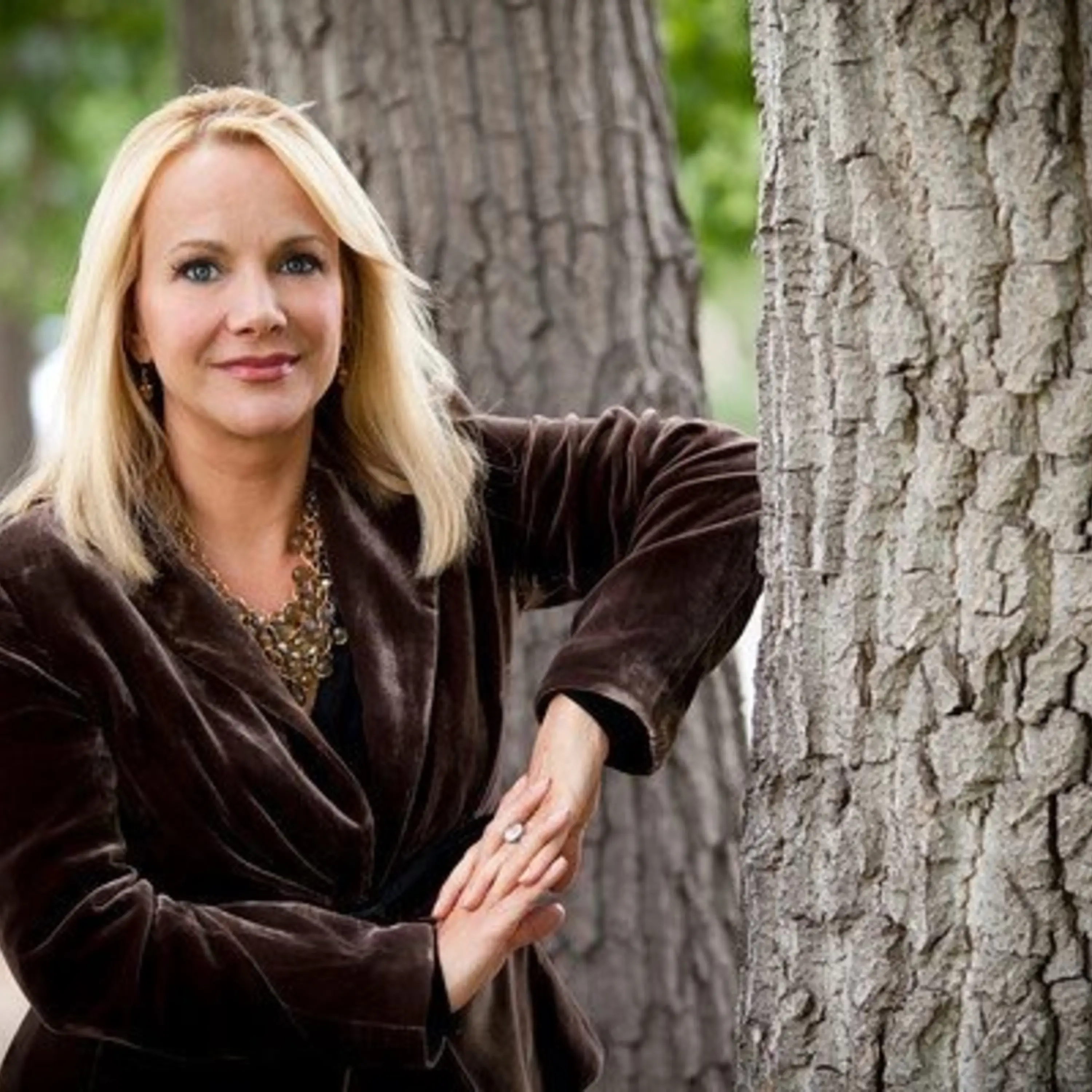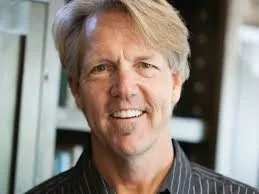

Join Angie Austin on The Good News as she sits down with Carrie Conley, a renowned author and speaker known as a vision leader. After enduring personal tragedies, including the loss of her husband and son, Carrie shares her journey of resilience and her mission to help others find purpose in adversity. They discuss her upcoming community for young adults aimed at inspiring a generation struggling with life’s challenges. Dive into this heartfelt conversation about vision, purpose, and leading a life filled with meaning.
SPEAKER 01 :
Welcome to The Good News with Angie Austin. Now, with The Good News, here’s Angie.
SPEAKER 03 :
Hello there, friend. Angie Austin here with the good news, joined by a friend of mine, Carrie Conley. Carrie is an author, a speaker, and she’s also known as a vision leader. You can find her at CarrieConley.com. She has a speaking event coming up in my neck of the woods in the Denver metro area coming up very soon. And so I invited her on to talk about what is going on in her life right now. Hello, Carrie. Hello, Angie, my friend. It’s been a long time. I know. Welcome back. It has been a while. How long has it been since you moved away from Denver?
SPEAKER 04 :
Well, I moved away in 2015 and moved first to Arizona because you remember the story that my husband had just passed six months prior to that by suicide. And then I moved my son and I to Arizona so he could start his job there.
SPEAKER 03 :
That’s right. TV.
SPEAKER 04 :
Correct. Yeah. He worked for Channel 12. And so we ended up getting rooted there, bought a lovely little house that you would love and just loved Arizona. And I stayed there off and on for about 10 years. Then three years after losing my husband, we lost my son Cole. And so I ended up going back and forth between Denver and I’m sorry, Arizona. And now I am in Oklahoma City because my daughter decided to get married and rooted here and had three babies.
SPEAKER 03 :
You know, you and I became friends when you were talking a lot about vision, and I know that your mission has changed. And on your website, I was reading, it says, After losing my husband and son to suicide, I’ve walked a path I wish upon no one. And through this immense grief, I was faced with a decision to find purpose within tragedy or give up, and you chose purpose. And I also noticed that your mission says – to save 1 million lives by helping youth, adults, and parents decipher their life vision and purpose. So in order to do this, you’re really having to revisit and talk about, you know, the two, two of the people you love most in the world who took their own lives. And somehow you have to revisit that in order to help others.
SPEAKER 04 :
Right. Yeah. It’s become, you know, because I was already a speaker on vision. I’m known as a vision expert. Um, And so I’m pretty public, right? So people knew what was happening. They knew my story. And so I’d been teaching the importance of having a vision for your life and your business, mostly for entrepreneurs who don’t really have a clear vision, Angie, which means that most of them, when I met them out networking or speaking, were running really expensive hobbies. But then when this happened in my family, in my personal life, I shifted from now talking a lot about vision from a standpoint of resiliency to and having a purpose in life, knowing that you matter, getting through adversity, because it’s a much bigger mission than prior. So, yeah, so that’s what I’m working on now. I’m working on launching a community for young adults this year, literally hopefully next month we’ll have it ready to go, called Vision is Victory Alliance. And when I say young adults, I’m talking like early 20s to early 30s, because this is a generation that are kind of, floundering and not doing well overall. So I want to help them. I want to help them with everything, with their vision. I’ve got other experts that are going to be a part of this community that are experts in finances, relationships, mental health, physical health, you know, all the things. Right. So, so yeah, it’s been, it’s been a labor of love over the past 10 years. And we’re finally to a point where I’m ready to really make this a go.
SPEAKER 03 :
And for this community for young adults, how will this work? How will they be involved? Like, what does it entail?
SPEAKER 04 :
There’ll be a lot of moving parts to it, Angie. There’s a lot of technology that’s being built right now so that there will be a place where when they are a member, they can go in and get access to recorded master classes on all these different subjects. They’ll know when we will have some live group calls with me and some of these experts, maybe once or twice a month for some interaction and getting to know each other. possibly retreats or events where we can get them all together. You know, there’s another platform that a lot of people are really familiar with called school, S-K-O-O-L. And we will load like all of this stuff into school. So they’ve got a text portal to go in and see everything that we’re offering them and to be able to communicate with each other.
SPEAKER 03 :
Now, how long after I was there with you, actually, when you got the call about your husband taking his life, we were doing a show together. I followed you because we didn’t really know what happened yet. They wouldn’t tell you and Cole, but your son was waiting for you. And then three years later, Cole passes away. Then how long after that did you decide that this could be a mission that you could embrace and you could help others? Because I can’t even imagine you and I, you were living in Arizona when, you know, when Cole died. And so I, I didn’t know exactly what was going on during that time of your life, but I knew Cole, you know, and how close he was to you and you know, your relationship, how strong it was. And so I was just like, I hope she can go on. So how long after that did you decide to make this a mission for you that you could handle making it a mission for you?
SPEAKER 04 :
Yeah. Yeah. You know, I actually started talking about this community with Cole before he passed because I saw what was happening with his generation and really felt compelled to help them. Right. But I already had, so when Cole passed, I had a ton of clientele already, Angie, that were in a year-long mastermind I used to run to help them grow their businesses, right? And so I had to carry that through and finish out with them. I stopped marketing myself as a business coach a long time ago, but organically people just they find me when I’m speaking or doing a podcast. And so we end up still coaching a few of those people. But it’s been a good five years that I’ve been talking about this community, but not really having the right people and the right tools in place to help me grow it. Yeah. Yeah. So like all the back end stuff that I’m telling you right now is being built. It’s being built by somebody that this is what he does all day long. I can’t touch any of those buttons.
SPEAKER 03 :
Right, right, right, right. Well, yeah. And let’s talk a little bit about your your speaking event here. Again, we’re talking to Carrie Connolly, her website’s Carrie Connolly dot com. And I met you when you were really getting people. I remember you saying, like, if you’re trying to get, you know, from Maine to Florida, for instance, like you need a map like and if you want to see your business there. You need a plan. You need a map in order to succeed in your business. So let’s talk about your local speaking event, when and where that will be, because I know there are several speakers involved, and it’s a pretty big speaking event.
SPEAKER 04 :
Right, yeah. So it is this Saturday, April 25th, and it’s at the History Colorado Center downtown Denver. Oh, cool. It’s from 8 to 5, and it’s called the SAF Cash and Class Conference. I have a hard time saying that. I was at this event and spoke at it last year. It’s run by a woman who is in an organization called She Talks, and it’s like a women’s networking group. Oh, yeah, yeah, yeah. Yeah, so she runs this every year and brings in several speakers. So there’s about 11 speakers throughout the day on a wide variety of topics for both personal and professional growth. Leadership, money, health, relationships. I, of course, am going to talk about how having a vision is that path that you follow to stay resilient and get through any adversity, right? So it should be a really lovely day. Lots of really great sponsors involved. Just a great group of people.
SPEAKER 03 :
And again, if you didn’t hear that, SAS, S-A-S-S, SAS, cash, and class. And that’s the 25th, Saturday, 8 to 5, and that’s at the History Colorado Center. Is there a good website for people to go if they want to look into attending?
SPEAKER 04 :
Yeah, if they look up She Talks, Leadership and Empowerment, they will find this event listed under mini events.
SPEAKER 03 :
And that she talks, S-H-E, like, you know, her, like she talks. Excellent. Right. And then, you know, in terms of some of the things that you’ve been working on, you just kind of give people an overview on what you’re going to talk about and what you do talk about in order to help people.
SPEAKER 04 :
So I have… a speech that I’ve done for many, many years. It’s called Vision is Victory. And what I do is I talk, first of all, about the importance of having a very clear, powerful written vision for your life. Most people have what I call their someday plan, Angie, right? Just kind of rolling around in their head. Someday we’ll get to that. It’s kind of a hope and a wish and a prayer plan. So what I do is talk to them about why you need to have this written vision, because it’s got to be so powerful for you. And then I actually teach them how to write the vision on paper. I give them kind of an exercise to follow so that they can start envisioning their life, let’s say, three years from now in every area of their life. And then I get them to identify where they think they’re getting stuck. Because there are a lot of people who have very big dreams and goals, but they’re not going after them because they’ve got obstacles. We’ve got to really identify the real obstacles so that we can bust through those. But the biggest thing is knowing that your vision is so important. Unbelievably powerful that it will pull you through just about anything.
SPEAKER 03 :
You know, I think it’s cool, too, that for the event, I know because, you know, you sent me some information on it that like because my daughter is 17 and she loves, you know, all of this kind of stuff and goals and investing in her future and kids can come for free. I thought that was really cool. But if people can’t get downtown, they also have a virtual admission that I think is very reasonable. It’s just fifty four dollars. And so I thought, like, if you can’t make it down there, which, of course, it’s always more powerful to be there in person. But if you can’t make it in person, that’s a pretty good investment for a day of professional speakers to help you, you know, reach your goals. So and even in person, I think, is very reasonable. It’s under $100 for the entire day and all the speakers. But I love it that you’re letting kids attend for free.
SPEAKER 04 :
Yeah. Again, this is just this organization. I belong to several women’s organizations, obviously, and because of what I do. But this group is just, they’re very eclectic. They’ve got women from all over the world involved, all different ages, all different backgrounds, different businesses. And it’s just really all about empowering each other and the next generation to come, right? You can also find this event, Angie, on Eventbrite under SASH Cash and Class Conference. And again, that’s SASH, S-A-S-S.
SPEAKER 03 :
It’s just such a funny word, SASH Cash and Class on Eventbrite. Yeah, it’s hard to say. Yeah. My daughter and I talk about a lot of this goal-oriented stuff a lot because she’s an athlete. One of my daughters is on a scholarship for volleyball, and then this younger one is – and my son has run his own business since he was – 12 and he’s uh 20 now and it’s very successful and he’s starting to buy you know investment properties you know for real estate rentals and things like that he goes to university of colorado boulder and so he’s run that business for eight years so he’s very very goal oriented but that the youngest one who’s 17 wants to play uh college uh basketball and so she works really hard and um She works in the summer as a lifeguard, and they all started their investment accounts when they were about 13 because their dad talked to them about compound interest. And he said, I’m going to take your Starbucks or your Taco Bell, and I’m going to skip that, and then I’m going to put that money in an account, and I’m going to show you how much it will be. The other day, I think he said, if you put – it was like – $27 a day away until you were a certain age. He’s like, you’ll each have $4.6 million. He’s just trying to get them to embrace the fact that the money they spend now could actually be making them money in the future if they weren’t wasting it now.
SPEAKER 04 :
Right. Wow. Wow. Okay, he needs to be teaching that to all the kids.
SPEAKER 03 :
Yeah, he has little groups, and he’ll have kids. In fact, my son’s friends with a lot of the athletes who are making good money already, and my son’s trying to tell them about investing and setting up their Fidelity accounts like he’s done. And my husband will have kids come to his office, my son’s friends, and try to teach them about investing.
SPEAKER 04 :
Wow. That’s awesome. Because money is such a problem for these young adults.
SPEAKER 03 :
I know.
SPEAKER 04 :
A huge stress. A lot of them are starting their adult lives, you know, and you just live in paycheck to paycheck and in debt. They’re starting out major debt, some of them. So, yeah, we will focus really heavily on money, basic money management, how to have a budget, how to get yourself out of debt, as well as what you’re talking about and starting to invest now. This is so important.
SPEAKER 03 :
I want to make sure people can find you. It’s kerryconley.com. And if they want to find the event, there are a couple different ways that you can go to Eventbrite and go ahead and give the details again.
SPEAKER 04 :
Yeah, that’s probably the fastest way to find it is go to Eventbrite and look for SAS. S-A-S-S, cash, like money, and class conference. And you’ll see all the details, all the speakers listed there, the topics that we’re going to be speaking on, you know, where we’re going to be for the day. And I think the agenda is also on there, too. I will speak first in the morning. Yeah.
SPEAKER 03 :
Oh, you’re first?
SPEAKER 04 :
I think I’m the first one around 930, 945. Usually I’m put on first, Angie, because of my topic being vision. Yeah.
SPEAKER 03 :
So it’s just a great way to – Kind of getting that clear. Yeah. Right. Getting that clear. All right. So I’d love to have you back on again just to kind of help people with their own vision. So let’s plan on having you back. And just thank you so much for joining us. I’d love to share. I love sharing your journey and following you on social media as you’ve moved around to other states. And it’s a real blessing to have you on the show. Carrie Conley dot com. Thank you, friend. Thank you, my friend.
SPEAKER 02 :
With Easter right around the corner, Arc Thrift is the perfect place to find great deals on Easter grass, baskets, bonnets, and those cute little dresses for Sunday school. You can decorate for the whole family gathering on a budget, from deviled egg dishes to Easter baskets, and still find those special items that make the day memorable. And coming soon is Arc Thrift’s famous secret jean sale. Watch the Arc Thrift social channels for the secret Friday date because every pair of jeans in the store is just $2. That’s right. Rows and rows of jeans including great brands like Levi’s and 7 for All Mankind from 9 a.m. to 9 p.m. with new stock going out all day long. Spring also means gardening tools, sports equipment, and seasonal treasures hitting the floor. And remember, Arc Thrift stores are size-inclusive and even have fitting rooms open so you can find the perfect fit. Find a store near you at arcthrift.com and follow Arc Thrift on their socials so you don’t miss a secret jean sale. Arc Thrift, there’s a surprise on every aisle.
SPEAKER 01 :
Eagle is tuned to Colorado’s mighty 670 KLTT.
SPEAKER 03 :
Hello there, friend. Angie Austin here with the good news. Got a couple of good news stories to start the segment with and then a few guests joining us as well. I wanted to start off with this really cool story about volunteers, 6,500 volunteers building 10,000 beds in 24 hours for kids. who don’t have beds of their own. You know, I spent some time in foster care, I’m sure I’ve told you, and I heard a lot over the years about kids going from home to home, foster home to foster home, without any suitcases, and they just take everything they had in like a garbage bag from home to home. And then I’d also heard a lot about bed in a bag for kids that, you know, didn’t have a bed and they’d give them comforters and sheets, et cetera. Well, this is actually building beds for kids who aren’t getting, you know, a good night of sleep because they don’t have a bed. So the sixty five hundred volunteers. in 24 hours built just over 10,000 beds. And it was in the Charlotte Convention Center in North Carolina. And it’s a cool thing that Lowe’s does, where they have their employees volunteer in these really neat nonprofit efforts. They built a bunch of small homes as well for people who lost their homes in hurricanes. And in this case, they built 10,027 beds. And they worked in shifts Because apparently, like almost 150,000 kids in the U.S. don’t have beds. And so they had, let’s see, it was a couple of miles of wood. 2,000 gallons of stain, 730,000 wood screws, and 18,000 sanding discs. And the Lowe’s employees just talked about how satisfying it was. They had all these lines where people were sanding at the same time, they were cutting at the same time, et cetera. And obviously, they didn’t each work 24 hours, but they had shifts, obviously, to get that all done. And I told you about building the tiny houses as well. It was like 100 tiny houses. That was another effort. And then in other interesting Lowe’s news, I just thought this was funny because I found these on the same good news website. You know how a lot of, especially it seems like, you know, You know, Home Depot is Lowe’s, you know, these hardware stores. A lot of them have like a cat or, you know, like, you know, a pet. And I see a lot of people bring their dogs into, you know, the hardware stores. But in this case, two litters of kittens were discovered living way up on a high shelf at a Lowe’s store. And this is in Pennsylvania. So another, you know, part of the country. And they found two mama cats and seven kittens, and they rescued them, took them to the shelter. And, of course, now everybody wants the low-shelf kittens that they want to adopt. But I just think that’s cool that they have such a neat volunteer effort on behalf of their employees. I love it when these big companies kind of gather all the employees and give them meaningful volunteer work and arrange it for them so they can all take part in it. It’s pretty easy to do if you don’t want to organize it yourself like a big company like that. Your own company could just decide they’re going to volunteer at ARC or the Denver Rescue Mission that one day a week they’re going to go as a group and serve lunch or something of the sort. I just think there’s so many cool ideas to give back time. And, you know, they even have these like aggregators now where you can go in and put in like different things you’re interested in. And it will find local volunteer activities that you may want to take part in that fit like your gifts. I think that’s the coolest idea. I did that once and I found, you know, volunteering with my pet, like, you know, visiting senior citizens. And we did it actually a few times at like senior citizen centers, old folks homes. And so that was really fun. And believe me, when they see a dog, they’re so happy to, you know, do something, you know. fun with an animal. It just gives them such joy and gives such a smile to their face. All right. Guests are here. If you are just joining us, I’m Angie Austin with The Good News. And in recognition of National Minority Health Month, a time dedicated to raising awareness of health disparities and the need for access to innovative treatments, We have two guests joining us, Dr. Brandon Blue, assistant member and clinical instructor in the Department of Malignant Hematology at Moffitt Cancer Center. And joining Dr. Blue is a patient, Tony. Tony is a multiple myeloma survivor. Welcome to both of you gentlemen. Hi, thanks for having us. You are welcome. Thank you so much.
SPEAKER 05 :
Happy to be here.
SPEAKER 03 :
You’re welcome. All right, let’s start with you, Doc. What is MM? And let’s talk about the therapy that we’re going to talk about today and how it’s working to combat the disease. Give us the lowdown.
SPEAKER 05 :
Well, first, I just want to say thank you for at least having us come because I’ll tell you, multiple myeloma is something that a lot of your listeners may have never heard of. So I want to make sure that people understand exactly what it is and exactly what we can do about it. And one of the things that I’ve done is I’ve worked with Johnson & Johnson and Legend Biotech to actually be here today to discuss my experience in actually treating people with multiple myeloma in the relapse refractory setting. So let’s talk about it. So multiple myeloma is a cancer, okay? It’s a cancer of the bone marrow. So people say, what the heck is a bone marrow? Well, the bone marrow is actually inside of your bones. So if you were to slice a bone in half, inside of that bone would be a bone marrow space. You say, well, what’s the purpose? Well, the purpose of a bone marrow is to make your blood cells. And so, unfortunately, we can actually get a cancer inside of that marrow space. And one of the cancers that we can get is called multiple myeloma. And for a long time, unfortunately, multiple myeloma did not have great treatment options. But the world has changed. We have light at the end of the tunnel. And I’ll tell you that the world and landscape of multiple myeloma the last few years has really changed. change the landscape of the future for any patient with multiple myeloma. And we have new therapies, what they call CAR T-cell therapy, which is using the body’s immune system to be able to fight off cancer. And so we’re excited to really talk to your listeners about that today because it’s really one of the big game changers when it comes to this disease.
SPEAKER 03 :
Oh, my goodness. That’s just wild that you’re using yourself to heal yourself. So, Tony, I’m going to jump to you and come back to you, doctor. Let’s talk, Tony, about how your own oncologist played a role in your treatment decisions and tell us a little bit about your journey.
SPEAKER 06 :
Yes. So, thank you again for having me. I can tell you a little bit about my experience with multiple myeloma and CARVICTI and how I felt when I… First received this diagnosis. I mean, it’s, it’s very complex, but I was diagnosed with high risk multiple myeloma on September 18th of 2013 I was 39 years of age and my life changed overnight and At that point, when I was diagnosed, I couldn’t walk, I couldn’t work, I was bedridden, and I had to file for disability. And what made it even harder is that the signs had been there for years for me. I first noted blood spots under my tongue back in 2005. Then on August 27th of 2013, I had an unfortunate fall while I was working with a client, and I lost my footing. And after an ER visit, I followed up with a neurosurgeon that ordered an MRI, which revealed multiple fractures and a serious back injury. I ended up back in the ER forever. A third time, again, and that was close. And as I was being close to being discharged yet again without any answers, it wasn’t until someone very special to me stepped in and advocated on my behalf for additional testing. And I finally got the answers that I needed. By then, the disease had progressed significantly. I had multiple symptoms. Final fractures. I was in kidney failure. I had anemia. I was even told I might never return to the fitness industry again because I’m a personal trainer and a dietician by training, which was devastating. And for almost 12 years, I went through multiple treatments. including chemotherapy, a stem cell transplant in 2016, but I relapsed. And in May of 2025, I received CAR-VICT-D, CAR-T therapy. And it was a turning point for me. The idea of a single infusion with the potential for a treatment-free period really stood out because I had never thought had that opportunity to not be on some type of treatment. And since then, I’m doing well and active in my personal life and continuing my work within the myeloma community. And my journey has been resilient and also about learning how to advocate for myself every step of the way.
SPEAKER 03 :
Well, I think that’s interesting. I mean, here you are in really the health industry and someone else was advocating for you. So, doctor, let’s jump over about and talk about how patients can be better advocates and how come this takes so long sometimes to diagnose that those early signs may not be recognized.
SPEAKER 05 :
Yeah, so I would say that… Multiple myeloma is a bone marrow and blood disorder. So because of that, there may not be the lumps and bumps that someone could feel or someone could see with the naked eye to really know that there’s an issue. And honestly, in some of the earlier stages of multiple myeloma, some of the symptoms may be very nondescriptive, things like back pain. Well, if you ask your friend, do they have back pain, they’re going to say, sure. The first thought in your mind is not going to be that it’s cancer. One of the other symptoms is what they call low blood or anemia. Well, you don’t know if your blood is low, but you do feel tired. Well, you might think, well, I just didn’t sleep well last night. So some of the ways that people know that they have multiple myeloma aren’t very distinct, but unfortunately it could be a cancer that’s brewing inside of that bone marrow, and that’s really some of the big problems when it comes to early detection. However, that’s where it really comes for, I want everyone and all of your listeners to understand, that’s why you should know your body. You should have a good relationship with what they call a primary care doctor and say, hey, doc, I know my body and I think something’s wrong. I don’t know what it is, but I heard about this disease called multiple myeloma. Could that be what I have? And if that’s the case, they’ll lead you down a series of diagnoses and blood work and tests, but we can figure it out. And so I just want people to understand this might be something you never heard of, but it is something that could be affecting you.
SPEAKER 03 :
Absolutely. And Tony, I love it. Someone advocated for you. We have just about a minute left. Any advice for other patients making sure that their voice is heard in their treatment decisions?
SPEAKER 06 :
Yes, absolutely. I think the advice that I would give to patients advocating for themselves and ensuring their voices are heard in their decision-making, I think first know that you matter as a patient and no one knows your body and your experience better than you know it yourself. Don’t be afraid to ask questions. No question is too small. If something doesn’t feel right, Just speak up for yourself. If you need clarity, just ask for it. And if you feel unheard, it’s okay to seek another opinion. And be very intentional about where you get your information. I think having those conversations with your care team and And with individuals like Dr. Blue, it’s very critical. Instead of relying on Dr. Google, like really reach out to those trusted sources and your care team. And advocacy isn’t about just having all the answers. It’s about you being engaged. Be informed and confident enough to be a part of the conversation. Now that Carvicti, for me, it’s available as early as first relapse. And I want to make sure that other patients know their options, which may include this treatment for them.
SPEAKER 03 :
Well, I think that we’ve given valuable information for people to advocate for themselves. Is there a website we can go to for more info?
SPEAKER 06 :
Yes, and I think where patients can learn more, the best place to start is by having a conversation with your doctor and individuals like Dr. Glue and your healthcare team. They can guide you based on your specific situation. You can always visit the official Cardicti website to learn more about the treatment options, patient experiences, and available support resources. Programs like MyCardicti, which was very helpful to me, That patient support program can also help eligible patients with things like travel, lodging, and navigating the treatment process. At the end of the day, the more informed you are, the more empowered you will be to make the best decisions for your care.
SPEAKER 03 :
Excellent. Well, thank you, gentlemen. And Carvicti, in case you’re wondering, for anyone listening, it’s C-A-R-V-Y-K-T-I. Thank you so much, gentlemen.
SPEAKER 05 :
Thank you so much for having us. Feel free to have us back anytime.
SPEAKER 01 :
You bet. Thank you for listening to The Good News with Angie Austin on AM670 KLTT.