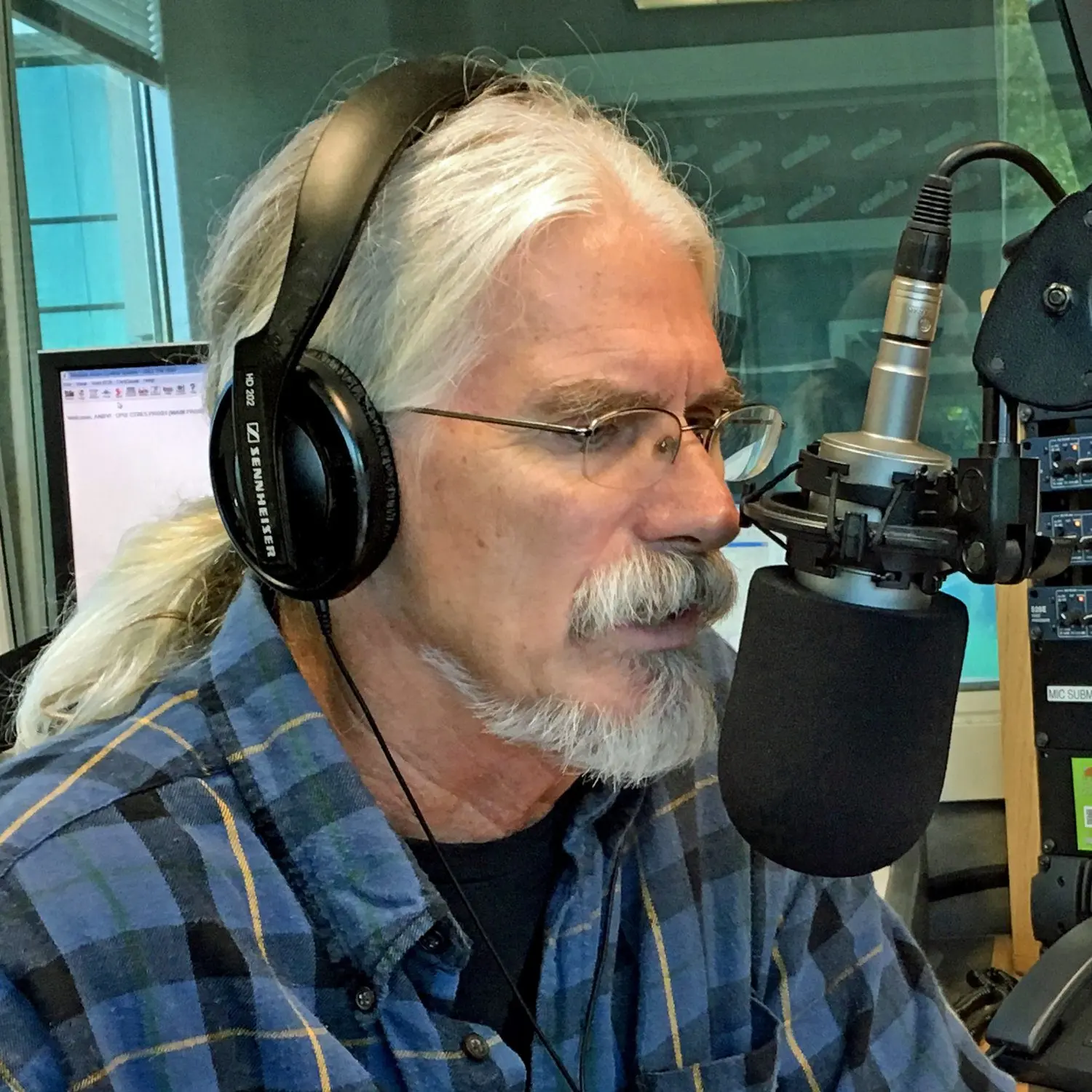

Join us as we explore the Hebrew Roots Movement and its various branches, discussing the implications of following Jewish customs in modern Christianity. Steve Gregg shares insights from his extensive research on this topic, addressing concerns and misconceptions surrounding this movement.
SPEAKER 1 :
Thank you.
SPEAKER 03 :
Good afternoon and welcome to the Narrow Path radio broadcast. My name is Steve Gregg and we’re live for an hour each weekday afternoon. If you’d like to join us with your questions you may raise for consideration on the Bible or the Christian faith, we’ll talk about those. If you see things differently from the way the host sees them, feel free to call and to balance comment to present another viewpoint. We welcome that here. The number to call is 844- That’s 844-484-5737 if you’d like to be on the program. And we’ll go directly to the phone lines and talk to David from Scottsdale, Arizona first. Hi, David. Welcome to The Narrow Path. Thanks for calling.
SPEAKER 07 :
Hi, Vic. I’m sure you’re familiar with the Hebrew Roots Movement.
SPEAKER 05 :
Yeah.
SPEAKER 07 :
How do you deal with, am I being called everything from an apostate to a heretic to, you know, an atheist to an antichrist?
SPEAKER 03 :
You mean because you’re not Hebrew roots?
SPEAKER 07 :
Yes.
SPEAKER 03 :
Yeah, I have actually a series of lectures about that at my website. I don’t know if you’re familiar with the website, thenarrowpath.com. But under the tab Topical Lectures, there’s a series called Hebrew Roots. And I would suggest that might be helpful to you to listen to it. The idea, see, Hebrew Roots is a broad umbrella term that applies to a lot of smaller movements. I think all of them are off base or at least off center movements. But, of course, Hebrew roots or Jewish roots, they sometimes call it, means that we’re supposed to be more appreciative of the fact that Jesus was Jewish and the disciples were Jewish and Christianity was birthed in the context of Jerusalem and the Jewish culture and religion in its background and so forth. People do different things with this information. Frankly, every Christian knows these things, so it’s not as if we need to be told that Jesus was a Jew or his disciples were Jews. I mean, maybe some people don’t know that, but those are people who don’t ever read the Bible. It’s very clear and universally understood. But Hebrew Roots is suggesting that because of these Hebrew Roots of the Christian faith, we ought to be doing something differently about the Jewish faith. customs or laws. And most of these want us to, you know, adopt Jewish ways in one way or another. Now, some Jewish groups, and I’ve debated a man who kind of heads up this particular viewpoint some years ago. The debates are online. He believed that Gentile Christians, when they’re converted to Christ, become Jewish, and because they’re Jewish, they should keep the Jewish law. He even believed that that if the temple were built again, we should go back and offer animal sacrifices. Now, this is about as heretical as anything can be imagined. Actually, the first heresy that the church had to deal with was this very heresy. The people who preached it were called Judaizers, and Paul wrote the entire book of Galatians to refute them. And when the Galatians were starting to go along with some of these ideas, he said they had fallen from grace. and that they were estranged from Christ, and that they were following a deceptive gospel, and had departed from the true gospel. He said all those things in Galatians about his readers who were mostly Gentile Christians, but who had begun to adopt the idea that Christians should follow Jewish ways, particularly be circumcised and keep the festivals and things like that. Now, not all Jewish roots Christians are quite that far gone. although many of them are pretty far gone, within the Jewish Roots Movement is the Messianic Movement, in which some Jewish believers believe that they should keep the law, but they don’t believe that Gentile believers have to do so. This is not specifically something they gather from the New Testament. This is what they get from Judaism. Judaism Orthodox Judaism teaches that while a Gentile can be converted to Judaism, become a proselyte, and then has to keep the law like other Jews do, a Gentile doesn’t necessarily have to convert to Judaism or keep the laws. There’s a group of laws they call the Noahide laws, which are a different list than what the Jews keep. and even the unbelieving Jews. So we’re not talking about Christian Jews or Jewish roots people here. We’re talking about just Judaism itself teaches that Gentiles can be okay with God if they just keep the Noahide laws. Now, there’s nothing in the Bible about Noahide laws. And there’s certainly no distinction in the duties of Jews and Gentiles. Paul makes it very clear there’s no Jew or Gentile, male or female, bond or free. All are one in Christ. He’s certainly making it very clear that there’s no Jewish practices that are imposed on the Jews or were imposed on the Jews that also have to be on the Gentiles or whatever. So, I mean, there’s different kinds of Jewish roots. Some of them are the Messianics who believe that the Jews who become Christians should still keep the law, but that Gentiles who become followers of the Messiah don’t have to. There’s those that I mentioned earlier, the Judaizers, who do say that Gentile Christians should keep the laws. And then there’s a variety of ones who teach that, well, you know, it’s just a good idea to kind of absorb all things Jewish, even if you’re a Gentile. And the movement is often characterized by what they call Messianic synagogues. Instead of churches, they meet in synagogues, and they’ll meet on Saturday instead of Sunday, and they’ll have Synagogue practices, they’ll parade the Torah scrolls across the room. They’ll blow the shofar, which is the ranch horn trumpet that’s one of the most annoying sounds known to man. They’ll blow the shofar. They’ll wear yarmulkes. They’ll wear tzitzits and prayer shawls and things. They’ll do Jewish things. And they think that they’re getting closer to God by doing these things. And, you know, the interesting thing is, I have, again, a series of lectures I’ve given on this. I’ve done a lot of research on this. Almost all Messianic synagogues are attended by approximately 85% Gentiles. Not very many Jewish believers are going to synagogues. Most Jewish believers go to Baptist churches or Pentecostal churches or something like that. The Messianic synagogues are allegedly… They’re to reach Jewish people with the gospel, but Jewish people aren’t much attracted to them. When Jewish people come to Christ, they join the church. They’re part of the body of Christ. There’s no Jew or Gentile distinction between them. Non-saved Jews don’t have any interest at all in Messianic synagogues. They consider Jesus to be a heretic, and so they have no interest in that. But essentially, how many Gentile Christians have been persuaded that, to embrace all things Jewish as if this is something that God cares about. There’s an irony in it because the wearing of the yarmulkes and the Jewish dances and the Torah scrolls being carried across the synagogue, these are not actually practices commanded in the Bible. Even in the Old Testament, God didn’t command these things. These are things that were part of rabbinic traditions. Which, in other words, if Christians were expected to be Jewish in terms of Old Testament Judaism, these would not be factors because Old Testament Judaism doesn’t have any of those factors commanded. And, of course, Old Testament Judaism requires animal sacrifices, which no one can offer today because the temple has been gone for 2,000 years. So, you know, the Jewish Roots Movement is simply one of many ways people can get distracted from Jesus. And I’m not saying they don’t believe in Jesus. That’s the very point. They’re messianic. They believe Jesus is the Messiah. But it’s easy to believe that Jesus is the Messiah and that Christian truths are essentially, you know, you embrace them, that Jesus died and rose again and all that, and still be totally fascinated with something that isn’t related to Jesus. And these Jewish customs are not related to Jesus. So they’re a distraction from him. In my opinion, the best Christians are those who are fascinated with Jesus himself. And nothing is more pleasing to Christ than that we are in love with him. If we start getting off into Jewish customs and things, we become in love with those things. And it’s very clear, many who have left the Jewish, I should say, left the Messianic synagogues, have been interviewed and have mentioned it seemed to them, that suddenly, you know, they were Christians first, then they went into the Messianic synagogues, and these were Gentiles generally, and it seemed to them that everyone was fascinated with the Messianic Judaism rather than with Jesus. But, you know, there’s lots of things that can distract people from Jesus, but that’s one of them. But if someone makes you feel like you’re a heretic because you’re not doing these Jewish things, that’s the pot calling the kettle black, if anything, because, frankly… They’re the ones who are following a historic heresy, one against which there’s a whole book of the Bible written against it. And I’d say maybe more than one if you include the book of Hebrews, but Galatians certainly. Anyway, so, yeah, I’m definitely familiar with it. If you want more information about it, again, you can go to my website, thenarrowpath.com. You’ll see the tab that says Topical Lectures, and just kind of scroll down. You’ll see it’s either called Hebrew Roots or Jewish Roots. The movement is called by both names. I forget which name is on our series, but you’ll see it there. I appreciate your call. Thanks for joining us. Ken from Winters, California. Welcome to The Narrow Path. Thanks for calling.
SPEAKER 05 :
Hi, Steve. I was wondering, the Battle of Armageddon and the Bulls of Wrath spoken of in Revelations, do you believe those are actual events yet to happen, or are they figurative?
SPEAKER 03 :
Well, I believe that all of Revelation is written in figurative terms, regardless whether it’s talking about the future or some other period of time. I mean, it seems obvious that the book of Revelation is full of symbols. How much of it may be literal and how much symbolic has been debated, but I think it’s because it is an apocalyptic book, and apocalyptic books are very well known from the first century. It has the features of an apocalyptic book. Apocalyptic books are written almost entirely in symbols. I mean, they’re referring to things that correspond with reality, but they’re talking about those things in symbolic terms. Now, the Battle of Armageddon is mentioned only in connection with the seven vials that are poured out, or bowls of wrath. And, you know, it’s not actually called the Battle of Armageddon in the Bible. It’s just called that people were called to the, were gathered to the battle of the great God, something like that, and they met at a place called Armageddon. Now, Armageddon, the word Armageddon, or Hamageddon, literally means the mountain of Megiddo. Now, there is a valley of Megiddo, and it’s overlooked by Mount Carmel, and so sometimes think that the mountain of Megiddo is referring to Mount Carmel, but we don’t know. There’s no actual mountain called the mountain of Megiddo, so the word Armageddon itself is not literal. It may be a mountain that overlooks Megiddo, but anyway, I personally believe that the time frame of the fulfillment of this is different than many people’s. popularly think today, there’s four different views of when Revelation is applied to and in what way it’s applied to them. But the two that are most, well, the one that’s most well-known and popular today is called the Futurist View. And that view holds that essentially most of Revelation, at least after chapter 4, verse 1, is going to be fulfilled still in the future and has not yet been fulfilled. So it They think it’s about a seven-year tribulation that has not yet come. And they believe the Battle of Armageddon happens at the end of that time. In fact, the Battle of Armageddon on this view will be in progress when Jesus comes back, that the kings of the earth will be gathered against Jesus. And when he comes back, they’ll fight, but they’ll be destroyed by the brightness of his coming and so forth. Now, that’s the futurist view, and that’s what most people assume about Revelation, because they’re not familiar with apocalyptic literature, and because they don’t take seriously what Revelation says about its own time of fulfillment, because multiple times in Revelation, the author tells his readers, now his readers, of course, were living in the first century, he was too, he was telling them that these things would shortly take place, and the time was near, and that he should not think that it’ll be delayed, and things like that. Now, on the basis of those statements and other features of the book, there are those who are preterists who believe that the fulfillment actually did occur, as the book claims they would, shortly after they were written, but it’s in our past now. And most preterists believe that the majority of the material in the book is about the Jewish war, which took place from 66 to 70 A.D., and which ended with the destruction of Jerusalem and the destruction of the temple. Now, I personally have moved from a futurist view, which I held years ago and taught, to a more preteristic view. I’m not a full preterist, but I do believe the evidence is strong, very strong. that the book was written before 70 A.D., and that the things predicted in it are references, in symbolic language, of course, to things that did happen in that war and in that 70 A.D. period. So I take much of Revelation that way. Now, you asked about the Battle of Armageddon. That’s in Chapter 16. I personally believe that that is a reference to that great battle where the Romans came. And, of course, the Roman Empire was people from all nations. That’s why it says all nations came. Well, it was certainly an international army because Rome had conquered all the nations around them. and therefore their armies were populated by people from all nations. And they came against Jerusalem, and Armageddon, at least the Valley of Megiddo, is in Israel. And so the battle is said to take place in Israel, or at least that’s implied. So, in my opinion, it is referring to the great battles that led to the end of the Jewish state in AD 70.
SPEAKER 05 :
Okay. Well, thank you very much.
SPEAKER 03 :
All right. Good talking to you. Thanks for your call. For those who don’t know, I wrote a book many years ago. It’s been almost 30 years ago now. It’s still in print with the Thomas Nelson Publishers called Revelation for Views, a parallel commentary. I do not advocate any of the four views in my book, but I give them all, and I give strong cases for each view. Verse by verse, I go through all the book of Revelation, presenting all four views for the reader to assess and to reach one’s own conclusions about. That’s called Revelation Four Views, a parallel commentary. All right. Let’s talk to Kerry from Fort Worth, Texas. Hi, Kerry. Good to hear from you.
SPEAKER 06 :
Hi, Ken. Hey, Steve. My question might be in the same category as your first caller. But I don’t know much about the Amish and the Mennonites and Quakers and things. I’ve always kind of thought that they’re kind of legalist and living in the past, that type of thing. But I recently watched a reel by an Amish lady explaining her faith and the differences between mainline Christianity and the Amish. And I really found it quite compelling and really very attractive. And I was just wondering if you could tell me what you know about the Amish. Are they a bunch of legalists, or are they just sincere people that are following Christ in their own way?
SPEAKER 03 :
I would say both. I don’t think either or. I think there’s mostly sincere people. When I say mostly, I don’t know what the percentages are. Like any group of Christians, let’s just say in the days where several generations lived in the same town and went to the same church, Catholic church or Baptist church or Presbyterian church or whatever, you’d have people in the church who were there because they were born and raised there and their families went there and they’ve They’ve been enmeshed in the culture of the church, and that’s just part of their way of life, some of whom might not have any real direct faith in God or relation with Christ. Some people would stay just because of inertia. There’s no reason to leave, and partly because it’s a good group, and they’ve got a lot to commend them, and And their families are there and they want to be with their families. So this would be true of any generational church where people have lived for generations in one town and gone to that one church. There’s going to be some people who really love God and who are followers of Christ and some people who are just there because that’s just where they are by default. The Amish are that way too. Some of them are real Christians and some of them are just people who were born in it. And the culture appeals to them and they stay in it. They know that if they leave, they’d be shunned by their families and so forth. And therefore, you’re going to have a mixture. Now, as far as the Amish religion, it is part of the Anabaptist movement or what was called the Radical Reformation. If you listen to my lectures online, you know, I have a 30 lecture series on church history. I give the, not the Amish, but the Anabaptists a great deal of attention in that lecture series. I have four of those 30 lectures are simply about the Anabaptist movement. Now, the Amish and the Mennonites and the Hutterites are the ones who are mainly surviving branches of the Anabaptist movement. Mennonites, Hutterites, and Amish. And, I mean, there’s some others. There’s the Bruderhof and some others. But for the most part, the the ancient Anabaptists were pretty much, to my mind, the best Christians of their generation. They were willing to lay their lives down for Christ, even though Protestants and Catholics hunted them down and killed them as heretics. The only reason they were called heretics is because they insisted on following the Sermon on the Mount rather than the church traditions and the main mark of that was that they they didn’t believe in baptizing infants both the reformation churches and the catholic church baptized their infants and the anabaptist said well we don’t see any biblical teaching that infants should be baptized but only believers should be baptized you you come to christ you repent you believe and then you get baptized and they said well we were baptized as infants because they were born in europe everybody was either baptized you know Catholic or Protestant, mostly Catholic in those days. And they say, well, we didn’t know Christ when our parents baptized us. And we see the Bible saying that we’re supposed to believe and be baptized or repent and be baptized. So after they repented and became Christians as adults, they got baptized. Now, since they had already been baptized as infants… people called them the re-baptizers that’s what the word anabaptist anna means again or re-baptized so the anabaptist movement they didn’t call themselves that because they didn’t think they’re that their infant baptism should even be called a baptism but they got baptized after they came to believe that they were the first people in 1600 years i know i’m not gonna that’s not right not 1600 i’d say in 1300 years they were the first christians to get baptized uh after conversion rather than at infancy. So they rediscovered something about baptism that the church had lost some centuries earlier, and that was very controversial, and they were actually put to death in Catholic countries and Protestant countries for being baptized again because it was considered very subversive because every church in Europe had state churches. Every state in Europe either was a Catholic state or a Protestant state, And if you were baptized as a Catholic in a Catholic state or as a Protestant in a Protestant state as a baby, well, then that was just part of being a citizen. And if you said, well, that baptism didn’t count for anything, I’m going to be baptized over again, it was subversive. It was saying that the church, the state had no right to baptize people as babies. People were not Christians just because they were born in a Christian country and their parents had gotten them wet. They said, no, you have to be a believer. You have to be a follower of Christ. Then you get baptized. Well, that’s taken for granted in American evangelicalism, for example. But it was a radical thing at the time. They were called the Radical Reformation. And they were persecuted. Zwingli, the Protestant reformer in Switzerland, in Zurich, actually drowned 4,000 Anabaptists because they’re breaking away. from the traditions. Catholics also, I believe the Catholics, I think they burned them. They were killed various ways by Catholics and Protestants. And so many of them fled to America, which was the only place where there was actual freedom of religion, settled in Pennsylvania and places like that. And the Amish were You know, we’re one of these branches of Anabaptists. The Mennonites and the Hutterites are other branches of it, but they’re very similar. And, you know, if you want to know more about the groups or the movement, like I said, you can go to my website, thenarrowpath.com. And look, I know you’ve been to there before many times, but under the topical lectures, there’s a series on church history. And you just have to scroll down the names of the lectures and see which ones are about the Anabaptists. And you’ll see that I have great, what should I say? a great affinity with the Anabaptists in many respects. I would say, although I’ve never been part of the Anabaptist movement denominationally, when I was younger, especially, I was almost entirely like the Anabaptists. My own views have I’m going to say matured or become more nuanced since then, and I do have some differences with them. But I still think that in their day, they were the true Christians of their time. They were the ones who were really following Christ and willing to lay down their lives for him. Nowadays, most Amish don’t have to do that, but they are very radical Christians. But some of their obedience to Christ is more cultural than anything. For example, they’re known for being pacifists, very forgiving. There’s a famous story that was in the news a couple decades ago of a bunch of Amish girls were killed by a neighbor, and then he killed himself. And the Amish, you know, of course, the guy who killed these girls, his wife and children were, you know, chagrined to find out he had done it. And they were ostracized by the community, except by the Amish. The Amish, he was not, the family that did it, the man who did it was not Amish. But the Amish people were the only people who actually befriended his wife and children and attended his funeral and so forth. Very typical of the Amish to forgive people for stuff. So in many ways, they are like the early church in that way. Now, another pacifistic group that’s not Anabaptist is the Quakers. They were a pretty good group, too, started by George Fox. They’re pacifists also, but they were not Anabaptists. In fact, Quakers don’t even believe in baptism or the Lord’s Supper at all, so they’re a different kind of movement. But the Amish are part of the Anabaptists. Again, if you go to my website under Topical Lectures under Church History, you’ll find there are four lectures about the Anabaptist movement. I need to take a break, but Carrie, I hope that helps you. You’re listening to The Narrow Path. My name is Steve Gregg. We have another half hour coming, so don’t go away. We just take a break to let you know that we are listener supported. If you’d like to write to us, the address is The Narrow Path, P.O. Box 1730, Temecula, California, 92593. And our website, thenarrowpath.com. I’ll be back in 30 seconds. Don’t go away.
SPEAKER 01 :
If you’ve been listening to The Narrow Path for very long, you know how much it has enhanced your study and understanding of Scripture and possibly your whole Christian life. Don’t you think all your friends should benefit from the program as you have? You help to partner with us in impacting the body of Christ when you tell all your friends to listen to The Narrow Path. If you have not done so, visit the website thenarrowpath.com and discover all that is available for your learning pleasure.
SPEAKER 03 :
Welcome back to the Narrow Path Radio Broadcast. My name is Steve Gregg, and we’re live for another half hour taking your calls. We have some lines open right now. We may not in a few minutes, so this is a good time to call if you want to get through and be on the program today. The number is 844-484-4844. 5737. And you can call if you have questions about the Bible or the Christian faith or anything related thereto. You can also call if you have a difference of opinion you’d like to express with the host. The number again, 844-484-5737. And our next caller is Jody calling from Cincinnati, Ohio. Hi, Jody. Welcome to The Narrow Path.
SPEAKER 08 :
Hi, thank you for taking my call. I just quickly wanted to say before my question, if I can, just thank you for your voice and talking about the Messianic Church. And you sort of lay your neck on the line. I know when you talk about things like this, I know at least in Cincinnati when people will come up against the traditions like this, and it’s not a very popular thing. So thank you for that. My question is, is pertaining to prophecy in the church, and I see it in our church. We have a lot of old-school thoughts mixed with some really beautiful New Testament ways, but occasionally we have women especially that prophesize, and she prophesies still like someone we all were in the church in the 70s and the 80s, first person, like God speaking directly through her like an Old Testament prophet.
SPEAKER 02 :
Right.
SPEAKER 08 :
And I can hardly sit there. And I just want to hear what you had to say about that. I think people are very, there’s a lot of traditional people, excuse me, in the church that they won’t say anything to, or maybe they don’t even think it’s wrong. But what’s your thought about someone standing up and prophesying now in a church, speaking, thus saith the Lord, I am saying to you, and then repeating something?
SPEAKER 03 :
Let me ask you, are you in a charismatic or Pentecostal church, or is she kind of an oddity?
SPEAKER 08 :
No, she’s an oddity because she’s really old school, but we’re in a charismatic church.
SPEAKER 03 :
Okay. Yeah, well, to tell you the truth, there’s a lot of opinions about what the New Testament gift of prophecy is like, and it sounds like she is at least intending to prophesy in the manner that Old Testament prophets did. Now, there are people I know… who say that New Testament prophecy is different than Old Testament prophecy. And I’m not sure in what ways it is because the Bible doesn’t tell us it’s different. We do read in 1 Corinthians 14 that whoever prophesies in the church speaks to the exhortation and edification and encouragement of people. And so, you know, I guess a sermon could do that perhaps. I mean, there’s testimony could do that. So the question is, when Paul talks about prophecy in the church, or more than that, when, like Joel says, pour my spirit on all flesh and your sons and daughters will prophesy, does this mean that they will speak like Isaiah did or Jeremiah did or Ezekiel, saying, thus saith the Lord, blah, blah, blah. Now, I’m not going to rule that out because we don’t have any evidence in the Bible that that kind of prophesying works. necessarily has ceased, but there’s something else to consider, and that is that lots of things that don’t sound like that are called prophecy also in the New Testament. For example, when Jesus was speaking to the woman at the well, she said, I don’t have a husband. He said, you speak properly and correctly in saying you don’t have a husband because you’ve had five husbands and the man you’re with now isn’t your husband. And she said, oh, sir, I see you are a prophet. Now, he didn’t say, thus saith the Lord, or he just told her information about herself that she felt he would have no natural way of knowing. So she assumed he was a prophet. Now, charismatics usually refer to what Jesus did there as a word of knowledge. And Paul used the expression word of knowledge on one occasion in 1 Corinthians 12. He said it as something that he contrasted with prophecy, but on the other hand, he didn’t say what he meant by a word of knowledge. The woman at the well, hearing what was essentially what we’d normally call a word of knowledge, recognized it as something a prophet does. It’s a form of prophesying. Now, on the day of Pentecost, when the people were speaking in tongues, Peter explained it by saying, Joel had said the Spirit would be poured out, and your sons and daughters will prophesy. He said, this is that. Now, we don’t read really in Acts chapter 2 of people prophesying. We read of them speaking in tongues, which Paul treats as a separate gift from prophecy in 1 Corinthians 12 when he lists the gifts there. And yet, the Bible allows that speaking in tongues falls under the general rubric of your sons and daughters prophesying. And in other words, in the Old Testament, some of the prophets did say, thus saith the Lord, I will do this and I will do that. And that was, of course, in the Old Testament, a form of prophesying. And it’s not impossible to believe that that would be occasionally something that would happen in New Testament times since the gift of prophecy continues, though it’s not necessarily the case that it continues exactly in the same form. We’re not sure. But, for example, at the end of 2 Corinthians 6, it says, And verse 17, 2 Corinthians 6, 17 and 18, Paul says, Come out from among them and be separate, says the Lord. Do not touch what is unclean, and I will receive you. I will be a father to you, and you should be my sons and daughters, says the Lord Almighty. Now, Paul gives that as if it’s like a word from the Lord. Now, Paul doesn’t ever describe himself as a prophet. He’s an apostle. That’s something that Paul usually distinguishes from prophets, apostles and prophets. But he apparently seems to be prophesying. Now, there’s a possibility he’s simply summarizing some things from the Old Testament. And that’s what often seems to be the case when we hear people prophesy in a Pentecostal church, too, is that their prophecy sounds like sort of a patching together of phrases from the Bible, which makes it hard to call anything like a false prophecy. But if Paul is prophesying here, we have just one example there. of God, prophesying like that. Now, in Numbers, God said to Miriam and Aaron, who were critical of Moses, and they thought they were prophets too, like Moses, and God said, he rebuked him, said, if I, the Lord, raise up a prophet among you, I will speak to him in dreams or in visions. But my servant Moses is not so, with whom I speak mouth to mouth and face to face. Now, interestingly enough, God told Miriam and Aaron that if he raises a prophet, they will have dreams and visions. That was also mentioned in Joel, the passage that Peter quoted on the day of Pentecost, where he said, your old men shall dream dreams, your young men shall see visions. That was part of the prophecy of Joel also, part of your sons and daughters will prophesy. Now, Paul and Peter both had visions. So did Stephen before he died. And you know, and dreams too. We have, you know, dreams and visions among some New Testament people. And so what I’m saying is this. Prophecy seems to be a generic category in the New Testament. It may include oracles, such as were spoken by the Old Testament prophets, and an oracle would be like, thus saith the Lord, I this or that. And in Pentecostal and charismatic circles, That is generally what is thought to be meant by prophecy. But since the Bible uses the word prophecy in more of an umbrella term for any speech that the Holy Spirit is inspiring or speaking through somebody, including speaking in tongues, including relating a dream or a vision, including giving a word of knowledge, whatever, all those things, though there may be some way to distinguish them from each other, they all seem to fall into the same rubric of prophesying. And, you know, when we read about in the Old Testament, Saul was chasing David. He fell among the prophets and began to prophesy. Or, you know, even Balaam prophesied. And in John chapter 11, we read that even Caiaphas prophesied. In some cases, they were not predicting anything. They were saying something. And the implication is that God was you know, inspiring their speech, that the Holy Spirit was speaking through them. But it’s not always in the form of an oracular saying like, thus saith the Lord, this or that. Now, the lady you’re talking about in your church, she’s apparently a traditional Pentecostal who thinks of prophesying as giving an oracle. And I can’t say that such prophecy can’t exist because the Bible doesn’t ever say that it can’t exist. But a broader range of speech in the New Testament is recognized as prophetic because speaking through the power or the inspiration of the Holy Spirit, I think, is just the general category that is meant by prophesying. And it can be broken down into different kinds of things. speeches but but i think that if a person is uh speaking by the power of the holy spirit that would fall into the general range of what prophesying is so paul says desire the best gifts especially that you might prophesy uh you know everybody ought to prophesy and yet paul says that not all are prophets and not all are apostles so uh prophesying must refer to something beyond or broad or than simply giving a prophetic utterance such as we think of traditionally. Now, I’m not going to be critical of her, but if she does say this, whenever someone says, thus says the Lord, I this and I that, they really ought to be living in the fear of God. Because you’d better not say, I am God speaking, unless God is really speaking through you. And I have to say, I’ve been in charismatic meetings, meetings where people prophesied stuff where I knew it wasn’t God speaking, partly because they were poorly informed or because they contradicted something else that God had said somewhere. There was actually one church service. I wasn’t in it, but a friend of mine was in it. He said that a person stood up and gave a prophecy and And as soon as he was done, another person, I think a woman, stood up and gave a prophecy that was directly contradicting the first one. And, I mean, obviously, the Bible says test all spirits because there are false prophets. So my thought about this lady is I can’t say that she’s not receiving. prophetic words from the Lord, but she may think that this is what it means, you know, that you’re not really prophesying or speaking by the Holy Spirit unless you’re giving this kind of an oracle. I would judge her oracles by whether they are true or not. And, of course, a lot of times you can’t tell. A lot of times you give a safe prophecy, one where they don’t overstep any theological boundaries and they don’t predict anything. They just string together phrases that are in the Bible that into an aesthetically pleasing way, and they give off that they’re prophesying. Now, maybe they are, maybe they’re not. This is one of the problems we have. If someone says something that’s theologically wrong, or they predict something that doesn’t come true, then that’s what the Bible would say is a false prophet. You have that stated in Deuteronomy 13, verses 1 through 3, and again in Deuteronomy 18, from verse 18 on for several verses, probably through verse 20 or so. And in 2 Thessalonians 5, Paul said, do not despise prophecies, but he said, test all things and hold fast to that which is good. Paul said in 1 Corinthians 14, let the prophets speak in the church, two or three, and let the others judge. That is, judge the prophecies. And, of course, 1 John 4, 1 says, Beloved, do not believe every spirit, but test the spirits, whether they are of God, because many false prophets have gone out into the world. So, you know, churches do want to have, you know, I mean, some kinds of churches do want to have prophetic utterances in them, but they should be very… diligent about judging them that’s something we’re told again and again to make sure that we’re not letting something go by that claims to be from the Lord which clearly is not from the Lord but if a man or a woman in the church says thus says the Lord and they end up rattling off some what’s essentially a string of scriptural quotations you know they may not be really prophesying but obviously what they’re saying is harmless enough and you know I’m not sure that any harm is done So, you know, I’m kind of tolerant of somebody making a mistake about that as long as they’re not leading anyone astray. And I would not say that that kind of prophesying is absolutely not valid because we don’t know.
SPEAKER 08 :
What it sort of does, though, it teaches the church not to judge, as you were saying. speaking of those scriptures, let those sit, judge that. Well, if you’re speaking that you are the Lord, you should have shut down that, especially for believers that are new in the faith. It’s God. How can I question that? Because she’s speaking as an oracle of God. That is a problem.
SPEAKER 03 :
It is a problem. When someone says, God told me this, or this is the Lord speaking, you almost feel like you have to be kind of rude to say, no, that wasn’t God. I remember when I was running a school in Oregon. One year I was jointly running the school with another man. He was more Pentecostal than I was, more charismatic than I was. I mean, I’m charismatic, but he was more so than I. And once he was at the beginning of the meeting telling people, feel free to, you know, just if you feel like God gives you a word, feel free to just prophesy it out. And I was sitting there and I said, and we will judge it. Now, later he told me afterwards, he came to me privately and said, he thought I really quenched the spirit by saying that. He said, by saying that we’re going to judge their prophecies, you definitely would intimidate people from speaking. And I think, well, if they could be intimidated by knowing that someone’s going to judge their prophecy, then they probably shouldn’t speak. I mean, if I was invited to come teach someplace and the pastor said, now speak whatever you want, but we’re going to judge it. I’d say, good for you. You know, I’m proud of you. Everyone should judge what they hear. But, you know, if someone wouldn’t speak if they knew they’re going to be judged, that is, that their prophecy would be judged, then they shouldn’t speak.
SPEAKER 08 :
All right. Well, thank you, sir. I really appreciate it. I just, it’s something that just cringes, I mean, I just cringe when I hear it. I hear you.
SPEAKER 03 :
Do you ever talk to the pastor about it, pastor or elders about it?
SPEAKER 08 :
They have a segment of the church that is older, older charismatic, you know, old school 70s. And they all were raised like that as we went through it on.
SPEAKER 03 :
So they’re comfortable with it. Excuse me.
SPEAKER 08 :
Yeah. I mean, we’re all in churches like that in the 70s, right? We accepted it. And then we grew and said, wait a minute. Why are you talking like you can’t submit that to us and we can’t say something? So, no, she’s sort of an elder’s wife, and I think they would just let it go. They’d roll with it, even if they didn’t think right. No, they would go both ways with, you know, speak like the Holy Spirit is sharing this with you and, hey, I’m going to put this out there, or someone speaking like that. So I just…
SPEAKER 03 :
I hear you. All right. Well, we’ve got a lot of people waiting, but I understand.
SPEAKER 08 :
Thank you, Steve. Appreciate it.
SPEAKER 03 :
I understand your problem there. God bless you.
SPEAKER 08 :
Thank you. God bless you.
SPEAKER 03 :
Okay. Bye now. All right. Let’s talk to Travis from Bartlesville, Oklahoma. Hi, Travis. Welcome.
SPEAKER 04 :
Hi, Steve. I’m curious if you’re familiar with Leonard Ravenhill, and if so, like, what are your thoughts on him? Like, criticisms or just things that you liked about him? What’s your perspective on him?
SPEAKER 03 :
I think he was mostly an evangelist. I remember just when I was a teenager, a friend of mine had a book of his sermons and would often quote from them. He seemed pretty cool. He was a pretty uncompromising guy, you know. Kind of funny, too. He used some alliteration in his sermons. He eventually was living in Texas and was a friend of Keith Green. I never knew Leonard, but I knew Keith. And Keith was pretty influenced by him. But Keith was likewise a pretty hardline guy. Both Leonard Ravenhill and Keith were very hardline preachers. And I think we need those. I’m a little less like that myself. But I can’t claim that I’m deeply immersed in Ravenhill’s material so as to really be able to analyze it. or assess it for its value. But I did, I’ve heard some of his years ago sermons on tape. And again, a lot of his written stuff. He used to also write articles for Keith Green’s Last Days newsletter. I’d read those too. But all I can say is I’ve never had any objection to him. You know, it’s possible that in some of the sermons or writings that I’ve never encountered of his, he might have said things I would not agree with. I don’t know. But I’ve never had any objection to him. Is there anything that makes you wonder?
SPEAKER 04 :
Well, I just very much appreciate him. He’s one of my favorite preachers. I know that Matthew 7, 13, it’s not in there. Nobody’s asked about him. One thing that I saw somebody criticizing, and I didn’t know my take on it, because I might be biased and I might just be trying to justify it, but some people will criticize him until they’ll say, like, oh, God, or my God, where are we, or stuff like that, and I’ll say, using the name of the Lord in vain, or it’s not reverence toward God.
SPEAKER 03 :
I would say with some people, when they say, oh God, or my God, it’s clear that they’re not speaking to God. But a preacher, you know, a gospel preacher, who says, my God, or whatever, I don’t know that he’s not speaking to God. If you’re speaking to God, say, oh, God, or my God, is not a blasphemy. And, you know, I’m not really sure it’s even a blasphemy when people are using it just as an expletive. It’s just not right. I mean, it may be a different kind of a sin than a blasphemy. I don’t think it’s blasphemous to call on the name of God, even if you’re rather not thinking very deeply about talking to God. I think that… you know, it’s a rather irreverent use of the name when it’s in the lips of someone who’s not a godly person, because they’re clearly not calling on God in sincerity. But I don’t know that I’ve heard Ravenhill ever do that in a way that I thought was, you know, anything other than sincere. I mean, people who know God and walk with God cry out to God and speak to God quite extemporaneously through the day, and Yeah, I don’t know if he says, my God.
SPEAKER 04 :
The context I’m thinking of, I have one in mind. He’s doing it in, like, shock, kind of like, where are we as the church with all this stuff to beat on? He’s talking about, like, the bankruptcy of the church’s spirituality. He’s saying, my God, where are we?
SPEAKER 03 :
Yeah, well, in that context, it sounds like he could be very well speaking to God. You know, God, what’s going on here? You know? Yeah, I would say to be pure, all things are pure. I mean, certainly anyone can use the name God or Lord, whether they mean it sincerely or whether they’re using it as an expletive. But, you know, I think a man with a pure heart would be using it in an unobjectionable way. So I wouldn’t have any problem with that. I appreciate it. All right, brother. God bless you. Thanks for your call. Okay, let’s see. William in Las Vegas, Nevada. Welcome.
SPEAKER 02 :
Yes, Steve. First of all, I want to ask you, do you believe in the rapture? And if so, what position do you take? And what position do you think of the other three positions, pre, post, mid, and pre-rapt?
SPEAKER 03 :
Yeah. Well, yeah, I think all, what should we say? All Orthodox Christians, and by that I don’t mean Eastern Orthodox, but I mean ones who are not heterodox or not heretical, do believe in the rapture because it’s spoken of without ambiguity by Paul in 1 Corinthians 15 and in 1 Thessalonians 2. 4, and especially in 1 Thessalonians 4, where he says the dead in Christ will rise first, meaning the dead will be resurrected. And then he says, then we who are alive and remain will be caught up together with them to meet the Lord in the air. That’s the rapture. So there’s two things will happen to Christians when Jesus comes back. A, the dead Christians will be raised from the dead, and B, the ones who are not dead will be caught up and changed, as it says in 1 Corinthians 15, will be changed instantaneously in the twinkling of an eye when we are caught up to meet Jesus. Now, so the resurrection and the rapture kind of go together in Paul’s theology, and they’re not really separable. Now, do I believe in the resurrection and the rapture? Of course. That’s a typical, a very universal Christian doctrine, pretty much. There are some people who spiritualize it, and especially the full preterists tend to spiritualize it. At least some of them do. Some of them feel like there was a physical rapture and resurrection back in 70 A.D., which, of course, didn’t happen. Others feel that when Paul spoke about the resurrection and rapture, he was speaking about some spiritual phenomenon that they think happened in 70 A.D., and I don’t believe that happened either. Those are two different kinds of full preterists, and I think full preterism is not orthodox. But… Ever since, especially the 19th century, different opinions have arisen as to when the rapture happens. The church has always taught that when Jesus comes back, he’ll raise the dead and rapture the church. And that is the teaching of Scripture. That’s the teaching of the church throughout history. Now, in the 19th century, some began to say, well, when Jesus comes back, it’s going to be in two stages. And in his first stage, he’ll rapture the church. And then in the second stage… The church will return with him. So they would call the first stage the rapture. And they would say that’s when Jesus comes for his saints. And they say the second stage is called the revelation. And that’s when Jesus returns with his saints. So this is a very common way of talking about things, that the rapture is when he comes for the saints. And then some period of time later, he’ll come back with the saints. And they call that phase of the second coming the revelation. That’s what dispensationalists do. Now, Darby, who started dispensationalism, said that would be a seven-year interval. So he thought that there would be a seven-year tribulation that takes place on earth between the time that God takes the church away in the rapture and the time that the church comes back with Jesus in the revelation. So this is called the pre-tribulation rapture. Now, lots of people hold that. The Bible doesn’t teach it clearly anywhere. And it was never really the view of the church until the 1800s. But it became very, very popular. It’s very popular today called the pre-tribulation rapture. They believe there’s a seven-year gap. Now, some who have held that view have modified it a little bit. Some say it’s not a seven-year gap. It’s a three-and-a-half-year gap. They still believe in a seven-year tribulation. But they believe that the church will be here for the first half. And then they’ll be taken away, and then the second half, the second three and a half years, will transpire with the church gone before Jesus comes back with the church. That’s called the mid-tribulation rapture. And the pre-wrath rapture places the rapture a little later, like maybe halfway between the mid and the end of the tribulation. Now, the main thing is that when the Bible talks about the rapture, it always places it at the time of the second coming of Christ. There’s never any suggestion in the Bible that the second coming of Christ comes in two stages. There’s what the Bible calls the day of the Lord, or the day of God, or the last day. And the rapture and the resurrection and the second coming of Christ are always placed at that time. So, in my opinion, the rapture happens at the time that Jesus comes back. It doesn’t come three and a half years earlier or seven years earlier. It comes on the day that Jesus referred to several times as the last day. And since he said the last day, he suggests there aren’t any days after that. So I would be what I guess you’d have to call me a post-trigger rapture, although I don’t use that term generally. We’re out of time. Thanks for your call. You’ve been listening to The Narrow Path. Our website is thenarrowpath.com. Thanks for joining us. Let’s talk again tomorrow.