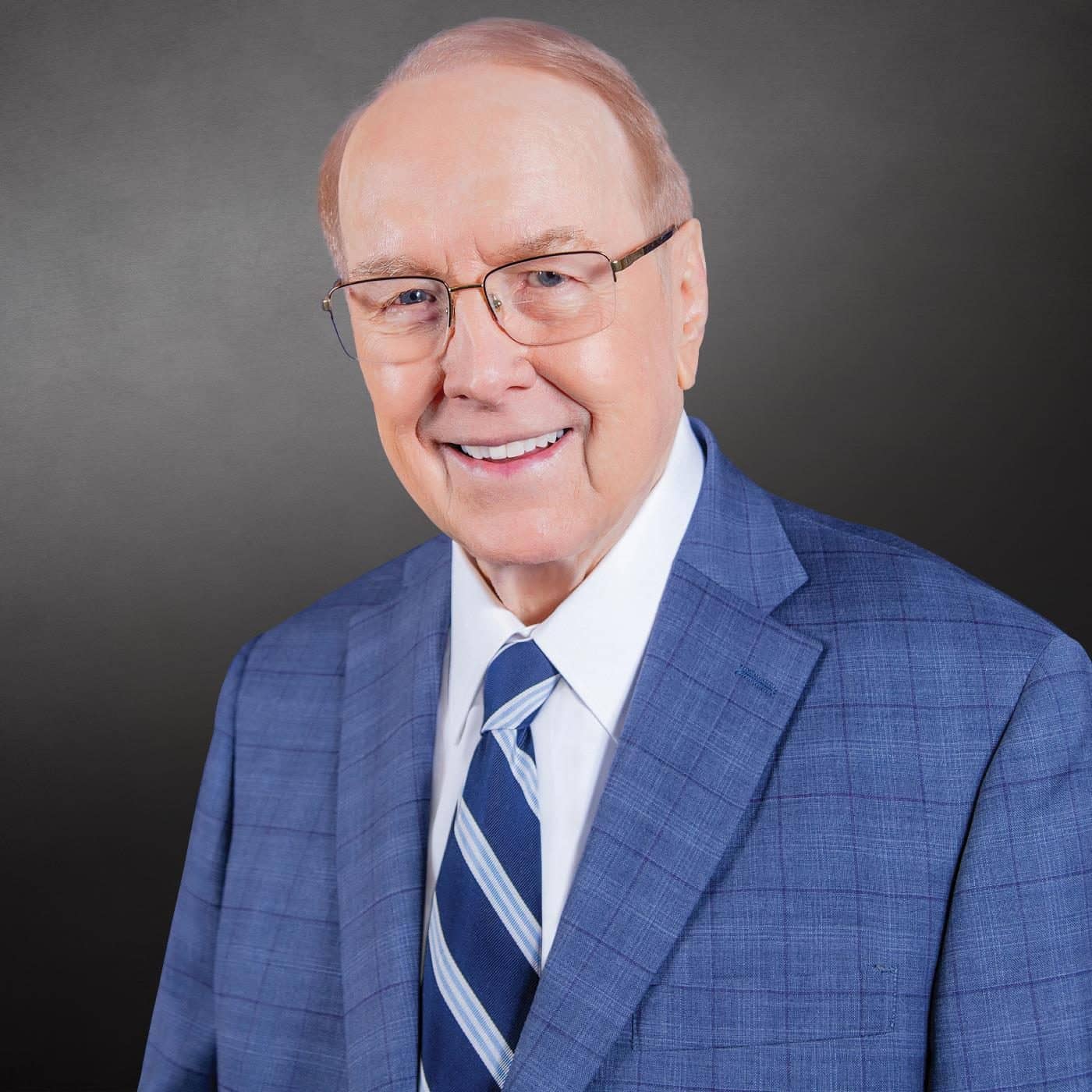

In this enlightening episode of Family Talk, Dr. James Dobson is joined by Reverend Gordon Dalby to delve deep into the heart of biblical masculinity. Reverend Dalby, the author of ‘Healing the Masculine Soul,’ explores how a strong relationship with the Heavenly Father can redefine the role of masculinity in today’s world. The discussion reveals the profound effect a father-son relationship has on a man’s life, and how the wounds of the past can be healed through fellowship and faith.
SPEAKER 03 :
Welcome everyone to Family Talk. It’s a ministry of the James Dobson Family Institute supported by listeners just like you. I’m Dr. James Dobson and I’m thrilled that you’ve joined us.
SPEAKER 01 :
Well, welcome to Family Talk, the broadcast division of the Dr. James Dobson Family Institute. I’m Roger Marsh, and on today’s program, we’ll be continuing a conversation that really gets to the heart of what it means to be a man of God. Not the macho stereotype the world offers, but the godly strength that flows from a deep relationship with our Heavenly Father. Our guest today here on Family Talk is Gordon Dalby, author of the groundbreaking book Healing the Masculine Soul. Reverend Dalby is a Harvard-educated pastor, a former Peace Corps volunteer, and a conference speaker. He has spent decades helping men understand the wounds they carry and showing them where true healing really begins. On the last edition of Dr. James Dobson’s Family Talk, Reverend Dalby showed how men struggle to connect with others because of broken relationships with their own fathers. On today’s Family Talk broadcast, he’ll take us even deeper, exploring what biblical masculinity really looks like and how fathers can pass that legacy on to the next generation. So let’s rejoin the conversation right now on Dr. James Dobson’s Family Talk.
SPEAKER 03 :
Gordon, welcome back today. And let me start with this. I know from your book and from our conversation last time that you believe that this difficulty in opening up, this difficulty in bonding with other men, often results from… a breakdown in the relationship between those individuals when they were boys and their fathers. And they’re looking for a replacement for what should have taken place in the earlier years. And that masculine healing in that area often occurs in small group settings with other men.
SPEAKER 02 :
Isn’t that correct? Any man who will get together where two or three men are gathered in the name of Jesus, he’s there, and he’s saying, come on out, my son. The Father, you see, the Spirit of the Father God comes to the fellowship, to the body of Christ. And where men will gather, men who have been wounded by their fathers, who are lacking from their fathers, it is the small group, it’s the fellowship of men where the Holy Spirit comes today to minister to men. I see it all the time.
SPEAKER 03 :
What do you say specifically to men who are searching for that Father influence in their lives?
SPEAKER 02 :
I prayed with a guy one time like that. He said to me, Gordon, you say that my Father God can give me anything that my earthly dad didn’t. I said, absolutely. He says, all right. This guy was 35 years old. He says, my dad was a semi-pro baseball player, and he never taught me how to play baseball. I felt like a wimp on the playgrounds all my life. He said, can my Father God teach me how to play baseball at 35 years old? Whoa. I said, okay, Jesus, you’re on. I said, well, of course he can. Sure. John, not his real name. So I said, let’s pray. And this guy prayed the most beautiful heart-rending prayer. Father God, teach me how to play baseball. I want to feel like I’m part of the guys. And it was just beautiful prayer. My heart just went out to him. Of course, meanwhile, I’m thinking, well, but nothing apparent thing happened. So we changed the subject a little bit and I blessed him, you know, and all that. And the next week he comes to see me and he’s astounded. He says, Sit down, Gordon. You’re not going to believe this. What happened? He says, last week, I was at a sales meeting with about 60, 70 guys. I met this one guy. We kind of hit it off. He said, let’s go back to the office together. We got in a car. Halfway down the freeway, he says to me, what do you do for fun? He says, oh, not much. He says, listen, he says, I’m a baseball coach. I’m trying to get a softball team together at work. Would you like to come and work out with us? You’re kidding. Hallelujah. Hallelujah. And he says, and all I could say to him, what do you think that means, brother? He says, it means I got a father who loves me. A lot of men will come to me later in life and say, gee, my dad must have hated me. He must have thought I was awful. He never did this. And when we pray and ask the Holy Spirit to come and then Jesus to come and reveal what, almost nine times out of 10, at least, the man begins to get that sense. Wait a minute. It’s not that my dad hated me. It’s that he was scared. He didn’t know how to reach out to me. Yeah.
SPEAKER 03 :
Gordon, you were in the Peace Corps for a period of time. Right. And you went to Nigeria. I did, yes. You had some experiences there that related to the book that you wrote.
SPEAKER 02 :
Very much. This story I’ll share with your listeners. It was like a seed, a dry seed in my soul that I didn’t think much of at the time. But later when I became in my 40s and began to feel some of my own brokenness and needs and longing for male fellowship and support and encouragement. It was like the seed kind of came to life. The Lord stirred it within me. I used to teach at a boy’s school in rural Nigeria in 1965 and 66. And one of my students came to me and asked me one day, because they’re fascinated about America all the time. He said, How was it that your father came to take you from your mother? I said, what? He said, in American villages, how is it the fathers come with the older men, you know, the older men of the village, to take you from your mother to be with the men? And I thought for a minute, oh, in the Igbo village where I was in those days, the father had polygamy and the father would live in a big house. And each of his wives had a separate house beside him. And the boy is raised by the mother in her home, okay? So I said, oh, well, gee, in America, see the mother and father live in the same house. So we don’t need that kind of thing. Oh, God forgive me. See, I didn’t know when I came back later to tell the story, an American man said, no, Gordon, in America, it’s not true. Today, in most cases, the boy is raised with the mother and the father’s not there in the home. So this story is powerful even today. Well, by the grace of God, one of my friends, a Nigerian teacher, a fellow teacher with me on staff, had an opportunity to tell me what had happened to him when he was about 12 years old in the village, living in his mother’s house. And his father, you see, had been watching him, as fathers do. Because, you see, the fathers in that village know, as most fathers around the world, that if they don’t do their job and reach out to the sons, there’s going to be… a curse, the land will be smitten with a curse. There’s going to be destruction. So if the fathers don’t draw the boys into manhood, if the men don’t grow up with a sense of security in their own manhood, those masculine strengths are going to put the destructive ends. Somehow they know that. You see, we’ve forgotten these things. Now, granted, these people didn’t know Jesus, so we’re going to have kind of a wrong spirit. We’ve got the right man. See, and we who know Jesus don’t know the right man. So we’ve got to learn from each other on these things. So what happened? Okay, on one night… The boy is 12 years old. So you’re 12 years old and you’re asleep in your mother’s house because that’s the way it is, okay? One night, your father comes to the edge of your mother’s yard with a group of the grandfathers, the older, elder men of the village, and two other special men. One of them is a drummer. He keeps the pace for what’s happening tonight. And the other man… He’s a very special man. He’s the mon. And the mon translates in Igbo language in two ways, either spirit or mask. Spirit or mask. And suffice it to say that the mon has a mask on with graphic masculine characteristics. Anyhow. They stand on the edge of your mother’s yard in the dark of the night, and the drummer begins to pick up a beat. And the spirit begins to move out from the men to your mother’s house. Now get the picture here. Your father, no man, is allowed to approach your mother’s house tonight. So the spirit begins to move. He doesn’t make a beeline for your mother’s house either. He dances and begins to claim the territory between the men and your mother because somebody’s going to walk that territory in a minute, and a precious, precious son is going to come out. When the time is right, when the spirit is nose right, he beckons to the drummer. And the spirit charges your mother’s house and bam, bam, bam, knocks on her door, drops back. Bam, bam, bam, the drummer’s beating. Boom, you’re inside. Boom, boom, you hear this noise. And your mother opens the door and says, who are you? What do you want? At that point, your father leads a shout from the men, come out, come out, son of our people, come out. And your mother says, no, you can’t have him. He’s mine. Wham, she slams the door. Bam, bam, bam. The spirit charges your house again. Bam, bam. She opens the door. No, you can’t have him. Come out, come out. Bam, bam. No, no. Up and back and forth. That goes on and on as long as it takes. Because the men are coming for something tonight and they will not leave without it. Because they know that if they don’t do their job as men tonight, the land will be smitten with a curse. And the mother, you see, resists. Of course she resists. She’s a mother. I wouldn’t respect any woman who says, oh yeah, you can have my son. No, of course, she’s a mother. You don’t have to get angry at her for that. See, that’s a problem in our society. We don’t understand these things. We haven’t been taught these things. So finally, the mother gives up. She yields to the men because she knows she must, because these men are not going away. And finally, she steps aside. It’s a moment of truth for every boy in the village. You got to take that first. You got to move towards the men. Your dad is out there calling. The grandfathers are calling. The whole masculine heritage is calling. Generations of men are calling to you, and you take that one step. And one step out, that’s all it takes, and a spirit grabs you and rushes you over to the men in case you had second thoughts. This is scary business. And as soon as you get there, a great cheer goes up. Yay! The men start shouting cheers, victory cheers from a battle.
SPEAKER 03 :
Now, Gordon, let me make sure I understand what you’re saying now, because you indicated that when the boy comes out of the house and leaves the mother, he’s leaving kindness and sensitivity and all of that. And yet every woman wants a kind, sensitive man along with her.
SPEAKER 02 :
I’m not saying he never becomes kind anymore, but he gets the balance at last because he begins to know the masculine part of himself. See, without that, then… You have the soft male who is a nice boy for his mother and knows how to please his mother and later knows how to please his wife and do everything for the wife and wonders why ultimately the woman says, wait a minute, I don’t just want to be pleased all the time. I want some energy from you, my man, my husband. I need an agenda from you. I need to be held accountable sometimes.
SPEAKER 03 :
You talk in this book about a biblical masculinity, and that’s really what you’re referring to here, isn’t it?
SPEAKER 02 :
Sure, sure.
SPEAKER 03 :
What is that biblical masculinity? Because the image, the macho image has been ridiculed to the point that I’m not sure people really know what the ideal is, even from a biblical perspective.
SPEAKER 02 :
Well, the macho image, you see, as I said earlier, was the alienated and violent. Now, Jesus was neither of these. He was never violent. Jesus never picked up a gun. But he was strong and tough. And he wasn’t alienated. In fact, he was bonded with his father. And John always says, I only tell you what I hear the father saying. I and my father are one. There’s this bond with the father. Jesus was tough. I remember this scene when the little girl was supposedly dead and everybody said, oh, they were mourning and everything. And Jesus goes in there and there’s a great mourning in the family and everybody’s mourning and this girl’s lying there apparently dead. And Jesus said to the people to leave. And now you can tell people who was mourning to get out of the Texas and when they had left. He must have spoken with a real tough authority there. Who’s going to do that unless you’re one with the father and you know what the father’s agenda is here and you can move in power in that.
SPEAKER 03 :
How about provision for and protection for a woman? Exactly. That is something we seem to have lost in that. I was driving down the road a while back and it’s in my neighborhood and I saw a man working out in the front yard. This is a very masculine man. He had big forearms and he’s tan and he’s a blue collar man that works hard. And he was working out there in the front yard. And I just thought that man would give his life to protect his wife. I know him. He would do it. He would literally lay down his wife. And if anybody had designs on her, wanted to hurt her, rape her, take her for their own purpose or his children or his property. They’d have to deal with it. That’s Jesus. And we’ve lost that. We’ve lost this sense of protection. I want to tell you that I get my greatest satisfaction in my family life from the fact that I have taken care of Shirley. She came out of an alcoholic home, and before we were married, I told her, I’m going to make up to you for what happened to you when you were young. That is one of my goals in life. And I’ve done that. It hasn’t been a perfect life, but I’ve done that. And I would give my life to protect her or our kids. Men seem to have lost that sense of…
SPEAKER 02 :
You know, responsibility for them. Exactly. Now, you see, first a man has to understand, a husband has to understand that someone has already given his life for his wife. Yeah. And that’s Jesus.
SPEAKER 03 :
Talk about how men and women should relate to each other in a marital relationship in terms of masculine leadership and submission.
SPEAKER 02 :
Oh, my goodness.
SPEAKER 03 :
There’s been so much. I think we could just.
SPEAKER 02 :
Yeah. You raised the subject. I did. You stand there and take it. I do. All right. Well, let me say this. First of all, Jesus is Lord of the marriage. He will determine if both man and woman, as it says in Ephesians, are submitted to one another out of reverence for Christ. If both the man and woman are submitted to Jesus, he will determine what particular gifts the woman he wants to bring forth in the woman or what particular gifts he wants to bring forth in the man. And if the woman is just leaning on me and looking to me to do everything… When I’m out of whack, how is she going to allow Jesus to bring us back into focus again? Take it on into the other implication. When she gets to pushing you or leading you, what happens? Well, then the man has to speak up and say, Honey, you know I love you, but this is not working out like this. There has to be something from the guy that says to call her into accountability, that says, Time out. Wait a minute, honey. When you push me like that, I’m really not comfortable with that. or however you want to say, don’t do that, honey. And let me explain why. I don’t think, you know, not just a down on her. Stop it. You know, you’re, I’m the man of this house. Don’t you touch it. No, say, explain to her why. And say, look, when you do that, it really takes something away from me. You believe masculine leadership is a biblical concept. I do believe that the Lord husbands. But let me explain what leadership is. Well, I don’t have to explain to you. I’m sorry.
SPEAKER 03 :
I’m preaching. Please forgive me.
SPEAKER 02 :
What does Jesus say? A leader. The first thing a leader does if he’s following Jesus, where is he found? At the cross. Now, if a man’s going to be a leader in his family, he’s got to be at the cross daily. Now, that doesn’t mean the cross and, okay, Jesus, now change my wife. Now look at her. Now you got to change. That’s not what you do at the cross. You surrender your heart to the living God. Search my heart, O God, and find out what wickedness there is within me. The first place a man has to go to be a leader, anybody has to be a Christian leader, has to be the cross, where your heart is strewn out in front of the living God and he searches your heart. He says, okay, son, you know, when you did this the other day, you’re going to have to answer me now. We’re going to have to deal with this and deal with that. Now, when your wife did this, you know, you weren’t listening. But when she did that, you got to go back and tell her, no, that’s not appropriate. We’re going to deal with this on her too, you know. But you see, but what happens is the guy wants the leadership, but he doesn’t want the cross. And that’s, that’s, yeah.
SPEAKER 03 :
Boy, this is such an interesting subject. There’s so much here. I come from a long line of very strong men in the family who were very dedicated to their families. Not vicious, not uncaring, not unfeeling, but strong men. And that’s the image that I have. It’s my father, it’s my grandfather. My grandfather died before I was born and people in our family still speak almost with reverent tones when they talk about him. So I’m bothered a little bit today by what I’m hearing and reading about the need for men to cry, the need for men to be more like women. I do cry myself. I cry in this studio quite often. And the Lord speaks to me. It often moves me emotionally. But there is a strength there that I admire today. And I don’t want to see men give it up.
SPEAKER 02 :
There’s a wonderful story where Jesus and the guy comes to him. He sees all the crowds in Mark. And he says his heart went out with pity. And some other footnotes have other texts have anger. marvelous. I remember once when I was ministering to somebody, and I was praying for them, and I felt their pain. I started to cry, and all of a sudden, it bottomed out. It hit almost like a trampoline in my spirit, and I bounced back with my fist, and I said, this is going to stop. And I started speaking, this is going to stop. You know, this person, come on, Jesus. You know, what’s going on here? Anger rose up in me. In 1 Samuel 11, 6, where Saul, where the people are surrounding the the enemy surrounding the people of Israel, and the people are going to make a treaty, and the enemy, Ammonite army guy says, I’ll make a treaty with you if I put out every right eye of every man in Israel. Well, they can’t handle that, so they run to Saul, and Saul said, what’s going on? They tell him, it says, when Saul heard this, The Holy Spirit came upon him and he burned in anger. Marvelous text. I said, wait a minute. A Christian man should be angry? Wait, wait. Another text says, and he became furious. The Spirit of God came upon him and became furious. Wait a minute. What is this, Lord? Help me with this. Help me with this. I prayed and began to see when the enemy is threatening the people of God. Sensitivity, tears, no. No, that’s not a time to be crying. That’s a time to be picking up your sword, okay? And I think, unfortunately, men today, because we have not had fathers present, we’ve learned to move in some, I think, some important… I’m glad I can cry. My goodness, it’s a wonderful release to cry. But if a man can only cry and doesn’t allow the pain to move him into action, into the masculine that picks up the sword and says, this is going to stop. And because I’m a son of the Father God, I’m going to stand in the gap in any way I can to make sure it stops. You see, that’s the balance. That’s the balance.
SPEAKER 03 :
I can’t help but think, Gordon, as we talk about this subject of the counterpart to it. We’re talking about us as men with our fathers and what our relationship was and how that has an impact on me today. But let’s take it from us down to the next generation. And our responsibility as fathers with our children, both male and females. I think fathers play an incredible role in the lives of little girls as well. Tremendous. But are we satisfying those needs? Are we being the role model that they need to see?
SPEAKER 02 :
You see, a lot of guys will come to me and I’ll be honest with you, We’re thinking about becoming parents. We’ll see what the Lord has to do. I have no children. And it’s scary business. I confessed that for a group of guys the other night. And one of the guys who is a father said, you better be scared, Gordon. Oh, yeah.
SPEAKER 01 :
He says, yes.
SPEAKER 02 :
So when men come to me and say, I’m scared of this. I said, wonderful. I said, until you’re at the end of your own powers, you’re not going to go to Jesus. I said, if you don’t know how to be a father, wonderful. Let’s go to the father. Ephesians 3, 14, I fall on my knees before the father from whom all fatherhood in heaven on earth receives its true name. Guys will come to me and say, oh, this just sounds so great, Gordon. Let’s take us to a retreat with our sons. Let’s go up the mountains. I said, wait a minute, wait a minute, time out. Before you can minister the father’s love to your son, you’ve got to know yourself as a son. How are you going to know the father’s love? You see, it’s too easy. It’s a cop-out. A lot of times guys will say, oh, forget me. Let’s go to my son. Wait a minute. No, no, no, no, no, no. We don’t forget you. If the father forgets you, then you’re going to forget your son to someone because you’re not being a father. So I said, okay, let’s go to the father and confess that you as a son need your father God’s love and give him permission to start moving your life and to show you how he loves you. Then we can talk about being a father to your son. And other guys will say, but gee, I don’t know what my son needs from me. And I said, wait a minute. You’re a son. I don’t care if you’re 20 or 50 or 80, you once were a boy. What did you need from your daddy? Now, you see, a guy doesn’t get in touch with that a lot of times because it’s too painful. And he doesn’t get in touch with it because he doesn’t believe Jesus is there in the pain to walk with him. And so I say, let’s ask Jesus. Just call on Jesus and let him reveal to you what you needed from your own father. And sometimes a man will end up crying. Other times he’ll say, yeah, I really need that from my dad. I say, okay, I’m keeping a little checklist here. Here’s what you need to go and do for your son. And then I say… be sure that you stay in touch with the Father God through Jesus. So I say, go to the Father always, confess you can’t be a father and call on his Father Spirit to minister first to you as a son so that you’ll know the character of the Father so that you can model that and give that to your son.
SPEAKER 03 :
Mm-hmm. The title of your book is Healing the Masculine Soul. We haven’t really talked, and we only have a few minutes left, but we really haven’t talked about how one heals the masculine soul. We’ve talked about the wounding of the masculine spirit and where that comes from and how to avoid it, perhaps.
SPEAKER 02 :
What do you do when it’s there? When you do when it’s there, it’s not so much to know how, so to speak, as a technique, as who. is to know where to go. Most of us men are scrimmed for techniques. Just give me a list. I wouldn’t dare do this. I’m going to give the rabbinic approach. I’m going to give the Jewish teaching response. I’m not going to give men a list because the father’s not looking for men to give a list to. He’s looking for relationship with his son. See, that’s what we don’t have. And what I teach, man, what I tell, man, what I hope, by the grace of God, I can model in my own life, is that, yes, as we draw closer to the Father, He will give you some ideas about what will please Him and what will draw you into full manhood. But it’s that relationship with the Father which is generated by your honesty with Him. It’s not by trying to be good that you get into a relationship with the Father. The Pharisees did that fine in getting near the Father. It’s by confessing like the apostle in Romans 7, I can’t be good. I know that good does not live in me that is in my human nature. And though, even though the desire to do good is in me, I’m not able to do it. Can you get on your knees and go to your father, God, and risk discovering his wonderful mercy to you as a man and say, you don’t have to do it, son. I’ve come in Jesus to do it for you. If you’ll let me, if you’ll surrender and broken before me and let me. It’s relationship with the father will come and out of that relationship, that defines healing. The definition of healing is oneness with the father. Because when you’re one with your father, the enemy flees and you are a man. Is there any implied disrespect for women? None whatsoever. None whatsoever. In fact, I’ve had women come to me. One woman said, before I read your book, she said, I hated men. I don’t anymore because I understand now. Another woman said, I never understood men before I read your book. I’ve had feminists come. I’ve got quotes from feminists, incidentally, in the book, secular feminists saying, we need men to get stronger today. Women are so thankful. Women have such a high stake in the healing of men. Mm-hmm. And that’s what the editors were up to when they pitched the book at the women on the cover like that, saying it’s an affirming message for men and the women who love them. Because they said, listen, women want men to get healed. And when they hear me talk, some are a little on edge at first until they hear me talk. And I’m calling men to accountability, but I’m also saying women are also sinners, incidentally. And they too, they too need to be held accountable. And a woman who is a woman of God needs a man. She knows she needs a man who can hold her accountable, even as the women have certainly been holding us men accountable.
SPEAKER 03 :
Gordon, thanks for being with us these two days. My pleasure. It’s been a joy. Tell me if Western society is moving toward the ideal that you describe in this book or away from it.
SPEAKER 02 :
My statement is, you have a Father who loves you. Bank on Him. Count on Him. Trust on Him. Western society is in its position of sin now, off, missing the mark. But Jesus has come to bring us back to the mark.
SPEAKER 01 :
You’ve been listening to Dr. James Dobson’s Family Talk, featuring Dr. Dobson’s conversation with our guest, Reverend Gordon Dalby, author of the book Healing the Masculine Soul. If you missed any part of this two-day conversation, or if you’d like to share it with a friend who would benefit from this wisdom, visit jdfi.net. And don’t forget, coming up this Thursday is the deadline for all the essay submissions for the Dr. James Dobson Family Institute National Essay Contest for middle school and high school students. As America approaches her 250th anniversary, we are inviting young people in the middle school and high school age ranges to reflect on how Christian faith has shaped the founding of our nation and how God is calling them to carry those principles into its future. Now, cash prizes up to $2,500. That’s a $1,000 grand prize for the middle school winner and $2,500 for the high school winner. Now, submission deadline, though, is April 30th. And for more information on how you can have that young person in your world sign up for this essay contest, go to jdfi.net, or you can go directly to drjamesdobson.org forward slash USA 250. That’s drjamesdobson.org forward slash USA 250. USA 250. Every broadcast you hear here on Family Talk exists because faithful supporters step forward to make it possible. And your prayers and your generosity help us defend the family, to share the gospel of Jesus Christ, and to equip a new generation of husbands and fathers with the biblical truth they need to be godly men. To make a secure donation, of course, go to jdfi.net. You can also write to us. Our ministry mailing address is Dr. James Dobson’s Family Talk, P.O. Box 39000, Colorado Springs, Colorado, the zip code 80949. Once again, our ministry mailing address is Dr. James Dobson’s Family Talk, or just use those initials, JDFI for short, P.O. Box 39000. 800-000-ColoradoSpringsColorado80949. Well, I’m Roger Marsh, and on behalf of all of us here at Family Talk and the Dr. James Dobson Family Institute, thanks so much for joining us today. Be sure to tune in again next time right here for another edition of Dr. James Dobson’s Family Talk, the voice you trust for the family you love. This has been a presentation of the Dr. James Dobson Family Institute.