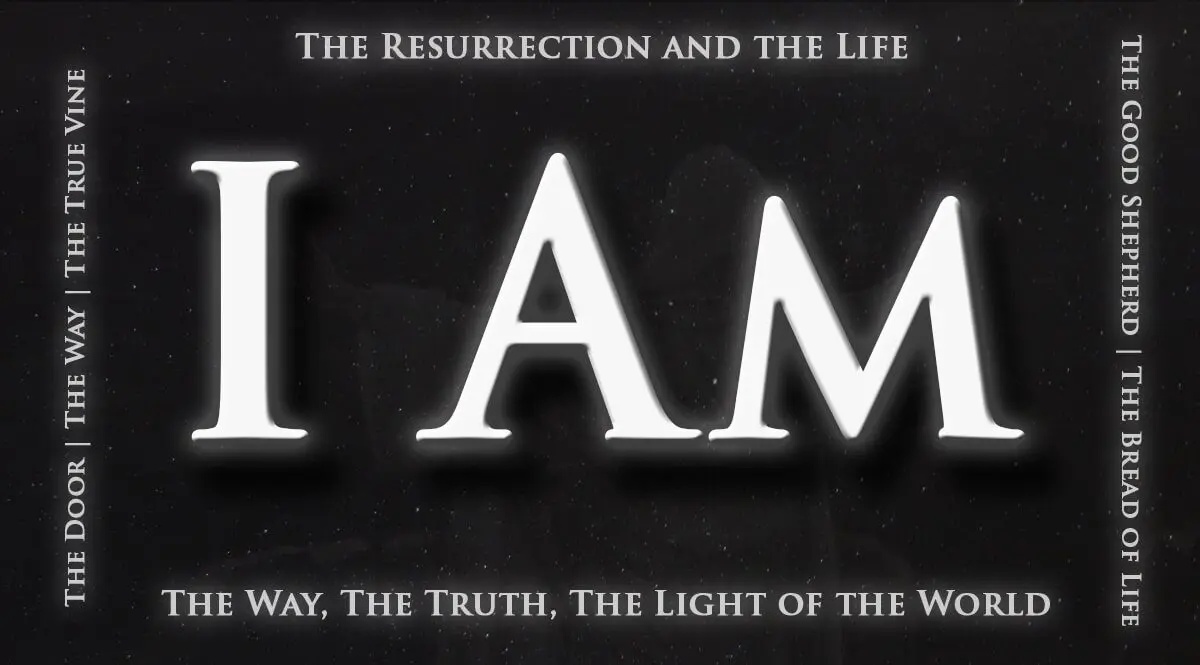

Jesus was a constant puzzle to the Pharisees. Sometimes he is a bit puzzling to us, too. And we have had a lot of time to digest what he was saying. And, let’s face it, some of the things he was saying were pretty far out. This is not just a good man we are listening to; not merely a great teacher.
He was standing in the environs of the Temple one day and he said to the people gathered around, I am the light of the world: he that follows me shall not walk in darkness, but shall have
SPEAKER 02 :
The CEM Network is pleased to present Ronald L. Dart and Born to Win.
SPEAKER 03 :
Jesus was a constant puzzle to the Pharisees. Sometimes he’s a bit puzzling to us, and we’ve had a lot of time to digest what Jesus was saying. And some of the things he was saying were pretty far out, let’s face it. This is not just a man, a good man that we’re listening to, not merely a great teacher. And the Pharisees were beginning to realize there’s something going on here. He was standing in the environs of the temple one day, and he said to the people gathered around, I am the light of the world. He that follows me will not walk in darkness, but shall have the light of life. That verse is in John 8, verse 12. Now, the Pharisees were standing there, and they realized this is a huge claim that Jesus is making, and they challenged it. They said, look, we’re not going to believe this just because you say so. You’re bearing record of yourself. You’re standing here saying, I am the light of the world. Who are you that we should believe that? I don’t think it’s an unreasonable question. If I were a prophet and I told you I was a prophet, you would have every right to say, that’s what you say. Why should I believe it? So Jesus answered the Pharisees and said, even if I testify on my own behalf, my testimony is valid for I know where I came from and I know where I’m going. You have no idea where I came from or where I’m going. You judge by human standards. I pass judgment on no one. Now I think what Jesus meant here is that he judges no one by human standards because he is going to judge. but he’s not judging by the kind of standards the Pharisees judge by. He then went on to say, But if I do judge, my decisions are right because I’m not alone. I stand with the Father who sent me. In your own law it is written that the testimony of two men is valid. I am one who testifies for myself. My other witness is the Father who sent me. Now Jesus is recognizing that in the law there are two required witnesses. And he says, I got two witnesses. But this stuck in the craw of his listeners because all of them had heard that Joseph was not really Jesus’ father. And who could be surprised that the Pharisees would have a problem with the idea of virgin birth? So they fired back at him, Where is your father? And it was a nasty comment for them to make, and Jesus knew where they were going with it. Where is your father? He said, You don’t know me, and you don’t know my father. If you had known me, ah, you would have known my father also. Now this is a severe statement, because if he was claiming that God was his father, which he was, then he was saying that the Pharisees around him had never known God. And yet, of all the people on the face of the earth, these were the people who held the scriptures in their hands that tell us about God. These were the people who seemed to know all about God. The Greeks had never heard of him. But I suppose there may be a difference between knowing about God and knowing God. Because Jesus looked at these men assembled before him and says, you don’t know God. John tells us that Jesus was teaching in the treasury area of the temple. He doesn’t tell us why that might be important, but he does note that in spite of what Jesus had just told them, no one tried to arrest him because, as John says, his hour was not yet come. Then Jesus said to them, I go my way, and you’ll look for me, and you’ll die in your sins, and where I’m going, you can’t come. And the Jews said, What’s he talking about? Is he going to kill himself because he says, Where I’m going, you can’t come? And Jesus continued, You are from beneath, from below. I am from above. You are of this world. I am not of this world. I said, therefore, unto you that you shall die in your sins. For if you believe not that I am, you shall die in your sins. Man, these are strong words. We as Christians, we read them so many times, we oftentimes just take them for granted. But Jesus says, you are from below, I am from above. That’s where I came from. You are of this world. I am not of this world. Oh, well, then Jesus was not merely a man born of a woman. He was more than that, and he was from somewhere else. He said, I say to you, you’re going to die in your sins because if you don’t believe that I am he. you’ll die in your sins. What Jesus said is, if you believe not that I am, and nearly every translation plays games with this, the King James Version, the New Revised Standard Version, the New American Standard Bible, all add the word he. And if you believe not that I am he, the word’s not in the Greek. The New International Version tries to make sense of it and says, if you do not believe that I am the one I claim to be, But that’s not what Jesus said. He said, if you don’t believe that I am, he just said, I am not of this world. I said, therefore, to you, you shall die in your sins. For if you believe not that I am, you shall die in your sins. And they said then, well, who are you? It’s an interesting question because they’ve been talking to him as though he were just a man born of Joseph and so forth. Now, he’s making a claim that he’s something entirely different. And they said, okay, well, then who are you? And Jesus said, I am what I told you was from the beginning. I have many things to say and to judge of you, but he that sent me is true, and I speak to the world those things that I have heard of him. Oh, somebody sent him. The Father sent him. And he heard the things that he is telling us from the Father. And then John, in verse 27, gives us this parenthetically. He says, They didn’t understand that he spoke to them of the Father. And by that, he means God the Father. Then Jesus said, When you have lifted up the Son of Man, then shall you know that I am and that I do nothing of myself. But as my Father has taught me, I speak these things. And he that sent me is with me. The Father has not left me alone because I always do the things that please him. As he spoke these words, John said, Quite a few people standing around believed on him. And then said Jesus to those Jews who believed on him, If you continue in my word, then you are my disciples indeed, and you shall know the truth, and the truth will set you free. Then they, probably not the ones who believed on him, although it’s hard to tell from the context, the people standing there said, We’re Abraham’s seed. We were never in bondage to any man. How can you say we’re going to be made free? Well, this is incredible. These people are under the Roman heel. Their country is occupied by Romans. They are dominated by Romans. What do you mean we never have been slaves to any man? Jesus answered, I’m going to tell you the truth. Whoever commits sin is the slave of sin. I’m here to set you free from that. The servant does not abide in a house forever, but the son does. If the son therefore shall make you free, you shall be free indeed. I know that you are Abraham’s seed. They had just said, no, no, we’re Abraham’s seed. He said, I know that. But you are trying to kill me because my word has no place in you. I speak what I have seen with my father and you, you’re going to do that which you have seen with your father. They answered and said, well, no, Abraham is our father. And Jesus said, no, if you were Abraham’s children, you would do the works of Abraham. But now you’re trying to kill me, a man who has told you the truth, which I have heard from God. Abraham didn’t do that. That’s irrefutable because they knew and he knew that they’ve been going about trying to figure out a way to get rid of him. I mean, permanently permanently. to kill him. And he said, Abraham wouldn’t have been doing that. You’re doing the deeds of your father. And that stung because then they replied, well, we’re not born of fornication. We have one father, even God. That was a deliberate slur. They were trying to suggest that Jesus was born of fornication, that his mother had slept around, gotten pregnant, and Joseph had married her just to keep her out of trouble. Jesus said, If God were your Father, you’d love me. Because I proceeded forth and came from God, neither came I of myself, but he sent me. Why don’t you understand my speech? How is it that I can stand here in front of you and tell you all these things, and you don’t get it? The answer? Because you can’t. You just can’t. You are of your father the devil, and the lust of your father you will do. He was a murderer from the beginning, and abode not in the truth, because there is no truth in him. When he speaks a lie, he speaks of his own, for he is a liar and the father of it. Now, these are pretty scalding words that Jesus is pouring out on these people standing by, because he is identifying them as sons of the devil. And he said, because I tell you the truth, you don’t believe me. Now, which of you people standing here can convict me of sin? Now, if I’m telling the truth, why don’t you believe me? He that is of God hears God’s words. You hear them not because you’re just not of God. A complete rejection of the faith of those Jews who were standing in front of him. As I said, either he was who he said he was, either he was the Son of God, either he had the authority to say all this kind of stuff, or Jesus was a lunatic, or worse. The Jews thought he was a lunatic. They answered and said, Don’t we say well that you are a Samaritan and you have a demon? You know, I suppose the rumor was that the real father of Jesus was some unnamed Samaritan. They are not only calling him a bastard child, but the son of a Samaritan as well. And then add crazy to boot. And right here is where you have to deal with the reality of Christ. Either you believe who he is, who he says he is, or you join the Pharisees who condemned him as an insane, illegitimate son of a Samaritan. You just can’t get away with saying Jesus was a good man, a great teacher. His claims are too outrageous for that. You either have to believe him as he presents himself, or join the Pharisees. Stay with me. I’ll be right back and we’ll talk more about Jesus.
SPEAKER 02 :
Join us online at borntowin.net. That’s borntowin.net. Read essays by Ronald Dart. Listen to Born to Win radio programs every day, past weekend Bible studies, plus recent sermons, as well as sermons from the CEM Vault. Drop us an email and visit our online store for CDs, DVDs, literature, and books. That’s borntowin.net.
SPEAKER 03 :
Be sure and check us out on the World Wide Web. There is no obligation. And we also want you to know that this program is paid for by contributions from our listening audience. Now, Jesus wasn’t through with the Pharisees. I mean, especially after that last shot they gave him. And he said, I don’t have a devil. All I’m doing is here. I’m honoring my father and you’re dishonoring me. You’re just insulting me. I seek not my own glory. There is one that seeks and judges. Verily I say unto you, If a man keep my saying, he shall never see death. Once again, this is an outrageous statement if he isn’t who he says he is. If all Jesus was was an itinerant preacher who came down out of the hills of Galilee, how could he say, If a man keeps my saying, he will never see death? And the Jews said to him, Now we know you have a devil. Abraham is dead, and the prophets, and you say, If a man keep my saying, he shall never taste of death. We got you now. Are you greater than Abraham, who is dead, and the prophets, who are dead? Who do you make yourself out to be? You see, that is the question, isn’t it? Jesus answered, If I honor myself, my honor is nothing. The truth is, it’s the Father who honors me, of whom you say that he is your God. That’s what you say. I’m going around here healing sick people in the name of the Father. You say he is your God. But you don’t know him. I know him. If I should say I don’t know him, I’d be a liar like you. But I know him, and I keep his saying. Your father Abraham rejoiced to see my day, and he saw it and was glad. This is outrageous. If you believe that Jesus was just a man, just an itinerant preacher who walked down out of the hills of Galilee. And the Jews would have been totally justified in their attitude toward him in that case. Because he just called them a liar to their face. He said he knew God and they didn’t. This is strong stuff. Was it true? The Jews said, You are not yet fifty years old, and have you seen Abraham? Jesus said, I’ll tell you the truth. I’m going to tell you. Before Abraham was, I am. They grabbed stones to throw at him, and he hid himself and went out to the middle of them and passed by. The Pharisees understood all too well what Jesus was saying here. That’s why they took up stones to kill him. It wasn’t just because he called them liars. He did that more than once. They were liars and they knew they were. It was that repeated, I am, that they couldn’t bear. Just as before he had said, I am, I am. Now he says, before Abraham was, I am. Do you know why that is such a hot button with the Jews who were listening to Jesus? Why that caused them to bend over and start picking up stones to throw at him? Well, there’s a short passage back in the third chapter of Exodus, Exodus 3, verse 13, that you perhaps have missed. Moses said to God, They’re standing out there by the burning bush, and God’s talking to them. He says to God, when I come to the children of Israel and I say unto them, the God of your fathers has sent me unto you, and they say to me, what is his name? What shall I say to them? Ah, well, so now God is going to tell Moses what his name is. And God said to Moses, I am that I am. You shall say to the children of Israel, I am has sent me unto you. God’s name is the first person singular of the verb to be. It finds many ways of expressing itself in different languages. It simply means that God is eternal. He exists. He didn’t come into existence. He isn’t going out of existence. He simply is. And that’s why his name is I am. It’s translatable in any language on the face of the planet as the first person singular of the verb to be. So tell them. Jesus stood in front of these guys and claimed to have existed before Abraham. But even more than that, he called himself I Am. And it was rightly understood by the Jews as a claim to eternal existence, which meant, in turn, a claim to be God. So they took up stones to kill him. Now, you’re beginning to see what I’m driving at here when I say that if all Jesus was was a good man, all he was was a nice guy who came wandering down out of the hills of Galilee preaching, you know, from the Bible to people and claiming maybe even to be the Messiah. You know, you can’t just take it that far because Jesus went way beyond that in his claims. And either he was what he said he was or he was a lunatic or a liar or worse. Chapter 9 of John, Jesus, having left the temple, saw a man who had been blind since the day he was born. And his disciples that were walking by said, Master, who did sin, this man or his parents, that he was born blind? You know, they couldn’t get through their heads, I guess, exactly, that time and chance happens to all men. Genes break, things happen. It isn’t necessarily a sin that someone has done that results in someone being sick. But it was common belief that sickness and disease was because of sin, particular sin, willful sin, or known sin that somebody could point at. And Jesus said it isn’t that he has sinned or his parents, but that the works of God should be made manifest in him. I have to work the works of him that sent me while I can, while it’s day, because the night comes when no man can work. As long as I am in the world, I am the light of the world. When he told them this, he knelt down, spit on the ground, and he made some clay out of the spittle and the dirt that was there, and he anointed the eyes of the blind man with the clay, covered him up with clay. He said, now, go down to the pool of Siloam. I guess he had somebody to help him find the way. He was blind, you know. He went his way and washed, and he came seeing. You know, it’s almost impossible to get your mind around what this means, because you have to understand, we not only see with our eyes, we see with our brain. You have to learn how to see, and you have to learn the significance of what your brain is seeing. All that was taken care of. And this man came up from the pool of Siloam having washed, seeing for the first time in his life. He had never seen the face of his mother. He’d never seen a tree. He’d heard birds chirping and never laid his eyes on a bird. And there he was, seeing. Now, why did Jesus make clay and put it on this man’s eyes? If you’ve been reading about Jesus, we know he could have just touched him. He could have just spoken the word. He could have just said, be healed and see, and they would have seen. Sure, he could have done it exactly that way. But Jesus had a very specific reason for this. When I come back after this short break, I’ll tell you what that reason is.
SPEAKER 02 :
If you would like to share this program with friends and others, write or call this week only and request your free copy of The Gospel of John, number 6. Write to Born to Win, PO Box 560, White House, Texas 75791. Or call toll free 1-888-BIBLE44. And please tell us the call letters of this radio station.
SPEAKER 03 :
Jesus, having made this clay, having put it on the man’s eyes, sent him on his way to wash and wash, and he came back seeing. Why the clay? What’s the purpose of that? Well, the neighbors, therefore, they which had seen the man and known he was blind, said, Wait a minute. Isn’t this the guy that sat there and begged? Some said, Well, yeah, that’s him. Others said, Well, it looks like him, but it can’t be him. He said, No, no, I’m the man. And they said, Well, how were your eyes opened? He said, Well, a man that is called Jesus made clay and anointed my eyes and said to me, go to the pool of Siloam and wash. And I went, and I washed, and I received sight. And he said, well, where is he? He says, I don’t know. At this moment in time, this poor fellow, I mean, this lucky fellow, who had been blind for all this period of time, had not even laid eyes on Jesus and did not even know what he looked like because Jesus put the salve on there and sent him away to wash. And by the time he washed and saw, Jesus wasn’t there for him to even look at him. And he says, I don’t know where he is. So they took this guy and dragged him down to the Pharisees, the one that had been blind before. And it was the Sabbath day when Jesus made the clay and opened his eyes. Now, mind you, all Jesus did was kneel down, spit on the ground, make a little clay, and then just put it on a man’s eyes and tell him, go wash. That’s all he did. Nothing heavy work at all. And so the Pharisees again asked him how he had received his sight. And he said, he put clay on my eyes, and I washed, and I see. Therefore said some of the Pharisees, this man is not of God because he keeps not the Sabbath day. And others said, well, how can a man that is a sinner do such miracles? And there was a division among them. Well, mind you, the simple Sabbath law of the Old Testament would not prohibit something so simple as making a little bit of clay and putting it on a man’s eyes. The Sabbath law didn’t prohibit healing. In fact, the Pharisees didn’t even like it when Jesus said to some poor guy who had a withered hand, stretch out your hand on the Sabbath day and heal it. They said you shouldn’t do that on the Sabbath day. Now you tell me, why on earth? That would be breaking the Old Testament Sabbath law. Go back and read the Scriptures and see if you can find anything. I don’t find anything there. The Pharisees’ rules prohibit it. But Jesus was deliberately flaunting the Pharisees’ rules. He did it on purpose. He could have healed the man. He could have done it any other ways he wanted to do it. In one case, as I said, he walked into a synagogue. There’s a man with a withered arm. It’s on a Sabbath day. All he said was, stretch out your arm. And the arm was healed and became just like the other one. And they wanted to kill him for that. Well, they said to the blind man again, well, what do you say about him that has opened your eyes? He said, well, he’s a prophet. But the Jews wouldn’t believe that he had even been blind and received his sight. So they went and called his parents, and God dragged them in. And they said to them, is this your son whom you say was born blind? How then does he now see? Now, these guys seem awfully snotty about this, but the fact of the matter is you’d have a little problem with it, too. You would really want to know, well, wait a minute. Is this just a story? Are you sure this is the guy that was born blind? And is this really your son? And they said, yep, that’s our son. We know that. We know he was born blind. But by what means he now sees, we don’t know. We don’t know who opened his eyes. He is of age. Ask him. He will speak for himself. Now, the parents said this because they feared the Jews, for the Jews had agreed already that if any man confessed that Jesus was the Messiah, he should be put out of the synagogue. So his parents said, he is of age, ask him. Well, Pharisees called him back in again and says, Give God the praise. We know that this man is a sinner. He answered and said, Well, whether he be a sinner or not, I don’t know. One thing I know, that whereas I was blind, now I see. That’s hard to deal with, you know. You’re a religious judge in a religious court. You drag this poor fellow in, and you’re going through all this rigmarole. And they said to him again, well, what did he do to you? How did he actually open your eyes? And he said, I’ve told you already, and you didn’t hear. Why do you want to hear it again? Is it because you want to be his disciples? I think he must have been just a little sarcastic at this point. Then they reviled him and said, You are his disciple. We are Moses’ disciple. We know that God spoke unto Moses. As for this fellow, we don’t know from whence he is. And the man answered and said, Why, here is a really marvelous thing. You don’t know where he comes from, and yet he has opened my eyes. Now we know that God doesn’t hear sinners looking around at the men who are standing in front of him. But if any man be a worshiper of God and does his will, him he hears. Since the world began, it was never heard that any man opened the eyes of one that was born blind. If this man were not of God, he could do nothing. And the Pharisees were so furious. They said to him, you were altogether born in sin, and you’re going to teach us. And they cast him out of the synagogue. Disfellowshipped him, excommunicated himself. Nobody could have anything to do with him anymore. When Jesus heard that, he went and found him. He says, do you believe on the Son of God? He answered and said, Who is he, Lord, that I might believe on him? And Jesus said, You have seen him. It’s he that talks to you. He said, Lord, I believe. And he worshipped him. And, well, he might.
SPEAKER 02 :
Until next time, I’m Ronald Dart. The Born to Win radio program with Ronald L. Dart is sponsored by Christian Educational Ministries and made possible by donations from listeners like you. If you can help, please send your donation to Born to Win, Post Office Box 560, White House, Texas 75791. You may call us at…
SPEAKER 01 :
1-888-BIBLE44 and visit us online at borntowin.net Christian Educational Ministries is happy to announce a new full-color Born to Win monthly newsletter with articles and free offers from Ronald L. Dart. Call us today at 1-888-BIBLE44 to sign up or visit us at borntowin.net