
I must confess, I was a little puzzled at the reaction of the Jewish community to the movie The Passion of the Christ. But when I reflected on some of the persecution of Jews by Christians down through the centuries, it did make a little bit of sense. You would think, though, that in the modern world we would be past all that.
What the director of that film was doing is portraying as honestly as possible the last twelve hours of Jesus’ life as a man. What some call his passion. But because Jesus was being condemned by the
SPEAKER 02 :
The CEM Network is pleased to present Ronald L. Dart and Born to Win.
SPEAKER 03 :
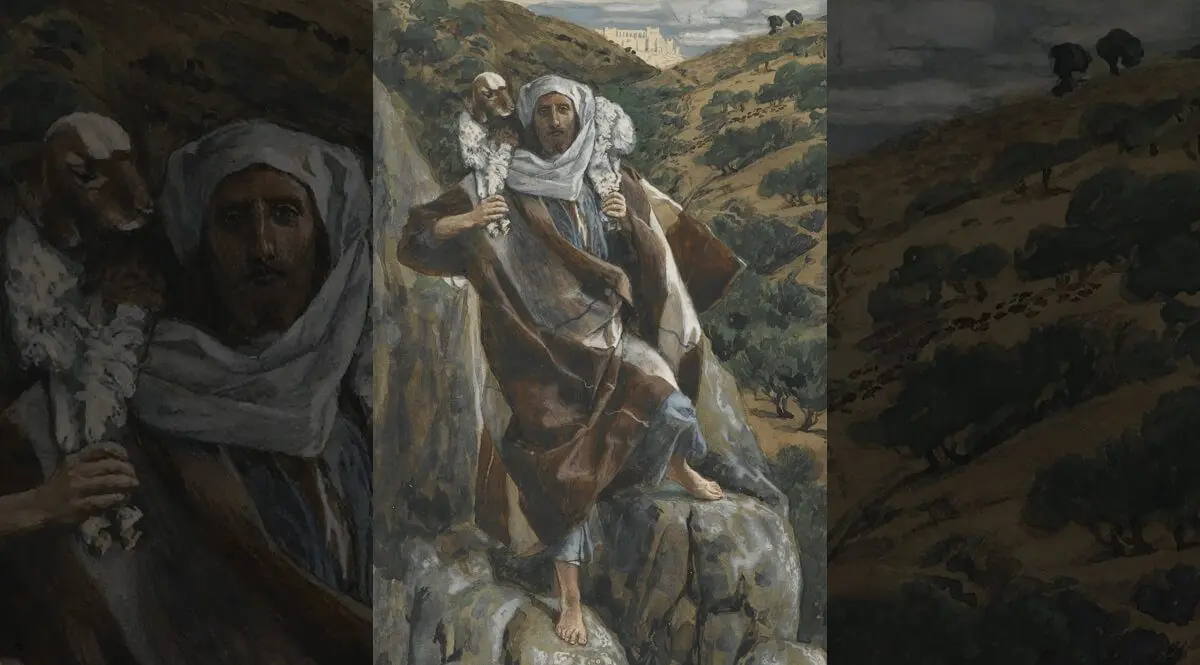
I must confess, I was a little puzzled at the reaction of the Jewish community to the movie about the passion of Jesus. But when I reflected on some of the persecution of Jews by Christians down through the centuries, well, it did make a little bit of sense. You would think, though, that in the modern world we would be past all of that. What Mel Gibson is doing in his movie is portraying as honestly as possible, at least that’s what he says, the last 12 hours of Jesus’ life as a man, what some would call his passion. But because Jesus was being condemned by the Jewish leadership, Some people, some fools, have blamed all Jews for what happened. And I guess I can understand why some Jewish leaders would be worried that people would bring this all up again and begin to blame all Jews down through time for what a handful of people who happened to be Jews did in the first century. It’s an ignorant and foolish mistake, but people make it. I suppose most readers of the Bible forget that Jesus’ mother was a Jewish maiden, that Joseph, Mary’s husband, was a Jew. They forget that Jesus’ apostles, Peter, James, John, all the rest of them, were Jews. They forget that Nicodemus, who was a Jewish leader, became a disciple of Jesus. They forget Joseph of Arimathea, who gave his tomb to Jesus, was a Jew. And they forget that a great multitude of Jews, if you took a Zogby poll, would have given Jesus favorable ratings. So what went wrong? Well, what went wrong was that Jesus was challenging the Jewish religious establishment, from the Pharisaic rabbis to the Sadducean priests. But there was nothing new in this. Every single prophet in the Old Testament was an Israelite who spoke to Israelites. Isaiah, Jeremiah, and Ezekiel were all Jews, at least in the broad sense, and they spoke to Jews. In every single case, they were condemning the Jewish religious establishment along with most of the people. Jesus was merely the last in a long string of people who had done that. And every time it happened, someone got in trouble. Isaiah was killed. They say he was cut sawn in two. Jeremiah was dumped in a dungeon and left to die. And we don’t know exactly what happened in the end of Ezekiel’s life. But the people that heard what they had to say didn’t like it one little bit. Jesus one day said this, “‘Woe unto you, scribes, Pharisees, hypocrites, because you build the tombs of the prophets and garnish the sepulchres of the righteous. And you say, if we had been in the days of our fathers, we wouldn’t have been partakers with them in the blood of the prophets.'” Now, what he’s talking to here are the Pharisees and the scribes, the Jewish sages, the ones who interpreted the law for the people, the leaders of the religious elements and sects of the Jews. And they said, well, if we had been in the days of our fathers, we would not have been partakers with them in the blood of the prophets. And therefore, Jesus said, you’re a witness of yourself, that you are the children of the people who killed the prophets. You acknowledge that. You know that. You accept that. Fill you up then to the measure of your fathers, you serpents, you generation of vipers. How can you escape the damnation of hell? Now, it’s not real hard to figure, is it, exactly why these people were somewhat upset with Jesus? He called them snakes in the grasp of their face. And he asked, how can you escape the damnation of hell? I’ll tell you what I’m going to do. He said, I’m going to send to you prophets and wise men and scribes. Some of them you shall kill and crucify. Some of them you’ll whip in your synagogues and you’ll persecute them from city to city. Why are we going to do all this? So that upon you may come all the righteous blood that has been shed upon the earth, from the blood of righteous Abel to the blood of Zacharias, whom you slew between the temple and the altar. I’ll tell you the truth. All these things are going to come on this generation. And, of course, they did. They did in the person of Jesus himself, the person of the apostles who went about doing the work, some of whom got killed, many of whom were persecuted. And so it went. And then Jesus said, O Jerusalem, Jerusalem, you that kill the prophets and stone them that are sent to you, How often would I have gathered your children together like a hen gathers her chickens under her wings and you wouldn’t have it. Behold, your house is left to you desolate. So we’ve got the picture here of what is going on. Jesus is challenging, as every prophet before him had done, the leadership of the Jewish people who were supposed to be God’s people and who had a task, God-given task, to carry out, a task which they, in Jesus’ eyes, had not done. And this is painful for Jewish people to contemplate. Naturally so. The first of those, I said, that Jesus would send to these people was himself. From the Sermon on the Mount forward, Jesus challenged the traditions of the Jews who, according to Jesus, taught for doctrines the commandments of men and overruled, ignored the commandments of God. He challenged their silly rules about the Sabbath by deliberately healing on the Sabbath day. In some cases, he deliberately spit on the ground. In one case, he deliberately spit on the ground and made clay to put on the eyes of a man who had been born blind. Now, you would think that a man who was able to heal a man who had been born blind, so he could see now, might have something useful to say about the Sabbath day, something that you might want to listen to. But the religious leaders, they took the man who could now see and threw him out of the synagogue and condemned Jesus for healing him. And Jesus said, John 9, 39, For judgment I come into the world, so that they who see not might see, and that they who see might be made blind. And some of the Pharisees who were with him heard him say that and said, Well, are we blind also? And Jesus said to them, If you were blind, you would have no sin. But now you say we see, therefore your sin remains. What Jesus is telling the religious leaders who were on his case, what he’s telling them is, You have no excuse. What follows in chapter 10 is often looked at in isolation, but it should be considered in the light of what has just come before, the conflict with the Jewish religious establishment about taking care of God’s people, God’s sheep. They were the shepherds of God’s people. And so Jesus goes forward with an analogy about a good shepherd. He said, John 10, verse 1, I’ll tell you the truth. He that enters not by the door into the sheepfold, but climbs up some other way, the same is a thief and a robber. But he that enters in by the door, that’s the shepherd of the sheep. To him the porter opens, and the sheep hear his voice, and he calls his own sheep by name and leads them out. Now the picture being developed here only makes sense if you really begin to understand. If you go to understand… that the existing shepherds of the sheep until the time that Jesus came were the Pharisees, the scribes, the sages, the people who were leading the Jewish people spiritually. They were their shepherds. And Jesus said, I am the good shepherd. He said, this one, he puts his own sheep out to pasture. He goes in front of them, and the sheep follow him, for they know his voice. A stranger, they won’t follow a stranger. They’ll run away from him. They don’t know the voice of strangers. Now, that’s the parable. And then John tells us this parable spoke Jesus to them, but they didn’t understand what he was saying. And that’s not surprising, because I think most modern readers, as they just read simply through this account, don’t quite get what Jesus is saying. And Jesus said to them again, I’ll tell you the truth. I am the door of the sheep. All that ever came before me are thieves and robbers, but the sheep did not hear them. He has just basically said to his disciples, these men who are generally recognized around this countryside as the shepherds of Israel, these men, the rabbis, the Sadducees, the Pharisees, the leaders of the religious sects, these who came before me are not good shepherds. They are thieves. They are robbers. I am the door, Jesus said. If anybody’s going to come in, he will be saved and shall go in and out and find pasture. The thief comes not but to steal and to kill and to destroy. I am come that they might have life and that they might have it more abundantly. I am the good shepherd. The good shepherd gives his life for the sheep. Think about that. The good shepherd is the one who fights for the sheep, who defends the sheep, who will go out and try to challenge a lion if he needs to, or a wolf, or anything that’s going to tackle and take away his sheep. It’s also interesting that Jesus draws through this analogy, the fact that his sheep know his voice and won’t follow a stranger. That there are people in this world who are his sheep, and they know his voice, and when they finally do hear his voice, not necessarily the timbre of it, but the message of it, they know it, they hear it, and they follow it. I’m the good shepherd. The good shepherd gives his life for the sheep, but he that is a hireling and not the shepherd, whose own the sheep are not, sees the wolf coming, leaves the sheep and runs, and the wolf catches them and scatters the sheep. The hireling flees because he is a hireling and cares not for the sheep. You know, the most important thing perhaps in all this section here is becoming aware of the fact that there are pretended shepherds who are nothing but hirelings, who don’t care for the sheep, who will not lay down their life for them, and who will run when they are challenged. And you see, in many ways, this is the problem that Jesus faced with not Jews as a whole, but with a narrow slice of Jewish religious leadership that was in power at the time when he came on the scene and who were leading the flock of God astray. I’m the good shepherd, he says. I know my sheep, and I am known of mine. As the Father knows me, even so I know the Father, and I lay down my life for the sheep. And then he says something truly astonishing. He says, Other sheep I have, by the way, who were not of this fold, I must bring them, and they will hear my voice, and there shall be one fold and one shepherd. What on earth did Jesus mean by that? Well, file that away in your memory, because we will probably be back to this theme later on. He did say, however, and he seems to be talking about the sheep he was gathering around him out of the Jews in Jerusalem and Galilee at this time. Then he says of this, his fold, he says, I’ve got other sheep who are not of this fold. I’ve got to bring them together, and there’s going to be one flock, one fold, one shepherd. Most commentators think he’s talking about the Gentiles, and indeed, I think he is. Therefore, in verse 17, he says, my father loves me because I lay down my life that I might take it again. Nobody can take it from me. I’m laying it down of myself. I have the power to lay it down. I have the power to take it again. I got this commandment from my father. And there was a division among the Jews about these sayings. And some of them said, he has a devil. He’s crazy. Why are you listening to him? And others said, these aren’t the words of him that has a devil. Can a devil open the eyes of the blind? Quite a question, isn’t it? Think about that, and I’ll be right back after this important message.
SPEAKER 02 :
Why wasn’t it enough for Jesus to die? Why the shame, the humiliation, the flogging? To understand this, you need to understand about sin. Write or call for a free program titled, Why Christ Had to Suffer. Write to Born to Win, Post Office Box 560, White House, Texas 75791. Or call toll free 1-888-BIBLE-44.
SPEAKER 03 :
That is free of charge, no obligation. It’s paid for just like this program by contributions from our listening audience. It was in Jerusalem in the Feast of Dedication. It was wintertime. And Jesus walked in the temple in Solomon’s porch. And there came some Jews round about him and said, How long are you going to make us doubt? If you are the Christ, tell us plainly. And Jesus answered them, I told you, and you don’t believe. The works that I do in my Father’s name, they bear witness of me. And I would think that for most people that would be enough. And I expect for Jesus’ sheep who recognized his voice, it was enough. He says, but you don’t believe because you are not of my sheep. As I said to you, my sheep hear my voice. I know them and they follow me. So obviously you aren’t one of them. I give to them, my sheep, eternal life. They shall never perish, neither shall any man pluck them out of my hand. My Father that gave them to me is greater than all, and no one is able to pluck them out of my Father’s hand. I and my Father are one. Well, what a statement. Now, on one hand, you could look at that and say, well, that just simply means that he’s on the same wavelength as his father or that he’s listening to his father and doing what his father says. And you can find all kinds of things that that might mean that wouldn’t be a problem. But the Jews knew precisely what Jesus meant when he said, I and the Father are one. He meant he was saying he was God. And the Jews took up stones again to stone him. And Jesus said, wait, I’ve done a lot of good works for my father. Which of these works are you stoning me for? And the Jews answered and said, we’re not stoning you for a good work, but for blasphemy and because you, being a man, make yourself God. So how did they understand what Jesus said? They understood it clearly enough, and I find it difficult to go off in any other direction. Jesus said his Father was God, and he said, I and the Father are one. And they said, it’s time to stone this guy. He’s claiming to be God when he is only a man. Jesus answered, isn’t it written in your law, I said, quote, you are God’s? Now, if he called them gods unto whom the word of God came, and the scripture cannot be broken, how is it you are going to say of him whom the Father has sanctified and sent into the world, you blasphemed because I said I am the Son of God? I mean, here it is in your own scriptures, and you can’t live with that? If I don’t do the works of my Father, don’t believe me. But if I do, if you can’t believe me, at least believe the works so you can know and believe that the Father is in me and I in him. So they sought again to take him, but he escaped out of their hand and went away again beyond Jordan to the place where John had first baptized, and he stayed over there. A lot of people came out to see him there, and they said, John never did a miracle, but all things that John spoke of this man were true, and many believed on him there. And they were all, as far as we know, to a man, to a woman, Jews. They believed on Jesus. So there’s no reason for us to think that because Mel Gibson’s movie, The Passion, shows that a segment of the Jewish religious leadership killed Jesus, that this is somehow anti-Semitic because the majority, or not the majority, but a very large number of Jews believed in Jesus, followed Jesus, and many of them thought he was a great man, even though they didn’t accept him as Messiah. John chapter 11. Now a certain man was sick named Lazarus of Bethany in the town of Mary and her sister Martha. It was this Mary that anointed the Lord with ointment and wiped his feet with her hair, whose brother Lazarus was sick. So his sisters sent to him, saying, Lord, behold, he whom you love is sick. When Jesus heard that, he said, This sickness is not unto death. It’s for the glory of God, that the Son of God might be glorified thereby. Now Jesus knew what was coming down. Bear this in mind. He knew it right from the start. He said the sickness was not unto death, even though he knew Lazarus was going to die. He said, but that’s not what it’s all about. Now Jesus loved Martha and her sister and Lazarus. And when he heard he was sick, he stayed two more days in the same place where he was. Now think about this. This is a man who would just say, be healed, and a person would be healed. It’s a person who could send word and somebody would be healed. In this case, a man whom he loved was sick, and he stayed around in the same place. And then later he said to his disciples, let’s go to Judea again. His disciples said, Master, the Jews of late sought to kill you, stone you there, and you’re going to go back? Jesus said, well, there are 12 hours in a day. If a man walks in a day, he can see what he’s doing. But if a man walks in the night, he’s going to stumble because there’s no light in him. These things said he, and after that he said to them, here’s the point. Our friend Lazarus sleeps, but I go that I may wake him out of sleep. His disciples still aren’t with it. We can feel sorry for them looking back with all of our hindsight. They said, Lord, if he’s sleeping, well, he must be getting better. Howbeit, Jesus spoke of his death, but they thought he spoke of taking rest in sleep. Then Jesus said to them plainly, No, Lazarus is dead, and I’m glad for your sakes that I was not there to the intent that you may believe. Nevertheless, let’s go to him. Then said Thomas, called Didymus, to his fellow disciples, Well, boys, we might as well go and die with him. When I come back, I’m going to tell you about something truly remarkable about what happened when Jesus came to where Lazarus was buried.
SPEAKER 02 :
Stay with me. I’ll be right back. If you would like to share this program with friends and others, write or call this week only and request your free copy of The Gospel of John, number 7. Write to Born to Win, P.O. Box 560, White House, Texas 75791. Or call toll free 1-888-BIBLE44. And please tell us the call letters of this radio station.
SPEAKER 03 :
When Jesus got back down to Bethany, he found that Lazarus was not only dead, that he had lain in the grave for four days already. Now Bethany was near Jerusalem, it was about 15 furlongs off, and many of the Jews came to Martha and Mary to comfort them. Then Martha, as soon as she heard that Jesus was coming, went out and met him. Mary stayed in the house. And Martha said to Jesus, Lord, if you had been here, my brother had not died yet. There was almost an implicit accusation involved in all of that, a reproach for Jesus. She said, but I know that even now, whatever you will ask of God, God will give it to you. And Jesus said, your brother shall rise again. And Martha said to him, I know he shall rise in the resurrection of the last day. Now, there’s a little question mark hanging over this conversation. Jesus said to her, I am the resurrection and the life. Whoever believes in me, though he were dead, he will live. And whoever lives and believes in me shall never die. Do you believe this? Man and a woman standing there talking very intently together. Her brother is in a tomb not far away, has been dead for four days, and Jesus is talking to her about where her heart is. She said to him, Yes, Lord, I believe that you are the Christ, the Son of God, which should come into the world. And she said that and went and called Mary, her sister, secretly, saying, The Master’s come. He wants to see you. As soon as Mary heard that, she got up quickly and came to him. Now Jesus was not in the town. He was in that place where Martha met him. So the Jews then that were with her in the house and comforted her, when they saw her get up and go out quickly, they followed her saying, oh, she’s going to the grave to weep there. We better go with her. When Mary came to where Jesus was and saw him, she fell down at his feet saying, Lord, if you had been here, my brother would not have died. And I really don’t have much in my mind. I have very little doubt that both of these sisters had a little bit of reproach in their heart for Jesus. They’re saying to him, you really should have been here. You know, we sent word to you. Why didn’t you come? He didn’t come for a reason. When Jesus saw her weeping, and the Jews also weeping that came with her, he groaned in the spirit and was troubled, and he said, Where have you laid him? And they said, We’ll come and see. Jesus wept. Then said the Jews, Behold how he loved him. You know, I’ve heard a lot of odd explanations of this. I have heard people who said, well, Jesus knew he was going to raise him from the dead. There’s no reason for him to cry about that. And he was just weeping because of the hardness and the unbelief and the callousness of these people’s heart. But that latter doesn’t seem to work for me because he had faced hard-hearted hearts from the very beginning. Why in the world would he now be surprised because people didn’t get it? I never really quite understood this until I was sitting at my mother’s bedside as she died. I knew she was dying. There was no question about that. And I thought in my heart of hearts that I was ready for her death. I was prepared for it. I was accepting of the fact that the time had come for her to go. Her body was shutting down, one organ at a time, and it was essentially over. And I sat by her bedside and watched the little line on the monitor become irregular and then finally go flat. And when it went flat, I wept like a child. It was just totally unexpected to me. I knew I would grieve at my mother’s death, but I did not expect my reaction. And I realized when that happened to me that there is something inside a human being that is affected by death, especially the death of one close to them. It is not something you can control. It’s not something that you can shut off the switch in your mind. Not if you’re normal. If you’re a normal human being, being in the presence of death of someone you love cuts very deep. And I believe that Jesus was human. He was a man. And when he came to the tomb, when he came to the sisters, and he felt with everyone that was there the death of Lazarus, he wept. even in the face of knowing he was going to raise him from the dead. And so, you know, there’s nothing wrong. There’s no tragedy in your, let’s say, weeping and grieving at the death of a loved one. There’s no lack of faith there. It’s not because you don’t expect the resurrection. It’s not because you don’t believe in the resurrection. It’s because of a sense of the loss of someone you loved, and there’s not a thing in the world you can do about it. You should weep. And some of them said, Could not this man that opened the eyes of the blind have caused that even this man should not have died? And Jesus came again, groaning in himself, comes to the grave. It was a cave, a stone lay across the front of it. And he said, Take away the stone. And Martha said, Oh, Lord, it’s been four days. The body will be stinking because he’s been dead this long. And Jesus said, Didn’t I say to you that if you would believe, you would see the glory of God? So they rolled back the stone, and Jesus, after a brief prayer, so they would know that it was God who did this, said, Lazarus, come forth. And after a moment, a man came staggering out of the cave, bound hand and foot with his head covered in his grave clothes.
SPEAKER 02 :
Lazarus was alive. The Born to Win radio program with Ronald L. Dart is sponsored by Christian Educational Ministries and made possible by donations from listeners like you. If you can help, please send your donation to Born to Win, Post Office Box 560, White House, Texas 75791. You may call us at 1-888-BIBLE44 and visit us online at borntowin.net.
SPEAKER 01 :
Christian Educational Ministries is happy to announce a new full-color Born to Win monthly newsletter with articles and free offers from Ronald L. Dart. Call us today at 1-888-BIBLE44 to sign up or visit us at borntowin.net.