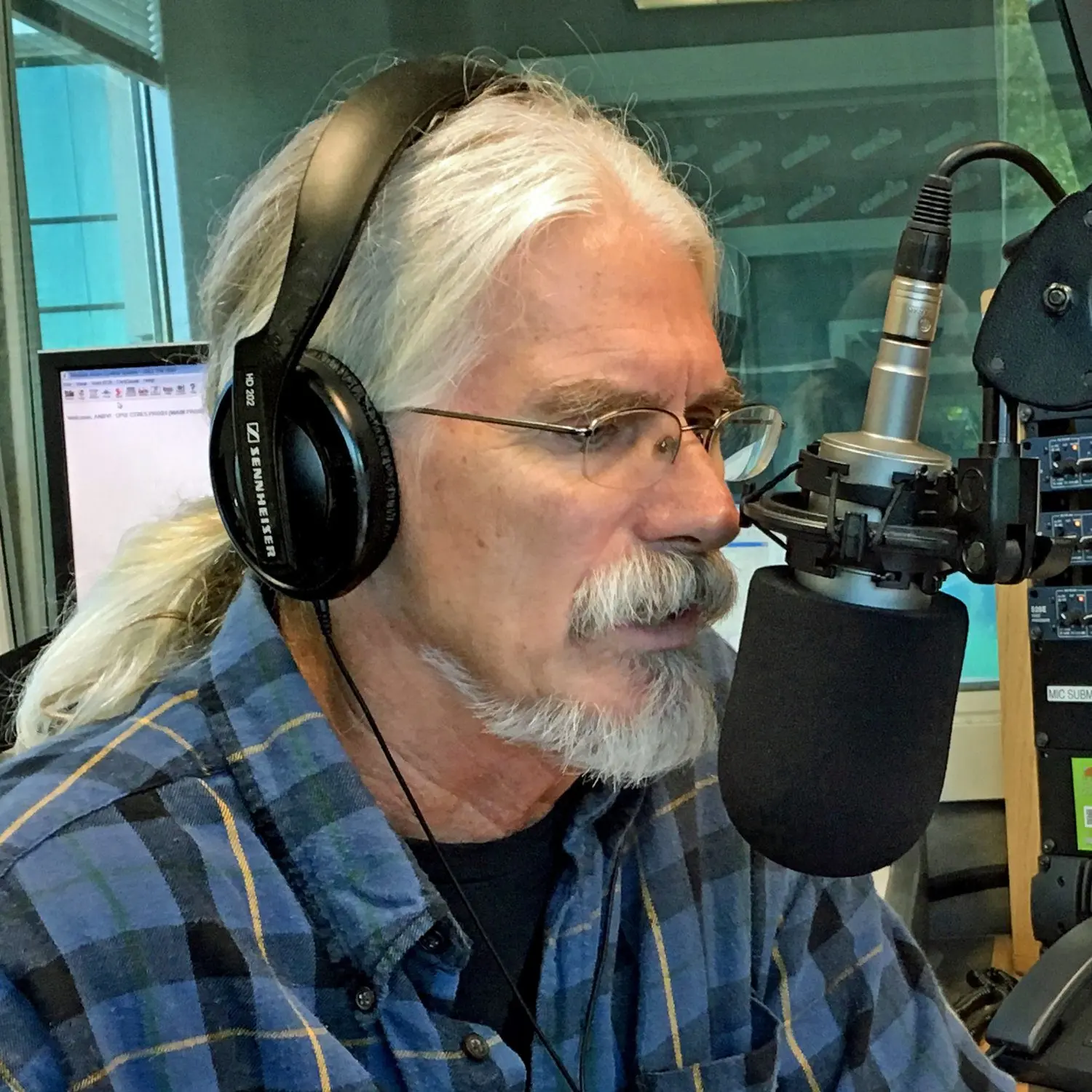

This episode of The Narrow Path features a wide-ranging call-in discussion tackling some of the most common—and complex—questions in the Christian faith.
Listeners call in to explore topics like the meaning of communion and baptism, whether these practices are symbolic or spiritual, and how different traditions interpret them. The conversation also dives into the baptism of the Holy Spirit, including how believers seek it and whether it’s separate from salvation.
Other callers raise deeper theological and real-world questions—why poverty exists if God loves people, how to reconcile suffering with faith, and whether doctrines like Calvinism accurately reflect free will and God’s
SPEAKER 1 :
Thank you.
SPEAKER 08 :
Good afternoon and welcome to the Narrow Path radio broadcast. My name is Steve Gregg and we’re live for an hour each weekday afternoon, taking your calls if you’d like to call in with your questions about the Bible or the Christian faith for us to discuss here on the air. Maybe your objections to something the host has said or disagreement about something like that, feel free to give me a call. Right now I’m looking at a switchboard with most of our lines open, a very good opportunity for you to call through and get on today’s program. The number to call is 844-484-5737. Once again, that number is 844-484-5737. Now, once in a while I have to say something about this. If you were listening yesterday, you know that there’s a number of people who call the program with a question, or maybe not. They’re not sure what their question is. And once in a while we have to take up a lot of time with my asking someone, is there a question in there somewhere? Because sometimes people call, they’ll mention several subjects, but they don’t mention any question they have about them. They will give a little sermonette. or a little teaching of their own, but they don’t have a question. Sometimes people just haven’t thought much about how to phrase their question. And most of the time our callers don’t have these problems, but yesterday there were quite a few calls where it was very hard to get a question out of the caller’s speech. And so I just want to remind you, you know, there’s lots of people waiting. If I have to take a long time saying, what is your question, what is your question, yes, but what is your question, which I have to do with some of these calls, we go very slowly and we don’t really get as many calls in as I’d like. So if you are a person whose question is a little, you’re not really sure what it is, think about it before you call. If you can’t state it very quickly off the top of your head, write it down and read it, and that way we can get to your question promptly. I realize I think some people just like to hear their voice on the air, frankly, and they like to chat. But this is largely a Q&A program, and we’ve usually got a lot of people waiting. And it’s a little frustrating if there’s people waiting in line and the person I’m talking to does not know how to ask a question, doesn’t even know what their question is. So please, just a little exhortation here. If you’re going to call the program, please know what your question is. If you’re not really sure that you can state it well or succinctly, write it down and then read it to us. That will save us time and it will give you more of an opportunity to think through what it is you’re trying to find out here. I shouldn’t have to say that because we’re on a program that’s on 80-some-odd stations around the country, listened to by hundreds of thousands of people, and spending a lot of time per minute buying the time from radio stations. So please be as succinct as you can. I’m not saying you can’t go on as long as you need to, but, you know, if you’re not sure what your question is when I put you on the air, then I may just want to move along to someone else. All right? Just a word to the wise there. Our number, again, is 844-484-5737. And our first caller is JD from Seattle, Washington. Hi, JD. Welcome to The Narrow Path.
SPEAKER 03 :
Hi. Thanks for taking my call. Yeah, I have a pretty straightforward question, I think, but I’ll give you a little bit of context. I’m just wondering kind of what your – your take on, like, the communion or Lord’s Supper and also, like, water baptism. I’ve heard you talk about it a lot, like, and I’m not wondering if it’s, like, required for salvation, but more wondering, like, if it is – if you think it’s purely a memorial and, like, a symbolic – both of those are, like, symbolic kind of rituals or if they’re something – more spiritual or metaphysical going on there? Because, like, I was raised in, like, a more, you know, small-town Baptist kind of fundamentalist background, and I never knew there was any other, you know, takes on the, you know, communion and baptism where there’s spiritual presence or anything like that. So, yeah, I’m just wondering kind of what your theology is, if there’s something more going on or if it’s just purely symbolic. I think one of the verses that kind of throws me is the one about Paul saying, like, you know, people not discerning the body and they get sick.
SPEAKER 08 :
1 Corinthians 11.
SPEAKER 03 :
That might be a bag. Yeah, yeah. So, yeah, I can, I think you get the gist of my question. So I’ll just let you answer. Thank you.
SPEAKER 08 :
All right. I appreciate your call. Communion and baptism. These are the only two rituals that most Protestant denominations recognize as somehow necessary for normative Christian worship and behavior. The Catholics, of course, have seven ceremonies of sorts that they recognize that are necessary. Protestants have trimmed it back to two, baptism and communion. Communion meaning taking the Lord’s Supper. Now, These are rituals. Everyone recognizes that. But many Christians believe that along with the ritual, there’s something mystical or spiritual taking place. There are some who believe that water baptism actually washes away sins, although sins are not physical things that can be washed away like dirt. It’s something spiritual that takes place when a person is dipped in water or sprinkled with water. This takes away sins. The Catholics believe, for example, that infant baptism removes original sin. And there are Protestants who believe that you’re not really forgiven of your sins until… you are water baptized. Even though you’ve repented and believed in Christ previously, it’s not until you’re water baptized that your sins are really washed away. Both of these, the Catholics and those Protestants who think such things, are seeing in the ritual something supernatural taking place, something spiritual is going on through the baptismal. And likewise, in communion, where Christians take the bread and the wine, in commemoration of Christ’s death, his body and his blood, respectively. The church has for a very long time attributed some kind of mystical qualities to this. Many Protestants do not, but many Protestants do. Lutherans, at least Luther, Luther and Calvin and the Reformers did see something going on spiritually. The Episcopalian Church, or Anglican, also sees something going on. Certainly the Catholic Church does, and the Eastern Orthodox Church does. They believe, or the Catholic Church believes, that the elements of bread and wine actually turn into the body and blood of Jesus in a mystical way. They realize that they don’t physically do so, because if you would analyze the bread or the wine in a laboratory before and after wine, you know, the words have been spoken over it that’s supposed to make the change, you’d see no change has taken place. But they say mystically something has happened there, and it does become the body and the blood of Christ. Some of the traditions say the real presence of Christ is in the bread and the wine, and that you’re actually, when you eat the bread and the wine, you’re actually eating Christ in some sense, in a mystical sense. Now, those are very I would say mainstream. Those are very majority positions in most Christian traditions. However, they’re not taught in Scripture. Scripture says nothing about a real presence of Christ in communion. It says nothing about some spiritual thing happening at the time that you’re made wet, like the removal of original sin or whatever. Now, What is said is that baptism is, of course, we have to understand in the early church, baptism was something that was done to a convert the moment or the same day that they were converted, which means that everybody who is a Christian in the first century, in the early days, was also baptized. They would believe in Christ. They’d repent of their sins. They’d be baptized in water. Hands would be laid upon them so they’d be filled with the Holy Spirit. All those things were part baptism. of the event of getting converted, which means that early Christians could speak among themselves of the day of their baptism was the day they were saved, or the day when they received the Spirit, or the day when they repented, or the day they believed. All these things happened in rapid succession on the day of their conversion, and they could refer to any one of them as sort of shorthand for the whole experience, so that Peter could say in 1 Peter 3, baptism now saves us, and by baptism he means the whole complex of events, that occurred when they were converted, which included baptism. But he’s not denying that repentance and faith and the Holy Spirit are somehow not part of that. So we understand that being baptized was simply part of the whole package of getting saved. But some have assumed that it’s the water and the baptism part of that whole experience that actually washes away the sins. The Bible does not, I think, encourage this belief, although there are some verses that are taken that way. it seems to me that the Bible does see the whole conversion experience as having a spiritual or mystical change that takes place in the believer. But it’s not the water itself that is said to do that. In fact, Peter, in 1 Peter 3.20, when he says it’s, you know, baptism now saves us, he said it’s not the putting away the filth of the body, but the answer of a good conscience toward God. In other words, the baptism that saves us is not simply washing the body with water. It’s something that takes place in the heart and in the conscience. Baptism is simply part of the whole procedure. It’s not the specific part that does the miracle of regeneration, in my opinion. Now, some people think it is, but I think they go beyond Scripture to say that. Likewise, when it comes to communion, and this has, I think, become even more imagined, I would even say superstitious in the minds of some, than even baptism has been, in that some believe that you are actually eating Jesus in a specific literal sense when you take communion. Now, where do they get that? Well, Jesus did say in John 6 that we need to eat his flesh and drink his blood. But he makes it very clear in the conversation that he’s talking about believing in him, not literally eating him. And if someone says, no, he’s referring to the Eucharist, he’s referring to taking communion. No, he’s not, because nobody was doing that. When Jesus spoke about eating his flesh and drinking his blood in John 6, nobody had ever taken communion. And yet he did speak of some people who were currently eating his flesh and drinking his blood. Use the present tense. Whoever is eating my flesh and drinking my blood has, present tense, eternal life. So he’s talking about people a whole year before the Last Supper. There was no Eucharist. There was no communion. There was no Last Supper. There was no communion meal that was being taken by anybody. And yet some of them were eating his flesh and drinking his blood and having eternal life. It’s all present tense there. So he was talking figuratively. Eating his flesh and drinking his blood was figuratively. He was talking about believing in him and receiving him into oneself. Okay, and some were doing that. But it wasn’t through taking a communion meal. Now, later at the Last Supper, Jesus said, this bread is my body, this cup is my blood. And some people say, well, that means it turns into it. No, he didn’t say this cup has turned into my blood. He didn’t say this bread has turned into my body. That’s not anything like what he said. He was following the normal Passover ritual where they normally would say this bread is the bread of affliction that our fathers ate in Egypt. That’s what would normally be said at the Passover meal. It’s the affliction of our fathers in Egypt. Not literally, of course. The bread that they baked that morning had nothing to do with their fathers in Egypt except by symbolism. They’re remembering it is a memorial of their fathers’ suffering in Egypt. It was not becoming that. And when Jesus simply changed the words that this bread is my body, which is broken for you. It’s my suffering, not our fathers’ suffering in Egypt. It’s my suffering. He didn’t mean that I’m really suffering in this bread. He’s saying, you’re commemorating my suffering. As you used to eat the same bread to commemorate the Exodus, now you’re going to commemorate me from now on. He says, from now on, whenever you do this, do it in remembrance of me. Now, the Passover meal and the communion meal were a remembrance. He didn’t say that anything magical or supernatural happened. He just said, do it to remember. It’s a memorial meal. And, of course, baptism is seen as a symbol of our death and burial with Christ, which takes place in a spiritual sense and is not accomplished by literal water, at least in my opinion. So while many Christians have a tendency to spiritualize or even mystify rituals, thankfully the Protestants don’t have very many of them to do that to, but even the ones they have, I don’t think we’re supposed to see them mystically. They are memorial meals. That’s what Jesus called it. Do this to remember me. And when Paul was writing about it later, in 1 Corinthians 11, he was reminding us of what Jesus said, and he said, he also gave it that meaning. He said, when we do this, we do it in remembrance of him. So it’s a memorial meal. Now, You wondered about 1 Corinthians 11, where Paul was talking about how the Corinthians were abusing this meal. And he said in verse 29, he who eats and drinks in an unworthy manner, eats and drinks judgment to himself, not discerning the Lord’s body. Now, some people think he’s saying the bread is the actual body of Christ, and if you don’t discern that, If you eat the bread without realizing that’s really the body of Christ, you’re eating judgment to yourself. So you better know it’s really the body of Christ. And he goes on to say, for this reason, many are sick among you and some are weak and have perished. That is, some have gotten sick and died because they didn’t recognize the bread was his body. Well, that’s not what he’s saying. You see, it’s very clear from 1 Corinthians 11 and from the writings of the early church that they took communion at a meal. It wasn’t a little ritual they did in their church service at the end of the meal, the service where they ate a wafer and drank a little thimble full of juice. It was a full meal. They sat at meal, and they ate a whole meal. And we know that this is so because Paul says that when they took the Lord’s Supper, they were abusing it so that some people were going away hungry and others were going away drunk. Now, what this means, of course, is they were at a table where everyone should have had food. No one should be hungry. Some were taking too much for themselves. And some were taking too much wine, so they’re getting drunk. This was at a meal. The early church referred to this as the agape feast or the agape. And this is how they took communion in biblical times. When Paul says they’re taking it in an unworthy manner and bringing condemnation on themselves and not discerning the Lord’s body, what he’s saying is they’re not discerning that these people that they’re depriving of food at the table so they can have more than their share, those are people that they’re the body of Christ. The church is the body of Christ. And if you treat your fellow brother like he’s not, then you’re sinning against Christ, his body. What you do to your brother and to Christ’s brother, you’re doing to him. Don’t you recognize this is the body of Christ? The body is the church. Now, I know that he’s not talking about the bread has got to be seen as the body of Christ because he doesn’t say the same thing about the wine. And he mentions that people were taking too much wine. They were definitely abusing the bread and the wine. And he didn’t say they’re not discerning the body and the blood of Christ, which you’d expect him to say if he’s talking about what they were eating at the table, that they’re not seeing it in the right mystical way. No, they are abusing the body of Christ, meaning the church, by taking food that should be shared evenly among them and causing some people instead to go home hungry. That’s the not recognizing their brothers as the body of Christ. And it’s because of that that they had suffered some judgment from God, he says, on the church. To say that he’s saying that there’s magical properties in the bread, and you have to recognize that it’s literally the body of Christ or else you’re going to get sick or die, well, this is simply misunderstanding the whole context, which is what, of course, traditionally churches did for hundreds of years. The idea of exegeting Scripture… by following the train of thought of a passage in order to understand what it’s talking about, is not an ancient practice. I think it was Calvin or Luther, it was in the Reformation that they first began to really practice what we call exegesis, where you actually try to figure out what the passage means by actually following the author’s train of thought. Instead, for many centuries, Christians just took a verse here and a verse there out of context and fit it into the paradigm of theology that they were already believing. And that’s what you find, of course, if you discuss with a Catholic the question of the Eucharist, that’s exactly what they’ll do. They’ll take a verse like this and say, see? It’s magically, it’s supernaturally the body of Christ. Paul doesn’t say anything about a supernatural body of Christ here. He’s not even talking about the bread as the body in this particular instance. He’s talking about the body is the church. And they do the same with all the other relevant passages. So, no, I don’t think there’s anything mystical or supernatural taking place. I believe it’s helpful to people to have routines that they do that remind them of things that are important and easy to forget. And so these baptism and the Lord’s Supper are given as God-ordained rituals to commemorate what Jesus did, just like Passover was given to the Jews to commemorate what happened in the Exodus. Or Feast of Tabernacles was given to remember their wandering in the wilderness and so forth. Sabbath was given so that they could remember that God had rested on the seventh day. There’s no magic in these special days. There’s no magic in the rituals. It’s just a memorial. And that’s true in the New Testament as well as in the Old. We have no indication in Scripture that either the communion or the baptism is doing something spiritual in itself. It’s, of course, your actions internally in your heart that have those effects, not what you do externally in rituals like that. I hope that’s helpful. That’s how I see it. Thank you. Our next caller is Elizabeth from Lebanon, Oregon. Elizabeth, welcome. Thanks for calling. Elizabeth, if you’re not there, I’ll have to take someone else.
SPEAKER 04 :
Oh, I’m sorry. My bad. Go ahead. My question has to do with baptism of the Holy Spirit and how, I guess, a Christian would go about achieving that, getting that from somebody. I think it’s different from when you first become a Christian, and I’m not sure, besides just laying on of hands, how that would work. Sadly, our church is cessationist, so I don’t think that anyone there would be willing to do that.
SPEAKER 08 :
Well, you’re right. A cessationist church is a church that believes the gifts of the Spirit are not for today, and almost always they also believe that the baptism of the Spirit is not separate from salvation. A cessationist church usually believes that all Christians, when they receive the Holy Spirit at conversion, are also baptized with the Holy Spirit. In fact, they assume being baptized with the Spirit simply is another way of talking about receiving the Holy Spirit. Now, the Bible clearly does talk about all Christians have received the Spirit, but does not indicate they have all been baptized with the Spirit or they’re not all filled with the Spirit. And, in fact, Christians in Ephesians 5.18 are told to be filled with the Spirit, to be continually filled with the Spirit. This is something that’s our obligation. It’s not something that just happens automatically when you become a convert. Now, how do you go about getting it? Well, you don’t have to get it from people. One thing that’s very clear is it’s Christ who baptizes with the Holy Spirit. Even John the Baptist couldn’t do that. He said, I baptize in water. But he who comes after me is the one who will baptize with the Holy Spirit. So this comes from Christ. On the day of Pentecost, when the Spirit was poured out on the church, Peter said, it’s this Jesus who you crucified has now exalted the right hand of God, and he has poured out this which you see in here. So again, it’s Christ is the one who baptizes with the Spirit. Now, some people believe that all Christians are baptized in the Spirit because they say the church got baptized in the Spirit at Pentecost, and all you have to do is become part of the church. and then you’re baptized in the Spirit. But that doesn’t seem to be true as you read through the book of Acts, as some people do become part of the church, do become Christians, are converted, and yet later, through the laying on of hands, receive the baptism of the Spirit. As near as I can tell from Paul’s practice in Acts 19, it was normal for him to evangelize a person. When they wanted to be saved, they’d repent and believe, then he’d baptize them in water, and then he’d lay hands on them to be filled with the Spirit. That seems to be the procedure in Acts 19, 1 through 7, and there’s no reason to believe that he did it differently any other times. Laying on of hands is a means, but it’s not necessary because the person laying hands on you is not baptizing you in the Spirit. Christ is. Again, laying on of hands is a ritual, like we were talking about. Baptism is a ritual. You can have someone lay hands on you without it having anything happen, or you can be baptized in the Spirit without laying on of hands. I generally would like to follow biblical methods for biblical things whenever I can. So I would follow the laying on of hands if I… And I did, by the way, when I was younger. Since I learned about this, I recognized that laying on of hands was a very normal procedure in the early church and generally was the means by which the baptism of the Spirit was ministered, but not always. In the household of Cornelius in Acts chapter 10, everyone was baptized in the Spirit and no one laid hands on them. So… Obviously, God can directly baptize you in the Spirit at your request with or without the laying on of hands. You’re right. If you go to a cessationist church, it’s not likely that they’ll lay hands on you for this because they don’t believe in that kind of stuff. You’re going to need to be probably around people who are charismatic or Pentecostal or something like that to get them to lay hands on you. But if you don’t have anyone like that around you, I believe you can get baptized in the Spirit just by seeking it from God himself. And while I’d always recommend, if it’s a possible option, to be laid hands upon for this by somebody who believes in it and has it, but if that’s not available, there’s nothing in the world that could keep God from baptizing you in the Spirit if you’re asking for it. Jesus said, if earthly fathers know how to give So, it’s not the person laying on of hands. It’s the Father giving His Holy Spirit to those who ask Him. So, if you have opportunity for someone to lay hands on you, then… then by all means, I would say go for it. But don’t feel that if, you know, in the absence of such a person, that somehow you’re doomed to never really get filled with the Spirit. I would just say, get alone with God, pray, surrender your heart to Him completely, and ask Him to fill you completely with His Spirit, and then wait on God, and then trust Him. Trust that He keeps His promise. When I was baptized in the Spirit, someone did lay hands on me, but I didn’t feel anything. And I didn’t sense that I was baptized in the Spirit. And so I just took it by faith. I just said, well, Jesus said the Father will give the Spirit to those who ask him. So I just, God doesn’t lie, so I accept that. I accept that he has done that. And it really worked for me. I mean, I have been baptized with the Spirit since then. So, laid on of hands or not, it’s the Father, it’s Christ, who gives the Holy Spirit. And so you do business with him directly, and nothing can prevent him from baptizing you in the Spirit. I’ve got to take a break. I hope that’s helpful. You’re listening to The Narrow Path. Our website is thenarrowpath.com. We’re taking a break for about 30 seconds. We have another half hour to go, so don’t go away.
SPEAKER 01 :
If you enjoy the Narrow Path radio program, you’d really like the resources at our website, thenarrowpath.com, where hundreds of biblical lectures and messages by our host, Steve Gregg, can be accessed without charge and listened to at your convenience. If you have not done so, visit the website, thenarrowpath.com, and discover all that is available for your learning pleasure.
SPEAKER 08 :
Welcome back to the Narrow Path radio broadcast. My name is Steve Gregg and we’re live for another half hour taking your calls. If you’d like to call in with your question for the Bible, the number to call is 844-484-5737. That’s 844-484-5737. Our last caller was asking about the baptism of the Spirit, and I didn’t have much time before the break, only about five or six minutes, I think, to answer that call. Let me just say, anyone who’s curious about the baptism of the Spirit and wants a much more complete discussion of that, teaching on it from the Bible, I have some lectures at our website, thenarrowpath.com. As you may know, we have about 1,500 lectures there on just about everything. But at thenarrowpath.com, under the tab that says Topical Lectures, there is a series called Charisma and Character. Now, charisma refers to the gifts of the Spirit. Character refers to the fruit of the Spirit. And this is a rather long series about the gifts and the fruit of the Spirit. And at the very beginning… the first lecture or two, discusses the baptism of the Spirit in much more length than I’ve been able to give it here. So if you’re curious about that, you can go to thenarrowpath.com, click on the tab that says Topical Lectures, and then find the series called Charisma and Character. And there you’ll find more than I would have time to discuss here on the air about it. Thank you for that call, by the way. Dre in Gainesville, Florida. Welcome to The Narrow Path. Thanks for calling.
SPEAKER 02 :
Hey, man. Thanks for taking my call. Sure. I was wondering how would… So I’ve been on mission trips here in America and third world countries where there’s severe poverty and people are in bad condition and sickness is going on. How would I explain to a person that I’m trying to bring to Christ that God loves them, and then they look over to their neighbor and they say, well, my neighbor’s a Christian and they’re going through what I’m going through as well, just as worse. How would I explain that to them and also continue to try to bring them to Christ?
SPEAKER 08 :
All right. Well, maybe the first thing I would bring up is that God loves the poor, which is why he’s told his people to feed the poor. In other words, the way that poor people can be helped is by people helping them. And Christians are commanded to help them. So this is very much God’s concern. Now, of course, God could make bread fall from the sky like he did for Israel during the wilderness wandering, but that’s not how he set the universe up. God does miracles from time to time when it’s necessary, when he has a special reason. But in general, he wants us to operate within the world as he created it. Food is produced by labor and consumed. Now, some people can’t make as much money or get as much food, depending on the part of the world they’re in. And therefore, there are people who… who make a lot more money and have a lot more food. And Jesus says, and so do the other New Testament writers, that it’s for us to help them. In the first epistle of John, chapter 2, it says if any of you have this world’s goods, and you don’t help your brother, how does the love of God dwell in you? If your brother has need, you don’t help him. He basically says that Love is doing for others what you want done for you. So if people are poor, then people who are not poor and who love them, which should be Christians and others, non-Christians may love them too, well, they should share. They should help them. You know, there’s a principle Paul states. This has to do with distribution of resources among Christians. But in 2 Corinthians, I think it’s chapter 8 or 9, Paul says, that it’s like in the case where God gave manna to the children of Israel, although that bread did fall from heaven because they were wandering around. They didn’t have the opportunity to farm. God just provided from heaven while they were wandering around. But it says they gathered it up and they distributed it to each person the same amount, one omer per person. And it said when it was all distributed, it turned out that those who had gathered much had no extra, and those who had gathered little had no lack. which means that God provided for the whole Israel, the whole community, enough that everyone could have enough, even those who couldn’t gather as much. Some could gather more than they needed, and some couldn’t. And so when it was all distributed fairly, everybody had enough. And Paul uses that as an example of the churches. The church in Jerusalem, he said, was going through a famine, but the churches in Greece… had enough, and so they were taking up from their surplus to send it to the poor in Jerusalem. And so Paul seems to indicate that God never fails to provide enough for everybody. But sometimes people gather much and don’t help those who gather little. That is, they assume that their needs are more important than the needs of others who are in other countries that are poor. Now, you know, it’s part of the stewardship system. of a Christian, to help the poor. Now, the Bible doesn’t say exactly what standard of living we should or should not live at. Paul made it clear, writing to Timothy in 1 Timothy 6, that even if they only had food and clothing, they should be content with that. In other words, they shouldn’t be greedy or require more than that. On the other hand, God might provide more than that, and there certainly were Christians in Paul’s day who had houses and Things like that. So he’s not saying that you have to only have food and clothing. But he’s saying you should be content if you do. And it would seem strange if you had a lot more than that. And you saw another brother who didn’t have enough. And you didn’t share with him the surplus that you had. This is a very common teaching in the New Testament in Jesus and the Apostles’ writings. So does God care about the poor? Yeah. That’s why he tells us to help him. Now, why doesn’t he just feed them out of the sky? Well, that’s not how he does things, generally speaking. He wants us to be interactive with each other. Now, by the way, the other thing I would say is that poverty is not the worst thing a person can experience. I say that as a person who actually lived in poverty through most of my adult life. I have to say I’m not in poverty at the moment. I’m comfortable, but I did live at the poverty level for probably 30 years while I was raising my children We never lacked anything, but we didn’t have much extra either. You know, I often had to remind myself, Paul said, having food and clothing with these will be content. And I was and have no problem being because we have Christ. Christ can give us far more than food and clothing if he wants to. But if he gives us only that much, we’re supposed to say thank you. That’s all I really need to survive, isn’t it? And so, in other words, we’re not to be greedy anymore. And if God has provided us with much more than what we need, helping others with it is the obvious choice. But when we say, well, if God loves people, why are they poor? Well, the Bible actually says in James chapter 2 that God has chosen the poor of this world to be rich in faith and heirs of the kingdom. Jesus said in Luke chapter 6, I think it’s verse 20 or thereabouts, he said, Blessed are you poor, for yours is the kingdom of God. So he even said that it’s harder for a rich man to enter the kingdom of God than for a camel to go through the eye of a needle. You know, we think being blessed means being wealthy. God said the opposite. No, being blessed is poor. The blessed are the poor. Why? Theirs is the kingdom of God. Well, can’t the rich have the kingdom of God too? Well, if they can get past the obstacle, which is similar to getting a camel to go through the eye of a needle, It sounds to me like Jesus is saying it’s really difficult, if not almost impossible, for someone who is wealthy and comfortable in this world to really have the priorities straight that are involved in entering the kingdom of God. So, you know, in a sense, wealth can be a handicap. And those who have wealth had better be very cautious to pay attention to what Jesus said, lest they, you know, they waste what is really God’s wealth that he’s entrusted them with. So, you know, God cares about the poor. He cares about all. The people who are poor are the ones who are least encumbered by worldly things to distract them from seeking God and seeking the kingdom of God. Jesus said in Matthew 6.33, he said, Seek first the kingdom of God and his righteousness, and all these things will be added to you. Now, in the context, all these things refers to food and clothing, which he’s been talking about in the previous verses. You want food and clothing? You can be content with that? Well, all that will be supplied to you as you’re just seeking the kingdom of God. And the poor are the ones most unencumbered in pursuing the kingdom of God if they choose to do so. That’s what Jesus taught. So God loves the poor. He wants us to help them. And he wants to, and he himself, considers in some ways the poor to be advantaged. I mean, everyone knows that being grinding poor, not able to feed your children, starving to death, living in rags, that’s not much of a blessing. I’m not trying to pretend that it is. And yet, a person in that condition can be saved. And if a rich man can hardly get into the kingdom of God, and a poor man has less to hinder that than a lifetime of poverty, and by the way, like I said, I’ve spent decades in poverty myself, Not poverty like you find in the third world. I’ve never lived in the third world. But I’ve always been at the poverty level until very recently, and I’m not very much above it now in my own personal income. But, you know, it’s never been a problem. And that’s partly because I’ve been a follower of Christ, and I’ve always taken him seriously about what he says about things like that. And I think we can’t criticize God about things that exist – like poverty in the world, when we are ourselves ignoring the remedy for it that he’s charged us with engineering by our sharing of goods. And Christians, by the way, do share goods with the poor far more than non-Christians do. That’s just statistical. The charities that help the poor around the world and feed them and so forth are much more supported by Christian dollars than by non-Christians who contribute. I mean, that’s, again, statistical. Those are the kinds of things that have been studied. But Christians could do more. But if they don’t, that’s not God’s fault. He’s the one who gave instructions. So that’s how I would approach that question or that objection. I appreciate your call, brother. Let’s talk to Dave in Gold Beach, Oregon. Hi, Dave. Welcome to The Narrow Path. Thanks, Steve, for taking my call. Mm-hmm.
SPEAKER 06 :
I’ve got a question about Calvinism. I never used to think I was a Calvinistic person, but my daughter spoke in Washington and said the same bloody thing that I did. Does God know when I was born? Does he know when I die? Does he know if I’m going to be with him or I go away from him?
SPEAKER 08 :
Well, I believe he knows those things, but I don’t think he determines those things. Some things in our lives he determines. I could go along with the idea he might have determined the day you’d be born and the parents you’d be born to, the place you’d be born. I believe it’s probable he even determines the day we die. But the in-between part, where we have to make a decision whether we’re going to pursue God or be rebels against God, That he does not determine. He leaves that to us. Now, the fact that he leaves it to us doesn’t mean he is unaware of what we will do with that responsibility. I don’t know how God knows the future, but the Bible makes it very clear. He is not determined that those who turn against him must turn against him. It’s not like that’s predetermined. Jesus said to Jerusalem, how many times I would have gathered. Your children, as a hen gathers her chicks under her wings, but you would not. It wasn’t God that decided they’d be unbelievers. It was them. And he wanted to gather them. He didn’t want them to be unbelievers, but they were. And there’s many things like that in Scripture where God complains that he’s called people and they didn’t come. Or he’s given them every opportunity. He talks about Israel is like a vineyard. And he gave them every opportunity. to produce the results that he wanted from them and they didn’t and he says what more could i have done to get what i want from these people that i haven’t done god complains that he’s done everything imaginable to get these people to follow him isaiah chapter one god says i’ve raised up in weird children and they’ve rebelled against me he’s basically saying it’s not my fault i i I raised them, I reared them, I took care of them, but they rebelled. And that is, of course, the story of mankind. It’s the story also of some men and women that they have rebelled, but they turn back to God. They repent and they become followers of Christ. Now, that is their decision, just like their rebellion was their decision. And so it would be a mistake to say that God decided rebellion. that he’s going to force some people to be saved and force some people to be lost, and they have nothing to say about it. And yet that would be the case if Calvinism is true, because Calvinism indicates that God has an eternal decree. Now, a decree is something he has commanded or determined, and that he has decreed the salvation of a certain group of people called the elect, and he’s decreed the opposite for another group who are called the reprobate. And so God has just made up his mind he doesn’t want everyone to be elect, because Calvinism teaches God could save anyone he wants to, which means he could save everyone if he wanted to. But he apparently doesn’t want to. Now, the Bible teaches that God does want to, that God’s not willing that any should perish. God wants everyone to be saved, which means if people aren’t all saved, that’s on them, not him. When people have a choice of the matter, that’s on them. I was thinking of a case where a couple I know, the woman abandoned her faithful husband. She just was bored. And so she went off and lived an alternative way. And today she’s old and she’s impoverished and she doesn’t have a good life. Whereas, you know, her husband’s gone on to do well. If she had just stayed with her husband, she’d do better. But that’s on her, not him. God is like a husband who’s been faithful. And we are like a wife who goes astray. And if things go badly for us when we do, that’s our fault. We didn’t have to go astray. God never determined that we had to go astray. That was our choice. Now, did God know we would? I think he did. But that’s a very different matter than whether he made that decision for us. I think he knew what decisions we would make.
SPEAKER 06 :
That’s my question, though. Are you there? Mm-hmm. Oh. So does he know the outcome of the end of the life? I was born again at 15, and I’m over 70 years old. Does he know if I die tonight, tomorrow?
SPEAKER 08 :
Well, I think I answered that question, didn’t I? I said, I think he knows. Yeah. If you weren’t listening. I said, I do believe he knows those things. But that’s not the same thing as being a Calvinist. Pardon?
SPEAKER 06 :
Thank you so much.
SPEAKER 08 :
Oh, sure. God bless you. Thanks for calling. Bye now. Okay, let’s talk to Nelson from Fort Worth, Texas. Nelson, welcome.
SPEAKER 07 :
Yes, I have a question about the continuation of the further reading of 1 Corinthians 11 continuation. Sure. If you can give me an understanding from the interlinear Bible in the original Greek thought context where it’s in verse 31. Or 30 says that is why many of you are weak and ill and some have even fallen asleep.
SPEAKER 09 :
Yeah.
SPEAKER 07 :
Could you explain to me why that was happening or what it was that was doing it? Was it the superstitious force?
SPEAKER 08 :
No, no, no, no, no. He starts verse 30 by saying, for this reason. Many are weak and sick. Now, when he says for this reason, it means he’s already given us the reason. He’s now telling us what the result is. It’s because of what I’ve just discussed, he says. Because of what I’ve just said, for that reason, there’s this. And what is this? That there were people in Corinth who were dying and who were sick. And some had, he says, fallen asleep, which is his euphemism for dying. Some had died already. Now, what is the reason? He tells us what the reason is in the previous verses, and he summarizes it and says, for that reason, this is happening. What has happened? Well, he has said earlier that when they take the communion, they are doing it badly. He says in verse 21, for in eating, each one takes his own supper ahead of the others, and one is hungry and the other is drunk. He says, what, do you not have houses to eat and drink in, or do you despise the church of God and shame those who have nothing? What shall I say to you? Shall I praise you in this? I do not praise you. And therefore, verse 27, he says, therefore, whoever eats this bread and drinks this cup of the Lord in an unworthy manner, he’s just described how they do that. They’re taking food ahead of others, not leaving enough for everybody. They’re taking more wine than they deserve and going home drunk. That’s eating this meal first. in a way that’s unworthy of God and unworthy of Christians to do. He says, whoever eats this bread and drinks this cup in an unworthy manner will be guilty of the body and blood of the Lord. That is, they’re defiling the meal that is a reference to and a remembrance of the body and blood of Jesus. They’re not acting like they’re Christians who have been bought with the blood of Christ. They’re acting like selfish people who just want to feed their own bellies and don’t care about anybody else. He says, but let a man examine himself, and so let him eat of that bread and drink that cup. For he who eats and drinks in an unworthy manner, which we’ve just described what that looks like, eats and drinks judgment to himself, not discerning the Lord’s body. For this reason, many are weak and sick among you. Now, why? They’ve drunk judgment to themselves. Why? They’re not discerning the body of Christ himself. They’re treating others as if they’re not members of Christ himself. What they do to those people, they are doing to Christ. I mean, this is the tail end, or it just follows after a discussion that began in chapter 8 through 11 about the body of Christ. And he says this in chapter 8, verse 12. When you thus sin against the brethren, you wound their weak conscience and you sin against Christ. So he’s saying when you sin against the brethren, you’re sinning against Christ because they are his body. They’re his members of his body. And so you’re not discerning that. And so this is why you’re under God’s judgment. Now, therefore, he says them being sick and dying is a result of judgment because he says you’re drinking judgment to yourself. And for that reason, many are sick. And dying. Why? Because they’ve done this. They’ve abused the body of Christ at the agape feast. And that’s causing some of them to come under God’s judgment. Now, the solution, he says in verse 31, is for if we would judge ourselves. That means if we’d correct ourselves. We need to look at the way we’re doing things and say, is this right or wrong? Oh, I’m doing the wrong thing. I need to stop doing that. That’s judging yourself. If we would judge ourselves, we would not be judged. in the manner that he’s just described. People getting sick and weak and dying, that’s being judged. We wouldn’t have to have that if we just judge ourselves. In other words, if we control our own behavior, God wouldn’t have to discipline us like this. But he says that when we are judged, as was taking place in the church, he said, we are chastened by the Lord that we may not be condemned with the world. So even people dying in the church because of this, this judgment that’s coming, that’s chastening from the Lord. Christ is chastening the church. And when Jesus dictated his letters to the churches in Revelation, I forget which one, he mentions to one of them, those who I love, I rebuke and I chasten. He said that to one of the churches. He’s chastening the church. He chastens the church by causing ill health and death to take place prematurely for people because they’re defiling the body in their behavior. And for that reason, it’s happening to them. And he does say, When that does happen, it’s the judgment of God. But when it’s the judgment of God on the church, it’s chastening. He’s trying to correct us so we won’t be condemned of the world. So that’s what he’s referring to there. It’s just a train of thought that begins in verse 17 and goes all the way through the rest of the chapter. It’s not too difficult to follow his train of thought if we start at the beginning and move through following what he’s saying. I appreciate your call. Let’s talk to, let’s see here. Oops. We’re going to talk to Kayla in Spokane Valley, Washington. Hi, Kayla. Welcome to The Narrow Path.
SPEAKER 05 :
Hi there. I just wanted to see what you thought about tithing. I’ve heard so many different things from so many different people. Some say 10% directly to your church. Other people are okay with using… like sponsoring a child, for instance, in another country as part of your tithe, or things that you’re donating, time even, I’ve heard like 10% of your time can be considered a tithe. And I wonder what your thoughts are on that.
SPEAKER 08 :
Well, I believe that tithing, like so many things in the Old Testament, have a spiritual counterpart in the New Testament that’s somewhat more demanding. For example, God… required Israel to give one day out of their week to him, to do no labor, to not earn a living, to not serve themselves or please themselves in any particular way. He chose for them to give him a day, the Sabbath. In the new covenant, every day is his, and every single day we should occupy it with things that we believe are for his service, for promoting his kingdom. That includes, of course, making a living. It includes taking care of our children. It includes many things that even unbelievers do, but we do them for a different reason. We do them for the glory of God, and it’s part of our service to God. And every day, 24-7, we are servants. We’ve been bought with a price. We’re not our own, Paul said in 1 Corinthians 6. At the end there. So, you know, we don’t belong to ourselves. So we’re 100% gods. Our time and the money we earn with our time. Now, under the old covenant, they were supposed to give 10% of their, you know, of their funds to God. And one day out of seven to God. This was simply an emblem of the fact that God has the right to claim our time and our money. I mean, he could have as easily asked them to give him three days a week or six days a week. The fact that he can require one day means he can ask as much as he wants. If he says, give me 10% of your money to support the Levites, well, he could easily, with as much justice, ask for 50% or 75%. The point is the fact that God demands a day a week or tenth of our income means that he says he’s got a claim on our time and our money. And the New Testament makes it very clear he’s got a claim on all of it, all of our time and money. We don’t have to pay tithes to a local church. There was no such thing as a local church such as we have today in biblical times. And the church was never told to tithe. In the New Covenant, there’s no command to tithe. The old covenant, the tithe was used to pay for the Levites’ support because they didn’t have land to grow food for themselves. So the other tribes that did have land had to give 10% of what they produced to feed the Levites. We don’t have Levites today. We don’t have a temple like that today. We give everything to God. Now, we can give 10% to a church or to somewhere else we want to, but the main thing is whatever we give and whatever percentage it is, it’s our choice to do as stewards today. of the abundance that God has given us. Some people probably can’t give 10% and don’t have to. Some may, maybe God thinks they should give a lot more. Anyway, we’re out of time, but I appreciate your call. You’ve been listening to The Narrow Path, our website, thenarrowpath.com. Thanks for joining us.