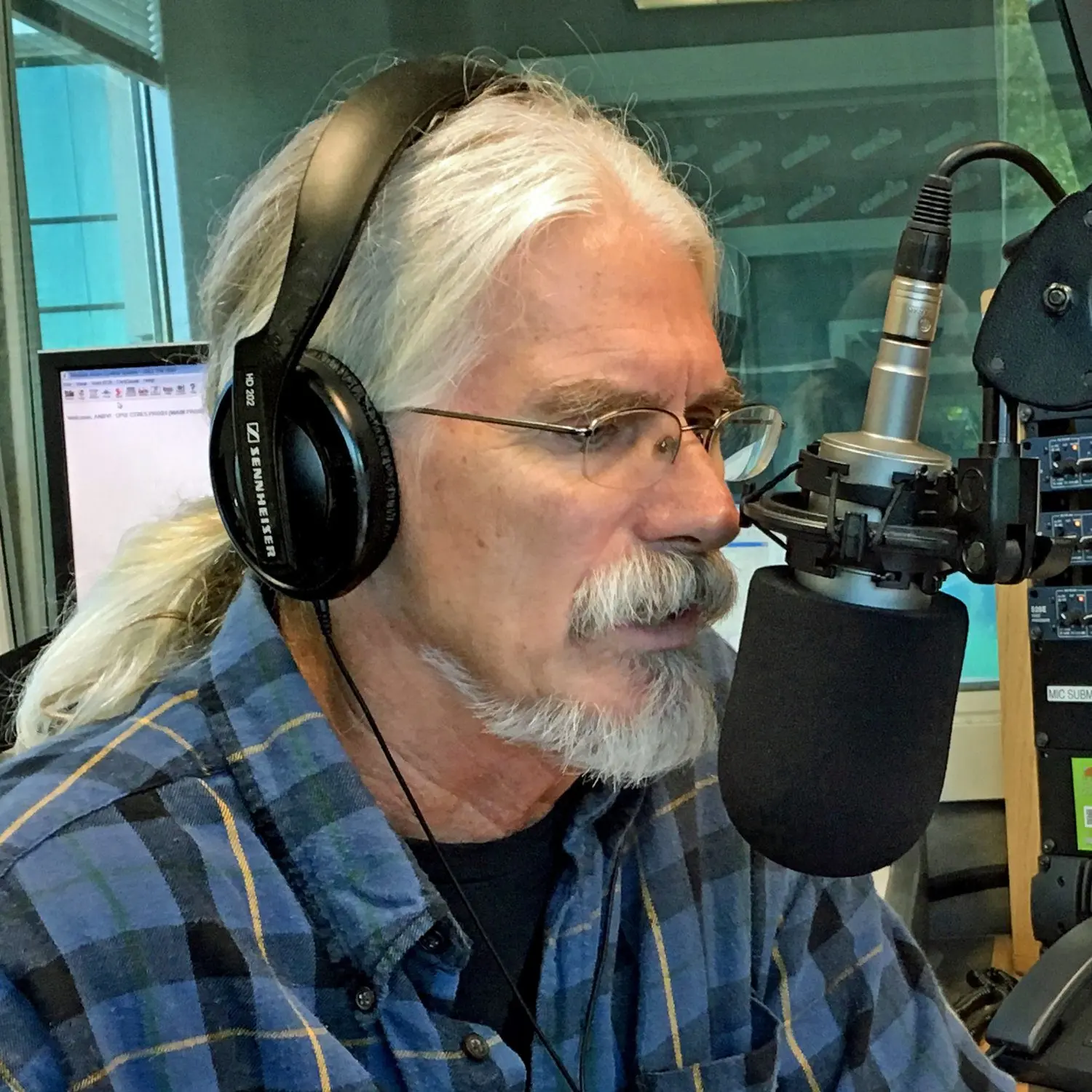

This hour of The Narrow Path is a fast-moving call-in show where listeners bring real questions—and get direct, Scripture-based answers.
Topics cover a wide range of biblical issues, including the meaning of the “mark of the beast,” whether the Great Tribulation is still future, and how Christians should think about fear, survival, and faith. The conversation also dives into practical theology—like whether wealth affects salvation, how to understand giving, and what it means to truly trust God.
Callers also explore deeper doctrinal questions, including creation debates (young vs. old earth), the Trinity, baptism, and how to find a solid church. Throughout
SPEAKER 07 :
Good afternoon and welcome to the Narrow Path radio broadcast. My name is Steve Gregg and we are live for an hour each weekday afternoon so that we can interact with you by telephone in real time on the air. And if you have questions about the Bible or the Christian faith and you’d like to raise those for conversation here, feel free to do so. If you disagree with the host, feel free to do that too. The number to call is 844-484 57-37. And I want to continue to address just our general listenership. When you call, please know what your question is. That might seem like a crazy thing for me to have to say, but in some recent broadcasts we’ve had people call and talk a long time without being able to even let me know what their question was. It’s not even clear they had a question. they thought they did, but they didn’t know how to say it. Now, that’s only because this show goes out to a broad public, and some people have thought through their ideas and their questions clearly and know how to express them. Some people have not. If you have not, then I suggest you do so before you call. This is a program we’d like to use the time as efficiently as possible to get as many questions out. So if you’re one of those who hasn’t really thought through your point or your question, I would suggest you write it down before we take your call. And then just read it. If you write it down in advance, it forces you to think about what your question actually is and to put it in a question form. And by the way, questions shouldn’t take a paragraph. to write down. It should be one or two sentences probably at the most. So it shouldn’t be too hard. And so anyone who calls, we welcome all questions. But it’s pretty important that there actually is a question in there somewhere and that you know how to state it as a question. I just say that because, again, we have a total variety of listeners, some more and some less articulate. And we don’t require you to be very articulate to be on the program, but we do realize there’s even people who call in who have not even given a thought to what their question seems to be. They just have an idea or a thought. Anyway, I just want to send that out there. No matter how many times I say it, there will still be people who don’t hear that and don’t obey that. But the point is, the fewer questions that I have to draw painfully out of people before answering them, the better. It’s nice if you have your question right up front. So we’re going to talk first of all to Barbara calling from Roseville, Michigan. Barbara, welcome to The Narrow Path. Thanks for calling.
SPEAKER 11 :
Hi. Thank you, Steve. My question is dealing with the mark of the beast. Recently I’ve been thinking about it, how it’s a lot more than just buying or selling food. I mean, that includes me paying for my heat, my utilities, just everything that I have to pay for gas, and I will be destitute. I’ll probably be evicted because they won’t take my payment. My question is, Can I take the mark, because I’m having a weak moment when those Esau things, and later denounce the beast to the point that I even cut off my hand and get back in right standing because I want to buy some live chickens and seeds. I want to figure out how to catch more.
SPEAKER 07 :
Okay, Barbara, I hear you. I hear you. So I know your question. Your question is can you take the mark and then renounce.
SPEAKER 11 :
And also, is this the Great Tribulation as well? That’s my other question. Okay, bye.
SPEAKER 07 :
All right. Thanks for your call. Well, I don’t believe we’re living in the Great Tribulation because I believe the only passage, there’s only two passages in the Bible that mention the Great Tribulation. One is in Matthew 24, 15, and one is in Revelation 7, 14, and both of them are said to be talking about something that would come shortly after they were spoken. Jesus mentioned there would be Great Tribulation, then he said this generation will not pass before all these things have happened. So he said that the great tribulation would happen in that generation. In Revelation, it does talk about a great tribulation, but it also says in Revelation, these things will shortly take place. That was written 2,000 years ago. So, I mean, the most natural meaning of those words would be that it happened a long time ago now. So, I don’t believe there’s any reference to a tribulation that comes in the end of the world, although I realize that’s a very popular doctrine. That’s what we call dispensationalism. and it’s become very popular in America, so that’s probably what you’ve heard. I just, I mean, you listen and you call frequently, so you probably know I’m not a dispensationalist. Therefore, I don’t believe that the tribulation that is mentioned in Scripture is still future. Now, as far as the mark of the beast, we’ve talked about that on the show a lot, too. I also have a different view of that. I don’t believe it’s referring to a literal mark. Put on your hand and forehead. I believe the hand and the forehead are symbolic, as in the Old Testament, so also in Revelation, of your thoughts and your actions. Your hands represent your actions. Your forehead, or what’s before your eyes, or between your eyes is sometimes the term that’s used in the Old Testament, refers to your thoughts. So to have the mark of the beast on your hand or forehead means that you, by your thoughts and your actions, demonstrate yourself to be the servant. because in biblical times, especially in Roman Empire times, slaves often had their master’s brand on their forehead or on their hand. And so the idea here is that everybody’s either a slave of God or a slave of Satan’s system. And you can tell who’s who by what they think and what they do, what are their hands and foreheads occupied with. Now, One reason I believe that about it is because right after the passage that talks about the mark of the beast, and there’s only one that does, and that’s referred to at the end of Revelation 13, the next verse in chapter 14, verse 1, says that the people of God have God’s name on their forehead. In other words, they are God’s servants, and they are in contrast to those who are the servants of the satanic system. So people are distinguished from each other by their behavior and by their thoughts and show themselves by those things to be either the servants of God or of God’s enemies. So I don’t believe there’s a reference in the Bible to a computer chip or a laser tattoo on the skin or anything like that. That has been the popular way of talking about it in dispensational circles because they don’t see the whole thing the way I do. But I don’t think that’s mentioned there. Now, let’s just say this. Whether it’s mentioned there or not, suppose some governmental system who’s heard the dispensational view and takes it seriously decides that, well, we’re going to do that. We’re going to put our number on their hand for it, and they won’t be able to buy or sell without it. Well, then, I mean, I wouldn’t take it, but that doesn’t mean I see it as what’s predicted in Revelation. It’d just be it’s something I would object to even if there’s no book of Revelation at all. If I’d never heard a word about the mark of the beast, I would object to the government putting a chip in me. That’s just not something governments can legitimately do. And therefore, I’d consider it oppressive and I wouldn’t do it. Now, your question was, if you do take it, could you renounce it? Well, again, I don’t think the Bible is speaking of such a thing when it’s talking about the mark of the beast. You can renounce your… If you have the mark of the beast, it means that your behavior and your ideas are governed by… the satanic system. Yeah, you can repent of that. Everyone who becomes a Christian does repent of that. And so you wouldn’t be doing that anymore. Now, I have had people call me before, and Barbara, your statement just now kind of sounds similar. I had a guy who used to call me from L.A. telling me that, you know, when the mark of the beast comes, he’s going to take it. He thought he was a Christian of some kind, but of course he wasn’t. No Christian would say, I would take the mark of the beast, because being a Christian means you’re loyal to Christ. Taking the mark of the beast means you’re loyal to Satan. Obviously, you can’t be loyal to both. So no one who’s a Christian would say, well, I’ll take the mark if it comes. And I asked him why he would even say such a thing. And he said, well, because otherwise I’d starve to death. Yeah, lots of people starve to death. So you’d rather starve to death and go to hell? I mean, rather not starve to death and go to hell than starve to death and go to heaven? Well, then, okay, so if you don’t starve to death, you’re still going to die. How do you want to die? If starving is not a real pleasant way to die, there’s even ways that are more unpleasant. The point is, Jesus said, if you seek to save your life, you’ll lose it. But if you lose your life for his sake, you’ll find it. So if the time ever comes, and I’m not looking at it in a dispensational way, but if a time ever came where the government is requiring me to do some particular objectionable thing that compromises my faith, And they say, if you don’t do this, you’re not going to be able to eat. You’re not going to be able to buy anything. I’d say, well, all right. Well, I don’t look to you for my food anyway. I look to God. If God wants to feed me, I’ll eat. He had ravens bring food to Elijah. He had manna come down for the Israelites, you know, in the wilderness. And Jesus can multiply loaves and fish if he wants to. I’m not saying I expect those things to be done, but God can do that. And he’s the one who promises me that I don’t ever have to worry about what I will eat or what I will wear. So I just won’t worry about that. Certainly I’m not going to compromise my soul in order to eat. What’s the worst thing that can happen? I don’t eat. I die. Okay, well, that’s going to happen ultimately to me someday anyway. So what, I’m going to throw away my salvation to avoid something that’s inevitable anyway? This doesn’t sound like clear thinking to me. I certainly wouldn’t do it. All right, Margaret from Minneapolis, Minnesota, welcome.
SPEAKER 03 :
Yes, thank you. You had a call yesterday about the poor and the rich, and it was quite upsetting that the answer seems to be that God loves the poor much more than the rich and that the rich cannot get into society. cannot be saved, and it seems to me that many rich people may be there because they worked hard and saved money and did not waste it, and that I see poor people who are on welfare and don’t work, and that might be why they are poor. So my question is… Can rich people, if they donate all their money, get into the kingdom of heaven, can they be saved?
SPEAKER 07 :
Well, that’s a very good question. And you did misunderstand what I was saying about the poor and the rich yesterday, so I’m glad you called so I could clarify that. I didn’t think for a moment that God loves poor people more than he loves rich people. He loved Job when he was rich, but he also loved him when he was poor. Job had wealth. And then he lost it all. And both times God loved him. He didn’t love him more or less when he was rich or poor. Likewise, Joseph. Joseph was pretty wealthy in the house of his father. Then he went into prison for 12 years or more. Pretty poor there. And then he was raised to power and wealth again in Egypt. So God didn’t love him more when he was poor than when he was rich. God doesn’t care how much you have. In fact, whatever you have is a gift from God anyway. So that’s not the issue. What I was saying, I just quoted Jesus. Jesus said it’s harder for a rich man to enter the kingdom of God than for a camel to go through the eye of a needle. Jesus said, blessed are the poor, for yours is the kingdom of God. And there are many statements very much like that that Jesus said. But he’s not saying that God loves the poor more. He’s saying that the poor tend to love God more. That is to say, the poor people depend on God more. Now, the Bible is not saying that all poor people depend. To say it’s hard for a rich man to enter the kingdom of God doesn’t mean that poor people slide in really easily. It just means that the poor don’t have the same obstacles that a rich person has. Because, you know, the whole point of being saved is you put God first. You put Christ as your king. You disown all that you have for his sake, and then you recognize yourself as his servant first. And the things that he has given you are yours to manage for his benefit, the way that he wants them managed. Now, the more responsibilities of that kind you have, the more responsibility you have. Jesus said, to whom much is given of them, much will be required. Now, when there’s a certain thing about money, if people have a lot of money, it’s very easy for them to think that they don’t need God for as many things because money will cover a lot of problems. You know, I lived most of my life kind of poor, but I did inherit some money. I had a wife who was killed in an accident, and the insurance company, the guy who hit her, gave me a settlement. This was back in 1980, or I got the money in 1981. It was not a fortune, but it was a lot more money than I ever thought I’d have at one time. And I remember thinking, because I lived by faith, and I lived by faith, At that time, I’d been living by faith for 10 years. I’ve been living the same way ever since. But when that money came, I realized this is going to be different for me because I have to trust God every month to pay my bills. And I’m talking about food. I’m talking about my phone bill, the gas for my car. I drove an old car. If it broke down, I’d be in trouble because I didn’t have money very often to fix things. So, I mean, I realized that it was a dynamic thing I’d been doing for 10 years previous, trusting God. for every moment, for everything I needed, and not knowing where anything would come from. And then suddenly I’m given this check from this insurance company of the driver who killed my wife, and I thought, well, I could live on this for like four years without getting any more money at all. And I remember thinking, I don’t want this to change the way I live with God, my trust in God, and yet I just determined I wouldn’t. In fact, I determined I would distribute that money all within a year. I was going to take a year to think of what that money should go toward and give it away for the most part. I bought a few things I needed, but the rest was to be given away. And I fulfilled that. I did get rid of it within that year. But during that year, I realized, I felt it, that when I drove my car someplace, I thought, well, what if it breaks down? Oh, no problem. I got money in the bank for that. You know, every month I never think, well, how am I going to pay the phone bill or my rent? Well, there’s money already there. You know, I’ve got the money. And it’s not like there’s a sin to have that money. There’s no sin in having it. But I saw a difference in the spiritual dynamics of my life when I didn’t have to really trust God like I normally had. And I’m not saying there’s any sin in it. I’m just saying I like a close relationship with God, and the more I need God, the closer I am to him. And people who have a lot of money often don’t feel like they need God very much. And I know very much what that felt like. Now, I’ve known rich people who are very faithful, very faithful to God. In fact, my deceased former father-in-law was a multimillionaire, and he gave all his money away to Haiti, to orphans, to the missions, and so forth. He died essentially penniless, which is how he wanted to do it. He was determined to just make as much money as possible to give to the needs of the poor, and he did exactly that. Now, he was a rich man, but he was faithful with it. So I’ve never been against anyone being rich, and I don’t think God’s against anyone being rich. If you’re rich, no doubt God made you rich, unless you did it through crime or something like that. But if you made money honestly and you’re now what we call rich – You can call that a blessing from God. But here’s the thing. Once you have those things, it’s easy for your heart to be set on them. It can be that God would want you to steward it in a certain way. He might want you to support some poor people or some missionaries or something like that with it. And you’re thinking, well, but I kind of like the standard of living that I have now. I don’t want to give that. I don’t want to be without this money. Now, see, then money can become an idol. That’s what the Bible calls covetousness or greed. In Ephesians 5.5, Paul says that a covetous man is an idolater. And he repeats that in Colossians 3.5, I believe it is, that covetousness is idolatry. To be overly attached to finances is idolatry. Now, if a person is an idolater, the Bible says no idolater will inherit the kingdom of God. But having a lot of money doesn’t mean you have to be covetous or greedy. You can say, thank God I’ve got a lot of money because now I can help a lot of people. And I’ll tell you, I have a lot more money now than I had back in those days I was talking about earlier. But I help a lot more people with it. I mean, it’s a joy to be able to help people. And that’s what God gives you his money to do. So, you know, God doesn’t love poor people more than rich people. In some respects, we could say he’s entrusted rich people with more of this kind of blessing. But entrusting them with it means he intends for them to use it for his good. Now, you ask if you have to sell it all and give it away, like Jesus told the rich young ruler. No, Jesus didn’t tell everybody to sell all they had and give it all away. But here’s the thing. Like my former father-in-law, who is a millionaire who gave his money away, he, you know, Between giving things away, because he had a lot of income, he had money, you know, in the bank. And if you looked at his balance sheet, he was a pretty rich man. But in his own heart, all that money was God’s. And he proved it by living very simply himself and giving away millions of dollars to Haitian orphans and things like that and missions. So that’s, you know… I can’t tell you what you should do with your money, but I can tell you this, that God doesn’t dislike you because you have money. We can say it’s God who blessed you with it. But, of course, every Christian, whether they have a lot of money or a little or none, whatever we have, it’s God’s, and he expects us to use it the way he would use it. I mean, what if Jesus was walking around and he had that money? What do you think he’d do with it? Well, that’s what we have to do with it. We have to use everything God owns that he’s entrusted to us in a way that when we see God and he tells us, okay, what did you do with what I entrust you with those five talents or those ten talents that I gave you, that we’re going to be not embarrassed because we took those things that God gave us and used them for that which advances his kingdom. Now, then what standard of living do we have to live in? Well, the Bible doesn’t dictate that. The Bible does say that we should be content even if we have only food and clothing. Paul said that, Timothy, having food and clothing, meaning if we only have that, we should be content with it. But he’s not saying we have to only have food and clothing. And many Christians have a lot more than that. That’s fine. The question is, is it theirs or is it God’s? And God knows. I mean, we can say, well, everything I have is God’s. Well, it might sound like a heroic thing to say. if you’re a Christian, to say that, and it may be true. All I can say is that God knows if it’s true, and it’ll become evident that it’s true by the way that money is being stewarded. So, no, I don’t believe God has anything against the rich, but sometimes the rich have something against God, and I think that’s more what Jesus talked about. It was harder for a rich man to enter the kingdom of God because Jesus told the rich man, and that’s the occasion that Jesus made this statement, He told the rich man to give his stuff to the poor. And the man really said, no, I’m going to hang on to it. So there’s this tug of war in his heart between himself and Jesus as to who’s going to determine what is done with his money. And if a person says, I’m going to pull it, and Jesus is wanting to pull it this way, and I’m pulling it that other way, then I’m against God. And being against God is a state of mind that, frankly, is not amenable to entering the kingdom of God. So, you know, I never said that God loves the poor more, but the Bible does say that God has made promises to the poor, and they do tend more readily to come into the kingdom. Poor people more frequently have nothing to lean on except God. But you can be poor and still be a wicked person and not lean on God. There’s poor people who do evil things, too. So he’s not saying being poor is a virtue. But he’s saying in some respects, being poor is an advantage. To have advantages doesn’t mean you’re virtuous. It just means you don’t have the same obstacles. A man named William Law, who is a Puritan writer who influenced the Westleys, he said that it’s not like it’s wrong to have money, but he said if it’s a narrow gate, we might prefer not to encumber ourselves. with extra things that would hinder us. He said if we were obliged to have to walk across a canyon on a tight wire, we might choose to do so without wearing golden slippers. You know, they would probably hinder our ability to do that. So anyway, those are some of my thoughts. I hope it clarifies a little bit. Didn’t mean for anyone out there who has money, like maybe you do, to think that God doesn’t love you as much as everybody else. But like everybody else, he expects us to take all the assets he’s put in our hands and govern them, manage them, steward them for his kingdom’s sake. That’s what the Bible teaches. Thank you for your call. Ron in Fort Worth, Texas. Welcome to The Narrow Path. Thanks for calling.
SPEAKER 04 :
Yeah, I kind of disagree with you about the Israelites not, the physical Israelites not being under the covenant, under God’s protection. Can you hear me?
SPEAKER 07 :
Yes, we may have to pick this up after the break because there’s a break coming up and it looks like we may go deep on this. But go ahead, share with me your point.
SPEAKER 04 :
Yeah, I just feel like if you mess with Israel, you’re messing with God. I just feel like, you know, they’re still under his protection. I feel like, you know, everything still stands to this very day.
SPEAKER 07 :
Okay. Well, you say you feel that way. And I, you know, I can remember a time when I felt that way too. But, of course, my views had to be reshaped by what the Bible says. The Bible says there’s a way that seems right to a man. But the end are the ways of death. And it says that twice in the book of Proverbs. It says that same thing. To say it seems right but it’s not right means that we may feel that something is right. And we might be wrong. We have to really govern our opinions and our positions on what the Bible actually says. So you feel that God is still, you know, protecting Israel under a covenantal umbrella as he promised to do in the Old Testament. My position is that God did promise to do that conditionally. And you can read Deuteronomy 28. Let me just urge you. I think this will probably be all the answer I need to give you, really. If you look at Deuteronomy 28, read that chapter, and you’ll see. God said to Israel, if you obey my word, keep my covenant, keep my statutes, I’m going to bless you. I’m going to prosper you. I’m going to protect you from your enemies. If they come at you one direction, they’ll flee from you seven directions. I’ll make sure you don’t have any droughts. Your crops will not fail. All these things will happen. But he went on to say, beginning at verse 15, but if you don’t keep my covenant, you don’t obey me, well, then I’m going to do all the opposite things. I’m not going to protect you. You’ll go out against your enemies one way, and you’ll flee from them seven ways. The clouds will not give you rain. he actually goes on to say, I’ll drive you out of your land and take you into captivity in the land of your enemies. Now, this is kind of a very clear black and white kind of statement, and it’s uttered in various other terms throughout the Old Testament that God protects his people as they remain in covenantal relationship with him faithfully. He also said, in just as strong words, if you break my covenant, I will not. Now, Christianity teaches that when Jesus came, they broke his covenant. They rejected Christ. Now, individuals can be saved, but they have to come to Christ. But the nation is not a special people without Christ. Our website is thenarrowpath.com. I’ll be back in 30 seconds. We have another half hour. Don’t go away.
SPEAKER 02 :
In a 16-lecture series entitled The Authority of Scriptures, Steve Gregg not only thoroughly presents the case for the Bible’s authority, but also explains specifically how this truth is to be applied to a believer’s daily walk and outlook. The Authority of Scriptures, as well as hundreds of other stimulating lectures, can be downloaded in MP3 format without charge from our website, thenarrowpath.com.
SPEAKER 07 :
welcome back to the narrow path radio broadcast my name is steve greg and we’re live for another half hour taking your calls if you’re If you have a question about the Bible or Christianity, I’d be glad to have you call. Right now we have some lines open, so this would be an opportune time for you to call. If you have a difference of opinion or you want to disagree with the host, you’re always welcome to do that. And to either ask a question or to express a disagreement, this is what you need, a phone number and a phone. You provide the phone, I’ll provide the number. Here’s the number, 844- That’s 844-484-5737. And our next caller is Sam from St. Petersburg, Florida. Hi, Sam. Welcome. Welcome.
SPEAKER 08 :
Hey there. How’s it going? I’m a fairly new listener, first-time caller. I know it’s probably a loaded question, but I was just wondering what your thoughts were on old Earth versus new Earth. And just as a quick launching point, I know an astronomer who is a Christian who is an old Earth or old universe, I should say, because he measures things in light years, obviously. It takes 10 million light years for this fixed point that we know for light to reach Earth. then that implies that there are some far reaches of the known universe that are potentially much older than some people give it credit for. So I was just wondering what your thoughts were on that.
SPEAKER 07 :
Sure. It’s a valid question. The first thing I would say is that there are many Christians who do take the old earth position. Hugh Ross famously has a website where he argues for the old earth, but he is a Bible believer. There are Christians who believe. That when you read Genesis chapter 1, it’s not giving a literal six-day creation that happened a few thousand years ago, but it’s simply giving an almost poetic description of a broad outline of the fact that God created everything. And that to press it for specific time frames, they would say, is not what’s intended. On the other hand, there are young earth creationists. who believe that everything can be fitted into that period of time, including the scientific data about the age of the Earth. They would be very different than the non-Christians. Now, I’m saying there are Christians who take the old Earth position. But those who take the young earth position are very much in disagreement with those who take the old earth position, which originates or is mainly found among the unbelievers. And then some believers have picked up on it. But unbelievers, of course, don’t believe in supernatural things. Christians do. Even old earth Christians do. But unbelievers do not believe in supernatural things. They don’t believe, for example, that God could cause… the light from a star five billion light years away to reach the earth instantaneously or more quickly than the light travels today. Now, we don’t know whether he did or not, but those who believe in the young earth do believe in the supernatural. So we do believe that God can do whatever he wants to do, and that whenever God does something, let’s say when he turned water into wine, Now, normally it takes a while for water to turn into wine. Usually there’s a growing season while the vines are growing, the grapes are ripening. And then, of course, they harvest the grapes, they crush them, they produce grape juice, they bottle it, and over a period of time it ferments and becomes wine. For water to become wine is a very common thing in nature. But instantaneously turning water into wine is not commonplace. That’s a miracle. And so if you saw wine… Even the wine that Jesus had made from water at the wedding feast of Cana, you would assume, as anyone would, I know how long it takes for wine to be made. This wine looks like it’s been aging a few years. This is probably maybe three or more years old. Yeah, but you would know that that particular wine didn’t go by the natural rules because Jesus miraculously made it. And likewise, when we figure out how long does it take light to reach Earth from a star, How long does it take for erosion to take place? How long does it take for this or that phenomenon to develop by natural means? That would become somewhat irrelevant if we knew that the particular case we’re talking about happened instantaneously, miraculously. Now, of course, unbelievers don’t believe that miracles can happen. And then there’s Christians who do believe miracles can happen, and they believe God could do it that way, but they believe perhaps the evidence of science points another direction. So you have Christians who are on both sides. I myself, you asked my opinion, am more, let’s just say all my life, I’ve been inclined toward the young earth position. I was exposed, of course, for the past 50 years or more to the old earth position because I was educated in secular schools, and I’ve read secular books. and I’ve listened to secular scientists and so forth, and so I’m now aware of reasons why people believe in the old earth. To my mind, those reasons are not definitive because, again, they rule out the possibility of miracles. And there’s nothing about being a Christian that allows you to rule out the possibility of miracles, since Christianity is based on a claim that Jesus rose from the dead, the central miracle of all history. So if we believe there are miracles, or can be miracles, and God can do it, then it’s simply a matter of does the Bible teach the earth is young? And if so, is God capable of making an earth a few thousand years ago that bears all the functional marks of the earth we have now? Now, I’m not one of those young earth creationists who believes you have to be young earth, because although I tend to say, I don’t see a good reason not to take Genesis 1 literally. In other words, I can take it literally. I’m not one who says you have to take it literally, because some parts of the Bible are written poetically. Some are written as parables. There’s different kinds of literature. And if it turned out that Genesis 1 was not written as literal narrative, well, then maybe the earth is older than I’m thinking. But I’m open. I’m open to either case. I don’t have to take Genesis 1 literally. But I can. And I’m aware, because I have studied the matter, that there is evidence for an old earth. But the same evidence has been explained to my mind somewhat rationally by people who believe in the young earth, the recent creation. But the bottom line is this. I couldn’t care less. I couldn’t care less when God did it. What’s it matter to me? It happened long before I was here, and it doesn’t have anything to do with the way I live my life. Many people don’t understand where I’m coming from. I’m a Christian, and as a Christian it means I am concerned with one thing, and that is Jesus. I’m concerned with following Jesus. I’m concerned with believing in Jesus, being loyal to Jesus, fulfilling the will of Jesus in the world, and being a faithful follower unto death. That’s what a Christian is. Now, Christians also have beliefs about a lot of different things. They have their own interpretations of various portions of the Bible, and therefore a person can be a good Christian, and believe in a young earth creation or an old earth creation. And if all the evidence was on one side, I’d go with the side that had all the evidence. I don’t think all the evidence is on one side, so I’m open-minded. And I believe that I can be open-minded until the day I die. It won’t hurt me at all. So I’m an open-minded person about the age of the earth. And if someone said, we can prove that it’s X number of years old, I think, yeah, but what’s that worth? What good does it do me to know that? How does that change my life? And those are the ways I think. Some people don’t. Some people think to please God, you’ve got to have all the right opinions about everything related to the Bible. I don’t hold that view. I don’t hold the view that you have to have all the right opinions. I want to. I want to hold all the right opinions. But I’m also old enough. I’m in my 70s now. I’ve been studying the Bible for at least 60 years. I’m old enough now. to realize that some things in the Bible are not absolutely unambiguous. And some things in the Bible, though I’d like to get the right opinion about them, you can die with the wrong opinion on them and you’ll still be fine with God. You don’t have to be right about everything. So that’s where I’m at.
SPEAKER 09 :
Well, thank you very much. I really appreciated the example of the water into wine. So that’s together for me.
SPEAKER 07 :
All right. Great talking to you, Sam. Glad to have you. All right. God bless. Bye now. Okay. Michael in Englewood, California. Welcome to The Narrow Path. Thanks for calling.
SPEAKER 01 :
Oh, wow. That was quick. Steve, I went to – I heard somebody preaching on dispensation yesterday, and I asked a question during the class. Why – why did people not really teach this until around 1830? And he just said, that doesn’t mean that it wasn’t around. And then he said stuff like Noah happened, but we weren’t there and whatever answer he gave. But my question is, where can I listen to your like teachings on dispensationalism? Cause I didn’t really have a answer to go back and forth with them.
SPEAKER 07 :
Well, um, There’s a number of my lectures that touch on this subject. There’s one lecture that’s called, Is Dispensationalism Indispensable? No, no, that’s an article I wrote for the Christian Research Journal. I have a lecture called, what is it? Deconstructing Dispensationalism? Something like that. There’s a lecture with that title. There’s a series of lectures called, When Shall These Things Be? which is about eschatology and it contrasts dispensationalism with amillennialism. That’s 14 lectures. It’s called When Shall These Things Be? There’s also my lectures on Israel, which obviously are interacting with the views of dispensationalism from another position. Dispensationalism comes up a lot in conversations on different subjects. But my series on Israel, What Are We to Make of Israel, it’s called, And my series on eschatology called When Shall These Things Be? And then there is a lecture, a single, you know, is it called Deconstructing Dispensationalism? There’s a lecture called that. All of those can be found at our website, thenarrowpath.com. They are free. Everything’s free. And those ones will be found under the tab that says Topical Lectures. So that’s where you can find that stuff. Thanks for your call. Jim in Lewiston, Maine. Welcome to the Narrow Pack. Thanks for calling.
SPEAKER 05 :
Hey, Steve. How are you doing? I’m a second or third time caller. Basically, my question for you is today, and I’ll make it quick. My wife and I have been having a hard time finding a good church to go to post-COVID and so forth. I’ve got a brother who goes to a Calvary chapel. in Maryland, and I know that you have different views on eschatology, but he’s encouraging me to go to a Calvary Chapel church, and there’s one not too far from where we live, and my wife and I were thinking about going, but I just wanted to get your opinion on that since you used to be a former Calvary Chapel attendant.
SPEAKER 07 :
Yeah, well, my later teen years, from age 16 to 20 really, I sat under Chuck Smith and in the earliest part of those years, there was only one Calvary Chapel, and that was Chuck Smith’s church in Costa Mesa, and that’s where I went. I learned the Bible a great deal under him. Of course, he was teaching the dispensational view, which I don’t hold anymore, but that doesn’t mean he didn’t teach a great deal of helpful things. I mean, the good thing about a Calvary Chapel, I mean, mostly good, is that they do teach through the Bible verse by verse over the course of the years you go there. You’ll go through the whole Bible, and they’ll talk about it verse by verse. One drawback of it, but you’ll find this with anyone who teaches the Bible, is that they teach it from their viewpoint, which I never questioned when I was there, and I accepted their viewpoint completely. It was when I got older and read the Bible more and read more widely, I realized that the viewpoint that I was being taught, which was called dispensationalism, was not universally held by people who believe in the Bible. In fact, it was a rather new view. And so I became acquainted with other views, and I studied my Bible with the mind that it could be this way, it could be that way. And my own views changed, and so I no longer hold the dispensational view. However, I still hold Chuck Smith in very high regard. In many respects, he was my mentor in the ministry. I believe he was a wonderful Christian man. Now, Calvary Chapel Movement… There’s like 1,400 or 1,600 Calvary chapels around the world or something like that. The movement began to be pastored by men who were actual clones of Chuck Smith. I mean, some of the early Christian, some of the early spin-off Calvary chapels were pastored by men who never had any education other than sitting under Chuck Smith. And so they taught exactly as Chuck did. Some of them did not have his… what I would regard as humility and love and maturity. I believe Chuck Smith is a very mature Christian man. Sometimes people can teach the same things he taught, but not with the same maturity because they’re not as old. They haven’t matured that much. And so sometimes they’ll teach them with a very divisive spirit. Today, many Calvary Chapel pastors, they make dispensationalism almost a basis of fellowship. and they suggest if you don’t hold a dispensational view of the rapture or of Israel or something like that, you being a good Christian is open to question. Now, not all Calvary’s are that way. Chuck Smith’s main emphasis, besides eschatology, was love. His main focus is that love is the mark of being a Christian. For those younger Calvary Chapel pastors, that picked that up from him. Often they’re very good pastors. They’re very loving people. They’re still going to believe in dispensationalism, but that’s not a terrible thing if you’re a loving person, because loving is what marks you off as a Christian. Obviously, I don’t think dispensationalism is right, and I think people who hold it would do well to reconsider it and reexamine it and move on from there. But to me, it’s not a hill to die on. I could attend a dispensational church as long as it’s really a church. What I mean is it’s really a fellowship of God’s children who love each other, which is the mark of being God’s children. And so I would say I can’t broad brush the whole Calvary Chapel movement, except to say they’re all dispensational. But not all dispensationalists are created equal. Some of them are. It’s a hill to die on. It’s a dividing matter with them. It sets them off from the rest of the body of Christ. Sometimes the very immature Calvary Chapel pastor sometimes will say that the people aren’t even saved, or he doubts that they’re saved if they don’t hold that view. There are some very immature Calvary Chapel pastors, but there are some who are not that way. And there are some Calvary Chapels that I could easily fellowship in as long as they’re not making eschatology the whole test of fellowship. Because Calvary Chapels do have the virtue of teaching through the Bible. So all I could say is, I mean, it’s good for you to know what you believe. It’s good for you to study out the issues. But you can still go to a church. that doesn’t agree with you on everything, Calvary Chapel or otherwise. And the real issue is whether they’ll let you be there without you agreeing with them. Some Calvaries will. Many will not. So that’s the main thing I’d say.
SPEAKER 05 :
Well, Steve, I appreciate your opinion, and I hold your eschatology view more so than them, but I agree. I guess, you know, being a Christian, obeying and worshiping Jesus is what it’s really all about. And I appreciate your answering my question today. Thank you.
SPEAKER 07 :
All right, Jim. I appreciate your call. God bless.
SPEAKER 05 :
God bless.
SPEAKER 07 :
Bye now. Don from Des Moines, Iowa. Welcome to The Narrow Path.
SPEAKER 06 :
How are you?
SPEAKER 07 :
Good, thanks.
SPEAKER 06 :
I’ve got a question. You know, I’ve believed in the good Lord all my life since I was a little bitty guy. You know, and I… I got me an A&I Bible. The guy gave it to me, you know, after my mother died. I was having it kind of rough, and I didn’t understand the Bible real well. I read this Bible here quite a bit.
SPEAKER 07 :
You know, we’re running out of time. Do you have a question?
SPEAKER 06 :
Yeah, I was wondering, what do you think of the Father, Son, and the Holy Spirit being one?
SPEAKER 07 :
Now, do you mean, what do I think about the Trinity, or what do I believe about oneness Pentecostal?
SPEAKER 06 :
Yeah, well, I mean, you know, I’m just saying that some folks, you know, when I go to church, you know, they say that they’re combined, the Holy Trinity, you know, is one.
SPEAKER 07 :
Well, my position, since you asked, my position is that God is one. But I hold that view in a Trinitarian framework. I believe that that the Father, the Son, and the Holy Spirit are in essence one God. But in another sense, they are distinguished. Now, if someone says, well, how can that be? Well, I don’t know. Do I have to know that? I think if I had to know that, God would have told us. There’s nothing in the Bible that explains the Trinity to us. And there’s nothing in the Bible that denies the Trinity. Now, oneness Pentecostals do not hold the Trinity. They believe that there’s one God who is, in one sense, the Father, in the Old Testament especially, and when Jesus came. But he manifested himself in Jesus, and then when Jesus went away, he became the Holy Spirit. Now, I’m not really sure how all that works, but it sounds a little bit like God just changing hats from time to time. The problem with that, of course, is that Jesus and the Father then are considered to be the same. Not simply one, but the same. And Jesus distinguished himself from his Father. He said he didn’t come to do his own will. He came to his Father’s will. So his Father had one will, and he had another. In fact, in the Garden of Gethsemane, he said to his Father, Father, not my will, but yours be done. So Jesus had a will, and the Father had a will. Jesus surrendered his to his Father, but he’s obviously not one and the same person. But in my understanding, the Bible teaches that Jesus is the Father’s visitation to us in a human form. That is, he’s God’s visitation to us in a human form. And yet, he could visit us in a human form without ceasing to exist externally to that human form and still filling the universe so that when Jesus died, God wasn’t dead. The human form in which God came to us died and three days later came alive. But the easiest way I know to understand it is in a Trinitarian formula, which in its simplest form is, say, the Father, Son, and Holy Spirit are one in a certain sense, and they are three in a different sense. And that would be agreeable with reality, I think. It seems to fit all the passages of Scripture. But again, if that’s too mysterious or too difficult for someone, I don’t see it as something that the Bible tells us we have to believe to be saved. Many people have made it a test of salvation that you believe the Trinity in the form that they say it. But the church didn’t say it in that form until about 440. 325 A.D., many Christians did believe a Trinitarian doctrine before that time, but lots of Christians had other ways of saying the Trinitarian formula. It wasn’t until the Nicene Council, or even later, that they actually came up with creeds that state the Trinity doctrine the way that we commonly hear it. But, you know, people were saved before they had that formulation. But my concern is not simply that I’m able to be saved believing what I do. I want to believe the right thing. I mean, I can be saved without believing everything correctly. But I want to be saved and believe things correctly. So as I’ve searched out, I’ve come to a Trinitarian position as opposed to the oneness position. But when people are oneness Pentecostals, I don’t say that because they fail to believe in the Trinity that they aren’t Christians. I don’t think the Bible gives me authority to say that. I appreciate your call. Let’s talk to Tammy from Little Rock, Arkansas. Hi, Tammy. Welcome.
SPEAKER 10 :
Hi. Thank you. I know you don’t have much time. I’ll try to be quick. When I was 13, I felt that I was saved, but I believe then it was more out of fear for going to hell. My family had not gone to church, and then we started going to church after my parents divorced. So I’ve As an adult, I believe it was more out of fear then, and I was baptized then as well. But my question is, now as an adult, I have a relationship with the Father. Do I need to be baptized again?
SPEAKER 07 :
Well, I mean, I would think that would be up to you, because I assume you were baptized when you were 13, I think or something you said. You probably believed that you were being baptized as a Christian. And since that time, you’ve come to understand better what being a Christian is. But even if you got baptized again today, you might come to understand better tomorrow what a Christian is. In other words, I think you may well have been a real Christian when you were baptized, which makes it unnecessary to be baptized ever again. But that you may become a real Christian, but that you’ve since learned a great deal about what it means to be a Christian that you didn’t understand at the time. Now, again… Some people know that when they were baptized at age 13, they didn’t have any connection with God at all. They just did it under pressure. Their parents wanted to, or their friends were doing it, so they just did it. And they know, in retrospect, they didn’t have any commitment to Christ at all. In that case, if they have since come to follow Christ, they should be baptized. Because, obviously, to be baptized without any intention of being a Christian… is not to really be baptized. That’s one reason the Bible doesn’t support infant baptism, in my opinion. But if a person assumes that the baptism they had before, and they look back and say, you know, I didn’t know God at all. I had no idea what I was doing. I don’t even know why I did that. Well, then now that you’ve come to follow Christ, then I’d say, yeah, go ahead and be baptized over again. But if you can look back at the time when you were baptized in your youth, And say, yeah, I was doing my best to follow Jesus. I mean, I didn’t understand a lot of what I know now. But I was sincere. I mean, I wanted to follow Christ, and I got baptized for that reason. Then I’d say it’s good. I’d say it’s good. And no matter when you get baptized, whether you’re 13 or whatever age you are now, hopefully, as you grow, you’ll learn even more. after that, what it means to be a Christian. So you don’t wait to be baptized until you understand all the things about being a Christian. But there is one thing that you need to understand before you’re baptized, and that is that Jesus is the King and the Lord and the Savior, and that you are embracing him in your life in that role with all seriousness and intend to be his follower. Now, obviously, a lot of people are never told by the churches that evangelize them, what it’s going to cost, what it’s going to look like to be a follower of Christ. And that doesn’t mean they didn’t make a decision to do so. I’m thinking of my own case. I was raised in a Baptist church. I got converted as a child, and I was baptized at age 12. But I really didn’t understand an awful lot about what it meant to be a disciple of Jesus until I was in my late teens. But I was serious about God from my childhood. I was determined to be loyal to Christ and to do what he said. I just didn’t know as much about what that involved as I later did. So having committed myself to Christ as a child and being baptized at age 12, I would have been not the best person to ask about what the essence of discipleship is. But I know that I was committed to Christ as my Lord and my Savior. And then as I learned more about what that involves, I simply just added that to what I knew already. I felt no reason to have to be baptized again. And you have to decide that yourself. What was your intention when you were baptized when you were younger? If you feel you were sincere and you had a sense of what it meant to follow Christ, then I’d say that was good enough. If you don’t feel like you had that, then you might choose to be baptized again. You’ve been listening to the Narrow Path radio broadcast. Our website is thenarrowpath.com. We’re a listener supporter. You might help us out if you want. That’s at our website, thenarrowpath.com.