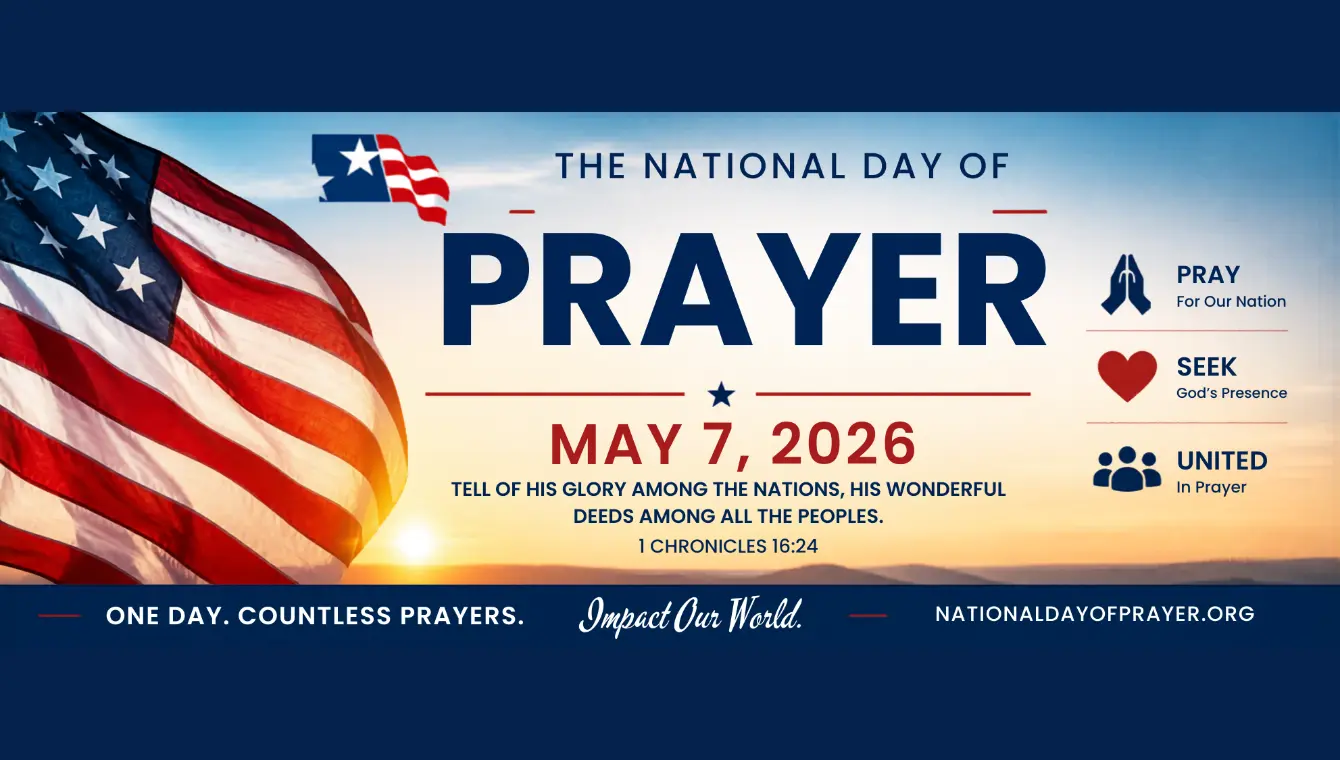
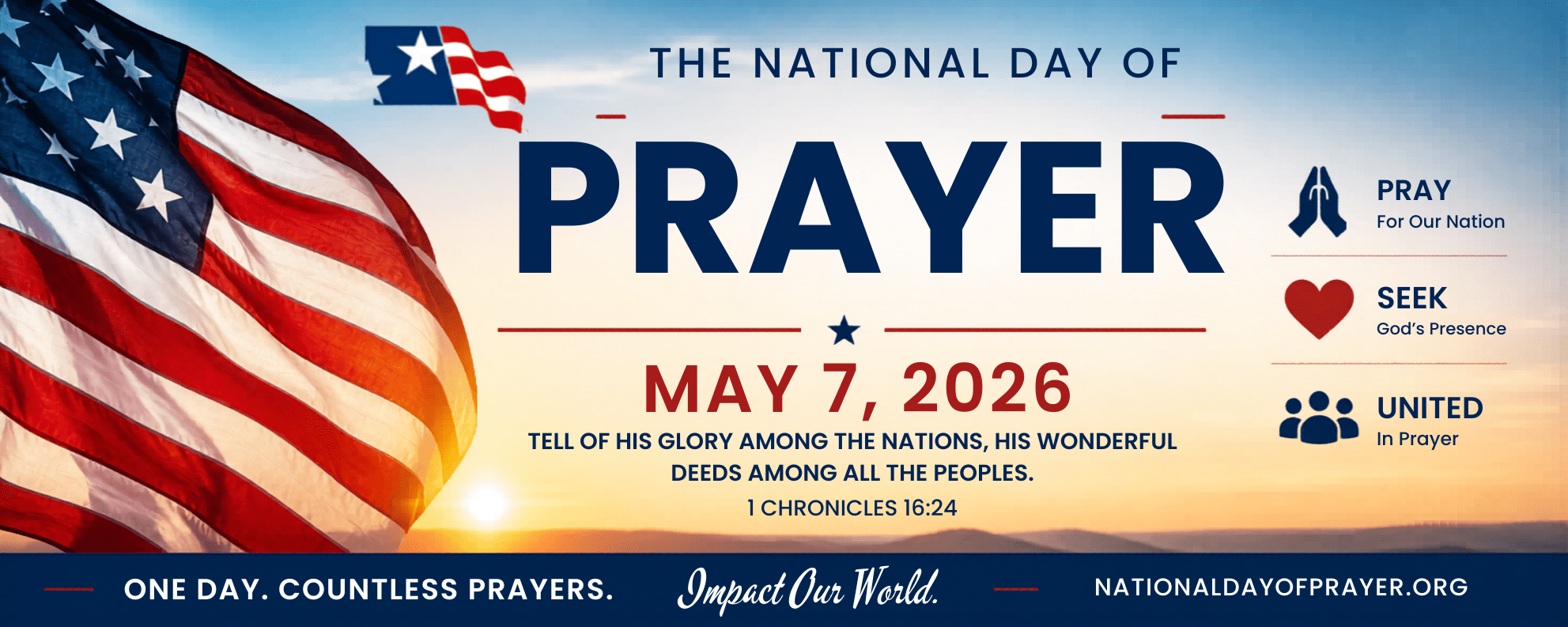
What is the National Day of Prayer?
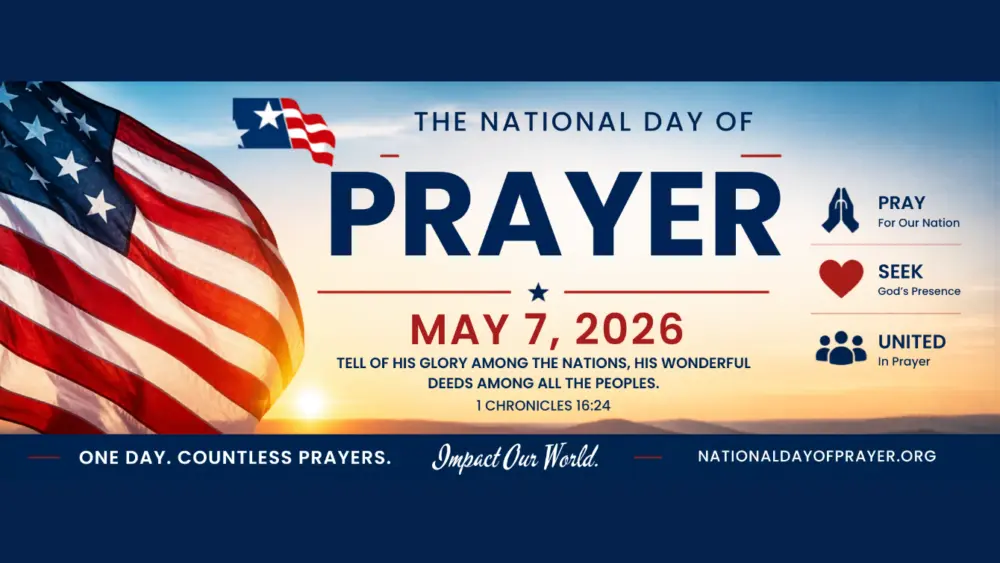
Each year, Americans across the country pause for a moment that is both deeply personal and profoundly national—the National Day of Prayer. It’s a time set aside to seek God’s guidance, give thanks for His blessings, and lift up our nation, leaders, and communities in prayer.
But where did this day come from—and what does it really mean for us today?
A Brief History of the National Day of Prayer
The roots of this observance stretch all the way back to the founding of the United States. In 1775, as tensions rose in the early days of the American Revolution, the Continental Congress issued a call for prayer—asking the colonies to seek God’s wisdom during uncertain times.
Later, in 1863, during one of the darkest chapters in American history, Abraham Lincoln proclaimed a national day of “humiliation, fasting, and prayer” in the midst of the Civil War.
The modern observance as we know it today was established in 1952, when Harry S. Truman signed a bill into law creating an annual National Day of Prayer. Then, in 1988, Ronald Reagan designated it to be held on the first Thursday of May each year, giving it a consistent place on the calendar.
Through every generation—war, peace, prosperity, and challenge—this day has remained a steady reminder of our need for God.
 What the National Day of Prayer Means
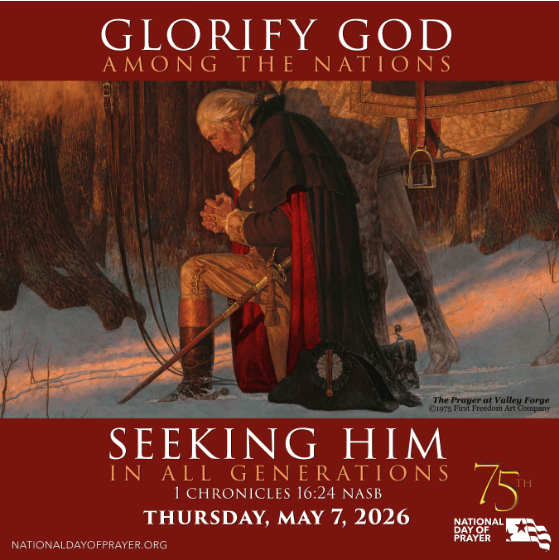
At its core, the National Day of Prayer is about humility, unity, and dependence on God.
It’s not tied to a single denomination, church, or political group. Instead, it’s an invitation for all believers to come together—across backgrounds and communities—to pray for:
- Our nation and its future
- Government leaders at every level
- Families, churches, and communities
- Those serving in the military and first responders
- Wisdom, repentance, and spiritual renewal
For many, it’s also a moment to reflect personally—to realign their hearts with God and remember His sovereignty over all things.
How You Can Recognize It Today
You don’t need a large gathering or formal event to participate in the National Day of Prayer. What matters most is a willing heart. Here are a few meaningful ways to observe the day:
1. Set Aside Intentional Time to Pray
Whether it’s five minutes or an hour, carve out time to step away from the noise and seek God. Pray through Scripture, speak from your heart, or simply sit in quiet reflection.
2. Pray with Others
Join a local church gathering, prayer group, or even pray with your family at home. There’s something powerful about unified prayer.
3. Pray for Specific Areas
Focus your prayers intentionally:
- National leaders and decision-makers
- Local schools and communities
- Churches and ministries
- Cultural issues facing the nation
4. Share Encouragement
Use your voice—whether in conversation or online—to encourage others to pray. A simple reminder can have a ripple effect.
5. Live It Out Beyond Today
Let this day be more than a one-time moment. Consider how prayer can become a daily rhythm in your life.
A Final Thought
The National Day of Prayer isn’t about political statements or public displays—it’s about turning our hearts toward God.
In a world filled with uncertainty, division, and noise, prayer remains one of the most powerful things we can do. It realigns us, unites us, and reminds us that we are not in control—but God is.
As we observe this day, may we be people who don’t just pray once a year—but who live lives marked by continual dependence on Him.
If you’re participating in a National Day of Prayer event or taking time to pray today, we’d love to hear how you’re observing it. Let’s stand together in faith—for our families, our communities, and our nation.