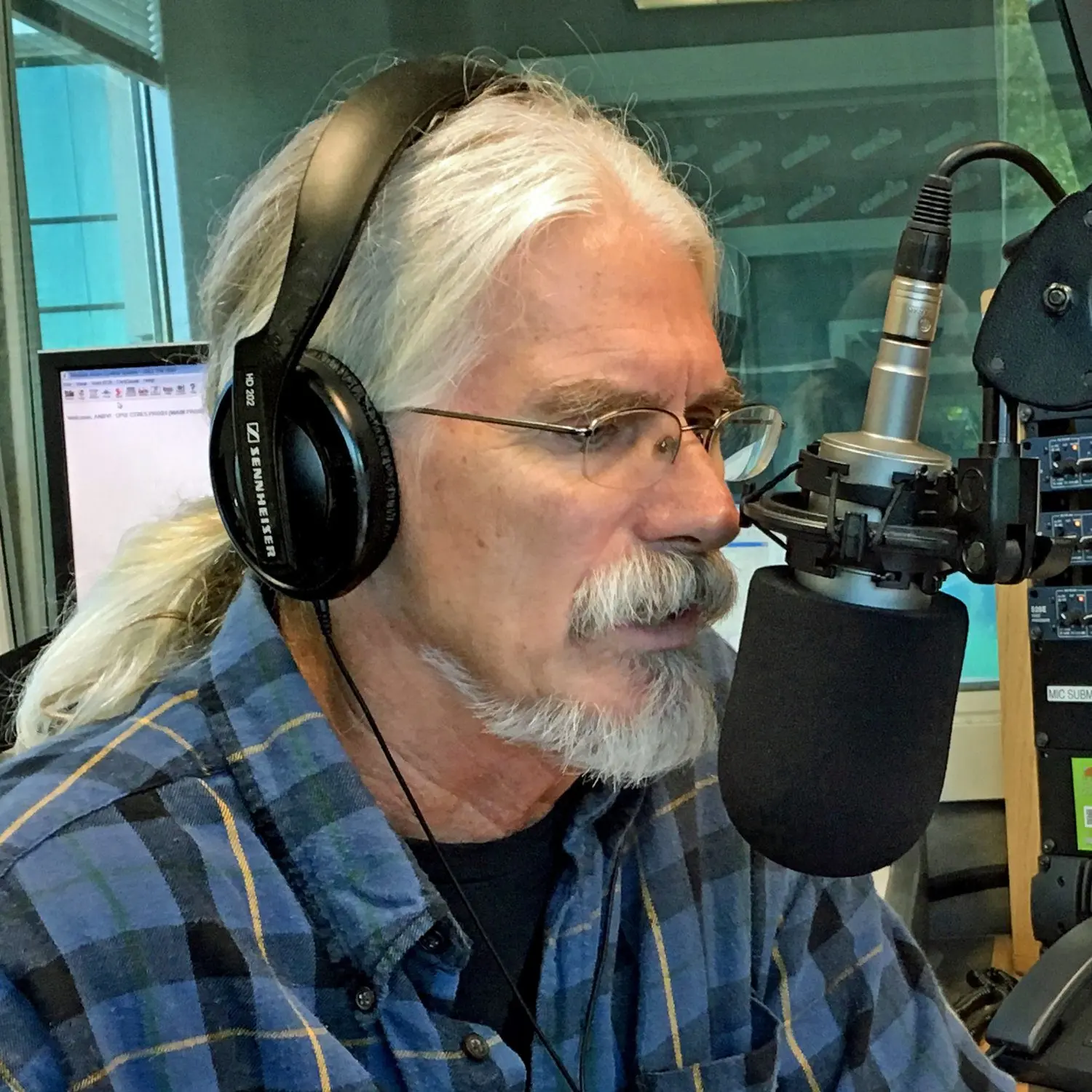
::Daily Radio Program
SPEAKER 1 :
you you you you
SPEAKER 02 :
Good afternoon, and welcome to the Narrow Path radio broadcast. My name is Steve Gregg, and we’re live for an hour each weekday afternoon, including today, the first weekday of this week. And it’s a time when you can call in if you have questions about the Bible or Christianity, or if you have a difference of opinion with the host you’d like to balance a comment about, feel free to give us a call. We have a number of lines that are open and available to you call right now. And if you’re a new listener, you may not know. That’s kind of rare. It may be that later in the program there will be no lines open. So if you want to call in, this is a good time to get your foot in the door. The number is 844-484-5737. That’s 844-484-5737. Our first caller today is Kerry calling from Fort Worth, Texas. Hi, Kerry. Welcome to The Narrow Path. Thanks for calling.
SPEAKER 06 :
Hi, Steve. I’ve got a couple questions kind of relating to inspiration. I noticed that the New Testament writers quote from the Septuagint quite often, and so I was wondering how we should take that. Is that an inspired writing? And my other question would be the book of Psalms. How should we take that as far as inspiration is concerned? It seems like God is talking at times and other times it’s the psalmist. How should we take that?
SPEAKER 02 :
Yeah, well, okay. As far as the Septuagint is concerned, the Septuagint is just, you know, no more really inspired than is an English translation from the Hebrew or the Greek. The Hebrew scriptures and the Greek scriptures, that is the Old and the New Testament, have long been regarded by Christians to be written under divine inspiration. And this is possible because we believe the Old Testament was written by prophets who received divine inspiration and could write, you know, revelation and inspired works. The New Testament was written by apostles whom Jesus appointed to speak on his behalf officially, so they have his authority to speak. And therefore, you know, the Hebrew of the Old Testament and the Greek of the New, right from the hands of these inspired authors, we have always regarded to be, you know, inspired scripture. Now, you know, translations from the original… are not necessarily inspired. At least there’s no reason to assume it or to declare it or insist upon it. The Septuagint was translated from the Hebrew. It doesn’t have anything to do with the New Testament. It was made before Jesus came, almost 300 years before Jesus came. The Septuagint is a Greek translation of the Hebrew Scriptures from the Old Testament. And it became commonplace in the usage of the Jews because the Hebrew language kind of died out in popular usage. And so, you know, Greek had become the language of the whole empire. And so the translation of the Hebrew scriptures into Greek, which by the way is the first known case of any book being translated from one language to another. I mean, the Bible holds the record for very many things and factoids. One of them is it’s the first book in all history that we know of to be translated. And the Hebrew scriptures in their entirety and some other Jewish writings were included in this Greek translation of the Old Testament. Now, you know, the translators are traditionally said to be 70 Jews in Alexandria. And that’s why the word Septuagint is used. The word Sept speaks of the 70 of the authors. Septuagint, the Greek translation made by these Alexandrian Jews, again, about three centuries before Christ. Now, were they inspired? Well, you know, we’re not told that they are. I mean, some people think, you know, you may have met people who are King James only, and they think that the English translation made in 1611 was inspired by God. In other words, that not only was the Bible itself inspired, which was written in Hebrew and Greek, but then when somebody translates it into another language, that it becomes inspired. I don’t accept this particular premise for the simple reason that For example, once the New Testament was with us, there was a Latin translation of the Bible, the whole Bible, which is now referred to as the Old Latin. But in the 4th century, Jerome made another Latin translation called the Vulgate. Now, you know, two different Latin translations, they’re not identical word for word, and therefore there’s no reason to believe that either of them was actually inspired. They were both attempts… to do a good job translating the Hebrew and the Greek into Latin. Now, the same is true of the Septuagint. It was an attempt to make a very good and accurate translation of the Hebrew scriptures into Greek. And the people who made the translation were experts in both Hebrew and Greek, which is a pretty good qualification for being able to make a good translation. So, you know, we can say that Septuagint in its day was a competent translation. just like we could say that there are numerous English translations of the New Testament that are competent. Now, the fact that they don’t all agree word for word, for example, some people think that the King James is the inspired version and all the other versions since then are just no good. Well, that’s a very naive idea. The King James version was not translated by inspired writers. Actually, the committee that did translate it, made it very clear that they didn’t believe they were inspired, and they thought that others may someday make better translations than theirs. So they certainly, if they were inspired, they had no idea of it. And I have no idea of it, so I don’t have any reason to believe it. On the other hand, other translations into English have been some more and some less accurate to the Greek and the Hebrew. I believe there are several English translations that are very accurate and very adequate. And there are others that may be adequate but are not quite as accurate. They might have some But there’s lots of different translations. So the Septuagint would just be in that class. It’s a translation. Now, you’re right. The New Testament writers, more often than not, when they quoted the Old Testament, they quoted it from the Septuagint version. This is just because that was the version that was widely used in their day. Like I said, Hebrew was not a language that was very commonly spoken, not as much in the first century as it had been five centuries earlier. A lot of people spoke Aramaic. in Palestine, and of course, people all over the Roman Empire. There were Jews all over the Roman Empire who spoke different languages, you know, and Latin and other ancient languages. Now, the one language that everybody knew, because Alexander the Great had arranged for this three centuries earlier, was Greek, Koine Greek. So, you know, it was convenient. The New Testament writers were, by the way, writing in Koine Greek. And so if they wanted to quote something from the Old Testament, they either had to make an original translation of their own from the Hebrew to the Greek to include it in their Greek New Testament books, or they could just lift the Greek translation that everyone was already using in the Septuagint, just put that in there. Now, the main issue that’s caused by this is that there are times when the Septuagint reads, I’m going to say significantly differently than the Hebrew in some small ways. It’s not anything that would alarm or should alarm anyone, but there are times when the Septuagint, as we have it, is not conveying exactly the same thought as our Hebrew texts do. Now, resolving that is not the easiest thing in the world to do because we might just say, well, we should just go by the Hebrew text because that’s the original. And, of course, English translations of the Bible typically have done just that. the Old Testament in your King James Version or New King James or New American Standard or NIV or ESV, those translators used the Hebrew Old Testament to translate. They used a manuscript called the Masoretic Text, although some modern translations have also included insights that I found from the Dead Sea Scrolls, which were even earlier Hebrew manuscripts than the Masoretic Text by a whole thousand years. But the point here is, that the Hebrew text that we have, insofar as it may differ at points from the, maybe even seemingly significant points from the Septuagint, we might say, well, we’ll just go with the Hebrew text and not the Septuagint. However, there are people who say, well, the Hebrew text has undergone some small textual changes over the years, and we don’t, you know, and the text we have, even from the Dead Sea Scrolls, is still 400 years old. more recent than the last book of the Old Testament was written. Malachi was 400 years before Christ. So, you know, maybe it was changed. Maybe the Hebrew text we have has changed a little bit from what the original said. And maybe the Septuagint, which was translated from earlier copies of the Hebrew that are not now available to us, the reading of the Septuagint might preserve a more original reading of the Hebrew text. Now, no one knows if that’s true or not. It’s possible that the Septuagint translators made some mistakes, and, you know, the Hebrew text as we have it is to be more trusted. It’s also possible that our Hebrew text has changed a little here and there, as things do when you copy them through the centuries, and that the Septuagint provides a witness of an earlier Hebrew text that they used in their translation. And so there’s dispute about that. The Church of the East, for example, uses the Septuagint as their Old Testament. The Western Church follows the Hebrew text. But to say that the translation itself is inspired, if that means when the translators started writing and changing from the Hebrew to the Greek in their manuscript, did some force come over them, some influence that made them incapable of making mistakes? We have no reason to believe that that’s true anymore than if you would sit down with a pen and pencil, pen and paper, excuse me, and begin to, let’s just say, copy out for yourself by hand the whole Bible. Now, if you did that, you could be very desirous to be careful, but probably here and there you’d make a mistake just out of, not paying attention closely or, you know, being too sleepy or whatever, you know. And so whenever anyone copies a major work by hand, there’s the danger or the likelihood that some little changes may enter in. And that’s simply true of making translations. It’s true of making copies of something without translating it. So, you know, the real issue is not, is the Septuagint inspired by But in my mind, the real question is, is it accurate enough? Does it convey adequately the original meaning? That’s the same question I have about an English translation or German or French or Spanish translation or any other translation. The question is, is the translation adequately communicating the force and the meaning of the original? And I would say in most cases, scholars would probably suggest that the Septuagint is very adequate that way, with maybe a few changes here and there, which also happens when you translate into English or other. There’s no translation that’s perfect, but the imperfections in any translation, if they’re done by competent people, are going to be small. And it doesn’t really matter. I mean, I’m not combing through the Bible with a fine-tooth comb trying to find errors or whatever. I’m trying to read the message of the Bible, and it’s not too hard to convey the message of a work in one language into another language. Recently, my own book, Empire of the Rising Sun, has been translated into Portuguese, and it also exists in a Spanish translation. Both are available at Amazon, but I can’t even read them. But I know that competent people translated them, and I trust that the message is the same. If a Spanish reader reads it in Spanish or a Portuguese reader in Portuguese, there’s an Arabic translation being made currently. I hope it’ll be adequate, too. You know, same thing with any translation. A translation will be more or less perfect, but not completely perfect in most cases. So, no, I wouldn’t use the word inspired for any translation, but that doesn’t mean that any particular translation is not adequate to convey to us what the original writers wrote. As far as psalms goes, David writes, and the other psalmist, David wrote at least 75 of the 150 psalms. Some other people wrote some of the other psalms. And they write their own, you know, the outpouring of their own hearts, their prayers, their repentance, their, you know, experience. I mean, the Psalms is a collection of poems of various kinds. Now, we could say, well, were they inspired when they wrote? Well, in some sense or another, the Bible does suggest they were. I mean, the Bible says all Scripture is given by inspiration of God. But to say they’re inspired doesn’t mean that they speak in God’s voice. The psalmists speak in their own voice, except on occasions when they are quoting God. I mean, they’re speaking like an oracle, and God speaking in the first person through them. This is rather unusual in the psalms. It’s found there sometimes. Generally speaking, the psalms are in the voice of the author. Now, when we say, are they inspired, does that mean do we – does God – endorse the attitudes all the attitudes of these authors like when the psalmist says blessed is he who dashes your little ones against the stones speaking to the Babylonians because the Babylonians had done that to the Jews so they say well blessed is the man who repays you as you repaid us so I mean that might be not exactly God’s sentiment but it’s a true and accurate representation of the grief and the agony of the writer and the psalm’s conveyed those things to us. And that’s, you know, God allows them to do so. God allows us to know what was in their minds and their hearts. Fortunately, most of the psalmists were worshipful and were godly men. And so, you know, their prayers and their praise to God often is a very not only inspiring, but a model to us to do the same. But, you know, you can’t just look at the Psalms and read them and say, okay, this is the voice of God speaking. I was just thinking earlier today, somebody said something like, God said there’s a way that seems right to a man, but the end thereof are the ways of death. Well, actually, Solomon said that. He said it twice in Proverbs. But we take the book of Proverbs as part of the Bible, and sometimes we say God said that. But really, we have to say, God gave wisdom to Solomon, and Solomon wrote that wisdom in the form of Proverbs. Did God dictate the Proverbs to him? I don’t think so. I don’t think the Bible teaches that there’s such a thing as automatic writing going on. But we can say that God gave him the observational wisdom, which is what the Bible actually says God did. And so we see the wisdom of Solomon portrayed in his voice and in his mind. But as a man that God had given unique wisdom to. The Psalms are kind of that way, too, in some ways. Sometimes a psalm is an exact prophecy. And in Acts chapter 2, Peter says that David was prophesying in Psalm 16 when he said, You will not leave my soul in shale, neither will you let your holy ones see corruption. Peter quotes that from Psalm 2 and says, And he says, you know, David was speaking as a prophet. Actually, that was speaking in David’s voice, but it’s actually the voice of the Messiah. So, you know, in other words, when we say, did God inspire these things? I’d say, yes, but it’s complicated. You know, it’s not just like he dictated things. word for word from his mind to theirs all the time. Sometimes he revealed something to them, or he gave Solomon wisdom, or he allowed a psalmist to express his own anguish of heart, and so forth. So, you know, study of the Bible is somewhat more nuanced and complicated than many of us, myself included, thought growing up. I just grew up thinking about the Bible as the word of God, and I wrote, you know, every sentence I read in there, I thought, well, that’s God talking to directly to me. And that’s a very edifying way to look at it, frankly. But, of course, then you’re going to have trouble with certain passages that just don’t fit that paradigm, and the Bible doesn’t claim that about itself. When the Bible says, thus saith the Lord, then it is claiming that. When it’s not, then we have to ask, is it implying that this is the Lord speaking, or is this David or Solomon or someone else speaking, as God has opened their hearts and their minds and their voice to speak it? And and what is it they’re communicating are they committing truth about God or in some cases are they revealing their own heart and their own? You know sorrow and so forth both different times So anyway, yeah, it’s a little more complicated than just say, yeah, it’s inspired. Therefore, you just take it like some people think the King James Version is. You just, every promise in the book is mine. Just read any verse and take that to be God speaking. Word of Faith do that, you know, with 3 John verse 2, where John says to his friend Gaius, I wish above all things that you might prosper and be in health, even as your soul prospers. Well, the word of faith is that that’s God talking. God says he wishes above all things that we may prosper and be in good health. So they derive their prosperity doctrine from that. No, that’s John talking to his friend. John wishes that for his friend. There’s other personal things he says in there. Like, I have much to say to you, but I don’t want to say it in writing right now, so I’ll see you soon and I’ll catch up with you. I mean, that’s John’s voice talking. So when we read the Bible, we need to realize what we’re reading and what we’re not. There’s a very superstitious notion. that some people are raised with, especially people like me raised in a Christian home, believe in the Bible. Not that my parents gave me this notion, but it’s just kind of you pick it up until you know better, that the Bible is some kind of a dictated manuscript from God. That’s not exactly what it claims to be, and in many cases it clearly isn’t. But it is God’s word. gift to us of his word and his mind in total. You have to deal with each part as its features require. Anyway, Kerry, we’ve been talking a whole long time to you, and I appreciate your call. Terry, another from Glendora, California. Welcome.
SPEAKER 07 :
Hi, Steve. How are you doing today?
SPEAKER 02 :
Good, thanks.
SPEAKER 07 :
Good. I was at the Thursday get-together in Covina at Starbucks. I appreciated your sharing. Great. And two things. I wanted to ask you a question, then I wanted to get some information. I wanted to send you some help on your travel money. I didn’t have any with me on Thursday night, so.
SPEAKER 02 :
No worries.
SPEAKER 07 :
Okay. Would I just send that to the narrow path or what?
SPEAKER 02 :
That’s what people usually do when they want to give me something, yeah. Yeah, to PO Box 1730.
SPEAKER 1 :
1730?
SPEAKER 02 :
Yeah, I give the address at the end. PO Box 1730, Temecula. Okay, very good.
SPEAKER 07 :
Very good. I’ve talked with you before about premillennialism, and I’ve heard you mention just little bits and pieces about your own journey from being a premillennialist to being amillennial. Could you share a little bit about that? Would you mind doing that?
SPEAKER 02 :
What aspects of it? You just want me to give autobiographical narration of how I changed, or you have some other more specific questions?
SPEAKER 07 :
No, just the autobiographical, how you changed, because you started off in a setting that was predominantly premillennial. Is that right?
SPEAKER 02 :
Yes, absolutely. I started out. in the Jesus movement as a dispensationalist, which everyone was. That is, everyone in the Jesus movement where I was, Calvary Chapel, Costa Mesa. And so I imbibed it. I repeated it. You know, I believed it. I defended it for some years. And then eventually I began piece by piece to question some parts of it. Now, I had no interest in changing my mind about anything. In fact, once you learn all the ins and outs of the doctrine of the people you’re with, you kind of feel like you’ve arrived, and now it’s just a matter of repeating it to people. You don’t want to change. If you have to change, then you put yourself at odds with the people around you and your teachers and things like that. So I had absolutely zero interest in changing my mind. But over the years, I found bits and pieces of the things I was teaching, which when I looked at them again, when I looked at the verses of the Bible again, where it from which I thought I derived it, I just had to be honest and say it’s not there. I couldn’t find it there. There just was no teaching anywhere in the Bible about a pre-trib rapture or a seven-year tribulation. They’re just not mentioned anywhere in the Bible. And the rapture is, but not a pre-tribulational rapture, that idea. And when it came to the millennium, that was one of the last things that I changed because I thought everyone believed in it. I didn’t even know there was anything other than premillennialism. I thought all Christians were premillennial. And then, you know, just some pieces of it. I started to compare Scripture with Scripture, especially in Revelation 20. Certain things that were there I realized had been mentioned earlier in the Bible in a different connection. I began to see how that connection was in the earlier place and realized that that could be what it’s meaning here. And just very slowly, I had no idea where I was going. I wasn’t on my way anywhere. I just began to have my doubts and see things differently. Elsewhere in the scripture that were also mentioned in Revelation 20 and realize that those other things elsewhere in scripture really provided a key to understanding what Revelation 20 was talking about. And it wasn’t just one or two things. It was virtually every verse in Revelation 20 eventually came under reexamination and every one of them. It ended up being reinterpreted in light of passages I found elsewhere. It took years, at least two years anyway, to move from premillennial to amillennialism. And when I had moved, I had never encountered amillennialism. I never met anyone that ever taught it. I never read it. I didn’t even know there was a view called that, or if I had heard the term, I had no idea what it meant. But I had become an amillennialist just from my own study of scripture. I was forced that way. I didn’t know there was a name for it, but I realized that I was pretty far from where I’d started and that I’d better never talk about this because nobody in the whole body of Christ would ever see it this way, I assumed. And I’m not interested in changing their minds. This is just what I had come to. Sometimes when you’re a teacher and when you’re learning new stuff, it’s uncomfortable to learn new stuff because you realize that, wait a minute, I’ve been teaching something else here. I just as soon keep teaching the same thing. especially if teaching something else is going to put me way at odds with the people who like my ministry, who I’ve influenced. So, I mean, there’s a very strong motivation either not to change your mind or if you feel compelled by the facts of Scripture to change your mind, to just keep it to yourself. So I decided I’d leave it. I’d keep it close to the chest. I would believe it because the Scripture required it, but I wouldn’t teach it because it’s not necessary to teach it. Why make trouble? Anyway, I had… It was like that for maybe a year or so before I met somebody who asked me what I thought, and I very reluctantly told him. They said, yeah, I see it that way too. And I thought, what? There’s someone else who sees it this way? He said, yeah, that’s called amillennialism. The whole church was amillennial for 1,500 years. You know, this premillennialism emerged. Well, it existed among church fathers, but it was abandoned by the 4th century, and then it reemerged in dispensational form in the 1800s. But he said, you know, three-quarters of church history, this was the whole view of everyone in the church, pretty much. So I came out of the closet and said, okay, there’s a name for what I am. It’s called Amalewism. So I changed gradually and was very shy about saying so. But I’m not shy about saying so anymore since now I’m in company with, frankly, the majority of Christians who’ve ever lived, which feels a little safer than being the heretic out there all alone. Hey, I need to take a break, but we have another half hour. Don’t go away. Our website is thenarrowpath.com. I’ll be back in 30 seconds.
SPEAKER 01 :
Thank you very much.
SPEAKER 02 :
Welcome back to the Narrow Path radio broadcast. My name is Steve Gregg, and we’re live for another half hour, taking your calls. If you’ve got questions about the Bible or the Christian faith or a difference of opinion with the host you’d like to bring up for conversation, I welcome you to call the number 844-484-5757. 37. Once more, 844-484-5737. Our next caller is Patrick calling from Seattle, Washington. Hi, Patrick. Welcome to The Narrow Path.
SPEAKER 04 :
Hi, Steve. I was wondering if I could ask you a hypothetical. Sure.
SPEAKER 05 :
I was wondering if somehow you were convinced that However, to whatever point that would be for you to consider convinced of a universal reconciliation view of a salvific sense in some sort, would that change how you evangelize? I guess how you communicate with people?
SPEAKER 02 :
No, no, it wouldn’t. But at one time in my life it would have. The reason it wouldn’t now is that when I evangelize, I’m not very interested in talking about hell at all. If I talk about hell, I have to be honest about it. I have to realize there’s different views about hell. And that many Christians in the early church believed in universal reconciliation. But other Christians in the early church believed in conditional immortality or annihilation. And others believed in eternal conscious torment. These are three different views of hell. that were widely held by respected church fathers for the first three centuries, and each one has a case to be made. I don’t feel like I have to decide which one’s true, since it’s not anything that ever was brought up, for example, when Jesus preached the gospel or when the apostles did. When you read the gospel preaching, I mean the evangelistic preaching of Jesus, he doesn’t mention it. When you read the evangelistic preaching of Peter or Paul in the book of Acts, they don’t mention it. They don’t mention hell or heaven. it’s a tradition of American evangelicalism that you make the whole thing about heaven and hell. Because I think American evangelicalism has, in some ways, skipped the tracks a little bit and has concluded or assumed that what Jesus came to talk about is heaven and hell. It’s when you go looking in the Bible for the statements of either Jesus or the apostles on the subject of hell or even, frankly, going to heaven, that you find a great dearth of any interest in talking about that. It’s talked about. Both are mentioned. Heaven and hell are both mentioned in the teaching of Jesus. That is to say, going somewhere when you die, either to heaven or hell, are mentioned in Scripture. But not very much. It simply is not a primary concern. Jesus might mention it three or four times. I don’t know. I’m not sure. But the afterlife is simply not what he came to talk about. Neither is what the apostles did. You know, When you read the book of Acts or the epistles, you don’t find any reference to hell at all. Peter didn’t ever mention hell except as a place where the fallen angels go, Tartars. Paul never mentioned hell in his epistles, and neither Peter nor Paul mentioned it in their gospel preaching in the book of Acts. So, I mean, it’s just not, you know, American evangelicalism has, you know, in word claimed to be Bible faithful. But when it comes to the gospel, the gospel has totally been changed by American evangelicals. Just give people a ticket to heaven and, you know, an escape from hell. Yeah, well, I mean, there is that. There is that. I believe that when you’re Christian, you will go to heaven. And you won’t go to hell when you die. That’s kind of, that’s a doctrine. But it’s not a doctrine that was brought up much. It’s not certainly the concern that Jesus had. Jesus’ concern was that people come into the kingdom of God, which was established when he was here. And Paul’s likewise. Paul said that God has translated those Christians out of the power of darkness into his kingdom. That’s now. Jesus mentioned the Pharisees and scribes were going to be judged by God because they not only refused to come into the kingdom, but they refused. tried to prevent people who were coming into the kingdom. Okay, so the people that were receiving Christ were coming into the kingdom. The Pharisees were trying to stop it. The kingdom of God is not heaven. There is a heaven, and there is a hell, but that’s not what Jesus or the apostles were about. So when I preach the gospel, I don’t spend much time talking about heaven or hell. Now, if somebody asks me about hell or heaven, what I will say is, well… Those are alternative outcomes in the final judgment. But you don’t need to be thinking about the final judgment. You need to be thinking about right now. If you think about right now and you follow Jesus right now, which is your duty and which is the message, the message of the gospel is Jesus is Lord. Jesus is king. You need to surrender. Stop being at war with him. Become his follower. Obey him. Believe in him. Trust him and he’ll take you into his kingdom now. And you’ll live in his kingdom, which the Bible says is righteousness and peace and joy in the Holy Spirit. And then, of course, when you die, yeah, you’ll go to heaven. But you don’t have to think about that. You don’t have to think about heaven. You can’t get yourself there anyway. Just do what you can do and what you’re required to do. And that is to be a faithful follower of Christ all the days of your life. God will take care of what happens to you after you die. And it’ll be good for you if you do that. And if you don’t do it, it’ll be bad for you. But, I mean, Jesus didn’t really spend much time trying to get people to come into his movement by threatening hell. You might say, oh, Jesus talked about hell more than anyone else in the Bible. I’ve heard that a lot. Lots of people who write books about hell, well, Jesus talked about hell more than anyone else. Well, that is true, since Paul never mentioned it. Peter doesn’t mention it. James doesn’t mention it. John doesn’t mention it, except in Revelation there’s a few places about hell there. But yeah, Jesus did mention hell more often than others, and he mentioned it probably depending on if Gehenna is to be translated hell, and that’s disputed, but most translators do. Then Jesus might have spoken about it four or five times in his ministry, and that would be more than anyone else did. I’m not even sure that Gehenna is properly translated hell, so that’s another issue. The point is, when Jesus did talk about Gehenna Only on one occasion, I believe, he was talking to unbelievers, and that was the Pharisees. He wasn’t preaching to them. He was denouncing them. He said, how can you escape the fires of Gehenna when you do these horrible things? That’s not exactly a good news presentation, just a rebuke. But, you know, he mentioned Gehenna in the Sermon on the Mount a few times, but that was addressed to his disciples, the ones that he called the light of the world and the salt of the earth. You know, he wasn’t trying to get them converted. They were already his followers. But he did, I mean, theologically he wanted them to be informed. There is a place. There is a judgment. But Jesus never went out to the crowds, as far as we know, not on record anyway, and started preaching to them about hell. So, you know, I’d rather preach the gospel the way Jesus did and the apostles did. And as you study their presentation, it just wasn’t really about the afterlife. Now, we should be ready to answer people’s questions if they have them, and lots of people do have questions about hell. But if someone asks me about hell, or how could a good God send people to hell or whatever, where I’m at is this. I’m not reserving my judgment to see if God’s good by seeing if he can first tell me how he can justify sending people to hell. In other words, I’m not tentative. about my acceptance of the goodness of God. I am tentative about what hell is because there’s several different ideas about hell that have been held by the church and which can all muster some scriptural support. But there’s no question about the goodness of God. So instead of saying, well, if you’re waiting to get a satisfying answer about hell before you decide if God is good, I’ve got nothing for you. But I’ll tell you this, that God is good is a given. And if God is good, then whatever hell is, has got to be consistent with that goodness. You know, it doesn’t really matter which of the views of hell turns out to be true. I mean, to me, I’m not going there. And you don’t have to go there if you don’t want to. But, you know, and you won’t go there if your foundational understanding is that God is good and that you’re hoping to please him in everything, which is, of course, the only sensible thing for a human being to try to do. So, you know, turning people to Christ, turn people to God is what the gospel does. Theology, you know, I mean, if they ask about the Trinity, I’d say, well, you know, there is a doctrine of the Trinity, I believe it. But you don’t have to understand that before you become a follower of Christ. If you follow Christ, Jesus said, take my yoke upon you and learn from me. If you become a disciple of followers, you take his yoke on you. That means he becomes your master. He steers your life like a farmer steers an ox that has a yoke on its neck. You wear Jesus’ yoke, he steers you. You’re his servant like an ox serves the farmer. So you become his servant. And you’ll be learning from him. And, yeah, there’s a lot of theological things that over the course of a lifetime you’ll learn. Some of them are good things to learn. Some are rather peripheral. But the point is you don’t start that learning until you become a disciple of Jesus. And if you’re going to say, well, I won’t follow Jesus until I have a good answer from you as to what hell is or how God can justify hell, I’m going to say, well, you’re not ready for God. You think you’re waiting for God to get ready for you. But, you know, he’s not the one who needs your approval, by the way. God is not hanging out saying, oh, what will I ever do if they don’t approve of me? No, the roles are reversed here. You know, if you can’t please God, then you’re the one in trouble, not him. So, hell, it’s a peripheral doctrine in the Bible. And I believe in hell. I just don’t. I believe there’s different possibilities for what it is. And I know that because I’ve studied it and I’ve even written a book on it called Why Hell, if anyone’s interested in studying it out. Okay, let’s talk to Jimmy in Staten Island, New York. Hey, Jimmy, welcome.
SPEAKER 08 :
Hey, Dave, how you been? I’m good. This is regarding security. I appreciate the program. I’m learning a lot, but I’m trying to reconcile security the differences that we have regarding security and the order of salvation. But anyway, Jesus is called the shepherd in Psalm 23, Luke 15, John 10. And if I say this following statement, I just want to ask what is his function as a shepherd. But he says his sheep hear his voice and they follow him and they possess eternal life. And you know the rest of it. Nobody can snatch them out of my hand. But you believe a sheep, I believe you teach that a sheep can be lost. Yes. And to walk away. And I know you base it on John 15. I would have an answer for that also. But what is the purpose of a shepherd? And what kind of shepherd would let his sheep perish?
SPEAKER 02 :
Well, you know, God isn’t only a shepherd. Being a shepherd is one analogy for what Jesus is. He’s also a husband. God is also a father. You know, there’s lots of different analogies for God. He’s a master of servants and so forth. A shepherd is one of the analogies. Now, you really can’t press the analogies into an absolute thing to determine doctrines that are already determined elsewhere in Scripture. For example, in saying that Christ is a husband. or that God is the husband to Israel. Certainly you say, well, husbands, they make love to their wives. Well, that’s not really, I mean, I believe that worship is probably the spiritual counterpart to making love. But making love for people is different. And to say, well, everything that’s true of husbands and wives, we’re just going to transfer that directly to the relationship we have with God. Well, some of it is intended to be analogous, but not everything. But the thing here is the same thing with shepherds. Now, we do know that shepherds do lose their sheep. Now, we might say, well, but Jesus can go after them. He doesn’t have to lose them. No, he doesn’t have to lose them unless they wander off and they stay wandered off. Now, you might say, but Jesus wouldn’t let them wander off. Well, he has let lots of sheep wander off. Israel was his sheep. In Isaiah 53, 6, it says, all we like sheep, meaning all us Israelites, all we like sheep have gone astray. We’ve turned everyone to his own way. Now, of course, it does say that Jesus has come for them, but a lot of them died wandering away before Jesus came. So, I mean, there are people who are gone astray. What’s that?
SPEAKER 08 :
They’re not called sheep. What’s that? In Isaiah 53, they’re not called his sheep.
SPEAKER 02 :
He just makes the analogy, all people… Well, whose sheep are they?
SPEAKER 08 :
The purpose of him saying that is like, we’re all stupid sheep, the whole human race.
SPEAKER 02 :
Well, that’s what preachers say. That’s not what he says. He doesn’t say we’re stupid sheep. He just says we’ve all wandered away. We’ve all departed from God. And, you know, in Ezekiel 34, in Ezekiel 37, Israel is referred to as God’s sheep. and the leaders of Israel were the shepherds, and the sheep were starving and dying and things like that. They’re God’s sheep. Why is he letting them starve and die? The analogy can’t be pressed to the point that you might want to, but the truth is that Jesus, much of what he said, what the Bible says in general, is that people have a choice to be his sheep or not. Now, I realize you’re Calvinistic, which means there’s no choice. God predestined it, but but I frankly don’t see that predestination of that type in the Bible. I do find that in the statement you quoted, Jesus said, my sheep hear my voice and follow me. Okay, does everybody hear his voice and follow him? No. Okay, so the ones who don’t aren’t his sheep. Now, what if somebody does hear his voice and follow him for a while, but then later in life they don’t hear his voice and follow him? They walk away from him. Then they’re not his sheep anymore. A person is one of his sheep if they are hearing his voice, and following him. He defined his sheep that way. Now, I’m seeking to hear his voice and follow him, so I take it that I’m one of his sheep. But if I would cease to listen to his voice and cease to follow him, I wouldn’t qualify as a sheep anymore. Now, I’m not literally a sheep. Of course, a real sheep can’t become something else. That’s another way the analogy doesn’t press all the way through. The analogies aren’t intended to press all the way through to everything, but a sheep can’t become a non-sheep in natural life, but they certainly can in this life. Because many people I know were following Jesus when they were young, and they were, by definition, what he called his sheep. Some of those people don’t follow him anymore. And by definition, they’re no longer sheep. So, you know, I’ll go with Jesus’ definitions, especially if I’m going to try to make some kind of statement about his doctrine based on that definition. I’m going to go with his definitions.
SPEAKER 08 :
Where does it teach that Jesus’ sheep can be lost? Where does he say, my sheep will be lost if they don’t continue to eat?
SPEAKER 02 :
Well, are you requiring that we hold on to the imagery of sheep to get that doctrine? Because there’s other places that give that doctrine. I mean, it says in 1 Timothy 4.1, now the Spirit expressly says that in the latter times some will depart from the faith. Now, departing from the faith, Those who are in the faith are, in other passages, the same ones that are called sheep. Those who depart from the faith, by definition, are not sheep. So, they were sheep when they were in the faith, but they left the faith and are not sheep anymore. Likewise, in Hebrews chapter 3, he addresses in verse 1, this chapter, to holy brethren, partakers of the heavenly calling. Now, these would be the same ones that are elsewhere in the Bible referred to as sheep. His brethren, the ones he’s called sheep. Okay, he’s addressing those people who are sheep. And in verse 12, he says, Beware, brethren, lest there be in any of you an evil heart of unbelief in departing from the living God. So there’s a danger of these sheep departing from the living God. And he says, Beware. This is a danger that you’re facing. And there’s many warnings like this in Scripture. So, I mean, the Bible, almost every writer of Scripture includes some warning about falling away and telling, Don’t do it. Don’t fall away. Now, here’s the thing. If Calvinism is true, then a person who’s a Christian can’t fall away. So they don’t need to be warned about following because they can’t, according to Calvinism. On the other hand, if somebody appears to be a Christian, but they’re really not, well, then they will inevitably fall away. If they’re not elect, they will fall away. Why warn them against it? That’s what’s going to happen. They’re not elect. If somebody is elect in Calvinism, they can’t fall away. If they’re not elect in Calvinism, they can’t stay. They can’t follow Christ. So, in other words, it’s predetermined if Calvinism is true. And if it’s predetermined that some will fall away and some will not, then why warn the ones who haven’t yet against the danger of doing so? I mean, why waste so much ink? Ink was expensive in those days, and parchment, too. Why give so many warnings when there’s no danger?
SPEAKER 08 :
I don’t want to hog up the whole hour, but thank you for the conversation.
SPEAKER 02 :
All right. Good talking to you, Jimmy. God bless you.
SPEAKER 08 :
You too. Bye now.
SPEAKER 02 :
Okay. We’ll talk to next Steve in Santa Ana, California. Hi, Steve. Welcome. Hi, Steve.
SPEAKER 03 :
I have a question about spiritual warfare. I believe that I’m in it, but I really don’t understand it. So in traditional human warfare, The point is to kill so much of the enemy that it becomes intolerable, and one side wins by wiping out the other. How do you fight an enemy that doesn’t die?
SPEAKER 02 :
Well, they don’t have to die because, again, not everything about human warfare is a direct analogy. to spiritual warfare. The idea of being at war means there’s a struggle, and it’s a struggle which must be won, but which can be lost. I mean, when Paul says in Ephesians 6, you know, we do not wrestle against flesh and blood, but against principalities and powers and rulers of the darkness of this age and spiritual wickedness in heavenly places. He’s saying we’re wrestling here. Well, okay, it’s a fight. We’re fighting against something that wants to defeat us. And our determination, like any wrestler, is to not be pinned, not to be defeated. But also, like any wrestler, we know that if we don’t put up a fight, we will be pinned. When you’re in a wrestling match, you can’t just decide, I guess I’ll just relax myself a little while because I’m getting a little tired. No, you have to keep going or you’ll get pinned. That’s what is being communicated. And so a few verses later, Paul says in Ephesians 6, so put on the whole armor of God. so you may be able to withstand the deeds of the devil, the schemes of the devil, and having done all, to stand. That is, the idea of spiritual warfare is when the battle is over and the dust is settled, you want to be one of the ones on the feet, on your feet, not laying dead. Now, that doesn’t mean we win by killing demons, since apparently demons don’t die. But it means that we defeat them. Now, remember it says in James 4, 7, resist the devil and he will flee from you. Now, apparently he doesn’t die in a human war. You resist the enemy with lethal weapons and so forth, and one of the options is you may end up killing them all. But if they retreat and leave you alone, well, that’s a victory too on your part. And so we may not kill the demons, but we can chase them off, at least temporarily. And if they come back, we chase them off again. You see, in other words, we might think of it like in a spiritual war, we need to get to a place, hopefully soon, where the devil goes away and doesn’t come back. No, that’s at the end of life, where the whole life is the war. It’s not like there’s a little part of our Christian life once in a while that we have to fight this war. The rest of it’s going to be a cruise. No, the 70 or 80 or 100 years that we live here is a speck of time, a blip compared to eternity. And it’s a really short time. Life is short. Eternity is long. And so the whole of the lifetime is the battle. And, you know, when Paul had labored for decades and he was at the end of his life in 2 Timothy chapter 4, he said, you know, I fought the good fight, you know, henceforth is laid up for me a crown of glory, not for me only, but all who love his appearing. You know, he’s talking about, he’s kind of reviewing his life at the end of it, saying, Well, I fought the fight. I’m at the end of the battle here, and I’m victorious. It’s a lifelong battle, which may seem, well, that’s terribly long for a war. Yeah, but it’s not very long at all compared to eternity. So your victory is simply remaining standing, uncompromised, unchanged, not losing your faith, not succumbing to temptation and sin. after all the fighting is done. Now, in your lifetime, you’re at war, but there’s hot fighting and there’s cold war. It goes from one to another. You have times where there’s intense conflict with the enemy. At other times, you’re not so much aware of it. You maybe feel like you’re cruising a little bit, but there’s still danger. It’s still a cold war, but you’ve still got an enemy there that’s got nuclear weapons And once in a while, the skirmish breaks out. Now, in your lifetime, there will be numerous times, I don’t know how often, maybe hundreds of times, that the devil will come really at you. And he’ll try very hard to get you to lose your faith, lose your purity, lose your integrity, you know, whatever. And that’s what you’re fighting against. That’s what the armor of God is. Now, there’s another aspect of battle because, of course… When people go to war, one thing they want to do is stay alive and come home safe. And that’s, of course, what Paul’s talking about when he talks about the armor of God. With the armor of God, that helps you stay alive when the enemy’s attacking you. and gets you to the finish line uncompromised and, you know, home safe, as it were, home unscathed. But in battle, you don’t just wear armor so you stay safe. You go out into the unsafe places of warfare to conquer territory from the enemy. Now, spiritual battle isn’t just a private matter between you and the devil for your own soul. That’s there. That’s part of it, definitely part of it. But the larger picture is the kingdom of God, under Christ’s leadership, has invaded the territory that Satan once considered his own. And that includes mastery over the minds and souls of all men. And Christ has called men to defect from the dark side to become his disciples. And he’s called his disciples to go out and influence others to defect to his side. The idea is that Satan wants to rule all the minds of the earth, and God wants to rule all the minds of the earth. And it says in 2 Corinthians 10, I think it’s verse 5 and 6, it might be verse 4 and 5, it says the weapons of our warfare are not carnal. They are mighty through God to the pulling down of strongholds, casting down arguments at every high thing that exalts itself against the knowledge of God and bringing into captivity to Christ every thought. That means everyone else’s thoughts. Our thoughts have already been captured. if we’re real Christians, but there’s other thoughts out there. Other people have their thoughts, and we’re to bring their thoughts into captivity of Christ. The idea is to get as many people to be disciples, surrender to Christ, as possible. That’s the forward advance. That’s what we might call the offensive aspect of spiritual warfare. The defensive is staying pure, staying holy, staying faithful, staying alive spiritually. And, of course, in every battle there’s that. You go to war because you want to drive back the enemy and take territory from him, but you also want to stay alive. There’s both aspects in spiritual warfare. Stay spiritually alive and bring other people over so that you’ve taken what was Satan’s territory and brought it over to God. That’s what spiritual warfare is. Hey, I’m out of time. Sorry to say. You’ve been listening to The Narrow Path radio broadcast. My name is Steve Gregg, and we’re live Monday through Friday. Our website is thenarrowpath.com. We are listener-supported. You can donate at the website, or there’s an address there where you can mail to us if you want to. Thanks for joining us.