
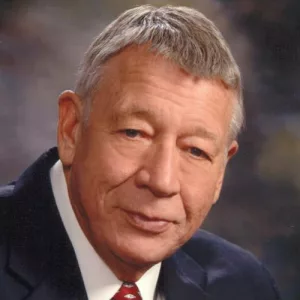

Join us as Dr. McGee enlightens us on the Father’s unfathomable love for His children. From the testimonies of believers in distant lands to the reflective insights on salvation and transformation, this episode offers inspiration and encouragement to live a life rooted in righteousness and hope.
SPEAKER 02 :
I have not attained my goal. And he’s saying, he says, behold, I make all things new. He’s saying, Vernon McGee, and he’s saying it to you. He said, we’re going to be able to start all over again. And you’re really going to live an eternal life. And you’re going to attain your goal. Wouldn’t that be wonderful? To grow in grace and the knowledge of him, not only in this life, but for all eternity.
SPEAKER 01 :
Welcome to Through the Bible with our teacher, Dr. J. Vernon McGee. You know, in golf, they call it a mulligan. It’s a do-over. And that’s how Dr. McGee encourages us in our study of 1 John 3. When we grow in the grace and knowledge of our Lord Jesus Christ, we get to start our lives all over again. No, we don’t change the past. We can’t do that. But we do have an opportunity to make good decisions today. And we can each be used by God to move his program forward in our generation. You want to know one way that you can begin a life of impact in ministry? Well, for starters, you can join our World Prayer Team. Every day we pray for a different country where God’s word is going out and changing lives. And I’ll tell you the truth, there’s nothing more important and more impactful for this ministry than prayer. Through the Bible holds your prayer partnership in the highest regard. In fact, we value your prayer more than anything else. Your prayers open doors for us, for opportunities and places that nothing else will. Sign up for a week or a month or travel the world with us on your knees until the Lord returns. I know that you’ll be glad that you did. Go to ttb.org forward slash pray to get started. Now we’re continuing in 1 John, in the great chapter 3 where we read, Behold what manner of love the Father has bestowed on us, that we should be called children of God. Before we jump in though, let’s hear from people all over the world about what it’s like to be called the children of God. Here’s a great letter from Iran where there’s great quiet hunger beginning to rumble for God’s word. This listener writes, Isn’t that a beautiful way of putting it? Next, we’ve got a Punjabi listener in the state of Madhya Pradesh in India who writes this. We live in a very poor and remote village with other laborers. Very few of us have a radio in our home, so every evening we gather together to listen to the precious word of God taught faithfully on your program. Through this, we get real peace and joy. There is no one who tells us more about Jesus, and your constant Bible teaching provides us with all the basic requirements for our spiritual growth.” And then we have a listener named Pak who writes this from Ukraine. The word pierces even to the division of my soul and spirit and is a discerner of my thoughts. Many come to my home to listen together. When we hear your teaching, it is like awakening from sleep, as if a shroud has fallen from our eyes and we begin to look at things differently. We rethink our lives. We discover the grace and peace found only when we look to Jesus. Thank you for being a mirror directing us to the light of the world. Wow. You know, those are some encouraging letters, aren’t they? You can keep praying God’s word will penetrate people’s hearts all over the world. Now let’s pray for understanding as we study 1 John 3. Father, we’re so excited and grateful to study your word that explains more about your love and purpose for your children. So thank you for the chance that we can begin again. Make us a blessing to those around us and use us like mirrors, reflecting your light into a dark world. Please impress your word on our hearts. In Jesus’ name we pray. Amen. Now here’s our continuing study of 1 John on Through the Bible with Dr. J. Vernon McGee.
SPEAKER 02 :
Now, friends, we come today to the third chapter of this very wonderful little book. And I have put with it the last verse of the second chapter and the first three verses here. And I have given it the title, The Father’s Love for His Children. And as we said last time in this last verse, verse 29, and I’m reading it again, “…if ye know that he is righteous, ye know that everyone that doeth righteousness is born of him.” Now, it’s one thing to testify that we know Christ and are in him. It’s quite another to have a life that reveals that he is our righteousness. In other words, it’s wonderful to know positionally that we are in Christ and we’re accepted in the beloved, but it’s altogether different. I have a life down here that is commensurate with that on our plane down here. In other words, he’s saying this, we recognize other believers by their lives and not their lips. Righteousness, you see, is a family characteristic of the father and his children. You see, God’s children take after their father. They have his characteristics. But now, will you notice how he puts it in this first verse? Well, I’m going to read it as it is in the text, and then I’m going to give you my translation. And when I give you my translation, as many of you that listen to me know, I don’t recommend it. I just want you to hear it. Now I’m reading from the New Scofield Reference Bible. Behold, what manner of love the Father hath bestowed upon us, that we should be called the children of God. Therefore the world knoweth us not, because it knew him not. Now, that is the very wonderful statement that is made. Now, I’m going to give you my translation, and it’s literal, and that’s all I’m concerned about. I wouldn’t recommend it to anyone. Listen to this. Behold ye of what sort of love the Father hath bestowed upon or given to us. that we should be named children of God. And we are. And because of this, the world does not know, doesn’t begin to understand us, because it did not know or begin to understand him. In other words, what he’s saying here is, we do not expect to be the sons of God. We are the sons of God. And that is the better translation that we have. And we are. We are the sons of God through faith in Jesus Christ. And that is the wonderful statement that he’s making here in this particular passage of Scripture. And I feel like this is something that we should emphasize a great deal. And the kind of love that he’s talking about is, I’d like to call it a strange kind of love, an unusual kind of love. The kind of love that we’re not accustomed to. And that is the meaning here. What manner of love? The Father’s loved us. And the love of God is shared abroad in our hearts by the Holy Spirit. That is God’s love for us. And he goes on to show that God’s demonstrated his love. He gave his son to die for us. And how many of us today have somebody that would die for us? And how many folk would you be willing to die for? Well, God loves you and he’s proven his love. He gave his son to die for you. Now, I think the greatest motive in the world and the greatest motivating force in the world is God’s love. And it is the greatest drive in the human family today. Man falls in love with a woman. A woman falls in love with a man and the sacrifices some of them make. And when it’s real, genuine love, it’s a beautiful thing. It’s a noble thing. It’s a wonderful thing. And it’s a tremendous drive. And God’s love for us is a wonderful, glorious thing. And this brings out the fact that this is the section that’s going to emphasize now that God is love. This is a wonderful thing. The true child of God. He’s going to prove his spiritual birth by being obedient to God’s Word. And here we have this wonderful love for us that should motivate us. That’s going to be the thing that’s going to cause us to want to live for God. Behold, what unusual kind, what a different kind of love the Father hath bestowed upon us. That we should be called the children of God. And we are. That is the way that some translations have it. And we are the children of God. We don’t expect to be. We are the children of God right now. Now, this brings out the thing that I’ve mentioned several times, and I mention it again, and that is our salvation is in three tenses. I have been saved. I am being saved. I shall be saved. Now, I have been saved. The Lord Jesus said, verily, verily, I say unto you, he that heareth my word and believeth on him that sent me hath everlasting life. That is something that you get the moment you trust Christ. You’ll never be any more saved than you are the moment that you trust him. And born again, born into the family of God. You see, he’s addressing little children here. These are God’s children. We, he says here, what manner of love the Father bestowed upon us. Why? Well, we’re his children. It’s his children that he’s bestowed this love upon. And now they respond to that love by obedience unto him and by living a life that is well-pleasing to him. So you can say, I have been saved, but I am being saved. And Paul says, “…work out your own salvation with fear and trembling.” It’s God that worketh in you, both to will and to do of His good pleasure. And Peter says, “…grow in grace and in the knowledge of our Lord and Savior Jesus Christ.” And John has talked to us along the same line here, that if we are the children of God, we’re going to be obedient unto Him. We’re going to grow We’re going to develop and we are going to go on in the Christian faith. Now, therefore, we can say, I am being saved. But now he says something else here. Beloved, now, right now, are we the children of God? Not tomorrow. But right now, and that’s the wonderful part of it, but the wonderful part is this. Beloved, now are we the children of God. Somebody says, McGee, I’m a little discouraged with you. I think you ought to be a little farther along, and I’ll agree with you on that. I wish I was a better man. I wish I knew more about the Word of God. I wish I had applied myself better. better in my life as I look back. Yes, I’d be willing to go along with that, that I ought to be farther along than I am. But don’t you be discouraged with me. And if you won’t be, then I won’t be discouraged with you because of the fact that it does not yet appear what we shall be. But we know that when he shall appear, we shall be like him, for we shall see him as he is. We’re going to see the glorified Christ. Now, we’re not going to be equal to him, but we’re going to be like him in our own way. And that doesn’t mean that all of us are going to be little robots or just little duplicates. It’s not that at all. It means with our own personality, our own individuality, our own He’ll never destroy that person of Vernon McGee. He’ll not destroy the person that you are, but he’s going to bring you up to the full measure and stature where you’ll be like him, not identical to him, but like him. And that’s going to be wonderful, will it not? I think that it’s going to be wonderful in heaven that we’re going to love everybody. And I go for that. But the most wonderful thing about heaven, friends, to me is that everybody’s going to love me. That’s going to be quite a change. And I’m looking forward to that. And that’ll be true of you too. Beloved, now are we the sons of the children of God, and it doth not yet appear what we shall be. But we know that when he shall appear, we shall be like him, for we shall see him as he is. And may I say that this is another great incentive to Christian living. I don’t think there’s anything quite like this. And that is the point that John makes now in verse 3. And every man that hath this hope in him purifies himself even as he is pure. If you believe that Jesus is coming and someday you’re going to be like him, that’s going to cause you to live a pure life down here. You’re not going to be identical to him someday, but you’re going to be like him. And that’s going to be wonderful. And this is a real incentive for holy living. And I know of nothing. That is such a great incentive for holy living than this particular thing here. In other words, may I say to you, we’re not wonderful now, but we shall be wonderful someday. And we are going to be able to accomplish our goal. One of the most wonderful things I think is said about the new Jerusalem we’re going to live. It’s going to be a place where you’ll wipe away all tears. That’ll be great. There’ll be no sorrow. you know, suffering. All of that’s wonderful. But the thing that strikes me in that passage of Scripture in the 21st of Revelation is this. He says, Behold, I make all things new. And that is what I like. Now, I don’t know about you today, but I can only speak for myself. And I’m very frank to make this confession that I have never really been the man that I wanted to be. I’m at the age now where I guess a man begins to dream a little. And I look back over my life and I’ve never been the man that I wanted to be. And I’ve never been the preacher I wanted to be. I’ve never really preached the sermon that I wanted to preach. And I’ve had people that have been kind to me and said nice things. as well as other things, but they’ve said nice things. And I’ve appreciated it, but I knew in my own heart, I wish I could do better. And I’ve never been the husband that I’ve wanted to be. The summer when I had the hepatitis and my wife and I sat for three months on our patio and enjoyed it for the first time in the 25 years we’ve had our home there. We’d just been so busy, but we had to stay home and we got to talking and we went back to the days that we met and how we met and what went before and how things worked out. And there were certain questions that she had and I had too. We’d been so busy, we’d just taken a lot of things for granted. And I never shall forget that night in Texas that I went to this dinner party and there was this girl with those dark brown eyes and hair full of a raven’s wing, black. My, I tell you, I fell for her. But there were some questions that I didn’t have answered. And so this summer, we got acquainted. When I went back and thought of my life, I thought, my, I wish I’d have been a better husband than I was. I should have been. And I’ve never been the father that I wanted to be. Some people think I’m a little, you know, too much for my grandson. Well, I’m trying to make up for him what I left out for my own child. And so may I say that I’ve never really attained my goal. I thank God for the way he led me. He’s been good to me in my life. And I rejoice in the fact he’s let me have this radio ministry. I never thought he’d ever do that, but he did. But really, I have not attained my goal. And he’s saying, he says, behold, I make all things new. He’s saying, Vernon McGee, and he’s saying it to you. He said, we’re going to be able to start all over again. And you’re really going to live an eternal life. And you’re going to attain your goal. Wouldn’t that be wonderful? To grow in grace and the knowledge of him, not only in this life, but for all eternity. What a prospect that lies before us. And I can’t think of anything any more wonderful than that. And that’s what we have here. You see, the father’s love for his children. Isn’t it wonderful? I have been saved. I am being saved. And I’m going to be saved. It’s going to be wonderful someday. And so you don’t be discouraged with me and I won’t be discouraged with you. Now we come to where he discusses the two natures of the believer in action. That’s how they work out in life. And he’s getting right down now where the rubber meets the road. Right down where we live. Now, will you listen to him here? Because this is a section that’s greatly misunderstood, by the way. He says here, and I’m reading now, “…whosoever committed sin transgresseth also the law, for sin is the transgression of the law.” Now, I have before me even brought them down here to the study, and I don’t often do that sort of thing, two very fine Greek commentaries. And actually, the word here, commit sin, means everyone that doeth sin. is really the letter of it, and it is that which is true. And it really means this. It means one who lives continually and habitually in sin. You know folk like that. Well, I used to live that way and the fellows around me live that way. We never thought of anything when I was working in the bank. Frankly, working in the bank was secondary. Our interest was in women and Liquor and having a good time. That was what we thought life was all about in those days. And that was what we call living. And we lived in it continually. We talked about it. Now, that’s what he means. Whosoever committed, goes on committing sin, just lives in sin, transgresses also the law. In other words, God has made certain laws. God did say, thou shalt not commit adultery. And he means that today, too. And all this free, new way of looking at things, as they say, it’s not a new way at all. It’s as old as the hills. Fact of the matter is, it goes back to the jungle. It goes back to paganism. It was the way men lived years ago. Whosoever just goes on committing sin, transgresseth also the law. For sin is the transgression of the law. In other words, God has put up the law. So you’ll know that you’re a sinner. You’ll know what he requires. And that is the purpose of the law. The law was never given to save. It was given to reveal to man. that he is a sinner. And he says in verse 5, And ye know that he was manifested to take away our sins, and in him is no sin. Now, only the Lord Jesus can take away sin. He came for that purpose. In John’s gospel, when John wrote that, he says he came to take away the sin of the world. He bore the penalty of sin. Now here in John’s epistle, he takes away the practice of sin in the life of a believer. He’s without sin, as was the sin offering. He removes the guilt of sin, and he provides the power to deliver from the habit of sinning, from just going on sinning. Now, he says, therefore, here, whosoever abideth in him sinneth not. That is, that new nature you’ve got will not sin, never sin. Paul says, what I would do, then I don’t do it. That new nature, that new nature will not go along with the old nature and sin if you’re God’s child. The believer who abides in Christ does not practice sin. He cannot live a sinful life. It’s like the prodigal son. Only pigs live in pig pens, not sons. Somebody says, but he got in the pig pen. He sure did, but he got out of the pig pen too. Let’s remember that. The child of God can get in it, but he’ll get out. Why? Because he’s a son of the Father. And he takes after his father. His father’s righteous. He wants to live that kind of a life, by the way. And so God provides the power to deliver from the habit of sinning. And that’s all that he’s saying here. Whosoever abideth in him. Sin is not. If you’re abiding in Christ, that new nature will never sin. Now, if you go off to the pig pen, that’s the old nature. And if you stay in that pig pen, you never were God’s child. We’ve already seen that in 1 Peter. Now, I’m going to have to leave off right there, but that’s a very interesting place to leave off. And we’ll pick right up there next time, my beloved. So until then, may God richly bless you.
SPEAKER 01 :
That’s a great word from Dr. McGee. I really appreciated when he said, God will remove the guilt of sin and provide the power to deliver you from the habit of sinning. That reminds me of one of my favorite booklets by Dr. McGee called Living the Christian Life God’s Way. It’s based on a sermon that he gave on Romans chapter 8. You know that amazing verse that says, There is therefore now no condemnation for those who are in Christ Jesus. If you want to know where the power comes from that can deliver you from the habit of sinning, start by reading this booklet. You’ll find it for free download at ttb.org. And while you’re there, be sure to check out the huge list of other booklets by Dr. McGee. One related to our study of Jonah is titled God of the Second Chance, The Real Story of Jonah. So as we know from our study in Jonah earlier this month, the prophet started out running in the exact opposite direction God told him to go. So how did he end up right in the heart of God? Well, his story is one of God’s mercy and redemption as Jonah learned firsthand that ours is a God of the second and third generation. and Fourth Chances. Again, you can download Living the Christian Life God’s Way or God of the Second Chance for free right now at ttb.org. Or if we can help you find a particular resource, please call us at 1-800-65-BIBLE. The Bible Bus continues to roll along on our journey through the whole Word of God. I’m Steve Schwetz, and I’ll save you a seat right up front. Through the Bible is a five-year study of God’s entire word, and together we discover God’s purposes in history and our lives, found only when we believe in Jesus Christ. Do you know him yet?