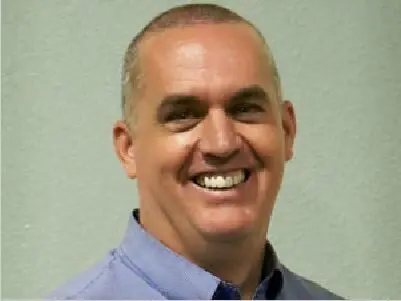


In this gripping episode of Expository Truths, Dr. John Kyle takes us on a profound journey through the book of Ephesians, elaborating on Apostle Paul’s mission and imprisonment. As we delve into Ephesians chapter 3, we uncover the rich theological foundation laid by Paul amidst his tribulations. Imagine a life where both Jew and Gentile are united as one in Christ, a radical truth that reverberates through time. Dr. Kyle masterfully expounds on Paul’s life, from his early encounters with the risen Christ to his relentless pursuit of spreading the Gospel, even at the cost of his freedom.
SPEAKER 01 :
Welcome to Expository Truths, where we exalt Christ by bringing clarity of truth through the scriptures with Dr. John Kyle, pastor of Faith Community Church in Vacaville. As Christians, we’re called to know the truth and be able to proclaim it. We can know truth when we know the Word of God, which is precise without error. powerful and effective for both salvation and spiritual growth. Enjoy digging deeply with Dr. Kyle as he takes us verse by verse through the powerful book of Ephesians, giving us a marvelous summary of the good news of Christ and its implications for our daily lives.
SPEAKER 02 :
Please turn in your Bibles to Ephesians chapter 3, verses 1 and 2. Ephesians 3, 1 and 2. The letter of Ephesians was written by the Apostle Paul to the Christians living in the city of Ephesus. Paul wrote this while he was under house arrest in Rome, and he wrote it to lay a proper doctrinal foundation for these believers, chapters 1 through 3, so they could then live out those doctrines for the glory of God, chapters 4 through 6. We’re now in the heart of the doctrinal section of this book. Paul began, if you remember, by showing us the many incredible reasons that we should passionately praise our amazing God. And then Paul prayed a wonderful prayer for the Ephesian believers, a prayer that we today should be praying for ourselves and for each other as we earnestly pursue those things that we ourselves are praying for. In chapter 2, Paul reminded the readers more than once of what they once were before Christ rescued them, so they would then be captivated by Christ and by what He has done for them in saving them from the eternal wages of their sin. See, God is gracious and kind and compassionate and loving and merciful. And Christ brings all who believe, Jew and Gentile, near to Him. And He gives us true peace and He makes us one with Him. And He makes us one with each other. And He gives us access to the Father. And He saves our lost, undeserving souls. And He rescues us from wrath because of who He is and because of what He did on the cross for everyone who believes. Our call? To love Him back, right? to love Him and to love others, to do good and godly works that glorify His name, to live so as to please Him, to bear good fruit, to be good stones in the temple that God is building. Lately, Paul’s been stressing the amazing fact that both believing Jew and believing Gentile make up the church, something which would have seemed impossible before Christ came because of all the hostility that existed between those two groups. But now look, we are equal, everyone who believes, right? We are family. We are fellow citizens and members of God’s household, believing Jew and believing Gentile alike. It’s incredible. It’s incredible. Look what Paul says next, chapter 1, verse 3. For this reason, I, Paul the prisoner of Christ Jesus for you Gentiles, if indeed you have heard of the dispensation of the grace of God which was given to me for you. Now here in this passage, we can note three truths about Paul and his present calling. The first truth to note is this, that Paul is a prisoner for the Gentiles. Paul begins verse 1 by saying, for this reason, and that refers back to what Paul says in chapter 2, verses 11 through 22, where he explained the wonderful union of Jewish believers and of Gentile believers into one new person in Christ. Paul now intends to offer a prayer for these Ephesian believers, but just as he’s about to do that in verse 2, look, Paul gets sidetracked. It’s really interesting. For this reason, I, Paul, the prisoner of Christ Jesus, for you Gentiles, and Paul’s like, hey, stop there for just a second. Let’s talk about that for the next 13 verses, and then we’ll get back to the prayer, which I intended to begin in chapter 2, verse 2. Look how Paul begins verse 14. He says, for this reason. You see that? So verse 1 begins with, for this reason. Paul then gets sidetracked for the next 13 verses. And then it’s in verse 14 where Paul picks up with his original thought that he had been sidetracked away from. That’s why verse 14 begins the same way as verse 1, for this reason. Look, you can see what Paul originally was going to write as you put verses 1 and 14 together. Verse 1, For this reason I, Paul, the prisoner of Christ Jesus, for you Gentiles, verse 14, bow my knees to the Father of our Lord Jesus Christ. But again, Paul got wonderfully sidetracked for 13 verses before he got to that prayer. So, what is it that sidetracked Paul? Well, that word Gentile at the end of verse 1 is what sidetracked Paul and the incredible mystery that the Gentiles have become a part of the church and have united with the Jews by faith in Christ alone. As we’ve already seen in Ephesians about Paul with some very long sentences in this book, verses 2 through 13 is also just one long sentence in the original language, the Greek. So look, Paul first begins this chapter by mentioning the fact that he’s a prisoner for the Gentiles. And that’s certainly true. Remember who Paul was? A second century description of Paul says that he was a man small in size, bald-headed, bandy-legged, well-built, with eyebrows meeting, rather long nose, and full of grace. Gives all of us hope, doesn’t it? The key here for us to note is that not his physical description, but rather those wonderful words, full of grace. Paul certainly was an amazing man. The guess is that Paul was born around 5 AD in Tarsus, which is on the southeastern coast of Turkey. Paul’s father was a Pharisee from the tribe of Benjamin, and nothing is known about his mother. While young, Paul learned the trade of tent making. However, around the age of 13, he was sent to Jerusalem for religious training. He trained under the highly renowned teacher Gamaliel, a Pharisee who was also a member of the Sanhedrin, the ruling council in Jerusalem. Paul became a great student under Gamaliel, very devout, very legalistic, very strict, very loyal to his cause. The problem? The problem was that the Pharisees opposed Christ and they were more loyal to their traditions than they were to the truth. See, they were all about religion. They were all about politics, about duty, about looking good externally to people instead of looking good to the Lord. Well, time went by and soon Paul heard about a new sect that was rapidly growing, Christianity, which we of course know it’s not a sect at all, it’s the truth of God. But to Paul and to the Jewish Pharisees who were steeped in their works-based false system which Judaism had become, Christianity was a great threat to them. See, according to the first few chapters of Acts, the quick growth of the Christian church alarmed the Jewish leaders. They were threatened by this new religion, which centered around the man Jesus, whom they had crucified earlier. So they jailed and flogged some of the apostles, but the church kept on growing. Finally, in Acts 6 and 7, Luke writes about the false trial and then the stoning of the first Christian martyr, Stephen. In Acts 7.58, the passage notes that the witnesses left their clothes in the care of a young man named Saul, or Paul. At that point, widespread persecution against the church broke out, and Paul became very aggressive in seeking out Christians and dragging them out of their homes to prison. Acts 8, verses 1-3. Paul eventually went to see the high priest, and he asked for letters that they could then take to the synagogues up in Damascus, so he could look for men and women who followed Christ, and then take them back to Jerusalem as prisoners, Acts 9, verses 1-2. However, we know this, right? On his way to Damascus, something absolutely amazing happened to Paul. Acts 9, 3-19 tells us that on the way, a light flashed, causing Paul to fall down blind. And then a voice asked him, Saul, Saul, why do you persecute me? When he asked who he was, Jesus identified himself, and he told Paul to wait in Damascus for further instructions. Paul was then led to Damascus, where he waited for three days until God sent Ananias to him. There, Paul was saved by God’s grace through faith in Christ alone. There, Paul was commissioned to be God’s apostle. And there, Paul’s life was changed forever. And look, it was only after a few days that Paul began to preach publicly that Jesus was the Christ, the Son of God. And the rest is history. In his ministry, Paul went on three different lengthy missionary journeys between the years 46 AD and 57 AD. And on those journeys, he started new churches and he also strengthened existing churches. Paul also wrote 13 of the letters of the New Testament and Paul suffered greatly for the cause of his king. Well, it was in the middle of missionary journey number one in Acts chapter 13 that after Paul had preached the word of God, look, many of the Jews greatly opposed Paul while the Gentiles were hungry for the word of God. And so that’s when Paul said in Acts 13, 46, behold, we turn to the Gentiles, the non-Jews. Later on in Acts 18, after great opposition from the Jews, Paul said, from now on, I will go to the Gentiles. And while Paul had a heart for every lost soul, Jew and Gentile alike, and while Paul continued to go into the synagogues of the Jews and to preach wherever he found himself, look, he went to all, everyone who would listen to him, both Jew and Gentile, and Paul was specifically known as the apostle to the Gentiles, to the non-Jewish people. Now remember, Paul’s writing this letter to the Ephesian Gentile Christians from prison in Rome. During this time in Rome, Paul was under house arrest. What does that mean? It means that while he was chained to a guard 24-7, he was also able to conduct a limited ministry. Like what? Well, he was able to receive visitors, he was able to minister to those who came to him, and then he was able to write letters like Ephesians. But how did Paul end up there in prison in Rome? I mean, that’s not fun, right? Being in prison? You don’t have to raise your hand if you know that. It’s not chained to a guard all the time, continually, 24-7 for two years. And this is Paul, right? This is Paul the go-getter. The Paul, the man who can’t be slowed down. The Paul, the man who continually traveled by foot and boat to share Christ with lost souls all over the known world. And now this? I mean, he hadn’t done anything wrong. Remember what happened? It was at the end of his third missionary journey, at the end of Acts chapter, of the book of Acts. And Paul had lovingly raised a gift for the Gentile churches. And he had personally taken that financial gift from the Gentile churches to Jerusalem, the Jewish church there, to help alleviate the suffering Jewish Christians in that city. And it was a wonderful gift. It was a generous gift. And it was something that would unite the Jewish and Gentile wings of the church together in love. But remember, when he got there to Jerusalem, some Jews saw Paul in the temple and they then started a riot by falsely accusing Paul of bringing some Gentiles from Ephesus beyond the barrier in the temple, which was forbidden. The riot then led to Paul being seriously beaten. Very close to death, I believe. And then it led to Paul’s imprisonment, which got him entangled up in the Roman judicial system. And then later, they had him transferred to Rome, where he suffered shipwreck during transport. Paul is now under house arrest in Rome at this point. Question. Why does he say he’s a prisoner for you Gentiles? Well, because the Jews had falsely accused Paul of letting a Gentile into a forbidden area in the temple. Yes, there’s that. But even more, because Paul’s special mission was primarily to the Gentiles, the non-Jews. And this specifically is what made the Jews especially angry at Paul, which then led them to following him around and then to harassing him all the time and then to falsely imprisoning him. Yes, the non-believing Jews hated the gospel message of Christ, yes. But they also doubly hated that that message went out to the Gentiles whom they despised greatly. Result? Prison. But note this. That second, Paul’s a prisoner of Christ Jesus. See, he’s a prisoner for the Gentiles, yes, but he’s a prisoner of Christ. Yes. Now look, at this point, Paul is about five years into this particular prison thing. He started out at prison in Jerusalem. He was then moved to Caesarea, where he spent a couple of years there in that prison. And then he was transferred to Rome, where he’s there for two more years wrongfully. And clearly, Paul was a prisoner of men. But that’s not how Paul saw it, not at all. See, he viewed his circumstances from a divine perspective. For in his heart and in his mind, Paul was really a prisoner of Christ. See, Paul recognized that it was by the sovereignty of God that he was here in this prison. And he trusted God with all of that. See, his call was to be faithful to God. And guess what? It led where it led. Your call is to be faithful. And where it leads is where it leads. And being here in prison in Rome is clearly where God wanted him to be. Huh? I mean, really God wanted Paul in prison? But I thought God wants all his children to be happy and healthy and wealthy and to never ever suffer. Wrong. Very wrong. And sometimes it’s his beloved’s children who suffer the most. There’s an error today called open theism that teaches that God isn’t sovereign over the tragic things that happen. That when bad things happen, that God is just as upset as you are, but God can’t do anything about it. People that say this are trying to get God off the hook for all the evil and all the suffering in the world. But what they’re doing, this belief, is fundamentally unbiblical. The Bible is very clear that God is a sovereign God and that God is sovereign over everything, even our trials and even our sin. That doesn’t mean that God is the author of sin, no. And it doesn’t mean that God ever does evil, never. But it does mean that all of these things fit into the sovereign plan of God. And the good news is that he promises to work all these things out together for good for those who love God. And also that God knows what he’s doing and God knows what he’s allowing in our lives as his beloved children, even the hard things. So no, God never does sin. And God never does evil. But He’s sovereign over all of it. And it’s all leading to a great end. And while this world is a sin-stained world, look, God is working all this out for His children’s good and for His own eternal glory. And your call is to trust Him. Even when the bad things happen. Even when sinful things happen to you. Trust Him. Paul trusts God even in prison, right? Even though he did nothing wrong. God wants him in this prison. And his call is to be faithful wherever he finds himself. So Paul did nothing wrong to get here, but what if he did, okay? What if Paul was here in prison for sinning? What if Paul was here in prison for doing something that was dishonoring to God, for doing something that was blatantly wrong? Question, can God still bless him even then? Yes, he can. See, our God, anybody know this? Our God is an incredibly gracious God. He’s a forgiving God. He’s a patient God. He’s an awesome God who’s great at turning good out of something bad for His children who look to Him. Can God redeem this bad thing that I’ve done? Absolutely. And your call is to look to Him and to honor Him wherever He has you, and He will take that from there. See, He’s big enough to be able to work all this out for good, even your sin. And don’t we know it? Look it. So you messed up. Don’t we all? Yes, we all do. Honor God today. Honor God right here. Honor God right now. God can work all that out, see? Peter denied Christ, but he repented. He learned from it. And he went on to be used mightily by God. And I’m sure that sin and the forgiveness that he received from the Lord greatly impacted him in the ministry after that. So, come on, move on. Trust God and move on. Paul’s a good example for us as he’s a prisoner of Christ. Question, whose child are you? Who do you love? What were you created for? To glorify yourself or to glorify God? What comes first in your life? Your own ease or honoring the God who saved your undeserving soul from eternal wrath? Well, Paul got it, as should every one of us here, as should every Christian. I once was lost, but now I’m found. Christ is all that matters now. I was dead, but He made me alive. Christ is all that matters now. I was a child of wrath, doomed for eternity in hell, but Christ died on the cross in my place and He faced hell and wrath so I could be forgiven, so I could be rescued. Christ is all that matters now. I once was cast out, but now I’m accepted by God and I’m a part of His eternal family. Christ is all that matters now. I once stood condemned, but now I have heaven as my eternal inheritance. Christ is all that matters now. See? Him. Him alone. And if Christ wants me in prison, then I go to prison. If pleasing Him leads to pain, then pain it is. Because He’s all that really matters now. See? Note that Paul’s imprisonment in Rome wasn’t the first time that Paul was put into prison, nor the last. See? Remember in Acts 16, remember? Paul and Silas were beaten and thrown into prison for troubling the city with the good news of Christ. They’re having a godly impact on the city, changing the city for the glory of God. They caused some trouble because of that godly impact and it made the people very angry. These men exceedingly trouble our city and they teach customs that aren’t lawful for us being Romans to observe. The leaders of the city then tore off their clothes and commanded them to be beaten with rods. Then they laid many stripes upon them. The word for rod was used of a club or a staff like a walking stick. These rods were then bundled together and they were used to beat Paul and Silas with. We can know for certain that Paul and Silas were severely beaten at that time. I mean, these rods would have been able to inflict significant pain and muscular damage and bruising and intense bleeding from these wonderful men of God. What do you think Paul and Silas were feeling at that moment? Undoubtedly, they were feeling what the apostles were feeling back in Acts 5 when they too were beaten for the cause of Christ. And what did they do? They rejoiced because they were considered worthy to suffer shame for Christ. How can we know that Paul and Silas felt that same way? Because later on that night in prison at midnight, Paul and Silas are singing in prison. Think about that. They’re bruised and they’re bleeding. They’re in the painful stocks at this point, which was utterly miserable. They’re suffering great pain, intense pain, and they’re singing. See, they knew Christ is worth it, right? They knew that Christ is worth suffering for. They said, hey, beating me, hurting me, killing me, that’s not going to silence me or keep me from lifting Christ high, because they knew, see? See? Look, when we became Christians, we didn’t sign up for a picnic. Life is hard, but Christian life is harder. And our rest comes in glory, not now. Now is the time for war, for battle, for pain, for hardship, for death, and the glory comes later. But oh how great it is to glorify God in the midst of prison, and in the midst of suffering, and in the midst of hardship. What opportunities for us to lift Christ high when the pain and the trial is great? And Paul and Silas knew this. Clearly, they knew this. I can hear Silas. Hey, Paul, man, you’re a bloody mess. You’re trailing blood everywhere you go, Paul. You don’t look so good right now, Paul. Yeah, well, Jesus bled and died for me and he saved my soul. So this is nothing compared to his infinite worth. I can hear Paul, man, Silas, you’re a big bloody bruise. Your whole back is a black bruised mess. You’ve got to be utterly miserable, Silas. Well, Jesus is worth it. He’s well worth it all and more. This is nothing. And soon I’ll see him face to face. Hey, Paul, let’s sing. And they did. Come on, how good is that? Hey, what matters? Christ alone matters. And if suffering in prison glorifies Him, then I go to prison and I suffer and I lift Him high. This is a laser focus on your beloved Lord and Savior. Where you just stay focused on Him and on Him alone. That’s our call. That’s our call. That’s the call for every one of us in Christ in the midst of a good but often hard life. And so as life comes, you’re focused. And as pain comes, you’re focused. As trials and troubles and struggles and even death comes, you’re focused on Christ, gazing at Him and waiting to be with Him and knowing that He’s worth living for and suffering for and dying for because nothing compares to Christ and to glorifying His name. Paul and Silas were then thrown into prison. What can you do in prison? Well, you can pray and you can sing. And you can draw near to God and you can please Him and you can commune with Him and encourage other prisoners there. They weren’t in there for long like Paul was now in Rome. But long or short, you know, it didn’t matter. I’m just along for the ride, right? And my call is clear. Be faithful and honor my God whom I love wherever He has me. Look, God has you where He wants you to be as His beloved child. And your call is clear. Be faithful. Doesn’t mean it’s pleasant all the time, right? It doesn’t mean it’s always fun. It doesn’t mean it’s always easy. But you trust Him. And you honor Him where He has you. Paul’s a good example for all of us today. Let’s pray. Heavenly Father, thank You, Lord, so much for the wonderful example of Paul who willingly and even gladly went to prison for being a good steward. For fulfilling his calling. Help us all, Lord, to be faithful. And whatever the cost, help us to be faithful to You, our good, amazing, worthy God whom we love. Our saving God who rescued us. Help us, give us perspective and wisdom and help us to encourage each other in these things. May we be good stewards today. In Jesus’ name we pray. Amen.
SPEAKER 01 :
Thanks for joining us for today’s exposition from the book of Ephesians on expository truths with Dr. John Kyle. Continue on with us next week at this same time. And to find this sermon in its entirety as well as other sermons, visit vacavillefaith.org. Faith Community Church seeks to exalt Christ by bringing clarity of truth through the scriptures with a commitment to glorifying God through the pure, deep, and reaching message of the gospel through faithful exposition. Pastor John is the preaching pastor at Faith Community Church of Vacaville, a seminary professor and a trainer of preaching pastors overseas. Join Faith Community Church for worship Sundays at 9 and 1045 a.m., located at 192 Bella Vista Road, Suite A in Vacaville. To learn more, visit vacavillefaith.org or call 707-451-2026. That’s vacavillefaith.org.