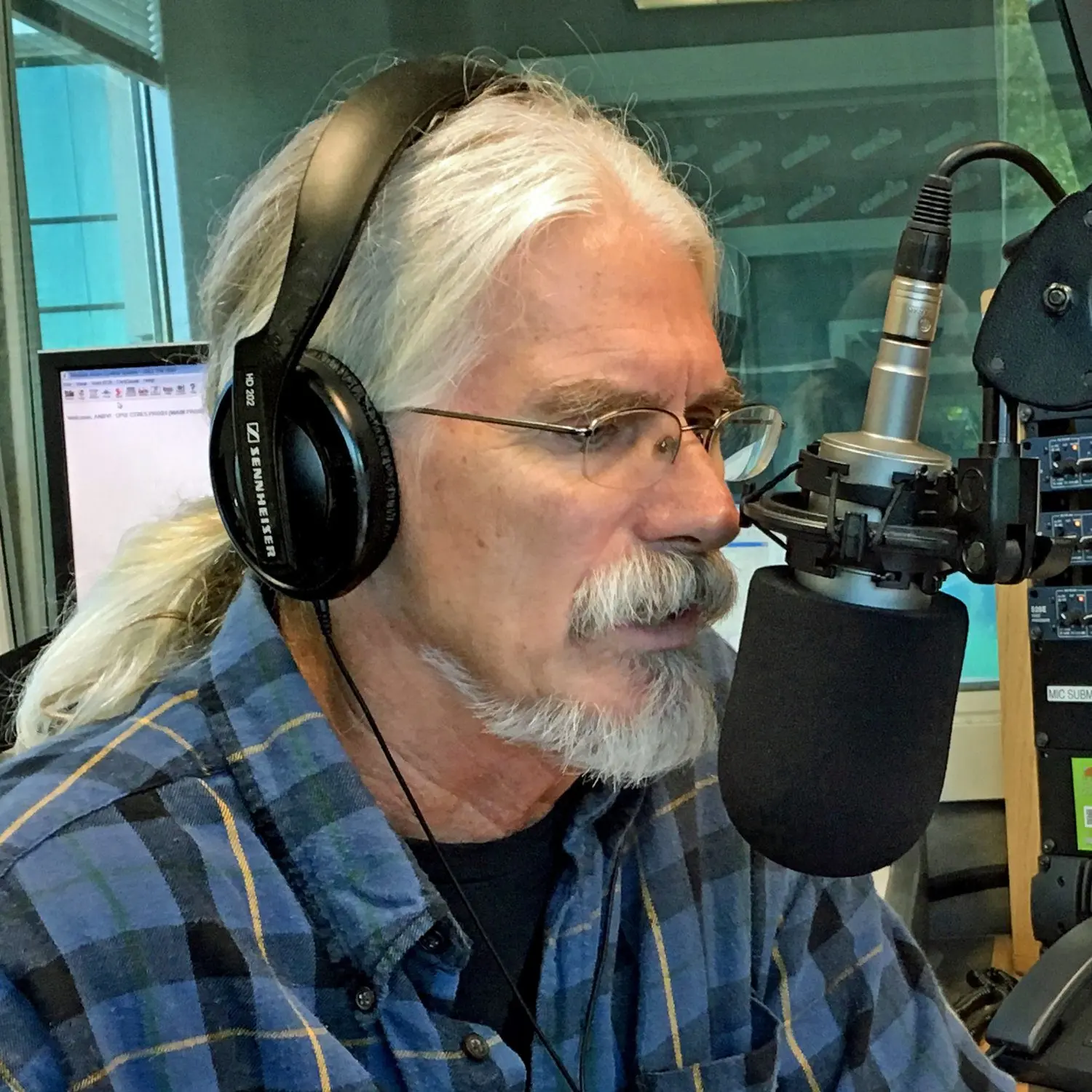
Join Steve Gregg as he delves into the theological significance of Jesus being the true vine and how this identity fulfills the everlasting promises made to Israel. The discussion opens an in-depth examination of how believers are Abraham’s seed, as promised in Genesis, and how this understanding can influence Christian life today. By exploring key scriptural insights, Steve addresses common misconceptions and emphasizes the broader purpose of Christ’s mission, beyond merely providing a pathway to heaven.
SPEAKER 1 :
Thank you.
SPEAKER 07 :
Good afternoon and welcome to the Narrow Path radio broadcast. My name is Steve Gregg and we’re live for an hour each weekday afternoon, including today, the day after Thanksgiving. If the reason you haven’t called in is because you weren’t sure if we’re on the air. There are some lines open for you right now, and you can get through, if you call at this time, 844-484-5737. If you have questions about the Bible or the Christian faith you’d like to ask, we’ll talk about them on the air. If you disagree with the host and want to express a different opinion, feel free to call. We’ll discuss that on the air as well. The number again, 844-484-5737. And our first caller today is Timothy from Ontario, California. Hey, Timothy. Good to hear from you.
SPEAKER 04 :
Hey, Steve. My question is, in John 15, verse 1, Jesus says, I am the true vine. And he’s trying to, I guess, help the disciples understand who the true vine of Israel is, that he’s the true Israel. My question is, is it important? Why is it important for Christians to know that Jesus is the true Israel of God and that all who believe in him are Israel? Why is that important? Is it important? And if it is, why does it matter?
SPEAKER 07 :
Well, I think the reason it matters and it is important is that there are promises that God made to Israel. And these promises have a forever element to them. And they are fulfilled in Christ. He is the true Israel. And as Paul says in Galatians 3.16, that Jesus is Abraham’s seed. And then a few verses later, 13 verses later, he says, and if you are his, then you are Abraham’s seed and your heirs according to the promise. Now, the promise God made to Abraham. way back in Genesis 12, was sort of the foundation for the entire Bible narrative after that. God made a promise to Abraham and to his seed. And, of course, the Old Testament records how these promises were fulfilled to the natural seed of Abraham, the Israelites, on a conditional basis, conditioned on their obedience. But the Old Covenant says, which defined Israel as that seed, is now defunct, and Jesus came in with a new covenant defining him and all who are in him as that seed. So, you know, since the promises made to Abraham are the central theme of the whole Bible, Old and New Testament, it’s pretty important to be able to know who the seed of Abraham are. Again, in the Old Covenant… God allowed the natural offspring of Abraham, some of them, not all of them, but some of them, to be regarded as his seed. And he gave them a, they had a good run. They didn’t do very well. They didn’t keep the commandments or the covenant. So he brought Christ to fulfill it. You know, it says in Isaiah that God looked and he marveled that there was no one, no intercessor, no one to redeem. And so his own right arm came to redeem. And that, of course, is a reference to Christ. And so because there was no one in Israel, or at least not many, not sufficient numbers in Israel, to make up a godly nation to fulfill the promises that God made to Abraham to Israel, God sent Jesus to be the seed of Abraham par excellence. And, of course, as Paul mentions, just like Israel is a collective term, it was a man’s name. Israel was a man’s name. It was Jacob’s name. But his family and the group of people that came from him were called collectively Israel by his name. So Christ also is Abraham’s seed, but those who are in him. are collectively Abraham’s seed in him. And so, you know, to not understand that is to miss pretty much the point of, in a sense, the point of Christ’s coming. Because many people think Jesus just came to die on the cross and rise again so we can go to heaven when we die. That is hardly a central theme in the Bible. I mean, Jesus’ death and resurrection is. Jesus’ death and resurrection is the central theme of the Gospels themselves and much of the epistles. But the idea that he did that so we could go to heaven when we die is certainly not mentioned many times in Scripture, but rather he did it to redeem for himself a people who are what Israel was supposed to be, zealous for good works, You know, a people of his own, a kingdom of priests, a holy nation. That’s what Peter says we have become in 1 Peter 2, 9. That’s what Israel was supposed to be. But in Christ, he has fulfilled his concern to get a people of God. Now, do we go to heaven when we die? Yeah, we do, but that’s not really discussed very much in the Bible. The Bible is almost entirely about how to live as people of God. And there’s only a few sideways glances at what happens after you die. But I think a lot of people have not understood that God has fulfilled his promises to Abraham in the community of Christ. the redeemed people, God, for whom he has a plan. And that plan has something to do with this world, just like it did with Israel. God never promised Israel in the Old Testament they’d go to heaven when they die or go to hell if they were bad. Those subjects were never addressed in the promises God made to Israel. And they’re barely in view in the New Testament, only occasionally. And so what we have in the New Testament is a continuation of God’s plan to have a people of his own. But it’s the people who are in Christ, not the people who are in Israel. Now, the Bible does refer to the people in Christ as Abraham’s seed and the Israel of God and things like that. That’s because… The people of Christ, the original members, were Jewish. They were literally Abraham’s actual offspring. The first many thousands of Christians were Jewish people who became Christians. Of course, you and I are Gentiles who came in later on the same terms as the Jews, that is, by faith in Christ. But this community in Christ is what God promised to Abraham. and is the fulfillment of the promises God made to Israel and Abraham. So I guess you say, why would that be important for people to know? Well, I think people have a tendency to look at religion in general. I don’t mean just Christianity. I mean any religion, including Christianity. as a means of, I don’t know, doing whatever is the bare minimum thing to go to heaven when you die. I think whether you’re a Hindu or a Buddhist or Muslim or whatever, these religions all focus on what happens after you die and whatever sacrifices you have to make in this life in order to get there when you die. But that’s not what Christ was about. That’s not what Abraham was about. That’s not what Israel was about. If it was, God never mentioned it to them. But no, it’s about fulfilling God’s purposes for the world. God made the world for a purpose. And that purpose was to be inhabited, he says. by a people of his own who are zealous for good works. And that’s what he’s got. Although the church often doesn’t understand that. And since they’re so focused on just doing the minimum thing you have to do to go to heaven, many churches attract large groups by simply saying, well, you just have to believe in Jesus, say a prayer, walk forward at an altar call, and then you’ll go to heaven. And the people are never really told what it is God saved them for. He didn’t save them for heaven. He saved them for his kingdom. He saved them to be his people, his community. And so to not understand that, I think, is to miss the whole point of the gospel itself.
SPEAKER 04 :
And I’m thinking of the scripture, For we are his workmanship, created in Christ Jesus for good works, which God prepared beforehand that we should walk in them. Right. In what life? This one or the next? This life, obviously.
SPEAKER 07 :
Yeah, and it’s interesting because that’s the conclusion of a series of verses that people quote the first two verses frequently. That’s Ephesians 2, 8, 10.
SPEAKER 10 :
Yeah, forget 10.
SPEAKER 07 :
Yeah, the two previous verses say, For by grace you are saved through faith, and that not of yourselves. It is the gifts of God, not of works, lest any man should boast. For, okay, we are saved by grace for what? Well, because we are his workmanship. That is, he’s building something out of us. We’re his project, which are created in Christ Jesus for good works, which he is foretelling that we should walk in them. This is not talking about after we die. This is talking about now. So even the most famous verse, one of the most famous verses often quoted about we’re saved by grace, goes on to tell us what we’re saved for. Not for heaven. Now, I do believe, and you know I believe this, but not everyone listening does, I do believe that when a Christian dies, he goes to heaven. But that’s not our permanent residence. Jesus is going to come back here. And the Bible says when he does come, he’ll bring with him those who are in heaven who’ve died. And he’s going to set up, you know, the earth again to be reigned over by Christ and his people. And that is said so plainly, even in Jesus’ own teachings. He said that the meek shall inherit the earth. It says in Romans 4.13 that God’s promise to Abraham was that he and his seed would inherit the world. The Old Testament says the Messiah will ask of God and he’ll receive as his inheritance the nations and the uttermost parts of the earth for his possession. I mean, this is a teaching from Old to New Testament all the way through, even Revelation 5.10, the inhabitants of heaven say God has redeemed us from every kingdom and nation and tongue and so forth and made us a kingdom of priests and we shall reign on the earth. So, I mean, it’s like the fact that Christ and his people will reign on earth like Adam and Eve were supposed to with their offspring, except they failed the test and disqualified themselves. Christ came to redeem mankind from that disqualification, and so that the plan A could continue. But it doesn’t begin when you die. It begins when you get made alive.
SPEAKER 04 :
Right. So it seems like it’s important also to the Apostle Paul who addressed it in Romans 9-11, that he wanted us to understand who Israel was. And that’s why I think he spent so much time in those two chapters talking about it, on the method of how God is saving Israel.
SPEAKER 07 :
Well, yeah. I mean, at the beginning of that whole discussion about Israel, in Romans 9 and verse 6, he tells us who Israel is not. And he says they are not all Israel who are of Israel. So all Israel who are of Israel, meaning the genetic descendants, the biological offspring of Abraham, they are not all Israel. Israel is something else, not identified with the racial group. And who are they? Well, they’re made up of the faithful remnant of that racial group, who are then joined by faithful Gentiles. I apologize for my voice. It seems to be hoarse today. So, in other words, faithful people are Israel, Jew and Gentile. That’s who the faithful are. That’s who Israel is.
SPEAKER 04 :
Amen. Well, thank you, Steve, for that answer. I’ll let you get on to your next caller, but we’ll talk again soon.
SPEAKER 07 :
Okay, Timothy. Good talking to you.
SPEAKER 04 :
All right. God bless. Have a good day. I know.
SPEAKER 07 :
Okay, Clyde from Sun City, California. Welcome to The Narrow Path. Thanks for calling.
SPEAKER 05 :
Thank you. Yes, I have a question. And maybe you could explain it to me. I was listening to the radio. A preacher said that when Jesus was on the cross, he said, My God, my God, why have you forsaken me? Now, this minister explained. It said, well, God couldn’t stand to see sin. Well, that didn’t… That don’t make really much sense because why did he destroy Sodom and Gomorrah? He saw the sin there. Or made Noah build the ark. He saw the sin there. And God never changes. So he must have saw the sin when Jesus was on the cross.
SPEAKER 07 :
Yeah, the Bible is very clear. The Bible says the eyes of the Lord run to and fro beholding the evil and the good. And so obviously God sees evil as well as good. I think the verses in Habakkuk that they’re thinking of where the prophet complains and says, God, your eyes are too pure to look upon evil. But of course that means to look favorably upon evil, to countenance it. And it may not be in Habakkuk. I think it is. But in any case, some people say, well, see, God can’t look upon evil. They’re totally misunderstanding that verse and eliminating all the other verses that say that God sees everything and knows everything, evil and good. So you’re right. It’s not correct to say God can’t see evil. Now, as far as Jesus saying, my God, my God, why have you forsaken me? I think that those who take the view you’re describing, would probably put a finer point on it. They would not say that God can’t see evil, but he can’t associate with evil. He can’t countenance evil. And they would say that Jesus took all our sins upon him on the cross. And as it says in 2 Corinthians 5, he who knew no sin became sin for us. that we might become the righteousness of God in him. So they’d say Jesus on the cross became sin for us, and therefore God had to disassociate with him, and that that’s what Jesus was saying when he said, my God, my God, why have you forsaken me? Now, I’m not sure that that answer is correct. That is the answer that I was taught all my life. And I will say I taught it myself when I was growing up because I knew no other answer. But there are other possible answers. For one thing, we know very well that Jesus was quoting a Bible verse. That Bible verse was Psalm 22, 1. My God, my God, why have you forsaken me? Which is uttered by David. David is asking God why he has forsaken him. And yet later in the psalm, he acknowledges that God hasn’t forsaken him. God will not abandon him. So why did he say that? I think it was just a cry of angst. I think it was not a question seeking an answer. It was a rhetorical question. I’m just expressing his sense of being God forsaken at that moment. People talk that way sometimes. David did, and Jesus could have too, for the same reason. He might not have been expressing a theological truth, as some people think he was, so much as just expressing his anguish, you know, in that kind of a rhetorical cry. Now, that would be entirely possible. Now, another thing is that since it is quoting the first verse of Psalm 22, many have thought that he is doing so in order to call attention on the part of those listening and nearby, to that psalm. Because if it was a familiar psalm to them, they would hear his uttering of the first verse, and it would call to mind the rest of the psalm. Now, as you go through the psalm further down, It actually describes his crucifixion, talks about how they pierced my hands and my feet. You know, they cast lots for my clothing and did things like that. I mean, it talks about the crucifixion. And so some feel that he was calling out Psalm 22, 1 in order to call attention to the fact that that it was being fulfilled right before their eyes. Now, the Bible doesn’t tell us why Jesus said it, but as I say, there’s more than one possibility. The idea that he became sin for us and God had to disassociate from him briefly, I will not say that’s wrong, but it’s not the only possibility. And so a lot of people have really been stumbled when reading that. They think somehow Jesus lost his faith or Jesus suddenly believed he wasn’t divine anymore or whatever. And, you know, it’s a shame. I mean, a little bit of knowledge is a dangerous thing. People who read the Bible become familiar with a few things. What sticks in their mind is the things that stumble them. They don’t remember anything else or make any effort to understand what they’re reading. Then it rattles them. And some people have been rattled by Jesus saying that. But there’s more than one possible reason for him doing so. Maybe all of the above. Anyway, Clyde, I appreciate your call. I hope that’s helpful to you.
SPEAKER 05 :
Well, the only thing is that I was saying that there’s nowhere in the Bible, I mean in the New Testament, that Jesus prayed and said, my God. Every time he prayed, he said, my Father. And even when he was in the temple, when he was 12 years old, he said, I must be about my Father’s business. He didn’t call God, God, when he was praying.
SPEAKER 07 :
Well, generally not. You’re right. I mean… Remember, after he rose from the dead, in John chapter 20, he said to the women, or Mary, it might have been Mary Magdalene, he said this too. He said, go and tell the disciples, I’m going to my Father and your Father, to my God and your God. So Jesus did use the term Father and the term God interchangeably, but you’re right. He taught us to pray to the Father. His recorded prayers, generally speaking, are addressed to the Father. and that was his normal way of speaking about God. That did not exclude the possibility of him calling his father by the term God, but you’re right, it was not his habit to do that. So he was basically quoting a scripture where David had used those terms. Okay, let’s talk to Terry in Glendora, California. Terry, welcome to The Narrow Path. Thanks for calling.
SPEAKER 03 :
Hi, Steve. How are you doing today, bud?
SPEAKER 07 :
Good.
SPEAKER 03 :
Good, good. I have two questions for you. First question is a little bit easier. You’ve written a book on four views to revelations or something like that?
SPEAKER 07 :
Uh-huh.
SPEAKER 03 :
And I was wondering how that would be available. How can I get a copy?
SPEAKER 07 :
You just look up my name on Amazon. My books are there. I’ve got quite a few books.
SPEAKER 03 :
And your books are there? Okay, sounds good. And the other thing has to do with that some degree. You talk about partial preterism. And I was wondering if you could kind of explain that to me. I kind of have an idea on it. I hear so much on the radio on the, I guess it’s pre-millennial dispensational view. I’m not sure I understand that totally. But I’m much more attracted to the idea of partial preterism. Could you help me understand that better?
SPEAKER 07 :
Well, you should study it on your own before you let yourself be attracted to it. I am a partial preterist. not because I was attracted to it, but because I studied and had to conclude what I did about the passages in general. Preterist refers to interpreting a prophecy as having already been fulfilled in the past. The word preter means past in Latin. So a preterist is someone who looks at a prophecy in the Bible and says, oh, that was already fulfilled in the past. as opposed to a futurist who looks at the same prophecies and says, no, that’s going to be fulfilled in the future. Now, a full preterist, I believe, takes a heretical view because they don’t believe there’s any future second coming of Christ or judgment or resurrection. They think all those things happened in the past because they, a full preterist, believes that all prophecy in the Bible has fully been fulfilled in the past, and there’s nothing left for the future. Now, this is a view that arose pretty much in the 1970s, and it’s kind of a growing movement on the Internet for the most part, and there are books for it. But it denies a future second coming of Christ. And when people hear the word preterist, A lot of times they’re thinking of that, full preterism, which thinks that all prophecies have been fulfilled in the past. Well, that’s not mainstream theology in any denomination or any movement. Partial preterist means that you believe that some prophecy has been fulfilled in the past, but not all. It means if you’re a partial preterist, you probably believe there’s a future second coming of Christ, a future resurrection of the dead, a future new heavens and new earth, a future judgment. Like all Christians have believed throughout all history, a partial preterist believes those things just as much as any other Christian does. The only people who deny that would be the full preterist. But the partial preterist says, no, there are things that have not been fulfilled in the past, but there are a lot of things that have. Now, all Christians believe that there’s a lot of prophecies fulfilled in the past, which technically would make them partial preterists. Because, for example, many Christians believe that 300 Old Testament prophecies were fulfilled in the lifetime of Jesus, by Jesus himself. And, you know, so obviously they’re preterists about those prophecies. The Jews don’t believe the Messiah has come, so they would be futurists about those prophecies. They’d say it hasn’t happened yet. Christians, by definition, say no, those things did happen. They happened in Jesus and Nazareth, therefore they are fulfilled, and we are preterists about those passages. But even though all Christians are partial preterists in that sense, not all would call themselves partial preterists or any kind of preterists, because that term is usually used for people who would add to the list of fulfilled prophecies. certain prophecies that are very popularly seen as future. For example, the Olivet Discourse in Matthew 24, or the book of Revelation. or some other Old Testament prophecies in Daniel or Isaiah and so forth, that a lot of the prophecies that are popularly applied to the future second coming, a partial preterist would say, well, not these ones. These ones are not applied to the second coming. Even though some passages are, these ones are not. And even though the ones that the partial preterists are saying are not about the future second coming, are very popularly taught as if they are. For example, the last chapters of Zechariah, almost all popular prophecy teachers say that’s about the end times and the second coming of Christ. A partial preterist would say, well, there’s no reason to believe that. The New Testament writers quote these prophecies in the New Testament as fulfilled in their own time, not the end times. And so we would say they apply to first century things that have been fulfilled in the past and that will not be fulfilled in the future. That doesn’t mean that there aren’t also additional prophecies that remain to be fulfilled in the future. I believe every prophecy that is talking about the future resurrection is the rapture, the final judgment, the actual physical descent of Christ to earth, you know, the new heavens and new earth. I believe those are future, at least all the New Testament ones are. And so that’s how I would see it. And I’m a partial preterist. Now, not all partial preterists would see it the same. Because being a partial preterist means that you see some things fulfilled in the past and some still in the future. So even a person who’s partial preterist might see some things as fulfilled in the future that I see as past. Or they might see some things fulfilled in the past. that I see as future. In other words, it’s not just one, you know, solid group of people called, you know, partial preterists who have the same opinions about every passage. But if somebody sees many of the passages popularly applied to the second coming as not necessarily applied to that subject, to another subject that’s already happened, That’s a partial preterist. Hey, I’m out of time for this segment. You’re listening to The Narrow Path. Our website is thenarrowpath.com. We have another half hour coming up, so don’t go away. I’ll be back in 30 seconds.
SPEAKER 10 :
You know how much it has enhanced your study and understanding of Scripture and possibly your whole Christian life. Don’t you think all your friends should benefit from the program as you have? You help to partner with us in impacting the body of Christ when you tell all your friends to listen to The Narrow Path. If you have not done so, visit the website thenarrowpath.com and discover all that is available for your learning pleasure.
SPEAKER 07 :
Welcome back to the Narrow Path Radio Broadcast. My name is Steve Gregg and we’re live. For another half hour, we have a couple of lines open right now if you want to call with your questions about the Bible or the Christian faith or your disagreements with the host, which are always welcome here on the program. The number to call is 844-484-5737. That’s 844-484-5737. All right. Our next caller today is Daniel from New Rochelle, New York. Hi, Daniel. Welcome.
SPEAKER 11 :
Hey, Steve. How are you?
SPEAKER 07 :
Good.
SPEAKER 11 :
Yeah. Steve, yeah, today I actually want to discuss, yeah, I want to say that in my family, right, yeah, I have a few people who don’t treat me right, like my dad. I have a couple uncles, actually a second uncle and an uncle. and a brother, and they’re not respectful to me. So my question is, you know, even though at times I try to, you know, talk them into, you know, changing and, like, you know, I try to be nice to them and try to ignore what it is to me, I try to forgive them, but it seems like they wouldn’t change. So I want to ask you, should I still, like, try to forgive them? Because they seem unrepentant of the way they treat me.
SPEAKER 07 :
Well, people don’t have to repent in order for you to forgive them in your heart. Jesus said in Mark 11, and I think it’s verse 24. It might be verse 25. Let me look there real quickly. Mark 11, 25 says, Whenever you stand praying, if you have anything against anyone, forgive him. that your Father in heaven may also forgive you your trespasses. When Jesus on the cross said, Father, forgive them, they don’t know what they do, they had not repented. The people were mocking him, they were crucifying him, and he prayed for their forgiveness. He obviously was personally forgiving them, as did Stephen. When Stephen was being stoned to death by the Sanhedrin, they certainly had not repented. And he said, Father, do not lay this into their charge. In other words, forgive them for this. So, you know, yeah, we need to forgive people in our hearts. We need to make sure we don’t have any malice or resentment or rancor toward people, even if they treat us badly and even if they don’t repent. As a matter of fact, Jesus told us to love our enemies. Do good to those who persecute us and bless those who curse us. Now, the assumption is if these people are our enemies, they have not repented of that. And yet we’re supposed to do good to them, bless them, pray for them, and so forth. So that would be a forgiving spirit. Now, you know, it is a shame when your family are those that are persecuting you. Although it’s not necessarily unique, David said in Psalm 27, When my father and my mother forsake me, the Lord will take me up. In other words, if my parents abandon me or turn against me or forsake me, the Lord nonetheless forsakes. will stand with me and take care of me. That’s Psalm 27, 10. So, I mean, the last people who should ever abandon you would be your parents. And yet David said, yeah, I know how that is. I think David did have, I think David was not very much loved by his parents because we know that when Samuel came to his house, to Jesse’s house, the father of David, and said, hey, bring all your sons in here. God told me to anoint one of them as king. Jesse called all his sons in except for David, strangely. And when none of the other sons were qualified, Samuel had asked, well, is there another one somewhere? And he said, oh, yeah, I’ve got one out in the fields. And Samuel said, bring him in. It’s like his father didn’t really regard him. as one of his regular sons. In fact, some have had the theory that David was an illegitimate son, and that’s why Jesse was ashamed of him, because David did say in Psalm 51.5, In sin my mother conceived me. And some people have thought maybe he meant that literally, which is not impossible. We know his other brothers despised him, because when he went to bring them food at the battle lines when they were soldiers, They scolded him and they said, why don’t you go after your sheep and so forth. So, I mean, David might have been rejected by his brothers, his father and his mother. And yet he said, yeah, but the Lord will take care of me. It is always discouraging when people that you’re seeking to have a relationship with, especially on the family, treat you badly. But there have been many that have happened to. In fact, Jewish and Muslim families both have sometimes disowned their children when their children became Christians. And in case of Muslim families, sometimes they’ve even decided to kill them because of what they call, you know, honor killings. And because the Muslim religion has the death sentence for those who abandon the Muslim faith. So, I mean, imagine if you were a Muslim or Jew who became a Christian, and your parents disowned you or wanted to kill you. It’s not a few people who have been in that situation. There have been very many. So, I mean, I’m really sorry to hear that that is happening in your family. But forgiving them is necessary. Now, you might say, but doesn’t Jesus say somewhere else that if your brother sins against you, rebuke him, and if he repents, forgive him? Yes, he does say that in the 17th chapter of Luke at the beginning there. I think it’s verses 3 and 4. He’s there talking about restoring the relationship. He’s talking about, I think he’s talking about your brother, your Christian brother. And if he sins against you, then you want to restore the relationship. So you seek to elicit repentance from him so that you can trust him. If a person stabs you in the back, You can’t trust them again unless they have given the impression that they repent or said they do. And Jesus said, you confront him about it, and then if he repents, you forgive him. Now, that’s a second stage of forgiveness. You’ve already forgiven him in your heart, but now you have to seek to restore the relationship. And that can only happen if he repents. In other words, your parents may not ever, or the people who treat you badly, may never repent, in which case you may never have the relationship that should be there. It’s not your fault if you’re not doing anything to alienate them. If it’s all on their side, it’s not your fault, but you still may have to suffer the alienation. But it should not be because you haven’t sought to reconcile. You should always seek to reconcile. If they won’t reconcile, then, of course, you can’t make them do it. You can’t make anyone do anything. That’s the nature of human free will. You can tell people what they ought to do, But if they won’t do it, you’re not going to be able to make them do it. But Paul said in Romans 12, 18, if it is possible, as much as depends on you, live peaceably with all men. Now, that’s not just with your family members. That’s with everybody. He said, if it’s possible. Now, why would he say that? Because you can’t be at peace with people who don’t want to be at peace with you. To have a relationship requires both sides participating. And if you want to be peaceable with them and they don’t want to, well, then you’re not going to have a peaceful relationship. You only are required to do that if it is possible. And he says, as much as depends on you. That is, if you’re not living peaceably with somebody, you should make sure it’s not because you have neglected to seek reconciliation. The part that depends on you, attend to that. And if possible, try to be at peace with everybody. I’m really sorry, brother, about your situation. Let’s talk next to Paul in Eagle Rock, California. Paul, welcome to The Narrow Path.
SPEAKER 08 :
Thank you, Steve. Hey, I’m really so appreciative to you for just having corrected so many areas where I’ve just gone astray. And one of them was that I was trying to identify ethnic Israel with ethnicities of our present day. And I’ve come to truth with that. your distinction of making the New Testament ideal of Israel as being so much different than it was previous to the New Testament. And so your teaching has really come through. And in so many areas, you corrected errors that I’ve had. Well, I’m just grateful. If you remember meeting me in La Puente, yeah, you really reached out to me and you really Thank you so much. Oh, yeah. Wow. Yeah, thank you. Did you have a question also? I actually got so many. Actually, I was looking at Zechariah 11, but I think it would be too complicated for you to get into that.
SPEAKER 07 :
Maybe not. Maybe it could be brief. Who knows? What’s your question about it? About the 30 pieces of silver or –
SPEAKER 08 :
Actually, about how he makes a covenant with two different people, which makes it look as if there’s a difference between the differences of nations between Judah and Israel. And I know in the new covenant that Israel and Judah are to be rejoined as one. And as you say, that’s spiritualist. I don’t think that has very much… So what would your question be then? Yeah, as I said, it would be more articulating like what it says in verse 7 about feeding the flock.
SPEAKER 07 :
Okay, I’ll talk about that briefly.
SPEAKER 08 :
Yeah.
SPEAKER 07 :
Hang on. So Zechariah is playing the role of a shepherd. God tells him to now I don’t know if he did this physically or if like most of the things in the book of Zechariah this happened in a vision I think it’s more likely to be a vision than to be an actual activity on his part because he was having dreams and visions all night long this book is made up of a long series of visions he’s had and I think this might have been a vision too because it would be hard to know how in real life this could be played out so this is probably a symbolic dream God told him to shepherd the flock. And he says in verse 7, so I fed the flock of slaughter. In particular, the poor of the flock. Now, we have to realize Zechariah is playing a role that is a type and a shadow of Christ. The shepherd. He’s being the Messiah figure in this. He’s standing in for the Messiah like David does and like some other persons in the Bible do. They’re a type of Christ. So he’s feeding the flock, especially the poor of the flock. Remember, Jesus especially reached out to the poor. Blessed are you poor. Yours is the kingdom of God, he said. He’s talking about the remnants of the flock for the most part. And he shepherds them. And he says he took two staffs. Now, shepherds carry staffs. And so one he called bonds, which could be also translated unity. And one he called beauty, which can also be called grace. Grace and unity would be alternate translations of these words. So he had a staff called Grace and a staff called Unity. And I fed the flock. He says, I dismissed three shepherds in one month. My soul loathed them, and their soul also abhorred me. Not clear what he’s talking about there. He might be talking about the chief priests, the Sadducees, and the Pharisees, but we won’t delay on that. Then I said, I will not feed you, that is, Israel that was rejecting him. Let what is dying die and what is perishing perish. Jesus knew that of course the Romans were going to come and destroy the rebels who would not hear him. And what is perishing, perish. Let those who are left eat each other’s flesh. That actually happened when the Romans besieged Jerusalem. Some people actually resorted in the famine to cannibalism. We know that because Josephus describes it. He says, So I took my staff, grace, and cut it in two, that I might break the covenant which I had made with all the peoples. Now, all the peoples. Could be all the nations of the world, but he hadn’t made any covenant with all the nations of the world. He did make a covenant with the Jews, Israel and Judah, which had been two nations. And all the peoples of those nations he had this covenant with. He broke that covenant. That is, he ended it. We know that happened when Jesus died. made a new covenant. It put an end to the old covenant. He says, So it was broken on that day. Thus the poor of the flock who were watching me knew that it was the word of the Lord. So the remnant of Israel recognized Jesus for who he was and knew he was bringing the word of God. Then I said to them, If it is agreeable with you, give me my wages, and if not, refrain. So they weighed out for my wages thirty pieces of silver. And the Lord said to me, throw it to the potter, that princely price that they set upon me. So I took the 30 pieces of silver and threw them into the house of the Lord for the potter. Now, this was actually done in this vision, I believe, to Zechariah. He, representing Christ, asked Israel to pay what they thought he was worth. And they gave him 30 pieces of silver, which is a tawdry amount, not very much. It was an insult. Now, of course, Matthew applies this to the leaders of Israel giving this very amount to Judas, because that’s what they valued Jesus at. They were buying Jesus from Judas, basically, buying his betrayal so they could get their hands on Jesus. So the value they placed on Jesus was 30 pieces of silver, and that’s kind of what’s suggested here, too. Then it says, then I cut in, oh, by the way, and they cast, eventually they cast it to the potter. We know that in Matthew 2. Then verse 14, then I cut into my other staff. Now, that was unity, that I might break the brotherhood between Judah and Israel. So he broke the covenant that God had with them, I believe, at the cross. I believe in the upper room when Jesus made the new covenant, that ended the covenant he had with Israel separately from that, the old covenant. But then at the time of the siege of Jerusalem, the unity of the nation was deteriorated because they began to kill each other even in the besieged city. Again, Josephus tells a lot about that. So basically the two stabs represent the relationship they had with God, which was broken when they rejected Christ and crucified him. And then their relationship with each other, their unity was also broken, and they began to kill each other. That certainly is representative of what happened during the Jewish war from 66 to 70. And the idea that they actually, you know, he gave them a choice, pay me what you think I’m worth, and it was 30 pieces of silver. that suggests they didn’t value him any higher than that, and that’s why Matthew sees a connection there. Also the fact that the 30 pieces of silver in Zechariah are cast to the potter, that literally happened to Judas’ money when he gave it back to the Jews, and they gave it to a potter to buy a field from him. Anyway, that’s the short answer. But people who wonder about Zechariah, it’s a very difficult book. Some people think it’s the hardest book in the Old Testament. I have verse-by-verse lectures on every book of the Bible at our website, and they are free. You can listen to them right from the website or even download them and listen to them at your leisure. If you go to thenarrowpath.com, thenarrowpath.com, go to the tab that says verse-by-verse lectures, and you’ll find Zechariah. And I especially recommend, you could listen to all of them, but the lectures on chapters 12 through 14 would be the ones relevant to this passage. And I go into more detail there than I can here. Karen in Sacramento, California, welcome to The Narrow Path.
SPEAKER 01 :
I have two questions. The first one, where can I find a Christian critique of James? He’s a Texas preacher and a government representative. And the second question may be connected. I don’t know. Where can I find a Christian critique of Norman Vincent Peale and his power of positive thinking?
SPEAKER 07 :
Well, I don’t know about the first man because I don’t even know his – I’ve never heard his name before. As far as Norman Vincent Peale is concerned – His book, The Power of Positive Thinking, had a strong influence on people like Reverend Schuller, Robert Schuller, now deceased, who had a huge church in Southern California, the Crystal Cathedral, and was on television and stuff. I don’t know where you can find critiques of those people, but you might be able to get one from Hank Hanegraaff’s ministry. the Christian Research Institute, their website is equip.org. Equip.org, and you can search for those names in their website. And if they have something on them, you can probably get that information free right there. And they probably do because they, more than me, they focus a lot more on debunking people who are off. My main ministry is answering Bible questions. In the course of doing so, sometimes it falls to me to debunk somebody that’s off, but it’s not my focus. My focus is not to go hunting the heretics and exposing them. Not that I wouldn’t. It’s just I’ve got better things to do with my time. But they have done that for years. They’ve got files on almost everybody. So go to equip.org, put in the names of those men, I think. that will probably, something will probably turn up on at least one or two of them, maybe both. All right, let’s talk to Don in Albany, Oregon. Hi, Don, welcome.
SPEAKER 02 :
Hi. Say, I have a question about Chapter 6 of Genesis and the sons of God. Is that just a terminology of, it’s like the Scripture says, I said that you were gods, but you will die like men. Just talking about very powerful or people in great authority, leaders of tribes or nation states or, you know, like Napoleon or Caesar or Gagastron.
SPEAKER 07 :
It is one view. Elohim, the sons of Elohim, B’nai Elohim, that word Elohim is translated God or gods. in various contexts, and its etymology, its origins are from the word mighty or mighty ones. So some people have interpreted the sons of God to be sons of the mighty ones, and by the mighty ones, some commentators have suggested it means powerful people, the very thing you’re suggesting. There are other views. Of course, a very popular view is that the sons of God refers to angels there. That’s not the view I take, but many people do. To my mind, the most common use of the term sons of God in the Bible is for godly people, people who are followers of God, are referred to as sons of God in both the Old and the New Testament sometimes. So it would seem to me that it may simply be talking about godly people. I don’t believe it’s talking about gods themselves, but godly people would be sons of the true God. And so that is a possibility too. So there’s different views on that. If you go to my lecture on Genesis 6 online, I do survey different opinions about that. Thank you for your call. All right. Let’s see. Mark from Dallas, Texas. Welcome.
SPEAKER 09 :
Hello. Thank you again for your ministry, Steve. My question is, concerning human sacrifice. It was prohibited in the Old Testament by God. And yet here, Christ is…
SPEAKER 07 :
sacrificed for us how does that work i mean you see what i mean yeah well he sacrificed himself uh you know it’s like it’s like if a group of soldiers are standing around and a live hand grenade falls among them and one of them throws himself down on on the grenade and absorbs the shrapnel so he saves the lives of his friends that’s he sacrificed himself for them In a sense, one might call that suicide, but it’s not. It’s a different category. It’s more like laying down your life for a friend, which is what Jesus said he was going to do. So it is true that God sent him to earth to do that. But Jesus apparently had the power to do it or not. And when he was praying in the Garden of Gethsemane before the cross, he was actually struggling with the decision to go through with it. But he said, well, Not my will but yours be done, Father. So he went ahead and he laid down his life for us. And so it’s not that somebody offered a human sacrifice to God. And it’s not that God offered a sacrifice to himself. It’s that God took on human form so that he himself could die as a sacrifice. He could sacrifice himself for us. So that’s a different thing. It’s not the same thing in principle. The idea of offering babies or humans as sacrifices is entirely a different matter. That’s where you’re trying to offer a human being, somebody other than yourself, to appease the deities. And I say the deities because those who offer human sacrifices are usually not believers in one God. They usually believe in many gods. And no human worshiper of Yahweh in the Bible ever offered a human sacrifice although abraham came close god prevented it because god doesn’t believe in human sacrifices but he did believe in coming and falling on a hand grenade for the rest of us that’s how i understand it uh brandon from phoenix arizona welcome to the narrow path thanks for calling hey brother how you doing i know we don’t have much time to speak but uh my question was about the first father’s uh
SPEAKER 12 :
I had somebody tell me the other day that you don’t like teaching about the first fathers or something like that. They were saying something about that you’re an error towards that. I’m listening to the topical lectures on that where you’re saying about the first church and so on. They were saying that you’re an error, that you didn’t follow the first fathers or the Catholic fathers.
SPEAKER 07 :
Yeah, they were either Roman Catholics or Eastern Orthodox people probably.
SPEAKER 12 :
Well, this is my pastor, so he’s a Christian, so I couldn’t understand. I couldn’t understand why was he saying that, so I was trying to follow up with him on that.
SPEAKER 07 :
Well, what is it that he thinks that I say different than the fathers? Is it the millennial question?
SPEAKER 12 :
Well, that’s what I was trying to figure out, too, but I was trying to get more depth into that, and maybe it was the organization, like the way they organized.
SPEAKER 07 :
Oh, okay. Some of that stuff. Yeah, like the institutionalization of the church. Well, I mean, the Bible doesn’t anywhere tell us that we’re obligated to follow man. And the church fathers were, every one of them was a man. You know, Jesus said there are false teachers and false prophets. He says you’ll know them by their fruit. We’re told in Scripture to test, you know, the words of others. Paul says prove all things and hold fast that which is good. He didn’t accept or exclude the church fathers from that category. I mean, there were false teachers and false prophets while Paul was living. And he had to address them, even name some of them. So, I mean, just because you lived early and you were associated with the church doesn’t mean that you are above being tested, above being by Scripture. And, of course, since the apostles were ordained by Christ to teach the church, and authorized to do so, their teachings are what all Christians are required to do. Because Jesus said to them in John 13, 20, he said, whoever receives whom I send, meaning them, receives me. So I cannot reject what the apostles said, at the same time receive Christ. Because whoever receives them, receives him. So I receive them. Now they, Jesus and they, all said there’s false teachers, there’s false prophets, and we’re going to have to test them. Because, and we know, Paul, or Peter, excuse me, who am I thinking of here? Yeah, there are, Jude. Jude said that there have been false teachers who had crept into the church.
SPEAKER 12 :
Now, Steve, can I, is there any way I can email you my phone number to maybe give me a call so we can talk a little bit more about it?
SPEAKER 07 :
Sure, go ahead. Email me. My email is there on our website.
SPEAKER 12 :
Thank you, brother. Christ be with you in Jesus’ name.
SPEAKER 07 :
Thank you, brother. God bless. You’ve been listening to the Narrow Path radio broadcast. My name is Steve Gregg, and we are listener supported. You can write to us at the Narrow Path, PO Box 1730, Temecula, California, 92593, or go to our website, thenarrowpath.com.