



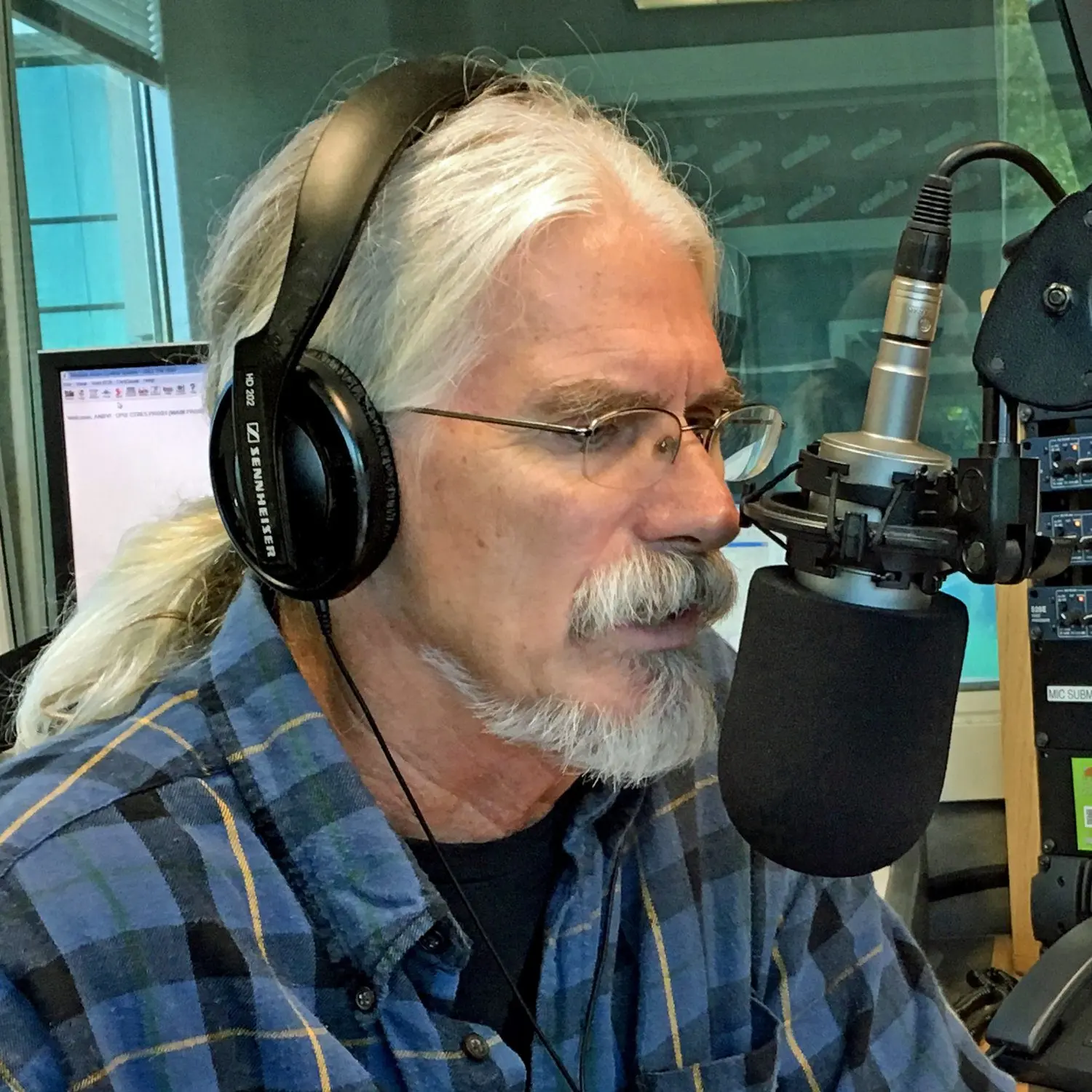
In today’s episode, join Steve Gregg as he navigates through complex topics surrounding biblical discrepancies, particularly focusing on textual differences and interpretations. Tune in to illustrations from 1 Samuel, and get a detailed breakdown of various scripture readings. Whether you’re a Bible aficionado or a curious listener, you’re sure to find a new perspective on often-debated biblical texts.
SPEAKER 1 :
Thank you.
SPEAKER 05 :
Good afternoon and welcome to the Narrow Path radio broadcast. My name is Steve Gregg and we’re live for an hour each weekday afternoon taking your calls. If you have questions about the Bible or the Christian faith, feel free to call in. We’ll talk about them. If you differ from the host in any of your viewpoints and want to talk about that, feel free to call in about that as well. You’re welcome to join us. The number to call is 844-484-5737. That’s 844-484-5737. And I want to remind you that tonight is the first Wednesday of the month. And on the first Wednesday of each month, we have a Zoom call that anyone can join us in if you would like to do so. It’s about an hour and a half this evening. usually about an hour and a half of just doing Q&A, just like we do on the program, only because it is Zoom we can see each other and talk to each other face-to-face, which I kind of look forward to that. That’s tonight at 7 o’clock Pacific time. Now, of course, many of our listeners are in the other time zones, and for some of you that begins at 10 o’clock Eastern time, I would say, and that’s pretty late to start, but maybe not for all of you. And some are in other countries. We have people in other countries where it’s quite late or quite early for them. But just so you know, if you’re interested, you can join us tonight. The time of the live Zoom is 7 o’clock Pacific time. And that’s only once a month. Now, if you want to know how to get on there. you go to our website, thenarrowpath.com, thenarrowpath.com. Go to the tab that says Announcements. Scroll down to tonight’s date, which is December 3rd, and you’ll see the logon information for the Zoom call. So you can log on by using that information that is there. The other thing I want to announce is that for four different evenings next week, I’ll be speaking in the Seattle area. Now, I’ll be speaking five mornings, but that’s not open to the public. I’m speaking for youth with a mission in what they call Discipleship Bible School, where I’ll be teaching every morning for three hours for Monday through Friday. Those are not open to the public, but we do have three, four evenings that are open to the public. Now, one of them is at the Youth with a Mission base. That’s on Tuesday nights. They have an open meeting. I’ll be speaking there. But on Monday, Wednesday, and Thursday nights, I’m also speaking at various venues in the general Seattle area. And… I mean, when I say Seattle area, of course, I’m in California. To me, the Seattle area is anywhere within an hour, an hour and a half drive. But I’m in several different towns, so you can check and see if I’m in your area. This next week, starting Monday night, and I’ll be there through Thursday night, beginning in the evenings. in public meetings and five mornings for not public. So that’s coming up this next week. If you’re interested in seeing if any of our meetings are in your area, go to thenarrowpath.com, look under announcements, and, of course, look under the dates for next week, and you’ll see where I’m going to be. And you can join us if you would like to. I’d be glad to see you there, wherever it is. All right. And having said that, our lines are full. But before I take any calls, I want to revisit a question that came yesterday. And the reason I want to revisit it is I didn’t have an answer for it. And that wasn’t satisfactory for me to not have an answer for it. So I did some research. I didn’t have to research for very long before I recognized what the answer is. But, you know, the caller called, and there were like four different scriptures he mentioned all over the place. about this one dilemma. And it’s a numeric thing. And I just couldn’t do it all in my head on the fly with a phone bank full of calls and limited time. So I just kind of said, well, it could be, it is possible that this is a case of a textual corruption. There are such things in the Old Testament. Sometimes numbers are copied wrong by a copyist. So it comes down to it’s different from what it was originally written. And I said, this could be that. Now, after the program, I looked at it, realized that that probably is not the right answer for this particular case. There certainly are such cases. But in this case, I don’t think so. The question was, why does it say in 1 Samuel chapter 7 and verse 2, 1 Samuel 7, 2, that when the Philistines sent the ark back after they had so much trouble housing it, they sent it back to Israel, that it came back to Kirjath-Jerim, and it was taken and put into the house of Abinadab. And it was kept there. And it says in verse 2, it was there for 20 years. Now, this is the problem. It says it was there for 20 years, and yet it was not removed from there until the eighth year of David’s reign. Now, between the beginning of David’s reign and this time was a period of at least 40 years when Saul reigned. The caller mentioned this verse. He also mentioned Acts 13, 21, which mentions that Saul reigned for 40 years. And that was before David reigned. So the ark was in the house of Abinadab at least for the 40 years that Saul reigned. And then for the next eight years or seven and a half years that David reigned at the beginning of his reign. And it was after David’s, you know, in David’s eighth year that he brought the Ark from the house of Abinadab and brought it to Jerusalem. And it was situated there until it was taken from there in 586 B.C. But the point here is that the time that the Ark was actually in the house of Abinadab, according to the biblical chronology, is closer to 50 years. than 20 years. And so why does 1 Samuel 7.2 say that it was there for 20 years? When it was, in fact, no doubt closer to 50, if not more than that. Now, it’s not likely that a copyist saw an original that said 50 years or whatever number it was, and miscopied it as 20. It is possible. I mean, anything is possible along these lines. Copies can be very inattentive. And that’s the answer I gave yesterday, but I don’t believe it’s the right answer. Because as I looked at the verse more closely when I had some time, here’s what it actually says in verse 2 of 1 Samuel 7. So it was that the ark remained in Kirgith-Jerim a long time. It was there for 20 years, and all the house of Israel lamented after the Lord. Then Samuel spoke to all the house of Israel. Now, the last we had heard of Samuel, he was a boy. He was a boy in the tabernacle under Eli’s oversight. And now he’s an adult, and he’s entered his ministry to Israel. Now, what it says about the ark there, it says it was there in Kirjath-Jerim a long time. Which is very inexact. How long was it? Well, it was actually close to 50 years, if not more. It doesn’t tell us how long it was there, but it does say it was there 20 years, and then we have Samuel beginning to prophesy. And I think the 20 years is not marking the end of the time that the ark was in Kirjath-Jerim, but it’s the gap from the time it was brought there till the time that Samuel, as a young adult, began to prophesy and begins to dominate the story for the rest of most of the book. So… I believe the 20 years is not referring to the full length of it to stay there, which was really more than twice that long. But it’s marking… the interval between the last we heard of Samuel, which was in fact when the ark was taken by the Philistines and brought back, and Samuel was a boy, between that point and the time when he began to prophesy, which is in the next verse. So the 20 years, I don’t think, is supposed to tell us how long the ark was, you know, the full length of time it was there. but actually the time that it was there before Samuel began as a young adult to have his public ministry. So that’s what I would understand it to mean now. It’s a different answer than I gave yesterday. Again, I was giving an answer on the fly without looking at it closely. The caller had brought up, I think, three or four different scriptures in different places to try to frame the problem. and I simply didn’t have time to look at all of them carefully. And by the way, I said in my verse-by-verse on 1 Samuel, you might find that I have given more attention to it. Since then, I actually listened to this portion of my lectures on 1 Samuel, and I did not. I actually did not give any more attention to it there than I did pretty much yesterday. So this is my revised answer for if that caller is still listening. All right, let’s go to the phones now and get some new questions. Damian from Boise, Idaho. Welcome to The Narrow Path. Thanks for calling.
SPEAKER 06 :
Hey, Steve. Appreciate what you do. Appreciate for giving that answer. I do have a question on tongues that is found in 1 Corinthians 14. So my first question is, how does one know that they’re actually speaking like genuine tongues, which Paul is referring to like praying to God? And then my second follow-up is, when the apostles showed up in the book of Acts and they would lay hands on people and they started to speak in other tongues, is that referring to the tongue found in Acts chapter 2, or is that the tongue that Paul’s referring to in 1 Corinthians chapter 14? Those are my two questions. I appreciate everything you do. I’ll take the answer off the air. Thank you, Steve.
SPEAKER 05 :
All right, sure. Good questions. First of all, I… We’re not told. You know, when the apostles came to Samaria in Acts chapter 8, when Peter and John laid hands on the Samaritan converts and they all began to, they were filled with the Spirit, and we don’t know if they spoke in tongues, but they did do something that impressed Simon the Sorcerer that something miraculous was happening. And it was probably speaking in tongues on that occasion. It doesn’t specify, but we do read in Acts chapter 10 that in the household of Cornelius, when the Spirit fell upon them, And this was actually without the laying on of hands of the apostles. This just happened while they were listening to Peter preach. They did speak in tongues on that occasion. And then on another occasion, in Acts 19, there were 12 men in Ephesus whom Paul encountered. And when he laid his hands on them, the Spirit came upon them and they spoke in tongues. So there are five cases in the New Testament in Acts that talk about people being filled with the Spirit. on two occasions, it does not mention whether they spoke in tongues or not. That would be when Saul received the Holy Spirit at the laying on of hands of Ananias in Acts chapter 9, and as I mentioned earlier, Peter and John laying hands on the people of Samaria in Acts chapter 8. Those times they did get baptism of the Spirit, but we don’t read whether or not they spoke in tongues. My suspicion is that they did, but we couldn’t prove it because it doesn’t say so. But there were three times in the book of Acts when people were filled with spirit, and they did speak with tongues. Of course, one was on the day of Pentecost, and one was in the house of Cornelius, and one was the 12 men that Paul encountered in Ephesus. Now, you’re saying when they did speak in tongues, especially in chapter 10 and chapter 19, was it the same phenomenon as in chapter 2? That is, in Acts chapter 2, the people spontaneously began to speak in tongues when they were filled with the spirit. on the day of Pentecost, and people understood them because they were actually speaking foreign languages. The disciples who were speaking did not know these languages. They were speaking supernaturally. But the listeners did know the languages, and they recognized what they were saying, and it was a sign to them. Now, that is different than what 1 Corinthians 14 seems to talk about, because in 1 Corinthians 14, First of all, Paul is not talking about speaking to unbelievers in their own languages. That happened at Pentecost. But Paul is talking about Christians in the church speaking in tongues. And he says nobody understands them. You need the gift of interpretation. It’s a different phenomenon. You’re not speaking the language of anyone who’s present. Because Paul says he that speaks, I think it’s verse 2 of 1 Corinthians 14, he says he that speaks in tongues does not speak to men. but to God, for no one understands what he’s saying. Okay, so this speaking in tongues in the church is obviously different than in Acts chapter 2, because people did understand what they were saying, and they were speaking to men. But here, they’re not speaking to men. They’re speaking to God. This is prayer. This is thanksgiving. As you read through 1 Corinthians 14, Paul talks about praying together. In tongues. Blessing God in the spirit, by which he means in tongues. Praying and blessing God. He says, you give thanks well, but no one understands you. So speaking in tongues, as Paul describes it in Acts 14, is a ministry functioning in the church, but requires a companion gift called the gift of interpretation. Why? Because no one understands it. You can’t have somebody there who knows the language who just tells everyone else, oh, this is what he just said, because no one understands it. So you need another supernatural gift to be present, and that is the gift of interpretation. Now, the person speaking in tongues might have that gift, too, because Paul said in 1 Corinthians 14, 13, let him that speaks in tongues pray that he also may interpret. So it is possible for the person speaking in tongues to also receive the gift of interpretation and interpret it. But Paul insinuates that there are some who speak in tongues and others who interpret, because he said a little later in the chapter, talking about church decorum, he says, let the people who speak in tongues do so, two or three of them, one at a time, and let one interpret. He says, but if there’s no interpreter present, let the one who wants to speak in tongues just be silent or pray to himself and to God. Speak quietly so he doesn’t disturb the meeting. But he indicates that there might be someone who is an interpreter present, someone who has that gift. So you’re quite right in distinguishing between speaking in tongues at Pentecost, where they spoke known languages heard and understood by people who were present, who were unbelievers, it was assigned to unbelievers. Between that and what Paul’s talking about in 1 Corinthians 14, in the church, no one understands that. You’re not speaking a language that anyone there knows. You require an interpretation in order for it to be edified. If there’s no interpreter, Paul says, then don’t do it at all. Just be quiet. So you’re saying in Acts chapter 10 and Acts 19 and similar cases in the book of Acts when the apostles were preaching or laid hands on people and people spoke in tongues, were they doing it the way that they did at Pentecost? or the way they do it in 1 Corinthians 14. I’m going to make a guess about that. It’s an educated guess. And that is that they were doing the same thing that happened at Pentecost. Because for one thing, in Acts chapter 8, Simon the sorcerer was impressed by what he saw, and he actually wanted to pay money to the apostles to give him the power to do that, to lay hands on people so they could do that. Now, if they were just speaking gibberish, even if it was genuine tongues and no one could understand it, they wouldn’t know it’s not gibberish. I doubt that Simon would pay money to persuade people to do that. But also, in the house of Cornelius, another one of these cases, it says, you know, Peter, after he had this experience, or chapter 11, actually, where he’s telling about this experience to the Apostles, He said that when he went there to the house of Cornelius, it says they began to speak in tongues. And it says that they had received the spirit the same as we did, meaning at Pentecost. He’s basically saying what happened to them in the house of Cornelius was a parallel to that which happened to the Jewish people. Because Cornelius was Gentile. But Peter and the Apostle were Jewish. He said, this is the same thing happened to them that happened to us at Pentecost. So I’m going to assume that what Peter’s describing there is the same phenomenon, which would be Acts chapter 2 kinds of tongues. Now, you asked, the first question was, how do you know when you’re speaking in tongues if you’re genuinely speaking in tongues or not? Well, this is a conundrum that many have. And frankly, I know I had this experience. I know many people have said they’ve had this experience when they first speak with tongues. They wonder, is this really it? Is this me making this up or is this God? Is this the Holy Spirit? How do I know? Well, there’s two aspects of my answer. The Bible doesn’t answer it. The Bible doesn’t tell you how you know. But one way is that you ask God to fill you with the Spirit of God. And if, as a result, you speak in tongues, you can probably assume that this is the same gift. that the Holy Spirit conferred on those who were filled with the Spirit at that time. I mean, there’s no reason why a person should begin to speak in tongues unless they’re coached to do so or unless it’s the real thing. I remember there was a young girl that actually was demon-possessed who was brought to me and a friend of mine to minister to when I was just young. I was like 21 years old. I’d never dealt with a demon-possessed person. She was very seriously manifesting. demons, but we ministered to her. It didn’t happen immediately, but within 20 minutes, the demon completely left her. She was released of all manifestations, and she began to speak in tongues, which we were not doing at the time. But she was filled with the Holy Spirit. She received Christ. She began to speak with tongues, unprompted. And I thought, well, that must be genuine, because no one told her to do that or implied that she should. So I would say the first thing is if you’ve asked God to fill you with the Holy Spirit and you, as a result, begin to speak in tongues, I would say that’s one indicator it’s probably the real thing. And, you know, by the way, I think people can be filled with the Spirit without speaking in tongues. But if someone says, well, you know, I asked God to fill me with the Spirit and now I’m speaking in tongues, I wonder if this is real, fake, demonic, what is it? remember Jesus said, uh, you know, if earthly fathers are asked by their children to give them a fish, they won’t give them a serpent. If they ask for bread, they won’t give them a stone. That’d be really cruel. He said, if you earthly fathers being evil, know how to give good gifts to children, how much more will your heavenly father give the Holy spirit to those who ask him? So I think that if you’re asking God for a good gift, he’s not going to let you get some kind of a evil gift or some fake gift. Um, Now, the other thing I would say is although speaking in tongues doesn’t really come natural to anybody because it’s a supernatural thing, and I would say the first time someone does it, no doubt it’s going to feel awkward. It’s going to seem strange, like, hey, what’s this coming out of my mouth? I’ve never done this before. It will nonetheless just – there will be a sense that this is happening to me more than it’s me doing it because – Well, it depends. I mean, obviously, some people who seem to be speaking in tongues or profess to be are just making, you know, syllables and repetition that anyone could fake if they wish. But on the other hand, when you’re speaking, what sounds like a language and you don’t understand what it is, but you can tell if you’re listening to people in a room who speak a different language than you do. You can tell in most cases that they’re speaking a language. because of the pauses and the syntax and the repetition, the rare repetition of certain words that are commonly used in a language or whatever. You don’t know what’s being said, but it certainly sounds like a language. Now, maybe some people who are not Christians have practiced since childhood making goofy sounds that sound like languages. I know I’ve never done that. And if I was asked to make up a bunch of goofy sounds to make it sound like a language, I have no confidence I could do that. But when you’re trusting God, and this is how all the gifts of the Spirit have to be exercised, is by faith. It’s all by faith. You’re trusting the Holy Spirit to enable you to do what you think God wants you to do. And if you’re going to pray… in tongues, and you begin to do so, and you begin to wonder, I wonder if this is the real thing or not. I suppose there may be a chance that it is not, though I don’t know that any harm is done if it’s not. On the other hand, if you’re just accustomed to trusting God, which is kind of a habit I’ve built myself in my life, it certainly sounds like a language to me. I don’t know what it is, but It sounds real. I guess there’s a really off chance that it could be fake, but I don’t know myself to be capable of doing that. It’s not really the kind of thing I’ve ever done before. I’m just going to trust God. Now, if I get to heaven and God says, by the way, Steve, you thought you were speaking in tongues. That was not. That was not real. That was just you. Well, I know that I’m coming to God as a child. If I’m being childish… If I’m childishly believing God’s promise and it turns out that I was presumptuous, I don’t think he’s going to be disappointed. I will say this. Paul said that he who speaks in an unknown tongue edifies himself. And edify means build yourself up spiritually. Jude said to do this. Jude said in, I think, verse 20, he says, build yourselves up. That’s edify yourself in your most holy faith, praying in the Holy Spirit, he said. So it is a Christian thing to pray in the Holy Spirit and to be spiritually built up by it. Now, if you find that you pray in tongues and it doesn’t spiritually build you up, that is, it doesn’t enhance your spirituality, your spiritual life, then maybe it’s not real. You know, the gifts of the Holy Spirit are not just shiny things that God gives you to play with and be impressed with. Now, everything God gives you is to make you more Christlike. Now, I don’t think Jesus ever spoke in tongues. But if as the result of including speaking in tongues in my devotional life, I find that I become more Christlike and that my life is more obedient and he’s more real to me day by day. I would say maybe I’m going to just take it by faith that that’s what’s happening. I’m being edified. But I’m not saying everyone has to speak in tongues. That’s not my belief. But you asked, if you do speak in tongues, how do you know if it’s real? I’d say you’re going to have to use some common sense and some faith. You know, I find that there have been times when I thought, well, maybe I’ll speak in tongues now. And it didn’t come to me. It just didn’t happen. And I thought, well, this is not that. And it wasn’t. On other occasions, and frankly more often, if I decide to pray in tongues, I don’t have that sensation. I don’t have the sensation that it’s fake or that it’s labored. You know, it comes out more eloquently, more smoothly, more articulately. And so those are my experiences. Now, you might say, but that’s just your experience. We can’t base anything on that. Well, that’s true. That’s true. You should never base any doctrines on my experience. But you asked a question that the scriptures don’t answer. The Bible doesn’t tell you how to know. So the best I can do is say, well, this is how I know. If that works for you, great. If it doesn’t, refrain. I’m not pushing that anyone speak in tongues. I’m just trying to answer your question honestly and hopefully helpfully. Okay, I appreciate your call. We have to take a break here, but we have another half hour coming, so don’t go away. You’re listening to The Narrow Path. My name is Steve Gregg. We’ve been doing this daily for 28 years. Yeah, we started daily in 1997. We’re now on radio stations all across the country, on 80 or more stations. And we pay these radio stations like $140,000 a month. Where do we get that money? We don’t have any commercial breaks. Don’t sell anything at our website or on the air. Where does that come from? If it comes at all, it comes from people like you. If you’d like to help us stay on the air, you can write to The Narrow Path. PO Box 1730, Temecula, California, 92593. Or go to our website, thenarrowpath.com. I’ll be back in 30 seconds. Don’t go away. We have another half hour.
SPEAKER 01 :
In a 16-lecture series entitled The Authority of Scriptures, Steve Gregg not only thoroughly presents the case for the Bible’s authority, but also explains specifically how this truth is to be applied to a believer’s daily walk and outlook. The authority of scriptures, as well as hundreds of other stimulating lectures, can be downloaded in MP3 format without charge from our website, thenarrowpath.com.
SPEAKER 05 :
Welcome back to the Narrow Path Radio Broadcast. My name is Steve Gregg, and we’re live for another half hour, taking your calls. Most of our lines are full, but we have one line open if you’d like to join us. The number to call is 844-484-5737. That’s 844-484-5737. 5737. I want to remind you that tonight, the first Wednesday of the month, is our Zoom meeting night, and you’re welcome to join us. You don’t have to do anything except log in, and you can be there. And it’s longer than the radio show, usually more like an hour and a half, and it’s face-to-face because it’s Zoom. And if you’d like to join us, and you say, well, how do I get on to that meeting? Easy. Just go to thenarrowpath.com Look under the tab that says Announcements, and you’ll find today’s date there, which is December 3rd, and you’ll see there the logon information. It’ll take you directly to the website where you can be on that Zoom meeting with us tonight. That’s at 7 o’clock Pacific time tonight, 7 o’clock. in the evening Pacific time. If you’d like to join us, make note of that. All right. Let’s talk to Nelson in San Diego, California. Hi, Nelson. Good to hear from you.
SPEAKER 02 :
Hey, Steve. Thanks for taking my call. I have a question for you, but could I make a very brief comment about speaking in tongues? Sure. Sure. Yeah, in John 7, 37, Jesus is saying, On the last and great day of the feast, Jesus stood and said in a loud voice, If anyone is thirsty, let him come to me and drink. Whoever believes in me, as the Scripture has said, streams of living water will flow from within him. By this he meant the Spirit, whom those who believe in him were later to receive. Up to that time, the Spirit had not yet been given, since Jesus had not yet been glorified. And when I was filled with the Spirit the first time, this scripture so confirmed to me what was happening because it was truly a river of living water that just flowed out of me, and it was uncontrollable. So that was my experience, but that scripture has always confirmed to me about being filled with the Spirit.
SPEAKER 05 :
All right. Well, thanks for that testimony.
SPEAKER 02 :
Yeah. And so my question is a two-part question, very simple. How many of the apostles were around during the destruction of Jerusalem? And then the second part would be, are there any New Testament writings after the destruction that may have made some reference to the temple being destroyed?
SPEAKER 05 :
As far as how many apostles lived to see the destruction of Jerusalem, we don’t know simply because we don’t have record of when most of them died. We know some of them died before that, of course. The first apostle to die was James, the son of Zebedee, and he was killed in Acts chapter 12. Now, the entire story of the whole book of Acts runs out before 70 AD. So, any apostle that was killed in the book of Acts died before 70 AD. Peter was arrested at that time and would have been executed, as it says in Acts chapter 12, because… Herod intended to kill him, but an angel sprung him from jail, so Peter lived out a longer lifetime. Now, strong church traditions suggest that Peter died under the reign of Nero, and that Paul did too. Peter and Paul both died, therefore, before 70 AD, because Nero committed suicide in 68 AD, which means two years before 70 AD, Nero was dead. And if he had killed Peter and Paul, it was certainly before 70 A.D. because he didn’t do anything any later than that. Now, the other apostles, there are strong traditions for what happened to them. And all of them, except John, are believed to have died as martyrs in various ways. Not all of them were in Israel at the time. Some of them, Thomas went to India. Other apostles, there’s tradition about where they went and how they died as martyrs. The only apostle that we can be relatively sure lived to be beyond 780 would be John. Now, we don’t have absolute knowledge that John lived beyond that, but Irenaeus lived in 170 A.D., testified that John had been around as late as the end of Domitian’s reign. Now, Domitian reigned until 96 A.D., and John, according to Irenaeus, by the way, Irenaeus was not alive. He didn’t know John, but Irenaeus was discipled by Polycarp. And Polycarp was discipled by John. So there’s not much time or not much generations between John and Irenaeus. And Irenaeus may have had a reliable tradition that John was still around as late as 96 AD. But if so, that’s the only one of the apostles that we know of that was alive beyond 70 AD, though some of the ones whose deaths we know something about and they were usually in other countries besides Israel because they had gone out to preach the gospel there. Some of them may have died later than 70 A.D., but they’d be quite old. I mean, when you think about it, let’s just say the disciples were, you know, let’s just say they were 25 years old when they began to follow Jesus. Well, then they’d be 65 years old, which is pretty old for a person back then in 70 A.D., and most of these guys did not die of old age. They died younger as martyrs. So I’m thinking, we don’t know, but I’m thinking that maybe John was the only one who lived beyond the destruction of Jerusalem. Now, he said, are there any New Testament books that were written after that to testify to it as an event that had happened? No, there aren’t any that are known to have been written after that. Once again, some people believe… because of the way they understand a certain statement by Irenaeus, that Revelation was written after 70 AD. I personally think the evidence within the book suggests an earlier date, and that Revelation was written before 70 AD, because the book talks about the temple still standing in Revelation 11, which was destroyed in 70 AD, so apparently Revelation was written before. you know, before that time. And there’s other reasons, too, I won’t go into. But my opinion is that Revelation was written before 70 A.D., though many people would place it later. Some of them would place it in the 90s. So that would be disputed. And if there’s any other books written after 70 A.D., it would be John’s writings in all likelihood. Like I said, I think John may be the only apostle who lived beyond 70 A.D., So only his writings would be written after that time. But they wouldn’t have to be written after that time. They could be written before that time, too. I mean, even if he lived into 96 A.D., he could have written all his books before 70 A.D. Now, I personally think this. I think Revelation shows signs of being written before 70 A.D., but John’s other works, his gospel and his three epistles, which were apparently written when he was much older. I mean, he calls himself the elder in 2nd and 3rd John. And he probably wrote those around the same time he wrote 1 John, since there’s so many parallels in them. He wrote that in his old age, very possibly a couple decades after 70 A.D. But he’s not writing about Jerusalem, so he doesn’t have occasion in his epistles to mention Jerusalem and its destruction, which may have happened as much as 20 years earlier before he wrote those letters. It’s just like when I write letters to people, I don’t generally make reference to what happened in 9-11. When the Twin Towers fell. Now, you know, it was a very big deal at the time, but that’s been, you know, 25 years ago. And so I can often have conversations that don’t mention it. So some people say, well, you know, wouldn’t they mention it in later writings? Well, it depends on how much later and what the subject matter they were discussing was. There’s many historical things. Like, for example, you might say, well, they should mention, you know, people who wrote after James was beheaded, they should have mentioned the beheading of James. Well, Luke did. Luke wrote about it, but most of the writers who wrote after that were not talking about James. I mean, it just was not the subject of their conversation. So anyone writing after 70 AD might possibly not mention that particular event. Now, John’s Gospel. I believe as well as his epistles was written in his older age. So my understanding, this is not something that can be proven, but it’s not without evidence. If you listen to my introduction to John’s writings, I do go into the evidence. But I do believe there’s good reason to believe that John’s gospel and his epistles were written after 70 AD. But if that’s true, they’re the only New Testament books that were. And so that would be my understanding of it. All right? Yeah, great. Thank you, brother. You’re the best. Thanks, Nelson. God bless. Good talking to you. All right, we’ll talk to Gaylord in Atlanta, Michigan. Atlanta, Michigan? Okay. Hi, Gaylord. Welcome.
SPEAKER 04 :
Hi, Steve. I have a two-part question. Jesus’ last words on the cross, My God, my God, why hast thou forsaken me? I would like your interpretation of it. The second part of the question is that my wife and I have attended a church that says the Peshetta interprets those words of Jesus as saying something different.
SPEAKER 05 :
Like, for this I have come, or for this I am here.
SPEAKER 04 :
Yeah, for this purpose I have come.
SPEAKER 05 :
Yeah.
SPEAKER 04 :
Thank you, Steve.
SPEAKER 05 :
You wonder about that? Well… All right, I have to say, I cannot critique what the Peshitta says. The Peshitta, of course, is the New Testament in Aramaic. Now, Aramaic is actually the language that Jesus and the apostles probably spoke in Palestine, you know, when they were in conversations with other Jews in Palestine, because that was the local dialect. Although, of course, I don’t believe that any of our New Testament books are written in Aramaic originally. except Matthew. And it wasn’t our present book of Matthew. The Church Fathers agree that Matthew wrote a first draft of his work in Aramaic, though we don’t have that Aramaic version. And they admit that it was translated into Greek later. We do have the Greek. And all the other books of the New Testament, in my opinion, were written in Greek. Now, those who go by the Peshitta, they say, well, since Jesus and the Apostles were Palestinian Jews… They probably wrote in Aramaic. And we do have, of course, Aramaic scriptures going back very far. But it wasn’t very long after the New Testament was written that it was translated into other languages, including Latin and Syriac or Aramaic. And we do have ancient Latin translations of the New Testament. We have ancient Syriac or Aramaic translations of the New Testament. So the Peshitta does contain the Aramaic. Of course, if we buy it in English, it’s an English translation from the Aramaic. And the Aramaic was an early translation. But to suggest that our Bible or our New Testament was written in Aramaic, Strikes me as a very bizarre claim in view of the fact that most of the books of the Bible were written to Greeks and Romans who didn’t know any Aramaic. As far as we know, only Matthew in his first draft was written to Palestinian Jews, and therefore Aramaic would be their language. But once you get out of Palestine… Once you’re in Rome or Turkey or Greece, which is where most of these books were written to and from, these are not Aramaic-speaking people. It would be very bizarre for Paul to write to the Corinthians, who were Greeks, and write them letters in Aramaic, which probably maybe none of them could read at all. And even if a few of them could, why bother writing in a language when Paul knew how to write Greek? Obviously, Luke was writing to a Greek man, Theophilus. Why would he write in Aramaic instead of in Greek? You know, the idea that the Peshitta is the original in the New Testament is, to my mind, not a sensible theory. Now, it is true that in the Aramaic, in the Peshitta, Jesus’ statement, My God, my God, why have you forsaken me? is rendered differently. It’s rendered something like, I mean, I don’t remember the exact quote, but for this purpose I have come, or something like that. Which is fine. I mean, if Jesus said that, that’s fine. But did he? Is that what he said? In my opinion, he was quoting Psalm 22. In fact, virtually all Bible scholars I know of think he was quoting Psalm 22, verse 1, where David said, My God, my God, why have you forsaken me? And therefore… In my opinion, he was just quoting it the way we have it. Now, the Aramaic, I don’t know much about Aramaic. It’s very similar to Hebrew, by the way. It’s Syriac, but it’s very similar to the Hebrew, but not exactly the same. Whether Jesus said words in Aramaic that sounded like or could sound like, you know, the way it reads in the Peshitta, I cannot say. But I think certainly the Greek manuscripts suggest that he said, my God, my God, why have you forsaken me, which is a quotation from the Septuagint, which was written in Greek, of Psalm 22. Now, why did he say that? Actually, that question came up last week. I went into it in some detail. I don’t think I, for the people who were listening at that time, should take up the time to go into it much. There’s different theories as to why Jesus said it. Some people think that Jesus actually lost his faith and was crying out in unbelief or something, like he doesn’t trust God anymore, you’ve forsaken me. That is certainly not the case. David, when he wrote those words, had not lost his faith. As you read Psalm 22, it’s very clear. He believed that God had not forsaken him. I believe, my God, my God, why have you forsaken me, both when spoken by David and by Christ, is simply releasing an emotional despondency. expressing the emotion of being God forsaken, which they certainly had occasion to feel. But I don’t think that either David or Jesus were making a theological point. with a theological interpretation of this, that Jesus had the sins of the world transferred to him. And as it says in 2 Corinthians, he who knew no sin became sin for us, that we might be made the righteousness of God in him. And so the explanation that I was raised with, and many people have been, is that at that moment Jesus became sin, so to speak, in a sort of a… Either a symbolic way or some esoteric way, he became sin. And because God cannot look favorably upon sin, God had to turn his back on him briefly until the resurrection. And therefore, Jesus was feeling the actual forsakenness of God for the first time in his eternal existence. It’s a very moving explanation, but I don’t know that it’s justified. Because, I mean, frankly, Jesus is saying no more there than what David said. And we cannot say that David had all the sins the world laid upon him and God literally had to turn his back on him. It’s more likely that… that Jesus is relating with David in the same sense of being forsaken by God and quoting that verse in order to call attention to it to all who were around to hear him. And we know there were people who heard him because it was recorded what he said. And if he’s quoting Psalm 22, those listening, those Jews who knew the Psalms, might very well call to mind the entire Psalm, which as you read further on into the Psalm, it speaks about him being crucified. They pierced my hands and my feet. You know, all my bones are in a joint. My mouth is dry as a pot shirt. My tongue clings to the root of my mouth. They cast lots for my clothing. This all happened at the cross. This was happening before their eyes, which was spoken of in Psalm 22. So Jesus may have spoken it not only because he felt it, but because it called attention to anyone within earshot to the fact that a prophecy, a very distinct prophecy, an exact prophecy is being fulfilled before their very eyes. And that could be why he said it.
SPEAKER 04 :
Okay. Thank you, Steve.
SPEAKER 05 :
All right, Gaylord. Thanks for your call. God bless.
SPEAKER 04 :
Bye.
SPEAKER 05 :
Bye now. Okay. We’re going to talk to aid in England, in the United Kingdom. Is it aid or Addy?
SPEAKER 03 :
It’s Addy.
SPEAKER 05 :
Addy. Gotcha. Okay.
SPEAKER 03 :
Yes. How are you doing? How are you doing, Steve? Thank you so much for taking my call today. Fine. Thanks. All right, so we’ve got two questions. The first one is from Matthew 27, where in 53, it says, I think, yeah, that when Jesus died, the graves were opened, many bodies of the saints who had fallen asleep were raised, and coming out of the grave after his resurrection, they went into the holy city and appeared to many.
SPEAKER 05 :
so that’s my first question I don’t know if you’re able to shed some light on this yeah when Jesus was alive even before he died there were people who he raised from the dead Lazarus the daughter of Jairus the son of the widow of the town of Nain are all instances of Jesus raising the dead in his lifetime we read that when he came back to life from the dead he did it again there are other people who came to life who had been dead for a while Now, in my opinion, the ones who came out of the graves were not the ancient saints like Samuel and Joshua and Isaiah and people like that and David. I think the ones who came out of the graves were very much analogous to people like Lazarus and Jairus’ daughter, people who had died very recently. They had not decomposed. It’s just that the breath came back in, the spirit came back into them as they were still undecomposed. Now, the reason I say that is because, in my opinion, nobody was raised in a glorified body prior to Jesus, nor since him yet. The Bible says in 1 Corinthians 15 that all… in his own turn will be raised from the dead. And he says, but each in his own order. He said Christ the first fruit. So he talks about Christ rising from the dead. Then it says, then those who are his at his coming. So that’s the next one. Now what Paul is talking about is being resurrected. That’s not just like coming awake again after being dead. It’s being transformed into an immortal body. which is what Paul describes, the resurrection body, is immortal. He said our bodies, when we’re buried, they are buried in weakness, but they’re raised in power. They’re buried in dishonor, but they rise in glory. He says this mortal must put on immortality. And so our bodies, which are mortal, will take on the quality of immortality. Why? Because that’s what Jesus’ body was like. Now, only Jesus, so far, has been resurrected in that sense, that has been transformed into an eternal, immortal body. The next group to do that will be when he comes back, Paul said. And therefore… Lazarus, Jairus’ daughter, these people that came out of their tombs in Matthew 27, they weren’t raised in immortal bodies yet because that would make Jesus not be the first fruits of the resurrection. It’s more like they were just reanimated. Their bodies had died. Their spirits had left them. It’s not very different than in the Old Testament when Elisha, you know, a young boy had died and Elisha breathed on him and laid on top of him and warmed his body. And it says his spirit came back to him or his breath came back to him. So the boy had died and was raised. Lazarus died and he was raised. These people had died but were raised. But I don’t think they were transformed. I think that their bodies were just the same natural bodies that they died in, just like Lazarus’s was. But it’s just that the spirit came back to them and they extended their life for probably the remainder of their normal lifetime. And then they died again. Now, that being so, then these people were people who had not decomposed. They weren’t people who died hundreds of years earlier. They were just righteous people who had died probably within the last few days and were buried. How many were there? It says many. Well, I’ve heard people say there’s a multitude of them came out of the graves. Well, if you want to make your own scriptures, you can, I guess, write it that way. But that’s not what it says. It says many. But what is many? That’s a very relative term. How many people have you seen rise from the dead? I’ve seen none do it. If I saw one do it, I’d be pretty impressed. If I saw two or three, that’d be even more impressive. If I saw half a dozen, I’d say that’s a lot. That’s a lot of people coming up from the dead. It’s a pretty rare thing. You know, four or five or six would be an amazing lot of people. I would call that many, given the particular situation we’re describing. So, I mean, Matthew doesn’t say it was thousands or hundreds or multitudes. He just said many. There were obviously more than just a very few. And they were people who were recognized, which is another reason to believe they were not dead for long. Because if, you know, Elisha had come back or Moses, I mean, it would be a very amazing thing, but no one would know it was them. No one had photographs of them. They could say, hey, I’m Moses, but why would anyone believe them? You know, it’s like no one would recognize them unless they were people who had died fairly recently and had living relatives and friends who would recognize them. So I just see this as a parallel situation to raising Lazarus or any of the other people that were raised there. prior to Jesus, or since, because Paul raised someone from the dead, so did Peter, in the book of Acts. But they were not resurrected in the sense that we should be resurrected. They didn’t receive their immortal bodies. And that’s what, you know, it’s not like they were resurrected in the sense that Jesus was. But they were resurrected more, I believe, in the sense that Lazarus was.
SPEAKER 03 :
Okay, and this leads to my second question about Enoch. being taken away so that he doesn’t taste death, and Elijah also being taken away, but then reappearing on the Mount of Transfiguration with Jesus in glory, with the Father and the clouds and Moses, who died and was buried. So what do you make of the bodies of Elijah and Enoch?
SPEAKER 05 :
Well, we’re not told, and… You know, we certainly have it in our nature to be curious about such things. Okay, these guys didn’t die. They were taken up apparently in their physical bodies without dying. Where did they go? Where are their bodies now? Are they in their bodies in heaven when everyone else up there is just in their disembodied spirit? Or were they transformed into purely spiritual beings? I do not know. Uh, the Bible doesn’t tell us that. And, and perhaps, and in my mind, whenever I have questions like that, the first question I have is, does God answer that question for us somewhere? Is there, does the Bible give me an answer to that question? If I search and find out, no, it doesn’t. I just figure, okay, I’ll, I’ll, I’ll file that in the things I don’t know category since there’s no possibility of knowing them without God revealing it. Um, And since God hasn’t revealed it, it’s very clear that if God’s dealing with this on a need-to-know basis, this is apparently not something I need to know. So that would be my position. I don’t know where their bodies are. I do think that Moses and Elijah’s meeting with Jesus on the mountain was probably a vision. The prophets in the Old Testament sometimes had visions. Zechariah had visions of Zerubbabel and of Joshua the high priest and so forth. I mean, sometimes they had visions of actual people. And, you know, I think that Jesus had a vision of Moses and Elijah, and so did the apostles. When they were coming down from the mountain, Jesus said to the disciples, tell the vision to no one, which suggests that probably… We’re talking about a vision sort of like the prophets had and the apostles were allowed in on it. Anyway, that would suggest that Moses and Elijah were not literally there, but that God allowed a visionary experience to be portrayed to their minds, which had significance, which we can’t discuss right now, but there was great significance in it. I’m out of time. You’ve been listening to The Narrow Path. We are listener supported. You can go to our website and see if you want to donate how to do so. We have a Zoom meeting tonight. Our website at the announcements link will also tell you how to link into that. Have a good evening. We’ll talk to you tomorrow.
