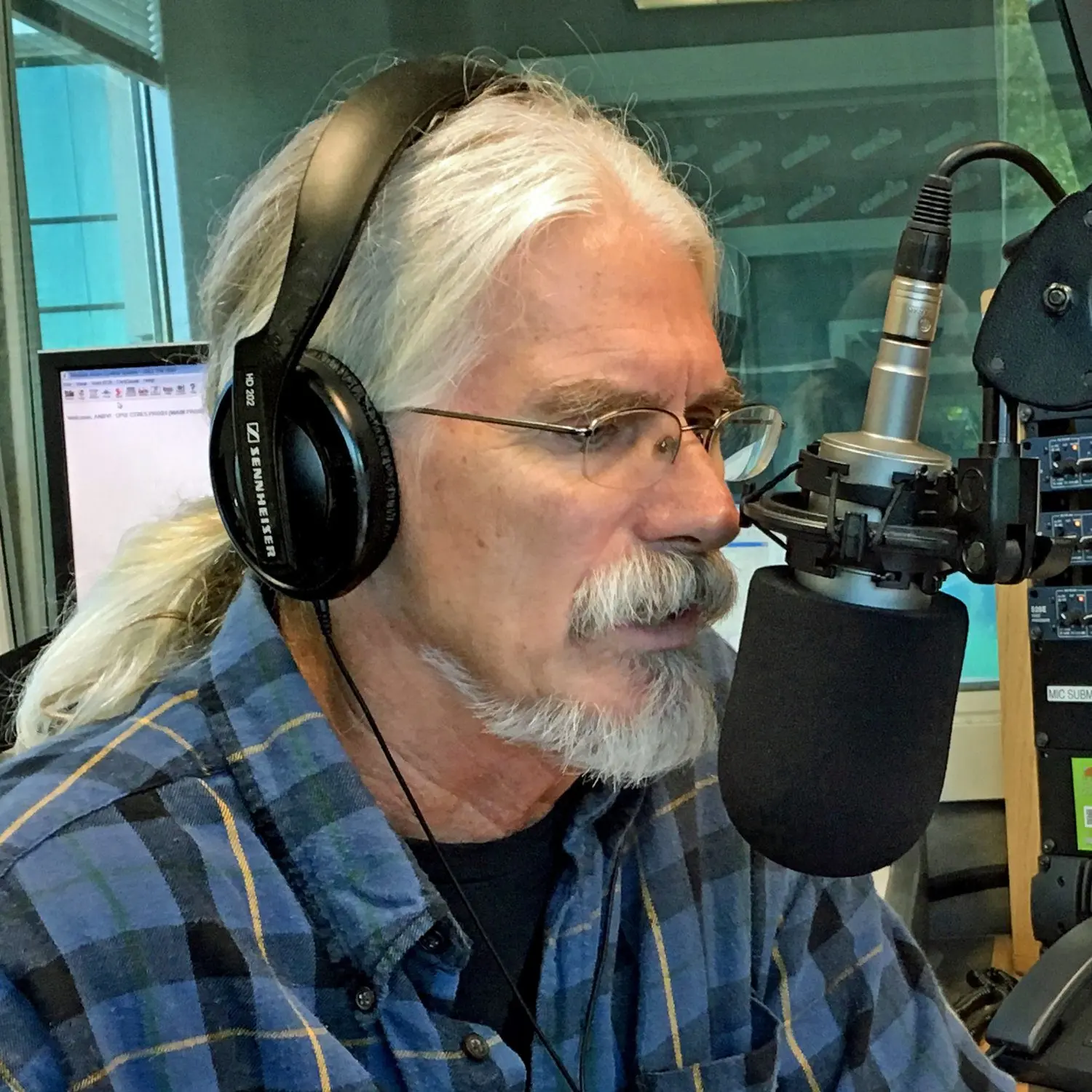


Join us in this insightful episode as we explore profound questions about the intersection of divine intentionality and human history. Our host tackles intriguing listener calls, diving deep into topics such as the role of divine influence in historical events, and the nature of God’s covenant with humanity. As we journey through these discussions, we’ll learn about the nuanced ways in which faith and history intertwine, offering a fresh perspective on old theological debates.
SPEAKER 1 :
Thank you.
SPEAKER 02 :
Good afternoon and welcome to the Narrow Path Radio Broadcast. My name is Steve Gregg and we’re live for an hour, as we always are, taking your calls for the next hour. If you have questions about the Bible or the Christian faith, that’s what we’re here to try to answer for you. You can call if you have questions or if you have disagreements you want to talk about. I’m always glad to hear from you. Right now our lines are full, so don’t bother calling at the moment, but as the hour progresses… randomly, of course, lines will open up because we will talk to these callers and they’ll move along. There’ll be an open line. And some people just hang up because they’re tired of waiting to go on the air. So, I mean, lines will be opening up through the entire hour. Call randomly, you know, and you may very well get through. The number is 844-484-5737. That’s 844-484-5737. 57-37, don’t call right now. The lines are full. Call in a few minutes, and we’ll see if we can get you through. I have to announce something, and it’s a very unusual announcement. Of course, I’ve been saying all week that I’m speaking in the Seattle area. This week, tonight, was to be my last speaking appointment in the evening in the area. And I was going to be speaking in a little church. Actually, one of my favorite little churches, a little church in North Bend. in Washington, and looking forward to it. Actually, I was going to be answering questions for their youth, and a very exciting opportunity to do that for them. One problem is that this church and all the places I’m staying here this week happen to be located in the 100-year floodplain of Washington. And I guess this is the one day of the century that it floods. because there’s a 1% chance of flooding every year. That means that every 100 years, there’s a full chance that it’s going to flood. Well, yeah, I guess we didn’t hit the lucky numbers, and it’s flooding really badly. And the little church that I’m planning to go to is in a little town that’s surrounded by mountains, and the water runoff, and there’s a river, and it’s overflowing and so forth. And yesterday… The only, I think the only interstate that goes between Seattle, where I am, and North Bend was closed down because there’s a mudslide, a big tree crossed the freeway. I think it’s still there. Several cars were trapped there. The freeway’s closed down. It’s impassable, which has been very disappointing because it means I won’t be able to get into North Bend and do that meeting tonight. But have no fear. If you were planning to attend that meeting, it was going to be a Q&A. I’m going to go ahead and do a Q&A. I’ll stream it to my Facebook page, and you’re welcome to watch it. Unfortunately, I won’t have the pleasure of interacting on it, as is sometimes the case. But the young people of this church have sent me a list of questions that they were hoping I would answer anyway. So, tonight at 7 o’clock Pacific Time, I intend, assuming there’s no problems, I intend to do a live stream to my personal Facebook page. Now, there’s a Facebook page called Steve Gregg The Narrow Path. That’s the ministry Facebook page. My Facebook page is just Steve Gregg. And there’s probably a lot of Steve Greggs somewhere on there, but… They don’t all look like me. You can probably find it. And so tonight at 7 o’clock Pacific time, if you were planning to go to that meeting, or even if you hadn’t been planning to, you’re welcome to go to my personal Steve Gregg Facebook page, and I intend to stream live and answer the questions that have been written in to me. Now, of course, if I was more competent and tech-savvy, Tech savvy. Tech savvy. Got those verbs mixed up. I would be able to do this and also read probably texts that people would send me with questions, things like that. But I can’t walk down the street and chew gum at the same time. I certainly cannot do a live stream and read somebody else’s text while I’m talking. Some people say, you know, do you look stuff up on your computer when you’re doing the radio show? I only wish I had the power to do that. When I’m talking to somebody, I don’t have the power to think about anything else, much less looking up websites and things like that or reading stuff. So, no, unfortunately, if you join us on the Facebook feed tonight, I won’t be able to get questions from you, although you could perhaps email them to me in advance and I’ll have them. But there’s a list of questions, good ones, too, that these young people have sent me already, and I hope to cover all of them if I can. And so that’s tonight. It’s going to live stream from my personal Facebook page. My personal Facebook page is simply Steve Gregg, as opposed to the other Facebook page, which is Steve Gregg, The Narrow Path. Okay, is that all clear? I’m sure to all the young people it’s clear. To people like me, it probably didn’t make any sense at all. Okay, we’re going to go to the phone lines now. And the first caller we’re talking to today is Emmanuel from Laredo, Texas. Hi, Emmanuel. Welcome.
SPEAKER 08 :
Hello, Steve. How are you?
SPEAKER 02 :
I’m well, thank you.
SPEAKER 08 :
Great. Steve, my question is regarding history. I want I would like to hear your opinion about this. Do you think it is correct to say that God used the colonization of Europe in America and other movements of conquest to bring in the gospel to America? Is that correct or sounds very different? Because I read Israel was used for God in other areas to bring judgment over.
SPEAKER 02 :
Right. Do I think that God used the colonization of America by the Europeans to bring the gospel here? That’s essentially your question, right?
SPEAKER 08 :
That’s correct, sir.
SPEAKER 02 :
Okay, yeah. I think it’d be hard to deny that that is so, unless a person doesn’t believe that God is involved in history. I think the fact that America was involved discovered by the Europeans and populated and settled and formed into the United States, we simply have to look at history and say, this has been a great boon for the gospel, not least for the Native Americans who have received the gospel. Now, of course, most Native Americans probably haven’t received the gospel, but for that matter, most Europeans haven’t either. Most Americans have not. But wherever the gospel goes… There comes the opportunity to do so. And there are Native Americans who have heard the gospel and have received the gospel. And that would not be the case if the gospel had never come here. Now, unfortunately, when the gospel came here, it didn’t only come through missionaries. Perhaps that would have been better. We can’t say what would have happened then. But sadly, when the gospel came, it also was accompanied by European soldiers and conquerors. And so some very unkind and even unjust things happened to many of the Native Americans in the process of Europeans obviously settling and expanding across this continent. No Christian would say that’s a good thing. That is, it’s never a good thing to do bad things. And Europeans who conquered this nation did some bad things. Not all bad things, but unfortunately too many. However, also, of course, we cannot deny that the Native Americans in retaliation or not, they also did bad things. I mean, European settlers sometimes wiped out whole Indian populations or villages. But then Native American warriors came into white settlements and killed women and children, too. In other words, there were no really good guys and bad guys in this war. There very seldom are. But we know from the Bible that God does use wars, which usually, because of man’s sinfulness, wars involve bad behavior. In fact, the very idea of conquering another people by force against their will, is sort of like, seems like bad behavior in many respects. But the fact that the Babylonians were very bad people did not prevent God from using them to conquer Judah, or that the Assyrians were bad people. God didn’t, it didn’t prevent him from using the Assyrians to conquer Israel or Egypt and some of these other countries. These bad things happen in war, and most pagan wars especially are particularly bad. nasty and brutal and cruel, and yet the Bible indicates that God used those things to further some of his purposes for Israel and for the world. So with that in view, we have to say, well, no doubt, probably all the significant wars that have been fought, although every one of them involved people doing things which morally God does not approve of those immoral things, Nonetheless, in the broad scheme of things, God brought about a purpose that was frankly good. Now, some people who aren’t Christians might say, yeah, how is that good that the Native Americans were, you know, kind of run out of their land and, you know, put on reservations, which are not very great living circumstances. How is that good? I don’t say that that in itself is good. I don’t think that was a necessary thing. I think probably much good could have been done without some of those features. I will say that even with those, though, and if I were a Christian and a Native American, I would feel the same way. You know, I say, how do you know what you feel like? Because I know who I am. I know what I believe. If I were Native American and a Christian, I’d be thankful that even though bad things happen to me and my people, Some good things happen too, one of which is that I have eternal life now, which I never would have had had there never been any Christian settlers in this country. I will say this too, and again, many black people have said this. Certainly not all of them agree with this, but many do, and I’m pretty sure I would if I were a black American. I’d say, you know, slavery was a terrible injustice, horrendous, inexcusable. But as a black American living today in America, if I were one, I’d say, Well, I’m glad I was here. I’m glad I was born here instead of in a jungle somewhere or in some third world country. I mean, not that people can’t live there, but I’d rather live here. And that would be no matter what race I was. The Irish were badly treated when they came here. Italians were badly treated when they came here. Jews have been badly treated. But most Americans say, despite the bad things that have happened… It’s like God uses things that men mean for evil, and he uses them for good. And you asked, did God use this conquest to spread Christianity? Absolutely. And we know that because Christianity has been spread here, which it would not have otherwise been. And beyond that, not only did Christianity spread, but the ideals of God and Christianity in the Bible actually informed, to a very large degree, a civilization that which has also become a blessing in many respects to many other nations and sent out missionaries all over the world. And so, you know, we can enumerate crimes and sins that have happened to our ancestors or committed by our ancestors in the past if we want to talk about irrelevancies. Because, frankly, what happened 100 years ago or 200 years ago, it is history. but it doesn’t affect the way we are in the negative ways it did back then. In fact, if anything, the long-term effect has been pretty positive because even people who don’t like their circumstances now would have to admit that they could have been a lot worse and were. I mean, believe it or not, if the Europeans had not come here, there’s no reason to believe that the wheel would have been invented in North America or that people here would have a written language. because the Indians didn’t when the Europeans arrived, and it was not anything except the arrival of the Europeans that introduced those things. And there are advantages to everybody that the wheel has been invented. There are advantages to everyone that there’s written language now. And so, you know, history is checkered. There’s really bad things people have done, and in some cases there’s some very positive results. And I would have to say that the positive results, weren’t just accidental. I think those were, because I believe in the sovereignty of God, I believe those were brought about through God’s intentions. Thank you for your call, brother. Todd in Cressona, Pennsylvania. Welcome.
SPEAKER 06 :
Hi, Steve. Thank you for taking my call. Thank you for your program. It’s a wonderful resource. My question, in short, basically is, Is there a difference between – any substantive difference, I should say, between the covenant God made with Israel at Sinai originally and then after the golden calf incident in, you know, a few chapters later when the covenant is restored and the covenant that he – repeats in Deuteronomy, I think it’s 29 on the plains of Moab. Is there any substantive difference between any of these covenants, I guess, the restoration? The reason I ask is because of Philip Morrow, the author that you know and I know, and he wrote a book about the hope of Israel.
SPEAKER 02 :
The hope of Israel, I just read it.
SPEAKER 06 :
Exactly. Well, if you remember the chapter 5, he talked about He said there was no promise of earthly territory in the Sinaitic covenant. And I know there was a promise of the Holy Land. I’m just confused. He’s not dumb, so I must be missing his point there when he talks about the kingdom of priests and the particular treasure in the Holy Land. So that’s my question. I’ll take my answer off the air, too. Thank you.
SPEAKER 02 :
Okay, great. Yes, I think Philip Morrow is a wonderful writer, a brilliant man, and largely right. You know, Philip Morrill came out of dispensationalism and adjusted his theology, I think, more biblically, and ended up believing, frankly, most of the things that I developed in my theology, too. But he did it back in the early 1920s. He had been dispensational, but he’s the one who invented the word dispensationalism. Darby created the system. Philip Morrill coined the word dispensationalism, and he’s a critic of it. But… You know, I have not read everything he wrote, but just recently I was reading the very book you mentioned, The Hope of Israel. It’s a fantastic book, in my opinion. I have so much highlighting in it, you know, it’s hard to know what not to highlight. But his book that you mentioned, I was reading it just a week or so ago. It was the first time I’d ever heard anyone say this thing that he said and that you’re asking about. It’s funny, in all my 50-something years of teaching and reading and studying and hearing things, I never heard anyone suggest until Philip Morrow. And I don’t know if he’s right or wrong. And that’s what you’re asking, is he right or wrong? He says that a covenant was made, a conditional covenant was made at Mount Sinai, includes the Ten Commandments, includes the Book of the Covenant, which is chapters 21 through 23 of Exodus. And that this covenant did not mention any land promises. And it was rather short. But that when he made it with them, they then worshipped the golden calf. And God told Moses, I’m going to destroy them and raise up a different nation just from you. And Moses interceded for them and God spared them and so forth. But then later in Deuteronomy, it mentions our covenant that God made with them there. which it says is in addition to the covenant he made at Mount Sinai. Now, I’m not exactly sure how to take that, but Philip Morrow suggests that at the golden calf, God canceled out the Sinaitic covenant that he made in chapters 19 through 23 of Exodus because they violated it. The first command was don’t worship any of the gods besides me and don’t make any graven image. Before the ink was dry on the covenant, they had broke it And it was over. That’s what he says. And therefore, he said, because Moses interceded, God spared them. And then later in Deuteronomy, as it were, made another covenant. And that did include conditional permission to own the land. Now, I can’t prove he’s wrong about that, but that’s not the way I’ve generally seen it. There’s very few things I’ve read from Philip Moore that I disagree with. But when I read that, I wasn’t sure he was right. I’m also not sure that he’s wrong. And I’m not sure if it would make a difference to us if he was or not, because he’s talking about the way things were, and none of those things are now. The covenant he made in chapter 19 of Exodus is no longer binding because there’s a new covenant. Whatever, if he made another covenant in Deuteronomy that’s different, well, even that one’s no longer binding because the new covenant has come. But it seems to me that the writer of Hebrews only recognizes one old covenant. And whether he’s thinking of a combination of two different ones that were basically similar, or if he only recognizes one in contrast to Moro on this. And because the writer says, you know, he takes away the first covenant and makes a second one. So he doesn’t recognize the new covenant as a third one, but as a second one, which seems to mean that the writer of Hebrews saw the entire Old Testament covenant as one covenant rather than two. Now, far be it for me to emphatically disagree with Philip Morel, but I think I disagree with him on this point. But as I said, if he’s right or wrong, it doesn’t necessarily have an impact on Christianity at all. It might have an impact on our opinion of Jewish history. But the new covenant has canceled out all the old covenant or covenants or whatever was there before that was made with them after the Exodus. So I’m going to register a measure of disagreement here. but not confident disagreement. But I think he may be wrong. All right, thank you for your asking. It’s funny, no one’s ever asked me that before, and I never had heard of it before. You just happened to read the book the same time I did, I guess, and so it came up. Ryan from Linwood, Washington. Welcome to The Narrow Path. Thanks for calling.
SPEAKER 05 :
Hey, brother. So I know a Christian who sometimes asks the question, you know, why would God choose me? Why would God choose somebody like me? And the more I think about that, would you agree the proper response is, well, it’s not that he chose you, it’s that he chose Jesus, and you just happen to be in Christ.
SPEAKER 02 :
Yeah, you don’t just happen to, but yeah, by your choice, you are in Christ. Exactly.
SPEAKER 05 :
And you choose to be in Christ.
SPEAKER 02 :
Yeah, I think that’s true. God chose Christ. And Christ is corporate. Of course, Jesus was a single man, but since his ascension, he poured out his spirit on all believers, and they became a corporate body. And he is the head, and they are his flesh and his bones. They are his hands and his feet. I should say we are, because the church is, as Paul says in Ephesians chapter 1, in the very last verse of Ephesians 1, he says, the church is his body, the fullness of him who fills all in all. So Paul understands Christ now to be the head and the body, and therefore a corporate entity, just like Israel was a corporate entity. Israel was chosen. And so whoever was in Israel was part of the chosen race and had the chosen status. Although a person could decide to be in Israel or not, since a Jew could abandon the covenant, and a Gentile could embrace it and become part of it. So, you know, Israel was corporately chosen, but the individuals who were in it kind of made their own decisions about that. If you chose to be in Israel, then you were part of the chosen people. If you left Israel and weren’t part of it, you weren’t part of the chosen people because the choosing was corporate, not individual. And I believe Paul understands being in Christ the same way. If you are in Christ, you are in the chosen one, and therefore you share in the status of being chosen. in him. But if you’re not in Christ, then you’re not chosen. I mean, Christ is still chosen, and everybody who remains in him is still chosen. You’re just not, because you’re not part of the chosen one, Christ. So, yeah, that’s how I understand it. A lot of people have never understood that. It’s a corporate election, not an individual selection, in my opinion.
SPEAKER 05 :
Right. Actually, I’m on the third debate with James White, so I heard you… Say that exact same thing.
SPEAKER 02 :
All right.
SPEAKER 05 :
Yeah. All right. Thank you, brother. God bless you.
SPEAKER 02 :
Thank you, Ryan. Hey, before I take another call, a man was at my Q&A last night, and people handed in their questions on cards for me to answer. And his car didn’t get in. So just as he was leaving, he handed me his question, and he asked me if I’d answer it on the air. And so after our break, in a few minutes, I’m going to go ahead and take his question. But before we do that, let’s talk to Ken in Hacienda Heights, California. Hi, Ken. Welcome.
SPEAKER 01 :
Yes, hello. The New Testament writers took a literal interpretation of of the early Old Testament books. That does not necessarily mean they were correct in how historical events were recorded over 1,000 years earlier. These early writings had theological truths, though not necessarily written as historical accounts, I think. Don’t you think we should understand these early writings from within the framework of that time? of how they were meant to be understood by the original audience.
SPEAKER 02 :
So are you familiar with John Walton and his books? It sounds like you might be saying… Oh, I’ve heard of the names.
SPEAKER 01 :
So, yeah, he must… All right, let me just say this. He might sort of, like, agree with what I said a little. Yeah.
SPEAKER 02 :
Okay. Well, yeah, let me just say this. I have no trouble believing that those books, the early chapters of Genesis, for example… are recording actual history. I personally believe that things happen the way they are recorded there in actual history. On the other hand, I also know that there are people who believe in the Bible and love God and trust the Scriptures, but who think that some of those early chapters were not intended to be written as literal history. And therefore they think that we can gain lessons from them, but we’re not expected to take them literally. Now the fact that Jesus and the Apostles quoted from these and treated them as though they were historical, they would just say, well, of course, Jesus was not intending to challenge it or whatever. He knew that people believed they were historical, so he just used the illustrations. Just like we might take illustrations from what we know to be fiction, let’s say from Pilgrim’s Progress, and just make a point from those without insisting that those stories really happened. Let’s just make an illustration based on the record we have, whether we take it literally or not. Now, some people are comfortable doing that. To my mind, I’m not quite as comfortable as they are. For example, Jesus said that all the blood shed from Abel to Zechariah will come as a punishment upon his generation. But how can… How can there be blood guilt for the death of a man who never was a historical character? I mean, you can’t really be guilty of killing someone who never, ever lived. And Jesus said there is blood guilt that comes from that. Jesus also, of course, said that like it was in the days of the flood, in the days of Lot, it’ll be in the days of the Son of Man. It sounds to me like he’s saying that really happened. So, I mean, I could be wrong, and I don’t even mind if I turn out to be wrong. But I think they are historical. But it doesn’t bother me if you think otherwise. It’s not a problem to me. We’ve got to take a break. We’re listening to The Narrow Path. Our website is thenarrowpath.com. And we are a list of supporters. You might want to think about that as you go to our website. And I’ll be back in 30 seconds. We have another half hour coming. Don’t go away.
SPEAKER 09 :
In the series, When Shall These Things Be?, you’ll learn that the biblical teaching concerning the rapture, the tribulation, Armageddon, the Antichrist, and the millennium are not necessarily in agreement with the wild sensationalist versions of these doctrines found in popular prophecy teaching and Christian fiction. The lecture series entitled, When Shall These Things Be?, can be downloaded without charge from our website, thenarrowpath.com.
SPEAKER 02 :
Welcome back to the Narrow Path radio broadcast. My name is Steve Gregg and we’re live for another half hour. Taking your calls if you have questions about the Bible or the Christian faith. Feel free to call this number, 844-484-5737. 844-484-5737, and we’ll get on the air as quickly as we can. I mentioned earlier, you might not have been listening then, but the meeting I’m doing, I’m scheduled to do in North Bend, Washington, is canceled because the weather has taken out the roads, and… Frankly, unless I want to swim, I cannot get there tonight. In fact, many of the people who wanted to go can’t. Many of the people in North Bend are to shelter in place. They’re not even supposed to leave their homes because the flooding is so bad. So obviously that meeting was canceled. I didn’t cancel it, but it has been canceled. And instead of doing nothing, I thought I’d do the same thing on my Facebook page and stream it. So if you are disappointed not to be able to go to North Bend and and have this Q&A time, well, I’m going to do it anyway. Now, the people at the church had sent me questions they wanted me to answer. I have a long list of questions of various sorts. And I’ll just, this will be a one-way live stream, not a Zoom meeting, but it’ll be sent to my Facebook page. Seven o’clock tonight, Pacific time. And I’ll answer those questions, Lord willing. So, seven o’clock tonight, Tonight, Pacific Time, if you go to my personal Facebook page, there’s two Facebook pages that I’m associated with. One is the ministry page, which is Steve Gregg, The Narrow Path. My personal page is just Steve Gregg. If you go to that one, that’s where I intend to stream tonight at 7 o’clock. So you’re welcome to join us. Now, last night, and there are calls waiting, but I’ll get to those in a moment. Last night, I had a Q&A meeting in Washington. Mercer Island, Washington. A lot of people there. We went two hours and so forth. And there was one man whose question did not, we didn’t get to it. And he had written it out on a card. And he asked if I’d answer on the air today. So let’s do that. He says, if God is all-knowing, why did he create man knowing that they would fail? The don’t eat from that tree test. What was his, I’m having trouble with this word. what was his intention in creating us? Well, a lot of people have that question. Did God know this was going to happen? I’m quite sure he did. Some people solve problems like this by saying, well, God didn’t know the future. This is what’s called openness theology. I’m not of that persuasion, so that’s not the way I would answer it. I believe God did know that man would fall. I think he also knew that he would give man the opportunity to be redeemed and that he would send his son and that the fall would be, as it were, eventually reversed. Because in the new heavens, new earth, Revelation describes the new Jerusalem in terms that are reminiscent of Eden before the fall. The river runs through it. The tree of life is there. There’s no more curse, it says, which means the curse that came on the earth at the fall, it’s been reversed. God’s going to restore paradise eventually. And he knew very well that he would have to do that because man was going to botch it. Now, one might say, well, why would God just not go through with the plan if he knew man was going to botch it? Well, I think, first of all, it’s in the nature of man that no matter what God did, man could botch it because man is capable of botching. Man is not like the animals. The animals do not rebel against God. They can’t. But God made man, the Bible says, to have dominion over the creation. Now, you can’t give someone charge over something to rule it if they can’t make any choices. It’s a sham to say, well, you’re ruling here, but I’m programming everything you do. Okay, well, then I’m not ruling, you are. But God really wanted to share in his rule of the creation with persons who were, in some respects, like himself. In any case, rational people. and free to make choices, unlike the animals, so that they could rule. So the purpose of man is to rule over the creation. In fact, the Bible says once Jesus has returned, those who have been faithful to him will rule with him. So the original plan is to be restored. God is turning things around. We might say it’s taken an awful long time. Yeah, God’s not in a hurry about things. He’s been around a lot longer than the universe has been, and he’ll be a lot longer than the universe is. God really has… He’s got as much time on his hands as he needs. He can go 6,000 or more years on a project. And I can’t say all the benefits he received from it, but I believe he received at least some, which he would not otherwise have had. Namely, he has millions of people throughout history who have loved him, who have been faithful to him, and who have been the kind of people he was seeking and who will reign with him. That was his purpose. Now, if he had not made man at all, he wouldn’t have any of that, and that’s what he wanted. More than that, if he had made man and programmed him to do that so he couldn’t fall, then he wouldn’t have that either because the people he’s talking about wouldn’t have made any decisions about it at all. They’re just programmed like a computer or a robot. You know, how is that? That’s not what God was looking for. So there was really no way around it. If God was going to get what he wanted, he’s going to have to make creatures, right? who are capable of giving it to him voluntarily or not at all. And so he did that. And I think he knew they’d go wrong. But he also knew that a great number of them would go right. And it’s those who went right that he did it for, in my opinion. Now, so why was the tree there? Why was there this test? Well, that’s just it. God wanted to make creatures who would be faithful to him so he could trust them to rule over his world with him. He vetted them. He wanted them to be tested. He wanted to make sure these were people who would be faithful. And you can’t tell someone to be faithful unless they have some kind of opportunity to show that they’re not. And so by making a test, and it could have been some other kind perhaps, it didn’t have to be a tree, but this one happened to be the test he chose. Okay, here’s a tree. Don’t eat it. You can eat all the other trees. Just don’t eat that one. All right, well, it’d be the easiest thing in the world if they wanted to obey God for Adam and Eve to eat of all the other trees and not that one. However, they got tempted and they weren’t as loyal to God as they should have been, obviously, and they violated it. And so has everyone who’s been born from them rebelled against God since then, except for Jesus. But that’s not the end of the story. It’s not a total loss because God would never have made a creation that had problems involved that he could not fix, that he couldn’t redeem. God is the winner. God’s the one who’s the victor. In the end, he will have what he wanted. In the meantime, in order to get what he wants, which is a bunch of people who love him and believe in him and serve him and want to be faithful to him, to reign with him, in order to get that, he had to make what he made. And he had to test them, and that’s what happened. So I believe that’s the biblical answer to why it is that God, though he knew what would happen, and he knew that there would be many things to disappoint him, that in the end he would not be disappointed. He will not be frustrated because he’ll get what he wants in the end. And man’s rebellion, you know, nonetheless, you know, It hurts man, but it doesn’t end God’s plan. It doesn’t in any way prevent God from getting what he wants in the end. So that’s my understanding. Okay, let’s talk to Jeff in Boise, Idaho. Hi, Jeff.
SPEAKER 06 :
Hi, Steve.
SPEAKER 02 :
Hey.
SPEAKER 04 :
Yeah, so in Acts chapter 8… that people believed when they heard Philip preaching the kingdom of God and Christ the Messiah, and they were baptized, but then later on, they hadn’t received the Holy Spirit, because later on, John and Peter came down and prayed that they would receive the Holy Spirit, and they laid their hands on them, because they hadn’t received the Holy Spirit yet, and then once they prayed and laid their hands on them, they received the Holy Spirit. So I’m I’m a little confused. I believe I’m a Christian following Christ, but I’ve never had anybody lay their hands on me and pray that I’ve received the Holy Spirit. Can you elaborate on that, please? Sure.
SPEAKER 02 :
First of all, I don’t believe that the ritual of laying on of hands has any power or magic or anything like that in it. I believe it was a symbolic gesture. I believe being baptized is a symbolic gesture. I don’t think there’s any magic or power in going underwater and coming up. These are things that convey ideas that God wants to convey. And in the case of laying on of hands, I believe that by laying on of hands, the apostles were… Excuse me a minute here. I’ve got a bit of a problem. The apostles were showing… their connection with the work in Samaria. Now, here’s the thing. God can give people the Holy Spirit without the laying of hands. He did it on the day of Pentecost. People were filled to the Spirit. No one laid hands on them. In the house of Cornelius, when Peter was preaching there in Acts chapter 10, the Holy Spirit filled them, and they spoke in tongues and prophesied, and yet no one laid hands on them either. So it’s obvious that people can be filled with the Spirit without laying on of hands, but what is the meaning of it when there is the laying on of hands? Now, I believe the laying on of hands symbolizes something of value, and that is that the person’s laying hands on the other person are becoming visible. Physically, they’re becoming connected with the person they’re laying hands on. And it suggests a transfer of something from one party to another. But it also infers an endorsement because the laying on of hands were also used to set aside leaders, deacons and elders and so forth. As leaders of the church, the people who laid hands on them, which were the apostles, were transferring, as it were, authority to them to lead the church and indicating their endorsement of them And now when Philip preached in Samaria, the people, they believed and they were baptized. And we have to assume they were saved then. In fact, I wouldn’t be surprised if they even had the Holy Spirit, although they weren’t filled with the Spirit. I’m not going to have to pronounce on that because, you know, Acts is silent on that question. But Philip apparently did not feel qualified to lay hands on them. And he didn’t. That’s the thing he didn’t do. And the Holy Spirit had not come upon them. Now, why didn’t he do it? Some people say he didn’t do it because only the apostles could do that. The people who say that would say, and that’s why we can’t do that now because we’re not the apostles. Only the apostles could lay hands on people for that. But that’s not true because Ananias in Damascus laid hands on Saul and he received the Holy Spirit. And Ananias was not an apostle. He’s just a rather nondescript brother in Damascus. He’s not one of the apostles. So why would it be the case that Philip wouldn’t do it? And then when the apostles did come down, they laid hands and they received the Spirit. I’m going to make this suggestion. I don’t have a plain statement from Scripture about it, so maybe my suggestion is not as accurate as perhaps another one might be, but this is the one that occurs to me. When the Holy Spirit began to convert people in Samaria under Philip’s ministry, this had not been the result of the apostles sending anyone there to do it. Philip was one of the many who fled from the Jerusalem church because of the persecution when Stephen was killed. And he just happened to preach the gospel like many others did when they fled. And he was very successful in leading people to Christ in Samaria. And now, until that time, the only recognized church had been in Jerusalem. And it had been the only church for some years. Jesus, of course, ascended from that area. He poured out his spirit in that area. The apostles lived in that area. The church grew to many thousands. It was still only in Jerusalem. The only church in the world, in other words, that was recognized was the one in Jerusalem. Now, when people began to scatter without authorization, they’d flee for their lives, and they happened to spontaneously create churches without specifically that authorization or intention. They just preach the gospel and suddenly you’ve got a movement and suddenly there’s a group of people who want to worship Christ and follow him. Well, there would be some question. Is this movement in competition to the church in Jerusalem or is it an extension of it? Is this like some kind of cultic aberration that the apostles would find difficulty accepting? Or is this something they would recognize as an extension of their own movement? And I think Philip did not have the authorization to indicate that. He didn’t know even. So he sent message to the apostles. They came down to Samaria. They did like it, and they laid hands on him, which, in a sense, shows their connection, shows their endorsement. And at that time, also the same spirit that had characterized the church in Jerusalem now came upon the Samaritans. This is a very unusual situation. I mean, I don’t think we have a similar one now because now – It seems like churches can be spontaneously created by any missionary or any evangelist. And we don’t have to wait for the apostles to come and decide, wait a minute, is it okay to have churches outside Jerusalem? Yeah, well, that question has been answered a long time ago. Of course, it’s okay to have churches outside Jerusalem. But in those early days, there hadn’t been any recognized churches outside Jerusalem. And therefore, the question of, uh-oh, here’s something that’s independent. of the only church in existence, and yet it kind of looks like a church too. Is this part of the original, or is this in competition with it? And those early days, that kind of had to be decided. Now, of course, that ship has sailed a long time ago because the apostles, especially Paul, who was officially sent out as a missionary, he planted churches everywhere, and it didn’t require that other apostles come and check it out and see if it’s okay. Paul himself was an apostle. But, you know, I think the Samaritan church was quite a unique situation because it’s the first church we know of that kind of spontaneously happened that was not connected to the church in Jerusalem. And I think that Philip knew this could be a controversial thing. I better get the apostles, better notify them about this, see what they think. And they came down and checked it out. And I think their laying on of hands was the endorsement. And the proof that it was so is when the Spirit came upon them. I don’t think that that’s something that has to happen now. I do think people have to have the Holy Spirit. And I do think it’s all right to do so through the laying on of hands. But we also know that in the book of Acts, too, there were times when people were filled with the Spirit without the laying on of hands. So it’s not like indispensable. But when it was happening, I believe it was not only suggestive of partnership, but also, you know, transfer from one party to the one having hands laid upon them. But that transfer is really symbolic because what is really happening is, you know, God is blessing them, and the laying on of hands is simply a way of saying, yeah, we’re connected with you in this. At least I think so. And that’s why missionaries, when they’re sent out, have hands laid upon them because the one sending them out is saying, we’re connected to you in your future activities. We may not be with you, but you are an extension of our hands. Our fingertips are on you, and now you are an extension of our fingertips. What you do, we’re doing. We’re authorizing that. We’re responsible. And that’s why Paul told Timothy later on, when he’s talking about ordaining leaders in the church, he said, don’t lay hands suddenly or prematurely on anyone. Neither be a partaker of other men’s sins. What are those two things connected by? Well, Timothy was laying hands on people to make them church leaders. But Paul says, be careful. Make sure they’re the right people, because you may become a partaker of their sins. That is, if you authorize them, if they, by your line of hands, are essentially an extension of your hands, and they’re not the right stuff, and they do bad stuff, you’re kind of responsible for that. You don’t want to be a partaker of other men’s sins, so make sure that you don’t authorize and release into power and ministry people who really shouldn’t be there. So, That’s kind of what I think about the laying on of hands and the case in Samaria. All right. Let’s talk to Ed in Detroit, Michigan. Hi, Ed. Welcome.
SPEAKER 10 :
Hi, Steve. How’s it going? Good. I have a quick question. I’m reading Genesis and it’s just kind of confusing to me. It talks about how Abraham and Sarah and then Isaac and Rebecca and how they would send or they would have their wives say that they were their sisters and then in return they would gain things, cattle and wealth and all that. Isn’t that like a sense of adultery or a I’m just trying to grasp what I’m reading here.
SPEAKER 02 :
Okay, the thing happened twice with Abraham and once with Isaac, that the family had to go to a foreign country, a pagan country, a Philistine city. And in those days, and we have outside the Bible from ancient historical records, we know that this happened, people sometimes would covet another man’s wife. But because they didn’t believe in adultery, they would arrange to kill the guy and take his wife, because she’d be available then. And Abraham knew that sometimes people did that. And twice, once when he was in the Philistine city of Gerar, and once when he was in Egypt, in both cases, Sarai, his wife, who was a very beautiful woman, he thought, well, someone will kill me so they can have her. Now, he was cowardly about this, because God had promised certain things about her, and therefore… This couldn’t really happen. There’s no way that God would allow Abram to be killed for this purpose. But his faith was a little weak on this occasion. He’s just looking at the natural circumstances. And he’s not doing the right thing. And so he wrongly, in both of those cases, tells these kings that she is his sister, which would imply you don’t have to kill me to have her. She’s not my wife. She’s my sister. If you take her, you don’t have to kill me to do it. And sadly… And I’m sure Abram thought it was a horrible thing. In both those cases, the kings did take her. Now, they didn’t sleep with her. Of course, they intended to. But when kings take people into their harem, and they usually have several women in their harem, the women have to go through some preparations. If you read the book of Esther, you get an idea of the preparations a woman had to go through to become part of a king’s harem. It was a special thing to be part of a harem of a king. And so Sarah was still sort of probably in those preparation stages, had not yet slept in either case when God intervened. And in both cases, God, you know, basically warned, revealed to the kings that they can’t do that. And so they gave her back. And they also, to placate Abraham and God for their wrongdoing, they gave Abraham gifts. So he profited from it, even though he did the wrong thing. Now, in Isaac’s case, he did the same thing, although Rebekah never got taken into the king’s harem. But when he came to Gerar, he also said Rebekah was his sister, when she was in fact his wife, for the same reason. He was afraid that he’d be killed for her. In this case, God never actually had her taken from him, but the king happened to, see them behaving together like a husband and wife, and he knew he put it together. He said, she’s not your sister. She’s his wife. And so, yeah, these were the wrong thing for these men to do. And one thing you’ll find as you read the Bible is it’s one of the commonest things in the world for good people to do the wrong things. And Abraham did the wrong thing. Isaac did the wrong thing. Jacob did a lot of wrong things. David did some wrong things. But these people were, in general, faithful to God, but they were like us. flaw okay you know and so that’s what i think we take from those stories thank you for your call uh let’s see uh dan in maine welcome to the narrow path thanks for calling yeah hi i just got a comment uh
SPEAKER 03 :
regarding the caller that called in about the change in the covenant in Sinai.
SPEAKER 02 :
Okay, quickly.
SPEAKER 03 :
Yep, so there’s another book by Joshua Berman, who’s an Orthodox Jewish scholar, written in 2010, called The Temple, The Symbolism and Needing, Then and Now. And he goes into great depth about that whole change in the covenant. And there’s a lot of issues there regarding that change and what was adopted after the calf incident, the golden calf, and that the priests weren’t even allocated to Israel until after that incident. So anyway, that’s just another book to read regarding that. Well, that’s all I have to say.
SPEAKER 02 :
Well, thank you for that recommendation. I appreciate that. All right, let’s talk to Dominique from England, calling from England. Hello, Dominique.
SPEAKER 07 :
Yeah, hi Steve. Just a quick question. What’s your opinion on teaching children about Santa Claus? Because my concern is that if I teach my child about Santa, then eventually they find out he’s not real, that they might make that same connection with Christ. What do you think about that?
SPEAKER 02 :
Well, I have always had that concern. My father was taught by his parents to believe in Santa Claus. And when he got older, they forgot to tell him it wasn’t true. And when he was much too old to believe in Santa, he still did. And he had an embarrassing situation with one of his friends because my dad was the only one in his age group who believed there was Santa Claus. It became an embarrassment when he found out there wasn’t. And it may be that event and maybe other things that made him decide he would not teach his children that there’s a Santa Claus. So I and my siblings never believed in Santa Claus. And I have never taught my children to believe in Santa Claus. And it’s for kind of the same reason. You know, if you lie to them about something, about somebody who has a lot in common with God, you know, he sees you, he rewards your good behavior, punishes your bad behavior. You never see him, really, but he sees you. It’s kind of like a God thing, but not really. And, you know, I always thought, well, if I tell my children there’s a Santa Claus, and they later find out there’s not, but I also taught them there’s a Jesus, they might suspect, well, maybe that’s not true either. So I just wanted to make sure, and my father was this way too, that he never could be charged with lying to his children about anything. I don’t think my dad ever lied to me about anything, and I don’t think I lied to my children. So, you know, you want to maintain your integrity. So this was the way I went forward. Now, I just heard Matt Walsh, I don’t know if you know him on Daily Wire, he talked about this yesterday. And he said, he takes a different view. He says he doesn’t see the Santa Claus belief as a lie, but as a game. And that the children understand it that way. That is, once they realize that there is no Santa Claus, they realize that the family was playing a game together. And not lying, just having fun together, you know, with pretending something, you know. And even the older kids, when they learn it, they feel like they’re on the inside by still pretending with the younger children. That’s true. Now, I can see that. I wouldn’t do it differently. If I were raising my kids again, I wouldn’t change. I wouldn’t do it the way he did. But I can see how he could say, The children might not conceive of this as a lie so much as a game that was played by the family. And games are pretend. I mean, games, when you play chess, you’re not in a real war, you know. So it’s possible that that would make it more of an innocent thing. I don’t see any need for believing in Santa Claus. In fact, some people say, well, because the kids have so much fun believing it. Hey, I’ll tell you what, I never believed in Santa Claus, but I had a lot of fun at Christmas. I really looked forward to it. Christmas was my favorite time of year, and I didn’t need Santa Claus to help it become that. So I’d leave it to every person’s own conscience. I myself would not teach my children that there is a Santa Claus, simply because I would like my children to know I’ve never lied to them about anything. On the other hand, people who do… teach their children at Santa Claus, it may be that their children will not regard that as a lie when they look back, but as something that was a fun thing the family did as a game. And I can’t say that that’s necessarily wrong. Hey, I’m out of time. I wish I wasn’t, but thank you for calling. You’ve been listening to The Narrow Path. We are listener supported. You can write to us at The Narrow Path, P.O. Box 1730, Temecula, California, 92593. or go to our website, thenarrowpath.com. Everything’s free, but you can donate if you want, thenarrowpath.com.