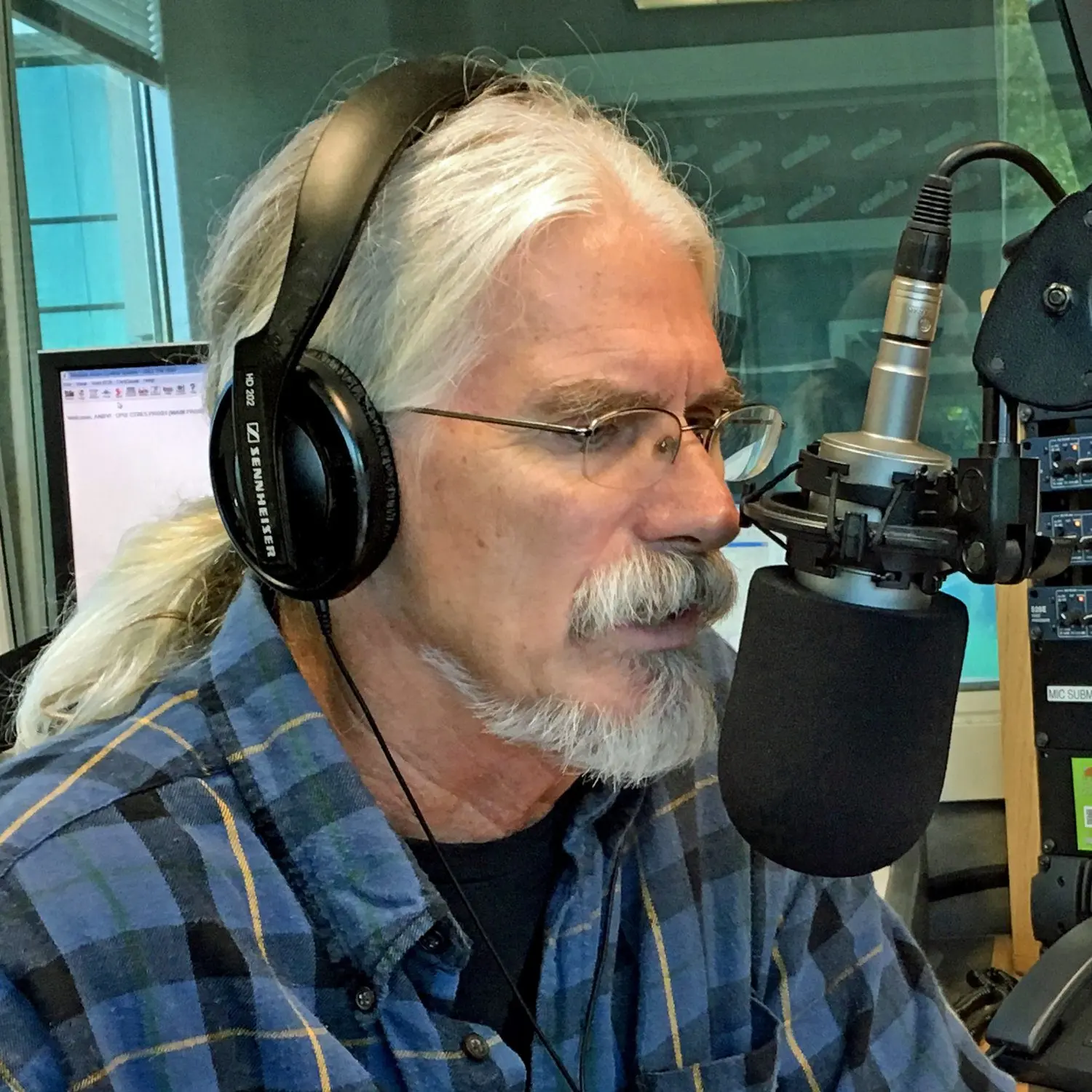
In this episode, join Steve Gregg as he delves into a variety of profound topics, from the applicability of the Ten Commandments today to the intriguing questions of Biblical eschatology. Uncover insights into the Great Tribulation, the 70th Week of Daniel, and the role of Sabbath observance in Christian practice. Steve engages with callers to tackle complex theological issues, offering clarity and depth in the discussion.
SPEAKER 02 :
Good afternoon and welcome to the Narrow Path radio broadcast. My name is Steve Gregg and we’re live for an hour each weekday afternoon taking your calls. I’m looking at an open switchboard. Is this a holiday or something? I’m not aware of it. I went to the post office. There was nothing in the box, nothing in our street box, and there was no traffic. I was just wondering earlier, is this a holiday? I just hadn’t heard about it. But if it is, and if you thought I’m taking the holiday off, you guessed wrong. I’m here live, and you can call in. And since our lines are open, you can get right to the front of the line. If you have questions about the Bible or the Christian faith, you disagree with the host, I want to say why, feel free to give me a call. The number is 844- That’s 844-484-5737. Now, last week there was a day when calls were not showing up on my screen and there was something that had to be changed at the studio and all of a sudden it turns out the full lines just appeared on my screen. Perhaps we got an issue there, I don’t know. But you could be the first to call at this point, 844-484-5737. Sometimes when the calls are not there, I will go to the questions that have been written in. And we get a lot of mail from prisoners. And one prisoner writes to us frequently, and I have a long list of questions he’s asked, which I will begin to take right now. He said, don’t we have to obey the Ten Commandments? Well, I would say most of them certainly are required, but the Ten Commandments as a body, as a group, are not given to anybody other than to the nation of Israel. They were given initially at Mount Sinai at a time where God called a bunch of people, mostly of Israeli origin. Some of them were Gentiles because it was a mixed multitude. but he brought them to Mount Sinai and established for the first time the nation of Israel. And he made a covenant with them. And according to the terms of this covenant, they had to do certain things, and he would do certain things. That’s how covenants are. It’s like contracts. Each party is obligated to hold up one’s own end of the bargain. And so God made tremendous promises to Israel, but he also put stipulations in. on their receiving of them. And the Ten Commandments had the list. In fact, most of the other commands he gave them, or a great deal of them, were simply amplifications of these ten. Now, the Ten Commandments, again, were the charter, as it were, the law for Israel under the terms of the covenant that God made at Mount Sinai. These included a great deal of moral things, including don’t murder, don’t commit adultery, don’t steal, don’t bear false witness, honor your parents. These are moral obligations. And, of course, these very things have been found in many law codes. It’s not just the Ten Commandments didn’t create these. It was wrong back in the time of Cain and Abel. Murder was wrong, and Cain violated that code. In the days of Abraham, people in Philistia and Egypt knew that adultery was wrong. And this had something to do with the way they were interacting with Abraham and so forth. But moral code is not invented in the Ten Commandments. It is included in it. But it’s also included in most other codes of most nations, uninspired codes. So the truth is, that God, in giving this code of conduct to his people, did not innovate from scratch. He basically required them to do basic moral things, and they are in the code. Now, there were some things that were also in there that were not the kind of morality that’s in all other codes of secular nations and laws. For example, worship God alone and don’t make any graven images. Those were kind of unique. Do not take the name of the Lord in vain and keep the Sabbath day holy. Now, these were things that are not generally found in the codes of secular nations like the other things are, but they were specific to Israel’s special calling. They were not allowed to worship other gods or make images. And they were also not allowed to work on Saturday. Now, this commandment was never given to anybody except Israel. There is no command to observe Sabbath apart from that which is given to Israel after the Exodus. And in the New Testament, once the Old Covenant is fading away and the New Covenant is being introduced by Christ, We have no reference in the New Testament at all to any obligation to keep Sabbath. We do have reference to the Pharisees trying to impose that obligation both on Jesus and his disciples, but Jesus deflected and said, no, that’s not necessary. You’re wrong to accuse them for that, even though they were in fact breaking Sabbath. You know, this is something that’s not a New Testament obligation. Which means when you say, don’t we have to keep the Ten Commandments, I would say, which ones are you talking about? The truth is the Ten Commandments stand or fall as a code with the Old Covenant. And that Old Covenant has passed and given way to a New Covenant. Now, the New Covenant is based on what Jesus said. Under the Old Covenant, people were given a law. Under the new covenant, we’re given a Lord. That is, it’s a relationship with Jesus, obeying him. Being his disciple means that we obey what he says to do. Now, he never said anyone should keep Sabbath. So even though Sabbath keeping is in the Ten Commandments, it’s not in the teachings of Jesus and therefore not an obligation of the new covenant. However, he did teach against adultery and murder and stealing and bearing false witness and covetousness and so forth. These are all things that are immoral behaviors. And Jesus was, frankly, like every decent person, insistent that his disciples should be moral, should live pure lives. So, essentially, you can really find in the teaching of Jesus a repetition of most of the standards in the Ten Commandments, other than Sabbath-keeping. But the point is, if today a Christian is, if it’s necessary for us not to murder or steal, This is not because that’s in the Ten Commandments. It’s because it’s in the teachings of Jesus, which is the authority that has replaced the law for us. Now, we still have to obey Christ. It’s just that we’re not obeying a law code. as much as we’re obeying a king and a Lord who has told us what to do in his own words. You know, this was illustrated, I think, in what we call the transfiguration. Jesus and three of his disciples went up on this mountain in Israel, and it looks like they spent the night there. But while they were there, there was a vision given to the disciples, and apparently Jesus saw it too, of Moses and Elijah. And Moses and Elijah were talking to Jesus, and Peter said, let’s build three tabernacles, that is, tents, one for Moses, one for Elijah, one for Jesus. Let’s extend our stay here with these people. Let’s keep them around a little longer and give them a place to sleep so they don’t have to go away. And yet that wasn’t a well-informed statement. The Bible says Peter said that because he didn’t know what to say. Apparently it wasn’t the right thing to say. And as soon as he said it, it says that Moses and Elijah disappeared. And only Jesus remained. And a voice from heaven spoke to them and said, This is my son. Hear him. That is, pay heed to him. Listen to him and obey him. Now this is in contrast to Moses and Elijah who represented the law and the prophets, the old covenant authority. They had served their time. They were bowing out. They appeared on the mountain only to endorse Jesus and go away. And Jesus alone remained. And it was of Jesus that God said, okay, this is my son. Now listen to him. So God is saying to the disciples that, you know, Christ is the one that they needed to follow. All right. I found out that the wrong studio was selected on the switchboard. Now I see my lines are full. My apologies to those of you who were there. The studio computer was set up wrongly. Last time this happened, I was told that the computer was set up for a different show, and they’d forgotten to switch it over. That may have happened today, too. But in any case, our lines are definitely full, probably have been for a long time. I just discovered this. So let’s talk to Peter in Fergus Falls, Minnesota. Hi, Peter. Welcome.
SPEAKER 10 :
Hello. Hello, Steve. Hi.
SPEAKER 02 :
Hi. Thanks for joining us.
SPEAKER 10 :
I’m driving down the road right now, and I’m going to pull over here just a little bit.
SPEAKER 02 :
Good idea.
SPEAKER 10 :
Good idea. I really enjoyed what you just said there about Sabbath. I thought that was very well said. That kind of tied in with what I’d like to ask you about Sabbath. A few weeks ago, or maybe it was a few days ago, there was a video posted where you had spoke about the length of the tribulation.
SPEAKER 02 :
Well, that’s been up online for several years now. If I was speaking in a church, was I speaking in a church?
SPEAKER 10 :
Yeah, you were speaking in a church.
SPEAKER 02 :
Okay, that was several years ago.
SPEAKER 10 :
Okay. Anyway, I have a completely different viewpoint on the length of the Great Tribulation and the 70th week of Daniel. I’ve never met anyone that has the same perspective as I do. Go ahead. The Sabbath of the first 69 weeks, could you explain what that would be and compare that to what the Sabbath you believe is of the 70th week?
SPEAKER 02 :
Well, I’m afraid you’re speaking past me. I don’t read anything in Daniel 9 about Sabbaths. So if you say, what is the Sabbath of the first 69 weeks? Well, the Sabbath is the seventh day of every natural week. Of course, the 70 weeks are not natural weeks. They are weeks of years. At least most Bible scholars believe so, and I agree. So we’re not talking about periods of seven days, but seven years each. Now, perhaps you’re saying that every Sabbath, every seven years, there was a Sabbath year. Is that what you’re suggesting? Correct.
SPEAKER 10 :
That’s what I’m suggesting.
SPEAKER 02 :
So that would add another 69 years to the total. Is that what you’re saying? No.
SPEAKER 10 :
No, it wouldn’t add any time because the seventh year is included.
SPEAKER 02 :
Okay. Okay. So what is your point? In the seventh.
SPEAKER 10 :
Well, I don’t believe the word in the Hebrew, sabuah, means seven. And I see this definition getting changed from some of the old Strong’s Concordance definitions. And I don’t have any theological training.
SPEAKER 02 :
Can you jump to the bottom line here? Because I do have my lines full, and I’m not sure exactly where you’re going with this.
SPEAKER 10 :
Right. The word Sebuah is used in Leviticus 12.5. Okay. Do you know the context of that?
SPEAKER 02 :
I’d have to look it up.
SPEAKER 10 :
Okay. Could you look that up and speak about it later when you have time?
SPEAKER 02 :
Well, I’m looking at it now, okay? It says, but if she bears a female child, you’re talking about that? Yep. Okay. If a woman bears a female child, she shall be unclean for two weeks, as in her customary impurity, and she shall continue in her blood of her purification for 66 days, okay? Right.
SPEAKER 10 :
Two weeks is not 66 days.
SPEAKER 02 :
No, no, it’s not saying that. It’s 14 days. Right, of course. But you realize that in the context, what it is saying is that if a woman has a male child, she is unclean for one week, and then there’s an additional 33 days of uncleanness, a total of 40 days. Whereas if it’s a female child, there’s the double that length, two weeks of uncleanness, and then she’s in her impurity for 66 days, so obviously a period of… 80 days instead of 40. So, I mean, there’s no equating of the 66 days with the two weeks. The 66 days are added to the two weeks, just like in the previous part of the chapter. 33 days are added to one week. So, you know, there’s no equating of her week to 66 days. Anyway, I don’t have much time to, you know, guess what you’re talking about. So, I appreciate you sharing with us. I’ve got a lot of people waiting here. All right. Elaine in Seattle, Washington. Welcome to The Narrow Path. Thanks for calling.
SPEAKER 03 :
Hello, Steve. I’m going to ask my question and then I’ll hang up the phone to hear your response. I just want to understand better what the Bible says about remarriage after a divorce. And it’s a husband who walked out and divorced. There was no infidelity at the time.
SPEAKER 02 :
Okay, no infidelity on his part either?
SPEAKER 03 :
No, his infidelity was a long time ago.
SPEAKER 02 :
Oh, there was infidelity a long time earlier?
SPEAKER 03 :
Yes, yes.
SPEAKER 02 :
I see. But after he walked out, he remained sexually abstinent after that?
SPEAKER 03 :
I don’t know.
SPEAKER 02 :
Okay. I don’t know. Well, and the, okay. Okay.
SPEAKER 03 :
Not remarriage. I’m asking about remarriage to that person. I’m just asking what the Bible says about a woman whose husband walks out and divorces her.
SPEAKER 02 :
Right. Now, is the woman a Christian?
SPEAKER 03 :
Yes.
SPEAKER 02 :
Does the man profess to be a Christian?
SPEAKER 03 :
No.
SPEAKER 02 :
Okay. In 1 Corinthians 7, it says that if a Christian and a non-Christian are married… as in the case you’ve just described. It says, if the non-Christian does not wish to stay in the marriage with the Christian, well, then the Christian should let them go. The Christian should not initiate divorce, but if the non-Christian initiates the divorce, Paul says the brother or sister, which means the Christian party, is at liberty, is not under bondage. And to my mind, Not under bondage means you’re not bound to the marriage and therefore you’re single. And a single person can marry. The only people who cannot marry are people who are married to somebody else. And so a person who’s married cannot marry somebody else at the same time. But if somebody is freed from that marriage in the sight of God, and that’s how Paul’s describing things, then of course they’re single and single people can marry. The kind of divorced person who cannot remarry is one who sought a divorce on the wrong terms. That is, they just broke their vows. They broke their marriage vows, left the marriage, perhaps took up with somebody else, maybe remarried, maybe didn’t, but they have broken their wedding vows. Now, doing that is not permissible, of course. And if someone does that and then goes out and wants to remarry, well, they’re actually still bound to their vows because their partner, whom they abandoned, has not violated the vows. So the vows have only been violated by one party in the illustration the Bible gives. Jesus gives this in Matthew 5.32 and also in Matthew 19.9. And, you know, where only one person has violated the vows, then that person who is keeping the vows has every right to demand and expect that their spouse comes back and keeps the vows they made. Now, if both parties have broken the vows, then neither party can really claim that the other must come back because both of them have broken the vows. In a case like the woman you’ve talked about, she has not broken the vows, but the husband has. Whether he has slept with somebody else or not, he has abandoned the marriage. He said he wouldn’t do that. That’s what marriage vows say. I will not abandon you. I will live with you. I will cherish you and so forth until we’re dead. And when an unbeliever does not take those vows seriously and abandons a faithful spouse, that faithful spouse is not bound to that covenant anymore.
SPEAKER 12 :
Well, thank you for your response. You mentioned 1 Corinthians at the beginning. What was the exact reference?
SPEAKER 02 :
Chapter 7, verses 12 through 15.
SPEAKER 12 :
Okay. Thank you very much for your response.
SPEAKER 02 :
Thank you.
SPEAKER 12 :
God bless you.
SPEAKER 02 :
God bless you. Jeannie from Federal Way, Washington. Another Washington caller. Actually, there’s three Washington callers on my board. Hello, Jeannie.
SPEAKER 11 :
Hi. Hello, how are you?
SPEAKER 02 :
Good.
SPEAKER 11 :
I’m trying to reconcile the Apostles’ Creed where it says Jesus went to hell after he died and what he said to the thief on the cross, today you will be with me in paradise.
SPEAKER 02 :
Yeah. Well, the Apostles’ Creed and many creeds make reference to Jesus being crucified under Pontius Pilate and descending into hell prior to his resurrection. Now, The Bible doesn’t say that Jesus descended into hell, and therefore there’s no real basis for this to be included in the creeds. And I personally would, I mean, I don’t know if he descended into hell or not, but I would not affirm that he did without biblical support to that. What the Bible does say, and probably where this idea comes from, is in Acts chapter 2, Peter is talking about Jesus’ resurrection, and he quotes a passage from the Psalms, Psalm 16, where David says, you will not leave my soul in Sheol. Now, Sheol is a Hebrew word. Unfortunately, in many early translations, it was translated as hell. But in Hebrew, it doesn’t mean what we think of as hell. Sheol is simply the generic place where dead people go. It’s even sometimes translated. Rightfully translated, the grave. Sometimes Sheol is the grave. Sometimes it’s just the realm of the dead where everybody who departs this life is now in Sheol. That’s how the Old Testament uses that term. And in the New Testament, the translation of that Old Testament verse uses the word Hades. And so Peter, in Acts chapter 2, quotes that passage about Jesus said his soul was not left in Hades. implying that he was in Hades, but he wasn’t left there. He came out. That’s a reference to the resurrection. Now, Hades can mean the grave or can mean the generic place of the dead, but it doesn’t mean hell in the sense that we usually think of it. Hell, in English, has connotations of being a bad place for bad people. and even possibly the final place of bad people. Although the Bible does not treat Hades as the final place, because at the end of Revelation, Hades itself is cast into the lake of fire, which is much more, you know, identifies as the last place. So Hades and the lake of fire are not the same. Hades is eventually cast into the lake of fire. So Hades is not hell. Unfortunately, English translators, and I don’t know, maybe those of other languages I’m not familiar with, European languages possibly, maybe even Latin, I don’t know, seem to have used the word for hell in that place, and therefore misidentified what Hades is in their translations. Now, I don’t know how the Apostles’ Creed came into English, because it certainly wasn’t written in English. The Apostles’ Creed was written almost certainly in Greek. or possibly Latin, but probably Greek, in ancient times, and has been translated into English and used by English-speaking churches as well as other language groups. I suspect, though I haven’t seen it, that in the original Greek, the Apostles’ Creed says he descended into Hades. Now, it may say that or it may not, because I’ve never seen a Greek form of that creed. But if it was based on scripture, it would be fair to say Jesus, when he died, descended into Hades, which simply means he was buried. Simply means he was put into the grave or at least to the generic place, the realm where dead people are. He died and was with dead people. That’s all it would mean. Now, OK, so this does not mean he suffered death. in hell, as we usually think of that term. That’s a poor translation. Now, what about Jesus saying to the thief on the cross, I say to you, today you will be with me in paradise. Many people believe, and there seems to be some support for this, even in the story that Jesus told of Lazarus and the rich man, that Hades was divided into two compartments. The place in Hades where the wicked would go was indeed a place of torment and flames. Even if it was not the final lake of fire, it was nonetheless an unpleasant place to be. But in Hades also, there was another place. The Jews had this in their theological view, although the Old Testament never taught this. The Jews of Jesus’ time had this tradition that Hades had these two compartments. One was the place of flames. The other was a place of comfort where people who died… who had died on good terms with God, like Abraham and Isaac and Jacob and David and the prophets and Moses and so forth. Those people went to Hades also, but they went to a place called Paradise, or Jesus refers to it as Abraham’s bosom. This is a Jewish tradition, and it may be true. We don’t know. But Hades, in the thinking of the Jews and early Christians, was a place with two compartments. one of which is paradise. So if Jesus went to Hades, but he said he was going to go to paradise, then this would not be contradictory because paradise would be understood to be a compartment in Hades. Now, the theory is that when Jesus rose from the dead, all those who were in paradise escaped with him and were taken to heaven because the death of Jesus was allowed for there to be a new and living way made into heaven itself, into the presence of God. This was not possible before the death of Christ, apparently, but it was possible as soon as he had died and resurrected. So the thought is that there’s really nobody there in Hades and paradise anymore, because those who had gone there are now in heaven. Some of this is speculative. There’s not some passage above that just lays that all out in a systematic way. It’s a little bit like the Trinity Doctrine. It’s not laid out anywhere in Scripture, but it is a fair systematization of statements that the Bible do make that are relevant to the subject. And I do believe, for example, the Trinity is a correct representation of those data. And likewise, the scenario I just gave you at Hades, is a fair representation of the data we have, although it’s not ever explained fully in that manner. I appreciate your call, Jeanne. I will have to take a break at this point, but we have more calls. We have another half hour coming. We’re not anywhere near done. But at the bottom of the hour, we’d like to let you know that The Narrow Path is a listener-supported ministry. We have no sponsors and no products for sale and no underwriters. We just… We just keep staying on the air as long as we can buy time from radio stations, which is pretty expensive. And we keep buying time because people, well, people like you, sometimes want to contribute to allow us to do that. You can write to us at The Narrow Path, P.O. Box 1730, Temecula, California, 92593. Or you can go to our website, thenarrowpath.com. I’ll be back in 30 seconds. Don’t go away.
SPEAKER 05 :
We highly recommend that you listen to Steve Gregg’s 14 lecture series entitled, When Shall These Things Be? This series addresses topics like the Great Tribulation, Armageddon, the rise of the Antichrist, and the 70th week of Daniel. When Shall These Things Be? can be downloaded in MP3 format without charge from our website, thenarrowpath.com.
SPEAKER 02 :
Welcome back to the Narrow Path Radio Broadcast. My name is Steve Gregg. We are facing another half hour coming up where we take your phone calls if you have questions about the Bible or the Christian faith or you want to express a view opposed to that of or alternative to that of the host. Always welcome those calls. I’m going to give the phone number, but I’ll tell you the lines are full right now. You certainly won’t get through if you call at this moment, but you might if you call a few minutes from now. We have a half hour ahead of us. It’s possible that you can get through even though our lines are full at the moment. The number is 844-484-5737. Our next caller is Jacob from Des Moines, Washington. Hi, Jacob. Welcome.
SPEAKER 01 :
Hi, I’m in Parkland, and it’s not a city, so I know it’s in Des Moines, Iowa. It’s kind of like Plymouth and Plymouth Rock.
SPEAKER 02 :
Okay, I’m just reading what the call screen said, but what is your question?
SPEAKER 01 :
I’m sorry, but this is a little unclear what you’re saying.
SPEAKER 02 :
What about Darby?
SPEAKER 01 :
Judgments, statutes, and ordinances come from the Darby translation, but it was dispensationalism was the most popular eschatology for millennialism in the U.S.
SPEAKER 02 :
What is your question?
SPEAKER 01 :
Just if that should be made known that it’s not really something to believe.
SPEAKER 02 :
Yeah, sure. I say it all the time. Darbyism, which is dispensationalism, is kind of a prominent eschatological position in the United States in these days. It’s of relatively recent origin. It’s been around less than 200 years, which is pretty recent for any theological system that professes to represent true Christianity, which has been around for 2,000 years. Anyway, yeah, you’re right. And I do say that. I mean, I say it often. But thanks for your call. Let’s talk to, let’s see, Mark in West Hartford, Connecticut. Hi, Mark. Welcome to The Narrow Path.
SPEAKER 08 :
Hey, Steve. You spoke with a person on the other side of the country just recently concerning paradise and heaven. Ironically, I’ve got the same similar question, so I’ll make it really brief. Does the Bible speak of heaven and paradise as similar or the same throughout the Bible? And is it referring to being in the presence of God, that being the believer’s final destination? Now, we cannot be in God’s presence unless we have been redeemed by Christ. Now, the thief on the cross was promised to be in paradise with Christ that day because it is promised. faith in him, obviously, and he believed. So does that make the thief on the cross the first human, if paradise is heaven and heaven is paradise, to be in heaven outside of Jesus being there first? Or were the patriarchs that had passed earlier, did they enter in, or was it Abel for that matter? Or It is a concept that the Bible doesn’t really explain as far as who’s like the first person in heaven, only because there isn’t going to be a first on the understanding that heaven is eternity, and there’s no linear time as it would be in this world. So everybody goes in at once.
SPEAKER 02 :
Well, yeah, that’s a good question in terms of the nature of time. The Bible does not reveal to us any alternative conceptions of time than those that we find to be intuitive. I mean, with us, events happen sequentially, one before another and another after that. We live our entire lives with this conception and perception of time. Some have suggested that time is actually just one realm and that God dwells outside of time. and that events don’t pass one after another for him as they do with us. I would have trouble accepting this entirely because, frankly, in God’s economy, I assume there was a time before he created the heavens and the earth and a time afterward. If he’s older than the universe, then he existed before the universe, at least in terms of the way I understand time. So this idea that God doesn’t experience time, strikes me as theoretical. I don’t know if it’s true or not, but it doesn’t seem like, it doesn’t seem right, and the Bible doesn’t tell us that. But let’s just say there are possibilities that God and the other world have a very different phenomenon in place of what we are familiar with, which we call the passage of time. You’re saying, is it possible that You know, all people, though they die at different times in our historical timeline, they all when they pass away, they’re all in the same realm with all saints past, present and future. Essentially, in that realm, everything is the same moment. That is a very esoteric idea that, you know, if true, I would have no way of knowing. You know, the Bible doesn’t tell us that is true. Maybe that’s true, and we haven’t been told, but there’s just no way to answer that. Now, as far as paradise being the same as heaven, this is the thing. Paradise is kind of a generic word in the Bible. It’s a Persian word. It’s not specifically from the Greek or the Hebrew, although it’s rendered into Greek. in our Bible’s paradise, it’s a Persian word that means a pleasure park, a pleasant place like a park. And it is used apparently to refer to the new heavens and new earth. It is also used to refer apparently, it would appear, to one of the compartments in Hades, as I was just describing to the previous caller. It’s also at least one time used of heaven, because Paul says in 2 Corinthians 12 that he knew of a man, verse 4, how he was caught up into paradise. But in the previous verse, or two verses earlier, it says he was caught up into the third heaven. Now, Paul, in one verse, says he was caught up into the third heaven, and two verses later, apparently repeating the same information, said he was caught up into paradise. seemingly using the word paradise as a synonym for heaven in this context. Though a person who would be in paradise in Hades would not be in heaven, and that’s another context. The new heavens, the new earth, the new Jerusalem is a different place that’s also referred to as paradise. There are some, I think maybe not in the Bible, but there are some ancient writings in which the Garden of Eden is called paradise. So in other words, the word paradise is seems to be a generic term that can apply to any pleasant place. In fact, we should not surprise us because that’s exactly how we use it in English. If we go to a place that is in all ways conducive to enjoyment, we say, this is paradise. And it wouldn’t matter what place it was. It could be any number of places that we would say the same thing about because paradise more or less is describing a kind of place. the pleasantness of the place. And so when Jesus said, today you’ll be with me in paradise, you know, some think he meant they went to heaven together because Paul refers to the third heaven as paradise. Others believe that he’s talking about that compartment in Hades that the Jews called paradise in their traditions, which is possible. He certainly didn’t go to the new heaven and new earth, which have not yet been created, at least not as I understand time. So, you know, it really can go a lot of different ways on this, and it’s not even necessary that we know. I mean, I’m not sure really what benefit it would be for us to know this. But one thing we do know is that the word paradise is used, you know, to refer to a variety of places that all seemingly have something in common, just like we may use the word paradise to describe many places that have something in common, namely their great pleasantness. All right, let’s talk to… Let’s see, we’re going to talk to Thomas in Astatula, Florida. Okay, welcome.
SPEAKER 09 :
I’ve been listening to you for many years, Steve. Glad to speak to you. My question is about Matthew 2, 2b. For we have seen the star in the east and are come to worship him. In order for them to see the star in the east, it means that they were already in the east and they had to travel west to where Christ was. Is that correct?
SPEAKER 1 :
Yes.
SPEAKER 02 :
Well, probably. I mean, it’s true in the King James, it says we have seen his star in the east, and also the New King James says this. Some of the translations indicate that they’re saying while we were in the east, we saw his star. Yeah, and therefore we left the east in order to find the star.
SPEAKER 09 :
And traveled west.
SPEAKER 02 :
They traveled west, uh-huh, yeah.
SPEAKER 09 :
Yeah, so my question also is, Cain and Abel, when they offered their sacrifices, when they were thrown out of the garden and they traveled to offer their sacrifices, where would they have offered them? But could it have been towards the garden in the east since they were thrown out and caused to dwell in the east? They had to travel west back to the garden to offer their sacrifice. That’s not in the Scriptures, but do you think that could be possible?
SPEAKER 02 :
Well, I don’t know that it would be impossible. I’m not going to rule it out, but it would be 100% speculation. We’re told simply that they offered sacrifices, and in those days before the time of Moses, righteous people just offered sacrifices, usually, I think, probably where they lived. They just set up altars. Abraham, in any case, did when he went to the promised land. And when he camped, he set up an altar there and offered sacrifices to God. When he moved on and lived somewhere else, he set up an altar there and so forth. On one occasion, God told him to go up on, you know, on a mountain, a particular mountain, to offer his sacrifice, Mount Moriah. And that was a special occasion. But I suppose Mount Moriah was seen in that particular context as a sacred place to do it. It happens that that’s, at least by Jewish tradition, that’s the same place that the temple later stood, where the Jews had to go and offer their sacrifices at the temple. But prior to David’s time, actually prior to Solomon’s time, Jerusalem did not have a temple. And the tabernacle where people offered sacrifices just moved around from place to place. As the children of Israel traveled through the wilderness, they took the tabernacle with them. And once they set it up, it was the right place to worship. So it doesn’t seem like there’s any one direction or one earthly spot which was the right place to be, except where… in that case, where the tabernacle was set up. But before the tabernacle, people like Job, Abraham, Isaac, Jacob, you know, those guys, they offered sacrifices wherever they were, I guess. Whether Cain and Abel lived near to the Garden of Eden, even though they lived outside it, and tried to go near the garden to offer sacrifices would be, strictly speaking, somebody’s guess, but not anything that could ever be affirmed or confirmed. Thank you, sir. All right, Thomas, thanks for your call. All right, let’s talk to Martin from Phoenix, Arizona. Martin, welcome.
SPEAKER 06 :
Hey, Steve, just two quick questions. I’ve come to things in my life, and I found out that Masons pray to Lucifer, and even like I researched it, and some Catholic Pope and the 1800s refer to their Masonic Lodge as the Synagogue of Satan. But nowhere in the Bible have I read where anyone should pray to Lucifer. I thought that was the bad guy. Why would these people pray to Lucifer?
SPEAKER 02 :
Well, obviously no one should pray to anybody except God. And Lucifer is not God, so it would be wrong to pray to him. I mean, the fact that people do something doesn’t mean that there’s some good reason to do it. People do all kinds of things that are wrong. And certainly anyone who might pray to Lucifer is doing an evil thing. I would say this, though. I’ve heard this rumor about the Masonic Lodge for many years. I mean, frankly, most of my life I’ve heard it. Charles Finney had been a Mason and wrote a book condemning it. I’ve known other Christians who had come out of Freemasonry and had written books denouncing it. But the claim is that you don’t really know. Even if you’re in the Masons, you don’t even know that they pray to Lucifer unless you get really up in the higher orders, which takes time to get up there. And they say, then you know this stuff. Well, I don’t even know that that’s true because I have friends, more than one, who say that they had a grandfather or an uncle or somebody who was a Freemason up in the highest levels. It was also, say, a Baptist minister or something, or a Presbyterian minister, and a godly person. That seems very strange to me, very unlikely, that a godly Baptist or Presbyterian minister would be part of an organization where he knew that they prayed to Lucifer. So I have to say, I only know by reports, and since I’ve never been in the Freemasons, and I’ll certainly never be in them, nor at the highest levels to know these things, I simply, everything I know is by hearsay. Go ahead.
SPEAKER 06 :
Yeah, I got a copy of the Masonic Bible, and even before the first word of Genesis, in the beginning, it said, in order to give more light, And I thought, okay, well, if Lucifer is the light bearer and they want to give more light, they want to give more Luciferianism. So I just don’t know.
SPEAKER 02 :
Well, it is true that the word Lucifer means light bearer. But that doesn’t mean that everybody who speaks about light in a metaphorical way is somehow alluding to something from Lucifer because God also gives light. Jesus is the light of the world, too. So, I mean, there’s – light is used metaphorically usually of a positive thing. You know, it’s usually positively used in Scripture. But – True. I mean, if Lucifer means light bearer, he is certainly not represented as a good person. So I wouldn’t trust any light that came from him if there ever was any. I don’t delve in those areas of speculation because I don’t have firsthand knowledge of the Freemasons from the inside. All right. Well, thank you for your call. Danny in New Rochelle, New York, welcome.
SPEAKER 07 :
Hey, Steve. How are you?
SPEAKER 02 :
Good.
SPEAKER 07 :
Yeah. Yes, Steve. Yeah. I actually have two questions, but since there’s not much time, I’ll ask you one. Yeah. So actually, I want to talk about we have a gas station, right? My family, right? My family owns. Okay. Yeah. And in the past, we had some workers you know, who weren’t treating me good over there, right? They weren’t treating me good. They were like, you know, some of them were like harassing me and like making me feel bad. They were giving me respect. And they were working for us. They were working, you know, in our business. And they were giving me respect. Yeah, yeah. But I want to say, you know, why do you think they would do that? And like, and they never apologized to me, and now they’re gone.
SPEAKER 02 :
Okay, well, let me just say this. I got a question out of all that, and it was, why do people do that? And I think people do that because they’re mean. It sounds like, you know, and it sounds like they are not followers of Christ. Now, when people are not followers of Christ, they aren’t necessarily going to be mean. There are people who don’t know Christ. who are not essentially mean. But meanness of disposition toward people is certainly a lack of love. And lack of love means people are not Christians. Now, if a person is not a Christian, they may seek to be kind. They may seek to be courteous. They may seek to be generous. But they don’t. They don’t always, and especially if a person doesn’t have any conscience toward God. Many times they’re very frustrated people, very insecure people. And their insecurity makes them want to make themselves feel better about themselves by diminishing other people. And maybe that’s why they do it. However, I would just say that if you are still with these people, if they’re still doing it, I would just maybe ask them. Why do you treat me that way? Have I done anything to you? And then they could tell you. I can’t tell you why they’re doing it. But I don’t suppose many people could tell you why, except for they could. So I would ask them. I’m afraid I can’t tell you why. But the fact that there are unkind people is certainly something that the Bible acknowledges and we’re warned about. Jesus said we’d face unkind people. But then even if you’re not a Christian, you’ll encounter unkind people. Unkindness is simply one temperament that some people choose for themselves. Right. You know, I just, you know, if you can’t get any good reasons out of them, just assume that they’re very unhappy people and very, you know, they just don’t know God. People who don’t know God, you know, they try to make sense of life themselves, and sometimes they make some very bad choices and some bad, adopt bad views, which lead to bad choices. Anyway, Danny, I’m sorry to hear that. Sheldon in Los Angeles, California, welcome to The Narrow Path.
SPEAKER 04 :
Hi, Steve. I listened to your show on the way home from work. I enjoy it. You’re really good. Thank you. I’ve been Catholic all my life, and I’ve heard it all my life, and we always say it, but I never really understood. It seems simple. I should know this more, but Jesus died for our sins.
SPEAKER 07 :
Uh-huh.
SPEAKER 04 :
I just can’t grasp the understanding. I’m thinking it’s because we’re able to repent, but we didn’t have to have Jesus to repent.
SPEAKER 02 :
Well, don’t feel unintelligent about this because it’s a very hard answer to give. What does it mean to say Jesus died for our sins? This is the question of what is meant by the atonement. Generally speaking, the Christians teach that Jesus died making an atonement. But what does that mean, and in what sense did his death do that? There’s actually as many as five or more major theories that have been held by theologians throughout history about how the atonement really works. I mean, how is it that the death of Jesus will have an impact on my sins? and I’m not going to have time to survey all of those I have on other occasions, but I will say this. What the Bible teaches is that in some way, and again, many people have given different answers of what that way is, the death of Jesus has made it possible for God to treat us as if we had not sinned, if we, as you say, repent. It’s true, people could repent before Jesus died on the cross because people in the Old Testament, like David, for example, Sometimes did repent. King Manasseh repented. And others in the Old Testament did repent. So Jesus’ death did not create the ability to repent. But it did bring about some circumstance that when we repent, God is able to just frankly overlook. overlook the penalties and the guilt of our sins. Now, there’s more than that, too, because the Bible indicates that Jesus didn’t just come to save us from the penalties of our sins, which is what the Atonement suggests, but also from the power of our sins. Now, Jesus died and rose again. The Bible indicates his resurrected life is now imparted to believers, through the outpouring of the Holy Spirit, which is the Spirit of Christ, into us. And he allows us to walk in a holy way and to overcome the power of sin in our lives. So the death and resurrection of Christ, in ways that are not entirely explained in the Bible, have made it possible for God to forgive us, which allows us to escape the penalties, at least the eternal or post-mortem penalties for our sins. But also to help us, he rose and sent his spirit so that we could live in victory over our sins and not have to just live sinful lives and always be seeking mere forgiveness. Now, probably the main view of the atonement that most Christians hold is that Jesus died as a sacrifice for our sins, just like in the Old Testament. Animals were sacrificed, and the idea behind those seems to have been, I’ve heard this question, but this is what I generally pick up from it, that the animal sacrifice, symbolically became the substitute for the sinner. Hands were laid on the head of the animal and sins were confessed over the animal. And symbolically, the guilt of those sins was seen as being transferred to the animal. And then the animal died because the wages of sin is death. So that instead of the actual sinners dying, the animal that received symbolically their sins died as a substitute to them. Now, not all people take this view of the atonement. There are other views. But this strikes me as the meaning of animal sacrifices in the Old Testament. And Jesus is, in the New Testament, referred to as the lamb that was sacrificed for us and the lamb of God that takes away the sin of the world. So many believe, and I’m inclined this way myself, though I think other views may also shed light on it, that our sins were counted to be upon him, just like he was a sacrificial victim like a lamb. And then he died in our place so that we could be forgiven. Now, once again, that’s one view of the atonement. There’s probably at least four or five more. And I see some merit in all of them. But this one I do not see any demerit in. I believe this is taught in Scripture. And so that would be how I understand it. But even if I don’t understand it, God understands it, and that’s the most important thing. You know, if I had the wrong view of the atonement, I could still have the right view of Jesus and be saved. I could have the right view of God and repent and live a life of faith in him and obedience to him. And if I was misunderstanding how the atonement worked, I have at least the confidence that God understands how it works, and that’s all that really will matter. if he’s going to forgive me for my sins due to what Jesus did, frankly, he’s the only one who really has to understand why that works. But, you know, if I understand it too, that’d be nice, but I don’t have to. In any case, when we turn to Christ, when we submit to Christ as our Lord and King, when we devote ourselves to following him in sincerity, then, you know, his blood washes away sins. It says, at least symbolically, if not literally, 1 John 1.7 says if we walk in the light as he is in the light, we have fellowship one with another and the blood of Jesus Christ, his son, cleanses us from all sin. And so the death of Jesus and the shedding of his blood has an impact on cleansing our sins. Precisely how that works, you’ll find many theologians debating that, but One person who never has to debate it or wonder about it is God himself, and it’s his opinion about it that matters really exclusively when it comes to being right with God. We simply need to do the right thing, and he’ll do what has to be done because of the atonement. Thank you for your call. I’m sorry to be out of time. We’ve got callers that are waiting, but we are out of time. You’ve been listening to The Narrow Path. Our website is thenarrowpath.com. Check it out. Let’s talk again tomorrow.