



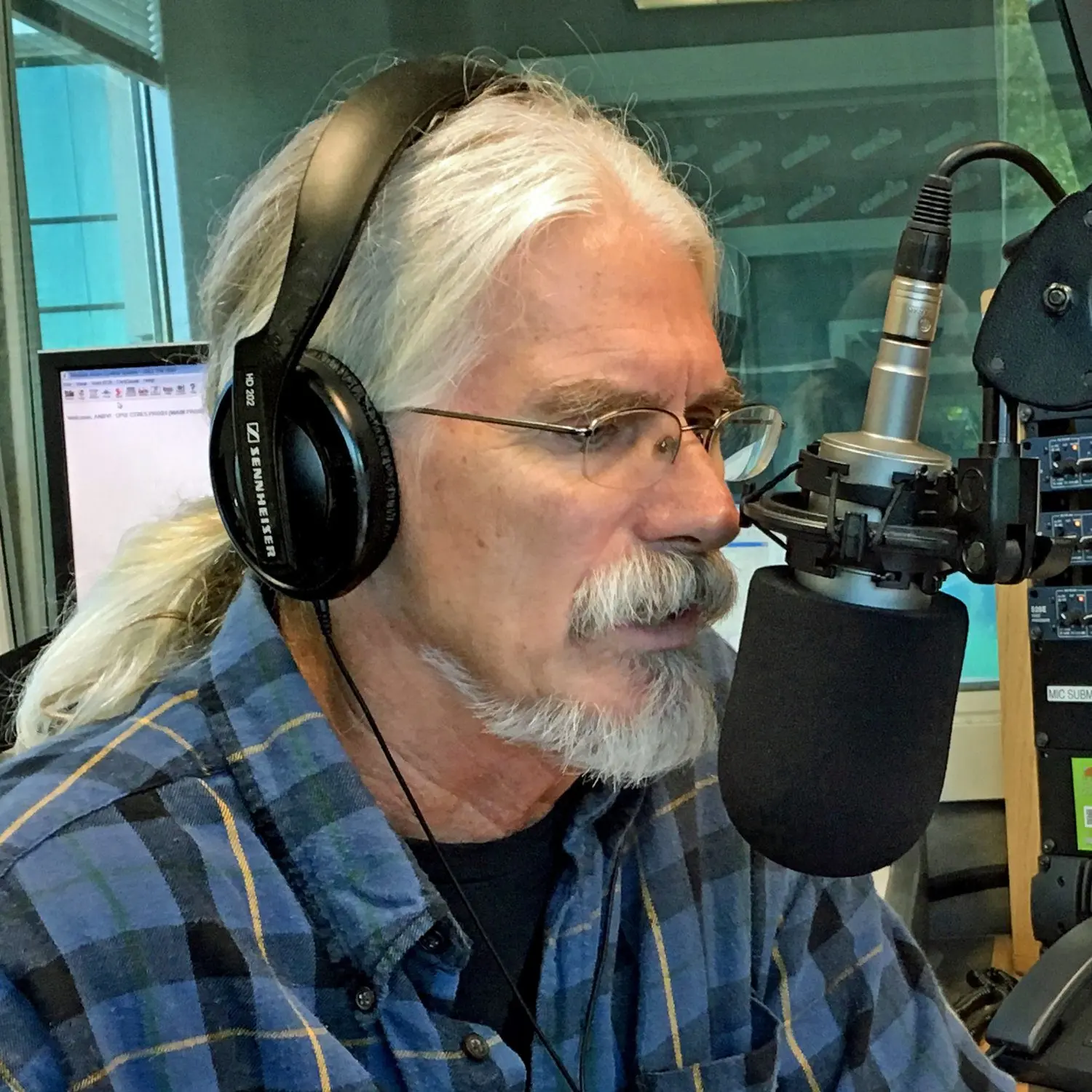
Join us in this riveting episode as Steve Gregg dives into an intriguing discussion about the birth of Jesus and the connected events in the life of John the Baptist. A caller submits an interesting theory tying Jesus’ birth to significant Jewish festivals, prompting rich dialogue on the interplay of historical, cultural, and biblical elements at play. Engage with us as we dissect prophecies, priesthoods, and treasured traditions to explore the captivating story of Christ’s coming into the world.
SPEAKER 09 :
Good afternoon, and welcome to the Narrow Path radio broadcast. My name is Steve Gregg, and we’re live for an hour each weekday afternoon, and that includes tomorrow, which is Christmas Eve. I believe we’ll not be live on Christmas Day, and we’ll be playing a recorded program, but the other days this week we are live. and also into next week. So that means, of course, that you can participate in the program in real time. That’s why we do a live program. If you have questions about the Bible or the Christian faith, or you want to discuss a difference of opinion that you might have with the host about anything that you’ve heard represented by me in past programs, feel free to give me a call. The number is 844-484-5737. Now, we have a couple of lines open, so some of you have written and said, oh, I can’t ever seem to call in when there’s a line available. Well, there’s a couple of lines available right now. This is a good time to call. 844-484-5737 is the number. And our first caller today is Jimmy in Staten Island, New York. I’m going to try to get my cursor over there and open his line. Hi, Jimmy. Welcome.
SPEAKER 05 :
Hi, Steve. Thank you. Somebody called last night asking about when Jesus was born. And I just wanted to submit something for consideration at the beginning of Luke. I believe God gives us a big time clue. He hooks intimately the birth of John with the birth of Jesus. Now, John’s father, Zacharias, he was at the course of Abia, and he would be in the temple around the end of May, June period. And he was told that he would be dumb because he didn’t believe what Gabriel was telling him, that he would have a child, that he would be dumb until all these things were performed. So when he comes out from his course ministering in the temple, I think with incense, the first thing he’s going to do is him and Elizabeth didn’t have a child. So I’m sure the first thing he did was unite with his wife. Now, six months later, we come into the area of Hanukkah, the Festival of Lights or the Feast of Dedication. And it wouldn’t be a far stretch to say that Jesus was conceived during this time period. Now, 280 days from there, you run into the time period of Rosh Hashanah, the Feast of Trumpets, and it would be very appropriate to have his birth at that time. And the big clue is the six months. So if you can figure when John was born, when he was conceived, and when he was born, then you could calculate from there the approximate time that Jesus was conceived and born. But I just wanted to tender that for consideration. Yeah, I don’t disagree.
SPEAKER 09 :
I don’t disagree with you, although I’m not sure, how do you know that the priesthood of the division of Abaya was in, you said it was in what, spring?
SPEAKER 05 :
There was eight courses, and he was the course of Abaya.
SPEAKER 09 :
There were actually 24 courses, and each one served… Well, he was in the eighth course. Oh, okay. But each course picked a priest to serve one week twice a year. I don’t know if they were exactly six months apart from each other, but the way they arranged it, since there were too many priests to really use them all, it was like a lottery system. And each, there were 24 courses of priests that David had set up. And then they would, I guess, each one would have their turn twice a year. for a week each, which means each one got two weeks. There’s 24 of them that make pretty much a 12-month cycle. But I don’t know, since the course of Abaya would get, like all the others, two different weeks during the year, I don’t know how we’d know for sure which one was the one that Zacharias was serving in. I’m not trying to disagree with you because I think that obviously Feast of Trumpets is a very significant day and in some way must find its fulfillment in Christ. So, I mean, you’re suggesting he was perhaps conceived at the Feast of Trumpets. Yeah, conceived during Hanukkah and born during the Feast of Trumpets, yeah.
SPEAKER 08 :
Yes.
SPEAKER 09 :
Well, that’s certainly, you know, that’s also in the Feast of Tabernacles, and the Bible says that the word became flesh and tabernacled among us, which has always struck me as a possible clue that Jesus may have been born during the Feast of Tabernacles, which is, you know, Feast of Trumpets, Feast of Tabernacles, that’s all in the same few weeks’ time. So that’s a possibility. You know, I don’t know that we have enough airtight clues, but you do suggest some positive things.
SPEAKER 05 :
It’s a calculated presumption, but it just fits so nicely. And all these years we’ve been celebrating his birth, December 25th, and actually the light came into the world on December 25th or that time period because we believe that light begins in the womb.
SPEAKER 09 :
Yeah.
SPEAKER 05 :
So actually he was here.
SPEAKER 09 :
Hey, I’m for it. I’m for that theory. I can’t say that I would go to the mat arguing for it.
SPEAKER 05 :
No, no.
SPEAKER 09 :
But I appreciate that. Yeah, I appreciate those thoughts.
SPEAKER 05 :
Yeah, I just heard about it recently, and it was astounding. I got another unrelated question. Has anybody done a matching donation? Yeah. If I was to contact you by phone, would you be up for something like that?
SPEAKER 09 :
Oh, you want to suggest a matching donation up to a certain amount? There was a guy who’s deceased now, but he used to do that from time to time. And so, I mean, he’s gone now, and no one is doing that these days. If you want to do that, sure, feel free to send me your phone number, and we can talk about it.
SPEAKER 05 :
Okay. Thanks. Have a blessed Christmas.
SPEAKER 09 :
Okay, Jimmy. Thanks. God bless you.
SPEAKER 05 :
Bye now.
SPEAKER 09 :
Okay, Kerry from Fort Worth, Texas. How are you doing?
SPEAKER 03 :
Hi, Steve. First of all, I want to wish you and Dana and all the Narrow Path people that make your program possible a very Merry Christmas.
SPEAKER 09 :
Thank you. Same to you.
SPEAKER 03 :
And I’ve run across a couple things that I’m a little confused about. In Colossians 3, 16… Paul says, let the word of Christ richly dwell in you. I’m a little confused about what the word of Christ might be. I don’t think it’s referring to the New Testament. Maybe it is. And then there’s another saying that says that we have the mind of Christ. And I don’t know if this is just an acknowledgment of the indwelling of the Holy Spirit or whether it’s something else. Could you help me out here?
SPEAKER 09 :
Well, frankly, the most we can do is speculate a little bit about what Paul means, because those terms can obviously be understood more than one way. When he says, let the word of Christ dwell in you richly in Colossians 3.16, I’m reminded of the similar words of Jesus in John 15.7, where he says, if you abide in me and my words abide in you, you will ask what you desire and it shall be done to you. Now, abiding in him, obviously, is what he’s talking about there in that story of the vine and the branches in John 15. But what does it mean for his word to abide in you? I assume that it means, I mean, the word abide means to dwell or to find a home there. And that’s pretty much what it says in Colossians 3.15. Let the word of Christ abide in you. The word of Christ. I take to be his teaching. Remember he said in 831 of John, he said, if you continue or, frankly, abide in my words, you are my disciples indeed. Now this is talking about us abiding in his words. whereas now we’re talking about his words abiding in us, it’s hard to know what the difference is between those things. Certainly to abide somewhere means to dwell there or to make your home there. So if he says, let Christ’s words find their home in you, would be a very sensible thing to say. And I think it would largely be saying, invite the words of Christ to be a permanent inhabitant of your mind, you know, and of your soul. So that basically you’re probably would refer to the whole process of dwelling on his, you know, meditating on his words. And of course, responding to them as they should be responded to. Meaning, you know, when Jesus says something is true, our response is to believe it. If he says that something should be done, then our response is to do it. I mean, the words of Christ call for faith and they call for action. And so to let his words dwell in us, as it were, you know, make themselves at home in us is a figure of speech. And Paul uses it as well as Jesus. But it probably just means, you know, do not do not ever stop remembering, meditating on applying the word of Christ to your whole thought processes. And applying your heart to it. Now, like I said, the words are ambiguous enough that it could mean any number of things. But that’s how I have tended to understand that. And when it says that we have the mind of Christ, Paul said that in 1 Corinthians 2, as I recall. He said that, you know, no one has been his counselor and so forth, but we have the mind of Christ. I think probably what that, see, that too can mean more than one thing. it can simply mean that our minds have been transformed or renewed so that they resemble Christ’s mind. And, of course, a mind is something different than a brain, although secularists don’t know any difference between the two. But, well, they sometimes do. The whole difference between the mind and the brain is simply that the brain is an organ made out of cells and neurons, and it’s a physical thing like the heart or the lung or the liver, whereas the mind, has to do with what is generated from the person’s thoughts, which generally associate with the brain. But the mind refers to the whole confluence of one’s beliefs, one’s attitudes, one’s values, one’s opinions, and so forth, that we adopt the mind of Christ because we are being renewed. In our minds, as Paul uses that expression in Romans 12 and also in Ephesians 4, we are being renewed in our minds. So the mind of Christ, I think, refers to the whole just we think like he does. We’ve adopted his thoughts. We’ve adopted his attitudes. We’ve adopted his values. We’ve adopted him. Whatever we know him to think, that’s what we have chosen to think in agreement with. And now it could mean even more than that, that we have, of course, access to supernatural revelation and knowledge because the mind of Christ, I mean, we are his body and the body benefits from the head. So, I mean, there’s a sense in which there may be something there about Christ’s mind, what Christ knows is available to us, but this would not be an absolute statement because God is omniscient and we’re not. But I think probably more the idea of the contents of a person’s mental activities is what the mind is referring to. And we We’ve exchanged our own opinions, our own values, our own desires, our own agendas, our own, you know, whatever, knowledge for what he has, for his. And that means that we think as he does. As 2 Corinthians 3 tells us in verse 18 that we’re being changed from glory to glory into the same image of Christ. Certainly it’s not speaking about our physical image. It’s talking about our inward man. being renewed day by day, as 2 Corinthians 4 also talks about. So I think this is talking about the inward transformation of our thoughts and our character and everything that’s related to our mental state to conform to that of Christ. And that would also be very closely related to his word dwelling in us. Because, of course, it’s his word that we receive and welcome. an embrace within us that transforms our mind in this way. So I think the two are not unrelated to each other.
SPEAKER 03 :
Thanks very much, Steve.
SPEAKER 09 :
Okay, Carrie. Hey, thanks for calling. Have a good Christmas.
SPEAKER 03 :
Thank you.
SPEAKER 09 :
Bye now. Two lines are now open. Carrie was on one and one caller got tired of waiting and hung up. So there’s two lines open for you if you want to call. 844-484-5737. That’s 844-484-5737. John from Gainesville, Florida. Welcome to The Narrow Path. Hey, thanks for taking my call, Steve.
SPEAKER 07 :
I just wanted to wish you guys at the Narrow Path and everybody at the Shepherd Radio Station and all the programs they carry a very Merry Christmas and Happy New Year ahead. This has been a very special Christmas to me because all these conservative talk shows now, they’ve gone on vacation, so I’ve been tuning into the Shepherd Radio more and more. And you guys at the Narrow Path, you talk about things a person can’t just let go, like changing their life around, getting to know Jesus more, getting to know what the Bible’s about more. And all these conservative talk shows that do nothing but rub your face and all this evil stuff going around today that you have no control over. You can’t do that without other than starting a revolt. I ain’t going to go there. So I really appreciate what you guys do.
SPEAKER 09 :
Well, you know, I listen to some of those speculative shows myself. But I just don’t like to dwell on those things. I mean, I like to be informed. I like to be informed of what’s going on. I just don’t like to let that be my main, you know, my consciousness.
SPEAKER 07 :
That’s a good point. It gets to where they’re just rubbing your face in it, and I don’t like it. So I love you guys. I really do. Have a Merry Christmas and a Happy New Year.
SPEAKER 09 :
Well, thanks, John. Good to hear from you.
SPEAKER 07 :
Bye now.
SPEAKER 09 :
Okay, Charles from Indianapolis, Indiana. Welcome to The Narrow Path. Hi, Charles.
SPEAKER 13 :
Hi. Thanks for taking my call. I try to listen to your show every day. I have a question. There’s a scripture in St. John’s 529 that says, “…and shall come forth that they that have done good unto the resurrection of life, and they that have done evil unto the resurrection of damnation.” I was wondering, for the people that don’t make it by choice or whatever, make it to heaven… My first question is, do you believe we’re eternally in, you know, are we eternally, like, lost without God? Is it forever? And then are the people that don’t make it, are they like demons? I mean, is it like a, you know, because the demons have another body, I’m sure, I believe, at least from what God originally gave them. So do you think the Christians or the people that reject God, when their resurrection unto the damnation part, what kind of being do you think they’ll be?
SPEAKER 09 :
Well, I don’t think that, well, I mean, I don’t really know because the Bible is really silent on that. Most of the friends I’ve had in my life and the teachers I’ve had tended to think that the demons are not evil people but fallen angels. But the Bible doesn’t ever tell us that they are fallen angels. There are a minority of people that I’ve encountered who think that the demons are the spirits of persons who were sold out to Satan in their lifetime. And after death, their souls or their spirits are compelled to serve him. And now they do so as demons. Neither of these things are actually taught directly in Scripture. So I really don’t, I really can’t be sure. I’m not one of those people who like to speculate about things, especially, I mean, I’ve certainly known and I do know some teachers who, their whole ministry seems to be speculative on things that are fairly sensational. It keeps a certain ilk of listeners tuned in to see what sensational thing they’re going to hear next. I’m just not drawn to sensational things. I just want to find the truth. And when it comes to knowing the truth about certain things, some of those truths we’re just not told because I assume we don’t have to know. I believe everything that we have to know, God would reveal to us. But he has not revealed who the demons are, where they came from exactly. I just read a book by Michael Heiser called Demons, which floated some interesting theories. But, of course, these theories were not based directly on Scripture either. So… A lot of people have speculations about such things. And I guess I could take a position tentatively and say, yeah, but this could be wrong. But I’m not really, I guess I’m not sufficiently interested in knowing. And since I can’t know, I usually direct my attention to things that are more easily determined from Scripture. which are often not anywhere near as sensational as other things. Now, you did ask something about those who are not saved. Are they, I think you said, are they perpetually or forever punished? I think that was part of your question earlier. That, too. I hate to be on the I don’t know side so often, but I know several theories about that. But it’s, again, one of those things the Bible is not as explicit about as we could wish. And, again, that means that apparently it’s not something we have to know. I’m not sure what good it would do me to know if that was true. Although if it’s not true, that is, if there is no eternal conscious torment, it’s perhaps good to know that because it would be a shame to accuse God. of being the kind of God that would willingly subject people to eternal conscious torment only because he had thin skin and they offended him. That kind of a God would certainly be a different kind of God than one who, as some alternative views suggest, simply annihilates the lost, which would be fair enough. They neither suffer after that nor have any salvation either. Or a third view is that God continues to pursue out of his love for humanity, being not willing that any should perish, but that all should come to eternal life, that God continues to pursue seeking repentance from even those who are in hell. These views are all out there. They’re all defensible in some measure from Scripture. And they’ve all been held by Orthodox Christian leaders from the earliest days of the church to now. So, these are I don’t know things. I mean, I certainly know the options. What I don’t know is which of the options is true, only because, and it’s not because I haven’t done my homework on this. I certainly have done a lot of study into all those things, but I’ve been studying this for 55 years, the whole 55 years I’ve been in full-time teaching the Bible, but I just have to say what I concluded, and this many years ago after looking deeply into the matter, is that there’s not enough information to be certain about those things. So instead of answering your question, I’m kind of giving some perspective on the impossibility of knowing for sure these things and probably the unnecessariness of necessarily knowing these things. It’s not a stupid question. In fact, a lot of people have it. A lot of intelligent people have the same question. But the Bible doesn’t answer it for us, which means I can’t really settle the matter, as I might like to do.
SPEAKER 13 :
Oh, well, thank you. That does help, though. Thanks, Charles. I appreciate you.
SPEAKER 09 :
God bless you. Good talking to you, man. Merry Christmas. All right. Let’s see. We’ve got Steven from Cornville, Arizona. I didn’t think they grew corn in Arizona. Yeah.
SPEAKER 14 :
Hi there, brother. Yes, my name is Evangelist Stephen Lazar. I’m a Messianic Jew. I have a Messianic worldwide ministry called Yeshua Messiah Ministries. What’s your question? The question is this. It’s actually to answer your question, okay? Number one, in the Passover, when the blood was over the doorposts, the death passed over. See, the blood is Yeshua. And so without the blood atonement, There’s no way to get in. He’s the way, the truth, and the life. No one comes to the Father without him. So that is the first thing. Secondly is the question and actually understanding his covenant with Israel. And so right now we have an issue with Judea and Samaria. And so my question to you, when you read John 4, you clearly see Yeshua was walking in Judea and Samaria and Jacob’s wealth. God says he’d never break his covenant day and night. So this two-state situation to divide Jerusalem and Judea and Samaria to give that up and bring back Israel to 67 borders, how do you feel when it’s written in the word Isaiah 62, do not give the Father rest until Jerusalem is appraised in all of the earth?
SPEAKER 09 :
Well, I’m trying to put all that into one subject heading. First of all, I don’t have an opinion because it’s not an area that I look into. I have no expertise in the matters of a two-state solution, a return to the borders of 1967, the pros and the cons of it. This is the kind of statecraft that people in every country have to deal with reference to their own country, especially those who rule those countries. And I very seldom get involved in those kinds of things. First of all, I don’t have any decision-making power. I’m not against a two-state solution in principle, though I know I’ve heard some say that if the West Bank was given to the Palestinians, it would simply become you know, a pad for launching rockets into Israel. And I think there’s a good possibility that that’s true. But again, I’m not an expert about those things. If you’ve listened to me enough, you know that I’m not as interested in what’s going on in the Middle East as many Bible teachers are, because I don’t see what’s going on in the a fulfillment of any prophecy or anything that Christians themselves have to necessarily have special knowledge of. Now, I do think that it’s great for Christians to be knowledgeable about as many things as possible so they can apply Christian truth to them. But to my mind, settling the Middle East crisis between Israel and the Palestinians is – It’s a difficulty that’s gone on for generations and which is of unusual complexity. And to my mind, I don’t have all the information or the intelligence or the need to settle those questions. So I don’t really see that, you know, John 4 and Jesus walking in Samaria is specifically related to the modern world. issues of the Palestinians in what was once Samaria. So, I mean, you’re a Messianic Jew. Obviously, this is something that matters to you more than to me. Not that I discredit your concern. I just don’t have the information to settle those very difficult statecraft issues. I need to take a break. You’re listening to The Narrow Path. Our website is thenarrowpath.com. We have another half hour coming. So I’ll be back in 30 seconds. Don’t go away.
SPEAKER 01 :
Steve has nothing to sell you, but everything to give you. When today’s radio show is over, we invite you to study, learn, and enjoy by visiting thenarrowpath.com, where you’ll find free topical audio teachings, blog articles, verse-by-verse teachings, and archives of all the Narrow Path radio shows. We thank you for supporting the listener-supported Narrow Path with Steve Gregg. Remember, thenarrowpath.com.
SPEAKER 09 :
Welcome back to the Narrow Path radio broadcast. My name is Steve Gregg, and I’m here to take your calls and to discuss with you whatever questions you might have about the Bible or the Christian faith. You know, sometimes people have said, does it make you nervous to go on the air and just kind of open up? open phone line i mean we don’t even screen to find out what the subject of the calls are before they go in the air uh you know what do you do if someone asks you something you don’t know well you’ve just seen in the past hour there were three calls in a row that my answer was i don’t know um and you might say well if you don’t know why why do you have a radio show well there’s some things i know and there’s a lot of things i don’t know and uh The things that I don’t know, in many cases, at least the questions I’m asked, I have to say I don’t know. In many cases, it’s because the Bible doesn’t give a clear answer about it. And I’m kind of stuck with the Bible as my source of information on biblical things. So, you know, my apologies that so many callers have had to call. And my answer has been, well, you know, the Bible doesn’t clearly answer it. The Bible doesn’t clearly answer it. I don’t know. That’s not always the case, but I’ve just been struck by how many times that happened in the last half hour. All right, let’s talk to Barbara from Roseville, Michigan. Barbara, welcome to The Narrow Path.
SPEAKER 02 :
Oh, hi, Steve. I just wanted to comment on that. He wanted to know when Jesus was born, and I heard an excellent speaker. He said because of what the shepherds were doing, they only do that once a year. And I think he said it takes place like around May. So they only do this once a year, and that will kind of pinpoint when Jesus was born, just because of what the shepherds were doing.
SPEAKER 09 :
Well, we’re not told much about what the shepherds were doing. We’re just told they were tending their sheep on the hillsides at night. I think we can say that would tell us a time that it probably wasn’t. It probably wasn’t the wintertime, because that would be the time when it might be too cold, for the shepherds to be out at night on the hillsides. They’d probably be indoors or something. But I doubt if there was only one month out of the year that the shepherds had their sheep out of the flocks. I’m not sure how they kept them alive the rest of the time. So I don’t think that that necessarily tells us much. The fact that shepherds were there on the hillsides, which is where Shepard’s normally would be, except when it’s too extremely cold, I suppose. Suggested probably was in spring, summer, or fall, very probably not winter, which means it probably was not December 25th. I appreciate your call, and thanks for trying to help us out there. All right, we have some lines open. We also have some callers we’re about to take, but I’d just like to know, we have some lines open if you want to join us. The number is 844- 484-5737. That’s 844-484-5737. And our next caller is Dave in Hooksett, New Hampshire. Hi, Dave. Welcome. Hi.
SPEAKER 04 :
Yes, I value your discernment, knowledge, and ability to dissect things. And this could end up being another one of those I don’t know things. And… But I wanted to give you a take on what I think about John the Baptist. Before he was even born, and he met Jesus in the womb, both of them, and it talks about how the baby leapt in her womb at the sound of Mary’s voice, that as if he had recognized him before birth. And then we don’t hear anything else until after. when he recognizes him a second time at Jesus’ baptism, that he recognizes who he is. And then later in the Gospels, it talks about confronting him with the prophecy about Elijah had to come first. And Jesus says, yes, he did come first. And they did with him as they would. In other words, they beheaded John the Baptist. And my thought was, or just question, or I don’t know if anyone else has theorized that, you know, was John the Baptist also of spiritual origin? In other words, Elijah, who didn’t die, he was taken up, was brought back in the body of John the Baptist.
SPEAKER 09 :
Well, you know, people who believe in reincarnation, have sometimes pointed to the fact that Jesus said, if you can receive it, John is Elijah, who is to come. And they say, see, there’s an example in the Bible of reincarnation. Elijah lived seven or eight centuries before Christ, and then lo and behold, here he is again in John the Baptist. First of all, you know, I don’t believe the Bible teaches reincarnation, but this is certainly not, would not be, a typical case of even what reincarnation is in the minds of those who believe in it. Because reincarnation in Hinduism and in Eastern religion in general means that a person dies and his spirit then leaves the corpse and then comes again into the world through another child that is born through natural processes. And this happens lifetime after lifetime, incarnation after incarnation. So, but Elijah never died. He was taken up alive into heaven and it does not appear that he ever died. So, you know, even if he were to reappear on earth, it would not be a reincarnation. He just presumably just returned from heaven like Jesus will do sometime. Now, when Jesus said, if you can receive it, John is Elijah who was to come. He’s referring to the fact that Malachi had predicted that. The coming of Elijah before the great and terrible day of the Lord. The very last verses in the Old Testament, Malachi 4, verses 5 and 6, describe God sending Elijah, the prophet. And because of that closing, those closing words of the Old Testament, the Jews traditionally expected Elijah to come back himself. Not to be born as a baby again, I don’t think, but just to come back from heaven. John was born as a baby. But he was not actually Elijah. Now, Jesus, I mean, obviously, in saying that, we have to deal with the fact that Jesus said, if you can receive it, he is Elijah. But what’s that mean, if you can receive it? Because we’re told that when, in John chapter 1, it says, in verse 19 and following, John 1, 19, now this is the testimony of John, the Baptist, when the Jews sent priests and Levites from Jerusalem to ask him, who are you? He confessed and did not deny, but confessed, I’m not the Christ. And they asked him, what then? Are you Elijah? And he said, I’m not. Now, that’s interesting because John, when he was asked if he was Elijah, said he was not. And yet, Jesus said, if you can receive it, he is. What’s going on there? Well, John, when he said he’s not, he meant, I didn’t come back from the sky. I’m not the Elijah, the Tishbite, who lived in the days of Ahab and Jezebel. I know that’s what you’re expecting. I know that’s who you think is coming. I’m not that. That’s not who I am. But Jesus said, okay, yeah, he’s not literally Elijah, but if you can receive it, he is Elijah who was to come. What Jesus is saying, I think, is that the Elijah who is to come was not necessarily a return to earth of the man from the 8th century B.C., but rather one who would come spiritually. Because we’re told in Luke chapter 1, When the angel is talking to Zacharias, who became the father of John the Baptist, this is before he did, the angel said he will be, I’ll just give you the passage here. He says in verse 17, Luke 1, 17, the angel says to Zacharias that his son John will also go before the Messiah in the spirit and power of Elijah to turn the hearts of the fathers to the children. and the disobedient who is of the just. This statement, to turn the hearts of the fathers to the children, is an exact quote from Malachi and his prophecy about Elijah coming. So he’s saying, your son will fulfill the promise that Malachi made. And he will do so in the spirit and power of Elijah. He’s not going to literally be Elijah. And when Jesus said, if you can receive it, he’s Elijah who is to come, he’s saying, not everyone will receive this because, you might recall that Paul says in 1 Corinthians 2, I think it’s verse 14 or 15, he says, the natural man cannot receive the things of the Spirit of God. They’re spiritually discerned. Not everyone can receive it. Not everyone can receive a spiritual truth. Spiritually speaking, Malachi and his prophet Elijah has been fulfilled in John not because John was literally Elijah he was not he was not a return of Elijah he was not reincarnation of Elijah he was simply anointed with the same spirit and came in the same kind of ministry and power that Elijah did the same spirit that was on Elijah was on John and John of course in many respects resembled Elijah the way he dressed the way he preached the way he lived in the wilderness the way he You know, there’s a sense in which John kind of even resembled him. But the main thing was that John is not Elijah literally, but because spiritually he is a parallel to Elijah, that’s good enough to fulfill Malachi’s prophecy, according to Jesus, if you can receive it. So it’s a bit confusing, obviously. But Elijah was a natural man. It’s true he was filled with the spirit from his mother’s womb, which makes him a unique natural man. And also he was conceived miraculously because his mother and father, when he was conceived, were not naturally able to conceive because his mother was too old and passed menopause. So there’s miraculous elements in it. And John even leaped, as you say, in his mother’s womb when she met Mary, who was at that moment pregnant with Jesus. So, I mean, John was an unusual character. In fact, Jesus said among those born of women. There’s not a risen one greater than John the Baptist. So, you know, among people who have not been born twice, but only born once, that is, of those who were godly during the Old Testament period, John was the greatest. And unique in many ways. But he was not a literal reincarnation of Elijah. And that’s why I understand you to be asking. And my answer would be no. He was not that. So, I appreciate your call, brother. Thanks for calling. Let’s talk to Wilson from Clifton, New Jersey. Hi, Wilson. Welcome.
SPEAKER 11 :
Good evening, Steve. You are doing an outstanding job, your knowledge and ability. I really love your show. Keep on doing it. Thank you. Thank you. My question is, when God told Noah that there’s a great flood coming for 40 days and 40 nights, be prepared so nobody listens to Noah. My question is, how many years Noah spoke? I know Pastor Billy Graham spoke. Greg Laurie, pastor, and Chuck Susserlup, they all say 120 years. When I started sharing this in my church, they doubted me. They said there is no words in the Bible that says 120 years Noah preached before the flood too.
SPEAKER 09 :
Okay. Well, first of all, when we read the story of Noah, which is in Genesis, you know, There actually is no reference to Noah preaching at all. The reason we know he preached is because Peter tells us that. Peter, in 2 Peter, chapter 2, refers to Noah as a preacher of righteousness, which is interesting because, again, there’s no Old Testament reference, which is where Noah’s story is found, that refers to Noah doing any preaching at all, just building an ark. But Peter… tells us he was also a preacher. So there’s where we get that. Now, as far as preaching for 120 years, that would be deduced from Genesis 6 and verse 3, because we read of the corruption that came upon the planet, upon the population of the planet prior to the flood. And it says in verse 3 of Genesis 6, the Lord said, my spirit will not always strive with men, for he is indeed flesh, yet his days shall be a hundred and twenty years. Now, who did God say that to? It says God said, the Lord said this. Who was he speaking to? I think the assumption is he was speaking to Noah. We are later told of how just later in the same chapter God communicates Noah to build an ark because a flood was coming and so forth. So if, in fact, the announcement of verse 3 was made by God to Noah, that means he gave him 120 years advance notice before the flood would come. And then he’s going to wipe out essentially the human race apart from Noah and his family. So that would suggest the 120-year period. And that Noah preached during that time, again, Genesis tells us nothing of that, but Peter does. And so we could say Noah had 120 years to build the ark in, And he preached during that time, too. Whether he preached the whole time or just near the end as the flood was impending, I don’t know, because we simply don’t have a detailed story of that period of Noah’s life. But, yeah, he did preach because Peter tells us so in 2 Peter 2. And then, of course, he had 120 years from the time he was warned about the flood till the time the flood came. And So we could say his preaching occurred during that period of time, whether constantly during that time or maybe only during some of that time.
SPEAKER 11 :
Do you know, Steve, the second Peter, what second chapter and what verse? The whole second chapter?
SPEAKER 09 :
It’s verse 5. Second Peter 2.5.
SPEAKER 11 :
Verse 2 Peter 2.5. All right. All right, all right. Thank you. Thank you for your good answer. I was waiting for this. Thank you, Steve. Keep up the good work. God bless you all.
SPEAKER 09 :
Thank you. Merry Christmas, Wilson. Thanks for joining us. Okay, let’s talk to Priscilla from Vancouver, British Columbia. Hi, Priscilla.
SPEAKER 12 :
Hi, Steve. Thank you very much. I would like to expand further, sir, on Joshua chapter 2 from Verse, if you can, verse 9, she said, Rahab, I know that the Lord has given you the land and that the fear of you has fallen amongst us, upon us, and that the inhabitants of the land melt away before you. Continuing over verse 11, and as soon as we heard it, Our hearts melted and there was no spirit left in man because of you. For the Lord your God, he is God in heavens above and on the earth beneath. I’m going to hang up and say thank you so much to you and the crew. I encourage any contribution from all who are listening. If you’re feeling extra giving and jolly, again, thank you and good day.
SPEAKER 09 :
Before you go, could you frame a question about that? Because I’m not really sure what you’re asking about the passage. Thank you.
SPEAKER 12 :
If you can expand on that fear, like the fear of you. Okay. And as well, talking about there was no spirit left in man because of you. Thank you.
SPEAKER 09 :
All right. Well, thank you for your call. Now, when it says, you know, people’s hearts melted, Uh, and there was no spirit left in them. These are simply Hebrews. These are idioms. They’re figures of speech. They refer to the draining of all courage from them. They didn’t have stout. They weren’t stout hearted at that moment because their hearts, you know, once strong and confident, we’re now like melted wax. Uh, not literally, uh, But they had no heart to fight. They had no spirit. In this instance, it would mean they don’t have any, they’re totally discouraged. They have no backbone, no mind to be able to stand up against Israel. They have no courage. So those are what those things mean. Now, to say that these people were, that the fear of Yahweh had come upon them, She’s referring to the fact, and she says this, that they had heard what Yahweh did, that’s God, had done to the Egyptians. Now, the Egyptians were a much more powerful nation, militaristically and economically and so forth. than the little city of Jericho, which was simply a walled city within Israel, Canaan at that time. And so if God had wiped out with the plagues and with the Red Sea coming down and crushing the Pharaoh’s armies in the deliverance of Israel, and that had been 40 years earlier than this, but news had spread, I mean a whole generation, had that in their collective awareness that these people, Israel, who came out of Egypt, boy, their God really did a number on Egypt, and now they’re standing at our door, and they’re going to attack us. Well, that would be occasion for these people to fear a great deal. Of course, the people of Jericho could have surrendered. They could have fled. You know, if they had fled the country and surrendered it to Israel, said, OK, if God’s given you this country, take it. I’m leaving. You know, they would have spared their lives. I mean, but because God only told Israel to drive the people out of the land, the killing of the Canaanites only occurred when they refused to be driven out. So, you know, this is this was something that was terrifying, not just to the people of Jericho, apparently, but to the Canaanites in general, that the God of Israel was who had done such amazing things in demolishing the power of Egypt, was now coming after them. And so that’s what the fear she’s talking about was. And they had no courage in the situation, understandably. Okay, let’s talk to Ryan from Linwood, Washington. Hi, Ryan. Welcome.
SPEAKER 06 :
Thanks, Steve. Steve? So I was thinking about when Jesus’ heel was bruised, like figuratively, on Calvary. Is it worth noting that it was at the place of the skull? Do you think that that has a part to it, you know, crushing the head?
SPEAKER 09 :
Well, I mean, it’s an interesting thought. The Bible doesn’t make that point, but I won’t say that it can’t be theorized. The place of the skull. No one knows why Golgotha was called the place of the skull, but it literally means place of a skull. Most believe, I think, that it’s because it was a rocky mound near Jerusalem that looks like a skull. At least when the sun hits a certain way, it looks very much like a human skull. I’ve been there. I’ve seen it. I’ve seen pictures where the sun was hitting it just right. It looks very much like a huge skull. That would explain why they called it the Place of the Skull. Others have thought it might also even be called that because it might have been scattered with skulls of people previously crucified by the Romans there, and their skeletons and skulls and stuff would be around there. But I think it’s probably the shape of the mountain that gave it its name. Now, the fact that it was called the Place of the Skull is mentioned in Scripture in No significance is given to it, but the fact that it’s mentioned might mean that it has significance.
SPEAKER 06 :
And the bruising of the heel was not mentioned.
SPEAKER 09 :
Right. I mean, right. It doesn’t mention the nails in Jesus feet, for example, which is no doubt the fulfillment of the. of the Genesis 3 prediction that the serpent would bruise his heel, and then, you know, in the same action, the Messiah would bruise or destroy the head of Satan. But Satan doesn’t have a literal skull, so, I mean, he doesn’t say he’ll crush the skull of Satan, but, you know, figuratively, he destroyed Satan’s power and, you know, executed him, as it were. I, you know, I’m not going to I don’t think I’ll adopt that as a teaching, but it’s an interesting parallel. And there probably are some who would be more inclined than I am to make something of that. I can’t deny it. I just don’t know that I would affirm it.
SPEAKER 06 :
Okay. I’m sorry to run that by you.
SPEAKER 09 :
All right, Ryan.
SPEAKER 06 :
Well, God bless you.
SPEAKER 09 :
Thanks for calling. Merry Christmas. Bye-bye.
SPEAKER 06 :
Merry Christmas.
SPEAKER 09 :
All right, Jim from Palmer, Texas is next. Jim, welcome.
SPEAKER 10 :
Hi, Steve. How are you doing? It’s a pleasure to talk to you again. My question has to do with the Assemblies of God. What is their doctrinal teaching, and what’s unique about them, if you could explain that?
SPEAKER 09 :
The Assemblies of God are among the Pentecostal denominations that arose out of a revival of called the Pentecostal Revival, which began at Azusa Street, Los Angeles, around 1901. And a number of denominations arose from that revival, and they’re called Pentecostal denominations. Assemblies of God is, I believe, the largest of those denominations. The Four Square Church is another significant one. And then there’s a lot of them like, you know, United Pentecostals and things like that, who have their own distinct doctrines, different even from the Assemblies of God and the Four Square. Assemblies of God, the thing that makes Pentecostals in general unique is that they affirm the need to be baptized in the Holy Spirit as something, a separate phenomenon to conversion. Now, people who are not Pentecostals and also not Charismatics typically would argue that you know, everyone’s baptized in the Spirit when they’re converted because the Spirit comes inside, regenerates, bears witness with our spirits that we’re the children of God if we’re born again. Jesus said if anyone does not have the Spirit of Christ, he’s not one of his. So, you know, the groups that are not Pentecostal often will teach that the baptism of the Holy Spirit is something that happens at the time of conversion. Now, the Pentecostals argue that this is something that Though it may happen at the same time as conversion, it may not. And it is a separate phenomenon whether it happens simultaneously with conversion or not. And I think there’s some biblical support for that. But then they also believe that when you are baptized in the Spirit, you will speak in tongues. This is called the initial evidence doctrine. They believe that speaking in tongues is the initial evidence of being baptized in the Spirit. And all Pentecostals believe this. That’s what makes them Pentecostals. I don’t believe that is correct. I do believe in the baptism of the Holy Spirit. And I even believe that that’s sometimes a second step, a second experience for people after they’ve been converted, although I believe it happens simultaneously with conversion often too. I just know, you know, in the Bible there’s a few cases where people seem to have gotten baptized in the Spirit subsequently to being converted. But whether they all spoke with tongues or not when they were baptized in the Spirit, we’re not told. And nothing in the Bible affirms that speaking in tongues is necessarily the initial evidence of being baptized in the Spirit. So I can’t affirm it either. I don’t believe it’s necessarily true. I believe in speaking in tongues. I believe in the gifts of the Spirit. But I don’t believe in the initial evidence doctrine. I think many people have been baptized in the Spirit who have not spoken in tongues. The assemblies of God also adhere to what we call dispensational theology. I won’t go into that in detail. Except unlike many dispensationalists, they do not believe in a once saved, always saved doctrine. They believe it is possible to lose salvation. In this, I actually agree with them, too. So I’m not dispensational. I disagree with them in that, but I agree with some of their other points. In other words, they’re like any denomination. I agree with some of what they say and disagree with some of what they say. Hey, I’m out of time. I wish I was not. You’ve been listening to The Narrow Path. My name is Steve Gregg. We are listener-supported. If you’d like to help us stay on the air, you can go to our website, thenarrowpath.com. Thanks for joining us, and let’s talk again tomorrow.
