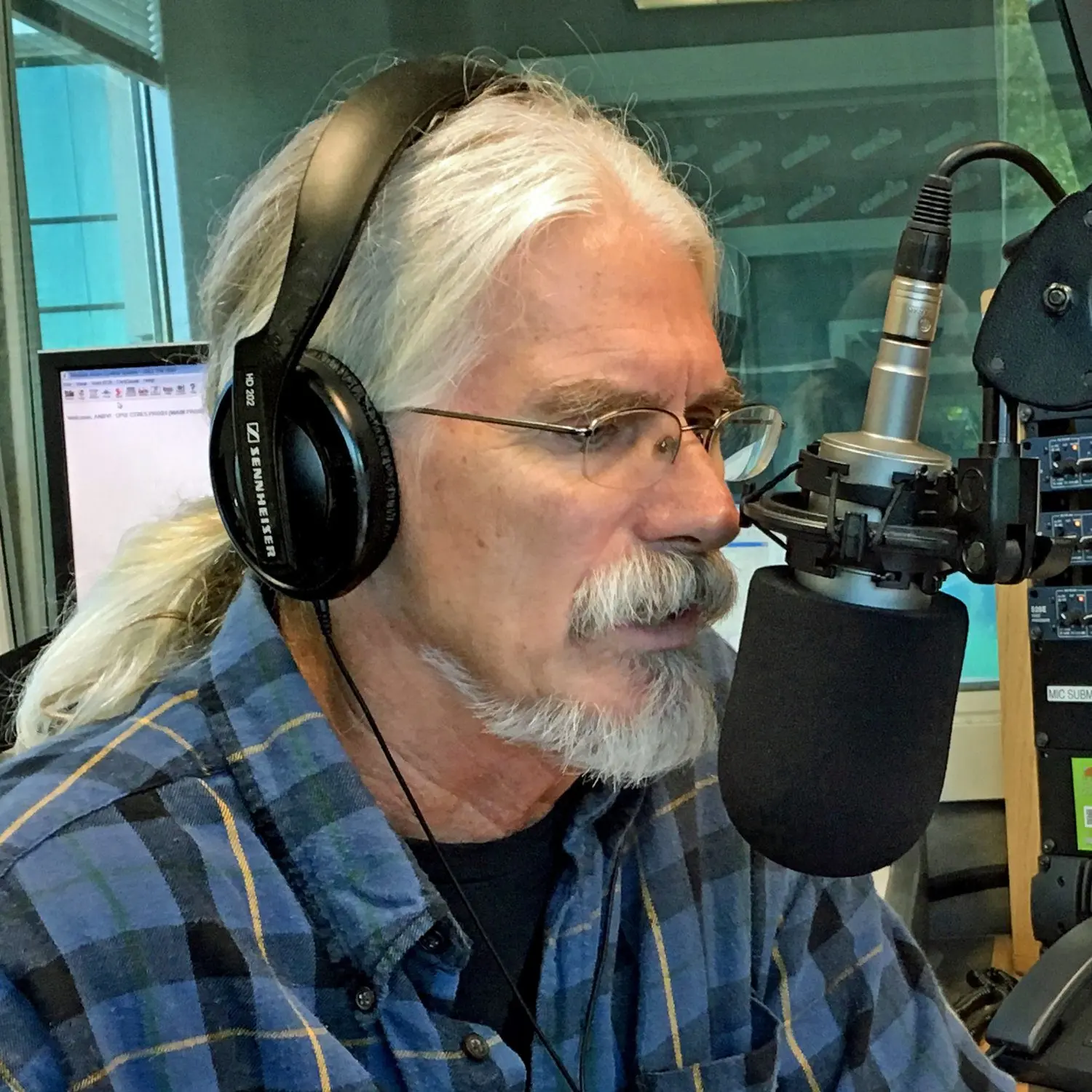
In this engaging episode, listeners call in with intriguing questions spanning from ancient biblical concepts to modern spiritual experiences. The discussion delves into the Jubilee Year as detailed in Leviticus and its implications for property and dedication to God. Another caller seeks clarity on the true meaning of ‘calling on the name of the Lord’ and discovers a deeper insight into salvation’s holistic nature as a relationship with God through Christ.
SPEAKER 1 :
Thank you.
SPEAKER 04 :
Good afternoon and welcome to the Narrow Path radio broadcast. All right, Greg from Sonoma, are you there?
SPEAKER 07 :
Yes, I am.
SPEAKER 04 :
Great.
SPEAKER 07 :
I have a question about Jubilee. Leviticus 25 says that the 50th year is supposed to be the year of Jubilee with property that was sold or leased would return to the owner. excluded the selling of the land for permanent use in Israel, correct?
SPEAKER 04 :
That is correct.
SPEAKER 07 :
Okay, in 2 Samuel 24, verses 24 and 25, it says that David bought the threshold floor to build an altar in Jerusalem to stop the plague that the Lord had given him, and the prophet Gad had told him to build and offer sacrifices. And then in 1 Chronicles 22, In verse 1, David said that the temple and the altar was to be built there. But according to the 50th year of Jubilee, wouldn’t that all have been returned to the original owners?
SPEAKER 04 :
No, because it was dedicated to God. That’s a different thing. You know, if something was Corban, that is, if it was offered to God, it could be used for nothing else. It was taken away from all common uses. So David bought the property specifically to be a temple site, to be a place to offer sacrifice and a temple site. And the man, of course, surrendered it gladly for that price. So this would be exception to private property because it did not become David’s private property even for 50 years until the next jubilee. It became permanently sacred and therefore would never be returned to the original owner, Orana, or Ornan as he sometimes called it. in the 50th year. So it would be an exception to the general rule. Anything that’s specially dedicated to God wouldn’t return to common hands again.
SPEAKER 07 :
Okay. Blessings in 2026, Steve. Okay.
SPEAKER 04 :
Same to you, Greg. Thanks for your call.
SPEAKER 07 :
Thank you.
SPEAKER 04 :
All right. Our next caller is Shannon calling from Arkansas. Shannon, welcome to The Narrow Path. Thanks for calling.
SPEAKER 09 :
Yeah. Thank you, sir. My question is probably elementary to you, but there was a little bit of confusion in a couple of guys I was talking to. Are they just disagreed on it? Romans 10, 13.
SPEAKER 04 :
Yes.
SPEAKER 09 :
For whosoever calls on the name of the Lord will be saved. Could you explain what that means exactly, specifically? I know he’s quoting from the Old Testament.
SPEAKER 04 :
Yeah, he’s quoting from Joel chapter 2. Basically, it’s a promise that when God would pour out his spirit, which is the mark of the new covenant coming, anybody who called out on God for salvation would be saved. Now, saved in what sense? I’m not sure how it was understood in Joel’s time, because what they had in Joel’s time was a locust plague, and the people needed to be saved from that, you know, agrarian disaster of the locusts eating everything up. and that’s mostly what the book of Joel is about. But there are sections of it that are about the Messianic age, just as there are in almost all the prophets of the Old Testament. And saved here would be through the Messianic salvation. So calling out to the Lord. Now, if you’re wondering what calling on the Lord means, it just means petitioning the Lord, crying out for mercy from God. Those who do so will receive the salvation in the Messiah is what is being predicted there. And so it’s not really a deep thought. Are you wondering how one does that? I mean, what is your principal question about that?
SPEAKER 09 :
Well, they got and said, well, all you got to do is believe. Well, no, you got to call on the name of the Lord. No, all you got to do is believe. I should have kind of let you give you more specifics.
SPEAKER 04 :
Yeah, anyone who says all you have to do is, and they fit in some singular word, is basically summarizing a somewhat more complex teaching. In the Bible, you become a believer and are saved by becoming a disciple of Jesus. Now, that requires believing in him. That also requires repenting of your sins, according to Peter and Paul, and Jesus for that matter. I mean, Jesus and Peter and Paul all called people to repent of their sins. And there’s more to it than that, too, because, of course, Peter said that baptism was necessary and receiving the Holy Spirit is important. So all those things were part of the experience of being converted. The whole thing could be summarized as calling on the name of the Lord, but calling isn’t just a verbal action. It’s a presenting of one’s self as needing help from God. And that presentation comes through repentance and baptism and Receiving the Spirit. Calling on the name of the Lord is not just calling out God’s name and suddenly you’re saved. In the Bible, whether it’s the Old or the New Testament, it was more than simply a single word that described everything about being saved. Certainly, it says Abraham, in Genesis 15, 6, believed in the Lord and it was counted to him for righteousness. So that’s where Paul… It teaches from that the justification by faith. But justification isn’t the only part of salvation. Salvation justifies us in the sight of God so that we can now live our lives in a restored relationship with God. And we won’t do that until we turn from our old ways. That’s repentance. Until we trust in God daily, you know, in a relationship where you trust another person in a relationship. You have to trust God if you’re in a relationship with him. Being baptized is the way of marking that conversion, and receiving the Spirit is the way that God enables you to live that life. So the whole Christian life is a holistic thing. Calling on the name of the Lord, I mean, you can’t just take one verse and say, you just do this one thing, and that one thing and nothing else that describes everything about being saved. Because then we’re going to have to find different verses. I mean, in 1 Peter 3, in verse 20, it says, baptism saves us. Peter said that repentance and baptism save. Paul, of course, says that believing is what saves. But none of them are contradicting each other. They believed all those things. They believed that coming to Christ is a holistic change of life. And believing in Christ is what is what you do from that point on. You turn from your sins. That’s repentance. You enter that new life through baptism and through receiving the Spirit. This is taught throughout the Scripture. So if somebody says, well, no, the Bible just says you just have to believe. Well, there are some verses that only mention the believing part. There’s other verses, like this one, that mentions believing. calling on the name of the Lord. And also, you know, Paul quotes this verse in connection with Joel in Romans chapter 10 to point out that confession has to be made. He says, if you confess with your mouth that Jesus is Lord and believe in your heart that God raised him from the dead, you’ll be saved. So you’ve got believing, you’ve got confessing, you’ve got calling. Elsewhere, you’ve got repenting, you’ve got being baptized. Now, this is not a long list of works that we do to get saved. This is simply the composite picture of a reality that we step into as a new creation in Christ. It’s a relationship of obedience, a relationship of trust. It’s an obedience of faith and love. I mean, all these things are part of it. So, I mean, if someone’s just saying, well, what’s the one thing? Just tell me one thing that I do, and if I do that one thing, I’ll be saved. They’re asking you to reduce the whole teaching of the whole Bible into a single word, and the Bible really can’t do that if we mean by the word I choose to fill that blank. If you do blank, you’ll be saved. Whatever word I choose there has got to exclude all other words that can be put in there. And in fact… What you do to be saved is you are rejoined to God in a relationship through Christ. That’s what salvation is. How is that done? Well, by being reconciled, by repenting of your sins, by trusting him, by coming back into the relationship that you abandoned in the first place. So this is not, I mean, if you’re confused because this verse says, whoever calls on the name of the Lord shall be saved. And you’ll find another verse saying, if you believe in the Lord, you’ll be saved. Like when Paul said to the Ethiopian, or not, to the Philippian jailer, he said, believe on the Lord Jesus Christ and you’ll be saved. Okay, well, that’s a different sentence that ends up with, you shall be saved. And I mentioned Romans 10. If you confess with your mouth that Jesus is Lord and believe in your heart that God raised you from the dead, you’ll be saved. So this, you know, if you do X, you’ll be saved, is a formula that has various meanings. words in various passages filling in for x and that’s because they’re all true because being uh being saved doesn’t mean you you bought a ticket and now you’re going to heaven because you have the ticket i realize that’s how the gospel is often preached to get people to come in on the least possible commitment the least possible sacrifice but that’s not what jesus did jesus never suggested listen i’m going to make this so easy that you know you’d be a fool to turn me down No, he said, if you don’t hate your father, mother, wife, and children, take up your cross and forsake all that you have. You can’t be my disciple. He said all those things in Luke 14. So, I mean, there’s more to it than just fill in the blank on this word here. Do X and you’ll be saved. And the whole phenomenon of being restored to God and becoming a follower of Christ instead of not. involves all these changes. But if one wants to ask, well, what part of it is for the forgiveness of sins? I’m going to say, well, the faith is because that’s where we’re justified by faith. But justification isn’t the only thing that salvation is. Salvation is also reconciliation. It’s transformation. It’s sanctification. Eventually it’s glorification. It’s enablement. It’s service. All of those things are part of what being a Christian is. So I think maybe somebody has truncated the whole message and you’re familiar with them saying, listen, you just have to believe as if believing doesn’t involve all these other things. What the Bible assumes is that believing involves all those other things. Calling on the Lord involves all those things. Being baptized involves those other things. Becoming a disciple and forsaking all that you have so you’re his disciple. That’s all part of the whole picture. And it’s not that there’s just one part of that picture that we can reduce salvation to without dumbing down the thing to a point that’s of no value to anybody.
SPEAKER 09 :
Thanks, Steve, for being so thorough. Thank you both.
SPEAKER 04 :
All right, Shannon. Great talking to you, man. God bless you. All right, you’re listening to The Narrow Path. We are live. It’s New Year’s Day, 2026. So you might have thought this is not a live program. It is, and we have some lines open. And if you’d like to be on the program, you can call this number, 844-484-5737. That’s 844-484. Our next caller is Christopher from New Market, New Hampshire. Hi, Christopher. Welcome to The Narrow Path. Thanks for calling.
SPEAKER 06 :
Hello, Steve. Hello. Happy New Year. Thank you. I had a question about the Mark of the Beast, and it requires a little bit of context. I’ll try to be quick. As a child, I was sold into two CIA programs. One’s called Project Monarch, which is a sexual program. once called MKUltra, which is a violence programming program. And to make a long story short, these programs accrued money in my father’s accounts, which when he died was given to his children that were involved in these programs. So these programs made quite a bit of money. And when I was doing my budgeting, I had taken out some money from these accounts and I did my budget and my budget came out to $66.66 a day when I did my budgeting. And I was wondering, do you think that could be a sign that because I had implants put in me as a child and money was made off of those implants and what those implants could do, do you think that this money could be kind of like a mark of the beast situation?
SPEAKER 04 :
I would not say so because, first of all, you were young and you didn’t make a decision about it. So I don’t think God holds anyone responsible for things that were forced upon them when they’re children. So, and secondly, I don’t think that this is the kind of thing that the Bible is referring to as the mark of the beast. So it’s certain. I’ve certainly heard about these programs. I’ve known people who said they were subject to ritual abuse and things like that in this kind of business in their childhood. And honestly, since I have no inside knowledge of these things, I don’t know what to make of the stories. But I can say… regardless of what actually happened, that this is not the kind of thing the Mark of the Beast is talking about. That $66.66 or something like that obviously calls to mind the number 666, but I don’t believe that the number 666 is intended in the way that people commonly think. I mean, I’ve known people who had just by accident had 666 on their license plate, And it freaked them out and they were afraid, you know, oh, I’ve got the mark of the beast on my license plate. Or some people have 666 somewhere in their phone number or their social security number. Oh, no, that’s the mark of the beast. No, 666 is not a magic satanic number. The only reference to 666 in the Bible is in Revelation. chapter 13 and verse 18, and we’re told that this is the number of a man. And this man is somebody that apparently was living at the time Revelation was written because John, writing to his contemporary readers, indicated that the wise among them would be able to identify the man he’s talking about from that number. Because any name in certain languages, that would include Greek and Latin and Hebrew, can be reduced, the letters can be reduced to a numeric equivalent. We don’t do that with English letters so it’s kind of a strange thing but in the biblical languages you could take any word and take the letters of that word and find the numeric equivalent and add them up and get a number and so it was sometimes the case that people would present a word in code by giving its numeric equivalent and it would not be obvious what word it was but But if there were very few options of what word it might be, somebody who could do the code could figure out, okay, this is what he’s referring to. Now, when John is telling his readers that those who were wise among them could, if they would, decipher the name of the beast, it’s his number, and it’s the number of a man’s name, and it’s 666, which means we’re not talking about some kind of a, mystical, magical, satanic number that we have to be afraid of seems three sixes in sequence. As a matter of fact, in the Greek, it isn’t just three sixes in sequence. It’s actually the number 666, which is just coincidental that in our Arabic numbers, that looks like three sixes in a row. But six and six and six, three sixes in a row, don’t would not in every language total up 666. We’re talking about the number, 666, not just the sequence of three sixes. So I believe that Nero was the emperor at the time that John wrote this, and I believe that he’s alluding to Nero’s name by this number because it can be calculated correctly. into Caesar Nero by a certain, you know, what we call Gematria, where you take the letters and take the numbers of the name. So I don’t think that anyone today has the number of the beast applied to them because this is identifying, I believe it’s identifying the Caesar who was persecuted in the church at the time the revelation was written. I mean, other people’s names might come out to it, but the number of dollars and cents that you make, if it happens to be 6666, it’s not going to be related to the number 666. After all, the number is that you gave was $66.66. That doesn’t come out to $666. So, I think that many people, and I understand this because of the way that Revelation is sometimes taught to people, they see magic in this number somehow, some mysterious, magical thing, where I don’t believe it’s mysterious or magical. I think it’s simply a coded, a name that’s put down in code, so it won’t be understood by everybody, but it would be understood by some who read it in those days. And so, no, I don’t think that the money… that you lived on or whatever, even if it came from questionable sources or activities, I don’t think that that’s any connection to the mark of the beast in the Bible. Amen. All right, so go in peace.
SPEAKER 06 :
Thank you, Steve. I hope you have an awesome 2026 if I don’t speak to you again this year. I hope you have a great year.
SPEAKER 04 :
I appreciate it. God bless you, Christopher.
SPEAKER 06 :
God bless you, too. Bye-bye. Bye now.
SPEAKER 04 :
We’ve got some lines open now, and we have another little over a half hour before the program ends. If you’d like to call through, if you have questions about the Bible or the Christian faith, or maybe you just don’t agree with what the host has said, maybe you’ve got some strong opinions about something, and you’ve heard this host say things that you think are just off track, feel free to give me a call. I’d love to hear from you. You can tell me what it is you think I’ve got wrong. Or, if you’re just not a Christian, don’t think that Christians… are sane. If you think it’s just crazy to be a Christian, there was a guy who used to call me when I was first on the air. This was 20-something years ago, close to 30 years ago, I suppose, because we’ve been doing the show for 28 years. He used to call. He didn’t call as much after a while, but he wrote to me a lot. And he wrote, he said he’d pay me $5,000 to have my head examined. You know, because he was sure I was crazy. And the reason he thought I was crazy is because I believe there’s a God. That’s literally it. I mean, anyone who believes there’s a God is crazy, which is really strange since most people on the whole planet throughout history have believed there’s a God of some kind. And the Christian God is, by the way, the one that most people believe in. But that doesn’t make it true. It certainly doesn’t make it crazy. The interesting thing is that this guy who wrote me these letters actually had a devil costume that he wore to certain events. He’d go and protest pro-life events and places where maybe someone was teaching against evolution. He’d go carry picket signs. And one time I was teaching in Santa Cruz. He lived in the Monterey area or in Watsonville. And he showed up at one of my events in his devil costume carrying around a sign that had nothing to do with anything I was speaking about. But But he thought I was crazy. I think he might have been a little off the rails. But anyway, maybe some people out there listening say, Steve, you’re nuts. Or Christians are nuts. Or the Bible. Anyone who believes the Bible is nuts. Well, you’re just the type of person I’d love to hear from you. Give me a call. The number, or if you’re even a Christian and you just have a question from the Bible, we’ve got a wide range of possibilities here. Call me at this number, 844-484-5737. That’s 844-484-5737. And again, if you just tuned in, it’s New Year’s Day, 2026, and we are live. So don’t assume that because it’s a holiday for you that it’s a holiday for me. We’re not playing a recorded program. This is live. We had a little bit of a snag. at the beginning of the program, but we’re going fine now, I think. And we do have another half hour coming up immediately. In just a moment, we have to take a break because we’ve already used up our first half hour. But in the next half hour, I’d love to take your calls. Give me a call at this number, 844-484-5737. That’s 844-484-5737. 484-5737. All right. The Narrow Path, by the way, is a listener-supported ministry. We don’t have any commercial breaks because we don’t have any sponsors and don’t want any. We just do an hour of taking calls and answering calls. But at the bottom of the hour, we do let people know, because they wouldn’t necessarily know this, that we pay the radio stations over a million dollars a year. to broadcast the program so you can hear it for free. And we don’t interrupt with commercial plugs. We don’t sell anything. But we do let you know that if you want to help us stay on the air, you’re welcome to do so. You can write to us at The Narrow Path, P.O. Box 1730, Temecula, California, 92593. That’s The Narrow Path, P.O. Box 1730, Temecula, California, 92593. You can also donate at the website, but everything is free there. It’s thenarrowpath.com. We have another half hour coming up right away. I’m going to be off the air for 30 seconds. Please stay tuned. I’ll be back.
SPEAKER 02 :
If you enjoy the Narrow Path radio program, you’d really like the resources at our website, thenarrowpath.com, where hundreds of biblical lectures and messages by our host, Steve Gregg, can be accessed without charge and listened to at your convenience. If you have not done so, visit the website, thenarrowpath.com, and discover all that is available for your learning pleasure.
SPEAKER 04 :
Welcome back to the Narrow Path radio broadcast. My name is Steve Gregg, and we’re live for another half hour, taking your calls. Happy New Year’s, 2026. We’re live on the holiday, and our lines are now full. So we’ll be talking to these callers. If we get through them quickly, which probably isn’t going to happen. I mean, it’s rare that we get through them quickly. I’ll give out the number again, and we’ll give you a chance to call in. But right now, don’t call because our lines are full. James in Memphis, Tennessee is next. Hi, James. Welcome.
SPEAKER 03 :
Yes. Thank you for taking my call, Steve. Steve, in the book of Genesis, I heard a preacher say, I’ll say that in the beginning when God created Adam, he created him male and female. Called he them. I’m not quoting it exactly like it was. I’m blind and I can’t recall exactly. But he said that because of that, that God created Adam bisexual. What do you say in regards to that?
SPEAKER 04 :
Did you say a pastor said this?
SPEAKER 03 :
Yes, he’s a teacher. Matter of fact, he comes on this radio station, not radio station, on the outlet that you… Yeah, where you are, yeah, on the station you listen to.
SPEAKER 04 :
Okay, yeah, I don’t know what station that is in Memphis, and I don’t know who it is you’re referring to. But that is one of the most irresponsible statements I’ve ever heard repeated by someone who thinks they represent what the Bible says. I’ll tell you what he’s referring to. There are two accounts of creation at the beginning of Genesis. One of them, of course, is chapter 1, where we go through six days of creation with a very brief overview of what God did on each of those days. Each of these days is handled very similarly. You know, God said, let this happen. It happened. It was good. God saw that it was good. Evening and morning were, you know, second, third, fourth, fifth day or whatever. And it was the fifth or sixth day. And there’s a great deal of symmetry there. in the first account of creation, where, again, it’s running through six days in rapid succession, just kind of summarizing what’s in them. In chapter 2, verses 1 through 3, we have the seventh day, which is the Sabbath. And then after that, in Genesis 2, verse 4 and following, we kind of go through the creation or part of it again, just the part about man and woman. And the first time it goes through in chapter 1, It says in verse 27, God created man, which means humanity, in his own image. In the image of God, he created him. Male and female, he created them. Now, apparently this teacher is very confused and doesn’t really know much about reading the Bible. But to say male and female, he created them, it means he made humans male and female, just like it says earlier, he created. He made the animals male and female and told them to reproduce and fill the earth. And that’s what he told Adam and Eve to do. Now, if he’s saying that Adam as an individual is both male and female, and then God kind of got ahead of us on the preferred pronoun things and started calling Adam them, maybe he’s they them or him them, you know, it’s almost like this woke thing. thing that started ten years ago, God made it up because he started calling Adam them. Now, God was not woke and God was not nuts. Neither was the writer of Genesis. The simple understanding of that, that no one over five years old would normally have trouble understanding, is that when it says God made man, he made them male and female. Man refers to humanity. And them refers to the people who are humanity. He made males and females. Now, he only made one male and one female initially. It doesn’t go into that in detail here, but it does in the second account, which begins in chapter 2, verse 4. It talks about how God made man the male, the individual male he made first. And then he made the woman from the man. And he said they would be one flesh. Now, not one flesh in the same sense that somebody thinks they’re, you know, two genders or something like that. No, they are two people. One was male, one was female. But the oneness that they had was something else, a more metaphorical kind of oneness that exists between married couples. Even the New Testament, Jesus said that and so did Paul. So, you know, we have the first account, which is just a quick run through the six days, which mentions briefly God made man like he made other animals, male and female. But then after that’s all been done, once it gets through the seventh day and God’s resting, he’s done with the creation, it decides to go over that last part again slower in more detail. Okay, the male and female that God made were the most important things he made, the human beings. And so we get a sidebar here. We get maybe like an end note in a book where they want to go into some details that they couldn’t go into, you know, in the text. And he says, here’s how it really happened. God made the man, and then, of course, eventually he made the woman from the man. And that’s just really unpacking what was said very, very briefly in chapter 1, verse 27, that God made humans male and female. Here it tells us, well, the way it happened was he made male first, then the female from him. But that isn’t a contradiction it simply is filling in details that were mentioned earlier so whoever it was that thought that Adam was made a transsexual or bisexual I should say has to explain how would God expect Adam to be fruitful and multiply and fill the earth there are people today who might identify themselves as bisexuals but they can’t make babies by themselves You know, so it’s obvious that God made male and female as separate individuals.
SPEAKER 03 :
I was surprised that he said it like that. Other than that, he seemed to be a solid Orthodox teacher as far as the Scripture is concerned. But I was surprised that he would say that, put it that way, that he was bisexual. Because I take it, like you said, like the first chapter was like an overview. A flyover was what Mike said.
SPEAKER 04 :
So he was quite confused about that. I’m not sure why he would say that. Well, thank you, James, for your call. Good talking to you. Let’s talk to Victor in Seattle, Washington. Victor, welcome.
SPEAKER 10 :
Hey, Steve. Good to talk to you. Happy New Year.
SPEAKER 04 :
Yeah.
SPEAKER 10 :
I was asking, the last The caller before that was talking about the number 666. I heard it explained one time, and I was wondering your opinion on this. And I have one other question after this. It’ll be brief if you don’t mind. I heard 666 was referring to the six trumps, the six seal, and the six bull. At the end of those, that’s the end of Christ. And on the seventh trump, seventh bull, seventh seal, that’s when Christ, that’s the number of Christ. That’s when Christ comes. Is there any… You ever heard anything about that or anything like that?
SPEAKER 04 :
That seems entirely made up out of thin air. There’s lots of sixes in the book of Revelation and sevens. There are seven seals. There are seven trumpets. There are seven bowls of wrath. And, of course, because there are seven, there are also six before the seventh. And in many cases, the seventh one in the series does seem to be climactic. So I could see someone saying, well, maybe it’s these six of this and six of that and six of the other. The thing is, as I was telling him, 666, only in the Arabic enumeration we do in English would that look like three sixes. You know, in Roman numerals, for example, 666 would look really different than in most forms. So, in other words, we’re not talking about three sixes, whether it was six seals, six trumpets, six bowls. We’re not talking about a series of three sixes. We’re talking about a total number of 666. And, you know, so people come up with all kinds of strange ways of misunderstanding that. But, again, we’re told exactly what it is. It’s not – I mean, that expression is sure different than what it says. It says it’s the number of a man’s name.
SPEAKER 10 :
Well, I think he tied it in somehow. Is that how you’ll notice that that’s the Antichrist is by – by that number, the sixth seal, the sixth trump, and the sixth vowel would be the indication that that statement, that claim, we’re waiting for the seventh or something.
SPEAKER 04 :
I’d say there’s no validity in that. You had another question, though.
SPEAKER 10 :
Yes, sir. It’s a little bit of a personal question. I just wanted your opinion on something. I’ve struggled my whole life. I’ve been a Christian my whole life, and I’ve struggled with… with drug use my whole life, in and out of different things and coming out of things. And the one thing that I’ve managed to not be able to completely get rid of is smoking marijuana. And I really do think it separates me from God. And I think it’s a big separator in my life. And I was just wondering your opinion. If you do go your whole life and you weren’t able to surrender to that, you weren’t able to overcome that, would that be the kind of thing that would or I wouldn’t inherit the kingdom of God over it. I wondered your opinion on that.
SPEAKER 04 :
Well, I can’t say anything very specific about marijuana because the Bible doesn’t mention it, but it does mention abuse of substances in general. I mean, the word pharmakia is used a couple of times. In Galatians 5 and 1 Corinthians 6, both places it says those who do these things shall not inherit the kingdom of God. Obviously, drunkenness is mentioned. And while anyone who smokes weed knows that it doesn’t have the same exact effect as alcohol does, in principle, the idea of people who drink to get drunk is that they want to use a substance that God does not intend for that purpose to alter their mind. To alter their mind. And that’s what marijuana is for. I believe marijuana is probably created as a painkiller. I believe it has medicinal values, just like opium does. You can abuse opium. You can abuse opium, too. But there are medicinal herbs and plants that God made. But when somebody is simply using them to alter their consciousness or their mind state, this is the kind of thing… That is, I believe, what’s forbidden.
SPEAKER 10 :
Yeah, I do too. And it’s an idol. You know, you’re putting it before God, you know.
SPEAKER 04 :
Yes, it is. It is. Anything that you can’t stop, even though you believe God wants you to, is an idol. Now, I have to ask you, you say you can’t get over it. Where do you get weed? Do you grow it?
SPEAKER 10 :
No, you know, I’ve always bought it.
SPEAKER 04 :
Then you have to buy it.
SPEAKER 10 :
You can buy it at the store, you know.
SPEAKER 04 :
Yeah, but you can also not buy it at the store. I mean… I go to stores all the time. I go to stores almost every day. And I’ve never bought weed. So it’s like you can do that. You have to be determined. Yeah, I know. Yeah.
SPEAKER 10 :
Yeah, it’s really something I want to get over and through. It seems so adolescent to keep going and going and doing it. I’ve been a tradesman my whole life, and maybe I do use it a little bit for pain, but I think it’s something I need to get out of my life, and I just wanted your take on it.
SPEAKER 04 :
Yeah, you might use it because the people around you use it, too. Is that the case?
SPEAKER 10 :
No, sadly, I’ve got nobody to blame but myself.
SPEAKER 04 :
Okay, don’t have anyone around you. Okay, because a lot of people hang out with people who that’s just what they do, they smoke weed, and that’d be another thing to alter if you’re having trouble getting over it. No, it’s not even social for me.
SPEAKER 10 :
I’m an older guy. I think maybe it is just Just something I’ve just done for so long, it just became a habit.
SPEAKER 11 :
I hear you.
SPEAKER 10 :
I don’t know. I just have a hard time getting rid of it. It’s so stupid.
SPEAKER 04 :
I hear you.
SPEAKER 10 :
It’s just not that.
SPEAKER 04 :
Yeah, I’ve never smoked weed myself or used any drugs of any kind, but I certainly have had to struggle with certain sins in my life when I was younger especially. Yeah. And some now, I suppose. Yeah.
SPEAKER 10 :
I always thought of this one like the besetting sins, you know, the sins. It feels like it’s one of those besetting sins that just for some reason it’s my thing that I can’t seem to get rid of. But I will beat it. I will get rid of it. God will help me to get rid of it, I’m sure. I just wanted to hear your opinion on it.
SPEAKER 04 :
Sure. Do you go to church?
SPEAKER 10 :
Yeah. Yeah, I do. Okay. But, you know, I do, but I do feel like I hide that. You know, I’m not running around. with a shirt on that says legalize it or nothing like that. I just kind of hide it in my life. I’m not proud of it by any means.
SPEAKER 04 :
Although Christians sometimes come off pretty judgmental, some of the Christians I’ve known have, there’s a lot of Christians, most Christians I know, including ministers, they would want to be able to pray with you. They’d want to be able to help you. And if you keep it a secret from them, they won’t. Now, you might be afraid, well, maybe they’ll kick me out of the church. I don’t think they’ll kick you out of the church if you’re trying to beat it.
SPEAKER 10 :
More than embarrassment, I think. More than I’m just embarrassed. I’m so grown. I should have probably outgrown it by now.
SPEAKER 04 :
Well, you know what? You probably are in a church where a lot of people are smoking weed, and they don’t feel convicted about it like you do. But you do, and that’s a very good reason to stop it.
SPEAKER 10 :
Yeah, I’m glad I feel convicted about it, actually. I’m glad about that. I mean, he’s still speaking to me. Okay, thank you. Have a happy new year, and I love you, Steve. I love listening to you. Thank you very much, sir.
SPEAKER 04 :
God bless you, Victor.
SPEAKER 10 :
Bye now.
SPEAKER 04 :
Hope you become the victor. Okay, let’s talk to Jennifer from Arizona. Hi, Jennifer. Welcome.
SPEAKER 01 :
Hello. Hi, thank you. Yeah, I was just driving down the road, and I’m on a road trip with my dad, and I pulled in this station, popped up on my radio, and This whole road trip has been turning into a profound spiritual awakening. I guess you’d say I’m a Christian, I’m a believer, but don’t go to church. My faith was, you know, I was losing faith. And recently I started to try to find answers about, well, I don’t know. I’ve noticed some things in the sky. and that should be on the news, and nobody’s seeing it.
SPEAKER 04 :
Okay, so what would your question be?
SPEAKER 01 :
The UAPs, well, these signs that God’s given me, like right now on this trip, all these signs, like they’re real, like they’re obvious. And then I tell people about them, and they think I’m crazy. But it all ties together, though, with the numbers. And the numbers, since you were talking about that earlier, made me call, like, I keep repeating over and over these numbers just all the time. They’re different numbers, but like say your number, for instance, 8-8-4-4-7-7. I see it everywhere I look.
SPEAKER 04 :
Okay, Jennifer, let me just jump in here. I don’t know if what you’re having are spiritual experiences or not. I also don’t know if you use any drugs or anything like that. I’m not going to suggest that you do, but if you do, that might explain some of this. Your friends think you’re crazy. I won’t say that. I don’t believe you’re crazy. But I don’t think that I have any insights for you about signs you’re seeing or numbers, you know, series of numbers you’re seeing. You know, I don’t know how real they are. They may be completely real. And if they are real, I have no interpretation of them for you. If they’re not real, then maybe something’s happening in your head. I’m not trying to discount you. I’m just looking at a full switchboard and only a few minutes left of the program. I want to take a lot of these calls. And you don’t seem to really have a question from the Bible, which is the main thing I could help you with if you did. But, you know, you can go to my website, thenarrowpath.com, and you can listen to this program every day. And you can call in if you have a very specific question for me. But I’m looking at a full switchboard here and only like 10 minutes left. But I’m sorry I can’t help you with those signs and those numbers. I just don’t have any expertise on that kind of thing. All right. Let’s talk to Catherine in Vancouver, British Columbia. Welcome, Catherine.
SPEAKER 08 :
Hi. I’ve always wondered this question. I’ve been a Christian a long time. But I’ve always wondered, why does it say in the Bible for you to hate your mother and father? But then again, it says we’re to honor our mother and father.
SPEAKER 04 :
Yeah, well, it says we’re supposed to also hate our wife and children and our own selves also in the same verse you’re talking about. obviously that doesn’t mean what it first sounds like it means because it’s the opposite of Jesus’ instructions in general. We need to love not only our mother or father and wife and children and everybody. We need to even love our enemies. So obviously Jesus is not saying what it sounds like he’s saying. It’s not really a problem to those who become familiar with the idioms of the Hebrew language that Jesus used where the word hate in certain contexts, probably in most contexts, doesn’t mean what we mean by hate. We mean when we hate someone, we have malice toward them, we’re hostile toward them, we despise them, we can’t stand them. That’s what we mean when we say we hate somebody. In the Bible… And don’t ask me why. It’s just a Hebrew custom. We see it a lot in the Bible, and we just have to deal with it because that’s how the Bible communicates with the idioms of the people of the time. To hate somebody means you don’t place them at the same level of affection. and importance as someone else. That is, if it’s them versus someone else, and you love that someone else, and you hate them, it’s not that you hate them in the sense we use those terms. It just means you prefer them less. Jacob had two wives, Rachel and Leah. It says he loved Rachel more than Leah, but it then says in the next verse, Leah was hated. But she wasn’t hated in the sense that we think of. He didn’t He didn’t have any real animosity toward her. He just loved Rachel more. It’s very common in the New Testament and the Old to have love and hate contrasted this way. When God said, Jacob I have loved, Esau I have hated. He’s not saying he really hated Esau in the way that we mean that. He’s saying that he preferred Jacob over Esau from the time they were born. He gave preferential treatment to one over the other. That’s what love and hate is. In the case you’re talking about where Jesus said in Luke 14… if anyone comes to me and does not hate his father, mother, wife, children, and his own life also, he can’t be my disciple. This has a parallel in Matthew chapter 10 where Jesus said, whoever loves father or mother more than me is not worthy of me. Whoever loves wife or children more than me is not worthy of me. And that’s saying the same thing in terms that we can understand a little easier because we don’t have the same idiom that the Hebrews used. So it’s a little confusing if you’re not acquainted with the Hebrew idioms when you’re reading the Bible. But Usually it’s explained somewhere else, and in this case, Matthew’s parallel says it in terms that are quite easy for us to understand. Thanks for calling. Let’s talk to Danielle from Irvine, California. Danielle, welcome.
SPEAKER 05 :
Hi, Steve. Thanks for taking my call. I listened to one of your lecture series on the early church and absolutely loved it, but I’m still having – I feel like it’s a pebble in my shoe about the claims of the – catholic and orthodox church that they’re the only true church and it’s it’s really stumbling me i i i i believe there is a spiritual remnant and um just as it was in the old testament but since you’ve done a good thorough um study on the early church do you find any claims to the orthodox church as being the true church
SPEAKER 04 :
Well, no, no. The true church is the disciples of Jesus Christ collectively throughout the world, the body of Christ. Everybody who’s been born again has received the spirit and shares that same spirit and that same rebirth with all other people around the world who have. Some of these people go to Catholic churches. Some go to Eastern Orthodox churches. Some of them go to Coptic. Some go to Protestant churches of various kinds. Some are in home churches. But no, it’s a spiritual qualification. It’s not a membership in some kind of a club, like most churches understand it, apparently. No, it’s that God joins us to Christ spiritually, and we become part of his body, and his body is the church. It’s a spiritual community of people who are followers of Christ. And so… You’ll find some of those in every church, and you’ll find people in every church who aren’t those. You’ll find Catholics and Orthodox and Protestants who go to church, but they’re not followers of Christ. I mean, they go through some ritual of what they call worship on Sunday, but in their lives they’re not following Jesus. He’s not their Lord. I mean, they don’t recognize him. So the true church is made up of people who are truly following Christ. And they are in all these churches where the Catholic and the Orthodox churches and a few Protestant churches I’ve known have made similar claims to them that they are the only church. They’re seeing the church as an institution that has, you know, a lineage of leadership. The Catholics believe that their bishops are in the lineage of leadership from the apostles. The Orthodox church believes that they’re bishops. Leaders are in the lineage of the apostles. Now, I don’t think anybody is in the lineage of the apostles by being in an organization. If you’re in the lineage of the apostles, it means that you’re following Jesus the way they taught and the way they did. You’re not an apostle. Of course, they were. The bishops are not apostles just because they went to some kind of training and got ordained by an organization. Only Jesus selects that kind of apostles. So, you know, I think that you said you believe there’s a true remnant of believers. That’s what the church is, of course. The true church is made up of the people who follow Jesus. They make up a relatively smaller portion of of those that we could describe as members of church organizations. And that would be true no matter what church organization we choose. We could say Baptist, Methodist, Presbyterian, Pentecostal, Episcopalian, Catholic, Orthodox, you name it. Not everybody in those churches is a true follower of Jesus. But the ones who are, are part of the true body of Christ, along with all the people in other churches who are also true followers of Jesus. So, you know, when someone says, well, our church is the true, goes back to the true church, I’m saying, well, how do you think the church is transmitted from generation to generation by some organization where people are ordained by human beings to carry on the organization or by simply the apostolic teaching being embraced generation after generation by people who who have come to know Christ and love him and know him and follow him. Now, so I don’t believe there’s any organized church, any institutional church that can honestly say they are the true heirs of the apostolic identity. I realize they say they can. In fact, that’s the only way probably that they could persuade people to join them because most of these churches are ritualistic kinds of churches that, I mean, some people are attracted to that. I’m not saying it can’t be okay to be a ritualistic person, but an awful lot of people put up with the rituals because they feel like they have to be there because they’re told this is the true church. Yeah, that’s bondage, man. That’s just bondage. No, where the Spirit of the Lord is, there’s liberty. And yeah, if you love Jesus, you can go to Eastern Orthodox Church and love Jesus there. You can do it in a Catholic church or a Protestant church. But no one of these groups is the true church these are simply institutions that have hierarchical structure that perpetuates itself generation after generation ritually that’s not what Jesus set up Jesus didn’t set up a religious organization he set up a family made up of the children of God and you become a child of God by being born into that family spiritually when you become a follower of Christ and you receive his Holy Spirit so that’s That’s what the true church is, is the combined number of believers who have the Spirit of God. Because the church is the temple of the Holy Spirit. He dwells in every part of that temple. And everyone who has the Spirit living in them is a Christian, whether they’re in an organized church or not. Although they should be in church somewhere, should be fellowship somewhere. You’ve been listening to The Narrow Path. Happy New Year. Our website is thenarrowpath.com. Thanks for joining us.