



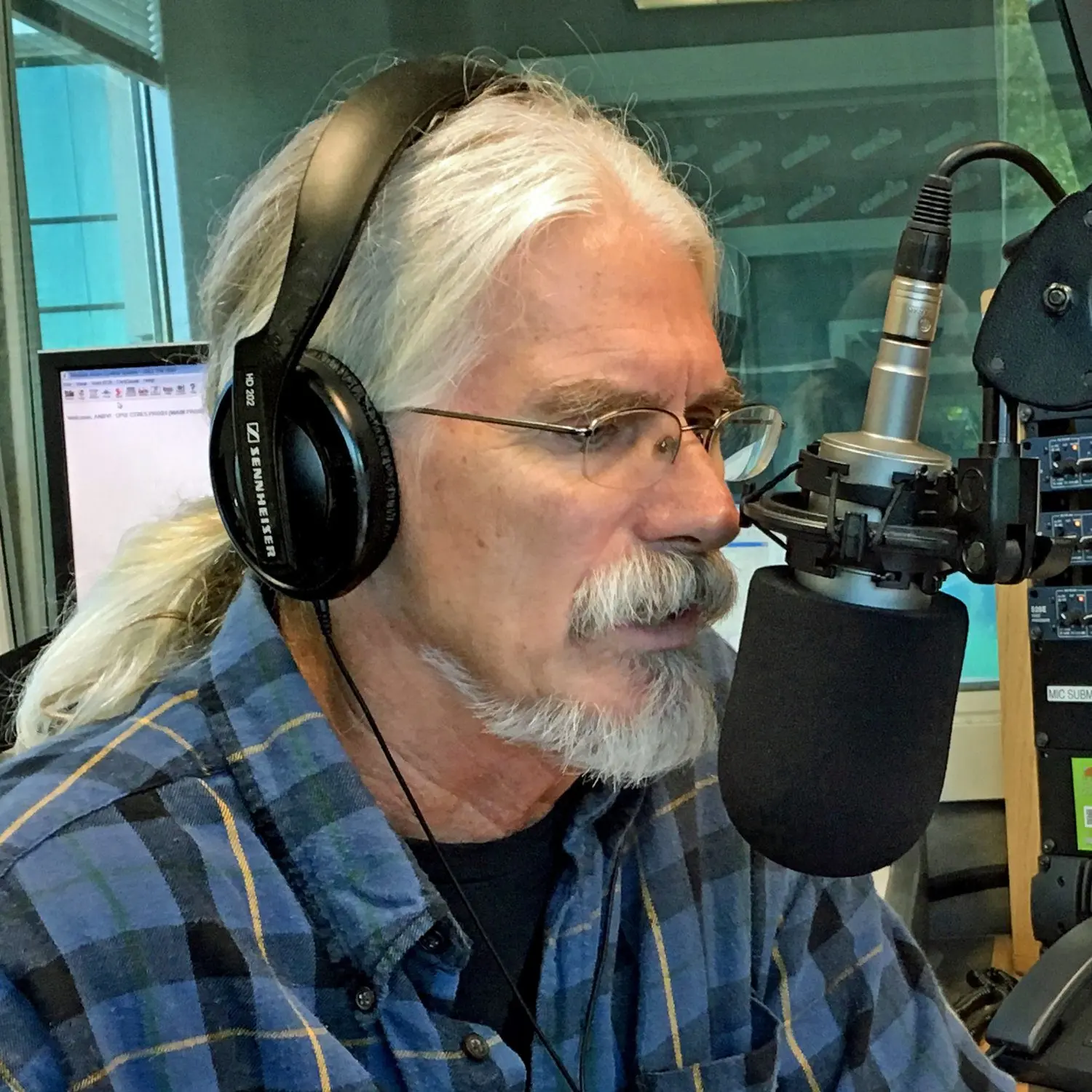
In this episode of The Narrow Path, Steve Gregg addresses a range of thought-provoking questions from his listeners. He starts with an apology for the previous day’s recorded show and delves into a discussion about the challenges faced by small home churches in growth and evangelism. Our host digs deeper into why appearances might be deceiving and the important role of relationships and community in the life of believers. Gregg offers insights on how home churches, despite their visibility challenges, can thrive through meaningful fellowship and outreach. Listeners subsequently raise compelling theological questions, such as why Jesus doesn’t intervene
SPEAKER 1 :
Thank you.
SPEAKER 03 :
Good afternoon, and welcome to the Narrow Path radio broadcast. My name is Steve Gregg, and we’re live for an hour each weekday afternoon, taking your calls. Our lines are full right now, so you won’t be able to call at the moment, but if you want to try in a few minutes, the number is 844-484-5737. I apologize about yesterday. I should have had a live show. I was prepared to do so. I was away from home. I was trying to hook up the equipment for 15 minutes before the show began. It usually takes two minutes to hook it up. And I just wasn’t able to get through. I was not in a good area for it. I depend on the Internet. And so we had to play a recorded show at the last minute. And so people were not able to call in yesterday. I apologize for that. No one’s more disappointed about that than me. I really don’t like to play recorder shows, if at all possible, even on holidays or whatever. I’d rather be on live. But that can’t always happen. But we are live today, and we have our lines full. And after we talk to these who are on, you know, if you hear me talk to one or two people, then that means a line opens up. You can call me at this number, 844-484-5737. Our first caller today is from Dwight in Denver, Colorado. Hi, Dwight. Welcome to The Narrow Path.
SPEAKER 04 :
Hi, Steve. I’ve been attending a home church for about 24 years, my wife and I. And throughout the years, it has not really grown in numbers. We have three couples, including the pastor and his wife, and then one couple that tunes in on Zoom, and two singles. And It just never seems to grow beyond that. I had a brother tell me recently I should just quit going to that church. He said if it’s not growing, it’s dead. And, you know, I’ve heard that many times. If your church isn’t growing, it’s a dead church. You should get out of there. But, I mean, we have close friendships, and we have a lot of good fellowships. So I would never leave them as friends. But I’m wondering, is that right, that if your church isn’t growing, that it’s a dead church if it’s not growing in numbers?
SPEAKER 03 :
Well, there might be more than one reason why a church wouldn’t grow in numbers. I mean, honestly, a church might not grow in numbers if it’s a good church, but there may be other churches that are good churches. and more appealing to the church going public. And so not many left over for you. You’re talking about a church that meets in a home. You called it a home church. Is a church a house church?
SPEAKER 04 :
Yes.
SPEAKER 03 :
Yeah. See, one of the biggest problems there is how do you grow a house church? You know, I believe in house church. I think house churches can be the best of all kinds of churches, though I don’t believe they always are. because you don’t just magically make a good church by moving it into a house. And you don’t magically make a church bad by moving it into a building, a church building. But one thing a church building has going for it that home churches don’t is that it’s visible. You know, it’s on a street corner somewhere. People drive by it. They walk by it every day. They say, oh, there’s a church there. And sometimes they’ll wake up on a Sunday morning and say, you know, we haven’t been to church for a while. Let’s go visit that church that’s right down the street. not likely to happen to your home church because nobody, even though they drive out, they don’t know you have a church there. Now, I’m not saying you should have a building. I’m just saying that’s one difference. By the way, a church that is very visible, you know, often attracts the kind of people who really aren’t being led there by the Holy Spirit. They’re just people who want to, you know, check the box that they went to church on Sunday morning, and that’s not necessarily the kind of persons you want to fill your church with. So there’s pros and cons. But I will say that a church might be not growing because it doesn’t have much to commend it. If there’s only two couples and two single people and someone on Zoom and then the pastor and his wife, and that’s that way for 14 years or whatever, 24 years, then something isn’t going right. I mean, I would think that at the very least, the people who do attend it would be telling their friends about it, would be evangelizing people if possible and inviting them to it. And, you know, that’s how the church grew in the New Testament times. You know, people go out and bring people to Christ and then bring them to church. They didn’t have the field of dreams philosophy of if you build it, they will come. You know, that you build a church and then people are going to come. Sometimes they do, but that’s not necessarily how they built church in the New Testament times because they didn’t have church buildings back then. But we do now. And a lot of people, of course, in many cases, people don’t go to church anymore because they get whatever it is they’re looking for in terms of religious stimulation from things online. There’s lots of reasons that church might not grow. But I will say this, that if you invite your friends, if those of you who are attending invite your friends to visit and they don’t come back, well… It may be that your friends are looking for something different, or maybe the church isn’t doing that well. I will say, though, that you should ask yourself, since you’re in a church that only has a couple hands full of people at the most, is this church serving the terms of the kingdom of God and these families better than a larger church might? I’m not saying that I know the answer. It may be that it’s a very excellent church and perfectly meeting the needs of those going there. But if you cannot argue that this is a better church than, say, some other church down the street or some other house church in your town or whatever that you could join with, then I’m not sure why you’d keep it going since the truth is that you really do need fellowship with a broader number of people in your life. You don’t need a lot of close friends. You can only have relatively few close friends, but it’s a healthy thing to have a wider fellowship circle. For one thing, you can choose your best friends from a larger pool if you have a church where you’re in fellowship with more Christians. So I would say, I’m not saying you should leave that church. I would say, depending on whether that church is truly, you know, markedly better than the other church options in your area, if it is not obviously so, I would speak to the pastor and say, you know, we haven’t really grown much here. And I really think we might get as much or maybe even more in terms of broader fellowship. if we went to such and such a church down the street here, and it would encourage them to have some new people coming in and, you know, pick a smallish one if you want to. But, you know, if you’ve got 50 people in a church, that’s a pretty small church, but it sure is five times or ten times as much as what you’ve got at your home church and gives you much broader opportunities for one thing. The people can pool their resources, even financially, to help missions and things like that in a bigger way. Now, the pastor, I will say this. There are sometimes men who are not really invited to be pastors of larger churches, but they’ve got it in their head they want to be a pastor anyway. And so they just start a little church. And, you know, as long as they’ve got a handful of people that’ll keep coming, it’s the best pastoral opportunity they have. But, you know, that’s not a really good reason to keep a tiny church going if it’s not growing. I’m not saying nothing good is happening there. Maybe good things are. But the same good things might be happening in a church that’s slightly larger and where you’d have, again, more friends, more fellowship. And I think it’s good. The larger the fellowship options you have, as long as we’re talking about fellowship with real Christians, I think the better off you are. So, I mean, if you spoke to your pastor now and said, listen, I think we’re a little ingrown here because we have so few people. We need to really expand our boundaries and fellowship with a larger group of Christians. Why don’t we join our whole group? to start attending another group. And now if the pastors will then, but they already have a pastor. Well, maybe if he’s there for a while, maybe they’ll want him to be one of the elders. Maybe he can preach there sometimes. You know, you have to build relationships. Certainly 24 years of meeting together, it shouldn’t take that long to build relationships. So I would just think, I would think you’d be better off in all likelihood in a somewhat larger group. And, you know, if your pastor says, no, we’re just going to keep doing this, you might say, well, I want to support you because I have good relationships here, but I also want to kind of expand my relationships. So I’m going to maybe go to another church maybe two weeks out of the month and come to this one two weeks out of the month. How’s that? Then you’ll be developing bigger relationships and not giving up your old ones. You know, I’ll tell you what we did. We had a home church in our home. We still do, but we were meeting. pretty much every week for maybe eight years or something like that. But after a while, we realized that a lot of the people coming to our church were driving a long ways to come there. A lot of them were driving an hour, an hour and a half to come to our church on Sunday mornings. Well, the problem is they’re coming every Sunday. If they come to our church every Sunday, they don’t live anywhere near us, so they’re not getting any fellowship during the week. with anyone in their own town and with their own neighborhood. I mean, they need to build relationships, not just someone that they attend meetings with. So we cut back to once a month. Now, we didn’t want to break the relationships with all these people because we’re pretty tight. So we now hold the meeting only once a month. And we tell them, this is the other three weeks of the month. Go to church in your own town somewhere. You know, build some more relationships. And we’ve been doing that for the past five years. As far as I know, that’s working out well. But, yeah, we did meet together for eight or ten years every week. And I just thought, well, yeah, but if these people are driving so far to go to church at our house, who do they have in their neighborhood who’s a Christian friend they can call on? Yeah. You know? So I don’t think there’s anything wrong with, you know, if you have got good relations with these people, then keep meeting with them, but maybe not every week.
SPEAKER 04 :
Yeah. We drive an hour every Sunday to get to the home church, and we’re in a suburb of Denver, and they’re in southeast Denver. Another single man drives an hour and a half to get there. Yeah.
SPEAKER 03 :
So you know what I’m talking about.
SPEAKER 04 :
Yeah. I thought about starting a church in Brighton. I don’t feel a calling to be a pastor, but I could still start a fellowship, couldn’t I?
SPEAKER 03 :
Well, sure. I mean, frankly, our home church doesn’t have a pastor. I mean, I’m the host, and I teach there, and I host it. And there’s another family that hosts it sometimes. And I’ve on a few occasions had other people teach it. But I don’t call myself a pastor. I’m not pastoring a flock. But, you know, teaching… A group doesn’t have to have an official pastor to be a gathering of the body of Christ. There’s lots of different gifts besides pastor.
SPEAKER 04 :
Yeah. I’ve attempted that. It just doesn’t seem to get off the ground. I haven’t really advertised it that much, so maybe I just need to think more about… Well, if you’re driving an hour… If you’re driving an hour…
SPEAKER 03 :
an hour to meet with a half a dozen other people for years, then you’re, I mean, you might just tell your pastor, say, you know, I really feel like my wife and I need to develop some relationships with Christians kind of in our area. I mean, church, ideal church is not really defined by where you’re going to meetings on Sunday. It’s where your community is. The early church in Jerusalem, They probably met in many different homes when they outgrew the… I mean, where would 5,000 people meet in one place in Jerusalem? Probably they met in lots of homes and stuff. The church in Rome that Paul wrote to seemed to have about five different congregations he addressed separately. So, I mean, the idea is not where you’re going to meetings. The idea is where is your community? Where is your Christian fellowship? Where are the people that you’re you’re in their lives and they’re in your life? Or are you just an isolated monad who just happens to drive an hour every week to go see some other Christians that you know well? I really think the health of a church is in its community dynamics. And if your church doesn’t really have any, except that we meet once a week on Sundays and never see each other any other time, I don’t think that’s ideal. Go ahead. Okay, Dwight. Hey, I got my line pulled. Got to run. Hey, thank you for your call. God bless you, brother. Bye now. Danny in New Rochelle, New York. Hello.
SPEAKER 02 :
Hey, Steve. How are you? Good. Yes, Steve. Yeah, today I want to ask you, yeah, I want to say that, you know, Jesus, yeah, Jesus, he says that he cares about his people, right? He cares about his sick and the lame and people who suffer, right? and go through hardship. But if that’s the case, if that’s the case, and then if Jesus cares about his people, then why doesn’t he ever, like, where is he? Then why doesn’t he come and help his people now? Why do we have to wait for the second coming?
SPEAKER 03 :
Well, I don’t really know that I wouldn’t be prepared to agree That Jesus doesn’t come to us and help us now. He said, I’m with you always, even to the end of the age. I myself have not felt his lack of presence with me. Now, it’s different when you can see him, obviously. That’s a very different thing. And he will come back and we will see him. But he made it very clear in John 14 through 16 to his disciples that he was going away. But while he was away, they could still pray in his name. He would come dwell in them if they’re obedient to his word and they love him, that he and his father will come make his home in us. You know, and we have the Holy Spirit, which is the spirit of Christ among us. So we don’t have the absence of Jesus in a total way. We just don’t see him physically with us at this point, which we will. But if you mean, why is it that he doesn’t answer every prayer? Like if I’ve got trouble, why doesn’t he just show up and eliminate that trouble? Well, that’s not a question that has only one answer. It depends on case-by-case situations. There are times when he does show up and he gives us strength in our trials. Or there are times he shows up and resolves those troubles. I’ve had many of my troubles resolved by Christ in answer to prayer or simply by him working things out over time. You know, if you ask why doesn’t he give you instant relief from everything that you’d like to be relieved from? Well, that’s not his plan. His plan is not for us to have a cushy life. He is preparing us to reign with him. And, you know, if we think that we can – it’s like if you were training to be the emperor of Japan – I heard a radio show once where they were talking about the young child who is destined to become the next emperor of Japan goes through incredibly vigorous education. He has to learn all kinds of things that most people don’t have to learn. It’s quite a preparation. And that’s just to rule Japan. We’re supposed to reign with Christ over the whole earth when he comes back. So I don’t know. I wouldn’t be surprised if that takes quite a bit of training and hardship and so forth. This world is not the place where we’re supposed to have relief. This world is the place where we’re being trained and we’re being prepared and we’re being qualified to reign with Christ when he comes back in the next world. So that’s why he doesn’t make all our problems go away right away. He helps us in them. He gives us grace. He gives us strength. But he expects us to handle it with his help because that’s how we learn to handle things. How are you going to learn to reign if you don’t learn how to solve problems or at least endure problems? It’s more complicated than that. I mean, to say if Jesus was here, he wouldn’t let me go through any trials. Well, I’m not sure if that’s true or not, but maybe that’s why he’s not here in that sense, because we’re supposed to go through trials. The trials are part of the training and part of the qualifying. That’s what Jesus said. That’s what the Bible teaches. That’s what temptation is. It’s a testing. So I guess that’s why he cares for us and he lets us grow. It’s like when you’re raising a kid. Let’s say your kid wants to play football. Well, he’s going to have to go through training. He’s going to have to cut out some of his activities that other kids who don’t want to play football don’t cut out of their lives. He’s going to have to eat right. He’s going to exercise right. He’s going to have to sleep right. He’s going to have to miss out on a lot of parties and things like that because he’s training for something that is to him more valuable. It’s not easy, but I assume that for a kid who wants to play football, ultimately it’s free warning. Certainly the guys who are in the NFL didn’t get there by taking a cushy life course without hardship and exercise and training and so forth. And that’s just for an earthly thing. That’s what Paul says. Paul says everyone who runs in the Olympics, they exercise self-control in all things. And he says they do it to earn an earthly crown, a corruptible crown. But we’re going for an incorruptible crown. So, I mean, I don’t know how much time you spend reading your Bible, especially the New Testament, but I think that the answers to those questions are found there. And they’re not hidden there. I mean, they’re pretty much on the surface if you read it. So that would be it. But when Jesus does come, of course, that’ll be when we’ve been as trained as we’re going to be and we’ll be given as much responsibility as we’ve been trained to receive. Now, some people won’t receive as much training because they, let’s face it, many people aren’t going to even be following Christ. You have to start following Christ before you go into that training. Some people don’t start following Christ until their deathbed. Well, okay. I guess they won’t be reigning with him in the same way. But for those who want to be with Christ in the functions that he created people to be with him in, they’re going to have to embrace hardship as a good soldier of Jesus Christ, like Paul said to Timothy. All right. I hope that helps to answer your question. If you really want a detailed answer, I have a series of lectures called Making Sense Out of Suffering. You can listen to those for free at thenarrowpath.com. That’s thenarrowpath.com. There’s a tab there that says Topical Lectures, and there’s a series that you can hear there called Making Sense Out of Suffering. That would answer your question somewhat more thoroughly. Okay, let’s talk to my friend Ken in Port Huron, Michigan. Ken, good to hear from you.
SPEAKER 06 :
Hi, Steve. Yeah. I’ve been, in my 50-plus years of walking with the Lord, pretty much a New American Standard man. But I’ve got an ESV study Bible that you saw it and said you’ve got one just like it. But anyway, I was reading Genesis 3.16, the last line says, is, oh, where I had it right.
SPEAKER 03 :
He shall reign over you.
SPEAKER 06 :
Your desire shall be contrary to your husband. Contrary. But he shall rule over you. And New American Standard says, yet your desire will be for your husband, and he will rule over you.
SPEAKER 03 :
Yeah, the New American Standard is more correct. Of course, it’s an idiom. And the ESV in that case is apparently trying to paraphrase it just enough to give an idea of what the idiom is probably saying. Yeah, I think the NASB has the more literal translation there. Now, when I said I have an ESV study Bible, I do. I have a New King James Study Bible. I have an ESV one. I have a New Living Translation Study Bible. I have a NIV Study Bible. I have a Holman Study Bible. I’ve got all kinds of study Bibles. That doesn’t mean I use them. They’re just on my shelf. But most of them have pretty good notes occasionally, and I don’t – on rare occasions, I do pull them off the shelf and look at what they have to say. But, yeah, I’m not necessarily a promoter of the ESV, though I’m not – I don’t hate it. But I prefer the more literal. I think the New American Standard is more literal there. Your desire should be for your husband.
SPEAKER 06 :
I conversed with AI on it, and pretty much they agree with what you said, that the closer to the literal is the New American Standard Version.
SPEAKER 03 :
Yeah, that’s true. And that’s generally been understood to be the case with the NASB since it came out. It’s not perfect. NASB is not perfect, but it’s much better in terms of literal translation than an awful lot of the more popular ones.
SPEAKER 06 :
Yeah, but the span of translations on that seem to contradict each other.
SPEAKER 03 :
Well, the thing is, the words are translated a certain way. The meaning of the idioms is the next question. Because literally, if he says, your desire should be for your husband, I mean, I might think, well, that means she’s going to be all over him. She’s going to have a passion for her husband or something like that. But that’s not what the idiom means. And you see it, of course, in the next chapter in Genesis 4, where the same idiom is used about Cain. It says… Sin is crouching at the door. Its desire is for you, but you must reign over it. That’s the same thing that was said to the woman. Your desire shall be for your husband, but he will reign over you. The desire in this case refers to a desire to rule, a desire to control. Because that’s what it says about the king. Sin desires him. That is, desires to control him. But he must not let it happen. He must defeat it. And that’s what’s said about the woman. The woman will desire her husband in that way to rule over him, but he must instead rule over her. That is to say there’s a conflict here, and the one who’s got to win it cannot neglect that just because the other party wants to take control. You can’t let sin do that, for example. You must defeat it. And a man should not let his wife do that. Now, there are times when a wife has better ideas than her husband has. or a woman’s more spiritual than her husband. A wise husband will certainly take his wife’s counsel into consideration and many times will probably defer to it if he realizes that she understands the situation better than he does. But to allow her to move into the control of being the head of the home is simply turning God’s order upside down. And that’s what is being suggested there. Adam must not let that happen.
SPEAKER 1 :
Good.
SPEAKER 05 :
All righty.
SPEAKER 03 :
Hey, Ken, great to hear from you, man.
SPEAKER 05 :
Yep, thanks.
SPEAKER 03 :
God bless. Bye-bye. Yep. All right, we are up against our hard break at the bottom of the hour. We’re not done. We have another half hour coming up. At this point, we’d like to take a break to let our listeners know what they might not otherwise realize, and that is that we don’t have any commercials. You might not have noticed. We sell nothing. We have no sponsors. But it costs a lot. Now, why does it cost a lot? Because we have big salaries? No. No one, including myself or anyone who works this ministry, is paid a penny. Everyone’s a volunteer. But we pay a lot of money to the radio stations. In fact, about $140,000 a month to radio stations. Where does that come from? We don’t sell. We don’t even have fundraising. Well, it comes from people like you. If you’d like to help us stay on the air, you can go to our website, thenarrowpath.com, and see how to do that. Or you can write to us. The address is there at the website as well. The Narrow Path. There’s no charge for anything at thenarrowpath.com.
SPEAKER 05 :
Visit us there and be amazed at all you have been missing.
SPEAKER 03 :
Welcome back to the Narrow Path Radio Broadcast. My name is Steve Gregg and we’re live. for another half hour taking your calls. If you have questions about the Bible or the Christian faith, we’ll be glad to talk to you if you want to call in and raise them for discussion. If you disagree with the host, you can call in about that too. We’ll always be glad to take your call. The number to call is 844- That number again, 844-484-5737. All right. I’m going to go to the phones again, and we’re going to talk to Greg from Sonoma, California. Hi, Greg. Welcome to The Narrow Path.
SPEAKER 01 :
Blessings, Steve. I have a Jewish friend that has a stumbling block. He has to recite the Shema every day, which is Deuteronomy 6.4. It says here, O Israel, the Lord our God is one Lord. And then we have in the belief in the Trinity from Matthew 3, verses 16 and 17, as soon as Jesus was being baptized, he went up out of the water. At that moment, heaven was opened and he saw the Spirit of God descending like a dove of and lighting on him. And a voice from heaven said, This is my son, whom I love, and with him I am well pleased. And then there also is another mention of the Trinity.
SPEAKER 03 :
Quite a few. So what would your question be then?
SPEAKER 01 :
How do I reach my Jewish friend to show him that there’s not the one Lord concept that isn’t being violated with the Trinity that we believe in the New Testament?
SPEAKER 03 :
Yeah, I’m not sure if you can reach him, but you can certainly explain to him that there is only one God. And when it says, you know, hero Israel, Yahweh, the Lord is one. Well, also it says in Genesis that Adam and his wife were one. So, and it’s the same word, one. So Adam and Eve were two people. But the Bible says they were one. God said they became one flesh. Now, I’m not exactly sure all the ramifications of the word one in the reference to the man and his wife. I can think of ways that we may assume that a husband and wife are one. In fact, I can think of maybe three or four different explanations of how that might be meant. But although I don’t know exactly how it’s meant, I do know this. The Torah in Genesis 2.24 says that Adam and his wife were one. And yet it also makes it very clear they were different people. So when it later says Yahweh is one, it cannot be assumed necessarily that this is not a composite oneness. You know, as a man and a wife are two people, but they’re one in a different sense. Well, God is one God. But he may be complex. He may be three persons in one. Now, the Old Testament doesn’t tell us that he’s three persons in one. It doesn’t tell us he’s three persons at all. Although you do find in the Old Testament reference to the Holy Spirit as if it’s, sometimes it’s referred to as God’s Holy Spirit. For example, it says in Isaiah that Israel vexed God’s Holy Spirit, which sounds like the Holy Spirit is something that God It’s his spirit. But also the Holy Spirit is spoken of as if it’s God himself in both the Old and the New Testament. Likewise, the word of God. The Bible says that Jesus, before he was on earth and from the beginning, he was the word. And the word was with God and the word was God. That later, that word took on a human form among us. Now, how do we understand the oneness of God and his word and his spirit? I’m not entirely clear. But I’m a human being. I’m only one person. But I have a spirit. I have a word. My thoughts, my reasoning, my communication, these are part of me. They’re not part of somebody else. I can speak of them when I want to focus on those ideas, my words, my thoughts. I can speak of my thoughts and my words as if they’re something separate from myself. But really, they’re not somebody separate from me. They’re an aspect of me. I don’t know to what degree, if any, this is – I’m sorry. Oh, I did not. I tried to – I’m not sure what happened. You got hung up on it. I didn’t mean to hang up on you. I was trying to get rid of that sound. I apologize. But I don’t know to what degree any of this is analogous to God being three in one. But the way in which he is spoken of as such. is not really too foreign from the way we could speak about ourselves, being, you know, I am a person, I have a spirit, I have my thoughts, my words. You know, this is not difficult. Now, whether that’s the way it is so with God, I don’t know. If so, then what we would understand is his word, and we understand this because the Bible says it in John, became flesh and dwelt among us. Now, how does that happen? How does God… or his communication with us, his word, take on human form? Well, we know it did in Jesus, but that’s not the first time that God took on a human shape in human history, because in the Old Testament, God took on a human shape to meet with Abraham in Genesis 18.1. God came and had a meal with Abraham and two angels with him. Now, the Jews recognize that. God took on a human form. And yet there’s a God who wasn’t. I mean, God was still in heaven when he was eating in a human form with Abram in Abram’s tent. God still was filling the whole universe. What’s up with that? How could God be filling the whole universe and also manifest it in a human form with Abram? Well, I don’t know how he does that. God does things I don’t know how to do. A lot of things. In fact, I don’t know how to do many of the things that he does. So I’m going to have to say, I guess he knows how to do that. There was a time when a man wrestled with Jacob all night. That’s also in the Torah. And after he’d wrestled with him, Jacob said, you know, I’ve seen God face to face and my life is preserved, referring to the man he wrestled with. And the man himself said, your name is going to be called Israel because you have wrestled with God. You’ve striven with God and it prevailed, meaning the man. The man was God in a human shape. And that’s not the only time God took on human shape or even other shapes. God took on the shape of a burning bush or of a cloud over the mercy seat or a pillar of fire. These were all appearances of God. But when God appeared in those places, he was still everywhere else in the universe, too. This is what we can refer to as the manifest presence of God in these cases. which is the same God who is also universal elsewhere. We could talk about God’s universal presence throughout the universe and his manifest presence in certain times and places where he makes himself manifested to interact face-to-face with humans. Now, none of those things are exactly what we’re claiming about Jesus because we’re not claiming that Jesus is just God momentarily taking on a physical appearance. Jesus actually came through the human family. He’s a descendant of Adam and Eve and of David and of Abraham, of course, and all that. And he had a human lineage. Now, when God appeared to wrestle with Jacob or to eat a meal with Abram, he didn’t come through the human family. He just appeared in human form. That’s different. But it’s not 100% different. If God took on a human form by coming through the human family, and God on another occasion took on a human form without going through that process, it’s still the same. God is taking on a human form among us. and is still everywhere else in the universe. So we could believe, and so could a Jew. In fact, the disciples of Jesus were all Jews, and they came to believe this. They didn’t believe it when he was here because they didn’t know that. But later on, when the Holy Spirit was given, they learned things that Jesus said they would learn after they had the Spirit. So these were Jewish people who came to realize that Jesus was God’s Word manifested in the flesh. And the word was God, not somebody else. So, I mean, how do we make sense of that? I don’t know. How do we make sense of a man and woman being one flesh? I’m sure it makes sense in whatever sense it is meant. I don’t find an explanation of it in the Bible, so I’m going to just say, okay, that’s true in whatever sense it is meant. I don’t know everything about the way things are meant, but I can accept it. I can accept that it seems as strange to people in the ancient times who wrote it as it seems to us to say that two people are one. If that sounds strange to us and can’t picture exactly what they meant, well, it must have sounded equally strange to them when they first wrote it. But God’s word tells us that. And likewise, God’s word tells us that Yahweh is one. But it also tells us, well, even in the Old Testament, even in Isaiah 9, 6, and 7, where it says, unto us a child is born, unto us a son is given. This is a reference to the Messiah coming. It says his name should be called Wonderful Counselor, the Mighty God, the Everlasting Father, the Prince of Peace. So this Messiah, who’s a child, who’s born on earth, is also the Mighty God, who is not a child on earth. He’s the creator of the universe. I realize that Jews who do not, because of their religion, receive Christ as the Messiah, will have other ways to explain this. But they don’t need to. They could just take it for what it says. And frankly, they could recognize that Jesus is what we say he is. He is God’s word having come in human form. Now you ask, how can you reach your Jewish friend with this? I don’t know if you can. You can explain Christian truths to someone. That doesn’t mean you’re going to reach them because they may not want to be reached. And the Bible indicates that, frankly, a lot of times Jewish people, because of their commitments to their religion, which is not Christianity, it’s a different religion, like Islam is a different religion, they’re just not really very interested in changing their mind. You have to realize that You know, if a Muslim or a Jew, or for that matter, a Mormon or someone like that, if they change their religious ideas, they’re changing their whole relationship with their families and their society and their subculture that they belong to. And some just find that too much to give up. That’s why Jesus said, if anyone loves his father or mother more than me, he’s not worthy of me. If anyone loves, you know, son or daughter more than me, he’s not worthy of me. You’ve got to really actually realize it. For some people, it’s very costly to be a follower of Christ because they may lose their relationships with the closest people to them. And they need to be willing to if they hope to follow Jesus. That may be the case with your friend or it may not. I don’t know. All right. Okay. That’s right. There was a hang-up there. Let’s talk to, let’s see who’s been here the longest of these. Looks like Joshua in Collinsville, Mississippi. Hi, Joshua. Welcome.
SPEAKER 07 :
Hey, Brother Steve. How are you? Good. Well, first, I wanted to say how much I appreciate you. discovered you a couple years ago and have been just eating up your verse by verse and your books and debates and things and very appreciative. You almost have me convinced to be an Amil. I’m a historic premil. Almost have me convinced. I’m still teetering. And I have a secondary question if you have time, and if not, I get it for the purpose of the program. We won’t get to that one. But I am at the historic premill. Dispensationalists, just like you, listen to a lot of your stuff. You know, in a nutshell, what would be those biggest points? And I know you’ve driven that hermeneutic of the apostolic writers. What would be some of those biggest moments of you reading those and where they’re pulling passages from Zechariah and Isaiah that really kind of did it for you and pushed you over the edge?
SPEAKER 03 :
Reading the New Testament, use of the Old Testament?
SPEAKER 07 :
Yes, sir. Like, what would be kind of some of those biggest ones?
SPEAKER 03 :
Okay. Now, by the way, I just want to clarify. You said dispensationalists just like me. You mean you’re a former dispensationalist? Yes.
SPEAKER 07 :
I grew up dispensationalist, been historic pre-mill for a little over a decade.
SPEAKER 03 :
Sure. Uh, yeah, I went through that stage myself after dispensation as far as the historic pre-mill. And, uh, it was a very small step from there to being on mill actually, but, uh, there’s, there were some scriptures I had to come to understand that I hadn’t thought about. Uh, as far as, uh, new Testament use of old Testament passages and Zechariah and Isaiah and Jeremiah and so forth. Uh, that was, I don’t know which ones in what order impacted me. This was way back when I was in my twenties. Um, Back in the 70s, I was a dispensationalist and I was reading, of course, the Bible. I read the Bible all the time. And I began to recognize that the New Testament writers were quoting a lot of Old Testament passages. that I wasn’t really very familiar with in the Old Testament context. It’s like, frankly, most of what I was really familiar with in the Old Testament were the verses in the Old Testament that were quoted in the New Testament, but it’s not as if I’d read carefully all the context of those. So I began, because I really had a desire to understand and not just read, and not even just become familiar, but I wanted to understand, I started to look up the passages that Paul or Jesus or Peter or someone else was quoting from the Old Testament in their context. And that puzzled me because, I mean, there were some great ones, you know, like Jesus will be born in Bethlehem, that he’ll ride into Jerusalem on a donkey, and things like that, which are obvious. You know, they’re quoting them quite as a literal fulfillment. But Not so with some other ones, you know. There are quite a few Old Testament passages that when I read them in their original context, I thought, well, where would someone get the meaning out of this that the apostles got when they were quoting it? Because you could always tell what the apostles meant by it because they’re they would be making their own point, and they’d say, as it is written, and they’d quote something from the Old Testament as if it was making and supporting the point they were making. And in many cases, I’d look up the Old Testament passage and say, well, how is that supporting the point they’re making? And I realized that they were looking through a different grid than I was in many cases. Now, in many cases, what slowly became clear to me was that they were often referring to Israel as or Jerusalem, in the sense that the New Testament writers use it, but that the Jews didn’t necessarily recognize that that was so. You see, Israel obviously could mean the nation of Israel. Jerusalem can mean the literal city with the walls and the temple and so forth on Mount Zion, and sometimes it did, and not so much in prophecy, perhaps, but in other narrative portions. But there were also prophetic passages that which would say things like Jerusalem or Israel, which were then quoted in the New Testament as if they were fulfilled in the church. I mean, Paul would actually apply them to the church. I’d say, well, why is he doing that when this said Jerusalem or this said Israel? And it became clear to me that they were seeing something which Paul said was a great mystery. Paul said it was a mystery that was hidden from previous generations and was revealed by the Holy Spirit. to the apostles and prophets. He said that in Ephesians 3, but he also said the same thing essentially in 1 Corinthians 2 and Colossians chapter 1 and Romans chapter 16. But all four of those places he said this was not revealed to previous generations, but it’s now been revealed by the Holy Spirit. And Jesus had said to his disciples in the upper room, I have many things to say to you, but you can’t endure them yet. But when the Holy Spirit comes, he’ll guide you into all truth. And apparently that’s what happened. So We see in also Luke chapter 24, I think it’s verse 45, it says, Jesus opened their understanding that they might understand the scriptures, meaning the Old Testament scriptures. Now, what I got from that is there were things in the Old Testament scriptures that had not really been revealed until the Holy Spirit came and revealed them to the apostles. And Jesus opened their understanding to see them. And when they saw them, they were seeing another layer of meaning. that had not been obvious to people before the Holy Spirit came. And that later meaning was, many times when they spoke of Israel, they were talking about the faithful remnant of Israel, which is equally legitimately Israel. I mean, in the nation of Israel, there were the apostates, which usually were the majority in this country, and then there were the faithful remnant, which were usually a pretty small minority. But But the prophets often referred to the fact that God’s going to do this for the remnant, for the remnant, for the remnant. And this included… key passages like Joel chapter 2 or Micah where it was referring things that are actually quoted in the New Testament in part if you read the whole context in the Old Testament it says this is to the remnant and of course Paul in Romans 9 27 quotes Isaiah 10 where it says though the children of Israel be as the sand of the seashore if the children of Israel are extremely numerous Nonetheless, he says, only the remnant will be saved. So Paul and the other apostles made it very clear that the fulfillment of the promises God made to Israel, well, they are fulfilled to Israel. But by Israel, we mean the faithful remnant of Israel. God made no promises to the unfaithful. The unfaithful would be wiped out, and that’s what happened. God did wipe out the unfaithful, but he saved the remnant. And the remnant were those who believed in the Messiah and followed him. So, you know, I just came to realize that the people that Paul and even the prophets referred to as the remnant of Israel were the ones that later were called the Christians, you know. And so I realized that that’s what the apostles are doing. They’re recognizing these promises to Israel are not to the unfaithful Israel who rebel against God and are children of the devil, as Jesus referred to them, But these are to the faithful remnant in Israel. That’s why Paul said they are not all Israel, who are called Israel, who are of Israel, I should say, in Romans 9, 6. There’s the bigger Israel, which is the nation ethnic group, and then there’s the Israel of God, which is the smaller group, the remnant, the ones who believe in Christ. And that group that believed in Christ became the Jerusalem church, the Jewish church. Later Gentiles were added, but it didn’t change the identity of the group. It was just adding Gentile branches onto a tree that formerly only had Jewish branches. So, you know, the tree is still the same tree. People call it replacement theology, but it’s not replacing anything except the bad branches. The tree is the same tree. The faithful branches were never removed. But the unfaithful branches were, but that shouldn’t even be controversial. It’s obvious that Jews who don’t believe in Christ, when they die, they’re not any better off than anyone else who dies without Christ. You know, that’s obvious. So, I mean, the salvation comes to those who believe in Christ, who originally were the faithful remnant of Israel only. But then, of course, Gentiles were allowed to believe in Christ, too. And now the Jews and Gentiles are one tree. The tree has not been replaced. There’s not been a replacement. It’s true the unbelieving branches, which are individual Jewish people who reject Christ, they’re not on the tree anymore. And the Gentiles, the ones who do believe in Christ, are there. So I guess that’s a replacement. But what’s been replaced is the old covenant has been replaced by the new covenant. And all of that, I didn’t see all that like at one time. I didn’t have any non-dispensationalists teaching me this stuff. And I was immersed only in dispensational circles. But as I studied my Bible more than… I thought everyone studied their Bible as much as I did. But I guess that wasn’t true. I did study my Bible all the time. And I didn’t have any guides telling me to change my mind. All my guides were dispensationalists. But then I had the New Testament itself, which was a better guide. And I just gradually began to see all this stuff. And so I moved from the pre-trib rapture and from the idea that national Israel is the one that receives the promises into what’s called historic premillennialism. And I would have probably stayed there until somebody really challenged me on some of the facts in Revelation 20 about the millennium. And I realized, well, that’s, you know, the best explanation of that from Scripture is different than what I thought. So I moved to be amillennial. And I, you know, I don’t have any particular interest in changing a historic premillennialist like yourself into an amillennialist. It wouldn’t bother me if you change, but it wouldn’t bother me if you don’t. I think the main thing is that we have to recognize that the promises of God were not postponed as the dispensationalists say they are. Jesus did not fail to come into his kingdom as the dispensationalists claim, but he established his kingdom. And the promises that God made to Israel have been fulfilled. I think historic premillennials believed that.
SPEAKER 07 :
Can I ask you a question on that?
SPEAKER 03 :
Okay.
SPEAKER 07 :
Because here’s the thing I’m finding, and probably why you said that statement at the beginning, is that I, as a historic premillennialist, I read a lot of these things actually in an amillennial fashion. And I feel like that’s what… Irenaeus and Tertullian and Papias, the writings that we have that survive from some of those early historic premillennials, I feel like they read, even though they’re premillennial, they are still showing an amillennial view of some of those different passages from the Old Testament.
SPEAKER 03 :
Absolutely right. In fact, they were what people would call replacement theologians. They believed in a future millennium. But they didn’t believe that Israel was prominent anymore. They believed the church is Israel today. And that’s what all those famous premillennialists from the first three centuries, they held to what’s called supersessionism and what critics call it replacement theology. It’s funny because there’s some people who say, well, our theology goes back to the earliest church fathers. Because they believed in a millennium. But then on another occasion, they might admit, yeah, well, they believed in replacement theology. But then they want replacement theology to be called a last days heresy or something. So they’re just not consistent. I don’t think dispensations have ever been very consistent. And that’s why I couldn’t stay in that category. But, you know, the first time I read an amillennial author was after I had already become one. And in the same book, there was a historic premillennial author. It was George Eldon Ladd. And he presented the case for historic premillennialism, mostly talking about Israel. And this was in a book called The Meaning of the Millennium, which was edited by Robert Klaus, The Meaning of the Millennium. And George Eldon Ladd wrote a wonderful chapter for us. a historic premillennialism. But he realized, like in the last few pages, he had basically argued the case for amillennialism. And so he kind of closed his essay saying, you may wonder if I believe all these things, why I’m still a premillennialist. He says, well, I just can’t get past the literal interpretation of the thousand years in Revelation 20. So in other words, he realized that apart from his belief that Revelation 20 is giving us a literal thousand year reign when Jesus comes back, Everything else in his theology was pretty much the same as all millennial. And that is true of historic premillennial. Now, I will say, you know, I debated Dr. Brown recently, and he… I watched all those. Right. I think he would regard himself to be a historic premillennial, but he’s not. He’s a premillennialist without a rapture, which means he’s not a dispensationalist premillennial. But he doesn’t hold to supersessionism, which all the historic premillennialists did in the first three centuries. So… You know, when you hear someone saying, well, I’m a historic premillennial, but I still believe that the promises of God are unfulfilled to Israel. They have to be fulfilled in the United States. No, you’re not really a historic premillennialist because the historic premillennialists did believe that Jesus had fulfilled those promises. A person can become basically a dispensationalist who’s given up on the pre-trib rapture and think they’re self-historic premillennialists. But actually, a person has to go further than that to be really a historic premillennialist like Irenaeus and Tertullian and Papias and those guys. You have to actually be a supersessionist too. Hey, brother, I appreciate your call. You can hear the music playing. I’ve got to get off the air, but let’s talk again sometime. God bless you.
SPEAKER 07 :
Will do. Thank you so much.
SPEAKER 03 :
All right. And my apologies to the rest of you who didn’t get on today. Call tomorrow. I’d be glad to talk to you. Call early. You’ve been listening to The Narrow Path. If you want to get in touch with us, want to support the ministry or something like that, or just take our resources, go to thenarrowpath.com. That’s thenarrowpath.com.
