



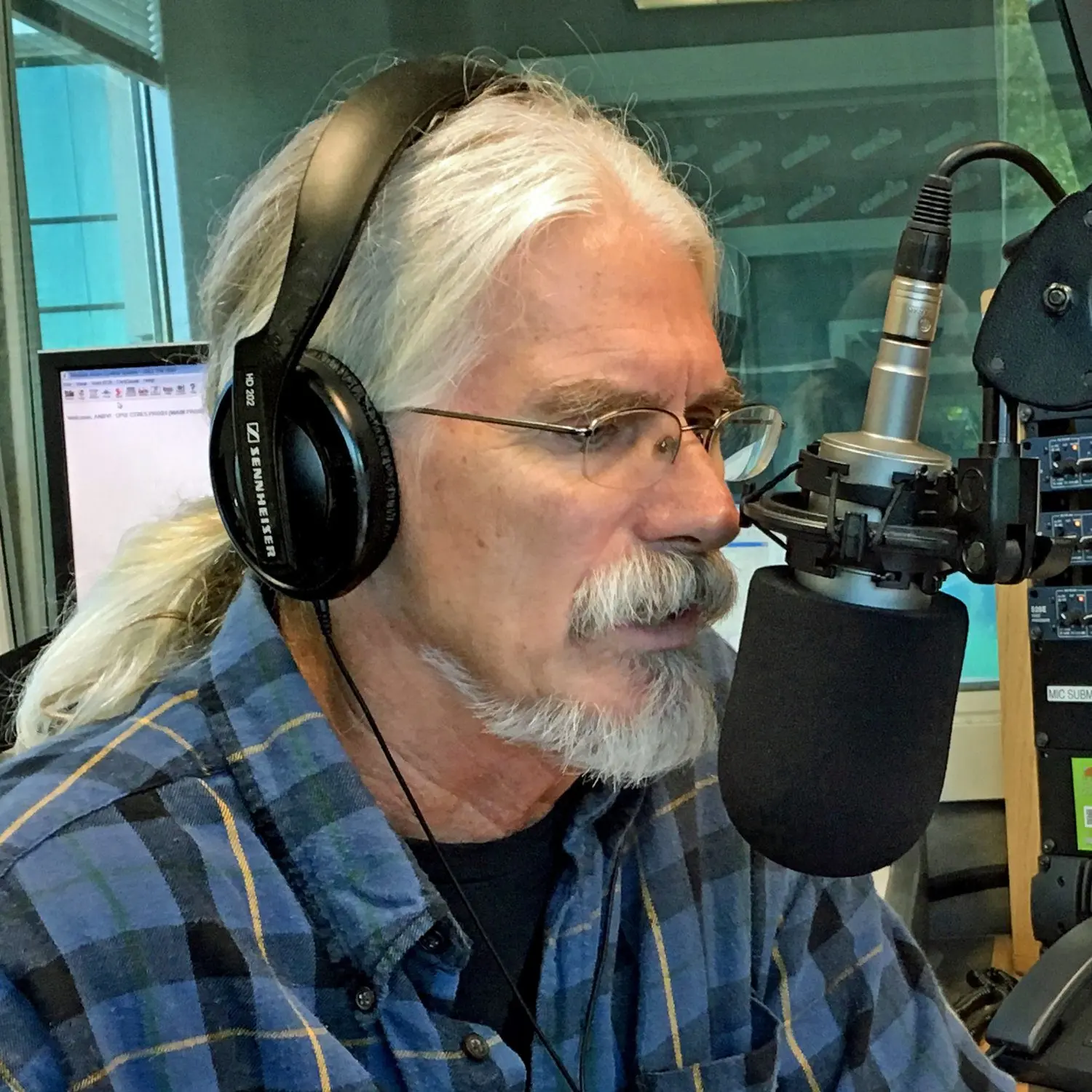
Join us in this episode as we dive deep into the enigmatic subject of ‘speaking in tongues.’ Our host, Steve Gregg, provides insight into the differences between biblical accounts of xenoglossy and modern practices of glossolalia. With callers from across the nation, we discuss the nuances that separate various interpretations and how they affect our understanding of spiritual gifts today. Learn how prayer and spiritual edification play pivotal roles in one’s faith journey.
SPEAKER 1 :
Thank you.
SPEAKER 04 :
Good afternoon and welcome to the Narrow Path radio broadcast. My name is Steve Gregg and we’re live as always, not always, but as often as we can be for an hour, commercial free, taking your calls. If you have questions about the Bible or the Christian faith, we welcome you to call in with those questions to discuss. And if you have a different viewpoint from that of the host, you’re welcome to call in and express that as well. The number to call is 844-484-5737. Now we have our lines full. That doesn’t mean you shouldn’t call, but it means you shouldn’t call right now. If you call in a few minutes, lines will open up and you can get through. So here’s the number to have ready. 844-484-5737. And tonight is our Zoom meeting, which we have the first Wednesday night of each month. It’s at 7 o’clock Pacific time. Maybe a different time for you if you’re in a different time zone. But at 7 o’clock Pacific time, we have a meeting on Zoom that you can join us at if you would like to. And it’s a Q&A like this program. You can call and ask your questions face-to-face. And we have usually about an hour and a half to do that. So it’s a little longer than the radio show, and it’s got the advantage of being face-to-face. So I always look forward to that each first Wednesday of the month. That’s tonight at 7 p.m. Pacific. Keep that in mind. If you want to know how to log on, just go to our website, thenarrowpath.com. at thenarrowpath.com, you’ll find a tab that says Announcements. If you click on that and go to today’s date, the information about logging in to the Zoom meeting tonight will be found there. All right. We’re going to go to the phones now and talk to Ben calling from Troy, Michigan. Hi, Ben. Welcome to The Narrow Path.
SPEAKER 09 :
Yeah, thank you. So my question is interesting. So I – how do I explain this? So I’ll just say this.
SPEAKER 04 :
So I put you on hold. Go to another caller, and you can kind of try to think of what you want to say, and I’ll put you back on after the next caller.
SPEAKER 09 :
Yeah.
SPEAKER 04 :
Okay. Why don’t you think about what you’re going to ask before you dial the number, and then we wouldn’t be taking up time like this. But, yeah, I’ll be glad to come back to you. I’ll be glad to come back to you. Ben and Troy will write it down, and then you’ll be able to read it. Tony in Greenville, South Carolina. Welcome to The Narrow Path. Thanks for calling.
SPEAKER 07 :
Yeah. Hi, Steve. Hopefully you can hear me. Can you hear me clear? I can.
SPEAKER 04 :
Yes, I can.
SPEAKER 07 :
Okay. And I do have my questions written down. So I’m going to talk about tongues, and I have my hands in the air, quotes, the word tongues. So it’s in two parts, basically. Okay? The two parts are, the scriptural, and I want to break it down. So the first part of the question is this, isn’t tongues, my hands are up in quotes, a misleading umbrella term since scripture describes xenoglossy while modern churches practice glossolalia, which lacks linguistic structure or semantic context. So for instance, if Acts 2 defines tongues as real languages understood by hearers, On what biblical basis can glossolalia be considered the same gift? That’s the first part. The second part about tongues is prayer language. Where does scripture explicitly teach a private prayer language? If God knows all things and needs no language to understand us, Matthew 6, 8, why would he require a special, unintelligible language for prayer? Isn’t prayer primarily formative for the believer, meaning us, the prayer person, shaping our thoughts, our desires, and obedience rather than informational for God?
SPEAKER 04 :
Okay, that’s interesting questions. First of all, there is a difference, it would appear, between what we call speaking in tongues on the day of Pentecost in Acts chapter 2, as you pointed out, These people were clearly speaking languages which had vocabularies and grammars and things like that because the people who heard them recognized what they were communicating. They were communicating through foreign languages to bystanders who understood those languages. Now, the speakers didn’t know the languages, which is why it was a miracle. The ones who were speaking were speaking languages they had never learned and did not know. But they were in a… metropolitan city on a feast day where people came from all over the world to worship in Jerusalem. And so people did hear these people speaking in all their local dialects.
SPEAKER 07 :
Which I would consider xenoglossy, right? Do you know those definitions? Should I define those?
SPEAKER 04 :
Well, go ahead. I know about glossolalia. I don’t know what your distinction is, but go ahead.
SPEAKER 07 :
So xenoglossy, X-E-N-O-G-L-O-S-S-Y, is speaking real, intelligible human languages not previously learned, where glossolalia is non-linguistic, repetitive, ecstatic vocalization.
SPEAKER 04 :
Now, how do you know that glossolalia has to be defined that way? Is that the meaning of the Greek word? That’s in the Greek?
SPEAKER 07 :
As far as I know, yes.
SPEAKER 04 :
Now, that’s what I’m… Because I understood the word… Okay, I understood the word glossolalia simply meant languages. So, I mean, I’m not a Greek scholar.
SPEAKER 07 :
Right. Well, I’m not saying I am either. And that’s kind of why I’m talking to you about it. I’m not here to gotcha. Okay, that’s what I’m trying to do. I’m just trying to say that I have studied this. This is what I understand glossolalia to mean versus xenoglossy. Xeno meaning you heard xenophobes, right? So they’re afraid of other languages or other people. So xenoglossy is speaking in another language, but you haven’t previously learned it. And that’s one of the definitions. And then the second part is glossolalia, which is a non-linguistic. It’s the la, la, ba, ba, sa, sa, you know, the modern things that you don’t, understand when it comes out of, you know, certain churches and certain places that seem to be unintelligible.
SPEAKER 04 :
Okay, okay. Well, I’m not sure that the word glossolalia doesn’t simply mean languages. All my life I’ve heard that’s what it means, but I’m not a Greek scholar and I’ve never done a deep dive into it. But I certainly recognize that what’s going on in Acts chapter 2 is different from what is going on in the church’s in 1 Corinthians 14. And that is because, as you say, in Acts chapter 2, the people were not only speaking languages, they were speaking languages that were intelligible to the hearers. Now, I don’t know that there were no languages being spoken in the 1 Corinthians 14 phenomenon, except Paul says nobody understands them, and they need to be interpreted. But it’s entirely possible that, like if somebody walked into my office right now and began speaking in Somalian, that no one here would understand what they mean. Not because they’re not speaking a real language, but because they’re speaking a language that nobody here knows how to understand. So to my mind, in 1 Corinthians 14, I would not rule out the idea that the tongues spoken there are actual languages of some kind, but that they’re not understood by those who are in the room. because it says in 1 Corinthians 14, 2, He who speaks in a tongue does not speak to men, but to God, for no one understands him. However, in the Spirit he speaks mysteries. Now, okay, so the person in the church speaking in tongues is not speaking a language anybody there understands. He doesn’t say it’s not a real language. He just says no one understands him, and it needs to be interpreted by somebody who’s got a gift of interpretation. And he says that he’s not speaking to men. He’s speaking to God. Now, speaking to God, usually we refer to that as praying. And like Paul says in 1 Corinthians 14, 14, if I pray in a tongue. My spirit prays, but my understanding is unfruitful. Okay, so praying in a tongue is definitely something that Paul says can be done. And then later on, when he says in verse 27, if anyone speaks in a tongue, let it be two or three each in turn and let one interpret. But if there’s no interpreter, let him keep silence in the church and let him speak to himself and to God. Okay, so in other words, let him speak in tongues quietly, not disruptively in the church. Let him speak to God just within himself. Now, that’s very clearly not what was going on in Acts chapter 2. In Acts chapter 2, it cannot be said that these people were not speaking to men, but to God. We’re told that they were speaking about the wonderful works of God to the people who were listening. So it’s a very different situation. They weren’t praying in tongues. They were, as it were, proclaiming in foreign languages the wonderful works of God. Secondly… in the book of Acts, chapter 2, they were not speaking in the church. They were speaking in public, and the people who were listening were non-Christians. They were speaking in the language of non-Christians, and that was a sign to the non-Christians that there’s something supernatural that’s going on. That’s why they gather and said, what’s going on? Paul does acknowledge that speaking in tongues can have a function like that. In 1 Corinthians 14, he says in verse 22, Therefore tongues are for a sign not to those who believe, but to unbelievers. Okay, so tongues are a sign to unbelievers. That is, when they are a sign. In Acts chapter 2, tongues was, in fact, assigned to unbelievers. And it was addressing the unbelievers with information which they understood. Now, clearly, it’s different in the church because the church in Paul’s day was not populated with unbelievers. It was a fellowship of the saints. They were not preaching the gospel in tongues there. They were praying. They were not speaking to men. They were speaking to God. And they were not speaking a language that anyone present understood. Paul says no one understands them. And therefore, you needed somebody who was equally ignorant of the language, but who equally had a spiritual gift of interpretation, who could give it an interpretation. Now, we don’t know much more about it than what Paul says in 1 Corinthians 14. There really isn’t any teaching on this subject, or on either one of them. And we could say, well, those are two different gifts of tongues. One is a gift of proclaiming something to unbelievers in their own language. And that’s a sign to them since it’s a supernatural act. And the other is praying to God in a language that nobody understands, but which can be interpreted supernaturally by a gift of interpretation. And it’s for the edification of all people. And if there’s no interpretation, then it only edifies the person who’s speaking. That’s what Paul says in 1 Corinthians 14, 4, and says, He who speaks in a tongue edifies himself, but he who prophesies edifies the church. But he says, I wish you all spoke with tongues, but even more that you prophesy. For he who prophesies is greater than he who speaks with tongues, unless indeed he interprets that the church may receive edification. So it’s clear in the book of Acts, tongues of a sort was being used as a sign to unbelievers. In 1 Corinthians 14, tongues apparently of a different sort is being used to edify the church if it’s accompanied with an interpretation. If it’s not interpreted in the church, then one can speak to himself and to God differently. and receive personal edification that way. Now, there’s no reference in the Bible to a prayer language, but it’s obvious that Paul’s talking about speaking in some kind of way that’s not a language that anyone present knows. It doesn’t mean it’s not a real language. It might be a real language of some country or some, you know, many Pentecostal and Christian people think they’re speaking heavenly languages. Now, The Bible doesn’t affirm that there are heavenly languages, although Paul says hypothetically in 1 Corinthians 13, 1, though I speak with the tongues of men and of angels and do not have love, I become a sounding breast. Now, he’s not affirming there are tongues of angels. He’s making a hyperbolic statement, but maybe there are. Maybe there’s tongues of angels. Maybe that’s why no one understands them until they’re interpreted. I can’t go beyond what Paul tells us or what the Bible tells us, which means I have questions unanswered about this myself. Both Acts chapter 2 and 1 Corinthians 14, which are the two places we mostly read about this, they are talking about different applications, at the very least, if not different phenomena altogether. They may be different phenomena, but we do know that both are said to be supernatural. And, you know, in First Corinthians 14, it says the person who’s not speaking to God, but not speaking to men, but to God is in the spirit. He’s speaking mysteries. And those spiritual mysteries apparently have meaning, because if somebody has the spiritual gifts of interpretation, they can reveal that meaning to those who are listening. So it’s a mysterious thing. I mean, as far as what’s all going on now, you said isn’t prayer. You know, why would God need to have a prayer language since he doesn’t need to be informed of what we want? You’re right. He doesn’t need to be informed of what we want. I believe he knows everything we’re thinking. So I think if we pray silently without language or even send up wishes to God, you know, unspoken, he knows about them. In fact, Jesus said, your father knows you have need of these things before you ask him. But Jesus never uses that as a discouragement from praying. So, you know, whether praying in your native tongue or praying in some other tongue, God already knows before we open our mouths what we should be praying for. What Paul indicates is that there are times when we don’t know what to pray for as we ought, and the Holy Spirit aids us. To offer up through our groans now. That’s not the same thing as tongues, but maybe the principles Maybe not different when I’m groaning I don’t often know what is I’m growing about but God does the Holy Spirit translates that into prayers according to will of God likewise if I speak in tongues, I don’t know what I’m saying, but But that doesn’t mean I’m not saying anything and the Holy Spirit would know and he can translate that Into prayers to God now. Why does God need to hear prayers? Well, that’s an entirely different subject I mean, God could run the whole universe without including us at all. He doesn’t need to take our ill-founded and poorly informed suggestions. But he has chosen to include us in the governing of the universe because we are made in his image to have dominion over the things he’s made. So he includes us in that process. But, yeah, there’s many things about tongues I don’t know. I wouldn’t be able to answer. And the main reason is because the Bible doesn’t. I mean, I mean, there could be things in the Bible, and I might miss them, but on this particular subject, there’s very little said, and the things that are said are the ones that we’ve been discussing.
SPEAKER 07 :
It does, and you quoted it.
SPEAKER 04 :
What’s that?
SPEAKER 07 :
It does, and you quoted it. The one who speaks to God in a tongue edifies himself. So he’s edifying himself through that language. It isn’t that God needs it, right? It’s that he’s edifying. He’s beginning to understand through his prayers to God. He’s shaping his thoughts, his desires, and obedience, right? When he’s speaking in tongues? Yeah, well, let’s take the word language.
SPEAKER 04 :
Well, listen, let’s not because we’ve been talking too long for when I have full switchboard. But let me just say this. Yeah, he does say that if you speak in tongues, you edify yourself. And that is something, of course, the Bible says we should do. That’s what it says in Jude 20. He says, but you, beloved, building yourselves up. That’s what the word edify means, build yourself up. Building yourselves up on your most holy faith, praying in the Holy Spirit. Now, I don’t know if Jude is using the term praying in the Holy Spirit the way Paul did, but in 1 Corinthians 14, Paul said, if I pray in the Spirit, no one understands me except God. So Jude says, yeah, well, pray in the Spirit and edify yourself. So it’s a good thing. And that’s why Paul says, you know, if it’s not going to edify the church without interpretation, then just do it to yourself and to God. Listen, yeah, I don’t know if we’re going to solve anything here. Your idea of what it means to satisfy yourself might or might not differ from mine, but that would simply be a matter of two opinions about the same material. But you’re welcome, certainly, to disagree with mine. Okay. All right. Thank you, Tony. Good talking to you. Jerry from Pittsburgh, Pennsylvania. Welcome to The Neuropath. Oh, I’m going to get back to Ben in just a minute. Don’t worry, Ben. Hey. Hi, Jerry. I’m Jerry.
SPEAKER 08 :
Yes, Jerry.
SPEAKER 04 :
Hi, Jerry.
SPEAKER 08 :
Hi, Jerry. I listen to you all the time. I’m a dum-dum, and I’m 92 years old. Wow, congratulations. I’ve been in the Bible for 60 years.
SPEAKER 04 :
Well, Jerry, do you have a question for me, Jerry?
SPEAKER 08 :
Yes, yes, I do. I’m a dumb-dumb and please tolerate me. I’m going to talk about heaven and the lowest hell, which you teach. You teach a number of names for hell. And I’m going to try to talk to you about heaven and you’re going to answer me these things. Okay. There’s heaven and I know greatly about heaven and But then there’s also the heavens. And then the Bible talks about heavens above. Heaven above. The third heaven. And I’ve heard you speak about the third heaven. And the heaven singular of heavens plural. The highest heaven. And above the heaven of heavens plural. So that’s above the highest heaven. And Jesus said on the cross, Today thou shalt be with me in the paradise. So there’s all these different places that you can go to when you die that I just named. And the best one is the one who died alongside the Christ. Today thou shalt be with me in paradise.
SPEAKER 04 :
Okay. Okay. Well, I mean, you did list several different phrases that the Bible uses, the heaven of heavens, the highest heavens, and the third heaven, and so forth. that doesn’t necessarily refer to different places people can go. If you look up the word heaven in a concordance, and you’ll find it’s used scores of times, maybe hundreds of times. I did this a long time ago. I don’t remember the total number of times it’s mentioned, but I could hardly find any that mentioned heaven as a place to go. Almost every time heaven is mentioned in the Bible, it talks about your father in heaven, the angels of heaven, the clouds in the heavens, the stars in the heavens. In other words, heavens is a realm that is mentioned frequently in the Bible, but I’m not really sure if there’s even a place in the Bible that speaks of heaven as a place to go. I believe that we will go to heaven if we’re Christians. We will go to be with Jesus, and he happens to be in heaven at the moment. When he comes back here, we’ll come back with him. when he sets up the new earth and the new Jerusalem there. So that’s what I believe. But interestingly enough, all these references to heaven and heavens and third heaven, none of those places actually speak of heaven in a context where it’s talking about it as a place to go. This doesn’t mean that people don’t go to heaven, but it does mean that we might interpret the word heaven automatically as a reference to where I’m going when I die or where some people are going when they die. without it necessarily being what’s being spoken of there. The third heaven that Paul was caught up into in 2 Corinthians 12, I believe simply means the dwelling place of God as apart from the lower heavens. The lower heaven, first heaven, would be the approximate atmosphere around the earth where the birds and the clouds are, where they fly through the heavens, the Bible says. That’s in what we call the atmosphere of the earth. And then there’s the heaven where the stars and planets are. We’d call that outer space. But the third heaven would be neither of those places. It’d be the spiritual habitation of God and the angels. And I believe the third heaven is referring to that, although maybe it isn’t. But that’s how I tend to think Paul was speaking. The highest heaven. I think simply would be a way of speaking of the most distant from us. Just because the Bible says as high as the heaven is above the earth, so high are God’s thoughts above our thoughts and so forth. So, I mean, the heavens are high above us and the highest heavens, I think. Generally speaking, on the occasions where that term is used, it’s referring to the remotest, loftiest point, perhaps maybe in outer space. I don’t know. It’s not necessarily talking about where people go when they die. So, paradise. Now, when Jesus said, today you’ll be with me in paradise, There’s a very good case to be made, though I can’t say with dogmatism that this is so, that Jesus and the thief on the cross both understood paradise to be a reference to a compartment in Sheol. In the Jewish mind, in the rabbinic teachings and so forth, Sheol, the Hebrew word, which is in the Greek Hades, was a place with two compartments. And the righteous, when they died, went to one compartment of Hades, which was called Paradise or Abraham’s bosom. And the wicked went to the other compartment in Hades where there was torment. And so when Jesus said, you’ll be with me today in Paradise, you know, he might have been referring to heaven, but… The term was generally used among the Jews, not that way, not of heaven, but as the place in Hades where the righteous go when they die. because Jesus, not having yet died and risen, had not yet made the way open for people to go to heaven. In Hebrews chapter 10, it says that we can enter into heaven by a new and living way, which was made possible through Jesus, through his body, through the veil. So, you know, when he went up through the veil into heaven, Hebrews in the previous chapter actually says that he went into the Holy of Holies in heaven. So that’s on the other side of the veil. Jesus passed into that place in the Holy of Holies, and the writer of Hebrews in chapter 10 tells us that this has made a way for us to go into the presence of him because of Jesus’ death, because of his resurrection, because of his ascension. Now, Jesus on the cross had not yet died or risen, and therefore the case could be made that he and the thief went to paradise, which was a portion of Hades, where all the righteous, including Abraham and David and Moses, were buried. until the resurrection of Christ. Many believe that when Jesus rose, then all those in that compartment of Hades went with him into heaven, and that’s where we go now when we die too, because there remains no more obstruction for those who are in Christ. In a sense, we’re already there. We’re seated in heavenly places in Christ, but we will actually be physically taken up and glorified, or even non-physically when we die, but later on when we resurrect it. Hey, I’m out of time for this portion, but I hope that helps you. You’re listening to The Narrow Path. We have another half hour coming. Don’t go away. We are listener supported. You can go to our website, use our stuff for free, or you can donate at thenarrowpath.com. I’ll be right back. Don’t go away.
SPEAKER 02 :
If truth did exist, would it matter to you? Whom would you consult as an authority on the subject? In a 16-lecture series entitled The Authority of Scriptures, Steve Gregg not only thoroughly presents the case for the Bible’s authority, but also explains how this truth is to be applied to a believer’s daily walk and outlook. The Authority of Scriptures can be downloaded in MP3 format without charge from our website, thenarrowpath.com.
SPEAKER 04 :
Welcome back to the Narrow Path radio broadcast. My name is Steve Gregg, and we are live for another half hour. Taking your calls. If you have questions about the Bible or the Christian faith or a different opinion than the host, we welcome you to call. Right now our lines are full, but if you want to try a little later when lines do open up, the number is 844-484-5737. Now our first caller today, we were not able to get a question across the air, so we’re going to go back and talk to Ben in Troy, Michigan. Ben, do you know what your question is now?
SPEAKER 09 :
Yes. So when you play a song like certain songs in reverse, There’s what’s called back masking.
SPEAKER 04 :
Backward masking.
SPEAKER 09 :
Yeah. Yeah. Do you think that those artists did that on purpose, or are they trying to, like –
SPEAKER 04 :
Well, I don’t know what they did on purpose or did not know. There’s all kinds of sound technology I have no knowledge of. This is not something that the Bible would answer for us, and I’m not able to answer it either. I would think that it would have to be intentional. I mean, if there really is a phenomenon where you put the needle on the record and turn it backward with your finger and intelligible sentences come out of the thing when you’re playing it backward, I would think that would not be by accident. I would think that would have to be intentional. But I’m not really sure how that would be done. And, you know, this was talked about a lot in the 1970s because there were a lot of satanic bands that it was claimed they had secret satanic messages, which you could hear if you played it backward. I never had the equipment to play anything backward, nor did I buy their albums, so I would never be able to test that. I remember seeing a comic in a Christian magazine back then. It was in Cornerstone magazine, which came out of Chicago, the Jesus People magazine. And it was like a DJ had a record, and he says, well, we’ve heard that if we play this backward, you’ll get satanic messages. Let’s just try it right now and see if it works. And he starts turning the disc, and out of the recorder comes – Record player comes, you know, kill your parents, worship Satan, drink blood, you know, curse God. And the DJ says, wow, there really are satanic messages on here. Oh, wait, I was playing it forward. And that’s kind of the thing. The bands that allegedly had bad messages, if you played them backward, they usually have pretty bad messages if you play them forward, too. So, you know, they weren’t getting some secret subliminal message across that way. I don’t think that your mind would be able to subliminally. hear messages that have to be played backward to be heard when you’re only listening to it forward. So it’s a phenomenon that, you know, much was made of it at one time in the 1970s. I haven’t heard much about it since then. Maybe they’re doing it, maybe not. I don’t really care if they are because I’m never going to play any of the music I listen to backward anyway. And if you do play it backward and get some nasty messages, probably the messages aren’t going to be very different than the messages you get playing it forward. Appreciate your call. Let’s talk to Greg in Sonoma, California. Greg, welcome.
SPEAKER 05 :
Blessings, Steve. My question is, were these verses to show both Jesus’ humanity and deity? In Luke chapter 2, verses 44 through 52, I’ll just sum it up to save time. He was 12 years old. The family celebrated the Passover in Jerusalem. And then the family assumed they had Jesus with them and left. went one day’s travel and then found that Jesus wasn’t with them. And they spent three days when they got back to Jerusalem looking for him and found him in the temple. Verse 51 says, Then he went, that’s Jesus, went down to Nazareth with them and was obedient to them. So that sort of shows that he had humanity as a kid that doesn’t always tell the parents or siblings where he’s going to go. And then the deity, when they got there, they they uh found out that he said didn’t you know what what is your question father’s house what is your question were these verses to show both his humanity and his deity uh perhaps thank you for your call uh gill in long island new york welcome to the narrow path hi it’s a pleasure and a treasure i hope you remember me of course um i just want to also let you know when
SPEAKER 01 :
The listeners, though, I’ve been having pain in my eyes for about four years, and I had eye drops and all kinds of stuff that didn’t work. But this past four weeks, my eyes have improved, and I have hardly no pain. I had it especially in my left eye. I had an operation, but it didn’t help. So I just wanted to let you and the listeners know that God most likely healed me when I was sleeping at night.
SPEAKER 04 :
Well, I’m glad to hear that. What is your question?
SPEAKER 01 :
Yeah, thank you. In 2 Corinthians 5.10, it says, For we must all appear before the judgment seat of Christ, that everyone may receive the things done in the body according to what he hath done, whether they be good or bad. Now, my question is, I have trouble concentrating, so sometimes when you say things, it’s hard for me to understand fully because I have the ringing in my ears for a long time. And when it says bad in all of that… And a person that, say, goes to hell, separated from God forever, do you believe, like some people believe, like Seventh-day Adventists believe in annihilation? Or do you believe in a literal hell where they will be tormented day and night, like Revelation talks about, I believe, in 14?
SPEAKER 04 :
Well, I do believe in a literal hell in the sense that I believe there’s a place, the lake of fire. where those whose names are not written in the Lamb’s Book of Life, after the final judgment, they are cast into the lake of fire. That’s what we mean by hell. But the question is, what happens then? You know, in Revelation 20, when all those people are cast into the lake of fire, that’s treated as the conclusion of a story, not the beginning of a new one. In other words, we’re not told, okay, and now, once they’re in the lake of fire, here’s what happens next to them. We aren’t told. We aren’t told what happens once they’re there. So the lake of fire is real, and some people believe that the lake of fire is a place where once a person is thrown there as a condemned sinner after the judgment, they simply live forever in torment and flames, never have any relief. Others believe that what happens when you’re thrown into fire is you get burned up. maybe there’s some suffering involved in the process of being burned up, but it’s not eternal suffering. A person eventually just burns up and they don’t exist anymore. That’s another view. You mentioned, I think, the Seventh-day Adventists. They hold that view, but so do many evangelical Christians hold that view. You don’t have to be a part of the Adventists or anything like that to hold that view. Lots of people do, including evangelical leaders. But And then there’s a view that hell is once you’re thrown in the lake of fire, you’ve entered into a time of purging and where God deals with the sinner to seek to bring them to repentance. So, you know, those are the three possibilities. Do I believe in the lake of fire? I do. Now, to say somebody doesn’t believe in hell is is presupposing that. that the word hell refers to a place of eternal conscious torment. And I’ve had people say that I don’t believe in hell, that I, Steve, me, that I don’t believe in hell. I don’t know why they could say that. I’ve written a book about the three views of hell. I certainly make it clear that I believe in hell. I just don’t know which of the views of hell is correct, because hell is the lake of fire. Once in there, the question is what happens to the person then? So it’s not a question of whether hell exists. It’s rather a question of what it exists for. Is it there just to retributively punish people forever and ever and give them no relief? Is it there to incinerate and annihilate them? Is it there to help deal with them in such a way as to hopefully bring them to repentance? Those are all different views that Christian evangelicals have. hold and which have always been held. There’s always been Christians who held all of those views. They’re not the mainstream view, some of them, in the Western Church, because the Western Church followed Augustine, and Augustine held the view that they are tormented alive forever and ever in hell. But nothing in the Bible tells us that Augustine is infallible. And it’s just that the Catholic Church followed Augustine on this, and then the Protestants didn’t shed that either when they broke off from the Catholic Church. They kept that view too. The Eastern Church had many church fathers who did not believe that particular view of hell. They believed in hell. I mean, if we mean hell as the place of fire that the wicked are thrown into after the judgment, that, you know, as far as I know, all Christians believe in that. but there are differences of opinion about what is going on in hell. So that’s where the difference of opinion would be. My book called Why Hell? Three Christian Views Critically Examined goes into that in some detail. Now, I know your eyes might make it hard for you to read a book, but if you want, I have a lecture, two lectures, at the website, and it’s a part one and two of Three Views of Hell. So if you go to thenarrowpath.com, And hit the tab that says Topical Lectures. There’s a two-part series called Three Views of Health. And that goes a little more briefly than my book into the subject, but it will clarify all those different options. Thank you for your call. Let’s talk to Don in Sacramento, California. Hello. Hello.
SPEAKER 06 :
Hi. Thank you for taking my call. It’s about passages from John 12, talking about accepting or not accepting the things of the Lord Jesus Christ, and also about Paul’s teaching to Timothy and Titus about choosing an overseer or someone to be ahead of the people. And I’m assuming, and I don’t know if this is right or not, but I’m assuming that since Paul claimed to have received his ministry from the Lord Jesus Christ, that the words that he taught would be similarly esteemed as the words that the Lord Jesus Christ said.
SPEAKER 05 :
Right.
SPEAKER 06 :
And then, yeah, so I’m a little… concerned about this country and the fact that many professing Christians have chosen to promote a person who is not a husband of one wife and maybe none of the other things that Paul teaches and they’ve promoted a person like that and
SPEAKER 04 :
You mean as a church elder or as a pastor? They put someone as a pastor of the church who’s like that?
SPEAKER 06 :
No, I’m talking about a political office.
SPEAKER 04 :
Okay, well, Paul doesn’t talk about those. Paul is never telling Christians how to appoint political officers. They didn’t live in a society where they had that option. They lived under a Roman emperor, and the Christians couldn’t vote for emperors and couldn’t vote for democracy of the type that we’re aware of. wasn’t ever discussed in the Bible because it simply wasn’t in the reality of anyone who ever wrote or read the Bible in those days. So, yeah, I mean, Paul, his words are as authoritative as those of Jesus because Jesus said in John 13, 20, whoever receives whoever I send, he who receives whoever I send, receives me. And so Paul was sent. That can hardly be disputed by any open-minded person. Paul was sent by Christ as an apostle, so whoever receives him receives Christ, Jesus said. Now, Paul did in 1 Timothy 3 and in Titus chapter 1 lay out the qualifications for appointing elders. Now, elders were persons in the church who were the exemplary Christians, the ones whose lives were good enough to be examples to everybody to follow and who taught. They taught the word of God. So this is what elders were. And Paul said, yeah, they got to be relatively perfect. I mean, kind of whatever they did should be something that was commendable and something that the church, the younger people in church should follow. They were called elders because they were older men and presumed to be mature men. So, yeah, that’s that’s leaders of the church. Now, that’s unrelated entirely to whoever is running the country. The country is not a church. The church is composed only of people who are followers of Christ. The society of Christ’s followers is the church. The country is a secular institution. That’s why every religion is permitted under our Constitution. There’s freedom of conscience, freedom of religion, freedom of speech. That would not be so in the church. You couldn’t be in the church and be a Buddhist and a Muslim or a Hindu or an atheist. You wouldn’t belong in the church in such case. But you can be any of those things and be an American. So, you know, America is not a Christian entity, although it has many Christians in it and has been favorably affected by Christian influence and by the Bible and so forth. But let’s face it, most people in America don’t live by the Bible. And the Bible doesn’t say that we should make them do that. We’re supposed to bring them to Christ if we can. And when they come to Christ, then they’re part of the church or part of the body of Christ. And then we can teach them to observe everything Jesus said. We can’t go out to unbelievers and enforce on them some kind of obedience to Christ when they have no allegiance to Christ. Christ is not the president. He’s not the king. I mean, he is a king, but he’s in heaven as king. He’s not recognized in this country as the king. Christians recognize him that way, but the society doesn’t as a whole, which is to their detriment. But But to say, well, what kind of person would you support to be a political leader? Let’s just say president or a senator or a congressman or a Supreme Court justice or something like that, or a governor or a mayor. Well, that’s not going to be the same list of qualifications as for being the leader of the church, because the leader of church has to be exemplary Christian. The leader of a country… It’d be nice if he was an exemplary Christian, but that’s not what our Constitution requires. And Christianity doesn’t run the country. So what we recognize is the majority of people in America are not Christians, and therefore they’re not going to vote according to the rules of church leadership. And there are almost never… any candidates running who are qualified as church leaders. But they’re not running for that office. They’re not running for the office of church leader. They’re running for a political, secular position. And what is required of secular rulers, whether they’re Christians or not, the Bible says he that would rule men must rule in justice. And so what we look for is, you know, if we’re going to vote at all, we’re going to vote for somebody who’s – whose policies will enforce justice. And so I know you’re wondering why so many Christians voted for Trump. Trump is not an exemplary Christian. I don’t even know if he is a Christian. I wouldn’t say he is or isn’t. I don’t know him. But I would say if he is a Christian of any kind, he certainly is not an elder. He’s certainly not an exemplary model to other Christians. But Neither would anyone else he ever ran against be. Kamala Harris and Joe Biden didn’t fit those qualifications either. Fortunately, they weren’t running for the office of church elder. They were running for the office of political leader of a secular nation. And the one thing needed for them to qualify for is the ability to govern justly. Now, whenever there’s an election, that’s what Christians are concerned about. Now, in this country, Governing justly would require honesty, and honesty requires that the person who is elected follow the Constitution because they take an oath about that. Everybody who’s elected puts their hand on a Bible or a Koran sometimes, sadly, but they take an oath that they will uphold the Constitution because this is an unusual country in history. This country was founded with a Constitution, and the Constitution is the highest authority. higher than the men who are in office. And so the men in office swear that they will follow the Constitution. Now, when people take an oath and then they don’t follow the Constitution, it’s very clear that they are oath breakers. They’re dishonest. They don’t care about their word. They’re not just people. and they’re not faithful people. So, you know, we hopefully, if we do elect people to run certain parts of the government, we know they’re going to take an oath to follow the Constitution, but we’re going to have to probably use some discernment, knowing that all politicians take that oath, but not all of them keep it. And there’s certainly one party more than the others. that has broken that oath more than the other party. Now, you know, we’re going to have problems no matter who governs us because they’re human beings. Human beings are not perfect. It’d be great if some of the people running for office met the qualifications for church elders. But even so, we’re not electing them to be church elders. We’re electing them to be governors, you know, to help run a country in a political world. and that’s a very different kind of set of skills. The main thing we should be interested in in choosing any governing official would be that they’re honest and they’re competent and that they will do what is just rather than what is selfish and deceitful and corrupt. Thank you. All right. All right. Thank you for your call. Let’s see. We’re going to talk to Matthew in New Jersey next. Hi, Matthew. Welcome.
SPEAKER 03 :
Hey, Brother Steve. How do I sound?
SPEAKER 04 :
You sound great. Go ahead.
SPEAKER 03 :
Thank you. Thank you. Happy New Year, first of all. Steve, so my question is around a popular topic. I’ve heard you talk about this a few times, but I’m going to ask you to dig a little bit. Ezekiel 28.13 says, The more I listen to you, I’m three years into my Christian walk here, and the more I listen to you, the more I seem to become unpopular with my dispensational friends.
SPEAKER 04 :
Yeah. Predictable.
SPEAKER 03 :
I’m sorry?
SPEAKER 04 :
That’s predictable. Yeah.
SPEAKER 03 :
Seems that way. And Ezekiel 28.13 seems to be, and I don’t know if this is like dispensational doctrine, but it seems to be a very common thread that all of my dispensational friends believe this is proof that Satan was once the worship leader in heaven.
SPEAKER 04 :
I know, it’s a silly idea, but, yeah, it’s very commonplace.
SPEAKER 03 :
You’re right, right. Now, I read the Legacy Standard Bible, LSB, and I would have never drawn that conclusion from this. Good. So if you could just kind of clarify maybe why they’re so headstrong on that, and if there’s other verses that allude to that, or if it really is just this verse, because they’re pretty vehement about it.
SPEAKER 04 :
Okay. Okay. Yeah, well, what they’re doing is assuming that Ezekiel 28 is speaking to Satan. Now, that’s not a safe assumption to make, but it’s not only the dispensationalists who make that assumption. Actually, early in church history, Tertullian, like the second century, believed that this was addressing Satan. And, you know, most of the people in the church came to just follow that. Catholics, Protestants, I don’t know about Eastern Orthodox probably, dispensationalists, non-dispensationalists. It’s just kind of a Christian tradition, which I think doesn’t have anything in its favor biblically. But it just kind of got its foot in the door early on, and then most people would rather just repeat it. then rethink it. Once in a while, someone does decide to rethink something, and they find out, well, there’s not much to go on for this tradition. Speaking to, it says, the king of Tyre. In verse 12, Son of Man, take up this lamentation for the king of Tyre. Now, the previous two chapters were also addressed to either the king of Tyre or the city of Tyre itself. Starting in chapter 26 and 27 and 28, all three of these chapters are addressed to the city of Tyre, which was in Phoenicia, just north of Israel on the Mediterranean coast, and a big port city. And at this point, in poetic language, of course the whole prophecy is in poetic language, but in poetic language he begins to lament for the king of Tyre. And he says to him, you were the seal of perfection, full of wisdom and perfect in beauty. You were in Eden, the garden of God. Every precious stone was your covering, the sardius, topaz, diamond, beryl, onyx, jasper, sapphire, turquoise, the emerald with gold. The workmanship of your timbrels and pipes was prepared for you on the day you were created. Now, I don’t have the Legacy Standard Bible in front of me, though I have it on my shelf. I assume that instead of timbrels and pipes, it says something like sockets and settings. That’s what most modern translations would say. They would say these Hebrew words better understood to be sockets and settings of jewelry. instead of musical instruments. Now, the popular view assumes this is not talking to the king of Tyre, even though the passage says that it is. They say, no, it’s not talking to the king of Tyre, it’s talking to the power behind the throne, who is actually Satan. Well, I’m not sure how we would guess that because it doesn’t say so anywhere in the whole Bible that the king of Tyre or the power behind him was Satan. But that’s where they start. In other words, they start with a guess. They start with speculation. And then they say, and then it says he was in Eden, the garden of God. Now, this is one of the reasons they think it was Satan because there weren’t very many characters in the garden of God in Eden. Certainly the king of Tyre was not there. But who was there? Well, there was God. There was Adam, there was Eve, there was the serpent, and there was a cherub that was set there to guard the weight of the tree of life. After that, no one was there because Adam and Eve were driven out before they had any children. So there’s a total of five beings that could be possibly literally in the garden of God. And they point, well, he’s certainly not talking to God. He’s not talking to Adam and Eve. So he must be talking to the devil. He was eating the garden of God. He says, you have all these stones to cover you. But basically, if we’re just talking about the king of Tyre, as the Bible says, these stones that covered him are his jewelry. And it says, the workmanship of your sockets and settings was in you from the day you were created. In other words, as long as you’ve existed as a city and as a kingdom. You’ve had these jewels and these gems to cover yourself with. Now, Eden, the garden of God, is the problem because the king of Tyre wasn’t there. But then the next verse says in verse 14, you were the anointed cherub who covers. Okay, well, then it wasn’t the devil because the devil is not a cherub. The devil was the serpent in the garden of God. The cherub in the garden of God was a servant of God, which he set to guard the way to the tree of life. He was covering the tree of life with a flaming sword to make sure no one could come and eat it. So we know that there’s only five beings in the garden, God, Adam, Eve, the serpent, and the cherub. And we’re told that this is the cherub, not the serpent. Of course, this isn’t literal at all. This is poetry. The king of Tyre was not a cherub, and he was not a serpent, and he was not… in the Garden of Eden. But we find that this is poetic language. Some people say, well, if it’s timbrels and pipes in his body, then he must have been a musician. But timbrels and pipes is not the way that the modern translations understand it to mean. Even if it did mean timbrels and pipes, it doesn’t tell us he was the worship leader. This is entirely a speculation based on nothing in Scripture. And so, you know, don’t get people mad at you by arguing about this, but just know, if you’re not finding it in the Bible… It’s not true. And that tradition that Satan was an angel who was a worship leader in heaven has 100% non-support in the Bible. Hey, I’m out of time. You’ve been listening to The Narrow Path. Our website is thenarrowpath.com. We’re on Zoom tonight. Check that out, thenarrowpath.com.
