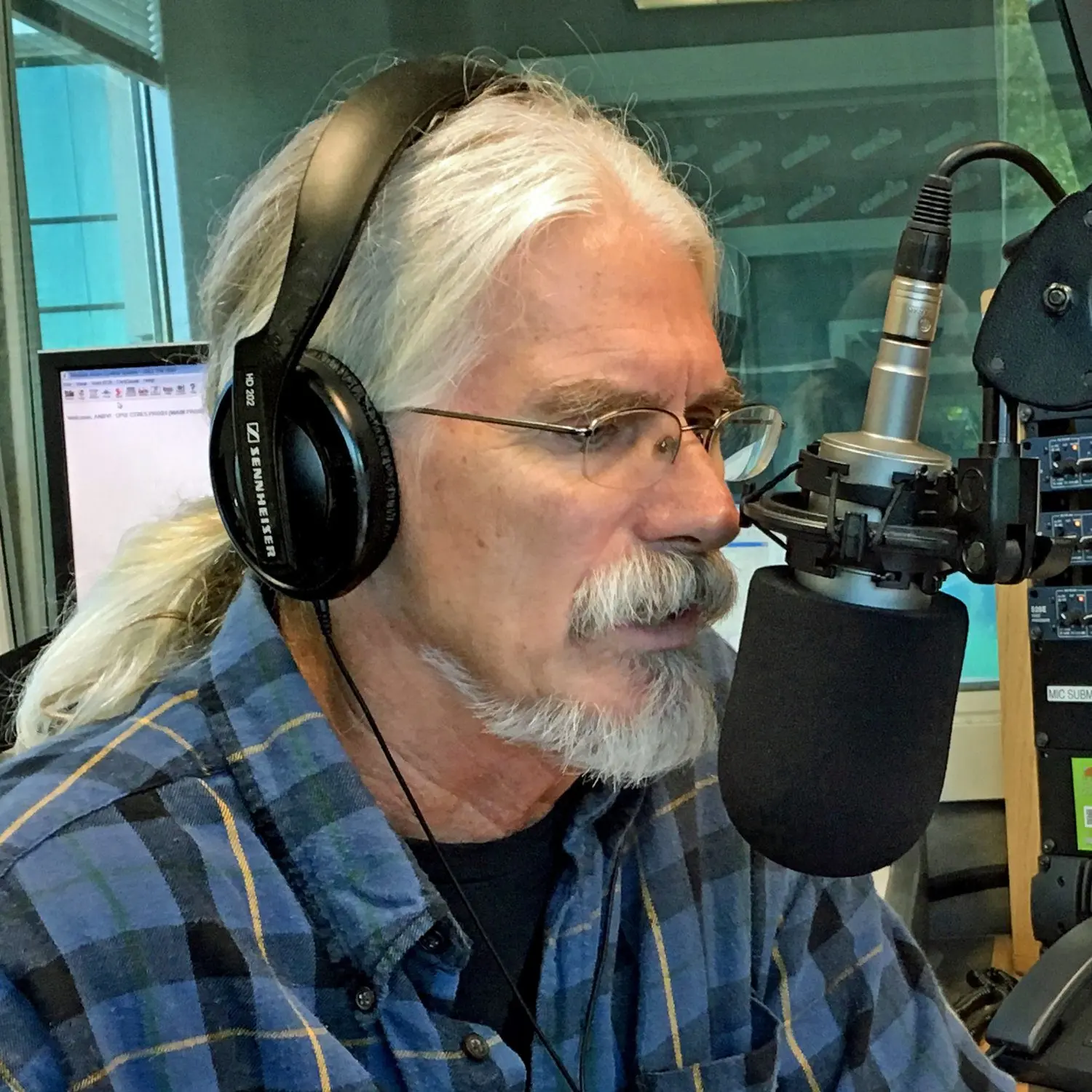
The show takes a shift as listeners engage with Steve on topics of financial stewardship within a Christian context. Through biblical anecdotes and personal insights, Steve explains the intricacies of money management for believers, touching on themes such as saving, giving, and living a life surrendered to God’s will. The conversation also meanders into Catholic traditions concerning Jesus’ family, prompting a thoughtful discourse on understanding biblical texts as they relate to long-standing religious beliefs.
SPEAKER 1 :
Thank you.
SPEAKER 01 :
Good afternoon and welcome to the Narrow Path Radio Broadcast, a brand new broadcast week. My name is Steve Gregg. We’re on Monday through Friday at this same time, taking your calls. If you have questions about the Bible or about the Christian faith that you’d like to raise for conversation on the air, That’s what we do, and we’re entering our 29th year of broadcasting here on many stations. We started on one station back in 1979, then added another, then another, then another, and for a long time we were only about four or five stations. Now we’re up somewhere in the 80s of stations nationwide after 29 years. We grow slowly. Some programs are on a lot more stations than that, but we We grow as slowly as our finances require, and we’re not complaining about it. God has, I think, blessed us, and we’re still here. And every single day that I’m here, we open the phone lines so that you can call in and participate in the program. You can call in to disagree with the host if you feel so inclined, or you can ask questions about the Bible or the Christian faith, which I will do everything in my power to answer if I cannot answer it. then I will give you probably some possible answers. I don’t know which one is correct because sometimes it’s not all that clear. But the number to call is 844-484-5737. That’s 844-484-5737. And our first caller today is going to be Peter from, I’m sorry, Parker in Atlanta, Georgia. Parker, welcome to The Narrow Path. Thanks for calling.
SPEAKER 06 :
Hey, Steve.
SPEAKER 01 :
Hi.
SPEAKER 06 :
So I have a question about the Trinity. So we know the human form of God is Jesus, and the spiritual form of God is His Holy Spirit. Does the Father share these characteristics, or is He another form that’s entirely incomprehensible to the human brain?
SPEAKER 01 :
Yeah, I don’t actually see the Trinity as God in three different forms. Some people might, but that’s not the way the Trinity doctrine is generally understood in historic theology. Now, I will say this. When I say historic theology, people have had to do the best they can with limited biblical data. In understanding the Trinity, the Bible doesn’t anywhere describe the Trinity. It does not anyplace explain the Trinity. I’m not saying the Trinity isn’t in the Bible, but the Bible is there in hints. I mean, the Trinity is there in hints, in miscellaneous data that we have to pull together and synthesize into a holistic understanding and so forth. And that’s not something that everybody is equally able to do. In fact, I’m not sure anybody is able to do it with complete confidence. And therefore, the data that forms the Trinity doctrine, which is the biblical passages related to the inquiry, has been pulled together different ways and explained different ways. Now, I don’t. I don’t myself see God as existing in three forms. I don’t think that’s the term that I would use, especially if one is seen as spirit and the other is physical. I’m not sure what the third category would be. Usually, the Trinity Doctrine is said to be describing God existing as one God in three persons, though, of course, this is not extremely helpful. It may be true, but it’s not extremely illuminating. You know, I mean, what does it mean, three persons and one God? I don’t know, but that doesn’t mean it isn’t true. I mean, it’s just an explanation that people have come up with. I myself see God as one God who we can talk about different aspects of God, his spirit, his word, just like I can talk about myself as one individual and I can speak of my word or my spirit as part of who I am. God is spirit he’s not physical though he was able to invade the physical realm by causing his word to be incarnate among us incarnate is a word that means becoming flesh like the word carne or carnal it means flesh or meat so incarnate means that Jesus was the God who is spiritual has incarnated himself in the human form But as I understand it, and I think all Christians do, while Jesus was invading our material world in his incarnation, God was still, of course, everywhere else in the universe too. And therefore God was manifest in Christ and dwelt among us in Christ. And yet he was universally present in the rest of the universe. Now, it’s very difficult to give any kind of analogy to this because I’m not sure there’s anything in nature that truly is an analogy of this. God is not part of nature. And although he’s given us lots of parables and analogies in what he’s created, I don’t know that I have ever found a perfect analogy for this concept of God being three in one. Though, I mean, there are some people who have tried. I just don’t have any confidence in a man-made analogy, so the Bible doesn’t give any God-provided analogies. So, I mean, the closest you have is a father and a son. That’s, you know, of a family. The Holy Spirit’s role in that is not easily, you know, put into it with any particular passage of Scripture. But the Bible does say that the Son is God manifest in the flesh. The Holy Spirit is also God, and the Father is God. And, you know, we could, some people do, opt for the suggestion that, well, God simply kind of appears in different forms. There’s the modalist view, which holds that in the Old Testament, God was the Father. There was no Son or Holy Spirit other than, you know, the Father himself was God. But when Jesus was incarnate, God became human and lived among us in Jesus, but did not exist separately from Jesus. And then when Jesus ascended, he returned to us in the form of the Holy Spirit. But this is not really something the Bible allows, because Jesus speaks of his Father in himself, as being in a relationship with each other, not as if they are two different manifestations of the same person, but that they are, you know, he didn’t come to do his will, but the Father’s will. He even prayed, Father, not my will, but your will. Obviously, Jesus had a will and the Father had a will. This is not just, you know, God is the Father in one place and then he’s the Son in another place. There’s a Father and a Son. And they have interaction and they have wills and they have, you know, a relationship. And the Holy Spirit is treated similarly. Jesus said, if I don’t go away, the Holy Spirit will not come. Will not? The Holy Spirit has a will. He didn’t say cannot or won’t. He just said will not desire to come. And, of course, the Holy Spirit also is said to be capable of being grieved and vexed, which is something that only personalities can experience. So the Holy Spirit is not just a vapor or something, as some people seem to imagine him, but He is also God. He is God’s spirit. Now, my spirit is me, but there’s more to me than just my spirit, so I don’t really know what the difference is. I mean, I’ve read books about the Trinity, and one thing I realize, because I also read the Bible, is that they’re making up a lot of it as they go along, because they want to fill in gaps that God did not choose to fill in, in our understandings. And I’m one of those people who doesn’t really… I mean, I’m a curious fellow. But if I discover that God has not chosen to reveal something or fill in the gaps, I prefer not to go very far in my doing so artificially. You know, it says in Deuteronomy, the secret things… belong to the Lord, that the things that he has revealed are for us and for our children, that we may learn to do all the works of this law. Deuteronomy 29, 29, if I recall. So, you know, there are secret things. We can tell what they are by the fact that God hasn’t explained them, hasn’t revealed them. And certainly nobody can say with honesty that God has revealed you know, explained the Trinity. And yet we try to do it all the time. I guess I’d rather just say, if God didn’t require anyone to have an explanation of the Trinity, then a good explanation of it doesn’t seem to be on the list of non-negotiable things or things that we need to know. I mean, the entire Old Testament saints lived in obedience to God without knowing anything about the Trinity because the Trinity doctrine was not held in Judaism. And I think the disciples followed Jesus during his entire ministry without understanding the Trinity also. The questions they asked him and so forth make it very clear they didn’t see the Trinity the way we do. I believe they were, you know, not fully informed. And Jesus did tell them, there are many things I have to say to you, but you can’t bear them yet. And he said that just before he was arrested. But… You know, I mean, people have served God without any sophisticated understanding of the Trinity. And it’s a good thing, too, because the Bible doesn’t really provide that sophisticated understanding. Theologians often are too unhappy being unable to explain certain concepts. And so what they have to do in many cases is make up explanations. And their explanations might come pretty close to the truth for all we know, but we’ll never really know because the Bible doesn’t tell us. So, I mean, I don’t get too deeply into the theories about the Trinity, but I wouldn’t myself describe the Trinity the way you suggest it.
SPEAKER 06 :
You got it. I think a better way to say it instead of same form would be manifestation, but I got what you’re saying. I appreciate it.
SPEAKER 01 :
Sure. All right, Parker, thanks for your call. Good talking to you. Dominic in England is calling. Dominic, welcome to The Narrow Path. Thanks for calling.
SPEAKER 05 :
Hi, Steve. So my question today, I’m wondering how we should approach saving money. I’ve been thinking a lot recently about Matthew 6, 19. Jesus said, do not lay up for yourselves treasures on earth, but lay up for yourselves treasures in heaven. And I’ve been thinking about, you know, how literally do you think that Jesus intended us to take that statement? And yeah, should we save money or is that not what Jesus intended for us?
SPEAKER 01 :
Well, first of all, there’s nothing intrinsically immoral about saving money in certain circumstances. We know that, for example, God revealed to Joseph in Egypt that there’s going to be a famine for seven years, but it would be preceded by a period of fabulous increase and prosperity for seven years. And I believe under the Holy Spirit’s guidance, Joseph instructed Pharaoh to save up. Save up during the fat years so there’d be something to keep people alive during the lean years. And that’s kind of what savings are. It’s also sometimes what retirement accounts are for. Solomon, a very wise man by all accounts, said that it’s a good thing to follow the example of the ant who stores up in the summertime so that there’ll be something to eat in the wintertime. And so this is considered in the Old Testament, at least wise, and never said to be immoral. Now, Jesus didn’t change anything, any moralities, but he did refocus priorities. What he did say is, do not lay up for yourselves treasures on earth. Now, you see, becoming a Christian is supposed to be preceded by denying yourself and taking up your cross and following Jesus, that if anyone comes to me, they’ve got to do that. You’ve got to deny yourself Take up your cross and follow me. It’s Matthew 16, 24. And so if I deny myself, I’m actually surrendering myself and all that I have to God. And that’s also what Jesus said in Luke 14. I think it’s verse 34. It might be verse 33. Luke 14. Jesus said, unless you forsake all you have, you cannot be my disciple. Now, forsaking all you have doesn’t mean you become a pauper necessarily. It means that you surrender all that you have. and recognize a new owner of it, and that’s God. You become a slave. You’re bought with a price. You’re not owned by yourself. You’re owned by Christ. And therefore, you have only such things as your master allows you to have. And you have them in order to be a steward of them. So how are we to understand Matthew 6, where it says, Do not lay up treasures for yourselves. Well, Jesus is not saying that you can’t have enough food in your pantry for tomorrow. I mean, if we had to go shopping every single day, it would be very inefficient stewardship of our time. You know, usually we go to the store and buy enough food for a week or two. But in doing so, of course, the day we come home with the groceries, we’ve laid up for the next two weeks. Are we laying up for ourselves treasures on earth? No. What about if we’re saving up for the electric bill that’s going to come due at the end of the month? And we know it’s coming, and we know we’ll have to pay it, and we’ve got some money, so we put it aside. Is that laying up money? It is, but not for ourselves necessarily, unless we are living for ourselves. If eating, paying light bills, and things like that are all seen as part of my own self-interested agenda of life, well, then I suppose that whether I lay up or not, I’m not really being what Christ said to be. I’m living for myself. If I’m surrendered to Christ in all things, that means my life My opportunities, my talents, my money, my time, everything belongs to him. And as such, I have been entrusted with 24 hours each day. I’ve been entrusted with a certain amount of money that comes into my hands. I’ve been entrusted with whatever talents God has given me. And these are assets that can be used for God’s purposes. Now, among God’s purposes are that I feed my family. and probably feed myself too. That’s not being selfish. A master wants his slaves to eat and to sleep and to be well. And therefore, there’s nothing immoral about a good steward of someone else’s property taking care of first responsibilities first. And the family would be the first responsibility. The question is, after that responsibility has been taken care of, what am I going to do with the surplus, if there is any? Well, Jesus said, don’t lay it up for yourself. But he didn’t say don’t lay it up. You know, in his day, most people didn’t have money to lay up. In fact, they didn’t even have enough money for the next day’s meal. They worked for a day, got a day’s wage, and bought their day’s food with it, and then worked another day for a day’s wage. That’s how, I mean, they were all peasants, except for the few rich people around. These were how people lived. So the idea of having, you know, enough to lay up, was simply not an option for most of his listeners. Though there were rich people in the crowd, and perhaps it’s to them that he’s telling them, do not lay up for yourselves treasures on earth. In other words, like the guy that Jesus elsewhere talked about, who said his crops produced a great deal a couple of years in a row, and he was wealthy, and his barns were full, and he said, hey, I don’t know what to do with all this. I guess I’ll just take off and not work for a few years and eat, drink, and be merry. And Jesus said, that man’s a fool. And the reason he was a fool is because he’s one of those people who happens to be rich, happens to have an abundance, and instead of using it as a good steward would for the master’s purposes, he decides to be lazy and just sit on it and just use it for himself. I mean, in the parable, the man says, you know, he had all these crops and all this grain in the garners, and he said, what shall I do? Well, that’s a good question. What shall you do? If you’ve got extra stuff, what shall you do? And that’s the decision that a responsible steward will have to make. Should I put some aside for my kids’ college? Or do my kids even need to go to college? Is that God’s will? If God wants them to go to college, then in pursuing the will of God, I might begin to save up so I can afford to put them through college. Or not. I might not even have reason to believe God wants them to go to college. So the decisions are going to have to be on an individual basis. Do I need a new car? Well, maybe I do. If so, God knows I need it, and he’s the one who wants to supply my needs, and therefore the money he’s given me may be what he has me use to supply that need. That’s not a bad choice if that’s what’s needed. On the other hand, if my old car can be patched up a little more and driven another year or two, saving thousands of dollars, freeing that up to give to the poor or something, well, then maybe I should do that. Or if I do buy a new car, what kind of a new car? How much should I spend? What do I really need in the way of a new car, if anything? Could I get by on an inexpensive one? Again, freeing up more money for the things that the kingdom of God would benefit from. The whole issue here is in the spending and saving of money. There’s nothing wrong with saving money. if it’s just like the money you didn’t save and you’re spending, it’s all for God. It’s not for yourself. You’re not laying up for yourself treasures. The ant that Solomon commended is not laying up treasures for itself. It is going to eat from the food that it collects, but it’s saving its whole community. The ant’s not working for individual profit. They’re working to save all the ants in their colony in the wintertime. Likewise, Joseph, when he saved up For seven years, it wasn’t for him, although he benefited from it. He saved up to save the society, to save everybody. In other words, if I’m living for the benefit of God and other people, then saving up might be something that’s a wise thing to do, which will someday, in the wisdom of God and under the direction of God, that may be something I should do in order to have something to help people with. Now, or even to help my family with, because my family is still my responsibility. I myself, I just have my own policies about how much I save and how much I give and how much I, you know, spend and so forth. Everyone’s got to make their own decision. And the Bible says that no one can judge another man’s servant about this. So if somebody is, you know, living a little more comfortably, spending a little more on their family than I would do with myself and my family, That’s between them and God. It’s not mine to say. But I think every Christian should be living with a tender conscience toward God with reference to such things. And should say, okay, when I’m spending this money, this is a pretty big chunk of money. Is this the best way God would use his money? Or does he have some projects and some concerns in the world that might be more important to him than this new furniture or this new car or this new house? You know, I mean, this is the way we have to think. And then we have to answer ourselves honestly. And do accordingly. I don’t tell people how they need to decide those things. I have, for many years, adopted the policy of giving away as much as I can afford to give and still pay my bills. I do not save much, but there’s a certain percentage that I live on after my giving. And if there’s surplus over that, and I’ve given that percentage, and I’ve got enough to live on, and there’s a few bucks left over, I’ll put it away. I’ll put it away so that maybe it’s for some other thing that’s coming up. However, I do not have, at least I’ve never been concerned to have, some vast amount of money saved up to cover me when I retire, because I don’t plan to retire, or even in emergencies. My whole policy would be explained in my book, Empire of the Risen Sun, Book 2. There’s a couple of chapters that are relevant to this. Book two of Empire of the Risen Sun, there’s a chapter called Your Money or Your Life. There’s a chapter on stewardship in general. There’s a chapter on the adventure of living by faith, which kind of explains the way I live. But I don’t say anyone else has to. It’s just the most joyful way to live that I’m aware of. And I’m not sure why everyone doesn’t prefer it. But anyway… Those are my thoughts. But when Jesus said, do not lay up for yourselves treasures in heaven, it does not say you can’t own stuff on earth. I mean, he said, don’t lay up for yourself on earth, but in heaven. I mean, there were people in the early church who owned houses. The disciples who had forsaken everything to follow Christ, according to the wording of the passage. They still owned fishing boats and fishing nets and houses and had families they kept and so forth. So, I mean, obviously forsaking everything doesn’t mean you somehow… automatically become a pauper and live a homeless life. It means you become a good steward. All that you have, you recognize it is God’s, and you take it seriously when you spend or whatever. Wesley is the one who said that he thought that the best stewardship is to make all you can, save all you can, and give all you can. And by saving all you can, it doesn’t mean have a huge bank account necessarily, but just don’t be wasteful. That is, live thriftily. Live as thrifty as you can and give as much as you can. And the first part is make as much as you can, which might seem, you know, whoa, isn’t that greedy? Well, it’s not greedy if you’re not making it for you. If you’re making it for God’s kingdom, it’s simply diligence. It’s simply responsibility. So those are my thoughts in a nutshell. Again, my book, I have two books, Empire of the Risen Sun Book 1 and Empire of the Risen Sun Book 2. In the second book, I have some chapters about finances and things like that where I deal with these issues more thoroughly than I can here.
SPEAKER 05 :
Thank you. That’s very helpful. Yeah, I’ve got your other books, but I haven’t put them by the original time yet. But yeah, I’ll check that out. Thank you for your answer.
SPEAKER 01 :
Thank you, Dominic, for calling. Good talking to you.
SPEAKER 05 :
Cheers. See you soon. Bye.
SPEAKER 01 :
Bye now. All right. We have a hard break coming up already. Our lines are mostly full. One line is just emptied, so there is a line open if you want to call and get in for the next half hour. We’re going to have another half hour coming up almost immediately. The number to call is 844-484-5737. If you’d like to be on the air today, call me at 844-484-5737. The narrow path, as most of you know, is a listener-supported broadcast. And so, you know, we pay for the radio time, and it’s astonishing how much money is paid out to radio stations so we can be on the air. But actually, we have no other expenses. When you donate to the Narrow Path, not a penny of it is given to me or anyone else who’s volunteering here. We have all unpaid volunteers doing all the work here. And so whatever you give can be given directly to the cost of purchasing time on radio stations. So it’s a lean operation. You know, you sometimes hear about charities that you give to them and you find out the CEO is making half a million bucks a year and they’ve got a whole bunch of overhead expenses and offices and they build big fancy buildings. We don’t have any buildings. We don’t have an office. I’m doing this from a bedroom in my home. And we don’t have overhead. We don’t have staff. And that’s on purpose. I mean, we could do that. But we just feel like what the donors give should be used for what the donors have in mind. And I assume if you give to The Narrow Path, it’s because you want this broadcast to go out to more people. And we do not waste a penny. I can guarantee you that. Nor do we profit from it. So that’s just for your knowledge. You may notice we don’t have any commercial breaks in the course of the hour, so this is what we have instead, an announcement that we are listener-supported. If you’d like to write to us, the address is The Narrow Path, P.O. Box 1730, Temecula, California, 92593. That’s The Narrow Path, P.O. Box 1730, Temecula, California, 92593. You can also donate from the website where everything is free, and there’s a lot there to be free, over 1,500 lectures, audio books, and most of my books are there to be listened to for free. There’s just lots of stuff there at thenarrowpath.com. Also, this Saturday, men in Southern California, in Temecula, we have a men’s Bible study, which happens once a month. That’s this Saturday morning in Temecula. That’s also at our website, thenarrowpath.com, for information. I’ll be right back. Don’t go away. We have another half hour.
SPEAKER 07 :
In the series, When Shall These Things Be?, you’ll learn that the biblical teaching concerning the rapture, the tribulation, Armageddon, the Antichrist, and the millennium are not necessarily in agreement with the wild sensationalist versions of these doctrines found in popular prophecy teaching and Christian fiction. The lecture series entitled, When Shall These Things Be?, can be downloaded without charge from our website,
SPEAKER 01 :
TheNarrowPath.com Welcome back to The Narrow Path radio broadcast. My name is Steve Gregg and we’re live for another half hour. taking your calls. Our lines are full right now, but if you want to call a little later, they may open up. The number is 844-484-5737. And our next caller today is Russell in Maine. Hi, Russell. Welcome to The Narrow Path. Thanks for joining us.
SPEAKER 04 :
Thank you, Steve, for taking my call. A quick question, and I’ll be interested to hear your answer. Some people… say that Jesus’ brothers and sisters were from a previous marriage of Joseph. And I think that mostly comes from the Catholic Church, but I’d be interested to hear your thoughts on it.
SPEAKER 01 :
Well, it’s not impossible. But it’s 100% conjecture. There’s simply no evidence in Scripture that Joseph was previously married or that he had children at the time that he married Mary. We are told, as you know, that Jesus had four brothers, and so he’s the oldest of five brothers, plus there were some sisters. We don’t know how many sisters there were, for the simple reason that they aren’t named for us as his brothers are, but the word sisters is used in the plural. which, of course, means he had more than one. So Jesus was the oldest of a family with at least seven children, himself being the oldest. And we see this, for example, we see it more than one place in the New Testament, but in Matthew 13, 55, it says, Is this not the carpenter’s son, they said about Jesus? Is not his mother called Mary, and his brothers, James, Joseph, Simon, and Judas, and his sisters, are they not all with us? So, in other words, they’re asking rhetorically, isn’t this Jesus who has these sisters and brothers that we know, and the children of Mary? Now, they don’t say that these other kids are the children of Mary. They simply mention Mary as his mother, and mentions the other brothers and sisters. If nothing else were known, the assumption is that the woman who is the mother of Jesus would also be the mother of his sisters and brothers. And this cannot be pressed, but it’s in the interest of the Catholic Church, and I believe the Eastern Orthodox too, to suggest that for some reason they want to believe that Mary remained a virgin all of her life, even if she was married, and even if she had a child, Jesus, when in fact the Bible gives no such hint of such a thing, and certainly seems to hint otherwise. For example, it says, In Matthew 1, verses 24 and 25, it says, Now, the fact that Jesus is her firstborn suggests that there probably were others. If you have only one child… You don’t actually refer to that child as your firstborn very often. You just call him your child. But Jesus is said to be Mary’s firstborn. And it also is said, of course, that he didn’t sleep with her until she had brought forth the son. Now, the Catholics say, well, he didn’t. And he didn’t afterwards either. And it’s remotely possible that that’s what the statement means. But it certainly isn’t the most natural way to understand it. And there’s no reason… to take it in any way other than the natural way, except to imagine, out of thin air, that the other brothers and sisters of Jesus weren’t really Mary’s kids. And so, you know, I don’t imagine things out of thin air, generally speaking. I personally believe that Jesus had biological full brothers and sisters, and whenever these are mentioned, they are called his brothers and sisters. Now, there are some Catholics also who do not take the approach that Joseph took, had other children before he married Mary, but they take the view that the word brothers and sisters should be taken in a very loose sense, as it sometimes is the case in the Bible. For example, when Abraham and Lot were having some conflicts, Abraham said, let there be no strife between us because we’re brothers. Well, they were actually uncle and nephew. They weren’t what we call brothers. But in the Bible, it’s very commonplace for close relatives to be called brothers in certain contexts. But also the word brothers is used to mean siblings in other contexts. Now, my thought is the word brother, you know, if the Bible wanted to say that Jesus had actual siblings, the word brother is the only word that would be available to make that point, and that’s the word that is used. If it wants to say his cousins, well, there’s other words in Greek for cousins, and they could have been used. Now, while in some contexts a cousin might be referred to as brothers, Your brethren, that is your family. And so that’s not unheard of. It’s just not the most natural way, and it’s not necessary. So we’re looking at a situation where the prima facie evidence would be that Jesus had siblings and that they were the children of Mary, just like he was. But honestly, we can’t prove one way or the other. And frankly, we who are not Catholics or Eastern Orthodox don’t have any interest in proving one way or the other because we don’t have an interest in trying to say that Mary was or was not a virgin for life. But when someone comes along and says, well, she was a virgin for life, and I say, okay, well, that doesn’t seem to fit the prima facie meaning of all the relevant texts of the Bible on the subject. I’m interested in hearing your case. And the case turns out to be, well, someone said that. It’s not in the Bible. Well, okay, I don’t know that the someone who said that knew Mary and Joseph, so I’m not sure how they would necessarily know these things. But, you know, no, there’s no firm argument about it. Of course, Catholics and Eastern Orthodox are different than many of us in that they do not care about whether a doctrine has scriptural support or not, so long as the church’s traditions support it. It’s not like they’re against the Bible. They just don’t think the Bible has as much authority as church tradition. Now, they say they do. They say, no, it has equal authority. They both have equal authority. No, that’s not really true. For example, if you tell a Roman Catholic that Paul said a church elder has to be the husband of one wife, having believing children, And the Catholic Church tradition says, no, the priest has to be celibate and unmarried. Well, then who are you going to go with, the Bible or the Church tradition? Well, the Catholics always go with the tradition, which means they place it above the Bible. So, I mean, it’s one thing. I’ve always said this, that when people like Mormons say, well, we believe the Bible is the Word of God, along with, on the same level with the Book of Mormon and the Doctrine and Covenants and the Pearl of Great Price, these four are all equal. Well, they don’t really treat them as equal, because if you point something in the Bible… to them, and it doesn’t agree with the Book of Mormon, they’ll always go with the Book of Mormon. So whenever you find someone saying, well, the Bible and these other things are equal, And it’s always the inclusion of those other things that allows them to say, the Bible isn’t really on the level of these other things. These are the things we really go by. The Bible, we like it, we respect it, but it had better not disagree with these other things we believe. And that’s how the Roman Catholic Church is. If the Bible disagrees with Roman Catholic doctrine, they always will go with the tradition.
SPEAKER 04 :
Can I ask a follow-up?
SPEAKER 01 :
All right.
SPEAKER 04 :
Do we know if that teaching developed over time, that these brothers and sisters were from a previous marriage or relationship?
SPEAKER 01 :
Well, there were some early testimonies. I think that Eusebius, writing in the 4th century, cites some traditions known to him about Joseph. How did they think? I believe they thought that Joseph had some children, but… But not all Catholics take exactly that same position. Some take the idea that the brethren were not Joseph’s children. They were just cousins of Jesus or something. So, I mean, there’s not one tradition except that Mary remained a virgin. I mean, that’s the tradition that these older schools of theology always want to hold on to. Mary did not have sex. And I’m not sure why they feel that’s important. I mean, they say, well, she’s too holy to have sex with her husband. The Bible says marriage is honorable in all, and the bed is undefiled. So when a man and woman have sex, it’s not defiling. And it’s stated very plainly and very strongly. So I just suggest that, well, Mary was too holy to be defiled by having sex with her husband. Yeah, well, I think that’s an old tradition, too, that sex defiles people even when they’re married. And the Catholic Church used to take a position like that. But it certainly is the opposite of what the Bible says. So, I mean, I believe many Catholics probably are Christians, but when it comes to deciding what to believe, I think they’ve got the wrong leading authority. I think the authority should be God’s word, not the words of men, no matter how many men agree on it. Thank you. All right. Thanks for your call. Good talking to you, Russell. All right. Let’s see. We’ll talk next to Gary in Sacramento, California. Hi, Gary.
SPEAKER 08 :
Would you like to beg, sir?
SPEAKER 01 :
Hey, Steve, how are you doing?
SPEAKER 02 :
Good. I’m at the store. Hey, I’ve got two questions that coincide with each other. The first one is John Chapter 3, and I’m at the store. The first one is John Chapter 3, where Jesus is talking to Nicodemus, and he says, if I talk to you about earthly things and you don’t get it, how can I talk to you about heavenly things? Well, what’s interesting about that text is, He hasn’t talked about, at least to me, any earthly things, right? So what are your thoughts on that passage?
SPEAKER 01 :
Well, the way I’ve understood that is that Jesus said, if the things I’m talking to you about are the kinds of things that we have earthly analogies for, then how will I be able to, and you don’t understand me, how can I get through to you if I talk about things for which there are no earthly analogies? So when you’re talking about earthly things, obviously he’s talking about spiritual things, all the way through. But he does give earthly analogies. He compares spiritual regeneration with being born, like a baby is born. He compares it with the people looking at the serpent on the pole in numbers in the wilderness. He compares it with that. And he compares it in some ways with the wind. You don’t know where it comes from. You don’t know where it goes. He’s actually talking about spiritual things. But he’s using earthly analogies for them. And I think what he may be saying is, yeah, I’m doing my best. to talk to you about things that have earthly analogies, hoping that will make it clear to you. But if those don’t even register, what would happen if I began to talk to you about spiritual things for which no earthly analogies exist? That’s kind of my thoughts of his meaning there. If those don’t even register.
SPEAKER 02 :
My next question is, and thank you for that, my next question is this. In the prophets of the Old Testament, we hear a lot about the kingdom of David, and that’s one of the main correlations to Messiah is that the son of David, the shepherd that God appoints, he’s going to come and not just reestablish the kingdom of David, but he’s actually going to guide it, lead it, be king over it, whatever you want to put there, right? My question is this. What are your thoughts on that when Jesus comes, that’s not even something he addresses. The only time he actually addressed, I think, in the New Testament, the concept of the kingdom of… He didn’t even say the kingdom of David. He said the kingdom of Israel was before he ascends, right? What are your thoughts on the fact that Jesus never dealt with the Davidic kingdom and maybe… Prophecies leading up to that now. We know people said son of David so we get the reference but Jesus himself never addressed this huge Old Testament concept of Messiah ship.
SPEAKER 01 :
Yeah, let me jump in here so I can answer you before we run out of time here Well, I believe Jesus was talking about the kingdom of David all the time The kingdom of God is not a different concept. The kingdom of God is what God established Israel to be and eventually As God’s kingdom, they were given David to be the king. And he became the hereditary dynasty of all the kings that Judah had after that until the kingdom was destroyed. And God did say he’s going to restore the kingdom of God under David. That was the whole idea, under David’s dynasty. And there’s a strong emphasis in the New Testament that Jesus came through the line of David. And that’s not just an incidental point of fact. It’s very significant. The Messiah had to be descended from David. And so Matthew begins at the very beginning of his gospel in giving the genealogy of Christ. He refers to Jesus as the son of Abraham and the son of David, which is significant because the Messiah had to be both. He had to come from Abraham and he had to come from David. And that’s the first words in the New Testament, that he’s Jesus Christ, the son of David, the son of Abraham, Matthew 1.1. Now, you’re right. People did call Jesus son of David, which was a messianic title in his day. You might remember Jesus referred to Psalm 110 in talking to the Pharisees, saying, What about the Messiah? Whose son is he? And they said, He’s David’s son. And Jesus did not disagree, but he said, But David called him his Lord. So how’s that work out? Of course, what he was pointing out, This is what Paul pointed out in Romans 1, that Jesus was of the seed of David according to the flesh, but declared to be the Son of God with power by the Holy Spirit in the resurrection from the dead. So Jesus was the Son of David and the Son of God, and the kingdom that he reigns over is therefore reigned over by the man who is both God and David’s dynastic heir. So Jesus reigns in the kingdom of David. When Jesus was riding into Jerusalem… On a donkey, on Palm Sunday, Mark 11, verse 10, the people with palm branches began to say, Blessed is the kingdom of our father David that’s coming in the name of the Lord. Hosanna in the highest. Now, it’s interesting because they said that when Jesus rode into Jerusalem, this was the coming of their father, kingdom of their father David. It’s coming now with Jesus coming in. Now, some might say, well, they were mistaken about that. It wasn’t coming then. But then why did Jesus say, well, if these people stop saying that, the stones will cry out. I mean, it’s obvious he’s saying they are right. This is true. This is the kingdom of their father, David, coming in the name of the Lord here. And he did become king. He was exalted at the right hand of God when he ascended. And he’s reigning now on the throne again. which is David’s throne. Now, some might say, well, David’s throne wasn’t in heaven. No, but the term throne of David simply means ruling in the position that David was ruling from. For example, Solomon is said in the Bible many times to have sat on David’s throne, but we’re told when we read about him, he didn’t sit on David’s actual throne. He made his own throne. There’s actually a description of the throne that Solomon made for himself, much more elaborate than David’s, and that’s the one he sat on, but it was still called David’s throne. Why? because of the throne of the kingdom. That was David’s. David was the original ruler of that kingdom, and it’s his heir sitting in his place of authority. And in Chronicles, David even refers to his throne, David’s throne, as the throne of God, or throne of Israel, or the people of God. David’s throne is just another term. for the throne of God’s kingdom, the throne of Israel. And, you know, there’s only one kingdom in the New Testament. And when Jesus, Jesus sometimes spoke of the kingdom of heaven, sometimes of the kingdom of God, but this was no different than the kingdom of David. And many times, Jesus simply referred to it as the kingdom, without telling, you know, giving a modifier. And every Jew would have understood the kingdom. Obviously, the kingdom that the prophets spoke of, the Messiah’s kingdom, David’s kingdom. And Jesus was right. He did come. And he is reigning at the right hand of God. He is God’s regent, as David was, over the people of God, over the true Israel. So it was fulfilled. Now, you’re right that when Jesus talks eschatologically, he never talks about some future throne of David. what dispensationalists do all the time. They all the time say, when Jesus comes back, he’ll sit on the throne of David in Jerusalem. Well, I don’t know if he will or not, since the Bible doesn’t talk about that. It does talk about how the promises made to David that one of his offspring would sit on his throne have been fulfilled in Jesus’ ascension and resurrection and ascension and his enthronement at the right hand of God. If you read Peter’s And then also read Paul’s first recorded sermon in Acts 13. Acts 2 and Acts 13. Read through those and see how David’s throne is discussed. And you’ll find that both Peter and Paul took it for granted. When Jesus rose from the dead, that fulfilled the promise that God would set one of David’s offspring on his throne. So the early church understood that Jesus is seated on David’s throne. That is, on the throne of God’s kingdom, as David was. So that would be my quick answer. I’ve got to move on because we’re almost out of time, but I hope that helps you. Thank you, Gary. All right. We’re going to talk next to, let’s see, we’re going to talk to Chris in Maine. Second caller today from Maine. Hi, Maine. And there’s another one waiting, too. Hi, Chris.
SPEAKER 03 :
I know. I heard that. I thought, wow, how can it be two of us? Steve, I love your show, and we’re listening to you for a couple years. I love your attitude towards money, and I definitely want to send you some money now that I hear it again today. That’s exactly how I feel. I just actually don’t want to be critical when I say this, but I’m a Greek Orthodox convert from Protestantism. And the one thing I would say listening to you over the years is, like, for example, when the guy called in and said, the amount of money that I’m given from this illicit thing is $666. What should I do? And you’re like, it doesn’t matter. Don’t worry about it. My attitude would be, well, God might be sending you a sign. Maybe you should pray over that. You know, and even if you’re going to use it, be prayerful about it because, you know, symbology is so important in this reality. God often speaks to us that way. So I feel like a lot of times you’re very literal, and I love that. At the same time, like, why am I Greek Orthodox? I’m Orthodox because I find it to be the most beautiful expression of Christendom. people should explore it and see for themselves. I mean, the veneration of Mary, which is almost non-existent in most Protestant churches, the liturgy, which most people don’t even know what that is. I mean, I know I didn’t when I was a Protestant growing up. And finally, I just want to say, like, the first time I ever had communion, I was like 12 or 13 in a Protestant church. And my mother said, you know, I said, it tasted like flesh. It tasted like flesh. And it chewed like flesh. And I thought that my mother thought I was just crazy for saying that, but that’s how it felt. And I didn’t know anything about liturgy or Catholicism. Orthodoxy, by the way, is very different from Roman Catholicism in many ways. Roman Catholics have been persecuting Orthodoxy for years, hundreds of years. So there’s no real union there or comparison, really.
SPEAKER 01 :
No, I didn’t suggest that there was. I was just saying that Catholics and Orthodox both have the same view. that Mary remained a permanent virgin.
SPEAKER 03 :
And I know you know more than I know about all this stuff, really. But I just want to say this, that my first communion was almost, I just discounted it until I found out about Orthodoxy. And the thing that was interesting about when I was 12 or 13 years old is that I had a very deep spiritual connection with God and to the point of tears in recognition of Christ’s sacrifice for us and I think I was so maybe the closest I’ve ever been to God and I think that the point of the liturgy and the purpose of it and and the preparation for it is to get you closer to God so that you can experience something that Jesus himself says and John we have to we should and want and need to experience and all right well I can’t let you go on and on because we have quite a few callers I only have like seven minutes left less than seven minutes left but I appreciate your testimony I that is not the same as my testimony I
SPEAKER 01 :
I have no difficulty getting close to God in the ways that the Bible describes to do. But, you know, if something brings you closer to God genuinely, more power to you. I’m not going to criticize you. I will say this, though, that the fact that something feels holy, feels moving and so forth. is not unique to Greek Orthodoxy. Catholics have the same experience, Protestants often do, and so do pagan religions. So, I mean, if something is beautiful, if they have beautiful temples and shrines and beautiful liturgies and beautiful robes and beautiful decor, this is certainly not something unique to Orthodoxy. You can go to any country in the world, any religion in the world, and find those things, too, and the people there will say the same things. The only way we know which things are really authentic and which things are, let’s just say, spiritual counterfeits would be to test them by what the Bible says. At least that’s my policy. If you don’t do it that way, you can, of course, choose whatever way you prefer. Unless someone has scripture on their side, I’m certainly not going to buy into any kind of rituals that sound very similar to pagan rituals, frankly, and very close to idolatry It’s not idolatry, I assume, but it’s so close I couldn’t tell the difference between them. And I would be very cautious over my own soul about such things. Other people don’t feel the same way I do. Apparently you don’t.
SPEAKER 03 :
Maybe be throwing out with the bathwater.
SPEAKER 01 :
Yeah, you’re right. I don’t throw out babies or bathwater. Well, I do throw out bathwater, I hope, but I hold on to babies. I like babies. Hey, Amanda from Portland, Maine is next and probably our final call today. Welcome.
SPEAKER 08 :
Hi, my Bible teacher is a dispensationalist, and we were going through Revelation, and I was just thinking about, I think, Revelation 1-3, where it’s talking about the time is near. And I had been reading about the difference between chronos and kairos, I imagine is how you say it. And I was just curious… I remember her making a point that because she interpreted something, I’m not sure if it was that, as chronos, that means it’s a season or a length of time or something, versus an immediate happening or fulfillment. I just wondered what you thought about that.
SPEAKER 01 :
Well, you know, chronos and kairos are different in their meaning, though both can be translated times. If I’m not mistaken, now I’m not a Greek scholar, but I’ve certainly read about this. I believe chronos simply refers to time as a progression of moments that can be measured on a clock and so forth. Whereas kairos, I believe, refers to the quality of a time or of an age. Like we’re living in dangerous times. We’re not talking about minutes or hours. We’re talking about the nature of the age that we live in. I think kairos has more of that. And I don’t remember, honestly, which is used in Revelation 1-3, but where it says the time is at hand, you know, I don’t care whether it means the approved age is at hand or the minutes of the time are at hand. It certainly is not saying that this is going to be a long ways off. And that’s not the only wording that is used because, you know, we read… These are things that must shortly take place in verse 1. Right. So verse 1 says these are going to shortly take place. Verse 3 says the time is at hand. And, of course, chapter 22, verse 10, the angel says don’t even seal up the book because the time is so near.
SPEAKER 07 :
Right.
SPEAKER 01 :
You know, so, I mean, I don’t know that distinction between Kronos and Kairos helps somebody in this particular case to say, oh, this is not sane, this is near. Those who believe that it is saying that are, in many cases, every bit as much Greek scholars as those who want to make it say something else. This has more to do with their presuppositions, probably, about what the book is about. And then, you know, when you have presuppositions, it’s very tempting to take, you know, nuances of Greek that maybe are a possibility, even if they’re not very likely, and say, oh, this is what it means here because that fits what I’m trying to teach about this. Yeah. Yeah. But in this case, whether you have Kronos or Kairos, I don’t see how that would move the fulfillment out thousands of years. It seems like either word would say the opposite of that. Okay. All right. Thank you very much, Steve. Okay. Good talking to you. This is the first day I know that we’ve had three calls from Maine in one hour. It’s good to hear from you people out there and all the others as well. But we have run out of time. You’ve been listening to The Narrow Path. My name is Steve Gregg. Our website is thenarrowpath.com. Everything at the website is free, though it is possible to donate to the ministry there if you wish at thenarrowpath.com. Check it out and have a good evening. God bless.