



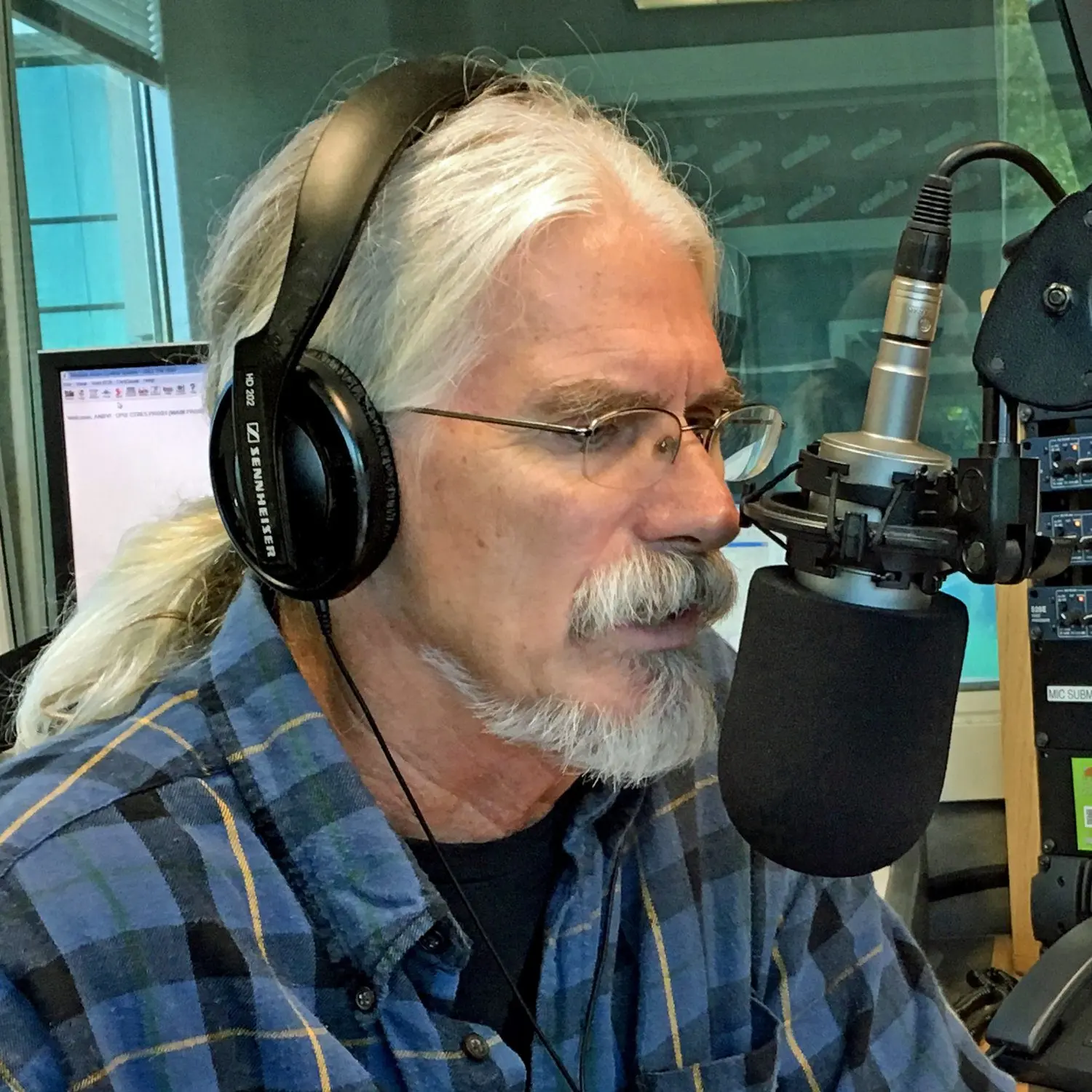
Join us in today’s episode of The Narrow Path, where host Steve Gregg engages with callers on pressing matters of faith and scripture. Explore the historical context and significance of Levitical laws, and whether these Old Testament practices hold any relevance today. Dive deep into discussions about the challenges of following God’s laws and how the New Testament reinterprets these ancient commandments.
SPEAKER 1 :
Thank you.
SPEAKER 05 :
Good afternoon and welcome to the Narrow Path radio broadcast. My name is Steve Gregg and we’re live for an hour each weekday afternoon so that we can talk to you in real time. That is not just that we can talk to you, but you can talk to us. You can call in with your questions about the Bible or the Christian faith or differences of opinion you might have with the host that you’d like to discuss. That’s what we do here for an hour without commercial breaks. One problem with trying to call right now is our lines are full, but that does not continue through the hour, by the way. We’ve got a limited number of lines on purpose so that we can open them up and not have people waiting in 20 calls down and never getting on. Almost always you can get on if you call randomly at some point during the hour, but right now you can’t because the lines are full. The number to call is 844-484-5757. 37. That’s 844-484-5737. And one announcement I have is that if you’re in Southern California and want to join us this Saturday morning in Temecula for our men’s Bible study, we do that once a month. That’s the third Saturday of the month. That’s this Saturday. And at 8 o’clock in the morning, a men’s Bible study in Temecula. If that interests you, you can go to our website, thenarrowpath.com. And look under announcements, and you’ll find the time and location of all our meetings, including that one, thenarrowpath.com, under the tab that says announcements. And with that having been said, I’m going to only do nothing else but talk to callers today. So Minerva from Fort Worth, Texas, welcome to The Narrow Path.
SPEAKER 07 :
Thank you. My question is, the Levitical laws of animal sacrifices for the remission of sins, Are they still going on? If not, when did they stop and why?
SPEAKER 05 :
Well, they stopped in A.D. 70 when the Jewish temple, which is the only place they were allowed to offer them, was destroyed. The Romans invaded Jerusalem. There’s a war that took place from 66 to 70 A.D. At the end of that time, the Romans broke through the walls of Jerusalem, destroyed the city. killed maybe a million people, took the rest of the Jews into captivity, and burned down the temple. Since that day, there’s never been a temple in Jerusalem, and therefore there’s never been the opportunity to offer animal sacrifices. So, you know, the practice came to an end among the Jews in A.D. 70, which is, of course, very close to 2,000, well, it’s over 2,000 years ago now. And so that’s what happened there. Now, as far as the legitimacy… of animal sacrifices, that actually ended before the temple was destroyed. The Jews kept offering them because they rejected Christ. But as soon as Christ died, in the mind of God, this was the final of all blood sacrifices. God did not desire the blood of bulls and goats. They only looked forward to. They were symbolic, a lesson about blood atonement, which God gave to Israel to anticipate the the sacrifice of Christ, which fulfilled the whole purpose of them. So after Jesus died, there was not the slightest value in animal sacrifices, but the Jews largely did not accept Christ, and therefore his death didn’t have any impact on their practice. So they just continued to offer animal sacrifices in their temple for another 40 years until the temple was destroyed, and there hasn’t been another one offered since.
SPEAKER 07 :
Thank you so much.
SPEAKER 05 :
Thank you. Good talking to you.
SPEAKER 07 :
Good talking to you.
SPEAKER 05 :
All right. Ken in Winters, California. Welcome to The Narrow Path.
SPEAKER 03 :
Hey, Steve. I was listening to one of your programs over the weekend, and it kind of sounded like you said that following God’s law in the Old Testament was an easy thing to do.
SPEAKER 05 :
Yeah, I would say it would be pretty easy. Is there anybody who doesn’t have the ability to avoid murder? to avoid committing adultery, to avoid stealing from somebody, to avoid disobeying their parents, to avoid blasphemy. I actually don’t know any of the laws that would be difficult to keep if somebody really wanted to. The problem is finding people who really want to. The human condition, the problem of the human condition is that we want to rule ourselves. We don’t want to be put under the authority of God or anyone else, and we will rebel against God. Even if we didn’t want to do something before, as soon as someone tells us you can’t do it, suddenly there’s something in us that wants to, just to say, hey, you can’t tell me what to do. That’s the human nature. And that does make it difficult for those. It makes it difficult to want to. But if you choose to, there’s nothing in the law that’s very difficult. In fact, in Deuteronomy, Moses said this law that God gives you today is not too difficult for you. You don’t have to go far away to get it. God brought it right to you, to your doorstep. It’s not too difficult. So do it and choose this day, you know, whether you’re going to do it or not. So this is what the Bible teaches about the law. Now, the Bible does teach that, in general, the people of Israel never did very well at keeping the law, but that’s partly because they didn’t really want to. In fact, it’s almost entirely because they didn’t want to, because really the main concern of the law and the one they broke the most often is you should not make any graven images and bow down to them and serve them. How hard is it not to do that? I’ve never even had the slightest temptation to bow down to a carved image. I doubt a few have. How hard is it to go your whole life without bowing down to a carved image? Obviously, if you break that law, you’re doing it because you want to break the law. Why do you want to break it? Who knows? But it doesn’t make any sense. You see, God actually, he’s not tolerant, but he didn’t destroy or judge Israel just because they broke his laws in various points. They shouldn’t have, but he was quite merciful to them. But what he finally destroyed them for was for their idolatry, for worshiping idols. And that’s absolutely unnecessary. There’s no one with a gun to your head saying you have to bow down and worship this idol. So anyone who does that simply has no interest in obeying God. And if you have no interest in obeying God, of course, it’s going to be very hard to obey God. But that’s the point. There’s two kinds of people in the world the Bible recognizes. One is those who have repented of their self-centeredness, and they’re determined to follow God. And such people will never really have a serious problem avoiding bowing down to idols. And while they may be tempted at times to murder or commit adultery or steal, they Actually, someone who’s committed to following God won’t do those things. Now, some might say, but didn’t Jesus say adultery happens in your heart and murder is in the heart? Yes. Yes, those are true. Jesus is actually giving us insights into the deeper meanings of the laws. But the Old Testament didn’t say that. The Old Testament didn’t say if you – well, it did say something like it. It said that you shouldn’t covet your neighbor’s wife. That’s kind of having adultery in your heart. but the point is the simple law as it is stated, don’t sleep with your neighbor’s wife. I’ve gone all my life without doing anything like that. So, I mean, and I haven’t, you know, it’s not that I’m a great person. I think all good people have historically avoided sleeping with their neighbor’s wives. It’s only wicked people who want to do that or who do that. You might want to, but you won’t do it if you’re a decent person. Now, I realize that some Christian theologians say there are no decent people other than Christians, because unless you’re regenerated, you’re totally depraved, and therefore everything about you is evil. Yeah, but that doesn’t seem to work in the real world. There are people who do have convictions and who don’t murder or commit adultery, and they attempt to be honest people and not steal and not bear false witness, and they don’t have any commitments to Christ at all. It might be of other religions or no religions at all. Some people just recognize being evil is not really a good thing. And so we’re not saved by keeping the laws. So, I mean, when I said it’s not difficult to keep the laws if you really want to, I mean, there’s not anything in the law that says you must do 100 push-ups. or 50 pull-ups to be saved. Well, that would be hard because I can’t do 100 push-ups or 50 pull-ups. I can’t do that. So that would be difficult. That would be a little unreasonable. But there’s nothing like that in the law. It’s just, hey, love your neighbor as you love yourself and love God. Well, okay, that’s a choice I can make. Most people make the opposite choice because they simply don’t want to love God. They want to love themselves. And that’s the thing that Christ calls us to renounce. If anyone comes after me, he says you have to first renounce yourself, deny yourself, and take up your cross. And once you’ve done that, yeah, there’s hardship in being a Christian. But the hardship is not in necessarily avoiding murder and adultery. At least I’d have to say I haven’t found to be so, and I think I think there’s many people who have found it not too difficult not to kill people.
SPEAKER 03 :
Yeah, I would agree with the statements you’ve made. The part that kind of got me was saying that it was easy to do. It seems to me if it was easy to do, somebody in history would have done it. And the Bible makes it clear that all have sinned and fallen short of the glory of God.
SPEAKER 05 :
Right, right. But they’ve sinned in some ways, but they haven’t all broken the law in any considerable way. I mean, John the Baptist’s parents were said to be blameless according to the law of Moses. Job, who didn’t even know about the law of Moses because it wasn’t given yet, he lived a blameless life and avoided evil. He didn’t have the Christian gospel. He didn’t even have the law. But, you know, the law is really just requiring decency. And there have been decent people in every religion. That doesn’t mean they’re saved. I’m not saying they’re saved. I’m saying we’re talking about something else here. I mean, if we think, yeah, well, if you keep the law, you’d be saved. Well, then we better make sure that people know they can’t keep the law because we don’t want them to think they can be saved without Christ. But the Bible doesn’t tell us that they’ll be saved if they keep the law, necessarily. So, that’s… Paul said, by the law, no man shall be justified. So, anyway, I mean, if somebody finds it hard to keep the law, okay, well, then they’re going to have to try harder to be obedient. But… It seems to me that once God, especially once God has written his laws on your heart, which is what happens in the new covenant, well, then your heart is inclined toward obedience to God. That’s what it means to have his laws written on your heart. Your heart is now amenable with what God is requiring. And, you know, that’s one of the evidences of having a new heart. The Bible says, if anyone says, I know him, this is 1 John 2, if anyone says, I know him and does not keep his commandments, he’s a liar. So, I mean, the person who knows God keeps his commandments. Perfectly? No, no. But the Bible doesn’t actually lay out perfection as the only thing that God wants from people. I mean, I believe that Job and I believe that, you know, John the Baptist’s parents, both of whom are said to be blameless and obedient and so forth, I’m sure that they had their moments when they weren’t perfectly Christ-like or God-like. Right. But it’s the orientation of the heart, especially, and the trajectory of the life that flows out of that that determines whether a person is on God’s side or not. And the people who are seriously on God’s side, yeah, they’re not perfect. We all stumble, the Bible says. But nonetheless, we don’t find a life of obedience either impossible or even very difficult. Now… I just want to make this clear. When I say a life of obedience, I mean a life that that’s the direction we’ve taken. That’s the course we follow. That’s the values we uphold. That’s the habits we form is obedient habits. That doesn’t mean we never do anything wrong. No one except Jesus has lived a sinless life. But that’s a different question than what I’m discussing.
SPEAKER 03 :
Okay, because to me that’s kind of what it sounded like you were saying. I’m like, that cannot be what he’s saying. So I wanted to get more input on it.
SPEAKER 05 :
But can you name one of the laws in the Bible that is hard to do?
SPEAKER 03 :
Well, like you said, we all stumble at points.
SPEAKER 05 :
We do, but is it hard to keep any of these? I mean, can anyone name a law that’s in the Bible? that would be hard for someone to do if they intended to do it.
SPEAKER 03 :
Well, I would say that the depth that Jesus took the law of murder and adultery to, I would think those would be hard because most people, when they see someone that they’re attracted to, get really close to, if not committing adultery with them in their mind. I hear you.
SPEAKER 05 :
Yeah, when we talk about spiritual sins, sins of the heart, These are more difficult because our hearts are not perfectly good. And frankly, a lot of them are sins of the flesh. The flesh is tempted. Sometimes we blame ourselves for sin when in fact we’re just being tempted. They would say, how could I, a follower of Jesus, feel this kind of anger toward this person? How could I, a follower of Jesus, feel this kind of lust? How can I, a follower of Jesus, be this tempted to be lazy? How can I be tempted to be cowardly? Well, everyone can be tempted to do those things, including followers of Jesus. And frankly, I think when followers of Jesus have those temptations, when they recognize them as such, they seek to resist them. And if they don’t succeed, they repent. But that’s, again, we’re talking about the trajectory of one’s life. Since no one is perfect, and frankly, nobody would therefore be saved prior to the coming of Christ, right? I mean, Abraham couldn’t be saved because he wasn’t perfect. You know, if being perfect is what had to happen, well, then, of course, everyone’s messed, in trouble. But, of course… Faith in God is what saves. And God counts a person to be, in a sense, honest. I mean, honestly, one of his. If in his heart he’s seeking to be. And, you know, the statement I made was about the Old Testament law, not about the deeper interpretations and so forth imposed in the New Testament. I’m just talking about the commands, the actual commands as they stand, the way they were understood, the way they, you know, their principle meaning. Anyway, yeah, I mean, if somebody says, well, no, the law is very hard to keep, I say, okay, that’s your experience. And so I’m not going to say it isn’t hard for you. But God told Israel it wasn’t hard to keep and that they should be able to keep it. And shame on them for not doing it. Hey, I need to take another call. Raymond from Kansas City, Missouri. Welcome.
SPEAKER 04 :
Hello, Steve. This is Raymond from Kansas City, Missouri. Hi, Raymond.
SPEAKER 05 :
Good to hear from you.
SPEAKER 04 :
Enjoy the program.
SPEAKER 05 :
Thank you.
SPEAKER 04 :
Just have a comment and a question today regarding Ephesians, the fourth chapter, and 11 and 13, as it relates to what I call the team ministry. I don’t see that operating in the church much today, and I just wonder… is there some confusion or is there something that causes them not to want to deal with this? Because it seems that it should be done for the getting people to be, uh, more knowledgeable working together as the body of Christ. And then result is the body of Christ being formed. And so I just wanted to get your, your opinion on that or how you see that. And what do you know churches are doing today?
SPEAKER 05 :
Okay. Well, the, um, Ephesians 4, verses 11 through 13, is talking about the kinds of leadership that God has put in the churches, or the church as a whole, for the edification of the rest and the equipping of the rest. Paul assumes that all the members of the body are doing some of the work of the ministry. That’s why he said he gave some apostles, prophets, some evangelists, pastors, and teachers for equipping the saints for the work of the ministry. Okay, the saints are all the Christians. These leaders are the equipers. Not everybody is an apostle or a prophet or an evangelist or a pastor or a teacher. These are, you know, kinds of special callings of which there are only some, Paul said, not everyone. And they have a ministry to the larger body of Christ made up of the saints, and that is they’re supposed to be equipping the saints to do the work of ministry. Now, what do we call ministry? Unfortunately, when a man is said to be going into ministry, we often think, well, he’s going to become a pastor or a priest or something like that. He’s going to become a church leader. But the word ministry in the Bible is simply the word that means service. In modern English, we generally speaking don’t use the term that way, but that’s what the word means in biblical Greek and actually in old English. Ministry speaks of serving. So the saints in general have to be equipped for the work of serving. What do you mean serving? Well, in the gifts that they have. Now, the saints in general may not have gifts like apostle, prophet, evangelist, pastor, teacher. Some do, but a lot of them don’t. But they all have other gifts. And this is where I would think 1 Corinthians 12 and Romans 12, where they have lists of gifts that are not these ones necessarily. Those, I think, tell us more about what the average Christian might expect to have in terms of gifts of the Spirit. Now, you’re saying that modern churches, of course, don’t have this concept. And that does appear to be the case in many, maybe most churches. They see what they call the ministry as what is done from the stage to an audience sitting in theater seating. So it’s kind of a more religious form of going to a theater, like entertainment. And indeed, many people go to church for nothing more than entertainment. If the pastor doesn’t amuse them, if the pastor doesn’t entertain them, They’ll find another church and find someone who’s funnier, tells better stories, you know, better looking, you know, does better imitations and things like that that amuse them. You know, the pastor is a performer in many cases. Not always, of course, but that’s what some people are looking for. They want a church that’s like a theater where the music entertains them. The pep talk from the man in the pulpit entertains them. And so the idea there is, of course, there’s a handful of people in the church who are the entertainers or the ones who do the ministry. Everybody else is a client, a customer. They’re supposed to put their money in the bag, which is sort of like paying for your ticket at the door, only it’s voluntary. and that supports the performers, basically. That is not what the church was in the Bible. That’s not what it should be, in my opinion. Paul’s idea was that the people who teach, the people who lead, the people who evangelize, the people who are prophesying, that’s not everybody in the church, but they are What it is they’re teaching, what it is they’re doing, is equipping the rest of the people in the church to do the work of the ministry. Well, what’s the ministry? If what’s going on on the stage on Sunday morning isn’t the work of the ministry, what is? Well, service. What kind of service does the body of Christ need? Well, we have to realize the body of Christ is not an entity. It’s not a 501c3. It’s not a building. It’s not a religious corporation at all. The body of Christ is people. And people need to be served in various ways. Some need money. Some need help. Help with their children. Help with their struggles with their marriage. Just practical things that need to be done that they can’t do. Single moms especially are often in this situation. Or poorer people who are working hard but not making ends meet or whatever. There’s all kinds of service that the Bible speaks about. that’s not supposed to all fall on the shoulders of the pastor. You know, I think our modern idea is that the pastor’s the paid guy. You know, we give him a salary. Why? So that he can do all the ministry. If somebody in the hospital needs to be visited, tell the pastor he should go. You know, does the church lawn need to be mowed? Well, tell the pastor he can mow it on his day off. You know, is there, I don’t know, is there a wedding or funeral to perform? Well, that’s the pastor’s job. Well, can’t someone else relieve him? No, he’s paid for that. We pay him to do that. In other words, we pay the pastor so that we don’t have to do any ministry. We don’t have to do the work of the ministry. He can do it all, and he gets a paycheck for that, so he’d better do it. And if he doesn’t, we’ll hire someone else to do it. This is a business model of church, and it definitely has very little resemblance to church in the Bible. In the Bible, everyone who’s really born again and has received the Holy Spirit, which is every Christian, has a gift that God has given them, a spiritual gift, which is a contribution that they make to the overall well-being of the body of Christ. And some of those needs that they meet are physical needs. Like I said, financial needs, fixing someone’s car, doing stuff like that. That’s serving. That’s ministry. especially if you’re doing it not for money. You’re doing it because you love the body of Christ. You love Christ, so you’re serving his people out of love. That’s ministry. Or you have extra money, so you give some to someone who’s working hard but can’t make ends meet or somebody who’s a single mom staying home with her kids to disciple them and needs her rent paid or whatever. There’s all kinds of needs in the church. And often people just assume, I went to church Sunday. When they pass the bag, I put $10 in there. And that $10 and that of everybody else is going to pay the pastor’s salary so he can take care of all these people. Well, why don’t you do it? You know, it’s funny. When there were 5,000 people following Jesus and they were hungry, they hadn’t eaten for days, one of the disciples came to Jesus and said, Lord, these people are hungry. They need something to eat. And Jesus said, well, you feed them. Or wait, no, Jesus, you’re the pastor. Well, what do you have? You got, what, five loaves, two fishes? Bring that in and we’ll work on this. We’ll feed these people. But you’re going to distribute it. You’re going to do the work. You know, I mean, because that’s what happens. When Moses said, how can I confront Pharaoh? I don’t, you know, God, you’re going to use someone else. God said, well, what do you have in your hand? Well, I have this stick in my hand. Well, throw it down on the ground and see what happens. Turned into a snake. Yeah, that’s the beginning of how you’re going to do this. What do you have in your hand is the question. You give them something to eat. These are the things that God says to us. And it’s not the pastor’s job to do all of this. So I just don’t believe in professional ministry. I don’t believe that people who are serving God are charging people for the service. I think in a body, in a family, people care about each other. And out of love for God and out of love for people, they serve each other. That’s the ministry. So what the pastors and teachers and so forth are equipping the people to do is they’re mobilizing them to function in whatever gift they have to be of service to the body of Christ as a whole. That’s how I understand what Paul is presuming in this passage. Paul doesn’t have to say it because everyone in the church knew this. The church was not a lecture hall in Paul’s day. It was a family of people who met together sometimes daily to sit under teaching, to eat together, to pray together, to fellowship together. They were a community of the kingdom of God in the midst of the devil’s kingdom in the world. They were an alternative society. And that’s what the church is supposed to be. And unfortunately, it many times is not. because we’ve assumed it’s like any other business. We pay somebody, and they provide a service, and we go home and relax. That’s not what Paul assumed, and I think you’ve noted that by bringing this passage out. You’re listening to The Narrow Path. We have another half hour coming up. Don’t go away. We are listener-supported. We have no sponsors. We have no advertisements, but we do have expenses. You can go to our website, thenarrowpath.com, We highly recommend that you listen to Steve Gregg’s 14-lecture series entitled, When Shall These Things Be?
SPEAKER 01 :
This series addresses topics like the Great Tribulation, Armageddon, the rise of the Antichrist, and the 70th week of Daniel. When shall these things be?
SPEAKER 05 :
Welcome back to the Narrow Path radio broadcast. My name is Steve Gregg, and we’re live for another half hour. Take in your calls if you have questions about the Bible or the Christian faith. If you have a difference of opinion from the host, feel free to give us a call. We’ll talk about it. The number is 844-484-5737. That’s 844-484-5737. Our next caller is John from Everett, Washington. John, welcome to The Narrow Path.
SPEAKER 08 :
Hello. Hi. Thank you for taking my call, by the way. I recently had heard about this controversy that I’d never heard about before, and it revolves around the quotation in Hebrews 8. that is quoting Jeremiah 31 in verse 9 of Hebrews 8. The end of the verse says, because they continued not in my covenant and I regarded them not. And then the Jeremiah verse says, although I was a husband unto them. And I was just wondering if You could explain to me the discrepancy in that first. I don’t think, like, in my heart, I don’t think that it changes, but I just don’t understand. Like, I don’t think that the message is, like, intentionally deceiving or anything, like I’ve heard. No, not even a little bit.
SPEAKER 05 :
No, it’s very easy to explain the discrepancy. Our Bible, when we read the Old Testament, we’re reading an English translation of the Hebrew Old Testament. The Hebrew Old Testament, before the time of Christ, about three centuries before the time of Christ, was translated into Greek because fewer and fewer Jewish people could read Hebrew. The whole empire was becoming Greek-speaking. So they thought in order to preserve biblical literacy, they better make a Greek translation of the Old Testament. As far as we know, that’s the first major book in history to be translated from an original language to another. And that translation was called the Septuagint. Now, by the time of Christ, the Septuagint, the Greek translation of the Old Testament, was in common use. And the writer of Hebrews always quotes from it. And by the way, most of the New Testament writers do. It is not… it’s not the only translation that they ever quote from, but it is the only one that Hebrews quotes from, and most of the other quotations in the New Testament are from that. Now, the difference then is between the way it reads in the Hebrew, which our Old Testament preserves when we translate from Hebrew into English, on the one hand, and the way the Jewish people translate it from Hebrew to Greek, in the Septuagint, which the New Testament writers, who also wrote in Greek, they just quote the Bible in Greek, which is the version that was used by most people. So that’s why there are differences. I mean, there’s another difference that’s kind of interesting, too. In chapter 10 of Hebrews, verses 5 through 7, He’s quoting Psalm 40, verses 6 through 8, and it says, Sacrifice an offering you did not desire, but a body you have prepared for me. Now, that conveys a very interesting idea that, you know, you didn’t want sacrifice an offering because you prepared a body for me. It’s supposed to be Jesus talking. In the Hebrew, though, it doesn’t say a body you have prepared. It says, my ear you have opened. which probably refers to piercing the ear, the earlobe, opening up the earlobe to put a ring in it, because this is what was done to slaves. And David is saying, I’m your slave. You’ve pierced my ear, is pretty much what he’s saying. Some people think my ear you’ve opened means that you’ve kind of given me the ability to hear, you know, your voice or whatever. And that’s a possibility, too. The point is, in Hebrew, David said, you did not desire sacrifice and offerings, but you’ve opened my ear. Whereas in the Septuagint, sacrifice and offering you did not deny, but you prepared a body for me. Now Hebrews quotes it from the Septuagint. And he does the same thing when he’s quoting from Jeremiah 31, which he does not only in chapter 8, but he does it again in chapter 10. And the passage in Jeremiah 31 does say, I was a husband to them. And in the Septuagint it says, I disregarded them. which, of course, is a different idea. If there’s a defect, it’s not in the writer of Hebrews quoting the Bible that he used. It would be questioned, why did the Septuagint render it that way? Now, there are two different theories about that, and no one can prove which is which. And that is that maybe the Septuagint is closer to an older Hebrew original version than the one we have. The oldest Hebrew originals of the Old Testament are in the Dead Sea Scrolls, and they date from the century probably just before the time of Christ, whereas the Septuagint dates from three centuries before the time of Christ, and therefore, obviously, the Septuagint, the Greek translation made in Alexandria in 275 AD, BC, they were obviously using Hebrew texts older than the ones we now have, since the oldest ones we have are not even as old as the Septuagint is. So, the question is, did the Septuagint correctly represent the original form of the verse as it was found in an earlier Hebrew text that they were using for their translation? And that the oldest Hebrew translation we have is not as old as that, and therefore maybe it has been corrupted in some ways. I can’t answer it. I don’t think anyone can answer that. I know that, for example, the Eastern Orthodox Church, I think they use the Septuagint in their Old Testament, whereas the Western Church usually uses the Hebrew text. Who’s right? Which one’s better? I don’t know. Now, what it comes down to for you or me is, is there something at stake here? Well, there is, for example, if I want to say David, speaking as the Messiah, said that God prepared a body for him. And maybe that’s a reference to the incarnation. That would be a good Christian doctrine. And that verse, as it’s in the Septuagint, would work that way. But it doesn’t read that way in the Hebrew text. So we can’t be sure that that’s the words that David used. If he did, that would be helpful. But we don’t need it. We know about the incarnation from other passages that don’t differ from the Hebrew. We don’t need this verse to prove the incarnation. If it’s the way it was originally, then it becomes one of the things that we could cite. And it’s possible that this is the original reading, but we don’t know. It’s possible that what David says, you’ve opened my ear, which could have one or another meaning, too. What I’m saying is there are times… When we don’t know for sure, and we probably never will know for sure, what the original said, and it doesn’t matter much because whether you take it the way the Hebrew says it or the way the Greek says it, you’ve got a perfectly edifying, orthodox statement. It’s just that we, without knowing for sure what was the original, we sometimes cannot use a verse to prove a point we’d like to prove. But this kind of difference is not very frequent. I mean, I’m not trying to give the impression, hey, if you read the Greek Old Testament, you get an entirely different story than if you read the Hebrew Old Testament. That’s not true. There are individual passages like these where it renders it a little differently. Why it does becomes something, a mystery we cannot solve with the state of manuscript evidence available. Now, if they do find, and I can’t say they won’t, but if scholars find a copy of the Hebrew Old Testament, That’s, let’s say, dates from 400 years before Christ. And then we can see, does it agree more with our Hebrew text or does it agree more with the Septuagint? Because that would be the form of the Hebrew that the Septuagint translators used. And then we could say, well, they messed up when they translated that line to that line. So, you know, the doctrine of the inspiration of Scripture is not impacted adversely at all by this. Neither is any doctrine of Scripture that is of any importance to us. But it is, you know, our curiosity would cause us to want to know which way it goes. But sometimes, you know, if we insist on certainty about everything, we just better be prepared to be disappointed. There are things we cannot be certain about, and that cannot be allowed to mess us up in our walk with Christ. Because, frankly, it doesn’t matter what the answer is to that particular question with reference to how we walk with God. Some things would, but these kinds of things don’t. And so… In studying the Bible, one thing we have to realize is occasionally we’re going to run into things we’re not sure exactly what the original said. But of the various options, none of them is problematic for us. All right. Let’s talk to Michael from Englewood, California. Michael, welcome.
SPEAKER 06 :
Thanks. I have a quick slight disagreement and a quick question. Okay. You said earlier nobody held a gun to somebody’s head to worship an idol, but Isn’t that kind of what Nebuchadnezzar did to the three Hebrew boys, except for the gun?
SPEAKER 05 :
Yeah, but we’re not talking about exceptional cases. I’m talking about the Jews in general. In other words, their violation of the law of God was not because someone had a gun to their head. And, by the way, Shadrach, Meshach, and Abednego are good proof that even someone with a gun to your head can’t make you worship an idol if you don’t want to.
SPEAKER 06 :
That’s true. Okay, so my question has to do with basically trying to show how Jesus is God and using 1 Timothy 3.16. I understand why sometimes it says God or some translations say he, but like the NLT says Christ was revealed in human form and then the app says he and then it says parentheses Jesus Christ. So if they’re using Jesus Christ was manifested in the flesh, that would not really point towards Jesus is God. Is that right?
SPEAKER 05 :
Right. I mean, not as clearly as if it said God. We’re here talking about a difference between older and younger manuscripts. The King James Version and the New King James, which follows pretty closely, uses a set of manuscripts of the New Testament that’s called the Textus Receptus. And it was the standard text of the New Testament, the best they had back when they only had a few copies of the Greek New Testament. And that’s before they found thousands more. Now, the King James Version and the New King James both will have Paul saying in 1 Timothy 3.16, Now, obviously, if that’s the way Paul wrote it, then he is affirming unambiguously that Jesus is God manifested in the flesh. Now, by the way, I will say this, even if Paul didn’t write those words, we know that Jesus was God manifested in the flesh from what John said in John chapter 1. He said the word was God, and the word came and was made flesh and dwelt among us. So it’s the same idea. Now we either have Paul confirming that in unambiguous terms here, or maybe not, because the older manuscripts that were later found, that is, older manuscripts which are often considered to be more, close to what Paul wrote, well, they don’t say God was manifest in the flesh. They say he. In that place, it says, actually, it says who, which is a strange thing. It becomes one of the arguments of, is that the original reason that suddenly a sentence starts with who, which is a pronoun, and there’s no antecedent noun. I mean, what a strange way to start it. So there’s a question of whether Paul wrote God was manifest in the flesh, as the Textus Receptus reads it, or whether Paul wrote who was manifested in the flesh, which is how the Alexandrian text reads it. Now, in favor of the Textus Receptus, it’s pointed out that why would a sentence begin with who, referring back to somebody who’s not been mentioned previously? When you have that kind of a pronoun being used, You need an antecedent noun, and there is none there. So, you know, it’s one of those debates. But if Paul simply wrote who was manifested in the flesh, the question is who is he speaking of? Does he mean God was manifested in the flesh or that Jesus was? Well, certainly the manifestation in the flesh of which he’s speaking is Christ. But is he saying that Christ was simply Christ manifested in the flesh or that he was God manifested in the flesh? This is going to be debated by people who have different opinions about which translation has the original reading. But once again, like as in many other cases, even if we lose this as a proof text that Jesus is God manifest in the flesh, and maybe we don’t. Maybe this can be the proof of it. But even if we were to lose it because we have manuscripts that don’t say God was manifest in the flesh, but say who was manifest in the flesh, leaving it open to question. Is he talking about God the Father? Is he talking about Jesus as something less than God but was manifest in the flesh? We still have the teaching of Scripture in general. In John chapter 1, the Word was with God, the Word was God, and the Word was made flesh and dwelt among us. So whoever it was that was manifest in the flesh… We’re already told it’s the Word. And who’s the Word? Well, he’s God. And who was he when he was manifested in the flesh? He’s Jesus. So, I mean, this is what evangelical scholars have always pointed out. People like Bart Ehrman, who’s not even a believer in Christ. He’s a backslider. He’s an apostate. But he… He says, oh, we really have trouble with the Bible. There’s so many of these kinds of things that we don’t know what the original said because one manuscript reads it this way and one manuscript reads it another. And suddenly a whole generation or two of kids who were raised Christians have been misled to think, oh, wow, everything’s up for grabs. There’s so many questionable readings from the Greek manuscripts. Well, there are some. But what evangelicals have always said, and quite correctly, is there’s no disputed reading in any of the Greek manuscripts that has an adverse impact on any major doctrine of Christianity. And what that means is, you know, I mean, it would be a problem if this is the only verse God was manifest in the flesh, found in the King James Version, if this is the only verse we had to establish the doctrine of the deity of Christ. Well, then, The fact that some manuscripts read it differently would be, I guess, throw that doctrine into chaos. But we don’t need this verse to prove that doctrine. There’s many other verses that prove the same doctrine. So whether Paul is affirming that well-known doctrine in this passage or not, he’s not denying the well-known doctrine. We have it anyway from much of what Scripture says. And so this is one of those cases. I realized I was raised with the King James. I was raised using this as a proof text before I knew much about the text. This was back when I was a teenager. But, you know, when I began to study the Bible, I began to realize, okay, there are some of these things. It’s funny, Bart Ehrman seems to have lost his faith when he learned about these things when he went to, I think it was when he went to Wheaton, or maybe when he went to Princeton, I forget. But he suddenly learned there were these differences, and it threw his faith into chaos. Any studious Christian, as I was, would discover these kinds of things before you get into Wheaton College. I mean, if you’re reading the Bible, I mean, Bart Ehrman went through Moody before he went to Wheaton, and Moody should have taught him these things. But, you know, when people aren’t taught, or when the people don’t understand, there are differences in the manuscripts. They could be manipulated to believe stuff that isn’t a correct conclusion to draw. Yeah, there are differences in manuscripts, but there’s not any essential doctrine of Christianity that is endangered or imperiled by any of these alternatives, by these variables in the text. All right. Hey, I need to take some more calls. We’re running out of time here, but I hope that helps you, Michael. Charlie from Meridian, Idaho. Welcome to The Narrow Path. Thanks for calling.
SPEAKER 02 :
Hi, Steve. How are you doing?
SPEAKER 05 :
Good, thanks.
SPEAKER 02 :
Glad to hear from you. I have two quick questions for you. The first one was, why does the Seventh-day Adventist Church, they believe that Michael the Archangel is also, he’s the same as Jesus Christ? That was my first question. Then the second one was, why does the Mormon Church believe that Jesus Christ and Lucifer are brothers?
SPEAKER 05 :
Okay. Well, the Seventh-day Adventist Church believes that Michael is a reference to Christ. By the way, so do the Jehovah’s Witnesses. That’s their position, too. And those two groups arose kind of in the same general period of time in history as branches off of Protestantism. And they moved into areas that were, to my mind, heretical. But I don’t think that calling… I don’t think that thinking that Michael the archangel is Jesus is a heresy. I don’t accept it. I don’t think it’s true. But there’s nothing in the doctrine that is itself incapable of being agreed with by Christians because the word angel or archangel means the head of the angels, the chief of the angels. Arche in the Greek means chief. And so the archangel is the chief of the angels. Now, the word angelos, angel, simply means a messenger. Although in most contexts in the New Testament and the Old, it is referring to a heavenly messenger, the word itself doesn’t convey that by itself. You have to get that from context. A human messenger is also called an angelos. And Jesus certainly is called an angelos. He’s called an angel, for example… In Malachi chapter 3, it says the angel of the covenant will come, or it says the messenger of the covenant will come, but it’s the word angel. And it’s undisputably a reference to Jesus in Malachi 3. So for Jesus to be called a messenger, as long as we’re not pretending he’s merely like other messengers, he did bring a message, so there’s no problem with calling him a messenger. And there’s certainly no problem calling him the chief of the messengers. Just like the man who met Joshua, I think it’s the beginning of Joshua chapter 5, if I’m not mistaken, or 6, before he goes to Jericho, refers to him as the captain of the Lord’s hosts. Well, if the Lord’s hosts are the angels, and if that person is Christ, as many Christians think, then he’s the captain of the angels. Jesus could certainly be the captain of the angels, and it would not be saying that he’s a mere angel. The book of Hebrews chapters 1 and 2 make it very clear that Jesus is not a mere angel. But it does not mean that he can’t be the captain of the angels or even a messenger himself. So to say that Michael, the archangel, refers to Christ. And by the way, the word Michael means who is like God. And so that’s an interesting thing, too. The word Michael means who is like God. Some people think Michael does refer to the pre-incarnate Christ, like the one manifested in theophanies in the Old Testament. Now, I don’t. I don’t particularly think that. But it doesn’t alarm me if someone does. And I should say this. The Jehovah’s Witnesses and the Seventh-day Adventists were not the first to come up with this. There are old commentators that predate them, Christian commentators, Orthodox commentators, that have identified Michael the Archangel as the pre-incarnate Christ also. So while I don’t follow that theory, it is not one that’s strictly heretical. There’s nothing about it that could not be held by a Christian. In fact, many Christians have held it. I’m not sure why the Seventh-day Adventists and the Jehoshaphatists chose that particular interpretation. But in doing so, they might be simply following some of the older commentators that were before, even though in other respects they’re deviating from them in their theology. Now, as far as Mormons, why do they think that Jesus is the brother of Satan? Because Joseph Smith said so. Joseph Smith was a liar. Joseph Smith was a charlatan. He was a hoaxster, a con artist. And he made up doctrines as he wished off the top of his head. And of course, the reason Mormons believe it is they believe he was a prophet, which is the biggest problem with Mormonism. I think Mormonism would be much healthier if they had never mistaken that charlatan for a prophet. Because Mormons in general love God and love Jesus, or at least they seem to, and live a life that’s attempting to obey God. They’ve got their problems too, but The worst of it is the theology that they got from Joseph Smith. Anyway, that’s the answer to that question. I appreciate your call. George in Fort Lauderdale, Florida. Welcome.
SPEAKER 09 :
Hello.
SPEAKER 05 :
Hello.
SPEAKER 09 :
Yes, I have a question about the four angels tied up in the Euphrates River.
SPEAKER 05 :
Okay, in Revelation 16. Yes, it’s…
SPEAKER 09 :
I heard in the news that that river is drying up. So that means the angels are out or are they coming out?
SPEAKER 05 :
Well, yeah, the Bible does describe the drying up of the Euphrates to make ways for the kings of the east. And that being so, there are many people who are looking for evidence that we are living in the days of fulfillment of revelations. And therefore, if they say, well, look, the river Euphrates is being dried up, they say, well, Revelation mentions that, so this must be those days it’s talking about. And that’s what you’re asking about. That’s the basis of your question, I’m sure. Well, first of all, I don’t know if the river is drying up. It is. I’ve heard that it is. I’ve heard that the water levels are down. The water levels are down in the Colorado River, too, over what they used to be, I think. And river, you know, river levels go up and down over decades and centuries and so forth. And, you know, maybe the Euphrates River is drying up some. Now, I think it was Hal Lindsey that said the Russians had built a dam at the top of the Euphrates River so that they could dry it up. But I’m not sure that that’s what’s causing this. I’m not even sure that report is true. Hal Lindsey wasn’t always very careful about the accuracy of his statements. But in any case… If the literal river you phrased literally dries up, I don’t think that has anything to do with what Revelation is talking about. Because what Revelation is talking about is the fall of mystery Babylon. And so we see in the same chapter, 16, verse 19, just a few verses later, Now the great city was divided into three parts, and the cities of the nations fell, and great Babylon was remembered before God to give her the cup of wine of the fierceness of his wrath. Now this is the fall of Babylon. It’s not the fall of historic Babylon. It’s not the fall of literal Babylon. It’s the fall of the Babylon that is in Revelation, which is called Mystery Babylon, the mother of harlots, who’s drunk with the blood of the saints and so forth. This is not true of ancient Babylon. This is a symbolic Babylon, I mean symbolically called Babylon. You know, Jerusalem in Revelation 11.8 is symbolically called Egypt and Sodom. So we can see that sometimes the names of ancient societies are redeployed in Revelation to refer to different entities. And so this is not really about the fall of ancient Babylon, but imagery that resembles the fall of Babylon. And frankly, a lot of imagery in Revelation remembers the fall of Egypt. Remember the plagues of Egypt? A lot of those are found in Revelation 2. But they’re not literal. Revelation is a symbolic book. And in describing the fall of symbolic Babylon, it recalls imagery, symbolic imagery, that recalls the fall of actual Babylon. And what happened when Babylon fell was Cyrus, the Persian, and his armies, they dried up the river Euphrates. And it ran under the wall of Babylon so they could march in the riverbed into Babylon and conquer it. That’s how Babylon fell. And they were the kings of the east. These were the Persians who conquered it. So the river Euphrates, in fact, in 539 B.C., the Euphrates was dried up so the kings of the east could go in and conquer Babylon. And it’s just imagery from that historic event that is symbolically being used here. I don’t believe it’s talking about the end times. I don’t believe it’s talking about the literal river Euphrates drying up. But different people have different ideas. You ask mine. And I’m the world’s greatest authority on my own opinion. Hey, I’m out of time. You’ve been listening to The Narrow Path. And our website is thenarrowpath.com. Thanks for joining us.
