



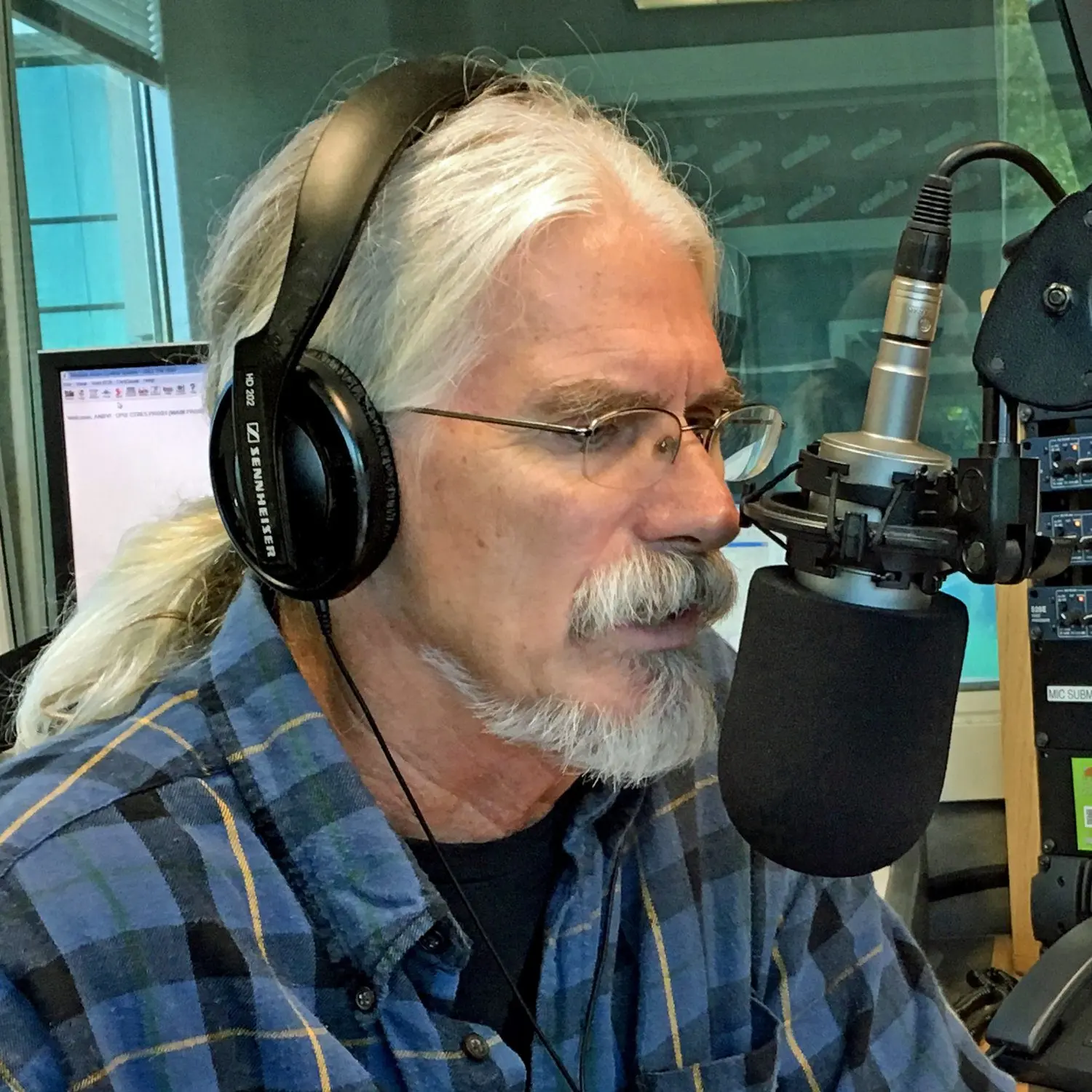
In this engaging episode, host Steve Gregg navigates some of the complex debates within Christianity, beginning with a conversation on the necessity of baptism for salvation. He tackles different theological perspectives and engages with callers on topics like faith’s role in conversion and the historical and scriptural arguments for and against mandatory baptism. This discussion highlights the differing beliefs within Christianity and underscores the importance of contextual understanding of scripture.
SPEAKER 03 :
Good afternoon and welcome to the Narrow Path Radio Broadcast. My name is Steve Gregg and we’re live for an hour each weekday afternoon with an open phone line for you and no commercial breaks so that we can take as much time as possible featuring your calls. If you have questions about the Bible or the Christian faith or perhaps you have a disagreement with the host and want to say something to balance comment, I’d be very happy to hear from you. We have some lines open right now. Now, most days I say, well, you have to call a little later because the lines are full. They’re not full right now. We have a few lines open. It’s a good time to call if you want to be on the program. This is the number, 844-484-5737. Once again, that’s 844-484-5737 if you’d like to be on the program today. I want to announce one thing because it is coming up soon. Saturday morning, this Saturday, day after tomorrow, there’s a men’s Bible study in Temecula that only occurs once a month, the third Saturday of each month. And it’s coming up this Saturday, 8 o’clock in the morning in Temecula. You might say, well, Temecula is a pretty small area to have a nationwide announcement given on it. Well, maybe so, but the people who drive to this Bible study come from San Diego and L.A. and places like that far away. So it’s a Southern California thing. So if you’re a guy, because it’s a men’s Bible study, and you’re free and available in the area, feel free to join us. To get the address and the time and all the details, You can find those at thenarrowpath.com. That’s thenarrowpath.com. Under the tab that says Announcements, you can go down to Saturday’s date, which is January 17th, and you’ll find the information for joining us. And we’re going to go to the phones now and talk to some callers. We do still have a line or two open if you’re interested. The number is 844-484-5700. Our first caller is Mike from Cool, California. I’m in warm California. I don’t know where Cool is, actually. I’ve never been there. But hi, Mike. Welcome to the Narrow Path.
SPEAKER 07 :
Well, it’s warm and cool today also. Thank you for taking my call. I hope you’re having a blessed day.
SPEAKER 03 :
Thank you.
SPEAKER 07 :
So my question is, my wife was talking to a pastor on a call-in show the other day who said that to be saved, you have to be baptized. Well, I asked him about both the thief on the cross and deathbed conversion. He said the thief on the cross, that there were no requirements in the Levitical laws that said that, and also that he did not believe in deathbed conversions. What do you say to this?
SPEAKER 03 :
Well, he’s got a different view than I have, and I don’t think he has a solid grounds for it. Now, there’s a very good possibility that he’s with the churches of Christ. Yes, he is. Okay, yeah. I mean, that’s kind of the defining doctrine of the churches of Christ, that you have to be baptized to be saved. Now, do they have Scripture on their side? They do. They do, except I don’t believe they have the absolutized doctrine found in Scripture. I think it’s a general command to believe and repent and be baptized. is how a person comes into normative Christian experience and in the church and so forth. There’s nobody in the New Testament that we know of that ever came into the church, that has ever came into the kingdom of Christ, his family, without being baptized. I mean, we could say the thief in the cross was an example, but of course he never really came into the church per se. He died before there was a church to come into. But he was certainly saved without being baptized. There’s not a question about that. Just like Abraham was and Moses was and David was. And all the saints of the Old Testament were saved without being baptized. Now, the argument is sometimes given, well, but they lived in the Old Covenant. And the Old Covenant didn’t require baptism. And the New Covenant does. Well, okay, the New Covenant does command us to be baptized. It actually commands us to do lots of things which Christians sometimes fall short of. They shouldn’t. but sometimes do. The question is what saves us in the sense of gaining us justification in the sight of God. In my opinion, the Bible has numerous places where it teaches that we gain justification through faith alone. But what is faith? Some people think just believing something is faith, but there’s different kinds of faith. The devils, the demons believe in Christian doctrine, the Bible says, but they’re not saved So it’s not just believing Christian doctrines. Faith has to do with a relationship, just like you have trust and faith in somebody that you’re committed to, and they’re committed to you like a spouse or a parent and child or whatever, that you trust them a certain way. And it’s not just you believe they exist, but you actually, the faith you have in them defines the kind of relationship you have with them. And so likewise, we are saved today. by faith in Christ, in God, but it’s not just a propositional belief that something is true. It’s rather an entering into a life, a relationship with him, which is characterized by our trust in him and our faith in him and giving him reasons to believe he can trust us to be loyal to him too. After all, that’s what we commit to when we become Christians. Being baptized is our way of saying that we’ve made this commitment. In biblical times, New Testament times, if a person repented of their sins and had faith in Christ and embarked on a relationship with God like that, they immediately were baptized, which was seen as the doorway into the saved community. Now, you’re not saved by being in the saved community. For example, the thief on the cross never was in the saved community. He wasn’t saved until moments before he died. And he never came into a community. He never had a relationship with the saved community. But we do. The norm is that we do. Now, a deathbed conversion would be very much like the thief on the cross situation. And for some to say, well, I don’t believe in deathbed conversions. Well, I think that if they don’t, That must be just a doctrine of convenience for them, because obviously a deathbed conversion, someone dies very probably, in many cases, without the opportunity to be baptized, just like the thief on the cross did. So, in other words, a person who dies trusting in Christ before Jesus died and rose again, before the church was formed, could be saved without being baptized. But a person who comes into that relationship with Christ after the church is formed cannot. come into a relationship with God without being baptized. This is what their position is. I don’t see it in the Bible. I don’t see the Bible saying that a person cannot come into a relationship with God and be saved without being baptized. What I do find is the Bible commands us to be baptized. I don’t believe Christians are people who take God’s commands lightly. I believe that if you’re born again and you have this kind of relationship and you’re trusting God and you’re trusting Christ as your King and your Lord, and you find out that one of the things He’s commanded you is to be baptized, Well, why in the world would you not? I mean, if you know your king has been given that general command, be baptized, and you say, well, maybe I will, maybe I won’t. Well, then I have a feeling that you haven’t taken his kingship seriously. You know, you might say you believe in him, but what do you believe? Apparently not that he’s in charge. Apparently not that he gives the orders. Apparently not that you have an obligation to obey, in which case you don’t believe. You don’t believe he’s the Lord. You don’t believe he’s the king in that case. So, Salvation comes from embracing Christ as Lord. As Paul said in Romans 10.9, if you confess with your mouth that Jesus is Lord, and he means that you have to mean it and not be pretending. and believe in your heart that God raised him from the dead, you’ll be saved. So it’s the embrace of Christ as Lord that saves you. That’s why the thief on the cross could be saved. He said, Lord, remember me when you come into your kingdom. And he basically said, I recognize you as king and Lord. Unfortunately, because I’m going to die here in a few minutes, I won’t be able to do much for you, but I recognize you as that. I submit to that truth. I embrace it. I confess it. And he was saved. And I believe that that would be true of anybody who says and does the same thing on their deathbed. Now, the pastor says, no, that’s not true. You can’t repent on your deathbed. He’s making that up of whole cloth. I mean, there’s just not one word in the Bible that says what he’s saying there. And frankly, people do. People do sometimes repent on their deathbed. Now, if he says, yeah, but it can’t be sincere, how do you know that? I mean, how would you know what someone else’s sincerity is or is not? You know, it’s an amazing thing to me. And it’s not just these people who insist on baptism. It’s many people of different denominations and different theologies. They think, yeah, well, if someone doesn’t submit to God in terms of the way I’m thinking of it in my denomination, well, then they can’t be sincere. Well, I don’t know about that. It’s like Calvinists sometimes say, and by the way, the pastor you’re talking about on the radio is not a Calvinist. Church of Christ are not Calvinists. The Calvinists will say, well, somebody seems to be saved, and they follow God for many years, and then they fall away and die in unbelief. Well, they never were saved. They never were sincere. Well, I guess I have the same question. How do you know that? It’s interesting how many people want to make God’s judgments for him without scriptural authority. And we just don’t have that power. I would say this. God knows his own. He knows that if a person on their deathbed truly desires to embrace God and Christ and trust in him, and even though they won’t have a life ahead of them to live on earth, they’ll wish they had because they’ll really sincerely want to follow Christ. Now, I’m going to say some people no doubt appear to convert on their deathbed and aren’t really sincere because sometimes they don’t have any interest in God, but they realize, I better hedge my bets here. You know, I don’t know if God’s real. I don’t know. But I’ll just do the thing that the Christians say to do just in case. Yeah, that’s not conversion. Conversion is full persuasion, full confidence, full surrender. That’s what conversion means. And, yeah, a lot of people on their deathbed just to make sure they check the box before they pass away. They’ll call for a priest or they’ll call for a minister or they’ll say a prayer. And only God knows which of those people are sincere and which are not. We can’t say. It is obvious that, and studies have been done to illustrate this, many times people seem to convert on their deathbed. And they give their life to God the best they know how because they figure they’re going to die and they better get it right. They do the very best they can. And then they unexpectedly recover and they live. several more years. And in many cases, it’s been shown that many of these people do not live for God at all, which means the best attempt they could make at a deathbed conversion didn’t convert them. So we can’t just say, well, I’ll just live for myself, and then when I’m dying, I’ll convert. Well, how do you know you will? How do you know you will? How do you know you’ll even have a chance to know that you’re dying more than a second before you do? And if you do, how do you know your heart won’t have been hardened by your apathy toward God that you’ve established through years and years of ignoring God’s conviction, you can’t just convert because you want to. You have to be changed. And if you’ve spent your whole life resisting change, your heart is hard. And you can’t just decide, okay, I’m going to make it soft now. No, your heart determines where your motivations are. So I do believe that many alleged deathbed conversions probably aren’t. And God knows we don’t. But there certainly are some people who were converted on their deathbed. And some of them recovered, too, and lived for God afterwards to prove that their conversion was genuine. The proof of conversion, of course, is given the opportunity you live your life to obey God. And that would include getting baptized if that’s an opportunity you have. If a person says, I’m saved, I love God, I’m a follower of Jesus, but I’m just not going to bother to get baptized, that person is saying, I’m saying I love Jesus, but I don’t really think he’s in charge. I’m in charge. I’m going to make my own decisions. I don’t care what he thinks. And that kind of decision isn’t conversion. It may pass for conversion in some kind of wishy-washy, watered-down, evangelical, evangelistic campaign, but it’s not. It’s not conversion. If you’re converted, you’re changed. The word convert means to change, just like if you convert something from analog to digital files. You’ve changed it. You know, if you’re not changed, you’re not converted. And that change is seen in your determination to live under Christ’s lordship in humble obedience. And a person who does not, a person who knows that there’s a command to be baptized and says, maybe I will, maybe I won’t, that person is, I’m going to have to say, not converted. And I think in that sense, the Church of Christ people are correct that anyone who’s really converted, and if they know and can, and they know they’re supposed to get baptized, they will. But I do believe some people really give their hearts to God, like the thief on the cross, and have no opportunity to be baptized. Or they’re converted under a rather compromised form of the gospel, and they don’t know they’re required to be baptized. So it’s not that they failed to surrender to Christ. It’s that they’ve never been told what Christ wants them to do, but they would if they did. So, again, God is the one who’s the judge of those things. But to say that you can’t be saved if you die unbaptized, that is more absolute than any statement of Scripture. And to my mind, it’s contrary to facts, contrary to people’s experience. Some people do get converted on their deathbed. Now, if they survive, then they’ll get baptized. But I think they were saved when they were converted. If they later live for God, they’ll be baptized, too. Hey, I appreciate your call, brother. Let’s talk to Greg from Sonoma, California. Greg, welcome to The Narrow Path. Thanks for calling.
SPEAKER 06 :
Blessings, Steve. I have a question on your website. Is there anything that has the chronological order of the books written by Paul?
SPEAKER 03 :
You know, I don’t know if I have something like that. It’s not really too complicated. I mean, one or two of his books, we’re not sure where they fall chronologically, but there’s only 13 books, so it’s not hard to get a chronology book. especially when you’ve got some like 1 and 2 Corinthians, 1 and 2 Thessalonians. Obviously, the second book came after the first, so that helps, and Timothy and so forth. The earliest book that Paul wrote, in my opinion, is Galatians. Now, some people have a later date for Galatians, and they might put Thessalonians earlier. But I believe the evidence within the book of Galatians makes it the earliest book Paul wrote. I believe it was written just at the end of his first missionary journey and before the Jerusalem Council. And there were no other books written before then because the other churches he later wrote to weren’t converted yet. So his first missionary journey was to the Galatians, and he wrote to them before the Jerusalem Council. We know this because he doesn’t mention the Jerusalem Council in the book. which he would certainly because he’s arguing the case that was in fact decided at the Jerusalem Council, the question of whether Christians need to be circumcised, which the council decided authoritatively for all Christians, no, they don’t need to be. And Paul’s writing as if that declaration had never been made, and he’s making the case from scratch. It’s clear that he wouldn’t have to make the case in Galatians. They could just say, hey, come on, you guys who say you have the circumcision, you’re going against what the apostles said in Jerusalem. So it’s clear that he wrote it before that. And that makes it the earliest book. Then 1 and 2 Thessalonians, just by nature of following his travels and acts, 1 and 2 Thessalonians would be next. In all likelihood, 1 and 2 Corinthians would come after that. Then Romans. And then there’s a group of epistles called prison epistles, which are Colossians and Philemon and Ephesians and Philippians. And most people believe they were written during Paul’s Roman imprisonment at the end of his life. There are some other theories, like some think they were written from Ephesus or somewhere at an earlier time. But the standard view has always been that they were written late in Paul’s life, within a few years before he was executed, probably. when he’s in Rome, which is where he was at the end of the book of Acts. He’s in prison there, and it’s thought that that’s when he wrote those four books. And then we have his books to Timothy and Titus, which are called Pastoral Epistles. Those are no doubt the very latest books he wrote. Some people think that after he wrote the Prison Epistles that he was released from prison, traveled some more, and then was put in prison again and executed. And during that last imprisonment, he wrote the letters to Timothy and Titus. That’s the assumption. So that would give you the chronological order of them.
SPEAKER 06 :
And would Hebrews also be written through Luke because it’s the Greek? Well, there’s a case to be made. But it was a parasitical knowledge that Paul had.
SPEAKER 03 :
Well, a case can be made for Luke being the author of Hebrews. Of course, there’s many theories about the authorship of Hebrews. It’s possible that Barnabas would be a good choice, too, because he was a Levite, and there’s a lot of Levitical fascinations in Hebrews and knowledge. But, you know, we don’t have to know who it was. I do think the thing about Hebrews is it may have been written by Paul, as many Christians thought, though many Christians, and certainly most today, do not believe that Paul wrote it. But whoever wrote it was either Paul or someone who traveled with him, because the person at the end of the book of Hebrews, chapter 13, says that he is going to be traveling with Timothy as soon as Timothy shows up. Now, Timothy was part of a small circle of people who traveled with Paul. So the author could be Paul, who’s going to travel with Timothy, or quite possibly Paul was dead by the time Hebrews was written. Hebrews was written just before the fall of Jerusalem sometime. whereas Paul died probably around 67. So it may be that after Paul died, one of his companions, possibly Luke, possibly another, who sometimes traveled with Timothy, they were part of Paul’s team, that they wrote Hebrews. Like Origen said, nobody knows. Only God knows who wrote Hebrews. But it’s very Pauline, in my opinion. Now, some people say one reason we don’t believe Paul wrote it is its doctrine is not Pauline. As far as I’m concerned, it’s very, very Pauline. it goes beyond anything Paul says in other epistles, and primarily that Hebrews focuses on the high priesthood of Jesus, which is not actually stated anywhere else in the New Testament. No other New Testament book refers to Jesus as the high priest, but Romans chapter 8, Paul does mention that Christ is in heaven making intercession for us before God, which is what the high priest does, and that’s what Hebrews says Jesus does as high priest. So, Even that is a Pauline thought. It’s just that the book of Hebrews develops it more than any other book. But I’m not convinced that Paul wrote Hebrews, but I’m not convinced he didn’t either. So, I don’t know. No one knows. All right? Thank you for your call. Michael in San Diego, California. Welcome to The Narrow Path.
SPEAKER 08 :
Yeah, hi, Steve. This is Michael in Santee, but nobody knows where Santee is, so I said San Diego. Good to hear from you again. Yeah, it’s been a while. Yeah, it’s been a long while. I really do miss the Temecula nighttime meetings. If you ever start those up, then we’ll see each other more often. Is that going to ever happen?
SPEAKER 03 :
Well, hard to say. You know, one reason we don’t do them, is because they weren’t well attended. And we had so many other meetings. It was just another night to be away from home and doing the same kind of thing I do in other meetings throughout the week and the month. So I thought, well, I don’t know if we need another time. But it could happen. It could happen.
SPEAKER 08 :
Well, if it ever does, I’ll be there.
SPEAKER 03 :
Yeah, it was many years ago.
SPEAKER 08 :
Yeah, yeah. So the reason I’m calling today is lately for the last couple of months, I’ve been visiting Assembly of God Church. And just this past Sunday, they had a guest speaker. And when I heard that he was going to be talking about hell, of course, the topic, it’s a hot issue because of Kirk Cameron. So I guess that’s why he was doing it. But Sunday night, this guest speaker came in, and he did the topic of hell. And he spoke for an hour, and then he had about an hour of Q&A after that. So, of course, he holds the traditional view and he spoke on that. Even as he was speaking, there was just so many flaws in his presentation. Of course, unless someone has read your book, they wouldn’t be prepared to see these flaws. But anyway, he presented as you would expect being a traditionalist. But then he had a Q&A. And so I did ask him about, I presented two questions. And I didn’t do it in a confrontive way. I just pointed out the scripture, I believe it’s in 1 Timothy, I think, that says that only God is immortal. Because a big part of his presentation was the immortality of humans. And so I pointed out the scripture and I said, how would you answer this verse? And then the other verse that I mentioned was the one where Jesus said to fear God because… Who can destroy the body and the soul. Body and the soul. And I said, why would Jesus even bring this up? He didn’t have an answer for either one of those. He kind of skated around the issue. But my question is geared towards what happened afterwards. Because of my questions, one man came up to me and He was being a little bit confrontational and maybe kind of a little bit attitude of trying to straighten me out or something, even though I was really presented my opposition as questions. I didn’t tell my opinion. But anyway, and then one of the things that he said, because I asked him, well, how would you answer these? So anyway, we went back and forth a little bit. But as it was closing and I was kind of like starting to walk away, he said, you sound like a liberal. And it’s just like my blood almost boiled because even if he was talking about politically, if he was making the comparison between political liberals or if he was talking about scriptural liberal, I am a million miles away from either one of those. So he might as well have been saying something bad about my mother because – I mean, it just immediately, and to be honest with you, for a split second, I wanted to almost punch him.
SPEAKER 03 :
Well, you know, I don’t have the same emotional revulsion to the word liberal that you have, though I’ve never been a liberal. I’m a political conservative. I’m a theological conservative. I believe in the inspiration of Scripture and the total authority of Scripture and so forth, which has nothing to do with how you fall on the issue of hell. Though when I was growing up, also as I am now as a conservative evangelical, you know, when I heard people challenge the traditional view of hell, I thought they were either in a cult or liberal. You know, there are cults that have different views of hell than the traditional view. And then there’s, of course, liberalism, which is simply found, I think, in many cases, found hell to be a very unsavory thought. And therefore… unworthy of God, and therefore they just deny it, not that they have a great case against it. And so I always thought that if someone didn’t believe what is traditionally taught about hell, they didn’t believe the Bible. Of course, as you know from reading my book, I found out that people have several different views of hell who have equal reverence for the Bible and who use the Bible and little else. I say a little else because we all have reasoning. We all try to explain why it’s just or not just. I mean, that goes beyond actual statements of Scripture. It’s into a philosophical realm. But all the views use the Bible and can be held by people who review the Bible equally. So I think this man is like very many others who simply doesn’t know that fact. He’s never met a conservative Bible-believing Christian who challenged the traditional view of hell. And reading my book on hell, Why Hell… It might help him out if he would do that. Some don’t want to do that. Listen, I’m out of time for this segment. You’re listening to The Narrow Path. Our website is thenarrowpath.com. We have another half hour coming. I’ll be back in 30 seconds. Don’t go away.
SPEAKER 01 :
The book of Hebrews tells us do not forget to do good and to share with others. So let’s all do good and share The Narrow Path with Steve Gregg with family and friends. When the show is over today, tell one and all to go to thenarrowpath.com where they can study, learn, and enjoy with free topical audio teachings, blog articles, verse-by-verse teachings, and archives of all The Narrow Path radio shows. And be sure to tell them to tune into the show right here on the radio. Share listeners supported The Narrow Path with Steve Gregg. Share and do good.
SPEAKER 03 :
Welcome back to the Narrow Path Radio Broadcast. And I’m looking at something I very seldom see, and that is a switchboard with no calls, which means a switchboard that has lots of opportunities for you to call. If you’d like to be on the air, you have a question about the Bibles, or the Christian faith, or you disagree with the host, want to talk about that, this is your opportunity. Here’s the number. 844-484-5737. Let me give you that again so you can take advantage of it. 844-484-5737. I received an email from Mary, and she said, Hello, Steve. I have always been told that speaking in tongues is the first evidence of the baptism in the Holy Spirit. If a person doesn’t speak in tongues, what would be the evidence that they have the baptism in the Spirit? This is confusing for me. Well, in the Bible, certainly speaking in tongues is a common phenomenon with those who are baptized in the Spirit, at least the ones that are recorded. We have to remember that baptism of the Holy Spirit was a typical, almost probably universal experience for the church in the apostolic times. We have every reason to believe that the apostles regularly did what Paul did in Acts chapter 19. When he converted people, he baptized them in water, then laid hands on them to be filled with the Spirit. And they were filled with the Spirit. Now, even though probably every Christian, of which there were hundreds of thousands that were in the church in the early days, They probably all have been baptized in the Spirit. We don’t have record of very many individual cases in the book of Acts. The book of Acts is selective in what it talks about, and it does happen to contain five cases recorded of individuals or individual groups that got baptized in the Spirit. Now, in those five cases, we do read that in three of those cases, at least, speaking in tongues was a factor. You know, after they were filled with the Spirit, they spoke in tongues. That happened on Pentecost. That happened in the house of Cornelius in Acts chapter 10. That happened to the men I just referred to that Paul ministered to in Acts 19. There’s a couple of cases where people were baptized in the Spirit. It doesn’t tell us if they spoke in tongues or not. One was when Paul himself, Saul, had hands laid upon him. He was filled with the Spirit in Acts chapter 9. We’re not told if he spoke in tongues or if he didn’t. Likewise, in Acts chapter 8, when Philip’s converts in Samaria had hands laid upon them by Peter and John, they were certainly filled with the Spirit, but we’re not told if they spoke in tongues or not. Now, some people think that there’s other data that might indicate that even in those two cases, speaking in tongues did occur, and I will not dispute it. I’m not saying that didn’t happen. It could have. but we’re not told that it did, which means we have to speculate somewhat. We might feel there’s good reason to speculate one way or the other, but we’re still speculating. And I do not like to make absolutist dogmatic doctrines where much of the case has to be made by speculation. So I will say this, that it’s clear that speaking in tongues was common, at least three out of five recorded cases. Now, we don’t know if that same percentage was If you looked at 1,000 cases or 10,000 cases, I don’t know if it would still be three out of five or more than three out of five or less. But the point is we don’t have any teaching in the New Testament that speaking in tongues is universally the evidence of the baptism of the Holy Spirit. We do have anecdotal evidence. That it at least sometimes was. Maybe most of the time it was. But we simply can’t go beyond that if we’re going to use the Scriptures as our authority on the matter. But you say, well, what if it isn’t speaking in tongues? What would be the evidence of the baptism of the Spirit? Well, the Holy Spirit makes His presence evident. If He changes your life, you’re changed. And that change is the evidence. The fruit of the Spirit certainly would be a better indicator than the gifts of the Spirit. I’m not saying both aren’t important. I want the gifts and the fruit, but as far as which of those two things would indicate more certainly that the Holy Spirit is present and active and in control would be the fruit. Why? Because the gifts of the Spirit can be imitated by people and even by the devil. That’s why Paul said, if I speak in tongues, if I prophesy, If I can move mountains with my faith, but I don’t have love, I’m nothing. It doesn’t count for anything. Now, prophesying, speaking in tongues, having faith like that, those are listed by Paul among the gifts of the Holy Spirit. He said, I could have all these gifts, and it would mean absolutely nothing if I don’t have love. Now, love is a fruit of the Spirit, according to Galatians 5, 22 and 23. The fruit of the Spirit is love and gentleness and peace and joy and faithfulness and patience and so forth. These are character traits. This is a changed person. You can speak in tongues without being a changed person. You might even prophesy without being a changed person or even heal the sick without being a changed person. Why? Because Jesus said, many will say to me that day, Lord, we prophesied. We healed the sick or we did wonders. We cast out demons in your name. And he’ll say, I never knew you. Whoa, that’s an astonishing thing that people could cast out demons in Jesus’ name successfully and work wonders and prophesy. Those are gifts of the Spirit, no doubt. But these people who had them weren’t even saved. So certainly having gifts of the Spirit does not signal that you are a spiritual person or a Christian even or filled with the Spirit. But love does because the Holy Spirit comes first. He’s called the Holy Spirit because he’s holy, and when he dominates your life, you become holy. You begin to live like a holy person. You begin to think like a holy person. The Holy Spirit changes who you are and how you act, not just when you go to church and jump around and hoot and holler and speak in tongues or do something like that, but how you live your life in your family. What does your wife and children think about you? Do they think you’re spiritual or not? They’re probably a pretty good indicator if you have the fruit of the Spirit or you don’t. How about the people that work with you? How about the people who you interact with, your neighbors and so forth? Yeah, they’re going to be the better judge of whether you’re filled with the Spirit than the people who go to your Pentecostal church and hear you speak in tongues. So I’m not against speaking in tongues. And I admit that in the Bible, more often than not, in terms of the few we have recorded, Speaking in tongues did accompany baptism in the Spirit. But we can’t argue from that fact that it’s universal. We would need something that makes a statement to that effect, which we don’t have. I like speaking in tongues. I think it’s great, as long as it’s real. Of course, there are certain… Here’s one of the problems. When you have the doctrine, as Pentecostals do, this is their doctrine, that speaking in tongues is the initial evidence of being baptized in the Spirit. which has the corollary, if you don’t speak in tongues, you’re not baptized in the Spirit, right? Okay, Pentecostals, that is their official doctrine. I don’t think it’s the official doctrine of anyone other than the Pentecostals. But, you know, the Pentecostals are not always the holiest people on the block. They could be. I mean, some Pentecostal people may be very holy because they may really be filled with the Spirit. But they make a huge issue of speaking in tongues. So if you’re raised or converted or attending church, a Pentecostal church, many times you’ll feel the pressure to say, hey, I haven’t spoken in tongues, I guess I’m not filled with the Spirit, and you’ll submit to them, you know, laying hands on you to fill you with the Spirit. Now, actually, I did this very thing, not in a Pentecostal church, but in a charismatic church many years ago, and I did get baptized with the Spirit through them. Sorry, I’m not discounting this, but I’m saying it is such a rite of passage that in those denominations there’s strong strong incentive strong pressure to speak in tongues so that the people around you will acknowledge that you are as spiritual as they are and that’s a strong urge that you would of course have in any kind of congregation where they had that doctrine and because of that we know human nature strong urges sometimes are succumbed to and you can act like you’re speaking in tongues you can fake it just to get people off your back, just to get people to believe that you’ve gone across that rite of passage with them. And that means that in many circles you’ll hear people doing something that they call speaking in tongues, and generally speaking they all sound about alike. because it’s a cultural thing. Sometimes I think more than a spiritual thing. I’m not trying to critique Pentecostals. I’m just saying it’s a phenomenon. You see it. It’s there. And in some cases, the people who speak in tongues the most have the least evidence in their life of being a spiritual person. So, you know, there can be a lot of fakery in it, but that doesn’t mean there’s no genuine speaking in tongues. I believe there is genuine speaking in tongues. I believe there’s genuine gifts of the Spirit. But I also say don’t make that determination based on your experience in a Pentecostal church because you should make it on the basis of Scripture, obviously. If you simply go to a Pentecostal church, depending on the church, you may just hear a lot of wild and crazy stuff that’s alleged to be the gift of speaking in tongues. And you might come away thinking there is no such thing as speaking in tongues. That’s just madness. And Paul talked about that danger in 1 Corinthians 14. He says some people go in and if everyone’s speaking in tongues, they’ll think you’re mad. Okay, so that’s very scriptural to think that. And so some people whose only experience with speaking in tongues has been what they judge to be nonsense and fakery may reach the conclusion that there’s no such thing as the real thing. And I wouldn’t be among them. I’m not among them. All right, let’s talk next to David in Miami, Florida. David, welcome.
SPEAKER 05 :
Hi, Steve. Thanks for taking my call. I had two questions, if that’s okay. The first is, I know you teach that in the Old Testament. Israel is not only based off of ethnicity, being that there was a mixed multitude and Rahab being included in. And I agree with you. But my question is just for you to clarify is, When Jesus says then the nation would be taken from you and given to a nation bearing fruits, how is, like, when I read that, it makes me think that it’s racial, but how would that coincide with the Old Testament not being racial?
SPEAKER 03 :
Well, it’s not racial, what Jesus said, because the nation that he gave it to were also Jewish by race. I mean, the church. The first church members, up until there were many, many thousands of them, were all Jewish people. So he didn’t take it away from the Jewish race. He took it away from pretenders, you know, like the Pharisees and so forth, and other Jews who were not faithful to God. You see, what I say is that being truly Israel, according to Old and New Testament, is being faithful to God, being faithful to the covenant. There were many people who had Jewish blood. Jewish bloodlines, and were every bit as much Jewish as anyone else, but they weren’t really Israel as far as God was concerned. That’s why Paul said in Romans 9, 6, they are not all Israel, who are of Israel. And Jesus, when he saw Nathanael coming in John chapter 1, he said, Behold an Israelite indeed, in whom is no guile. Now he’s saying, this man’s a real Israelite. Now everybody that heard Jesus speak were Israelites, that is, they identified as such. But this man was a real one. It’s very much like when Jesus said, if you continue my words, you’re my disciples indeed. Meaning, not everyone who thinks they’re a disciple is a disciple, but if you continue his words, you really are. And this is an Israelite indeed. Others may think they are, but I don’t think so, he says. This one really is. Now, that’s because there’s a remnant in Israel. There always has been, always will be, of those who are faithful. Now, technically, Israel was established as a nation of Mount Sinai on the grounds of their being faithful. He said, if you obey my voice, if you keep my covenant, you’ll be a holy nation. So from that day forward, the nation as a whole was technically obliged to be his people. They accepted the terms. They were a little bit like a wife. who has pledged loyalty to her husband and has not really ever gotten a divorce from him or abandoned him, but she’s not really submitted to him. She’s not really faithful to him in her heart. In fact, maybe she’s even physically unfaithful sometimes, but she stays home. That’s what Israel was like. Israel never really renounced Yahweh. But they certainly worshipped a lot of other gods and broke his covenant lots of different ways. Now, until God said, okay, I’m done with you guys. I’m making a new covenant with the faithful people in the upper room with Christ. Until he did that, he had not formally renounced. the nation of Israel, although they’d given him many, many reasons to do so by their adultery, as he called it. Now, he’s just very patient in that way. But Jesus is saying, okay, no more. That covenant relationship, that marriage, we’re done. We’re done now. I’m going to take the privileges that were associated with that, the kingdom of God, and give it to some other nation. Now, that other nation, of course, is the nation comprised of those who are faithful to Jesus. That’s why Peter, writing to such people, said in 1 Peter 2 and verse 9, You are a chosen generation, a royal priesthood, a holy nation. That’s what God said to Israel, that they would be if they were faithful, but they weren’t. And now the church, the people who are following Christ, they are faithful. And so they are the holy nation now. And that’s what Jesus meant. I’m going to give it to another nation, meaning the nation comprised of faithful people, which initially for many years after Pentecost were all Jewish people. So, again, God is making a distinction within the racial group between those who are truly Israel and those who are not. So that only confirms my original thought. that Israel is not distinguished by race. They’re distinguished by covenant faithfulness.
SPEAKER 05 :
Okay, perfect. That clears things up. And if it’s okay, just one more quick one. Is it necessary to get baptized twice? Let’s say you convert and then you fall away for years and then come back. Would you need to get baptized again?
SPEAKER 03 :
Well, if that happened to me, I might do so. But I think really what it comes down to is as you reasonably and realistically assess your earlier life before you came back, that is your first conversion, your first baptism, your life in your fallen state, do you see yourself as someone who really did make a true and genuine commitment to Christ and begin to do so, but then just became a very bad follower? and had to repent and get back on the track. In which case, I don’t know that baptism again would be necessary, but many people in that state would say, you know, I don’t think I even understood the gospel that well the first time. I think I got baptized on pretenses or false illusions, and I didn’t even know if I was, I don’t even know what it meant back then. So, I probably should do it now, again, now that I understand it. That’s what I decide. I mean, a person who falls away may be a disobedient son or maybe someone who never was a son at all. Both categories exist, and you’d have to assess your own situation. If there’s any doubt, I’d just go ahead and be baptized again once I hurt.
SPEAKER 05 :
Okay, great.
SPEAKER 03 :
Thank you so much. Hey, thanks for your call. Good talking to you. All right, Karna from Albany, Oregon is next. Hiya, Karna.
SPEAKER 04 :
Hey, Steve. So I’m reading Malachi 4 and that beautiful poetic, I don’t know if it’s a promise or if it’s already happened about, you know, after this judgment that came on, he was telling those coming that the son of righteousness, if you end, put your eyes with healing in his wings and you will trample your enemies and you’ll have ashes on your feet. So do you see that as
SPEAKER 03 :
fulfilled when Jesus came or is it also maybe a future promise as well I see it as fulfilled in the first coming of Christ the son of righteousness arising actually when Simeon I’m sorry it wasn’t Simeon it was Zacharias in Luke chapter 1 when John the Baptist was born the spirit of God came upon Zacharias and he gave a prophetic utterance and part of that was He said, he’s prophesying to John the Baptist in Luke 176. He says, And you, child, meaning John, will be called the prophet of the highest, for you will go before the face of the Lord to prepare his ways, to give knowledge of salvation to his people and remission of sins. Through the tender mercy of our God with which the daybreak from on high has visited us to give light to those who sit in darkness and shadow of death. He saw this as the dawning of the day. And that’s what the sun of righteousness arising refers to. By the way, essentially his other language also calls to mind Malachi because he says you will go before the face of the Lord to prepare the way. And, you know, Malachi 3.1 says, Behold, I send my messenger, and he will prepare the way before me, meaning John the Baptist. So, I mean, it’s clear that the prophecy of Zacharias in Luke 1 is seeing the fulfillment of Malachi. And just because one part of it is in Malachi 3 and one part of it is in Malachi 4 doesn’t mean they’re different subjects. The chapter divisions are artificial. Malachi didn’t divide his book into chapters, so he just continues on. about the same thing. Now, the beginning of chapter 4 of Malachi talks about a great burning and a great judgment, and that, I believe, is referenced to 70 AD. So I believe that, like other prophets, Malachi is saying there’s a big transition coming here. It’s like the ending of the night and the coming of the day. It’s a daybreak. But the heat of that day is going to be a great destruction on the apostate. which did occur in AD 70. But it’s also bringing light to those who are worthy of light and want to walk in the light. And that was, of course, Christ being born was the beginning of that day, the daybreak from on high, as Zacharias called it, or the sun of righteousness arising.
SPEAKER 04 :
Excellent. All right. Well, I will let you go and let this person come on. Thank you so much, Steve.
SPEAKER 03 :
Okay, Karna. Thanks for your call. Good talking to you. All right, you’re listening to The Narrow Path. I don’t know if I should give the number out. We don’t have much time left, but the number is 844-484-5737 if you want to get on the air. We have a few more calls to take. Alan in West Haven, Connecticut, welcome to The Narrow Path. Thanks for calling.
SPEAKER 02 :
Well, it’s been a while, Steve. I hope you’ve been well, but I’m not going to take the time to reminisce. Can I read two small verses and then ask a question? Romans 9, verse 11, and Ephesians 1, verse 11. Can I read them from New King James?
SPEAKER 03 :
Of course.
SPEAKER 02 :
Okay, here we go. For the children not yet being born, nor having done any good or evil, that the purpose, I want to magnify the question would be about purpose, of God, according to election might stand, not of works, but of him who calls. That is a controversy, verse 14, that unrighteous. Ephesians 1, verse 11 says, Can you magnify what the purpose is of the great one, Jesus’ name, for calling us and what our response to that purpose would be, which makes us qualify for that? Well, the…
SPEAKER 03 :
The great purpose of God, of course, is the kingdom of God and its dominion over the whole world. This was predicted back to Abraham. The very first promise God made to Abraham was that his seed would bring blessing to the entire world, to all the families of the earth would be blessed. This blessing is a reference to coming unto the Messiah, who would be Christ. Of course, Paul in Galatians 3 discusses how the Abrahamic blessing to the nations is the justification in Christ and the giving of the Holy Spirit which also occurs in Christ so salvation in Christ is the great purpose but we also know that that purpose is not just rescuing people from hell because you know God made it very clear in many prophecies even in Jacob’s prophecy about Judah in Genesis 49, that Judah’s offspring, which would be the Messiah, is the one who would have the scepter, and all the nations, or all the peoples, would be gathered to him. So way back in Genesis, this idea that Jesus is going to have the scepter, he’s going to rule, as time went on, God revealed through David, the king, that his offspring would have a kingdom that would last forever. And all the nations would serve him. Psalm 72 goes into that. All the kings of the earth bring him presents and so forth. And then the prophets, too, often mention the Messiah, the king. And in particular, Daniel 2, verse 44, he says, In the days of these kings, meaning the kings that were around in Daniel’s time and after, he says, In the days of these kings, the God of heaven will set up a kingdom which shall never be destroyed. And that kingdom shall consume all the other kingdoms, he said. Now, God set up his kingdom in Christ. So the coming of Christ actually fulfilled the long-promised hope that the Messiah would come, set up a kingdom which would reign over all the peoples of the earth and bless all peoples of the earth. The last 2,000 years that we’ve been, you know, since Jesus died, That’s been what’s happening. The gospel of the kingdom has been going out. People have been surrendering to Christ as king, embracing him as lord. being saved, being blessed with righteousness and the Holy Spirit and so forth. And this is spreading because of the mission of the church being taken seriously by the early church and by some sense. You know, we go to all the nations, and yes, every family of the earth, every nation is coming under that blessing. That’s the purpose of God. The purpose of God is stated three times in the Old Testament. One is in Isaiah 11. I don’t have the verse number at my fingertips. Isaiah 11. One is in Habakkuk. I think it’s in chapter 2. and one of them, let me think here, it’s escaping, in Numbers, also in Numbers, that God said that the glory of the Lord will fill the earth. In some of the passages it says, as the waters cover the sea, which means how extensive it will be. But the glory of the Lord will fill the earth. One of the passages says the knowledge of the glory of the Lord shall fill the earth as the waters cover the sea. So for God’s glory to fill the earth, that is for God to be glorified in all the earth by all people. This is the purpose. Now, Paul said in 2 Corinthians 6, or maybe it’s, let me see here. No, it’s chapter 4, verse 6. Paul said in 2 Corinthians 4, 6, For it is God who commanded light to shine out of darkness, meaning in Genesis 1, who has now shown in our hearts to give the light of the knowledge of the glory of God in the face of Jesus Christ. Now, it’s the knowledge of the glory of God that is to eventually fill the earth as the waters cover the sea, according to the Old Testament. Paul says, well, God has given us the light of the knowledge of the glory of God in Jesus. We have it. And, of course, Paul was doing everything he could to make sure that everybody, all the families of the earth, would also have that opportunity to do that. So the purpose of God is that, you know, the world be filled with his glory. That all people will, every knee shall bow and every tongue shall confess Jesus as Lord, meaning king. So his kingdom… is to encompass all nations and all peoples. And that’s Old Testament, that’s New Testament. It’s the fulfillment of the Abrahamic promise that through his seed, Messiah, all the nations of the earth will be blessed. And that’s what’s been going on for the past 2,000 years. It’s continuing to go on through the missionary efforts of the church and the evangelizing of the world and the discipling of converts. This is how the purpose of God is to ultimately be fulfilled. Hey, I appreciate your call. As you can tell, I don’t have any time left. The music is playing. My apologies to Sam in Seattle. I would love to take your call tomorrow. Call me tomorrow if you would. You’ve been listening to the Narrow Path radio broadcast. My name is Steve Gregg, and we’re live Monday through Friday at this same time. We are listener supported. We don’t have commercial breaks, so you don’t have to put up with those during the program. And you don’t have to even pay. You don’t even have to donate. But if someone doesn’t donate, we won’t be here because we pay huge bills to the radio stations, and that’s where all the money goes. If you’d like to help us pay the radio stations and keep us on the air, you can write to The Narrow Path, P.O. Box 1730, Temecula, California, 92593, or go to our website, thenarrowpath.com. Thanks for joining us.
