



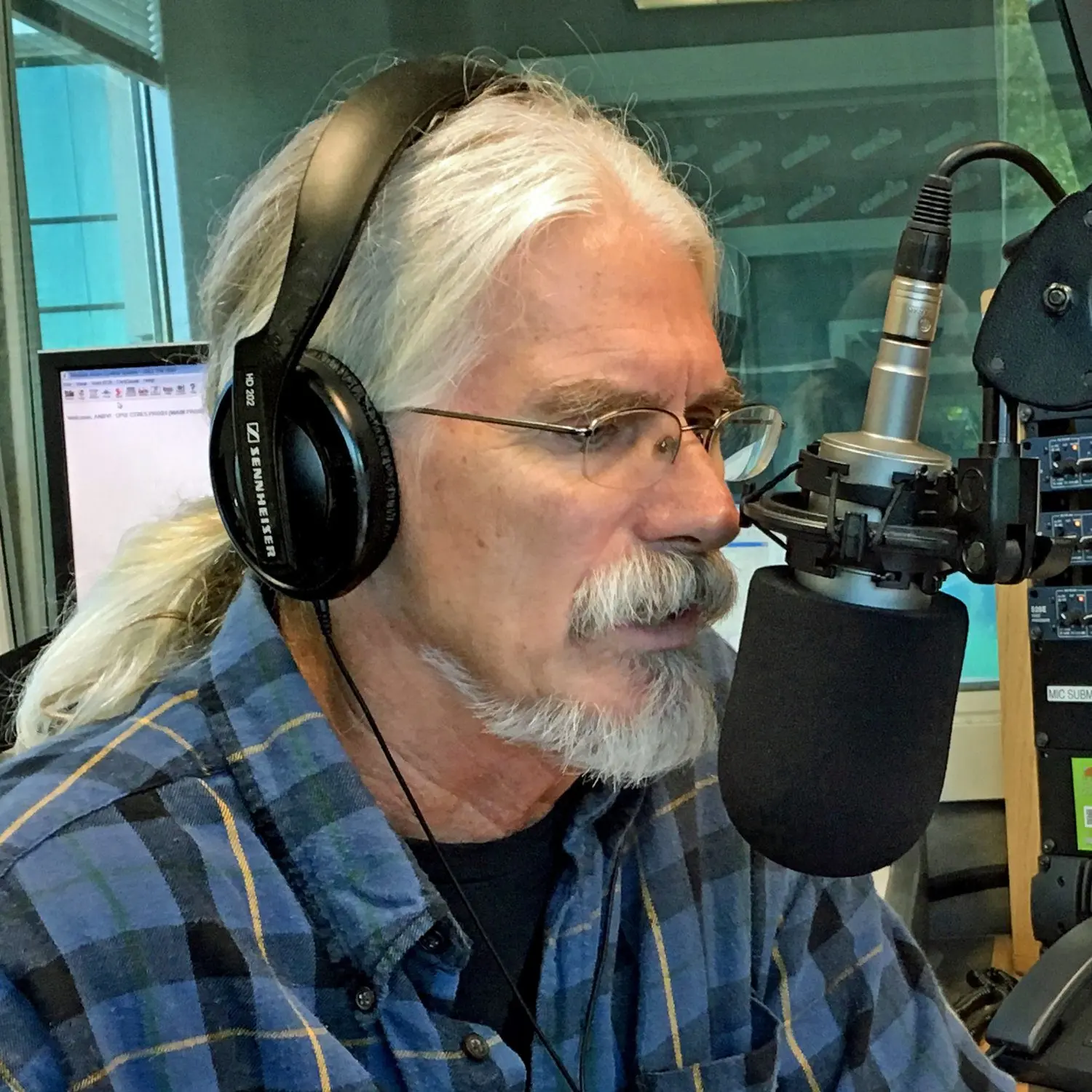
Steve Gregg opens the broadcast week by inviting listeners to bring honest Bible questions—whether you love Christianity, doubt it, or disagree with it—and encourages everyone to keep studying like the Bereans.
Then the calls get deep fast: one listener asks whether Jesus’ wording in Matthew 12 might imply that some sins could be forgiven “in the age to come.” Steve explores the range of interpretive options and explains why the passage is not as simple as it looks. Another caller presses a hard moral question about Calvinism: if everything is decreed by God, why be upset about evil at all—and
SPEAKER 1 :
Thank you.
SPEAKER 01 :
Good afternoon and welcome to the Narrow Path radio broadcast at the beginning of a new broadcast week. We hope you’ll benefit from the program. If you have questions about the Bible or the Christian faith that you’ve wondered, you know, who you could ask, well, you could ask here on the air. We’ll discuss it. Again, I need to from time to time remind you, I don’t know everything, so I can’t answer every question. And even when I give an answer, it’s not the final word. You should continue your study and be like the Bereans who search the Scriptures to see if these things are so. But maybe I can give you some ideas of what direction to be thinking or looking in if you have questions that just got you stumped. About the Bible or the Christian faith, maybe you don’t like the Bible or the Christian faith and you want to call and tell me why. I’d love to hear why. We could talk about that too. Right now our lines are full, so you won’t get through if you call at this moment, but I will guarantee you lines will be opening up throughout the hour. If you randomly call this number, 844-484-5737, you will have a good chance of getting on before the hour is over. The number again, 844-484-5737. Now, I’m going to give you a heads up, but I’m not going to announce this every day until then. But in February on the 10th, that’s a Tuesday, February 10th, I’ll be speaking in – San Juan Capistrano, California. We have a lot of listeners within a shouting distance of San Juan Capistrano, I’m sure. And I’ll be speaking at the Ranch Church. They have asked if I would come and speak on the Four Views of Revelation. I’ll be doing that from 6 to 8, Tuesday evening, February 10th. If you don’t know where that church is and want to, you can go to our website, thenarrowpath.com. Look under announcements and find that date, which is February 10th, and you’ll get the information, the address, and all of that. So we’d love to see you there. We’re not going to give any more announcements today. We’ll just get directly to our phone lines since they are full. And our first caller today is Bob in Prescott Valley, Arizona. Hi, Bob. Welcome to The Narrow Path. Thanks for calling. I hit the button.
SPEAKER 08 :
Your take on something. Yeah.
SPEAKER 01 :
In February,
SPEAKER 08 :
In Matthew 12, 32, Jesus says, Whoever speaks a word against the Son of Man, it shall be forgiven him. But whoever speaks against the Holy Spirit, it shall not be forgiven him, either in this age or in the age to come. And my question to you is, since Jesus differentiates forgiveness in this age from forgiveness in the age to come, Do you think he is suggesting the possibility that forgiveness of other sins is possible in the age to come?
SPEAKER 01 :
That is at least one interpretation I have read. In fact, even when I wrote my view on the three views of hell, I quoted some author who thought that that might be true. So you’re not the first to think of it, and it could well be that that’s what it means. It’s not the only thing it could mean. We have to ask, what does Jesus mean by this age? Now, many would argue, and with some merit, that this age in which he was living was the pre-Messianic age, before the Holy Spirit was poured out. He was basically living in the Old Testament age, or in a transitional period, between the end of the old and the beginning of the New Testament age. And so some may feel that the age to come of which he spoke is that which came after he went into heaven and sent his spirit. We might call it the age of the church, but in other words, the messianic age, where Christ is seated at the right hand of God enthroned, ruling, the age of the Messiah, began when Jesus ascended and poured out his spirit. Now, I’m not sure that that’s what he means here, because This age and the age to come are not sufficiently specific to know exactly what the perimeters of the two ages are that he has in mind. The word age is used very generically in the Bible. There are lots of people who say the Jews, you know, they just have two ages. This age and the age to come, very common way of the Jews speaking. The Messianic age would be the age to come. So we would see that as having come when Jesus, you know, began his kingdom. at his ascension and sat on his throne and began to reign and poured out the Spirit, so that the age that they called the age to come has now come for us. And that is possible, except the interesting thing is that even if the Jews, let’s say the rabbis, typically spoke of this age and the age to come as the only two ages, the Bible doesn’t do that. I mean, the Bible does use that term, as in this passage, but it’s not the normal way of speaking about ages in the Bible. Paul talks about ages to come in the future. He talks about ages past. So there’s multiple ages of the past, and there’s multiple ages to come, according to Paul’s language. You know, the word age is kind of generic for a period of time that is characterized by something. We might talk about the age of the dinosaurs or the age of the Caesars or something like that. I mean, it just depends on what we’re talking about. And it’s not entirely clear how Jesus means it here. But, yes, there are some who believe that what he’s calling the age to come is in the future after the resurrection. That is at the judgment time. And when he says, yeah, these people who do this, they’ll not be forgiven in this age, and they won’t be forgiven in the age to come either, might be taken to mean that some people in the age to come will be forgiven, that there might be some people who’ve never been converted, maybe never heard the gospel, maybe will have opportunity at the time of judgment or whatever, and just like we received Christ when we heard the gospel, maybe they will too. Why not? I don’t know that that’s true, and I don’t know that, I mean, the Bible doesn’t say that will happen. But, I mean, your suggestion is that this wording might suggest that possibility. And I’m going to say it might. I don’t know. I don’t know if it does or not, but I’m not going to rule that out. Since the verse itself is significantly ambiguous, that many interpretations have been suggested.
SPEAKER 08 :
Yeah. Okay. Well, thank you. I appreciate your take on that, and I really love your program.
SPEAKER 01 :
Thanks, Bob. Good talking to you. Okay. Mark in Eagan, Minnesota. Hi. Good to hear from you.
SPEAKER 06 :
Hey, thank you. Hey, I’ve been reading a book called Debating Calvinism by Dick Hunt and James White, and I heard you reference that before. I’m looking into Calvinism. I’m not right now, but I like to study it and One thing that I’ve, and I heard debates with you and Dave White also, I listened to those. James White. I’m sorry, James White. And one thing I’ve never heard anyone bring up is the fact that, like, you know, we probably agree that abortion and murder are wrong. But if someone has an abortion, why should we be upset with that? Or if, Like Brian Koberger killed those four students in Idaho. Why should I be upset with things like that if God decreed those to happen?
SPEAKER 01 :
Well, that’s a good point. That’s a good point. Calvinists believe that everything that happens is decreed by God. And inevitably so. That is to say, it’s not as if God said, well, there’s a danger of this happening unless you play your cards right. No, I mean, according to Calvinism, everything that happens… is because of God’s sovereign decree that it should happen and would happen, and nothing is stronger than God’s decree, which would mean that every horrible thing that happens was something God decreed to happen to, which means he wanted it to happen. This is a serious problem with Calvinism, because God is continually in the Bible, through the prophets especially, but even through Jesus and others, You know, he’s continually complaining about things that are happening, things that people are doing. He doesn’t like it. You know, he punishes them for it. Before he punishes them, he warns them and tells them to stop doing it and complains. So, I mean, if God really secretly, see, the Bible nowhere says that God ordains everything that happens. That’s a philosophical notion that came into the church with Augustine out of Greek philosophy. It’s not a biblical doctrine. There’s nothing in the Bible that says God ordains all that happens. But because of Augustine’s quasi-manicheanism that he brought into the church in the 4th century, there are lots of people who adopted that, and then they begin to make that part of their theology. Everything that happens is God-ordained. Now, that’s actually a pagan idea. You won’t find it taught anywhere in Scripture. But if it was taught in Scripture, it would be seriously problematic. Because you’re right, we couldn’t complain about anything. And even God himself would be a bit hypocritical by him complaining about it. If he said it must happen before the world was created, that’s part of the script he wrote. And the world is inexorably carrying out this plot that he insisted upon and that nothing can change. Well, then every detail of the plot, he wrote it into the story. He didn’t have to do that. He did. He wanted it there. So why would he complain when it happened? Yeah, you’re right. It’s difficult.
SPEAKER 06 :
What does James White say about that? Did you get into that with him?
SPEAKER 01 :
Well, I didn’t state it that way. I think I did make that point, but we made lots of points. And, of course, in the course of the debate, you don’t have time to answer every point your opponent makes, and I don’t know, I don’t remember if he answered it or not, but I would expect the Calvinist to say, who are you, oh man, to answer against God? That’s their favorite verse, I think, you know, in Romans chapter 9, where Paul says, you know, if God ordains everything, then how could he find fault with people for what happens? And he says, well, who are you, oh man, to argue against God? Well, I believe they’re totally misunderstanding the flow of Paul’s thought there. He’s not saying that there’d be no grounds for complaining on our part if God ordained us to do evil things and we had no choice and then he punished us for it. I would say there would be grounds to say, hey, I don’t think that’s just. And what Paul is saying is, the critic he’s answering is saying, well, God ordains everything so he can’t find fault. And God says, well, you’re finding fault with God. So, I mean, you’re resisting God. Who are you to speak against God? The idea is, yeah, the idea that people cannot resist God is proved wrong simply by you because you’re resisting God. So I don’t think that he’s saying, when he says, who are you to resist God or to speak against God? I don’t think he’s saying, listen, you know, God does illogical things. God does things that simply are not moral by our standards. But Just sit down and shut up. It’s none of your business. You’re just a punk. God’s big. You’re little. I mean, if that’s what Paul’s saying, that’s what Calvinists say. I mean, they don’t say it just the way I did, but they say the same thing in a little more civilized words. But, no, they do believe that if you say, well, how can God complain about this circumstance if he’s the one who ordained it to happen? That’s exactly the question Paul expects one of his critics to raise. And that’s the context of when he says, well, who are you? They said, who has resisted his will? As if no one has. Well, he said, well, who are you? You’re doing it. You’re answering against God. You’re resisting him, aren’t you? I mean, the Bible clearly talks about people rejecting God’s will for themselves. For example, Luke 7.30, it says, Jesus said, the Pharisees rejected the will of God for themselves by not being baptized by John. Now, I mean, words have to mean something. If by not being baptized by John, they were rejecting the will of God for themselves, it means that God’s will for them was to be baptized by John. But they didn’t. So it says they resisted his will successfully. So Paul certainly would not say no one can resist God, as the skeptic he’s debating in the passage does. But they think Paul’s affirming. that no one resists God, and if you don’t like the implications of that, just mind your own business. You’re not God. He is. Now, of course, all Christians know that God’s choices, if there’s an obscurity about them, if there’s things about God’s choices that we do not know enough to know why that was what he should do at that point, Yeah, we have to really be like children and realize we are children. And he’s God. He’s a big God. He’s smarter than we are. He does smarter things. A lot of the things that we would complain about are simply things where we are suffering harm or loss that we would rather not. We say, well, why would God do that? Well, God might have a very good reason for doing that. That’s a very different thing than say that God can make 2 plus 2 equal 5. You know, God doesn’t do nonsense stuff. God cannot ordain… that everything that happens would necessarily, because of his decree, have happened, and at the same time hold anyone but himself responsible. Because responsible means you were able to make a response. And if you don’t have any power to make any response, then you’re not responsible. If you can’t do anything, people can hold you responsible if they’re bigger than you, but they’re wrong to do it because a person is simply not responsible. for what they have no power to do or not do. We are responsible for what we have opportunity to do and whether we do it or not. So, I mean, I think that I’m pretty – I don’t know that James White made that point. I’m not sure if that came up on our debates. It’s been many years since I debated him. But I do know Calvinists in general, if you ask the kind of question, you know, well, how can a Calvinist say that God ordained it and yet God’s always complaining about it? Well, their favorite answer is, who are you to answer against God? Of course, they’re misunderstanding and misusing Paul’s statement, but they love it. They love it.
SPEAKER 06 :
Yeah. All right.
SPEAKER 01 :
All right, brother. Thanks for your call, bro. John in Detroit, Michigan. Welcome to The Narrow Path.
SPEAKER 03 :
Good afternoon, Steve. I would like to ask my question and then listen to your answer on my radio. Okay.
SPEAKER 01 :
Okay.
SPEAKER 03 :
Martin Luther King, Jr., what would Jesus have to say about him, his movement regarding civil rights? Also, anything he had to say about Vietnam, anything that he did publicly? We know that he had a private life that was not beyond reproach.
SPEAKER 01 :
Right.
SPEAKER 03 :
Any comments you have, please? Thank you, sir.
SPEAKER 01 :
Yeah. Well, Martin Luther King, just like any other human being on the day of judgment, will answer to God for his actions. The Bible says that we will all stand before the judgment seat of Christ and we will answer for or receive the things done in the body, the things we do in our earthly bodies. Peter even says to Christians, he says, if you call God your father who judges all men you know, without respect of persons according to their works, then pass the time of your sojourning here in fear. That’s 1 Peter 1.17. So, Peter says that God, we who have God as our Father, we need to have the fear of God because he’s going to judge all people, apparently us too, according to our works. Now, I can’t tell you how God will ultimately judge Martin Luther King. The idea that he had a number of affairs, that he and his wife had an agreement about this, she was not She did not criticize him for it. When people did, she kind of defended him. I mean, I don’t understand that. I mean, that’s sin. Adultery is sin. And, you know, it may not be the only significant sin that will come up on the day of judgment in his life. Of course, I don’t know this. I don’t know if he was struggling to be faithful to his wife and failing. I don’t know if he was praying hard about it, saying, God, forgive me. I want to be faithful to my wife. I stumble. I fall. I’m weak. I mean, even if you’re stumbling and falling and weak, there’s no excuse for committing adultery. But when we do sin, even if we have no excuse for it, we often may be approaching God with our pleas that he would help us and that he’d forgive us and so forth. And he will forgive. So I can’t say… what the state of heart was in Martin Luther King with reference to these affairs. I do know that the Bible says at least twice that adulterers will not inherit the kingdom of God. But then again, repentant adulterers are among those who become Christians and will. So I’m going to leave that to God to judge. Now, as far as his views about civil rights or about the Vietnam War, or any of these social issues or political issues, I don’t know how God’s going to judge him about that. I will say this, that a person may have really wrong views about these kinds of things due to poor information or they simply haven’t thought things through. For example, a lot of Christians have wondered, you know, how can any Christian have voted for a man like Trump, you know? Well… The Christians who do vote for Trump sometimes have their Christian reasons for it. And because, you know, as Christians, they believe they should support justice and law and constitution. I mean, you know, an ordered society is best for all people. And, you know, we should do that which we’d want done to us, you know, is what Jesus said. So some people have these kinds of things that motivate them to vote. And other people say, well, but Trump is a bad guy. He’s immoral. He talks trash mouth and so forth. And as Christians, we can’t vote for that, they say. Well, somebody’s right and somebody’s wrong. But it’s not necessarily the case that the people who are wrong are rebelling against God knowingly. They simply may not be thinking clearly about things. You know, the real issue is when we stand before God, is going to be what did we do and why did we do it, you know. And, of course, we might say, well, a Christian might favor abortion because they don’t know that it’s evil and they think they’re being compassionate toward a woman in a crisis pregnancy. And so they feel like this is the loving thing to do is kill the baby. But, of course, they don’t believe it’s a baby. Someone has told them it’s not. Of course, they’re wrong, and when they stand before God, they’ll realize that they may have supported the slaughter of a multitude of real babies who were alive and were killed because they voted for abortion rights. Now, you know, on the other hand, the people who voted for abortion rights may feel like this is the loving, kind thing to do, and how could any Christian… deprive a woman of the right to escape this difficulty in her body. Now, in my opinion, one needs to think entirely biblically about all things, in which case they will not be confused about these kinds of issues. But many Christians have pastors that don’t think biblically and have fed them with a different line and have misunderstood things. And frankly, a lot of people are simply not very smart, and therefore they’re susceptible to indoctrination. And so God knows that. I mean, if a young girl got an abortion and murdered her baby when she was 13, that’s not okay. That’s murder. And murderers will not inherit the kingdom of God. But God also knows that if she had no idea that was murder at the time, perhaps mercy should be shown to her. Not because it isn’t a bad thing she did. Not because she hasn’t committed actually a capital crime by killing a human baby. But but because she did it in ignorance. Now, of course, a 13-year-old girl might be excused for being ignorant about the state of the baby in her womb just because she’s under the influence of her parents and teachers and propagandists and things like that, and also under pressure, and she doesn’t think clearly. But if the same person is in her 20s, let’s say 30, and her mind is fully formed, And she still doesn’t think it’s wrong to kill babies. Well, I don’t think she’ll get the pass. I’m not talking about Martin Luther King here because I don’t know his private life enough. I know that he did things which are not going to be in his favor on the day of judgment. What his general attitude toward politics and social issues are, I don’t know to what degree he was paid off by communists, as some people say he was. and that he didn’t care whether what he was doing was right or wrong, he was just doing what people paid him to do, or if he was legitimately, as a person who wanted to follow God, but was a weak man in some areas, and weak-minded too, if he actually thought that some of the things that are on the left were godly. So, I mean, to ask me to judge Martin Luther King is going to be, I’m not competent. I don’t think we are competent. First of all, I’ve never met the man. Secondly, my knowledge of him is only what I know from public press and things like that. So I’ve never read his biography. And so I’m going to have to recuse myself from making that call. But I certainly disagree with the way he conducted his private life with reference to his marriages. I mean, there’s not really much controversy about whether he did those things or not. The people closest to him admit that he did. And his wife seemed to give him a pass on it. So the man, you know, the man was morally flawed, though he had some real passion for justice in some forms. And passion for justice is good, but it’s not like you can just go out and sin and then God will say, okay, but that’s washed away by you being passionate for justice. No, the real issue is What’s your heart toward God like? Are you trying to be obedient to God? Are you desperately seeking to please him? Are your sins a great grief to you that you’re struggling to overcome? Those kinds of issues God may take into consideration, and we don’t know those things about anyone except ourselves, perhaps. All right. Jimmy from Annabelle. Well, wait a minute. We’ve got a break coming up. Jimmy, hang on there. We will come to your call after we take this necessary break. We don’t have time to talk to you and take your question and do it justice before this hard break. You’re listening to the Narrow Path radio broadcast. My name is Steve Gregg. And, you know, people, whenever any political things come up, I always get emails from people who say, stay out of politics. I personally am not very involved in politics at all. I’ve never endorsed a candidate. I’m not part of a political party. But people ask me things which you might call political. I call them moral. To me, abortion is not a political issue. It’s a moral issue which people have wrongfully politicized. It doesn’t belong in the realm of politics. Every nation in the world should make murder of innocent people a criminal act. And if people want to pretend that abortion isn’t murdering an innocent person, I mean, they can pretend that if they want to. But God is not mocked, and God is not fooled. You know, God knows as well as you do when you’re thinking clearly that a baby in the womb that’s, you know, eight months along is just as much a human being as a baby that was born at seven months and is now one month old in exactly the same condition. God is not a political partisan, and neither am I. But I am concerned about moral issues and a great number of so-called political issues, or at least issues over which political parties are divided, are not really the business of the government or politics at all. They’re the business of moral judgment, which is what God has entitled us to do, to basically tell people what’s right and wrong, according to Christ, according to God’s ways. That’s what the church is here for. If we don’t do it, there’s not really much reason for us to be here at all. Anyway, you’ve been listening to The Narrow Path. We’re not done. We have another half hour coming, so don’t go away. We are listener supported. If you’d like to write to us, the address is The Narrow Path, P.O. Box 1730, Temecula, California, 92593. Our website has all kinds of free resources. You can donate if you wish at thenarrowpath.org. i’ll be back in 30 seconds don’t go away
SPEAKER 07 :
Take the Narrow Path with you everywhere on your phone or other device by downloading our app from the App Store or from Google Play. You can listen to the radio broadcasts live or later from the app, as well as many other lectures posted at our website. Search for the app by typing the same name as the website, the Narrow Path, and enjoy the learning experience. It’s rare to get such good stuff for free these days.
SPEAKER 01 :
Welcome back to the Narrow Path radio broadcast. My name is Steve Gregg, and we’re live for another half hour, taking your calls. Our lines are full again. We’ve taken several calls, and the lines were full at the beginning of the first half hour, and now they’re full again. If you want to try a little later, though, the number to call me at is 844-484-5737. And just before the break, we’re about to talk to Jimmy in Annanville. I don’t really know if that’s right. Minnesota. Is that how you say it? Well, thank you, Steve.
SPEAKER 05 :
It’s Annandale, Minnesota.
SPEAKER 01 :
Annandale, okay.
SPEAKER 05 :
Yes, sir. First, I want to say I’m forever more grateful for Jesus shedding his precious blood for me and my sins on Calvary’s cross. And my question, Steve, is with Romans 3 as the basis, like Romans 3.23 where it says, For all have sinned and come short of the glory of God. Romans 3 speaks of that there’s none righteous, no, not one. There’s none that doeth good. I have a question about both Enoch and Elijah. In Genesis 5, verse 24, it says, Enoch walked with God and was not, for God took him. And then in 2 Kings 2, verse 11, it talks about that Elijah went by whirlwind into heaven. And I’m wondering if you have any thoughts about, since this was before the cross and before Jesus shed his blood for us, How was it that God took Enoch, I assume, to heaven and that Elijah went by a whirlwind into heaven before Calvary?
SPEAKER 01 :
Yeah, we’re not told that they went to heaven as Christians do when they die, but it does seem as if that’s true. They were taken up into the sky. Remember the word heaven? you know, means the sky, as well as having other meanings in Scripture. I mean, Elijah was caught up in a wheel run into the sky. Enoch, we’re not even told he went to heaven. It just says God took him and he didn’t die, but we presume it was heaven to which God took him, though it’s not stated. These are mysterious cases and unique cases, obviously. There’s only two of them. And they differ from the general principle that it’s appointed unto man once to die, but after this the judgment. They’re not the only cases that there will be, though. Of course, the Bible says that when Jesus returns, those Christians who are alive and remain until that time, they will not die either. They’ll be caught up to meet the Lord in the air, just like Enoch and Elijah have. These are obviously unusual cases, but you’re wondering how to square it. with the fact that they were sinners and Jesus had not yet died for them. It’s important to note that people were saved and forgiven by God prior to the death of Jesus. We have reason to believe from Romans 3, the very passage you’re talking about, a few verses later, that they were able to be forgiven before Jesus came because Jesus came and died for them too, even though he did it after they had died. But because he died for them, it was so that their sins, too, could be forgiven. But it might make us say, well, then they couldn’t go to heaven until after Jesus came and paid it. And that may be true, although it still raises questions about Enoch and Elijah, questions that are never answered in the Bible. But in Romans 3.25, it says of Jesus that God sent him forth to be a propitiation by his blood, through faith, to demonstrate his righteousness or his justice, because in his forbearance, God had passed over the sins that were previously committed. Now, previous to Jesus dying, apparently, because he says God put Christ forward as a sacrificial atonement or propitiation. so that he could justify the fact that he had already forgiven before that, sins that had previous to that been committed, so sins committed by people in the Old Testament. God, of course, forgave the saints in the Old Testament, but Paul says that God justified his own doing so by sending Jesus at the time that he did. So it sounds like God is saying he could forgive them because he would have the same basis for doing so, as he would have after Jesus came, namely, the death of Jesus. Jesus took away the sins of the whole world. And Revelation has that strange statement in Revelation 13 that the Lamb was slain before the foundation of the world, meaning Jesus died. Now, in terms of chronological history, he wasn’t slain before the foundation of the world, but some would say, well, in God’s reckoning, which is timeless, before he even made the world. The crucifixion of Christ was determined to take place. And it was absolutely a reality, in a sense, before it happened materially on earth. Now, okay, I mean, that would be mysterious stuff, but it does sound like Paul is saying something like that. Now, how would this apply to Enoch and Elijah? I’ll tell you one reason that they would stand out, let’s say, as opposed to Abraham, who was also accounted righteous by his faith according to Scripture, or for that matter, anyone in the Old Testament who was accounted righteous by their faith, like David or Moses. Why didn’t they get caught up in heaven? Generally, what we say, although we don’t have exact scriptural proof of this, but it kind of fits a biblical worldview in a general way, the people in the Old Testament who died faithful to God, went to Sheol, but not into the flames of Sheol. They went to a holding place, which was not so terrible to be, called Abraham’s bosom, or even paradise, where Jesus said the thief would be with him that day. And it wasn’t such a bad place, but it wasn’t heaven. It was a place where those who died forgiven remained until Jesus came and actually made a new and living way into heaven itself, according to Hebrews 10, by his own death. And then at that point, they could go directly to heaven. That’s kind of a scenario that fits the Christian worldview well and has some scriptures that don’t say all of that. But that scenario works well with the systematizing of the scriptures that are relevant to it. So I’m not dogmatic about this, but if that view is true… Well, that would mean that even though Abram and Moses and David and the prophets died forgiven, they still couldn’t go to heaven until Jesus came and made the new and living way into the presence of God. But what about Enoch and Elijah? Did they go into the presence of God prior to Abram and Moses and those guys? I do not know the answer. because we have only passing reference to those two men’s end, namely, I mean, one verse about Enoch. He was not because God took him. Now, actually, in Genesis, Genesis doesn’t even mention that Enoch didn’t die. But one thing it does say is that it doesn’t record his death where everyone else in the genealogy he’s in, in chapter 5 of Genesis, it says they lived so many years and they died. They lived so many years and they died. They lived so many years and they died. When it comes to Enoch, Remarkably doesn’t say he died. He said no the Lord took him and so Hebrews Hebrews chapter 11 refers this and said that he Essentially says he didn’t die. You know, he was taken up alive so Okay, so that’s interesting but not explained and I honestly do not know the answer to that because I would have to make something up since the Bible doesn’t give us the answer in general those two cases might be thought to entirely challenge the question of whether people like Abram and Moses and David had to stay in Hades or Sheol until Jesus came. I mean, if Enoch and Elijah didn’t have to, why would these guys have to? They’re all forgiven. They’re all justified by grace. Why would some go to heaven and some be barred from there until Jesus came? That’s, to me, an unanswerable question. I don’t know. But again, we’re not specifically told that Enoch and Elijah went to heaven you know, we don’t know where God took them to. I mean, he certainly didn’t take them to hell, but we’re not told specifically that he took them to live in heaven as, you know, as we believe Christians do when they die now.
SPEAKER 05 :
Well, my King James Version renders 2 Kings 2, verse 11 as heaven at the end. But I understand it could mean
SPEAKER 01 :
sky. In Hebrew, the word is yamim, which is plural, by the way, which means heavens. Actually, the word heaven never appears in the singular in the Old Testament Hebrew. It’s always yamim, plural, the heavens. But the heavens in the Hebrew, depending on context, can mean up where the stars are, or just up where the clouds are, or where God and the angels are. Those are three different places that are all called heavens. So you know, it’s not clear. I mean, Elijah was taken up into the sky. There’s no question about that. But he was not visibly seen to go anywhere beyond the sky. In fact, the sons of the prophets who saw him go up said, we better search for him because maybe he fell down somewhere. They weren’t sure that he wasn’t just swept by this tornado into the sky and dumped somewhere because they said maybe the spirit of the Lord has deposited somewhere here we better send out search parties in case he’s wounded or something and they didn’t find him so in other words even the prophets themselves who witnessed the event did not necessarily think he went up into heaven as we think of it all they knew he was taken up into the sky and disappeared from their sight so they weren’t sure that he hadn’t fallen to the ground again somewhere So, again, there’s nothing specific. Yeah.
SPEAKER 05 :
Yeah, I was just going to say, well, two verses come to mind. One is 1 John 5, 12, he that hath the Son hath life, and he that hath not the Son of God hath not life. And then Ephesians 1, 7, in whom we have redemption through his blood, the forgiveness of sins according to the riches of his grace. So the only way, I believe, is through what Jesus did for us on the cross and receiving life. Christ as our Lord and Savior. So whether that was before the cross or after the cross, it’s through Christ in the shed blood.
SPEAKER 01 :
No question about that. Yeah, no question about that. All right, brother. Thank you for your call. Let’s talk to Anthony from Danville, California. Anthony, welcome to The Narrow Path.
SPEAKER 07 :
Hi, Steve. Thanks for taking my call. I’m curious to hear your interpretation of Psalm chapter 82.
SPEAKER 01 :
Verse 6, I said you were God’s
SPEAKER 08 :
Yeah, well, the whole thing, yeah.
SPEAKER 01 :
Yeah, okay. Yeah, I believe Psalm 82 is a denunciation of the judges of Israel, who are sometimes in the law referred to as Elohim. Now, Elohim is also a word that means gods. And, you know, for example, in context where it’s talking about the pagan gods, the word Elohim is the word that is translated gods, plural. It is a plural form word. There are times, like in Genesis 1-1, when Elohim is used, but the verb form of the sentence requires a singular subject, so it’s translated God. So Elohim can be translated as God, or it can be translated as gods, but it can also be used figuratively, referring to judges or leaders of Israel. And that is what I believe is the case in this instance. Now, if you go to Exodus 21, 6, it says, or 5 and 6, if the servant plainly says, I love my master, my wife, my children, I will not go free, then his master shall bring him to the judges. This is Exodus 21, 6. In the Hebrew, the word judges here is the Elohim. Excuse me. So, This is talking about the judges, but they’re called the Elohim, which is a word that normally would mean gods. So he’s kind of referring to the judges as gods. Same thing happens in the next chapter. In chapter 22 of Exodus, in verse 8, it says, If the thief is not found, then the master of the house shall be brought before the judges to see whether he has put his hand to his neighbor’s goods. This is a judicial proceeding. But the word judge is there. actually is Elohim in the Hebrew. In chapter 22, verse 28, we find again, he says, You shall not revile Elohim, nor curse the ruler of your people. Now, here we don’t know if it means God or the gods or if Elohim is being used in parallel with the ruler of your people because in Hebrew often a statement will be made twice saying the same thing in different words. So in saying, you shall not revile Elohim nor curse the ruler of your people, it’s possible that Elohim, as in these other places, is a reference to the rulers of the people. So there is a sense in which the word Elohim, though very rarely… can be used to refer to human rulers. In fact, in Exodus 7-1, speaking to Moses, Exodus 7-1, it says, See, I have made you as Elohim to Pharaoh, and Aaron your brother shall be your prophet. So here’s Moses, the leader of the people, and God said, I’ve made you like Elohim. It could be translated God or gods, or it simply could be simply, again, another place where the rulers are referred to as Elohim Now, in Psalm 82, which you asked about, it begins, God stands in the congregation of the mighty and judges among the Elohim. Now, almost all translations read he judges among the gods. Elohim can mean gods, or it can mean something else. It obviously doesn’t mean God, because God doesn’t stand among himself. So, it’s either talking about gods, like the pagan gods, Or it could be, yet again, a reference to the human rulers being simply, as a figure of speech, being referred to as gods. Now, why would the rulers be called gods when there’s no affirmation of them being deity at all? It’s because they would be seen as God’s agents. They stand in God’s place. They are there to simply speak for God, using his laws to adjudicate cases. But whatever the reason is, we have no doubt that the word Elohim sometimes is used in the Hebrew to mean gods, especially back in the law in Exodus. So God stands among the mighty. He judges among the Elohim. And he says, how long will you judge unjustly and show partiality to the wicked? Okay, so it sounds like they’re judges. They’re showing partiality. One thing that the prophets complain about the most, and other psalms, and even the law of Moses complains about, is when judges will rule in favor of the wealthy because they can be bribed by them. And then the poor never gets justice. And the very next line in the psalm says, Do justice to the afflicted and the needy. Defend the poor and the fatherless. Deliver the poor and free them from the hand of the wicked. This is what judges do. In fact, this is what again and again and again in the prophets, God complains that the judges of Israel are failing to do. It sounds like they’re failing to do that here too. Now, if these are gods up in the sky or something, I’m not sure in what way they’re involved in these adjudications between the rich and the poor. But human judges certainly are. And he says in verse 5, they do not know, they do not understand. They walk about in darkness. All their foundations of the earth are unstable. He said, I said, you are Elohim. And all of you are children of the Most High. But you shall die like men and fall like one of the princes. Okay. So, I said you are Elohim. When did God say that? And to whom did he say it? Well, we don’t have any place in the Bible where God said to somebody, you are Elohim. But he may be saying, you know, when I gave my law, I referred to you people as Elohim. I called the rulers Elohim, which could typically mean gods, but I didn’t mean to say you are real gods. Don’t think that’s true. You’re not. You’ll die like any man. You’ll die like any other mortal. You’re human. You’re not gods. And I think when he said, I said you are gods, He’s saying, yeah, you may have misinterpreted me there. You might have thought that you therefore have divine sovereignty or something like that. And that’s not true. You are mortal men like anyone else. You’ll perish just like any of the other princes. So I think he’s talking about princes. I think he’s talking about rulers. I don’t think he’s talking about gods. I know what Michael Heiser wrote, and I certainly was familiar with the views of Michael Heiser on this particular point. when I was a young man, because it’s a very commonplace thing to say that these are gods. But I believe what he says then doesn’t seem to apply to gods. For one thing, if they are gods, they are evil ones, because he’s rebuking them. If they are angels, they are fallen angels, which means they’re demonic angels. And yet he calls them to repent and start doing the right thing. Well, we know people can do that. Can demons do that? Can fallen gods, fallen angels repent and become good and get right with God? Well, if so, the Bible certainly doesn’t give us any indication of it anywhere. But people can, and that’s a very common teaching of the Scripture. The judges can be expected to repent and start doing the right thing instead of the wrong thing. And the very thing that they said they’re not doing right is the very thing the judges typically did wrong. typically receiving bribes and judging in favor of the wealthy instead of on the side of the poor when the poor had the better case. So this looks to me as just another of many, many passages in the Bible where God complains about the injustice in the courts because the judges are corrupt. And he says, get over it. If you think you are God’s, I know I used that term for you before on occasion, but you better understand correctly, you’re human. you’ll perish like anyone else. You’ll die like any man. And so, you know, I don’t see this as a reference to superhuman beings like, say, Michael Heiser would.
SPEAKER 08 :
Okay, great. Thank you.
SPEAKER 01 :
Okay, Anthony, thank you for calling. Okay, we’re going to talk next to David in San Francisco, California. David, welcome.
SPEAKER 02 :
Oh, hi, Steve. Yeah, I was interested in Matthew 10 and 16. There’s a line, I shall put you as sheep before wolves. And, you know, you think about that. Wait a minute. I’m a sheep, and you’re going to put me in front of wolves? This is pretty – you’re no pal of mine. But then he goes on to say, you know, I need you to be as clever as – oh, I’ve forgotten the phrase. But you’re going to be clever, and you’re going to have to learn your enemies, so to speak. And so I heard you talking about people just sort of obeying and being children as opposed to being a grown-up and having a mind of your own and being able to sense the difference between being somebody evil and obeying ethics. I think this was, I’m not sure if that was when you were talking about Martin Luther King and his, whether he was a good or bad man, he had the ability to spot scammers and spot tyranny and to be able to fight against it. He had the courage to be able to face off against a wolf and find the right path. Okay, so do you have a question here? Well, this really is something that’s big in the news. You’re probably well aware that there are people, for example, J. Edgar Hoover, the first founder of the FBI, discovered that organized crime was putting money in megachurches, that they were using some of the bigger churches to do money laundering.
SPEAKER 01 :
I’m sorry. You don’t have a question for me, apparently, and I’m running out of time. We’ve got a lot of people waiting. This is a question and answer program. If you have a question, I’d love to do what I can to answer it.
SPEAKER 02 :
It has to do with whether or not propaganda is abusing Jesus and whether or not people are believing that Donald Trump is chosen by God or whether he’s got propagandists that are keeping him in power.
SPEAKER 01 :
I see. Well, I can’t tell you what’s going on behind the scenes. I’m actually not in the know. You know, if there’s deep, dark conspiracies that most people don’t know about, I’m one of those who don’t know. They haven’t let me in on their secrets. So, you know, obviously politicians use propaganda, but propaganda simply means information that favors their cause. Sometimes information that favors the cause is true, and sometimes it’s not. Propaganda is… isn’t always false. We usually think of it as false, but true things that support a person’s position can also be used as propaganda to propagate his position. I really don’t know Donald Trump. Again, I’m not in his inner circle. He has not told me what motivates him. I don’t know of anyone. I mean, I don’t have any names or know of anyone who’s out there telling lies or what to make Christians think that Trump is some kind of a messiah figure. I don’t see him as a messiah figure. I just see him as a man who’s in the political office. I think he ran for office just like his opponent did. His policies appealed to the voters, which is pretty much one of the best ways for a person to be elected is to have policies that the voters think are going to be good as opposed to, let’s just say, he’s good looking or talks well or something like that, or he just happens to belong to the party that you want to go with. Now, I think that people should vote on the basis of policies, because some policies are just, and some policies are unjust. And I think that in the last election, Trump is a human being, a flawed human being, who promised that he would do certain things, which he has been endeavoring to do, it seems like, both in his first and second term. Whether some of those things are bad things, Or not. Would they have to be judged by, well, I guess by the results or by the inherent justice of them? But that’s not the kind of program I have here. I’m not here to analyze the president or any political movement. Although I do have opinions about most things. It’s just not really, this is not that kind of program. You know, 99% of talk shows I think are that kind of show. This one isn’t. So we’re going to move on and see if someone has a question that I can help them with. That’s going to be Paul in Riverside, California. Welcome. Yes, Steve, can you hear me? Yeah, it’s a little muffled. Are you talking through a speakerphone? Yes. Might be better doing it directly, yeah.
SPEAKER 04 :
Okay. That’s better.
SPEAKER 01 :
That’s not good. We’re muffled now. I’m sorry, we got to garble. You’re all garbled. You’re all garbled. There’s a problem here. If we can’t hear you, we can’t have it on the radio. Obviously, it’s an audible medium. Okay, somehow your phone got all garbled. Try again. If it stays garbled, we’ll have to move along.
SPEAKER 04 :
Okay, I said Mary was the mother of Jesus, correct?
SPEAKER 01 :
Yes, Mary was the mother of Jesus, yes.
SPEAKER 04 :
Okay, so I’ve heard men say that Jesus was fully God, and you also said that. So that means that Mary is the mother of God?
SPEAKER 01 :
Well, that’s what some people like to call her. The Bible never calls her that. She’s the mother of Jesus. She gave birth to Jesus, a man. Jesus is a man. He’s also, the Bible says, he’s God who took on a human form by becoming part of the human race, the race of Adam, of the seed of Judah and of David. So he’s a man, and Mary gave birth to the man. Now, there was big controversy back in the 5th, 6th century or something like that over the question of whether she should be called the mother of God. To my mind, the controversy was unnecessary. The Bible never gives her any titles like that, so we might as well just call her the mother of Jesus. If we want to say, but she’s the mother of God, well, then we’re looking for trouble. We’re looking for a fight that none of the biblical writers were looking for. I would say she’s the mother of Jesus. No problem. Jesus is the God-man, so I don’t mind saying she’s the mother of the God-man, but that’s a strange term. But to say she’s the mother of God is confusing, because God has existed long before Mary did, and he doesn’t have a mother. So what they’re trying to affirm is that Jesus is God, and since she’s the mother of Jesus, she’s the mother of God. But again, that’s confusing. I don’t say Jesus is God. I say he is God in the flesh. He’s God in a human form. And she is the mother of that flesh form that he came in. Does that make her the mother of God? Maybe so. But why call her that if the Bible doesn’t? If you’re listening to The Narrow Path, our website is thenarrowpath.com.
