



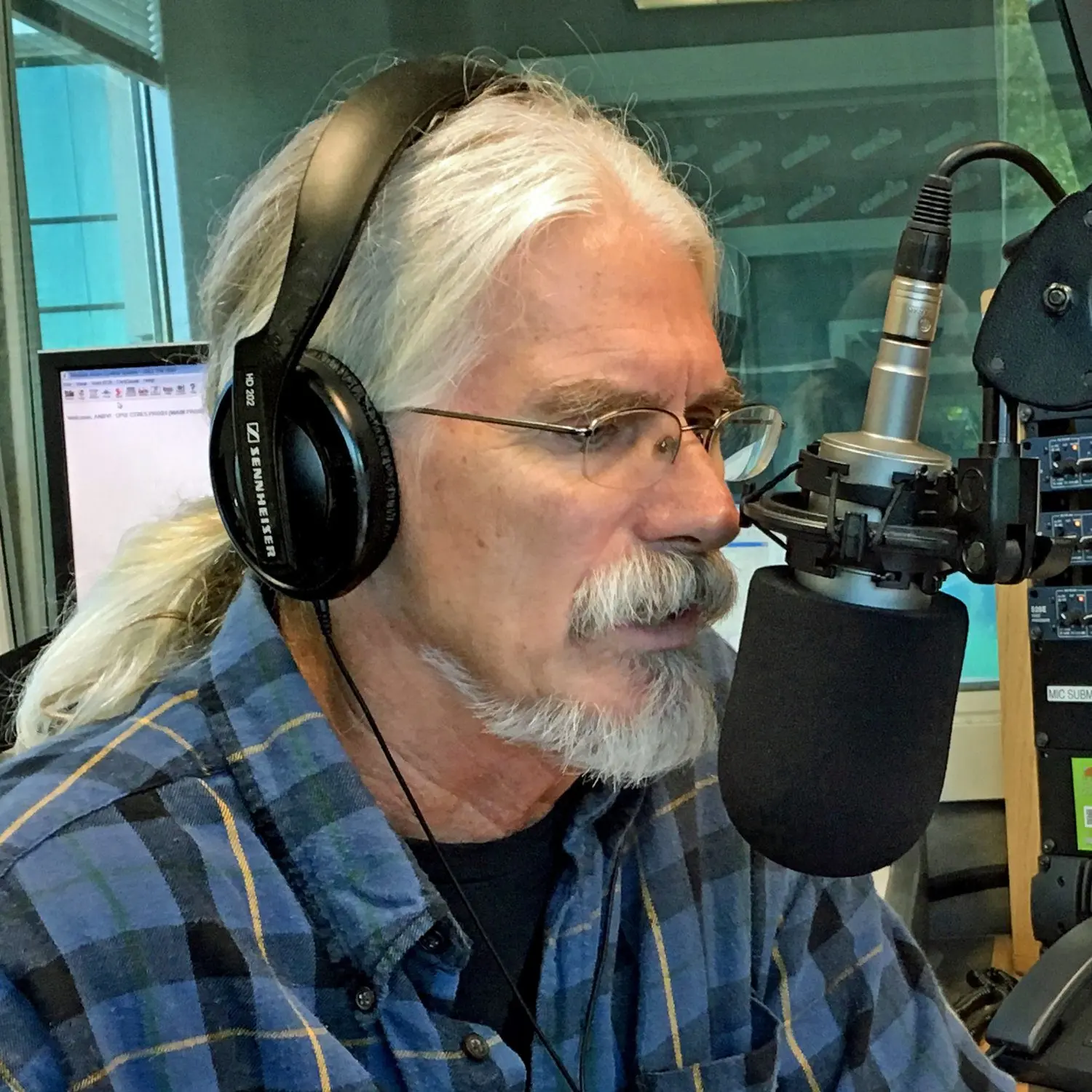
Join Steve Gregg on this engaging episode of The Narrow Path, where he takes calls from listeners across the globe addressing intriguing matters of faith and spirituality. Steve delves into the challenges of deconstruction in young Christians and the alarming misconceptions that surround this growing trend. He provides valuable insights into how secular influences and a lack of grounding in the faith can lead individuals to question their beliefs. In a riveting dialogue, he argues for the critical need to arm our youth with thorough knowledge and understanding to withstand these cultural pressures.
SPEAKER 1 :
Thank you.
SPEAKER 03 :
Good afternoon and welcome to the Narrow Path radio broadcast. My name is Steve Gregg and we’re live for an hour each weekday afternoon so that we can take your calls during this hour and do what we can to converse with you, maybe help you with questions you might have, problems you might have with the Bible or with the Christian faith, curiosity, objections, confusion. Feel free to give me a call. We’ll talk about all those things or any of those things. Disagreements with the host are always welcome to be brought up. The number is 844-484-5737. And before I go to the phones, which appear to be full, I should make one announcement, and that is that in less than a week, on the 10th, which is next Tuesday, I will be speaking in Southern California at San Juan Capistrano, a church called Ranch Church in San Juan Capistrano, and I’ll be speaking about the four views of Revelation. You’re welcome to join us there if you happen to be interested and nearby. You don’t have to be nearby. You can fly in if you want to from anywhere in the world, and we’ll be glad to accommodate you. There is a meal going to be served, I believe at 5.30, and then the talk is from 6 o’clock to 8 o’clock with a short break in the middle. Because of the meal, if you want to come for the meal, they would like for you to register so they know how many people to feed. And there’s a place to do that. If you go to our website, thenarrowpath.com, that’s thenarrowpath.com, there’s a tab there that says announcements. If you scroll on down to the date of February 10th, you will find information on how to just let them know you hope to come, which is, again, for a meal, which I believe is entirely free, at 5.30, and then the lecture is going to begin around 6. So there’s that. All right, and there’s not much else except a switchboard full of people, so we’re going to go to the phones and talk to Israel calling from Hawaii. Israel, welcome to The Narrow Path. Thanks for calling. Well, I’m hitting the button. Oh, there we go. Gotcha. Welcome. Are you there, Israel? Hello. Go ahead. Can you hear me? If you’re not going to talk, I’m going to take another caller. Are you there? Does not appear to be there. All right. Well, I hope you’ll call back because we’d love to hear from you. But, you know, when you’re on the air, we need to hear you say something so we can move forward. Ryan in Greenville, South Carolina. Welcome to The Narrow Path. Thanks for calling.
SPEAKER 04 :
Hello? Go ahead. I hear a recording of you.
SPEAKER 03 :
You hear a recording of me? Oh, okay. So I don’t hear that in my headphones.
SPEAKER 09 :
I’m assuming that the caller before me was… There’s a recording going on.
SPEAKER 03 :
Oh, that could have been confusing. Okay. Someone in the studio, you need to check and see if there’s a background recording of coming over the phones, you know, of a different show. I have to say, Ryan, your phone is doing terribly. Your phone is just breaking up terribly. Are you in a bad spot? Okay. You know, we’re having some difficulties here. It must be studio issues. Sometimes, unbeknownst to people in the studio, there’s something else playing in the background that I can’t hear. Studio, you need to check in on that because that’s going to be very distracting. for callers. Let’s see if we could do better with Michael in Denver, Colorado. Michael, welcome.
SPEAKER 01 :
Are you hearing a recording in the background, Michael? Hey, Steve. I hear that recording as well, but I can try to talk over it. It might be a little distracting.
SPEAKER 03 :
Boy, I’m sorry about that. This has never happened before to my knowledge. It’s a problem in the studio.
SPEAKER 01 :
I can’t hear anything at the moment. It’s just a recording.
SPEAKER 03 :
Okay, give me your question and I’ll answer it and we’ll, I hope it’s not going out over the air, the double recording. Okay, what’s that? Yeah, he’s cut off too. Okay, we’ve had three callers cut off. All of them complained that they hear a recording of another show in the background. I am not in the studio. I don’t broadcast from the studio. I do it from a remote place. But that’s got to be attended to by those who are in the studio. So whoever is in there, please stop that recording so we can talk to these people live. All right. And, by the way, if you did get cut off, call right back, and hopefully we’re going to get this fixed. We’ll take your call at that time. If we can’t get that fixed right away, I’ll have to take some of the questions that people have written in. But I like to talk to live callers. Give them priority first. Let’s see if we can do better with Tony in South Carolina. Tony, do you hear the recorded show in the background?
SPEAKER 08 :
Yeah, I’ve got the background as well. Real quick question for you. I know you can hear because I’ve heard you say that you can hear. I can’t hear anything on my side. So my question is this. Many people today talk about this deconstruction that seems to be happening, especially among younger Christians. who were raised in evangelical-type churches. You’ve had some background in a number of, let’s say, ways of faith to where you’re at today. Can you explain what deconstruction actually is today and why it seems to pull so many, let’s say, students or even people that have had evangelical faith from a young age, even grew up in Christian schools and got their degrees in biblical studies and went on for their Masters of Divinity, what is going on here? Can you explain that? Sure.
SPEAKER 03 :
All right. I’ll answer over the air. I apologize for the technical problems, but it looks like maybe if I put you on the air, what you need to do is if you’re hearing something in the background, just go ahead and give your question, and I’ll take it over the air. I can hear you fine. I don’t know what the problem is with the studio. All right. People deconstructing from their Christian faith, especially young people who go to college or just leave home. And they may have been raised Christians. They’ve been raised in church, might have been homeschooled. And, you know, they get out and then they begin to have a crisis of faith. Now, this crisis of faith can come from a number of sources. Certainly it can come from college professors, because there’s many college professors who have much more interest in destroying the faith of their Christian students than they have in teaching the subject that they’re being paid to teach. You know, I know sociology professors, history professors, English professors, you know, all kinds of professors who teach, you know, they’re being paid to teach a subject. But I actually know of cases where, you know, students come into the class of a sociology professor and on the first day, first class, he says, any of you who are Christians will fail this class. or if you’re a Christian now, you won’t be when you leave this class. Now, I’m not sure how a teacher in sociology or history has any business trying to destroy the faith or flunk Christians, but that’s clearly the agenda that exists. So if your kids are not prepared for that and they go into college, no surprise there that some of them are going to lose their faith. Of course, perhaps even a bigger problem. influence in destroying people’s faith has to do with the internet, because anybody who doesn’t know anything or who does know something can post on the internet. They can post memes, they can post podcasts, they can post any kind of affirmations of any nonsense they want to. And, you know, it used to be that if you’re looking for evidence of, let’s say, history or philosophy or biblical studies, you pretty much had to go get books. And books are if they were published by major publishers, they had to pass the test of peer review. I mean, if you’re reading an academic book, the assumption is because it’s published by a major publisher, other people who are experts on the subject have read it and said, yeah, we can agree with that. There is no vetting of what’s put on the Internet. Anybody can make up his own religion, his own facts, his own historical nonsense, post it on the Internet, and no one knows the difference. Unless, of course, they do. And this is a problem. Many young Christians don’t know the difference between nonsense and what’s real. And the only way they could be ignorant of it is they weren’t taught. Well, there’s two ways they could be ignorant. Maybe they were not taught. And I have to say, I was not one of those from the time I was young. I was taught why the Christian faith is true when I was 12 years old and began to wonder, am I a Christian because my parents taught me to or because it’s true? You know, I was analytical. I mean, the first thing that came to my mind, well, is there a God? And I knew, I had studied the evidence about evolution and creation, and I knew that creation was true simply because evolution is nonsense, as many scientists, even atheists, are beginning to kind of say. Of course, it’s still the prevailing notion of those who you know, want to follow the crowds, but following the crowds will never be the best policy if you want to get the truth. The truth is that the crowds followed the COVID lies. The crowds followed the transgender movement. The crowds followed all kinds of nonsense that had doctors and scientists backing it up, but they were just following the crowds too. I mean, a person who thinks for himself has got to be, he’s got to go out into the world knowing that, hey, the majority view of many people is not going to be reliable. You’ve got to get to the people who have the data, the facts. And that was always my approach, even as a youth. And I had studied evolution that way, and I realized that even the evolutionists are saying that this resembles fables, you know. And lots of atheists have said that. And then, of course, people who aren’t atheists are much more inclined to recognize that. But the truth is that when I would have questions, you know, why do I believe what I do? Is it because my parents taught me or something else? I knew, first of all, I’ve looked into the evidence about evolution and its nonsense. So I believe in God. I believe in the Creator. More than that, I looked into the question of the resurrection of Christ. I knew enough about the historical sources to know that there’s absolutely no rational explanation of the empty tomb, other than that Jesus walked out of it alive after having been dead three days. Now, I’m 70-something years old now, 73 this year. And I’ve studied these things even more. I’ve studied them for 60 years and more. And, you know, it’s just so much more obvious to me now, but I was right then too. And it’s not just because of confirmation bias, because I’ve changed my mind on lots of things, including religious ideas I had when I was young. I changed my mind, you know, very readily when the evidence is for it. But, you know, let’s face it. What’s true when I was 12 years old, will be found to be even more true as it’s studied further for another 60 years. To me, I’ve never been vulnerable to the lure of atheism or to the lure of thinking that Jesus didn’t rise from the dead, simply because I knew too much. And every Christian kid should know too much to be fooled by that. I don’t know what’s going on with the churches and the Sunday schools. you know, raising these kids and sending them out into the world without knowledge of what reality is. But I said, you know, a lot of these people, you know, they pack it in and get rid of their Christian faith because they haven’t been taught how to think. They haven’t been taught what the facts are, what scientists and archaeologists and Christian scholars have known for centuries, but which seem to be kind of lost to the younger generation. They’re just ignorant. But the other thing is they can simply be disloyal. You can have all the evidence that Christianity is true, but your friends don’t want it to be true. And they don’t want you to believe it’s true. And you won’t be very popular with them. They’ll think you’re silly. They’ll make fun of you if you believe it’s true. And this is, you know, it’s a little bit like a married person who knows they should be faithful to their husband or wife, but there’s strong temptation from the crowd to Play around and do things that aren’t consistent with the truth of your marriage. And people succumb to that. Now, to my mind, I suspect that most of the people who deconstruct were never very smart about their faith, honestly. I’ve read some of them. I’ve read books by some of them, podcasts by some of them. A number of the ones I have watched and read, were pastors, sometimes for many years, for decades, and then they deconstructed. And yet, as they tell their story, I don’t know if they realize how much they’re giving away, but they make it very clear that they didn’t have a very well-based faith at all, even when they were pastors. One guy who’s a very famous atheist was a pastor in a Pentecostal church for, I forget, it seems like it was 18 years or some long time like that. And it was a long time. And listening to him give his story, he says that when he was a pastor, he thought that having goosebumps was an evidence of the power of the Holy Spirit. Oh, okay. So that gives me some idea of why he was so fragile. He didn’t know anything. You know, anyone who thinks that having goosebumps is an evidence of the Holy Spirit has got an experience-based, feelings-based, emotion-based religion. And since emotions are so fragile and change so much, obviously he’s not standing on a rock of truth. And, you know, you find these people. Another guy wrote a whole book. He was a pastor, a big Southern Baptist pastor in Texas. And he wrote a book about why he deconstructed, why he gave up the faith. Well, it’s interesting. He had gone through seminary. He’d been a Christian since his youth. He seemed to know enough not to succumb. But late in his life, he fell in love with somebody who wasn’t his wife. And they had an affair. And he and his wife were divorced. And he lost his ministry. And so he went looking for excuses to not believe. And he found them with reading Bart Ehrman. He felt like Bart Ehrman had a pretty good set of arguments, which, to my mind, I’ve read Bart Ehrman. I don’t really see anything impressive about his arguments. But then most of the stuff that led Bart Ehrman to give up his faith appears to be things that are fairly known to intelligent Christians who are teenagers. You know, I mean, it’s like, again, this pastor who went through seminary didn’t seem to have much of a foundation in truth. But even if he had, you know, even if you know the truth, once you decide you want to run off with your mistress and destroy your marriage and give up your church, you know, you’ve got to find some way of feeling good about it. So the way you make yourself feel good about it is pretend that what you believed before wasn’t true. And that now you have the moral higher ground now because you’re rejecting what was just a bunch of myths. Well, it’s not myths. And he never thought it was myths until he wanted it to be. And this is the thing. I think a lot of people give up their faith because they want to give up their faith. Their faith has become inconvenient. Their faith has become unpopular. They want to be accepted and admired in the crowds that hate their faith. They want to live the lifestyle that their faith forbids. And honestly, I mean, in addition to those who are simply ignorant, and I think probably most are, if they fall away from Christ, they probably are ignorant to the facts. Or else they’re just not being honest. They’re trying to become unbelievers. They want to be disloyal to Christ because loyalty to him is costing something they don’t want to pay. So that’s kind of my understanding of it. I received a note from the studio. It should be good to know. Okay. I think the technical problem we were having hopefully is fixed. So let’s see here. I’m going to put on Michael from Denver, Colorado because he had called earlier and see if we saw the problem. Hi, Michael.
SPEAKER 01 :
There we go. It’s all better. Steve, thank you so much for taking my call and great to talk to you again. And as always, thank you for the… life-changing impact you have on so many people. Really an honor, always, anytime I get to talk to you. But yeah, I was going to ask you, so Donald Trump today was speaking at the National Prayer Breakfast earlier, and he said we need to be one nation under God again. And he spoke about how more Bibles were actually sold in 2025 than any other time in American history in the last 100 years. You know, some people say this is an awakening, a spiritual awakening. And, you know, I just wanted to get your thoughts on that idea of this, because I don’t think it’s just about one person. You know, it’s not just about Trump or Charlie Kirk or any one person that’s causing this, I don’t think, but are we as a planet kind of having an evolving consciousness? Are we about to come to an inflection point where we begin to unify in a more spiritual consciousness type of manner, kind of a gestalt oneness, so to speak?
SPEAKER 02 :
Yeah, okay.
SPEAKER 03 :
Well, possibly we are. I actually don’t know whether we are or not, but I could see why that would be. Most revivals of Christianity in the past, really in many countries there have been revivals, but most revivals have come at a time when the society where they eventually took hold had reached a very low nadir of their morality and other things. Sometimes their economic conditions were really bad. A lot of times the morality was just down the tubes, and just without anyone expecting it, a revival broke out. Obviously, one could argue that the last four years, our country did plummet to a very low degree of sanity, morality. Even the economy was disastrous in many respects. And so it may be that we were set up for a time where people start looking to God. The problem is if people start looking to God because things are bad, then when things get good again because we turn to God, it’s easy to forget God again. You know, John Wesley was a great revivalist and, you know, spiritual leader in the 1800s, excuse me, the 1700s. And he said there was a frustrating thing that, you know, people would be, their lives would be all messed up. And this is a cycle he saw again and again. Their lives were messed up. They’d get converted because their lives were messed up. They’d start living for Christ. Because they started living for Christ, their lives got better. You know, things got better in their relationships. Things got better in their financial situations. Not because Christ makes you wealthy, but because Christ makes you responsible. And responsibility often helps you to prosper. So, you know, these people’s lives would get turned around. But then when they got prosperous and things were going good, they forgot God. And then they had to go back down again. So, I mean, this cycle does happen. I don’t know what’s happening on a nationwide scale right now. I don’t know if the information Trump gave is accurate. I mean, I don’t know that it isn’t. I’m not challenging it. I’m just saying Donald Trump does have a tendency to, shall we say, exaggerate things. I mean, everything that he has positive things to say about is the greatest ever, the greatest in the world, you know, and therefore positive. To say more Bibles were sold this year than in all time previously, that sounds like a very Trumpian kind of statement, whether it’s true or not. Though I’m not saying it’s not true. It could very well be. I just wouldn’t – I mean, I’m not a Trump hater at all. But I just think that – I’ve learned that not everything that he says, especially when he uses superlatives – He’s not being extremely careful to be accurate. But I’m not saying he’s lying. He’s just excited. But, you know, there is something of a turning to God among many young people. I don’t know how general it is. I can see why it would be. I mean, let’s face it. When the spiritual nature and the moral nature of a society has been trampled down upon, So that you’re just going down, down, down to lower and lower depths of darkness and spiritual deadness and moral confusion. You eventually get down to one of the lower steps on the ladder, and there’s not much further down you can go. If you go further down, it’s like the end of civilization, and the other option is to head upwards again. And lots of times, that’s the way things go. The society gets way, way down to a terrible place. I mean, think about it. Two years ago, the majority of the mainstream media and so forth believed and were affirming that a man can become a woman. A woman can become a man. A boy can become a girl. And this just by wanting to, just by saying that they do. It’s like a magic word. A little boy can say I’m a girl, and you had to treat him like he was a girl. You had to affirm he was a girl. You had to use the pronouns that affirmed he was a girl. And then the next day, you could say I’m a boy again. Then you have to switch over again. Then he could say he’s a girl. It’s just whatever you want to be. Now, of course, no generation was so stupid as that in previous times. I mean, you can go back to the cavemen, and they weren’t that stupid, you know. But there’s been no generation as stupid as our society was. I wasn’t following the stupidity, and most Christians were not. But, you know, when a society gets that stupid, so out of touch with reality, with morality, you know, there’s not many steps down below there before society’s gone. And so maybe this is the point that is going to spring back. I hope. I would hope that interest in God, and I mean not just passing interest, but devotion to God. I certainly hope that that will have a comeback. And it is in some areas. I just, I mean, I don’t want to quash it. I don’t want to rain on the parade. You know, there’s been a few things in the past few years that look like local things, revival kind of things taking place in college campuses and stuff. And certainly Charlie Kirk, his movement had a lot of that, appeared like that too, and it’s still going. So I don’t know. I’m not a foreseer of the future. I’m a student of history, and I do know that revivals, they do rise and they fall. And a lot of times they rise just after a very, very deep fall of society to a very low ebb. And I’d say that corresponds with recent history. So hopefully, yeah, I hope you are correct. And I’m not saying you’re not. Time will tell. Hey, I want to, we’ve got a lot of more calls to take, and we will. But because of our problems at the beginning, we kind of had a slow start. We had some technical problems. We have a hard break coming up, so I’m not going to take the next call until after that break. But we have one line open at this point, if you want to call. You’re listening to The Narrow Path. My name is Steve Gregg. If you want to be on the program, the number to call is 844-484-5737. That’s 844-484-5737. Now, The Narrow Path, since I’m kind of coming up on this break, I’m going to bide my time for a few seconds here. The Narrow Path is a listener-supported ministry. but we have a lot to offer, and none of it is for sale. We have no sponsors. We have no underwriters. We have no commercial breaks, and we sell nothing at our website, though there are things there of value. We just don’t sell them. One thing you can find at our website is like 1,500 audio lectures, MP3 files of my lectures through the whole Bible, verse by verse, also on many, many subjects, biblical subjects, These are all free. You can listen to all of them for free. You can download them. I would actually encourage people who want to hear them all to go ahead and go to Costco and get yourself a hard drive, whatever it is that’s the measure these days, gigabytes or whatever is now bigger, and download them all just so you’ll have them in case our site ever gets pulled down or anything like that. The site is thenarrowpath.com. If you’d like to help contribute to the ministry, you can write to The Narrow Path, P.O. Box 1730, Temecula, California, 92593. Or you can donate right there at the website if you want to, thenarrowpath.com, though everything is free. I’ll be back in 30 seconds. We have another half hour, so don’t go away.
SPEAKER 09 :
If truth did exist, would it matter to you? Whom would you consult as an authority on the subject? In a 16-lecture series entitled The Authority of Scriptures, Steve Gregg not only thoroughly presents the case for the Bible’s authority, but also explains how this truth is to be applied to a believer’s daily walk and outlook. The Authority of Scriptures can be downloaded in MP3 format without charge from our website, thenarrowpath.com.
SPEAKER 03 :
And I think that we got the technical difficulties squared away, so hopefully there’ll be nothing to interfere. Let’s talk to Tony in Orcas Island, Washington, where I have visited once. Hi, Tony.
SPEAKER 05 :
oh hi oh i oh i didn’t know you were here once anyway yeah i have a real important question um i listen to uh christian radio sometimes um and watch christian tv i’ve been a christian most of my life and i’m kind of bothered uh A couple times I ran across certain Christians saying that it’s absolutely important to speak in tongues to be saved. And I thought, I’ve never been able to do it. I tried and tried with a group of Christians where I live, and it just sounded like rubbish. And I’ve known several lovely Christians there. who are now, I hope that are with the Lord, just absolutely wonderful people. And they didn’t speak in tongues. So what’s your take on, is it important? I mean, I’m hoping it’s not. Okay, yeah, I hear you. You don’t need to say any more.
SPEAKER 02 :
I know your question.
SPEAKER 05 :
Yeah, I truly hope not, because I was thinking of this one passage, like some will do this, some will have different talents.
SPEAKER 03 :
Right, I know your question. I know your question. Let me get to it if I can. Okay, thanks, brother. Well, I mean, when you say, is it necessary for salvation to speak in tongues? Well, what does the Bible say? When the Bible talks about salvation, what does it say? How is a person saved? By speaking in tongues? I do not know a verse that says anything like that. In fact, speaking in tongues is very rarely even mentioned in the Bible. There’s a couple of places… In the disputed long ending of Mark, chapter 16, it says that certain signs will follow. The gospel being preached in the believing community, speaking in tongues being one of those signs. And that was true. I mean, that came true. And it still comes true. There are still people who speak in tongues in believing communities. But not everyone does. What else do we know about tongues? Well, we have some examples in the Bible, in the book of Acts, in chapter 2, and in chapter 8, and in chapter 9, and in chapter 10, and in verse chapter 19. Five places that, well, actually three of those places mention speaking in tongues. All five of the places describe people being baptized in the Holy Spirit, and three of them mention that they also spoke in tongues. This is hardly a teaching about salvation. This is describing the experience of these people. Now, we also have 1 Corinthians 12-14, and mostly chapter 14, which regulates the speaking of tongues and the prophecy in the church gatherings. So, Paul tells us not to do it that way, and when it’s done, to do it this way. Again, that’s hardly a teaching about salvation. It’s more a teaching about how to regulate the exercise of gifts during the church meetings. There is a probably relevant passage in Jude, verse 20, which says, build yourselves up on your most holy faith, praying in the Holy Spirit. Now, it doesn’t say praying in tongues. But Paul did say, when I pray in the Spirit, no one understands me. He said, I’ll pray in the Spirit, and then I’ll also pray in the understanding. So he seems to say that when he talks about praying in the Spirit, he means in tongues. He also says in 1 Corinthians 14, whoever prays in tongues edifies himself. Now, edify means builds himself up. The word edify means to build up, like a building, an edifice. You build yourself up when you speak in tongues, when you pray in the Spirit. Now, Jude said build yourselves up or edify yourself in the most holy faith, praying in the Holy Spirit. So he might be referring to tongues there. I mean… If he used that language the same way Paul did, then we could say he is probably speaking in tongues. But we can’t be sure that he was. But even if he was, it’s instruction. It’s not giving conditions for salvation. So, no, there’s nothing in the Bible that would say that speaking in tongues is a condition for salvation. And you say you knew some wonderful Christians who were going to be with the Lord and they didn’t speak with tongues. I’ll guarantee you 90% of the Christians who have ever lived, if not more, have never spoken in tongues. And, you know, if speaking in tongues is a condition for salvation, then a very large number of sincere Christians are way out of luck. and I can’t imagine what it would be about speaking in tongues, that God would make be a condition for salvation. Why would that be the deal breaker for God? What salvation is, is a connection to Christ that’s based on our loyalty to him. It’s our surrender and loyalty to Jesus Christ for our whole life. Speaking in tongues, I don’t really see how that would have any direct tie to being loyal to Christ. Now, there’s many things in the Christian life that are not direct ties to our loyalty to Christ. Some are, like being baptized in water, that is, because Christ commands that. And we’re not loyal to Christ if we don’t get baptized in water. But Jesus never gave a command to anyone to speak in tongues, nor does anyone else in the Bible. So, while I believe that speaking in tongues is a legitimate thing… I also believe it could be faked. You said you tried it and it just sounded like rubbish. I’m not sure how you can tell when you speak in tongues whether it sounds like rubbish or not, since if you don’t know the language you’re speaking, which is the very definition of speaking in tongues, you know. If I was speaking Chinese, it might sound like rubbish to me, but not to a Chinese listener. So, anyway, I don’t say that all speaking in tongues is genuine. I believe the demons can do it. I think it happens in occultic circles as well as Christian circles. But then that’s not too unusual. Prophesying happens in occultic circles. And healings happen in occultic circles. But they also happen in Christian circles. When the Holy Spirit gives gifts… it’s obvious that the demons often will impersonate the Holy Spirit and have counterfeit gifts. So I’m not going to put my seal of approval on everyone who speaks in tongues. But I certainly believe it is a legitimate gift to the Holy Spirit. And I don’t think that anyone who says you must speak in tongues to be saved, I don’t think they have one line of scripture on their side. So I wouldn’t worry about that. You can certainly ask God to give you that gift if you desire, and maybe he will. Priscilla in Vancouver, B.C., welcome.
SPEAKER 07 :
Hello, Priscilla here.
SPEAKER 02 :
Pardon? How are you doing, Steve? Hi.
SPEAKER 07 :
Hi, how are you doing?
SPEAKER 02 :
Do you have a question for me?
SPEAKER 07 :
Yes, thank you. Thank you for having me on. All right, so I have a couple of things to address. One thing I want to go for, because, you know, I’m free and frank. For those who are, like, at a time where we’re trying to be celibate, should there be any guilt for self-gratification, meaning sexually watching pornography? Like, if we’re trying to stay away from those things, does that make us dirty? Or I don’t want to just be with any dumb, you know, guy, but I’m a young woman. I’m not married. I’m in my 40s. I’m trying not to be promiscuous.
SPEAKER 02 :
So you’re asking whether it’s bad to watch pornography?
SPEAKER 07 :
And masturbate, or should we say celibate? Second, sir, I’m at a point where I’m going to fall on my own sword like Saul. And being warm right now is not doing anything for me. I’m going to take it off and let you get real. for that and give it to us.
SPEAKER 02 :
I don’t understand what you mean.
SPEAKER 07 :
Like, being like Saul, he fell on his own sword, right?
SPEAKER 03 :
Right. So you’re thinking about suicide?
SPEAKER 07 :
No. What are you talking about? The term sword in the Bible, even terms like falling on your own sword, and then the word being a sword. I would like you to emphasize if you may, on those two things, if you have some time to.
SPEAKER 03 :
Well, I will say this, that the term falling on your own sword, when it’s used in the Bible, it actually refers to something that someone did. Saul fell on his sword and killed himself, so it was a form of suicide. Now, sometimes idioms arise based on historic events or even on biblical passages, so that sometimes people talk about falling on your own sword, right? Which I think means, I mean, I’ve never used that myself, but I think it just means, you know, destroying your own case. I don’t know. I’m not sure. But it certainly is not a biblical idiom. In the Bible, it’s simply a description of what a man did. So, you know, if you’re saying, well, does falling on your sword have anything to do with the word of God, which is a sword? You’re putting things together that the Bible doesn’t put together. There’s no reason to think. that falling on your sword is related to the fact that the Bible is in some cases referred to as the sword of the spirit. So that’s, I’m not sure. I think you’re just maybe confusing things that are unlike. As far as pornography is concerned, yeah, anyone who wants to be pure needs to stay away from it. And anyone who wants to be a Christian needs to want to stay pure. So I’m not saying there aren’t Christians who look at pornography. They shouldn’t. There are Christians who do a number of things they shouldn’t do. And if they are determined to overcome it, if it’s something like, well, they just keep stumbling into it because they’ve done it all their lives or whatever, that’s not a good thing. They need to beat it, just like a person has to beat, you know, if they’ve been a drunkard all their life or a drug addict all their life or a violent person all their life or had a short fuse and an angry temper. I mean, these are things that are not consistent with being a Christian. And therefore, although Christians sometimes have struggles with these things, anyone who’s a real Christian will be determined to be rid of it. They may be happy, realistic, knowing that I’m going to determine never to do that again. I’m not sure that I’ll never succumb to it again, but if I do, I’m going to repent of it again, and I’m going to keep fighting it. The Christian life is a warfare, and therefore, we don’t want to surrender to those things that are inappropriate in our lives. We want to fight them. And so, yeah, I say that certainly looking at pornography and sexually arousing yourself that way is inappropriate. I mean, like I said, you want to stay pure. Doing those things is kind of the opposite of purity. When Jesus said, if a man looks at a woman to lust after her, he’s committed adultery in his heart. Obviously, you know, When a man or a woman lives in the world, and they, let’s just say they’re sexually hungry, they don’t have any legitimate spouse, they don’t have any legitimate outlet, it’s a very strong temptation, even visually, to look at other people lustfully. But a Christian will make every effort to avoid doing that. If they find themselves doing it, they’ll want to look away. They’re going to want to fight that urge. And, you know, to watch pornography, I mean, there are times, no doubt, that you’re just minding your own business on your screen and something pornographic comes up in front of you. It just pops up on your screen. Well, you’re going to have to turn that off. But if it doesn’t happen that way and you’re watching pornography, it’s because you’re not looking for it. I mean, you know, there’s there’s pornographic channels, there’s pornographic websites, pornographic magazines, I guess still probably. I don’t know. I don’t know if there’s magazines anymore. I’m sure there must be. But, you know, you have to you have to go looking for those, you know, and, you know, a Christian should not be going looking for those. You should be looking to avoid those things. Now, if something pops up on your screen and you’re accustomed to watching the kind of stuff that it has on it, you’re going to have to break your habit. You’re going to have to say no to that. And when you’re strongly tempted… And by the way, everybody has temptations of one kind or another. And a great number of people have sexual temptations. Temptation is a strong urge. It’s a strong inducement. It’s a seduction to do what’s wrong. And the Christian is a person who’s waging a battle against his own flesh. you know, to be obedient and pure. So, it’s a fight. You continue to fight. Now, I don’t know, I can’t give you a two-step or three-step rule or process that will guarantee that you’ll always be victorious against that temptation simply because You know, even if we have rules, we already have rules. We’re already told to not look, and obviously we struggle with those. It doesn’t help to make more rules. But one thing that will help is to be increasingly more determined to break those habits and to resist those temptations. And, you know, the devil is an accuser. If you’re trying to please God, if you’re trying to live a holy life, and you stumble and do something wrong and you repent, The devil will try to make you feel like you’re no Christian. If you were a Christian, you wouldn’t have stumbled like that. And that’s not always true. I mean, Christians do stumble. James said in many things we all stumble. But the thing is that you stumbled is not an indicator whether you’re really a Christian or not. But whether you’re still fighting the fight does. If you’re saying, okay, I’m not going to fight this. I’m just going to go with the sin. Well, then you’ve kind of given up on your Christian walk. But if you’re going to say, I’m going to fight this. I don’t know when I’ll have it beat, but I’m going to fight it until it’s gone. Maybe that’s until the day I die. But at least, thankfully, from now to the day I die is a finite period of time. And I only have to fight it one moment at a time. I don’t have to fight all the battles of the rest of my life today. I just have to fight today’s battles. And that I can do with Jesus. Jesus can help me fight it today. Tomorrow, I’ll need him to fight it that day too. But I don’t, you know, if I say, well, I can’t imagine being celibate and pure for the next 40 years of my life. Well, then don’t worry about being celibate for the next 40 years. Worry about being celibate today. And then tomorrow, worry about doing it tomorrow. You don’t have to be celibate for 40 years at one time. It just adds up to that many years if you’re doing it day by day, and that’s what you’re going to have to do. So I do wish you success. I know there’s many people listening who have struggled in that very area, and I hope they’ll be praying for you, as I hope I will remember to do so as well. God bless you. All right, let’s talk to Ed in Detroit, Michigan. Ed, welcome. Welcome.
SPEAKER 04 :
Hi, Steve. How’s it going? Quick question. What is blasphemy? I feel like I’ve been blasphemous maybe before in the past, and I’m a little worried about it. And how should I engage with agnostic or atheist people when I try to speak on the gospel? I’ve been learning about it, and they kind of just trip me up with a bunch of their knowledge and questions and And it’s kind of a struggle, but I’m standing firm on my Lord and Savior.
SPEAKER 03 :
Yeah, well, it’s in the definition of being an atheist that they deny there’s a God. Now, if you know there’s a God and you know him, then you shouldn’t really be very vulnerable to them because, honestly, they have no evidence. They can point out anything they want to. Well, there’s a lot of evil in the world and evolution. You know, there’s some evidence for evolution and there’s this and there’s this thought against God. But none of those are evidence against God. I mean, let me put it this way. If evolution is true, well, then God could have used it. I don’t think he did, but the point is to prove evolution would not be to prove there’s no God. To prove that you don’t like what God did in the Old Testament doesn’t prove there’s no God. It just proves that you don’t like God, which is irrelevant to the question of whether it exists or not. There’s lots of people who did exist who I don’t like what they did, but my not liking it doesn’t make them not exist anymore. And so, I mean, it’s like we need to be clear thinkers. An atheist always has only emotional arguments. If a person says, well, because of this, you know, these Christians disappointed me. All the Christians I know are hypocrites. You know, the God of the Old Testament is a mean and nasty guy I don’t like. Okay, all of those are emotional arguments. None of them have anything to do with whether God exists or not. Those are just visceral. Okay, I would say to them, Well, you know, if we’re going to make up our minds about the ultimate reality of the universe on how I feel about it, then we can go your way. I’d rather go with the facts. I’d rather go with the evidence. I’d rather be a rational person and realize that there’s no possibility that the universe exists in its present form without intelligent design. Now, if they say, well, that’s not true, well, you might want to read up on it. There’s plenty of things you can read up, plenty of it on the Internet, plenty of it in books. Plenty of it is intuitive. You know, when you watch, you know, an insect and realize its biological systems are as complex as a very highly, you know, designed machine. And, you know, you say, okay, that’s designed. Now, of course, Richard Dockrum would say no. it’s not designed, it’s a blind watchmaker, it’s a natural selection, makes things have the appearance of design. Well, how does he know that? No one ever saw that happen. That’s his theory. It doesn’t make sense to me. To me, if I see a highly designed machine, and I say, okay, I’m going to assume that some highly intelligent being designed that machine, That’s a rational thing to believe. If someone says, no, I can think, I can imagine a way that something might have happened that created that without a designer, okay, you go that way, I’ll go with common sense, okay? You don’t have any proof of evolution. You only have it as your religious theory to contradict the biblical story. So, fine. But how do you deal with atheists? You don’t be intimidated by them. They often feel like they have the intellectual higher ground, but actually the most intelligent, philosophers and scientists throughout history have largely been believers of God. Yeah, there’s a lot of atheist philosophers now. It’s a popular trend, but they don’t have any more evidence for atheists than anyone ever had. It’s just that people believe what’s popular to believe unless they are free thinkers. Atheists very seldom are free thinkers. They’re just echoing what they heard on the Internet on a meme or a podcast from somebody who hated God or hated Christians or hated Christianity. And, you know, it’s an emotional thing. Atheism is an emotional view. It’s not a rational view. Now, as far as blasphemy is concerned, blasphemy is when you malign or insult something sacred, especially God. Or Jesus. Now, you know, the Jews stoned Stephen, the martyr, because they said he blasphemed the temple and Moses. So, you know, that was a sacred thing. He blasphemed the temple. To malign the temple, to malign Moses, to malign God, to malign anything that’s sacred is what blasphemy refers to. And, you know, did you do some of that before you were a believer? Probably. Did most people? Probably on one occasion or another. So, you know, what do you do about it? Well, you repent, just like if you fornicated or if you got drunk or if you lied or if you got angry when you shouldn’t get angry. You know, if you said bad words, well, you better repent of it because those are bad things. And you need to redirect your course. Now, if you say, well, I did those things a long time ago and I repented a long time ago and I haven’t done those since, but I’m still worried about it. Well, why would you be worried about it, you know? The Bible says if we confess our sins, he is faithful and just to forgive us our sins and to cleanse us from all unrighteousness. So, in my opinion, that would be good enough. Blasphemy is speaking disrespectfully about God. And by the way, I have to ask, why would someone do that? Well, because it’s in their heart to be haters of God. That’s why. If you love God, you don’t insult and malign him. So if you did blaspheme, it’s because you didn’t love God. What’s the solution to that? Well, get forgiven and start being right about your love for God. He deserves it, certainly. Respect him. You know, if you love your mother or your father, you’re not going to have any problem not insulting them behind their back or cursing their names. There won’t be any inclination to do that because you respect them and love them. So, you know, blasphemy simply is the exhibition of a very dark, corrupt heart that hates God. And there’s actually no good reason to hate God. So it’s, again, a very irrational thing and a very evil thing. But, you know, there’s much more about that. But I would suggest, if you don’t know how to talk to unbelievers, I’d say better know your stuff. And I would recommend maybe at our website, thenarrowpath.com, under topical lectures, a series I have called The Authority of Scripture. I think you’ll find that there’s information there, vetted, peer-reviewed, scientific and historic information there that all intelligent Bible scholars are familiar with and which proves that atheism is nonsense. Anyway, I appreciate your call. Again, this series is called The Authority of Scripture. Okay, let’s talk to Nelson from Fort Worth, Texas. Nelson, welcome to The Neuropath.
SPEAKER 06 :
Yes, I have a question about fasting. When Jesus was in the desert, he, of course, fasted 40 days and drove away the devil trying to tempt him. Now, there’s another passage somewhere in the Bible, I can’t remember where it is, where it says that the disciples attempted to cast out demons, and Jesus says to them, My question is, on whose part is the fasting done? By the person that is sick, you know, possessed or whatever, or fasting of the people? I mean, like the disciples. That’s where I’m really not sure what it’s saying, okay?
SPEAKER 03 :
Sure. Well, first of all, we have to say that the statement, this kind does not come out but by prayer and fasting, is found in Matthew chapter 17 and verse 20. But that portion of that verse, I’m sorry, verse 21, but that verse is actually not found in the oldest manuscripts. So modern translations even leave that verse out because… The King James has it. The New King James has it. But the newer manuscripts leave that verse out because the older manuscripts of the New Testament don’t even contain it. So, yeah, in the New King James it says in Matthew 17, 21, however, this kind, meaning this kind of demon, does not go out except by prayer and fasting. Now, there is a parallel to that in, I believe it’s in Mark, where it does say this kind does not go out except by prayer. So, and that’s in all the manuscripts of Mark. that doesn’t mention fasting. So there’s some question as to whether Jesus actually mentioned fasting here. It’s one of those few things that we really may never be able to determine. But fasting was practiced in the early church, and actually in the Old Testament, too. And Jesus, of course, fasted. So fasting, I think fasting has value, but I think it needs to be not a religious ritual. I don’t know that religious rituals like fasting do much good. Paul said in Colossians chapter 2 that being hard on your body and saying touch not, taste not, handle not, this kind of thing, he says, has no power in subduing the flesh. But if indeed you are in a spiritual frame of mind where you are praying hard and you want to skip meals for it or you want to underscore how important this is to you, than to add fasting and even watching. The Bible talks about watching in prayer and watching in fasting. Watching means giving up on sleep. Some people pray all night. Some people miss meals for it. That’s fasting and watching. Doing those things, you’re not twisting God’s arm when you do that, as if now he’s got to obey you because you did that. It’s rather that you’re saying, I’m putting my money where my mouth is. This thing I’m praying for is important to me. I’m going to skip other things that are important to me and sacrifice those in order to prevail in prayer on these matters. And I think they add intensity to our prayers, but I don’t think they force God’s hand or anything like that. And the same thing, I think, maybe when we’re dealing with the devil, I would think, because that’s part of seeking God’s power for deliverance. I’m out of time. You’ve been listening to The Narrow Path. My name is Steve Gregg, and our website is thenarrowpath.com. Thanks for joining us.
