



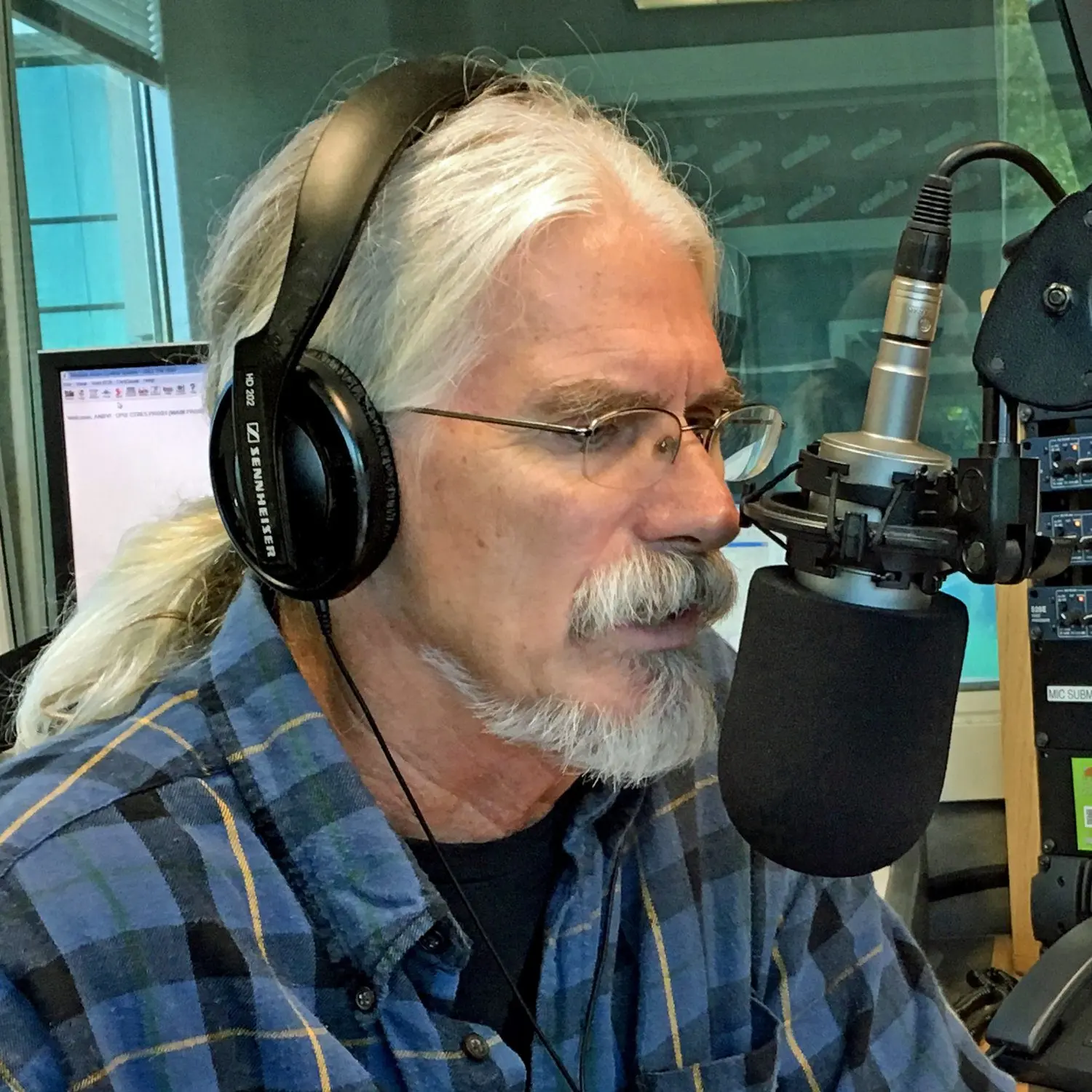
Join Steve Gregg as he kicks off the Narrow Path radio broadcast by diving into engaging discussions with callers about Christianity, theology, and biblical interpretations. This episode explores the differences between the Narrow Path app and website content, focusing particularly on locating specific teachings such as ‘Harmony of the Gospels.’ Steve also sheds light on the Jewish festivals mentioned in Leviticus and their significance in the modern Christian context.
SPEAKER 02 :
Good afternoon, and welcome to the Narrow Path radio broadcast. My name is Steve Gregg, and we’re live for an hour each weekday afternoon, and that is so that we can have you call in during the program, and we can talk live with each other. If you have questions you would like to ask and have us discuss on the air about the Bible, about Christianity, about almost anything that’s related to those subjects, or if you disagree with the host on something. Now, you might be a Christian and disagree on some point. It’s very normal for Christians to disagree with each other on certain points, and that’s quite fine. If you do, you can call and tell me about it. We can talk about it. You might not be a Christian. You might disagree with Christianity altogether. Then I’d be glad to talk to you about that, too. The number to call is 844- 844-484-5737. That’s 844-484-5737. And we’ll go directly to phone lines and talk to Kerry from Fort Worth, Texas. Hi, Kerry. I know you were on the switchboard yesterday and we didn’t get around to your call. We had too many calls. But how are you doing? Welcome.
SPEAKER 08 :
I’m doing good. Thank you. Steve, I want to talk to you a little bit about your app and the website. It seems to me that there are some topical teachings on the app that are not available on the website. I was looking for some teaching for the Harmony of the Gospels. Couldn’t find anything on the website, but on your app you had some teaching on the Survey of the Life of Christ 1998.
SPEAKER 02 :
Is it like 95 lectures, something like that?
SPEAKER 08 :
No, it was only like six lectures.
SPEAKER 02 :
Oh, okay. Well, that would be a really short subject. Now, I’m looking at the app right now, and when it lists the different options, one of them is Life of Christ. Before that, you’ve got the audio books, topical, verse-by-verse, book overview, debates, teachings, and then Life of Christ. When you click on there… there are approximately 95 lectures. They’re in 10 volumes. So Volume 1 has 10 lectures and so forth. And that is a harmony. That is a harmony of the Gospels. So I go through the entire life and teachings of Christ in detail, harmonizing the Gospels all the way through. Of course, there are separate lectures, verse by verse, through each of the Gospels separately, but this is the one that I think you were looking for. Now, I’m not sure if it’s on the website or not. It used to be. But I don’t have anything to do with the website or the app, actually. These are put together and maintained by people, you know, without my involvement. So I don’t know very much about what’s, you know, I haven’t gone through to see if everything that’s on the app is on the website. But I would say the person who maintains the app is perhaps a little more on top of things than the person who maintains the website. So I would say when new lectures come up, which these ones you’re talking about are not new at all, But when new lectures come up, I think they would always appear on the app, and some of them may be a little slow in getting on the website.
SPEAKER 08 :
Okay. Then there’s something I’m looking for. Do you have a teaching on the festivals, the Jewish festivals, in reference to how they apply to Christ?
SPEAKER 02 :
Not in depth. If you look at my verse-by-verse through Leviticus… Obviously, Leviticus 23 has all those festivals, and I go through them and talk about them, but I don’t have a series on it. I do have a series on the tabernacle, but it’s very old. I taught it back in the, I would say, in the 80s. And so I haven’t heard it since then either. So I don’t know if I’d have any different insights today if I taught it again. But anyway, there’s some on the tabernacle. And I don’t have a series on the festivals. But, of course, they’re all covered in one chapter in Leviticus. And if you listen to that chapter, I talk about them all.
SPEAKER 08 :
All right. Thanks a lot, Steve.
SPEAKER 02 :
Okay, Kerry. Thanks for your comment. Bye. For those of you who are not aware, we have at our website lectures of mine going through the entire Bible verse by verse, several hundred of those lectures. And then there’s also hundreds of lectures. of topical series I’ve taught. So I alluded to the Tabernacle, and he was asking if I had one on the festivals. I don’t happen to have one on the festivals, but you’d be amazed how many different subjects we do have rather in-depth topical lectures on, and they’re all free. If you just go to thenarrowpath.com, they don’t cost anything. You don’t have to register or sign in. You can just go listen to them, download them. We won’t even know you’re there. So that’s at thenarrowpath.com. Tons of lectures, all free. All right, let’s talk to Jack in Everett, Washington next. Jack, welcome to The Narrow Path. Thanks for calling.
SPEAKER 07 :
Hi, Steve. Thank you for taking my call. Yes, I’m thinking of the passage where Jesus said, when I was hungry, you fed me. Matthew 25. Yeah, Matthew 25, verses 31 through 46.
SPEAKER 02 :
Yeah.
SPEAKER 07 :
You know that. Yeah, so the disciples said, well, when do we do this, Lord? And he said, you know, and then when you’ve done to the least of these, you’ve done it to me. I have kind of an odd question. Would Jesus ever appear to us, assuming I understand the way that passage works, as an illegal alien? And if I care for the needs of someone who’s here illegally, giving them groceries or clothing and that sort of thing, Am I encouraging them in their illegal activity? And then I’ll just go ahead and take my answer off the air.
SPEAKER 02 :
All right. Thank you for your call. Well, I don’t know that he would because, I mean, of course, an illegal alien, the word illegal means they’re breaking the law. And I don’t know that Jesus comes to us in that form of lawbreakers. For example, I don’t think he’d ever come to us in the form of, let’s say, a rapist or a bank robber. Now, I will say this, that sometimes people who are Christians have succumbed to temptation and sometimes they’ve even committed crimes. I know some Christians who are otherwise godly Christians who in a weak moment did things that got them put in jail and so forth. And therefore, you know, certainly there can be people who are of the status of illegal aliens who are Christians. Now, when Jesus said, inasmuch as you did it to the least of these, my brethren, you did it to me. There’s at least three different views of what he means by my brethren. Dispensationalists often think he means the Jews. They think he’s talking about the Jews as his brethren. Some liberal Christians sometimes think he’s just talking about the poor in general, that he’s identifying with the poor as his brethren. Of course, if we ask Jesus what he means by his brethren, that’s not too hard to get the answer. In Mark 3, he said, those who do the will of my Father in heaven. These are my mother and my father, my mother and my brethren, excuse me, and sisters. So Jesus identified as his family those who were doing the will of his father in heaven, which would not be the Jews who reject him, nor the poor who reject him, but everybody who accepts him. Because when you are a Christian, you are integrated into Christ, into his body. The Holy Spirit inserts you and gives you a position in his body. And therefore, you are and he are identified. If you do some harm to my body, to any part of my body, you’ve harmed me. And that’s how Jesus feels about those who harm his brothers and sisters. Now, are there any of Jesus’ brothers and sisters who are illegal aliens? I’m sure there are. I mean, let’s face it. There’s people who truly love Jesus and who are trying to follow him who have slipped into doing things. And frankly, you know, there may be people who are here illegally. you know, kind of just because they were running away from something and they didn’t get legal status and they’re here. Of course, they should seek to become legal as soon as they can and probably should leave the country if it’s not unsafe to do so. But if you’re saying we should shelter persons who are breaking the law because they might be somebody that Jesus regards as one of his brethren, I think… that Jesus, when he talks about brothers who break the law, does not indicate that he’s going to give them some kind of special, he doesn’t identify with them in some special way when they’re lawbreakers. This is what Jesus said in Matthew 5, 25 and 26. This is not about illegal aliens, but it’s about lawbreaking. He says, agree with your adversary quickly. He means the person who wants to sue you, your adversary in court. agree with your adversary quickly while you are on the way with him, meaning before you go to trial, settle out of court, lest your adversary deliver you to the judge, and the judge hand you over to the officer, and the officer will throw you into prison. Okay, so Jesus is assuming, although you’re one of his disciples, you have done something which is actionable, and somebody else is taking you to court about it. You’re on the wrong side of justice in this particular case. And if you don’t settle it out of court, Jesus is saying, you may be thrown in jail. And his next line, verse 26, And what I think he’s saying there is, you know, if you go to jail because you deserve it, and because you did something, some injustice, and you didn’t settle it before going to prison, and you end up in jail, don’t expect God to spring you. You’re going to be in there as long as the sentence requires you. Until you’ve paid your last penny. Now, there are times when Christians have gone to jail innocently, like Peter, who was being persecuted for his faith. And Paul, in the case of Peter, an angel came and sprang him out of jail. But this was a very different kind of situation than what Jesus is talking about. Peter didn’t have to pay the last penny. God got him out of jail miraculously. But Jesus is saying, don’t expect me to come to your rescue and get you out of jail if you’re doing things that deserve to go to jail. If you’ve done something that is actionable in court, you better go to your adversary before you get to court and fix it. Settle the matter. And if you don’t do that, you may end up in jail, and you’ll just have to stay there until your sentence is served or you’re paid the debt or whatever it is. So, you know, Jesus is talking to his disciples, and he’s saying, you know, sometimes disciples don’t always do the right thing, but if you do the wrong thing, Make it right, because if you happen to be on the wrong side of the law and you deserve the penalty that the law prescribes, well, then, you know, I’m not going to get you out. You know, so, I mean, I would I would say that would Jesus ever be appear to us in an illegal alien? Maybe, but but I don’t. It would not be the illegality of it that he’s appearing in. It would be that if the person’s a Christian, he is a member of the body of Christ. But I’m a member of the body of Christ, and if I did a crime that was worthy of jail, and I went to jail for it, I wouldn’t expect someone to spring me if I was guilty. So I wouldn’t expect God to work any special circumstances to get me out, because I deserve to be there. So, no, I don’t think when Jesus taught, inasmuch as you do it to the least of my brain, you do it to me, that he’s thinking in terms of criminals who happen to be people who are identified as Christians. So I’m not sure that fully answers the question as you were thinking of it. I hope so. James in Memphis, Tennessee. Welcome to The Narrow Path. Thanks for calling. James, are you there? It sounds like the answer is no. Oh, okay. Well, you’re on the air. You said James? I said James.
SPEAKER 01 :
Yes, yes. I’m here, Steve. Thank you for taking my call. Look, I’ve heard preachers say that during the period that Jesus was in the garden praying, praying more earnestly, and his sweat was like great drops of blood. And I’ve heard some preachers say he sweated blood. what is your take on that? Well, I think probably medical term for it.
SPEAKER 02 :
Yeah. Yeah. I’ve heard that done too. And I think, I think the preachers who say that are probably correct. It’s of course, the wording of scripture is his, his sweat was as it were great drops of blood, which, which kind of sounds like a saying, the sweat falling from was like blood falling, uh, you know, but why would it be compared to that? Why wouldn’t it be compared to rain or, you know, um, rain off a gutter or something, you know, I mean, why would it, why would blood be used as the image of the mere fact of sweat dripping? The fact that it says, as it were, great drops of blood, I think it is suggesting that it was, in fact, red. And, you know, the gospel writers might have not known, you know, the phenomenon. How can blood, how can someone bleed through their skin? And so maybe the author is not trying to commit to the fact that this was actual bleeding, but it certainly looked like blood. In my opinion, it was blood. And as you say, preachers have sometimes, I don’t know the medical terms for it either, but there is such a thing as people under extreme stress, the capillaries in their face bursting and blood coming out through their pores. So that’s what most people think is what happened there in the Garden of Gethsemane with Jesus. I’ve had people tell me that it doesn’t say he sweated blood. It just said his sweat was dropping like drops of blood. But in my opinion, when you use a simile like that, his sweat is like blood is dropping or like drops of blood, you’re either comparing it in probably the appearance to blood or else the phenomenon of blood dripping. But why would blood dripping? be the metaphor, the simile that would be used for just dripping sweat. I mean, there are other cases of dripping that have nothing to do with blood that one could have used. So I think the blood, the red in his sweat, I think there was blood in it. We don’t have to have an agreement about that. But in answer to your question, there is that phenomenon. I think the way it’s worded gives me that impression. Thank you for your call. Let’s see. We’ve got Daniel in New Rochelle, New York. Hi, Daniel. Welcome to The Narrow Path.
SPEAKER 04 :
Hey, Steve. How are you?
SPEAKER 02 :
Good.
SPEAKER 04 :
Yeah. Yeah, Steve. Yeah. Yeah. Max, I want to ask you today, you know, I want to ask you that I’m going to ask you the desires that we have in this life, right? Our desires, like earthly desires. Will we also experience the same kind of desires in heaven, like sexual desires and desires of enjoying life? Because in the Bible it says in Psalm 16, it says, In your presence there is fullness of joy. At your hand are pleasures forevermore. So I’m going to ask you, will we experience all these desires?
SPEAKER 02 :
I understand your question. Go no further. I understand your question. I don’t know what our desires will be like in the resurrection body. Very clearly, many of the desires we have right now are those that are natural to our physical state. Clearly, our desire for food has to do with the fact that we have a digestive system that knows when it’s needing more and it sends signals of hunger. We have sexual desire entirely because of chemicals that come from glands that are in our bodies. These are physical phenomena. We get tired and maybe even lazy. because of physical exhaustion. Our bodies do have desires that define many of the desires we have right now. We do have desires also that are not necessarily directly related to our bodies. For example, the desire to be recognized, the desire to be wealthy, the desire to be famous or something. There’s desires that aren’t our glands are not causing these desires to come. They have to do with our human nature in general. So I could say that when we have new bodies, and the Bible makes it very clear that marriage will not exist in the resurrection, which to my mind tells me that our bodies will not be sexually designed the way they are now. We’ll have glorified bodies. And while there’s nothing wrong with the natural sexual drive, since God invented it in these bodies, apparently the purpose of it will not exist in the resurrection. Adam and Eve needed to have sexual desire, and so had their children, because they had to populate the earth. But presumably, when all the Christians are resurrected and living on the new earth, there will be plenty, and there won’t be need for any more of that reproduction. So the impression I have is, is that we will not have sexual desires, which simply means that our refurbished bodies will have different biology. We won’t have those glands that desire that. Now, I’ve often said that many times people were disappointed to hear that things will be different in certain ways in the resurrection. I’m sure many people feel like, wow, we won’t be married in the resurrection. But I want to be married. I like being married. Other people don’t like being married, and they’ll be glad to not be married in the resurrection. They’ll see that as a relief. But I’ve known people who, when they read in Revelation 22, there’s no sea in the new earth. They say, oh, but I like to surf. Yeah, well, you like to surf now. Apparently, you won’t have any interest in surfing then. God’s not going to have you have desires that cannot be fulfilled, especially not desires… That can be fulfilled now and won’t be able to be fulfilled then, although the desires will remain the same. God is not taking us to a place where we’ll be less satisfied than we are now, but rather more satisfied. I believe every legitimate desire we have. at that time will be something that can be gratified. And therefore, since there won’t be marriage, I don’t think we will have a desire to be married or a desire for sex. I don’t think there will be a desire for surfing, apparently, if there’s no ocean there. So, you know, our desires will be somehow different. And I liken it to, you know, a child who has a tricycle being told, you know, you won’t have a tricycle anymore. And then they get there and find out they have a two-wheeler. And a two-wheeler is actually a lot better than a tricycle. But they can’t imagine not wanting to have a tricycle because that’s all they have here. And, you know, we’re going to be different. Our desires will be different because we’ll be designed for a different set of circumstances in a different world. So I don’t know what our desires will be. I assume that our primary desire, which is true even of Christians in this life, is to be with God. to love God, to glorify God. This is what we’re made for. And true Christians, that’s what distinguishes them from non-Christians right now. If we don’t have a compelling, dominant desire that God be happy, that God be glorified, that we, even if it kills us, would bring pleasure to him, not because he’s a tyrant, but because we love him, just like we love to give pleasure to anyone we love, our children, our spouses, our parents, whatever, our friends. If you love someone, you want to please them. When you’ve become a Christian, your heart has changed from what you speak. You used to love yourself. Now you love God. You love Jesus. And I assume that’s going to be our predominant desire there as well. Now, here we have that desire. But that desire is in competition with certain fleshly desires. For example, if you desire to overeat, that’s a bodily desire that’s competing with your spiritual desire for self-control, which is a fruit of the Spirit. Now, in the new earth, we’ll still want to glorify God, but we won’t be competing with sinful appetites. Christians want to live sexually pure. But their bodies don’t always want to be sexually pure, and therefore there’s this competition between the flesh and the spirit, Paul said in Galatians 5. And so that being so, we will still want to glorify God. We’ll still want to be pure. It’s just that with our resurrection bodies, there won’t be anything. They’re competing with that desire. So we will be able to live up to what is even now our strongest desire. without that being interfered with. What other things we may desire under that general rubric, I do not know. And so we’ll find out. I appreciate your call, brother. Kurt in Story City, Iowa. Welcome to The Narrow Path. Thanks for calling.
SPEAKER 09 :
You bet. I was driving in my car with Ron and my dog, and I happened to flip to the station over here. I listen to it every once in a while, not necessarily your your program. So I listened to ways and there’s people calling in. I said, well, I got a few questions.
SPEAKER 02 :
Well, let’s hear because I have a break coming up. Give me one of your questions.
SPEAKER 09 :
Well, it’s more than just one question. It’s kind of a when the Bible talks about six days in a day and Peter talks a thousand years is a day and Moses talks a thousand years is a day. And then there’s six days, 6,000 years, and then there’s the 1,000-year reign of Christ. So that totally goes weird with most people.
SPEAKER 02 :
Well, no, those comparisons actually have existed since the early days of the church. I don’t necessarily follow this. I don’t necessarily follow this concept, but the early church fathers, some of them, did believe that the six days of creation correspond to 6,000 years of history prior to the millennial reign and that the seventh day of creation represents the 7,000 years. Now, there’s actually no reason in the Bible to suggest this. It’s true when Peter said in 2 Peter 3 that a day to the Lord is like 1,000 years and 1,000 years is like a day. He’s not telling us, here’s a code breaker. When the Bible says a day, it really means a thousand years. And when it says a thousand years, it really means a day. You know, the thing is, he says it both ways. A thousand years is like a day, and a day is like a thousand years. If we’re supposed to understand, okay, he’s telling us that when we read of a day, it means a thousand years. Well, his statement would equally be thought to mean, when it says a thousand years, it means a day. So there’s no millennium at all. A millennium lasts 24 hours. It says a thousand years, but it’s only a day. Now, Peter’s not doing that. Peter’s simply alluding to what Moses wrote. And it is one of the Psalms that Moses wrote, one of the few. In Psalm 90, it says that a thousand years in your sight are like yesterday when it is past, or like a watch in the night, a watch in the night being three hours. So there’s not some comparison of days to years or thousands of years here. What it’s saying is, with God… What happened a thousand years ago, it’s like yesterday’s him. It’s even like a few hours ago to him. In other words, it’s saying that God is not bound by the same way of experiencing the passage of time as we are. Now, what he is bound by or what his experience of passing time actually is like, we do not know. But it’s saying that what seems like a long time to us is really not very long to God. So don’t worry about it. And that’s the point he’s making. He’s not trying to give us some kind of a forecast of history. that just as the creation took six days, history will run for 6,000 years. There’s nothing in the Bible that connects those two thoughts. So, I mean, people have believed them. Many Christians believe them. There’s just no biblical reason to affirm them. I need to take a break. Our website’s thenarrowpath.com. We have another half hour coming, so don’t go away.
SPEAKER 06 :
We highly recommend that you listen to Steve Gregg’s 14-lecture series entitled, When Shall These Things Be? This series addresses topics like the Great Tribulation, Armageddon, the rise of the Antichrist, and the 70th week of Daniel. When Shall These Things Be? can be downloaded in MP3 format without charge from our website, thenarrowpath.com.
SPEAKER 02 :
Welcome back to the Narrow Path Radio Broadcast. My name is Steve Gregg and we’re live for another half hour taking your calls. Right now we have one line open. If you want to call to ask a question about the Bible or to disagree with the host about something, feel free to do so. The number to call is 844- And our next caller is Matthew in New Jersey. Hi, Matthew. Welcome.
SPEAKER 05 :
Hey, Brother Steve. God bless you. Thanks for taking the call. Sure. Steve, it may or may not recall, I was on the Zoom call. I had asked a question about demons. And we kind of ran the gamut about through the Bible where they were mentioned. And I do believe you closed by making the comment that it won’t be on the final exam, which I do love and appreciate. But I do find, like, I guess, speaking for myself, some importance in knowing your enemy, because I do feel like I’m at war here. And I guess the one thing, because we’re running towards the end of the meeting, if you wouldn’t mind, just what is your opinion of, like, the origin and what exactly demons are?
SPEAKER 02 :
Well, as I mentioned, there’s several possibilities, and there’s at least three or four views I’ve encountered, none of which are directly affirmed in Scripture, which means they are simply three or four different opinions on the same subject. They can’t all be true, and it’s possible that none of them are true. There might be a fifth view that’s actually true that we don’t know about. My opinion about demons… is, first of all, we do know they are spirits. They are called evil spirits in the New Testament. They seem to be under the leadership of Satan, it would appear. The Bible does talk about the devil and his angels. Angels can mean messengers and could mean human messengers that bring Satan’s message, but Usually people have understood that to refer to demonic powers. You know, we do know that the Pharisees believed that there was a prince of the demons named Beelzebub. And Jesus didn’t affirm or deny that. He repeated it back. Well, if I’m casting demons out by Beelzebub, as you say, then by whom do your sons cast them? He didn’t say that he agreed with the Beelzebub. He’s just putting their words back. at them and saying, well, if what you’re saying is true, then how do you account for the fact that your sons, your exorcists in your religion are casting out demons? Are they doing it by Beelzebub also? So, I mean, there’s very little that is affirmed in the New Testament about the subject. And I have to conclude from that either that the Bible is leaving out some information that we really need to know and we’re really at a loss because the Bible was so negligent in telling us what we need to know about this, or I have to believe that we don’t need to know where they came from. We need to know the problems that they caused. We need to know how to deal with them. But, you know, where they came from, that’s one of those things that God doesn’t always tell you what you want to know. He tells you what you need to know. we can be very curious about many things about the unseen realm. And there’s many people who write book-length explorations of those things in which they speculate a very great deal. I just do not speculate simply because suppose I do. Suppose I say, okay, of these opinions, I’m going to take option C rather than A, B, or D. So I’m going to take option C. Okay, well, I have no way of knowing whether I’m right or not because it could be A, B, or D. So what good did it do to pick one? You know, I can’t proceed with certainty that my speculation is correct. So why not just follow what the Scripture says? Why not just do what the Scripture says? I really think Christians, like everybody else, can be carried away by curiosity about things that are – not really theirs to know. And if God hasn’t really told us something, then probably it’s not ours to know. It’s like when the disciples said, will you at this time restore the kingdom to Israel in Acts 1-6? His answer was, it’s not for you to know that kind of stuff. And there’s plenty of things that are not ours to know. It says in Deuteronomy 29-29, the secret things belong to the Lord, but the things he has revealed… are for us and for our children that we might learn to do all the works of this law. So Deuteronomy says there are secret things that God has not bothered to reveal simply because he doesn’t see any reason to. What he has revealed is is to enable us to be obedient to what he’s told us to do. So there’s two categories of things in the mysterious realm of the unknown. There are those things that God has revealed, and there are those that he has not. The ones that he has are revealed so that we can be obedient, which means that he’s revealed his will. He’s revealed his instructions, his values, his rules, and things like that. and frankly, the origin of Satan, the origin of demons, the details about the end times, what’s going on behind the curtain in heaven with reference to predestination and things like that, none of those things have been fully revealed, at least not unambiguously. And frankly, none of those things need to be understood in order to follow Jesus. I think we, now by the way, I like theology. I like to study theology. I like to debate theology. But I only do so as a side gig. You know, to me, the main gig is following Jesus. The main gig is how does God want me to respond to these people? How does God want me to act in this situation? You know, what are the goals that God has for me to fulfill? Those are practical questions, and those are the ones that we need to know. Those are the ones that God has revealed so that we might learn to do all the works that he wants us to do. And then the secret things that he hasn’t revealed, I spend as little time as possible speculating about those. The only time I would actually spend any time trying to get to the bottom of some speculative thing is if it had a direct impact on on some practical decision I had to make about how to live to please God. And, you know, this matter of which theory about the origin of the demons is correct isn’t in that category. Wouldn’t I love to know? Of course. We all love to know secret things. But we also need to not, you know, as it were, we need to tamp down what may be seen as a rebellious curiosity. There’s things that God says, this is not for you to know. This is a secret thing I haven’t revealed. And yet I’m not satisfied with God’s decree about that. No, I insist on knowing. I’m going to do everything I can to know. And this surprised me about many things, questions about the origins of Satan and demons. And, of course, it’s a big thing with reference to eschatology, too, since God hasn’t revealed what tomorrow holds. But people sometimes insist on prying into those things. And I say, you know, maybe this is one way that we’re supposed to be like children. You know, we figure if God says he’s not going to tell us, we’ll just move along. Go next subject, you know, be satisfied with his decision about that. So I don’t really have any more information on the demons than we talked about on the Zoom meeting. So I apologize. I can’t give you any more. I will say this. There’s plenty of books out there by authors who think they can give you more. And, you know, as far as I’m concerned, they’re just as speculative as anyone else because they don’t have any more Bibles than we have. They don’t have any more books of the Bible or verses of the Bible than we have. So they speculate, and some of their theories may prove to be true, and they may be interesting. But I wouldn’t want to spend too much of my time digging, especially when they’re going beyond what Scripture says, since anything they say beyond Scripture could very well simply be a rabbit trail in the wrong direction. All right. Let’s talk to Carolyn in Seattle, Washington. Hi, Carolyn. Welcome.
SPEAKER 12 :
Hi, Steve. Thank you. I ran across an ad that is called The Pure Word. I guess I’m wondering if you’re familiar with that. It has translated the New Testament like in John 1. Jesus is asking Peter if he loves him, that there’s four different English words for love, whereas in the Greek they explain each one. So I guess I want to know if you’re familiar with that, this pure word.
SPEAKER 02 :
So are you talking about a translation of the New Testament or the whole Bible?
SPEAKER 12 :
No, it just says the New Testament.
SPEAKER 02 :
Okay. Well, no, I’m not familiar with it. Not familiar with it. The truth is there’s pretty much one word in English for love, and there are four words in the Greek for love. Of those four, only three are found in the Bible, I believe. And the two that appear in the story where Jesus said, do you love me, Peter, are the words agape and phileo. And sometimes when you note where the word agape has been used and where phileo has been used, It makes for interesting preaching, and many preachers bring it out. For example, Jesus said to Peter, do you agape me? He said, Lord, I phileo you. And Jesus said, well, do you agape me? He said, Lord, I phileo you. And then Jesus said, well, do you phileo me? And Peter said, you know I phileo you. So phileo being a much less robust kind of love than agape. And so anyway, it’s kind of interesting how that changes. But, you know, I mean, if a translation translates phileo with a different word than agape, Maybe they use the word love for agape and use maybe something like affection or something like that. I don’t know what they’re using. I’m not familiar with that translation. The fact that they call it the pure word concerns me a little bit, only because when you choose a name for a book you’re writing, or especially a translation, when you choose to call yours the pure one, It is suggesting that the others are impure. The others are tainted. The others are corrupted in some way, and you’ve got it right this time. And when you realize that the New Testament has been translated into English, there’s been about 100 or more translations into English, to say that yours is the pure one and all the others are a little diluted by human error, I’m not sure why I should believe that. that this new one is not polluted by human error. Humans translated it. And so it seems a little grandiose to call it the pure word, just because of the suggestion it makes about it being the one that is pure. They may not have meant it that way, but that’s how it comes across here in it. Anyway, no, I’ve not seen that one. I’m not trying to keep track every time a new translation of the New Testament comes out. I grew up with the King James. In the 60s, the Good News translation came out. I read that through. I thought that was interesting. Then the RSV came out. Of course, I read that. And then there was the New American Standard came out. I read through that. NIV came out. I read through that. And there were others. There was the New English. I read a little from it. But eventually, the translations started to come out so rapidly. And there’s so many of them, they’re like dandelions in a meadow. I think, well, they don’t really improve on each other that much. I don’t need to read every one of them. or evaluate them separately. After all, even one good translation is enough to really get to know what God wants you to do. So I have not made myself familiar with that particular one, or heard of it, actually, as far as I know. Okay, let’s talk to Patrick in Scottsdale, Arizona. Hi, Patrick. Welcome to The Neuropath. Hey. Hey, Steve.
SPEAKER 10 :
I am actually going to keep this very short because I’m actually just going to ask you a question for a friend of mine who’s too shy to call herself. Okay. And we are studying angels and demons and other spirit beings, and one of the topics right now is the 24 elders. So I just wanted to hear what you came across, what people are saying, and what you feel the 24 elders are. Okay.
SPEAKER 02 :
Well, the 24 elders appear as a group in Revelation 4. And then in chapters 5 and some of the later chapters, once one or another of those elders speaks up. Who are the 24 elders? Well, interestingly enough, we’re not told. We do know that they have some kingly traits because they wear crowns and they sit on thrones. They also have priestly traits. because they wear long white robes and they offer incense on the altar. So some have said, well, they’re princely or kingly, and they’re priestly, and these are a couple of roles that are part of the destiny of the church itself. You know, we’re a kingdom of priests, and we will reign. So some have felt like the 24 elders represent the church. Now, those who do… We’ll sometimes say this proves a pre-trib rapture because John goes up to heaven and there’s the church up there. And he hasn’t even seen any of the visions about the tribulation yet. So the church is already apparently raptured and in heaven he sees them there. This is, I think, misunderstanding it. I don’t think that there’s a chronological thing going on here. When John’s caught up into heaven, he sees features of heaven, the four living creatures, gazillions of angels, the 24 elders. Initially, he sees God on the throne and doesn’t see Jesus initially. And then, lo and behold, he notices in chapter 5 there’s a scroll with seven seals in the father’s hand on the throne. Then the lamb shows up and takes the scroll from him. This is all very symbolic stuff. And Jesus, for example, is not really a lamb. And the lamb, as he’s described in chapter 5, verse 6, has seven eyes and seven horns, which is obviously a symbolic description. So Jesus doesn’t have literally seven eyes or seven horns. So you can see that the very things are described in symbolic form. How do they apply to reality? I would say the majority of the commentators that I have read, though I’ve only read about 50 or so, believe that the 24 elders represent the redeemed of humanity, which would include Old and New Testament saints. But it’s not giving us sometimes some kind of a chronological thing saying, and they’re all in heaven right now, as if there aren’t Christians on earth now. There are. But it’s saying that before God and before the throne, praise and worship is offered continually day and night by the redeemed from all ages. it doesn’t mean the church isn’t still going on on earth too. He’s talking about something that goes on continually in heaven, the redeemed who are there, and the creation too. Some people think that four living creatures represent the creation. That is, the 24 elders represent the whole category of redeemed humanity, and the four living creatures represent the whole category of the creation. And what do we see? That the whole creation is praising God, Actually, as you read what the four living creatures do, they praise him for his redemption of man. And the 24 elders, who are the redeemed men, praise God for the creation, as you read of what they say. So God is being cross-praised by the creation and by the redeemed. for his entire work of redemption and creation. And that’s kind of the general idea that most scholars I know of get from it. That is, those who are not dispensational. Dispensational scholars almost always want the 24 elders to be the church in heaven, having been raptured there. To my mind, that’s a forced opinion, or it fails to, I think, understand the way the symbols are used. Now, why would it be the redeemed of the old and the new covenant? Because of the number 24, there’s 12 patriarchs in the Old Covenant from which all the tribes of Israel came. And then there’s 12 apostles who are the founders of the New Covenant community. So they suppose that 24 represents the number 12 as applied to the Old Testament people of God. And the number 12 is applied to the New Testament people of God. So they would say the redeemed of both eras. are continually praising God, and that’s one of the ways in which he is glorified in heaven, that along with the creation itself, declaring the glory of God, as some passages of Scripture tell us. So it’s a very symbolic thing. Now, by the way, 24, some have thought that number 24 also is relevant. to the fact that David divided the priesthood into 24 courses in his day, and these are represented as priests offering incense and so forth. And that number may do double duty that way too. But you do find, you know, that’s at the beginning of Revelation. At the end, when he sees the New Jerusalem, it has 12 foundation stones that have the names of the apostles, the 12 apostles on them, and it has 12 gates which have the names of the 12 apostles. or the 12 tribes of Israel. So you see the combination in the city of the old and the new covenant leadership representing the whole society of the redeemed, I believe. And that would be the way many people understand the 24 elders. Now, I don’t believe that the 24 elders are the literal 12 patriarchs and the 12 apostles. If that were the case, John would be seeing himself as one of them because he was an apostle. But I think it’s just that their number and this vision he sees represents the whole idea of God’s redeemed humanity of all time, old and new covenant, just as the four living creatures are often thought to represent the whole creation. Anyway, that’s the theory that we come across most often in the commentators, I believe. I’ve known people of their own opinions. Separate from those, usually there aren’t excellent reasons for me to believe them. So that would be the answer I’d give. Thank you so much. Okay, Patrick, thanks for your call. Carol in Northern California, welcome to The Narrow Path. Thanks for calling.
SPEAKER 13 :
Oh, you’re welcome. I’ve just moved to Northern California, and I’m I’ve just been baptized a few years ago, and I haven’t found a church that I like up here. So part of my question is, I’ve met some really nice people, and they are Mormons and other nice people that are Jehovah’s Witnesses. So my question is, is it wrong to fellowship with people that don’t, As far as I know, they wouldn’t share certain aspects of Christianity.
SPEAKER 02 :
That’s correct. Yeah, their theology is not, strictly speaking, Christian. The Jehovah’s Witnesses identify themselves as Christians, but they hold to a theology of Christ which the church has throughout history considered to be inferior. It was called Arianism in the fourth century and before that, and it’s the view that Jesus is not God. They don’t believe in the Trinity and so forth. Now, there are Christians who struggle with the Trinity and who struggle to see Jesus as literally God in the flesh, but I do believe the Bible teaches that he is God in the flesh. And so the fact that Jehovah’s Witnesses not only don’t teach it, they are adamantly opposed to it. It’s like the thing that they want to undermine most when they talk to Christians. And therefore, I would say, you know, they’re going to be… The Jehovah’s Witnesses will not be content to just fellowship with you, like go out to coffee with you and just shoot the breeze and talk about the things of God. No, they have… They can’t even read anything that’s not from their group. Their agenda is to bring everyone into their group. And so if these very nice Jehovah’s Witnesses are being nice to you, they have a plan, and that’s for you to join their group. and I don’t think their group is an ideal group. It’s definitely a problematic group in many respects. It’s cultic. It’s a cult, not only in their theology but also in their mind control. Now, the Mormons, they also identify themselves as Christians, but they also have theology that’s contrary to the Bible. Nice people, to be sure. I’m not going to deny that. But once again, they want you to be part of their group. One thing about cults, and Mormons and Jehovah’s Witnesses are both rightly regarded to be cults, is that cults believe theirs is the only way. And that everybody has to join their group or else they’ll be left out of salvation. Now, some might say, well, don’t Christians say that too? Don’t Christians say theirs is the only way? Well, no. No, Christians say that Christ is the only way. Now, we Christians… believe Christ is the only way, but we don’t say that the Baptist way is the only way, or the Presbyterian, or the Methodist, or the Episcopalian, or the Catholic, or the Eastern Orthodox is the only way. Now, some Catholics and Eastern Orthodox might think that, but the point is that being a Christian simply means that you’re saying that Christ is the only way. But the church you go to, you don’t have to bring everyone into that church. That is, into that denomination. So, that’s different. A cult feels like their group Their denomination, their group, is the only group that’s saved, and that’s cultic. So I would say don’t go there. I would say look for something a little more historic, Christianity. And there’s got to be, I don’t know what town you’re in, but there’s got to be, frankly, scores, if not hundreds of churches in your area that don’t fall into those particular errors. Yeah, the Mormons and the Jehovah’s Witnesses are not just going to be your friend. They’re going to be always trying to bring you into their group. And you can resist it, but having fellowship is not very edifying when you spend the whole time resisting their efforts to persuade you to go their way. So I would not recommend the groups. I’m not trying to say bad things about the people. I’m just saying… You should find Christians who actually hold Christian doctrines. Thank you for your call. All right. Let’s see. We’ve got who’s been here the longest. Gil in Long Island, New York. Welcome to The Narrow Path. Thanks for calling.
SPEAKER 11 :
Thank you, Alan. This is a blind caller. I wanted to ask you, I know you said I think a while back, a few months ago, that the church fathers sometimes contradict each other. Is it true that some of them held to the teaching that Mary was the second Eve and the Ark of the Covenant and the other one being the Eucharist, the actual body and blood of the Lord Jesus Christ, in other words? Is that true that some of them held to that?
SPEAKER 02 :
Well, they may have. In all the quotations we have from the earliest church fathers about such things, they do not affirm that. specifically what the Catholic Church teaches about that. The Catholic Church says that the Church Fathers held the same views they do about Mary and about the Eucharist. But they read their views into the early statements. The earliest statements for the first three centuries or more, when they talked about the body and the blood of Jesus, for example, They were saying that when they take communion, they’re taking the body and the blood of Jesus. Well, we say that too. Protestants say that. We don’t believe that the bread and wine turns into the physical body and blood of Jesus, but we recognize that we’re taking, as it were. the remembrance of the body and blood of Jesus. Now, in Scripture, when it says, you know, this is my body, this is my blood, of course he means by that this is the emblem of those things. And it’s very clear from the ceremonies he’s involved in, which is the Passover ceremony, and the way he’s mimicking the actual wording of the traditional Passover, which does not imply at all a change in the substance that is eaten, but has similar wording, He was not saying that there’s something magic happening to these elements. He was just saying they represent it. But he did use that kind of language, and the church used that kind of language too. Now, when a Catholic thinks that this is literal, they’ll read literal meaning into those words, not only when Jesus has them, but when the church fathers say them. It’s not until some centuries after the apostles that the Catholic church begins to have statements that are very specifically literal. transubstantiation statements in the Fathers as that doctrine began to develop. Likewise with Mary. There’s nothing in the earliest Church Fathers that would suggest any of the Marian doctrines of the Catholic Church, though they can read them into them. All Christians have respected Mary. Protestants do, too. But to give her the special status that the Catholic Church does and the Orthodox Church does is not in Scripture or the earliest Church Fathers. I’m sorry I’m out of time. You’ve been listening to The Narrow Path, our website, thenarrowpath.com. Thanks for joining us.
