



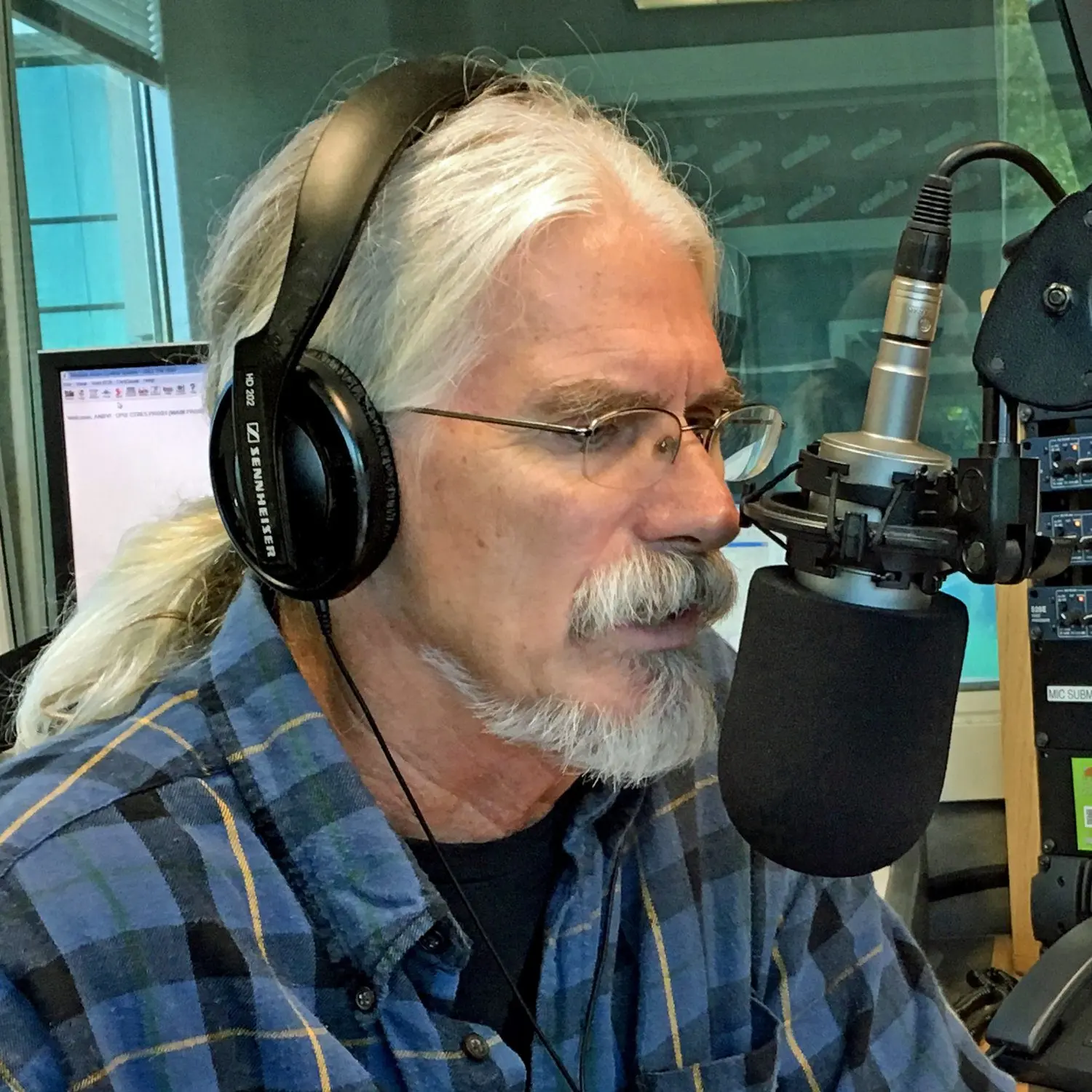
::Daily Radio Program
SPEAKER 03 :
Good afternoon, and welcome to the Narrow Path radio broadcast. My name is Steve Gregg, and we’re live for a commercial-free hour of taking your calls. And you can call in if you have questions about the Bible, about Christianity, or let’s just say you have a disagreement with a host. Perhaps a theological disagreement, you know, a Christian view versus another Christian view. Or maybe you’re not a Christian and you would like to disagree with Christianity and the Bible altogether. We welcome your calls today. The number is 844-484-5737. That’s 844-484-5737. 37, if you’d like to join us. I’ve got a few announcements to make that have to do with the next few days. I’m in Southern California, and I’ll be speaking three times in different places. And this Thursday night, I’m going to be talking, I imagine, a very small group. I don’t know how many men it is. It could be a mere handful of men. But it’s in Covina. And I was just contacted by one of these men. They meet in a Starbucks in Covina. And they are apparently people who listen to this show and are interested in having me come and share with their group. And I was called and agreed to go. So this Thursday night, they also said I could announce it on the air. So if you’re in the Covina area Thursday night and free to come from 630 to 830 Thursday night, this Thursday, At the Starbucks, well, there’s lots of Starbucks, of course. In Covina, this one is at 611 South Citrus. That’s 611 South Citrus at 630 this Thursday at the Starbucks there. Be glad to have you join us if you’re a guy. This is a men’s group, and that’s in Covina. Now, this Saturday, I have two things going on. In the morning, I’ve got my monthly men’s Bible study in Temecula, 8 o’clock in the morning. And then in the evening, I’m going to be talking at the Orange County Rescue Mission at the Village of Hope in the evening. Now, that’s not technically a public meeting. And generally speaking, it’s a meeting for the people who live there. But, you know, if you are in that area and strongly desire to go, you can always ask to get permission to come. Anyway, those things are happening this weekend. If you want to look into those, attend any of those, The time and place of each of those events is listed at our website, thenarrowpath.com. That’s thenarrowpath.com under the tab that says Announcements. And that’s all I need to say about that. Let’s talk to Todd in Cressona, Pennsylvania. Todd, welcome to The Narrow Path.
SPEAKER 04 :
Hi, Steve. Thank you for taking my call. I’m almost afraid to ask the temperature is like where you’re at compared to Pennsylvania right now. Comfortable. Yeah. My question, without going into much of a rabbit trail or a lamb’s trail as it is right now, is about Exodus 12 and the date and the timing of the Passover. And my question is, from your understanding, at least from the first Passover listed in Exodus 12, Were the lambs that were slain in verse 6 between the two evenings or at twilight, did that happen following the evening or the evening of the first month or Aviv 13 going into 14 or at the end of the day on the 14th going into the 15th? And the reason I ask is because, you know, I read some of the text and it seems like to To me, that’s what it should be at the beginning of the day or the beginning of the evening. 2 Chronicles 35 leads me to believe that it all happened in one day. But, you know, there’s a lot of speculation about whether that’s how the first Passover dates were. And if you think it changed, when did it change to like the 14th and 15th kind of timeframe that, you know, you see celebrated today? And if you understand that question, I’ll take my answer off the air. But thank you very much. All right.
SPEAKER 03 :
Yeah. I’m not sure that I can answer that authoritatively. As I understand, the 14th day of the month, which is the important date, actually, of course, in the Jewish reckoning, begins at sundown on the 13th. So, you know, we would think of the 14th day of the month maybe starting at midnight of the 14th day of the month. That’s how we begin our days. But in their reckoning, the day began at 6 o’clock or sundown the day before. So there was evening of the previous day, and then there was the day that was the day under consideration. And, of course, the 14th day of the month would end at 6 o’clock in the evening on the 14th, and that would begin the 15th day. You know, I’m not sure that it’s unambiguous, you know, but I would assume – that the 14th day of the month, beginning the night before what we call the 14th, would be the time for the slain and eating of the lamb. Now, I haven’t looked into developments about that over the years. I’m not very interested in the details of how Passover is observed today. Of course, the Jews have been doing things their way for many hundreds of years, thousands of years even, since the time of Christ. And some things that they do are not exactly the way they were done in the Law of Moses. But I’m not familiar with all the changes they may have made, so I may not be able to help you. What I’d be curious to know is what your reason would be for being concerned about this. Are you still there? Are you desirous to keep the Passover yourself?
SPEAKER 04 :
No, no, no. It’s just… Partly, obviously, because of the question in John’s Gospel with the Passover and the Feast of Unleavened Bread, and partly just for me trying to reconcile it in my mind. The Passover is on one day. On the 15th was the Feast of Unleavened Bread. That’s a separate festival. So I was just trying to figure out, okay, which day… I should be able to read the Bible and should be able to make sense of this, whether it was the start of the 14th, from the 13th into the 14th, that the lambs are slain then, or at the afternoon of the 14th into the 15th, because only one makes sense to me biblically with the Exodus, leaving the Passover actually happening. In the middle of the night, that would make sense to me on the 14th, because it is the 14th. The leaving Egypt on the 15th would make sense to me as the first day of the Feast of Unleavened Bread.
SPEAKER 03 :
But if you kind of switch it from the 14th to the 15th, that time frame kind of goes a little hinky, and then you have a Passover that’s actually… So is your concern the desire to reconcile the seeming contradiction between the Synoptic Gospels and the Gospel of John as to when the Passover took place?
SPEAKER 04 :
Yeah, that and just to wonder if the Passover in Exodus 15 was originally on one day, but as you see, like with everything else in the Old Testament, maybe they started to change and it became the 14th and 15th and kind of understand maybe if there was a development.
SPEAKER 03 :
Yeah, well, as I said before, I can’t really answer that authoritatively. I don’t know if the Jews today do things the same way they did back then. And there is a little bit of ambiguity there. When you talk about the 14th, the way the Jews thought of it, let’s just say, just for the sake of discussion, let’s say the 14th in a given year fell on a Wednesday. Well, that would mean that it began Tuesday night at sundown. And so Tuesday night, they could have kept the Passover and it would have been on the 14th. And I honestly have not worked with those details very much nor cared about them. But there is an issue that maybe is on your mind, and that is that it’s very clear that in Matthew, Mark, and Luke, Jesus is said to have taken the Passover meal with his disciples before he was arrested, before he went to the Garden of Gethsemane. He and they had the Passover meal. And then, of course, the next morning, he was standing before Pontius Pilate. And according to the Gospel of John, the Jews did not want to go into the house of Pilate, which might defile them because they wanted to keep the Passover. Now, Jesus’ disciples had had the Passover meal the night before, according to the Synoptic Gospels. What’s the deal with the Jews? They didn’t want to defile themselves because they wanted to keep the Passover. Had they not kept it yet? Did Jesus take it earlier than everybody else, or what? To me, this has been much discussed by scholars, but to my mind, The fact that they wanted to keep the Passover doesn’t necessarily mean the Paschal meal. Because the whole week, beginning with the Paschal meal and followed by seven days of unleavened bread, the whole week was called the Passover in some contexts. So, I mean, to say they wanted to keep the Passover could easily mean that even though they’d had the Paschal meal the night before, as Jesus and the disciples did, there were still another seven days to keep the Passover, and they didn’t want to disqualify themselves by going into a Gentile’s house. So I don’t see the problem that some people do. And I’m not really sure that saying, you know, whether it was on the 14th or the 15th is going to be directly relevant to answering that issue. And I’m not sure if that was the main issue in your mind. But for many it is. For many people, they wonder, did Jesus, did he take the Last Supper on the Passover? Did he do it a day before? You know, breaking tradition or what? And that is a question that I can speak to. as opposed to the other question you brought up. I don’t really have much authority or knowledge about that. But I do believe that Jesus and his disciples did keep the Paschal meal on the normal Passover day, but that the Jews wishing to continue keeping the Passover for the whole week avoided defiling themselves by going into Pilate’s house. I don’t know if that will solve the problem you’re really… raising. I have to say, if that’s not your main concern, I’m not fully understanding what the issue is or why it is an issue. But I could see how it would be if that’s the question you’re wrestling with. Greg in Sonoma, California. Welcome to the Narrow Pack. Thanks for calling.
SPEAKER 06 :
Blessings, Dave. This is in reference yesterday. Tom from Largo, Florida. He believed in evolution from his higher learning education. There’s a Website that’s called oneplace.com. It has all kinds of Christian speakers and other websites that they have that people can choose. And then Narrow Path is also included on OnePlace. So that’s for people that miss your talks can get it afterwards. Creation Moments is a sub-site that’s on OnePlace. And it’s really short, two minutes, and it talks about all the different things that God has done and shows the higher intelligence had to have done it, and it shows and explains how magnificent different parts of creation show that God is the creator. So I just wanted to throw that out for everyone.
SPEAKER 03 :
Okay. Well, thank you. There’s lots of good websites that have that information. I want to say that I kind of want to apologize to Tom because his call was at the end of the show. And, you know, as I saw the clock ticking away, I had to put him on hold because he was, in some measure, you know, talking over me and saying something that he had already said. I wanted to get some answer in before we ran out of time. And rather than talk over him, I just put him on hold. That’s what I do, by the way. And some people get upset. Oh, you put me on hold. Yeah, I usually put you back on, but I put you on hold if I want to talk and you’re not letting me talk. That’s kind of my policy. And anyway… we didn’t get to talk to him enough to find out everything about his position. It wasn’t clear to me whether he was a Christian who believed that God used evolution or as a means of bringing about all the different species. Or if he was a non-Christian who may have been an atheist, arguing for evolution as a replacement for the need for intelligent design. I would say most evolutionists fall into that latter category, though there are some Christians who believe that there was intelligent design, but the intelligent designer God you know, kind of directed the process of evolution. Now, I don’t, I don’t think that, but those who think that God did use evolution would be, they’d feel like they’re accommodating the actual, you know, claimed geological evidence for evolution and maybe some of the, you know, biochemical and microbiological evidence and so forth that they’ve found or that they claim to have found. And so sometimes Christians are trying to thread the needle. They want to accept the arguments of the evolutionists because they have been misled into thinking that they are somehow definitive. But they don’t want to give up their faith either, so they kind of mix God and evolution together. Now, I’m not saying a person can’t do that. If I were to become convinced that the scientific evidence definitely shows that evolution occurred, there’d be nothing that would make it impossible for me to say, oh, well, that’s interesting, so that’s how God did it. So God used evolution. Not a problem. The problem I have, of course, is I don’t believe there’s any definitive evidence that evolution did happen in the sense that Darwinists think. Certainly that there’s variation within species. No one has disputed. All creationists believe that. But the idea that that variation accumulates in such a way as to create whole new body plans, whole new adaptations to different eco zones, like from a gilled fish to a reptile that lays its eggs on land. or from a reptile to a bird that flies. You know, there’s just not any real evidence that those changes took place in that way. We don’t have the even series of transitional forms in the fossil record that would document this. And therefore, and by the way, the fossil record is the only physical record we have of what happened. All the other physical things they look at in laboratories and things they call on as proof of evolution, are physical things, but they don’t have to be interpreted in light of evolution. They can be, but in many cases, some of them can’t. Actually, there’s many, many things in the physical realm that evolutionists simply do not have any idea how it happened. And if you say, well, that’s because it can’t happen without God, they’ll turn on you and say, well, that’s just a God of the gaps. You’re just invoking God because we don’t know certain things. But the thing is, the believer in creation doesn’t rely on a God of the gaps. We’re not invoking God on the basis of things we don’t know. We’re invoking God on the basis of things we do know. And one thing that everybody knows is that information, let’s just say the information found in a book or in a set of books, the whole Encyclopedia Britannica, that doesn’t just, it’s not just a physical object that has a hardcover and pages and black ink on the pages. It’s not even the fact that it has black ink that is arranged in letters and words. But rather, the letters and words convey information. They’re not just random letters and words. They are arranged in a way that the author is communicating to readers. And that’s what we find in the DNA molecule. It is an instruction manual that teaches the cell how to build robots called protein molecules. And every Living cell has many of these robotic-looking protein molecules. All you have to do is go online and look for an animation of how these protein molecules operate, and you’ll see immediately this is not accidental. And the construction of these robots requires intelligence, and there is that intelligence reflected in the code in the DNA. Somebody wrote that code, and the cells follow that code. Now, one thing we do know, we’re not arguing from ignorance here, we’re arguing from knowledge. We know that information has never been known to come from any source other than a mind. And therefore, one would have to be a bigot against the idea of knowledge. intelligent design, to miss the fact that life came from non-life. Now, of course, this isn’t really too much about evolution because life springing from non-life is outside the realm of evolution because evolution simply talks about how one form of life mutates and develops into a higher form of life over time. But you don’t have any evolution of that kind going on before there is something already alive to mutate. The original living thing has to be brought about from chemicals that in no sense have any life in them. And they have to be organized. And information has to be injected into them to tell them how to operate. And, you know, this is before there’s any evolution. As soon as you have a cell, you can talk about mutation. You can talk about evolution. But until you have a living thing, you don’t have any evolution at all. And yet evolution, especially if it’s atheistic evolution, requires a living thing to come about from non-life. And by the way, many scientists have said the distance from non-life to the first simplest living thing is a greater distance than the distance from an amoeba to a man. You know, once you’ve got an amoeba developing into all these animals and plants and becoming man, that’s quite a distance it’s got to go. But the distance from chemicals that are not alive to the first organized cell that is alive is a much greater distance to spend, and they haven’t the first idea how that was put together. Anyway, yeah, I didn’t get to hear from Tom exactly which position he was championing, and it was a little frustrating that it was at the end of the show because I like to talk about these things at length, and frankly, the issue deserves an extended discussion. Carol in the Oregon Coast, welcome to The Narrow Path. Thanks for calling.
SPEAKER 01 :
Hi, Steve. This is a question that will help us. in the present situation that we have. In Ephesians 6, where it talks about spiritual warfare, where, you know, I was taught somewhere that, you know, the sword of the spirit is the word of God. But it’s not just the word, it’s the spoken word.
SPEAKER 03 :
Because of the word rhema.
SPEAKER 01 :
Is that it?
SPEAKER 03 :
Yeah, the word word in the Greek here is rhema. And there are some people who make a great distinction between the word logos and the word rhema. Both of them are translated in English as word. Logos, of course, is found in many places in the New Testament, most famously probably in John 1.1. In the beginning was the logos. and the Logos was with God, and the Logos was God. But then again, there’s many times in the New Testament that our word, an English word, is translated from a different Greek word, not Logos, but Rhema. Now, there are some who have argued that the Logos should be understood to be like the written word, and the Rhema like God’s spoken word, or something like that. The truth is, that the New Testament does use rhema and logos, in some cases, entirely interchangeably, which means whatever difference they’re claiming to be in them is not necessarily recognized by the authors. More than that, even if we do recognize that there are shades of difference between rhema and logos, I don’t believe that it can be shown that rhema must always refer to a spoken word, unless it’s speaking of the fact that it’s originally spoken from God, although it now has been written down for us. I mean, the Ten Commandments were spoken from God. Many things were spoken from God to Moses, for example. Jesus spoke… as it were, from God to his disciples. But we have those things written down. Now, if when we think of the word rhema, we’re thinking primarily as that which is spoken by God, his word. You know, it may be that there’s a tendency for rhema to be used that way more. Although certainly the word logos doesn’t always mean the written word, as some would suggest. Certainly in the beginning was the logos doesn’t mean in the beginning was the written word. It’s talking about Christ himself as the Logos, and there was no written word before the earth was created. So, you know, this distinction that a lot of teachers make is, I think, in a high degree artificial. But even so, that which we call the written word, the Bible, at least most of it, that which is written by prophets and apostles, or that records what Jesus said, could easily be said to be The rhema, that which came out of God’s mouth, what he spoke, and now is inscripturated or written down for us. Now, Paul did say, take the sword of the spirit, which is the rhema of God. And so some teachers may say the word becomes a sword for us when we speak it. Frankly, this kind of sounds like a word of faith position to me. They would say, you know, you have to say things or they won’t happen. You’ll have what you say. And the word is given power when you speak it. Well, I don’t think the word is given power when you speak it. I think the power is in the word of God itself. And I think that there are times when speaking it is what we must do. And the power that’s in it, you know, is conveyed through the speaking of it. However, if the word is, let’s say, not spoken by us, but let’s just say we just read it in the Bible. it still has the same power. It’s the same word. It’s still every word that proceeds out of the mouth of God. Even if those words are written down for us to read, they’re the same words and the same power, I believe. So, you know, someone’s making a big distinction when it comes to spiritual warfare. You have to speak the word. Well, I’m not saying you shouldn’t. But I personally believe that in the context, Paul is actually using the term the word of God very specifically to mean the preaching of the gospel. He’s talking about our spiritual warfare, and that warfare is between two kingdoms, the kingdom of God and the kingdom of Satan. The kingdom of God is taking away ground from the kingdom of Satan. It’s an invasion force coming against Satan’s domain and taking his captives from him, as Jesus said he was doing. He was setting his prisoners free, spoiling Satan’s house, the strongman’s house. And that’s what we do when we go to the nations and preach the word of God, the gospel. People change loyalties over to Christ. They come out of the power of darkness into the kingdom of their own dear son. They become part of God’s kingdom at the expense of Satan’s kingdom. This is what the whole spiritual warfare is about. It’s taking territory from Satan and souls from him. Now, this is done when people hear the gospel and respond to it. Now, you know, when I read the Bible, not everything in the Bible is the gospel itself. The gospel is certainly in there, but there’s instructions of other kinds. There’s information of other kinds. Not everything in the Word of God is strictly speaking the gospel. But I’m thinking, in the context of spiritual warfare, Paul is, when he uses the term Word of God, primarily speaking about the preaching of the gospel. And of course, that’s spoken or written, because you can have a written tract. The word of the gospel is that which is the sword that pierces and conquers the territory and recovers the hearts of the prisoners of Satan. At least as I understand it. Hey, I need to take a break. Thank you for your comment. You’re listening to The Narrow Path. We have another half hour coming, so don’t go away. We are listener supported. If you’d like to write to us, it’s The Narrow Path, P.O. Box 1730, Temecula, California, 92593, or our website, thenarrowpath.com. I’ll be back in 30 seconds. Don’t go away.
SPEAKER 02 :
Take the Narrow Path with you everywhere on your phone or other device by downloading our app from the App Store or from Google Play. You can listen to the radio broadcasts live or later from the app, as well as many other lectures posted at our website. Search for the app by typing the same name as the website, the Narrow Path, and enjoy the learning experience. It’s rare to get such good stuff for free these days.
SPEAKER 03 :
Welcome back to the Narrow Path radio broadcast. My name is Steve Gregg, and we’re live for another half hour, taking your calls. If you have questions about the Bible, the Christian faith, want to bring those up for conversation, we’ll discuss them with you. If you see things differently than the host, feel free to bring that up. We’ll discuss that, too. The number to call is 844-484-7000. 5737. That’s 844-484-5737. Alright, our next caller is Eddie calling from Jackson, Kentucky. Hi, Eddie. Welcome to the Narrow Path. Thanks for calling.
SPEAKER 08 :
Hi, Steve. Thank you for taking my question. My question is referring to Israel being God’s chosen people. Uh, I think it’s Romans 10 or 11, somewhere around there, where it says, He will not have you be ignorant, brethren, of the fact that Israel was binded in part until the fullness of the Gentiles come in. But as it is written, all Israel shall be saved. How do you get around that? the explanation that Israel is not God’s chosen people, whereas I’ve read nowhere in the Bible where it says all Gentiles shall be saved.
SPEAKER 03 :
Yeah. Well, that’s a very good question, and many people have it. I’ll be glad to address it. What makes Paul’s discussion in Romans 9 through 11 confusing to many people? is that they don’t notice his train of thought. They don’t recognize what he’s trying to develop. It’s a three-chapter long argument that develops a point that begins at the beginning of chapter 9 and concludes at the end of chapter 11. You’re referring, of course, to Romans 11, 25 and 26, the verses you just quoted. That’s almost at the very end of this three-chapter discussion. And it concludes it quite reasonably if you follow his train of thought. He points out in the first five verses of chapter 9 that most Jewish people are lost, so much so he could wish himself accursed from God himself if it would guarantee their salvation, which, of course, he would never even contemplate if he thought they were already saved or destined to be saved. Clearly, he’s concerned that the Jews are not a saved people. They’re rejecting Christ. But then he’s, and what he discusses from that point on, is the fact that God had made promises in the Old Testament that he would save Israel. There’s many places, and some very clear, in the New Testament that says when the Messiah comes, you know, Judah will be saved, Israel will be saved in the Lord, and so forth. The Messiah will save Israel. He’s the Savior of Israel. Okay, so why is it, and this is what Paul’s addressing here, Why is it that Jesus has come and gone, and if he is indeed the Messiah, the Jews are still not saved? Why are there still so many Jews who are lost if the Messiah was supposed to save the Jews? Isn’t Israel supposed to be saved, according to Scripture? That is the dilemma that Paul is addressing here. And he begins by saying in verse 6 of chapter 9, Well, not everyone who is of Israel is Israel. God’s promises have not failed to come true, he says. He says it this way, but it is not that the word of God has taken no effect, which is, you could paraphrase readily, it’s not that the promises of God have failed. In other words, they haven’t. If God promised that Israel would be saved, that promise has not failed. What’s that mean? Well, it means it has succeeded. And he explains how that is so. How is it that this promise has succeeded? Well, you have to realize, he said, that they are not all Israel. In other words, there’s a promise that God will save Israel. But who are we calling Israel? There are those who are of Israel, whom Paul in a few verses later refers to the children of Abraham according to the flesh. He also uses that term in Galatians to say that the Jewish people in general are Abraham’s seed according to the flesh. But he says, but they’re not Israel. Those who are physically descended from Abraham are not necessarily Israel. The true Israel is a smaller subgroup within the larger one. The nation of Israel, the race of Israel, is not whom God is talking about when he says the Messiah would save Israel. It’s talking about that other Israel that Paul says. Not everyone in the nation of Israel is this Israel that these promises are about. And then he goes on in chapter 9 to talk about how the true Israel that these promises apply to are a remnant. He points out even Abraham’s own children. There were eight sons, and only one of them belonged to that remnant. And then that one, which was Isaac, had two sons, Jacob and Esau, and only Jacob was part of that remnant. He’s pointing out that you can be descended physically from Abraham and Isaac, and even Jacob, it’s implied, and not be part of Israel. Not everyone who’s of Jacob or of Israel is the Israel that is mentioned in the promises. And he makes that very clear when you get to Romans 9, 27, and he quotes from Isaiah chapter 10. He says, Isaiah also cries out concerning Israel. And here’s what he quotes from Isaiah. Though the number of the children of Israel be as the sand of the sea, only the remnant will be saved. Okay, wait a minute. I thought Israel was going to be saved. Isn’t the Messiah supposed to save Israel? He says, well, yeah, but you have to understand, Israel isn’t everyone who’s Jewish. Israel means the remnant of Israel. And he quotes Isaiah favorably. The children of Israel, those physical Jews, may in fact be as numerous as the stars of the sky and the sand of the sea, but only the remnant of them are promised salvation. And as you look at the Old Testament promises, Again and again, you find that it does mention it’s the remnant. It’s the remnant that God is making these promises to. And Paul’s bringing that out. Yeah, most Jews are not saved because they’re not Israel. Not the Israel that would be saved. The Israel that would be saved are the faithful remnant. And not all Jewish people are of that faithful remnant. Paul was, and he mentions that in chapter 11. He says, I am. I’m of the seed of Aaron. I’m saved. And he says in Romans 11, 5, even now there’s a remnant. that are saved. So, in other words, he’s not arguing that the whole nation will be saved. He’s saying that, no, only a portion of them will be saved. Paul says, I’m part of that remnant. There are many others. There are lots of saved Jews. On the day of Pentecost, there were 3,000 saved Jews before the end of the day, and the number kept growing before there were any Gentiles. These were the faithful remnant in Israel, and they were saved in the Messiah. The Messiah has saved the faithful remnant. Now, we can see that Paul, even in chapter 9, is using the word Israel more than one way. I mean, in verse 6, they are not all Israel who are of Israel, uses the same word twice, meaning two different groups. Therefore, when you find the word Israel used anywhere else in the discussion, we say, which Israel is he talking about here? Now, when he gets to chapter 11, He uses the illustration of an olive tree. He borrows this from Jeremiah 11, verse 16, where Israel in Jeremiah is referred to as a green olive tree with some of the branches missing. In Jeremiah’s day, the branches that were missing were the ones who had been carried away into Babylon. There was still a remnant who had not been carried away to Babylon that were still part of Israel and still attached to the olive tree. Paul picks up that notion and applies it to salvation. He says, listen, the olive tree is, of course, Israel. But some of the branches, some of the Jews who are originally part of Israel, are broken off because of unbelief. That is, they’re not believers in Christ. Therefore, they’re not part of Israel. They are branches that once were part of Israel, but they’ve been broken off. And a branch that’s broken off of a tree is no longer part of that tree. So he says, you know, there are branches that were broken off. Now what do you have? You have a tree that has fewer branches than before. But the branches that are there are the ones who are saved. The ones that are broken off are the ones who are not saved. They still are Jewish people, but they’re not part of Israel, Paul is saying. They’re not part of the tree. The tree is the saved community. And it was reduced from, you know, in Old Testament times, including, you know, the nation of Israel as a whole, to being in now a remnant of people, the ones who believe. And then he says, and then Gentiles have been grafted in too. So now the tree has believing Jews. And believing Gentiles. But does not include unbelieving Gentiles or unbelieving Jews. So not all Jews, not all those who are part of the natural branches of the tree are Israel. Only the faithful are. Now he says in verse 25, I don’t want you to think that, to be ignorant of this mystery, partial hardness or blindness has taken part to Israel. Meaning, in this case, the Jewish people. until the fullness of the Gentiles have come in. Now, it’s the contrast with Gentiles that makes us know he’s talking racially about Israel in the first instance. Look at the Jews and the Gentiles. Some of the Jews have been hardened, and many Gentiles are being brought in. But then he says in verse 26, in this way all Israel will be saved. Now, he doesn’t say someday all Israel will be saved. He says in this way. That is how. By unbelieving Jews being taken off the olive tree, Gentile believers being added to the olive tree. In this way, all the branches, Jew and Gentile, of Israel, which is the olive tree, are saved. He’s not talking about eschatology of the end times. He’s talking about how people are saved. People are saved by being attached to Christ, by believing in Christ. Jew or Gentile, they’re part of the tree if they believe. They’re not part of the tree if they don’t. And that tree is Israel. And so he says, so all of Israel, meaning all the true Israels, All the true Israel made up of the believing Jews and the believing Gentiles will be saved. Now, someone says, but they can’t. Paul can’t mean Israel ethnically in verse 25 and then in verse 26 mean Israel is just a remnant. Well, sure he can. He uses the word Israel twice in one verse, meaning different things. In chapter 9, verse 6, they are not all Israel who are Israel. Paul has already set the precedent of saying, we can speak of Israel as the race, or we can speak of Israel as the saved remnant. And we can do so, we can mention both of them in the same sentence, and each in their own way can be called Israel. But the Israel that is saved is the remnant, not the race. And so when Paul says, as far as the race is concerned, in contrast with Gentiles, they’ve been partially blinded. And Gentiles are coming in. In this way, all the Israel will be saved. And you see, he’s come full circle. The question in chapter 9 is, why did the prophets say that the Messiah would come and Israel would be saved? He was saying, they are. And this is the way they are. By trimming off the branches of Jews who were not believers, and by including the Gentile branches who have become believers, in this way, the true Israel, the olive tree, all of Israel, the Gentile and Jewish parts of Israel, all will be saved this way. He’s not saying that the Jews who have disbelieved and who were broken off are going to be put back on. He never predicts that. And, of course, if he had, he would have been lying because Paul’s talking about in his own day. He’s talking about Jews who had been broken off the trees. He’s using a past tense. He’s explaining why the Jews of his day are not all saved. Well, because they didn’t believe in Christ, and therefore they have been broken off. Now, if someone thinks that they, the same branches, are going to be put back on, then he’d be saying that every Jew that rejected Christ in his day would someday come back to Christ. And that hasn’t happened, so he would have been off by that. He’s not even talking about a future generation of Jews that will, because he’s never introduced any of those. He’s never talked about any Jews of any generation other than his own in this whole three chapters. He’s talking about explaining the phenomenon that Jesus has come and the Jews of his day still aren’t saved. Why aren’t they? Because they’ve been cut off the olive tree because of their unbelief. The saved Jews, the believing Jews, have not been broken off, and they are saved. And when Gentiles are added to that tree, the whole tree, Israel, is saved in this way. He doesn’t say then. He says in this way, all Israel will be saved. So that’s what I understand. I understand that, you know, when he says all Israel will be saved, he’s reintroducing the thought that came up in Romans 9-6 and was repeated numerous times, including… 9, 27 and 11, 5 and others where he talked about the remnant is saved. The remnant is Israel. And this is what Jesus actually meant when he saw Nathaniel coming to him in John chapter 1. At the end of the chapter, he said, oh, here comes an Israelite indeed in whom is no guile. What do you mean Israelite indeed? All the people around Jesus were Israelites in the sense of the seed of Abraham according to the flesh. But he was one of the remnant. He was one of the true Israelites. He’s one who’s really an Israelite in the sense that matters. And so were all those who followed Christ. They were Israelites indeed. So it’s all of those, all of that Israel, the true Israel. Israel indeed. They are the ones who are saved. And that’s what Paul’s arguing there. I appreciate you bringing up that question. I’m sure many people have the same question. Let’s talk to Sean from Abbotsford, British Columbia. Hi, Sean. Welcome.
SPEAKER 07 :
Hey, Sean. Sorry. Hey, Steve. Thank you very much for what you do. Long time listener and I really appreciate your knowledge and your humility. And yeah, on behalf of so many people, thank you very much. I have a question that I don’t want to be a stumbling block, but I do want to hear your opinion on when it comes to the Trinity, is it okay or should we like worship the Holy Spirit. Personally, I don’t think they’re all equal, and like I said, I don’t want to be a stumbling block, but I think God the Father is number one, Jesus is the king of us and our universe, and where does the Holy Spirit sit, and is that entity worthy of worship?
SPEAKER 03 :
Well, let me just say, we don’t read of anyone worshipping the Holy Spirit per se. in the New Testament. That doesn’t mean the Trinity doctrine is false, nor that it’s true. It’s just a fact. We don’t see that happening. Jesus himself, I believe, is God in the flesh. But he did not encourage even people to worship him. He did not forbid it. There were people who bowed down to him, worshipping him, and he did not say, get up off your face. I don’t deserve that. But he just never encouraged people to worship him. He encouraged people to come to the Father. He came to glorify his Father. He didn’t come to glorify himself. He came to glorify the Father. He came to bring people to the Father. That’s what he said. No one comes unto the Father except by me. Jesus came to restore the prodigals to their Father. And so he didn’t come to distract from the Father or to call attention from the Father to himself. He came to reveal the Father, to represent the interests of the Father, to glorify the Father, and to return the prodigals to the Father. The mission of Christ was Father-oriented. That doesn’t diminish who Christ is. It just means that he didn’t go around telling people to worship him, nor to worship the Holy Spirit. Now, this doesn’t mean that the Trinity doctrine is false. The Trinity doctrine holds that there’s only one God. and that the Father, Son, and the Holy Spirit are all in some way God. Now, I say in some way. I could give perhaps a more orthodox language from the creeds or something, but that would go beyond Scripture. The creeds may be true, and I’m not saying they aren’t. The creeds may be completely true about the Trinity, but they use language that’s not found in Scripture, and so I’m just saying. They may be telling the truth in different words, but the Scripture doesn’t use those words. I believe that in the Trinity, I believe the Father, Son, and Holy Spirit are all God, and I believe there’s only one God. How that works out, I have theories about in my head, and so do other people have different theories. Even people who are very orthodox, and let’s just take a number of very, very mainline orthodox people from various denominations, Catholic and Protestant, And they all believe in the Trinity. My guess is that if you could get inside their head and see what their picture in their mind is of the Trinity, you would not find it the same all the time. You know, some people think of God as a committee of three. Some think of him maybe as a three-headed God kind of thing, you know, a Siamese twins God. You know, I don’t know. There’s different people, and probably both of those are wrong. But the Bible does not give us a picture or analogy of the Trinity. In fact, the Bible doesn’t give us an explanation of the Trinity. So there are people who follow Christ and who love Christ, but who struggle with their perception of the Trinity. And apparently that’s not forbidden. I mean, the Bible doesn’t say that we have to understand the Trinity. If we did have to understand it, it is quite an omission that Jesus never sat down and gave a teaching on the Trinity, nor did the apostles. And you’d think that that would be very helpful, since the Jews themselves didn’t believe in the Trinity. If Jesus was trying to introduce Trinitarianism, or Paul was trying to introduce it to the pagans when he went to the Gentiles, you’d think there’d be some kind of a problem. exposition on the subject, and there is not. What we do find is allusions to the Trinity. We find allusions to the Father and the Son and the Holy Spirit without going so far as to explain the Trinity doctrine. So my thought is many things are difficult, maybe even impossible, to fully explain to our finite minds. One of those things might be the Trinity. I believe that we cannot escape a Trinitarian view if we take all of the scriptures without compromise. Because, you know, you’ve got all three, Father, Son, Holy Spirit, distinguished from each other and identified with each other in different passages. All three are called God, and yet God is one. So what does that mean? Well, it means something. And you talk to three or four theologians or five, you might get five different explanations of how they understand that. But, you see, a correct understanding of the Trinity is never presented in Scripture as some kind of a test of salvation. And we have to believe that in the days before the creeds were made, when lots of Christians had different opinions and the idea of the Trinity had never been nailed down, and called Orthodox for everyone, and that was in the fourth century, that there were a lot of people who were real Christians who had really probably mistaken ideas about the Trinity. And if that was not permissible, then the scriptures are quite remiss in not giving us a precise explanation or description of the Trinity. So I believe the Trinity is true. But I think that to suggest that having the right understanding of the Trinity is is somehow a mandatory thing for salvation is to go way beyond anything the Scripture suggests or hints at. You see, there can be things that are true and which are good to believe because they are true, which are not the things that determine whether you are a follower of Christ, a lover of God, an obedient son or not. And as I see it, I think I have a measure of understanding of the Trinity that satisfies my mind, but could be mistaken. When I see God, I may say, oh, I really pictured it quite differently than that. But I’m not worried about it because there’s nothing in the Bible that says you will be saved or lost because you thought of the Trinity a certain way. That’s simply not on the exam, in my opinion.
SPEAKER 07 :
I guess that.
SPEAKER 03 :
Yeah. All right. Thank you, brother. Let’s see. We’re trying to get another call in here. Raymond from Kansas City, Missouri. Welcome.
SPEAKER 05 :
Good afternoon. How are you, Steve?
SPEAKER 03 :
I’m fine, thanks. We’re running out of time.
SPEAKER 05 :
Yes, sir. I’ve got a question about Seth. And basically, I was just checking out to see, is Seth the starting of the seed that’s going to crush or the seed that was going to come through the different lines to crush the head of Satan? The purpose of Seth That’s my question.
SPEAKER 03 :
The purpose of sin, you say?
SPEAKER 05 :
Seth.
SPEAKER 03 :
S-E-T-H. Oh, Seth. Seth, okay. I was not hearing you very well. Okay. Was Seth the beginning of the line that God promised in Genesis 3? that the seed of the woman would crush the head of the serpent, the seed of the serpent, and the head of the serpent. And then, of course, we have Seth’s birth in chapter 4. Is he the beginning of that line? As it turns out, he was because, of course, all of us have come from Seth. I mean, there were lots of other children of Adam and Eve and grandchildren, great-grandchildren. There were lots and lots of people. descended from Adam and Eve who were not related to Seth, because he was only one of their children. However, all those other groups died in the flood. The only people that survived the flood were Seth’s descendants, and not even all of those, just the ones that included Noah and his family, who was ten generations from Seth. There were a lot of descendants of Seth that didn’t get on the ark, but the ones who did were from Seth. And then after that, of course, all of us are from there. So all of us have our ancestry by Seth. Some people say that Eve recognized Seth as the promised seed who would destroy Satan. I don’t think there’s enough evidence in the Bible of that. I mean, I don’t know what Eve recognized or didn’t recognize. But certainly Jesus came through Seth, but that’s not really saying much. Everybody did. You and I did. All people, Jews and Gentiles, came through Seth. It was a particular line of the descendants of Seth, ten generations after him, that produced Abraham. And, of course, Abraham, like the rest of us, was descended from Seth. So, we could say, you know, is Seth the line that would bring forth the seed? Well, the seed, of course, is Christ. The seed that would crush the head of the serpent is Christ. Christ came through Abraham. And Abraham came through Seth. But Abraham was 20 generations removed from Seth. And in a world full of people who everyone was descended from Seth. So Seth is significant in that he’s the ancestor of Noah and therefore of the rest of us. But his special significance isn’t connected directly. at least the Bible doesn’t make any obvious unmistakable connection between him and the seed that was promised to crush the serpent but of course if Seth hadn’t lived or at least if none of his descendants did then that seed would not come because frankly there wouldn’t be anyone surviving the flood all the survivors were from his line so I don’t know if that covers it for you um I appreciate your call.
SPEAKER 05 :
All right.
SPEAKER 03 :
Thank you so much. Thanks for joining us. I’ve got some callers here I’d like to put on, but my clock says I’m going to be cut off here in two minutes. I’m not going to take the calls. I’ll tell you, sometimes I take a call and it turns out the person has a yes or no question, and because I only have a few minutes, I can actually answer it in the time that I have. But more often than not, the questions are more involved. And therefore, it’s a frustration if I put somebody on and we have only 90 seconds to talk. So I’m going to just not take any more calls today. We’re going to be off the air in about two minutes anyway. One minute. The music just started, so that’s a one-minute mark. However, if the Lord tarries, there is always tomorrow. If the Lord wills, we shall live and we’ll have a program then too. And you can call then. So… I hope you will, because I always hate to go off the air leaving people on hold. But that happens. So you’ve been listening to the Narrow Path radio broadcast. My name is Steve Gregg. We’ve been on daily, Monday through Friday, for 29 years on radio stations. We’re on more stations than ever before now. And we pay for each radio station. We don’t have any commercial sponsors. We don’t sell anything ourselves. We don’t have a fundraising apparatus. How do we pay for these radio stations? Well, God provides, and he provides through people like you. If you’d like to help us, you can write to The Narrow Path, PO Box 1730, Temecula, California, 92593, or go to our website, thenarrowpath.com.
