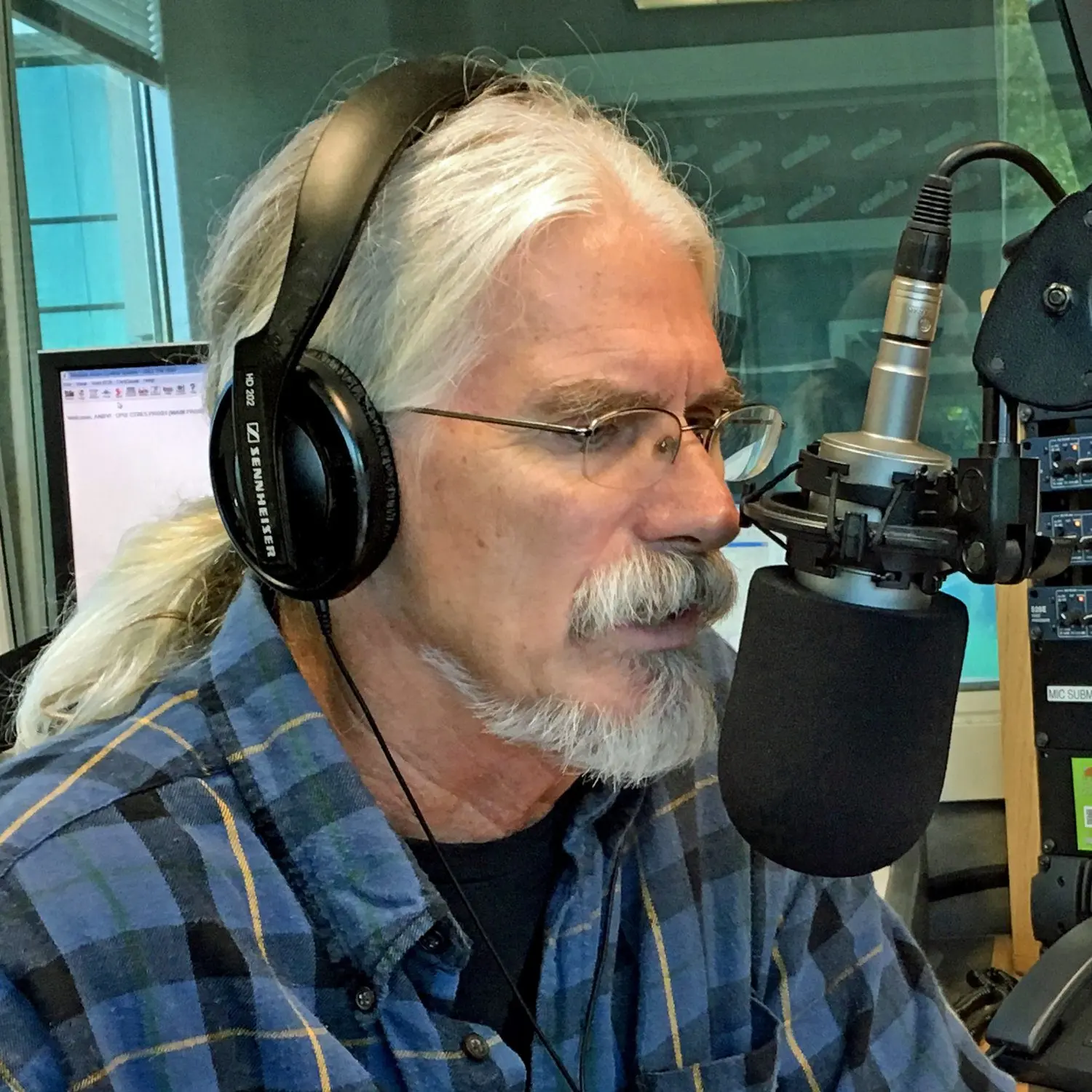
Join Steve Gregg on The Narrow Path as he navigates complex theological waters. This episode delves into antinomianism, assessing the role of Mosaic Law in the lives of today’s believers. Engage with caller discussions on controversial billboards proclaiming ‘Jesus is Not God’ and dissect the implications of such statements. Steve also candidly explores the nature of eternal punishment and the fate of the soul, offering a balanced perspective rooted in scripture.
SPEAKER 1 :
Thank you.
SPEAKER 05 :
Good afternoon and welcome to the Narrow Path Radio Broadcast. My name is Steve Gregg and we’re live for an hour and we’re so glad to be live. You might be glad to be alive and I suppose I am too, but I’m glad to be live today because yesterday we were hoping to go live and there was a technical difficulty that continued. It had to do with our toll-free number that we give out for you to call into the show. And it was down. It was down yesterday, which is why we had to play a recorded program instead of doing what we do regularly and we’re doing today, live, taking your calls. And then this morning, it was still down. They were working on it. And I just got news like 15 minutes ago that they’ve got it up and running. So we’re hoping it’s up and running. I know we have one call there, but the other lines are open. So give us a try. We’d love to talk to you as usual. We have an hour program. We take your calls if you have questions about the Bible or the Christian faith or if you have a difference of opinion from the host and want to talk about that. Here’s the number that should work for you. 844-484-5737. And like I say, if you call right now, most of our lines are open. So this is the number, 844-484-5737. That’s our regular toll-free number. It just wasn’t working yesterday and earlier today. So my apologies for not being live yesterday on the air. I certainly always prefer to go live. But today we’re just going to be taking calls as usual, I hope. I’m hoping the system will work as well as it usually does. Our first caller today is Doug in Prairie Grove, Arkansas. Hi, Doug. Great to hear from you. Welcome to the Narrow Path.
SPEAKER 09 :
Hello, Steve. Delighted. Delighted to talk to you today. Thanks for being here for us. Sure. I’m calling today for some theological correction. I think I may disagree with you on some points, and if one of us is wrong, most likely I feel like it’s me, so I’d like to explore that with you for a couple of minutes.
SPEAKER 05 :
Go ahead.
SPEAKER 09 :
So my thought is, provocatively stated, I suppose very succinctly it would be, God doesn’t care about the law. That my position is God doesn’t care about the law. Um, expanding on that a little bit, it kind of makes me almost antinomian. And, and as I’ve been exploring that, I think I am about 90% antinomian. I think the only place where they go off track is they reach a faulty conclusion based on some sound scriptural teaching. Um, Drilling down just a little bit more into my succinct statement, God, for his people, for his chosen people, God doesn’t care about the law, and the law meaning the Mosaic Covenant law. Almost nobody that I’ve expressed that to has given me any favorable response whatsoever. And so that’s it. Help me out, figure out where I’m wrong and where we might disagree.
SPEAKER 05 :
Okay, where we agree definitely is that God is not expecting the Mosaic Law to be followed by followers of Christ. Now, by the Mosaic Law, we mean the body of legislation which he gave to Israel at Mount Sinai, the Ten Commandments, the 613 commandments, part of that law. That whole code has been fulfilled in Christ, and we no longer are followers of the law or of Moses. Now, antinomianism, as you probably know, but some listeners may not, is a word that means against law. Namas is the Greek word for law, anti-namas, anti-law, antinomianism, is actually a doctrine that was a major part of some branches of Gnosticism in the 2nd and 3rd century. There’s always been some antinomian kind of leanings in some kind of religions, but Since Paul taught that we’re not under the law and we’re under grace, it was easy for some people to understand him to mean there are no rules or there’s no standards that we are required to keep. Now, it’s one thing to say we’re not under the law of Moses. It’s another thing to say there’s no standards for us that we’re required to keep. As we read Jesus’ teachings, the Sermon on the Mount, for example, He says he’s going to fulfill the law and the prophets. And obviously when the law and the prophets are fulfilled, they’re fulfilled. It’s done. But he also, you know, made a new covenant with us, it says, at the Last Supper. He said, I’m making a new covenant with you people. And he’s saying he’s fulfilling what Jeremiah had predicted in Jeremiah 31, that God will make a new covenant. He said it won’t be like the old one he made at Mount Sinai, but it will be… he’s going to write his laws on the hearts of his people. And so they will all know him internally as opposed to having simply a religious system like the law of Moses imposed on them. And, you know, they’re just expected to toe the line. Now, he says, no, I’m going to change you inside. I’m going to write my laws inside. Now, it would seem then that those who are under the new covenant can, among other things, know they are by the fact that God’s ways are are written in their hearts. But these ways are not defined by the 613 laws given by Moses. That was part of the old covenant. The new covenant has a king, a lord. Jesus is our lord, and his wishes, frankly, are our command. You know, Jesus has revealed in the new covenant what it is that God wants from us now, and it isn’t the same as the law of Moses. Now, the law of Moses, of course, has some overlap, with what Jesus taught, obviously moral behavior is never revoked. And the reason for that is because God bases moral expectations upon his own moral character. That is, we were made in the image of God and made to resemble God, to be like it says in Ephesians 5.1, as dear children, be imitators of God. You know, he’s our dad. He’s our father. We need to imitate him. Or Christ said, you know, be imitators of me. Or Paul said, imitate me as I imitate Christ. Obviously, Christ, God, you know, consistent Christians like Paul, they are models of what Christianity looks like, what good character looks like. But the majority of the law of Moses wasn’t those kinds of commandments. Now, you certainly have them. Obviously, the Ten Commandments has stuff like don’t murder, don’t commit adultery, don’t steal. Those are moral laws. Even honor your father and your mother is a moral obligation because it’s only just if you owe it to them. So, I mean, there are in the Law of Moses moral issues, and they’re right up front and center in the Ten Commandments and some others, some of the other parts of the law. But the vast majority of the 613 commandments under the Old Covenant, and when I mean the vast majority, I’m going to say easily 90%. have to do with animal sacrifices, abstaining from certain unclean foods, making pilgrimages to Jerusalem a certain number of days a year, of course, Sabbath observance, avoiding unclean conditions like touching lepers and people. Those are not moral issues. And the vast majority of the law is that kind of stuff. But we’re not under the law, but we are under Christ.
SPEAKER 09 :
Can I interject something just right here? Because I think this is a point where maybe you can straighten me out or maybe we diverge a little bit. As you said up to this point, I’m tracking right with you, except I would enhance a little bit of this. Your phone is breaking up, Doug.
SPEAKER 05 :
Doug, your phone is breaking up really badly.
SPEAKER 09 :
Oh, my.
SPEAKER 05 :
Yeah, it’s kind of breaking up there. Yeah, you weren’t before, so wherever you were before is probably a better spot.
SPEAKER 03 :
Is it?
SPEAKER 05 :
I think I can hear all the words. Go ahead. Still breaking up. Still breaking up. Yeah. Yeah, your sister here is listening, trying to decode you. Oh, yeah, we’re getting about every third syllable from you. Do you have a landline?
SPEAKER 04 :
Let me know. Try again. Okay.
SPEAKER 09 :
I thought I was in a good spot with you as well.
SPEAKER 05 :
It’s not bad right now. Not too bad right now. Go ahead. It’s doing it again.
SPEAKER 03 :
It’s doing it again.
SPEAKER 05 :
Oh, my goodness. You don’t have a landline you can call on? I know you’re kind of on the loose. Yeah. Oh, boy. Oh, man. It was doing so well at first.
SPEAKER 03 :
No, we’re not getting it, Doug. We’re not getting it. All right, well. That’s not good. Fetched at half.
SPEAKER 05 :
Well, this is a good subject I really wanted to get into with you. Yeah, I mean, well, Dana said to just kind of take what I think your question is and answer it, but I think I did answer without your question. I think you’re trying to put a finer point on it now. Yeah.
SPEAKER 09 :
There’s not much else I can do, I suppose.
SPEAKER 05 :
Oh, no, no, no. I’ll tell you what. Next time you’re in town, you know, call me from there.
SPEAKER 09 :
I’m talking about that, Steve.
SPEAKER 05 :
We’re getting a little more, but not enough. All right. Sorry, Doug.
SPEAKER 03 :
All right. Thank you.
SPEAKER 05 :
Call from a better place or feel free to e-mail me, and I could read your question over the air. Okay. Sounds like we lost you. Maybe he hung up. So sorry, Doug. For those of you who wonder, that’s my wife’s brother in Arkansas, but he doesn’t live in a very good cellular service. That’s too bad. All right. Let’s talk to Jay in the Bay Area, California, and hopefully we’ll hear from Doug another day from a better place. Hi, Jay.
SPEAKER 11 :
Hi. I hope you can hear me better than the last caller.
SPEAKER 05 :
I can.
SPEAKER 11 :
I just want to take a minute to say… I’m so blessed by your ministry and your demeanor, and it’s very edifying. I have a quick question. I don’t know if you’re aware of the billboards that are recently in the news that say Jesus is not God. I don’t want to give the website because I don’t want to give them any credence, but I went on their website just out of curiosity and and I noticed that they have a lot of your videos on there.
SPEAKER 06 :
Mine?
SPEAKER 11 :
I just want to know what your thoughts are. Yes, your YouTube links to a lot of your teachings. So I thought I’d make you aware of that, and if you have any thoughts on it, it would be great.
SPEAKER 05 :
That is very interesting.
SPEAKER 11 :
I don’t know if there’s anything you could do.
SPEAKER 05 :
All right, well, thank you. Yeah, you’re kind of breaking up too, but I’m glad to be told of that. You know, some of you, I don’t know if you know what Jay is referring to, on some freeways, including one not far from where I live, When you’re driving, there’s a billboard that just has really big words on it, Jesus is not God. And then it’s got a website, which I’ve never looked up. I don’t have any idea who puts those up. It certainly has nothing to do with me. But Jay was just saying that if you go to their website, a lot of my lectures, I guess maybe my YouTube videos of my lectures, are there, which I don’t understand. I mean, obviously anyone can do that. Anyone can post my videos or links to them online. i don’t have to they don’t have to be on the same page with me at all and and they certainly aren’t on this matter because i believe jesus is god and to me to say jesus isn’t god is is uh to my mind it’s you know pretty much cultic uh doctrine i mean at least it’s it’s arian it’s like this jehovah’s witness doctrine uh so i mean i’m not i’m not favorable toward that at all and somebody um Somebody called me once about those signs, I think before, or else I saw something online. And someone had gone to the website and said, you know, they’ve got a lot of strange doctrines there. But they didn’t tell me they’ve got my videos there. But, of course, just in case you’re wondering, you know, does Steve hold that doctrine that Jesus is not God? No, that’s not my position at all. And I totally disagree. Here’s the thing. Those of you who know my material know. We’ve got about 1,500 lectures of mine online, and they are including verse-by-verse teachings through every book of the Bible, including or addition to that, we’ve got many, many hundreds of my teachings on lots of different subjects. And so even I would assume that even cult people would agree with some of the things in some of my lectures because, frankly, the lectures stick pretty close to the Scriptures. And a lot of cults, you know, they value the scriptures. They just kind of misinterpret some things and sometimes important things. And, yeah, maybe I need to look into that. But I’m glad you warned me, Jay, because I didn’t know that. And for the rest out there, if you see these big billboards that say Jesus is not God and they have their website, which I don’t even know what their website is. I’ll have to look it up. If they have my lectures there, it just means they’ve linked to my site on some lectures that they happen to like. But it’s entirely possible with so many lectures on so many subjects that anyone would like some of them, even if they disagree with others. But, you know, if they had my lectures about whether Jesus is a God or not, I’m very adamant. Jesus is God in the flesh. Jesus is the incarnate God, the Word with us. So… Okay, yeah, that’s a surprise to me. And so, you know, I’ll tell you this. We have a friend, he may be listening now. When he started calling this program, he was a Mormon. And he and I argued many calls. This is over, I’m thinking about 15 years ago. He called fairly regularly, and we discussed the differences between Mormonism and Christianity. Okay. And then he came out of Mormonism. I don’t know that I won him over, but he eventually left the Mormon church and became an evangelical Christian and is a friend now and a friend of our ministry. But I think he said that even when he was kind of leaving Mormonism, he was drawn to some of the things that we were saying because, frankly, we were saying what the Bible says, and there are some things that Christians believe. or at least that Christians should believe some things that the Bible says, which even the Mormons would not disagree with. The problem is when it comes to cultic groups, in many cases, not always, but in many cases they have, you know, the majority of their stuff they believe is not objectionable to Christians at all. It’s the things they do differ on that make them distinctive and, in many cases, what we call heretical. It’s sort of like I believe most of the same things that Calvin wrote, but I don’t agree with all of them. I think I believe probably most of the things Roman Catholics believe, but not all of them. So, you know, there’s just, yeah, I don’t know where my lectures are being posted online. I know there’s several YouTube channels that just have a collection of my lectures there, but it’s not necessarily that they get my permission. And I certainly didn’t give it for this group that has these billboards. All right, Jay. Thanks for letting me know. It’s a little disconcerting, but not terribly so. Rico in Dixon, California. Welcome to The Narrow Path. Thanks for calling.
SPEAKER 08 :
Hi, Steve. Thank you for taking my call. So yesterday I got the privilege of listening to your show that was recorded and got to hear your take on what happens to our souls when we die, right? And I don’t know if you still believe that our souls, that we actually die eternally or not, but I was calling to essentially, because, well, again, I heard you say, I’m actually pulling over real quick just to make sure you can hear me. So I heard you say that there was really nothing in the Bible that lets us know that our souls last forever, either in heaven or even in hell, right? And I really liked your take on it. But so when you look at Matthew 25, 46, you know, like 24 and Matthew chapter 24 and 25 kind of goes over a whole bunch of kind of stuff like that.
SPEAKER 05 :
I know the verse you’re referring to.
SPEAKER 08 :
46, you know, I was going to 46.
SPEAKER 05 :
Sure. Okay.
SPEAKER 08 :
These will go into eternal punishment, but righteous into eternal life. So I was just kind of wanting to hear your take on that.
SPEAKER 05 :
Yeah. Well, eternal punishment. What is eternal punishment? Some people believe it’s death. Some people believe that when you die, it’s all over. It’s eternal. It’s forever. Or at least after the judgment, when you go to the second death. You know, the Bible says the lake of fire is the second death. And so there are some who believe that since people are not immortal, they will eventually cease to exist. And You know, and forever. When they cease to exist, that’s forever. That’s eternal. That’s the eternal punishment. The punishment being death. The wages of sin, the Bible says, is death. That would be the punishment for death. And it’s forever. So that’s what one would say in defending what’s called conditional immortality view. Conditional immortality is the view that Christians, or those who are in Christ, receive immortality, receive eternal life. As a gift from God. You know, the gift of God is eternal life through Jesus Christ our Lord. And whosoever believes in him shall not perish, but will have everlasting life. So believing in him rescues you from perishing or from death or from what some people would assume is extinction. And so they would say that, you know, eventually those who have life in Christ will go, as Jesus says there in Matthew 25, 46, they’ll go into eternal life. to live with him forever. But those who aren’t will go to eternal punishment. Now, if the Bible says that the punishment for sin is death, and it does, of course, God said to Adam and Eve, if they would eat the fruit, they would die. In Ezekiel, it says in chapter 18 and verse 20 that the soul that sins will die. Paul said in Romans chapter 6, 23, that the wages of sin is death. So the punishment for sin everywhere is said to be death in the Bible, or perishing and destruction. These are terms that also are used. So the idea would be that those after the judgment who are sent into the lake of fire will be destroyed, will die, and they’ll stay that way forever. That’s the point. Not in conscience.
SPEAKER 08 :
Just not in a conscious state of eternal punishment is the way you’re saying it. That would be interesting. Because there’s like another spot like in the Old Testament, I don’t know where, like where the worm will never die forever.
SPEAKER 05 :
That’s why I say it’s 66-24. And Jesus quotes it three times in Mark chapter 9 where he talks about the fires of Gehenna. where the worm does not die and the fire is not quenched. Yeah, Jesus quotes that from Isaiah 66, 24. And in Isaiah 66, 24, many people, assuming that that is about hell, just read hell into that. Many Old Testament scholars would say, well, there’s no mention of hell here. It’s not even mentioned of anyone alive in the flames, because it says that the righteous… will go out from worshiping God in the temple. They’ll go out and look upon the corpses of those who have rebelled against me, whose worm does not die, and the fire is not quenched. Now, what they’re looking at is corpses. A corpse, by definition, is a dead person, a dead body. And so this is a huge mass funeral pyre, a bunch of corpses piled up, and the fire just keeps burning, apparently because there’s no shortage of fuel, and the worms continue to eat at the corpses, you know, in an ongoing way. So, I mean, there are, frankly, there are verses that support different views on this, but there’s nothing that is distinctly or unambiguously an affirmation that anybody has natural immortality. And the Bible does seem to say that immortality is something that’s a gift of God given to those who believe in Christ.
SPEAKER 08 :
I just thought our souls last forever. Once we depart from our body, we go somewhere forever. And I just thought that there was evidence in that verse right there. Sure.
SPEAKER 05 :
Well, I’ll tell you.
SPEAKER 08 :
I do appreciate it.
SPEAKER 05 :
I just want to say that that was my view, too, and I don’t say that to be condescending because it could still remain my view if I hadn’t thought more about it since then than I did at the time. But I was raised Christian. I held what most Christians believe, that human beings, because we’re made in the image of God, we’re basically immortal. Our soul is, not our bodies, but our soul is, and that our souls must therefore live forever either in fellowship with God or absent from God. But we have an eternal consciousness. That’s what I taught. Frankly, that’s a very standard Orthodox view going back to early church times. It’s not the only one, though. Irenaeus, for example, is an early church father who believed that those who are not Christians would be deprived of eternal existence, it says, and so forth. And there’s some other church fathers who spoke that way, but But the Bible, many people say that the idea of the natural immortality of the soul is more of a Greek idea. You don’t find it really addressed in the Old Testament. And we don’t really find it directly addressed in the New Testament. So there’s ambiguity there, but. The verses you mentioned are the kinds of verses which naturally lead us to think, especially if we’ve already believed that the soul is immortal and that lost people are going to be conscious and held tormented forever. Those are the kind of verses that give us the kind of language. we’re looking for. But when you look at it closely, the language isn’t quite exactly what we’re looking for. Like I said, the fire is not Christ and the bird is not God. It’s for these corpses. They’re dead. They’re dead corpses. And likewise, the other verses. I’ll say this. When I held more of a traditional view that I grew up with, I had maybe between seven and maybe nine or ten verses in the whole Bible that kind of I would use to support that particular idea. But then it’s sort of like my view. It’s like when I gave up the pre-trib rapture. I had 20 verses supporting that. But what happened is by reading the Bible and teaching through it verse by verse a few dozen times, I just had to face the fact that in context, these verses were not saying, certainly not with any clarity, the things that I was reading into them. So… On many issues, I had to pull back and say, well, I’m not really sure. I’m not really sure that what I’ve been taught is true on that, unless I can find better scriptures for it.
SPEAKER 08 :
I sure appreciate the answer. Either way, whether it’s eternal punishment or eternal death, it certainly does make an urgency for us to know where we came from and where we’re going and how to get there. I agree with Rico. Appreciate your answer. Thank you.
SPEAKER 05 :
Thank you, Rico. Great talking to you. Thanks for calling. Thank you. You’re listening to The Narrow Path. We have another half hour coming, so don’t hang up or don’t go somewhere else. We have about a minute break at this point, and then we come back for another half hour taking calls. There’s a couple of lines open if you want to call in for the second half hour. We’ll be glad to talk to you, too. The number is 844-484-5737. The Narrow Path is listener supported. If you’d like to write to us, the address is The Narrow Path, PO Box 1730. Temecula, California, 92593. And our website is thenarrowpath.com. I’ll be back in 30 seconds, so don’t go away.
SPEAKER 01 :
If you call the narrow path, please have your question ready as soon as you are on the air. Do not take much time setting up the question or giving background. If such detail is needed to clarify your question, the host will ask for such information. Our desire is to get as many callers on the air during the short program. There are many calls waiting behind you, so please be considerate to others.
SPEAKER 05 :
Welcome back to the Narrow Path Radio broadcast. My name is Steve Gregg, and we’re live for another half hour taking your calls. If you’d like to join us in this half hour, the number to call is 844-484-5737. It looks to me like the calls, all the lines have just lit up, and so you may get a busy signal if you call now. Perhaps you can call a little later and there will be an opening up. 844-484-5737. Our next call comes from Mike in Effingham, New Hampshire. Hi, Mike. Thanks for waiting. Thanks, Steve. Good to see you.
SPEAKER 06 :
Get in before the end of the hour. Yeah. And being it’s the season of Lent, I gave up chocolate and caffeine. And so far, it’s been a challenge. And I know you don’t have any vices, you know, smoke, drink, or, you know, smoke weed. But do you actively fast from time to time?
SPEAKER 05 :
You know, I don’t have the standard vices that many people have just because I was raised I’ve been a Christian since I was a child, so I haven’t done any of those things that you mentioned. But I’ve got my flesh. Everyone’s got their flesh. I like chocolate, too, and coffee. Do I ever fast? I do sometimes fast. I don’t have a regular schedule of fasting. I don’t have a calendar that I fast by. Yeah, I fast every day.
SPEAKER 06 :
In the past, I’ve fasted, and the best I could do is about a week because you become kind of grumpy, and your body kind of weakens, and your mind doesn’t work quite as well.
SPEAKER 05 :
Yeah, now that shouldn’t happen just because you’re giving up chocolate for Lent.
SPEAKER 06 :
Oh, no, no. I mean, I’m talking about food in general.
SPEAKER 05 :
Yeah. Well, I’ll just say this. You know, when I fast, generally speaking, I don’t consume anything but water during a fast. I’ve never done it for more than three days. My wife has done longer fasts than that before I knew her, and I know one or two people who’ve been on 40-day fasts. But different people fast different ways. Some people drink more than just water. They’ll drink coffee or even juices or something else. I don’t. When I fast, I don’t consider I’m fasting unless I’m only drinking water. But there’s no right way to do it and wrong way to do it. Daniel, in Daniel chapter 10, fasted for three weeks, but it says he just avoided certain special foods. You know, he wasn’t totally fasting. When Jesus was fasting 40 days per night, he didn’t eat or drink anything. No, no, I’m sorry. He ate, but he didn’t drink. The other way around. He drank, but he didn’t eat. Moses, when he fasted four days, he didn’t eat or drink. So, I mean, there’s like different ways that people have fasted. Paul even talks about married couples fasting from sex. He says that, you know, married couples should not deprive each other sexually, but if they want to separate for a period of fasting and prayer, then that’s okay. So, you know, there’s different ways to fast. Fasting, generally speaking, means giving up food, and I guess its absolute sense means giving up all food for a period of time, but the idea of fasting, I think, can apply to any partial or complete self-deprivation of something you would normally indulge in for a period of time. So I’ve done that. I fasted many times. In fact, I used to have one day a week that I would fast. And then at the end of every month, I would fast for three days. I did that for a while until, you know, I’ll tell you what was why I gave up this scheduled fasting routine. It got to be religious fasting. It got to be like, you know, God cares whether I’m fasting or not. I think that fasting is of value because it’s something I care about. And I’m basically putting my money where my mouth is if I’m praying for something. Words are cheap. You know, it’s cheap to say, okay, God bless grandma and grandpa and, you know, mom and dad and brother, sister and all our friends. Good night. I’m going to sleep. And, you know, it’s easy to shoot up, you know, prayers regularly. with or without heart, with or without desperation, with or without any energy attached or even focus. And I believe that when you’re fasting, you’re communicating to yourself and to God, you know, this is something that means something to me, this request. I’m willing to, you know, make some sacrifices in order to focus my prayers on it. And I think that that’s the value of fasting. Now, in biblical times, especially in the Old Testament, but probably in the New as well, people fasted because they were grieving. They would fast over, you know, repenting. You know, they’d be repenting, and they’d fast a bit, or they’d lose a loved one. Like when David’s baby was sick and about to die, he fasted until the baby died. There’s actually no command in the Bible to fast, with the exception that that Israel was told to fast one day a year on Yom Kippur. That was a day where they had lots of rituals, and one of the things required was fasting on that day. There’s no command to fast in the New Testament, but there seems to be an expectation that Christians will sometimes do it. Like Jesus said in Matthew 6, when you fast, don’t appear to be fasting to let people know you’re doing it. Now, he didn’t say you should fast a certain number of times or a certain frequency or There’s not even a command to fast there. But he said, but when you do, don’t do it like the Pharisees do it. So it’s kind of like an expectation that you’ll fast, but not exactly a command that gives you any kind of specific instructions about how to do it or how often to do it. Likewise, when the Pharisees complained that Jesus and his disciples were not fasting like the Pharisees and the disciples of John did, they fasted twice a week. The Pharisees did, and probably the disciples of John did too. Jesus’ disciples didn’t. And Jesus said, well, can the children of the bridegroom mourn while the bridegroom is with them? But when he is taken away from them, then they will fast. And it’s interesting that he used the word mourn and fast interchangeably there. Because fasting was not just something they did. The Pharisees did it routinely, whether they were mourning or had anything to fast about or mourn about at all. They just kind of made it part of their ritual week. And they also added a variety of annual fasts that the Bible didn’t require them to make. The Jews had four other annual fasts that they added after the fall of Jerusalem that were not ever commanded by God. But these were just religious events. things, you know, oh, it’s that day, so we’re going to fast now. Whereas I think fasting originally, and probably when it means something to God, is when it’s not just, oh, it’s that day, it’s time to fast, but rather I really am desirous to focus on this thing I’m praying for. And I want to put my money where my mouth is. You know, I want to actually, I want to make it very clear to God and me that that this is important enough that I’m not just shooting up a prayer in a flippant sort of way. This is something that I’m dedicated to, and I’m going to not eat until I do it. It’s not exactly a hunger strike. A hunger strike is where someone says, I’m not going to eat until I get my way. That’s not like that, because you’re not going to twist God’s arm. But it’s a way, I think, of showing that you’re dedicated. This is something that means something to you in a big way. And I think sometimes we need that just to… break free from the lightweight prayers that we offer up that cost nothing. And so anyway, the Bible doesn’t command us to fast, but obviously Jesus expected that his disciples sometimes would fast. And so I just do it as I feel led to do it. Now, I don’t put it on a calendar like I did at one time in my earlier life.
SPEAKER 06 :
Okay, so in the past, I found it helpful to fast regularly. when I’ve got a major decision that I need to make. And like you said, it helps you really focus your prayers. And I’ve noticed that my prayers are proportional to the amount of trouble I’m in, so they become very brief and very earnest.
SPEAKER 05 :
Yeah, well, I think prayers are powerful when we really mean them, you know. I mean, it’s one thing, it’s like if we’re asking God to do something, we’re asking him to mean it. We’re asking him for it to be important to him. But if it’s not really that important to us, it’s kind of hard to know why we should expect him to take it more as something more important to him than to us. So, you know, it’s not a legalistic thing, in my opinion. It’s just something where you just kind of physically, as well as your spirit’s praying, your body is cooperating in that focused way.
SPEAKER 06 :
Yeah, back to the Pharisees, they did it out of a religious routine to show how pure and how sanctified they seem to be. And, of course, Jesus corrects them on a number of occasions. Right.
SPEAKER 05 :
Hey, okay, I’m going to take another call, but I appreciate your asking about that.
SPEAKER 06 :
Well, thanks. I’m just glad I got in before the end of the hour. Yeah, we’re going to try to get some others in, too, before the end of the hour.
SPEAKER 05 :
Thank you, Mike. All right. God bless you. Okay, bye-bye. Bruce in La Mirada, California. Welcome.
SPEAKER 10 :
Hi, Steve. I had a question about my wife and I saw that sign, but it also, besides saying Jesus is not God, it also said Jesus is not the Son of God. Really? And we started talking about it, and the question kind of came up between us. If that was the only thing that the person was telling me that they had an issue with. They’d still be saved if they accepted Jesus Christ their Lord and Savior and that he died on the cross for them, but they just didn’t believe that Jesus is God and they just didn’t believe that he was the Son of God. And I know that’s kind of narrow thinking, but my answer to her was, well, I don’t really know enough about Scripture specifically on our salvation is based on whether or not we believe Jesus is God, or if our salvation is based on whether or not we believe Jesus is the Son of God. Can you kind of understand what I’m saying and clarify that?
SPEAKER 05 :
Yeah, well, I mean, obviously Christians are required to believe certain things about Christ, because if you don’t believe some things about Christ, then you’re no different than a person who’s not a Christian. Now, as far as how many things you have to believe about Christ in order to be a true Christian, there’s not a very long list in the Bible of what you have to believe, as far as the propositions about Christ you have to believe. That he is the Son of God is given as a mandate, that we must believe that he’s the Son of God. We have to believe he’s the Messiah. We have to believe that he’s the Lord, and that has ramifications. If he’s the Lord, then he’s the king and the boss, and we have to obey him. If you don’t believe those things, there’s really not much about your beliefs that make you a Christian. Now, I will say that before the Council of Nicaea, you know, when the church began to nail down specific wording for the Trinitarian formulation, you know, the Father and the Son and the Holy Spirit are all, you know, God. There are three persons, one in substance, that kind of talk. The church, as far as we know, didn’t use that kind of language to describe the Trinity. And, therefore, there were some different views among Christians on that before. That’s why they had to have the council. They wouldn’t have had the council if all the Christians already agreed on this. So, obviously, before 325 A.D., there were some Christians who had views that we would call non-orthodox, heterodox, or heretical. But as far as we know, they were Christians. I mean, no one had really decided yet, these people are not Christians. And we know that there have been people like the disciples themselves, who when they first left their fishing nets, they didn’t have a comprehensive understanding of the Trinity. They were Jews. Jews didn’t believe in the Trinity. They had to learn this stuff as the Spirit would guide them and as Jesus would teach them. Likewise, I’m pretty sure they didn’t know Jesus was God. He was, but I don’t know that they knew that right away. I think that’s something that dawned on them or that the Holy Spirit led them to understand later on. In other words, they were followers of Jesus, you know, totally devoted to him, but didn’t know everything about him. And if you’d ask them, well, do you think Jesus is God? I think some of them might say, well, I’m not really sure I’ve ever thought about that. I believe he’s the Messiah. Is that the same thing? I mean, they really hadn’t nailed down all these propositions that the church later wanted to nail down. That means, of course, that people were Christians, we assume, like the disciples, before they had a thorough theological understanding of who Jesus was. What they did know was that he was God’s man for them to follow. And he was the one they came to believe he was the Messiah. And then I think as time went by, they came to understand he was the son of God. And later on, I think they came to understand that son of God means he is what God is when God comes to live among us as a human being. I mean, these are theological developments that I think all of the apostles arrived at before the end of their lives. But these various developments did not all occur at one time. Yet they were Christians before they had all gone through all these stages. At least the apostles certainly were. Jesus told them their names were written in heaven. And yet they still didn’t know that Jesus was God, as was very clear from their conversation with him in the upper room. And from some other things they said they didn’t understand yet. So my thought is, you’re asking, does a person have to believe he’s God? Do they believe he’s the son of God? Well, if they’re going to be right about him, they have to. If they’re going to take the scriptures seriously and not compromise anything in them, then my position is they will come to the view that Jesus is not only the Son of God, but he is God in the flesh. Now, I believe I saw one of those signs, one of those billboards, a different one, but it was obviously the same people. And it said something like, Jesus did not preexist or something before his birth. They had some kind of statement like that. I thought, well, the Bible is very clear that he did. You know, it says in Philippians 2, he existed in the form of God and did not think, you know, equality with God a thing to be grasped at, but he emptied himself, took on the form of a servant. So clearly he preexisted. And, of course, John 1 says the word was God in the beginning, and then the word became flesh and dwelt among us. So I don’t know what they mean when they say he didn’t preexist. But my question is, what is it to them? I mean, why do they care? I mean, first of all, I was speaking contrary to Scripture. I’m sure they think they are faithful to Scripture the way they are interpreting it, but I just think, why is this the issue? The issue on the Day of Judgment is not going to be how thoroughly formulated was your Christology, your doctrine of Christ. How thoroughly and correctly did you understand Christ? You know, in the 4th century and times like that, some of the councils, or the 5th century, some of the councils really were trying to put finer points on their propositions about Christ. And one of the big controversies was, okay, we know Jesus was human and divine, but did he have two natures, one human and one divine? Or did he have one nature that was human and divine? Now, obviously, I suppose one of those two ways of looking at it is more accurate than the other. But the Bible never addresses it. It’s simply not something the Bible talks about, which means that a person could have the wrong answer to that question and still be a Christian. It’s not like you have to know everything about Jesus that is to be known. We’ll know all things someday. Now we know in part and we prophesy in part. So, you know, instead of saying how many things do people have to correctly believe about Jesus, you know, as far as I can tell from reading the Bible, when I read Jesus or Paul or Peter or John, in their writings and teachings, they say that when we are judged, we’ll be judged by our works. We’ll be judged by the things we’ve done in our body. And they don’t really mention any other basis for the judgment. Whenever they talk about the final judgment, they say every man will be judged by his works, his deeds. Now, of course, The nature of your works and your deeds will demonstrate where you stand with God, where you stand with Christ. You know, because Jesus said, why do you call me Lord, Lord, and you don’t do the things I say? Obviously, if someone says Jesus is Lord, but they don’t obey, their deeds will show on the day of judgment. They didn’t believe in him. They might have said they did. But they didn’t. So it’s not so much what you say about Jesus, what you say you believe about him. True, I would say that anyone who loves Jesus would want to know him as accurately as can be. I know that my children, my wife, my parents, people I love, I want to know them as accurately as possible. I don’t want to have, like, misunderstandings of them if, in fact, I could understand them correctly. And that’s how it is with a Christian. If you’re a Christian, you want to understand Jesus as perfectly as possible. You’re not looking for how many things can you be wrong about and still be okay with God. I mean, that’s a very strange attitude. I don’t think it’s a Christian attitude. I think the Christian attitude is, how many things can I be right about? But in the meantime, living a life that is not going to be shameful, but glorifies God. And on the day of judgment, when my works are brought out, I won’t be ashamed. That’s what I think is important. So, I didn’t skirt your question. I just can’t answer it, and I don’t think anyone can, frankly, to know how many things can you be mistaken about in terms of the esoteric doctrines about Christ’s divinity and things like that. How many things do you really have to understand correctly in order to be okay with God And as I said, it took some centuries before some of the things that we now recognize as orthodox teaching of Christ were actually hammered out by councils and stuff like that, which means that before that, Christians had different views on it. And the real issue is not did they have the right and most accurate statements, but did they live the most obedient lives to Christ? Because that’s what the judgment will be about. So I’m not going to be able to delineate the perimeters here of what a person’s allowed to believe or not allowed to believe. Obviously, there are some things that are untrue, and no one who wants to follow God should ever be satisfied to say, well, I’ve got some untrue doctrines, but that’s okay. No, I want to believe correctly. If you’re going to believe something, you might as well believe what’s true instead of what’s not true. Okay, let’s talk to Tina in Surrey, British Columbia. Tina, welcome. Hi.
SPEAKER 07 :
Yeah, I just wanted your take on Proverbs 15, verse 17, and I’ll take your answer off the air. Thank you. Bye.
SPEAKER 05 :
Proverbs 15, 17, you say?
SPEAKER 07 :
Yes, yes, 15, 17. All right.
SPEAKER 05 :
All right.
SPEAKER 07 :
Thank you for your call.
SPEAKER 05 :
Uh-huh.
SPEAKER 07 :
Yeah.
SPEAKER 05 :
All right. So Proverbs 15, 17 says, Better is a dinner of herbs. where love is than a fatted calf with hatred. Is that the one? Okay, I guess she hung up. Okay, well, I’m surprised that that would be one that requires explanation. But the Proverbs, they are wisdom literature, and Solomon is teaching his son to be wise. And one of the aspects of being wise is knowing what the proper values are. What is valuable and what’s not? A person who chases after stuff that’s just baubles when he could be chasing after things of real value is not a wise person. A wise person assesses the value of things and pursues them in a propitious way. And so many of the Proverbs, which are trying to confer wisdom to Solomon’s son, by Solomon, they are saying this is better than this. You know, this is better than that. It’s a very common structure of a proverb in the book of Proverbs. This is to be desired more than this. Wisdom is to be desired more than rubies, you know, and lots of that kind of thing. Now, this is one of those. And actually, there’s more than one proverb that says essentially the same essential point. It’s better to have a dinner of herbs. You might wonder, is this advocating vegetarianism? If that’s what you’re wondering, no. A dinner of herbs is here to represent a modest meal, a not extremely delicious meal. Now, you might like vegetables, and I do too, but in those days, they liked meat a lot. And I do too, by the way. So it’s saying that, you know, if you can’t afford meat and you have to settle for a dinner of herbs, but you’ve got peace in the home, there’s no strife, well, that’s better, more desirable than to have a fatted calf, which, of course, means beef, which is desirable. at one level, but to have to eat it in an environment where people hate each other. In other words, a home that’s got a lot of money, a lot of luxury, a lot of things that people would desire, but they don’t have love in the family, and it’s a hostile environment. Yeah, you should be happy to be in a loving environment, even if you have to settle for the simpler food, even if you can’t live as luxuriously. And so it says, you know, it’s better is a dinner of herbs where love is. then a fatted calf with hatred. So the idea is what’s the quality of the relationship? So the people you’re living with and eating with, if there’s love there, that’s a feast even if your food’s cheap. and you can’t afford better. If there’s hatred there, it doesn’t matter how expensive the food is or how much money you’ve got or how many luxuries you have, it’s a miserable place to be. At least it’s not as desirable as the other. So that’s what it means. All right. Let’s talk to Arcadio in Palm Beach, Florida. Hi. Welcome to The Narrow Path.
SPEAKER 02 :
Thank you, sir, for taking my question. I appreciate it very much. You are doing a great job. I try to be as sure as possible. I know people are waiting. My question is concerning the 400 years that there was no prophet, that the Romans and the Greeks were in charge. And there is a lot of things that I keep reading and reading. And I wonder, you know, how very little the church, you know, the Christian church, you know, is unaware of all that’s happening. And this is the environment where Jesus grows up. That’s right. What I’m trying to ask you, probably you might decide to make a whole day, I mean a whole week or a month, because there’s so much things. And if you decide, you know, one day to make a program only on this matter, or if you can give me some information, I’m going to, I mean.
SPEAKER 05 :
What you’re talking about is the intertestamental period, as we call it. The 400 years between Malachi. Now, Malachi was the last book written of the Old Testament. But before the New Testament was written and before Jesus came, there was 400 years. So there’s a gap there that the Bible doesn’t talk about. But you’re correct. During that time, the scenario was developing geopolitically and in Israel and so forth that Jesus lived in. It’s during that time, in fact, that the whole sect of the Pharisees and the Sadducees came into being. It’s during that time that the Romans conquered the Greeks, who at the end of the Old Testament, the Jews like Esther were under the Persian rule. But then the Greeks conquered the Persians, then the Romans. And all that happened in the intertestamental period, in that 400 years. I do have lectures on that. I’m not sure the best place to find it, because I’ve talked about it more than once. If you look at my Life of Christ, go to thenarrowpath.com and look up Life of Christ teachings. One of the introductory lectures is bound to say, you know… you know, the setting of the life of Christ. And I do go into the developments of the intertestinal period. You’ll probably find a lot of it also in my lecture on Daniel 11, in the verse by verse. There’s whole books on it, of course. Anyway, I’m sorry I can’t go into it more now because the music’s playing. I’m out of time. But there are lectures that deal with that at our website, thenarrowpath.com. You’re listening to The Narrow Path. My name’s Steve Gregg. We are listener support. You can help us out or not. You can use our stuff for free at thenarrowpath.com. Thanks for joining us.