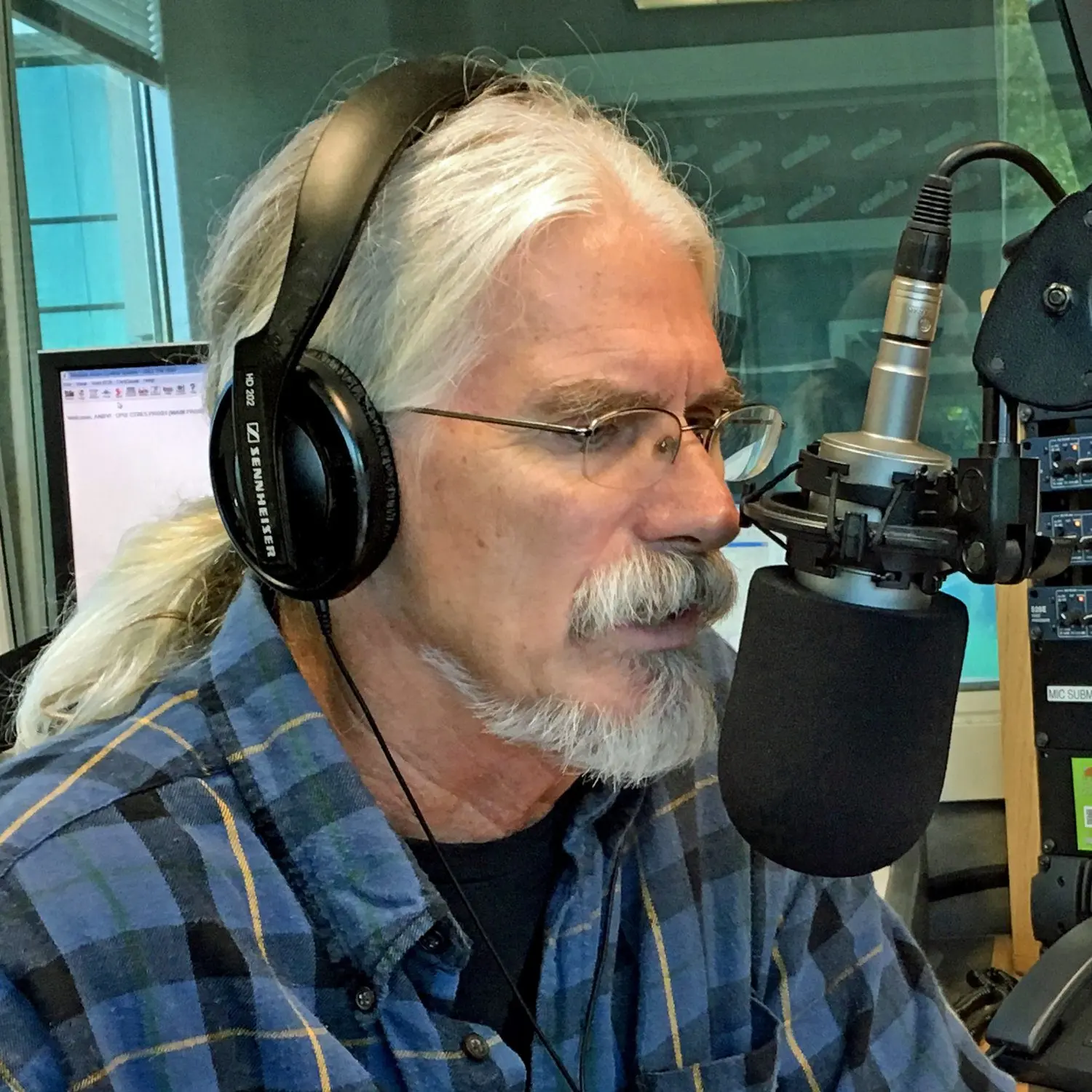
On this live edition of The Narrow Path, Steve Gregg fields a wide range of thoughtful listener questions covering theology, Christian living, and biblical interpretation.
The hour begins with an in-depth discussion of the baptism of the Holy Spirit. Steve recounts his personal experience during the Jesus Movement and explores whether Spirit baptism is normative for all believers. He distinguishes between conversion and empowerment, explains the role of laying on of hands in Acts, and clarifies why the fruit of the Spirit — not speaking in tongues — is the true evidence of a Spirit-filled life.
The conversation then turns to
SPEAKER 1 :
Thank you.
SPEAKER 05 :
Good afternoon, and welcome to the Narrow Path Radio Broadcast. My name is Steve Gregg, and we’re live for an hour each weekday afternoon, taking your calls. If you want to call in during this hour, you can ask any question you would like about the Bible or the Christian faith. Does that mean I know all the answers? No, not necessarily, but we know a lot of them, probably, and if we don’t, maybe some other caller would know, and they can call in and answer. So, We’ve got a big forum here. If I answer wrongly, if you think I’ve been wrong about something, feel free to call in and correct it. Because this show doesn’t exist for the purpose of showcasing the host’s viewpoints. This is an interest in knowing what the Bible teaches. And everyone is infallible, including the host. So if you think that something got wrong here, feel free to correct it. And that way we can all learn. That’s a good thing. The number to call is 844-484-5737. That’s 844-484-5737 if you’d like to be on the program today. A couple of announcements. One of them is that we normally have on Wednesday night, the first Wednesday of a month, and that’s coming day after tomorrow, A Zoom meeting, and we have people joining us from all over the country and other countries too, the first Wednesday of each month, that won’t be happening this Wednesday, and I apologize for that. I have to get up at like 3 in the morning Thursday to catch a flight, and so I’m going to go to bed early. I’m not going to stay up for the Zoom meeting. Sorry, guys. There’s always another month if the Lord tarries, and we’ll get back to it the following month. The other thing is a one-off, a debate I’m involved in in Wisconsin, and it’s going to be live, face-to-face. It’s not going to be on Zoom or anything like that. It’s in a church in Onalaska, Wisconsin, and that’s going to be Friday night. So if you’re in the Midwest, anywhere near there, I know some people are going to be driving in from other places not far away. But it’s a big church. I’m not sure, but I think the church has about a couple thousand people who attend it. So it’s a big building, and you’ll be able to probably find seats. I doubt that everyone in the church will want to come. I’m going to be debating a man named Joel Richardson. Many of you probably are a lot more familiar with him than I am. When I mention to some people that I’ve got a debate coming up with Joel Richardson, I A lot of people’s eyes light up and say, oh, they’ve got his books, they’ve heard him, they’ve listened to him a lot. I had not really, I probably had heard his name before he contacted me. He actually personally contacted me and asked if I’d come to Wisconsin and debate him. He’s doing a weekend, I think, there at the church, and he wants to kick off the weekend with a debate about, well, essentially it’s about premillennialism versus amillennialism. I’m an amillennialist. He’s a premillennialist, so we’ll be debating that point. The more specific title of the debate, which he chose, is will Jesus reestablish the kingdom of David in Israel at his second coming? So those of you who are savvy of eschatological issues realize that this is really a question. Will there be a millennial reign after Jesus comes back or not? And so that’s what it’s going to be about. And it is going to be streamed, so you don’t have to drive in there. The weather is pretty bad in that part of the world right now. And I don’t know exactly what the streaming, you know, login is, but it will be posted, if it’s not already, at our website, thenarrowpath.com, under announcements. So a couple things. We’re not having the Zoom meeting this Wednesday. And we will, on Friday, have this debate in Wisconsin. And so that’s about it. And all of our announcements, by the way, are posted at our website. If you feel like, well, he said something, but I missed it. You can go to our website, thenarrowpath.com. Look under the tab that says announcements. And that’s where you’ll find our announcements, of all things. Okay, we’re going to go to the phones now. and talk to Jonathan in Las Vegas, Nevada. Hi, Jonathan. Welcome to The Narrow Path.
SPEAKER 02 :
Thank you. A few years ago, I heard you give your testimony about your baptism in the Holy Spirit, and my mom had a very similar experience to that. I don’t think I’ve quite experienced anything like that. I’d just be curious to, if you could recount that experience, and what’s the difference between just being filled with the Holy Spirit or baptized in the Holy Spirit, and is it possible for anybody to achieve that? I’ll take the answer off the air.
SPEAKER 05 :
All right. Well, thank you. I believe what the Bible calls the baptism of the Holy Spirit is the birthright of every Christian, and it’s… It’s normative for every Christian. I believe that there are many things substandard in the modern churches, if we’re going to compare them with the early church, with the apostles and so forth. The church has moved away from some of the practices of the early church and added human traditions and doctrines and so forth that weren’t taught by the apostles. And so, in my opinion… the ways that we have moved away from apostolic Christianity are deficiencies in our modern churches. And that even includes some of the things, the way the gospel is preached, even sometimes some of the elements that are included or excluded from the gospel. I really think that we need to study the New Testament thoroughly, even if we have, as I was, been raised in an evangelical church. I was raised in a Bible-believing family, a Bible-believing church, and I got converted as a child. in a Baptist church. And I shared the gospel with my friends in junior high and high school. And I wanted to be a preacher. I didn’t know I’d be a teacher, but that’s what I ended up being. But I wanted to be an evangelist, and I did some of that. But I will say I never felt like I had any particular anointing or power in my preaching. And I didn’t really find any. that it was having a spiritual impact on people at all. But as a Baptist, I understood, as Baptists generally do, that the Holy Spirit comes to dwell inside of us at the point of conversion. So since I got converted as a child, I just figured, okay, as a Christian, one of the things about Christians is they have the Holy Spirit inside. The Holy Spirit regenerates you. You’re born again of the Spirit. You know, Paul said, as many as are led by the Spirit of God, they are the children of God. So You know, the Holy Spirit’s a given in the life of a believer. In Romans 8-9, Paul said, if anyone does not have the Spirit of Christ, he’s none of his. So obviously, everyone who belongs to Jesus, everyone who’s a Christian, has the Spirit of Christ. And so I never gave that much more thought. I will say that, for me, knowing God was something of a by-hearsay experience, I had full confidence that God exists. I had zero doubts whatsoever. that Jesus died and rose again, and that he was alive today, I had zero doubts about the theology I had been taught. And frankly, I still believe all those things. Those were true things. But I couldn’t, you know, the first time someone asked me if I knew the Lord, I wasn’t sure if I meant the same thing by that as he did. Because he had a… He was a guy in the Jesus movement. Most of you know why. When I was 16, our family moved to Orange County, California, right at the beginning of the Jesus Revolution. I was fortunate to attend Calvary Chapel right at the very beginning, and I was there for all the early years of the revival. And one of the first guys I met there asked me, Do you know the Lord? And I said, Yes. I mean, I’ve been a Christian, a believer, all my life. And… But he began to tell me about his experience with the Lord, how he had come to the Lord very recently, and all the changes in his life, and how God was working through him, and things like that. And he said to me, what’s the Lord been doing in your life? And I realized that when he said, do you know the Lord, he meant something different than I did. To me, to say I knew the Lord simply meant, I mean, I wouldn’t have said it this way, but I looked back and it meant I knew about the Lord. I certainly knew my Bible. I certainly knew the gospel. I certainly accepted it as true. But knowing the Lord like you know another person, like in a relationship like that, I’d have to say I had very few… I’m cautious to use the word experiences because I’m not an experience-oriented person. Some people are. I’m not. But I would say in my Christian experience… I wouldn’t have described my relationship with the Lord as like a close companionship or, you know, that I felt like he was a genuine person in my life like other people are real in my life. But I could tell this other guy it was different for him. And I kept going to Calvary Chapel in that time. And Lonnie Frisbee was preaching there. Chuck Smith was preaching there. You know, all those guys were there. And I began to hear not so much from the pulpit, but from the people that I would fellowship with, because we were always talking about the things of God before and after the church service. I kept hearing about this baptism in the Holy Spirit. Now, I was not really familiar with the term, although I kind of vaguely remembered there was something in the Bible that used that term. John the Baptist said, you know, I baptize with water, but he that comes after me, whose sandals I’m not worthy to untie. he’ll baptize you with the Holy Spirit and fire. And so, baptize means immerse. So he said, I’m immersing you in water. Well, I had experienced that in the Baptist church. They had immersed me in water when I was young. But he says, but you will be immersed in the Holy Spirit not many days from now. That’s in Acts 1.5. That’s what Jesus said. John used the term first, but Jesus said it in Acts 1.5. After he rose from the dead, he said to the disciples, You know, John baptized with water, but you’ll be baptized with the Holy Spirit not many days from now. There’s no question as you read the book of Acts that he’s referring to what happened in the next chapter. That is the day of Pentecost when the Spirit fell upon them. And this had a dynamic impact on their lives. It added a supernatural dimension to their lives. And I guess I had read that all my life as a youth. And knowing that was true, but I was in a church that believed that the gifts had ceased, but they never taught that there, so I never heard of the gifts. I mean, they had never really mentioned it. So I was unaware of the gifts, but I think I had just decided, if I’d thought about it at all, that this supernatural kind of life is what they did in the first century. But then, of course, as generations went by, things normalized more. And by normal, I meant the way we do things in our church. and the experience I have in my life. And I think people are always tempted to define normal that way, because otherwise they might have to conclude that they are subnormal in their relationship with God. So I think I had just by default assumed, yeah, the way I live my Christian life, actually I was more zealous for God than most of the kids in our youth group, and they would have said so too. I mean, in a high school group in the Baptist church where I was, everyone would have said I was more spiritual, and I studied my Bible more, I was more… I was just more interested in the things of God than the average person in the group. So I figured, I’m okay. I’m a normal Christian. Maybe better than average. Who knows? I didn’t really think in those terms. But then when I met these people in the revival, I realized their experience, they seemed to be like the people in the book of Acts. And I don’t seem to be like that. And my friends in the church I grew up in didn’t seem to be like that. I thought, well, what’s going on here? And I kept hearing them talk about the baptism of the Spirit. And so I thought, well, I better find out what that is. And as I studied the Scriptures, and I won’t go into all the Scriptures now because I have lectures, long lectures on this at our website you can listen to under the series called Charisma and Character. Charisma and Character refers to the gifts and the fruit of the Holy Spirit. And the opening lectures talk about the baptism of the Spirit in my experience. So I’ve gone long enough probably. But I realized biblically this was a biblical teaching, that in the early church, what they normally did, they would baptize someone in water, and then as soon as they came up and gasped for air, the minister would lay his hands on them, and they’d be baptized in the Spirit, which means the Holy Spirit would come upon them powerfully. And Jesus… told the disciples that was going to happen to them on the day of Pentecost, and it did. And we read in the book of Acts that it didn’t just happen there, but there were other times when we read of people being converted and hands are laid upon them. And the Holy Spirit doesn’t come powerfully upon them until the hands are laid upon them. Now, that doesn’t mean that no one ever was filled powerfully with the Holy Spirit without the laying on of hands. It’s just that that was apparently the normal thing that happened routinely They’d baptize people in water, then lay hands on them, and they’d be filled with the Spirit. And Jesus said that you’ll receive power when the Holy Spirit comes upon you. And I would have to say that I had a lot of knowledge, but not so much power before that time. And I’m not going to describe myself as a powerful person now, but I will say that I had hands laid upon me. Uh, I, I, I received the baptism of the spirit and I would say there was a power in a spiritual power in my ministry, uh, and my, my witness and so forth and my life after that. And I was 16 years old. I’m 73 now, uh, or in a couple of months, I’ll be 73. So, uh, that was a long time ago. And it’s, you know, my life has remained in that category, um, for the past 50 something years. Uh, I won’t say that I’ve always been equally spiritual every moment. I don’t think Christians generally do have an even, seamless spiritual life all the time. I think they have their ups and downs. But I have been consistently living in the life that I was introduced to at that time. And I found that when I would witness to people or preach or teach, it did have an impact on people like it had not before. People would get saved or people would testify to how their lives have been changed and so forth. So the way I see it is we can do a lot of the things that Christians are expected to do, as Paul would say, in the flesh. That is through the natural abilities we have. I had some natural speaking ability. I took speech classes and stuff when I was young in high school. But I didn’t win people to the Lord, even though I tried. I got A’s in speech class. But that was, as far as I would say now, looking back, pretty much in the flesh. It was my fleshly talents. And I believe that flesh can only generate flesh. But when the Holy Spirit fills you and gifts you, then the Holy Spirit acts through you. That’s the whole point. It’s not that it makes you perfect. It makes you a vessel. of the Holy Spirit. And he gives you whatever gifts he has and works his power through you to affect others. And that’s what I understand to be the case. Now, in your case, you say you haven’t had the baptism of the Spirit, you don’t think. Well, it’s hard for me to know what to say because different people’s experience differs from others. In the early church, I think virtually everyone who was saved had been baptized in water and had hands laid upon them. That pretty much the way things were done. But lots of that, some things have been neglected in the centuries since then. And yet I believe many people, I think, have been baptized in the Spirit without the laying on of hands. It happened in a few cases in the book of Acts, like Acts chapter 10 and Acts chapter 2. But mostly it was through the laying on of hands. So I realized when I studied this out before I got baptized in the Spirit, I realized, well, apparently I could just pray and ask God to fill me with the Spirit and he could do it that way. But that’s not the way they usually did it in apostolic times. And if I want to be filled with the Spirit, I want to do it in the prescribed way as much as possible, just because I don’t want to experiment with this. I want to get what I’m looking for here. So that’s why I went to the church and had someone lay hands on me. And I would recommend someone do that if they’re not sure they’re filled with the Spirit now. On the other hand, if no one has ever laid hands on you, But you’ve given yourself wholly to God and asked God to fill you with the Spirit and believed him for that. I believe he has. And I don’t think you need to have hands laid upon you in that case. So the laying out of hands is not the essential thing. And another thing that’s not essential is speaking in tongues. Pentecostals usually believe that the proof that you’ve been baptized in the Spirit is that you speak in tongues. Paul felt that the proof that you’re filled with the Spirit is that you have love, joy, peace, gentleness, meekness, self-control, goodness, patience, and so forth. These are the fruits of the Holy Spirit in you. And Paul said the love of God is shed abroad in our hearts by the Holy Spirit. This is the fruit of the Spirit. So you may not speak in tongues. Some people do. But the proof that you’re filled with the Spirit is not that you speak in tongues. It’s that you that you have the character of Christ. And I’d suggest if you want more data on that or more biblical exposition, you go to thenarrowpath.com, my website. Look at the tab that says Topical Lectures. Topical Lectures. And then click on the tab that says Charisma and Character. The whole series of lectures on that subject will be found there under Charisma and Character. That’s a long answer, but I lived a long life in the U.S. for my testimony, so I just thought I’d indulge. Let’s go to Chicago, not personally, but by phone, and talk to Leif. Hi, Leif. Welcome.
SPEAKER 03 :
Hi, Steve. How are you? Can you hear me all right?
SPEAKER 05 :
Mm-hmm.
SPEAKER 03 :
Hey, I’m in O’Hare, so it might be a little loud. But, hey, I wanted to get your critique maybe of just an idea about grace. And I think I’ve been on your Narrow Path website quite a bit, and it’s pretty great. I’ve heard you speak on grace before, and it’s just kind of something that I think you’re aware of. I think a lot of people are aware of. It’s just kind of the answer to many questions these days in evangelical circles is grace. It’s kind of an outsized doctrine of grace. Grace is the answer to everything. And kind of a… a glossing over of the rest of the gospel, a kind of a, well, that’s nice to know, and you can do it if you’re doing really well, but really grace is the thing. And I’ve kind of had this idea that, and it’s not my idea, but it’s coming, I think, from Scripture, is that we are called to run the race, to fight the good fight, to pick up our cross and bear it. Absolutely. And if we’ve done all that, and we’ve been martyred, let’s say we’ve been called by Christ to give up everything, like he does, I think, to everybody who is willing, we’re still not good enough to enter the kingdom of heaven. And that’s where grace comes in. And that’s pretty much the doctrine of grace. I mean, I know I’m not doing it quite justice, but it’s just this idea that it’s not really in competition with the beatitudes and the salt that we are required to be. And, you know, all the other elements of the gospel, not… Or not in conflict. Yeah, okay. I’ll shut up now.
SPEAKER 05 :
Well, you know, I think what you’re saying is many people understand salvation by grace to be something that is instead of living a godly life, instead of doing good works, instead of serving God, you know, with your life. that you’re not going to earn your salvation by serving God physically or by doing good works. You need the grace of God, and without that you won’t be saved, no matter how many good works you do. We evangelicals do understand that. That’s the essence of evangelicalism, but it’s such a membership card of evangelicalism We’re saved by grace, not by works. That we don’t look at all the verses in the Bible on the subject, including those by Paul, who said that it’s faith that works through love that saves us. Just like James said, faith without works is dead. Paul said it’s the faith that works through love. Speaking about grace, Paul said in Titus chapter 2 and verse 13. No, not 13. Sorry about that. It’s verse 11. Titus 2.11 says, For the grace of God, okay, we’re talking about grace here, that brings salvation, has appeared to all men, teaching us, that is, grace has appeared to us and grace teaches us, that denying ungodliness or worldly lusts, we should live soberly, righteously, and godly in this present age. Paul said grace teaches us that, that we should deny the sins of this world and live a godly life. Now, that’s what grace teaches. I think maybe many people think you have to choose either to be saved by grace or by works. I think what you’re pointing out is that grace is given to those who sincerely trust God for it. And that trust is shown in your turning toward him in obedience and submission to him. If you don’t obey and submit to him, it can hardly be said that you trust him. And if you do trust him, that’s faith. And therefore, grace is given. One way you can look at it is you just focus on doing the next thing God wants you to do. If you find out that something you’re doing is something Christ said not to do or that there’s something he said to do that you haven’t been doing, do that. Obey. Just obey. And your obedience itself would not be enough to save you. But Just trust that whatever your obedience fails to measure to, grace will always cover it. But it covers it because God sees you as somebody who’s really committed. Some people think, well, you don’t have to be really committed. You just have to believe. Well, those people don’t understand the word believe, I think. Believe what? The Bible says if you confess with your mouth that Jesus is Lord and believe in your heart that God raised him from the dead, you’ll be saved, that he’s the Lord. What you have to believe is that he’s the Lord. You know, Paul told the Philippian jailer, believe on the Lord Jesus Christ and you’ll be saved. The word Christ means the king, the anointed king. The Lord means the owner. How do you be saved? Paul said, believe on the Lord Jesus Christ. That is, you believe that he’s your Lord. You believe that he’s the Messiah, he’s the king. And doing so, you know, brings grace to you. But because you believe he’s the king and the Lord, Your life conforms to that. And if your life doesn’t conform to that, it’s like Jesus said, why do you call me Lord, Lord, and you don’t do the things I say? You know, that’s what, you know, if he’s your Lord, the only way your life conforms to that is if you treat him like you’re his slave. You’re his slave. He’s your king. He’s your Lord. He owns you. If you don’t live like that’s true, you don’t really believe it. And you can’t fool God, you know. Remember Jesus said, he was quoting Isaiah, but Isaiah and Jesus both said, these people draw near to me with their mouths, but in their hearts they’re far from me. I think there’s a lot of people who, with their mouths, they say they’re Christians, but God knows their heart isn’t in it because they don’t have any interest in obeying God. That’s not how they define themselves. Christians define themselves as belonging to Christ, bought with a price, not our own. You know, we do what God wants because he owns us and has every right to. If you believe that, it’ll show in the choices you make. And if you believe it, you receive grace because that belief is the faith. Remember in Titus also, Titus chapter 1, verse 16, Paul mentions certain people. He says they profess to know God. But in their works, they deny him. So you profess to know God. Good. Let’s look at your works. Are you denying him in your works? Then don’t be expecting God to be mistaken about whether you believe him or not. You don’t. You will live according to your beliefs. Not perfectly, but certainly the trajectory of your life will show. I need to take a break. We have another half hour coming, so don’t go away. You’re listening to The Narrow Path. Our website is thenarrowpath.com. I’ll be back in 30 seconds, so don’t go away. I’ll be right back.
SPEAKER 08 :
If you enjoy the Narrow Path radio program, you’d really like the resources at our website, thenarrowpath.com, where hundreds of biblical lectures and messages by our host, Steve Gregg, can be accessed without charge and listened to at your convenience. If you have not done so, visit the website, thenarrowpath.com, and discover all that is available for your learning pleasure.
SPEAKER 05 :
Welcome back to the Narrow Path Radio Broadcast. My name is Steve Gregg and we’re live for another half hour taking your calls. If you’d like to call with a question about the Bible or the Christian faith, we can talk about or you can call to disagree with the host. We’d be glad to hear from you. The number is 844-484-5737. Our next caller is Ryan from Greenville, South Carolina. Hi, Ryan. Welcome.
SPEAKER 07 :
Hey, Steve. I’ve been struggling with how to ask this question for the past three or four weeks. So if you could give me a charitable interpretation. I was listening to one of your calls on Matthew713.com, and someone was talking about Judges 3, 1 through 2. And you said that perhaps God thought that the Israelites were going to get flabby. And so he allowed their enemies to be next to them to kind of skirmish with them so they wouldn’t forget how to do war. And it really got me thinking that if God does not want this quality of flabbiness in his followers or believers, and so many times in the Bible he values the quality of discipline, and he says that I had to discipline you because obviously you weren’t disciplined yourself. It made me want to ask the question of myself. that as a believer, for the topic of physical fitness, all other things being equal, would God value or would he want more of me to be a physically fit Christian versus being a flabby Christian, I guess? And I’m only speaking in this sense, I guess, in the physical sense, because I know in 1 Timothy 4.8, it says that don’t prioritize physical fitness over your spiritual fitness and go to hell for it. But that’s not really the kind of topic I’m asking. I guess I see so many Christians who neglect this, and it just makes me want to ask myself that is there some kind of a biblical mandate or all other things being equal? Would God prefer that they were physically in shape and took better care of their bodies than not?
SPEAKER 05 :
I hear you. Yeah, I don’t think that… I don’t think we can measure anyone’s spirituality by their physical condition itself, simply because there are very godly people like Job who got really, really sick. And there are people who have genetic predispositions towards some hardships, weak hearts or lungs or cancer, things like that, or even to putting on weight. Now, when people get obese, I don’t think they can be excused from blame for obesity. But there are people who really struggle. You know, they try to diet and things like that, and they still gain a lot of weight. But if they let themselves go completely, then, you know, I think that there’s a – I think the question is not how good a shape are you in, but how did you get in that shape? That is to say, have you stewarded your body, which is a gift from God, and it belongs to Him? You know, I mean, you’re not your own. You’ve been bought with a price. Therefore, Paul says, glorify God in your body. That’s at the end of 1 Corinthians 6, the last verse. And so we’re supposed to glorify God in our body. He also said in 1 Corinthians 10, I believe it is. Let me think here. I think it’s verse 10, chapter 10, verse 30, if I’m not mistaken, or 31. He says that we should glorify God in what we eat and drink. Whatsoever you do, whether you eat or drink, do all to the glory of God. Now, if you eat so much you become obese, I don’t think God’s glorified when people see obese people. honestly, whether it’s fair or not, they tend to kind of disrespect them a bit and say, why did you let yourself get that fat? Of course, I mean, if you see those TV shows, my 600-pound life or whatever like that, you think, that person’s got to be crazy to let himself go like that. But you don’t have to be 600 pounds. I mean, if you’re way overweight, and it’s obvious that the reason you are is because you’re eating crazy and you’re not exercising and things like that, I don’t think it glorifies God. Now, when Paul says, what you eat or drink, do all to the glory of God, he’s actually talking about whether you eat certain things that are controversial to eat and therefore offend people, like eating meat, sacrifice to idols. But honestly, I think the whole teaching of Scripture is that whatever you have is a gift from God and a stewardship that he’s given you, whether it’s money, whether it’s your health. your body, the freedoms you have in the country you live in. Lots of Christians don’t have freedom much, and so they can’t do as much as we can. But, you know, we’re wealthier, we’re healthier, we’re freer than most people, and therefore we’re more responsible. The Bible says to whom much is given, of them much will be required. We might think that, well, I just need to nurture my spirit. It doesn’t matter what happens to my body. In some measure that’s true. That is to say, if by pursuing spiritual things, It ends up destroying your body. Let’s just say you go as a missionary to some place and you’re planting a church among tribal people and you get malaria and you die. Okay, well, you sacrificed your health for, you know, spiritual gain. That’s a good tradeoff. That’s a good tradeoff. Paul did that too. Paul spoke about how he was hungry and thirsty and naked and, you know, suffered all kinds of things physically because he was pursuing the kingdom of God. pursuing the kingdom of God can kill you because you might be martyred or simply because the mission that God put you on may take you into dangerous places. Jesus did say he was sending his disciples like sheep among wolves. That’s not usually a very promising situation for survival. But Jesus said, whoever loses his life for my sake will find it. But whoever seeks to save his life, he means his earthly life, for my sake, whoever seeks to save it will lose it. Now, what I’m seeing is that My body and my opportunities are one of the whole panoply of things that God has given me to steward for him. It’s his body. Whatever money I have is his money. Whatever opportunities I have are his. By the way, my troubles are his, too, by the way, which is kind of good. I can cast my cares upon him because he cares for me. I’m his, so my troubles are his, too, as well as all the advantages. But I am a responsible party. And the more he has given me and the more opportunity I have, the more responsible I am. So I’ve been blessed with pretty good health. My family are pretty healthy people. My parents live long. And, you know, my siblings and I are pretty healthy folks. And we’re pretty old. I’m old. But, you know, I’m still pretty healthy. And so I figure, okay, I should do what I can to stay healthy within reason. I mean, I’m not going to become obsessed with my health at 73 years old. You know, there’s limits to how much I can develop my physique or whatever. Although I will say this, I live a pretty healthy life. But that’s partly because I just don’t want to become not useful, physically not useful. I want to have energy. I want to have strength to do whatever I have to do. Because that makes me able to produce more with my body for Christ. I mean, I travel a lot, for example. There are people my age who are not in good enough shape to travel as much as I do. And someday I might not be able to. Someday I might not be healthy enough to. But while I can… I do travel and I minister, and staying healthy, therefore, means staying able to travel. So it’s all part of stewardship. We hear about stewardship of our money from the pulpit a lot, perhaps, but we have to realize money is only one asset we have. Our health, our opportunities, our freedoms, the connections we have, the relationships we have that may open opportunity to to serve Christ. All these things are things that each of us has our own individual set. God has handed out different amounts, one talent to some, five talents to another, two talents to another. But whatever we’ve been given, we’re expected to exploit it for the kingdom of God. And so what I would say about physical fitness, I think it’s good to be physically fit. Although if a person becomes obsessed, they become a gym rat, but they’re always hanging out at the gym and They don’t have time to serve God. They’re taking all their time to stay fit or focused on their fitness. I don’t think that’s healthy. I mean, I don’t think it’s spiritual to focus too much on your fitness. But if you realize, I need to do something. I need to not be totally sedentary. I need to get some kind of exercise, eat healthy, or else my usefulness will diminish as my energy and health diminish. So you’ve just got to be balanced about that kind of thing, in my opinion. So it’s not really a matter of, you know, if you see an unhealthy Christian, you think, oh, well, they’re not very spiritual. But if they became unhealthy by neglect or by abuse of their body, then that is a mark of something spiritual. It means they’re not stewarding that very well.
SPEAKER 07 :
Thank you so much, Steve. I totally agree, and I really appreciate your perspective.
SPEAKER 05 :
Okay, Ryan. God bless you, man. All right, we’re going to talk next to Michael in Englewood, California. Michael, welcome to The Narrow Path. Thanks for coming.
SPEAKER 01 :
Okay, thanks, Steve. I have a quick question, hopefully a quick answer. I was reading Isaiah 53.3 and also looking at a Hebrew concordance that says he is despised and rejected, and later in the verse, he was despised. And the KJV says that, but every other translation says he was despised and rejected, and then later he was despised. It seems like the KJV takes away the future past tense. So do you know why it would say he is despised?
SPEAKER 05 :
You say the one that says he is despised is the King James Version?
SPEAKER 01 :
Yes.
SPEAKER 05 :
Okay. Yeah, I’m no Hebrew scholar, but my guess would be that the King James is correct. Not because I favor King James. over other translations. I like the King James well enough, but I’m not one of those who thinks King James is de facto better than all other translations just because it’s the King James. But I will say that when it comes to translating, modern translations seek to clean that kind of thing up more. What you find in the Prophets, and I think the King James sticks more literally with it, and the newer translations just try to smooth this kind of thing out, and it doesn’t hurt to smooth it out. In the Prophets, The prophets envision seeing future things, and they can speak of it as future if, for their audience’s sake, they’re saying this is coming up in the future, or if something in the past. But usually, or very often, they use what’s called the prophetic perfect tense. At least scholars call it the prophetic perfect. Perfect tense means past tense. it’s like they’re talking about something future, but they’re describing it as if it’s already realized, already happened. They’re describing something as an accomplished thing that they’re looking at. And that’s because in their vision, God’s given them a vision. They’re kind of, in their mind, they’re carried forward to the time where they see this as something that has happened from the standpoint of where they’re viewing, which is after the event or during the event. So, you know, if they wanted to be very literal, They could say, this is going to happen. This is going to happen. This is happening or whatever. Because it’s happening, you know, to say it was happening or is happening is perspective from their prophetic standpoint in the vision. They’re carried forward into the future in their vision. So they describe it as they see it happening before them or having happened. It’s a very inconsistent thing in the prophets. They’ll switch around. They’ll change tenses within a few verses without giving any reason for doing it. And they’ll make other kind of strange changes too. They’ll change the speaker. I mean, a lot of times a prophet is speaking and he’s speaking as God. And so it’s like God’s speaking these words. And then a verse or two later, he’s talking about God and he’s given no notice that he’s going to change. He just does it. And so it’s just a different, it’s a thing you have to get used to in the prophets. They change tense, they change subject and object and things like that. However, It’s generally speaking quite obvious what they’re doing, even though they don’t say, hey, I’m going to change that to this tense now. But you can tell they’re just doing something we wouldn’t do in the way we talk about things. But then we’re not prophets, probably, and we’re not seeing these visions. I think that, yeah, I think that probably the King James reflects the way it is in the Hebrew. I couldn’t argue for sure because I don’t have a Hebrew text in front of me. But I’ve gotten used a long time ago to the fact that when you’re reading the prophets, even though they talk about future things in many cases, they sometimes speak about them in the past or present tense. Or they’ll switch to the future tense. In each case, you’ll have to find a reason for it or none. But it’s a phenomenon that you’ll find plenty.
SPEAKER 01 :
Okay. Thanks, Steve.
SPEAKER 05 :
Okay, Michael. God bless. Okay, we’re going to talk to Gil in Long Island, New York next. Hi, Gil. Good to hear from you again.
SPEAKER 06 :
Same here. Steve, I enjoyed your debate with James White on predestination. I listened to your website and I told others about your program and about thenarrowpath.com. And I also heard your debate with Doug Batchelor, who’s a Seventh-day Adventist as well. So I got to hear those. Very good. In Isaiah… 53 which somebody was talking about before it says he is despised and rejected by man a man of sorrows and verse 5 says that but he was wounded for our transgressions he was cursed for our iniquities the punishment that brought us peace was upon him and by his stripes we were healed why is it unfortunately that a lot of rabbis interpret that either as israel or Or I guess some of them interpret it as the Messiah, but they don’t interpret it as Jesus Christ, the Son of God, you know. Yeah.
SPEAKER 04 :
Well, I’ll tell you.
SPEAKER 06 :
I don’t know, because I heard a true story about a man who was told not to read Isaiah 53, and he was in New York, and he ended up doing what the rabbi told him not to do, and he ended up becoming converted, and I think he started a Jewish messianic congregation.
SPEAKER 05 :
Well, he wouldn’t be the first. That’s what happened to the Ethiopian eunuch. He was reading Isaiah 53, and he got converted. Lots of people have. I had a friend who was witnessing to a Jewish girl once, and she just kept saying, well, Jesus is not the Messiah. We Jews have, we’re looking for a different kind of Messiah. And so my friend read to her without telling her what he’s reading from. He read to her Isaiah 53. And he said, what do you think about that? Who do you think that’s about? She said, well, it’s obviously about Jesus, but we Jews don’t accept the New Testament. In other words, she knew that was Jesus. And so she thought it must be from the New Testament because the Jews don’t believe Jesus is the Messiah. Now, why do the Jews say it’s Israel? Well, because they don’t believe in Jesus. There is some dispute, but many believe that there were rabbis who took that as a messianic prophecy before the time of Christ. There are rabbinic writings. Their exact date is not known for sure, but they’re very ancient from the Talmud and so forth. There were rabbis who understood Isaiah 53 being about the Messiah. But when Christ came and when the Christians began to use that passage a lot, it’s very frequently quoted in the New Testament, to point to Jesus. And the rabbis did not want to endorse Jesus as the Messiah. He wasn’t the kind of Messiah they wanted. They just stopped believing that it was about the Messiah. They could easily change because the passage is the fourth out of four poems or songs in Isaiah that are referred to as the servant songs, the servant of Yahweh. It’s the last of them. But they begin in like chapter 42. And they’re interspersed between chapter 42 and chapter 53 where they end. And in these servant songs, the servant of Yahweh is addressed or speaks. And that’s another one I was talking before. Sometimes it’s God speaking. Sometimes someone’s speaking about him. The servant of Yahweh sometimes speaks in these songs. And sometimes he’s described by someone else. in the Psalm. But the servant of Yahweh is said to be Israel and Jacob in some passages. And so this is the thing. The Jews can say, well, this isn’t Jesus, this is Israel, because it says, you are my servant, O Israel, and Jacob, whom I’ve chosen, in those passages. But as you read those passages, you find they give kind of an inconsistent identification. Because it says that God chose his servant, Israel, to be a witness to the Gentiles and a light to the nations. And then there’s a passage that says, you know, who is blind but my servant? You know, and talks about how Israel’s blind, how they’ve messed up, and they have failed in their mission. They’re supposed to bring light to the Gentiles, but they can’t see light themselves. And then you begin to see an element in these servant songs where the servant is redeeming Israel, which means it’s not Israel. And the servant, even in Isaiah 53, it’s talking about the servant of Yahweh. But it says, you know, that he suffered for the iniquity of his people. Well, that’s Israel. And not for his own iniquity. Now, the Jews have to admit… When the Jewish nation has suffered, it has been for their own sins. And the rabbis believe this. The rabbis believe that the reason that Israel is still in exile throughout the nations is because they’re still under judgment, because they’re still rebelling. That’s what the rabbis believe. That’s what Judaism teaches. And that being so, they would say, well, Israel needs to be redeemed. But here’s the servant of Yahweh. He comes to redeem Israel. and to be a light to the nations. And so there’s obviously this servant has morphed. Originally, the servant is Israel as a nation collectively seen. And there’s reference to the failure of that nation to do what it was commissioned to do. And then suddenly there’s a servant who’s redeeming Israel and the nations. So the New Testament has many ways in which it tells us that Israel, the nation, was a type of Christ. For example, in the Old Testament, Isaiah 5, Israel was the vine, Yahweh’s vine. In the New Testament, Jesus said, I’m the true vine. You know, I mean, he’s the vine. He’s the true Israel. Israel is the vine. Jesus is the true one. The servant of Yahweh in Isaiah is Israel until it’s Jesus. And Jesus quotes these servant passages about himself, and so do the apostles applying it to Jesus. And there’s multiple ways in which terms that were used of Israel in the Old Testament, like God called Israel his firstborn in Exodus. Well, Jesus is now the firstborn in the New Testament. Israel collectively was. Now Jesus the individual is. And you see, what we find as we transition from Old to New Testament is what Israel was. Israel was the chosen one, the chosen nation, the servant of Yahweh. But they failed. And Jesus is now the chosen one. He’s now the servant of Yahweh. He’s now the vine that will produce fruit, which according to Isaiah 5, Israel did not. And so… It’s kind of confusing when you read the servant passages, but because some of the servant passages do in fact identify the servant as Israel, the Jews can say, well, see, we know the servant is Israel because you can see it right there in chapter 43 or somewhere in various places. But in chapter 53, the servant is actually, he suffers not for his own iniquities as Israel does, But he suffers for their iniquities. Remember, it says in verse 6 of Isaiah 53, all we, like sheep, have gone astray. We have turned, meaning Israel, has turned everyone to his own way. But the Lord laid on him, that is on the servant, the iniquity of us all. And so, you know, the servant is sometimes Israel in these songs. But in other contexts, he clearly is somebody who’s redeeming Israel. And that’s why it’s That’s why it’s awkward, and because the Jews don’t want to believe Jesus is the Messiah, it’s easy for them to say, well, this is just referring to Israel suffering. But it’s not correct that Israel suffers for their innocence in the law. Most of their suffering comes because of their rebellion against the law, and rabbis know this. So I think Christians have a better argument than the Jews about that passage. All right, let’s talk to Anthony from Memphis, Tennessee. Anthony, welcome.
SPEAKER 04 :
Yes, this is, how are you doing? Good to talk to you again. Very quickly, I know you’re about to leave. There’s a young lady, well, she’s in her late, early 80s. She’s actually about to give up on the Bible because of this one thing, and I couldn’t help her with it. She wants to know when the three days started. If Jesus was in the grave for three days and he got up Sunday morning, where is the 72 hours? It’s sheep. She is perplexed about it, and I tried to help her, but I could not because I can’t figure out how they counted time then.
SPEAKER 05 :
All right. Well, you know, it’s interesting that she would be on the verge of giving up the Bible over that as if, uh-oh, I just noticed something. No one has ever noticed this before. There are not three days and three nights between Friday afternoon and Sunday morning. There’s only parts of three days and two nights. Uh-oh, we’re in trouble here. It’s a shame in the past 2,000 years no one ever noticed that reading the Bible. And if they had, no one would believe the Bible today, right? Now, there’s answers to that. You know, the three days and three nights is not literal. And the Jews did not use that term literally, generally speaking. And we can say, I don’t see it that way. But that’s just because you don’t know enough about the way the Jews talk. There’s plenty of confirmation of this in ancient Jewish writings. When they were talking about a series of days… They would count every portion of a day, not only as a whole day, but as a day and a night, even though it didn’t include a night. So Friday afternoon would be a day and a night. Saturday would be a day and a night. And the early part of Sunday would be a day and a night. Not literally, but they didn’t speak literally. They used this kind of way of speaking. And when Jesus said that, of course, it’s in Matthew 12, 40, that he said, as Jonah was three days and three nights in the heart of the earth, or the belly of the whale, so the Son of Man being three days, three nights in the heart of the earth. He’s using an idiom they knew. That would mean to them at least parts of three days. Now, there are four times at least that Jesus or Paul referred to the resurrection of Jesus taking place on the third day. Now, Friday is the first day. Saturday is the second day. Sunday is the third day. And that’s when he rose. Now, in other words, if he’s going to rise on the third day, he can’t have been in the tomb literally three days and three nights. Because after three days and three nights, the next thing he has is the fourth day. He can’t be there for a full 72 hours and still rise on the third day. Because by the time that 72 hours is gone, the third day has passed. So, clearly, Jesus multiple times said, He’s going to rise on the third day. But in one case, he said he’ll be in the grave three days and three nights, which can’t be literal if he’s going to rise on the third day. But interestingly, he’s comparing himself to Jonah. And in Jonah, we read that Jonah was three days and three nights in the fish. And Jesus simply takes that phrase from Jonah and says, well, like Jonah was three days and three nights, I’ll be three days and three nights. But knowing that to the Jew, that expression does not have to mean literally 72 hours. It can mean parts of three days. Now, if someone says, well, that’s just being clever. Well, no, that’s not being clever. That’s just being informed of how the Jews spoke. There’s plenty of scholars who know this is the case, and it can be confirmed and has numerous times. So, you know, it seems strange to me, too. Believe me, it’s kind of hard to swallow just because it seems so non-literal. But then non-literalness is of commonplace in Jewish expression sometimes, and certainly in the way of numbering the days. So Jesus was not literally 72 hours in the grave. Instead, he rose on the third day like he said he would, and like Paul said he did. In 1 Corinthians 15, Paul said the gospel was that Jesus died for our sins according to the scripture, that he was buried, and he rose on the third day. Not after three days and three nights, but on the third day, according to the scriptures. So both Jesus predicted it would be the third day, and Paul, after the event, looked back and said it was the third day. And that’s what the Christians always said. So your lady friend is having trouble with one verse, and that is Matthew 12, 40. And that’s partly because she’s an American, not a Jew. Or she might be a Jewish American, I don’t know. But we Americans talk differently. We’re modern. We talk more precisely. The Jews speak more. Well, they spoke the way they wanted to speak, and our task is to recognize what they meant. We’re out of time. You’ve been listening to The Narrow Path radio broadcast. We are listener-supported. Go to our website, thenarrowpath.com, and let’s talk tomorrow.