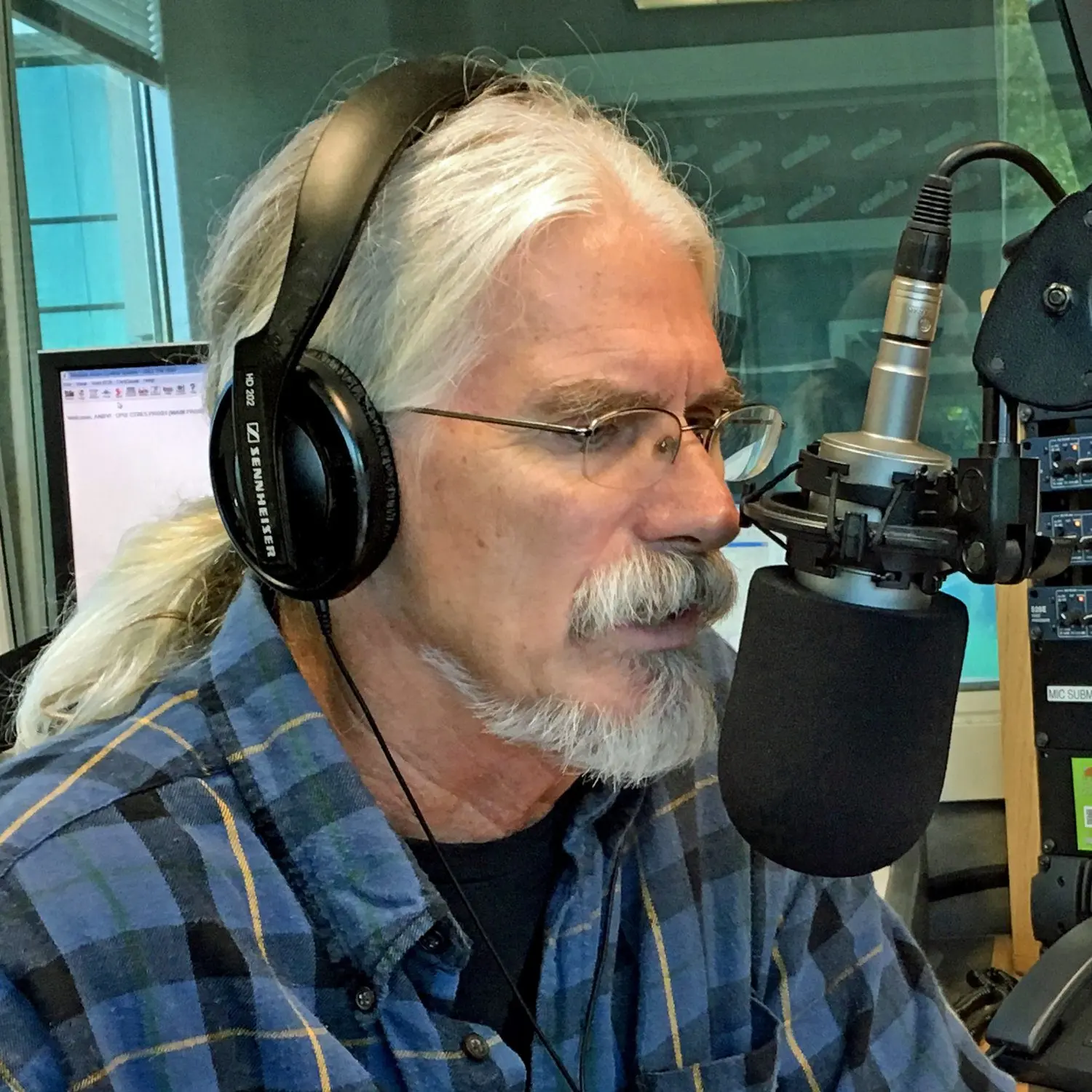
Join Steve Gregg on The Narrow Path as he navigates through questions about the Bible and Christian faith with insight and clarity. This episode delves into a range of topics from an unexpected generous donation featuring burnt cash to a deep conversation about faith communities faced with a myriad of interpretations of Jesus as depicted through different canons. Steve Gregg provides his perspective on these nuanced issues and invites listeners to reflect on where they stand within their faith journey.
SPEAKER 1 :
Thank you.
SPEAKER 02 :
Good afternoon, and welcome to the Narrow Path radio broadcast. My name is Steve Gregg, and we’re live for an hour each weekday afternoon, taking your calls. If you have questions about the Bible or the Christian faith, feel free to give me a call. We’ll talk about those questions. If you disagree with the host, we can talk about that, too, if you call. The number is 844-484-5737. I’m looking at some open lines right now, so you can get through if you call now, 844- 484-5737. Tonight is the time we would normally have our monthly Zoom meeting. If you haven’t heard the announcements earlier this week, I’m not going to be able to do the Zoom meeting. It has to do with my travels to the Midwest in order to have a debate Friday night in Wisconsin, in Onalaska. I guess that’s how you say it. And If you’re in the Midwest or near Wisconsin or near that town, if you want to join us, you can look at our website and see where it’s going to be. It’s at the First Free Church, as it’s called. And by the way, people have been asking, is it going to be streamed? It is going to be streamed. I just got the link to the stream today, and I advanced it to those who post such things at our website. So at least Friday, probably already, if not already, then tomorrow or the next day. you will see at our website the link for the live stream of that debate, which is going to take place, I think it starts at 6, like 6.30, maybe 6 o’clock. I forget. That’s what, central time? I don’t know my time zones that well in Wisconsin. And so you can watch it on your computer if you want to, or your phone, I suppose. And that’s all the announcements I have to make. I just want to say… In our mail yesterday, I received an unusual couple of packages. They were anonymous. I don’t know who sent them. There’s no return address or anything like that. And there were two fat manila envelopes stacked with bills, that is legal tender type bills. And they were just randomly shoved in there. It’s just a big, you know, they’re just shoved into these envelopes and sent. without any return address. And it was almost $10,000 in cash sent to the narrow path, which we appreciate very much. But what makes this unusual, besides what I’ve said so far, is that all of these bills are damaged by fire. All the edges of them have been burned. And some of them are, I mean, they’re all very brittle. Some of them are falling apart to touch them. Obviously, this is a bunch of cash that survived a fire somewhere in Washington State. That’s where it’s postmarked. Now, if somebody didn’t want me to know who sent it, that’s fine. We’re going to have to go through some procedures at the bank to get that turned into money that is usable for the ministry, but it’s not a problem. We appreciate it. It’s a very generous gift. It’s just that that money must have an interesting story behind it. Obviously, It went through a fire of some kind, and my wife and I were speculating what might have been the story. We don’t know. Anyway, whoever sent that to us, thank you. But also, if you don’t mind, we’d love to know how that money came to be burned and how it came about that you sent it to us. Anyway, it’s just a strange story. We get strange donations and stuff to The Narrow Path. But that’s probably the strangest one, two big envelopes just stuffed with bills, hundreds and fifties and twenties, and all of it burned, all of it damaged. We can’t really use any of it. I went to the bank to see what has to be done. They say we have to kind of apply for a kit somewhere. of some kind to send it in a bag to who knows where, to the government. And I guess they’ll give us the same amount in credit or something. But it’s just a strange story, and whoever sent it is probably listening. If so, we’d love to hear more about where that, you know, how that money survived the fire or whatever is going on. Just different. It’s something that doesn’t usually happen. And that’s all. So whoever sent it, thank you. And, you know, if you want to let us know the background story, it would be very interesting to us to know. George in Covina, California, welcome to The Narrow Path. Thanks for calling.
SPEAKER 03 :
Hi, Steve. Thanks for taking my call. So I watched this video by Wes Huff. Do you know who Wes Huff is?
SPEAKER 02 :
Yes, I’ve seen some of his videos.
SPEAKER 03 :
Okay, so this video that I saw, it was called Getting Jesus Wrong. And in summary, he proposes in the video that any Jesus other than the Jesus of Scripture is, as he put it, a comforting lie. So I totally agreed with everything he had to say in the video, so I sent it to a good friend of mine in the UK, Gary, and I’m going to be sending this to Gary, so Gary, if you’re listening. So he’s forever been a skeptic of Christianity, you know. guess his his brother his younger brother um years ago um was um involved in a cult and um he eventually ended up dying and i think gary has a lot of um you know his christianity just leaves a bad taste in his mouth i guess you know so so anyway i sent him this video and um his immediate response was um Well, actually, his response wasn’t immediate, but I actually received it just recently. And he says, what do you mean by Jesus of Scripture? So that’s an easy one to respond to. But then he has a list of questions, and one is he’s asking, which canon and which interpretive method counts as the baseline as well as, And then he asks, is it Protestant 66, which I don’t know what that means, or is it Catholic 73, which I don’t know what those numbers signify.
SPEAKER 02 :
Those are the numbers of books in the Protestant Bible and the Catholic Bible, yeah.
SPEAKER 03 :
Oh, okay.
SPEAKER 02 :
Yeah, Protestant Bible has 66. I’m sorry, go ahead.
SPEAKER 03 :
Is it Orthodox and who’s reading? Who’s reading? when passages conflict or are ambiguous. So that’s one set of questions. Then he says, what is the decision rule for other versions? What specific beliefs make a view not the Jesus who lived, died, and rose again? And what would qualify as a sincere alternative interpretation rather than a comforting lie?
SPEAKER 02 :
Okay, so when he says which canon, are we going by the Catholic canon, the Protestant canon, or the Orthodox canon? Well, all of those have the same canon of the New Testament. The canonical differences between the Protestant, Catholic, and Orthodox Bibles have to do with books that are or are not included in the Old Testament. The Protestant has the leanest canon. Old Testament. The Catholic has seven additional books in what they call the Apocrypha. And then, of course, I don’t know how many the Orthodox Bible has, but I think it has more than the Catholic. In any case, you know, we can say this, the 66 books of the Protestant Bible are accepted by all Christians. And therefore, the Catholics and Orthodox who have more books in their Old Testament than the Protestants, they still accept the 66 books. So we could certainly use those. But we’re talking about Jesus here, and Jesus is in the New Testament. Jesus was not born in the Old Testament time. And I think what’s tough is talking about the Jesus who walked on the earth. You can see prophecies about him in the Old Testament, but his story is not there. He hasn’t born yet in the Old Testament times. So in the New Testament, we have four Gospels, and all the canons have the same four. In fact, in the year 170 AD, Irenaeus said that the Gospels of Matthew, Mark, Luke, and John are all accepted, and no others are accepted by the whole church worldwide. So, you know, Irenaeus himself was kind of a I think not entirely a Western Christian himself. So, you know, and he was a major church father of the period. He was aware of what Christians believed around the Mediterranean world, the West, the East, and so forth. There were no Protestants yet. But he did say that all Christians, no matter where they were, accepted those four and no more Gospels. So it does, you know, the idea of which canon are you using? It’s irrelevant if we’re talking about the story of Jesus because all Christian canons have the same four Gospels. And so that becomes definitely a moot point. As far as whose interpretation, well, I would say the interpretation that was intended by the authors. Now, if someone thinks that the authors of the Gospels were writing in code or in symbolism and not realism, then I think that person has quite a burden of proof to fill because the gospel writers were not writing to mystics. They weren’t writing to scholars. They were writing to ordinary people, many of whom were more or less illiterate, but it was going to be read to them in the churches. So they’re going to hear it read. You know, if someone wants to say that the early Christians of the first century were didn’t speak their mind plainly, then I’d have to say, why? Why would you say that? I mean, is there any evidence they didn’t? Biographies were a common form of writing in the ancient world. And these are four biographies of Christ. Biographies, generally speaking, tell what a person said and did, and that’s what we find in the Gospels. So, you know, a person says, well, you know, whose interpretation are you going to go with? That person might want to just read the Gospels and see how irrelevant that statement is. certainly some of the things Jesus said on some subjects was in parables, for example, or used figures of speech known to the Jews of the time and known to those who study that today, but Westerners who don’t study those things might not immediately know what some of those figures of speech are, just like if we read any books from other countries or other cultures that use figures of speech we don’t use, but Fortunately, we’ve had 2,000 years of scholarship that have concentrated on understanding Second Temple Judaism in Palestine, which is where these people lived, and how they spoke and what their idioms were and so forth. So it’s not like there’s a whole bunch of ways you can take these things. I just think that the question is a dodge. Now, if he actually read the four Gospels and said, wow, I’m really having a hard time understanding what these guys are saying. I don’t know if, I’m not sure if they’re saying that Jesus was a good guy or a bad guy. I’m not sure if they’re saying that he came from God or didn’t come from God. I’m not sure if they’re saying he rose from the dead or if they’re not thinking he rose from the dead. Now, if your friend read them and still had trouble with those kinds of things, I would suggest him maybe he could take a, a children’s Bible or something like that. But I think that anyone who’s an adult reading them, and sympathetically, and by that I mean not just reading them to look for whatever faults they can find, but reading them as what they claim to be. They claim to be now ancient histories of a man who lived in the first century, and some of them are written by the people who lived with him. And the ones that are not, you know, John and Matthew are written by men who walked with Jesus. They were his disciples. Luke and Mark do not claim that about themselves, but they are known to be people who traveled with the apostles. That is, they traveled with the ones who lived with Jesus. So they would have firsthand information. And that’s what Luke, for example, says at the beginning of his gospel. He says he wasn’t the first, he said, to seek to write down a record of the life of Jesus. But he said from the very earliest times he’s had access to the eyewitnesses and to the people who knew these stories and that he’s collected them and he knows which ones were true and so forth as opposed to mythical ones that were circulating. So Luke was a very trusted historian. And, you know, he knew the other apostles. I mean, he was not one of the 12, but he had many encounters with them and spent time with them. So, I mean, if we say, well, I don’t trust these guys. Well, who would you trust? I mean, do you believe in Alexander the Great? Do you have any writings written by anyone who knew him? No. In fact, do you have any writings written? By anyone living within 400 years of his lifetime? Probably not. Okay, but you accept that Alexander the Great did certain things and lived a certain time and so forth? Well, then, if you accept that, then when we have a man who we have four biographies of his life written in living memory of the people who lived with him, two of them written by men who did live with him, I’d say your skepticism is somewhat arbitrary. But let’s face it, I think what you said is in his mind, Christianity has left a bad taste in his mouth because of his brother being in a cult and dying and things like that, which means he’s not an objective reader. It means if he’s got a bad taste in his mouth, he’s looking for fault. He’s reading it with an unsympathetic mind. You don’t read any history with an unsympathetic mind and come up with any knowledge of what happened if you’re doubting everything the historians say. But if you’re an ordinary person who’s objective and kind of interested in knowing what happened, then you can read the material and find out what happened. It’s not like you have to have some kind of deep scholarship. Now, I will say this. The more scholarship you have in the New Testament and in the Gospels, the deeper appreciation you’ll have for some of the things that are said there, the more you’ll understand some of the historical setting, the more the nuances of Greek words will open up to you and phrases and so forth. But, I mean, it’s not going to mean that you’re going to believe something radically different than the person who’s a 12-year-old reading the same material. The Jesus of the Bible that Wes Huff is talking about is the Jesus anyone could find reading the same Bible because everyone reads the same four Gospels. Now, your friend may be aware that there are other Gospels that are not in our Bible called the Gnostic Gospels. If he saw, you know, the Da Vinci Code or something like that, then he heard that there were like 100 Gospels and that the four we have were selected by Constantine for reading. ideological purposes, and he burned all the rest. If your friend has ever heard that, then I could see why he’d say, well, which canon? Which gospels? However, if he did hear that, then he needs to know that Dan Brown, who wrote the Da Vinci Code, made it all up. There were no Gospels selected by Constantine. Constantine lived in the 4th century. Irenaeus, who said that the four Gospels were the only four that Christians accepted throughout the world, wrote in the late 2nd century, like 150 years before Constantine was born. So the four Gospels were selected and understood and recognized by the church long before Constantine ever was a twinkle in his father’s eye. And so Constantine had nothing to do with choosing those. Besides which, there were never 100 or more Gospels. There were some, a few hams full of Gnostic Gospels that were written. by forgers. And frankly, Irenaeus and those guys in the second century knew those things. They knew those gospels. And they said, those are Gnostic gospels. Those were not written by Peter and Judas and Philip and Mary and the ones whose names they bear, Thomas. You know, they were written, you know, a century or more after those people were dead. So, you know, the Gnostic gospels never fooled anybody who was an Orthodox Christian who knew Jesus or the Apostles. But they did circulate. They never were part of the Bible. They were just books that people circulated, just like a person could write a book about any historical character. They make it all up and circulate it as a book. That doesn’t make it useful in determining anything about that person. Hmm. By the way, Constantine, as far as I know, Constantine didn’t burn any books. I don’t think so. So I agree with that. Yeah.
SPEAKER 03 :
Okay, so what would you gather by him asking a question about, you know, other versions of, by that I think he must mean the Bible, you know, like what specific beliefs make a view, not the Jesus who died and rose again, and what would qualify as a sincere alternative belief? You know, other than that being a comforting lie. I’m not quite sure what he meant by that.
SPEAKER 02 :
I didn’t see that Westhoff video, so I can’t tell you what Westhoff was referring to. But lots of Christians would refer to Jesus as he’s described, for example, in the Mormon church, which is very different than the Jesus in the Bible. They would refer to the Mormon Jesus as a different Jesus or even the Jesus as presented by the Jehovah’s Witnesses. The cults are often called that because they deviate from what the Bible says and what the church has always recognized it to say in some particular. And usually it has something to do with the character or nature of Jesus or identity of Jesus. So probably Westhoff was referring to something like that. But as far as which version… There’s only one version of Jesus. Matthew, Mark, Luke, and John are talking about the same Jesus. They have much parallel material with each other, and each of them has some unique material. But the material they have that’s unique does not present a different kind of Jesus than the other Gospels do. It’s the same Jesus, just additional stories quite in line with what the others say. So there’s only one version of Jesus presented in the four Gospels. Now, if he says versions, some unbelievers know so little about the Bible that when they see there’s a King James Version and a New American Standard Version and an English Standard Version and a Revised Standard Version and these other versions, They say, well, which Bible is true? Well, in those cases, we’re just talking about English translations. There’s only one Bible. The New Testament was written in Greek. We have the manuscripts, not the original handwritten ones, but we have thousands, literally 5,000 Greek manuscripts of the New Testament. and we have people who can read Greek and translate it. And so many people have made translations from the Greek into English and published them, and they have different names on them, but they don’t have a different Jesus in them. You know, the difference between the English translation is just somebody… has decided that they can put a finer point on, bring up the, you know, make the Greek nuance clearer or something in the way they translate it. But if it’s a good translation, what they say about Jesus is going to be precisely the same thing as all the other good translations say.
SPEAKER 03 :
Right, right. Okay, well, that answers it on my end. You know, I’m definitely going to send him this… All right. From the archives. All right. Okay.
SPEAKER 02 :
Hey, God bless you. Good talking to you, man.
SPEAKER 03 :
You too. Bye. Bye now.
SPEAKER 02 :
Mary from Chaska, Minnesota. Welcome to The Narrow Path.
SPEAKER 09 :
Hi. Does Scripture support once saved, always saved, or be careful because you can fall away from your faith?
SPEAKER 02 :
Well, it seems like it supports the second. Okay.
SPEAKER 09 :
I think so, too.
SPEAKER 02 :
Yeah, yeah. I mean, the Bible is always giving warnings about the danger of falling away. Almost every book of the New Testament, certainly every author in the New Testament, seems to give warnings to their readers in one place or another. And Jesus did, too. He didn’t write any books. In the teaching of Jesus and that of Paul and Peter and James and Jude and John, they all have warnings about that. Hebrews definitely has quite a few warnings. So it seems to me like it’s saying that if you fall away from Christ, you don’t get to take your salvation with you. It’s like, you know, it’s like if I leave my wife, can I take my marriage with me? Well, that doesn’t even make sense. My wife is… My marriage is defined by my wife. I can’t leave my wife and still be in the marriage. I mean, I could be formally married, but I wouldn’t be living in the marriage. And, you know, we come to Christ. He is salvation. He is eternal life. You can’t just leave Jesus and still have it. It says in 1 John 5, verse 11 and 12, this is the message that God has given to us eternal life. But this life is in his son, it says. It’s in Jesus. And it says he that has the son of God has life. He who does not have the son of God does not have life. The only way you have life is if you’re in Jesus. And that’s why the Bible says we should remain in him. That’s what Jesus said. He’s the vine where the branch is. He said you need to remain in me. Well, why? If you’re once saved, always saved, so what does it matter if you remain in it or not? You can still be saved. If you don’t, no, that’s not true. He said in John 15, 6, if anyone doesn’t remain in me, he is cast forth as a branch. Again, the image of a vine with its branches. He says he’s cast forth as a branch and withered, and they gather them and burn them. In other words, the branches are alive as long as they’re attached to the vines. But if a branch is separated from the vine and isn’t in the vine anymore, well, it just ripples up and dies and it ends up being burned. It doesn’t stay alive. We draw our life in the Christian life. We draw our life from Christ, from our connection with him, from our remaining in him. And we’re told to abide in him. What happens if we don’t? Well, Jesus didn’t leave us to guess about that. He said, give me like a branch discarded and dried up and burned. Doesn’t sound like a once saved, always saved kind of message. And I don’t know of any place in the Bible that does. There are passages that give us great assurance that nothing can separate us from Christ. That’s assuming we remain in Christ. Paul lists a whole bunch of external things, you know, strife and the sword and Angels and demons and, you know, persecution, none of those things can separate us from Christ. That’s assuming we stay with Christ, you know, because we can leave him. The Bible often mentions people leaving Christ, leaving God, abandoning him. But, you know, Paul’s assuming his readers who are Christians want to stay in Christ, and therefore he’s saying, listen, you’re secure there. As long as you want to stay in Christ, there’s nothing external to you that can separate can pry you away from him jesus said the same thing that you know his sheep are kept in his hand and and no one can pluck them out of his hand but jesus does not argue that sheep cannot go astray and perish in fact that’s exactly a motif the bible often uses for israel and uh in teaching sheep going astray now you know no one can take you from christ if you’re staying in christ If you’re abiding in him, you’re secure. If you don’t, there’s no security in that. You know, outside of Christ, there’s no security. There’s plenty in him. So I believe in conditional security of the believer. I believe we’re on the condition that we abide in Christ. Yeah, we’re as secure as can possibly be hoped for. But if we don’t abide in Christ, well, that’s a different story. So there’s the condition. It’s not unconditional eternal security. It’s conditional, conditional upon remaining in him. I need to take a break. I hope that helps you. You’re listening to The Narrow Path. Our website is thenarrowpath.com. Check it out. We are listener supported. You might find out how to support us, but everything there is free. I’ll be back in 30 seconds. We have another half hour, so don’t go away.
SPEAKER 10 :
Tell your family, tell your friends, tell everyone you know about the Bible radio show that has nothing to sell you but everything to give you. And that’s The Narrow Path with Steve Gregg. When today’s radio show is over, go to your social media and send a link to thenarrowpath.com where everyone can find free topical audio teachings, blog articles, verse-by-verse teachings, and archives of all The Narrow Path radio shows. And tell them to listen live right here on the radio. Thank you for sharing listener-supported The Narrow Path with Steve Gregg.
SPEAKER 02 :
Welcome back to the Narrow Path Radio Broadcast. My name is Steve Gregg and we’re live for another half hour taking your calls. Once again, if you have questions about the Bible or if you have a difference of opinion from the host and want to talk about either of those things on the air, we are live on most of these stations you’re listening to. And you can reach me at this number, 844-484-5737. I’m looking at two open lines right now, so that’s an opportunity for you. Here’s the number, 844-484-5737. Our next caller is David calling from Denver, Colorado. David, welcome to The Narrow Path. Thank you for sharing. Yeah, how are you doing, Steve? Good. You need to turn your radio off because I’m hearing like a minute ago on there. There’s a delay, you know. Yes. How are you doing?
SPEAKER 05 :
Well, thanks. Okay. Good. Okay, so I just have a couple questions. I was just wondering, is it okay for a musician to play secular music and then play in the church and actually get paid for it? And then I got one more about abortion. Is it okay for a minister to tell their congregation that you have the right to get an abortion? Like, you know, the Bible does say thou shalt not kill.
SPEAKER 02 :
Well, one of those questions is quicker to answer than the other. The one about abortion is a very quick answer. Of course a minister can’t tell somebody he’s okay to have an abortion. It’s like saying, what if you have a two-year-old and you find that two-year-old inconvenient and you say, Pastor, is it okay if I kill my two-year-old? And the pastor says, well, sure. We’re under grace. Who cares? No, no, you can’t do that. You can’t kill people. And the baby in the womb is a person. It’s not something other. I realize that this abortion-friendly culture has done a lot to brainwash innocent and foolish young women and some older ones who are equally apparently ignorant. that the baby that’s inside of them is not a baby. And some say it’s not a baby until it takes its first breath outside the womb. There’s not a word in the Bible that would support that. There’s nothing in science that would support that. It’s ridiculous. And therefore, if someone says, well, we don’t know if it’s a baby or not, well, then it might be, right? I mean, if you say, I don’t know if anyone’s in that house in there, maybe they are, maybe they’re not, but I’m going to throw a hand grenade in there because I feel like it. Well, wait, what if it turns out someone is in there and the hand grenade killed them? You didn’t know if they were or not. Same thing with the baby. If you don’t know if that’s a baby or not, and you kill it, what if you find out it was? And you will, by the way, when you meet God. When you meet God, you’ll find out you killed a human being. And there are very dire consequences for killing human beings who are innocent. So, yeah, no pastor should ever endanger his own salvation by endangering the salvation of somebody who’s asking for counsel. Yeah, you don’t tell people it’s okay to kill. Now, as far as a musician, are you talking about… I’m going to take this one off the phone.
SPEAKER 07 :
Oh, go ahead, go ahead, go ahead, go ahead.
SPEAKER 02 :
Are you talking about a musician playing secular music at church or a musician who plays, like, Christian music at church but also plays secular elsewhere?
SPEAKER 05 :
Yeah. Yeah, and I’ve played elsewhere. Like, they play on Saturday night and then go into church on Sunday. I’m going to take that off the phone, though.
SPEAKER 02 :
That’s fine.
SPEAKER 05 :
That’s fine.
SPEAKER 02 :
Yeah, I mean… Lots of Christians make their living in music, and a lot of times it’s in secular music. Now, of course, like anything else, like if you make your living in art or in acting, or entertainment or whatever of any kind, you obviously can’t do things in your vocation that are contrary to Christianity. So, I mean, secular music just means it’s not religious. Secular doesn’t mean, you know, immoral music. Almost all instrumental music, for example, if there’s no words, is just secular. Now, true, some of the classical music, works written by Bach and people like that and Mozart they may have been written for the glory of God and they were written by Christians to glorify God but most secular music I should say most instrumental music is written just because the musician thought it sounds good and the audience thinks it sounds good but doesn’t have any message in it at all I can’t see any reason that that would be wrong and then even secular music that does have lyrics the question is what are the lyrics about I just went to a local concert with a friend who’s probably listening here in Temecula, a band that covers bread music, you know, David Gates and bread, that band bread. Actually, the piano player in the band is in our church, and he plays worship for us. But he played and plays regularly in this band that does, it’s a tribute band to the band Bread. And David Gates’ music is nice. I mean, it’s love songs, to be sure. You know, there’s a song he wrote in appreciation of his father. There’s a song he wrote of his son. There’s songs he writes about his wife or women. And none of them, at least none of the ones I remember, had anything in them that a Christian should object to at all. And yet they were secular. They weren’t Christian. I don’t think David Gates is a Christian. Maybe he is. But the thing is, if the music has nothing that a Christian would object to, then I don’t think it has anything that God objects to. Now, I don’t think we should have secular concerts in the church, in church meetings, simply because the time could be better used with things that are truly edifying. And Paul said that whatever is done in the church gathering should be done for the edification of all. So, you know, to have simply entertainment in the church, and many churches do, by the way, just have entertainment, but I don’t think that’s what the church gathering is for. Not that I’m not speaking so much about institutional church per se, just the gathering of the saints, when the saints gather for fellowship and for worship and for teaching and edification, Paul indicates that all things should be done for edification. That would mean entertainment is not particularly spiritually edifying. So I wouldn’t recommend that. But if a musician is doing secular music, but he’s not doing the kind of music that would be objectionable to God, then I don’t think there’s a problem with that. God created music. And And there’s a lot of music that wasn’t specifically written by Christians. It’s very beautiful and very touching and very pure. So, yeah, I wouldn’t become legalistic about that. I wouldn’t recommend it. All right. Well, thank you for your call. Let’s see here. Linda in Chula Vista, California. Welcome to The Narrow Path. Thanks for calling.
SPEAKER 01 :
Hi. Hi. Yeah. Thanks for taking my call. I just wanted to say about that money that was received. Without a return address, I’m retired from the post office, and that, if it’s not too late, needs to be reported to the postal inspector so you can take it to any post office.
SPEAKER 02 :
Oh, okay. And what would happen to it then?
SPEAKER 01 :
I’m not sure. It would be under some kind of investigation, but it’s very important for them. Any mail that we ever came across, when you’re working there, anything that doesn’t have a return address, especially if it’s oversized of a quarter of an inch, like if there’s something in there, and it’s called target mailing, you need to call the postal inspectors or just go to the post office and ask them to tell them what happened. I’ll have to look into it. Yeah, ask the postmaster, but it’s very important. Okay. That’s about it.
SPEAKER 02 :
Okay. Well, thank you for that information. Yeah, we’ve never had that happen before. So having some explanation of what to do is helpful. Brittany in California, welcome to The Narrow Path.
SPEAKER 08 :
Hi.
SPEAKER 02 :
Hi.
SPEAKER 1 :
Welcome.
SPEAKER 08 :
Yeah, my question has to do with the terrible disorder and how that looks like it’s in your modern life.
SPEAKER 02 :
Yeah, can you talk right into the phone? Because it’s kind of muffly.
SPEAKER 08 :
Yeah, sure. I was just wondering how the parable of the sower can ultimately be applied to our modern life.
SPEAKER 02 :
Okay. The parable of the sower. Sure. Well, the parable of the sower, of course… That happens to be found in three of the Gospels. And the sower, the word sower means someone who’s sowing seeds, casting seeds out across a field. And some of the seeds will produce, you know, plants, and some won’t. And Jesus said that will depend largely on the soil. And he said some of that seed, if it’s cast randomly out on a field, is going to fall on one kind of soil, and some will fall on a different kind of soil. And so the ones that fall on good soil… will produce good product, you know, a harvest. Now, the soil that doesn’t produce harvest, he spoke of three different kinds of soil that do not produce harvest. One, he said, was hard soil, what he called on the wayside, which is the pathways that servants and farmers would run upon. to get from one part of the field to the other. It gets trampled down, and it’s just hard dirt. And he said the seed doesn’t penetrate it when it falls on that. Some of the seed does fall on that area, but the birds come and eat it because it doesn’t escape their notice. It’s just laying there on top. So it gets eaten up, and nothing comes of it. And then he said there’s some seed that falls into softer ground, and it penetrates deeply enough to germinate. But The ground is hard after an inch or so below the surface. There’s like rock in there. And because the seed springs up, it needs nourishment, but its roots can’t go very far down because the rock is below it. And because they can’t get deep roots, when the sun comes up, it burns up the plant and it dies. Then he said the last kind is they fall in a field where apparently the soil is good enough, but there’s thorns and thistles in it too, and they grow up along with the plant and choke it out. Now, Jesus said each of these, you know, represent different kinds of heart conditions. He didn’t say it in so many words, but since he said the good, he said the seed is the word. In Matthew, it says the word of the kingdom. In Mark, I think it just says the word of God, if I’m not mistaken. In Luke, I think it just says the word. But it’s not that the word’s, of the gospel when it’s preached, when God’s word is preached. He said that those who produce the fruit are those who receive with a good and honest heart. In other words, it’s the condition of the heart that determines whether they will produce a harvest that is desired. And so the ground condition represents a heart condition. And the seed that is on hard ground, and the birds eat it, He said, these are people, it doesn’t penetrate them at all. And Matthew said, they hear it, but they don’t understand it. And so it doesn’t accomplish anything. And the devil comes and snatches it away, and that’s the end of that story. But the seed that’s on rocky ground that starts out but doesn’t have roots, that’s obviously those who do receive it, he said, with joy. These are people who do get converted. But when persecution comes, he said, they fall away because they don’t have any deep roots. And then the thorns and thistles, some seed grows among thorns and thistles and gets choked out. Jesus said they represent the deceitfulness of riches and the cares of this world that are in the heart too. And they compete with the word of God and with the impact of the gospel. And they prevent it from ever producing what God wants. Now, the application is that God’s word is, we are exposed to God’s word through preaching or reading or whatever. and seed is being sown or attempting to be planted in our hearts. In James, it says, I think in chapter 1, it might be chapter 2, I think it’s James chapter 1, it says that we should receive with meekness the implanted word, which is able to save our souls. So again, the imagery of the word being like seed, receive with meekness the implanted word, which is able to save your souls. Obviously, We need to receive the word of God with a certain kind of heart. And if it is well received in the right way, with the right heart, it will produce a harvest. Now, what is the harvest? God is looking for in us a growth. He wants us to grow spiritually. The word of God is like seed. Now, when you plant a seed inside, what is this? A seed is a capsule of life. It has to germinate into life, but it’s got the DNA and it’s got the nature of the plant that produced it and the potential of reproducing that same life of the plant that produced it. And if the word of God is from God, then it has the potential of reproducing the life of God in the souls of the persons whose hearts receive it properly. The idea is that’s what God wants. God wants us to have his life reproduced in us through his word. word being received, obviously the word is not just referring to words on a page. It’s not referring simply to the information per se. It’s a living capsule of the life of God. It’s what he’s likening it to, like a seed. So that the word of God carries life. In fact, Jesus said in John 6, 63, he said, the words I speak to you, they are spirit and they are life. And Like I said, James said you need to receive the implanted word which is able to save your soul. In 1 Thessalonians 2, I think it’s verse 13, Paul said that when he preached the word to the Thessalonians, he said they received it for what it was, the word of God, he said, which works effectively in you who believe. So the word of God is a living thing when it’s implanted in a welcoming soil. It reproduces the life of God in you. It’s working in you. It’s powerfully working in you, Paul said. It produces the fruit. The fruit is the nature of Christ, of course. The fruit of the Spirit is the character of Christ. So the idea is as you take the word in, there’s the potential, if your heart is right, that you will experience spiritual growth into the likeness of God because of the life of God being implanted in you. It says in 2 Peter 1.4 that we have become partakers of the divine nature through his great and precious promises. That’s, of course, the word of God, promises he makes to us. Through his promises, it says we are partakers of the divine nature. God’s nature itself is implanted in us and grows there so that we are being changed from glory to glory into the image of Christ if we’re participating properly. Now, obviously, I say if we’re participating because Jesus said there’s different kinds of hearts. And if our hearts are hard or if they’re shallow, we’re looking out for ourselves, but when persecution comes, we’re not interested. If we’re compromised with the cares of this world and the deceitfulness of riches, Jesus said, well, no fruit’s going to come there. In other words, you can hear the word of God day after day and Sunday after Sunday. You can read it every day. But if your heart is not in the right receptivity, then you will not experience benefit from it. It’ll be in vain. So that’s what that parable is trying to get across. And that applies today as much as his own day. All right. Let’s talk to Abby in St. Paul, Minnesota. Hello. Abby? Am I going to have to hang up? No one there? Hello. Hello. Hello.
SPEAKER 08 :
Good evening, sir.
SPEAKER 02 :
Good evening. What’s your question?
SPEAKER 06 :
Hi. So, yes, I just had a quick question about Genesis. Okay. So in Genesis 1, God created both male and female. And then in Genesis 2, he formed Adam from the dust, and then he created animals, and then he formed Eve. Yep. So I was just curious. In Genesis 1, he created them both at the same time, and then in Genesis 2, he formed them at different times. So what was that first creation in Genesis 1? Sure.
SPEAKER 02 :
That’s a good question and one that an attentive reader should ask at some point, but it’s not really a very hard one to answer. In Genesis 1, the whole week of creation is scanned rather rapidly with a very brief summary of what was done each day. And on the sixth day, it is summarized that God made Humans, male and female. Now, this is talking about Adam and Eve. God made Adam and Eve on the sixth day. He made them both. Now, chapter 2, because the creation of Adam and Eve is more important than any other created thing God did, because they’re made in his image and have a destiny that he has in mind for them, unlike, say, animals or rocks or trees, we have a focus on that day, on the day when they were made. And we find, as we use a magnifying glass to look at that event, that Adam was made first and the woman was made second. And in between, Adam had some work of identifying and naming the animals. In other words, I think that Chapter 2 zooms in and gives a finer detail on what is spoken of only in a passing statement. In chapter 1, God made man. It’s male and female. He made them. Well, yeah, he did. It doesn’t say he made them both at the same moment. It’s just summarizing on that day he did. Also, on the same day, he made a lot of land animals, but it doesn’t talk about each one individually. It just says this is what he did on that day. But because the creation of man and woman was so important compared to all the other aspects of creation, a whole chapter is given to expand on it. It’s like a sidebar in an article, which I’ve always used that illustration, although people don’t read magazines as much as they used to. Magazines used to have news stories that were maybe several pages long, but at one point they’d mentioned something important, but they didn’t want to interrupt the narrative with it, so they had a sidebar, a box over to one side that talked about that one subject in more detail. And that’s kind of what chapter 2 of Genesis is. It’s a sidebar on what happened on the sixth day, as mentioned in chapter 1. What does that mean?
SPEAKER 06 :
Hello? Yes. Yeah, that makes a lot more sense. I was thinking it was like God is spirit, we’re made as spirits, and then he formed our bodies. But what you kind of said kind of summed it up, whereas… It’s more of like you said, magnifying glass. It’s a day six. That’s what I believe. Okay. Well, thank you. I appreciate that.
SPEAKER 02 :
Good talking to you. Thank you.
SPEAKER 06 :
God bless you.
SPEAKER 02 :
Bye now. God bless you. Alex in Kent, Washington. Welcome to The Narrow Path.
SPEAKER 04 :
Hello, Steve. How are you?
SPEAKER 02 :
Good, thanks.
SPEAKER 04 :
So I have two questions. So for the first question, I have like two different passages that I want to ask about. There’s a passage where Elisha was mocked by the youths, and God sent two bearers to maul those youths. And then there’s also, like, the passage where Elijah has 50 men come to him, and God sends fire down from heaven and burns them up. So my question is, what is, like, what is the lesson here? Is it God’s justice being… God being just.
SPEAKER 02 :
The lesson is that God is enforcing his own laws, which have gone unenforced by the Jewish government. This is both Elijah and Elisha. One of the stories, the one about the fire, is about Elijah, and the one about the bears is about Elisha. Both of them, serially, were prophets in the northern kingdom of Israel. during the time of Jezebel and her husband Ahab, who enforced idolatry throughout the land of Israel. Now, under the law of Moses, which was given hundreds of years earlier, any Jewish person who worshipped idols was to be put to death. That was a capital crime, just like murder would be. You know, you worship idols, that’s a capital crime. It’s like treason against the government, against your king. And so… Israel in the north had actually established idolatry against God rebelliously. And Ahab and Jezebel were like the chief offenders of that. And so the Jews, or at least many of the Israelites in the time of Elijah and Elisha, were simply idolaters. And so God sometimes put them to death himself. Because the government was supposed to. They had committed capital crimes. And so when the wicked king sent soldiers to arrest Elijah, the man said, a man of God, you know, the king requires you to come down. And Elijah said, if I’m a man of God, let fire come out of heaven and consume you and your 50 men. And it did. And then another commander with 50 men came with the same demand, man of God. You know, come down, the king requires you to come. And he said, if I’m a man of God, may fire come down and consume you and your 50 men. What he’s saying is, you’re saying I’m a man of God and you’re ordering me around like that? Like the king has authority over God and over God’s servants? I’m obeying God. You’re obeying the king and you act like you’re in charge of me. Let’s see who’s in charge here. You know, if I’m really a man of God, let God vindicate his servant, me. Have I fire coming down and consume you? And he did, twice. Another 50 men and a new commander came a third time, but he was more polite. He said, please, would you mind coming down to see the king? We know you’re a man of God. And Elijah went. He submitted to him. He could have called on fire if he wanted to, but he basically felt the first two guys were implying that the king’s orders and the king’s servants were somehow wrong. above those of God. And even acknowledging him as a man of God, they would do so. So he just was basically saying, you’re not respecting God. Show a little more respect and I’ll comply. And he did. Now, as far as Elisha and the bears, Elijah had just been taken up in a whirlwind. And Elisha, his successor, had his mantle. And he was walking through a town and some of the idolatrous youths. Now, the King James says, I think it says children or something like that. It’s the word that’s used in the Hebrew. It just means a young person, a young man. The same word in the Hebrew was used of Joseph when he sold to his brothers at age 17. So obviously it could be what we’d call an older adolescent. But these adolescents, these youths, were mocking him, saying, go up, old bald head. Now remember, these youths were living in an idolatrous town, and they were idolaters themselves. And here they’re mocking the man of God. And actually, some people say Elisha called the bears on him. He didn’t call any bears. He just cursed them in the name of the Lord, and he went on his way. Sometime after that, maybe soon after that, two bears came out of the woods and mauled 42 of those young men. And it was obviously understood to mean this happened because they mocked the man of God, and this was God backing up the curse that the man had given. Now, we have to understand these stories and many others about capital punishment and things like that, and even about fire from heaven coming down from God on occasions. These stories are basically illustrating that God wasn’t messing around. This was his people. They were not allowed to worship idols. Every one of them that worshipped idols was, as it were, on death row. They didn’t know it. They’re walking around doing their thing, but they have committed capital crimes. And God usually just waits until they die to deal with them. But in some cases, he’ll just take them out if he needs to make the point. And this happened with the prophets sometimes. It’s not the only cases where people who resisted prophets dropped dead. Jeremiah had a man who mocked him and died within a year upon Jeremiah’s prediction. So that’s just the way God sometimes vindicates his messengers and cleans house in his own domain, which is Israel. Israel was his country, and they were acting like it wasn’t. Anyway, I’m out of time, sorry to say. Thank you for calling. You’ve been listening to the Narrow Path radio broadcast. My name is Steve Gregg. We’re on Monday through Friday at this same time. We are listener-supported. you can write to us at The Narrow Path, PO Box 1730, Temecula, California, 92593, or go to our website, thenarrowpath.com. Thanks for joining us. Let’s talk again tomorrow.