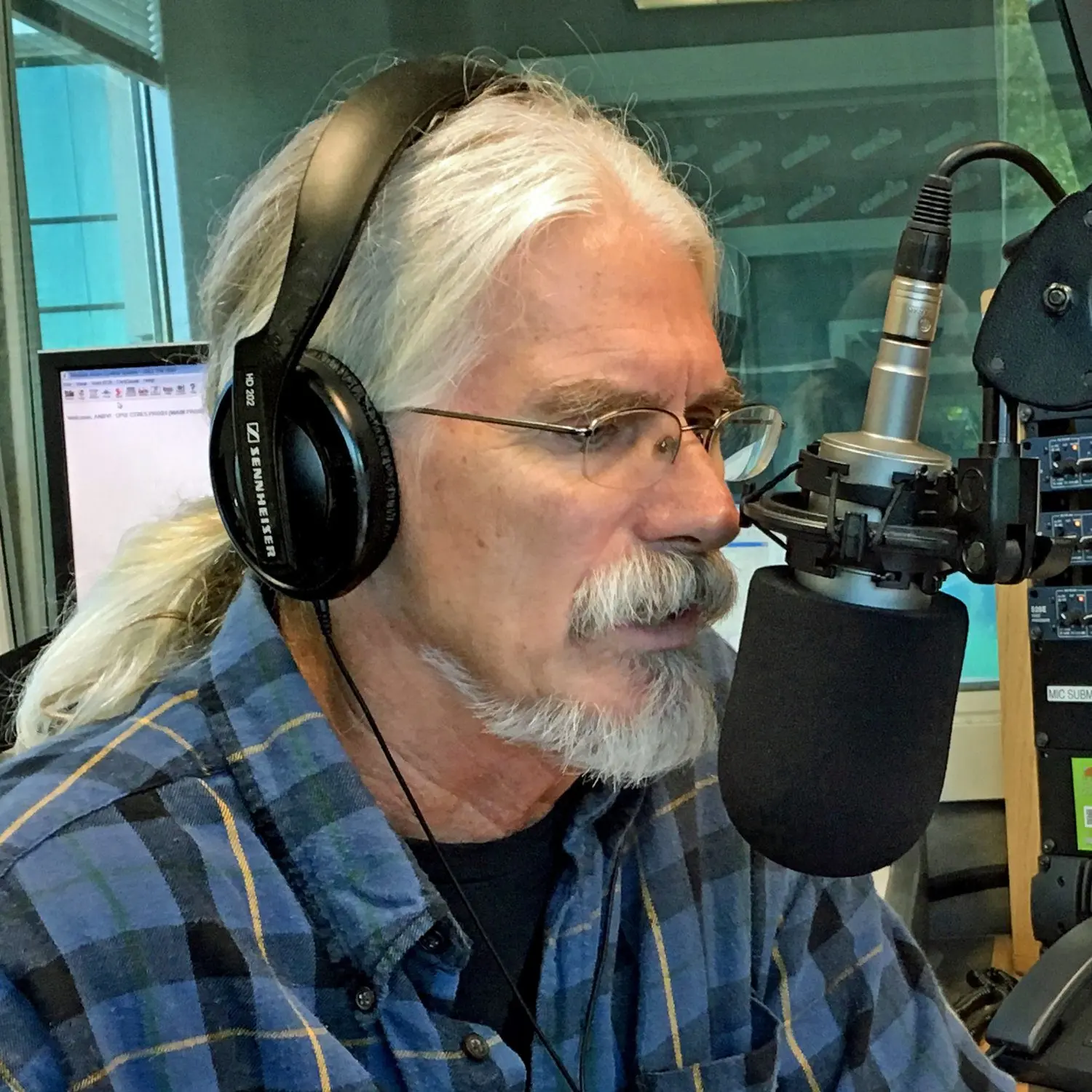

In this episode of The Narrow Path, Steve Gray navigates through a variety of theological inquiries that test the boundaries of traditional Christian thought. With thought-provoking questions on the Church of Pergamos, the eternal state of souls, and the tension between grace and works, listeners are invited to dive deep into complex biblical narratives. As we sift through different interpretations of salvation and divine judgment, Gray provides insightful responses that highlight both historical and contemporary theological perspectives.
SPEAKER 10 :
Unfortunately, due to technical difficulties, today’s episode of The Narrow Path is pre-recorded. This is the best of The Narrow Path radio broadcasts. The following is pre-recorded.
SPEAKER 01 :
The Narrow Path
SPEAKER 11 :
Welcome to the Narrow Path Radio Program, hosted by Steve Gray. Steve is not in the studio today, so calls from listeners will not be able to be taken. In the place of the usual format, we’ve put together some of the best calls from past programs. They cover a variety of topics important to anyone interested in the Bible and Christianity. In addition to the radio program, The Narrow Path has a website you can go to, www.thenarrowpath.com, where you can find hundreds of resources that can all be downloaded for free. And now, please enjoy this special collection of calls to Steve Gregg and The Narrow Path.
SPEAKER 09 :
Our first caller today is Mike from Garden Grove, California. Mike, welcome to The Narrow Path. Thanks for calling.
SPEAKER 08 :
Good morning, Steve. My question has to do with Revelation 2, the Church of Pergamos. Jesus said that they had kept the faith, had denied his name, but he had some things against them. My question is, is Jesus their Savior and not Lord, or have they lost their salvation? In 2 Peter 1.9, it says, if anyone lacks any of these things, they’re blind, they cannot see afar off, and they’ve forgotten that they’ve been purged from their sins. So would that apply? Anyway, that’s my question.
SPEAKER 09 :
Your question is, the Church of Pergamos, is it a case of them not taking the Lordship of Jesus seriously? Is that what you’re asking?
SPEAKER 08 :
I guess, yeah, you could put it that way. Is Jesus their Savior but not Lord? Or are they just completely lost for salvation because Jesus has that, you know, He says, I have… He gave them a compliment saying that they had faith in his name and they hadn’t denied his name. But then he said, I have a few things against you. So they were lacking in some areas.
SPEAKER 09 :
They apparently had some areas where they were subject to deception because there were some false teachers in the church. Some were teaching the doctrine of the Nicolaitans. Some were teaching the doctrine of Balaam. And these were false doctrines that were being taught in the church. The church is taken to task because it was tolerating this teaching. Now, why a church would tolerate false teaching, I’d be able to know immediately. It might be that they were still trying to evaluate whether it was true teaching or not. I mean, it would seem that if teaching is being done in the church, then somebody in the church must think it’s true. and therefore they could be blinded or deceived.
SPEAKER 08 :
Right.
SPEAKER 09 :
That’s a possibility. I mean, a true Christian can certainly go through a phase of deception. I know that in my own Christian life, which has been for many decades, in the earlier stages I was very impressed with certain teachings of certain teachers, which I now would consider to be quite wrong. I don’t think I was compromising on the lordship of Jesus in my life. I think I was just mistaken. And so I think a person, a church even, can be honestly misled a certain distance before they’ve actually been, you know, can be called defecting from their loyalty to Christ. If Jesus was standing right here among us and telling us what’s right and wrong unmistakably, then there’d be no excuse, of course, for a church to get off into error. But since we are trying to discern what the word of the Lord is from the scripture and from just whatever indicators he gives us, sometimes we go a little bit in the wrong direction before we correct ourselves. This church was going in the wrong direction in terms of allowing certain teachers to teach in their church Obviously, what they were teaching was pretty far-fetched. I mean, they were teaching something like Gnosticism, something like antinomianism. And yet, apparently, some of the people in church were undiscerning enough that they didn’t realize this was wrong. I mean, in other words, it’s not necessarily the case that they were deliberately trying to teach or believe what’s wrong. It’s that they were quite mistaken. about what was right and wrong. So making mistakes is not quite the same thing as rebellion against God. However, the teachers themselves involved could have been deliberate deceivers. It’s hard to say. In any case, Jesus sends this letter to the church to correct them and tell them this is not okay and you need to repent of having had this teaching in your church.
SPEAKER 08 :
Right, okay. All right. Thank you, Steve. God bless.
SPEAKER 09 :
Sure. Remember, God bless you too, Michael. You need to also remember that these are letters to churches collectively. And in any church, you’re likely to find some people who are truly faithful to Christ and some who are a little on the margins. And maybe even some who are hypocrites entirely in the church. And so Jesus could critique a church… uh, you know, in a single letter, complimenting it for its strengths, which would have to do with, you know, the better element in the church, but also criticizing some of the errors and mistakes or even sins going on in the church, which might be being committed by different people than the ones who were commended. Uh, to commend a church for its faithfulness may not mean that every last member was faithful, but in general, the church has held its ground against paganism in the society. Um, even if there’s been a few folks in the church who are quite compromised. So, you know, when Jesus sends an evaluation like this to a whole church, you have to realize, well, almost no church is made up of people entirely all in the same place. Some people are doing well and some are not. And so you could write to a church and say, you know, boy, you’ve got some really good things going on in your church, but there’s some really bad things going on too. And by that, you could be referring to different parties, different people in the church. Then… than you were complimenting earlier. Anyway, those are my thoughts on that. I appreciate your call, Michael. Marty, welcome to The Narrow Path. Thanks for calling.
SPEAKER 07 :
Yeah, quick question. Farewell. Let’s say how quick. The idea that the only way that we have eternal life as a gift from God is in Christ, And then the concept of eternal suffering in hell with consciousness, I can’t reconcile the two.
SPEAKER 09 :
Well, if the Bible teaches those two things, I’m not sure why it wouldn’t be able to be reconciled. I mean, if the Bible teaches that anyone who’s never heard the gospel is going to hell, and if it also teaches that hell is a place of eternal torment… then I don’t see any reason why those things could not both be true. Now, I don’t think the Bible clearly teaches both of those things. And so, on my view, there’s even less reason to find it difficult. But I will say that I’ve spent many years of my younger life, I believe both of those affirmations were true. And as unpleasant as they might be, as much as they might go against my own sentiments, there’s certainly nothing about both of them that would be impossible to both be true. It’s like, you know, people bring up things that God did in the Old Testament that are very much against what we would wish God to do or that what we understand to be the thing that should have been done or we would have done. And sometimes they just bring these things up as, see, that disproves the Old Testament. Or even worse, that disproves that there’s a God. Those kinds of things don’t prove any such thing. I mean, it might be that if God is as unpleasant as they’re suggesting, this would be a God that they’re not interested in, but it doesn’t mean that he’s not there or that he’s not the way he describes himself. I think people sometimes, they find things objectionable, and they feel that this is so strongly objectionable that it must not be true. But that’s not the same thing as an argument against it. I find it objectionable, I mean emotionally, to suggest that anyone who lives and dies without ever hearing about Christ would go to hell. I also find it emotionally objectionable that people in hell would be tormented forever and ever without relief. Those things are emotionally difficult. If I’m going to create a religion, I’m not going to include things like that because those are hard things that I’m not particularly… drawn to. Now, on the other hand, if the Bible teaches both those things, then they form the basis of true religion, of the truth. And my dislike for them wouldn’t change that at all. It just means that if those things are true, and I don’t like the truth, then I would have to decide if I’m going to submit to a truth I don’t like, or if I’m going to make up my own alternative truth. And that’s what some people do. Now, in my opinion… The Bible does not tell us what is going to happen to people who have never heard of Christ. It does tell us that no one can be saved except by Christ. So anyone who is going to be saved is going to be saved by Christ. But it doesn’t say necessarily that people who have never heard of him can never be saved by him. After all, most Christians believe, as I do, that the Old Testament saints were saved by Christ. though they never heard his name. They didn’t live at such a time when his name was known to people. So they died without knowing the name of Christ, probably without knowing that the Messiah would even die and resurrect and sit at the right hand of God, all that stuff. I mean, things we know as New Testament Christians were not clearly revealed in the Old Testament, and yet people were saved. And we have to assume that if they were saved, they were saved by Christ, because no one can be saved except by him. Likewise, if someone has never heard of Christ today… then I don’t know. I don’t know why Christ couldn’t save people now as he did in the Old Testament who have never heard of him. It would have a lot to do with their response to God and to the truth that they know. There would certainly be no guarantee that because someone has never heard of Christ, they’re necessarily saved. Because actually when people do hear of Christ, they’re not necessarily saved. It would always have to do with their response. It always would have to do with where their heart is toward God and toward the truth. And I would suppose that a person who’s never heard of Christ, but whose heart is as fully devoted to the truth as mine is, would be probably saved by Christ as much as I am. I mean, why would I be given an advantage that that person doesn’t have when I’m really just the same as them? Of course, Calvinists don’t find that problematic. They just believe God chooses to save some and not others. But the Bible that I read says that God is not willing that any should perish and that he has no pleasure in the death of the wicked, but that they’d all turn to him. Yet that passage… Where he tells them to turn to him, he says, turn, why will you die? Which is Ezekiel 36. That’s an Old Testament verse before Jesus came. And he seemed to say that if they repent, they won’t have to die. So God doesn’t save anyone except through Christ’s merits. But it sounds like they’ve saved people in the past who never knew specifically about Christ’s merits. But what they did know, God saw them respond to in the very way that he would wish for them to respond. to the gospel if they heard it, and I think he recognizes who’s his and who’s not on that basis. As far as hell being a place of eternal torment, I don’t see that as unambiguously taught in the Bible. I used to think that was the unambiguous teaching of Scripture, but I now, of course, have studied it out further, and I’ve studied the Scripture more carefully, and the case for that in Scripture is far less impressive than I once thought. So those two doctrines, that only those who hear of Christ will be saved and all the others will be tormented forever in hell, Those are hard teachings. Either one of them by itself would be a hard teaching. And both of them together is even a harder teaching. But they are not necessarily mutually contradictory. Both views could be true, if they are, and it wouldn’t be some kind of a self-contradiction. Fortunately, I don’t think the Bible in any clear way affirms both of those things to be true.
SPEAKER 07 :
I agree. Okay. Yeah. Jump horses if you have time. You locally have been named as the Ministry of the Month, you know, being acknowledged through this particular radio station. And I agree, your teaching and your responses are well-reasoned and clearly based on Scripture. Yeah. There’s a program that I listened to this morning that was just so blatantly New Age on the same station where usually there’s good programming. I mean, chakras and divine self recognizing the divinity within all of us and on and on and on, totally outside of Christ. Honestly, I’m kind of struggling with… who holds the owners of the stations accountable?
SPEAKER 09 :
Well, let me just say this. I don’t When we’re on a station, we generally don’t know what other ministries are on that station. Obviously, I’m not in Spokane, Washington. I’m in Southern California.
SPEAKER 07 :
Sure, and you can’t take track everywhere.
SPEAKER 09 :
You wouldn’t need to. Right. We’d buy time on the station even if it was not a Christian station. I have done that before. I’ve bought time on non-Christian stations to be on the air. So we buy time so that people get a chance to hear our program, but I don’t have a particular program. litmus test for what all the other programs on the same station have to do.
SPEAKER 07 :
And I understand that. No, I wouldn’t expect you to.
SPEAKER 09 :
It’s just that this program is being purported and promoted as Christian when it’s just blatantly… I think that’s a shame because a lot of Christian ministries, because they departed from Scripture perhaps a long time ago, They have no basis for discernment, so they’ve bought into a lot of new age gobbledygook. I don’t know, and I don’t want you to name for me the program you’re referring to, but if you hear something on a Christian station that you object to, even if it’s this program, I’ll bet there’s a lot of people listening to me who object to something I say. I think you, whoever it is that objects to something on the radio, has the freedom and perhaps the responsibility to call the station or write to them and say, I disagree with what this program is saying. I don’t think you should have it on there. I’m sure that almost every station that carries our program gets mail from time to time saying, hey, why do you have that program on there? Because I don’t always say the things people want to hear. But I try to be responsible and biblical. I mean, I don’t make an effort to say things that people want to hear. My effort… At least my goal is to say things that are truly what the Bible says and to do so faithfully. Marta, I need to take another call, but thank you for your call. It’s good talking to you. Donald from Portland, Oregon. Welcome to The Narrow Path. Thanks for calling.
SPEAKER 06 :
Hey, thank you. Real quick. Ephesians 2 talks about grace. James, as you know, talks about faith works if you want to show your faith. And there’s a conflict there, I think. And then also the light and the knowledge that you get will be judged more so than someone else will. who didn’t have that light and knowledge. And I wanted to see if you can address that. I hope I articulated that.
SPEAKER 09 :
I think I understand both points you’re making. They’re separate points, but I’m aware of them.
SPEAKER 06 :
And I’ll take it off the air. Thank you so much.
SPEAKER 09 :
Okay, Donald, thanks for your call. Well, one point that he made, the second one that he made, is about people being judged for the amount of light they have. That’s not a bad follow-up. to what I was saying to our previous caller, because we were talking about what happens to people who maybe have never heard the gospel. And my suggestion was God knows how they’re responding to what they do have access to, what we call the light they have. Now, there is light. Everyone has some light. Some have very dim light and some have very bright light, depending on your circumstances, what you’ve heard and had access to. We who live in America who can read Bibles every day are very much responsible for having easy access to bright light. There are people who live in countries where the Bible has never been translated in their language, and no missionaries come. They don’t have anywhere near as much light. But they have some. The Bible indicates that the heavens declare the glory of God. It says in Psalm 19, and Romans 1 mentions the same phenomenon. It says that God has revealed himself in the things that are made. And he says so that people are without excuse if they don’t want to retain God in their knowledge. They may not have ever heard of the Bible or of Jesus, but they certainly have some responsibility to respond to the information about God that they do have, which might be minimal. It says in John 1.9, as it speaks about Christ, the Word who was with God, and the Word was God. In John 1.9, it says about Him, He is that true light that lightens every man who comes into the world. Now, this affirms two things. that are helpful to us. One, it says there’s a true light that enlightens every man who comes into the world. I mean every human being. Now that being so would tell us that there’s no human being who has no light at all. There’s sunlight that everyone who comes into the world has. It’s obviously different degrees for different people. And we would have to assume there’s different degrees of responsibility for the amount of light they have. But everyone has some. Now, that verse tells us that there’s a light that enlightens everyone who comes to the world. And then there’s this other statement that that light that enlightens every man is Christ, is the word of God. He’s talking about the word of God, which is identified in this chapter as Christ. He says that is the true light that enlightens everyone. So what we can say, if we’re going to take that verse very seriously, is that God gives some light of some degree and some kind to every human being, and whatever light he gives them is, in measure, the light of Christ to them. Christ is that true light that enlightens every man. And if that is so, then a person’s response to that light is apparently a response to Christ. He is that light. And so, you know, obviously some people don’t have much light and their response might very well be justifiably minimal because the light they have is minimal. But if they respond to the light that is the word that John speaks of, then they’re responding to Christ. And whatever their response is, I believe will be justified. looked at and taken seriously by God. They might respond very negatively to the light they have or well, but that’s, of course, God’s to judge. You’re right that there are instances in the Bible where Jesus said it’ll be a harder judgment for those who had more light than others and didn’t respond well. He said it’ll be a harsher judgment for Capernaum, a town where Jesus did a lot of his preaching and teaching and where he did lots of miracles. It’s going to be harder for them in the judgment than it’ll be for Sodom and Gomorrah. Well, Sodom and Gomorrah, of course, were wicked cities, but they didn’t have anywhere near as much light. They didn’t have Jesus working miracles among them. They didn’t even have a Bible. So he’s saying the judgment will be more severe for Capernaum than for Sodom and Gomorrah. And this does strongly suggest that God judges differently depending on how much light people have. And that’s the point Jesus is making there, I believe. Now your other question is about the difference between what we seem to hear in Paul and what we hear in James about faith and works. In Ephesians, I think you were referring to Ephesians 2.8.9, it says, “…by grace you are saved through faith, and that not of yourselves. It is the gift of God, not of works, lest any man should boast.” So we’re saved by grace, we’re saved through faith, we’re not saved by works. That’s what Paul says there, and he says the same essential doctrine in many places. That’s a very good summary of it there in Ephesians 2, 8 and 9, but the doctrine is taught by Paul consistently in many of his epistles. On the other hand, James, in James 2, says that faith without works is dead. If a person says he has faith and he doesn’t have works, he doesn’t have the kind of faith that saves a person. That’s what James tells us. And those two concepts, of course, are not contradictory, because both Paul and James… insists that we have to have faith and that we have to have works. Paul said we’re not saved by works, but we are saved by faith. However, Paul says in the very verse following, in Ephesians 2, 8 and 9, which I quoted Paul, the very next verse says, for we are God’s workmanship created in Christ for good works. So Paul makes very clear, we’re not saved by works, but we are created by God for good works. That obviously implies an obligation to do good works. In another place, Galatians 5, 6, Paul said, in Christ Jesus, circumcision avails nothing, and uncircumcision avails nothing, but faith that works through love. That’s what Paul said God’s looking for. He’s looking for a faith that works through love. That is to say, there’s different kinds of faith, and James himself mentions that in James 2. He said, you know, the devils believe and tremble. His implication is there’s a kind of faithfulness. that the devils have, that doesn’t save a person. Obviously, if you have the same kind of faith the devils have, and they’re not saved, then you’re not going to be saved either. You’ve got to have a different kind of faith. James said, the kind of faith you need to have is not a dead faith. And a faith that doesn’t produce any works is a dead faith. That’s what James says. Paul doesn’t seem to disagree, in my opinion. It seems like Paul does agree when he says what God’s looking for is a faith that works through love. So faith is the means of salvation. Working through love is the product of that faith. It’s not additional to the faith. It is what the faith produces. If you see a living body, it will have vital signs. It’ll have a heartbeat or it’ll be breathing or something. There are vital signs in a living body. So also with a living faith or a person who has a living faith, there are vital signs. These vital signs are not necessarily what makes them alive, but they are always present when one is alive. And you don’t become saved by doing good works, but if you are saved… there are vital signs that will show that you are saved. And those vital signs are that you do, in fact, works of love. That’s what Paul said. It’s a faith that works through love is what it saves. Now, I admit that James does say something a little confusing in James 2, where he seems to say that Abraham was justified by works when he offered Isaac upon the altar. And Paul makes it very clear we’re justified by faith, not by works. So there does seem to be a contradiction there, except that James then explains what he means. He says faith wrought with his works, and by works his faith was made complete. In other words, yeah, there were works involved, but these were the works that came through faith. And the works were not an additional meritorious thing to faith. They are simply that which made his faith complete. That’s what James says. By faith, his works were made perfect or complete. And therefore, works are part and parcel with the kind of faith. They are the product of it. If you had a dead body, and I said, listen, I can raise him from the dead. And I said, there he is, he’s raised from the dead, but he’s still not breathing, his heart’s not beating. You might readily say, I don’t think your pronouncement is complete yet. I don’t think he’s completely alive yet because I’m not seeing any vital signs here. You see, if someone says, I have faith, but there’s no evidence of obedience to Christ in their life, I’m going to say, I’m not sure you do. Your works are what complete the other part of the faith that you’re supposed to have in order to be saved. Anyway, the music playing means that we’re going to take a break here just for about 30 seconds, and we’re going to come back for another half hour. However, some of our listeners won’t be with us because one or two stations only carry the first half hour, which is now ending. For those who are listening to those stations and will not be with us in the next half hour, I want you to know the Narrow Path is the name of this program. It is listener-supported. You can write to us if you’d like to help us stay on the station you’re listening to You can write to The Narrow Path, P.O. Box 1730, Temecula, California, 92593. Or you can do so from our website, which is The Narrow Path, which is chock full of free resources. Nothing is for sale at thenarrowpath.com. For those of you remaining with us, please stay tuned 30 seconds, and we’ll be right back.
SPEAKER 03 :
Small is the gate and narrow is the path that leads to life. Welcome to The Narrow Path with Steve Gregg. Steve has nothing to sell you today but everything to give you. When the radio show is over, go to thenarrowpath.com where you can study, learn, and enjoy with free topical audio teachings, blog articles, verse-by-verse teachings, and archives of all The Narrow Path radio shows. We thank you for supporting the listeners supported Narrow Path with Steve Gregg. See you at thenarrowpath.com.
SPEAKER 10 :
Unfortunately, due to technical difficulties, today’s episode of The Narrow Path is prerecorded. This is the best of The Narrow Path radio broadcast. The following is prerecorded.
SPEAKER 01 :
The Narrow Path
SPEAKER 11 :
Welcome to the Narrow Path Radio Program, hosted by Steve Gregg. Steve is not in the studio today, so calls from listeners will not be able to be taken. In the place of the usual format, we’ve put together some of the best calls from past programs. They cover a variety of topics important to anyone interested in the Bible and Christianity. In addition to the radio program, The Narrow Path has a website. You can go to www.thenarrowpath.com, where you can find hundreds of resources that can all be downloaded for free. And now, please enjoy this special collection of calls to Steve Gregg and The Narrow Path.
SPEAKER 09 :
Welcome back to The Narrow Path for our second half hour. And our next caller is Autumn calling from Sacramento, California. Hi, Autumn. Welcome to The Narrow Path.
SPEAKER 02 :
Hi there. Thank you for taking my call. Sure. I’ve had a couple of questions, and then I thought maybe I could hang up and listen to you on the radio. My first one is about a coworker who asked me if I would like to do an exercise program with her, and it happens to be held at Elks Lodge. I have no problems doing the program, but I’m just not sure if I feel right about doing it at the Elks Lodge because I know they’re affiliated with the Masons. And then my other question is regarding our pastor, whom I dearly love, but I know he’s been going there for about a year and a half after much searching for a good church. And I’ve noticed on a few occasions now that he has, they haven’t been anything major, but just little mistakes in the Bible, like he’ll say sometimes. the story of how the Good Samaritan goes or something. And it kind of makes me feel uncomfortable because I’m definitely no teacher or scholar of the Bible, although I’ve been a Christian a long time. So it kind of is a little bit, I really like him a lot personally, but it just makes me a little bit uncomfortable to think that, I don’t know if he’s just nervous or if it’s truly he doesn’t know or what. And And I feel like people should so much maybe bring it to his attention, but I don’t know personally if that’s appropriate for me to do that or if I should just let my husband do that, who has now become a deacon there, or how that should work. So I’m just going to go ahead and hang up now. Thank you very much.
SPEAKER 09 :
Thanks, Autumn, for your call.
SPEAKER 02 :
Thank you. God bless.
SPEAKER 09 :
You too. Well, I’ll tell you something. I was not aware that the Elks and the Masons are connected. Now, they might be. I have almost no information about the Elks organization. But even if they were the Masons, the Elks lodges are often available for people to rent for things that are not at all related to the Elks organization. As a matter of fact, not far from you, you’re in Sacramento. I’ve actually spoken a couple of times there. in meetings at the Elks Lodge in Auburn, just up the road from you. And that’s just because somebody rented the Elks Lodge and invited me to come speak. And I’ll speak anywhere. Frankly, if they invite me to speak at the Kingdom Hall, I’d speak there too. But, you know, whoever owns the building is not really necessarily going to determine, you know, whether or not I’d be willing to take part in an activity there. because, frankly, almost any public venue is probably associated with people who are not Christians in some way or another. Now, I suspect that the Elks are not related with the Masons, or at least not closely so. Now, the reason I say that is because of some Christians I know who joined the Elks, and I think I think they would be not willing to join the Masons. But I’m just not an expert about those things, and maybe someone knows. Well, it wouldn’t take much to know more than I do about it, so I’m sure some people out there know more than I do about it. But I would question whether the Elks and the Masons are actually linked. If they are, though, if somebody who’s not related to their organization were renting their facility and having a, you know, Pilates class or something like that, I would not find that, I wouldn’t object on the basis that the wrong roof is over our heads. You know, I mean, it’s not as if a building owned by the Masons is going to be necessarily haunted and walking in there will make you demon possessed or something. I mean, honestly, I do believe the Masons have some pretty dark stuff associated with them, but I don’t think that walking into one of their buildings is necessarily going to, you know, pollute you. And again, I have doubts that the Elks are very much involved with the Masons, but that’s something I don’t know much about. All I can say is that when it comes to activities not related to those organizations, I’ve never had any scruples about renting their facilities. So that would be my thoughts about the first question. The second question is your pastor seems to make some biblical mistakes. Now, you didn’t mention whether these are substantial mistakes or whether they are You said you’re not sure if they’re intentional or he just doesn’t know. And that’s where you, as a person attending the church, have every right to ask him. Because, frankly, nobody knows the Bible perfectly. And everybody who talks about the Bible, if they do so very much, is likely to make some kind of a mistake or something at one time or another. But the purpose of the body of Christ is that we exhort one another daily. Iron sharpens iron. We can correct each other. And the fact that a man’s a pastor doesn’t put him past correction. You know, if you hear a pastor say something that you think is not biblical, he should have no objection whatsoever to you coming up to him after and say, you know, that one thing you said, now I’m seeing the Bible this other way, and you said this other thing. Now, I wonder, could you clarify that for me, why I should see it that way, because I’m seeing it this other way. I mean, you could be mistaken. Or I could be. I mean, when you go to correct a pastor, you shouldn’t go up there arrogantly because it may turn out that he is right and you’re wrong. You never know. You should always be prepared to be corrected yourself. But that’s what Christians should do when they think that somebody else is wrong. They should be willing to dialogue and both of them should be interested. in seeing that the other person’s way, if it proves to be the correct way, what we’re interested in is the truth. And sometimes our first impressions about a Bible passage are not the most accurate. So, you know, a pastor sometimes is well-trained in Scripture, and sometimes he may see a true meaning in Scripture that you might not immediately see, and he might be able to show you that that is the case. On the other hand, Even if a pastor is well-trained in Scripture, that doesn’t mean he never makes a mistake. And so I would suggest that he should be humble enough that if you came up to him and said, you know, in this sermon you said such and such a thing or two or three things, that they gave me pause and I have some reason to question whether this is correct. And let me show you what they are. And I’d like to ask you if you could show me. I’ll tell you what I think they mean. And you tell me why I’m wrong and why what you’re saying is what’s true. If you do this in a non-judgmental, non-confrontational, non-critical way, but rather as just a sister approaching a brother about something that’s not going to condemn anyone to hell, I would think that a pastor should be glad to have the input. You see, whenever anyone comes to me after I speak, or even here on the radio, if they say, you know, I think you’re wrong. I think you said this, but I don’t think that’s right. I’m always glad that they said so, because there’s one of two possibilities. One is I really am wrong, and the other is I’m not. I mean, it’s got to be one way or the other. Now, when they come and ask me such a thing or point out such a thing, I have to assume, well, okay, one of these two possibilities is true. Either I am wrong or I’m not wrong in this. So if they’ve shown me that I am wrong, and if they can show me that the reasons for seeing it their way are better… I feel they’ve done me a wonderful favor because I don’t want to say things that are wrong. So I’m glad that people point out when they believe I’m wrong. Now, there are times that people say they think I’m wrong, and I look at the evidence and think, no, I don’t think you’re right. But it doesn’t hurt me. I mean, nothing threatening there because if the evidence is on the side of the view I’ve already held, then obviously you just by asking or by challenging me, you’ve simply given me the opportunity to demonstrate. to explain, to clarify that my view actually has more merit than you’ve been imagining. So, again, a pastor should always have that attitude. If someone says, hey, pastor, I think something you said was wrong, I think a pastor should humbly say, well, tell me where you think it’s wrong, and we’ll examine that together. And if I am wrong, I’ll be glad to say so. But if I’m not, I’ll tell you why I think I’m right. And if we end up after this conversation that we just can’t see it the same way, then we’ll just have to love each other and live with a disagreement, as Christians must about many things. I certainly wouldn’t make a big issue of it, unless, of course, it is a big issue. To me, not every little biblical mistake that a pastor makes is a big issue. I have to say that it’s very seldom. That I sit in a church meeting and hear a whole sermon and don’t hear some little thing or other that I don’t think is quite correct. But, so, I mean, how many times do I speak and never say something that’s incorrect? Not very often, probably. We all are, Paul said, we know in part and we prophesy in part. But that which is perfect will come. That which is in part will be done away. In the meantime, we’re all, in a sense, charged with… correcting each other in humility. It says in Galatians 6.1, Brethren, if any of you are overtaken in a fault, you who are spiritual, restore such one in the spirit of meekness, considering yourself, lest you also be tempted. And so I see that as, of course, talking primarily about people who sin, and that’s not the same thing as making a mistake in interpretation, but it’s the same principle. If somebody’s going wrong in their interpretation… I should be able to talk to them in a spirit of meekness and point out where I think they’re wrong, but realizing in humility that maybe I’m the one who’s wrong. Maybe they can show me something that I’m not seeing. That’s the attitude, I think, that is enjoined there by Paul. All right. Our next caller is Norma from Portland, Oregon. Norma, welcome to The Narrow Path. Thank you.
SPEAKER 04 :
Hi, thank you. I think it was your program the other day I was listening to about Revelation, about, was it yours that said there was 200 million troops and they were saying, well, how would they feed a number of mounted troops?
SPEAKER 09 :
Yeah. Well, it was actually a caller that brought that up. It was on my show, yeah.
SPEAKER 04 :
Yeah, yeah. Well, probably I’m really simple, but I’ve always loved reading Revelation. Yeah. And I feel like I understand it. And I’ve heard you say several times, I think, that sometimes you think some things are like a picture of something and some things aren’t. And it’s hard to tell. To me, it’s not hard to tell. To me, it’s very obvious. Anyway, it says right in there, the horses and riders I saw in my vision looked like this. Their breastplates were fiery red, dark blue, and yellow as sulfur. The heads of the horses resembled the heads of lions, and out of their mouths came fire and smoke and sulfur. A third of mankind was killed by a plague of the fire smoke. Well, I just… They’re tanks. I mean, they didn’t have tanks back in those days. So, he couldn’t say they’re tanks. They didn’t even have gas engines. And… And to me, it’s so plain. Why would that not… You have to have 300 cars of food.
SPEAKER 09 :
So a horse with a rider that has a head like a lion and a tail like a snake is obviously a tank?
SPEAKER 04 :
Well, he’s got a big thing, the lump on top of a tank. And the tail, you know, they’ve got where the fire comes out, where the rockets come out. I mean, what he saw, he described it as a horse because people didn’t ride any machines. They rode animals.
SPEAKER 09 :
Well, but they had chariots. I would think, see, tanks don’t have legs. Tanks have wheels, and chariots have wheels and carts. You’d think he would say, I saw chariots. Well, he didn’t.
SPEAKER 04 :
He didn’t. But to me, it’s not horses. Horses don’t have fire coming out of their mouths and all that kind of stuff. Well, I agree with you.
SPEAKER 09 :
I agree with you that this is not literally talking about horses with fire coming out of their mouths. Okay, that’s all. Okay, well, thanks for your call. Let me just follow up on this. The guy who called me about that yesterday, whose name is Steve, he sent me an email to follow up. And he was just talking about this. By the way, it would be just as big a problem if there were 200 million tanks. First of all, I don’t know how many tanks America has in their entire armed forces. I would imagine it numbers in the thousands, but not in the millions. But even if it was a million, I doubt it. But if it was a million, where are you going to get 200 million? And where are you going to get the fuel for those? Frankly, I think you have a bigger problem if they’re tanks than if they’re horses. Because a horse only eats 30 pounds of food a day. A tank, the fuel for that thing would be you’d have to have a tank truck. carrying the fuel for that to go from China to Israel, that’s a long way to drive a tank. And they probably get about five miles to the gallon of diesel fuel. I don’t really know. But the point is, the guy who called me about that actually followed up with an email. He said, let me just read what he said. He said, one war horse would eat 30 pounds of food a day. That’s 200 million horses by 30 pounds is $6 billion. Pounds a day of food. Now, frankly, I think if it was tanks, you’d have to even have more than that quantity of fuel because a horse eats less than a tank does. This army would require 6 billion pounds of food a day, which is 3 million tons, which would require 30,000 50-foot, 100-ton capacity boxcars. The train that would bring the food for one day for these horses would have to be a train 284 miles long. Now, see, we’re talking about 200 million horses. You’d have to have a train 284 miles long every day bringing the food for these horses. I think that’s not very realistic. Now, let’s say they’re tanks. We’ve still got the same issues. We’ve still got the fuel needed for them and so forth. There’s some interesting stuff here. said if they traveled by train from the heart of China 3,000 miles away and 12 horse and rider combos were loaded into these 50-foot boxcars, approximately 16.7 million train cars would be needed. By the way, if you’re going to transport tanks on a train… you’re not going to put 16.7 tanks in a box car. You’re going to put one tank on a flat car. So you’re going to need 200 million train cars to carry 200 million tanks if they’re going to go by train. You don’t have that many train cars. He said that, oh, man, he’s got all kinds of interesting facts here that I can’t go into because he’s got a lot of it. But he said that the line of them would just circle the globe. several times. I don’t have time to get into all this, but the point is, it’s nice to suggest they’re tanks, but it doesn’t solve the problem. I personally don’t think they’re tanks, but in any case, if they are, you’ve got the same kind of problem that the caller was raising, and that is that the fuel for that many horses would be impossible to transport. It’d be even harder to transport enough fuel for tanks. And where are we going to get 200 million tanks? I don’t know what the total number of tanks in the world is, but I’m guessing it’s under 1 million. And they’d have to do some pretty massive production. And why would anyone send 200 million tanks against Israel? You could just send a missile. One missile. Why would you transport 200 million tanks? You’d have to manufacture 199 million more than there already exists just to invade this little tiny country, which you couldn’t even fit the tanks in the country. They wouldn’t fit there. So to my mind… The number, 200 million, is symbolic, frankly. That’s what I’m thinking. And I don’t think it’s referring to tanks either. But that’s certainly, I’ve heard other people suggest that these are tanks and that the locusts are helicopters and so forth. That’s been a popular view since the days of Hal Lindsey, and maybe before that time, too. I appreciate your input, though. I appreciate you calling. Let’s talk to Billy from North Carolina. Billy, welcome to The Narrow Path. Thanks for calling.
SPEAKER 05 :
Yes, thank you. Wow, first-time caller. I need you to help me understanding 1 Corinthians 12, verse 3. I have a problem. I’m sorry, not a problem, but it’s hard to understand these words. It says, therefore, I make known to you that no one speaks by the Spirit of God called Jesus. A curse. So, and then… No one can say that Jesus is Lord except the Holy Spirit. As a believer born again with the Spirit of God, can we say that Jesus cursed for us?
SPEAKER 09 :
Is that correct or wrong? That he became a curse for us. It says that in Galatians chapter 3. Paul, the same author, said that. But when we talk about 1 Corinthians 12… And verse 3, we have to take it in the context of Paul’s discussion in chapter 12. In chapters 12 through 14, Paul has entered and completes a lengthy discussion on the gifts of the Holy Spirit. And his concern at the beginning of chapter 12 is to help the Corinthians know how to distinguish between an authentic utterance from the Holy Spirit and one that is counterfeit. Because People were prophesying and speaking in tongues and giving interpretations of tongues in the church on a regular basis. And all of these utterances were professing to be inspired by God. And Paul recognizes there is such a thing as true inspired utterances from God. There is a true thing called prophecy. And there’s a true thing called speaking in tongues. There’s true interpretation of tongues. But in order to avoid… The counterfeits, the false prophets, and so forth, you need to be able to judge what is said. In another place, Paul said, later on in the same chapter, chapter 14, Paul said, let the prophets speak two or three and let the others judge. So that is 1 Corinthians 14, 29. So he said that the prophets should speak two or three in the service, and people should judge what they say. Now, what are they going to judge? They’re judging to see if these are real prophets and real prophecies or false ones. In 1 John 4, it says, Beloved, in verse 1, Beloved, do not believe every spirit, but test the spirits, whether they are of God. It means judge the prophecies. He said prophecies can be false. Or they can be genuine. So Paul is assuming that the Corinthians need to have some way of recognizing the difference between a true and a false spiritual utterance. Now, when he says no one speaking by the Spirit of God would say Jesus is a curse, what he means is if someone gives a prophecy and essentially it is running down Jesus, the utterance is not exalting Jesus but putting him down. Saying Jesus is a curse would be one example of that phenomenon. would be clearly not a genuine prophecy because the Holy Spirit would not run Jesus down. On the other hand, he said no one can say Jesus is Lord except by the Holy Spirit. What he means is if you’re wondering whether a prophecy which says and affirms that Jesus is Lord is a genuine prophecy or not, it is. Because a demonic spirit giving a false prophecy would not affirm this. And so what Paul is simply saying, you know, he says it in an absolute term, but it’s absolute only in terms of the context. If you’re listening to someone prophesy and you’re trying to decide if this is a true or false prophecy, just know if it’s running Jesus down, saying Jesus is accursed or some other similar thing, then that’s not a true prophecy. That’s not the Spirit of God inspiring them to say that. On the other hand, if it’s exalting Christ, affirming his lordship, then that’s what the Holy Spirit would do, not a demon. Demons would give false prophecies, and the Holy Spirit true prophecies. So this is just Paul’s way of giving sort of a quick way of determining whether a prophecy is from God or not. True prophecy from the Holy Spirit is always going to exalt Christ as Lord. A demonic spirit giving a false prophecy is going to run Jesus down. Now, it seems like you’re a little concerned because Paul, in another place in Galatians, said that Jesus became a curse for us. And so, in a sense, we could say, well, is Jesus accursed? Paul didn’t say that Jesus is accursed. He said that he did become accursed when he hung on the tree. It doesn’t mean that Jesus now is still accursed. It means that Jesus took on himself the curse of the law, which was ours. We were under the curse of the law for our disobedience. And the law says, cursed is everyone who hangs on a tree. So when Jesus hanged on the cross… And since that curse pronounced by the law came upon him, and he did receive the curse, but he doesn’t carry it with him still. He died, and he rose again free from all of that. And so any prophet in the church who says Jesus is accursed is making a statement that’s not correct. Jesus is not accursed, though he did at one time become accursed for us, but that was obviously not his permanent status. So again… We’ve got to take each thing that Paul gives in his proper context because he’s addressing something that can usually be determined from the context of the passage that we’re looking at.
SPEAKER 05 :
Okay. So we can only say that Jesus became a curse for us. Yes. On the cross, right?
SPEAKER 09 :
Right, but he’s not a curse now.
SPEAKER 05 :
Yeah. He just… take our gear, our sin, put on him.
SPEAKER 09 :
That’s what I understand, yes.
SPEAKER 05 :
Oh, okay. So when I read this, I’m kind of confused with the book of Galatians. So I’m afraid. So I don’t know how do I understand this.
SPEAKER 09 :
Okay, well, I hope I helped. If I didn’t, all I can say is don’t be afraid. Paul did not contradict himself. So obviously he was not saying something in 1 Corinthians 12.3 that would condemn himself in what he wrote in Galatians 3. So I tried to clarify that, but if my clarification isn’t adequate, just know that there is no likelihood at all that Paul, in these two passages… No, you speak well, you understand, because I’m learning English when I become a believer.
SPEAKER 05 :
I’m learning English at the same time, so sometimes it’s hard to understand.
SPEAKER 09 :
You’re speaking English very well, so you’re learning well. But I appreciate you calling me today, Billy. Thank you.
SPEAKER 05 :
Thank you so much, and God bless you.
SPEAKER 09 :
God bless you, too. It’s good to hear from you today. Boy, our lines are full, but I don’t think we have time to take another call because we’re going to be hearing the music. Right now. And that means we’re closing down the program. My apologies to those who cannot get on the program today. But we are on Monday through Friday. And if you didn’t get on today, you can probably get on tomorrow. Because if you call early enough, any given day, you will certainly get on the program. We don’t have hundreds of callers that we’re turning away. The Narrow Path is listener supported. And if you’d like to help us stay on the air, you can write to The Narrow Path. P.O. Box 1730, Temecula, California, 92593. That’s The Narrow Path, P.O. Box 1730, Temecula, California, 92593. You can also go to the website. I highly recommend it because everything in the website is free. You can donate there if you want to, but if you don’t want to, just get the stuff. It’s at thenarrowpath.com. thanks for joining us tune in again tomorrow we’ll continue our discussion God bless