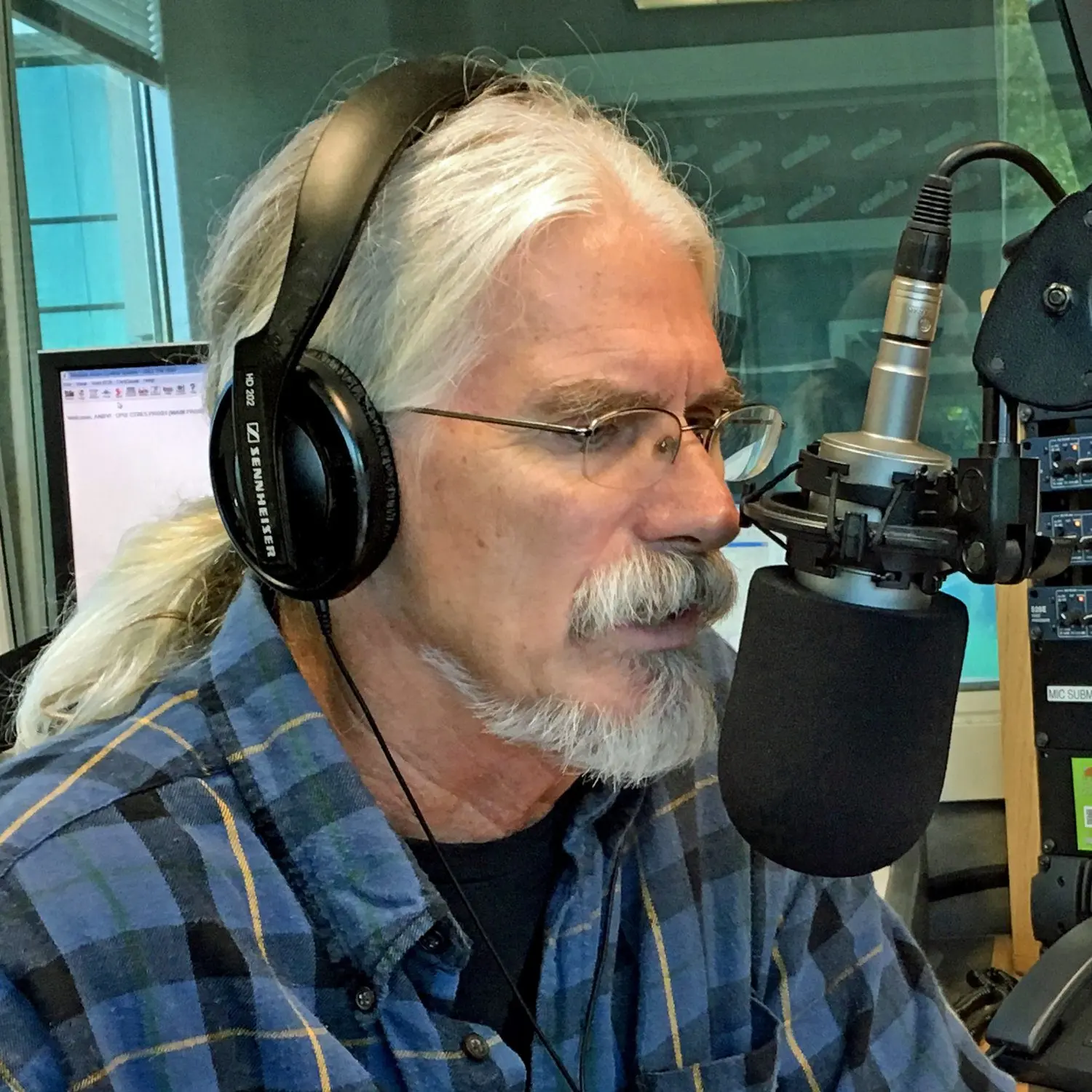
In this engaging episode of The Narrow Path, Steve Gregg tackles a range of pressing questions from listeners about the Bible and Christian living. Beginning with a discussion of Old Testament prophecies, Steve delves into the complex portrayal of the Messiah and how various fragments of prophecy come together to illustrate God’s plan. The episode also addresses vital questions about repentance, particularly within church leadership, illuminating the complexities of accountability and forgiveness.
SPEAKER 1 :
Thank you.
SPEAKER 02 :
Good afternoon and welcome to the Narrow Path radio broadcast. My name is Steve Gregg and we’re live for an hour each weekday afternoon with an open phone line for you. So you can call with questions you may have about the Bible or the Christian faith that we can discuss here during this hour. Or you can call if you have a disagreement with the host and want to discuss that during this hour. We’ll be glad to have you do that as well. The number is 844-484. 5737. Our lines just filled up a moment ago, so we don’t have any open lines right now, but these lines do open up. All of these will open up during the hour. So if you call randomly, you hopefully will be able to get through at some point. The number is 844-484-5737. And I want to remind you that starting this weekend, I’m going to be speaking in the central coast of California area, as far south as Monterey, as far north as Petaluma, spending some time teaching in Santa Cruz and the San Jose area. So kind of several places over the next week, starting Sunday. If you’re interested, if you live in any of those places or you’re going to be in any of those places and would like to join us, just go to our website, thenarrowpath.com. Look up announcements. There’s a tab that says announcements, and all of the places where I’ll be speaking are listed there, time and place. And so, again, that’s thenarrowpath.com under announcements. All right, we’re going to talk to Barbara from Roseville, Michigan, first of all. We’ve been waiting the longest. Hi, Barbara. Welcome.
SPEAKER 05 :
Hi. Thank you, Steve. I just wanted to say a little bit more about the baptism.
SPEAKER 02 :
You know, let me stop you a minute, Barbara. Barbara, you call a lot, of course, and often you don’t have a question. You just want to give some teaching. And actually, we’ve got people waiting with questions. I’m sure lots of people would like to give their opinions and teachings about things, but you don’t have a question, I suppose, do you?
SPEAKER 05 :
I wanted to say something about baptism.
SPEAKER 02 :
I know, but you don’t have a question about it? This is a Q&A program, so do you have a question? I just wanted to say something about the baptism. Okay, so in other words, you don’t. Okay, I’m sorry. Let’s talk to John from Detroit, Michigan. John, welcome to The Narrow Path.
SPEAKER 03 :
Hello, Steve. I hope you are very well today.
SPEAKER 02 :
I seem to be. Go ahead.
SPEAKER 03 :
I would like to ask you, is there an indisputable prophecy in the Old Testament that God would become man and suffer death? and die in man’s place, and then be resurrected for our salvation, our ultimate propitiation. Is there such a thing?
SPEAKER 02 :
Well, there’s not an individual prophecy about that. What we have in the Old Testament is a developing picture of the Messiah in many of the prophets, and each prophet will give a little detail about him, but not the whole thing. For example… Micah 5.2 would mention that he’d be born in Bethlehem, that he’d become the shepherd of God’s people. Well, okay, that’s part of the picture. It’s not the whole picture. But without that, we wouldn’t know that he’d be born in Bethlehem. And so, likewise with other prophecies about the Messiah, they each kind of provide a piece of the puzzle. Now, you’re asking, is there a prophecy that says that God will come and die for the sins of mankind? Not all in one passage. The idea that the Messiah would be God is implied in a number of places. I think probably the most clearly in Isaiah 9, 6 and 7. Unto us a child is born, unto us a son is given, and the government shall be upon his shoulder. His name should be called Wonderful Counselor, the Mighty God, the Everlasting Father, the Prince of Peace. So that’s about the Messiah, and it does refer to him as the Mighty God. So that’s one of the elements of what you’re asking about. I’d say the part about his atoning death, that is dying for the sins of his people, that is probably brought out in the most… most clearly, in the most often quoted Old Testament passage about the Messiah. That is, the New Testament writers quote this passage very many times, and therefore it’s probably the most familiar among Christian readers. But Isaiah 53, it says in verse 5, He was wounded for our transgressions. He was bruised for our iniquities. That’s our sins. He suffered for those. The chastisement for our peace was upon him, and with his stripes we were healed. All we like sheep have gone astray. We have turned everyone to his own way. That’s our sinning. And the Lord laid on him the iniquity of us all. He was oppressed, afflicted, etc., etc. It says he was led like a lamb to the slaughter. And he didn’t open his mouth. And it says in verse 10, it pleased the Lord to bruise him. He has put him to grief. When you make his soul an offering for sin, he shall see his seed and they shall prolong his days. and the pleasure of the Lord shall prosper in his hand, and so forth it goes on. But the idea here is that we’ve all sinned. God placed our iniquities on Jesus, and he suffered iniquities. Those are fairly clear statements. Now, the New Testament, as I said, quotes that passage in many places. Jesus quotes it. The Ethiopian eunuch was reading it, and Philip explained it to him. Peter certainly makes close reference to it in 1 Peter 2, when it says in verse 24, who himself… bore our sins in his own body on the tree, that we, having died to sins, might live for righteousness by whose stripes you were healed. Obviously, quoting from Isaiah 53 or alluding to it. So, no, there’s not just one prophecy that has all the information, but all the information is found in the prophetic descriptions, if you combine them, which is what is expected to be done. All right. Okay, thank you, Steve. Thank you. All right, John. Thanks for your call. Another John in Orlando, Florida. Hi, John. Good to hear from you.
SPEAKER 07 :
Hey, Steve. Good talking with you today, brother. Yeah. Hey, my question has to do with over the last couple months, as you may or may not be aware, it seems like within a lot of the more prominent or visible and extreme expressions of the charismatic movement, there’s been an incredible amount of exposure of just widespread, sin and compromise.
SPEAKER 02 :
I’ve heard about a lot of those cases.
SPEAKER 07 :
Man, it’s just shot through tremendously. And part of that has been that a lot of people have responded in such a way as to try to gloss over it and cover it up. And only a couple of cases it seems like there’s been an attempt to repent. And I’m wondering to your way of thinking what repentance would look like. For example, I know that you’ve got some we both share some great concerns about Bethel’s And a lot of their errors. And recently, as they’ve responded to some of those criticisms and expressed a degree of repentance and not being diligent and holding people accountable. And I’m kind of mixed about this. It’s great to hear them, you know, own up to it, take accountability. But the question I have for you is, to your way of thinking, with the errors that they have participated in, Could you see the leadership there repenting in a way as to say we repent and want to be more disciplined and diligent in how we’re leading this church or network of churches? Or if not, what repentance would look like? for them to just step back and say, oh, we’ve got to step out of this for all. What are your thoughts on that?
SPEAKER 02 :
Sure. Well, there’s sins of many kinds, obviously, and many degrees of severity of sin. I mean, you know, if someone is caught in a lie, let us say, well, that’s a sin. That’s not good. It raises questions about whether we can trust them again. But if it was a relatively… harmless thing and he admitted it himself before anyone brought it up or whatever, it’s possible that something like that could just be a foible that didn’t happen very often and isn’t the kind of thing that’s going to make people want him to step out of ministry. although maybe it depends on how much damage was done by the lie or how much it reflects a pattern in his character. Now, when it comes to abusing women, a lot of these pastors have molested young women or older women, either one, middle women, mid-age women. A lot of them have done that kind of as a habit, even if they did it once. It’s not OK. It’s terrible. And I think they’ve lost trust. Some of them have done it repeatedly. I’d say that if a person has shown that he’s got a problem in this area, he might need to step out of ministry permanently or or at least for many years until people can, you know, feel that he’s reformed. And it’s not just that he’s stepped out, but he’s kept his nose clean during that time, too. You know, I would say that each case would have to be handled locally by wise leadership who could assess what his repentance looks like. You know, what it would take for people who now know about his errors to trust him again. Maybe he could never be trusted again, depending on how severe it was. I mean, some of these guys… really their behavior has raised questions as to whether they were ever really Christians or whether they’re just exploiting a religious position to use people. I mean, anyone like that, I would say I would never trust them again. Actually, maybe… Go ahead.
SPEAKER 07 :
If I may, maybe I can fine-tune this a bit. You’ve written about your concerns about Bethel. So, like, if you were to be speaking specifically for Bethel, Bill Johnson and the leadership there, what would your personal call to act? How would you… What would your call to action be by way of what repentance would look like for them in turning from their errors, the errors that they’ve been participating in?
SPEAKER 02 :
Well, I’ve only read about Bethel. I’ve never been there. I’ve never met any of the leaders there. I’ve heard some of the scandals. I’ve heard some exposure given to these people. I would say anyone who’s been scandalous should step down, and they shouldn’t expect to step up again until such a time as everybody who knows them can see that they are truly scandalous. not the kind of person that they were when they did the scandalous thing. C.H. Spurgeon or someone like that said that a person’s repentance needs to be as conspicuous or as scandalous as his sin was. In other words, if the sin is shocking, then his repentance should be so great, that no one should have any doubts that it’s genuine. Now, I mean, that depends on the person. I think there’s a lot of people who do these scandalous things in history who do so because they’re not really Christians. Now, I don’t know what Bethel is doing right now, specifically to some of the cases that I’ve heard about. I would say that anything that’s become scandalous, even if it was, maybe originally not a real big thing, but now it’s become scandalous just because everyone’s talking about it, everyone’s scandalized by it. I think a person should step down and just not do ministry for, you know, maybe a very long time. And by a long time, I would say, I mean, until people can see that he’s a changed man, which could take years if he’s had a pattern of misbehavior. He might even have to get converted and they’d have to recognize that, okay, here, now he’s really changed. There was a famous Christian leader back in the 80s who wrote books about Christian manhood and family and things like that and fatherhood who traveled with some assistant or something who was a woman, ended up sleeping with her on a trip. And he confessed it. I don’t think he was caught. I think he confessed it to his overseers. He stepped down from ministry. He got right with his wife. He just, you know, he just disappeared from the public because that was recommended. And I think it was a couple of years later, those that he was accountable to said, yeah, he clearly had, you know, the thing was a one-off. It was a strange thing and not like him or whatever. And they trusted him again. I think he’s back in the street to this day if he hasn’t died yet. It’s been a long time ago now. But, yeah. You know, did they let him back in ministry too soon? Maybe. I don’t know. But, again, I don’t know him. I don’t know them. You know, I would try not to make, unless something is very, very obvious that this man is a creep and a crook and a womanizer and things like that, I can’t make too many specific calls about it. But I would want to trust godly people who are in his life. to discern those things about it. But I think if something has been very scandalous, I think they ought to step out of ministry for years, you know, and maybe never come back to the ministry. But I would say it’s a shame, you know, if a man in his younger years did foolish and bad things, and then as an older man, he’s not inclined to do those things at all. He’s a wiser, better man. It would be a shame to say, well, no matter how much people trust him, he can’t ever be in ministry again. I don’t think the idea of him stepping down is to punish him. I think the idea of him stepping down is to discipline him, to teach him that he’s got to, you know, he’s got to be more of an example of godliness if he’s going to be in front of people, and to let people know that, you know, they are safe going to that church because he’s not there. preying on them. But how many things may change in his life over a few years’ time, I can’t say, but the people around him could. So you’re asking me to be specific about something. Every case would probably be different. But any of the cases that have become scandalous at Bethel, I don’t know what they’ve done about them. I don’t know if the guys have stepped down or not. If they haven’t, they should. Anything that’s brought scandal in the name of Christ and and brought distrust into the lives of the congregation toward the leadership should be dealt with very severely. How long it would take before there’s restoration, if ever, that would have to be handled on a case-by-case basis.
SPEAKER 07 :
All right. Thanks, sir. I appreciate the thoughts on that.
SPEAKER 02 :
All right, John. God bless you. Good talking to you. Okay, let’s see. Stephen from Omaha, Nebraska. Hi, Stephen. Welcome.
SPEAKER 11 :
Hey, good afternoon, sir. Thanks for taking my call. Can you hear me okay?
SPEAKER 02 :
Yes, sir.
SPEAKER 11 :
Okay. So how do you explain to a 12-year-old, basically he asked me, Dad, is suicide a sin? And I couldn’t give a definitive yes or no answer on that. About suicide?
SPEAKER 02 :
I don’t know how to answer it. Is he a believer?
SPEAKER 11 :
Yes. Okay. Real quick, I told him, as far as your mother and I are concerned, we would consider it a sin. But I have no scriptural basis to give him as to why I believe that, other than that’s what I was taught.
SPEAKER 02 :
Right. You know what I mean? Well, the biblical teaching is thou shalt not commit murder. When you murder somebody, that’s killing a person who hasn’t done a crime that’s a capital crime. If you kill yourself, You have not previously done capital crimes, and so you’re killing a person who’s not worthy of its murder. Now, if someone says, but that’s different because it’s me. You know, I’m not killing somebody else. I’m not depriving somebody else of their life. I’m just depriving myself. No, that’s not true. You don’t belong to yourself. You don’t belong to yourself any more than your next-door neighbor belongs to you. You belong to God. Now, God has entrusted you with the responsibility of managing yourself, your health, your body, your opportunities, whatever you have. You’re expected to employ those things for the glory of God, not for your own pleasure. Now, people who commit suicide are doing an extremely selfish act. I realize they’re sad. I remember the depressed. I’m sure that there are things about them that are very pitiful that we would have compassion on them for, but Killing yourself is a selfish act. No one kills himself unless they think that they’ll be happier by doing that than by staying alive. And when you make a choice based on what will make you happy and not considering how many people’s lives will be wrecked for it, you are doing a terribly evil thing. I mean, if a man kills another person’s child, okay, well, he’s done a crime to that child, but he’s done a crime to the parents, too, who will never probably get fully over it. Having your child murdered is something you’ll never be the same again. You may survive it, you may cope, but you’ll never be the same again. Now, killing yourself, you’re somebody’s child, too. Well, your parents will never get over it, either. You know, you’re doing great harm to somebody else. In fact, admit it. I think they’re doing it with that in mind. they’re really upset with somebody. The girl that turned them down, their parents who didn’t let them do what they wanted to do, you know, whatever. They’re mad at somebody and say, I’ll show them, I’ll kill me. Then they’ll be sorry. Well, that’s an extremely selfish thing to do, to do intense harm to everybody who knows you, loves you, is related to you, and more importantly, to God. Because you don’t belong to yourself, you belong to God. And if you kill the person that belongs to God, God’s going to say, hey, I had a plan for that person, and you messed it up. Now you’re going to pay the price for murder. So, I mean, yeah, it’s a sin. How could it not be a sin? How could it not be a sin to destroy the lives of your parents? The Bible says honor your father and your mother. You certainly don’t honor them when you subject them to horrible grief and, you know, incurable pain for the rest of their lives by your selfish act. I mean… I understand. People don’t usually kill themselves unless they’re in extreme depression or grief. I understand. I’ve been in extreme grief before. I’ve lost things. I’ve certainly been many times in life I’ve had pain that’s so great that I would have preferred to die, but I wouldn’t kill myself. That’s not an option. If I knew that I was going to die of cancer some of those times, I’d say, good, bring it on quickly, please. But I don’t have the competence or the right. To kill myself, that’s for God to take care of, not me. So what a person does when they kill themselves is they’re taking the life of somebody that God has a plan for. And that’s murder. And it’s an unjust act. It’s a cruel and evil act, a very selfish act. It’s something that a person who does it should never be pitied for. I mean, you can pity them for what they went through before, but Killing themselves was an absolutely wrong choice. Of course it’s sinful. The Bible says whoever sheds man’s blood, by man shall his blood be shed. Well, I’m a man, so if I kill myself, I’m shedding man’s blood. Now, no one’s going to shed my blood because I just did it, but God’s going to still take it out on me because it’s actually murder, and there’s no excuse for murder. So that’s what I would say about that.
SPEAKER 11 :
Thank you very much.
SPEAKER 02 :
All right, Stephen. Thank you for your call. Greg in Issaquah, Washington. Welcome to The Narrow Path.
SPEAKER 08 :
Hi. Hi. Yes, Steve, I appreciate, first of all, your ministry, and I’ve learned and benefited much from your teachings, so that’s first place. But I wanted to bring in maybe a little clarification concerning the origin of Satan, and what I would be arguing is that there is no possibility that God could ever have created Satan in his present state. And I wanted to argue my point.
SPEAKER 02 :
Well, do quickly. We have a break coming up real quick.
SPEAKER 08 :
Go ahead. Okay, so the first point is that all that God had created was good. It’s repeated seven times probably in the book of Genesis. That makes it emphatic that there’s no possibility that God could ever create anything evil. He could only create what is good. The second point that God never tempts any man with evil. And so why would he make a creature that could tempt man with evil? And the Lord is righteous and he does good in all his ways. So if he’s righteous, he could never create anything unrighteous. And if God was to create an unrighteous evil creature, how could he judge him? Because He had created them that way as evil.
SPEAKER 02 :
Okay, those are good questions. I’ve certainly thought of them all many times myself. And if that works for you, then that’s fine. Then your position will be that God made Satan good, and he fell and became evil. That’s what almost everybody believes anyway, so that’s fine. I would say that it doesn’t rule out entirely… the alternative view, and that is that God made Satan to be a tester, that would not be a bad thing. God made everything good, but he certainly made the serpent. And it says the serpent was the most sly of all the creatures in the garden that God had made. So God made the serpent. And he ended up tempting Adam and Eve. Now, remember, tempt means test. And you said God doesn’t tempt with evil. Well, James said that God doesn’t tempt men with evil, but he does test people. And that’s the same word. And to test us is something God does do. I mean, in Genesis, it says the Lord tested Abraham when he told him to offer Isaac on the altar. The Bible says that Jesus went into the wilderness driven by the Holy Spirit there to be tested by the devil. So God doesn’t do the testing himself, but he puts us in the position to be tested. He certainly put Adam and Eve in the garden where I believe they were tested by the presence of the tree of the knowledge of good and evil. I’m not sure what purpose the tree of the knowledge of good and evil would serve. if not as a test of their loyalty. And I think that’s what it did test. I believe that God tested Job, but it was, of course, through Satan. Satan said, let me do this to him, and I’ll get him to turn on you. And God said, okay, you can do that. God set him free to go out and test him. God wants us to be tested. Now, whether he wanted the devil to exist as a tester from the beginning, I don’t know. He might have. It says in Proverbs 16 that God has made all things for himself, yea, even the wicked, for the day of doom. So when it says that God made everything and it was good, it could be simply talking about the physical creation, which would not include the devil. Or it could be that he did make a good devil, a good angel, and he became a devil. I don’t know. Or maybe it’s good for there to be a devil. If it isn’t, I’m not sure why God lets him be around. God doesn’t have to, you know. God is under no obligation to let Satan exist. The fact that God does let him exist, though Satan creates a whole bunch of troubles, must mean that I would deduce that there’s a reason for him to exist. To say that is not a good reason would make God, you know, flawed in using that reason to keep him around. I mean, if God doesn’t have a good reason for Satan to be there, then why does he tolerate it? He can put him in the lake of fire. He’s going to. Nothing prevents him from doing it right now if he thinks that’s necessary. So, I mean, those are… And how could he punish him? Well, we don’t know how much the devil is going to be punished. Of course, Revelation talks about him being tormented. I could be… I think that’s kind of figure of speech. I don’t know. He could be simply destroyed, but I don’t have… I can’t go into that. I’m out of time for this segment, but… You made some good points, and certainly a lot of people would argue the same points for the same position. Thank you for sharing. You’re listening to The Narrow Path. Our website’s thenarrowpath.com. We’ll be back in 30 seconds. We have another half hour. Don’t go away.
SPEAKER 04 :
We highly recommend that you listen to Steve Gregg’s 14-lecture series entitled, When Shall These Things Be? This series addresses topics like the Great Tribulation, Armageddon, the rise of the Antichrist, and the 70th week of Daniel. When Shall These Things Be can be downloaded in MP3 format without charge from our website, thenarrowpath.com.
SPEAKER 1 :
The Great Tribulation
SPEAKER 02 :
Welcome back to the Narrow Path radio broadcast. My name is Steve Gregg, and we’re live for another half hour taking your calls. There’s a couple of lines open right now if you want to call. The number is 844-484-5737. That’s 844-484-5737. I just want to have a tag on to what I said to the caller in the first half of the show, who asked, how do you answer a 12-year-old who asks if suicide is a sin? Well, I made it very clear, I mean, it is a sin. But we should understand this, too. many people who have done sinful things, and suicide is a sin, but many people who’ve done sinful things have not been what we would say in their right mind. You know, it’s possible that they, I mean, there were factors that God knows that made them not responsible, just like a child, a little baby who does wrong things, we don’t hold them responsible. A person who’s very mentally deficient might do things that An adult would be held responsible for, but this other person, because of their mental state, is not. A person might be on meds that change their brain or whatever. I’m not making a judgment. of individuals, I was answering the question. The question is, is it a sin to commit suicide? It is. It is a sin. Now, do some people do sinful things in a state of mind that God recognizes they’re not fully responsible for what they did? I’m sure. I’m sure that is the case. So I just want to clarify that. I’m not saying that there’s no one who’s ever been saved after committing suicide, but the question is, is it a sin? And to the believer… That’s the main thing we need to ask ourselves because we’re not allowed to approve of sin, no matter whether we are contemplating it ourselves or whether someone else does it. We don’t approve of the action. But whether God can forgive it or not is going to be, well, that’s in his secret counsels. I guess we’ll find out on the Day of Judgment. All right, let’s go to the phones and talk to James in Memphis, Tennessee. James, welcome.
SPEAKER 01 :
Yes, thank you for taking my call, Steve. But the song, On Christ the Solid Rock I Stand, now, would you have an objection to that if a person said, put it this way, In Christ the Solid Rock I Stand, would you have an objection to saying it that way?
SPEAKER 02 :
No, I would not object to that. I would say that it’s a quite scriptural thing to say. I mean, we are in Christ and we are standing and, you know, succeeding in the Christian life because we are in Christ. I think the song uses the metaphor of on Christ the solid rock I stand in order to employ the imagery at the end of the Sermon on the Mount in Matthew 7 where Jesus said, you know, a wise man He’s the one who hears my words and does them, and he’s like a man who builds his house on a rock. A foolish man hears my words and does do them, and he’s like a fool who builds his house on sand. And obviously, of course, that song is on Christ the solid rock I stand, all over the ground is sinking sand. It’s saying my life is built on the foundation as opposed to without a foundation. So in the imagery of a house… being on either a rock or standing. There’s certainly nothing wrong with the imagery of I’m standing on the rock. On the other hand, of course, when we get into Pauline theology and realize that Paul talks a great deal about what are our privileges in Christ, there’d be nothing objectionable about saying, in Christ I stand. But, I mean, I think the poetry and the imagery of the song is deliberately invoking the imagery that Jesus used at the end of the Sermon on the Mount there. But in answer to your question, I wouldn’t object to those words.
SPEAKER 01 :
Yes.
SPEAKER 02 :
Thank you, Steve. Thank you, James. All right. Let’s talk to Ben in Boise, Idaho. Hi, Ben. Welcome to The Narrow Path. Thanks for calling.
SPEAKER 10 :
Hey, Steve, thanks for taking my call and for your ministry. Your videos helped me over the past year or so come out of dispensationalism, so you’re kind of an eschatological spiritual father to me. But although I consider myself a millennial now, maybe I haven’t fully shed my futurist inclinations, as it were, which kind of leads to my question. It’s a two-part question. First, in your view, what primarily characterized – Satan’s deception of the nations before Christ’s crucifixion? And secondly, do you think all this alien disclosure agenda could possibly be part of that little season deception when Satan’s released again, potentially leading humanity back to worshiping the small G gods of old?
SPEAKER 02 :
Well, yeah, I think I could agree with that. those points but as far as the question part for those who don’t know what you mean by amillennial the amillennial view holds that when you read Revelation 20 about the binding of Satan this is a very symbolic description of what Christ accomplished against Satan through the cross which is spoken of in a number of other places in the New Testament as defeating Satan undoing the works of the devil binding the strong man disarming principalities and powers, destroying him that had the power of death as the devil. Those are all said to have been accomplished at the cross. And therefore, the imagery of a dragon with a chain and a pit and so forth, the amillennialist thinks that’s just a very dramatized picture of Christ’s signal victory over Satan and the powers of darkness at the cross. At the end of that period of time, fire from heaven comes down and consumes the enemies, which the amillennial view holds. is the second coming of Christ, who will come in flaming fire, taking vengeance on those who don’t know God and who don’t obey the gospel, according to 2 Thessalonians 1.8. Now, in between those two, between the first and second coming of Christ, there’s the so-called thousand years, which we take to be symbolic of just a very long time. Like, you know, a day to the Lord is like a thousand years, or God keeps coming to a thousand generations, or a day in your courts is better than a thousand generations. A period of time that’s measured in a thousand sometimes isn’t being literally a thousand. It just means a really long time. And that’s what I think it means there. Now, the part of it that you’re asking about is it says in verse 3 of Revelation 20 that Satan was bound and put in a pit so that he might not deceive the nations anymore until the thousand years is over. And then in verse 6 or 7, I guess it’s probably 6 or 7, he’s loosed. I’m not looking at it right now. He’s loosed from the pit, and he goes out, and he deceives the nations again. So the thing that is different during the time that he’s bound from the time that he’s not is the deception of the nations. Now, some people say, well, you can’t really say that the devil isn’t deceiving the nations since Jesus died. The nations have been in deception, and people get deceived all the time. Right, but that’s not what it’s saying, I don’t believe. I think it’s saying that the nations are in contrast to Israel. And Satan deceived all the world. The whole world lies in the lap of the wicked, when it says in 1 John 5. And so, you know, the whole world was in his lap, except God had revealed light to Israel. He’d given the law, he’d given the prophets, he sent Christ himself. You know, Israel had light that the nations did not have. The word nations in the Bible is always contrasted with Israel. In other words, nations means Gentiles. In fact, the very word nations in the Greek and the Hebrew is the word for Gentiles. So here, the Gentiles were shut out from the light, which means they were totally under blindness and darkness under the deception of Satan. Now, that doesn’t mean Israel didn’t have any blindness. We know they did. Jesus called the Pharisees blind leaders of the blind. And there’s many places that speak of the Jews as being blind. But that’s relative, relative to the light they received. The fact that they had received light made them distinct from all the nations who had not received it. And now when Jesus says, all authority in heaven and earth has been given to me. It’s not just Israel that’s God’s domain now. It’s the whole world, heaven and earth. Jesus said, therefore, go out and disciple the nations. That is the Gentiles, how to go out of Israel and teach them to observe everything I’ve commanded you. So Jesus now claims the nations that had been Satan’s secure hegemony since the days of Adam and Eve. Satan had ruled and deceived all people. And the nations were the Gentile world where that deception had never been challenged or interrupted. And now Jesus comes and he sends out light. He sends disciples to make disciples of the nations. Satan doesn’t have the authority to deceive the nations anymore. Now, he’ll deceive individuals. He’ll deceive even individual Christians and Jews and Gentiles. But that’s not what’s being discussed. It’s not saying the devil’s not involved in deception. It’s saying that the nations are no longer his domain to deceive, to keep in darkness, as he has always done before, because Christ is now claiming them for himself. So when it says that he doesn’t deceive the nations anymore, it doesn’t mean that there’s absolutely zero career of deception the saints engaged in at this time. It just means that the nations are no longer something he can securely claim as his property. Christ claims them for his property. And the light, which began in Israel… began with the resurrection of Christ, is now going out to all the corners of the earth. Because God says to Jesus in Psalm 2, ask of me and I’ll give you the nations, or the Gentiles, and the uttermost parts of the earth for your possession. And that’s what’s been going on for the past 2,000 years as the gospel has gone out. There’s actually Christians in every nation in the world right now. Not only a few Christians, there’s churches everywhere. multiple churches in every nation of the world. And in some, you know, the gospel has had very profound impact on the nations, other cultures, and so forth. And it’s continuing. So the fact that the church can do this is because Satan is no longer in the position to hold securely for himself those nations under his deception. And that’s what he’s talking about. Now, he said, do I think that some of the things going on today could be the loosing of Satan and that the nations are being deceived again? Well, I’ve often said I think it could be. I’m not one to try to identify time events and so forth of my own time necessarily with any particular prophetic fulfillment. But at the same time, I don’t rule it out. I just don’t. I can’t with confidence say we’re there because so many evil times have come and gone and deception times have come and gone in the course of the past 2,000 years. It’s hard to know whether this is indeed the final one. Could be. There are a lot of deceptive things. Certainly the introduction of the Internet has allowed for deception as well as truth. to be disseminated through the whole world in a way that never was possible before. I like the Internet. Obviously, we use it. But, I mean, I think it can be used for good. But it certainly is more used for evil. I think anything we do to use it for good is simply trying to you know, put up a little resistance to the amount of evil that’s scattered throughout it. But whether this is the time, was Satan loose to deceive the world again when the Internet was invented or when alien encounters began to be reported or things like that, I honestly, I’m not, I don’t have the competencies. I’ve seen behind the curtain. But it could be. I would say that could be.
SPEAKER 10 :
Yeah, I bring up the alien phenomenon just because it seems like if worshiping fallen angels was something that was done when the nations were deceived, and now it seems like we’re being primed for a rebranding of those fallen angels to appear again as aliens, it kind of seems like it would make sense that Satan repeats the same pattern as before when he did deceive the nations before the crucifixion. That’s why I brought that example up.
SPEAKER 02 :
Yeah, I wouldn’t rule it out. I wouldn’t rule it out. All I can say is when we say, well, this event or this trend is priming the world for this result. All I can say is I’ve heard that all my life about things. You know, the way the common market was set up in Europe. That’s the reestablishment of Israel in the last days on the land. You know, the buildup of Chinese military that I mean, almost everything that’s happened in modern times. has been said and could recently be said to be priming the world for, and then fill in the blank, because everything that’s happening is priming the world for something. And there are many good things happening in the world that could be priming the world for a revival. But on the other hand, there’s a ton of things that could be priming the world for mass deception. So I think we live in a time of much greater deception of the world than when I was younger. simply because there were more people, in the West at least, who believed in the Christian God and the Gospel and the Bible, which isn’t the case so much now. But that faith in Christ is now manifesting more in third world countries. in the global south and Africa and South American places like that and even Asia. So it’s, you know, it’s hard to follow all the trend lines. You know, say, is this setting us up for something? It could be. But to say something could be seen as setting us up for something does not really accurately predict that that thing will happen. It could. I appreciate your call, though, bro. Thank you. I appreciate you as well. Okay, Ben. God bless. All right, let’s talk to Brian in Atlanta, Georgia. Hi, Brian. Welcome. Are you there, Brian? If you’re not, I’m moving on. Got a lot of calls and very little time. Brian, one, two, three. All right, Brian’s not there. Let’s talk to Daniel in Vancouver, B.C. Hi, Daniel. Welcome. Welcome.
SPEAKER 09 :
Hi, Steve. Thank you for your ministry. God bless you. I have a question. Can you hear me?
SPEAKER 02 :
Yes.
SPEAKER 09 :
Yeah. I have a question about regeneration and faith. I kind of a little bit stumbled about Ephesians and, you know, John 3, 16. Does regeneration come first or faith? You know, so what’s your opinion?
SPEAKER 02 :
Right. That is the big controversy between Calvinism and Arminianism is what comes first, regeneration or faith? The Calvinist doctrine, the five points of Calvinism in particular, begin with the total depravity doctrine. That’s the T in TULIP, the first of the five points. Now, total depravity, the way Calvinists understand it, that is the way Calvin did in Augustine, is that when people are not yet regenerated, they are literally dead, spiritually dead. And because they are dead, they cannot live. choose life they can’t repent they can’t believe uh it’s not just saying that total depravity doesn’t just mean everybody’s a sinner but it means that sin has so darkened the minds of people that and uh and and capture their hearts that they simply there’s nothing in themselves that would cause them to turn to god that’s what calvinism teaches in the first point now if that is true then obviously uh regeneration has to happen before people can believe. Because if they’re unregenerated in total depravity, they can’t believe. They can’t repent. They can’t do anything. And so the Calvinist teaches that God has unconditionally elected, that’s the second point, some people to be saved. And through the atonement, which is only for the elect, they say, and through irresistible grace, that is God’s irresistible drawing to himself, God regenerates certain people, the elect ones. And now that they’ve been regenerated, that means they’ve come to life, now they can believe and they can repent, but they couldn’t before. So it’s a tenet of the Calvinist teaching that regeneration has to precede faith. Now, the biggest problem I have with this is the Bible always says the opposite every time it talks about these things. The Bible indicates you have faith first, and then you’re regenerated. You are saved by faith. You don’t have faith by salvation. That is, it’s not that God saves you first and then you can have faith. No, you have to have faith first and then you’re regenerated. John 3.16, you mentioned, whosoever believes in him will not perish but will have everlasting life. Having everlasting life, I believe, is what occurs at regeneration. When you’re born again… You pass from death into life. Now, death does not mean a condition where you can’t make any choices. That’s where I disagree with Calvinism. To say that a person is dead before they’re regenerated doesn’t mean they’re unconscious, like literally dead people are. It doesn’t mean they make no rational choices, like literally dead people don’t. It means that we are alienated from God. It’s the same expression that’s used when Jesus is telling the parable of the good Samaritan. I’m sorry, of the prodigal son. When the prodigal son came home, his father said, my son was dead, but now he’s alive. So the condition of the prodigal when he’s away from his father is, is what Jesus in the parable refers to as being dead. But being dead didn’t prevent him from repenting. He was dead to his father, but he wasn’t subjectively dead. He wasn’t unconscious. He wasn’t failing to make choices. And he wasn’t even unable to repent. It was when he was away in a far country that he came to his senses and said, I’m going to go home. My father’s better than this. And it came home, and of course, his father, he was dead, but now he’s alive. Well, when did he stop being dead? Before he came home. Before he saw his father again. When he was dead, he made the choice. So there’s nothing in the Bible to suggest that the metaphor of being dead means that you can’t make a choice. But there’s everything that suggests in the Bible that you can, like the prodigal son did. And, you know, in John chapter 20… Verse 30 and 31, John says, Truly Jesus did many other signs in the presence of his disciples, which are not written in this book, but these are written so that you may believe that Jesus is the Christ of God and that believing you may have life in his name. In other words, you can come to life. You can receive life. You can be regenerated. What? By believing. I’m telling you these things because I’m hoping that these signs will convince you to believe. Well, that couldn’t happen if you weren’t elect, right? If Calvinism is true, it doesn’t matter how many evidence and signs you’re given. If you’re not elect and dead, it just says you’re not going to believe. But John thinks otherwise. John says, I’m hoping this will help you to believe. And by believing, you can have life. Okay, so life is the result of believing. Paul, in Colossians chapter 2, says it very, I think, conclusively. In Colossians 2, he says… Let me read it here. In him you were circumcised, blah, blah, blah. Okay, verse 12, 12 and 13, Colossians 2, 12 and 13. You were buried with him in baptism, in which also you were raised with him through faith. In the working of God. So raised with him is regeneration. How’d that happen? It happened through faith. Now, if something happens through something else, the thing that happened through had to be there first. If you were raised through faith, then you had to have the faith through which to be raised. Faith came first. It says who raised him. Then verse 13 says, and you being dead in your trespasses and uncircumcision of your flesh, he made alive together. That’s regeneration with him. Having forgiven you, that’s previously. Having done this means it happened before. He raised you from the dead after he had forgiven you of all your trespasses. Well, how’d that happen? You were justified. By what? By faith. When you put your faith in Christ, you’re justified. And having forgiven you, he now raises you from the dead, Paul says. The order of events there is inescapable. And it’s simply that way all the time. Every time regeneration and faith are mentioned together, Faith is the cause or the condition, I should say, of regeneration. Regeneration doesn’t come first. So that would mean the Calvinist points are not correct. And there’s lots of other reasons to think that. By the way, if you’re interested in the Calvinist discussion, I have a set of lectures at our website you can listen to that would probably interest you greatly. It’s called God’s Sovereignty and Man’s Salvation. It’s 12 lectures going through the five points of Calvinism. presenting them, defending them, and then refuting them. It’s a very complete set of lectures called God’s Sovereignty and Man’s Salvation. It’s at our website, thenarrowpaths.com, under Topical Lectures. I appreciate your call, brother. I hope that helps some. Mike in Cool, California. Welcome to The Narrow Path.
SPEAKER 06 :
Hi, Steve. Hope you’re having a blessed day. So this is actually two questions, but I’m going to start off with Ephesians 3.20. Okay. I’m reading a book by Andrew Womack. So there’s a guy at church who’s trying to turn me into a word of faith person. Yeah. Anyway, of course, you know, it says, Now unto him that is able to do exceedingly abundantly above all that we ask or think according to the power that’s worked in us. Now they say that, and I say that this puts no limits on God, but they said it specifically limits God’s ability to Well, he’s not talking about God’s ability to do everything in general. He’s summarizing the prayer or the thing he’s been talking about here.
SPEAKER 02 :
In verses 17 through 21, he’s talking about something that’s happening in you. And he says the power that’s in you, which is, of course, the Holy Spirit, is able to do this. He’s not talking about external things like miracles and stuff, although it may be a miracle he’s doing in you. But he says in verse 16 that he would grant you, according to the riches of his glory, to be strengthened with might through his spirit in the inner man. Something he’s wishing for your inner man to be strengthened. That Christ may dwell in your hearts through faith. That you, being rooted and grounded in love, may be able to comprehend faith. with all the saints, what is the width and length and depth and height, and to know the love of Christ which passes knowledge. This is all inside of you, your knowledge, your comprehension, your faith, your being strengthened inwardly. And then he says in verse 20, Now to him who is able to do exceeding abundantly above all that we ask or think. Now, do I think God can turn me into the image of Christ? It sounds like a big project. I wonder. Yeah, he can. He does more than you think. In fact, he does more than you can ask. And he does it according to the power that’s working in us, which is the Holy Spirit’s power, which changes us, according to 2 Corinthians 3, 18, from glory to glory into the image of Christ, even as by the Spirit of the Lord, it says. So I think he’s just talking about the change that God’s working in us more than we think he can, more than we would even ask him to.
SPEAKER 06 :
So the second one was in Romans 13, 1, where it says God is sovereign over the government. on and on and on. And then he uses Hosea 8.4, because in it, it says that they have set up kings, but not by me. They have made princes, but I knew it not.
SPEAKER 02 :
Right. So I don’t think Paul is denying that. I mean, they set up their own kings, as it says in Hosea. But God has established government. And Paul says in Romans 13, to be God’s instrument, of justice or wrath against those who do evil. Now, he’s not saying that every king that’s raised up, God has specifically raised him up, but God has established the position of leadership in government and authorizes government to do the right thing. Now, it doesn’t mean that the right guy is in office, and it doesn’t mean the guy in office will do the right thing. It’s just saying that God has set up government in order that they can punish criminals and protect innocent people. That doesn’t say exactly how that government got set up. Hey, I wish I could go longer. This is very interesting. I’m out of time. You’re listening to The Narrow Path. Our website is thenarrowpath.com. Thanks for joining us. God bless.