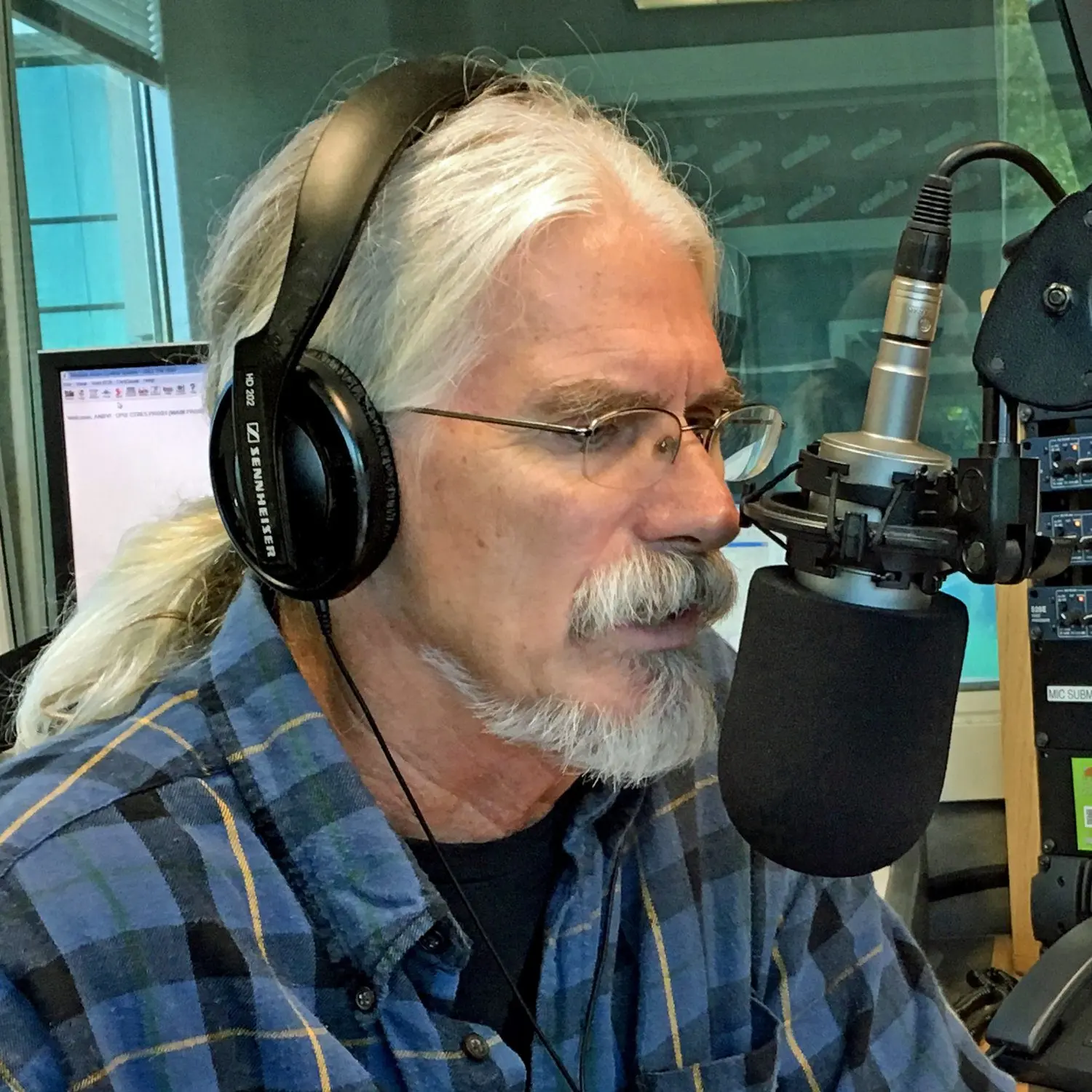

In this engaging episode of The Narrow Path, Steve Gregg delves into the nuances of eschatology, focusing on the often-debated topic of the rapture. Starting with listener questions about biblical accounts of resurrection, Steve offers a fresh perspective on complex theological issues. Whether discussing the distinctions between pre-tribulation, mid-tribulation, and post-tribulation beliefs, or examining the scriptural basis for these theories, listeners are invited to think critically about what they believe and why. This episode is a gateway into deeper theological discussions and provides a comprehensive look at one of Christianity’s most perplexing subjects.
SPEAKER 1 :
Thank you.
SPEAKER 01 :
Good afternoon and welcome to the Narrow Path Radio Broadcast. My name is Steve Gregg, and we are live for an hour as always, or at least as usual. There are some exceptions occasionally, but we are a live broadcast five days a week, generally speaking. We have an hour together with no commercial breaks, just to take your calls and to talk to you as you call in with things that you want to raise for discussion. By that I mean questions you have about the Bible or about the Christian faith, or questions Maybe disagreements you have about the Bible or the Christian faith and want to talk about those. I’m looking at a very unusual site. It’s a switchboard with no calls waiting. I don’t know. That doesn’t happen more than two or three times a year, I don’t think, even though we have the program every day. So it means a very unusual opportunity for those of you who sometimes try to get through and find the lines are always full. So I don’t know, this is an inexplicable thing, but it’s to your advantage if you want to get through right now. This is a time when you can do so. So if you want to call and discuss whatever questions you have or disagreements you have, feel free. The number to call is this, 844-484-5737. Once again, the number is 844-484-5737. 484-5737. I have a few announcements to make. Generally speaking, on the third Saturday of the month, we have a men’s Bible study in Temecula. I am out of town. I will not be able to be back for that meeting this Saturday. So if you are one who regularly attends or were hoping to attend this time, I’m sorry, we’re going to have to postpone it until the next month. So there’s no men’s Bible study this Saturday morning, as there would normally be. Another announcement, and that is some of you know I’m in kind of the central coast of California right now, Santa Cruz area. I’m speaking on Friday in Monterey and in San Jose on Saturday night. Now, a bit of a change in the Friday meetings. The Friday night from 6 to 8.30 p.m. in Monterey was going to be in a private home. They have secured more of a public church location. When it was in a home, you were supposed to RSVP if you wanted to show up, but now you don’t have to. You just show up if you want to at the church. What church is it? It’s the Living Hope Maranatha Church on Jocelyn Canyon Road in Monterey. If you’re not familiar with that location, you can go to our website at thenarrowpath.com, look under announcements, and there you will see the announcement with the address, which happens to be 1375… Jocelyn Canyon Road, Monterey. And that’s the Living Hope Maranatha Church. I’m going to be speaking on the assigned topic, Eschatology 101, which means it’s going to be basic. Probably, I expect we’ll be talking about the differences between the different millennial camps, the different premillennial options, pre-trib, post-trib, mid-trib, those kind of things. Basically, what is eschatology? It’s the study of the end times. Certainly, it’s a lot of people discussing it these days. Many people do not realize that the actual biblical options about this are somewhat more numerous than popular teachers give the impression. We’re going to be giving kind of a survey of that field. Eschatology 101. That’s day after tomorrow. No, that’s tomorrow. Excuse me. Today’s Thursday, isn’t it? So that’s tomorrow night in Monterey at the Living Hope Maranatha Church. And the next night I’m speaking in Morgan Hill near San Jose, if you’re in that area. Check location there at our website, thenarrowpath.com, under announcements. Now, while I was giving those announcements, all of our lines filled up. Let’s talk to Michael from Dearborn, Michigan, who’s our first caller. Hi, Michael. Welcome.
SPEAKER 02 :
Hi, Brother Steve. I just had a question. What would be your understanding of, in Matthew chapter 27, After Jesus was crucified and resurrected, it mentions that many of the saints that slept arose and went into the Holy City and appeared to many. What would be your comment on that? Or what do you think happened with that situation?
SPEAKER 01 :
First of all, I take the statement as a straightforward historical record, just like I do with all the other miracles that were associated with the life of Jesus. This is not the only case associated with the life and death of Jesus that dead people came alive. We know that during his active ministry before his crucifixion, he raised at least three people from the dead that are recorded. There could have been many more. But Luke mentions one of them, which was the son of a widow in a town of Nain. Jesus intercepted the funeral procession and raised the boy from the dead. Some of the Gospels record the fact that Jesus healed a little girl, a 12-year-old girl, who was the daughter of Jairus, a synagogue president. And he raised her from the dead. And then, of course, famously, Lazarus in John’s Gospel. was raised from the dead. Now, these were, of course, evidences that Jesus is, as he claimed to be, the resurrection and the life. And he showed it by resurrecting people from the dead. Now, of course, every one of those no doubt prefigured his own resurrection. And at the time of his resurrection, according to Matthew, some other people came alive. To my mind, they were in the same class, as it were. as Lazarus and Jairus’ daughter and the others that Jesus raised from the dead. The only difference is this happened not during his lifetime prior to his death, but actually at the time of his resurrection. But their coming back to life, in my opinion, is simply the case of people who had died recently, as in the other cases I mentioned. Lazarus, Jairus’ daughter, the son of the widow of Nain, they had all died recently. And Jesus simply resuscitated and brought them back to life again. Now, why do I make that point? Because some people, when they read it, it says many of the saints who had died came to life. And by the word saints, some people in their own mind associate that word with like ancient religious heroes. And some might think it’s talking about people like Isaiah and Moses and, you know, Elisha the prophet and those kinds of people came back. That’s not what I see it to say. In the New Testament, the word saint simply refers to holy people, godly people. And we know there were godly people even before Jesus was born. And at the time of his birth, people like Anna and Simeon and so forth were already holy people. Elizabeth and Zacharias were holy people. This was before Jesus was here. And during his lifetime, there was, of course, holy people, too. That is godly Jewish people, conscientious Jewish people. pious people. Now, these would be saints. And in my opinion, the ones who came out of their graves in the story recorded in chapter 28 or 27 of Matthew, I should say, they were probably people of that type. There were people that had, I think, recently died. Now, why did I say they’d recently died? Well, because they would have decomposed if they hadn’t died recently. And one might say, well, couldn’t Jesus, you know, recollect them and restore them even if they decomposed? Yes. Yeah, he can do that. He will do that at his coming. All people who have lived will be, you know, reconstituted, as it were, even though they’ve turned into dust in the meantime. All will be raised from the dead. But that’s a special kind of miracle. That’s not the same thing. That’s not just calling life back into the dead. That’s reconstituting the dead from nothing, essentially. Now, when that happens, I believe that the righteous will receive glorified bodies. When Jesus comes back, the Bible says we will be resurrected in bodies like his resurrection body, which was not the same as a natural body. Paul says the resurrection body is going to be immortal. It’s going to be powerful. It’s going to be glorious. That’s 1 Corinthians 15. He tells us that. And Jesus’ resurrection bothers that. In other words, Jesus didn’t just come back to life. He came back to life in a different form, a different kind of body, an immortal body, and so forth. And so will we. But that hasn’t happened to anybody except Jesus yet. And therefore, you know, that special miracle of pulling the dust together and reframing and reshaping his body again… which is going to happen at the coming of Christ, I don’t think that’s ever happened to anybody until that point. At least I have that impression. Now, Paul was talking about that very kind of thing. And he said, as in Adam all die, so in Christ all shall be made alive. This is 1 Corinthians 15. He says, but each in his own order, Christ the firstfruits. Okay, Jesus is the first one to have that kind of a resurrection. Then he said, and then those who are Christ’s at his coming. Okay, so this is the order. Jesus was raised that way. The next batch will be us when Jesus comes back. That means that apart from Jesus, nobody has yet come back in that way. And that would mean that Lazarus and Jairus’ daughter and whoever these people were who came forward, came out of the graves, They just came back in their mortal bodies. Their bodies had not decomposed. They were probably recently dead. They were at least recently enough that people recognized them. You know, if we’re picturing Daniel and Jeremiah and people like that coming back from the dead, that would be an amazing thing, but no one would know who they were. No one had ever seen them. There were no photographs of them. They’d have no way to identify them. But it seems clear that these people were recognized by those who saw them in Jerusalem, which means They were contemporaries. They were people who had probably died not too long ago and were not very decomposed and were familiar to the people who saw them. That’s what I take from the passage. And I just, again, because that’s a really weird story. Well, let’s just say it’s a very unusual story. But it’s not any more weird than Jesus raising Lazarus. If we say, you know, Jesus raising any dead people is weird, then I agree. That’s the weird story. But then many things Jesus did were weird in the sense of being extremely uncommon. They were miracles. And I believe that’s one of them, too. So that’s how I understand that. Thank you for your question. Brendan from Butler, Pennsylvania. Welcome to The Narrow Path. Thanks for calling.
SPEAKER 06 :
Oh, thank you. My apologies. I might have a little bit of background noise here.
SPEAKER 01 :
Yeah, it’s not very clear. Are you using your speakerphone?
SPEAKER 06 :
Is that better?
SPEAKER 01 :
That is better.
SPEAKER 07 :
Hopefully that’s better.
SPEAKER 01 :
That’s very much better. Go ahead.
SPEAKER 07 :
Yeah. So thank you for the call, taking the call. Thank you for your ministry, your very thorough answers. And I apologize for not being more prepared for this, but I’ve taken advantage of your open phone lines there. And my question I’ll make quick. It’s regarding the rapture of the church. And I believe I heard you say in your program in the past, you believe the rapture of the church should be on the last day. So that would be after the tribulation, after the millennial, after everything. And I suppose if I could sit through your eschatology 101, I’d learn a little more. But most people I understand to have the belief that the rapture would be pre-tribulation. And so why do you feel the rapture is post-tribulation? and not pre-tribulation?
SPEAKER 01 :
Well, that’s a very fair question. I appreciate you asking it. I would say this, that although it may seem like most people believe in a pre-tribulation rapture, that would be probably a judgment we would make if we’re listening to Christian radio and reading popular books and we’re in denominations that have adopted something called dispensationalism. The truth is most Christians throughout history have not held that view. And I would dare say it’s probable that most Christians today don’t, although the ones who don’t aren’t writing popular novels. They don’t have radio shows mostly. In other words, they’re not exploiting the media the way that dispensationalists always have. There are whole major denominations that reject the pre-trib rapture. and then there are some denominations that don’t take any position so that you find some people in them who are pre-trib and some are not. But, you know, in the grand scheme of things, it’s those who believe in the pre-trib rapture that need to explain how it is that they differ from everybody before 1830 who didn’t believe in it. All the Christians, whether it’s Catholic, Protestant, Eastern Orthodox, pre-Roman Catholic, apostolic fathers, none of them believed in the pre-trib rapture. That was introduced by a man named John Nelson Darby around 1830 in England. And he’s a brilliant man, a great scholar, and a very prolific writer. And his views influenced, first of all, the Plymouth Brethren in England. And he came over and influenced a lot of evangelical churches in America. There were Bible conferences in America in the early 1900s which promoted this. There were Bible colleges that were founded to teach this, Dallas Theological Seminary in particular, Moody Bible College, another one, and many others, Multnomah School of the Bible. These are dispensational schools, and they crank out dispensational graduates who in many cases become pastors and so forth. And so there’s several denominations. although this is a very new idea in church history, some denominations hold it officially. Some of the non-denominational groups like Calvary Chapel certainly are very strongly in it, but there are denominations like the Assemblies of God are dispensational. That’s an example of a Pentecostal denomination, but many Baptist denominations are dispensational. Evangelical Free Church is very often probably officially dispensational, and many other, you know, well-known denominations and well-populated denominations. And then, of course, the radio, Christian radio and Christian literature is very much dominated, at least in the popular literature, with dispensational teaching. So this thing came out of nowhere less than 200 years ago and has come to dominate Western evangelical thinking. And I will say it dominated my thinking because I was trained in Calvary Chapel. I was a Bible teacher in the Jesus movement. I was indoctrinated with dispensationalism, which is pre-trib doctrine is part of dispensationalism. And so I knew how to defend it. I still know how to defend it. I just don’t believe the defense is legitimate. I mean, I can still give the arguments I used. It’s just that as I studied the Bible, I realized the they’re not valid. There’s not one place in the Bible, as it turns out, that teaches there will be a pre-tribulational rapture. When I believed it, what I did was collected a lot of verses that could be interpreted in light of the pre-trib rapture, though little did I know they could easily be interpreted without that, too. But because I had been taught that the pre-tribulational rapture was in fact true I was taught to look at these proof texts as if they were supporting it. What happened in my life, because I’ve read through the Bible like 30 or 40 or 50 times and taught through it more than 16 or 20 times. I mean, verse by verse, I’ve been through the whole Bible many, many times. In the process of doing that, I discovered there’s not anything in the Bible that says there will be a rapture before the tribulation. There’s just nothing there. And what I found was the 20 or so proof texts that I regularly used to prove the pre-trade rapture, none of them said that. But if you already held that view, you could read them through that grid and use them as support for what you believe. But you’d have to hold the view first. And that’s the problem. I was wondering, okay, I’ve got all these verses that support it. Where’s the verse that teaches it? Where’s the verse that gives me that paradigm to justify reading these verses and through that way and I had to get honest I mean I was always honest with myself but I just had to honestly say there aren’t any now that didn’t make me give it up but it certainly let me know that I had been teaching something for which there was absolutely nothing solid in scripture which is no doubt why no Christian ever found it in scripture until about 1830 if it was there probably someone would have seen it but it isn’t and then of course you mentioned that I believe the rapture occurs on the last day which you rightfully said would make it after the tribulation, after the millennium, after everything. The last day means there aren’t other days after that one. It’s the last one, or else it’s wrongly so named. So, now the reason I believe it happens on the last day is because the Bible explicitly says so. Jesus said in John chapter 6 and verse 39, He said, this is the will of the Father who sent me that all that he has given me should, of them I should lose nothing, but I should raise it up at the last day. The next verse, verse 40, he says, and this is the will of him who sent me that everyone who sees the Son and believes in him, that’s Christians, may have everlasting life and I will raise him up at the last day. Then a few verses later, in verse 44, Jesus said, no one can come to me unless the Father who sent me draws him, and I will raise him up at the last day. And then in verse 54, same chapter, Jesus said, whoever eats my flesh and drinks my blood has eternal life, and I will raise him up at the last day. It sounds like Jesus is trying to get across a particular point. Four times in one discussion, he says, I’m going to raise my people up on the last day. Now, that doesn’t mean the last day of the church age or something like that. The last day is which is not in any sense modified by him, just it’s the last day, would normally be understood to mean the day after which no other days are. And that’s the simple meaning of his statement. And there’s no scripture that places the raising up of the church at any other point than the last day. You can’t find a scripture that places that at some other chronological point. And I would say this, in John chapter 12, And in verse, I think it’s in verse 48, if I’m not mistaken. Yeah, he says, he who rejects me, so this is not the Christians, not the church, and who does not receive my words has one that judges him. The word that I’ve spoken will judge him in the last day. Okay, that’s the same day, isn’t it? If there’s a last day, there’s only one last day. And he said he’s going to raise his people up on the last day. He’s also going to judge the non-Christians on the last day. And that pretty much goes along with the rest of Scripture, too. Paul talks very explicitly about the rapture in 1 Thessalonians 4, verses 16 and 17, and he makes it immediately after the resurrection. He says, The Lord himself will descend from heaven with a shout, and the voice of the archangel and the trump of God and the dead in Christ will rise first. That’s the resurrection. Then we who are alive and remain shall be caught up together with them to meet the Lord in the air. That’s the rapture. The raising of the dead and the raising of the living is the resurrection of the rapture. They happen together. When? When the Lord himself descends from heaven with a shout, the voice of an archangel, and the trumpet of God. This is not a quiet, secret thing. It’s at the second coming of Christ. There’s no place in the Bible that places the rapture at any time other than the second coming of Christ, which is, in fact, the last day. You know, in 2 Thessalonians 1, in verse 8, Paul said that the persecutors of the Christians would be punished and the Christians would enter into rest when the Lord Jesus comes with his holy angels in flaming fire, taking vengeance on those who do not know God and who do not believe the gospel. So, the Christian will be relieved and of persecution and to arrest when Jesus comes back in flaming fire, not at some secret snatch. This is when he comes back in flaming fire and destroys those who are the non-Christians. So the consistent teaching, I mean, in clear passages where you don’t have to read anything into them at all, is that there’s a day coming. Paul calls it the day of the Lord or the day of Christ or the day of our Lord Jesus Christ or similar terms. Peter calls it the day of God. in 2 Peter 3, there’s a day, a day of God, a day of the Lord. It’s the last day. What’s going to happen? Well, the wicked are going to be judged. Jesus is going to come in flaming fire. He’s going to come with noise. He’s going to raise up the dead, and he’s going to raise the Christians with him. That’s the rapture. So this is the eschatology of the Bible. There is no other. Anyone who says there’s a pre-trib rapture has the onerous burden of proof to find a verse of Scripture that says anything resembling that. There is none. Darby invented the doctrine, and then he invented verses that would sound like they could be interpreted in support of it. But you can, you know, take things out of context. You can support almost any strange doctrine from Scripture. That’s why there’s so many cults. They all use the Bible. There’s a right way to understand Scripture. That would be in context. And then there’s an infinite number of wrong ways to take it if you ignore the context. And I would say that dispensationalism and the preacher of rapture, I found, although I had been a champion of it, I had debated for it. I had taught it confidently. But I’m also an honest man. And when I began to study the scriptures with an open mind, more critically, I realized there’s nothing there. It’s a big nothing burger. And everything the Bible says about when the rapture takes place, places it at the second coming of Christ, not a moment earlier. At the same time, he’s going to judge the world. So that’s, you know, in answer to your question, that’s how I changed my mind. Thank you for your call. Reggie, in an anonymous location. Hi, Reggie. I may have to give you, hold through the break, but let’s see. What’s your question?
SPEAKER 09 :
I have two quick questions about a church joining together with another church in a small town. One is a community church, a non-denominational, and the other is an Anglican church. And there’s been a lot of really wonderful things about the services, but there’s two things that have been, you know, being done that I’m not sure are biblical, and I’m not sure they’re not. One of them is we’re invited, although not required, to come and confess to a priest. And I understand and everything I’ve been trying to find in the Bible that we confess directly to God in the name of Jesus who redeems us from our sins. Or we confess to another and then, you know, take responsibility and make amends. But I don’t see anything about going to a priest or any reason why I would. And can you help me with that?
SPEAKER 01 :
Right. I wouldn’t either. But I’ll tell you, the Bible does say in James 5, confess your faults one to another. And pray one for another. Now, it doesn’t say confess to a priest, but a priest is another, and therefore there’d be nothing wrong with confessing to a priest. I like the fact that you said you’re welcome to, but you’re not required to. That’s fine. You know, in the Roman Catholic Church, you kind of have to do it because only the priest can absolve you from your sin in that system. If the understanding is the minister is not absolving you from your sin, God is doing that. You’re just finding someone to talk about it with and to confess it to. Sometimes people just want to make a clean breast of it. They just need to confess and get it off their mind. You know, a priest to whom you can do that in confidence might not be a bad choice, although I don’t believe there are what we call priests in the Bible, in the New Testament, but that’s a detail I won’t fight about here. I think that to confess your sins to another person is not specifically required in every case. And you’re right. Just confessing to God can be enough. A lot of times you still feel like you need to just get it off your chest and not keep it a secret, come out of the dark, come into the light with it. And a priest or another Christian might be a good person to do it to. That doesn’t sound too terrifyingly unbalanced.
SPEAKER 09 :
Well, I think I’ll turn it back on.
SPEAKER 01 :
I’ve got to take a break here. Hang on. I’ll come back to you. You’re listening to The Narrow Path. Our website’s thenarrowpath.com. We have another half hour coming. I’m going to be gone off the air for 30 seconds, and we’ll be right back. Don’t go away.
SPEAKER 05 :
Thank you for watching.
SPEAKER 01 :
Welcome back to the Narrow Path radio broadcast. My name is Steve Gregg, and we’re live for another half hour, taking your calls. Our lines are full, so don’t bother calling right now. Later, if you want to try 844-484-5737 is the number to call. I want to remind anyone who’s in the Monterey area or planning to come to my meeting there tomorrow night, the venue has been changed. It was going to be in a home. It’s now going to be in a church building. It’s Living Hope Maranatha Church. in Monterey. If you want the address, it is at our website. The announcements which previously gave you other information now have been updated at thenarrowpath.com. Look under announcements. You can find information about that at the meeting. I’m going to be speaking on the topic Eschatology 101. And it’s from 6 to 8.30 tomorrow night in Monterey. Check our website for the location or just show up if you want to at livinghopemarinothachurch.org. On Jocelyn Canyon Road in Monterey. Okay. We’re going to go back and talk, as we were before the break, to Reggie. We kind of had to take an abrupt interruption. Reggie, you said you’re going to a church that’s two churches joining, an Anglican church and kind of a non-denominational community church. And some things they are doing you’re not sure about, one of which is that, of course, in the Anglican tradition, their ministers are called priests, as in the case of the Roman Catholics. you can confess your sins to a priest. Now, I don’t know much about Anglicanism as far as how much they depend on the priest to absolve you of sin. I mean, I believe it’s always healthy if you feel inclined to do it. I don’t think it’s mandatory, but I think it’s healthy to confess your sins to somebody whom you know will keep confidence. Now, most of us have friends and Christian people that we could confess to, But it’s not always clear if they’re going to keep it a secret. And, you know, you’re much less likely to come clean if you think, you know, what you say may be spread around town or through the church and it may become the subject of gossip. One thing about priests, whether Catholic or Anglican or any other kind, they’re kind of like lawyers and doctors. They kind of have client privacy, you know, obligations. A lawyer can’t share much about your case with anyone who’s not you. Your doctor can’t share anything about your health issues with anyone you don’t approve of. And priests, I mean, I don’t believe the church has priests. I believe the church has ministers, but I don’t think priests are what the Bible calls them. But, I mean, we got what we got. If the church has someone that’s called a priest… a priest generally understands this is incompetence. You can tell me anything you want. It’s not going anywhere from here. And, you know, I think a lot of times when you’ve done something that you’re really feeling guilty about and you’ve confessed to God and you really are forgiven by God, there’s just something that feels kind of unresolved when you feel like you’re keeping this dark secret from everybody and you haven’t let anyone know. And so I would imagine, I haven’t done this myself, but I I would imagine someone in that state might find it desirable, beneficial, to find somebody who you know is not going to share it with anyone and who is a Christian who is sympathetic with you and might counsel you, but to know that you can tell somebody and you’re not going to become the gossip of the town. So, I mean, I don’t go to a church like that. I never have. I don’t know that I would prefer a church like that. But you said that with this merger, the community church that’s joining the Anglican Church obviously didn’t have a priest before and didn’t have this practice. But you said that they’re not requiring people to go to a priest, which is unlike the Catholic Church, because the Catholic Church basically holds that the priest is pretty much alone in the position. to grant you absolution of sin. So you confess them, and he says, okay, go light this many candles, this many Hail Marys, and it’s okay. You’re forgiven. I don’t know what Anglican priests do. I don’t know if they pretend to be in the position that you can’t be forgiven without their permission. But, you know, I doubt it, but I don’t know. So it would have a lot to do with what their understanding is. But the fact that they don’t require it, would mean that they don’t think that you have to do that to be forgiven. And that sounds healthier than, say, the Roman Catholic position, as I understand it.
SPEAKER 09 :
Right. And the other question is really related to your comment, and I appreciate your answer. They call people Father and Father. And when they introduced themselves that way, I said, I’m sorry, I can’t call you that. Can I call you brother? And he said, no, but you could just call me, and he gave me his first name. And I thought, well, that’s reasonable. But I also was reading the Bible, and I thought Jesus was very specific about not calling someone, you know, father in the sense of a title, in a religious title. I mean, obviously there’s our biological fathers. And I think Paul, maybe, and Timothy had a special relationship, like a spiritual father and son. But it wasn’t a title. It was an uncapitalized relationship relating to them personally. So can you comment on that?
SPEAKER 01 :
Yes. I think the way you see it is exactly as I do. When Jesus said, call no one father, it was in a context where he said the scribes and the Pharisees loved to be called rabbi, Or Father, they like people to call them by honorific titles, which signals their spiritual superiority, or at least that they are higher in rank in the spiritual system than you are. You’re calling them something like you call a judge your honor, you know, or something like that. And Father, in that setting, is to give a special honor. to somebody because of his position. And Jesus said, yeah, there aren’t any positions like that available in the church. He’s talking to the apostles. Certainly no one was above them other than Jesus. The apostles were the highest authorities in the church. And Jesus talking to them said, don’t let anyone call you father. He said, don’t let anyone call you teacher or rabbi. You’ve got one teacher, the Christ, he said. And don’t be called father or don’t call anyone father. You have one father. God. So, I mean, he’s telling them to not speak that way to others and not let others speak that way to them. What way? In a way that gives them some kind of a special rank and honor by the very title. Now, of course, when I say that to Catholics, I say, well, Paul said he was a father to the it’s not wrong to call somebody father if that’s the actual relationship you bear to them. If you call your dad father, that’s not a violation of what Jesus is saying. He is your father. When Paul talked to Timothy and said Timothy was his son, well, he was. He converted him. He converted the Corinthian church. In other words, he’s saying we actually are in the position of, you know, parent and child. That’s how you came into being. That’s the relationship we have. It’s not wrong to compare that to a parental relationship. But he didn’t ask any of them to call him father as if that’s, you know, stop calling me Paul. Stop calling me brother. Call me father. Paul never was like that. And, you know, it’s not like if I call my dad dad. You know, I’m not giving a special title that he doesn’t actually possess. Here’s the thing. I mean, if somebody leads you to the Lord, it’s reasonable and simply accurate to refer to them as sort of a spiritual father to you or mother to you because that’s the role they played. But in most cases, the priest in a parish church or something isn’t the one who converted the people in his church. He might be younger than they. They might have been Christians before he was born. But he gets the title father not because he has any actual relationship of having fathered spiritually or otherwise any of these people, but because it’s just an honorific title. And so I’m exactly where you are in that. I’m not opposed to calling people father if there’s a sensible reason for doing so. But if the person is in no sense a father to me but wants me to call him father, I think, no, that doesn’t sound right. It certainly sounds exactly like what Jesus said not to do.
SPEAKER 09 :
Okay, great. Well, I have one more other question, but I gather you probably have a lot of other calls.
SPEAKER 01 :
I do. My lines are full.
SPEAKER 09 :
Thank you so much. God bless you and your ministry.
SPEAKER 01 :
Okay, Reggie. Call about something else sometime.
SPEAKER 09 :
I will. Thank you.
SPEAKER 01 :
All right. Bye now. All right. We’re going to talk to Inger in Tampa, Florida. Hi, Inger. Welcome to the Narrowback.
SPEAKER 08 :
Hi. How are you?
SPEAKER 01 :
I’m well.
SPEAKER 08 :
My question is about the scripture in Acts where they talk about the baptism of the Holy Spirit. And I think it was Peter that said, have you received the Holy Spirit since you believed? And the evidence of it, some churches say the evidence is that you spoke in tongues and stuff like that. Can you address that?
SPEAKER 01 :
Yeah, the story you’re thinking about is in Acts chapter 19. And it was actually Paul who encountered a group of people who had responded to the message of John the Baptist and had even been baptized in water, but without knowledge of Christ. They had received the baptism that John the Baptist ministered. These were 12 people actually in Ephesus where he ran into them. And he noticed that they weren’t like Christians in some notable respects. He said, hey, do you guys have the Holy Spirit? And they said, we haven’t even heard of the Holy Spirit. Didn’t even know he existed. And so Paul realized that they hadn’t been evangelized by a Christian evangelist, so he preached the gospel, said they should receive Christ, and they did. He baptized them in water, and then when they had been baptized in water, he laid hands on them, and says they got filled with the Holy Spirit. And now, I believe in that case, as in several others, it does mention they spoke in tongues. Now, I believe that every Christian who was evangelized by the apostles or correctly evangelized in the first century by evangelists, after being water baptized, also had hands laid upon them to be baptized in the Holy Spirit or filled with the Spirit. I believe that, in other words, there must have been hundreds and hundreds of cases in the early church of people who were baptized in the Holy Spirit. We don’t have their specific stories told to us, so it was going on all the time without necessarily records being made of it. And And therefore, we don’t know if they all spoke in tongues or not. We do know that there are five such cases recorded in the book of Acts, five cases where people got baptized in the Spirit. Three of those five cases, they did speak with tongues, we know, because it mentions it. The other two cases, we don’t know if they did or not. They might have. The Bible doesn’t say that they didn’t. And there may be some reason to believe that they did, but it doesn’t say so. In other words, Out of five instances recorded of people being baptized in the Spirit in the Bible, three of them we know they spoke in tongues. We don’t know whether they did or not in the other two cases, and they might have, but it’s not declared that they did. Now, even if all five of those cases, let’s just say we could go back and interview those people, those five instances, and say, did you speak in tongues when you were baptized in the Spirit? And they all said yes, that still wouldn’t let us know. that those five cases were the same as all other hundreds of cases or thousands of cases that took place, you know, we could say in those cases they spoke in tongues and maybe lots of other cases too. But we don’t know that in every case they did. We don’t have a big enough sample to choose from. And nothing in the Bible says that if you get baptized in the Spirit, the evidence will be that you speak in tongues. Now, I personally believe in speaking in tongues. I’m not one of those people who thinks that that’s passed away. But, on the other hand, I’m not in favor of adding to Scripture. If we tell people something the Bible doesn’t tell them, we might do some unintended damage to their Christian heart and life. For example, the Bible does not say that you only can know that you are filled with the Spirit because you speak in tongues. That’s called the initial evidence doctrine. This is the doctrine that Pentecostal churches believe. That it is the initial evidence doctrine. a baptism that you speak in tongues. And therefore, the implication is, if you haven’t spoken in tongues, you have not been baptized in the Spirit. Now, I find that problematic. First of all, because the Bible doesn’t say that. Second, there may be people who are baptized in the Spirit and don’t speak in tongues. And if you tell them otherwise, and they believe you, they might… They might despair and say I’ve done everything I know I’ve asked God to fill me with the Spirit I’ve had hands laid on me. I didn’t speak in tongues. I guess maybe it’s not gonna happen to me. Maybe it doesn’t happen to me No, that’s not a fair thing for them to assume Only what I consider to be a false teaching would give them that impression and false teachings sometimes have negative consequences I believe there are many people I’ve met who have as much evidence of being filled with the Spirit as as I have of being filled with the Spirit. I have no doubts that I’m filled with the Spirit, but I don’t have doubts about them either, but some of them have not spoken in tongues. If I tell them, sorry, I can’t accept that you’re filled with the Spirit if you haven’t spoken in tongues, I’m making a distinction that God does not in any outward sense make. He never says it. We’re never told that everyone did. We’re never told that everyone should. And so the doctrine that you must have the evidence to speak in tongues is a man-made doctrine. It may be, in general, accurate that most people who are baptized in the Spirit in Bible times, and maybe even now, do speak in tongues. But it is impossible to argue biblically that there’s a direct one-to-one relationship between everyone who speaks in tongues and everyone who is baptized in the Spirit. So, I mean, Paul said in 1 Corinthians 13, if I speak with tongues, and he’s talking about the gift of tongues, if I speak with tongues of men or of angels, if I don’t have love, it’s just a lot of noise I’m making. It’s nothing. Now, love is the true evidence of being filled with the Spirit. That’s the fruit of the Spirit. And so, if a person is filled with the Spirit, the way they’ll know it is that the love of God is shed abroad in our hearts by the Holy Ghost, it says in Romans 5. And I think it’s 5.5 if I’m not mistaken. And so the Holy Spirit creates in us a new heart where we love because God is love. And whoever doesn’t love doesn’t know God, the Bible says in 1 John 4. So, you know, being filled with the Spirit is going to be first manifest. Well, I mean, in some case it might be manifest in speaking in tongues before it’s manifest in anything else. But It’s not as important whether a person speaks in tongues as that they love because you know more about a tree by its fruit than what gifts people have hung on it. You know, a Christmas tree might have gifts, expensive things hung on it, but the greatness of the gifts or even the absence of the gifts don’t tell you anything about the value of the tree. It’s the same tree whether people put gifts on it or not. The tree is not more valuable or more of better quality because people put gifts on it than otherwise. The gifts are quite unrelated to the value of the tree because the gifts tell you more about the people who gave the gifts than the tree that did not produce them. The fruit of a tree, however, does tell you a great deal. about the value of a tree if it produces good apples it’s a good apple tree fruit is the true evidence of the quality of the spiritual life the fruit of the spirit tells you much more about a person’s spirituality than whatever gifts they have because Paul indicated he could be speaking in tongues which is a gift but if he didn’t have love it’s nothing it’s not just less good it’s nothing gifts are nothing if they aren’t done in love that’s what Paul is saying And love is the true mark of being filled with the Spirit. I do believe that in biblical times, speaking in tongues was a very common thing. And I believe it still is in many places. But the Bible does not authorize us to make it the necessary evidence that tells us for sure that someone’s filled with the Spirit. And by the way, all the gifts of the Spirit can be faked. All the gifts of the Spirit even can be counterfeited by demons. There are people who practice voodoo in Haiti who speak in tongues. That’s not the Holy Spirit. That’s demons. Now, the fact that demons can do that means that the fact that someone does that doesn’t prove that they’re filled with the Spirit. It might have some other interpretation that’s more accurate. But if you see someone who walks as Jesus walks, and loves people like Jesus did, and lays down his life for the brethren like Jesus did, you’re talking about, that’s somebody who’s walking in the Spirit. And that’s far more important. Thank you for your call. Okay, let’s talk to Richard in San Diego, California. Richard, welcome.
SPEAKER 03 :
Hi. Good afternoon, Steve. I’ve got a couple questions for you, and I’ll take my answers off the air. So me and my son are having a lot of discussions, and I know you’ve been probably getting bombarded by this, but we have a lot of discussions about Israel and the stuff that’s going on. And he keeps attacking me with the belief of the Israel people using the Talmud. Is there anything that you know about the Talmud, the two versions? I know there’s a Babylonian version and a Jerusalem version.
SPEAKER 04 :
Yeah.
SPEAKER 03 :
And my second question would be, should we still support Israel? Both of us are in your camp as far as we don’t believe in disinflationism. But I still struggle because I’m 67 years old, and this is the way I was brought up. So I have a hard time with it, and he’s much younger than I. Sure. And so he does not have that.
SPEAKER 01 :
Right. Naturally enough, you as an older person were influenced by the evangelical culture of your generation, and he is perhaps influenced more by the evangelical culture of his generation, and that has changed with reference to attitudes toward Israel. When I was growing up and when you were, in the evangelical church, it was a given. God’s chosen people are Israel. He’s working with them in the end times. This is very important. We need to focus on Israel. And the younger evangelicals are not given to emphasize that as much. Some do. Of course, some do. But there’s many more who are not. I never met anyone when I was young who didn’t believe Israel was that important in that way. But now you meet them all the time. In fact, It’s about 50-50, it seems to me. If you meet a young evangelical, he may be dispensational or not and may think Israel is special or not. Now, I don’t know exactly. You said your son and you were having a discussion about this. What is the position he is taking and the position you’re taking specifically that you’re disagreeing about? Not everything, but the arguments you’re having.
SPEAKER 03 :
Okay, well, my position is I still support Israel in a way, but I have a hard time with it because I, just as he does, I believe they’re a secular nation, and I don’t agree with everything that they are doing and how they are coming about their decisions and stuff that’s going on within the world. And it’s hard for me to separate that, or for him it’s not that hard to separate. And then my other question I was going to ask, is this covered in your What to Do About Israel?
SPEAKER 01 :
Yes. I mean, my series, What Are We to Make of Israel, which is free to hear, like all my lectures are, at our website, thenarrowpaths.com. What are we to make of Israel is a very thorough teaching on all this stuff. Now, there’s so many different aspects of this, and I have so little time. I’m trying to think of what specific point am I going to be able to speak to that helps you in the conflict you’re having with this. My position is this. We do not have a divine mandate to support Israel as a state today because the Bible does not predict Israel. that there will be a secular nation in the Middle East that we’re supposed to honor. Israel in the Bible was not a secular nation. It was a God-centered nation. They were often disobedient. They worshipped idols, but they still had a temple right in the middle of their capital. And they went there many times. It was at least overtly and sometimes very sincerely placing Yahweh at the center. In fact, the whole nation of Israel came into existence through a covenant God made with them, placing his tabernacle at the center in Exodus, when he brought them out of Egypt. And they continued to have that status, and they were a theocratic nation. That is, a nation based on the relationship with God and the religion. until they were destroyed in 70 A.D., and they haven’t had a temple since. Now, it’s true, when the Israelites were dispersed from Israel in 70 A.D., they lived in foreign lands for almost 2,000 years, but then many of them have come back. I think almost half of the Jews in the world have gone back to Israel and to the land now. Does this mean that we now have the same nation that the Bible talks about? I don’t see any temple. I don’t see any talk about a theocratic nation. I don’t see any evidence that they’re different than any secular democracy. In fact, they have a smaller percentage of religious people in them than America does. Eighty percent of the population of Israel is secular. About 20 percent are religious Jews, and about half of one percent are Christians. So, I mean, less than, well, I mean, more than 80 percent, approximately, are religious. secular. I think in America there’s a larger percentage of Christians and observant religious people than there are there. So they’re not any more of a religious nation than America is, and America is definitely a secular nation. And even if they were religious, if they did build a temple and started putting God in the center, it’s too late for that. The temple doesn’t mean anything anymore. God does not dwell in temples made with hands. He dwells now in a living temple made of living stones, the New Testament says. He has moved out of a brick house and moved into a flesh house made of people. And so they can build brick houses or stone houses all they want and say this is the temple. That doesn’t mean God has any interest in it. the Jews can come to God if they want to, but they have to come through Christ, not through the temple. So, in other words, the nation of Israel has no resemblance in its character or charter to any nation called Israel in the Bible. Now, how should we assess them? I believe we should assess them the way we assess any other secular nation. How do I assess Ukraine or Russia in their conflict? How do I assess America in its conflict with Iran? or with any of our enemies, you know, in China. Well, what I have to do is I say, well, what are we doing and what’s the enemy doing? Okay, it seems to me like this party, A, has a more just cause in this conflict than party B does. That might, in another age, another decade… the situation might be reversed. Party B might have the more just cause in a given conflict that arises later on than Party A. We don’t just say, I’m in favor of this nation. Now, of course, in some senses, we are, by default, loyal to our own nation because, frankly, our neighbors and our friends and our fellow brothers and sisters are there. And, frankly, America has typically been a very good nation to be loyal to. But that doesn’t mean it always will be. If America becomes like another Nazi Germany, then we Christians have to reassess it and say, well, I’m not sure if I’m going to be loyal to this country anymore because it’s very demonic now. At this point, I don’t see the necessity of looking at America that way. But it’s not impossible that such a thing could happen. Same thing with Israel. Israel could be very much more righteous than their enemies in some given conflict. But at another time, it may be their enemies that have the more just cause. So I look at the Israel… conflict with her enemies, kind of the same as I do Ukraine and Russia. They’re both secular countries. They’re at war long term. Sometimes one is the worst, and sometimes the other is the worst. And I’m not just going to say I’m going to be on this side because, I don’t know, I was raised to be on this side. No, as a Christian, I’ll be on the side that I think God is in their corner at the moment. And God is on the side of the righteous. So if a nation is a righteous nation, righteousness exalts a nation. But sin is a reproach to any people, including Israel or any other nation. So in other words, we have to kind of lift ourselves above the whole issue of political allegiance and say, hey, my allegiance is to the kingdom of God. How does my king evaluate this situation? Who’s more in the right? Who’s in the wrong? I’ll take his side if I can figure it out. That’s my general approach to this kind of thing. I’m sorry I’m out of time. I’d love to talk more about this. You’ve been listening to The Narrow Path. We are listener supported. Our website is thenarrowpath.com. Thanks for joining us. Let’s talk again tomorrow.