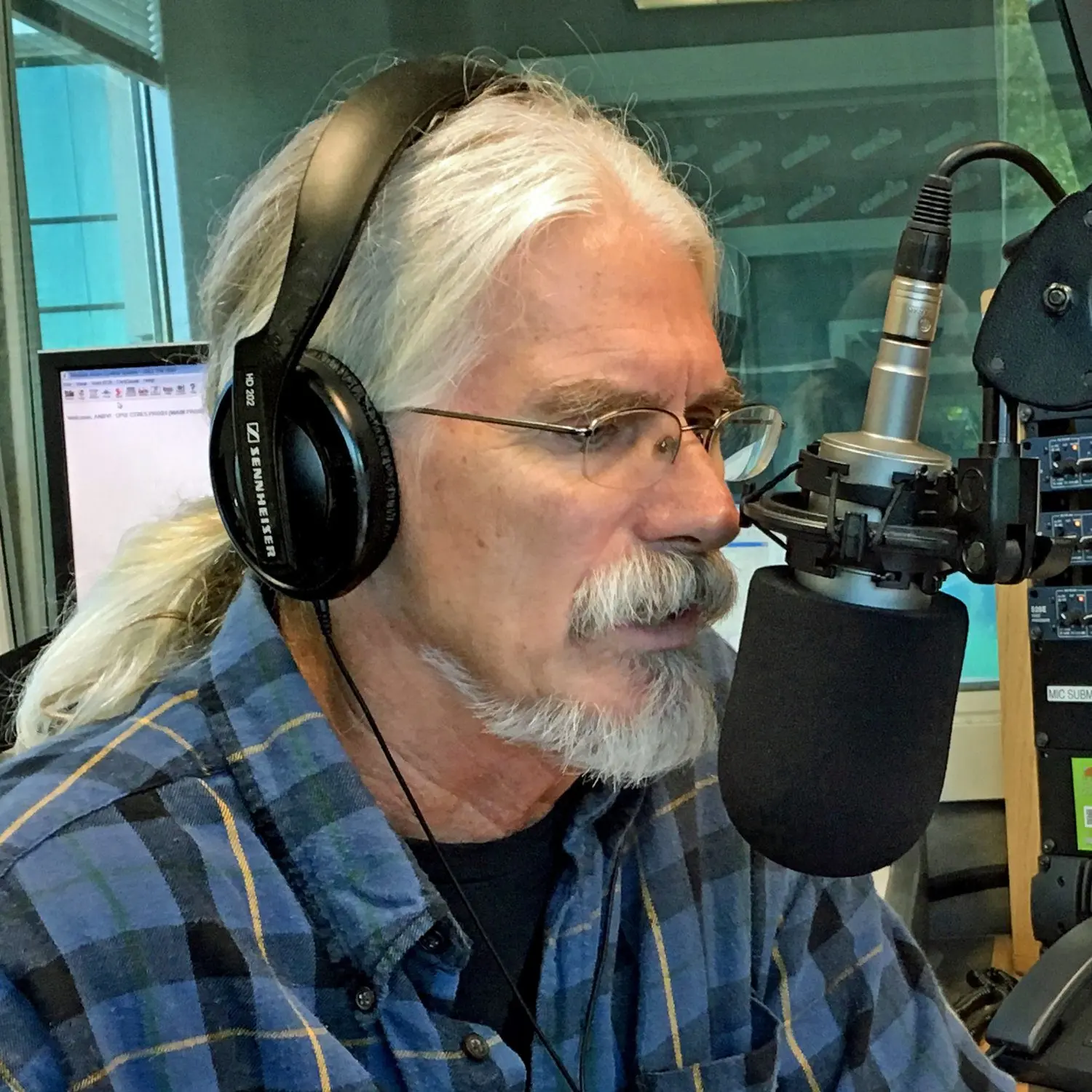

On this open phones edition of The Narrow Path, Steve Gregg fields a wide range of challenging theological and cultural questions from listeners across the country.
The hour begins with discussion surrounding the image of God, hell, annihilationism, and whether those separated from God still remain image bearers after death. Steve also responds to questions about Zechariah prophecy, dispensational theology, and how the New Testament interprets Old Testament apocalyptic imagery.
Other callers challenge Steve on flat earth theory, biblical cosmology, and modern conspiracy thinking, leading to an extended discussion about poetic language, literalism, and responsible Bible interpretation.
The conversation later shifts to
SPEAKER 1 :
Thank you.
SPEAKER 04 :
Good afternoon and welcome to the Narrow Path radio broadcast. My name is Steve Gregg and we’re live for an hour as we are each weekday so that you can call in during the live program. If you have questions you’d like to raise for conversation on the air about the Bible, about the Christian faith, or a difference of opinion you may have with the host that you’d like to discuss, the number to call is is 844-484-5737. That’s 844-484-5737. Now, one announcement I’ve been making all week. This is the last day I’ll be making it because it has to do with tonight in Covina, California. I’m going to be speaking to a men’s group. If you’re a man and you’re near Covina, California, you’re welcome to join us at 630 tonight. And it’s a group that meets, I think, regularly at this location, though I’ve only been there once before several months ago. They’ve asked me to come back again tonight to speak. I’ll be speaking on the subject of agnosticism, atheism, and anti-theism. Okay, and that’s an unassigned topic, and I’m glad to speak on it. So that’s going to be from 6.30 to 8 o’clock tonight. It’s held at a Starbucks coffee shop. Last time they met out in the courtyard because there were too many people to fit inside. I don’t know if it’ll be outside or inside tonight. I assume it’s going to be outside. And that, of course, there’s lots of Starbucks, probably many, many in Covina. This one is at the address 611 South Citrus Avenue. 611 South Citrus Avenue. That’s a Starbucks tonight at 630 if you’re in the area. If you didn’t catch that address or if you forget it, you can find it at our website, thenarrowpath.com, under the tab that says Announcements. And there you’ll also find the information about this Saturday. We once a month, the first Saturday of the month, have – a Bible study for men in Temecula in the morning. And if you want to find out where that is, go to the same place, thenarrowpath.com, look under announcements. So that’s Covina tonight and Temecula, a men’s Bible study, Saturday morning. Okay, our lines are full, so we’ll go to the lines and talk to our callers, the first of whom is Wesley calling from Indianapolis, Indiana. Hi, Wesley, welcome.
SPEAKER 03 :
Hi. Thanks. Really enjoy your show, Steve. Just a quick question. So those that are in hell, are they still image bearers of God, or is that something that’s tied to a physical body? In other words, is it your spirit? I understand. Yeah.
SPEAKER 04 :
Yeah, I would say that at least in some measure they are still image bearers, maybe entirely. I don’t know how a person’s soul may be misshapen or corrupted or marred through a life of sin, unrepentant of. It’s possible once disembodied that they have taken on more of the character of demons than of God. I don’t know whether this is so or not. Now, if you’re wondering whether God sees his image in them no matter what, and whether that might argue for universal reconciliation, Some would probably say so, and I think not without merit. I don’t know that it’s an ironclad argument, but some would say that God made us in his image. He certainly wants to redeem anyone that’s in his image and not destroy it or torture it. Now, actually, some people who hold the traditional doctrine of hell, which is, of course, eternal conscious torment in hell, I’ve heard them use this. the image of God in man, as an argument against annihilationism. I don’t think they’ve made a very good argument. I don’t think it makes sense, but it comes up fairly frequently in their literature. So they must think it has some merit. In my opinion, it doesn’t. They would simply say, well, God would never annihilate his own image, which is why he has to keep them alive in hell to torment them forever and ever and ever. Now, I don’t understand this thinking. How is it that there’s something about the image of God that makes it impossible for God to annihilate? I mean, he could. And if they’re saying, well, because God honors his image in man, his image in man makes him too honorable to annihilate, well, then that would seemingly argue true the honorableness of it would be too uh too honorable to torture forever and ever and ever without reprieve and without you know without redemption you know so i mean if if we’re going to argue that man bears the image of god even after death even unfallen men do and i think that they we probably should say they do uh well then that would argue possibly uh It would not argue for or against any one view so much as it might appear to argue for the universal reconciliation view. I don’t believe it’s the physical nature of man, the bodily shape that’s made in the image of God. I believe it has to do with the rational and spiritual characteristics of man. and creative ability and so forth. I mean, there’s quite a few things man has that animals do not have, and those things are what I would consider to be the godlike things in man. And unbelievers who are in sin have these things too. In fact, James seemed to indicate that every man bears the image of God even now, and he says we shouldn’t curse people because they’re made in the similitude of God. So, I mean, I don’t think he’s only referring to Christians there. He’s not talking about how they bear the similitude of God because they’re believers. He says they were made in the similitude of God, which means they’re human, and it’s talking about their creation. So, that would include Christians and non-Christians. Now, if that’s true, if James is telling us that even rebellious unbelievers who hate God, nonetheless, were made in the image of God, and that’s why we should not curse them when we’re blessing God… then it would seem to me that he’s saying fallen man is still bearing the image of God in a significant way. And that would, as far as I know, continue to be true after death.
SPEAKER 03 :
Okay. That’s great. Thanks very much.
SPEAKER 04 :
Okay, Wesley. Thanks for your call. Thank you. God bless. Bye now. All right. Steve from Lakewood, California is next. Steve, welcome to The Narrow Path. Thanks for calling.
SPEAKER 07 :
Yeah, good afternoon, Steve. Thanks for taking my call. Hey, I’ll say a prayer for you for tonight, for your meeting, that it goes according to God’s will and his plan. I wish I could be there. I can’t make it to Covina tonight. My question is your position compared to the dispensational position on two texts, basically Luke 1335. And then comparing that with Zechariah 12.10, do you believe that Jesus is referring to in Luke 70 AD?
SPEAKER 04 :
Okay, Luke 13.35 you say? I’ve just been turning there. Jesus said, See, your house is left to you desolate. And assuredly I say to you, you shall not see me until the time comes when you shall say, Blessed is he who comes in the name of the Lord. And then, of course, I know Zechariah 12.10 is the one where it says they will look on him whom they have pierced and they’ll mourn for him as for an only son. And so, obviously, they’re talking about seeing him or looking upon him. Now, I will say this. I don’t know that seeing him in Zechariah is being used in the same sense as it’s being used here where he says you won’t see me unless you say, blessed is he who comes in the name of the Lord. Let me say about both of these texts. And I believe that dispensatious would join them together. I think that they would say that Jesus is predicting a time when the Jews in mass will recognize Christ and will say, blesses he who comes in the Lord, and that Jesus is here predicting that that will happen. And then, of course, they would take Zechariah, which speaks of them looking on him whom they pierced and mourning for him. as no doubt the same event. When Jesus comes back, they’ll see him and mourn for him and recognize him. So that is, I know that those verses were joined in my mind when I was a dispensationalist. I think they generally are. Now, I want to say that I don’t see it that way. When I read Zechariah chapter 12, in the context of chapters 11 through 14, we’re really talking in Zechariah, that section of Zechariah, about the first coming of Christ, not the second coming of Christ. Just before chapter 12, in chapter 11, we have the story of the betrayal for 30 pieces of silver, which is applied to Judas in the New Testament, betraying Christ for 30 pieces of silver. So, I mean, we’ve got the betrayal of Christ in chapter 11. Then, of course, we have the Spirit poured out in chapter 12, which I take to be at Pentecost. In chapter 13, verse 1, it says there’s a fountain opened for the house of Israel for the cleansing of sin. I take that to be at the cross. And then in chapter 13, verse 7, it says, strike the shepherd and the sheep will be scattered, which Jesus quotes on the night of the betrayal and said, this is going to be fulfilled tonight. So we know that the 30 pieces of silver in chapter 11 was fulfilled when Jesus was betrayed. Strike the shepherd and the sheep will be scattered. Jesus himself said that was fulfilled when he was betrayed in the garden. I believe the fountain opened for sin. is best understood to be the blood of Christ shed at the cross. And then, of course, the Spirit being poured out in that whole context would be what actually did happen on the day of Pentecost. So I’m looking at that whole section pretty much the way the New Testament writers applied the section, as being fulfilled in the first century, not in the end times. So I don’t see Zechariah 12 predicting a future world. appearance to the Jews that brings about their repentance. Much as I’d be glad to see it happen, no one would be happier than me to see every Jew converted to Christ. I’m just not saying, I won’t let wishful thinking guide my exegesis. To my mind, the New Testament treats this entire section of Zechariah as if it’s in the first century, not the end of time. Now, when Jesus said at the end of his Lamb passed to the scribes and Pharisees in chapter 13 of Luke. You will not see me again until you say, Blessed is he who comes in the name of the Lord. Remember, of course, just a few days earlier, multitudes of people had gathered and said those very words, what Jesus wrote into Jerusalem on a donkey. They said, Blessed is he who comes in the name of the Lord. But the Pharisees, the enemies, did not. And so he’s saying, until you can come to the point that they were at, until you come to the point of acknowledging, me as the one who comes from God, as the one who comes in the name of the Lord. In other words, as the Messiah. You won’t see me anymore. Now, I believe what he means is he won’t make any more public appearances as he had been. This was the Passover week. The Bible says elsewhere he’d been teaching every day publicly in the temple. It was after this statement he made, which is also found in Matthew 23, I think it’s 37, if I’m not mistaken. You know, he leaves the temple for the last time, and he makes no more public appearances. Now, he’s not saying that they won’t see him in any sense unless they say, Blessed is he who comes in the name of the Lord, because they did. Many of them saw him a few days later hanging on the cross. They saw him on trial before Pilate. They saw him taken from the cross and put in the ground. I mean, this was… This was this was seeing him again. But he’s not saying you won’t see me anymore in any sense. I think what he means by this is that you’ve seen me regularly as a public figure publicly teaching where you could easily look at my direction. There I am. But there’s the time coming when only those who can say blessed is he who comes in the name of the Lord, which could be you guys if you want to. He says, only those who do will see me in the sense that I’m not going to be publicly making appearances anymore. And I think that this is what’s alluded to in John 14, when in John 14, 19, in the upper room, just before he was arrested, Jesus said to the disciples, John 14, 19, And then it says in verse 22, Because Jesus said the world won’t see me, but you will. And Jesus answered and said to him, if anyone loves me, he will keep my word and my father will love him and we will come to him and make our home with him. In other words, they’re going to have their own personal inhabiting. He’s going to inhabit them. He also said that in verse 21, he who has my commandments and keeps them, he it is who loves me and he who loves me. will be loved by my Father, and I will love him and manifest myself to him. So in the upper room, he’s with his disciples saying, from now on, the world’s not going to see me anymore. I mean, some of them did when he hung on the cross the next day, but he means I’m not going to be appearing. I’m not going to be appearing to the public anymore. I’m not going to be doing public ministry, but you guys will see me in a sense that the world can’t. And, you know, Judas is not as scary. He says, how’s that? How are you going to show yourself to us and not to the world? He said, well, if you love me and keep my kindness, my father and I will come live with you. I will manifest myself to you. You’re going to see me in a different sense. And only believers will see me in that sense. You know, and so what I believe, is that when he said to the Pharisees, you won’t see me anymore until, and I would take until to mean unless, unless you say, blessed is he who comes in the name of the Lord. He’s not predicting it will happen. He’s saying it is a condition. If you want to continue seeing me, well, I’m not going to be publicly available anymore, but you can see me in the way my disciples do if you become one of my disciples. That’s what I believe he’s saying to them. Now, yes. I mean, the idea of until has made some people think he’s predicting something. This is going to be the case until something else actually happens, which he’s predicting. But the word until also can mean unless. You know, if I say to a child, you won’t get your allowance until you mow the lawn. Well, that’s not predicting that they will mow the lawn. It’s not predicting they’ll even get their allowance. It’s stating a condition. If you do that, then you can have your allowance. Otherwise, you won’t. And that’s, I mean, until often has that meaning. So I think that’s what it means here.
SPEAKER 07 :
Yeah, the dispensationalists, they connect Luke 13, 35 to Zechariah 12, 10, which we’re well aware of. How can a dispensationalist honestly miss the context, which is so clear, Zechariah 11, 12, and 13 and 14? How can they miss that?
SPEAKER 04 :
The way they miss it is because it’s written in apocalyptic imagery, just like Revelation and Daniel and Ezekiel are. These are portions of the Bible that are written in high symbolism, apocalyptic signs and visions and so forth, spoken in very non-literal terms. And the dispensationalist believes you must take everything in the Bible pretty much literally, regardless what genre it’s written in, no matter how it was intended to be understood by the writers or how it would have been understood by the readers. You know, the way an American reading an American book would understand it. That’s the literal way you’re supposed to read it. And they take not adequate account of the fact that there’s poetry, there’s apocalyptic visions, there’s all kinds of things that are not literal, especially in Zechariah. And so they try to make it literal. And in doing so, they’ll say, well, this hasn’t happened yet. I mean, there’s stuff in there that if you took it literal, I mean, people’s eyes have not melted in their sockets and tongues melted in their mouths, as happens in chapter 14. You know, the Mount of Olives hasn’t split in two, creating a valley east to west, as is predicted in Zechariah 14. So they say, well, if that’s literal, that’s got to be future. And they read the second coming of Christ into Zechariah 14, although Christ is never mentioned in that chapter. nor his second coming. And so, you know, they’ve learned that things that seem bizarre must be taken in a literal sense, even though the original readers would recognize them as apocalyptic imagery, and that’s how they’re intended to be understood. But many Christians simply are unfamiliar with prophetic writings and apocalyptic imagery and the way that Jewish people express these things. So that’s how dispensationalists miss it. They feel they’re being more loyal to Scripture by taking everything literally, even though Jesus did not and Paul did not and Peter did not and John did not. And the prophets did not. But in other words, they didn’t take things literally all the time. Sometimes yes, sometimes no. But, I mean, there’s much that is not. And it’s clear that much in Zechariah is definitely not literal. So that’s why they miss it. It’s an artificial hermeneutic that they made up. Nobody held it until dispensation came. Nobody assumed that there’s some unwritten rule somewhere. that you have to take everything in the Bible literally. The Bible doesn’t say that. No scholar would say that, that is to say, who’s not a dispensationalist. When dispensationalism came along, it created this rule and imposed it on everybody and confused everybody because all the stuff that was fulfilled according to the New Testament writers, if it wasn’t written in literal terms, suddenly is assumed not to have been fulfilled and assumed to await a future fulfillment. That’s the whole dispensational mindset.
SPEAKER 07 :
But it’s very rude for a dispensationalist to look at somebody like you and call you a heretic. I’ve heard it. I’ve seen it. It’s very rude and uncalled for.
SPEAKER 04 :
I’m aware of it. And yet, you know, I’m not surprised by it. I mean, people who have been – when I was a dispensationalist, I probably would have said the same thing if someone had – No one ever heard any, I mean, no one in my circle ever heard views like I hold now, although there’s traditional views of the whole church that the church held for 1,500 years. But we didn’t know that. We were taught dispensationalism, but we weren’t taught that we were being taught dispensationalism. We never heard the term dispensational. We were just told this is what the Bible teaches. And we accepted it because our teachers were older and wiser than we are. And so we just said, okay, this is what the Bible teaches. We didn’t even know someone else, you know, historically, the church should believe something other than that. And so if I would have heard these things that I now teach, which I could have if I had not been in dispensational circles, but if I had heard them in those circles, I would have thought, that’s heretical. Don’t these people read the Bible? And the truth is, I do read the Bible a lot. In fact, there’s not much of it I don’t have in my memory. And I’ve taught it through many times, verse by verse. So it’s not like I don’t read the Bible. It’s that I do read the Bible, and I read it responsibly. I read it, I allow the New Testament writers to interpret the Old Testament. And why? Because Jesus referred to the rabbis and the Pharisees as blind guides. He called them blind guides. In Matthew chapter 15, Paul said in 2 Corinthians 3 that when the Jews read the Old Testament, they do it with a veil over their mind. They can’t see it until they turn to Christ. In other words, it’s not just take it literally. You wouldn’t need any help understanding it if it were taken that way. Jesus opened the disciples’ understanding that they might understand the Scriptures in Luke 24. I think it’s verse 44 or 45. And so, you know, why do you have to open their understanding to understand the Scriptures? Because the rabbis didn’t understand them, and because you wouldn’t necessarily understand them without the help of the Holy Spirit revealing that to you. And that’s, in other words, it’s not literal. Some things are literal, but an awful lot is not. And the New Testament… were enabled to see. And therefore, thankfully, we have their writings and their application of the scriptures to know exactly how they understood them once Jesus opened their understanding. So, you know, using the New Testament as the code breaker for the Old Testament is the only sensible thing to do if you believe in the New Testament at all.
SPEAKER 07 :
Thank you so much for your answer. Blessings to you.
SPEAKER 04 :
Okay, Steve, good talking to you. Thanks for your call. Phil from Corona, California. Welcome to The Narrow Path.
SPEAKER 06 :
Hi, Steve. This is Bill. Oh, Bill. I’m a retired four-square pastor, and I have a friend in an aero club that I meet regularly with who is really seeking the Lord, comes to me with a lot of Bible questions and everything. But he also is a conspiracy theorist and believes in a flat earther, and we’re going to be debating over the flat earther. He wants to prove to me in the Bible that the earth is flat. What do I say to him?
SPEAKER 04 :
Okay, well, first of all, the Bible doesn’t teach the shape of the earth in any direct way. He’s going to point out that the Bible talks about the four corners of the earth as if that is a literal expression. Even though we today who don’t believe in flat earth, we use the same expression. It’s a figure of speech. He’s going to mention that the Bible says the earth is stationary. The earth will never be moved. And that the sun goes up and goes down and goes across and goes backwards. He’s going to say the earth isn’t around globe turning. It’s the sun and the moon that move around the earth. And, you know, in other words, they don’t recognize poetic language. This is like I was talking about dispensationalism. They don’t recognize genre. They don’t recognize that all the statements that they appeal to are found in the psalms. or similar poetic writings. And poetry itself uses hyperbole and metaphor and so forth. And we even still to this day, though we don’t believe in that cosmology, we still talk about the sun rising and the sun setting. It’s called phenomenal language, describing things not as they are, but as they are perceived. That’s very commonplace. They believe that the earth is flat like a pizza. and that the North Pole is right in the middle, like the hole in the middle of an old vinyl record, and the edge all around is what we would call the South Pole, Antarctica. And that, you know, the sun moves around it, sort of, you know, just to create day and night in different parts. This doesn’t make sense to me, and it is certainly not something the Bible teaches. They claim that Genesis 1 tells us the earth is flat, and there’s a big dome over it called the firmament. and that the dome is not too far above us, and the sun, moon, and stars are all up there. They don’t believe the sun is 93 million miles away. They believe it’s much closer and much smaller than we assume. But see, they have no basis for this in Scripture. Now, they will bring up what they consider to be scientific evidence, but obviously there’s even more scientific evidence against them. But all the evidence for a global Earth instead of a flat Earth, they take to be part of a conspiracy. Even photographs from space are part of a conspiracy. The astronauts, even the Christian ones, who go up there and come back and have taken pictures of the globe, they say they’re part of a conspiracy, too. In fact, it would seem to me every airline pilot, every astronaut, in fact, every astrologer, not astrologer, astronomer, every one of them is part of a big conspiracy. And the question I have is, why? Conspiracies do exist from time to time in order to gain something of value that they can’t get legitimately. They want to fool people. They’ve given it. It’s like a hoax. But what is the payoff for those who are the hundreds of thousands of people involved in this conspiracy? And no one’s cracking. No one’s giving the game away. And what is it they’re getting from it? Nothing I can see. They say, you know, the flat earthers say, well, they want you to believe the earth is global so you won’t believe the Bible’s true. Well, that’s stupid. I’ve always believed the earth is global, so as every Christian I’ve known, we still believe the Bible’s true. We just aren’t reading it with this wooden literalness that ignores poetic features. So, I mean, they’re kind of, they’re well-intentioned. They want to support the Bible, but they know very little about how to read the Bible or understand it. And the way they do read it puts them into a minority of people who think it teaches a flat earth. It does not. Anyway, brother, good luck with that debate. I appreciate it. Our website’s thenarrowpath.com. We have another half hour coming, so don’t go away. I’ll be right back.
SPEAKER 01 :
Small is the gate and narrow is the path that leads to life. Welcome to The Narrow Path with Steve Gregg. Steve has nothing to sell you today but everything to give you. When the radio show is over, go to thenarrowpath.com where you can study, learn, and enjoy with free topical audio teachings, blog articles, verse-by-verse teachings, and archives of all The Narrow Path radio shows. We thank you for supporting the listeners supported Narrow Path with Steve Gregg. See you at thenarrowpath.com.
SPEAKER 04 :
Welcome back to the Narrow Path Radio Broadcast. We have another half hour ahead of us right now, live, to take your calls. If you have questions about the Bible or the Christian faith or a disagreement with the host, feel free to call me at this number, 844-844-8000. Our next call comes from Michael in Englewood, California. Hi, Michael. Welcome.
SPEAKER 02 :
Hello, Steve. I wanted to say I always check Matthew713.com first, and thank you for that website as well. My question has to do with I have a friend, and she is an elder now. So I know in Galatians 3.28, Paul says there is neither male or female. And then 1 Timothy 2.12, he says, suffer a woman not to teach or usurp authority over a man. Then, of course, Titus, it goes to husband of one, sorry, wife of one husband. Husband of all right, yes. Mm-hmm. And then verse 5 says elder, as in Presbyteros. But then verse 7 says bishop, as in Episcopal. But my question, if I’m not saying too much, my question is, is it okay for a woman to be an elder as long as she’s not a pastor or overseer?
SPEAKER 04 :
Well, in the Bible, there is no distinction between a pastor, an elder, or an overseer. The Bible never mentions any individual in any church that Paul wrote to or any church mentioned in Scripture that had a singular pastor. Instead, they had elders in every church. Titus was told to appoint elders in the church of each city. It tells us in Acts 14 that Paul and Barnabas, on their way back from their first missionary journey, appointed elders in every church. in Acts 20, Paul called for the elders of the church in Ephesus to come down. And when he spoke to them in Acts 20, 28, he said that they should shepherd, that means pastor, the flock, over which the Holy Spirit has made you overseers, episkopos, episkopoi is the plural, episkopos, which is in the King James translated bishops. But as I think you mentioned correctly, it means overseers. It’s the elders of the church of Ephesus who, that Paul says God made them overseers and they should pastor the church. And not just Paul. Peter said the same thing in 1 Peter 5. It’s clear that he begins by addressing the elders who are among you in chapter 5, verse 1. He says, the elders who are among you I exhort. And then he says in verse 2, shepherd the flock. Okay, shepherd means pastor. It’s poignant. The same in the Greek. It’s poignant. It means to pastor. Pastor the flock of God which is among you, serving as overseers, episkopoi. Okay, so we’ve got Paul speaking to elders, telling them to pastor the church, and that they are made overseers, episkopoi. Peter writes to elders in chapter 5 of 1 Peter. He also says that they are to shepherd the flock, pastor the flock, and that they too are overseers. When Paul writes to Titus, it’s rather interesting the juxtaposition of the word elder and and overseer there also, because in Titus 1.5, Paul says to Titus, For this reason I left you in Crete, that you should set in order things that are lacking, and appoint elders, plural, in every city, as I command you. That’s presbuteroi. Presbyteros, singular, presbyteros, plural. And episcope, I think, is the plural of overseers. But here he says, appoint elders in every city. He says, if a man is blameless, a husband and one wife, et cetera, et cetera, verse 7, for a bishop, that is an episkopos, must be blameless, a steward of a god, blah, blah, blah. So he says, you need to appoint elders. They have to be this kind of person because an overseer has to be that kind of person. In other words, he’s using the word elder and overseer interchangeably. He knows of no pastor. He knows of elders who are called overseers who are assigned to pastor. In Philippians 1, verse 1, he addresses the Philippian church this way, the opening verse of Philippians. He says, Paul and Timothy, servants of Jesus Christ, to all the saints in Christ, Jesus, who are in Philippi, With overseers and deacons. Why doesn’t he say hey to the pastor? Apparently he doesn’t know of any pastor in the church. They have overseers and deacons, which is something else. But overseers were the same thing as elders. And they were the ones who pastored the church. At least they’re the only people in the Bible who are told to pastor the flock. And so the early church apparently didn’t have what we have in the modern time, an individual pastor. They had a pastoral body, a body of elders called the presbytery. Remember, Paul told Timothy that he should stir up the gift that was received by the laying on of hands of the presbytery, the eldership. Presbytery means eldership. So, okay, elders are the pastors. Elders are the overseers. These words are used interchangeably of the same individuals in the churches. And twice Paul gives qualifications for them, 1 Timothy 3. And Titus chapter 1, in both places, he says the elder must be a husband of one wife. Unlike modern times, a husband can’t be a woman. In biblical times, a husband had to be a man. For this cause, a man would leave his father and mother and cleave to his wife, and they’d be one flesh. That’s a married couple. The husband is the man, the wife is the woman, and the elders had to be husbands, men. Also had to have his husband. house in order, his family in order, so he could prove his qualification to manage the church of God, Paul says. When he talks about how it’s necessary in 1 Timothy 3, 4, one who rules his own house well, having his children in submission with all reverence, for if a man does not know how to rule his own house, how will he take care of the church of God? Now, You don’t give him oversight of the church if he’s not managing or ruling his own household well. Well, the rule of the household is the role of the husband. The woman isn’t the ruler of the household. The husband is the head of the woman and so forth. Now, I don’t care how unpopular that is to say that now. I don’t care how many people out there are writhing and wincing and cringing by my saying that. Yeah, well, that’s your problem. The Bible has never had to change because it’s never been wrong. Fads, customs, cultures change. They get closer and further from the truth over time. The Bible never gets any closer or further from the truth. It is the truth. And therefore, you know, if I say, as the Bible clearly does, the man is the head of the home. And therefore, it’s his management of his home or mismanagement of it that determines whether or not he could be qualified to be the church leader, the elder, the bishop, the overseer, the shepherd. So, yeah, it doesn’t look like Paul has any room for women in that role. And, you know, some people think, oh, that’s holding women down. Well, I mean, if God wants to hold women down, that’s his business, isn’t it? But I don’t think it’s holding anyone down. Women cannot be made to rise… if they are given a position that God didn’t intend for them, the highest position a man or a woman can have is the very one that God assigns to them. And there’s no shameful positions. Jesus said that the one who wants to be chief among you must be the slave of everybody else. That sounds like taking the lowest place, which Jesus often recommended, by the way. Seems to me like eldership is a low position. It’s a servant position. And by the way, any woman can be a servant if she wants. There’s nothing in the Bible that forbids that. In fact, that’s what the word deacon means. Diakon is in the Greek. Deacon means servant. It’s an ordinary word for a servant. So, you know, frankly, everybody in the church is supposed to be a servant of everybody else. But the ones who slave to serve everybody are the ones that Jesus said are servants. You know, they’re the chief. They’re the great leaders in the church. It’s the ones who just serve. They don’t try to get people to serve them or their agenda. That’s what the rulers of the Gentiles do. Jesus said it should not be dozed that way among you. So, you know, what can a woman do then? Well, she can do anything God calls her to do. He doesn’t call her to be an elder. That’s for sure. I mean, that’s made, like, unambiguous. But she could be a prophetess. Paul thought prophecy was the greatest of the gifts. He said, seek the best gifts especially that you may prophesy. And Paul believed women could be prophetesses. Jesus said the greatest position is that of a servant. Women can do that too. More than that, women can teach. They can teach children as Timothy himself was taught by Lois and Eunice, his mother and grandmother. They can teach men in the context of, you know, unofficial settings like Priscilla and Aquila. Priscilla probably predominantly taught with her husband Aquila a man named Apollos, but not in the church. They took him aside after the church. So, I mean, women can teach. Women can prophesy. Women can serve. They can do just about everything. They can be missionaries. They can be evangelists. The first evangelists in the Bible were women. The angels commissioned the women to go and preach the gospel to the apostles who hadn’t heard it yet. The apostles were evangelized by women who told them Christ had risen. So, I mean, evangelists, teachers, prophets, servants, you know, the gift of giving. showing mercy, which is essentially like hospitality. I mean, there’s tons of gifts that Paul lists that people can have, and women can have all of them. But having all the gifts doesn’t mean that they hold the position of being the overseers of the church. That’s the one thing Paul doesn’t allow. But to my mind, being the overseer of the church is not one of the most coveted positions. I myself, for example, am not an elder. I have been when I was younger, but Frankly, my own family situation I consider disqualifies me for eldership. Not my current situation, but the fact that I have children who aren’t in the faith. And Paul said an elder’s children have to be faithful. You know, so, I mean, it’s like I don’t think I’m qualified to be an elder, but who cares? Why would I have to be an elder? Can’t I just do what God calls people to do who aren’t elders? What’s wrong with that? Why covet any particular position? if God makes it clear that that’s not your position. You see, I think too many times people are looking out for their rights and their dignity. And people say, well, if women are kept from doing something men are allowed to do, that’s depriving them of equal rights. Well, if being an elder is somebody’s right, yes, then there aren’t equal rights. Most men don’t qualify either. Most of the men who are elders in churches don’t qualify and shouldn’t be there. And women shouldn’t be. It’s not an equal rights kind of a thing. It’s God’s appointment. But everyone has the right to do what God calls them to do, which in the case of many people is not to be a pastor or elder, but to do instead what God says you can do and what you should do. So that’s my approach to the whole issue of women pastors. I appreciate your call. Elijah in Albany, Oregon. Welcome to The Narrow Path. Thanks for calling.
SPEAKER 05 :
Hello, and thank you, Steve. I have a friend who recently turned to atheism after being a Christian. I’m not to say he was ever a Christian, but because… And his question was, I think it’s kind of ridiculous, is if we have a loving God and we’re supposed… How can there be places on this earth that never get to hear the word of God?
SPEAKER 04 :
Well, that’s not God’s doing. God commissioned the church 2,000 years ago to go and preach to every creature. So, you know, God did what he could do. Why hasn’t it happened? I think it’s people, not God, that have dropped the ball there. So, I mean, I don’t see how God can be blamed. if there’s people who haven’t heard the gospel, when he commissioned a group of people, which now numbers, you know, if everyone who calls himself a Christian is one, about a third of the human population on the earth, literally one person out of three on the planet call themselves Christian. Now, that should be a big enough number to evangelize everybody. But if people aren’t being evangelized, it sounds to me like the Christians are the ones who are at fault, not God. And this, you know, this is simply… the same criticism that many people make is that, you know, I don’t like Christians. I knew someone who said they were a Christian and they did an obnoxious or unjust or immoral thing and therefore I don’t believe in God. Well, wait a minute. But God commanded them not to do that immoral or unjust thing. How can you blame God who told them not to do that when they do it anyway? You know, God told them to evangelize, make disciples of the whole world. If they didn’t do it, why blame God? Your friend is simply, like most younger people today, not a clear thinker. In fact, what I believe is happening is he’s been offended. Or maybe it’s a she, I think it was a he. But they’ve been offended by something in the Christian religion. And they’ve grasped at, quite irrationally, the nearest thing they can find. to criticize God about because they’re looking for an excuse, as most people are who don’t believe in God. They’re looking for an excuse not to believe in God. God, if he’s real, cramps their style. And if they don’t want God cramping their style, their best strategy is to pretend and try to convince themselves he doesn’t exist. Now, consider this. What’s behind the question is, if God is a God of love, why would he send people to hell That’s what they’re asking. They’re asking, why would people who have never heard, through no fault of their own they’ve never heard, why would God send them to hell? Well, the truth is, I’m not sure we have a clear statement in Scripture of what will happen to every person who’s never heard the gospel. The Old Testament was full of people who never heard the gospel, because Jesus hadn’t even been born yet. And yet many of them died in faith. In the book of Hebrews chapter 11, it lists a whole bunch of people from the Old Testament who died in faith and were commended by God and clearly are not in hell, even though they never heard the gospel. So the Bible doesn’t tell us that if someone never hears the gospel, they’re inevitably going to hell, though they certainly will miss out on what is available to those who do hear the gospel. And it’s very important that we do preach the gospel. But suppose we made every effort to reach every person on the planet, we couldn’t reach them. That doesn’t mean that they must necessarily go to hell. I mean, some people would assume it. The Bible doesn’t tell us that directly. And again, the Bible tells us of a great number of people who lived before anyone heard of Jesus and who nonetheless died because their faith in God was counted to them for righteousness. Did they understand the cross? Did they understand the resurrection of Christ? Did they understand justification by faith alone? There’s a good chance most of them didn’t. But it’s their faith in God. Now, the more you know about God, the more you can put your trust in, which is a great benefit. If you only have a vague suspicion there’s a God out there, and you think, well, this nudging of my conscience toward doing what’s right instead of what’s wrong, that probably reflects something of God’s will in the matter. He built in this kind of a sense that I should know what’s right and wrong. So I should probably try to follow that to be right with God. Now, can they justify themselves by their works? No, nobody can justify themselves by their works. They don’t need to, because Jesus died and justified us all already. Now it’s for us to be receptive to him. And, by the way, I do believe in justification by faith alone, but I don’t believe that we’re saved by the belief in justification by faith alone. That’s a doctrinal point that I believe. It’s not a doctrinal point that the Bible states you must know and believe in order to be saved. And the Bible indicates when people respond to the light they have, John 1 and 9 tells us that that light is Christ. So, I don’t know. People may never hear the gospel, and yet they have the witness given to them of God in nature, in their conscience, maybe other ways too. And how they respond to that would determine whether they’re a friend or an enemy of God. I still think most people would be enemies of God. no matter what light they have. Even when you preach the gospel, some want to remain enemies of God. But some want to be on God’s side. And I think the desire to be on God’s side and the effort to do so, I think puts them in the same camp that Christians are in, in the sense that Jesus died for them. He died for anyone that he… Listen, God’s not looking for excuses to send people to hell. He’s looking for excuses to save them. God loved the whole world. That’s why he sent his son, to die for the world. And therefore, I’m not saying the whole world will be saved. Those who reject him and those who hate him and those who love evil instead of good, certainly they’re not on God’s side. But there are people in the world who perhaps have never heard of Christ, but we can’t argue that they’re against God per se. There are people of other religions who are very devout who are looking for God and don’t find him there. And I certainly would never say that other religions can save anyone. I don’t believe any religion saves anyone. I don’t think the Christian religion saves anyone. Christ saves people. Christ saves people who turn to him and desire to do what’s pleasing in the sight of God. And he can do that because he died for everyone. He rose again because he makes intercession for the planet. And so, you know, if someone says, well, I can’t believe in a God that’s going to send everyone to hell who never hears of him, and most people don’t hear of him, I’d say, well, I don’t think the Bible requires us to believe in a God like that. I think the Bible tells us to believe in a God who’s not willing that they should perish, but that all should come to repentance, who has no pleasure in the death of the wicked, but that the wicked should turn from his evil ways and live, who loves even the prodigal, even when they’re away from him, and does not disown them. He’s still a lost son, Jesus said. So, I mean, I’m going to say, you know, some Christians do believe that everyone who never hears the gospel is going to hell. but I’m not sure what they do with the Old Testament saints who never heard the gospel, and the Bible clearly says they were saved. I think that everyone should hear the gospel. Everyone needs to hear the gospel in order to experience what God wants for them to have, and God’s will is more important than ours or even the welfare of the people we preach to. God’s will is what matters. But we don’t know that everyone we fail to reach will necessarily go to hell. God knows the heart, and God will make that judgment. That’s not ours to make. And if we’re going to reject God, because some other people we assume are going to hell, I don’t see how that’s helping them. You know, if you can’t swim and you jump in the deep end of a pool because you’re sympathetic with someone who’s drowning there, you’re not going to do them any good. You’re just going to drown with them. It’s about as irrational as a person can be. And I’ve always believed that all atheists are irrational. I know. I’ve read their books. I’ve debated them. They all resort to irrationality at some point in their argument, and this is certainly one of them. Everyone’s going to hell, according to Christianity. Therefore, I want to go to hell, too. I’m not going to believe either. Well, okay, real smart. Yeah, no wonder the Bible says the fool has said in his heart there’s no God. You know, they don’t have rational reasons. They are reacting emotionally. Christians at least have the option of being Christians for rational reasons because all the evidence is in favor of the resurrection of Christ and of the other things the Bible teaches. None of the evidence proves there’s no God or even suggests it. It’s just an irrational belief based on I’m offended by God. I don’t like this thing that Christians believe. I don’t like this thing that I think God does. Therefore, I don’t believe in him. Any atheist listening, let’s be rational for half a second if you can strain your brain. Let’s listen. To say you don’t like something about someone does not prove they don’t exist. Richard Dawkins said, gives this long litany of complaints he has against God. He thinks God’s the most objectionable person in literature. And yet he fails to realize that he hates everything about God, but hating God doesn’t make the first step to proving he doesn’t exist. The fact that an atheist can’t recognize that fact shows that they are not yet thinking like rational people. Rational people recognized. I may not like someone very much, but that doesn’t mean they aren’t there. So the question is, is it rational to be against God even though I don’t like him? Well, I think not. Some people do, and that’s the choice they make. But don’t let them pretend that they’ve got a real rational reason for their disbelief. Even the one your friend gave is nonsense. All right. I appreciate that call. Let’s talk next to we only have a few minutes left. Who’s longest here? It looks like it’s going to be Ward in Junction City, Oregon. Ward, welcome.
SPEAKER 08 :
Hi, Steve. Thank you. It’s been a long time. I have a question. Starting with the verse that says all things work together for good to those who love God. Does that all things include faults, failures, mistakes, and even sins, if they are truly repented of, of course, and turned from, all things, even stupid blunders, mistakes, disappointments, failures?
SPEAKER 04 :
Well, first of all, Romans 8.28, which you’re quoting, it is in a context. And many commentators would say, when Paul said, all things work together for good, he means all the things he’s been saying work. All these things, all the things that have been on the table in this chapter, how God justifies us, how he gives us his spirit, how the spirit helps us to overcome the power of the flesh, how the spirit helps in our infirmities when we don’t know how to pray. All these things work together for good to God’s people. Now, some commentators think that’s Paul’s meaning, and it very well could be. He could be thinking of all things simply in the context of Well, in the context of the context. So that’s one way to look at it. Now, in terms of your question, do all things really work together for those who love God, including mistakes and sins and falling and so forth, I will say that we could with confidence say God can turn those things to the good. And even if they are more bad than good, he can still get something good out of it. Like Paul said, that the Jews’ rejection of Christ… he says in Romans 11, has turned out for the evangelization of the Gentiles. Well, God has taken the lemons and made lemonade, you know. But it doesn’t mean he couldn’t have evangelized the Gentiles if the Jews had received him. it would have been better, better for the Jews to receive him and evangelize the Gentiles. But if the Jews choose to be disobedient, that God can exploit that to drive the Christians out of Jerusalem and under persecution so they reach out to the rest of the world. Of course, the Christians could have eventually gone out without the persecution, but the persecution is what God used. So even the sins of the Jews can, in a sense, work for good, not that God prefers for them to sin. I would say this, that even when you sin… God can make something good in your life for it if you’re one of his own children, even though he could have done better perhaps if you hadn’t sinned. I mean, God is very creative. If you live a holy life, I think it’s the best thing. I think he can make the most of it. You can live to the glory of God more consistently and so forth. If you stumble, God can even take that and make something good of it. Perhaps not as good as if you hadn’t, but still not all bad. God can exploit that. You know, when Joseph’s brothers sold him into slavery, that was a bad thing. But eventually God turned it around to use it to save their lives. And Joseph was able to say, you intended evil against me, but God intended good to save many a life as it is this day. So, yeah, God can even take the bad things and turn them to good. But that doesn’t make them good in themselves. We still want to avoid evil and sin and failure to the degree that we can because God can use that even more. It can use our righteousness far more than it can use our sinfulness. I’m out of time. You’ve been listening to The Narrow Path radio broadcast. My name is Steve Gregg. If you want to help us, we’re listener supported. You can write to The Narrow Path, P.O. Box 1730, Temecula, California, 92593, or go to our website, thenarrowpath.com. Thanks for joining us.