
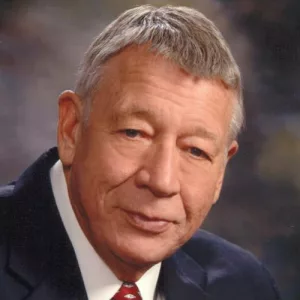

In today’s episode, we unravel the intricate layers of Paul’s letter to the Ephesians with the guidance of Dr. John Kahn. Delve into the essence of Paul’s apostolic mission as we discuss the foundational role of apostles in the early Church and how their unique positions laid the groundwork for Christian teachings. This episode touches on the heart of Christian faith—God’s sovereign will and the transformative power of His grace, as seen in Paul’s life. Be inspired to live a life of genuine faith and understanding as we explore how theological knowledge fuels God-honoring practice.
SPEAKER 02 :
Welcome to Expository Truths, where we exalt Christ by bringing clarity of truth through the scriptures with Dr. John Kahn, pastor of Faith Community Church in Vacaville. As Christians, we’re called to know the truth and be able to proclaim it. We can know truth when we know the Word of God, which is precise, without error, powerful and effective for both salvation and spiritual growth. Enjoy digging deeply with Dr. Kyle as he takes us verse by verse through the powerful book of Ephesians, giving us a marvelous summary of the good news of Christ and its implications for our daily lives.
SPEAKER 01 :
Please bring your Bibles to Ephesians chapter 1, verses 1 through 2. Ephesians 1, 1 through 2. Ephesians is an incredible epistle, and I know that I say that about every book of the Bible that I preach through, but it’s true. It’s like it’s inspired of God or something, you know. Preacher Ray Stedman said that if you feel the need for change in your own life and for deepening your relationship with our Lord, then do a deep dive into the letter to the Ephesians, which is exactly what we intend to do. John Stott said that the letter to the Ephesians is a marvelously concise yet comprehensive summary of the Christian good news and its implications. Nobody can read it without being moved to wonder and worship and challenged to consistency of life. And isn’t that what we want? and to be challenged to loving and honoring God more consistently in our own lives. Thus, the letter of Ephesians. And I anticipate great blessings from our time together in this book. The book is broken down in a very practical matter. Chapters 1 through 3 emphasize theology and doctrine, while chapters 4 through 6 show us how to practically live out that doctrine, which makes sense. Because godly behavior always flows out of godly belief. See, shallow beliefs produce shallow Christians. But the godliest Christians are those who embrace the Word of God and who seek to know it more, head and heart, which then compels them, in love, to then put it into practice. Now, of course, it’s possible to know deep theology and be spiritually cold, dead, and dry, sad to say. But it’s not possible to be a truly mature God-pleaser without knowing the deep truths of God found in His Word. And Paul clearly knows this, and that’s why the book of Ephesians is laid out the way that it is. Know the truth. So you can then live out that truth. So Ephesians 1 through 3 covers doctrine, while Ephesians 4 through 6 covers duty. Ephesians 1 through 3 deals with the root, while Ephesians 4 through 6 deals with the fruit. Ephesians 1 through 3 deals with the position of the believer, while Ephesians 4 through 6 deals with the practice of the believer. Ephesians 1 through 3 deals with Christian revelation, while Ephesians 4 through 6 deals with Christian responsibility. You see the point? It’s very purposeful. It’s very purposeful. So let’s open it up and look. Verses 1 and 2 says this. Paul, an apostle of Jesus Christ by the will of God, to the saints who are in Ephesus and faithful in Christ Jesus, grace to you and peace from God our Father and the Lord Jesus Christ. Now as we open up this epistle, we have a number of questions that are answered for us. The first question that’s answered is this, who wrote this letter? Please remember that this is indeed a letter, that this is basically someone else’s mail. See, this is a letter that was written by a person and then delivered to another person or group of people by someone else. And here in verse 1, we see that the author of this letter is Paul. See, this letter begins like other letters of the day began, with the author’s name coming first. After a brief… few brief words the recipient of the letter was named and then after that came the general greeting and while these seem like mere formalities we can learn some important truths from them like this that paul wrote this letter but that’s not all because today we know that while this was originally written by paul to a specific group of people for a specific purpose We also know that Paul was inspired by God, the Holy Spirit, to write these words. And therefore, these words are indeed God-breathed, and they have direct bearing even on us today. 2 Timothy 3.16 says that all Scripture is inspired by God, literally God-breathed, and it’s profitable for teaching, for reproof, for correction, for training in righteousness. 2 Peter 1, 20-21 says, But know this first of all, that no prophecy of Scripture is a matter of one’s own interpretation, for no prophecy was ever made by an act of human will. But look, men moved by the Holy Spirit spoke from God. So Paul’s words aren’t just Paul’s words. And because the words here in Ephesians are contained in the Scriptures, then these words are God’s words to the souls of men. And it’s really an amazing thought that the Spirit of God used men of God to write the Word of God. that even though the natural characteristics of the writers of Scripture are seen in each writing, and even though each writer of the Bible had his own distinctive style and vocabulary, and even though each book of the Bible grew out of a special set of circumstances, look, God the Spirit moved them to write what they wrote. And He brought about the inspired miracle of the Scriptures that are from Him to us for our eternal benefit. God’s perfect book. See, Paul was a sinful man. Paul was a sinful man. But God made sure that Paul wrote perfect words here in Ephesians under divine inspiration. Isn’t that amazing? It’s a weird, crazy thought to think about. but it’s true so yes we are indeed reading paul’s mail but really this is god’s mail for the ephesians and also for us today and so the letter starts out the normal way letters back then started out with the name of the human author paul who was paul a second century description of paul says that he was a man small in size bald-headed bandy-legged well-built with eyebrows meeting rather long-nosed and full of grace The key here for us to note isn’t the physical description of Paul, interesting as it is, but rather it’s those wonderful words full of grace. Paul. Paul truly was an amazing man. The guess is that Paul was born around 5 AD in Tarsus, which is on the southeastern coast of Turkey. Paul’s father was a Pharisee from the tribe of Benjamin, and nothing is known about his mother. While young, Paul learned the trade of tent making. However, around the age of 13, he was sent to Jerusalem for religious training. He trained under the highly renowned teacher Gamaliel, another Pharisee who was also a member of the Sanhedrin, the ruling council of Jerusalem. Paul became a great student under Gamaliel, very devout, very legalistic, very strict, and very loyal to his cause. The problem was that the Pharisees opposed Christ, and they were more loyal to their traditions than they were to the truth. See, they were all about religion, politics, duty, and looking externally good to people instead of to the Lord, and that’s a major problem. Well, time went by and soon Paul heard about a new sect that was rapidly growing, Christianity, which of course isn’t a sect at all, it’s the truth of God. But to Paul and to the Pharisees, who were steeped in their works-based false system, which Judaism had become, Christianity was a great threat to them. See, according to the first few chapters of Acts, which you might remember, the quick growth of the Christian church alarmed the Jewish leaders. They were threatened by this new religion which centered around the man Jesus whom they had crucified earlier. And so they jailed and flogged some of the apostles, but the church kept on growing. Finally, in Acts 6 and 7, Luke writes about the false trial and then the stoning of the first Christian martyr, Stephen. In Acts 7.58, the passage notes that the witnesses left their clothes in the care of a young man named Saul or Paul. At that point, widespread persecution against the church broke out and Paul became very aggressive in seeking out Christians and dragging them out of their homes to prison, Acts 8, 1-3. He eventually went to see the high priest and he asked for letters that he could take to the synagogues up in Damascus so he could look for men and women who followed Christ and then take them back to Jerusalem with him as prisoners, Acts 9, 1-2. However, remember what happened? On his way to Damascus, something absolutely remarkable happened to Paul. Acts 9, 3-19 tells us that on the way, a light flashed, causing Paul to fall down blind, and then a voice asked him, Saul, Saul, why do you persecute me? Uh-oh. When he asked who he was, Jesus identified himself and told Paul to wait in Damascus for further instructions. Paul was then led to Damascus where he waited for three days until God sent Ananias to him. There Paul was saved. There Paul was commissioned by God to be his apostle. And there Paul’s life changed forever. Jesus does that, doesn’t he? Right? He changes lives forever. Anybody know that? We know that. He changed his life. After a few days, Paul began to preach publicly that Jesus was the Christ, the Son of God, and the rest is history. Paul kept on doing that for the rest of his life. In his ministry, Paul went on three lengthy missionary journeys between the years 46 A.D. and 57 A.D. And on those journeys, he started new churches and he also strengthened existing churches. Paul also wrote 13 of the letters of the New Testament and he suffered greatly for the cause of his king. Here are a few thoughts about Paul, just to understand a bit more of what this amazing man was all about. In Acts chapter 9, Paul got converted, and he immediately began serving his God. In verse 20, he preached Christ, and in verse 23, the people plotted to kill him. In verse 29, Paul spoke boldly in the name of Christ, and again, the people attempted to kill him. In Acts chapter 13, Paul preached in Antioch, and by the end of the chapter, a group of people blasphemed and opposed him, and they kicked him out of the city. In chapter 14, Paul preached boldly in yet another city, and verse 5 tells us that a violent attempt was made against Paul to abuse and stone both he and his co-workers, and they had to flee the city. Later on in that chapter, verse 19 tells us that the Jews from Antioch and Iconium traveled to Lystra, where Paul was at. They incited the people against Paul, and then they stoned Paul, and they dragged him out of the city, supposing him to be dead, Acts 14, 19. You remember that? Stop and think about that just for a second, because this is brutal stuff going on. See, the normal place where a person was stoned was about 10 to 12 feet down with rocks on the bottom in a pit. The person being stoned would have been bound and he would then be shoved off the precipice from behind so that he fell down face forward onto the rocks below. Sometimes a person would die from that initial fall, but if not, the person would then be turned over onto his back. Another person would then take a large stone and drop it onto the person’s chest, onto his heart. If that didn’t kill the person, then the whole congregation would begin throwing large stones at that person until he died. It was absolutely brutal. And they did that to Paul because he preached the good news of Christ. They did that to Paul because he sought to glorify God with his life. Think about that. As the blinding, stunning blows fell upon Paul and knocked him into unconsciousness, what was he thinking before he blacked out? Probably this, soon, soon and very soon, I’m going to see my king. Can’t wait for that. He’s worth it. It’s all worth it. Glorifying him is worth all the pain and soon I’ll be with him. I’m sure that’s what Paul’s thinking because we know Paul as we went through the book of Acts. So they stoned him and they thought he was dead, but then they dragged him out of the city and they left him there. But guess what? Paul wasn’t actually dead. I think it’s clear that God miraculously kept Paul alive. I mean, who survives a stoning? Only those whom God keeps alive. So the disciples came to where Paul was left. They stood over him and gathered around him. They tearfully looked down at his bloody, broken body. And that’s when Paul’s eyes opened up. Paul then got up and he went back into the city. That’s Paul. Why go back? To finish his sermon. Talk about persistence. That’s Paul, the author of this book. Talk about boldness. Talk about someone who intensely loves God. That’s Paul. In chapter 16, Paul and Silas were thrown into prison for troubling the city. So what did they do at midnight? They began praying and singing hymns to God so that everyone in the jail had to listen to them. And eventually, the jailer got saved. In chapter 17, people stirred up the crowds against Paul in another city. And then in yet another city, the people rose up against Paul to do away with him. In chapter 19, a riot broke out. And then in chapter 21, Paul was beaten by a mob and then he was arrested. That kind of thing happened everywhere Paul went his whole life. Through it all, he kept preaching and he kept living for the glory of God. Look, in 2 Corinthians 11, 24 through 27, we learn a bit more of what Paul went through for the cause of Christ. He says, and think of experiencing one of these things. Five times I received from the Jews the 40 lashes minus one. Three times I was beaten with rods. Once I was stoned. We just talked about that. Three times I was shipwrecked. I spent a night and a day in the open sea. I’ve been constantly on the move. I’ve been in danger from rivers, in danger from bandits, in danger from my own countrymen, in danger from Gentiles, in danger in the city, in danger in the country, in danger at sea, in danger from false brothers. He’s in danger everywhere. I have labored and toiled and often gone without sleep. I have known hunger and thirst and have often gone without food. I have been cold and I have been naked. Paul talks about being afflicted and being in pain and suffering and being cast down and being seen as a refuse by the world, being hated and scorned for his faith and for his calling. But look, to Paul, it was worth all of it. Christ saved him. And pleasing Christ, no matter what the cost, was all that mattered. In the end, Paul had his head chopped off for the cause of Christ, and then Paul went to glory. Was it worth it, Paul? Absolutely, it was worth it. Without a doubt, it was worth it. I have no regrets. Paul’s a great example for us, and this is the Paul who wrote these words. The second question that gets answered for us is this. How does Paul describe himself? Answer, he describes himself as an apostle. It’s interesting because Paul wasn’t a part of the original 12 apostles. So was Paul a true apostle then? Yes, yes. Now remember, Matthias replaced Judas Iscariot as an apostle, and then later on, we find that God also added Paul into the mix as an apostle. In 1 Corinthians 15, verse 8, Paul’s talking about those who saw the risen Christ, and it’s then that he said, last of all, he was seen of me also as one born out of due time. In other words, yes, Peter saw the resurrected Christ, the 12 saw the resurrected Christ, but I too… saw the resurrected Christ, and he appointed me not just as one of the witnesses of the resurrection, but also as one of the apostles. And even though I came later as one born out of due time, I am indeed one of the apostles, and Scripture’s very clear about that. See, the word apostle in the Greek literally means one sent forth, and can generally refer to anyone who’s sent forth with a task. However, this word specifically is reserved for the twelve and Paul, who were sent forth by Christ for the very special and unique ministry of laying down the foundation of the church. Biblically, these apostles were a unique group of men. men who were sent by Christ after his resurrection, and men who were sent by Christ personally to lay down the foundation of the church. That means that there are no more apostles today, not in the way Paul uses this term, capital A, apostle. See, this was a very unique time in history, the time after Christ died and before the scriptures of the New Testament were completed. And in this unique period of time, these apostles, again, laid down the doctrinal foundation of the church, They received direct revelation from God through the inspiration of the Holy Spirit. They were the source of the teaching of divine truth, and they were able to confirm their teaching as true by signs, wonders, and mighty deeds, according to 2 Corinthians 12, 12, which says this, the signs of the apostles were accomplished among you with all perseverance in signs, wonders, and mighty deeds. And so this is very unique. I mean, The ministry of the apostles was absolutely amazing. Dead people coming back to life, lame people jumping around, and genuine and unmistakable healings and miracles done by the hands of the apostles to confirm that they were indeed men called by God. And note that the signs and wonders of the apostles was unique, unmistakable, consistent, and they couldn’t be explained away. But look… Now that the foundation of the church has been laid down and the word of God has been completed, there are no more apostles today. As one stated, the biblical apostles had special authority and power given by God. And when they died, that was the end of the special office of an apostle. In other words, contrary to what some men teach, there is no biblical mandate for apostolic succession. That’s right. And so again, there are no more apostles today. So here’s a question. Does God do miracles today like God did back then? Yeah, God can do whatever God wants to do and whenever God wants to do it. But today, normatively speaking, instead of through men like the apostles, God does miracles through the faithful prayers of his people as he wills and as he sees fit. But Paul was one of the apostles and that gave him a unique authority from God to instruct these Christians in Ephesus. Note how Paul adds that he’s an apostle of Jesus Christ. Jesus the Messiah. Jesus the Deliverer. Jesus the Anointed One. Jesus our Lord. Jesus our Savior. See, Paul now knows that he’s not his own anymore. No, he belongs to another of Christ. Not anymore of Paul. And definitely not anymore of Satan. No, but of Christ. As Isaiah 43.1 says, which applies to all of God’s children, even us today. But now thus says the Lord who created you, O Jacob, and he who formed you, O Israel, fear not, for I have redeemed you. I have called you by name. You are mine. That’s what God did for Paul. That’s what God did for you, his child as well. We, those of us who are Christians, we belong to him. He redeemed us. He called us by name. We are His. We belong to Him. What a privilege. What an honor to be a beloved child of God. Note that this was all done by the will of God, talking about God’s determined will. See, God did this. Very clearly. In Acts chapter 9, God did this. God not only desired this to happen, Paul to be saved and become an apostle, but but God made sure that it happened. Paul, I want Paul. God made sure that he got Paul. And Paul wants that to be clear. God put me in this position. I didn’t seek it out. God sought me out and God saved me. And then God made me his apostle. And note that Paul isn’t complaining about this. Clearly when God did this, God also captured Paul’s heart along the way. And that’s how it works. God did it to me, but man, am I glad he did. He saved me and he made me his apostle. And while it’s meant a great deal of pain and suffering and turmoil, hey, I have no greater joy than to suffer for the glory of the one who rescued me from wrath when I fully deserve wrath and who called me to this high, holy calling and privilege. So God did it. And Paul’s very grateful. Look. Just as God saved Paul and called Paul to be his apostle, so too does God save all Christians in the same way. We may have different specific callings and gifts to be used for the glory of God, and the apostles were indeed unique, but the pattern is the same. And we’re going to see that over the next couple of weeks. Everything about Paul’s conversion came from God. The Lord didn’t appear to Paul and beg Paul, Oh, Paul, won’t you please trust in me as your Savior? No. I’ve done everything that I can to make that possible. Now, the rest is up to you. Please, please, please believe in me. That’s not what happened. Instead… According to Acts chapter 9, the Lord knocked Paul to the ground and completely overpowered him. He struck him blind. Jesus then gave him very direct orders about what he had to do next. See, Paul was God’s chosen instrument to fulfill a very definite task, and God had it all planned out from start to finish. And again, such is the case with all of us, God’s children. What happened with Paul is what happens to every believer. God does it. God snatches us like brands from the fire. God saves us by His amazing grace. And that’s great news because it means that God is able to convert the most unlikely of sinners. And that’s why we never give up hope for a lost soul. And so in Paul, we have a great picture of how God saves all lost souls and brings them to Him. And the Bible shows this to us. We are dead in sin. We don’t seek after God. We are slaves to sin. And for any of us to be saved, God has to do it like He did with Paul. And when He does it, He captures our hearts and He fills us with love and with gratitude. And that should cause us all to overflow with love for a God like this. Who are we? Who are we? We all deserve wrath. But God called us by name. He redeemed us. He chose us in Him. He saved us.
SPEAKER 02 :
Thanks for joining us for today’s exposition from the book of Ephesians on expository truths with Dr. John Kyle. Continue on with us next week at this same time and to find this sermon in its entirety as well as other sermons, visit vacavillefaith.org. Faith Community Church seeks to exalt Christ by bringing clarity of truth through the Scriptures with a commitment to glorifying God through the pure, deep, and reaching message of the Gospel through faithful exposition. Pastor John is the preaching pastor at Faith Community Church of Vacaville, a seminary professor, and a trainer of preaching pastors overseas. Join Faith Community Church for worship Sundays at 9 and 1045 a.m., Located at 192 Bella Vista Road, Suite A in Vacaville. To learn more, visit vacavillefaith.org or call 707-451-2026. That’s vacavillefaith.org.