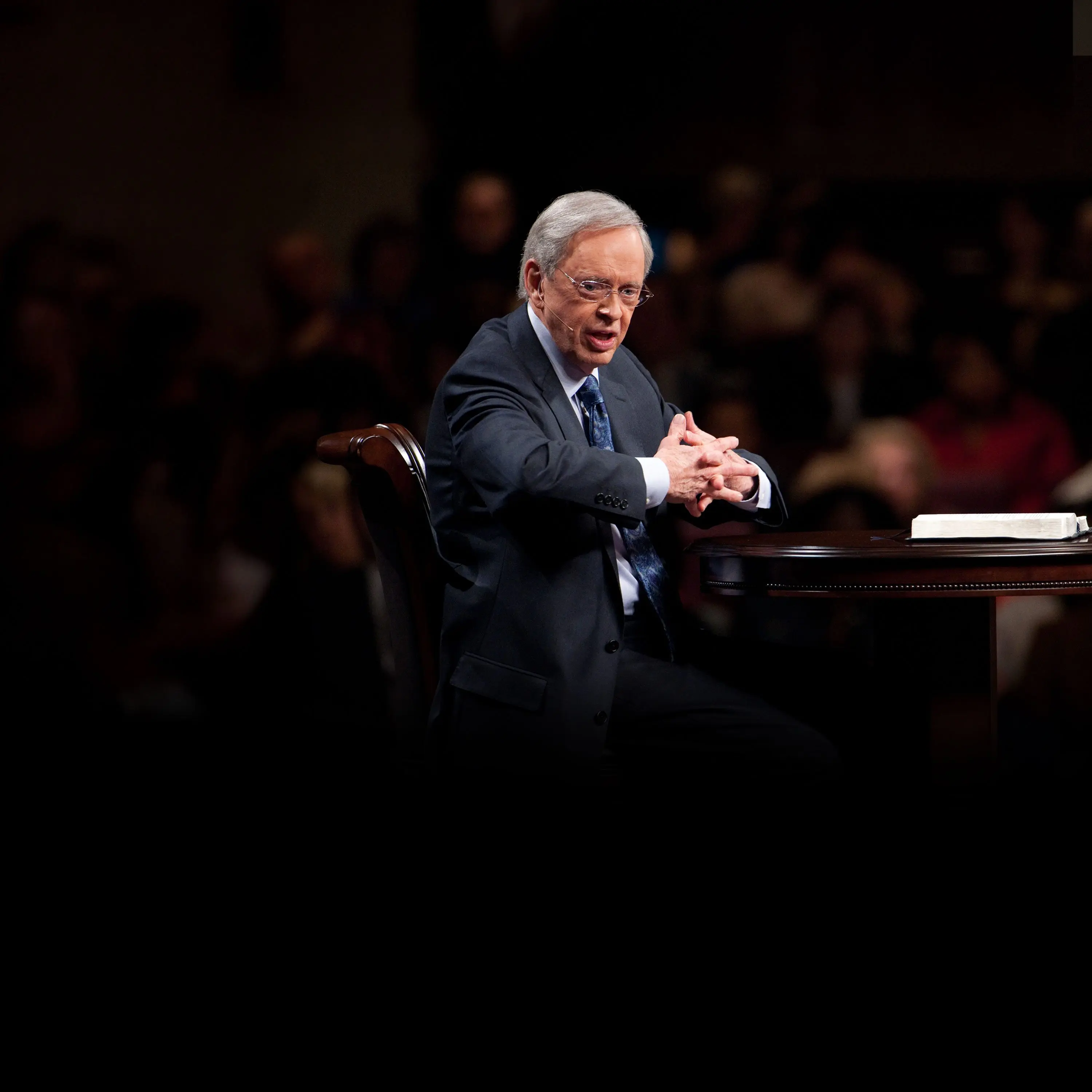
In today’s episode, we take an in-depth look at the essence of the Lord’s Prayer, unraveling the layers that have perhaps become routine. Charles Stanley walks us through the powerful intention behind each line of this revered passage, encouraging listeners to transform their prayer life from a mere recital of words into a profound engagement with God. Discover how surrendering to God’s kingdom and will can bring a refreshing depth to your spiritual journey.
SPEAKER 02 :
Welcome to the InTouch Podcast with Charles Stanley for Thursday, October 16th. Do you ever feel like your prayers have become routine? Today you’ll discover how to get beyond simply reciting words, learning to talk with God, and experiencing the joy of His friendship.
SPEAKER 01 :
Well, there’s a prayer lots of folks have repeated and repeated and repeated. In fact, millions of people have prayed this prayer or repeated it, didn’t know what it meant, and God never heard it the first time. And you and I call it the Lord’s Prayer. But what in the world does it mean? And you see, if you’re just repeating a prayer and you don’t know what it means, it’s meaningless and God’s not going to answer it. Well, that has three parts to it, and I want you to look here for a moment. It has three parts to it. The first part is in… Verse 9, when He says, Our Father which art in heaven, that’s sort of the doxology, or rather the invocation. And then comes the petition, beginning with, Hallowed be thy name. And then comes the doxology at the very end when He says, For thine is the kingdom and the power and the glory forever. Amen. A very short prayer, but… I want you to ask yourself this question. I want to explain it, and I want you to ask yourself this question. Can I really pray that prayer? And here’s what I want you to see, and I want you to understand this because I don’t want to be critical to say to someone, You can’t pray this prayer. I just want to tell you the truth. And I want you to understand why you can’t pray this prayer until, first of all, you have received Jesus Christ as your Savior and have been willing to say that you have accepted Christ as your Savior. Therefore, now the Father becomes your Father. Let me show you why. First of all, the first petition in this prayer, and there are six of them, three of them have to do with God. He says, Our Father, we pray, who art in heaven, hallowed be thy name. And listen to this, thy kingdom come. Again, my friend, if you’ve never received Jesus Christ as your personal Savior, you can’t pray this prayer. Thy kingdom come. What does that mean? Here’s what it means. It is a confession that I choose to have the rule of God in my life because the kingdom is the rule. The Greek word basileia, that does not mean necessarily some geographical location, but the rule of God in my heart. When he says in Matthew chapter 6, verse 33, seek ye first the kingdom of God and his righteousness. That is, seek first the rule of Christ in your life and the character of God in your life. He says we’re to pray, our Father which art in heaven, who art in heaven, hallowed be thy name, thy kingdom come. What we’re saying is, Father, I choose your rule in my life. I recognize your lordship in my life. My friend, for you to stand and repeat that prayer and you have rejected the Lord Jesus Christ as your personal Savior, you’re saying one thing with your mouth and denying the other thing with your heart. You can’t pray that prayer. This is a prayer for those who have acknowledged, listen, who have acknowledged and are living under the lordship of Jesus Christ. Thy kingdom come. How in the world can you pray that prayer, thy kingdom come, when you are living in willful, known rebellion against the lordship of Jesus Christ in your life? You can’t do it. Look at the next petition. Thy kingdom come, thy will be done on earth as it is in heaven. Now here’s what we think. When we pray that prayer, we’re usually thinking God’s great, general, perfect will out yonder on earth as it is in heaven. No. For the person who prays that prayer, what we’re saying is, Lord, I want your will in my life. I want to know what your will is and the answer to whatever you require of me, Father, is yes. Yes, yes, yes. Thy will be done on earth. Listen, we’re not talking about dirt. Thy will be done on earth. That is in the hearts and minds of people. But if I’m going to pray that, it’s got to be first of all in me. How can I pray God’s will to be done in your life if I’m not willing to have His will in my life? Thy will be done. What I’m saying is, Father, I want to know Your will. choose to walk in your will the answer to your will is yes yes yes I want the will of God done and I wanted to begin in me friend that prayer is packed full of commitment holy is the name of Almighty God I recognize the holiness of God I yield to the rule of Christ in my life I submit to the will of Christ in my life the answer is yes What a powerful challenge of commitment. And all that is centered upon God. It is the name of God, the kingdom of God, the will of God, this God whom I have the privilege of calling my heavenly Father. And what it cost Him to make that possible for me to call Him my Father. Then he says the second part of that prayer. The first is to glorify God. We recognize His wholeness, His kingdom, His will, now He says, man’s needs. And He begins with, give us this day our daily bread. What is He referring to? You know, sliced bread, loaf bread? No. When He says, give us our daily bread, what He’s really referring to is the sum total of all of our needs. And what we are saying is, Father, I recognize You as the source of all my needs. My physical needs, my material needs, my emotional needs, my spiritual needs. I recognize you as the source of them all. Do you only pray when you get in trouble? Is this an emergency prayer that you’ve been praying? Then you’ve wasted your time. The ultimate goal of this prayer is communion with the Father because it’s all God-directed, Father-directed. Give us this day our daily bread. We have the right and the privilege and the authority given by God in this passage and many others to ask Him for every single need we have. If He knows we don’t need it, He won’t provide it. If He knows there are other needs we’re not even aware of, He’ll give us those too. But He wants us to come because He wants us to see Him as the source. So He says, we’re to pray, give us this day our daily bread. But listen to this next one now. and forgive us our debts as we have forgiven our debtors. He says our petitions when it comes to us we’re to pray for our needs and secondly we’re to pray for the forgiveness of our sin. Now what does he mean here? He isolates this to one particular case when he says forgive us our debts as we have forgiven our debtors. Now when you and I sin against God there is a spiritual debt we owe to Him. A spiritual debt which Jesus Christ took upon himself at Calvary and paid in full 2,000 years ago when he shed his blood. The only thing that brings about forgiveness is the blood of Jesus. It is not confession. It is not repentance. It is not prayers. It is not sermons. It is not singing. It’s not going to church. It’s not giving money. It’s not anything but the blood of Jesus Christ. That is the only thing that can atone for sin. So when Jesus says that we are to do what? We are to ask for the forgiveness of our sins. That is, what he’s saying is, when you pray, make sure that everything is right between you and the Father. And make sure that everything is right between you and others because if it’s not, the prayer is not going to work. You say, what do you mean the prayer is not going to work? Well, I want you to look at verses 14 and 15 and let me give you a brief explanation. After he’s completed this prayer, Jesus said… For if you forgive men for their transgressions, your heavenly Father will also forgive you. But if you do not forgive men, then your Father will not forgive your transgressions. Now, when you first read that, it looks like Jesus is saying, well, you can’t be forgiven. Now, this has absolutely nothing to do with salvation. It has to do with a believer sinning against God. Now, let’s take the example of a brother. Let’s say that you have, someone has sinned against you. I mean, really done you wrong. And you have a very unforgiving spirit. An unforgiving spirit creates tension and stress and anxiety. And it can develop into bitterness. And there’s a tension there between you and God and you and that person. God says… if you don’t release the other person from their debt to you emotionally, if it’s something they said about you, hurt you, or if it’s something they owe you, He says, if you don’t release them, then the Father won’t release you. Which is what He’s saying is, you’re going to continue to suffer the consequences of your unforgiving spirit. And what He’s saying in this passage is this, You want God to free you from discipline? Then you must be willing to free the other person from the debt they owe you. That is, if I hold something against someone else, I’m sinning against God. God’s willing to forgive them. I won’t forgive them. Then how can I experience, listen, how can I experience in fellowship the forgiveness of God, which He’s already provided for me? I can’t experience it. I can’t enjoy it unless I’m willing to get my heart right with someone else. When you release them, then you get released. And besides that, why is God going to listen to a very hypocritical prayer? Now listen, let me show you how hypocritical this is. Father, I want your rule in my life, but I am not going to forgive him. That’s pure hypocrisy. You can repeat that prayer and it’s absolutely meaningless until you begin to put faces with it and names with it and circumstances with it. So he says, when you and I come to him, we’re to ask for the things we need. But likewise, we’re to deal with sin in our life. Now that doesn’t mean that every single time you pray, you’ve got to get on your knees and rack your brain to see if there’s something wrong. Because every time you pray doesn’t mean that you’ve sinned since the last time you prayed. You say, oh, we sin all the time. Then you’re not saved. Saints don’t sin all the time. Saints sin at times. And every single believer, the Bible says, has been sanctified, set apart by God, cleansed, clothed in the righteousness of Jesus Christ. And the Spirit of God is living within us. The person of Jesus Christ is living within us. And you and I are not sinning all the time. If you’re sinning all the time and that’s your lifestyle, you’ve never been saved. But because we are saved by the grace of God, Christ is living within us, and we’re still in this human body, and we still have our five senses and our normal natural desires, we will choose at times to sin against God, and when we do, we need to deal with it, or God is not going to answer our prayer. If we understand the holiness of God, we will live holy before God. And not to do so is a contradiction of everything we profess, everything we claim to be, and everything we say to the world we are. My Father who art in heaven, you’re holy. You’re holy. I want your kingdom’s rule in my life. I want your will in my life. I look to you as the source of all my need. You’re the only one who can forgive me and cleanse my heart. And listen to this next petition, because it looks like a contradiction. He says in verse 13, Now, go back to James chapter 1 for a moment. And any one of these phrases we could take a whole message on because they’re all so vital and all so full. But listen to this particular phrase. Lead us not into temptation. In James 1, verse 13, very clearly the Bible says, Let no one say when he is tempted, I am being tempted by God. For God cannot be tempted by evil, and He Himself does not tempt anyone. Now wait a minute. If the Bible says God doesn’t tempt anyone… Why should I be praying? Lead us not into temptation. Well, the word temptation here not only can apply to enticements to evil, which God never leads us into enticements of evil, but it also refers to testings and trials. And so when he says here, we’re to pray, do not lead us into temptation. What we’re saying is, God, because you’re in control, his kingdom, his will, because you’re in control, I’m asking you to restrain me from going into that, participating in, heading in a direction that would injure my soul. Lord, protect me. Protect me from getting involved in anything that would lead me into any form of sin. Lead is not in the temptation. It does not mean, God, you’re going to lead me into some enticement evil. Please don’t do it. Oh, God, don’t do it. That’s not what he means. But, Father, protect me. And I believe that probably here one of the implications is unrecognized temptation. God, and you think about it, all of us go through a given day a week. and their temptations of all sorts and some of those temptations we are unaware of until suddenly we’re confronted with them he says we’re to pray Lord Restrain me from heading in that direction or this direction in some form of temptation which my soul may be injured as a result. And the second thing I think he means here is this. Don’t allow us to suffer intense temptation or trials which may lead us to sin. That is, Lord, control my circumstances in order that I may not fall into sin, that I may not yield to temptation, that I may not find myself falling into And so it is a prayer, not that God would do something in contradiction to His will, but Lord, protect us in those subtle temptations we face that we’re there before we realize it. In those trials and hardships, Lord, that when we go through those, He says, lead us not into temptation, but deliver us from evil. That is, Father, in these circumstances in which I find myself, deliver me from the evil one, that is from Satan. So he says our petitions concerning ourselves is what? For our material needs and physical needs, for our sin problem, and then for victory. Victory over temptation, victory through trials and hardships and struggles and difficulties in life. Lord, restrain me from going the wrong direction. Uphold me and strengthen me and protect me when I go through those things I cannot explain and cannot understand. Notice how he ends. For thine is the kingdom and the power and the glory forever. Amen. What is that? It is a declaration. It is a doxology that I recognize that the kingdom is God’s kingdom. The power is God’s power. And the glory is the glory of God. If you look at that prayer from beginning to end, it is God-centered. What? My Father who art in heaven. It is the name of God that is holy. The kingdom of God we are to pray about. It is the will of God we are to yield to. It is God who is the source for my need. The source for my forgiveness. The source for my strength and victory. And it is His glory and His power and His honor and His majesty and His kingdom. It is all God-centered. Now, what does that do to your praying? I’ll tell you what it does. It breaks you out of this little egotistical, selfish, self-centered praying. God, me, myself, and I, and my troubles, my heartaches, my homes, my finances, my burdens, my prayers, my sicknesses, my ills. We go on and on and on and on and on. And what happens? God’s nowhere to be found. Next time you get down to pray, open the Bible to Matthew 6 and say, All right, Lord. Talk to Him just like He’s your friend. I want you to teach me how to pray. Your objective is communion. And the object of your focus is God. You don’t have to worry about anything else. If the object of your focus is God and your purpose is fellowshipping and loving Him and being loved by Him and loving Him enough to give Him some exclusive time just for Himself, He’ll deal with the needs. He’ll bring to your mind the sins that need to be dealt with. And He will assure you of His strength over the evil one. Friends, I love you. And I want you to learn how to pray the Bible way. And the best way to do that is to take the pattern that God gave. Get down when you start praying and just get down there and just say, Now, Lord, just show me how to pray. And what you may do is just go verse by verse. Our Father who art in heaven, Lord, show me what you really like. Just help me to understand who you are. I want to know more about you. And help me to understand your name. Here’s what will happen. You start praying with the Word of God, and you’re going to get into the Word of God. You’re going to start searching the Scripture. Names of God. What are those names of God, by the way? And you’re going to begin to understand what Jehovah Yahweh and Jehovah Jireh and Jehovah Shalom mean. In other words, all of a sudden the name of God is going to become precious. And you start looking up, what does the Bible mean by the kingdom of God? And all of a sudden you’re going to realize, I’m part of this great, vast, infinite kingdom of God. I’m a member of this family of God. What is the will of the Father? What is the Lord’s will for my life in this given situation? You’re going to begin to see how God has provided your material needs and your physical needs. And He’s going to begin to purify your heart as you deal with sin. You’re going to begin to understand how God has watched over you and cared for you and protected you. You see what’s going to happen? Your whole prayer life is going to take on a whole new blessed meaning. Because what’s happening? You’ve begun to fellowship with the Father. You’ve begun to love Him. You’ve begun to listen to Him. You’ve let Him do some talking through His Word, speaking through your spirit. And you know what’ll happen? You can’t wait to get by yourself to talk to Him. Thank God for the privilege of being able to get alone and talk with somebody that I know knows me perfectly and completely and loves me just the same. There’s some things… You can’t tell anybody but God. My friend, don’t settle for repeating prayers. Get serious. Here’s what’ll happen. It’ll affect you, your family, and when the people of God in this country really begin to understand what praying’s all about, it’ll affect this whole society. When we begin to pray the Bible way, something will happen to our heart.
SPEAKER 02 :
Thank you for listening to part two of A Pattern for Prayer. If you’d like to know more about Charles Stanley or InTouch Ministries, stop by intouch.org. This podcast is a presentation of InTouch Ministries, Atlanta, Georgia.