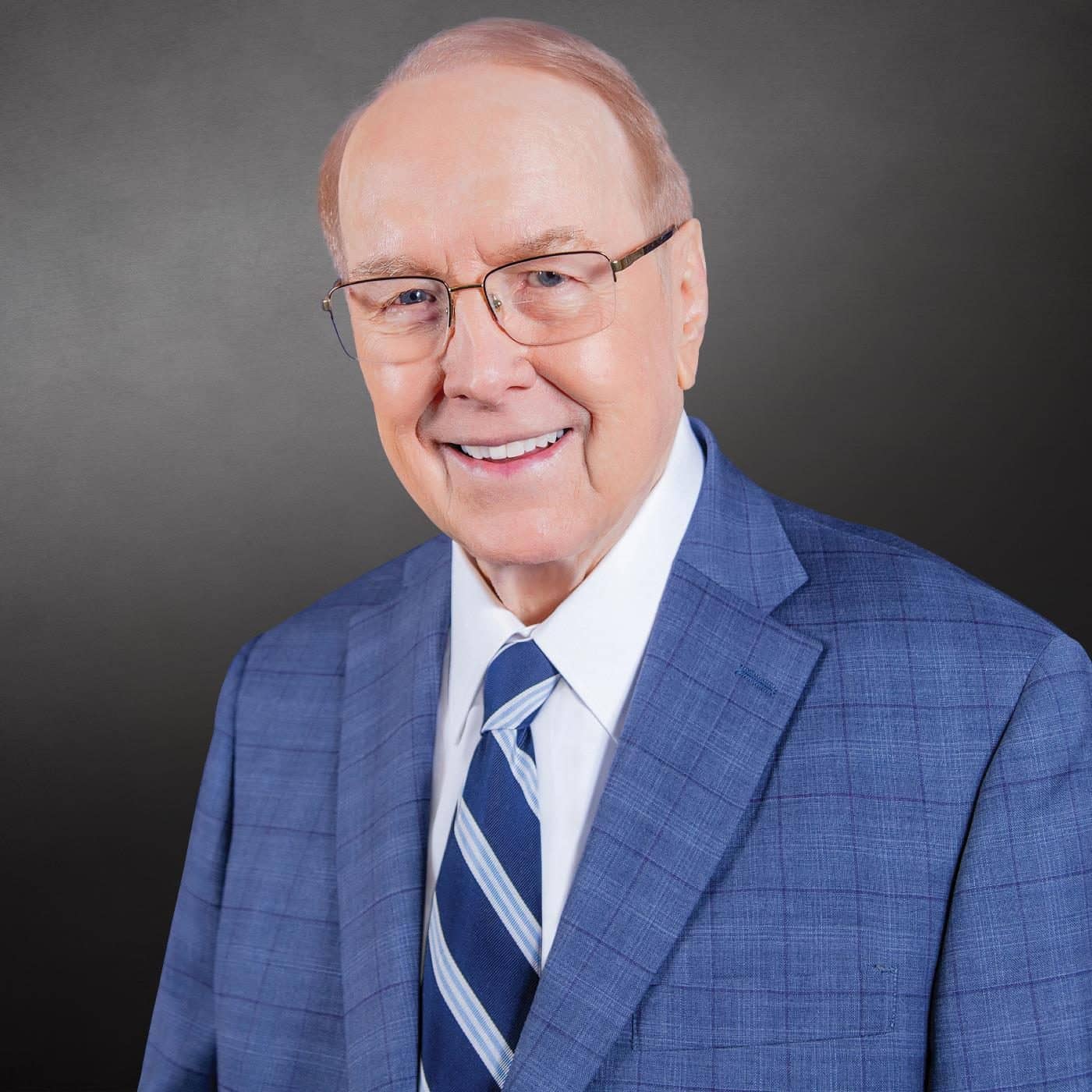


In today’s broadcast, reflect on the impactful legacy of Dr. James Dobson and the remarkable stories from the Normandy landings. We explore personal accounts and historical events that not only shaped world history but have also personally touched the lives of many. Listen to intimate stories shared by tour guide Dwight Anderson and remember the profound sacrifices made for freedom in a candid conversation that seeks to preserve these tales for future generations.
SPEAKER 06 :
Welcome everyone to Family Talk. It’s a ministry of the James Dobson Family Institute supported by listeners just like you. I’m Dr. James Dobson and I’m thrilled that you’ve joined us.
SPEAKER 01 :
Well, welcome to Family Talk, the broadcast division of the Dr. James Dobson Family Institute. I’m Roger Marsh. You know, there are moments in history so profound, so world-changing, that we must never let them fade from memory. One of those dates is June 6, 1944. On that day, Allied troops stormed the beaches of Normandy in an operation that would change the course of World War II forever. and the course of history. On our last edition of Dr. James Dobson’s Family Talk, we heard stories from Dr. Dobson and his wife Shirley about their trip to Normandy and the memorial honoring the fallen soldiers there. On today’s Family Talk broadcast, we’ll hear even more remarkable stories from the greatest generation, including the unforgettable account of Peggy Harris and her lifelong devotion to her fallen pilot husband. Now, by the way, today’s program is a powerful selection from our 2025 Best of Broadcast collection, and I’ll be sharing with you later in the program how you can get your own copy of that. First, though, let’s join Dr. James Dobson, along with Family Talk’s former audio engineer, Steve Reiter, and our tour guide, Dwight Andy Anderson, to kick off today’s edition of Family Talk.
SPEAKER 06 :
Steve, we mentioned last time that we had an absolutely wonderful tour guide who walked us through the cemetery at Omaha Beach. And he told so many stories. And one of them is about a woman named Peggy Harris. And we have his depiction of her experience. Shall we let our listeners hear it?
SPEAKER 02 :
Doctor, it was by far my favorite story that he had told.
SPEAKER 04 :
You can see the headstone here. You can see this… The guy’s name is Billy D. Harris. You can see he was a first lieutenant. You can see he was a fighter pilot. He flew P-51s. And you can see on this headstone that he enlisted in Oklahoma, and he was killed on the 17th of July, 1944. But what makes this headstone special for me is the fact that Billy here gets more flowers than anybody in the cemetery. You see, what we can’t see from looking at the headstone is that Billy was 22 years old, and that on the 22nd of September, 1943… He married a young girl named Peggy. She was 20 years old. And they got married in Altus, Oklahoma, where he was taking his pilot’s training at that time. Well, they only had a short time together, and he had to report for duty and was off to the war. Peggy moved back to a little town called Vernon, Texas, where she lives to this day. Now, on the 17th of July, the story is when he was shot down on the 17th of July… The aircraft wasn’t really damaged per se, but a round came in through the cockpit, as he was strafing German positions, a round came in through the cockpit, mortally wounding him. But apparently he had enough presence of mind to realize he was going to crash into a French village, and he managed to jettison the fuel, and he narrowly missed hitting a French village. Well, one of the Frenchmen ran out there, opened the cockpit, saw he was dying, there was nothing he could do for him, heard some German motorcycles coming in, he had to run away. So because he was shot down behind enemy lines, he was reported as missing in action to Peggy. Well, the French recovered his body. They gave him a proper funeral in the little village church, and they buried him in the village churchyard. Later, the area was liberated by the Canadians, and they went to the Canadians, and they said, gee, we got one of your pilots here. I don’t know why the confusion, but the Canadians apparently couldn’t readily identify him, but they took the French word for it. And they disinterred him and buried him with some Canadians in a Canadian cemetery. Well, now several years have gone by. It’s after the war. And they probably got the aircraft. They got the aircraft identification number. And they started connecting the dots. And they said, wait a minute. This guy’s not Canadian. He’s American. In fact, he’s Billy Harris. So they now attempted to notify Peggy again. But as I told you, Peggy had moved. And they couldn’t find her. And they had no other address. So they gave up. And Billy became what we call an administrative burial. Now, the French people, the wonderful French people in their village, they never gave up. And they regarded him as a hero and they wanted to know more about him. And they started doing research. And as you can well imagine, with the language differences and what do you write and all of that, it’s not like nowadays you can go online and Google and get all this stuff in a few minutes. But they kept researching and they never gave up. And finally, in 2005, 61 years later, they found Peggy. She comes over every year. People in the French village, they host her. Of course, her money’s no good there. They treat her like a queen. And they bring her by the cemetery. She was here for Memorial Day and every other day after that up through the 6th of June. And it was on the 5th of June I was out here and I started to tell Billy’s story to a group of Marines. And lo and behold, just as I was about to tell the story, I looked and there was Peggy coming up the sidewalk.
SPEAKER 1 :
Hmm.
SPEAKER 04 :
So I stopped, and I said, guys, I want to introduce you to somebody really, really special. And I said, please, Peggy, come here. I want to introduce you to all these good-looking young Marines. And so she came over, and we joked a little bit, and I introduced her. And I said, Peggy, I was just trying to tell them Billy’s story, but because you can tell it much better than I can, why don’t you tell the story? So she went ahead and told the story. And the young Marines, of course, some of them were very moved, and one of them, he didn’t. He said, ma’am, I don’t mean to be rude or anything like that, but he said, your name is still Mrs. Harris. Does that mean that you never remarried, you never had your own family? And she said, that’s true, I never did. But she said, it’s very simple. She said, Billy here, he loved me and he was married to me until the day he died. And I love him. And I’ll be married to him until the day I die. And that’s why Billy gets more flowers than anybody in the cemetery.
SPEAKER 06 :
goodness that is a powerful story you know wouldn’t it be incredible if Peggy were listening to us today I would like to say to her thank you dear lady for waiting all those years for Billy remaining faithful to him you obviously loved him with all your heart and obviously he loved you And I want to say to all the husbands and wives out there who have loved ones on the foreign field and are in harm’s way, that we appreciate the sacrifices that you make, you and your children. And we pray that God will reunite you in his good time. One of our tour guides, his name is Gert Vanden Bogart, shared with us, and I think it is self-explanatory.
SPEAKER 07 :
Well, ladies and gentlemen, we found out what happened during those first 12 hours of the longest day. You know, those paratroopers would drop behind enemy lines after midnight at one in the morning and The first troops then came ashore here at Omaha Beach at 6.30 in the morning. But as I said, for most civilians, the news would arrive later. For most civilians in occupied Europe, it would arrive later. It would arrive in the afternoon of June 6th at about 1.30 in the afternoon. And that’s because the only reliable source of information that the civilians had was the BBC. Because everything else was controlled by the Germans and it was propaganda. So if you wanted some reliable information, you had to listen to the BBC. But the only problem there, obviously, strictly forbidden to listen to the BBC. But a lot of people took that risk. And one family did so as well. It was a family of four. Father, mother, and two daughters. And they were sitting around an old radio set. Tuned into the BBC. They closed the windows and curtains and neighbors weren’t there. House was empty. Now, they couldn’t turn the volume up too much, so when you gather around here, I didn’t bring a radio, obviously, but what I did bring is a recording of what that and thousands of other families heard on the afternoon of June 6th on the BBC.
SPEAKER 03 :
This is the BBC Home Service. D-Day has come. Early this morning, the Allies began the assault on the northwestern face of Hitler’s European fortress. The first official news came just after half past nine when Supreme Headquarters of the Allied Expeditionary Force issued communique number one. This said, under the command of General Eisenhower, Allied naval forces supported by strong air forces began landing Allied armies this morning on the northern coast of France.
SPEAKER 07 :
There you have it. First official news of the D-Day landings. You can imagine the atmosphere in the room changed slightly. From fear and apprehension, there was obviously some joy, there were some tears. And for the oldest daughter in the family, who was 15, that news meant to her, it was simple, that good was going to win over evil. Now, obviously she didn’t know any of these men, but she was thinking of them. And we know it because she kept a diary. And her name was Anne Frank. And she wrote in that diary on June 6, 1944, that she believed that good was going to win over evil. Now, obviously, the men that we talked about, he probably had no idea that he gave that little girl one of the last moments of joy in her existence, according to her diary. Because a few months later, she was arrested and deported to a concentration camp where she died in March of 1945. You know, those soldiers didn’t realize that they were fighting maybe for this girl and that this girl didn’t know them. It’s like us. 99% of the people who come here don’t know the people in the cemetery. There’s no connection. But what they did here changed the course of world history. So it changed our lives as much as it did theirs. And that’s why I always like to thank people for coming to this cemetery and remembering their own history.
SPEAKER 06 :
Well, that’s what we’re trying to do today. And it’s the reason that we have devoted these days to the story of D-Day, the story of Normandy, and the story of the defeat of Nazi Germany. President Reagan went there for the 40th anniversary to the site of the Normandy battle, actually at what is known as Pointe du Hoc. And he gave one of the most memorable speeches ever given by an American president and makes me wish that he were here now. And we’re going to play an edited version. And we should also add that there were many veterans there on Pointe du Hoc who were actually involved in the D-Day landings.
SPEAKER 05 :
We’re here to mark that day in history. when the Allied armies joined in battle to reclaim this continent to liberty. For four long years, much of Europe had been under a terrible shadow. Free nations had fallen, Jews cried out in the camps, millions cried out for liberation. Europe was enslaved and the world prayed for its rescue. Here in Normandy, the rescue began. Here the Allies stood and fought against tyranny in a giant undertaking unparalleled in human history. And in seizing the firm land at the top of these cliffs, they began to seize back the continent of Europe. 225 came here. After two days of fighting, only 90 could still bear arms. Behind me is a memorial that symbolizes the ranger daggers that were thrust into the top of these cliffs. And before me are the men who put them there. These are the boys of Puentejo. These are the men who took the cliffs. These are the champions who helped free a continent. These are the heroes who helped end a war. You were young the day you took these cliffs. Some of you were hardly more than boys with the deepest joys of life before you. Yet you risked everything here. Why did you do it? What impelled you to put aside the instinct for self-preservation and risk your lives to take these cliffs? What inspired all the men of the armies that met here? We look at you and somehow we know the answer. It was faith. and belief. It was loyalty and love. The men of Normandy had faith that what they were doing was right, faith that they fought for all humanity, faith that a just God would grant them mercy on this beachhead or on the next. It was the deep knowledge, and pray God we have not lost it, that there is a profound moral difference between the use of force for liberation and the use of force for conquest. You all knew that some things are worth dying for. One’s country is worth dying for and democracy is worth dying for because it’s the most deeply honorable form of government ever devised by man. All of you loved liberty. All of you were willing to fight tyranny. And you knew the people of your countries were behind you. The Americans who fought here that morning knew word of the invasion was spreading through the darkness back home. They felt in their hearts, though they couldn’t know, that in Georgia they were filling the churches at 4 a.m. In Kansas, they were kneeling on their porches and praying. And in Philadelphia, they were ringing the Liberty Bell. Something else helped the men of D-Day. their rock-hard belief that Providence would have a great hand in the events that would unfold here, that God was an ally in this great cause. And so the night before the invasion, when Colonel Wolverton asked his parachute troops to kneel with him in prayer, he told them, do not bow your heads, but look up so you can see God and ask his blessing in what we are about to do. Also that night, General Matthew Ridgway on his cot, listening in the darkness for the promise God made to Joshua, I will not fail thee nor forsake thee. These are the things that impelled them. These are the things that shaped the unity of the Allies. Today, as 40 years ago, our armies are here for only one purpose, to protect and defend democracy. The only territories we hold our memorials like this one, and graveyards where our heroes rest. Here in this place, where the West held together, let us make a vow to our dead. Let us show them by our actions that we understand what they died for. Strengthened by their courage, heartened by their value, and born by their memory, let us continue to stand for the ideals for which they lived and died.
SPEAKER 06 :
Well, that was President Ronald Reagan on the occasion of the 40th anniversary of the D-Day landings. This was the first time in world history that the forces of an invading army and navy and military might was arrayed not for the purpose of conquering and subjugating people who lost in that conflict, but for the purpose of liberating. And that’s what they did. And as soon as the war was over, we had what’s called a Marshall Plan. We began giving money, $50 million to Germany that had brought this Holocaust on the world. Our enemies complain about our not being perfect, what we did to the Native Americans, what we did to the Mexicans, all the things that we’ve done wrong. But look back at D-Day. This is a time when we did it right.
SPEAKER 02 :
Trevor Burrus And I’ve never been more proud to be an American than when we were there.
SPEAKER 06 :
In fact, Steve, I know you were deeply touched by this, but you recently took a trip to your hometown in Wisconsin to see your family. And you had your two children with you. And on the way there, you came across something that you did not know was there.
SPEAKER 02 :
No, we pulled off in Greenwood, Nebraska to get gas. It was late at night, and Matthew, my six-year-old, and I went out for a little walk with the dog. And next to the gas station was a World War II museum. And Matthew asked me, Daddy, what’s that? And so I explained to him what World War II was about. And he asked me, well, were there tanks and were there guns? Yeah, there were tanks and guns. Were there bad guys? Yeah, buddy, there were some really, really bad guys. And I explained this to him in six-year-old terms. And it’s a conscious decision on my part to start to teach him about the importance of our country’s history and the sacrifices that have been made for our freedoms.
SPEAKER 06 :
And every parent listening to us out there has an obligation to tell that story to the next generation because it can be lost courage and conviction and strength on that day.
SPEAKER 02 :
Dwight Anderson, our tour guide for the day. He had pulled us aside, Doctor, and given us his final thoughts. And then immediately after that, he set you and your daughter Danae up to receive one of the flags that was being taken down. And you and Danae were a part of the flag folding ceremony at the end. And so we’ll hear the closing thoughts as well as taps that was being played as you and Danae received that flag.
SPEAKER 06 :
You can hear it fluttering as it comes down in the wind. It was emotional. It was a very emotional moment.
SPEAKER 01 :
Here now is Dwight Anderson.
SPEAKER 04 :
You’ve had a very full day here today, sir. And I tell people often that you cannot come to the Normandy American Cemetery and spend a day like you have, as we have today, and leave here and not feel changed in some way. I want to leave you with a couple questions. The first question is, we have to ask ourselves… What would the world look like if all of these men, these soldiers here had lived today? How many children would they have had? How many grandchildren would they have had? What might they have accomplished? Their children accomplished? What might they have contributed to humankind? But it’s a question we can never know the answer to. Because here they lie. But the second question, I think we can know the answer to that question, and that is, what would the world look like today had they not made their sacrifices? And I think the world that Mr. Hitler envisioned is not the one that’s shared by many Americans. So I think we can know what the world would have looked like had they not made their sacrifice. Now, I’ve thought about this for some time, and I think about these men, and what they sacrificed, and I ask myself, do we owe them a debt? And my answer is going to surprise you, because I’m going to say, no, I don’t feel we owe them a debt. And let me explain. You see, to me, a debt is something that can be repaid. And what these men gave us was a gift. And so I’ll put it in a biblical sense for you. If you think about God gave mankind the gift of His Son, Jesus Christ, who came down and died for our sins. He sacrificed His Son and He gave us that gift of eternal life. Now, these men, obviously, they didn’t die for our sins, but they did die for our freedom. And they gave us that gift of freedom. And what we do with that gift is entirely up to us. that we should cherish that gift of freedom every day and never forget these men and honor their sacrifice. And those are the last thoughts that I want to leave you with, sir, here today for your visit.
SPEAKER 06 :
The primary reason we came here is to keep this truth, this story alive. And I fear that the younger generation doesn’t understand it. They don’t know it. They haven’t been here and they haven’t been told, most of them, about it. And we hope to convey it to them and to do it by radio. And I thank you so much for helping us do that.
SPEAKER 04 :
The motto of the American Battle Monuments Commission was given to us by General Black Jack Pershing, and he said, Time shall not dim the glory of their deeds. And so what you’re doing and through your ministries and everything, hopefully will keep these stories alive. Because if the young people of today don’t know these stories and they don’t understand what happened here, we have no one to blame but ourselves. It’s our fault if they don’t know those stories.
SPEAKER 06 :
Well, you’ve certainly done your part. Thank you, sir.
SPEAKER 04 :
Thank you for it.
SPEAKER 06 :
Thank you very much, sir.
SPEAKER 01 :
You know, these stories are a sacred reminder of the extraordinary courage and sacrifice that secured the freedoms that we so often take for granted. On today’s edition of Dr. James Dobson’s Family Talk, we heard the conclusion of Dr. Dobson’s powerful visit to Normandy, joined by their tour guide, Dwight Anderson, and former Family Talk audio engineer, Steve Reiter. Now, if you’d like to share this program with a friend or family member, both parts one and two are up now. at drjamesdobson.org forward slash family talk. And as we think about the memorial that was created in Normandy to remember and honor the sacrifices of those who literally paid the ultimate price laying down their lives for their friends, we’re also remembering Dr. James Dobson today who paid the ultimate price as well for his faith after serving the Lord faithfully for 85 of his 89 years. He came to faith at one of his father’s revival services when he was just four years of age. You know, just as those soldiers of Normandy were called to preserve freedom for future generations, we too have a sacred responsibility to pass on truth and biblical wisdom to those who come after us. And that’s the heartbeat of the JDFI’s mission. Right now, some generous friends of our ministry have come together to establish the Dr. James Dobson Memorial Matching Grant. This means that every donation we receive between now and December 31st will be matched dollar for dollar up to $6 million. This historic grant honors Dr. Dobson’s legacy and ensures his teaching will reach new generations and geographies. To double your impact, go to drjamesdobson.org or contact a member of our constituent care team when you call 877-732-6825. Now, keep in mind, we’ve also collected some of our most impactful programs, including the one you just heard. and put them together in our 2025 Best of Broadcast Collection. This year’s Best of Broadcast Collection is a memorial edition for Dr. Dobson, and it spans the entire 15-year broadcast history of the James Dobson Family Institute and the Family Talk program. Now, the 2025 Best of Broadcast Collection is available as a six-CD set, and we’ll be happy to send it to you as our way of thanking you for your support of the Dr. James Dobson Family Institute with the donation of any amount. So put those two together. The James Dobson Memorial Matching Grant means that every dollar you donate will be doubled, dollar for dollar, up to $6 million. And when you give a gift of any amount, you’ll receive the 2025 Best of Broadcast Collection, this great six CD set that’s a keepsake, especially this year as we remember the legacy of Dr. James Dobson. These timeless conversations will encourage and equip you in the years to come. So request your copy when you call our constituent care team. at 877-732-6825, or you can visit us online at drjamesdobson.org. Well, I’m Roger Marsh. Thanks so much for listening today. On behalf of all of us at Family Talk and the JDFI, we appreciate your prayers and ongoing support. Be sure to join us again next time right here for another edition of Dr. James Dobson’s Family Talk, the voice you can still trust for the family you love. This has been a presentation of the Dr. James Dobson Family Institute.