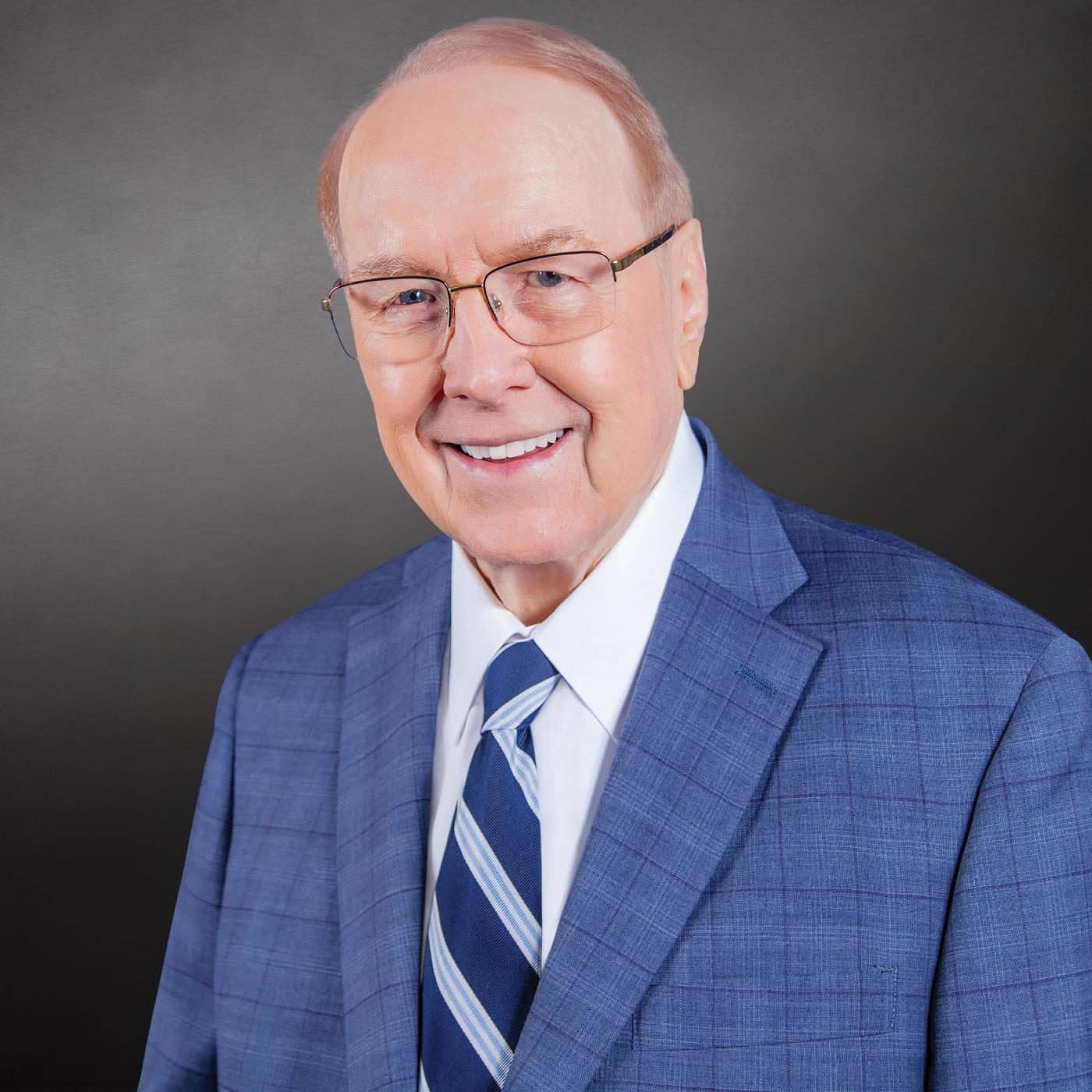


Join us on Dr. James Dobson’s Family Talk as we dive into a heartfelt conversation with Ron Sandison, author and autism advocate. In this episode, Sandison shares his personal journey of living with autism, highlighting the profound impact of faith, family, and education in overcoming life’s challenges. Discover how he navigated his way through childhood diagnoses, college, and eventual marriage, offering a unique perspective on thriving with autism in today’s world.
SPEAKER 02 :
Welcome everyone to Family Talk. It’s a ministry of the James Dobson Family Institute supported by listeners just like you. I’m Dr. James Dobson and I’m thrilled that you’ve joined us.
SPEAKER 01 :
Well, welcome to Dr. James Dobson’s Family Talk, the broadcast division of the Dr. James Dobson Family Institute. I’m Roger Marsh, sitting in the co-host chair today. And on today’s program, we’re going to get into what promises to be a fascinating conversation about navigating life with autism. helping those who have been diagnosed with autism or Asperger’s syndrome do life in the adult world. Now, the statistics tell us that you or someone you know falls into that category. I know it has impacted the Marsh household with my sister and my nephew, Ian. According to a recent study by the National Institutes of Health, nearly five and a half million Americans are living on the spectrum, as they say, and that works out to just over 2% of the entire population. And then a recent study from the Centers for Disease Control and Prevention, aka the CDC, indicates that approximately one out of every 31 children born in the country this year will be diagnosed as living on the spectrum. And remarkably, the chances of your son being diagnosed, four times greater than your daughter receiving this diagnosis. Now, since the number of children receiving the diagnosis has literally skyrocketed over the past three decades, it stands to reason then that the number of adults seeking to navigate life with autism has increased as well. And that’s why today’s edition of Dr. James Dobson’s Family Talk is so important. My guest is Ron Sandison. Ron’s an author, he’s an educator, and a theologian who understands that autism spectrum all too well. Ron has earned his Master of Divinity from Oral Roberts University and Currently serves as professor of theology at Destiny School of Ministry in Michigan. He also serves as a board member for The Art of Autism and is the author of three books. One is called Views from the Spectrum. Another is called A Parent’s Guide to Autism. And his most recent work that’s going to be our topic of conversation for today, Adulting on the Spectrum, An Insider’s Guide to Navigating Life with Autism. Ron and his wife, Kristen, are the proud parents of their daughter, Michaela. They make their home in Rochester Hills, Michigan. Ron Sanderson, we welcome you today to Dr. James Dobson’s Family Talk. It sounds like it’s more common for children to be diagnosed as on the autism spectrum right now. Talk about what it was like for you growing up. I mean, did your parents, how did they come to the realization? What was it like when you were younger, you know, growing up and they recognized, hey, there’s something a little different about Ron, but we can’t quite put our finger on it.
SPEAKER 02 :
Yeah, so when I was diagnosed with autism, it was one in 10,000. Now it’s one in every 36 children I’ve diagnosed. In my development, it actually began normal. I said my first word, mommy, the day I was being water baptized. And any kid who thinks they’re being drowned is going to cry out, mommy, mommy. But then I went in 18 months to only being able to say, mom, mom. And I went from having eye contact to no eye contact. So my mom knew there was something drastically different. between my brother Chuck and Steve and me. She took me to a pediatrician. The pediatrician gave good advice for someone who’s on online dating, but horrible for someone with neurological disability. She said, men are like fine wine. You got to give them time. My mom knew that time… was of the essence. She immediately got me an intense speech therapy. I was in intense speech therapy from age two to age 16. At age seven, people would refer to me as, he’s from Norway, because he speaks Norwegian. No one could understand what I was saying. But my mom, being a great mom, and my dad being a great dad, They worked with me and developed those gifts using visual learning. And at the time, there was not much resources when I was diagnosed with autism because of the sheer lack of number of diagnosis at the time.
SPEAKER 01 :
Mm-hmm. I was going to ask you, what kind of treatments were it? Was it kind of your mom and dad instinctively trusting God and trying these things out? Was it trial and error more than research-based at that point?
SPEAKER 02 :
It was actually the Holy Spirit. Zechariah 4, 6 says, Not by power nor by might, but by my spirit, says the Lord God Almighty. My mom prayed, Show me how Ron learns. And God spoke to her and said, You’re an art teacher. You’re going to quit your job as an art teacher and become a full-time Ron teacher. and you’re going to use art. And Temple Grandin, years later, on the spectrum and best known, said 80% of people would ought to learn visual learning. So my mom would have me tell her a story. She’d write down the story. She’d have me draw a picture that went with it. And I went from dyslexia at age 5 to age 7, not having dyslexia anymore. And then she’d use a prairie dog named Prairie Pup to teach me social skills. In 2002, Prairie Pup met Muhammad Ali. 2012, Prairie Pup met Screech from Saved by the Bill. And then the latest he met was Jose Canseco. But the prairie dog is pretty worn out, so I don’t think he was on steroids in any way.
SPEAKER 01 :
That’s fun. And I appreciate the fact that your parents not only embraced your situation, but they were very proactive. And I’m sure there are a lot of folks when they receive this diagnosis, sometimes it might have the opposite effect where they would take a step back and say, oh my gosh, I’m not quite sure what to do. It kind of blew me away. And we were talking before we started our broadcast today here about the tens of thousands of Bible verses that you’ve memorized. I mean, the fact that you have God’s word literally hidden in your heart and you share it freely with people. Talk about that faith component and how that was instilled into you and why you didn’t turn away from it. But it sounds like you really embraced it as a child.
SPEAKER 02 :
Yeah, so my parents believed in generating hope. Having God as the center of your life and everything, decision you make is based on God’s purpose for your life. And from an early age, my dad did three things every night. Number one, he read the Bible to us. Number two, he’d tell us a story, a pirate story, one with moral value. And then number three, we prayed as a family. Hmm. Families who pray together, they see God working in their life. And then when I was a junior in high school, God spoke to me. He said, you’re going to memorize my word. And beginning my junior year, I began memorizing the Bible. First year I began memorizing, I memorized 2,000 verses. By the time I’m 50 years old, which I am now, I have 15,000 verses memorized. Wow. 22 complete books in the New Testament. And God used my autism. God calls us and equips us to help other people so we can be trailblazers along the way and bring people in the kingdom of God.
SPEAKER 01 :
Right. Ron Sandison is our guest today here on Dr. James Dobson’s Family Talk. His brand new book is called Adulting on the Spectrum, An Insider’s Guide for Navigating Life with Autism. And we’ve got information on the book and also Ron’s ministry up at drjamesdobson.org. Talk about what it was like for you, Ron, considering navigating college, getting into the young adult years where you’re thinking, I want my own place. I want to be on my own. What’s it like for parents to help a young adult who’s navigating adult life and getting ready to leave the nest, as it were?
SPEAKER 02 :
And I think the thing that helped me most was my dad’s Protestant work ethic. Second Thessalonians 3.10, a man will not work, he shall not eat. So my dad, from an early age, age 14, I was busing in God’s waiting room, a restaurant called Bill Knapp’s, because it’s ancient clientele. And by me having jobs early on, even simple jobs, I learned skills. So here’s how I learned to navigate. And this is a success to all of them. A lot of people with autism have a hopeless complex. They feel like no matter how hard I try, things aren’t going to change. But we take our strengths, we adapt and accommodate for our limitations. We build connections. And I had to learn to think before I spoke. And when I learned how to delight people and use those strengths, adapt and accommodate for my limitations, I built connections. Now my connections, enabled me to do the things I want to do, speak all over the country, speak to 30,000 people a year in person on autism. But I had to learn those skills. If I go to Europe today, try a shave, My electrical saver’s not going to go on because I don’t have an adapter. People with autism need to learn how to adapt, and that’s those strengths.
SPEAKER 01 :
Boy, that’s a great word picture, and I can tell you’re a visual learner, Ron Sanderson, because I got that immediately. I’m thinking, oh, yeah, those plugs are different. The voltage is different. I mean, there has to be some kind of connection and conversion. But oftentimes our modern society expects the other person to do that. And so that kind of puts you at a double disadvantage potentially. And yet you’ve learned to overcome it. I’m curious about two things, Ron, because I’m fascinated with the fact that you have a master’s in divinity. I think that’s great because a lot you don’t hear about people on the spectrum going on to grad school, but also that you’re happily married and the father of a daughter. Let’s take the love story first. How did you and Kristen meet?
SPEAKER 02 :
So we met on plenty of fish. If there’s plenty of squid, I’d still be single. If there’s plenty of whale, I probably would have gotten swallowed like Jonah. But online dating was the best way of meeting my spouse because I get to type up and I’m a good visual. I’m able to write good messages. And then also by being able to meet up after dating. Being able to share communication by letters, it enabled me to be more prepared and more filtered in what I say. Like I mentioned, I had difficulty in the things I say, and that made dating very hard. And online dating was one of the ways I found successful being on the autism spectrum.
SPEAKER 01 :
What was her response like? I mean, obviously she was, you charmed her off her feet, but nonetheless, I mean, the fact that she had to deal, be prepared with the reality that you came with a lot of really great qualities and you came with some that didn’t always fit in to regular society where you had to kind of do some adapting. What was that process like for you two?
SPEAKER 02 :
So here’s the funny part is she knew there was something different about me, but I didn’t tell her. I didn’t tell her until I got a contract for my first book, Parents Guide to Autism Practical Advice. And it was like this. Now it makes sense why you struggle in those areas. Certain things, if there was a change in my routine when we were married, I’d get very anxious. One of the other things was that my office at the time was at my parents’ house. So every day I got off work, I was in my office doing my memory work for two hours. Then I’d come home for dinner. And most people aren’t going to. put up with that. And my mom prayed, God, bring Ron a wife who will understand his challenges with Alton and will love him all days of his life. And that’s the type of wife that God brought to me, is one who sees my challenges, works with me. I’m able to strengthen her in the areas she’s weak. She’s able to strengthen me in the areas I’m weak. And it’s A covenant, not a contract. And a covenant is unconditional love, marriage, and that’s the kind of marriage that I have. And I say this too, find someone who celebrates you, not tolerates you. And I’m very unique in that everywhere I go, I bring my honey badger. And not that long ago, I was speaking at a place, big audience, and the person in charge of the place, well-known, made a comment about the honey badger. And my wife was like the mother bear standing by my side.
SPEAKER 01 :
That’s sweet. Ron Sandison is our guest today here on Dr. James Dobson’s Family Talk. His brand new book, this is the third he’s written now, Adulting on the Spectrum, an Insider’s Guide for Navigating Life with Autism. And we have it linked up at drjamesdobson.org. Ron, you went to, you graduated from high school, graduated from college with your undergraduate degree, and then opted, was the trip to Tulsa before you did the undergrad work or was that for graduate school afterwards? Talk about what gave you the courage to actually, that’s, it’s not like Tulsa’s right down the street from Rochester Hills.
SPEAKER 02 :
It’s 930 miles. So here’s what happened. I was reading a book when I was a senior in high school and it said Oral Roberts University. Right then I heard the Holy Spirit speak to me and say, you’re going to go to Oral Roberts University. I got a ministry of being an evangelist for the disability community. And I told my dad, I want to go to Oral Roberts University. And I got offered a full ride scholarship for track and cross country locally. My dad said this, we’re going to go out college weekend. We’re going to check out the university. You’re going to go to the local college and run track your first year. And then after that, when you go to Oral Roberts University, I’m going to fly out there with you. I’m going to get you set up in your dorm. I’m going to get all your classes set up. And you’re going to be on a high hand and prepare for what God has for you. And it ended up being the best decision ever. One reason was is when I graduated from high school, I only had a 2.7 grade point average. My first year of college, I had a 4.0. So I got to Oral Roberts on a high hand, it talks about in the Bible. I got an 80% scholarship for academics. And by him showing me around the university, I knew who to go to if I had any challenges. And that really helped me out a lot by him doing those two things to make sure I was well prepared for college. And I graduated from Oral Roberts University with a master’s divinity, perfect four-point grade point average. Good for you. What I learned is this. College isn’t about knowledge. It’s about connections. You want more knowledge? Just buy a cell phone. But our ability to connect is what opens up relationships. Our ability to connect is what opens up relationships. employment. And that’s what I’ve learned is how to connect. During college, I was like a 30-year-old pair of Velcro shoes. I didn’t connect well. But now I’m like a connector. I help people over here connect for this area of resources for autism. I’m working on my next book. I’m connecting with New York Times bestselling authors to interview them to get the information I need for mental health on the book I’m writing currently.
SPEAKER 01 :
That’s wonderful. It’s very encouraging to hear the way you are networking, because I can see where it would be something that your personality would say, hey, I want to do this on my own, or I’m trying to maintain my own life. And one of the things that’s so great about Adulting on the Spectrum, Ron Sanderson’s new book, An Insider’s Guide for Navigating Life with Autism is to help parents and grandparents who have autistic children or grandchildren or to help young adults who are coming on and saying, I know this is my story. And these are important things that Ron has learned from in 30 years of adult life, whether it’s leaving the nest to go to school or trying to keep your body healthy, figuring out the best way to date, those types of things. And you have a chapter in the book, Ron, that talks about overcoming a hopeless complex. Can you unpack that for us?
SPEAKER 02 :
Yes, I think a lot of people with autism, myself included, they have a hopeless complex, and it’s learned hopelessness. And the person who came up with learned hopelessness in 1967 at the University of Pennsylvania, I never wanted him within seven feet of my dog, Rudy, because he did electrical experiments on dogs. What he discovered is that when we have enough negative experiences, and we feel like no matter what we do, things aren’t going to change. We learn hopelessness and give up. But the opposite of a hopeless complex and apathy is this, hope. And hope is made of this, goals. I’m able to set goals and see change in my life. Agency. I have resilience and willpower to accomplish those goals. And finally, pathways. When challenges come, which they will, I’m able to see unique ways to get through those situations. Again, it goes back to I’m using my strengths to adapt and accommodate for my limitations, and all of a sudden I build connections, and those connections are doorways to opportunities and pathways to a better future. And hope is being able to believe that the future can be brighter, and I’m a part of It’s self-efficiency to make a brighter future for those around me and also my own family.
SPEAKER 01 :
Ron Sanderson, talk about now, you’re a husband, you’re a father. You’ve weathered a lot of storms and had to learn a lot of things through trial and error. But with the Holy Spirit as your guide, now you’re raising your daughter and seeing what’s happening with that. What’s it like for you now, knowing what you know and what you’ve been through, to help her to have the kind of… Well, what should I say? Happy, healthy and thriving life that you would hope for her.
SPEAKER 02 :
So I find even being a parent on autism, I still have challenges. About three years ago, when my daughter was six, my mom moved some stuff in my house. room where I have my 5,000 books and my toy collection. If you look around me, you can see my walls are covered in G.I. Joe and Transformers and all kinds of figures. And I had a little bit of meltdown. I started shaking and Mikhail came over and said, it’s okay, daddy. Sometimes you get a happy meal and they forget to put the toy in there. Hmm. And I thought it shows her understanding my neurodiversity. And a lot of times people will see me and see me as so successful, they don’t realize the struggles I have.
SPEAKER 01 :
Right.
SPEAKER 02 :
Even with IT issues, I start shaking and my brain gets real overwhelmed when I come to something where I don’t know how to handle it. Mm-hmm.
SPEAKER 01 :
It’s got to be gratifying, though, to know that you’re modeling your situation in a way that your daughter can see it, understand it and, you know, and meet you in that place. But at the same time, you don’t wallow. It sounds like between Kristen and Michaela and your parents and other people around you, they love you enough to come alongside you and meet you in those spots, but to not let you get stuck.
SPEAKER 02 :
Yeah, and that’s exactly how it is. I love this illustration with the support team. It’s a redwood tree, lives at 3,000 years, grows to 300 feet tall. The most amazing thing about it is its root system. The roots are only six feet deep. But all their roots are connected so they can supply nourishment. During 3,000 years, there’s floods, there’s famine, there’s mudslides. But since they support each other and a redwood is in a circle connected to each other, they stand firm, test the time. And that’s how my support team has been for me. They’ve known the areas I need resources or nutrients, and they’ve supplied that and stood tall with me. And together we’ll get through that. And that’s what I think should be the model in mission statement for autism parents. Together we’ll get through this.
SPEAKER 01 :
I love that. I love that. That again, the visual of the root system, not terribly deep considering how large these trees get. But with the connection point, it holds it all together in the right soil. Ron Sanderson, the book is called Adulting on the Spectrum, an Insider’s Guide for Navigating Life with Autism. And we have it linked up at drjamesdobson.org. Ron, in the final moments that we have together, talk first to the parent who has a child who just was diagnosed and their whole life has kind of turned a little sideways because that’s not what they were thinking was going to happen. What encouragement do you have to them? I can hear you echoing some of the words of your mom and dad when you were younger.
SPEAKER 02 :
Yeah, so this is the encouragement I give them. No matter how slow or how long it seems for your child to learn something, don’t give up. Charles Spurgeon said it best, by perseverance, the snail made it on the ark. So your kid can be as slow as it is. snail, but if he’s heading in the right direction, you’re going to see fruit in his life. And don’t put your expectations on the child. See him as a child of God, and that they have a purpose, and that God is working in their life. In the times God’s worked the most in my hands, in life is when i open my hands amen i find it when i give it into god’s hand he makes it prosper in exodus 4 17 says take the staff in your hand and perform wreck science with it so what is in your child’s hand when i was growing up there’s things like my honey badger and prairie pup and god has used those for his glory what is your child’s special interest Use that to get in their world so you can bring them out into your world and see God move in a powerful way.
SPEAKER 01 :
Well, I love that. And the book is Adulting on the Spectrum, an Insider’s Guide for Navigating Life with Autism. So, Ron, our final question is, what’s your advice to that parent of a child with autism? Maybe they’re in their teen years, they’re thinking about college, or maybe they’re in their early 20s and they’re ready to kind of take that first step out, you know, get into the emptiness situation. What’s the best thing a parent can do for that adult?
SPEAKER 02 :
So the best thing you can do is prepare them. Have them do chores at home that teach them how to be able to live on their own. Help them get a job so they can have employment. And look at the areas where their strengths are. And figure out how you can help them adapt and accommodate for limitation. And then help them market their gift. If they have something unique, find someone else who has that gift. My senior year of high school, I met with Dr. Jack Van Impey. He had the most Bible memorized in the world. And he said, when you get to college, you’re going to intern under me. And I got to intern under him. And that’s how I learned how to be a communicator and speak to thousands of people. Wow.
SPEAKER 01 :
Incredible. I think that’s phenomenal. And it’s interesting how the Spirit spoke to you about Oral Roberts University. Here comes Jack and Rexella and mentoring you. And I think that’s just phenomenal. And it’s such an inspiring story, Ron. Can you tip us off as to what your next book is that you’re working on right now?
SPEAKER 02 :
Yeah. So I’m doing one on generating hope, proactive approach to mental health. People who… Go regularly to get their car taken in for oil and struts replacement. Live on the average 10 to 15 years longer than people who don’t. Because the people who do that take care of their physical health. I’m writing a book on how to generate hope. My power goes out and I don’t have a generator. I can’t do much. But if I can generate hope, then it becomes a lifestyle. And when it becomes a lifestyle, I have less anxiety. I see open doors in front of me instead of seeing all the strain that’s in front of me. And that’s what my next book’s going to be on. I got it all in here in my heart. I’m ready to write it. And I’m like the honey badger. I got that endurance. Yeah.
SPEAKER 01 :
I love that. I love it. Well, Ron, we look forward to welcoming you back when that new book comes out. But for now, it’s our great honor to recommend the book Adulting on the Spectrum, an insider’s guide for navigating life with autism by our guest today here on Family Talk, Ron Sandison. Ron, thank you for your time, for your ministry, for your passion. God’s best to you and Kristen and Michaela in the days to come from all of us here at Dr. James Dobson’s Family Talk. Well, what a beautiful way for Ron Sandison to close our time together here on this special edition of Dr. James Dobson’s Family Talk. On today’s Family Talk broadcast, you’ve heard my encouraging conversation with author Ron Sandison about navigating adult life on the autism spectrum. If you’d like to go back and revisit today’s broadcast, or if you would like to share it with a friend or family member who would appreciate it, go to drjamesdobson.org forward slash family talk. And when you get there, you’ll find that we’ve provided the complete program along with information about Ron Sandison’s book. It’s called Adulting on the Spectrum, An Insider’s Guide to Navigating Life with Autism. Again, find that information at drjamesdobson.org forward slash family talk. Through programs like the one you heard today, the Dr. James Dobson Family Institute is committed to equipping parents and families with the biblical wisdom and practical guidance that they need to face every challenge with confidence. And your partnership makes these conversations possible. When you support our ministry, you’re helping us reach millions of listeners with messages of hope, providing resources for parents navigating today’s confusing culture and standing alongside families who need encouragement for the journey ahead. You can make a secure donation when you visit drjamesdobson.org. That’s drjamesdobson.org. If you’d prefer to write, our ministry mailing address is Dr. James Dobson’s Family Talk, P.O. Box 39000, Colorado Springs, Colorado, the zip code 80949. I’m Roger Marsh, and on behalf of all of us here at the JDFI, thanks so much for listening today. Be sure to join us again next time right here for another edition of Dr. James Dobson’s Family Talk, the voice you can still trust for the family you love. This has been a presentation of the Dr. James Dobson Family Institute.