



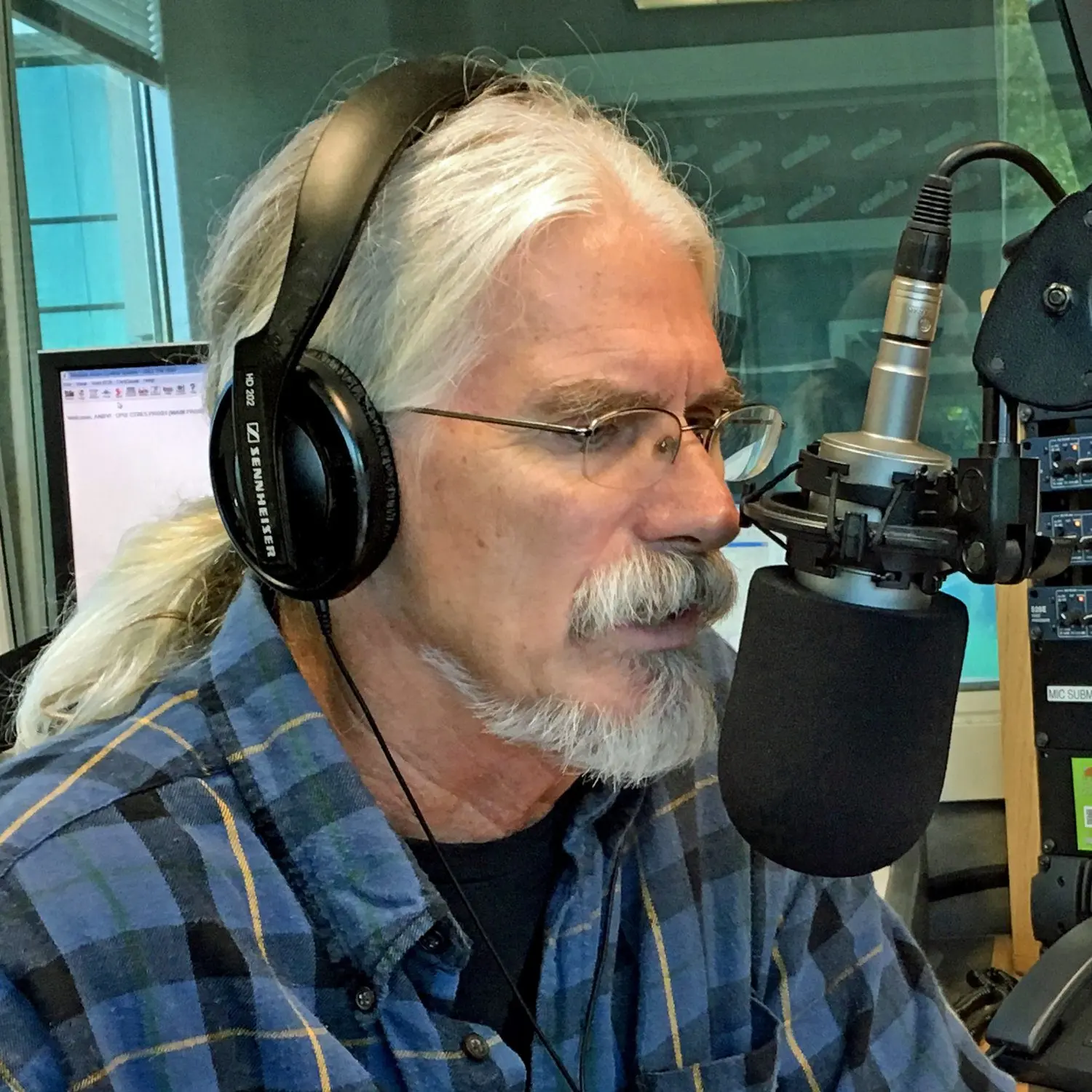
Join host Steve Gregg on The Narrow Path as he engages live with listeners, addressing diverse theological queries and unpacking various scriptures. In this episode, the conversation begins with reflections on the importance of listening and understanding the Word of God. A spirited dialogue unfolds around the teachings in John 8 and Hebrews 12, challenging listeners to consider the depth of God’s love for humanity and the pathways to true faith and salvation.
SPEAKER 1 :
© transcript Emily Beynon
SPEAKER 07 :
Good afternoon and welcome to the Narrow Path radio broadcast. My name is Steve Gregg and we are live for an hour each weekday afternoon, including today, to interact with you live by telephone. If you want to call in, I’d be glad to have you do so and I’d be glad to address any questions about the Bible or whatever you might raise. You might even raise some disagreements with the host, which is always a welcome alternative to questions. And feel free to call me if you would like to. The number to call is 844-484-5737. Now, it looks like I’m looking at a full switchboard right now, so this isn’t a good time for you to call. But take that number down. If you call back in a few minutes, you may find a line has opened, and we will try to get to your call before the hour is over. That number, again, is going to be 844-484-5737. Now, just a few announcements before we get to the calls. I’ve been speaking in Oregon for the past week. I’ve got a few more days before I go home. Tonight, I have to say that the other day I announced that I’m going to be in Estacada Thursday night. That’s tonight. I didn’t realize when I made that announcement that it’s not really an open meeting. It’s a home meeting. It’s a regularly meeting, a youth group. So we didn’t put it on our website. It’s not there for the public to come to. But tomorrow night and the following night, I do have Actually, for the remainder of the week and beyond the weekend, I have some more evening meetings. Friday night, I’ll be in Albany. I know we have a lot of listeners down that way. And then Saturday night, I’ll be in Portland. On Sunday morning, I’ll be speaking at Rockaway Beach, Rockaway Community Church. I’m going to talk about the modern state of Israel. That’s what they’re asking me to talk about there. Sunday night, I’ll be speaking in Salem and then also on Monday night in Salem. And that’ll be my last teaching on this trip here. So, you know, I’m going to be in Albany, Portland, Rockaway Beach, Salem. That’s kind of a lot of a wide range of places. We got listeners in all those places. So we welcome you to join us. If you wish, if you say, well, I’d like to, but I don’t know where it is. Well, There’s a remedy for that. You can go to our website, thenarrowpath.com. Thenarrowpath.com. And there’s a tab there that says announcements. You click on that tab. You’ll find, you know, the dates in a row there from today on. And you’ll see where these places are. And then you can join us. All of these, of course, are open to the public. Some of them are smaller venues. Some are larger. But you can check it out and see if you want to come there. And enough on that right now, because we have callers waiting, and I don’t like to keep people waiting. We’ll talk to Jimmy from Staten Island, New York, first of all. Hi, Jimmy. Welcome to The Narrow Path.
SPEAKER 05 :
Hi, Steve. Thank you for taking my call. Last night, a few times you had stated that God loves everybody. And I would like to look at Hebrews 12, but before that, in John 8, Faith comes by hearing and hearing by the Word of God. So you have to hear the Word of God to believe. Would you agree?
SPEAKER 07 :
Yes, you do.
SPEAKER 05 :
Okay. Jesus said in John 8, Why do you not understand my speech, even because you cannot hear my word? You are of your father the devil, and lust of your father you will do. I’ll drop down to verse 45. And because I tell you the truth, cause and effect, because I tell you the truth, You believe not. You believe me not. Which of you convinces me of sin? Two more verses. And if I say the truth, why do you not believe me? He that is of God heareth God’s words. Ye therefore hear them not, because you are not of God. So the reason they can’t hear is because they are not of God. Now, in Hebrews 12, I got one more verse. And six, for whom the Lord loveth, he chastises and scourges every son whom he receiveth. And later it says, but if you be without chastisement, then are you illegitimate, the more polite term. But does God love these people that don’t hear? He doesn’t give them ears to hear. And does he love others in Hebrews 12 that are not his sons? I’ll let you have a long time to answer the question.
SPEAKER 07 :
Let me ask you a question. I need to ask you a question. Have you been a Christian since childhood?
SPEAKER 05 :
No.
SPEAKER 07 :
When did you get saved?
SPEAKER 05 :
When I was about 34 years old in 1987.
SPEAKER 07 :
34 years old? So were you a child of the devil before that?
SPEAKER 05 :
No, I was a little sheep.
SPEAKER 07 :
Oh, okay, so you didn’t want to do the works of the devil. A child of the devil, Jesus said, is one who wants to do what the devil likes. You didn’t like doing what the devil likes back then?
SPEAKER 05 :
I did works of the flesh, definitely, yeah.
SPEAKER 07 :
Which the devil likes, I assume. So that would mean, by Jesus’ definition, you were… a child of the devil. Even in 1 John 3, it says this is how we know the children of God and the children of the devil. Those who commit sin and live in sin and don’t love each other are children of the devil. I would say probably there was a time in your life where that was true of you, correct? You loved sin? Okay, so you were a child of the devil, the very people you’re talking about in John 8, and yet you have been saved. I assume it’s because God loved you. and because Jesus died for you. So he must have died for children of the devil, correct?
SPEAKER 05 :
I’m trying to straighten this out. Yeah, I guess.
SPEAKER 07 :
Okay, I’m just trying to make things clear, because you said that God doesn’t love these people. And you asked me, does he love people who are not true sons, but are bastard sons, as the King James puts it in Hebrews 12? Well, I think so. I do think so, because there was a time for each of us when we weren’t children of God. And God loved us enough for Christ to die for us. Paul said while we were yet sinners, Christ died for us. He said in this, this is of course Romans 5, in this the love of God was manifested. And that while we were yet sinners, Christ died for us. Now, children of God aren’t sinners. The Bible says whoever is born of God doesn’t practice sin. So any of us who ever practiced sin were not children of God. You’re not really a child of God in that sense until you’re born again. So if you spent some years of your life prior to being born again, then you were in the category then. You were in the category of those that you were reading about. And yet, God loved you. Jesus died for you. And so, yeah, I think that God loves even his enemies. You know, he tells us to do that, to love our enemies. And he says, do that so that you’ll be like your father in heaven. Okay, so… he must love his enemies too, right?
SPEAKER 05 :
How do you explain John 8 then? What part? When he said that you can’t, you can’t, you don’t understand because you can’t hear my word. So God has to give us, he has to hear it sometime?
SPEAKER 07 :
Well, yeah, you have to hear the gospel before you can respond to the gospel. Yeah. Now, but was, but you’re saying that they couldn’t hear his words because they God didn’t love them and because God didn’t make them hear him. Jesus doesn’t say that. If I say to someone, you can’t hear me, and it’s simply because they’re not listening to me, I say, well, you don’t seem to be able to hear me. That doesn’t mean that I don’t care about them or that I have preordained that they would not hear me. It means they are in a condition of heart that makes them indisposed to listening. Now, would they always necessarily be in the same state of heart every moment of every day? Well, we don’t know. We don’t know. But it may very well be that many Jews that Jesus was speaking to were of a state of mind that they were in no sense of a mind to listen to him, like he said. And they couldn’t hear him because they couldn’t listen to him. But it doesn’t say they couldn’t do it because God prevented them or even the devil prevented them. It’s kind of on them. And so later on in life, many of those people may have, just like you and I have, listened to him. And so we can’t say that the failure to listen to him earlier was because we were predestined for hell or something like that or we weren’t predestined for salvation. It was simply the state of our hearts at the time. But hearts are not static things. They change. They go up and down. They become harder and softer and so forth. So what Jesus said is not talking about some static condition that everyone that fits the description he was describing in those people, which no doubt did apply to them, that it would apply to everybody who’s not a believer. And in fact, we can’t even be sure that it was true of them forever. We don’t know that after Pentecost, some of them didn’t get saved.
SPEAKER 05 :
Yeah. Well, thank you very much. I’m still trying to iron this out. Thank you for your explanation. I’ve got to re-listen to your answer. Thank you.
SPEAKER 07 :
Okay. God bless you, brother. Good talking to you. Bye now. Barbara from Roseville, Michigan. Welcome to The Narrow Path. Thanks for calling.
SPEAKER 08 :
Oh, hi, Steve. Thank you. My question is dealing with I don’t know where it’s located, where it talks about casting your pearls before swine. Matthew 7. And I wanted to comment on that hearing thing, how the Bible talks about he that has an ear to hear. I can take all kinds of math and science classes and sit there all day long, and I don’t hear anything. But I’m going to listen to your answer off the air.
SPEAKER 07 :
What’s the question?
SPEAKER 08 :
About the casting your pearls before swine.
SPEAKER 07 :
Yeah, that’s not a question. That’s what is the question? What does that mean? Oh, okay. Gotcha. I’ll be glad to talk about that.
SPEAKER 08 :
Okay. Thank you.
SPEAKER 07 :
Thanks, Barbara. Good talking to you. Um, Jesus said near the end of the sermon on the mountain in Matthew seven, do not give what is holy to dogs and do not cast your pearls before swine. He says, lest they be angry at you and turn on you and rend you, um, Now, what’s he describing there? A couple of things. One, pearls and holy things are parallel to each other in these illustrations. Pigs and dogs are parallel to each other. So pearls must be holy things. Perhaps it’s talking about the gospel itself or at least biblical truth or something like that. You don’t give that to swine just like you don’t give holy things to dogs. Now, the pearls then that you’re not to give to swine would probably be divine truths, the gospel, the kind of stuff that you would give to somebody who’s not swine. So then we have to ask, well, what’s a swine? And what’s a dog? I mean, he’s obviously not talking about real animals. He’s talking about people. What’s he referring to? Well, I think we can get some idea. A dog and pig were both unclean animals. But they’re not only unclean, They are animals, and such animals do not have any discernment between common things and holy things. I mean, in the temple, there was holy bread and there was holy meat, and this was only to be eaten by the priests. That’d be holy meat. Now, if that holy meat happened to be in a position where it was near other meat that’s not holy, the priests would have to be careful not to let others eat the holy meat because they might mistake it for the other. A dog wouldn’t have any difference, couldn’t care less. It’s just meat to him. He doesn’t know holy from common. A dog is incapable of appreciating the whole category of holiness. It’s just meat to him. So you want to make sure you don’t give the holy food to the dogs because they have no conscience about it. They have no perception of it. They simply don’t know anything about it. The category is not… in their heads at all. Same thing with pearls and swine. Now, this is a little different because it’s not talking about holy things per se. It is, but it’s using a different metaphor. A pearl, at least we think a pearl, is a very valuable and rare thing. A pig doesn’t know a pearl from a pebble. If you throw a rock at a pig, you might make him angry and he might start running at you. And if he’s got tusks, he might hurt you. If you throw a pearl at him, he won’t know the difference. He can’t tell a pearl from a pebble. All he knows is you’re throwing something at him and he doesn’t see any value in it. In other words, you’re wasting something of value, in one case, or something that’s holy, in the other case, on someone who has no appreciation for it, has no capacity to appreciate it. And so when you are sharing, let’s just say, the gospel, it could be any other truth, any other biblical truth, but let’s just say you’re talking to an unbeliever and you’re sharing the gospel. Now, are they a pig or a swine? Well, you don’t know right off. They might be that or they might be another kind of person who’s not a pigger or swine and they do. They are receptive to the gospel. But when you find that you’re giving your pearls to a person and they just get angry and they show no capacity to appreciate its value at all. I think you could conclude this must be what Jesus was talking about as a pig. Here’s these pearls. If you give pearls to a person, they’ll appreciate it because they know the value of a pearl. A pig, not so much. Animals don’t know those kinds of things. And so the idea is that if you are giving something of value, and certainly the gospel is a pearl of great price, then, you know, the person that you’re talking to simply shows contempt for it, doesn’t realize you’re doing them a favor. They feel angry at you. They have no capacity to evaluate it for its worth. Move along. Find someone else who isn’t that disposed. So I think that that’s what he’s saying. And Jesus seemed to follow that procedure himself. He preached to the multitudes, which, by the way, were a mixture of probably swine and potential disciples since it was a mixed crowd. He preached to them in parables. And the disciples said, why do you speak in parables? Obviously, people couldn’t get his message from parables. They didn’t clarify anything. They concealed something. Because if he says the kingdom of God is like, you know, a man who sowed wheat in his field and someone else sowed tares and blah, blah, blah. You know, the average listener doesn’t have any idea of the meaning. In fact, the disciples didn’t know what it meant until Jesus explained it to them. But the point is, he’s not speaking to these crowds in clear terms. And when the disciples came to him, they said, why do you speak to these people in parables? He said, because it’s not given to them to know the mysteries of the kingdom of God. It’s given to you to know. Who’s you? The disciples. Who’s them? The crowds in general. So the pearls, the truth that he’s preaching, was only really for disciples in and was not really for people who didn’t have the capacity or the interest in knowing these truths or responding to them. Now, of course, Jesus wanted to get the disciples. He wanted to call the disciples or potential disciples out of the crowd. How do you do that? You’ve got people of all kinds in the crowd. Sort of like when I’m on the radio, am I casting my pearls before swine? Well, it’s possible to consider that, but obviously not everyone listening is swine. And Jesus knew that in the crowd there probably were people that would be incapable of understanding these principles. But there were also people who could become disciples. So he preached in parables because… He said, the kingdom of God is like something. Now, there would be people in the crowd who were hungry for the kingdom of God, but they know they didn’t understand. So they’d go to Jesus and say, please explain to us this parable. And the Bible says in Mark 4.38 that Jesus did not preach to the crowds without a parable. But it says, when they were alone, he explained all things privately to his disciples. Now, anyone could be a disciple. And so if somebody was in a crowd and they heard him say, the kingdom of God is like this, and they’re thinking, I don’t know what that means, but he’s talking about the kingdom of God, and I am interested in that. Then they could follow up with him and say, teach us what you’re talking about in plain terms. And he would. He’d explain all things plainly to the disciples in private, it says. But those people who were not disposed toward the things of God, whose hearts didn’t appreciate pearls or holy things, They would just go away home saying, I don’t know what this was about. He told some stories about farming. He told some stories about making bread. He made some stories about a king and his son getting married. I don’t know. I’m going home. There’s nothing profound here. Nothing to see here. And so they’d go home because they didn’t have the capacity, which in this case would be the interest. Or we might even say the obsession with the kingdom of God. The people who had the obsession with the kingdom of God, which is the righteous remnant in Israel, would say, hey, he’s talking about something that I care about, but I don’t know what he means. I’m going to go ask him. And so this is how Jesus, using parables that no one understood without being explained to them, was calling from the crowd those who had the heart for the kingdom and those who had no such heart. So he’s not giving the pearls without disguise to the crowds, but he was going to give them to those in the crowds who became disciples. That’s what I think his comments about pearls and swine and such are suggesting. Dawson from Jacksonville, Mississippi. Welcome. Jackson, excuse me, Jackson, Mississippi. Welcome.
SPEAKER 02 :
Hey there. Hi. Can you hear me all right?
SPEAKER 07 :
Yes, go ahead.
SPEAKER 02 :
Hello.
SPEAKER 07 :
Can you not hear me?
SPEAKER 02 :
Hello. Hello.
SPEAKER 07 :
You know, if you can’t hear me, I’m going to have to move along.
SPEAKER 02 :
Okay, there we go. I’m sorry about that. I don’t know what was going on with my phone. Quick question, and I’ll take your answer off the air. Sunday, my pastor preached a pretty convicting message, and he talked about the parable of the potter and then the parable of the sower, and I feel like I’m the stony ground, and I need roots, but how do I grow those roots is my question. How do I Get rooted in Jesus.
SPEAKER 07 :
Yeah, the parable of the sower, of course, is about four different kinds of soil upon which the same seed are thrown but gets different results. The seed, Jesus said, is the word of God, or in another parallel he said the word of the kingdom. And therefore, you know, it’s good seed. It’s good seed, but it doesn’t always produce good fruit. Why not? Well, it’s not the problem with the seed, it’s the problem with the soil. Now, he said, he explained that the soil represents different conditions of people’s hearts. Some people, their hearts are so hard that when the word comes, it falls and lies on the surface like a seed on hard ground, and it never, you know, germinates. In fact, the birds just come and eat it, and that’s the end of it. So he said, those are those who hear the word of God and But they don’t understand it. This is how he explains it in Matthew 13, anyway. They don’t understand it, and Satan comes and takes it away, so it’s gone. They don’t have any response. But he did say there’s shallow ground, too. Shallow soil, a small layer of soil on rock. There’s rock underneath. It’s called rocky ground. But it’s clear he’s describing… ground that has bedrock under a small layer of soil. Well, the seed, he says, penetrates, not very deep because there’s rock under, but it penetrates the thin layer of soil and it germinates and begins to grow. But when the sun comes up, it burns it because it can’t reach roots down to get moisture. And therefore, because of the rock, It doesn’t have roots, and it perishes because of the sun, and therefore it too doesn’t produce anything. Now, Jesus explained that as people who initially receive the word of God with joy, he said, but because they don’t have deep roots, he said, when persecution and tribulation come because of the word, they quickly fall away. Now, that’s the shallow ground I think you alluded to. Of course, there was other ground, too, that had thorns, and the thorns, he said, represented the cares of this world and the deceitfulness of riches, which choke out the good seed. And then the fourth soil was the kind of soil that does produce fruit. It’s not shallow. It’s not thorny. It’s not hard. He said these are those who, with a good and honest heart, hear the word and receive it, and it grows and produces fruit, some 30, some 60, some 100-fold, he said. Now, if you’re talking about having a shallow heart or shallow soil, it’s because there’s something hard that prevents the Word of God from penetrating deeply. I believe there are many people who hear the gospel or some form of the gospel, maybe not always an adequate presentation, but sometimes it is, but they’re problematic because they They’re shallow. They only care about what is good for them. And they say, well, this sounds good for me. I want to be saved. I want to go to heaven. I don’t want to die and go to hell. So, yay, God, they’re rejoicing in their salvation. But there’s a hardness below the surface that is not penetrated. And they don’t have the roots to keep them growing and spiritually alive. What is that hardness? In my opinion… It is the hard core of self-interest. You see, sin, which dominates our lives, at least until we’re Christians, and then we wrestle with it the rest of the time, sin is self-interest, putting myself first, putting myself ahead of God, putting myself ahead of other people, doing what I want to do. And remember, Jesus said, if anyone will come after me, let him deny himself and take up his cross and follow me. Now, to deny yourself means you’ve come to a place where you’re reoriented. Instead of saying, I’m going to do whatever’s good for me, myself, you can say well no what’s what’s good for me has got to not be a chief consideration because i’m not really that important in the grand scheme of things the universe doesn’t exist for my benefit uh it exists for god’s benefit so instead of being all about me i need to be about god’s interests i need to recognize myself to have to die to my own wishes and and and to deny the claims of self in order to stop being in competition with God, because there’s two ways we can go with our life. We can do what we want or what God wants. Someone said it’s my way or Yahweh, you know, and that’s, you know, there’s God and then there’s me. And until I repent, I’m in competition with him because I want to do what I want, and he wants me to do what he wants. So it’s repentance, true repentance, is when I deny myself and say, it doesn’t matter what I want. Like Paul said, it’s no longer I, but Christ. And that means I’m ready to die. to everything that I have dreamed and had on my agenda, and fulfill God’s dreams and His agendas, to do His thing instead of mine. Now, many people who come forward at an altar call, they rejoice in something of a shallow kind of salvation, but they haven’t really done business with God at that deep level. They haven’t really made any decision to deny themselves in a permanent, fundamental way so that God replaces where self used to be as the center of their interest. And I think that the only way that a person can stop being that shallow is to ruthlessly do business with self and say, listen, self, who are you that I should obey you? What did you ever do for me? God created the universe. God died for me. Jesus died for me. He’s the King of kings and Lord of lords. If I’m doing what I want instead of what he wants, I’m in rebellion against the supreme ruler of the universe. I don’t think that’s a good idea. It doesn’t sound safe for one thing. And even if it was safe, it’s just wrong. And so you begin to recognize Christ, not I. should be pleased with my life. I don’t have to be pleased because I’m really not that significant, but he’s very significant. And so when suddenly Christ is in the role in your life that you used to be when you’re self-centered, that’s when that hard ground is broken up and that seed penetrates, and then you will not fall away because you’re not looking out for yourself. You’re looking out for God. I need to take a break. I appreciate your call. You’re listening to The Narrow Path. We’ll be back in 30 seconds. Don’t go away.
SPEAKER 01 :
Small is the gate and narrow is the path that leads to life. Welcome to The Narrow Path with Steve Gregg. Steve has nothing to sell you today but everything to give you. When the radio show is over, go to thenarrowpath.com where you can study, learn, and enjoy with free topical audio teachings, blog articles, verse-by-verse teachings, and archives of all The Narrow Path radio shows. We thank you for supporting the listeners supported Narrow Path with Steve Gregg. See you at thenarrowpath.com.
SPEAKER 07 :
welcome back to the narrow path radio broadcast we have another half hour ahead of us to take your calls my lines are full I would not recommend, oh wait, one of them opened up just as I was speaking. If you’d like to call in, you have questions about the Bible or the Christian faith, well, that line just got taken. You can try. You never know. Lines kind of open up unexpectedly, and although the lines are full at this moment, you may find a line is open if you call in a few minutes. The number to call, if you want to ask a question about the Bible or the Christian faith that we can talk about together, or if you want to, you know, balance, comment, disagree with the host about something, we definitely welcome you to do that. The number to call is 844-484-5737. That’s 844-484-5737. I want to remind you, if you’re in Oregon anywhere, I’m speaking in quite a range of geographical places in Oregon for the next few nights. If you check our website, thenarrowpath.com, And look under the tab that says announcements. You’ll see where I’m going to be. I might be near you. If so, maybe we could see each other. Check it out. TheNarrowPath.com under announcements. Now we’re going to the phones and talking this time to Jim from Palmer, Texas. Hi, Jim. Welcome.
SPEAKER 03 :
Hi, Steve. How are you doing? Pleasure to talk to you. Yeah, my question has to do with the book of Enoch. Last Sunday, a lady at the church there asked me, about it because she said she was thinking of reading it, and she was asking me for my input of it. That’s the only thing I knew about it. It was a pseudepigraphy, and it was written long after Enoch had departed. And so I was wondering, I was looking on your website there. I was trying to find something on the topical lectures or something that I could give her.
SPEAKER 07 :
Have you ever been to Matthew713.com?
SPEAKER 03 :
I was thinking about it, but I never went to it. Does it have something there?
SPEAKER 07 :
Yeah, let me tell you. I don’t think I have a whole lecture on the book of Enoch anywhere, but Matthew 713. Let me tell you and the rest of the audience. Matthew713.com. Now, by the way, Matthew 713 is the verse entering at the narrow gate, so that’s that verse. Matthew713.com. There’s a topical index of over 25,000 calls to this show over the past many years arranged in topics, about 2,000 different topics. And they’re free for you to go through. If you go check a topic, you can even do a search for Book of Enoch. And you’ll see that there’s quite a few calls have come in about that. And if you click on any one of them, It’ll go directly to that call, it’ll play the call, and it’ll recall, it’ll play the answer that I gave. That’s much more convenient even than any lecture I would give because you probably know I kind of give little lectures in answer to questions anyway. So I don’t have a long lecture on Enoch, but I’ve certainly… addressed most angles that would be of concern to Christians in these calls. So Matthew713.com, any subject almost in the whole Bible. There’s 2,000 topics, 25,000 calls indexed there. Do you know when it was written? When Enoch was written? Yeah, the scholars would agree pretty much it was about 200 B.C. or somewhere between 200 and 100 B.C. So it’d be what we call the second century B.C.
SPEAKER 03 :
All right, I’ll check it out. Thanks for your help, Steve. I really appreciate you. Okay, Jim. God bless.
SPEAKER 07 :
Good talking to you.
SPEAKER 03 :
Bye now.
SPEAKER 07 :
Excuse me. We’re going to talk next to Alan in Newton, Iowa. Hi, Alan. Welcome.
SPEAKER 04 :
Hi, Steve. Hey, listen, I listened to hundreds of hours of you, and I appreciate what you say to us about Calvinism, but I haven’t yet heard you, and I need to know what I’d be corrected or something. You know the story of How he had put to death or consented to… You know that’s what I’m talking about, right? I’m not sure what you’re talking about.
SPEAKER 07 :
Actually, your voice is not as clear as I wish it was. Are you talking through a speakerphone?
SPEAKER 04 :
Oh, I’m sorry. I don’t think so.
SPEAKER 07 :
Okay. Well, yeah.
SPEAKER 04 :
Well, I’m nervous.
SPEAKER 07 :
Okay, don’t be nervous. Just let me know what you’re asking about, because I don’t know. You’re talking about Calvinism, right?
SPEAKER 04 :
Yeah. Well, history, I mean, I’ve read this, and if I checked it, that Calvin had put to death his committee, had burned at the stake.
SPEAKER 07 :
Michael Cervantes, yeah.
SPEAKER 04 :
And, like, Anabaptists and stuff. And to me, that’s persecuting Christians. And I just wondered why you personally have never said anything about that. Because I do. I bring it up sometimes. I point it out. Isn’t that persecuting Christians?
SPEAKER 07 :
Yes, it definitely is.
SPEAKER 04 :
I mean, correct me. I’ve listened to hundreds of hours of you. I love you to death, Steve.
SPEAKER 07 :
All right. Well, yeah, it certainly is not the case that I’ve never spoken about Michael Servetus’s martyrdom at the hands of John Calvin. In fact, I’ve probably talked about it hundreds of times over the years, but not only when it comes up or when it’s related to what I’m talking about. I have a whole series about Calvinism. at my website, which anyone can listen to. The series is called God’s Sovereignty and Man’s Salvation. And I’m sure that I don’t neglect to mention Servetus there. It’s hard to talk against Calvinism for very long without mentioning Michael Servetus, because Michael Servetus was actually… Remember, almost all Europe was Catholic at that time. John Calvin was a second-generation reformer and kind of ran Geneva, Switzerland. And he was kind of the political and religious head of that city. Now, Michael Servetus was, I believe, a Spanish, if I’m not mistaken, a Spanish medical doctor. and scientists, and actually, I don’t remember what, but it is said he actually came up with some medical procedures and stuff that, for the first time, which saved people’s lives. I mean, some of them became standard procedures. He was a man who saved lives, a medical doctor, and a Christian. But… He did not understand the Trinity in the same way that the Catholic Church did. Now, Calvin was not Catholic, but Servetus got in trouble with the Catholics first. The Catholics sentenced him to death, and he was in prison, and he escaped. Now, while he was in prison, John Calvin sent him a copy of his book, institutes of the Christian religion, hoping to redeem the man, just like Gideon left the Bible to redeem Rocky Raccoon. So Calvin wanted to redeem Servetus and sent him a copy of his book. And Servetus sent it back to Calvin, all marked up with insulting things. That is, Servetus insulted Calvin’s views. Now, Calvin actually wrote a personal letter at that time to another friend and said, if Michael Servetus comes to Geneva, He will not leave alive. So it’s clear that Calvin was plotting his death. And lo and behold, Servetus escaped from prison, escaped the Catholics, and came to Geneva where the Protestants were dominant, where one of the few places he could be safe from, you know, the Catholic persecution he had experienced. Well, John Calvin saw him in the church. Actually, he came to Geneva, went to church. John Calvin saw him, recognized him, had him arrested, and had him burned at the stake. So that’s the infamous case. Now, I’m pretty sure that Calvin also in his career there had other people put to death that he regarded as heretics. This was a very notable case. And so, obviously, we who are not Calvinists think, I don’t think Calvin was as good a man as people think he was. Now, I will say this about him. he was, and some people say, well, this is not a good excuse, but it’s still true. He was a product of his times. For a thousand years previously, the Catholic Church had burned heretics or done other things to kill them and torture them. And when Luther and Calvin, you know, were early Protestants, they still had that attitude that, you know, heretics should be killed. And so if they decided you were a heretic, then you should be killed. Now, obviously, we don’t see it that way. This came largely from the Catholics’ mixing of the ideas of church and state. So that if you violated the doctrines of the state church, it’s like treason against the state. There’s no distinction between church and state. So that confusion, I think, caused the Catholics to adopt the idea of burning and killing heretics. And so… Calvin had come out of Catholicism. Luther came out of Catholicism. They were adult Catholics before they were reformed. And so they had a lot of presuppositions that were from Catholicism and they didn’t get freed of them. And so Calvin, I might even say with, for the most part, good intentions, thought he was doing what you’re supposed to do to heretics. Now, that may be true, but it is reported that when the council in Geneva sentenced Servetus to be burned at the stake, Some disagree with this. There’s controversy over this. But it is said that Calvin urged them to burn him over green wood, which is, it burns more slowly. And that way he would be in torment in flames for a longer period of time. I have to say Calvin did not have much grace toward people who disagreed with him. And as such, he may not have exhibited the spirit of Christ. and may not have been a Christian. I’m not going to argue he wasn’t a Christian. I’m just saying, if you want to kill people who disagree with you, that’s not a very good exhibition of the Spirit of Christ. And it says in 1 John 3, anyone who hates his brother is a murderer. And John says, you know that no murderer has eternal life abiding in him. So if Calvin hated his brothers, and therefore was a murderer, then according to the Bible, he would not have eternal life abiding in him. Now, I would say this, too, that Calvin probably didn’t think he was hating his brother. He thought he was hating a heretic. And indeed, Michael Servetus was branded as a heretic, both by Catholics and Protestants at the time. But, of course, the Spirit of Christ does not approve of killing people because they disagree with you. Think of all the people Jesus could have killed because they all disagreed with him. He had infinite power. But no, that’s not the Christian spirit. And when the disciples actually said, because the Samaritans rejected him, they said, shall we call fire out of heaven like Elijah did to burn them up? Jesus said, according to some manuscripts, he said, he rebuked them and says, you do not know what spirit you are of, for the Son of Man did not come to destroy men’s lives, but to save them. So, you know, Jesus’ spirit was not one of vindictiveness toward people who rejected him, but Calvin’s was. And so I’m ambivalent about Calvin. I mean, I disagree with his principle theology, but I also am not really sure whether he qualifies on biblical terms as an actual Christian. I’m not going to say he doesn’t. That’s for God to judge. All right, brother. Thanks for your call. Okay. We’re going to talk next to Kitty in Omaha, Nebraska. Hi, Kitty.
SPEAKER 09 :
Uh, hello there, Steve. My question, I’ve got, uh, two questions and I’ve also regard to, uh, reading to kids. Um, My first question is biblical accuracy in kids’ books. And I have looked on Matthew 7, 13, and I didn’t see anything under this topic. So biblical accuracy in kids’ books, I don’t know if I’m just bothered by it. But, like, for example, usually with, like, David and Goliath, either he won’t cut off Goliath’s head because that’s too scary for the children. But I’m more about it being accurate. Or, you know, like you won’t have the right amount of stones or something, or they’ll embellish. And I wondered how you feel about it being biblically accurate. If it’s not accurate, will you not read it to the kiddo? Or are you just like, well, at least it’s got the gist of the story.
SPEAKER 07 :
Yeah. Well, I’m kind of on that subject. I’m kind of in the same place I’m at about movies and television shows about Bible stories. I’m often asked, what do I think about the, you know, the chosen? Well, Usually I say I don’t hate it, you know, and that’s generous of me because it isn’t specifically accurate to the Bible. Now, it’s in general true to form. I mean, I believe that the script writers and the actors are seeking to be close to the story, but of course they’re making up a whole bunch of details that aren’t in the Bible and probably aren’t true. And while I could see this two ways, one, it’s close enough to the truth to bring many people in and make them familiar, at least with the general theme of Jesus and the disciples, or the same is true of many other biblical epics like the Ten Commandments or something like that. Now, when you get Russell Crowe playing Noah or Christian Bale, playing Moses in more modern movies, there’s nothing about those movies that even are influenced by the Bible. I mean, they’re just made up of whole cloth, which really bothers me. It bothers me somewhat, but not quite as much when people are trying to tell the story accurately and trying to follow, but they’re trying to make it as they think more interesting by adding and changing details. But I think they feel they’re not harmful changes. I personally don’t like any changes. Although, to tell you the truth, when I’m retelling a Bible story, I do some paraphrasing. I don’t always just quote what the Bible says verbatim. I’m familiar with what the Bible says, and I sometimes think I can say it briefly in passing as an illustration, or I can just paraphrase something. And technically, that might be similar. So I can’t throw stones here. I think all of us sometimes paraphrase. But on the other hand, if the viewer… or in the case of children’s books, the reader, gets the impression that everything in that story, as it’s told, is in the Bible, or they don’t know the difference between what is and what is not, then the whole truth of the Bible is getting mixed in with human ideas and things like that. And I always think, why would you do that if you don’t have to? You know, there was a Bible series on TV a few years ago, I don’t remember the actress’s name, the one who was in Touched by an Angel. Was her name Rona something or another? I don’t know. Anyway, she and her husband put out a series of several TV episodes going through the Bible, and they changed things promiscuously. I thought, why? She’s a Catholic, but she’s supposedly a Christian, and I don’t doubt that she is. Very strange things. I think it was that one. It might have been another TV show, but You know, when Jesus called the fishermen. Or, no, when he called… Yeah, when he called the fishermen. It’s like, I think in the biblical story, there’s two men in the boat, Peter and Andrew, and they just depict Peter there. Now, how hard would it be? It wouldn’t cost much to pay an actor or an extra to stand there and be Andrew so that they could have two men in the boat, like the Bible says. But it almost seemed like… gratuitous, gratuitous. You know, the Bible says two brothers in the boat, the TV shows one. Well, okay, that’s not some immense heresy, but it exhibits some kind of a liberty to change things that don’t need to be changed. I can see how if you’re making a children’s book and you leave out the fact that David cut off Goliath’s head, that might be a fair thing to do if you’re reading to small children. It might bother them too much. They can learn about it when they’re older. But if you don’t mention David Cutterhoff, it’s not like you’ve changed the story. You just haven’t told every detail of the story. If you’re not denying that it happened, you haven’t changed it. I think that when we tell stories, sometimes details do get left out. And sometimes we do it just for brevity. Sometimes we do it out of sensitivity to the audience and things like that. So I’m ambivalent about this. The children’s books about the Bible, I wish they were accurate. At least I wish they would not change things if they leave something out because it’s not essential for the children to know that detail. And we often tell stories without telling every detail. Even John did. In the Gospel of John, he says, there’s many things Jesus did besides those written in this book. He said, if everything he said and did was done, I suppose the earth itself wouldn’t contain the books. So John is saying, I’m abbreviating here. I’m just telling some of the details, not all the details. That’s not harmful, in my opinion. Unless the details we’re leaving out, we’re leaving out because we have some theological agenda and we object to what is implied in those details. And so we’re trying to change the truth. But in a children’s book, I don’t know. I mean, I could see if it’s a picture book that you might not show a picture of David cutting off Goliath’s head. You might or might not mention it in the text. But I’m not legalistic about this. I have my opinions about just about everything. But, yeah, I’m not going to fault a children’s book that doesn’t depict David cutting off Goliath’s head. Now, if it has the wrong number of stones… why not tell the truth? Why not say there were five stones? What I don’t know is why things are changed that don’t need to be changed. I can see leaving out things that, since you’re going to leave out some stuff, you leave out the stuff that’s not the most important for the story. But if you’re going to tell details of the story, why not give the right ones instead of making it up as you go along to something else? I always wondered that about movies. When I was a kid, I saw Samson and Delilah, the movie. When I see them, I think, well, that’s not the way it was in the Bible. Why would it not be as good to tell the story the way the Bible does, as the way the Hollywood writer wants to tell it? Because when they change something, it kind of irks me. But more than that, it irks me because it’s gratuitous. In many cases, the change they make is in no sense more entertaining or more helpful or more moving than the actual story is written in the Bible. So it’s almost like, it strikes me as being a little rebellious, thinking, okay, I could run this the way God said it, or I can run it the way I want to say it. It’s a toss-up. I guess I’ll go my way. And that’s, I do have a problem with that, whether it’s a children’s book or whether it’s, you know, a movie or a TV show, I like to be as close to the original as possible. But where changes are made in these things from the story, I’m going to wonder, what is the reason? Is there a nefarious reason? They want to leave something out or insert something that isn’t true? Or is it just a matter of editing and trying to make it shorter or whatever? Anyway, those are my thoughts, and as always, I have lots of thoughts. Let’s talk about – we’ll talk to Dallas in Oklahoma. Hi, Dallas. Welcome.
SPEAKER 1 :
Hi, Dallas.
SPEAKER 06 :
Hey, Steve. How you doing?
SPEAKER 07 :
Good. Go ahead.
SPEAKER 06 :
Hey, so over the past maybe two weeks, I’ve personally been moving away from progressive dispensationalists to maybe more of a partial preterist. And as somebody – I know that you’ve done that as well – Um, how do you merge the two views of like the rapture and the second coming, you know, in, in what I’ve been taught being two separate events, how do you merge those together with, with like the changing of your body in the instance and the, you know, the second coming as well?
SPEAKER 07 :
Well, you know, the dispensational view recognizes the rapture, the resurrection, the judgment, uh, the second coming of Christ all as, um, individual things and they stretch them out over a period of time and they don’t have them all at the same time so the second coming is not at the same time as the resurrection of the just or the or the rapture of the just but it is uh you know seven years later and then a thousand years later they have the resurrection of the unrighteous whereas In the Bible, there is not a separation of these things. They are seen as distinct phenomena. Being judged is a different phenomenon than being raised from the dead. Being raised from the dead is a different phenomenon than being caught up without dying and so forth. These are all different aspects or details, which the dispensational view stretches them out over a timeline and has a sequence of them. I believe the Bible puts them all at the same day, what’s called the last day. Jesus called it the last day. Paul referred to it as the day of the Lord. Peter referred to it as the day of God. There’s a day in which all these things happen. And so it’s not hard for me to merge these ideas because I think they are naturally merged. When Jesus comes back, he raises the dead. the Christians in glorified bodies. He raises the living and we’re transformed into glorified bodies then. And then, of course, I think the same day, as Jesus actually said in John 5, 28, it’s the same hour he raises the unsaved dead. So he said the hour is coming in which all who are in the graves will come forth, some to the resurrection of life and those who are done evil to the resurrection of condemnation, all in one in that hour. So, you know, dispensationalism wants to spread it out and make a timeline. And that’s why you can’t really teach dispensationalism without a chart, without a timeline, without putting a big, you know, put a printed thing with the, you know, this there and then, you know, so you can kind of get the big picture. The Bible doesn’t do that. There’s a reason why Paul didn’t put any charts in his epistles. Even Revelation didn’t include any charts, amazingly. But what was there was the day of the Lord, the second coming of Christ, in which he’ll raise all the dead. He’ll raise the Christian living. Our bodies will be transformed at that moment. He’ll judge the world. Jesus makes that clear in Matthew 25. When the Son of Man shall come in his glory, verse 31, all his holy angels with him. He’ll sit on the throne of his glory and bring all the nations before him. There’s sheep and there’s goats there all at the same time. And then he sends the sheep to eternal life and the goats to eternal punishment. So, you know, there’s not really any division of these events. They happen when Jesus comes back. And this is, of course, what the church believed forever. At least from some Christians believe it from the time of the apostles on. There were in the first three centuries some premillennialists, but there were also people who were not. But from the time of the third or fourth century on, there really weren’t in the mainstream church anyone who didn’t believe what I just said. Mainly, there’s a day. It’s the end of the world. That day, the resurrection, the judgment is. The burning of the heavens and the earth, the new heavens and the new earth, all that occurs in that day according to Scripture. And so it’s confusing if you haven’t had that view because you always think of these things as each needs their own time slot. And it helps to have a timeline to figure out which time slot belongs to which thing. But as soon as you realize that you can understand all this without any charts at all, which is why God didn’t give us any charts, because it all happens on the last day. So that’s the way I look at it. Is that addressing your question or is it not addressing it?
SPEAKER 06 :
No, no, I think you did. It’s just it’s hard to picture now. You know, I spent my entire life as a progressive dispensationalist. And then, like, over the last two weeks, it was all very fast. And just trying to get a full understanding of it.
SPEAKER 07 :
Okay, so you’re only two weeks into this journey out of dispensationalism. Well, I’d say it’s rather quick. I don’t think you should turn on a dime. If you’ve been convinced that the Bible teaches dispensationalism, you should feel your way out of it point by point, you know, Scripture by Scripture. And don’t just say, well, I believed this other view because this guy taught me. Now I heard this other guy teach something else, so I’ll just believe him. I don’t think you should just follow any teacher, myself included. I think you need to search the scriptures and see if they’re so, and it’ll take more than two weeks. It took me six years to get out of dispensationalism into what I am now. Maybe eight.
SPEAKER 06 :
I don’t know if I have time.
SPEAKER 07 :
You don’t. I’m going to be off the air in 15 seconds. So I wish I could talk to you more. God bless you. And all of you who didn’t get on today, call tomorrow. I’d love to talk to you. You’re listening to The Narrow Path. We are listener supported. Our website is thenarrowpath.com. Thanks for joining us.
